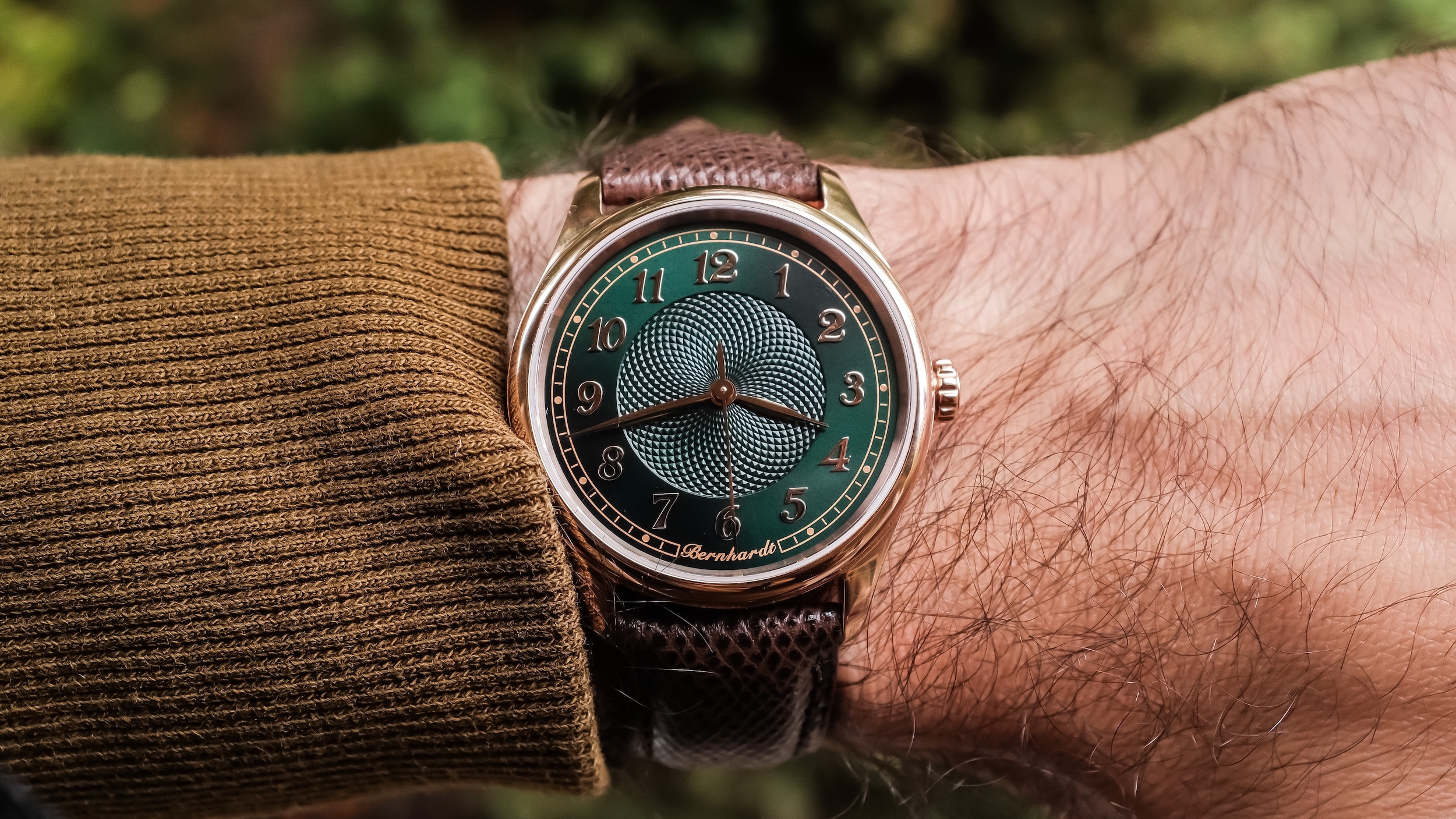
After enough hands-on reviews of watches under $750, you start to notice which ones are actually hard to stop wearing. We’ve handled watches that looked like obvious winners before they ever hit the wrist, and others that took some time to make sense. Some stayed in rotation because the proportions worked, the watch was easy to live with, or a small design decision kept making us smile. Others were perfectly decent watches that simply didn’t give us much reason to reach for them again. That’s what this list is about. We’re looking at the watches under $750 we’ve actually reviewed and asking which ones still gave us something to come back to after the new-watch buzz had worn off.
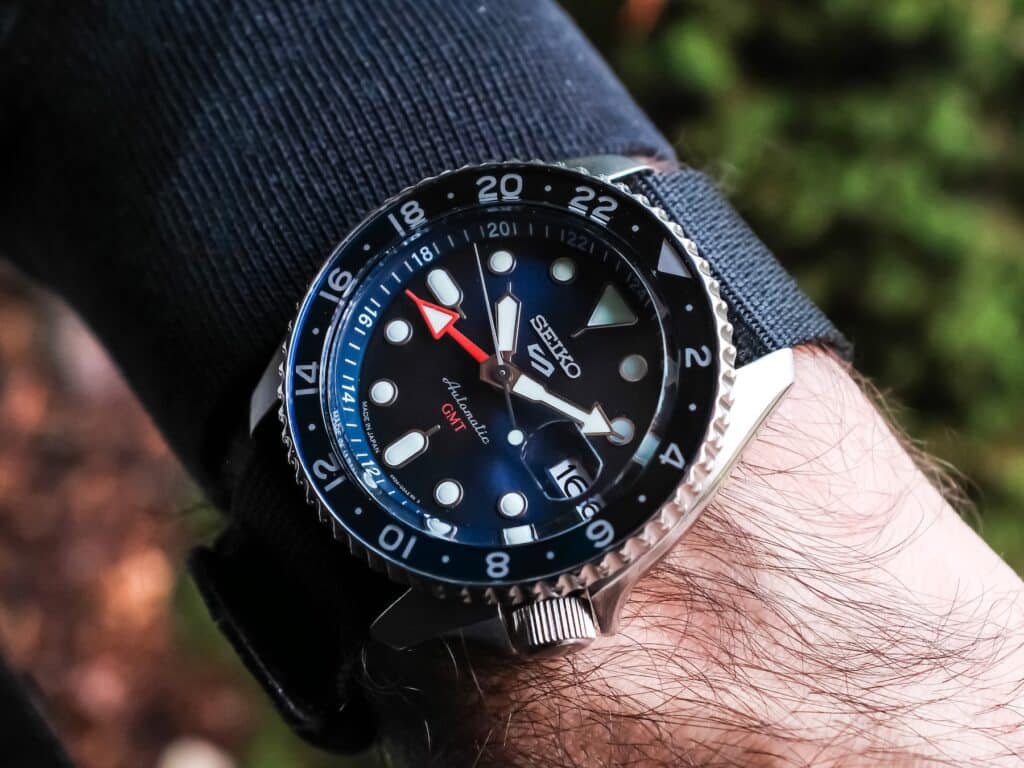
That judgment comes from more than a spec sheet. For over a decade, we’ve been getting watches onto our wrists, testing them, living with their quirks, and finding out where the compromises show up once you stop treating them like new toys. Along the way, we’ve learned that a watch doesn’t have to be perfect to be worth owning, and it doesn’t have to win on paper to become the one you keep wearing. The watches here earned their spots because our hands-on reviews gave us a reason to remember them, whether that came down to comfort, character, practicality, or simply getting more enjoyment out of the money than we expected.
Casio F-91W
| Price: | $30 (Check current price) |
| Water Resistance: | 30m |
| Case Dimensions: | 34mm (diameter) x 38mm (lug-to-lug) x 8.5mm (thickness) |
| Lug Width: | 18mm |
| Movement: | Casio Quartz Module 593 |
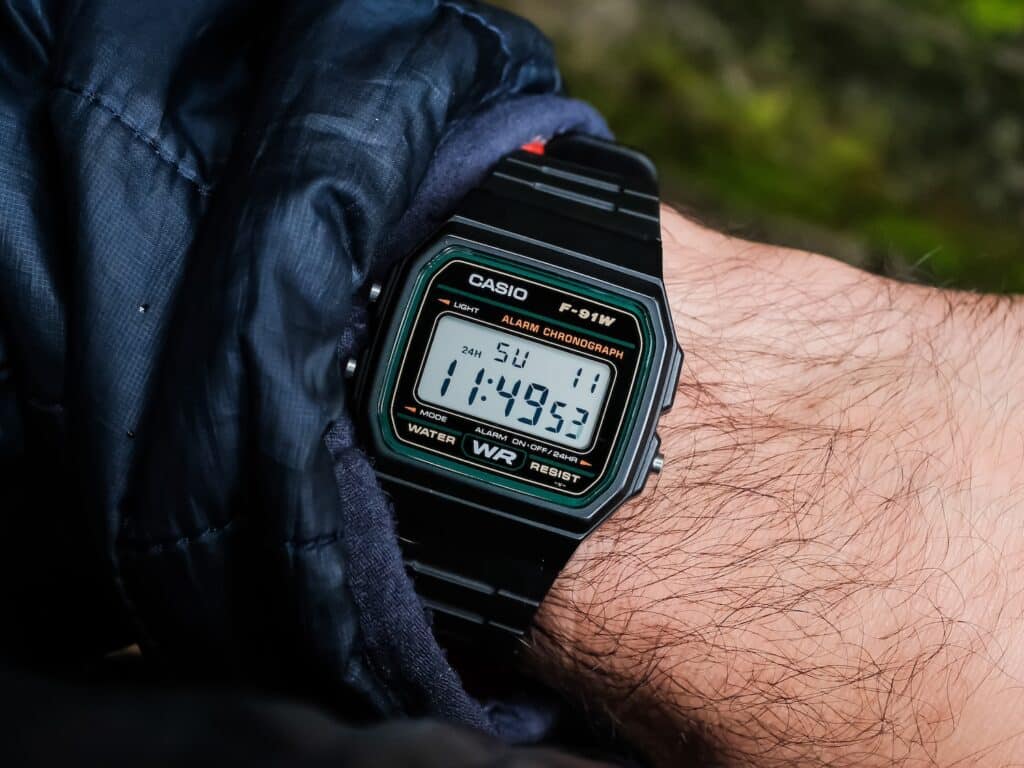
The F-91W is the kind of watch that makes a $750 budget feel slightly ridiculous in the best possible way. It doesn’t care about wrist presence, finishing, or giving you something to photograph for the group chat. During our hands-on time with it, the slim resin case practically disappeared on the wrist, whether we were traveling, running errands, or working out. It also handled the usual knocks of daily life better than the bargain-bin appearance suggests. After enough time with more complicated watches, there’s something oddly satisfying about putting this thing on and having it get on with the job.
The usefulness is in the details Casio didn’t overthink. The display gives you the time and date, plus an alarm, stopwatch, and 12- or 24-hour formats. The buttons remain easy to figure out even after the watch has spent months hiding in a drawer. Our sample stayed within Casio’s roughly ±30-seconds-per-month accuracy claim, and the CR2016 battery should last years without much attention. The four-screw stainless steel caseback is appropriately no-nonsense, and those little corner guards add some welcome substance to the otherwise tiny case while making the pushers easier to find by feel. It’s not pretending to be sophisticated. It’s simply very good at being a cheap digital watch.
There are a few reminders that you’re spending very little money here. The soft resin strap is comfortable but integrated, so there’s no meaningful strap-swapping rabbit hole to disappear into. The 30m water resistance is fine for splashes and ordinary daily wear, but it’s not an invitation to take the F-91W swimming. The green LED backlight is also more “I can see the time” than “I have discovered illumination.” None of that changes the appeal. At a price where losing it under a sofa is more annoying than financially devastating, the F-91W earns its place by being useful often, asking for almost nothing, and somehow becoming the watch you keep grabbing often.
Pros
- So light and compact that it largely disappears once it’s on the wrist.
- The straightforward digital layout puts the useful functions exactly where you expect them.
- The resin case has proven more tolerant of everyday bumps than its toy-like appearance suggests.
- Quartz accuracy and a CR2016 battery that lasts for years make ownership uneventful in a good way.
Cons
- The integrated resin strap leaves almost no room for strap experimentation.
- The 30m water resistance makes it a daily beater, not a serious water watch.
- The green LED backlight isn’t too impressive.
Invicta Pro Diver (8926OB)
| Price: | $60 – $100 (Check current price) |
| Water Resistance: | 200m |
| Case Dimensions: | 40mm (diameter) x 48mm (lug-to-lug) x 14mm (thickness) |
| Lug Width: | 20mm |
| Movement: | NH35A (Mechanical) |
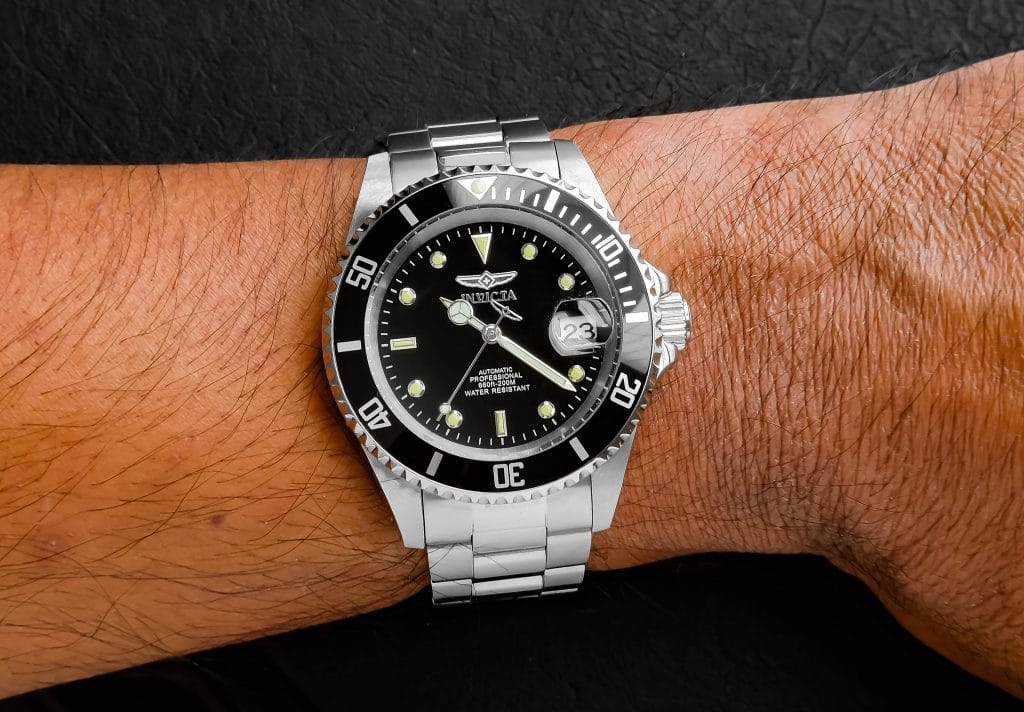
The Invicta Pro Diver 8926OB earns its place on this list less because it does anything original and more because it gets very close to being an easy, uncomplicated watch to live with. During our testing, the case sat comfortably and wore flatter than its dimensions initially suggested. The Submariner-inspired design is hardly a secret, either, but the proportions are resolved well enough that the watch feels coherent on the wrist. For someone building a collection around watches they’ll actually wear rather than simply admire on a screen, that counts for something.
What makes the 8926OB more interesting at this price is how little it gets wrong in everyday use. The bracelet tapers from 20mm to roughly 18mm and uses smoothly articulated links without sharp edges. At the same time, the NH35A gives the watch the hands-on mechanical interaction that makes an inexpensive automatic more engaging. The oversized screw-down crown is easy to grip, and the bezel clicks firmly with minimal backplay. The dial’s applied markers and polished hands add some depth, although the lume is uneven after dark, with the hands outlasting the markers.
We’d also put the 200m water-resistance claim into perspective rather than treating it as a guarantee for serious diving, especially at this price. Hollow end links, a basic flip-lock clasp, and a mineral crystal reveal the budget compromises, and the oversized Invicta branding on the case side won’t suit everyone. Still, that combination of comfortable proportions, dependable mechanics, and low-cost wearability is why we think the Pro Diver deserves consideration in a roundup of watches that gave us a reason to keep them on the wrist.
Pros
- Wears smaller and flatter than its 40mm diameter suggests.
- NH35A makes the watch more engaging than a purely transactional budget purchase.
- The tapered bracelet articulates well and stays comfortable through long days.
- Bezel action feels firm, with minimal back play.
- Applied dial furniture and polished hands add significant visual depth.
Cons
- The mineral crystal scratches far more easily than sapphire.
- Lume fades unevenly, with the markers disappearing before the hands.
- Hollow end links and the flip-lock clasp make the cost-cutting apparent.
- Large Invicta branding on the case side will turn some collectors away immediately.
Casio Duro
| Price: | $85 (Check current price) |
| Water Resistance: | 200m |
| Case Dimensions: | 44.2mm (diameter) x 48.5mm (lug-to-lug) x 12.1mm (thickness) |
| Lug Width: | 22mm |
| Movement: | Casio 2784 Quartz |
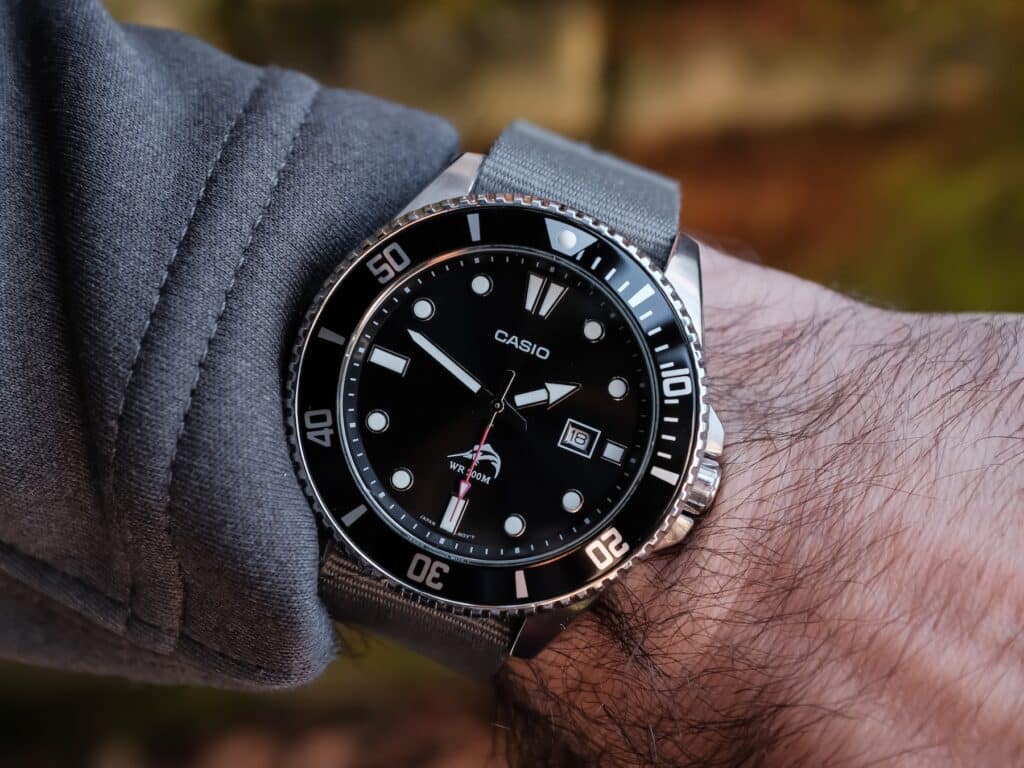
The Casio Duro is almost comically practical, which is probably why we kept coming back to it. During our extended hands-on time, the quartz movement stayed within roughly ±20 seconds per month, and the combination of hacking and a quick-set date meant very little fiddling. Leave it alone for a few days and pick it back up later; it’s still ready to go. That sounds trivial until you’re actually wearing a watch day after day and realize how nice it is when nothing needs your attention. The 44mm case is the obvious catch. At 48.5mm lug-to-lug, with downward-curving lugs, it sits closer to the wrist than the diameter implies, but nobody should mistake it for a small diver. It’s a big watch, and smaller-wristed readers will know that soon enough.
The Duro works so well in this roundup because almost everything you interact with feels deliberately functional. The large applied markers, arrow-shaped hands, restrained dial text, and neatly framed date remain easy to read in bright sun and around water. The bezel has a positive, controlled rotation that doesn’t feel like it came from bargain territory. The 200m water resistance, screw-down crown, solid caseback, and 22mm lugs also leave you plenty of room to change the watch’s personality with different rubber, nylon, or bracelet options. We also liked how the brushed surfaces, polished case sides, and small bevels break up the otherwise substantial case.
That said, there are compromises: the flat mineral crystal scratches more easily than sapphire, and the lume starts strong before fading fairly quickly. But that’s part of the Duro’s appeal. It doesn’t need to pretend to be more complicated than it is. It stays accurate, reads well, handles water, and asks very little in return. For a watch costing nowhere near the $750 ceiling, that’s a pretty persuasive way to earn wrist time.
Pros
- Hacking and quick-set date keep ownership fuss-free.
- Large markers, arrow hands, and framed date make the dial easy to read in bright conditions.
- Bezel action feels firm and controlled rather than sloppy.
- 200m water resistance and a screw-down crown give it useful everyday capability.
- 22mm lugs make switching between rubber, nylon, and bracelet options straightforward.
- Case finishing keeps the substantial profile from looking like a featureless chunk of steel.
Cons
- The 44mm case remains large, particularly on smaller wrists.
- The mineral crystal is considerably less scratch-resistant than sapphire.
- The lume has a strong initial glow but doesn’t last too long.
Casio G-Shock DW5600MNC-1
| Price: | $165 (Check current price) |
| Water Resistance: | 200m |
| Case Dimensions: | 48.9mm (diameter) x 42.8mm (lug-to-lug) x 13.4mm (thickness) |
| Lug Width: | 16mm |
| Movement: | Casio Module 3525 Quartz |
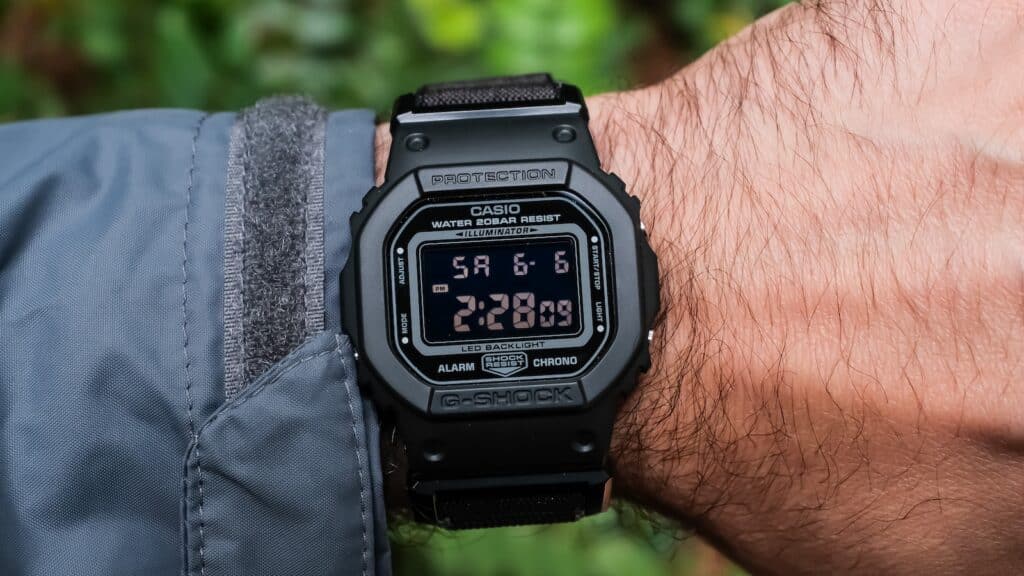
A square G-Shock is usually the watch we put on when we don’t want to think about the watch at all. The DW5600MNC-1 complicates that idea in a useful way. The familiar 5600 case is still here, but Casio has changed the part you spend the most time interacting with: the strap. The elastic woven setup and FIDLOCK closure give it a much softer, more adaptable feel than the standard resin arrangement, and on our 6.75-inch wrist, it stayed comfortable through hikes, shoreline walks, long drives, travel days, and plenty of rain. The 53-gram weight helps, too. Despite the dimensions, it never felt cumbersome. For someone who wants a travel or everyday watch that can take whatever the day throws at it, that change ends up being more meaningful than it sounds.
The underlying 5600 formula is still pretty straightforward. The bio-based resin case is shock-resistant and rated to 200m. At the same time, the module covers the useful basics with a stopwatch, countdown timer, alarm, hourly signal, auto-calendar, and LED backlight. Casio rates accuracy at around ±15 seconds per month, and the CR2016 battery should last roughly five years. The new strap system is not flawless, though. The magnetic part of the FIDLOCK clasp opened twice unintentionally during our week with the watch, prompting us to check it after more energetic activities.
Then there’s the fully blacked-out negative display. It looks quite right with the rest of the watch, but bright sunlight and glare can make reading the time slow. We’d happily combine this case and strap with a conventional positive display. Even so, at $165, the DW5600MNC-1 is one of the more interesting choices in this roundup because it takes an already useful watch and improves the part that affects daily comfort most. It does so without tampering with the uncomplicated formula that made the 5600 worth owning in the first place. The familiar 5600 gets an interesting twist here, and we unpacked that experience in our review.
Pros
- The elastic woven strap conforms naturally to the wrist and stays comfortable through long active days.
- 53-gram weight makes the watch remarkably easy to wear for extended periods.
- 200m water resistance and shock resistance suit travel, hiking, beach use, and rough everyday wear.
- Around five years of battery life keeps ownership very low-effort.
- A useful stopwatch, countdown timer, alarm, hourly signal, and calendar cover the everyday basics.
- The upgraded strap setup adds a noticeable change without raising the price.
Cons
- The FIDLOCK magnetic retention opens unintentionally during active use.
- The negative display legibility suffers in bright outdoor conditions and glare.
- The all-black treatment looks excellent but sacrifices some of the instant readability we expect from a 5600.
Timex Expedition Field Post Solar
| Price: | $199 – $209 (Check current price) |
| Water Resistance: | 100m |
| Case Dimensions: | 36mm (diameter) x 44mm (lug-to-lug) x 12mm (thickness) |
| Lug Width: | 18mm |
| Movement: | Solar Quartz |
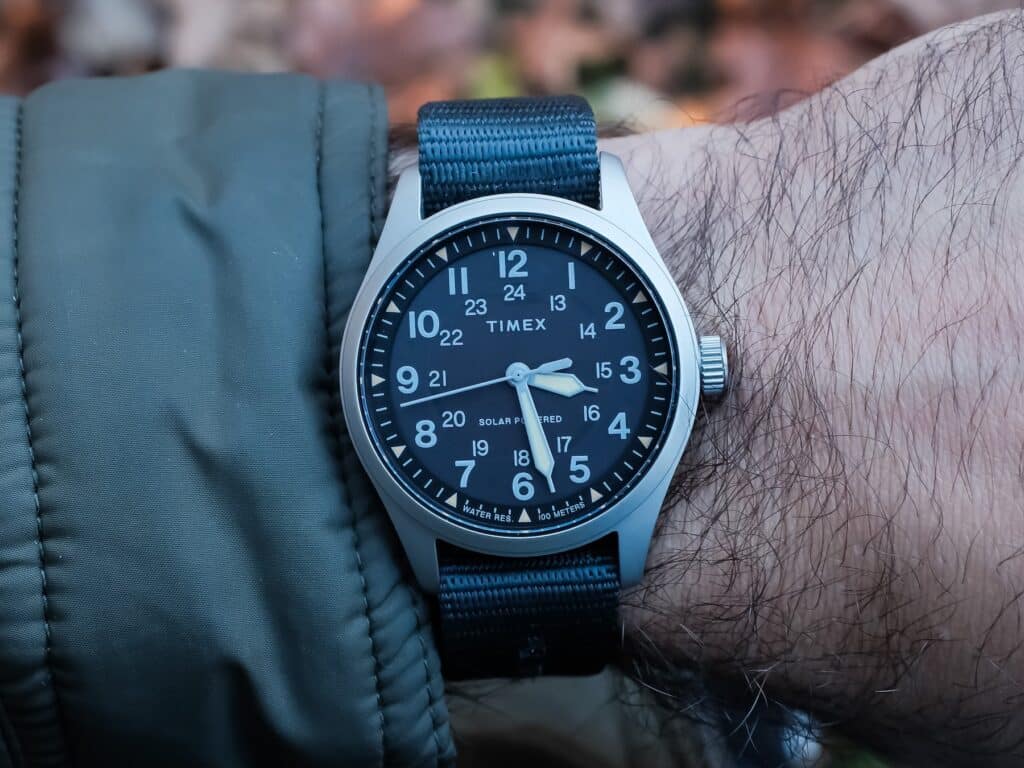
The Timex Expedition Field Post Solar stands out among the watches we’ve reviewed under $750 because it gets so much of the everyday stuff right without making a production out of it. Throughout our time wearing it, the 36mm stainless steel case stayed low and balanced through commutes, errands, and long days, making it easy to forget once it was on the wrist. The bead-blasted finish helps in a less obvious way, too. It gives the watch a properly utilitarian look while making the inevitable scratches and scuffs feel like part of the deal rather than a personal tragedy. For a compact daily watch, that relaxed attitude goes a long way.
The solar quartz movement follows the same logic. Once fully charged, Timex rates it for roughly four months of power, and our extended wrist testing found the accuracy consistent enough that the crown rarely needed attention. The screw-down crown adds useful protection, although its threading feels functional rather than refined. The full-numeral dial is straightforward to read, while the slightly domed sapphire crystal adds a little warmth, and its anti-reflective coating helps control glare outdoors.
However, the lume is where the practical formula starts to wobble: the hands glow briefly, the dial gets very little illumination, and the brightness fades quickly. We also found the supplied leather strap too thick for such a small case, and a simple MIL-style strap would have made more sense. Put it all together, and the Field Post Solar has a convincing argument for itself: compact dimensions, months of solar power, sapphire protection, and very little day-to-day fuss, with enough quirks to remind you that this is still an affordable watch rather than a tiny wrist-sized engineering project.
Pros
- The 36mm case wears low, comfortably, and securely throughout the day.
- Solar quartz offers roughly four months of power when fully charged.
- The bead-blasted finish suits the field-watch aesthetic and disguises everyday wear.
- The full-numeral dial makes quick time checks effortless.
- Domed sapphire crystal and AR treatment improve durability and outdoor readability.
Cons
- The supplied leather strap feels too thick for the compact case.
- Lume is weak and fades quickly, with minimal dial illumination.
- The screw-down crown lacks a particularly refined action.
Seiko 5 Sports “5KX” / SRPD51
| Price: | $200 – $350 (Check current price) |
| Water Resistance: | 100m |
| Case Dimensions: | 42.5mm (diameter) x 46mm (lug-to-lug) x 13.5mm (thickness) |
| Lug Width: | 22mm |
| Movement: | Seiko 4R36 |
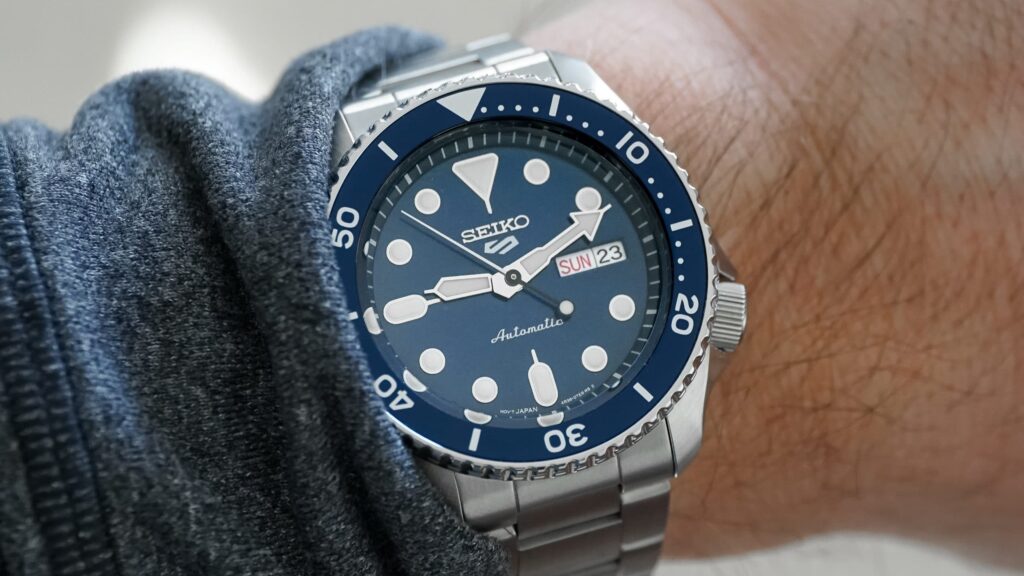
The Seiko 5 Sports SRPD51 is the watch we’d point to when someone wants the familiar Seiko diver look without needing to convince themselves they’re about to join a commercial diving expedition. Under $750, it gives you a lot of what makes Seiko fun to wear: strong lume, a colorful dial, a case shape that sits nicely on the wrist, and a movement you can actually interact with.
The blue sunburst dial is particularly good at changing its mood, going from a fairly restrained navy indoors to a much brighter blue in direct light. The matte aluminum bezel keeps all that blue from becoming too flashy, while the applied markers and Seiko logo give the dial enough depth to avoid looking flat. As covered in our dedicated review, the Lumibrite stayed impressively bright for hours, which is the kind of detail you appreciate every time you glance down at the watch after dark.
The SRPD51 also gets the everyday details mostly right. The 4R36 brings hacking and hand-winding to the Seiko 5 platform, and the display caseback gives collectors something mechanical to watch besides the second hand. Despite a 46mm lug-to-lug, the case wears compactly, helped by the comfortable 4 o’clock crown and its deeper milled grip when you need to set the watch. At 13.5mm thick, though, it still has some vertical heft, and that can be noticeable on smaller wrists.
The factory bracelet is the weaker part of the package: the thin clasp and fiddly adjustment links feel less considered than the case and dial, and we preferred the SRPD51 on NATO or rubber once we started experimenting, with the drilled lugs making that painless. There’s also an important bit of fine print. Despite all the diver-inspired styling, this isn’t an ISO-certified dive watch. For us, that doesn’t diminish what makes it a good watch under $750; it simply means you should buy it for the Seiko experience and everyday wear, not for credentials it doesn’t have.
Pros
- Lumibrite stays bright for hours and gives the watch strong nighttime legibility.
- The blue sunburst dial shifts with changing light without becoming too flashy.
- 4R36 hacking and hand-winding make everyday ownership more convenient.
- 4 o’clock crown placement keeps the case comfortable against the wrist.
- Drilled lugs make switching to NATO or rubber straps easy.
- The display caseback adds some mechanical charm for newer collectors.
Cons
- 13.5mm thickness gives the watch a noticeable side profile on smaller wrists.
- The factory bracelet is the weak link, with a thin clasp and awkward adjustment.
- Diver styling can create expectations the non-ISO specification doesn’t quite meet.
Timex Deepwater Meridian 200
| Price: | $269 (Check current price) |
| Water Resistance: | 200m |
| Case Dimensions: | 44mm (diameter) x 50.5mm (lug-to-lug) x 12.5mm (thickness) |
| Lug Width: | 20mm |
| Movement: | Seiko Epson VX42E |
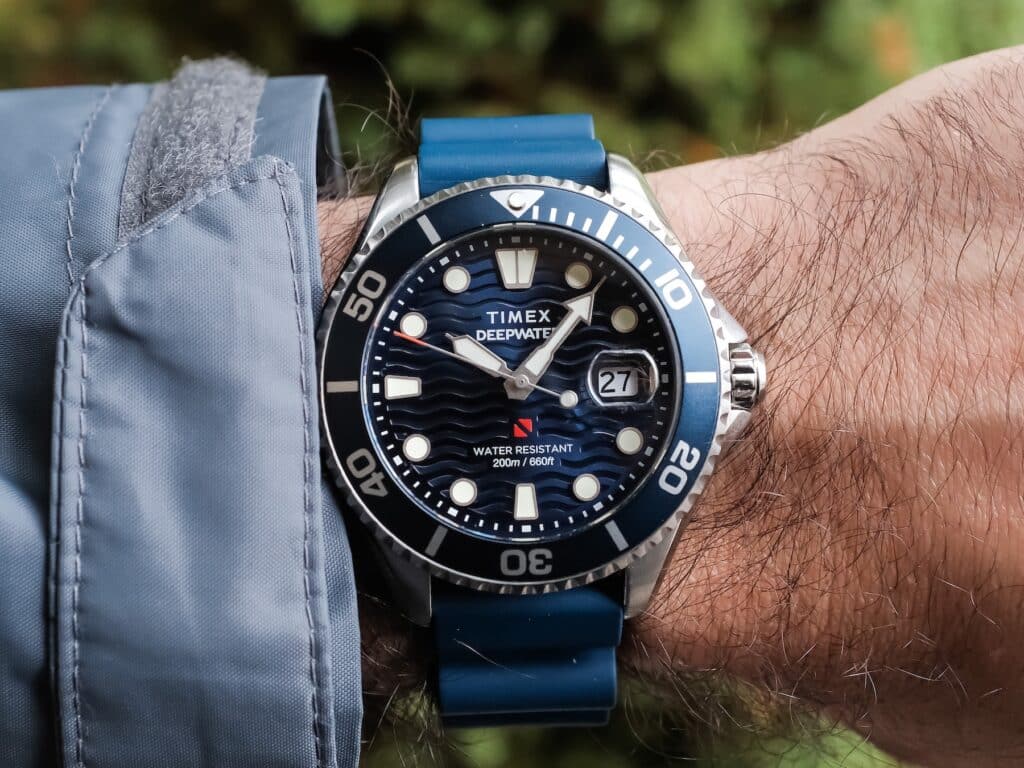
For a list of watches under $750 that we’ve actually spent time wearing, the Deepwater Meridian 200 is an easy reminder that “affordable” doesn’t have to mean settling for a watch that only looks capable. Timex gave this one the hardware we’d want from a proper everyday diver: 200m water resistance, a screw-down crown and caseback, sapphire crystal, and an anti-reflective coating. Those aren’t just numbers to admire on the spec sheet. They make the Meridian 200 a watch we can take to the pool, beach, or on a trip without treating it like something delicate that needs its own seat at the table.
The 44mm case is substantial, but the curved lugs do a good job of bringing that size back toward the wrist, while the 12.5mm thickness keeps the profile quite manageable. We’d still steer smaller-wristed buyers toward trying it on first. The matte blue dial is one of the better design choices here, with its subtle wave texture, applied markers, and small red diver’s flag at 12 adding personality without turning the whole thing into a visual gimmick. Super-LumiNova keeps the hands and indices readable indoors and after sunset, though the strongest glow doesn’t last long.
Inside, the Seiko Epson VX42E quartz movement keeps ownership pretty straightforward, with smooth crown action, quick-set date adjustment, and an estimated three-year battery life. The date magnifier didn’t convince us as a design choice, but it remained clear and useful in practice. Overall, the Meridian 200 makes a strong case as a capable, low-maintenance diver that can handle real travel and water use without making you overly precious about it. We put the Deepwater Meridian 200 through its paces in our full hands-on review, including a closer look at its wearability, legibility, and everyday performance.
Pros
- 200m water resistance with screw-down crown and caseback gives it genuine aquatic capability.
- Sapphire crystal and AR coating are meaningful upgrades for everyday durability and readability.
- Curved lugs make the substantial 44mm case more manageable on the wrist.
- The matte blue, wave-textured dial adds personality without compromising legibility.
- VX42E quartz movement offers quick-set date adjustment and roughly three years of battery life.
- Smooth crown operation makes routine adjustments straightforward.
Cons
- The 44mm case will still be too much watch for some smaller wrists.
- The date magnifier is functional but won’t be everyone’s idea of good design.
- Super-LumiNova looks strong initially but loses intensity quite quickly.
Timex Marlin Draper Automatic
| Price: | $279 (Check current price) |
| Water Resistance: | 50m |
| Case Dimensions: | 37mm (diameter) x 43.5mm (lug-to-lug) x 12.5mm (thickness) |
| Lug Width: | 18mm |
| Movement: | Miyota 8-series automatic |
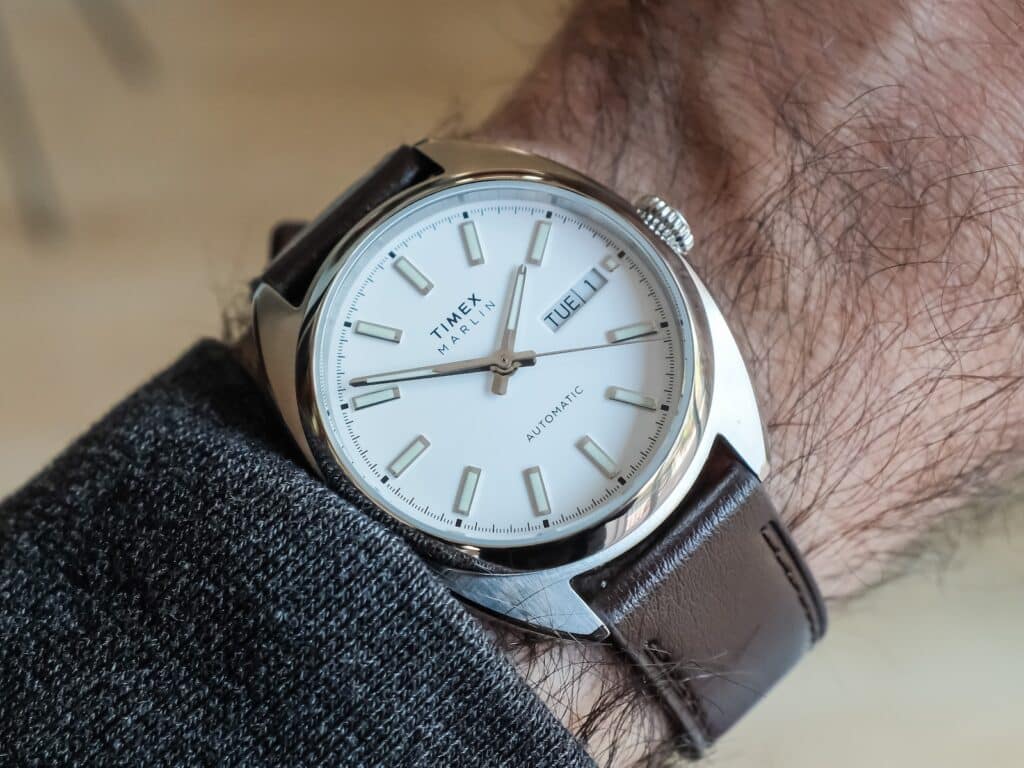
The Marlin Draper Automatic brings something different to a list like this: a vintage-inspired watch that doesn’t need to shout “vintage” every five seconds. At 37mm with a compact 43.5mm lug-to-lug, it wears easily across different wrist sizes, while the cushion-shaped case gives it enough presence to avoid disappearing altogether. The smaller dial opening and barrel-like profile keep the watch feeling deliberate rather than costume-sized, and that distinction matters. The appeal isn’t simply that it looks like something from another era; the proportions and finishing still make sense when you’re wearing it today.
The details are what kept us coming back. Most of the case is brushed, with a polished bezel and slim chamfer adding the right amount of contrast, while the 12.5mm thickness feels more manageable, thanks to the thin, tapered brown leather strap. We tried other options with the quick-release spring bars, but kept coming back to the stock strap because it suits the watch so well. The silver dial is similarly restrained, using applied markers, darker hands, and a practical day-date display to create depth without sacrificing legibility.
Behind the exhibition caseback, the Miyota 8-series automatic remained consistent during our in-depth testing, with a roughly 40-hour reserve that handled a weekend rotation well and a rotor quiet enough to avoid becoming background noise on the wrist. The compromises are fairly predictable: mineral crystal isn’t as reassuring for the long haul as sapphire, and 50m water resistance keeps this firmly in everyday-watch territory. Neither undermines what makes it appealing under $750, though. The Don Draper association is fun trivia, but thankfully, the watch doesn’t need a television reference to carry the design.
Pros
- The 37mm case and 43.5mm lug-to-lug give it broad wrist appeal.
- Cushion-shaped profile feels distinctive without turning into vintage costume.
- Brushed finishing with polished accents adds visual contrast without overdoing it.
- Miyota automatic offers dependable performance, a useful ~40-hour reserve, and a quiet rotor.
- The thin, tapered leather strap complements the case and wears comfortably.
- Day-date layout and high-contrast hands and markers keep the dial practical.
Cons
- 50m water resistance limits it primarily to everyday wear.
- The mineral crystal is the clearest durability compromise.
Bulova Computron
| Price: | $296 – $450 (Check current price) |
| Water Resistance: | 30m |
| Case Dimensions: | 31mm (diameter) x 40mm (lug-to-lug) x 13.8mm (thickness) |
| Lug Width: | Integrated strap that tapers from 25mm at the case to 16mm at the ends |
| Movement: | Quartz |
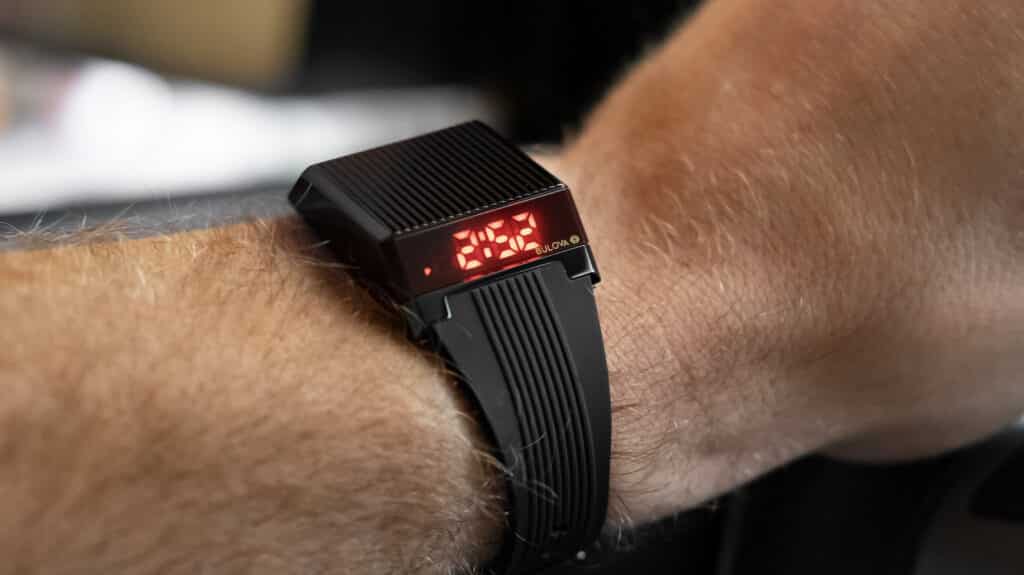
The Bulova Computron is a strange inclusion in a list of watches under $750, which is why we wanted it here. It takes one of the most basic things a watch is supposed to do—tell you the time—and adds a little ceremony. The red LED display stays off until you press the button, so you can’t just glance at it and move on. You have to interact with it. That extra step can be annoying when you simply need the time, but it also gives the Computron a character that most digital watches don’t bother chasing. After enough wrist-time, the time, date, and second-time-zone functions become straightforward, though none ever feels as immediate as a conventional display. For a sub-$750 watch, that makes this less about maximizing practicality and more about whether you want something truly different on the wrist.
Bulova also resisted the temptation to tidy up the original idea. The wedge-shaped trapezoidal case retains its hard edges, late-1970s profile, and shallow grooves across the top, giving it the feel of a retro-futuristic object rather than another watch with faux-aged graphics and a marketing story. The angled case sits more naturally than its shape indicates, and the watch feels quite balanced and light once it’s on the wrist.
The integrated rubber strap is a big part of that, with a soft feel and aggressive taper that keeps the watch secure without making it feel clumsy. Even the finishing punches above what we’d expect at this price. The black ion-plated version has one amusing downside: it collects fingerprints with enthusiasm, and because the display requires pressing the case to wake it up, you’ll notice them often. This won’t replace a straightforward daily watch for us, but that isn’t really the Computron’s job.
Pros
- Original wedge-shaped case preserves the late-’70s design instead of sanding away its quirks.
- The angled case profile makes it more balanced and comfortable than its shape suggests.
- The soft, sharply tapered integrated rubber strap keeps the watch secure.
- Time, date, and second time-zone functions are easy enough to navigate once familiar.
Cons
- You must activate the LED display before every time check, which slows things down.
- Glossy black ion-plating shows fingerprints quickly, especially with frequent interaction.
- Function cycling is less immediate than a conventional analog or digital watch.
Seiko SRPE51
| Price: | $315 (Check current price) |
| Water Resistance: | 100m |
| Case Dimensions: | 40mm (diameter) x 44mm (lug-to-lug) x 12mm (thickness) |
| Lug Width: | 20mm |
| Movement: | Seiko 4R36 |
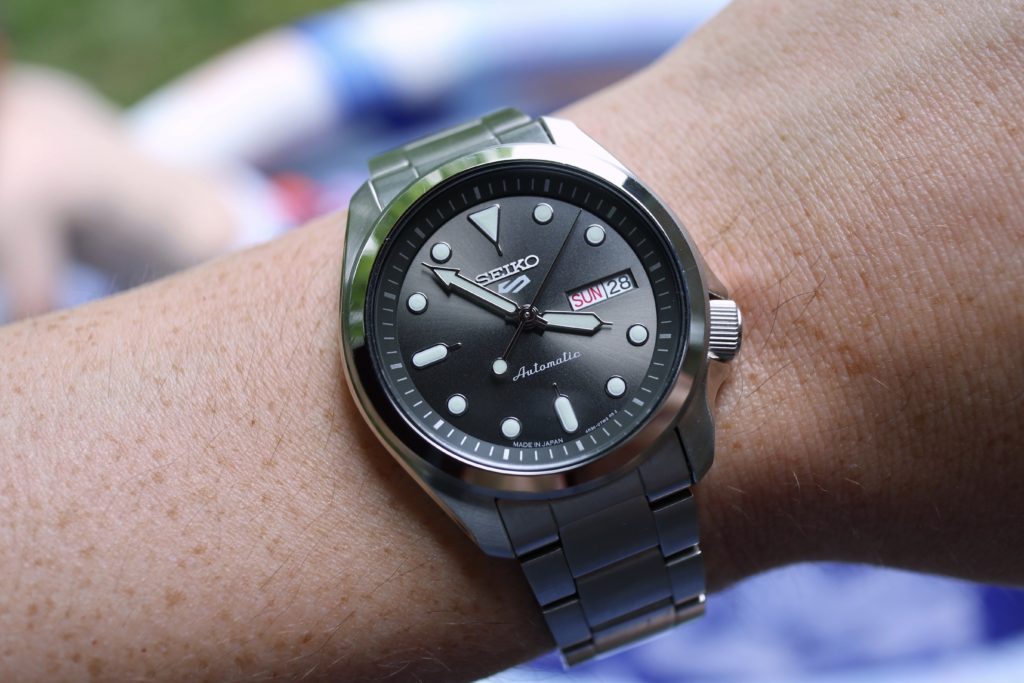
The Seiko SRPE51 is a strong example of why a watch doesn’t need to specialize in one job to be worth your money. We’ve worn it with T-shirts, button-downs, and everything in the mildly confused middle, and the 100m water resistance gives it enough freedom for rain, sweat, splashes, and the occasional swim without making it look like we’re heading out to inspect a sunken freighter. The fixed polished bezel helps here. It gives the watch a little more polish than a typical field watch, but never pushes it into “please don’t wear me near ketchup” territory. For a watch under $750, that sort of flexibility is a big part of its appeal.
The 40mm case also has better manners than the number indicates, wearing compactly with the flat Hardlex crystal keeping distortion low. The grey dial is similarly understated until the light hits it, when subtle shifts in tone give the otherwise restrained layout some life. Applied markers, modern Seiko 5 branding, and LumiBrite keep the dial useful, with the lume remaining strong after dark. We still wish Seiko had used a lollipop second hand, although that complaint probably requires a level of watch nerdiness most normal people should be allowed to avoid.
As noted in our full review, the 4R36 movement keeps things enjoyable rather than complicated, with hacking and hand-winding, plus an exhibition caseback we found ourselves flipping over more often than necessary. The bracelet is where the budget starts showing, with hollow end links giving it a lighter, slightly rattly feel, and chapter-ring alignment can vary between examples. Thankfully, the drilled 20mm lugs make that easy to fix. Leather can push it toward dressier territory, NATO brings back some of its field-watch DNA, and the bracelet works when you want something straightforward. That adaptability is what makes the SRPE51 such a useful recommendation from our reviews: it doesn’t dominate a collection, but it can end up being the watch you wear when nothing else quite makes sense.
Pros
- 100m water resistance gives it plenty of breathing room for everyday wear and occasional swimming.
- 40mm case wears smaller and more discreetly than expected.
- The grey dial develops subtle character as the light changes.
- LumiBrite provides strong nighttime readability.
- 4R36 adds hacking and hand-winding without making ownership fussy.
- Drilled 20mm lugs make changing straps simple.
Cons
- Hollow end links give the bracelet a light, jangly feel.
- Hardlex is more vulnerable to scratches than sapphire.
- Chapter-ring alignment can be inconsistent between individual watches.
- The missing lollipop second hand is a tiny annoyance that enthusiasts will notice.
Citizen Promaster Diver (BN0151-09L)
| Price: | $450 (Check current price) |
| Water Resistance: | 200m |
| Case Dimensions: | 43mm (diameter) x 48mm (lug-to-lug) x 11.5mm (thickness) |
| Lug Width: | 20mm |
| Movement: | Citizen Eco-Drive E168 (solar quartz) |
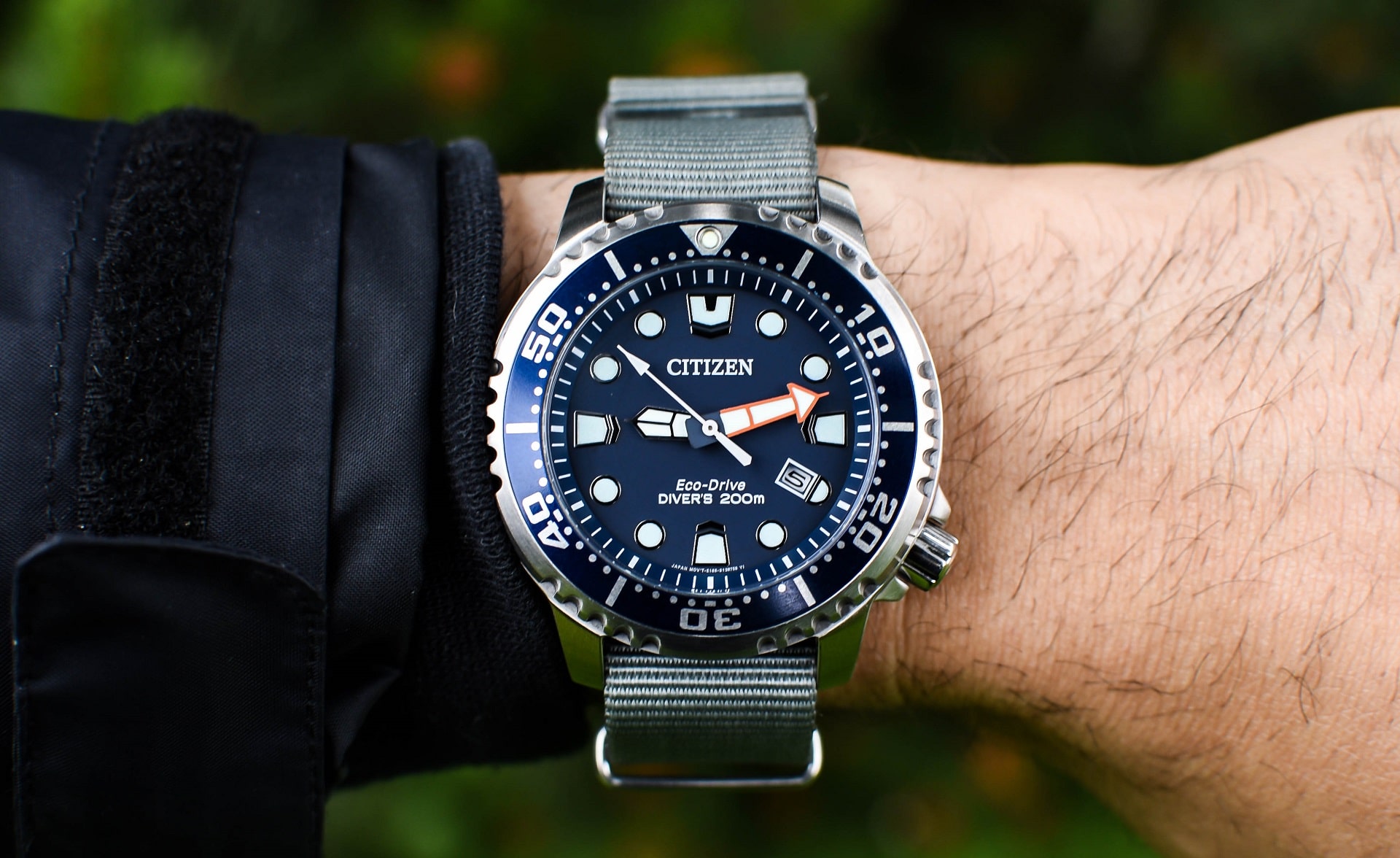
The Citizen Promaster Diver BN0151 is the kind of watch that makes a $750 budget feel less pressing. We kept reaching for it not because it was especially complicated, but because there was almost nothing to deal with before putting it on. The Eco-Drive stayed around ±15 seconds per month in our testing, held roughly six months of power when fully charged, and recovered quickly after we deliberately ran it down far enough to trigger the low-power indicator. Leave it in the watch box for a while, and it doesn’t greet you with a dead battery or a request to wind it. For a roundup built around watches we’ve actually reviewed, that sort of dependable, low-maintenance ownership counts for a lot.
The BN0151 also wears with less bulk than the 43mm figure suggests. Its compact lug-to-lug and curved case pull it closer to the wrist, while the 4 o’clock crown stays comfortably out of the way. With 200m water resistance, we had no reason to baby it around the pool, at the beach, or on weekend trips. The blue dial has a nice trick of its own, shifting toward a subtle purple tone as the light changes, while the large hands and applied markers make it easy to read without breaking your focus. Aqua-colored lume stayed visible for hours, and the luminous pip on the second hand gave us a handy confirmation that the watch was still ticking in darker conditions.
That said, it does have its cheap-watch tells: the 60-click bezel can get slippery with wet fingers despite tracking accurately, the mineral crystal doesn’t offer sapphire’s scratch resistance, and the polyurethane strap takes its sweet time becoming comfortable. We eventually preferred it on NATO. Even then, this is one of those watches where the compromises are easy to understand because the core experience is so uncomplicated. The BN0151 is particularly easy to recommend to someone who wants a proper everyday diver rather than another watch that needs managing. We get into the BN0151’s accuracy, wearability, and everyday quirks in our full Citizen Promaster Diver review.
Pros
- Compact lug-to-lug and curved case make the 43mm watch wear smaller than expected.
- The 4 o’clock crown stays clear of the wrist during long periods of wear.
- Eco-Drive delivered around ±15 seconds per month and roughly six months of runtime on a full charge.
- Excellent everyday legibility, with lume that remained visible for hours.
- The luminous second-hand pip makes it easy to check the time in low light.
- 200m water resistance makes pool, beach, and weekend use feel carefree.
Cons
- Wet fingers can make the 60-click bezel harder to grip.
- The stock polyurethane strap takes longer than ideal to break in.
- Mineral crystal offers less scratch resistance than sapphire.
Seiko Turtle
| Price: | $370 – $525 (Check current price) |
| Water Resistance: | 200m |
| Case Dimensions: | 44.3mm (diameter) x 48mm (lug-to-lug) x 14mm (thickness) |
| Lug Width: | 22mm |
| Movement: | Seiko 4R36 |
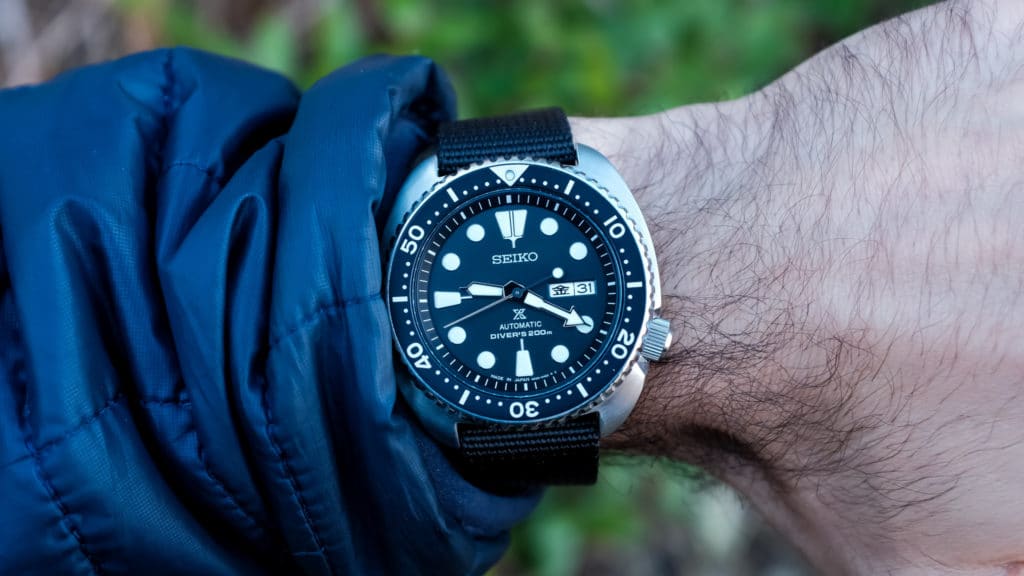
The Seiko Turtle has survived in our rotation for a reason that doesn’t show up particularly well in a specification table: it is unusually easy to wear. We’ve spent years with this watch, and the oversized cushion case is still one of those Seiko measurements that looks slightly absurd until it’s on the wrist. More than 44mm sounds like something we’d normally approach with caution, but the rounded case spreads itself out rather than sitting like a big block on the wrist. The offset crown helps even more, staying clear of the hand during a full day of wear.
The newer silicone strap is also much better behaved than Seiko’s older rubber offerings, although we still prefer the Turtle on NATO when we want it to feel a little less like dedicated dive equipment. In a list of watches under $750, that long-term comfort matters because this is the sort of diver we can actually imagine wearing often rather than admiring occasionally.
Seiko also nailed what matters when you’re simply trying to read the time. The matte black dial keeps reflections under control, while the oversized hands and generous Lumibrite make the display easy to pick out in bright daylight and at midnight. Throughout our testing period, the lume stayed bright for hours, and even the much-discussed Prospex “X” tends to disappear from your attention once it’s on the wrist.
The optional Kanji day wheel is fun, although the standard English display is quicker to parse. The 4R36 adds hacking and hand-winding, but our sample still ran around +35 to +45 seconds per day, and bezel alignment remains something we’d inspect rather than assume will be perfect. Hardlex is another concession. We’d happily take sapphire here, but it never changed how often we wore the watch. That combination of comfort, legibility, and mechanical simplicity is what keeps the Turtle relevant: it has enough imperfections to argue about, but enough personality and usefulness to make the argument worth having.
Pros
- Surprisingly comfortable despite a case measuring more than 44mm.
- The offset crown stays clear of the wrist during extended wear.
- Matte dial and oversized hands make time checks easy in almost any light.
- Lumibrite remains effective for hours after charging.
- The improved silicone strap is more wearable than Seiko’s older rubber options.
- A NATO strap gives the watch a versatile everyday setup.
Cons
- Our sample ran approximately +35 to +45 seconds per day, and accuracy varies between examples.
- The case is still physically large for collectors who prefer smaller divers.
- Kanji day display takes a little longer to read than English.
- Hardlex is more vulnerable to scratches than sapphire.
G-Shock Mudmaster GGB100X-1A
| Price: | $420 (Check current price) |
| Water Resistance: | 200m |
| Case Dimensions: | 55.4mm (diameter) x 51.3mm (lug-to-lug) x 19.4mm (thickness) |
| Band Width: | 27mm |
| Movement: | Casio Module 5744 Quartz |
There’s a point in putting together a list like this where another sensible diver or field watch starts to feel a little predictable. The Mudmaster is what happens when we decide to go in the opposite direction. It isn’t here because it’s an easy everyday recommendation or because most people need a compass, barometer, and thermometer on their wrist. It’s here because, among the watches we’ve reviewed under $750, very few make such a convincing case for being worn when the conditions are less than civilized.
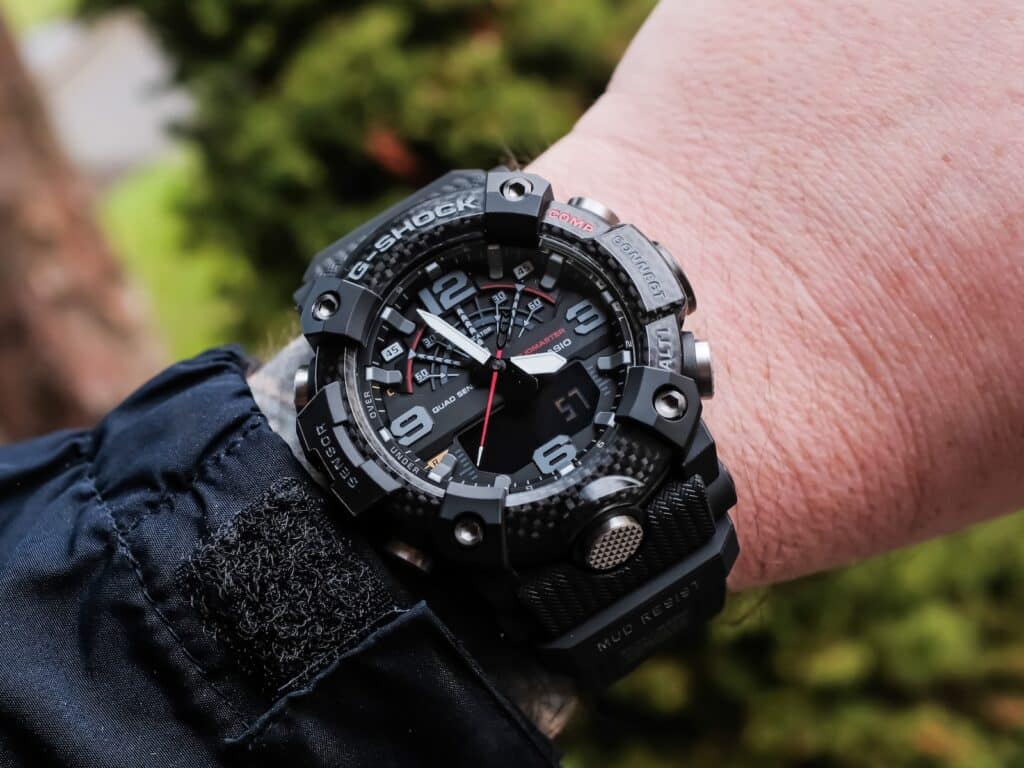
As noted in our hands-on testing insights, the carbon-reinforced construction, layered case, and mud-and-debris sealing are all there for a reason, and the watch wears as if it knows it. At just over 55mm across, more than 51mm wide, and nearly 20mm thick, it is large. On a smaller wrist, that can become the entire story. On a wrist over roughly seven inches, the size starts to feel much more intentional.
The surprising part is how quickly the Mudmaster stops feeling complicated once you actually use it. The oversized buttons are easy to find, the analog hands remain readable against the busy dial, and the digital displays are separated well enough that checking the time doesn’t require a small software tutorial. We used the sensor functions when they were useful, but the watch still works perfectly well as a watch first, which matters because nobody needs to turn every feature on just to check whether they’re late.
The resin strap is equally straightforward: tough, flexible, and substantial enough to match the case. Bluetooth syncing and app integration add useful convenience for people who want it, although there’s a decent chance some owners will never touch half of what the watch can do. With around two years of battery life, ownership stays quite low-effort. The real question is whether you can live with the bulk. For the right wrist and the right buyer, the Mudmaster offers something the rest of this roundup can’t: a genuinely different way to spend your under-$750 budget without simply buying another version of the same watch you already own.
Pros
- Carbon-reinforced construction and mud sealing make the watch feel purpose-built for rough conditions.
- Large pushers are easy to locate and operate, even when you’re not being delicate.
- Analog and digital displays stay organized despite the amount of information.
- The compass, altimeter, barometer, thermometer, step tracking, Bluetooth, and app support provide useful capabilities for owners who use them.
- The tough, flexible resin strap matches the case and handles its weight well.
- Around two years of battery life keeps maintenance straightforward.
Cons
- The size is extreme and will overwhelm many smaller wrists.
- The wide case and long span require plenty of wrist real estate.
- Sensor, Bluetooth, and app features may be unnecessary for anyone who wants a simple watch.
- It sacrifices conventional wearability in exchange for capability.
Vaer G2 Meridian GMT
| Price: | $459 (Check current price) |
| Water Resistance: | 150m |
| Case Size: | 39mm (diameter) x 46mm (lug-to-lug) x 10mm (thickness) |
| Lug Width: | 20mm |
| Movement: | Swiss-made Ronda 515.24H |
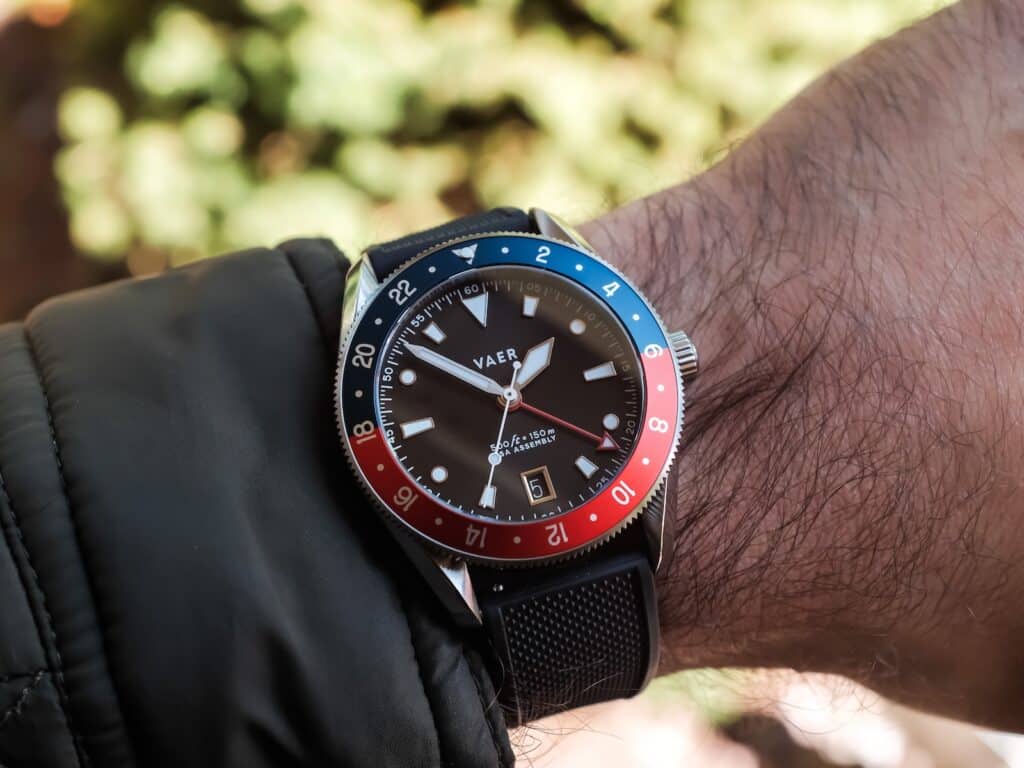
At $459, the Vaer G2 Meridian GMT is one of the watches that makes this under-$750 list interesting because it gives you a different use case without abandoning everything that makes a good tool watch enjoyable. We liked that transition. The screw-down crown, 150m water resistance, and rotating bezel preserve some of the familiar dive-watch interaction. Still, the purpose has shifted from timing a dive to tracking another time zone. It never felt like Vaer had simply swapped a logo and GMT hand onto an existing diver formula. The slim, lightweight case also made a noticeable difference on long days, especially when we wore it for travel rather than admiring it on a desk.
The Ronda 515.24H quartz movement fits that role well. Multi-year battery life, dependable accuracy, and a quick-set date make the G2 easy to pick up and go. At the same time, the caller-style GMT setup keeps the independently adjustable 24-hour hand focused on home time or occasional travel rather than constant hopping between international time zones.
The restrained dial helps, too, with applied markers, a neatly integrated 6 o’clock date, strong daytime legibility, and useful lume on both the hands and markers. The case mixes brushed and polished surfaces without overdoing the decoration, and the engraved caseback adds a little personality. We preferred the upgraded rubber strap, which tapers nicely and complements the light case far better than the included NATO, whose stiffness became harder to ignore over longer wear. The bidirectional bezel is another small win, with crisp clicks that make setting another time zone intuitive. However, some play and occasional alignment misses take a little shine off the experience.
Still, there is a lot to like here: it’s accurate, low-maintenance, water-resistant, genuinely useful for travel, and different enough from a diver to make the change feel worthwhile. Our full review gets into the travel-focused details, including the bezel, GMT operation, strap, and how the watch wears over longer stretches.
Pros
- Ronda 515.24H quartz movement offers dependable accuracy, low maintenance, and multi-year battery life.
- Applied markers, 6 o’clock date, and effective lume keep the dial easy to read.
- Screw-down crown and 150m water resistance retain useful everyday tool-watch capability.
- The bidirectional bezel makes setting a second time zone intuitive.
- The slim, lightweight case stays comfortable through long travel days.
Cons
- The bezel has noticeable play despite its positive click action.
- Alignment can occasionally miss the mark.
- Caller-style GMT is less convenient for frequent international travel than a flyer GMT.
Seiko 5 GMT
| Price: | $475 (Check current price) |
| Water Resistance: | 100m |
| Case Dimensions: | 42.5mm (diameter) x 46mm (lug-to-lug) x 13.6mm (thickness) |
| Lug Width: | 22mm |
| Movement: | Seiko 4R34 (Mechanical Movement) |
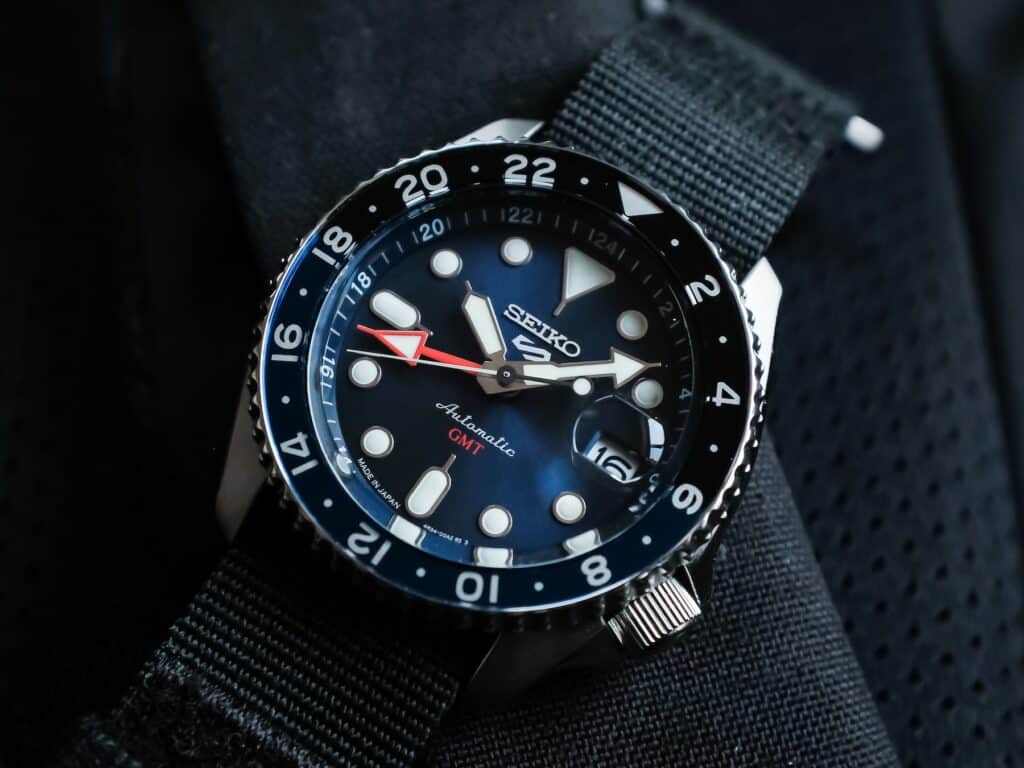
The Seiko 5 GMT is the watch that convinced us the GMT hand doesn’t need an airport to justify its existence. What started as a complication we expected to use on occasional trips quickly became useful for ordinary life: checking on family overseas, keeping track of a colleague’s workday, or simply knowing what time it is somewhere else without doing the mental arithmetic. That makes the 4R34 easy to live with. It’s a caller GMT, so this isn’t the one we’d choose for someone constantly bouncing between countries and resetting the local hour every few days. For everyone else, though, the independently adjustable 24-hour hand is simple enough to use, and the rotating bezel gives us a third time zone when we get ambitious.
According to our review team’s insights, the orange sunburst dial is where the Seiko personality kicks in. It shifts dramatically with the light, while the black surrounds on the applied markers, gilt hour and minute hands, and glossy black GMT hand keep it from turning into orange-on-orange chaos. Lumibrite handles the dark hours well, and the cyclops stopped bothering us much sooner than expected. The 42.5mm case also plays smaller than the measurement indicates. Its 46mm lug-to-lug, rounded profile, softened lugs, and asymmetrical crown guards make it feel much closer to a familiar everyday sports watch once it’s on the wrist. We do miss the SKX-style screw-down crown and 200m rating, and the 100m push-pull setup is a clear step away from that formula, even if independent pressure testing suggests there’s more capability here.
Then Seiko does what it does: the tapered 22mm-to-20mm Jubilee bracelet is comfortable but a little jangly, the pin-and-collar sizing system can turn bracelet adjustment into a minor character-building exercise, the stamped clasp feels cheap, and the polished center links aren’t our favorite. The smooth bidirectional bezel also lacks the satisfying clicks of a diver. None of that changed the important part for us: this is a GMT we expected to use occasionally and ended up using all the time. That’s exactly the sort of thing that makes a watch under $750 stick around.
Pros
- 4R34 makes the GMT truly useful for everyday second-time-zone tracking.
- The rotating 24-hour bezel adds a practical third time zone.
- The orange sunburst dial changes character with the light without sacrificing legibility.
- Compact-feeling proportions make the 42.5mm case easier to wear than expected.
- Lumibrite and contrasting handset keep night-time reading straightforward.
- Jubilee bracelet tapers from 22mm to 20mm and remains comfortable over long wear.
Cons
- 100m water resistance and the push-pull crown are a step back from the old SKX formula.
- The stamped clasp and polished center links don’t feel quite refined.
- The smooth bidirectional bezel lacks the tactile feedback of a clicky diver.
- Pin-and-collar bracelet sizing is needlessly fiddly.
Citizen Navihawk

| Price: | $595 (Check current price) |
| Water Resistance: | 200m |
| Case Dimensions: | 40mm (diameter) x 44.3mm (lug-to-lug) x 13.4mm (thickness) |
| Lug Width: | 20mm |
| Movement: | Eco-Drive caliber B620 |
The Citizen Promaster Navihawk 40 is one of the more convincing cases we’ve seen for keeping a complicated watch in regular rotation. A lot is happening here—slide rule, 24-hour display, chronograph, multiple subdials—but at 40mm with a 44.3mm lug-to-lug, it avoids the oversized aviation-instrument feel that made older Navihawks harder to live with. We expected the dial to become tiring after a few days. Instead, we kept leaving it on because the information became usable once we stopped trying to decode it all at once. That’s a useful quality in a watch under $750: complexity that eventually becomes practical, not complexity for its own sake.
Citizen also put enough hardware underneath that dial to make the watch feel like something we could wear without special handling. The broad brushing gives the case its expected tool-watch character, while polished accents and the coin-edge bezel add some definition. The sapphire crystal, combined with 200m water resistance, makes it easy to treat as a genuine daily watch, whether it’s staying on the wrist or coming along for a weekend away. The silver-white sunburst dial uses three textured black subdials as visual anchors, while restrained red details help separate the information. The white subdial hands also stay distinct from the main handset, which matters when you’re checking the chronograph rather than conducting a six-inch inspection of the dial.
Even the bracelet surprised us: the secure clasp and comfortable fit kept it in place, though the lack of on-the-fly adjustment means you can’t fine-tune the fit as easily throughout the day. The Eco-Drive B620 is the other big reason this watch works. Citizen rates it at around ±15 seconds per month with roughly six months of runtime from a full charge, turning what could have been a high-maintenance chronograph into a watch that largely looks after itself. We did find the recessed date awkward and noticed some vertical bezel play on our sample, but neither became a major problem.
The bigger consideration is philosophical: if the mechanical ritual is what you want from a chronograph, the B620’s sensible quartz approach may feel a little too sensible. For everyone else, it’s a remarkably usable amount of watch. For a full breakdown of its dial layout, Eco-Drive performance, and real-world wear, read our hands-on Citizen Promaster Navihawk 40 review.
Pros
- 40mm case and 44.3mm lug-to-lug keep the dense design quite wearable.
- Eco-Drive B620 offers low-maintenance ownership, around ±15 seconds per month accuracy, and roughly six months of runtime.
- The bracelet is secure and comfortable, despite our initial doubts.
- Textured black subdials and restrained red accents make the busy dial easier to navigate.
- Sapphire crystal and 200m water resistance support genuine everyday use.
Cons
- The recessed date display can be awkward to read, especially from an angle.
- No on-the-fly bracelet adjustment makes fine sizing less convenient.
- Some vertical bezel play was noticeable on our review sample.
- Buyers looking specifically for mechanical chronograph interaction may find the Eco-Drive experience lacking.
RZE Resolute Type A
| Price: | $499 (TecTuff strap); $699 (matching titanium HexLink bracelet) (Check current price) |
| Water Resistance: | 100m |
| Case Dimensions: | 39.5mm (diameter) x 46mm (lug-to-lug) x 11.5mm (thickness) |
| Lug Width: | 20mm |
| Movement: | Miyota 82S0 |
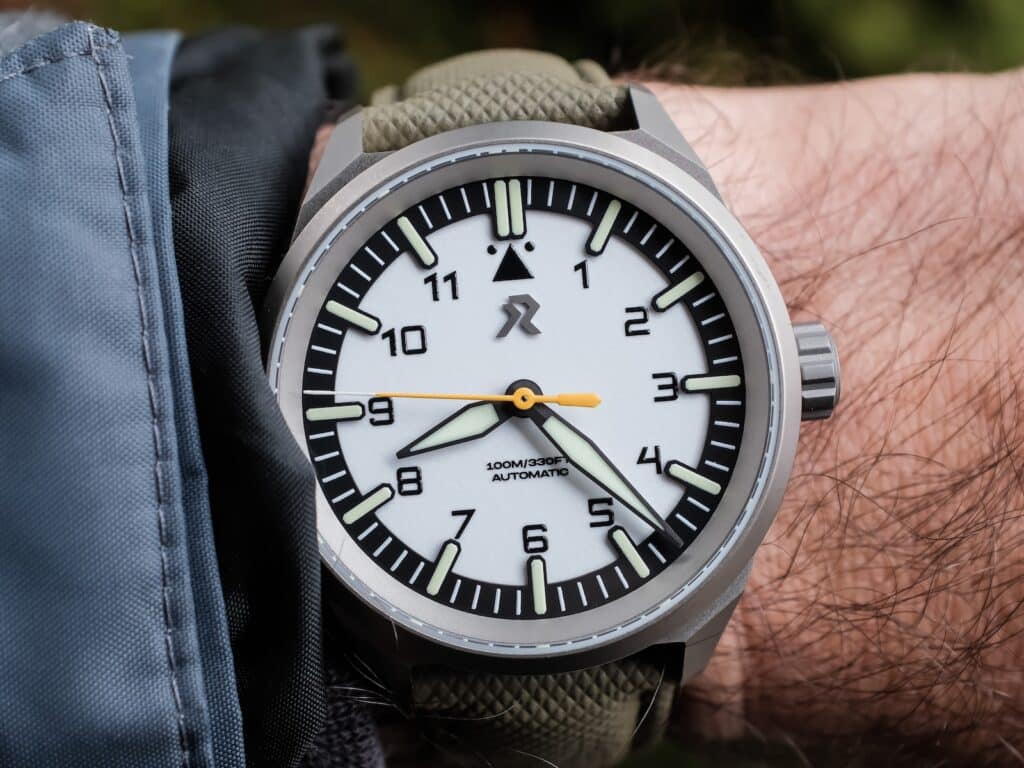
The RZE Resolute Type A is a flieger for people who like the idea of a pilot watch more than dressing up as one. That distinction matters in a list of watches under $750, because the Resolute keeps the useful parts of the format while making it easier to live with. Its 39.5mm Grade 2 titanium case is so light that after a full day, we stopped noticing the watch, which is about as good a compliment as we can give a daily wearer. The 100m water resistance, screw-down crown, and proper gasket construction make rain, sweat, and general everyday nonsense a non-event, while the roughly 1200 HV UltraHex hardening meant we weren’t constantly trying to protect the case from the nearest door frame.
RZE also resisted turning the dial into a cockpit diagram. The 12 o’clock triangle, oversized minute track, sword hands, and inner hour ring make it almost a breeze to read the time, while the raised chapter ring and applied markers keep the design from looking like something printed on cardboard. As we cover further in our dedicated review, the white version is particularly good, with a sapphire crystal and two-tone full lume that gives it a distinctly instrument-like personality after dark. That lume won’t win over anyone demanding strict flieger orthodoxy, but we liked that RZE didn’t treat tradition as a rulebook.
The Miyota 82S0 keeps the mechanical side equally sensible, offering automatic winding, hand-winding, hacking, and around 42 hours of reserve. And then there’s the strap, which arrived feeling like something we could actually live with, not a placeholder waiting to be replaced. The TecTuff material, water-resistant calf-leather lining, tapered shape, quick-release bars, and UltraHex-coated titanium buckle all contribute. The aircraft engraving on the caseback is another matter; it’s fun enough to flip over once, but it won’t keep us away from our other watches. For under $750, though, the Resolute does something we appreciate: it gives us a lightweight, durable automatic with real everyday capability without taking its pilot-watch theme too seriously.
Pros
- Extremely light 39.5mm Grade 2 titanium case makes all-day wear easy.
- UltraHex hardening provides useful resistance to everyday scuffs and knocks.
- 100m water resistance and screw-down crown make it carefree in normal use.
- The flieger-inspired dial layout is immediately legible without becoming visually busy.
- The white version’s sapphire crystal and two-tone full lume add useful character after dark.
- The TecTuff strap arrives comfortable, with a water-resistant calf-leather lining and well-executed hardware.
Cons
- Two-tone lume moves far enough from traditional flieger aesthetics to divide opinion.
- The engraved aircraft on the caseback is more of a playful detail than a particularly meaningful one.
Gavox The Roads Chronograph
| Price: | $510 – $535 (Check current price) |
| Water Resistance: | 100m |
| Case Dimensions: | 41mm (diameter) x 51mm (lug-to-lug) x 12mm (thickness) |
| Lug Width: | 20mm |
| Movement: | Ronda 5130D quartz chronograph |
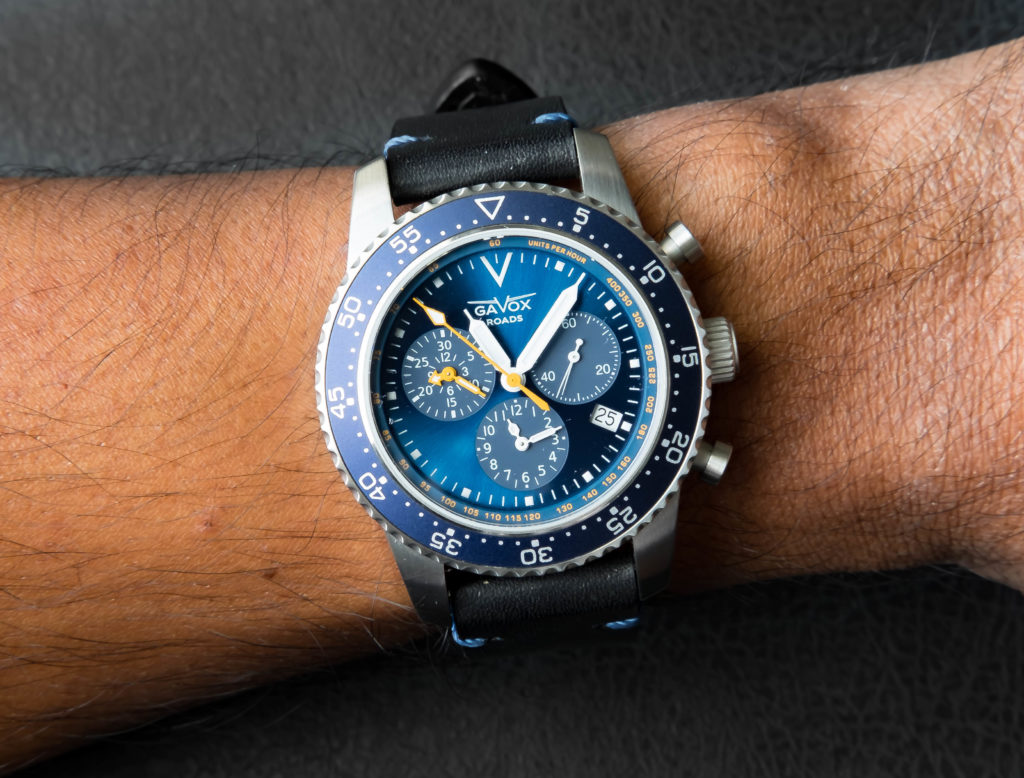
The Gavox Roads makes more sense once you decide what you want your under-$750 chronograph to do. This isn’t the watch for someone who wants a slim, understated timer that disappears under a cuff. It’s for the person who will actually use the extra functions and doesn’t mind carrying some hardware on the wrist to get them. The 41mm case stretches to a 51mm lug span. However, the sharply dropping lugs help keep that length tucked against the wrist, rather than letting the watch sit awkwardly above it. The case has weight, too, but the fully brushed matte finish makes it feel intentional rather than excessive. Even the 120-click bezel sits slightly proud of the case and gives you enough grip to turn it without hijacking the design. That makes the Roads interesting for a simple reason: the complication count isn’t there for decoration.
The Ronda 5130D is the part that makes that argument work. Along with the standard chronograph, it gives you a 12-hour totalizer in 30-minute increments and an alarm, and those functions become useful once you stop imagining them in a press-release laboratory. On a road trip, the chronograph can handle driving intervals, while the totalizer can keep track of longer stretches without reaching for a phone. The dial is undeniably busy, but as we found in our dedicated Gavox Roads review, the various tracks, markers, and subdials are separated well enough that we learned to read it quickly rather than staring at it like an aviation exam. At night, the illuminated Gavox V and perimeter squares help establish orientation, although the unlit bezel is a weak point when visibility worsens.
The bracelet is the better wrist option, with substantial all-brushed links and no taper spreading the weight nicely, while the stiff micro-adjustments are less cooperative than we’d like. The supplied leather strap breathes reasonably well thanks to the vents underneath, but never felt as natural as the bracelet. Add a screw-down crown and 100m water resistance, and the Roads becomes a convincing choice for someone who wants a genuinely functional chronograph. It’s busy, heavy, and a little stubborn in places, but at least it gives all that mass something to do.
Pros
- The Ronda 5130D adds an alarm and 12-hour totalizer, making the watch more useful than a basic chronograph.
- Dropping lugs make the 51mm lug span easier to live with.
- The fully brushed bracelet feels substantial and distributes the watch’s weight evenly.
- The dial layout is busy but becomes surprisingly quick to read with use.
- The illuminated Gavox V and perimeter squares help with orientation in low light.
- A screw-down crown, along with 100m water resistance, makes it practical beyond the dry desk.
Cons
- The 41mm case and 51mm lug span still make this a substantial watch.
- Bracelet micro-adjustments are frustratingly stiff.
- The bezel has no lume, limiting its usefulness when visibility drops.
Vaer C4 Tactical Field Solar
| Price: | $519 – $539 (Check current price) |
| Water Resistance: | 200m |
| Case Dimensions: | 41.5mm (diameter) x 48mm (lug-to-lug) x 12.8mm (thickness) |
| Lug Width: | 20mm |
| Movement: | Epson VS-42 solar |
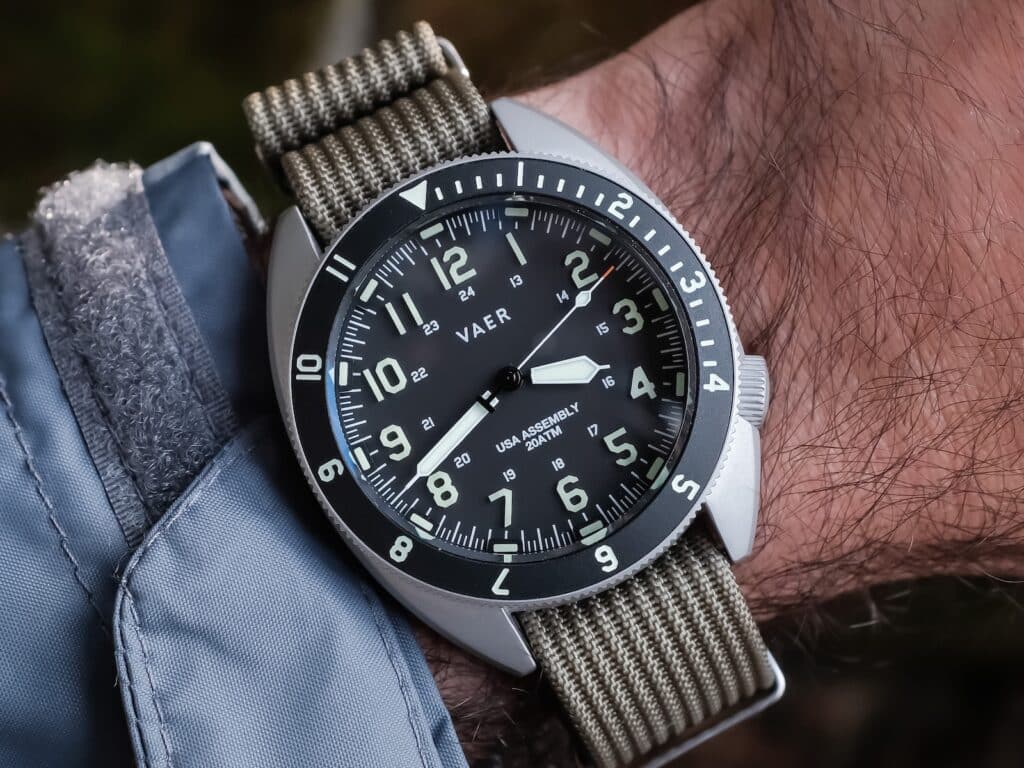
The Vaer C4 Tactical Field Solar fits this list because it takes the familiar field-watch recipe and adds enough capability to make us question why we’d need another watch for everyday abuse. The Epson VS-42 solar movement does most of the work quietly, storing up to six months of power after around six hours of light. That meant we could leave it alone for weeks, pick it up, and wear it without the usual winding, battery, or reset ritual. Under $750, that kind of low-maintenance ownership is easy to appreciate, especially when the rest of the watch is built for real use.
The C4 also has more going on than its straightforward dial indicates. The 200m water resistance, screw-down crown and caseback, and 120-click bezel give it legitimate tool-watch usefulness, with the first 20-minute scale and 12-hour layout proving handy for both everyday timing and travel. The coin-edge grip stayed easy to turn with damp fingers, the DLC-coated steel bezel insert felt tougher than the aluminum alternatives we often see in this price range, and the crown threaded smoothly without the gritty feel that can make cheaper watches feel cheaper. Despite measuring 41.5mm, the restrained lug-to-lug and bead-blasted finish kept it wearing closer to a smaller watch on our 6.75-inch wrist.
The dial follows the same practical logic, with oversized Arabic numerals, syringe hands, a discreet 24-hour track, and raised lume plots that stayed visible for hours after dark. The beveled sapphire crystal adds a little refinement without making the watch feel precious, while the black waffle-textured FKM strap made more sense to us than the supplied nylon because it suited the C4’s tougher personality.
The trade-offs are minor but worth knowing: the second hand doesn’t land perfectly on every marker, and anyone committed to old-school sub-38mm field-watch proportions may still find 41.5mm larger than ideal. For us, though, the C4 is compelling precisely because it refuses to stop at being a field watch in name. It gives the category some genuine utility without turning the watch into a science project. We got into the finer details of the C4, from its solar setup to the bezel and lume, in our full write-up here.
Pros
- 200m water resistance, screw-down crown and caseback, and a functional bezel add real everyday capability.
- The coin-edge bezel stays easy to operate with damp hands.
- Epson VS-42 solar movement offers up to six months of reserve after roughly six hours of light.
- Raised lume plots provide excellent long-lasting nighttime visibility.
- The black waffle-textured FKM strap is comfortable and suits the watch well.
Cons
- Second-hand alignment isn’t perfectly consistent across every minute marker.
- 41.5mm will still feel large to collectors who specifically want traditional compact field-watch proportions.
Marathon General Purpose Mechanical
| Price: | $525 – $575 (Check current price) |
| Water Resistance: | 30m |
| Case Dimensions: | 34mm (diameter) x 41mm (lug-to-lug) x 12.5mm (thickness) |
| Lug Width: | 16mm |
| Movement: | Seiko NH35A Automatic |
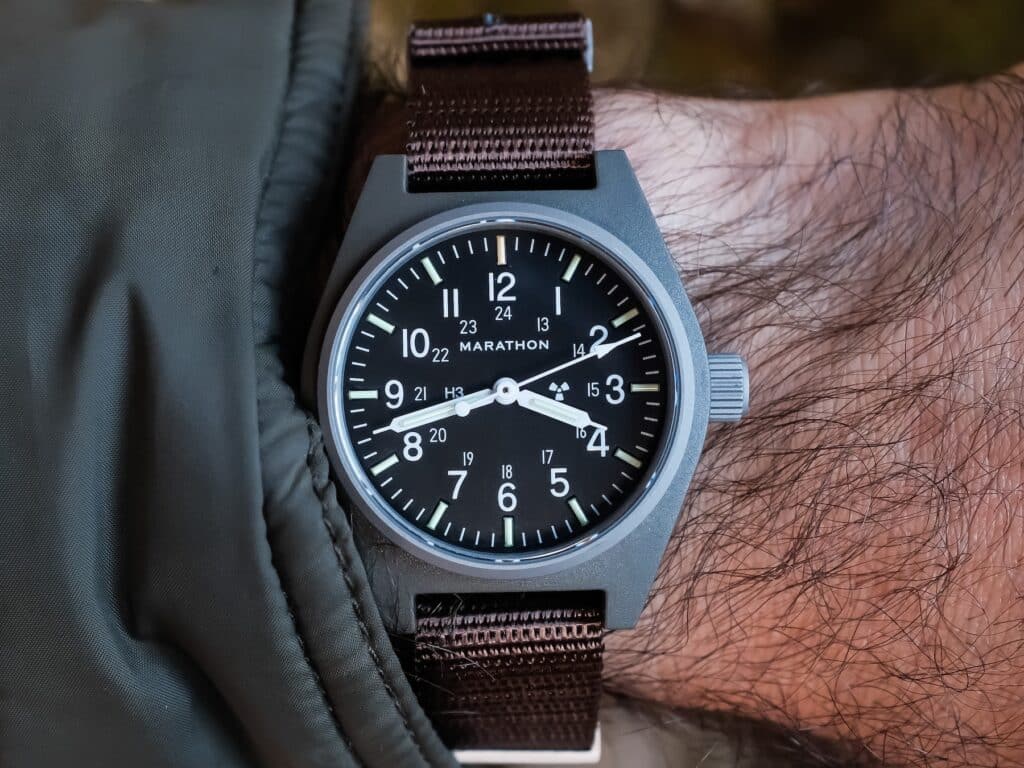
Some watches under $750 make their case with finishing, complications, or a spec sheet that looks like it was written by committee. The Marathon General Purpose Mechanical takes a much less complicated route: it makes itself useful and leaves the rest of the sales pitch at home. The 34mm case is tiny by modern field-watch standards, but the 12.5mm thickness and 41mm lug-to-lug give it enough physical presence that it never felt delicate.
According to our review team, the resin construction is arguably the bigger surprise. It’s extremely light, warmer against the skin than steel, and avoids the wrist fatigue that can come with heavier “tough” watches. Add the sage-green case, NSN markings, and busy caseback, and you get something that feels purpose-built rather than decorated for collectors.
The tritium illumination also changes how the Marathon fits into daily life. The large syringe hands, straightforward field layout, and inner 24-hour track make the dial instantly readable, while the tritium keeps it visible after dark without any charging ritual. The NH35A movement follows the same philosophy: dependable, easy to live with, and common enough that servicing years down the road shouldn’t require hunting for exotic parts. Even the small all-steel crown has better grip than its size suggests. Also, we liked the Marathon less on its supplied ballistic nylon than on an olive-drab single-pass strap, which brought the already-light case even closer to the wrist.
The drawbacks are fairly specific. Thirty meters of water resistance is a strange limitation for something with this much tool-watch character, and the 16mm lugs combined with tight spring-bar clearance make strap changes more annoying than they should be. None of that takes away from what makes the watch memorable. Among the watches we’ve reviewed under $750, this is one of the few that feels designed around the job first and the collector second.
Pros
- Tritium tubes provide constant nighttime legibility without charging.
- Exceptionally light resin case stays comfortable through long wear.
- NH35A is dependable, straightforward, and service-friendly.
- The small steel crown offers a good grip when winding and setting.
- NSN markings, sage-green resin, and the detailed caseback give it genuine military-tool character.
Cons
- The 30m water resistance rating feels restrictive for a purpose-built field watch.
- Tight spring-bar clearance makes changing straps unnecessarily fiddly.
- 16mm lug width limits strap choices.
Nodus Sector II Field Titanium
| Price: | $625 (Check current price) |
| Water Resistance: | 100m |
| Case Dimensions: | 38mm (diameter) x 47mm (lug-to-lug) x 11.7mm (thickness) |
| Lug Width: | 20mm |
| Movement: | Seiko/TMI NH38 automatic |
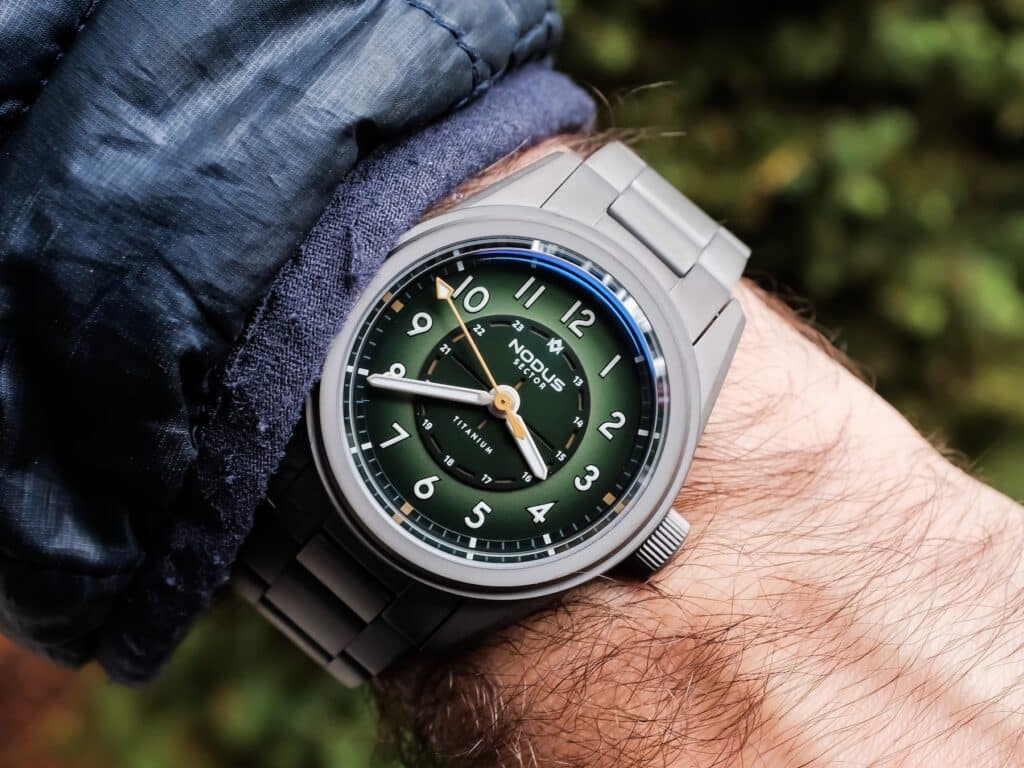
The Nodus Sector II Field Titanium makes a fairly convincing argument for not making field watches look like they were rescued from a surplus store. The 38mm case is compact, but the 47mm lug-to-lug and squared-off lug tips give it enough visual presence to avoid feeling tiny. Then you pick it up and discover it weighs roughly 100 grams on the bracelet before sizing. For a mechanical watch with this much going on, that is pretty light. The downward-curving lugs help keep it planted on the wrist, including on our 6.75-inch wrist, while the media-blasted Grade 2 titanium case has a matte, tool-like finish. It’s restrained to the point of being almost stubbornly unshiny, which will either make sense immediately or leave you wishing Nodus had polished something. We were firmly in the first camp.
The Sequoia green dial gives the watch more personality than the case initially lets on. A raised center, recessed numeral ring, elevated chapter ring, and sandwich-style openings create layers you notice without having to stare at the thing. The metallic gradient around the numerals changes subtly with the light. BGW9 lume charges quickly and stays useful after dark, and the box-shaped sapphire, stepped bezel, and blue AR coating underneath the crystal help keep all that detail readable when reflections start irritating you.
The NH38 adds a 41-hour reserve and 21,600vph beat rate, with no date to fiddle with, while Nodus regulates it in-house to a claimed ±10 seconds per day. The screw-down crown, titanium caseback, and 100m water resistance also make this more useful in wet everyday life than its field-watch label indicates. Then there’s the bracelet, which may quietly be the best part: solid links, a 20mm-to-16mm taper, very little rattle, and the NEM (Nodus Extension Mechanism) clasp make it comfortable enough that we rarely wanted to swap it. Drilled lugs and quick-release spring bars give you the option anyway. For a watch under $750, that combination is hard to dismiss: modern design, very low weight, useful water resistance, strong lume, and enough dial depth to keep it from becoming another beige military reference with a different logo. More on our thoughts about the watch in our hands-on review.
Pros
- At roughly 100 grams on the bracelet, the watch is very easy to wear for long stretches.
- NEM clasp and 20mm-to-16mm taper make the bracelet comfortable and easy to fine-tune.
- BGW9 lume charges quickly and stays useful well after dark.
- The layered Sequoia green dial adds genuine visual depth without compromising legibility.
- Sapphire crystal, blue AR coating, and stepped bezel help control reflections and preserve dial clarity.
- Drilled lugs and quick-release spring bars make changing straps painless.
Cons
- The fully blasted titanium treatment is intentionally subdued and may feel too plain for collectors who want polished contrast.
- 41-hour power reserve is adequate, but hardly generous.
Hamilton Khaki Field Mechanical 250
| Price: | $725 (Check current price) |
| Water Resistance: | 100m |
| Case Dimensions: | 36mm (diameter) x 46mm (lug-to-lug) x 10.2mm (thickness) |
| Lug Width: | 18mm |
| Movement: | H-50 hand-wound movement |
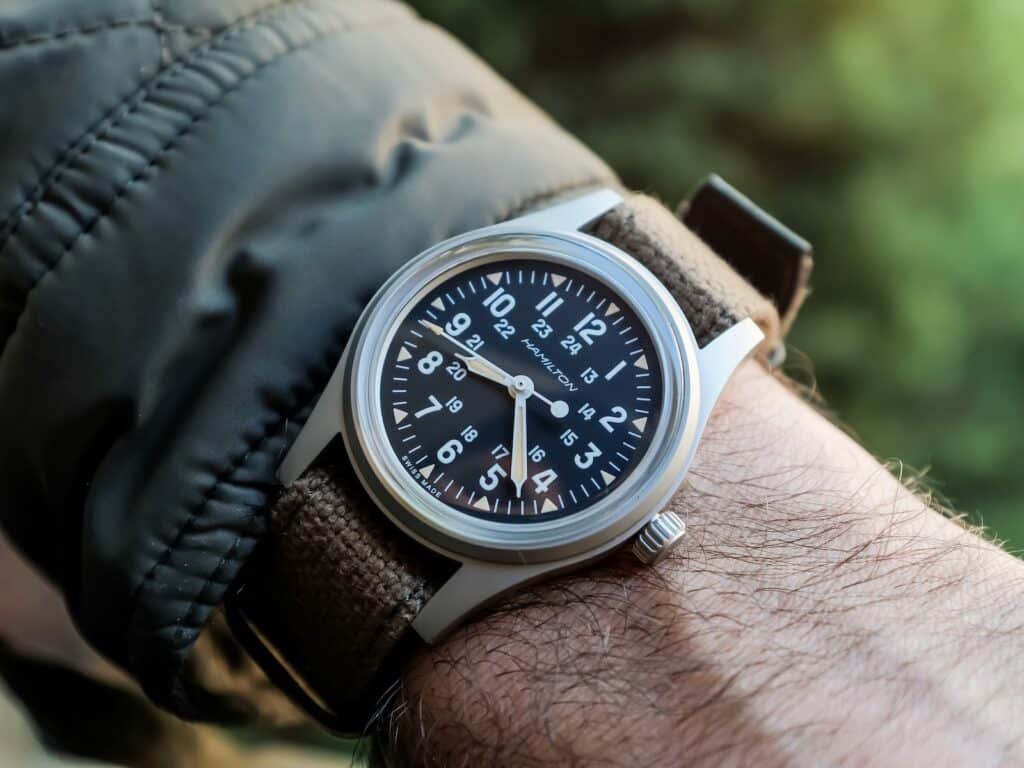
If the appeal of a vintage field watch is the way it wears rather than the thrill of hunting for one in uncertain condition, the Hamilton Khaki Field Mechanical 250 makes a lot of sense around the $750 mark. We get the compact 36mm case, slim profile, fixed bars, hand-wound movement, and military-style dial without worrying about whether someone has refinished the dial or whether a decades-old component is about to become our weekend project. The 46mm lug-to-lug gives the case enough presence to avoid feeling tiny, while still letting it disappear under a cuff and stay out of the way. For us, that combination is what makes it such a useful recommendation in this price range.
Hamilton also made some smart decisions about what to modernize and what to leave alone. The large Arabic numerals, separated 24-hour track, and white minute scale make the dial almost impossible to misread, while the warm Super-LumiNova adds character without resorting to fake aged lume. The acrylic crystal is arguably the more interesting choice. It gives the watch that soft vintage look, handles glare better than some earlier Khaki Field models we’ve worn. When scratches eventually arrive (as acrylic scratches like it has something to prove), Polywatch can usually sort them out.
Then there’s the H-50: an 80-hour power reserve, hacking seconds, and a Nivachron balance spring make ownership far easier than the watch’s old-school appearance implies. Moreover, the daily winding still feels like part of the experience. Fixed bars do narrow the strap menu, but NATO and single-pass straps are exactly where we found the watch most convincing anyway. The result isn’t a museum-piece recreation. It’s a field watch that lets us enjoy the parts of vintage collecting we actually like and skip the parts involving magnifying glasses, replacement parts, and mild panic. For a closer look at what makes the Khaki Field 250 work day-to-day, check out our in-depth review.
Pros
- The 36mm case and 46mm lug-to-lug give it compact but well-balanced wrist presence.
- H-50 adds an 80-hour reserve, hacking, and Nivachron while retaining the appeal of hand-winding.
- Acrylic crystal gives the dial vintage warmth, reduces glare, and can be polished when scratched.
- Large numerals and the separated 24-hour track make the military dial very easy to read.
- Warm Super-LumiNova adds character without fake-patina excess.
Cons
- Fixed bars rule out conventional two-piece straps and limit experimentation.
- Acrylic will pick up scratches more easily than sapphire.
Bernhardt Captain
| Price: | $749 (Check current price) |
| Water Resistance: | 50m |
| Case Dimensions: | 38mm (diameter) x 45mm (lug-to-lug) x 9.55mm (thickness) |
| Lug Width: | 20mm |
| Movement: | Miyota 9039 automatic |
At $749, the Bernhardt Captain pushes right up against this list’s budget ceiling, so the question isn’t whether it looks dressy enough. It’s whether enough is going on beneath the polished surface to make it worth choosing over another, more familiar everyday watch. After a few weeks with it, we found the answer mostly in the dial and how it changes a collection’s mood.
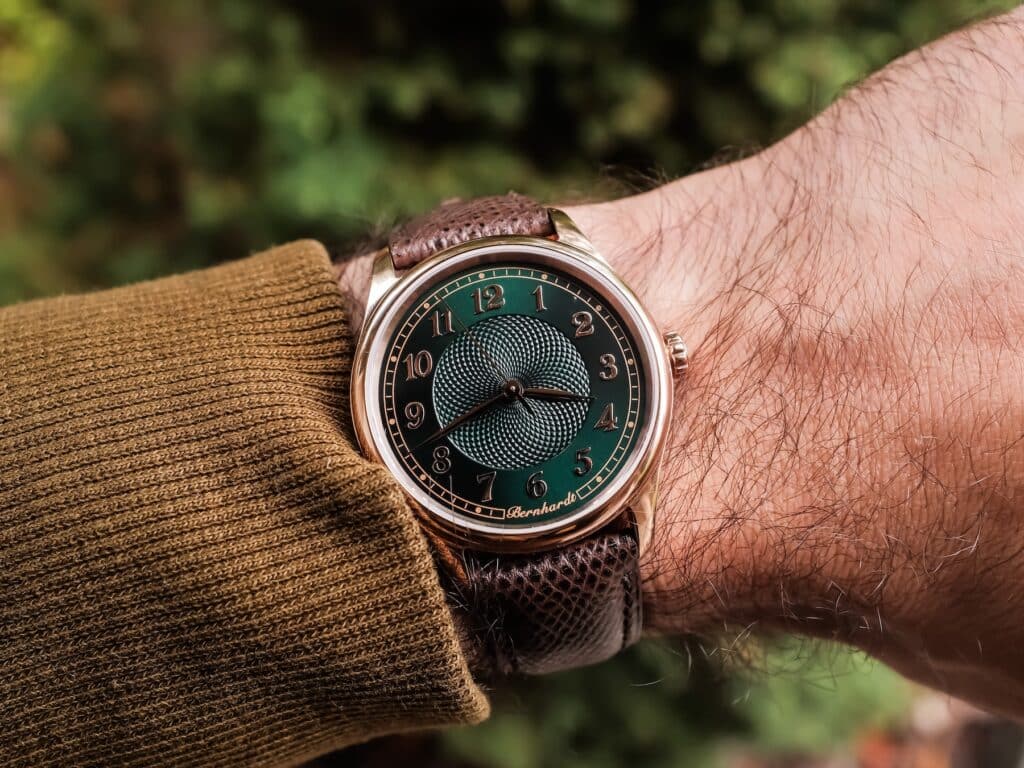
The Cypress green guilloché center has a stamped pattern that radiates outward into a satin-finished ring. At the same time, the applied Breguet-style numerals sit high enough to catch the light without turning the dial into a jewelry counter. The long rose gold hands and railroad minute track keep it easy to read. We expected the green-and-rose-gold combination to feel like a stretch. Instead, it became the part we kept coming back to.
The 38mm case matters as much as how it wears on the wrist. Its 45mm lug-to-lug and 9.55mm thickness give it enough presence without feeling precious, and the polished titanium nitride-coated steel case sits close enough to work with casual clothes as well as a button-down. The all-over polish does make it less forgiving than a brushed sports watch, and the slightly slab-sided profile is noticeable when you handle it, but not really troublesome once you’re wearing it. Inside, the Miyota 9039 keeps things quite simple, with hand-winding, automatic operation, and roughly 42 hours of reserve. Leave it sitting for a couple of days, and you’ll have to reset it, but that’s hardly a scandal on a hand-wound-friendly dress watch.
The 50m water resistance and push-pull crown set clear limits, while the lack of lume means this is not the watch for checking the time in a dark movie theater without some assistance from your phone. The brown textured leather strap works naturally with the case and dial, and the 20mm lugs leave room for a Perlon or black leather strap when you want to pull the watch in another direction. For under $750, the Captain isn’t trying to beat a sports watch at being one. It gives collectors who spend most of their time with divers and field watches a believable excuse to wear something dressier without feeling like they’ve borrowed someone else’s wardrobe. Our Bernhardt Captain write-up covers the full experience with the Captain’s proportions, guilloché dial, and movement.
Pros
- The Cypress green guilloché dial and applied Breguet-style numerals give the watch its strongest visual appeal.
- 38mm case, 45mm lug-to-lug, and 9.55mm thickness create easy everyday proportions.
- Sapphire crystal adds welcome durability at the $749 price.
- Miyota 9039 keeps the case slim while offering automatic winding, hand-winding, and roughly 42 hours of reserve.
- 20mm lugs make changing from leather to Perlon or other straps straightforward.
Cons
- The fully polished rose gold-tone case is less versatile and more scratch-conscious than brushed steel.
- 50m water resistance and a push-pull crown limit water use.
- No lume makes the watch effectively useless for nighttime reading without ambient light.
Plenty of watches under $750 make a strong first impression. Fewer keep earning wrist time once the review is over. These are the ones that did.

Co-Founder and Senior Editor
Kaz has been collecting watches since 2015, but he’s been fascinated by product design, the Collector’s psychology, and brand marketing his whole life. While sharing the same strong fondness for all things horologically-affordable as Mike (his TBWS partner in crime), Kaz’s collection niche is also focused on vintage Soviet watches as well as watches that feature a unique, but well-designed quirk or visual hook.