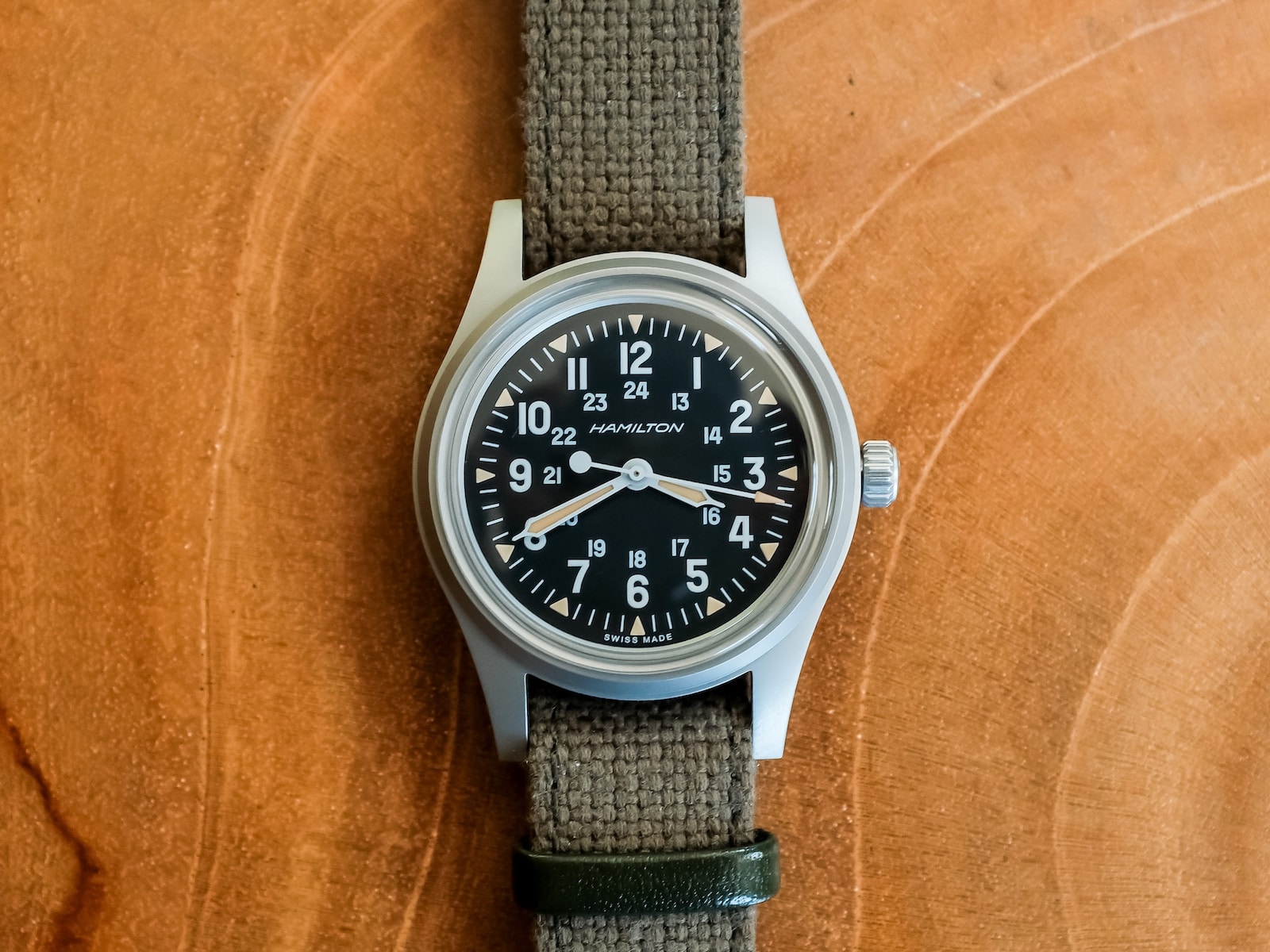
If you were getting seriously into watches in the early 2010s, chances are the Hamilton Khaki Field found its way onto your shortlist at some point. Back then, it occupied the same territory as watches like the Seiko SKX007 and Orient Mako, the pieces enthusiasts routinely recommended as an entry into mechanical watch collecting. I remember coming across an early Hodinkee article where John Mayer wrote that “a $400 Hamilton Khaki Field” could say just as much about its owner as a far more expensive pilot’s watch. That line stuck with me, partly because it introduced me to a brand I knew almost nothing about at the time.
The funny thing is that I never actually bought one. Over the years, I looked at countless Khaki Field references, but each seemed to miss the mark in one way or another. Some weren’t quite right aesthetically, while others didn’t offer the combination of features I was looking for. In the meantime, I tried filling that gap with a handful of inexpensive field watch homages. They were good enough to scratch the itch temporarily, but none of them felt like a permanent solution. When Hamilton announced the Khaki Field Mechanical 250, that changed almost immediately. For the first time, the design and proportions came together in a way that felt tailored to exactly what I had been waiting for, and it didn’t take long before a favorite Timex was making room for it in the watch box.
A Reissue That Finally Got My Attention
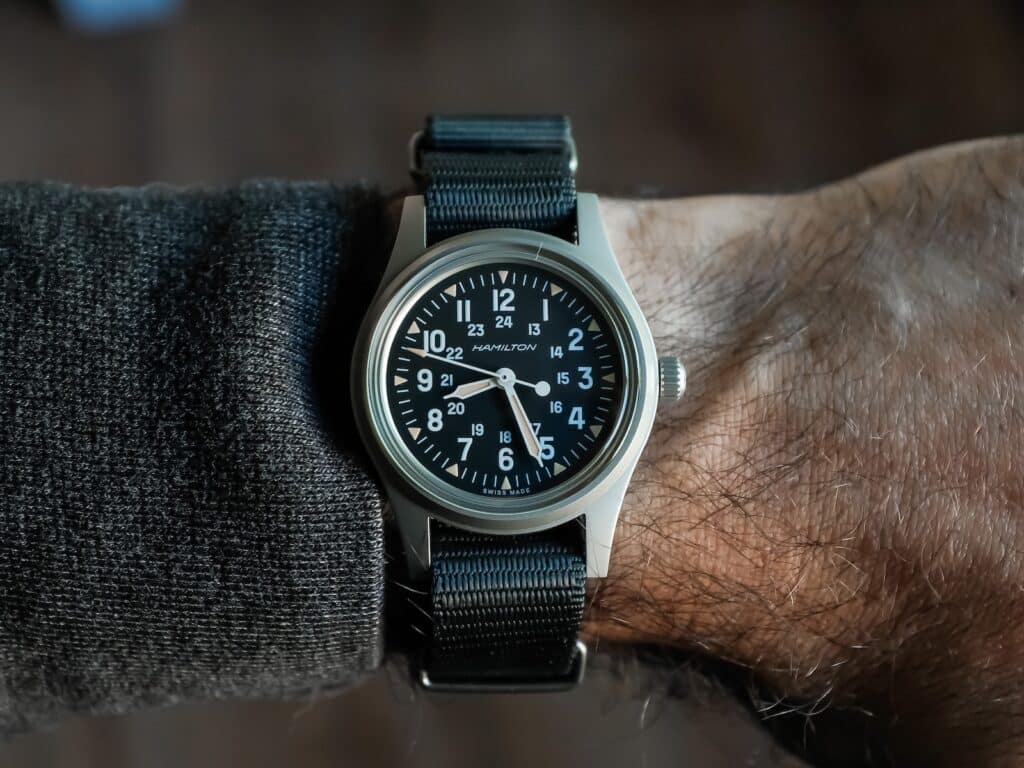
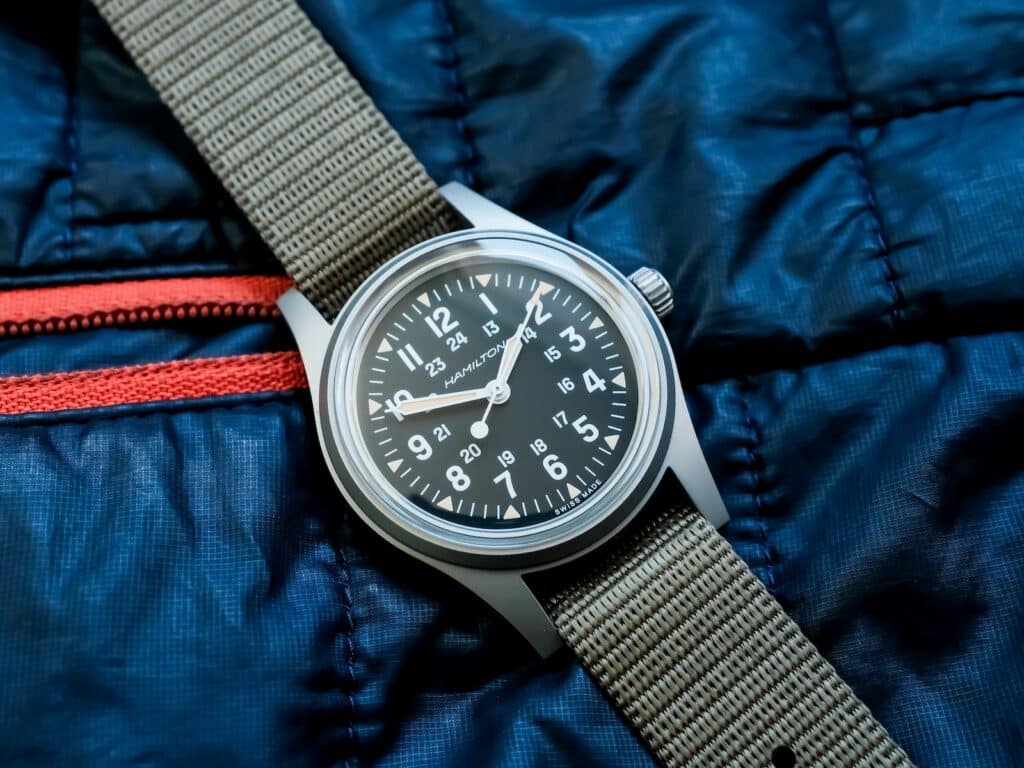
What immediately separates this watch from the broader Khaki Field lineup is that Hamilton wasn’t simply revisiting one of its military-inspired designs. Instead, the company chose to recreate a fairly obscure navigator’s watch issued to U.S. military pilots, the FAPD 5101 Type 1. That’s a deep cut by Hamilton standards, and after spending time with the watch, it’s clear the brand approached the project with a surprising amount of discipline.
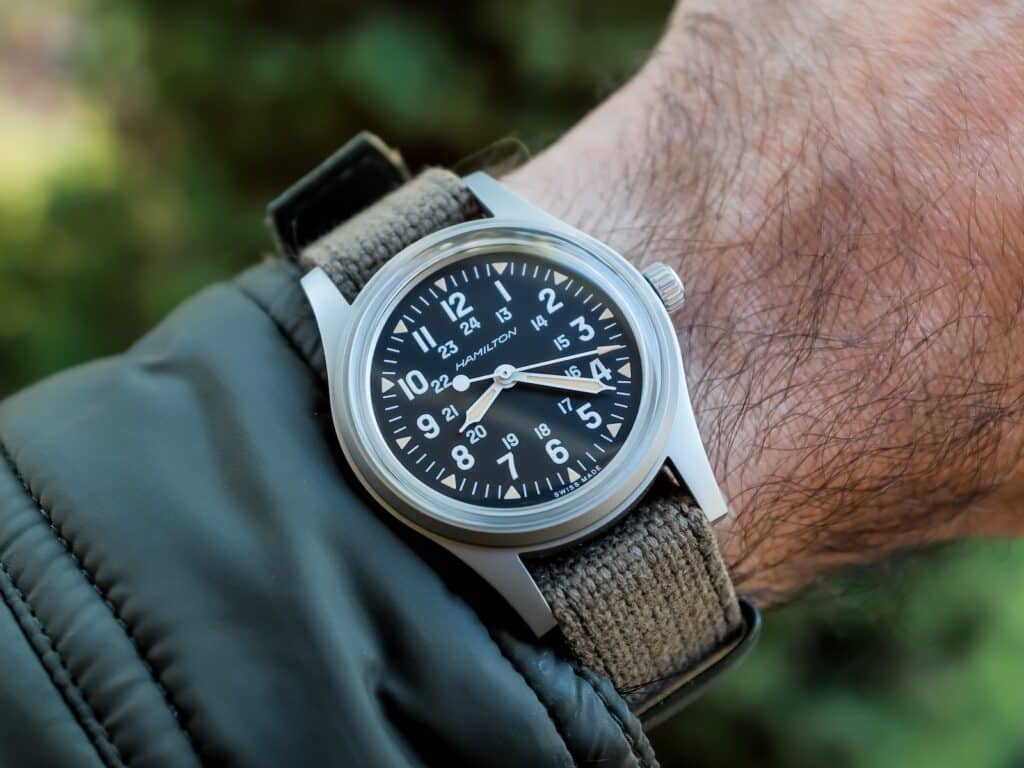
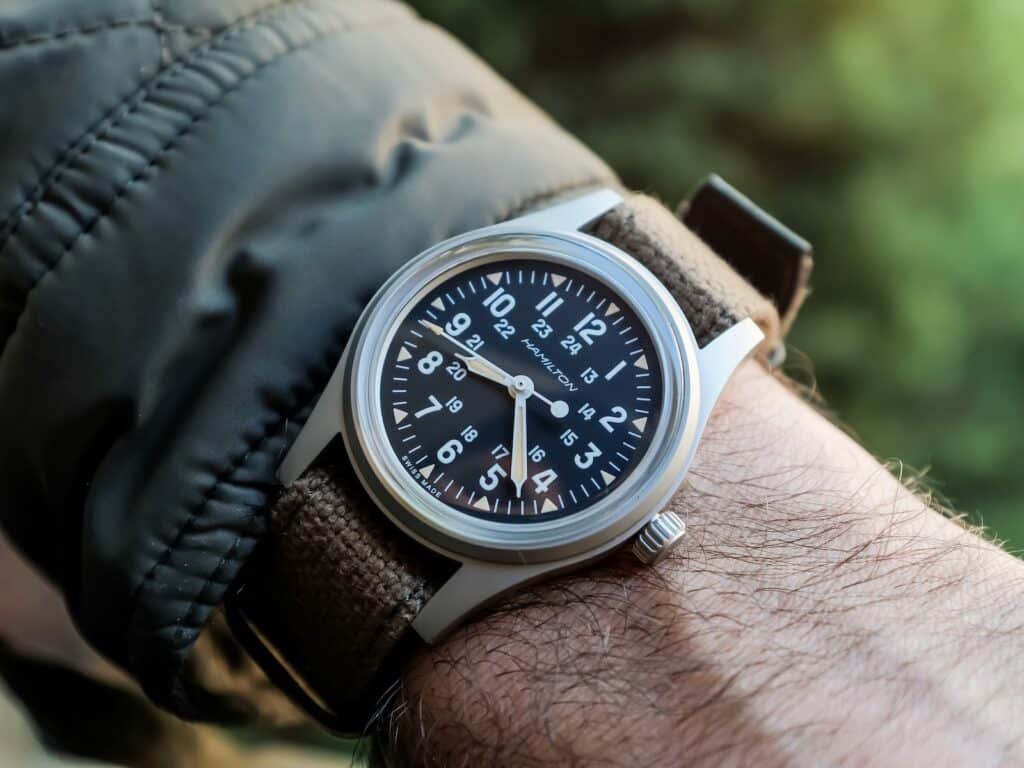
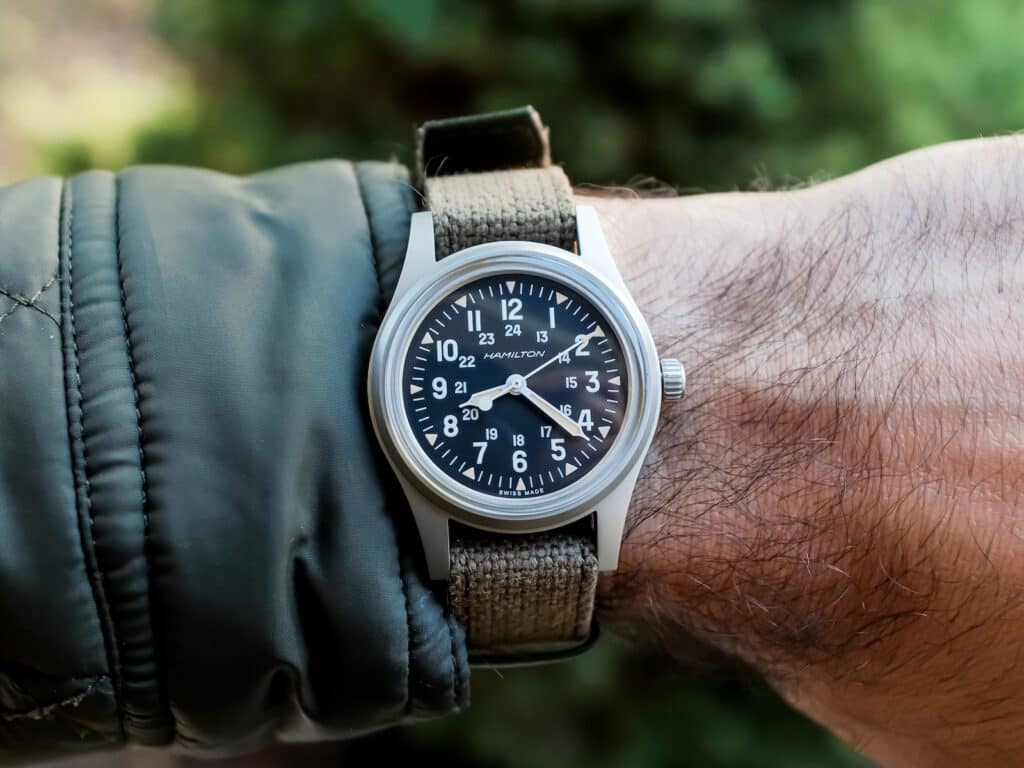
The dimensions are a big part of that. At 36mm across and just over 10mm thick, this is a smaller watch by modern standards. On my 6.75-inch wrist, however, it feels exactly right. I’ve spent time with the 38mm Khaki Field Mechanical and never completely connected with it. This version changed that almost immediately. The 46mm lug-to-lug measurement gives it enough presence to avoid feeling undersized, while the compact diameter keeps it balanced and easy to wear for long stretches.
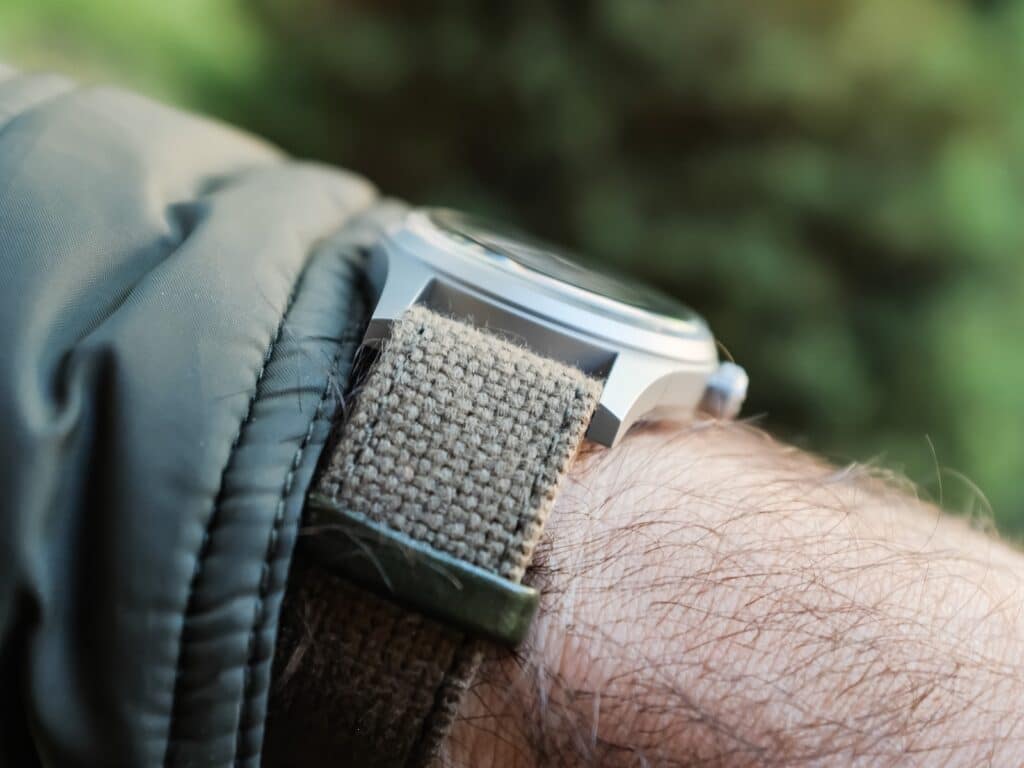
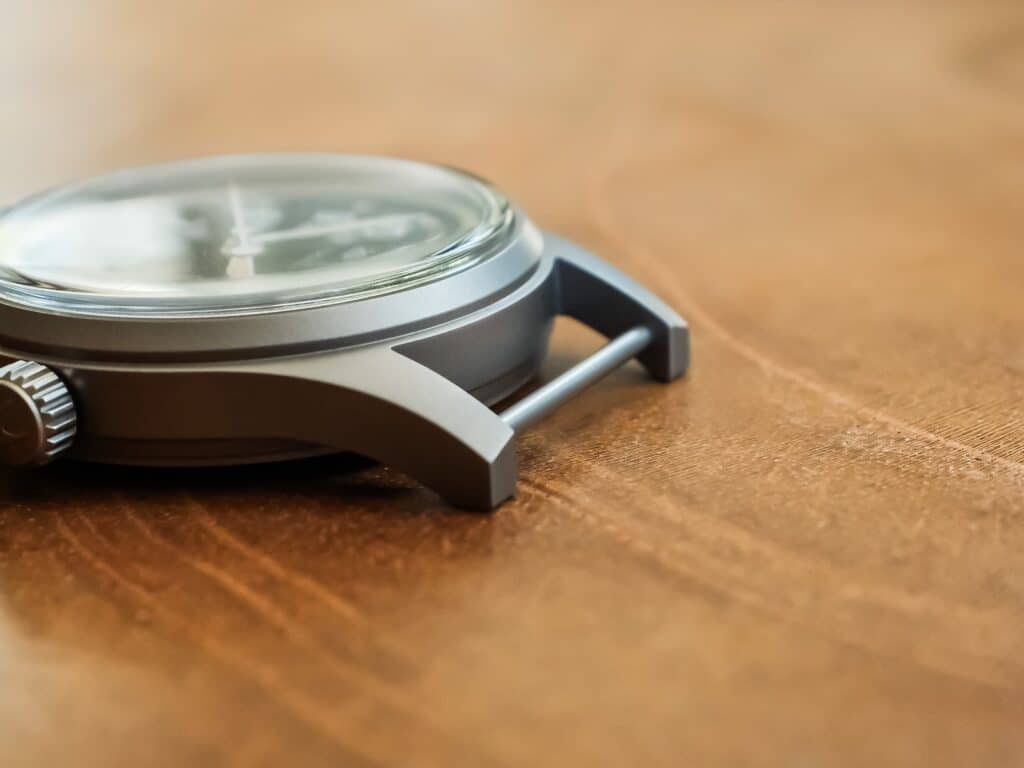
Hamilton also resisted the temptation to modernize away some of the details that make the original interesting. The fixed strap bars remain, which might sound restrictive on paper, but I’ve always enjoyed watches that force me to think differently about straps. Between my Tudor Pelagos FXD and CWC Royal Navy Diver, I’m already accustomed to living with fixed bars, so their inclusion here feels authentic rather than inconvenient. In fact, I’ve probably changed straps on this watch more often than most others in my collection since it arrived. The included options are perfectly good, but the watch has spent most of its time on an olive drab Maratac single-pass strap and a grey ADPT NATO. Both feel completely at home here.
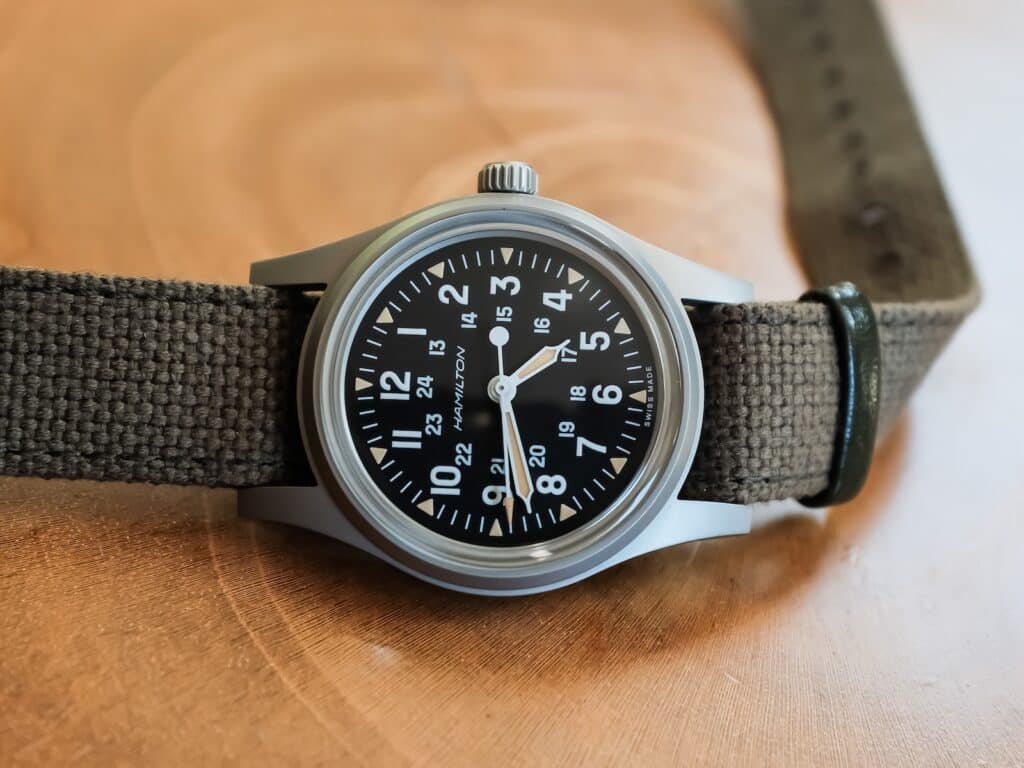
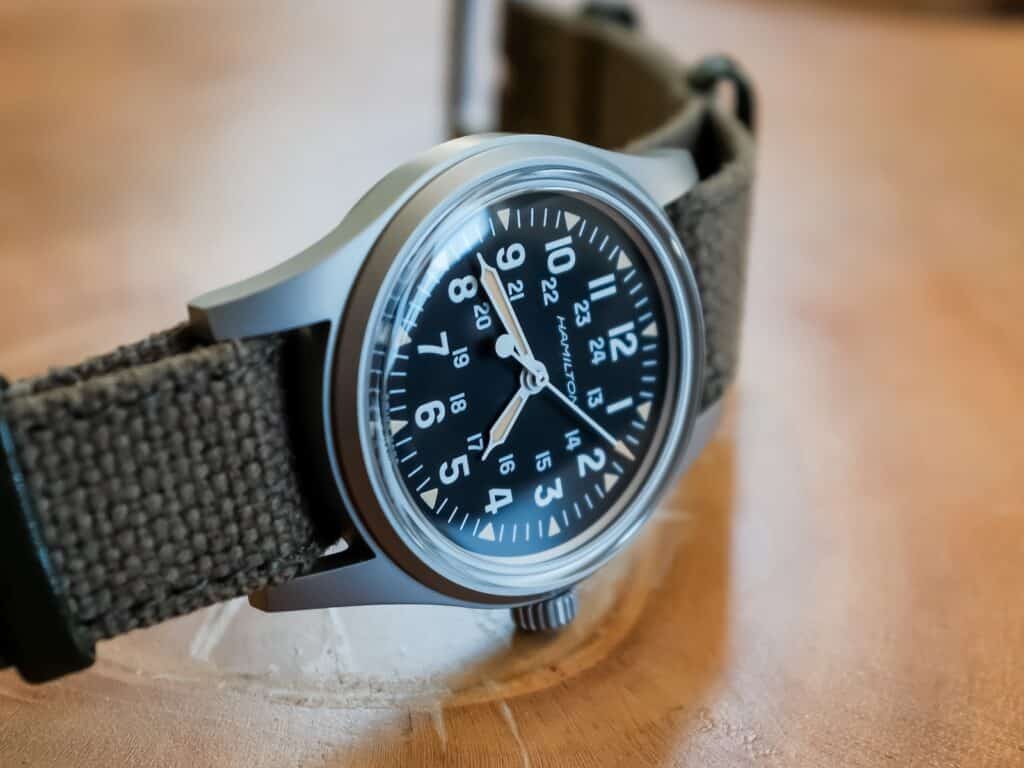
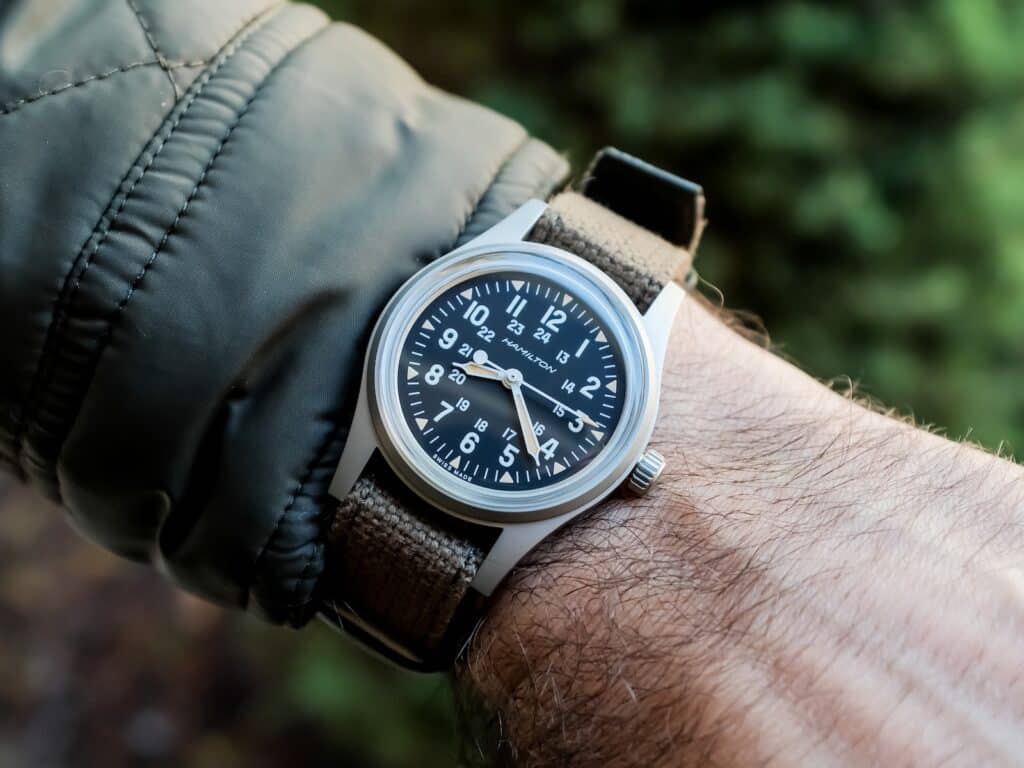
The acrylic crystal is another detail I wouldn’t want Hamilton to change. It gives the watch a character that would be difficult to replicate with sapphire, particularly when viewed from an angle where the boxed profile becomes more apparent. Acrylic also tends to divide collectors into two camps. Personally, I’ve never been bothered by it. Scratches happen, and a tube of Polywatch has always felt like a small price to pay for the warmth and distortion that acrylic brings to a vintage-inspired design. Better still, Hamilton appears to have addressed some of the glare issues that have followed earlier Khaki Field models.
The Dial Reminds Me Why Field Watches Became Popular
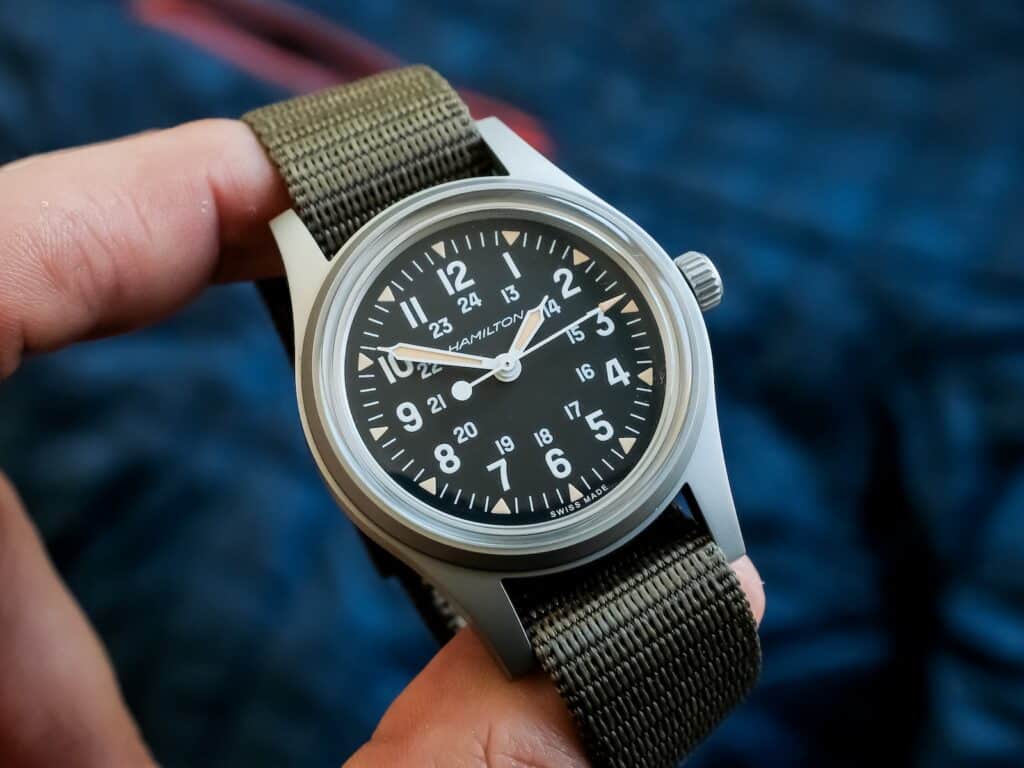
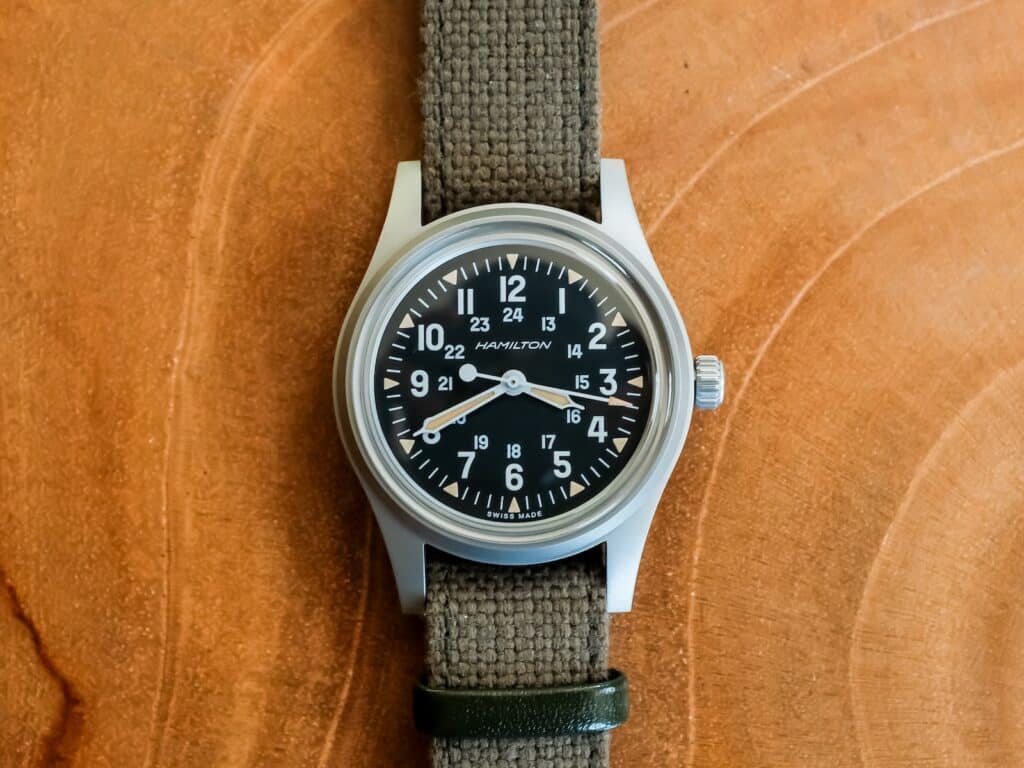
The appeal of this dial comes from how efficiently it does its job. Against the matte black background, every element stands apart with very little effort. The larger hour numerals are easy to identify at a glance, the inner military time track remains useful without becoming visually distracting, and the white minute track helps frame the entire layout. Nothing feels crowded despite the amount of information present on the dial.
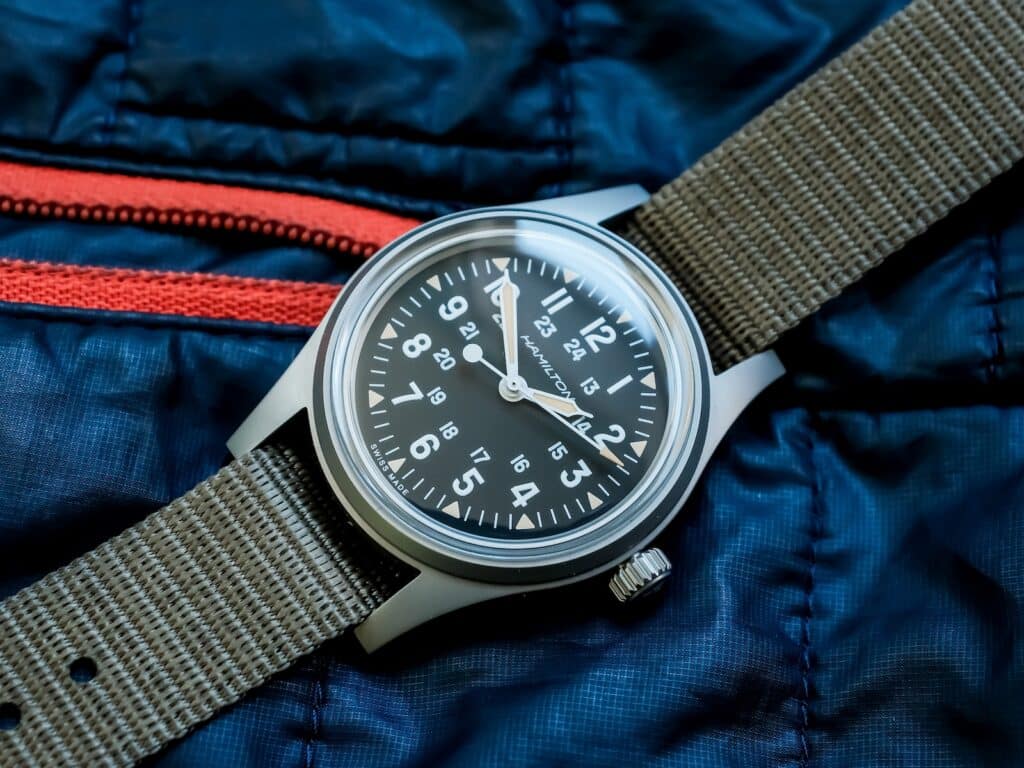
Hamilton also showed more restraint than I expected with the vintage-inspired details. Normally, I’m fairly skeptical of artificial aging, particularly when it feels like it’s trying too hard to convince me a watch has a history it hasn’t earned. Here, the warm lume tone feels appropriate for the design. The aged treatment on the triangular markers and seconds hand provides just enough contrast to soften the stark black-and-white presentation without turning the watch into a costume piece. Combined with the old-school handset and typography, the overall effect feels cohesive.
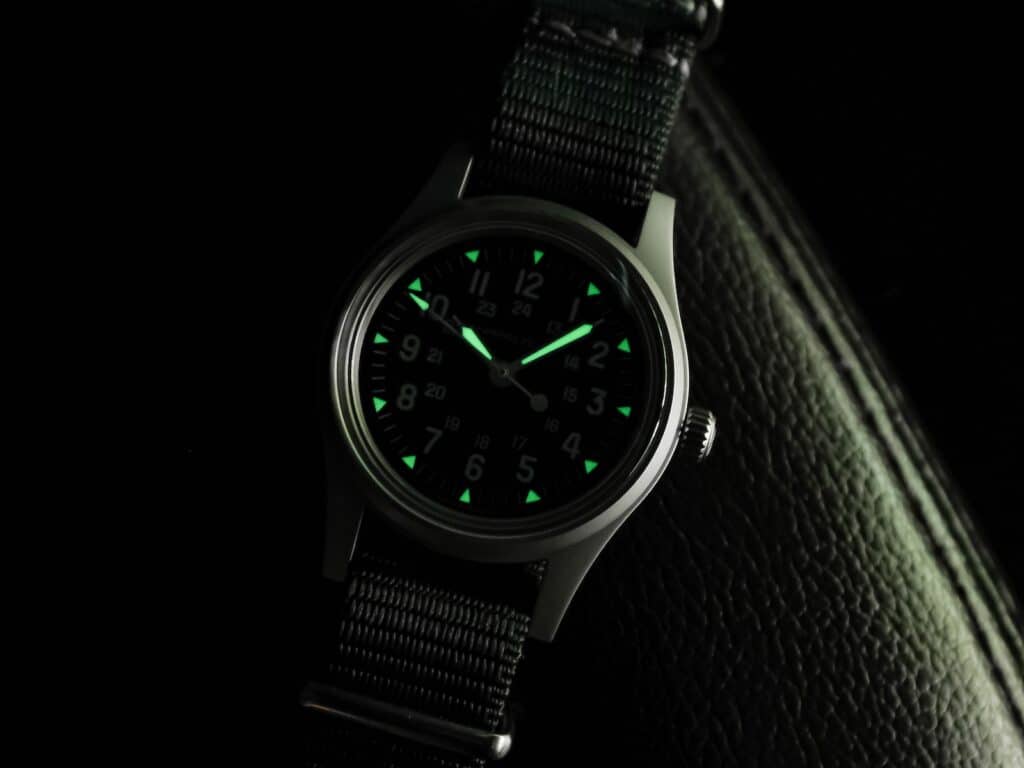
The only major departure from the original military-issued watch is the Hamilton logo sitting beneath twelve o’clock. Realistically, there was never a scenario where Hamilton was going to release a production watch without branding, and I think the company handled it about as well as possible. The typeface feels period appropriate and remains visually subordinate to everything else happening on the dial.
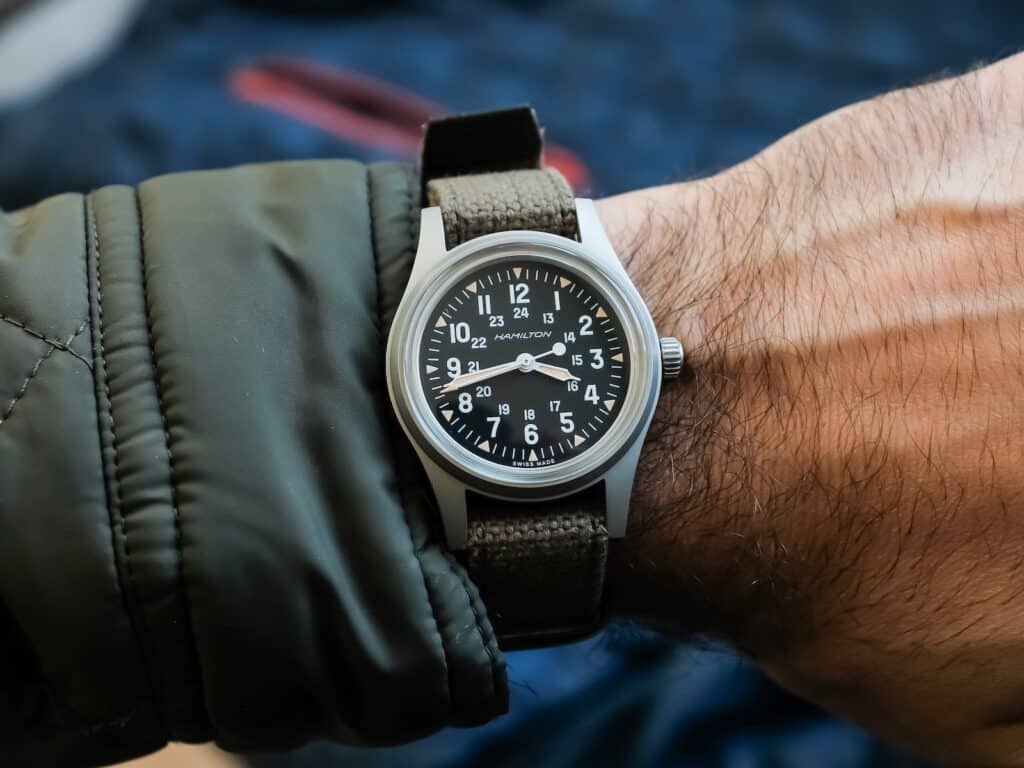
What I haven’t stopped noticing is the legibility. A quick glance tells you everything you need to know, whether you’re indoors, outside, or checking the time from an awkward angle while driving. The Super-LumiNova application follows the same philosophy.
That straightforward approach is probably one of the reasons this watch has received so much wrist time since arriving. The longer I own watches, the more I find myself appreciating designs that remove friction from the experience rather than adding novelty. The Khaki Field Mechanical 250 doesn’t give me much to think about when I wear it, and I mean that as a compliment.
A Manual-Wind Movement That Fits the Watch
Inside the case is Hamilton’s H-50 hand-wound movement, a caliber that has become a familiar sight throughout the Khaki Field lineup. On paper, the headline feature is the 80-hour power reserve. In practice, what stands out to me is how well that specification complements the way I actually wear watches.
The manual winding experience itself has also been excellent. The crown action is smooth, consistent, and surprisingly satisfying. Winding a watch every morning can sometimes feel like a chore after the novelty wears off. That hasn’t happened here. If anything, the interaction feels appropriate for a watch so heavily rooted in military design.
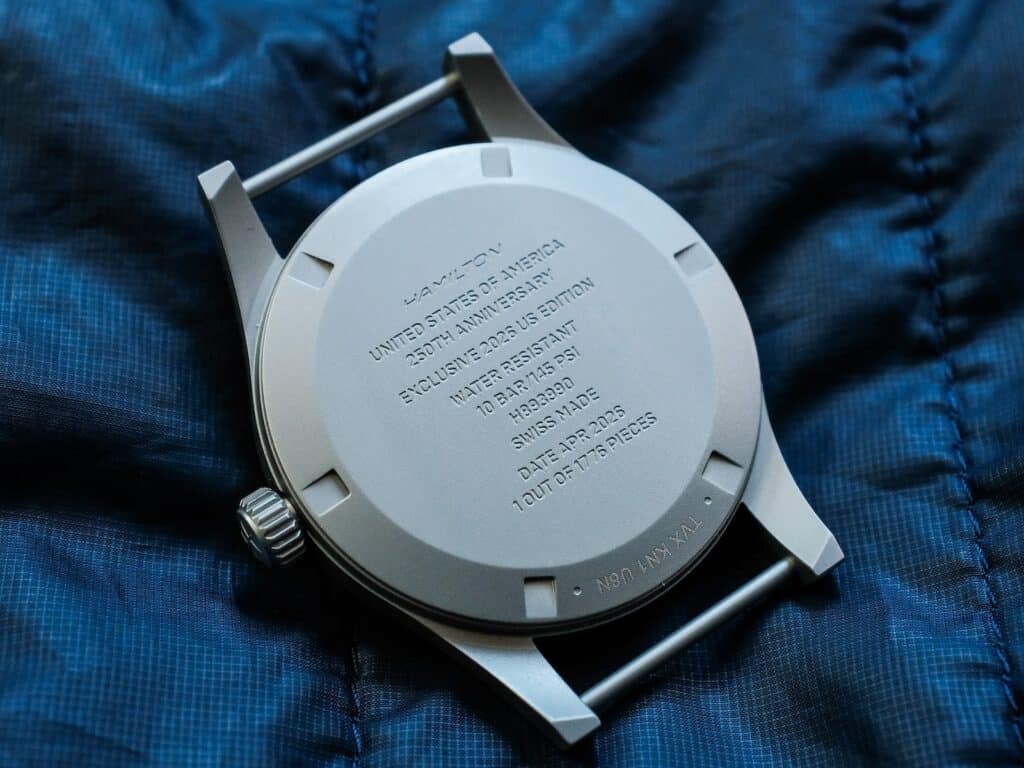
Hamilton also deserves credit for avoiding the temptation to treat this purely as a vintage exercise. Beneath the historically inspired exterior sits a thoroughly modern movement equipped with a Nivachron balance spring, hacking seconds, and reliability that should exceed anything found in the original military-issued watch. Even the inclusion of a movement dust cover serves as a nod to the watch that inspired it, reinforcing the feeling that Hamilton paid attention to details enthusiasts would appreciate rather than simply recreating the broad strokes.
As much as I enjoy discussing movement architecture, the reality is that most owners will judge this watch by how it behaves over months and years of use. So far, the H-50 has done exactly what I want from a field watch movement. It stays out of the way. It keeps good time. The longer this watch stays in my collection, the more I find myself appreciating that approach. There are watches that impress through complexity and there are watches that earn wrist time through ease of ownership. The Khaki Field Mechanical 250 falls firmly into the second category.
Why This One Has Been Hard To Take Off
One detail I haven’t touched on yet is the 100 meters of water resistance. Under normal circumstances, that wouldn’t be enough to move the needle for me. Plenty of watches offer similar ratings. What matters here is how it contributes to the overall ownership experience. Combined with the compact dimensions, matte finishing, acrylic crystal, and straightforward dial, it creates a watch that feels remarkably free of limitations. I don’t find myself babying it or planning around it.
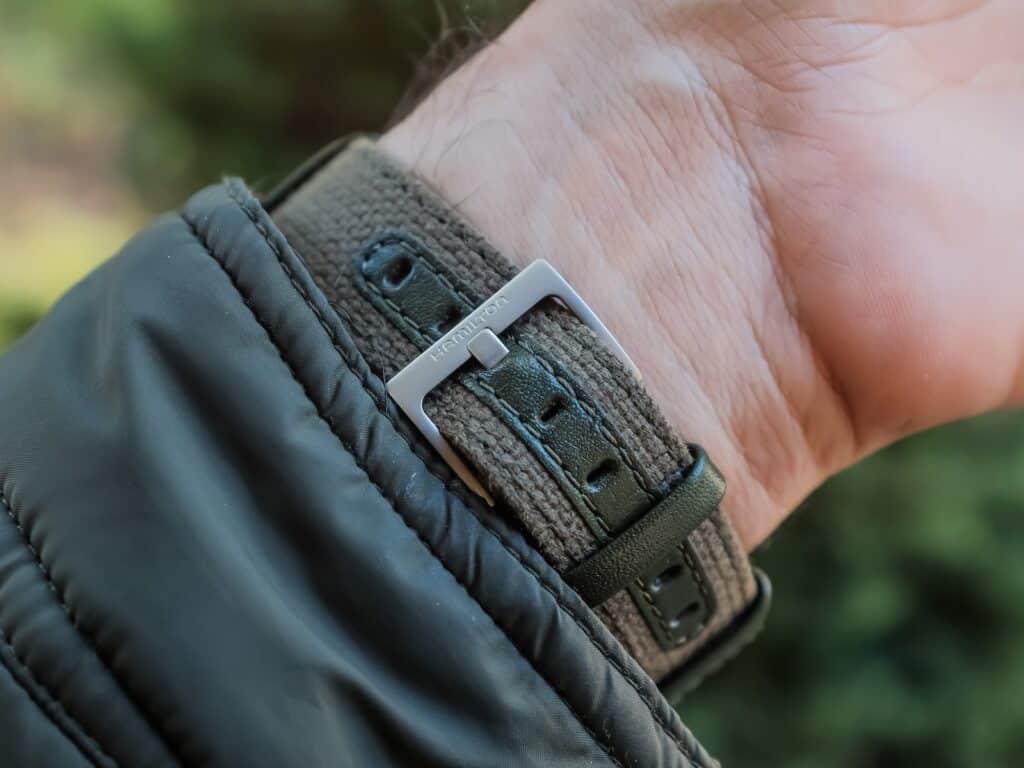
That ease of use has become even more apparent as I’ve experimented with straps. The included options are perfectly serviceable, but this watch seems to come alive on military-style nylon. An olive drab Maratac single-pass strap has become an early favorite, while a grey ADPT NATO gives the watch an entirely different personality without losing any of its character. The fixed bars naturally encourage this sort of experimentation, and I suspect I’ll continue cycling through options long after the review is published.
The funny thing is that this watch has arrived during a stage of my collecting journey where I spend more time questioning my collection than expanding it. After enough years in the hobby, you eventually accumulate a lot of watches that perform broadly similar tasks. Every now and then a watch comes along that forces you to confront that reality.
I realize I’m still in the honeymoon phase, and experience has taught me to be cautious whenever a new acquisition starts receiving an outsized amount of wrist time. Even so, there are very few watches that have pushed so many others aside this quickly. Day after day, I find myself reaching for it without much thought. It simply delivers an experience that aligns almost perfectly with what I enjoy about watches in the first place.
For years, the Hamilton Khaki Field existed in my mind as a watch I probably should’ve owned but never quite found the right version of. At $725, the America 250 edition finally changed that. It took a design I already appreciated, paired it with proportions that suit my wrist far better than previous iterations, and wrapped it in a package that feels both historically informed and genuinely enjoyable to wear today.
Wrapping Things Up
For years, the Hamilton Khaki Field occupied a strange place in my collection. It was always present in the background, always lurking somewhere on a wishlist. In the meantime, I tried taking shortcuts. I bought homages. I bought field watches that captured pieces of the formula. I bought watches that looked close enough. None of them fully scratched the itch because they were ultimately standing in for something else.
Owning this watch has given me the same sense of closure I experienced when my CWC Royal Navy Diver entered the collection. That watch became my answer to the “my Mil-Sub” question I’ve shared on the podcast. The search ended because I finally had the version that made sense for me. The Khaki Field Mechanical 250 has created a similar feeling. I no longer find myself browsing alternatives, comparing specifications, or wondering whether another field watch might do the job better. For my tastes, this is the one.
Maybe that feeling will change with time. As collectors we’re notoriously bad at declaring victory. For now, though, this watch has delivered something I wasn’t expecting after all these years. It didn’t simply meet the expectations I had built around the Hamilton Khaki Field. It removed the need to keep searching for one. And in a hobby built around endless chasing, that may be the highest compliment I can give it.

Co-Founder & Senior Editor
Michael Peñate is an American writer, photographer, and podcaster based in Seattle, Washington. His work typically focuses on the passage of time and the tools we use to connect with that very journey. From aviation to music and travel, his interests span a multitude of disciplines that often intersect with the world of watches – and the obsessive culture behind collecting them.
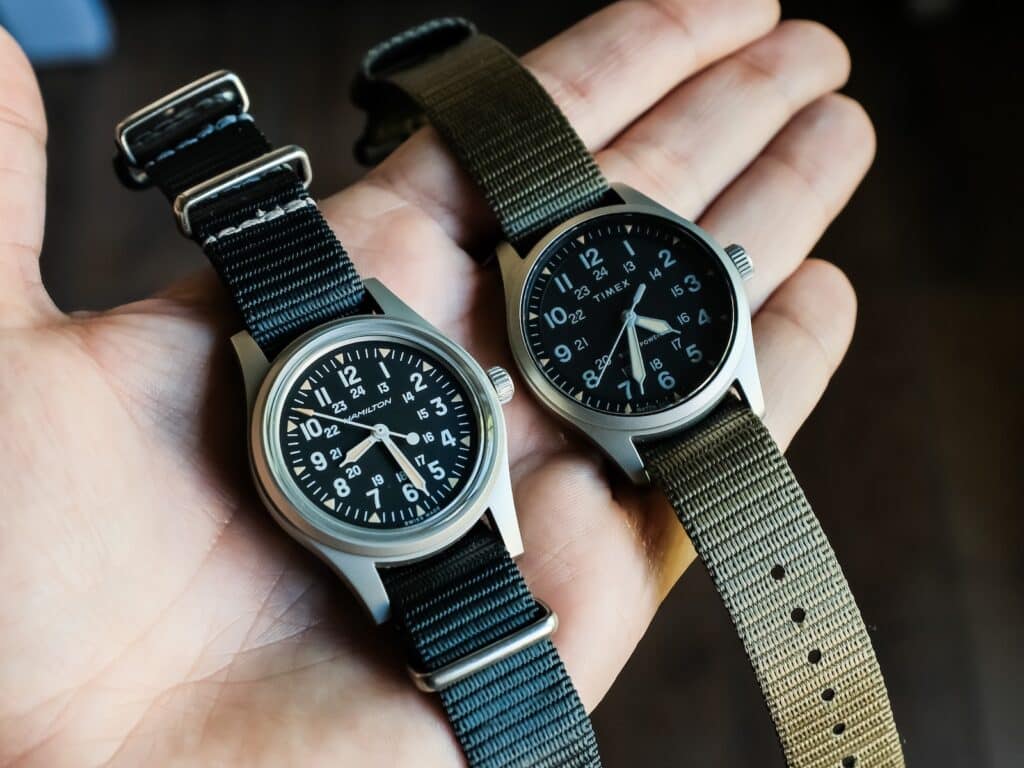
Agree with about everything you said in anticipation of this watch. I also have the Timex field post solar. What that side-by-side image doesn’t capture is how much nicer the Timex looks than the Hamilton in person. The Hamilton comes across as plasticky and toyish in comparison. The dimensions and strap lengths also feel off for the scale of the watch. Despite also thinking this would *finally* be my Hamilton “GADA” field watch, I begrudgingly returned it.
Hey Mac. The Timex outperforming the Hamilton in person is not something most people would expect, but real-world impressions don’t always follow the price tag. “Begrudgingly returned” says it all. Appreciate the honest comparison.
Informative and entertaining article, thanks! I don’t have a field watch yet, but this one looks like a lot of fun!
Thanks, Patrick. Like I said – still the honeymoon phase but it feels perfect for me.
Great article. For someone which a small wrist size which field watch would you recommend?
Definitely this watch or the Hamilton Khaki Field Quartz in 33mm if you want to go smaller.
Nice personal perspective on a pretty cool watch. Hamilton did do a good job on an obscure historical piece.
My only complaint is not the quality of the photos, they were great. However I’d like to have seen a bit more variety in the background possibly something that reminds us of flight, machinery or military.
Overall it’s a good review to assist someone in choosing the watch.
Thank you for reading Steve 🙂 I … gotta get out more for better photos lol.
Great review Michael.
I’ve been stalking this watch for weeks now, but hesitating to buy because of the lug to lug and fixed spring bars. Now the Benrus dtu-2a/p 34mm has caught my eye as an option, despite being smaller.
Any thoughts? Perhaps you could share them on the next podcast (hint, hint).
That’s a tough one, Rob. The Benrus looks sick as well. Hopefully I can get one in to do a hands-on comparison.