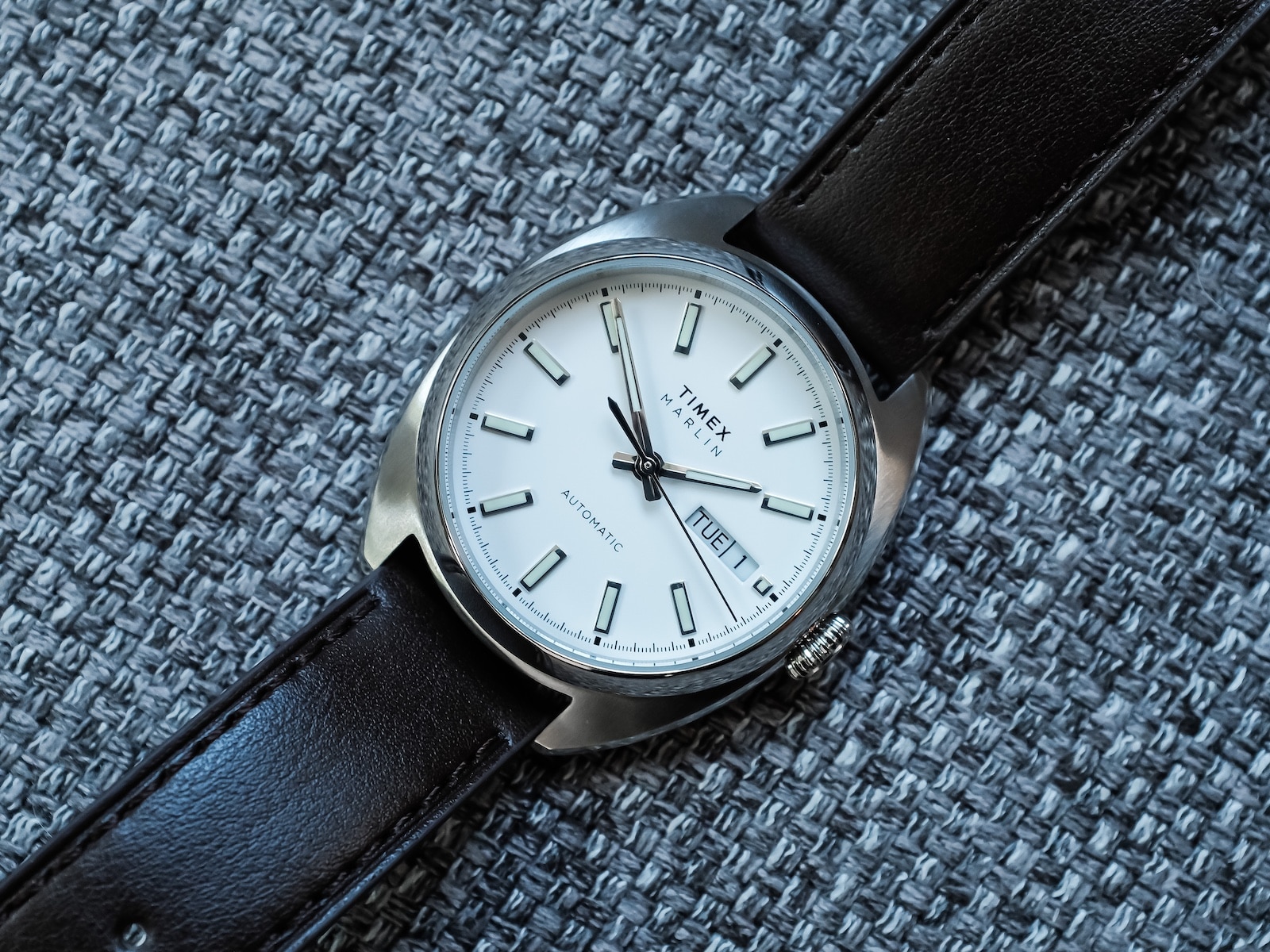
The funny thing about covering watches long enough is that you start developing opinions about releases before you ever touch them. Sometimes those opinions hold up once the watch actually lands on your wrist. Sometimes they fall apart within about thirty seconds of opening the box. Back when Timex announced the Timex Marlin Draper Automatic earlier this year, I remember being more interested than I expected to be. That probably sounds strange considering how many Marlin variants the brand has released over the past several years, but this one immediately felt a little more enticing.
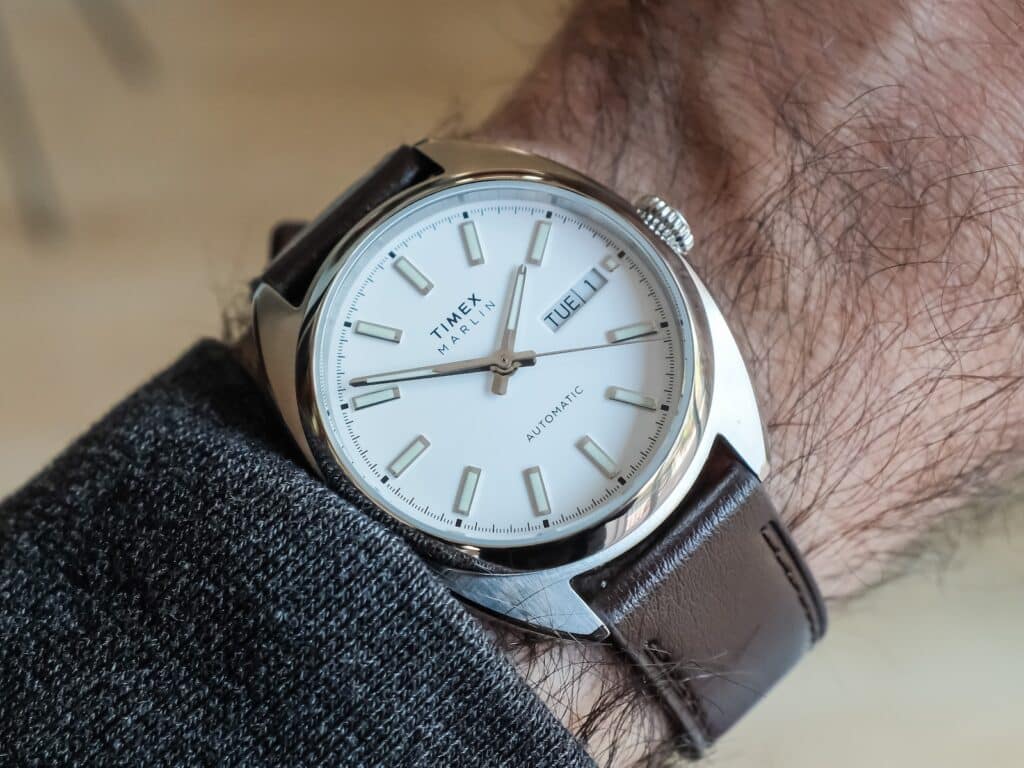
The cushion-shaped case, the restrained dial layout, the overall mid-century styling. It looked like Timex had resisted the urge to over-modernize the idea, which is usually where these archive-inspired releases start losing me. At the time, I was working entirely from press images and specs. Now, after spending actual time with the watch on the wrist, I can say my initial reaction was mostly correct, though a few things stood out differently once the novelty of the release photos disappeared and the watch became a physical object sitting on my desk for a couple of weeks. Here’s how my time with the watch went down.
On the Wrist
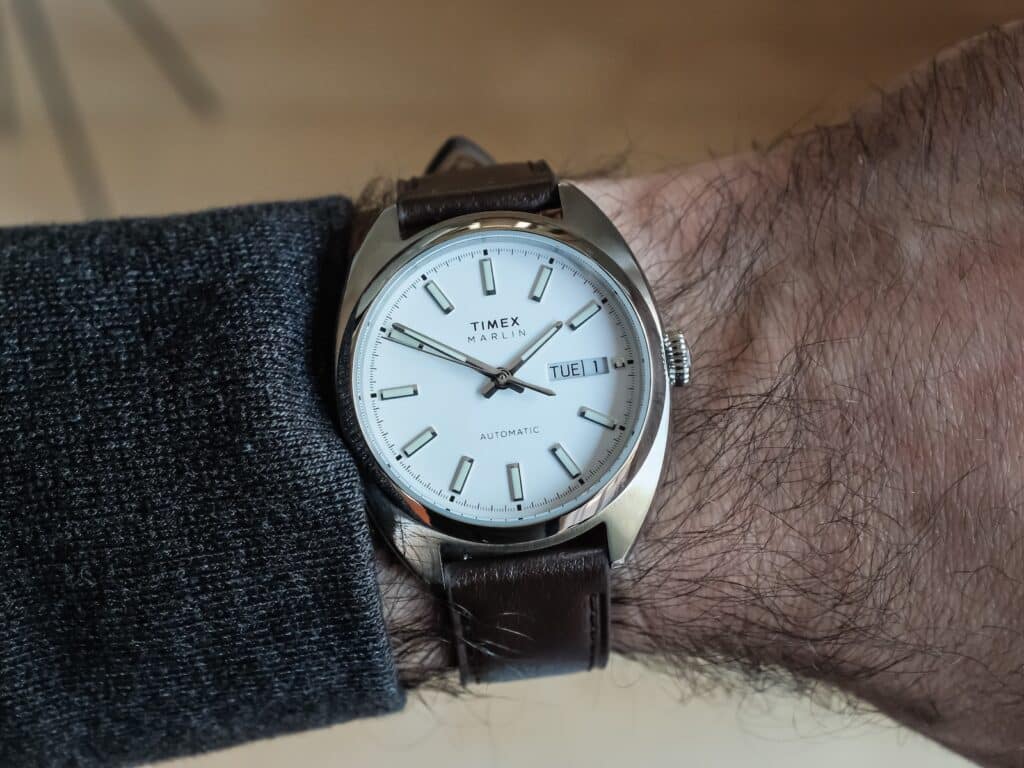
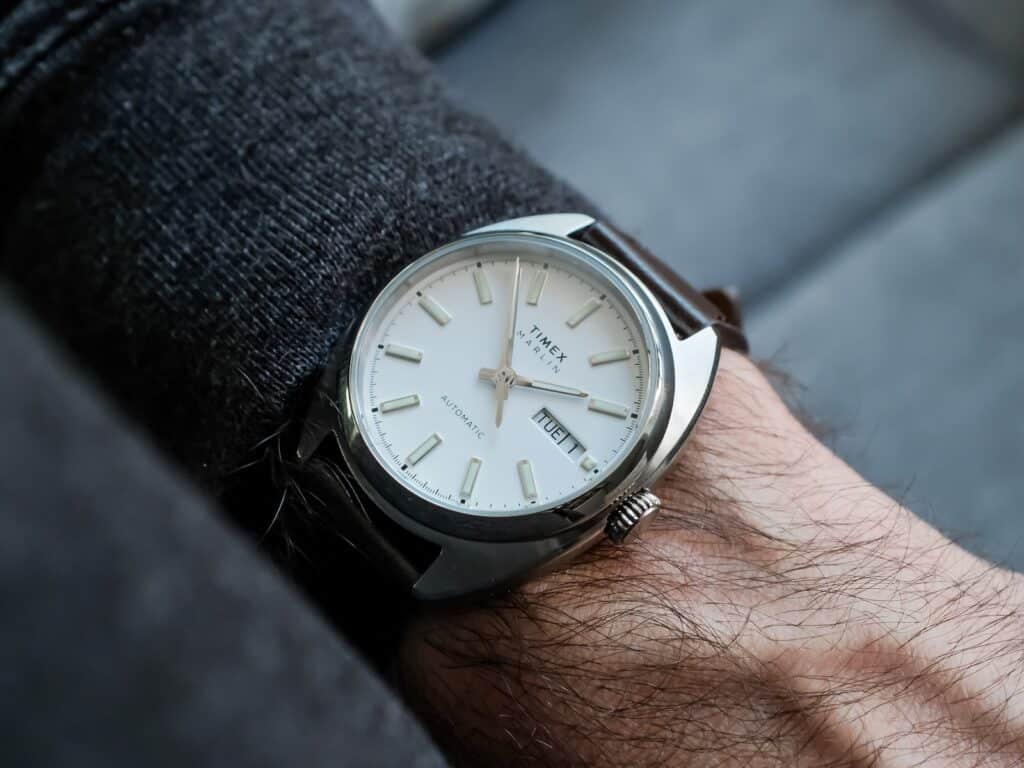
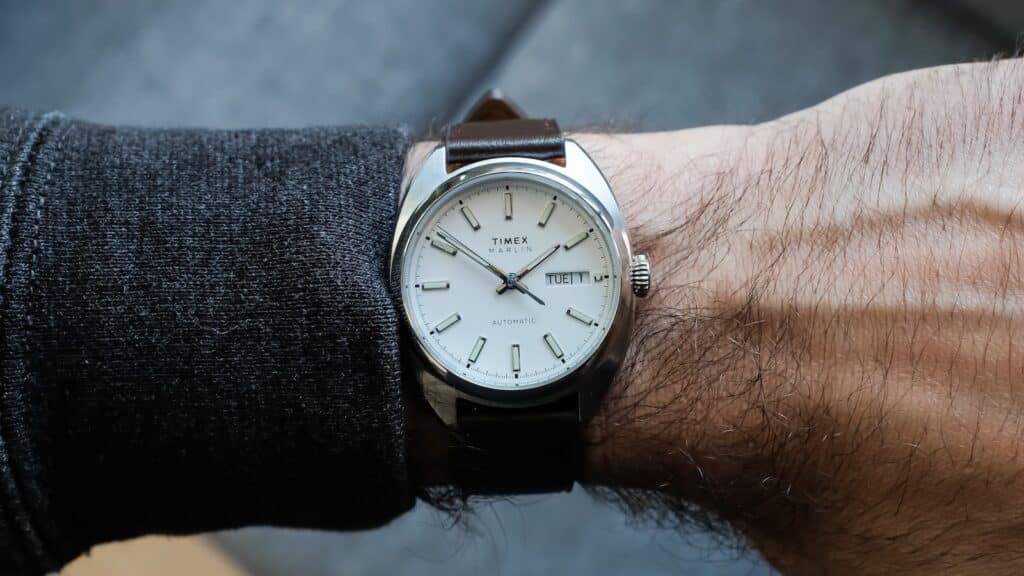
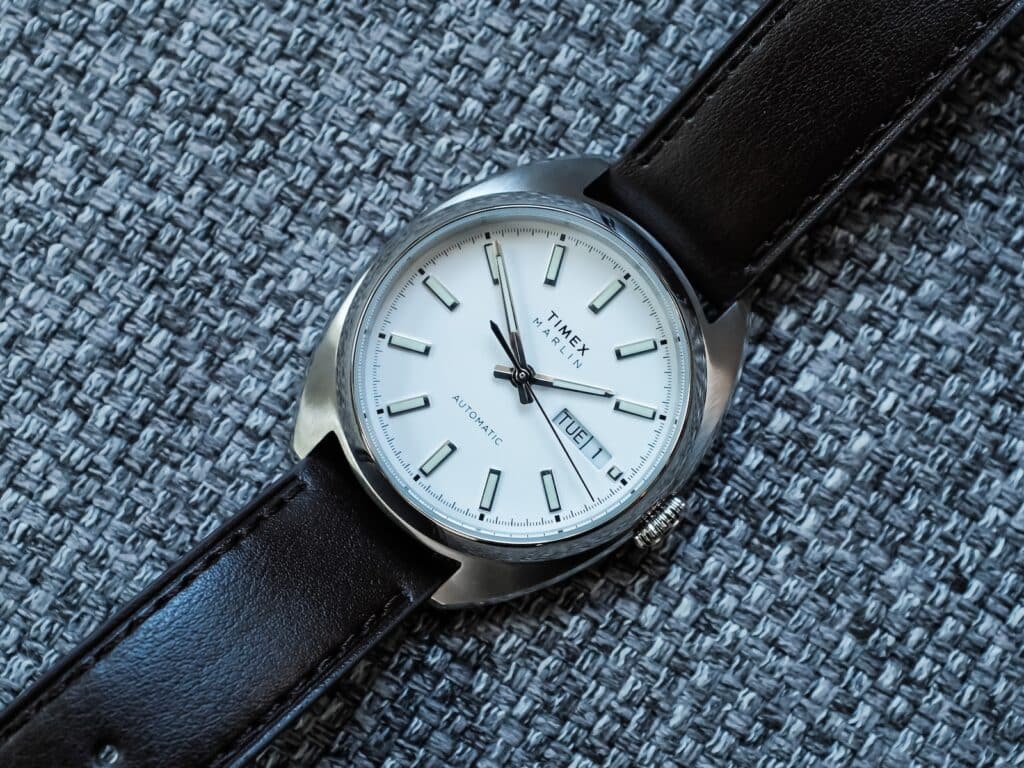
What immediately worked for me once I had the Timex Marlin Draper Automatic in hand was how committed the case design felt. Timex could have easily softened the cushion profile or inflated the proportions to make the watch feel more contemporary, but they largely avoided that temptation here. The barrel-shaped case has a distinctly mid-century feel to it, especially with the way the polished bezel sits against the otherwise brushed surfaces. There’s also a thin polished chamfer running along the outer edge of the case that gives the profile just enough visual separation without turning the watch into something flashy.
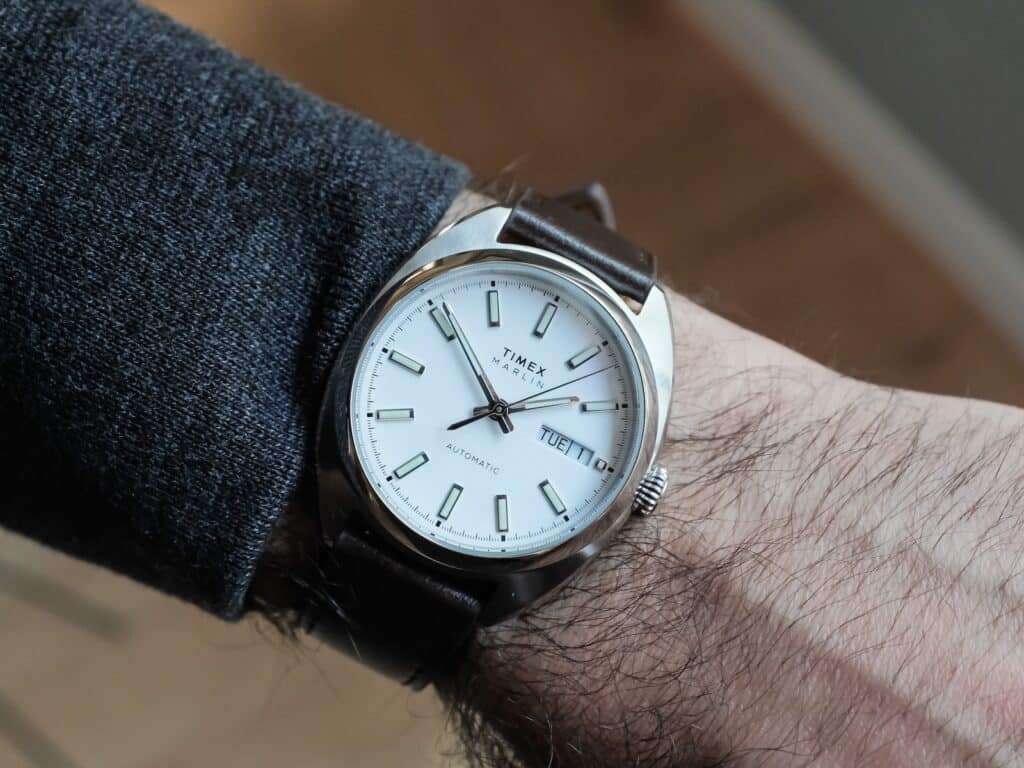
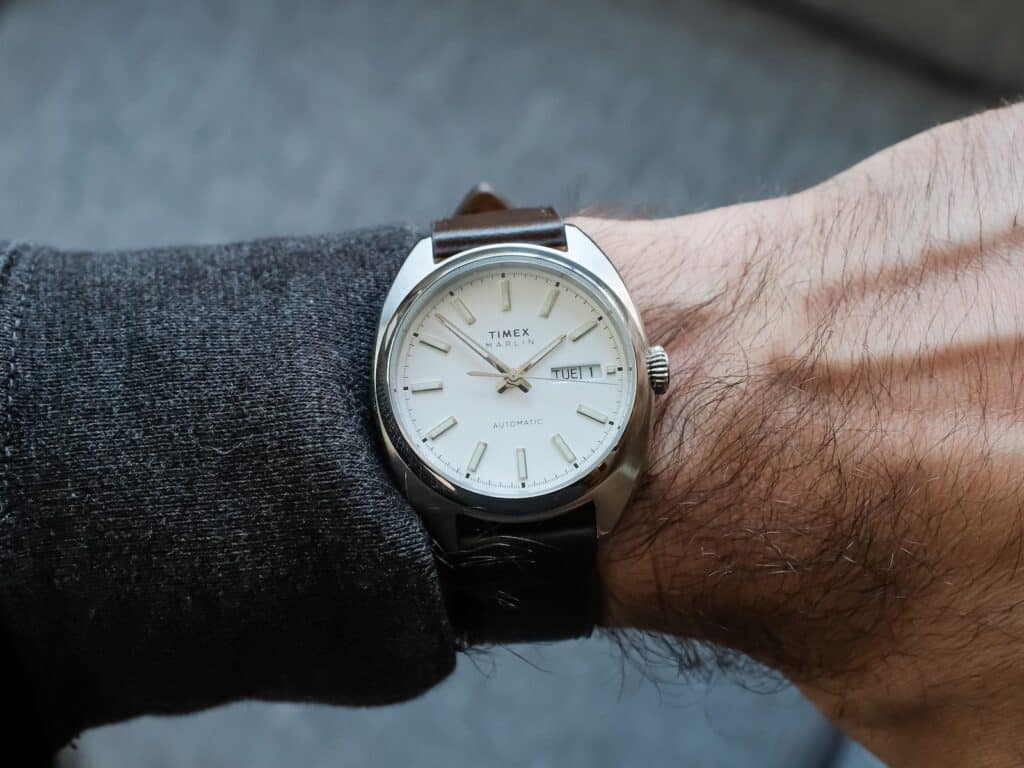
At 37mm wide with a 43.5mm lug-to-lug measurement, the watch lands in a size category that I naturally gravitate toward these days, especially on my 6.75-inch wrist. The cushion architecture does stretch the watch visually compared to a traditional round case, though the effect is balanced by the relatively compact dial opening. On the wrist, the dial actually reads a little smaller than the measurements suggest, which keeps the whole thing feeling restrained instead of vintage-costume dramatic.
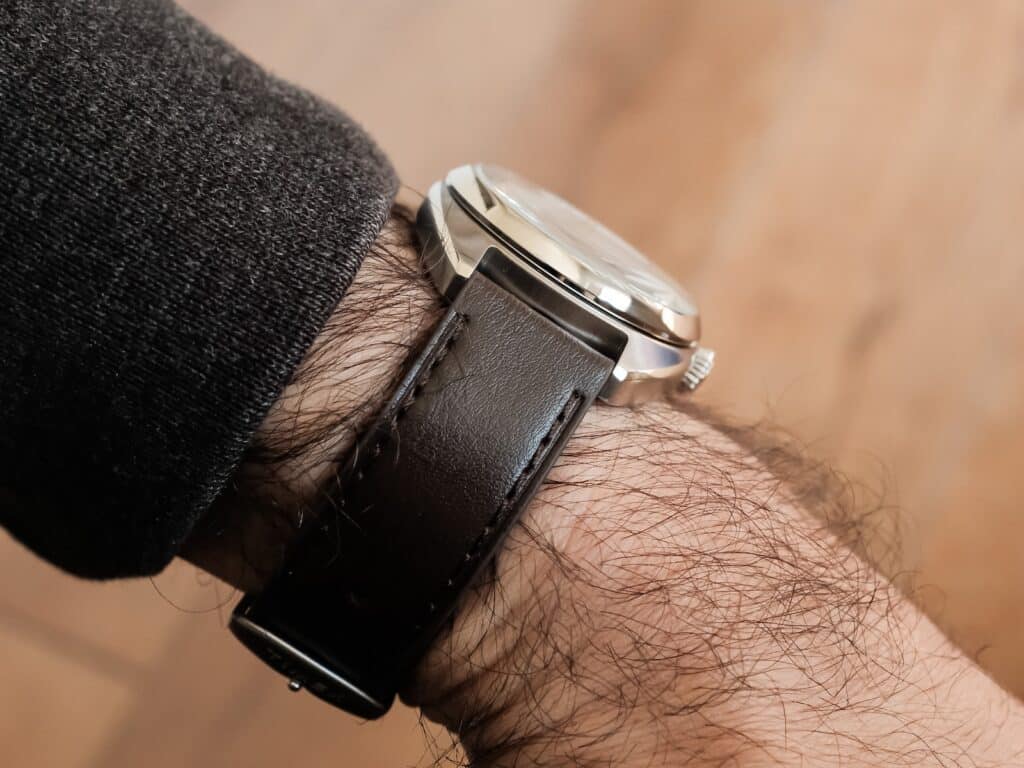
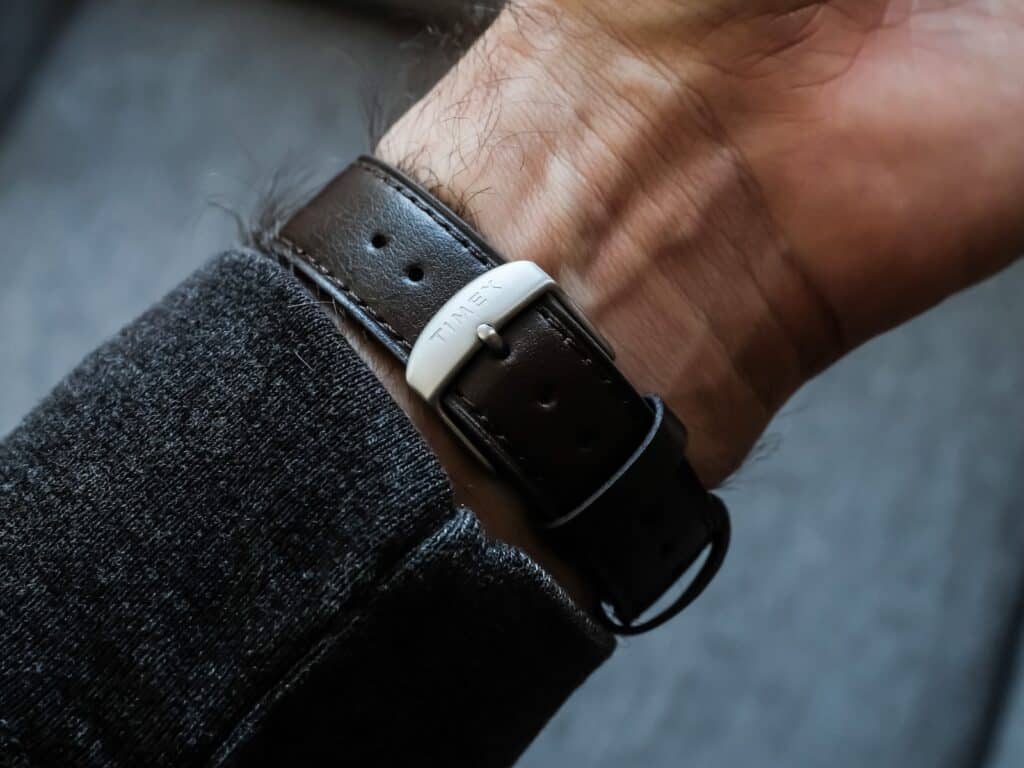
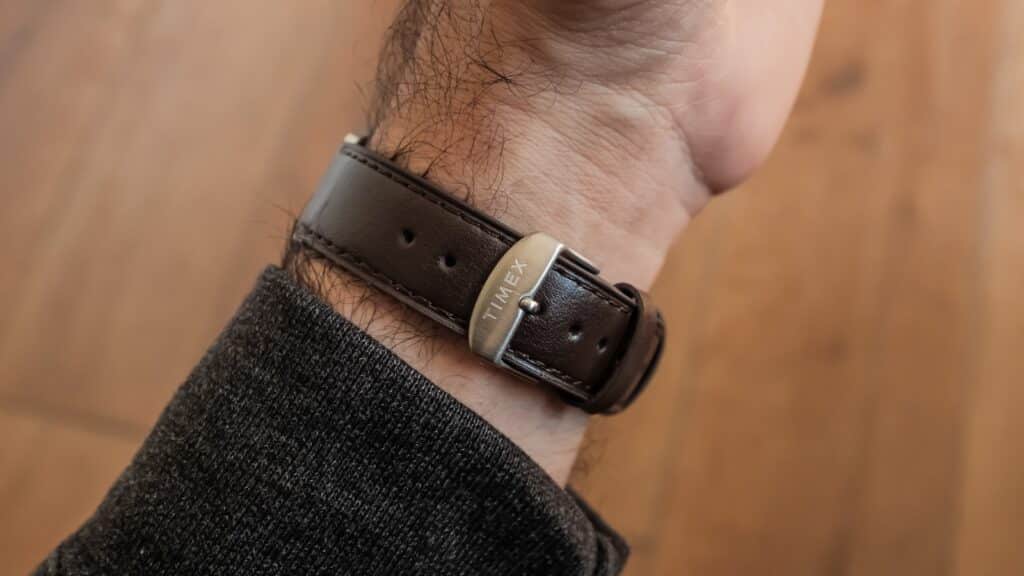
Thickness came in at 12.5mm, and while that initially sounded slightly chunky for a watch leaning this heavily into dress-adjacent territory, it never really bothered me during wear. A lot of that comes down to the strap. The leather strap ended up being one of my favorite parts of the entire package. Timex kept it fairly thin with a gentle taper, and that combination lets the watch settle close to the wrist instead of hovering awkwardly above it. The brown leather also works surprisingly well against the silver-tone dial. There’s enough contrast there to keep the watch from looking sterile, but it still stays understated overall.
I also appreciated that Timex resisted over-finishing the case and buckle. Outside of the polished bezel and chamfer, the watch stays mostly brushed throughout, including the buckle itself. That simpler approach fits the design better anyway. A heavily alternating brushed-and-polished treatment probably would have pushed the watch too far into faux-luxury territory, and this thing works best when it feels straightforward.
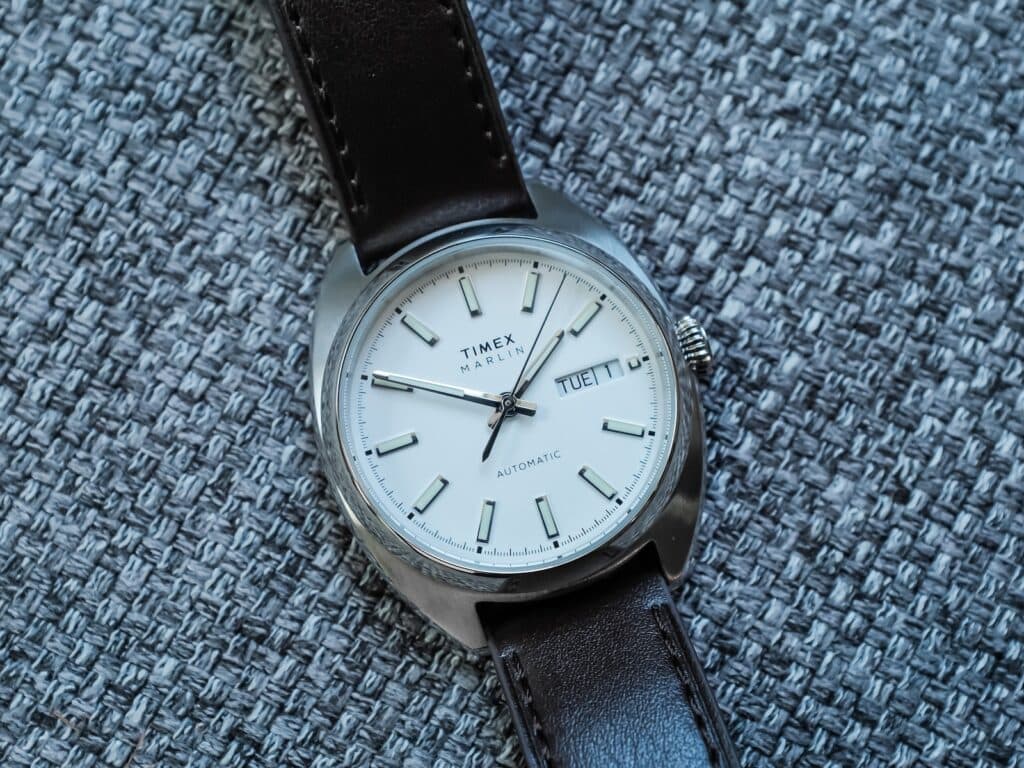
The dial itself is clean without feeling empty. You get applied markers, a practical day-date layout, and just enough texture and tonal variation from the silver surface to keep light moving across the dial in interesting ways throughout the day. Legibility stays solid thanks to the darker hands and markers, and the lume is present without becoming a major design talking point. In other words, Timex exercised some restraint here, which I think helped the watch considerably.
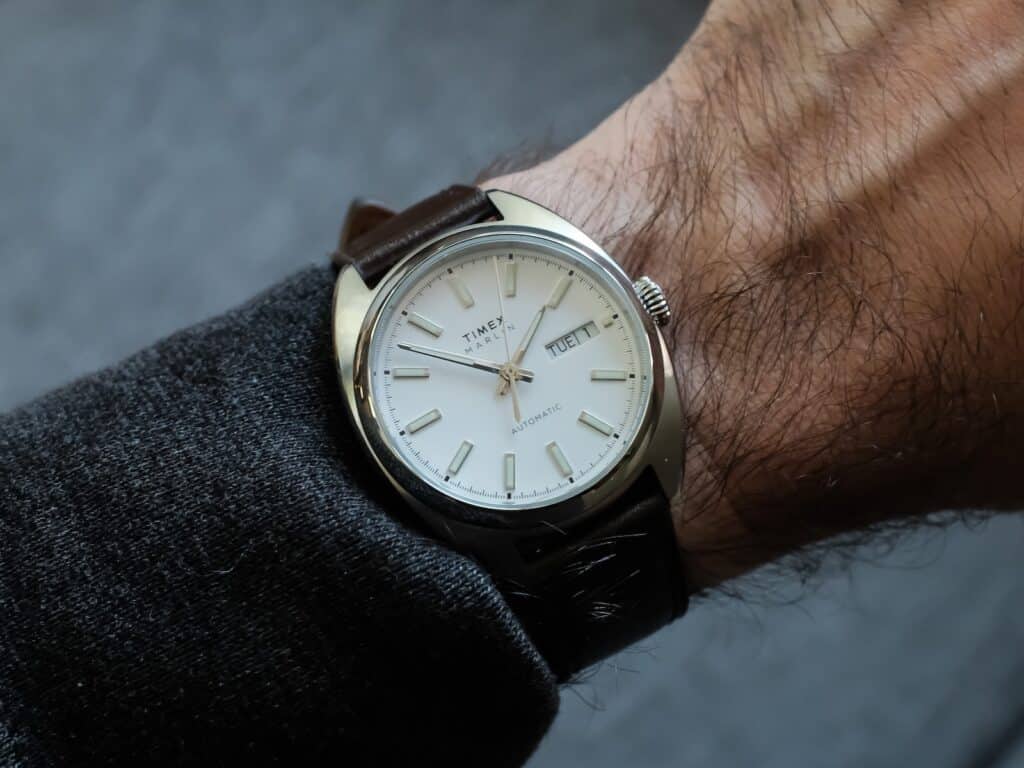
As for the whole Don Draper connection, I have to admit that aspect of the release never really mattered much to me personally. I understand exactly what Timex is referencing with the naming and overall styling direction, but my interest in the watch had much more to do with the case design and proportions than any attachment to Mad Men nostalgia. Thankfully, the watch is strong enough visually that it doesn’t need the television tie-in carrying the entire experience.
Living With It
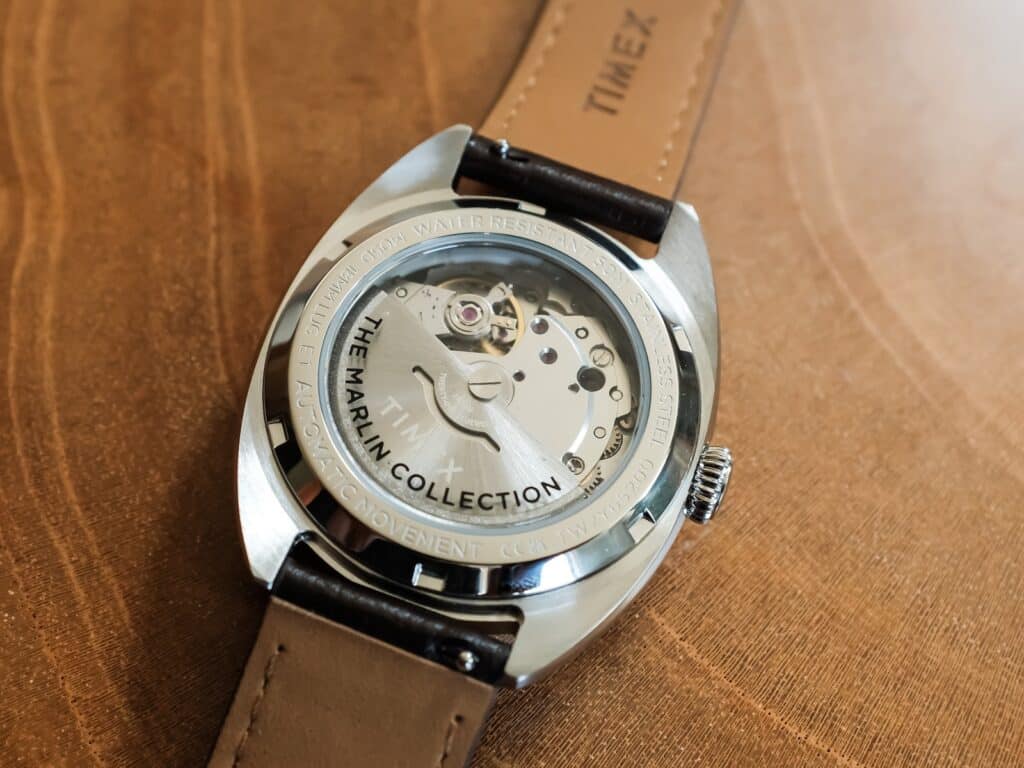
Underneath the exhibition caseback, Timex uses what appears to be a Miyota 8-series automatic movement with around 40 hours of power reserve. Nothing exotic, obviously, but perfectly appropriate for a watch in this territory. More importantly, the movement stayed dependable during my time with it. Timekeeping was consistently solid, rotor noise never became distracting, and the experience overall felt stable in the way you want an affordable automatic to feel.
This is also the point where I think Timex made the correct decisions with the watch overall. The Marlin Draper works because the brand showed restraint. The vintage proportions and unusual case shape are doing the heavy lifting here, and thankfully Timex didn’t bury those strengths underneath excessive polishing, faux-aged details, or unnecessary design theatrics. The watch feels comfortable being a fairly straightforward retro-inspired automatic, which made me appreciate it more over time.
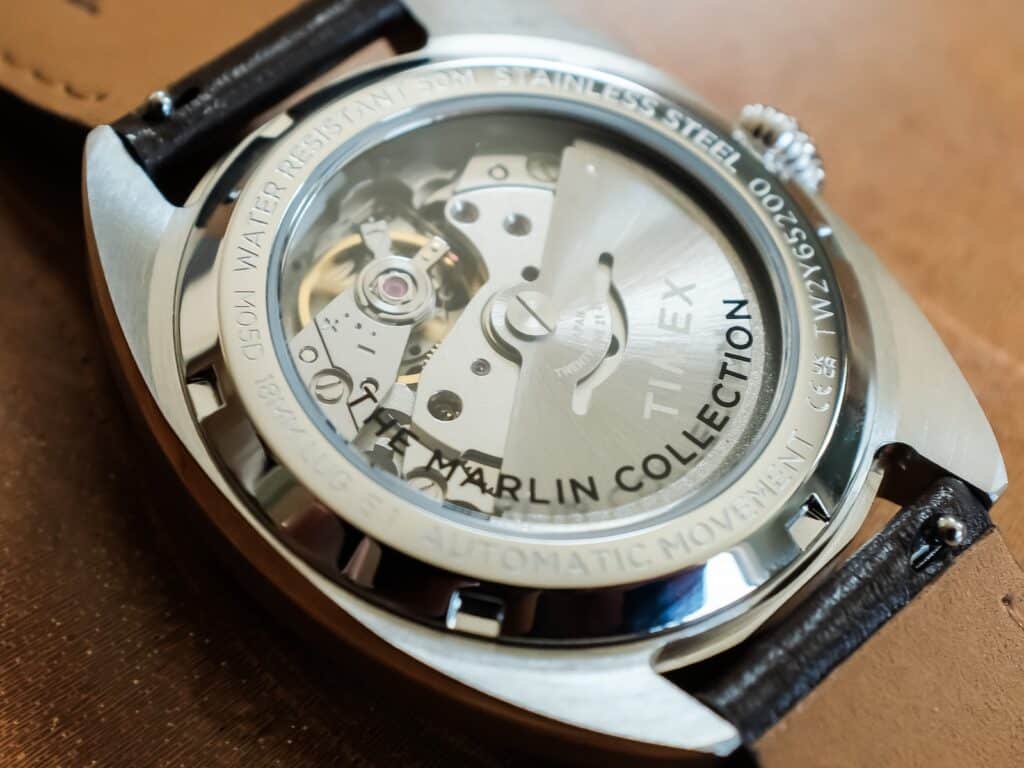
That said, there are a few things I would have changed. The mineral crystal never really bothered me during daily wear, and I’ve already made peace with mineral crystals on affordable watches a long time ago. Still, sapphire would have elevated the overall package considerably and probably made the watch feel more complete long term. At $279, most of the compromises here feel understandable, though sapphire crystal really would have pushed this into a far more compelling overall package. I also would have preferred 100 meters of water resistance instead of 50. Realistically, most people buying this probably are not treating it like a sports watch anyway, but that additional versatility would have gone a long way for me personally.
I ended up swapping straps a couple of times during the review period as well, and thankfully the quick-release setup makes that process painless. Even so, I kept returning to the stock brown leather strap because it suits the watch better than I expected when I first pulled it out of the box.
The interesting thing is that even though I enjoyed my time with the watch, I rarely found myself instinctively reaching for it during the review period. That really comes down to personal taste more than anything the watch did wrong. My collection tends to lean more utilitarian and slightly more “rugged” these days, and the Timex Marlin Draper occupies a softer, more design-focused lane. I can absolutely understand why people will connect with it, especially collectors who enjoy smaller vintage-inspired pieces that avoid looking overly calculated or artificially aged.
Final Thoughts
Looking back now, I think my original reaction to the release was mostly accurate. The Timex Marlin Draper Automatic succeeds for the same reasons it initially caught my attention back when I first saw the press photos. The proportions feel great, the case design stands out without begging for attention, and the watch understands the era it’s drawing from without trying too hard to romanticize it.
At the same time, actually wearing the watch clarified where it fits for me personally. I respected it more than I emotionally connected with it. That’s an important distinction and probably a healthy one. Every good watch doesn’t need to become a permanent fixture in the collection to leave a positive impression.
Once this review wraps up, the watch heads back to Timex, and I’m perfectly fine with that. But I’ll also admit this thing ended up being more thoughtfully executed than I originally expected when I first covered the release announcement earlier this year. Sometimes those initial instincts hold up after all.

Co-Founder & Senior Editor
Michael Peñate is an American writer, photographer, and podcaster based in Seattle, Washington. His work typically focuses on the passage of time and the tools we use to connect with that very journey. From aviation to music and travel, his interests span a multitude of disciplines that often intersect with the world of watches – and the obsessive culture behind collecting them.
Times were once that you could accuse someone of lying like a cheap Timex. How times have changed.
They really have. Timex has come a long way from that reputation. Thanks for reading.
Any thoughts on the black face model of this watch vs the one you tested?
I think it looks sharp, James. The more I think about it after this review, I’d probably go for the black dial.