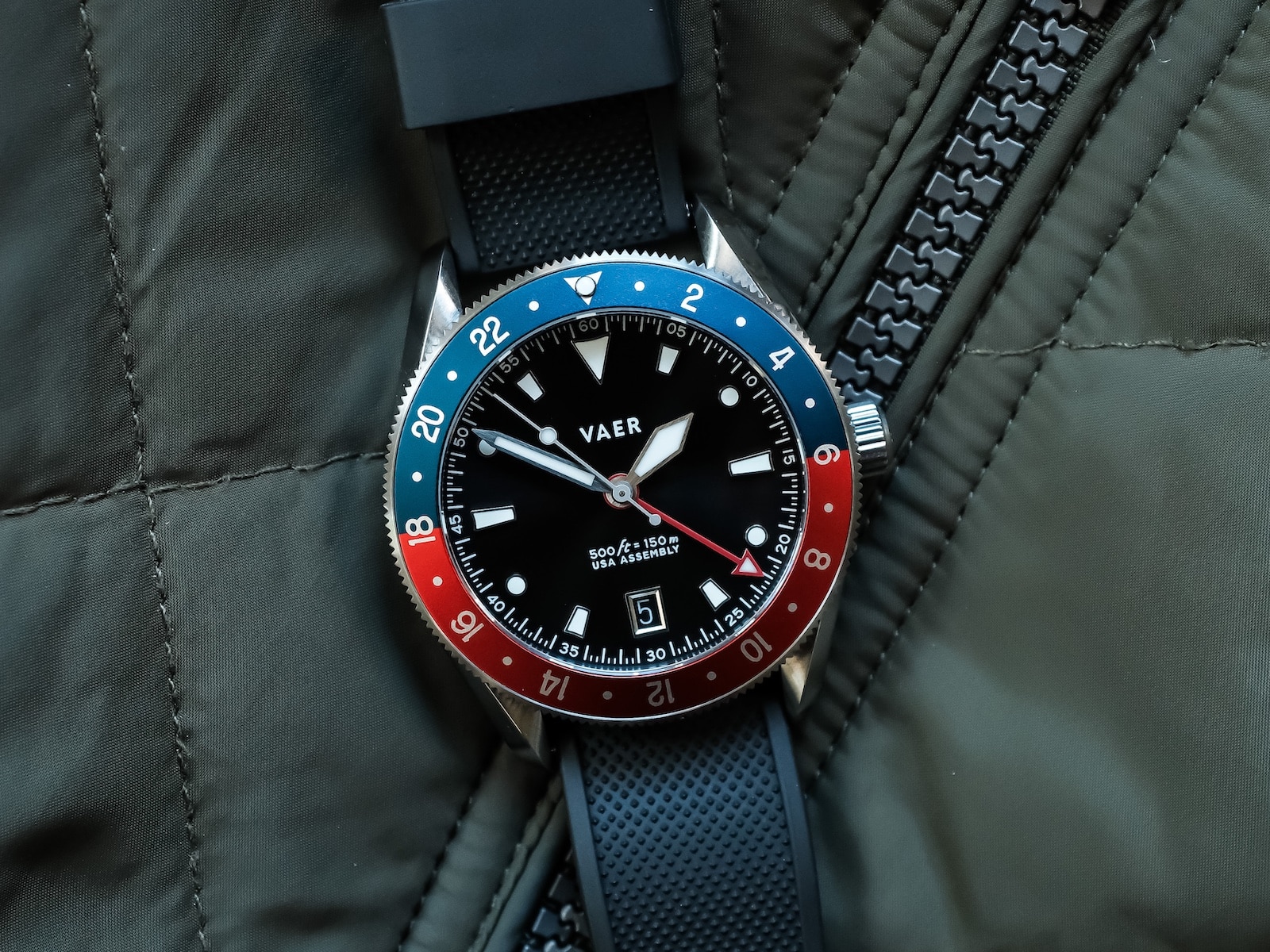
I’ve spent enough time around GMTs to know that the Pepsi bezel isn’t going anywhere, and the Vaer G2 Meridian GMT sits squarely in that ongoing conversation. It’s one of those design ideas that’s been absorbed into the broader culture of the hobby, to the point where it seems like every brand eventually takes a swing at it. Some lean heavily into imitation, others try to tweak the formula just enough to feel distinct. Most land somewhere in between.
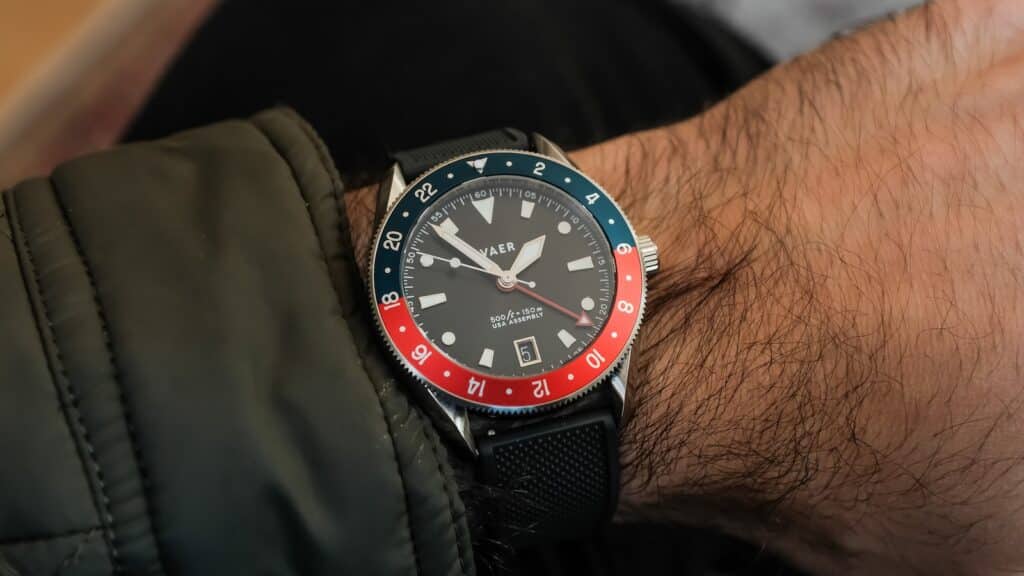
I’ve also spent a fair amount of time with Vaer at this point. I’ve reviewed several of their watches recently, and there’s a pretty consistent throughline in how they approach design. They tend to focus on usability and everyday wear rather than trying to manufacture a sense of heritage. That approach makes something like a Pepsi GMT a bit more interesting, because it forces a balance between familiarity and restraint.
So when the Vaer G2 Meridian GMT came in, I was less interested in the surface-level inspiration and more curious about how Vaer would translate that into something that fits their own identity. After spending some time with it, I came away with a clearer sense of where it lands.
Where It Fits
After spending time with the G2 Meridian, it became clear that this is less about competing directly with Vaer’s higher-end GMT offerings and more about offering a parallel experience with a different set of priorities. You still get the same general visual language, but the way it’s executed feels more grounded.
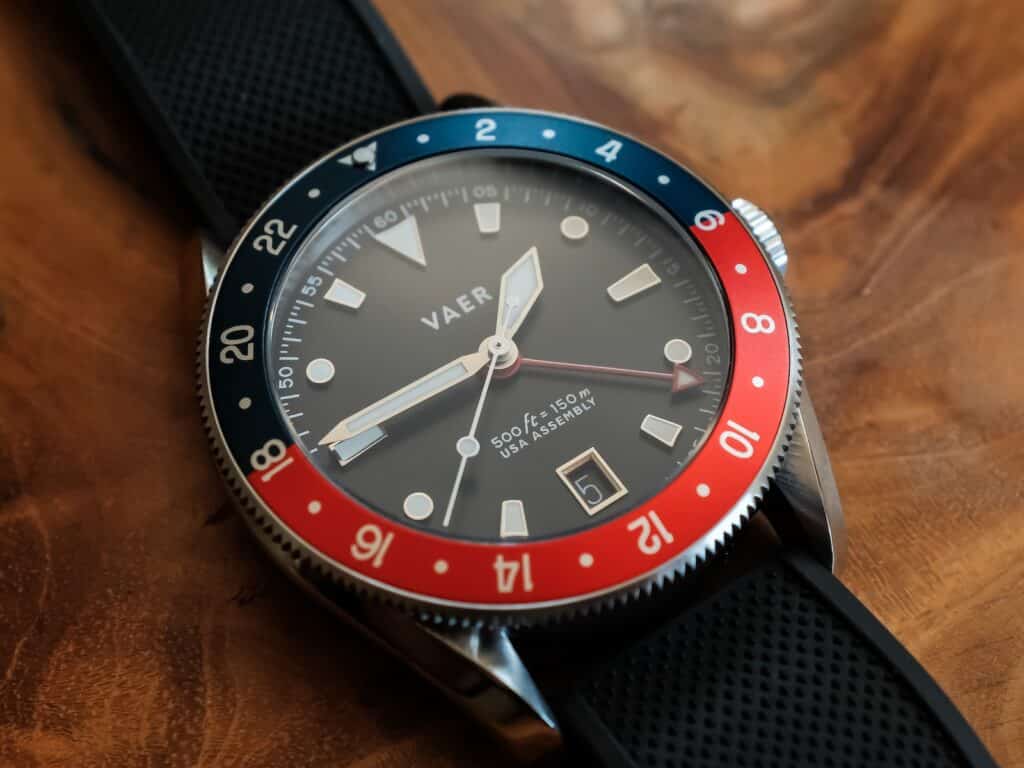
The use of an aluminum bezel insert instead of ceramic is the most obvious shift, but it doesn’t come across as a compromise in daily use. If anything, it leans into the kind of practicality I’ve come to expect from Vaer. The same goes for the solid caseback and the slightly more restrained crystal profile. These are the decisions that don’t really stand out on paper, but they contribute to a watch that feels straightforward and easy to live with.
Water resistance sits at 150 meters, which, in real-world terms, removes any hesitation about wearing it in situations where a GMT might not typically be the first pick. I never found myself thinking twice about it. It just worked as an everyday piece.
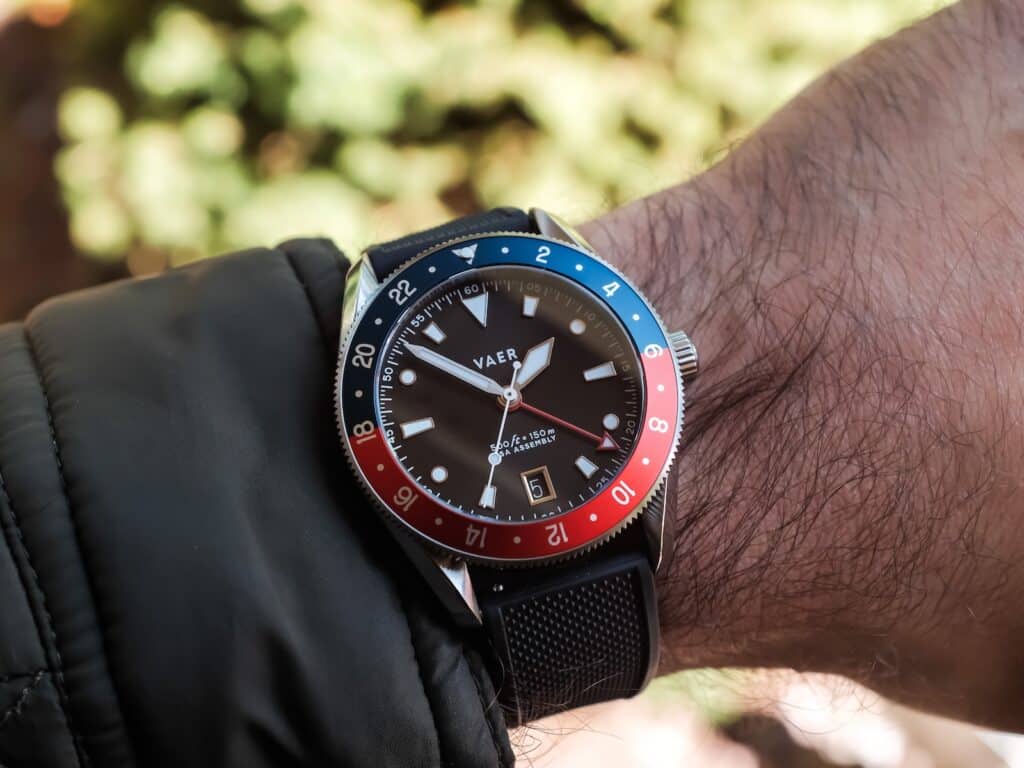
Case and Wrist Experience
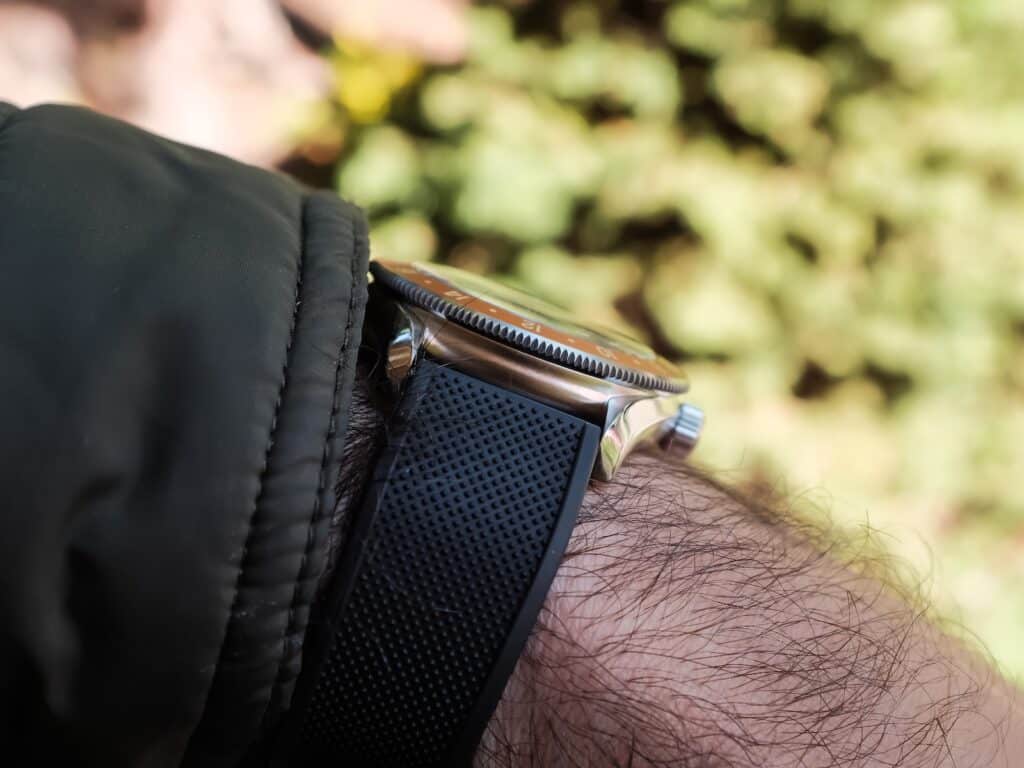
On the wrist, this is where the watch really clicked for me. The 39mm case with a 46mm lug-to-lug footprint hits a sweet spot, and at just over 10mm thick, it wears flatter than you might expect for a GMT. Combined with the low weight, it ends up feeling almost effortless throughout the day.
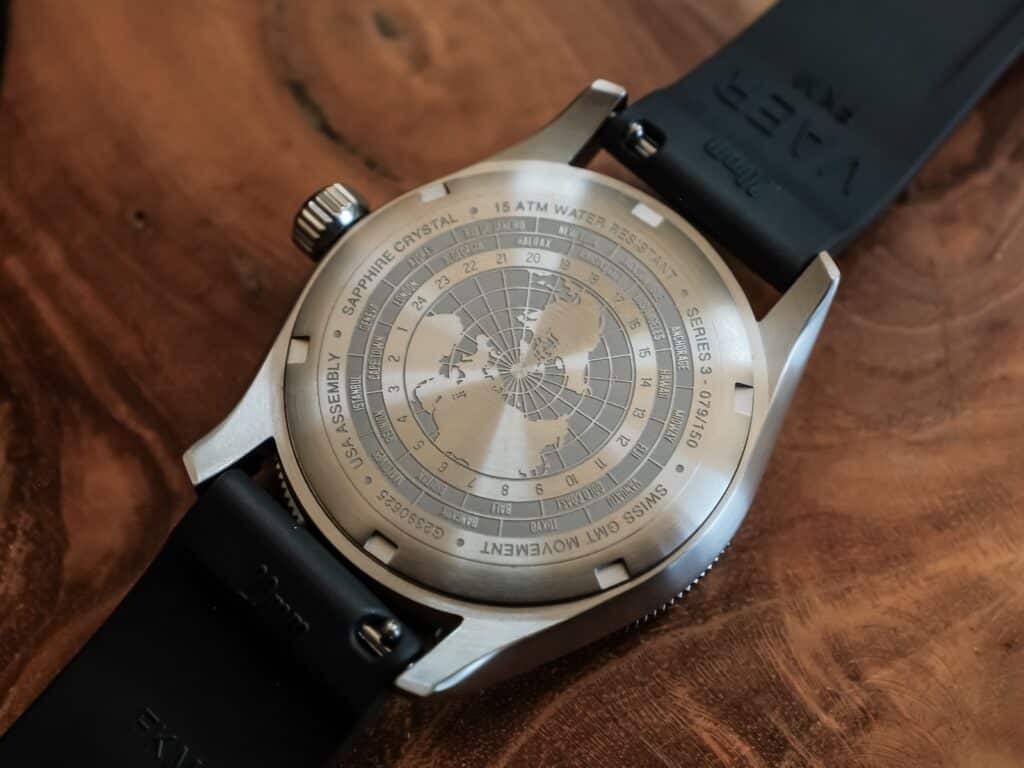
There’s a mix of brushed and polished surfaces that keeps things from feeling overly utilitarian, but it never crosses into anything that feels precious. The screw-down crown is easy to grip and operate, and the caseback engraving adds a bit of personality without turning into a focal point.
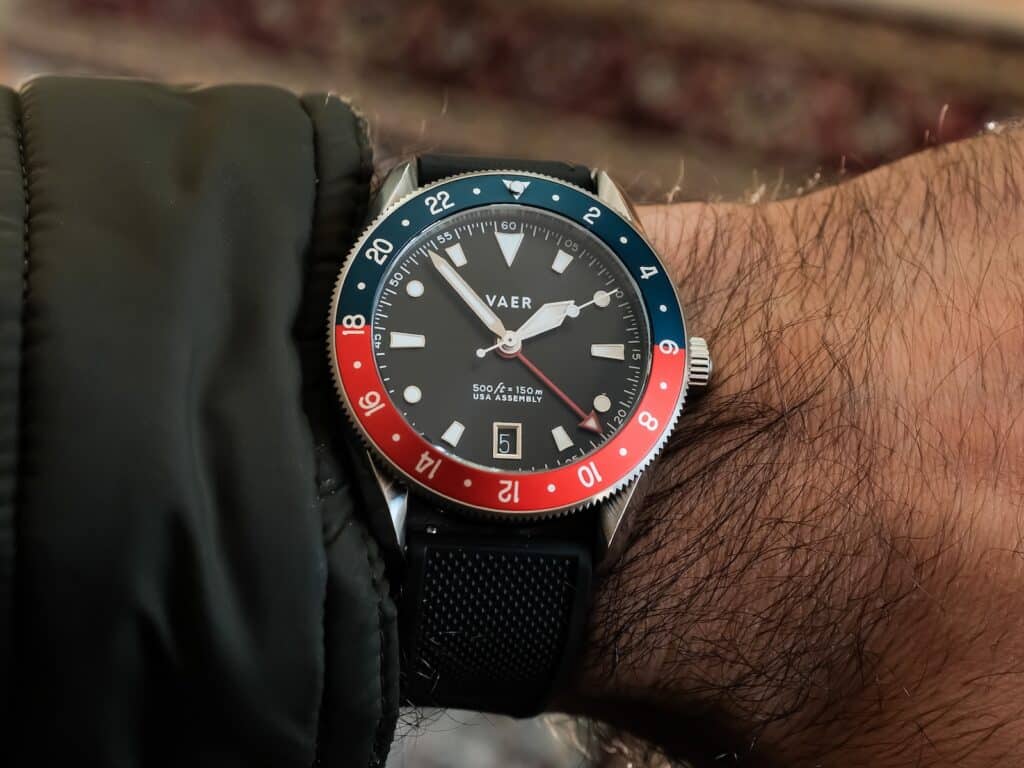
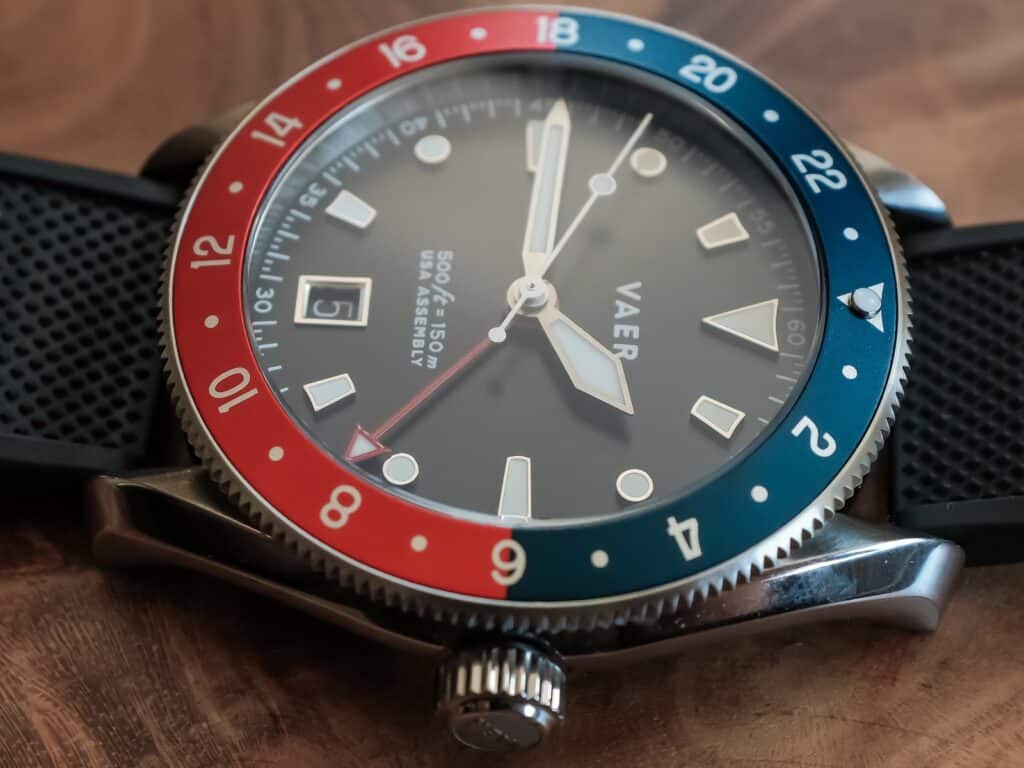
The bezel is worth calling out separately. The bidirectional action feels good in isolation, with defined clicks that make it easy to set a second time zone. However, there is some play, and more noticeably, the alignment doesn’t always land perfectly on the markers. It’s a small thing, but it’s also the one detail that consistently stood out to me during wear.
Dial and Legibility
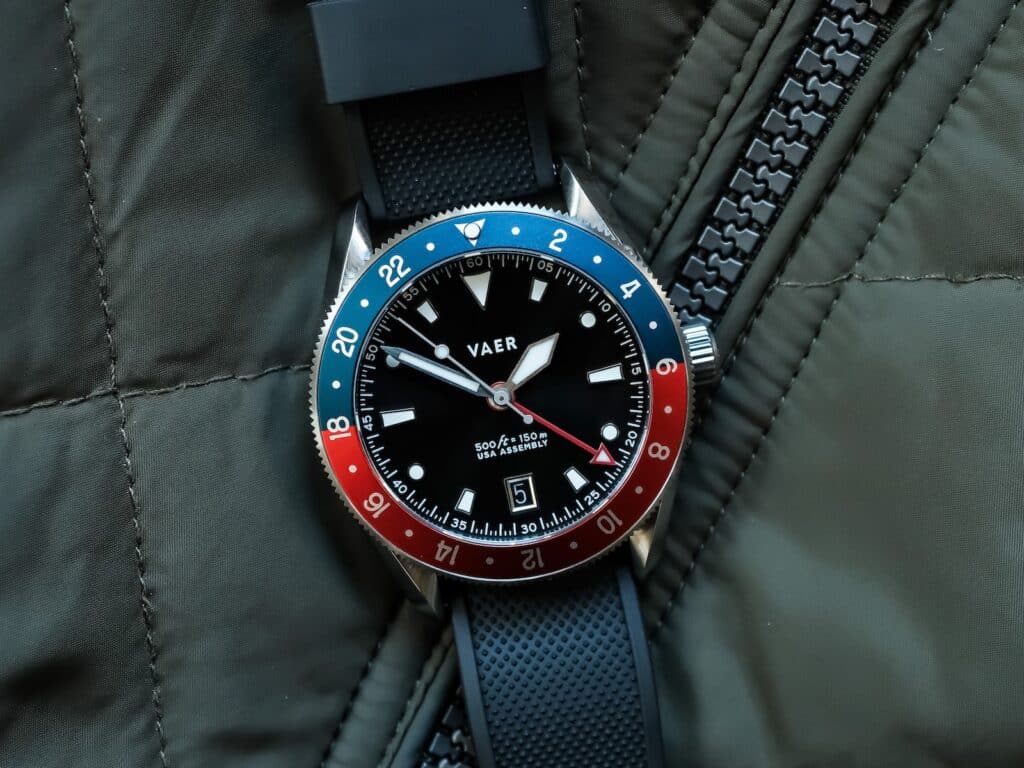
Visually, the dial walks a familiar line, but there are enough small decisions here to keep it from feeling overly derivative. The applied markers add a bit of depth, and the date at six keeps the layout balanced without drawing too much attention to itself.
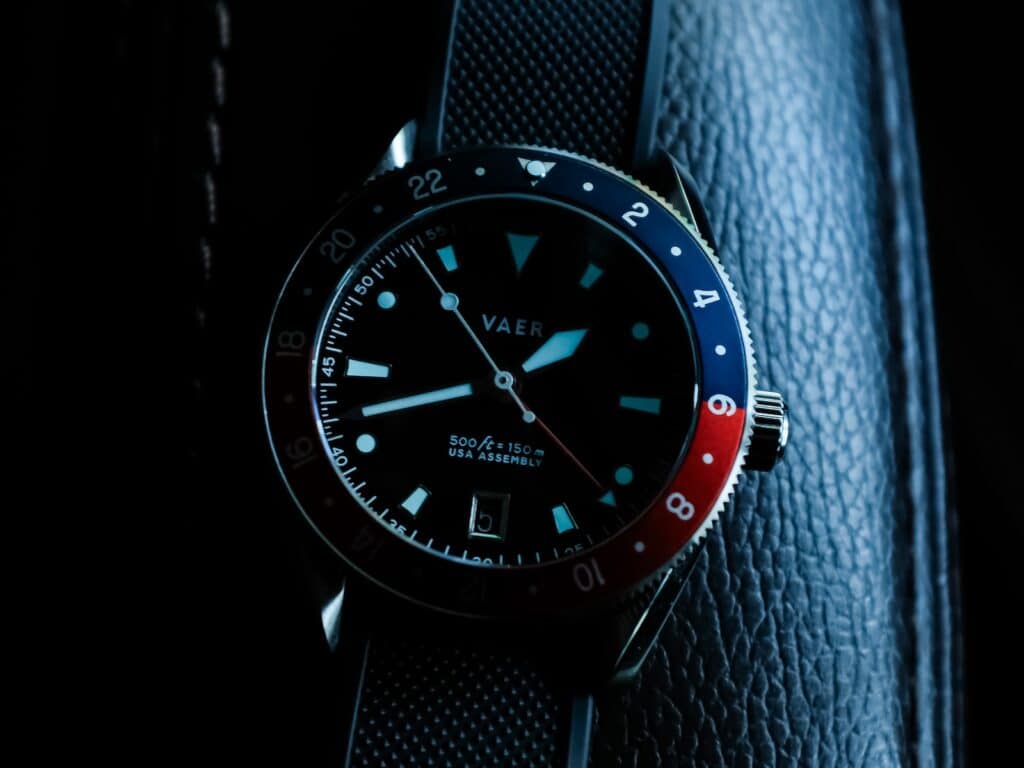
Legibility is strong across the board. In daylight, everything reads clearly with good contrast, and the handset does its job without getting lost against the dial. In lower light, the lume holds up well. There’s enough coverage on the markers and hands to make it usable rather than just visually appealing for a few minutes after exposure.
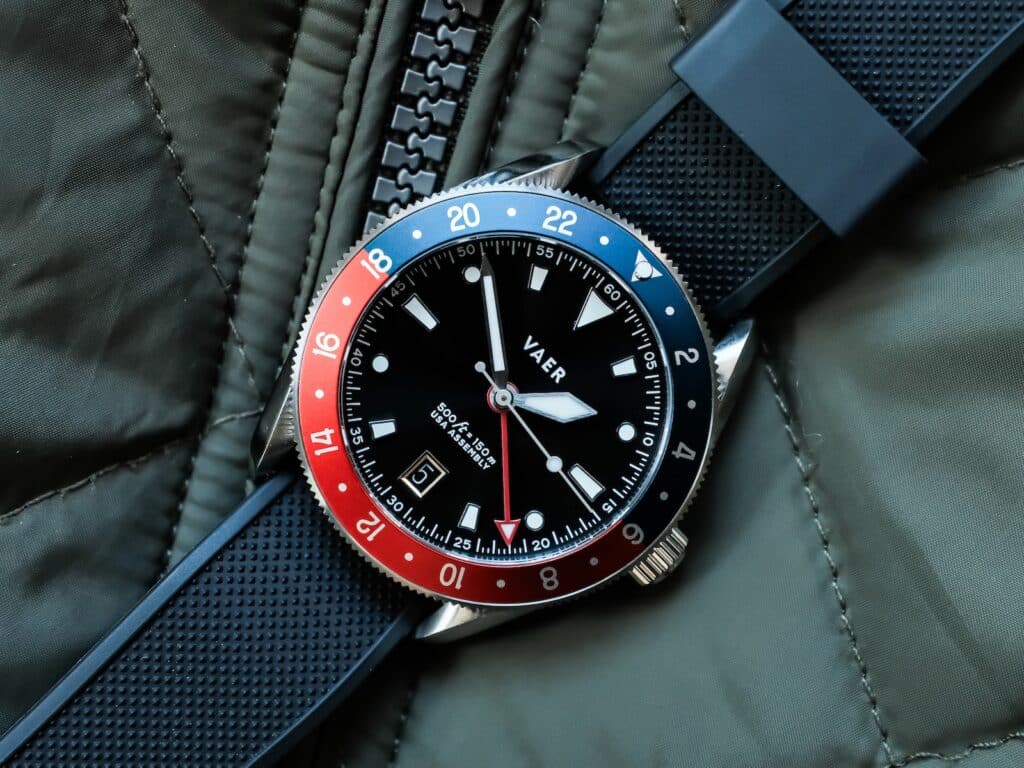
What stood out to me more than anything is that, despite the vintage cues, the watch doesn’t feel like it’s trying to recreate something from another era. It feels like a modern interpretation that borrows what works and leaves the rest behind.
Movement and Daily Use
Going in, the quartz movement wasn’t something I needed to warm up to. I already enjoy quartz for what it offers, and here it reinforces the overall character of the watch.
Inside is the Swiss-made Ronda 515.24H, a caller-style GMT that shows up in a number of accessible travel watches. In practice, that means you’re adjusting the 24-hour hand independently rather than jumping the local hour hand, which may matter depending on how you like to use a GMT. For me, it ended up being straightforward and easy to manage, especially with the quick-set date.
Battery life stretches out to several years, which aligns perfectly with the idea of this being a grab-and-go option. It’s always ready, always running, and doesn’t demand much attention. After the novelty wears off, that kind of consistency becomes more valuable than any mechanical complexity.
Strap and Wearability
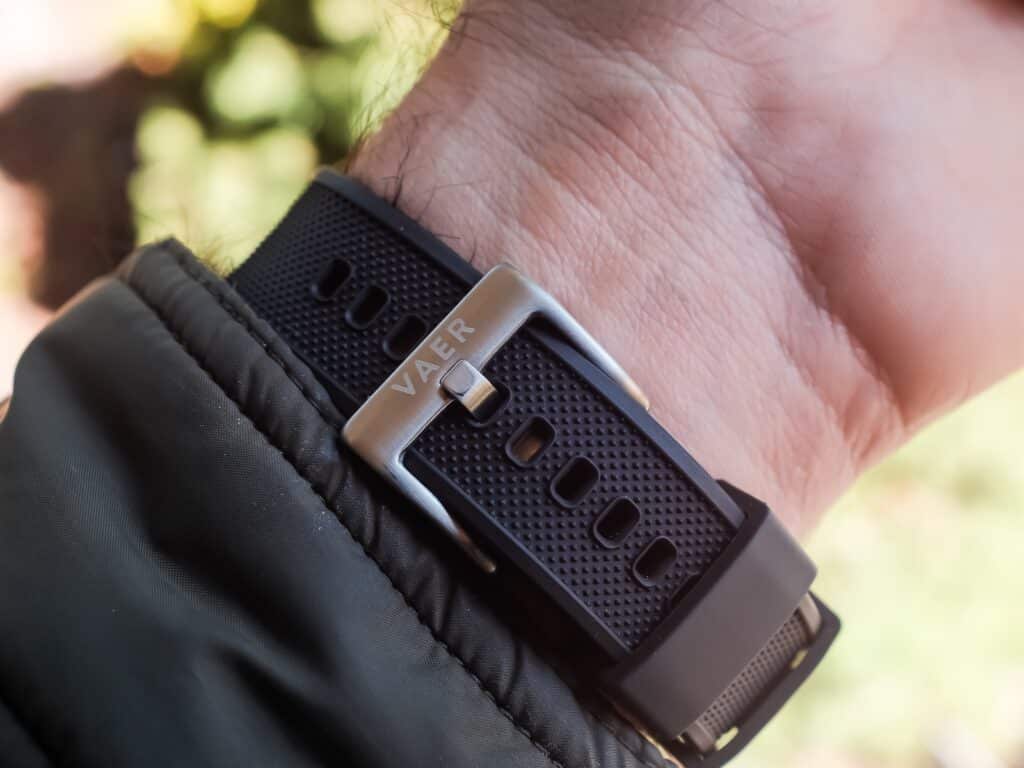
I spent most of my time with the rubber strap, and that’s where I think this watch makes the most sense. It tapers nicely and feels more substantial than the entry-level straps I’ve seen from Vaer in the past. On the wrist, it complements the lightweight case and keeps the whole package feeling cohesive.
The included NATO is a nice extra, but it’s a bit stiff for my liking and I kept coming back to the rubber. It just fits the personality of the watch better, especially if you’re leaning into it as an everyday or travel companion.

Closing It Out
Coming back to that original idea of the Pepsi GMT as a category, the Vaer G2 Meridian GMT doesn’t try to redefine it. Instead, I think it settles into a space that feels practical.
For me, what changed after spending time with it wasn’t my perception of the design itself, but how this particular execution fits into a real rotation. The lightweight build, the quartz movement, and the overall ease of use make it feel like something I’d reach for when I don’t want to think too much about what’s on my wrist.
The bezel alignment is the one detail that would give me pause. It’s not a dealbreaker, but it’s noticeable, and it’s the kind of thing that some collectors won’t be able to ignore once they see it.
That said, at $399 I can see exactly where this watch fits. As a dedicated travel piece or a reliable daily option that doesn’t require much maintenance, it makes a strong case for itself. If I were building out a collection with that role in mind, this is the kind of watch I’d seriously consider adding.

Co-Founder & Senior Editor
Michael Peñate is an American writer, photographer, and podcaster based in Seattle, Washington. His work typically focuses on the passage of time and the tools we use to connect with that very journey. From aviation to music and travel, his interests span a multitude of disciplines that often intersect with the world of watches – and the obsessive culture behind collecting them.