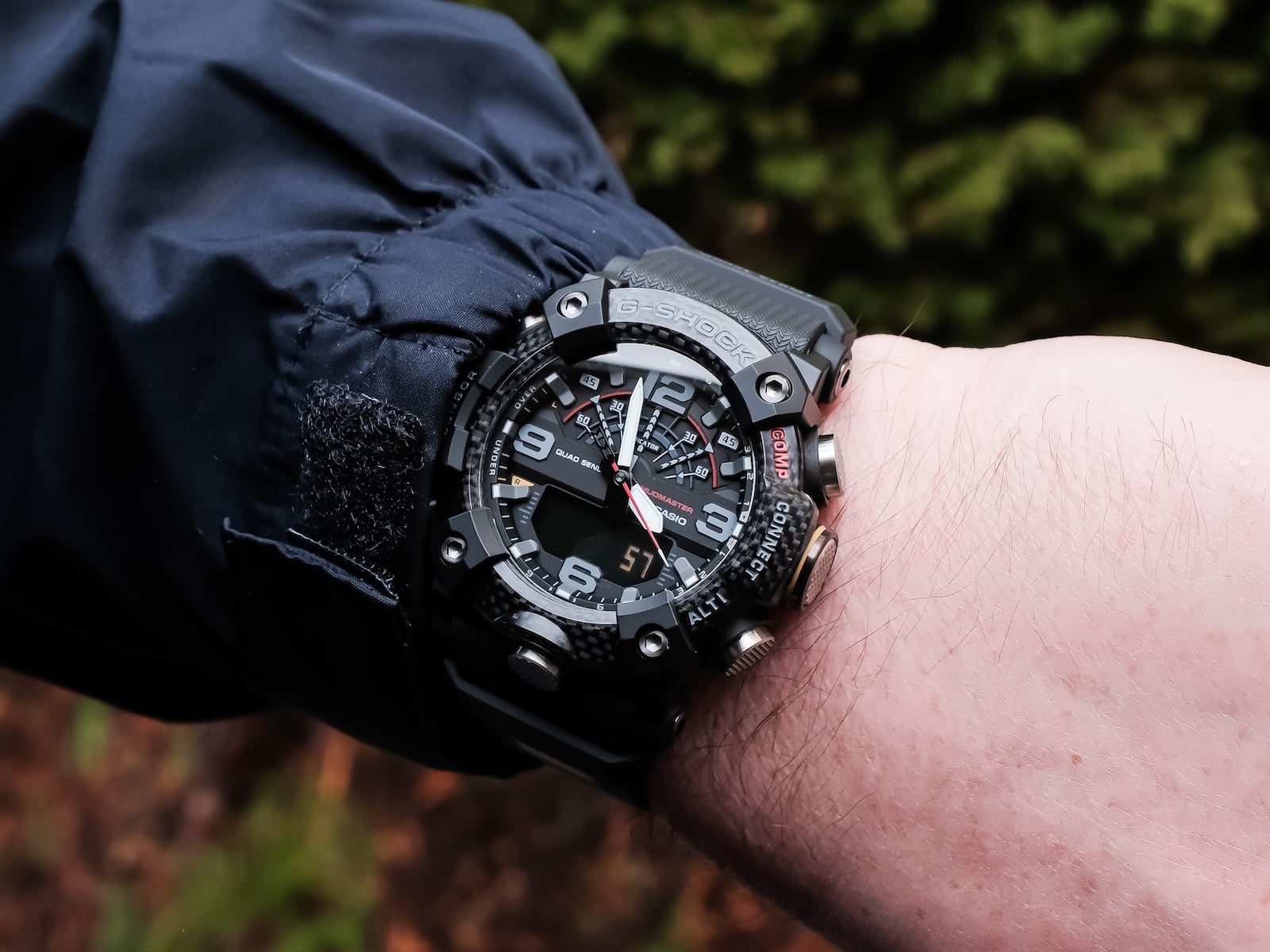
It had been a while since I’d spent any real time with a G-Shock. And I’m not talking about the everyday models you can grab at a department store. I mean, a G-SHOCK—the full-on, overbuilt, feature-packed pieces that feel like you’re strapping a digital Swiss Army knife to your wrist. That’s exactly where the Master of G Mudmaster GGB100X-1A landed for me. This specific model available here in the USA market is loaded to a point where, realistically, I’m probably the last person who can fully put everything it offers to the test.
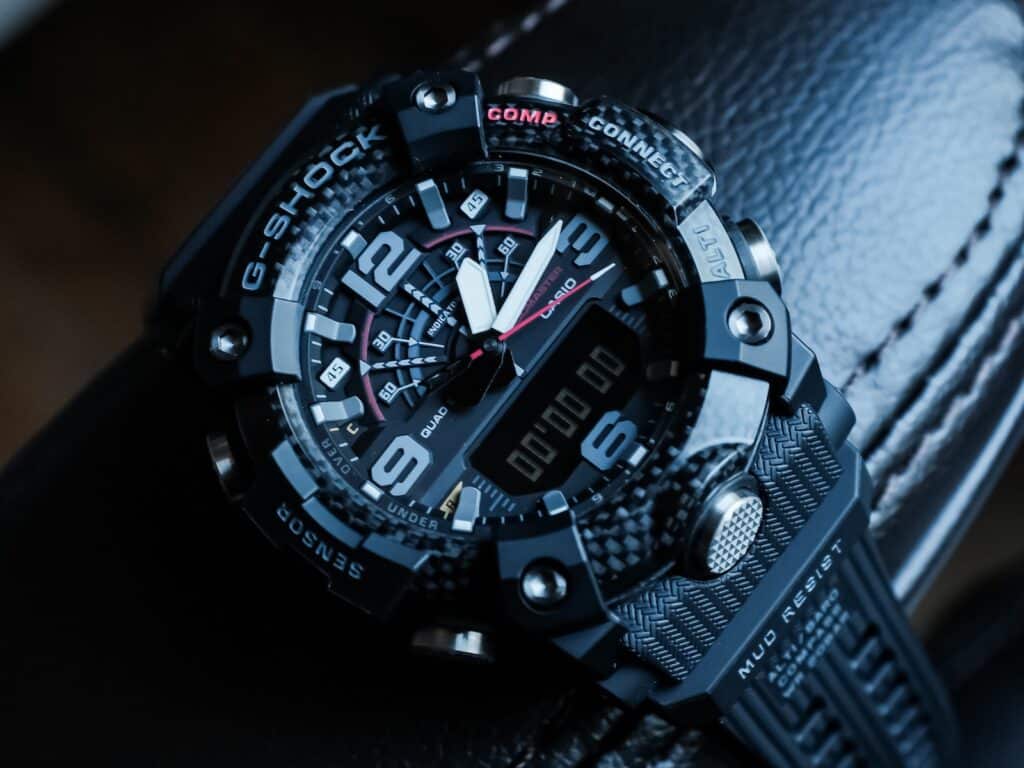
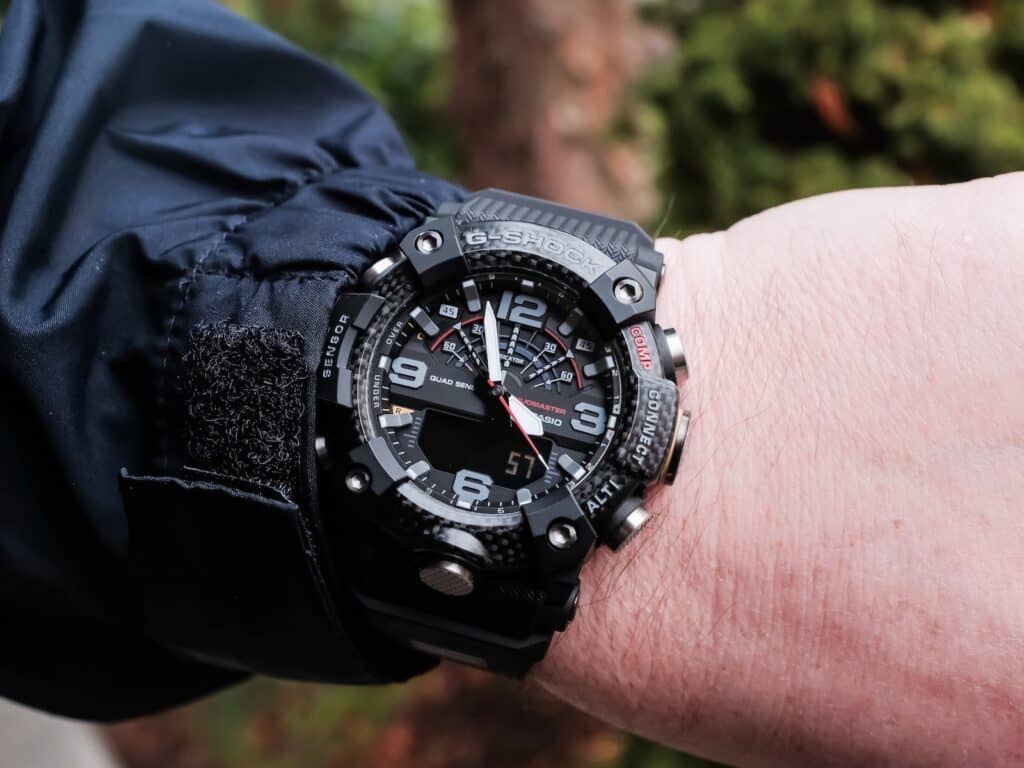
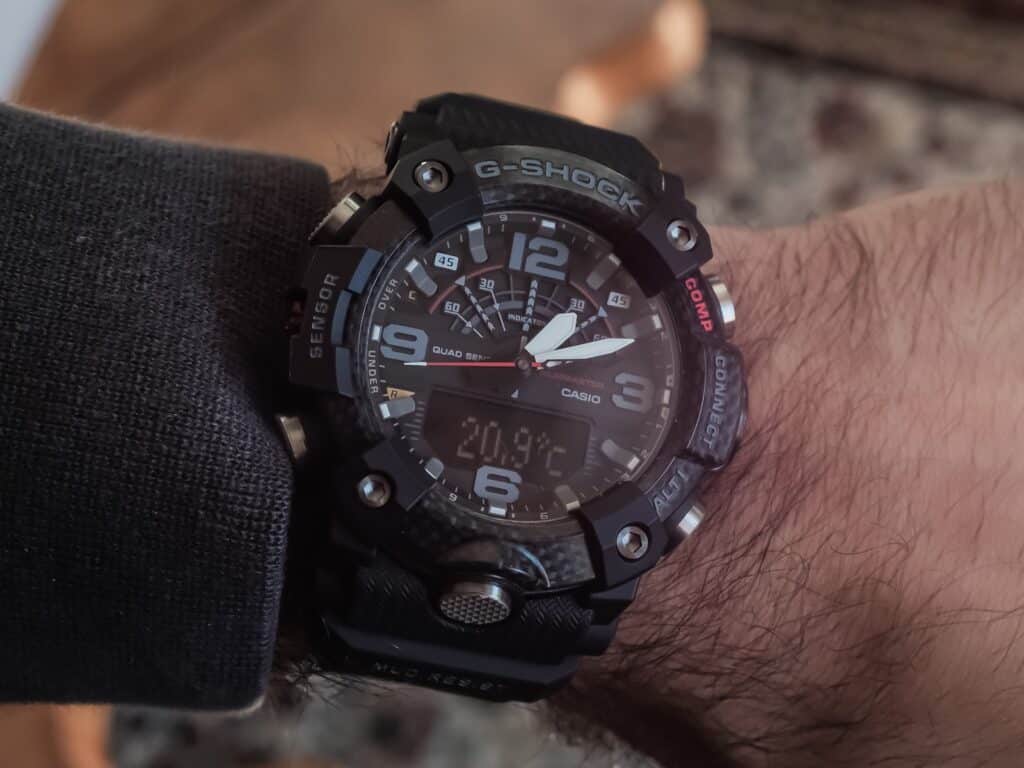
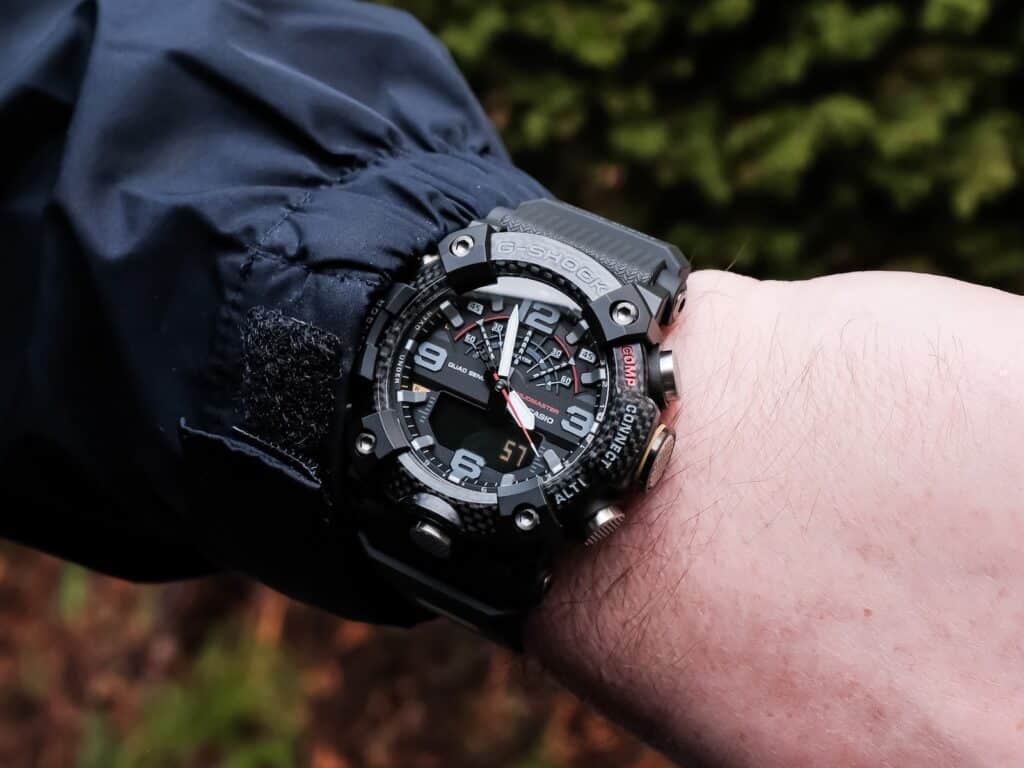
Still, after spending time with it, I found myself drawn in by both the construction and the sheer breadth of functionality. It also forced a bit of self-awareness. On the wrist, this thing has presence in a way that’s hard to ignore. Enough so that I ended up borrowing a friend’s wrist just to get a better sense of how it actually wears in these photos.
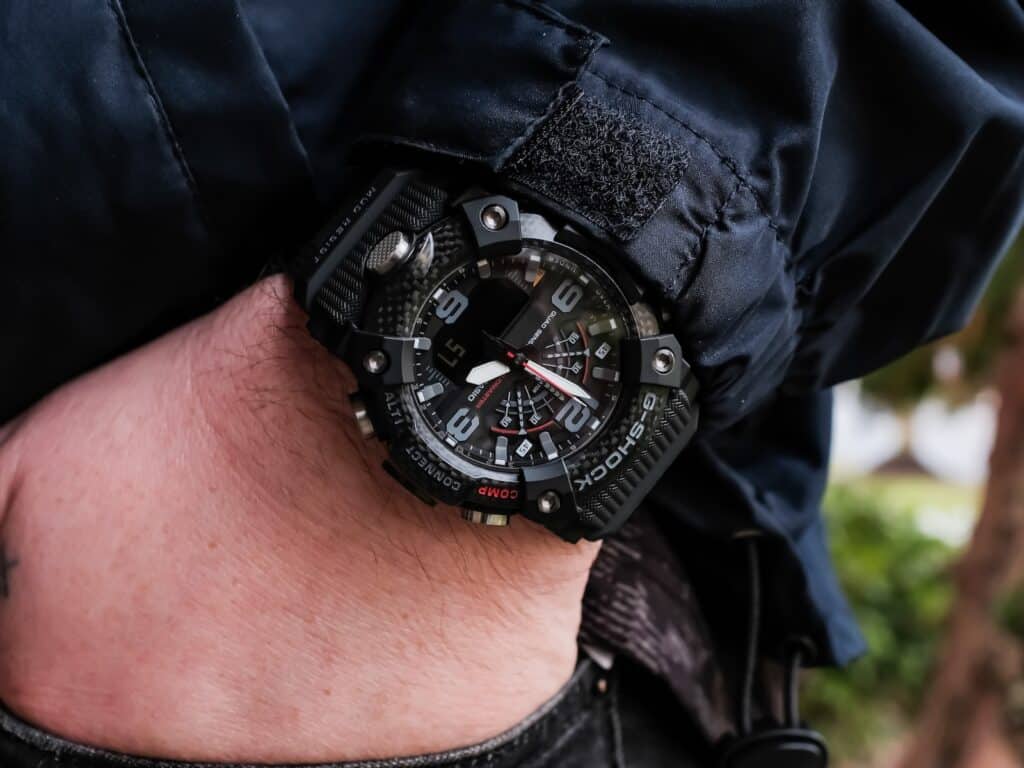
What this watch is, and how it actually wears
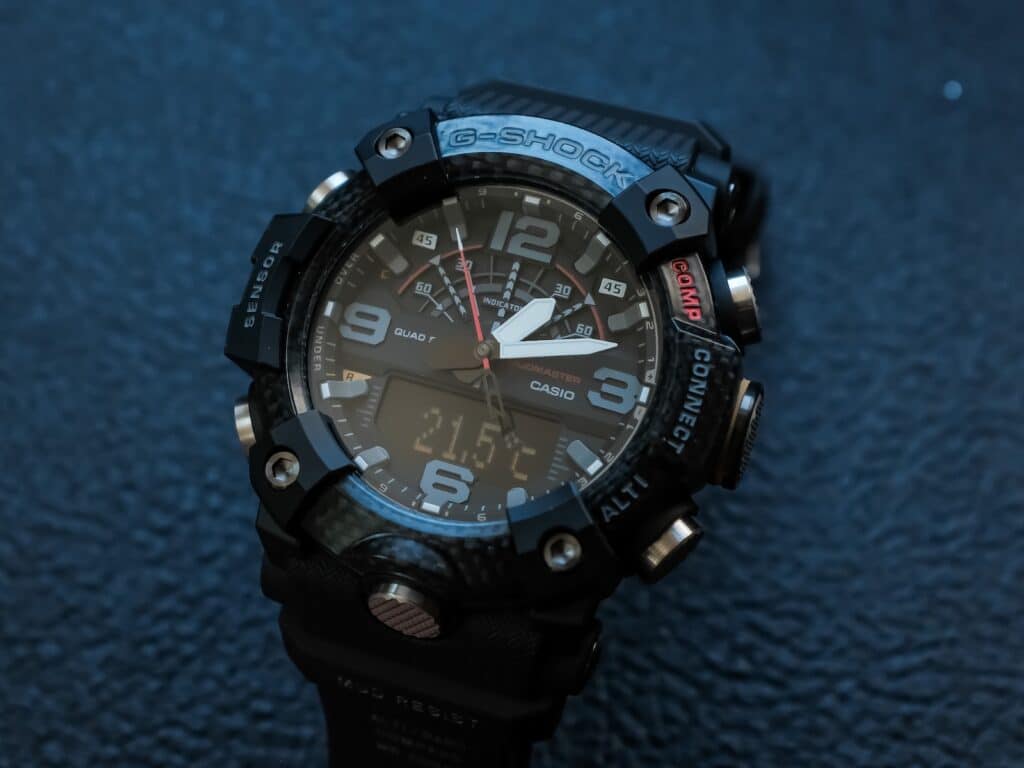
Spending time with the Mudmaster made it pretty clear that this isn’t just another G-Shock with a few extra features layered on top. It sits firmly in that upper tier of the lineup where the design is built around a specific idea of use, even if most of us will never actually push it that far. The carbon-reinforced case, layered construction, and sealing against mud and debris all point to a watch designed with harsh environments in mind first, and everyday wear somewhere further down the list.
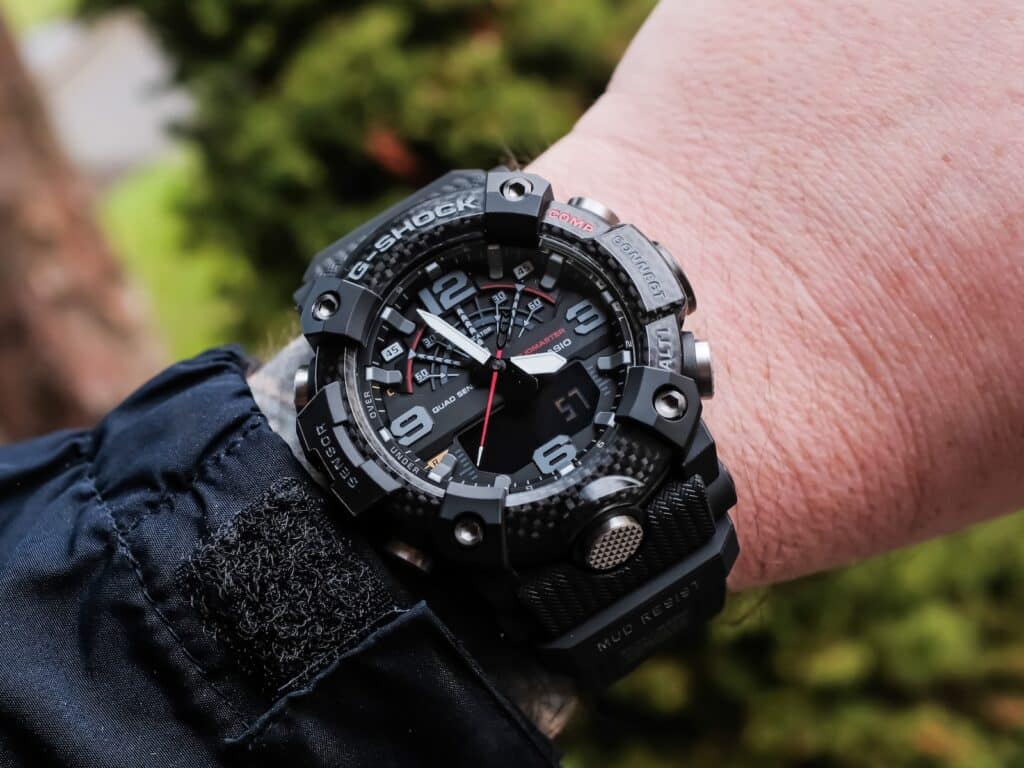
On paper, the dimensions already tell part of the story. With 200m of water resistance, at just over 55mm across, more than 51mm wide, and pushing close to 20mm thick, this is a large watch by any standard. But numbers don’t fully capture what it feels like on the wrist. For me, the biggest hurdle wasn’t just the thickness or overall mass. It was the way the case stretches across the wrist. The lug span is what really defines the experience, and on my wrist, it pushed things right to the edge of what I can realistically wear.
That said, seeing it on a friend’s wrist changed the perspective quite a bit. On a wrist north of seven inches, the proportions start to make more sense. The case settles in, the bulk feels fine, and the whole thing comes across less like an outlier and more like a purpose-built tool.
Case, interaction, and build quality
Once I got past the initial shock of the size, what stood out pretty quickly was how well everything is put together. G-Shock has been doing this long enough that the formula is familiar, but the Mudmaster feels like a more deliberate execution of it. The carbon-reinforced case, layered resin construction, and overall density all come together in a way that feels more well thought out than the average G-Shock you’d pick up casually.
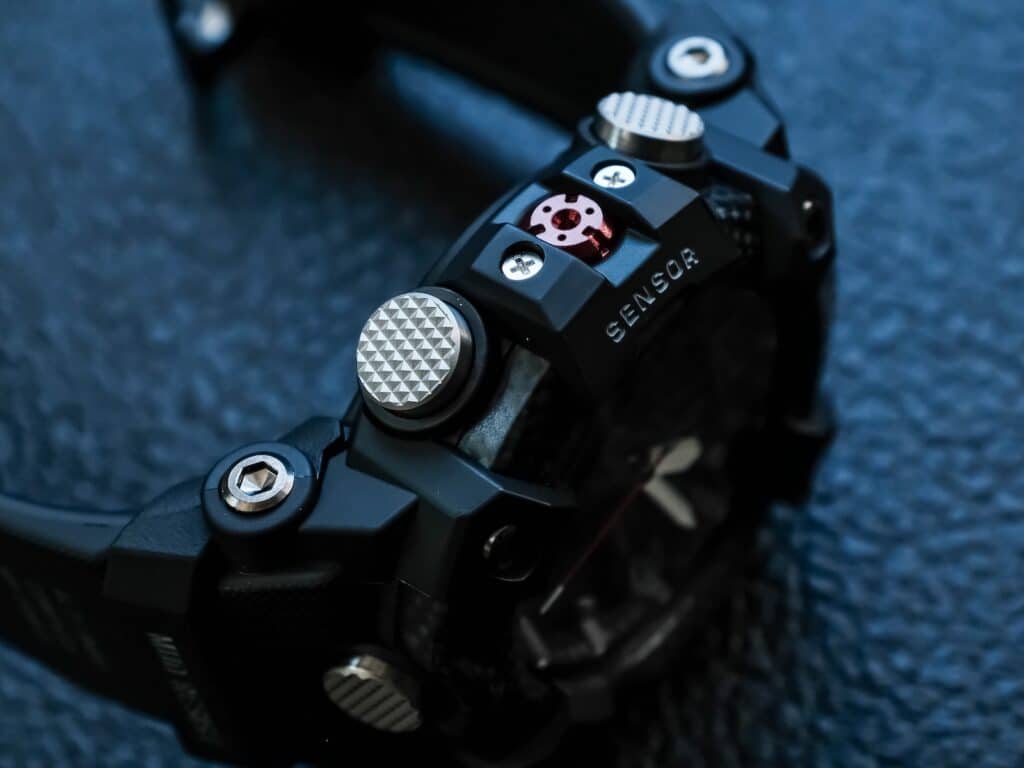
In hand, it doesn’t come across as hollow or overly plastic. There’s a bit more substance to it, both in how it feels and how it responds when you start interacting with it. The buttons are a good example. They’re large, easy to find without looking, and easy to actuate. There’s no hesitation or second-guessing when you press them, which matters on a watch that leans this heavily into functionality. That clarity carries over into the layout as well. Despite how much is going on, the interface never felt confusing to me. Everything is spaced out in a way that makes sense, and after a short time, it becomes fairly intuitive to move between functions.
Dial, legibility, and information at a glance
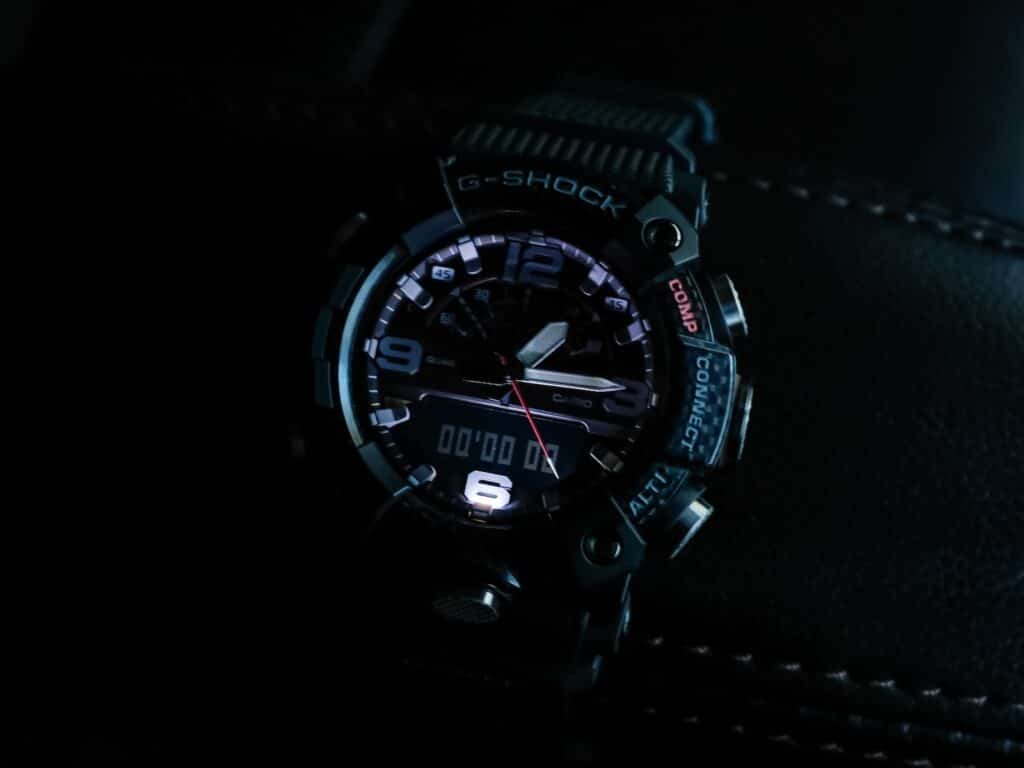
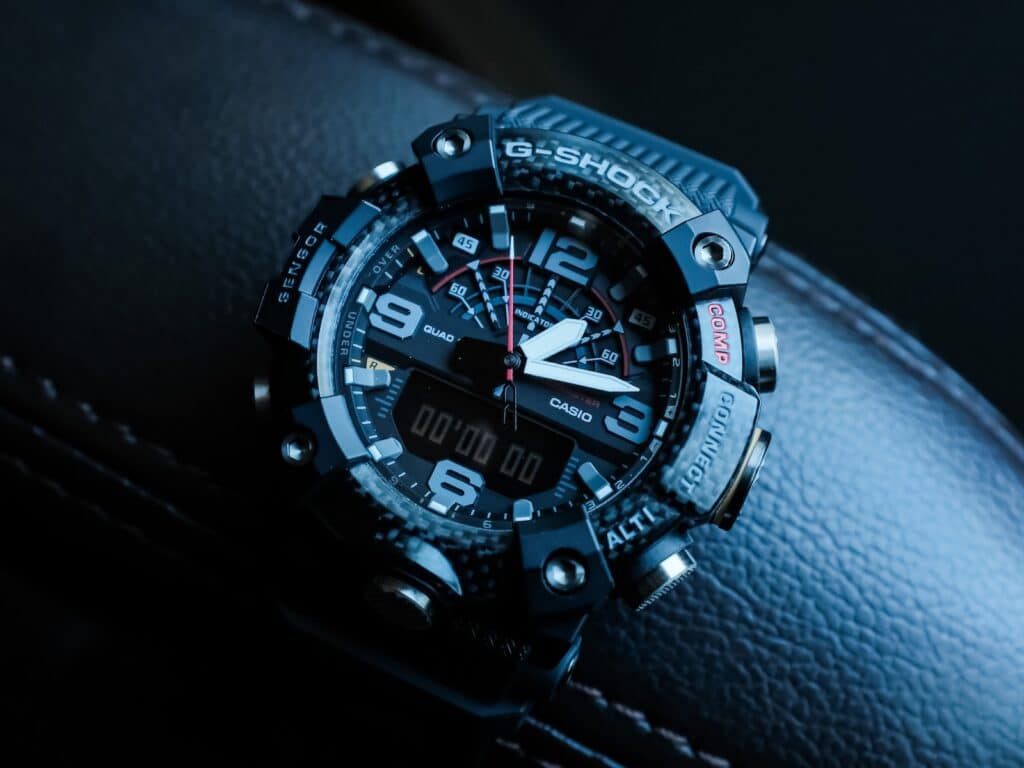
With a watch like this, I expected the dial to feel crowded. There’s just so much. Analog hands, multiple digital displays, indicators, sensor data, all competing for space. But in practice, it never felt overwhelming to look at. At a glance, the time is easy to pick up. That’s the part that matters most, and it’s handled well. The hands are bold enough to stand out against the rest of the display, and they don’t get lost in the background of information.
More importantly, they don’t interfere. I never found myself waiting for them to move out of the way or mentally filtering them out just to read something underneath. The digital portions are laid out in a way that feels structured rather than cluttered. Each section has its place, and once you spend a little time with it, your eye naturally goes where it needs to.
Lighting and contrast also play a role here. Even without diving deep into every function, the information I did use was always clear and easy to read. Whether it was the main time display, the stopwatch, or the temperature readout, I never had to work for it. What stood out to me was how this clarity reinforces the earlier point about capability versus use. The watch makes all of this information accessible and organizes it well. But in daily wear, I rarely needed more than a small portion of what was available.
Features in real-world use
This is where things started to separate a bit for me. On paper, the Mudmaster is stacked. Compass, altimeter, barometer, thermometer, step tracking, plus Bluetooth connectivity and app integration layered on top. It reads like a checklist of everything you could want in a modern tool watch. In practice, my use stayed pretty simple.
Most of the time, I was using it as a watch. Time, first and foremost. The stopwatch came in handy, and I found myself checking the temperature more out of curiosity than necessity. Beyond that, I didn’t really dig into the deeper functionality because my day-to-day didn’t call for it. That’s where the personality of this watch really shows itself. It’s built with a very specific kind of user in mind, someone who’s going to take advantage of that sensor suite. For me, it felt more like having access to a full set of tools that I didn’t often reach for.
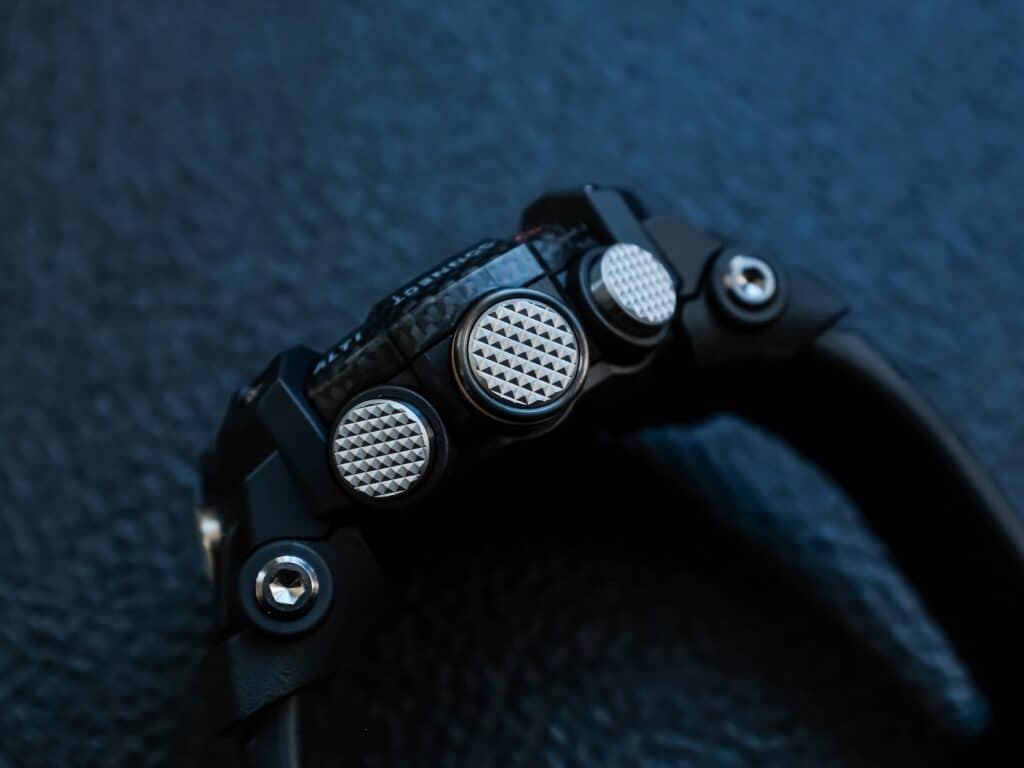
The Bluetooth side of things is a good example. The ability to sync time automatically and log data through the app adds another layer of capability, but I never felt the need to engage with it. I tend to keep watches fairly self-contained, so pairing it to my phone just didn’t fit into how I use them. I’m just not really an app guy.
Battery life plays into this in a more practical way. With a quoted lifespan of around two years on a standard cell, there’s a level of convenience here that’s easy to appreciate. It’s not something I had to think about during my time with it. The Mudmaster delivers a lot, and it does so in a way that feels well executed. But in my experience, most of that capability stayed in the background. It’s there if you need it, but it doesn’t force itself into your routine.
Strap and daily wear
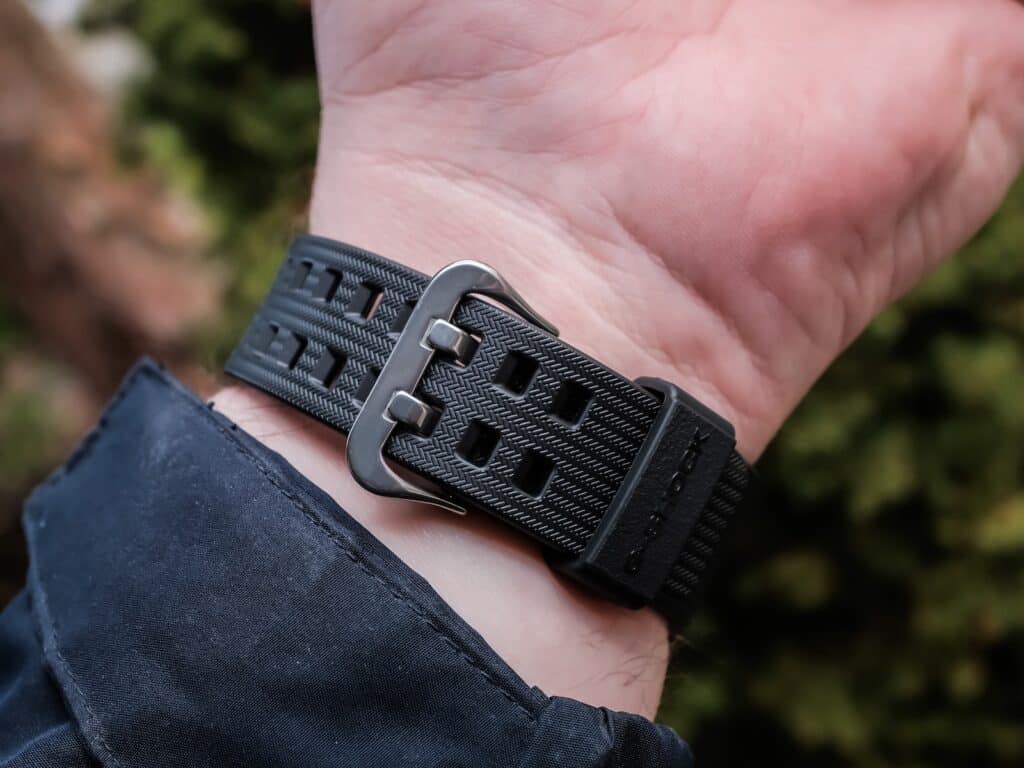
The resin strap does exactly what you’d expect. It’s durable, flexible enough to manage the size of the case, and built to handle the same kind of abuse. There’s nothing delicate about it, and that works in its favor.
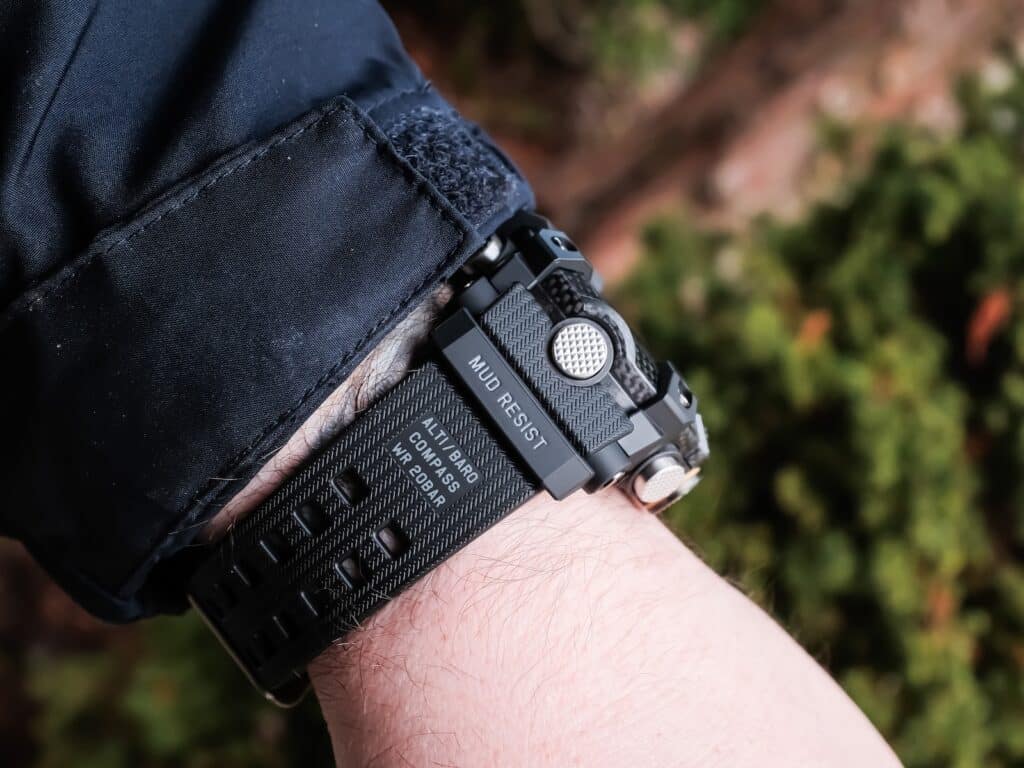
On the wrist, though, the strap can only do so much. It keeps things secure and helps distribute the weight, but it doesn’t change the fundamental reality of the case size. The watch still demands a certain amount of space to feel right. On a larger wrist, that balance starts to come together. On mine, it always felt like I was right at the edge of what works. At the same time, I did enjoy having it around. There’s something satisfying about wearing a watch that’s so clearly built with purpose, even if that purpose goes beyond your own day-to-day.
Where it lands
Coming into this, I already had a general idea of what a Mudmaster represented. Spending time with it didn’t really change that, but it did refine how I relate to it. At $420, I still appreciate what this watch is trying to do. The construction feels deliberate, the layout makes sense, and the execution comes together in a way that feels thought through. It’s a serious piece of kit, even if I never came close to using it to its full potential.
What did change for me was understanding where it fits. Not just in the broader G-Shock lineup, but in my own rotation. This experience made it pretty clear that there’s a limit to what I can comfortably wear, and the Mudmaster sits right at or just beyond that line. That doesn’t take away from what it is. If anything, it highlights that this watch is built with a specific kind of user in mind. Someone who wants that level of durability, who will actually use the sensors, and who has the wrist presence to carry it without thinking twice.
For me, it ends up as something I respect more than I’d realistically keep in rotation. I enjoyed the time I spent with it, and I’m glad I got to experience it firsthand. But it also served as a reminder that capability and compatibility don’t always line up.

Co-Founder & Senior Editor
Michael Peñate is an American writer, photographer, and podcaster based in Seattle, Washington. His work typically focuses on the passage of time and the tools we use to connect with that very journey. From aviation to music and travel, his interests span a multitude of disciplines that often intersect with the world of watches – and the obsessive culture behind collecting them.
I wore one of these, at least an older model, for about two years. I liked it except that every few months it would reset all of its settings out of nowhere, and the only way I could figure out to get it back where I wanted was to use their app. What’s the point of a tool watch that occasionally requires a smartphone to reset it? Were it not for that quirk, I’d probably still own it. That being said, when I look back at photos from that time period, the dang thing is *enormous*.
Dude it’s so big 😀
I love mine three years now
I love mine three years now
What do you think of the size?!
The sizes is perfect