
In June, I rounded up the five best chronograph watches of 2026 so far, and that list ran from a $299 Timex to a $13,050 Monaco. The affordable end had more going on than that list could show. Every chronograph under $1,000 we covered this year runs on quartz, solar, or a meca-quartz hybrid, and almost all of them borrow from a specific decade, from 1930s navigational dials to 1970s skin divers. Cases got smaller too, and one of these picks measures 36mm. All nine cost less than $1,000 and have confirmed US prices. Here are our favorite affordable chronograph watches of 2026, in the order we covered them.

Citizen Endeavor Chrono
Citizen marked 50 years of Eco-Drive with a sailing chronograph, and the Endeavor Chrono was the first chronograph we covered this year. The 43mm brushed steel case has polished chamfers, a scalloped 60-minute bezel with a black ceramic insert, sapphire, and 100 meters of water resistance. Inside is the solar B620, with running seconds at six, a 60-minute counter at nine, a 24-hour indicator at three, and a two-tone minute track marking the first 20 minutes. It’s $595 on rubber and $650 on the bracelet, and the white panda dial with a blue chronograph hand is the version I’d buy. Unless you race boats, the regatta timing works as a general elapsed-time reference. One reader objected to the 43mm case, and that’s a fair complaint.

Q Timex Continental Chronograph
The Continental line already had a dressy day-date and a GMT, and February’s Continental Chronograph gave it a more playful third act. The concentric-circle etched dial and twin subdials lean into a 1970s Hollywood look, and a unidirectional rotating bezel adds color across four configurations. Two come on integrated link bracelets and two on brown leather. It’s $229 on leather and $259 on the bracelet, and it runs an analog quartz movement. Timex shared few specs at launch, so case size, crystal, and water resistance are still open questions. My pick is the black and green version.
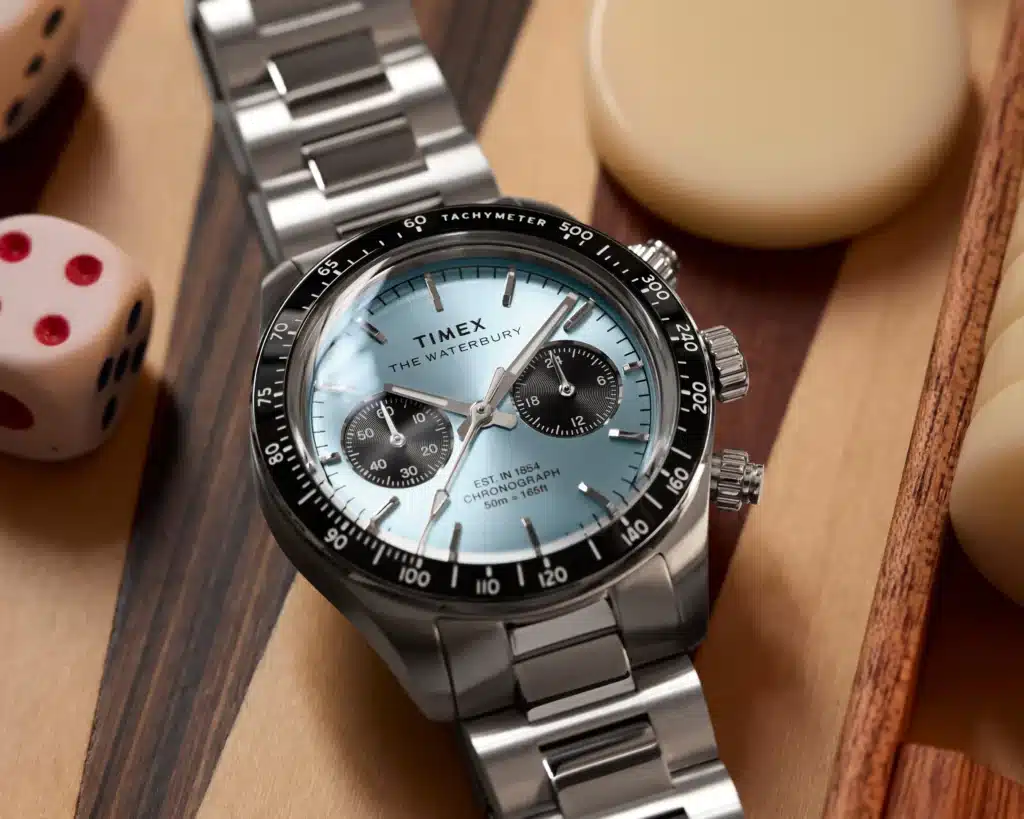
Timex Waterbury Heritage Chronograph Ice Blue
Timex named the Waterbury line after its Connecticut hometown, and the Waterbury Heritage Chronograph Ice Blue points that heritage toward a very expensive target. The ice blue sunburst dial nods to the platinum Rolex Daytona reference 126506, which sells for more than $80,000, and Timex gets the color closer than you’d expect at this price. A bicompax layout with a 60-minute counter and 24-hour register keeps the face clean, and a fixed tachymeter bezel finishes the racing look. It’s $299 on a perforated leather racing strap and $349 on a quick-release bracelet. Water resistance is 50 meters, and the applied indices aren’t lumed, so the hands handle legibility after dark.
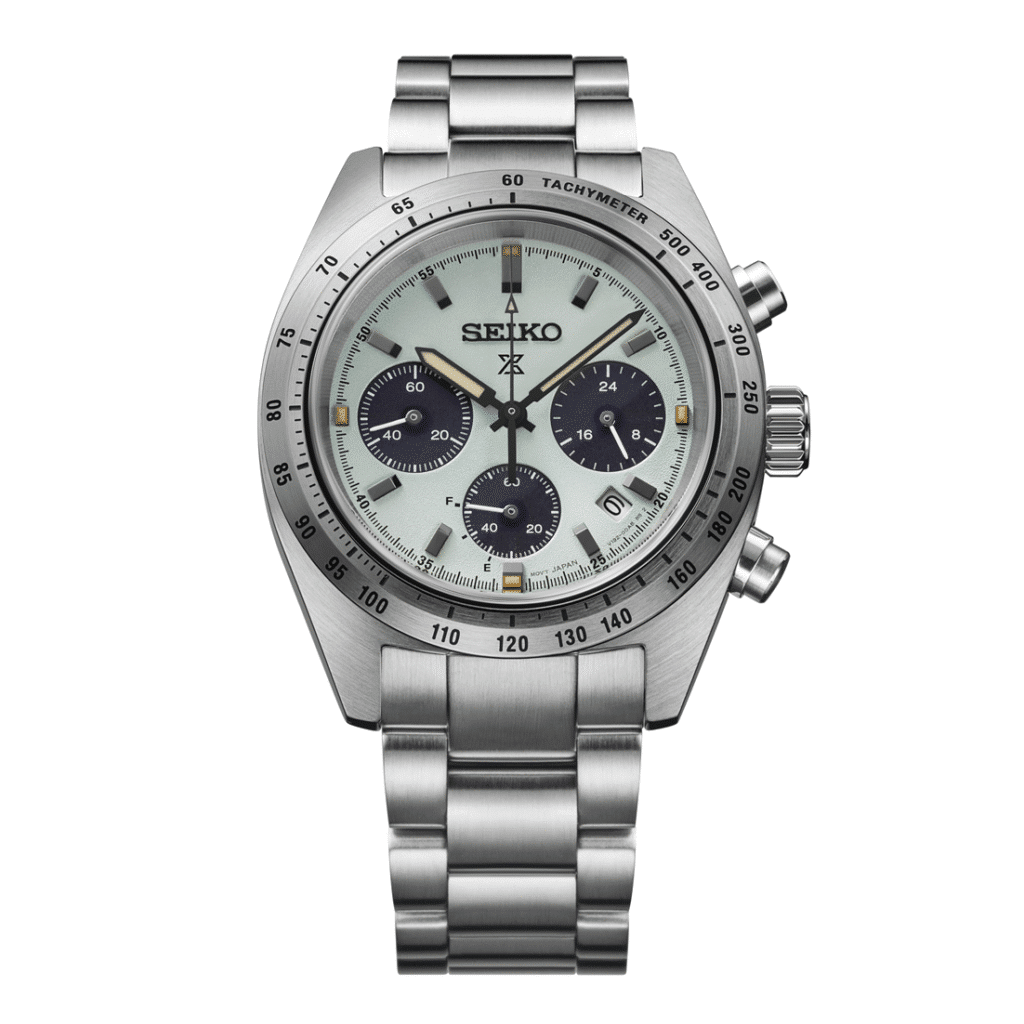
Seiko Speedtimer SSC961, SSC963, and SSC965
Seiko’s Speedtimer name dates to its 1969 automatic chronograph, and the solar version is one of the easiest Seiko chronographs to recommend. February’s SSC961, SSC963, and SSC965 add silver, salmon, and surf green dials to the same 39mm case, 13.3mm thick and 45.5mm lug-to-lug. You still get the V192 solar chronograph, a curved sapphire crystal, and 100 meters of water resistance. Azzi Jewelers lists them at $750, which makes this the priciest pick here. That 39mm case is still the main reason to buy one. The update stops at the dials, and for everyday wear I’d still lean toward the existing SSC813 panda.

Dryden Chrono Diver Gen 2
Kansas City’s Dryden built its first Chrono Diver around a VK63 meca-quartz movement, and Kaz reviewed it when it debuted. The Gen 2 keeps that movement, with its mechanical chronograph feel and roughly three-year battery, and pushes harder into 1970s skin diver styling. The 42mm steel case gets a screw-down crown, 100 meters of water resistance, a double-domed sapphire crystal with internal anti-reflective coating, and a 120-click bezel with a steel insert. A newly designed tapered five-link bracelet with solid end links rounds it out. It’s $450 in Blue Panda and Black Vintage and $475 in PVD Vintage. The PVD would be my pick, but it’s sold out, which leaves the Black Vintage as the most versatile choice. I’ve only seen the Gen 2 in photos so far.
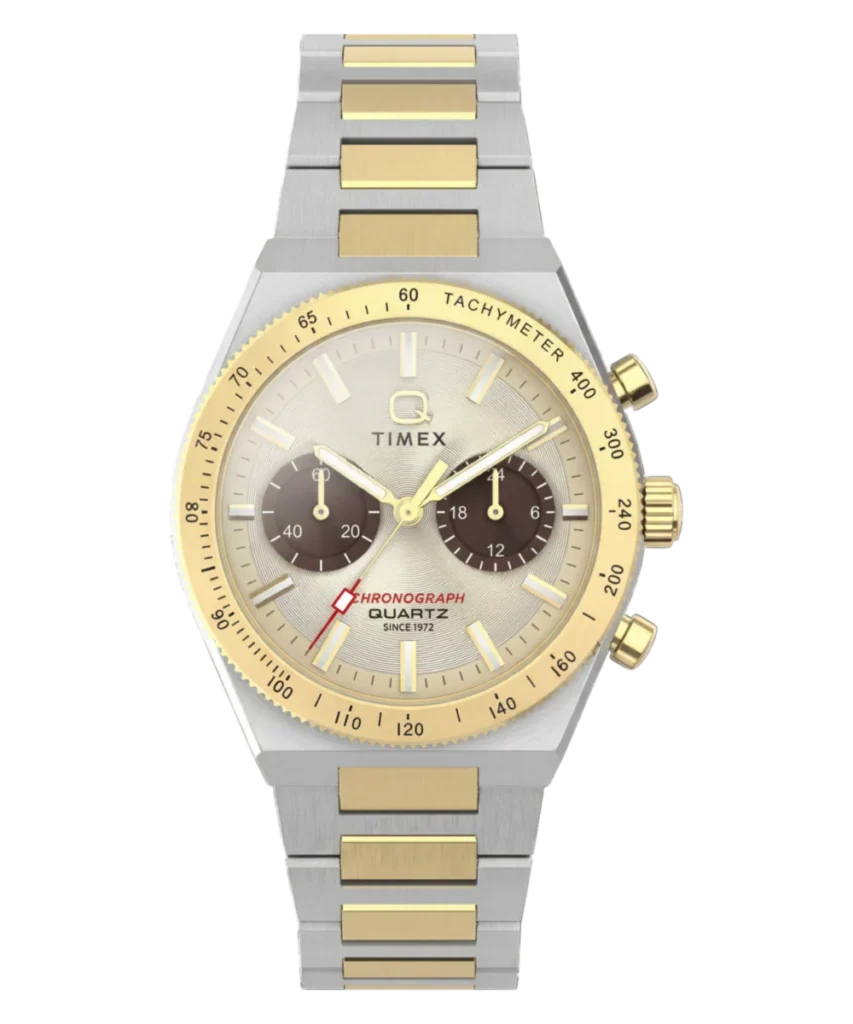
Q Timex Continental Chronograph 36mm
Six months after the first Continental Chronograph, Timex shrank it. The 36mm version measures 43mm lug-to-lug and 11.5mm thick, with an integrated tapered bracelet, a stationary tachymeter bezel finished to match the case, and a radial dial with faceted markers. That makes it the smallest chronograph on this list by 3mm. It’s $259 in steel and $279 in two-tone. Water resistance drops to 50 meters, which feels like an unnecessary downgrade, and the flat crystal is mineral. Timex also lists the movement only as a “chronograph movement,” so I can’t confirm whether it matches the larger version.
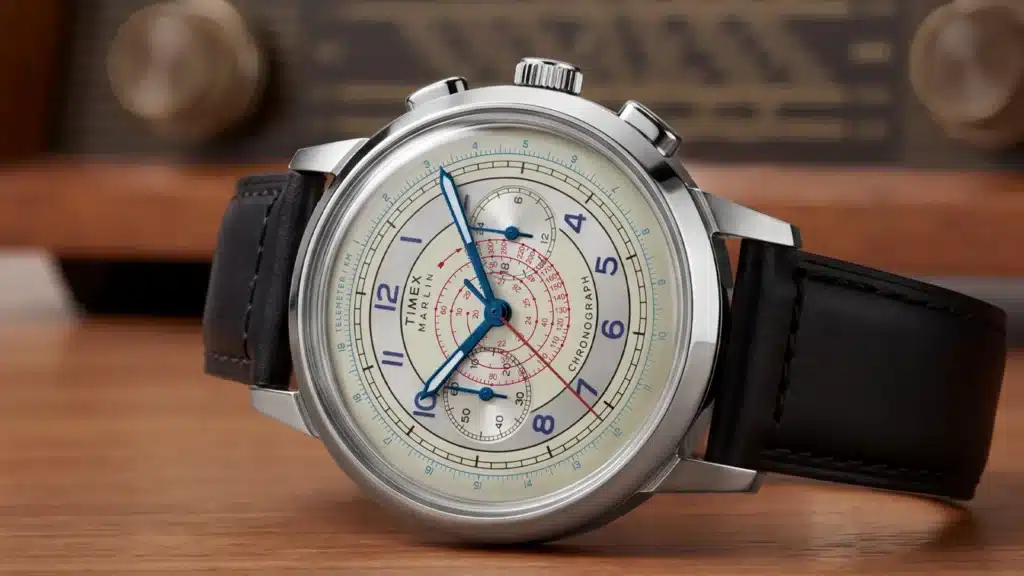
Timex Marlin Neo Classic Chronograph
Most modern Marlins borrow from the 1960s. The Marlin Neo Classic Chronograph goes further back, to the navigational chronographs Breitling, Longines, and Angelus made between the 1930s and 1950s, with a little of Patek Philippe’s 130A sector dial mixed in. The cream dial stacks a snail tachymeter, a perimeter telemeter, and two subdials, and red, blue, and black markings keep the scales apart. A 40mm steel case, 13mm thick, carries curved pushers, a fluted crown, and a domed acrylic crystal over a quartz chronograph. It’s $279 on leather and $319 on a steel bracelet with a butterfly clasp. Stock has been thin, and 50 meters plus acrylic make it a weekend watch. It’s also the next Timex I want in for review.
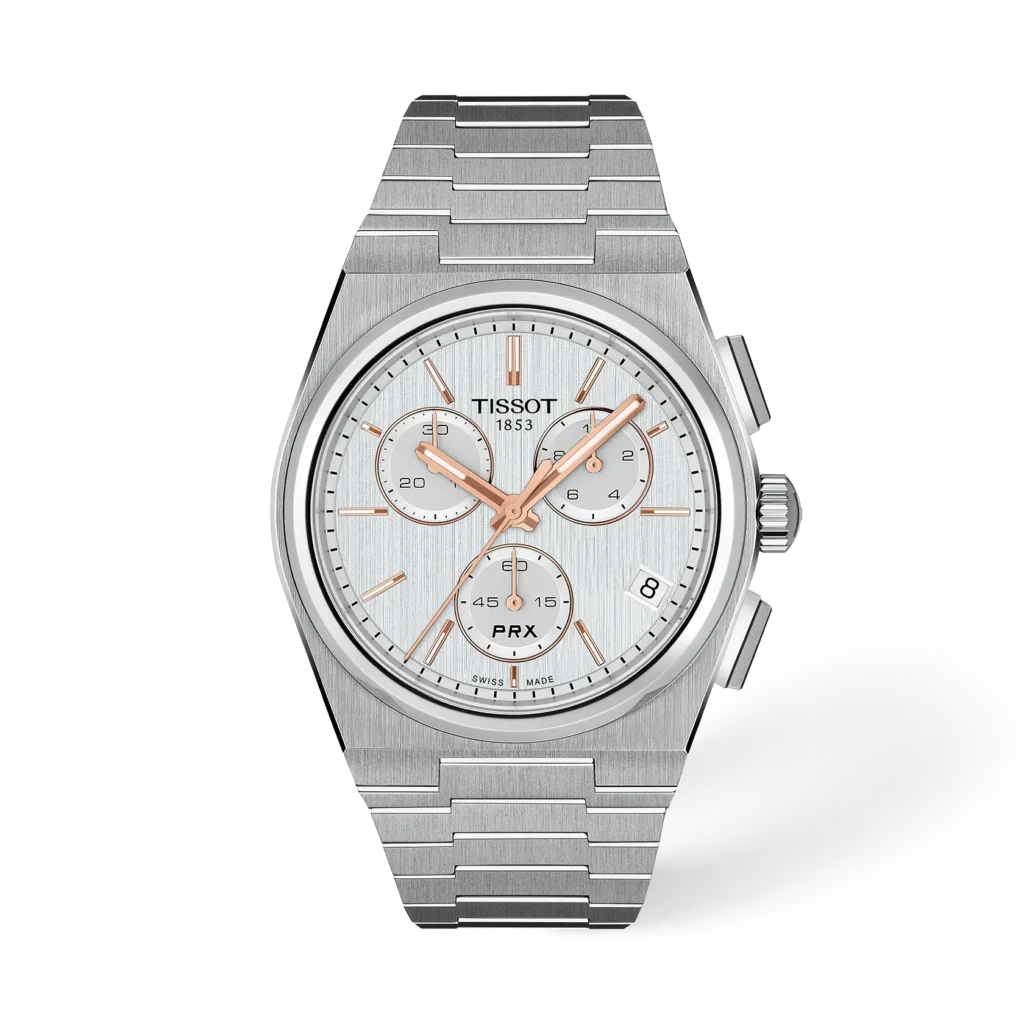
Tissot PRX Chronograph Quartz
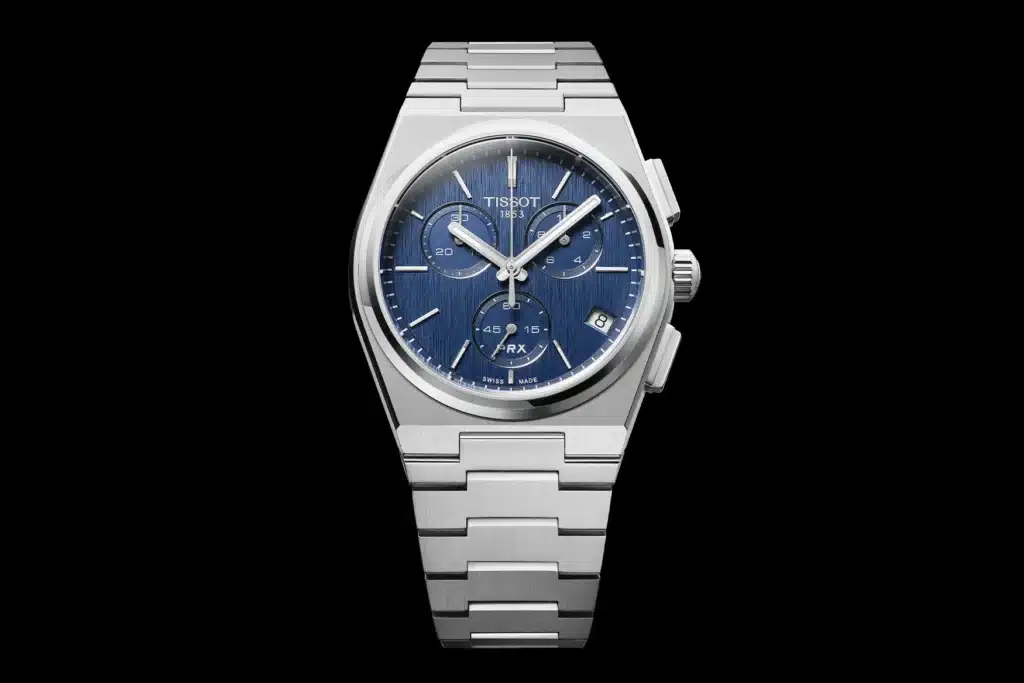
Tissot’s PRX traces back to the Seastar of 1978, and the modern line launched as quartz before the Powermatic 80 models arrived. The PRX Chronograph Quartz brings the chronograph back to that starting point, and it’s the version I didn’t expect to prefer. The 41mm steel case is 11.65mm thick, nearly 3mm slimmer than the 42mm automatic chronograph, with sapphire, 100 meters of water resistance, and a quick-release bracelet with a butterfly clasp. The ETA G10.212 PowerDrive adds a 1/10-second display along with ADD and SPLIT functions. It’s $525 in silver, black, or blue. The 4 o’clock date will divide people, and 41mm still isn’t small for an integrated case. Buyers who want a mechanical chronograph will still look to the automatic.
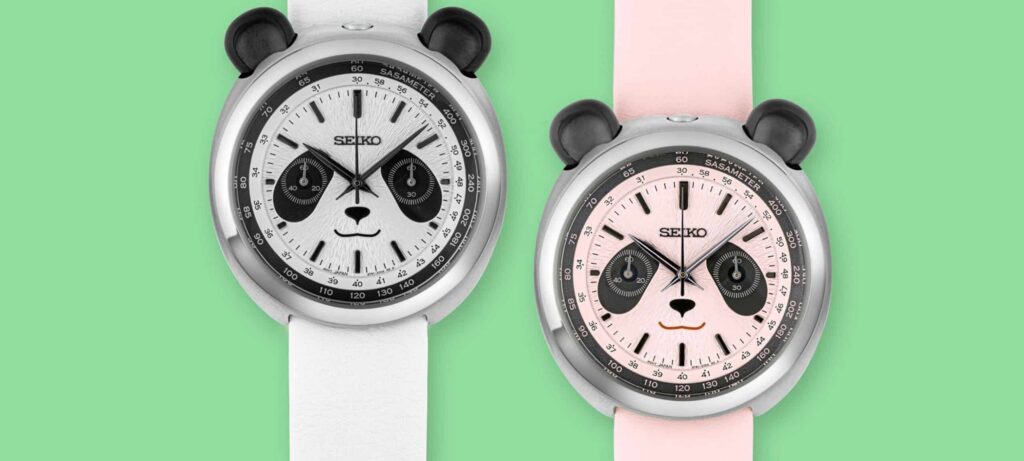
Seiko Pandagraph HHK001 and HHK002
Panda dial is a collector nickname, and Seiko’s Pandagraph takes the nickname literally. From Seiko’s Power Design Project, the HHK001 and HHK002 turn the chronograph registers into a panda’s eyes, nose, and mouth on a fur-textured dial, with bamboo-leaf hands and a tachymeter relabeled as a “Sasameter.” The bullhead layout puts the crown and pushers at 12 o’clock on a 43mm cushion case, 14.6mm thick, and the movement is Seiko’s 8T61 quartz chronograph. It’s $540, limited to 3,000 white HHK001s and 2,000 pink HHK002s, with availability starting in November. Hardlex, a leather strap, and only splash resistance mean you’re paying for the design. I’d take the black-and-white HHK001, where the joke reads clearest.
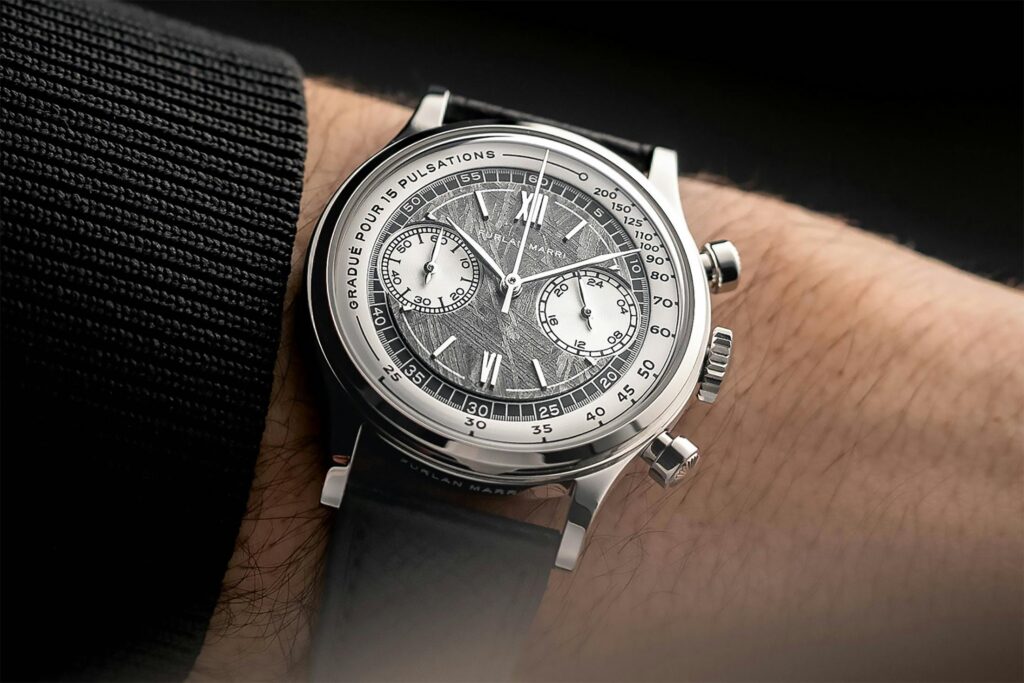
A few more worth a look
Several chronographs we liked this year couldn’t make the list because of pricing or availability. Furlan Marri’s Meteorite Octa Chronograph put a Muonionalusta dial in a 38mm case with a VK64 meca-quartz for CHF 720, but it sold during a 10-day preorder window. Citizen’s CA4764 and CA4766 solar chronographs and the Tsuno Chrono gradient dials both launched in Japan only. The Tsuno Chrono Tube Screamer did too, through instrument retailers. If you want something with wrist time behind it, I reviewed the Citizen Promaster Navihawk 40 in July. It launched in 2025, and Citizen lists it at $476.
Where this leaves us
None of these nine uses a fully mechanical chronograph. Under $1,000, brands put their effort into solar movements, sapphire, quick-release bracelets, and dial designs borrowed from earlier decades, and the Dryden’s meca-quartz VK63 is the closest anyone came to mechanical feel. For a first chronograph, I think that trade makes sense, since quartz is cheaper to own and service. Still, the automatic PRX Chronograph and Seiko’s mechanical Speedtimers start well above this list, and that gap hasn’t closed. The Speedtimer and the slimmer PRX are the two I’d look at first, though the Neo Classic is the one I most want to see in person.
If you’re still shopping, we’ve also rounded up the best chronographs under $750 we’ve tested and our favorite affordable dive watches of 2026.

Co-Founder & Senior Editor
Michael Peñate is an American writer, photographer, and podcaster based in Seattle, Washington. His work typically focuses on the passage of time and the tools we use to connect with that very journey. From aviation to music and travel, his interests span a multitude of disciplines that often intersect with the world of watches – and the obsessive culture behind collecting them.