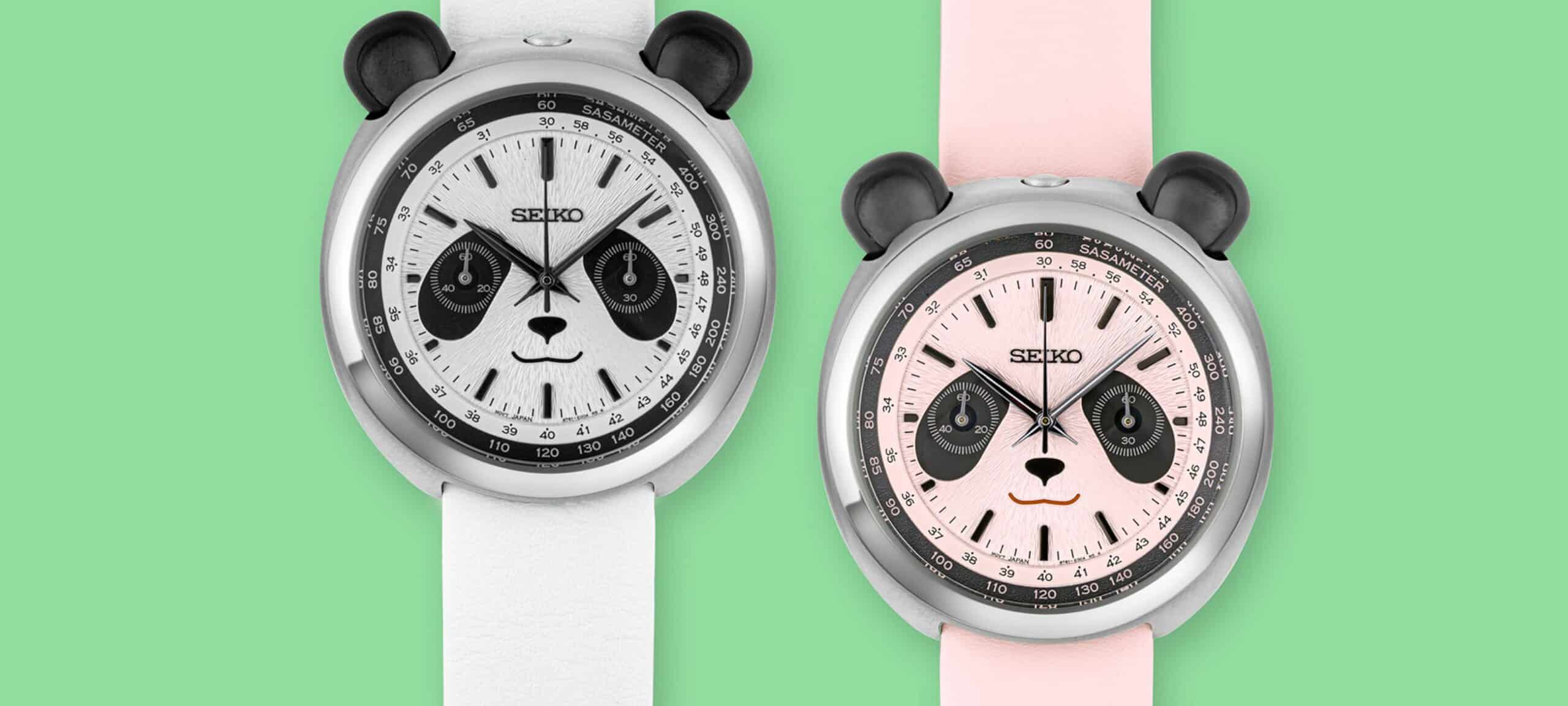
Every once in a while, Seiko releases something that makes me wonder how it survived all the meetings required to become an actual product. The new Power Design Project Pandagraph is one of those watches. And I mean that as a compliment. The HHK001 and HHK002 began with designer Kiyotaka Sakai and Seiko’s Power Design Project, an internal program that gives designers room to explore ideas outside their usual assignments. The Pandagraph appeared as a concept in 2024, built around Sakai’s extremely literal interpretation of the “panda” chronograph.
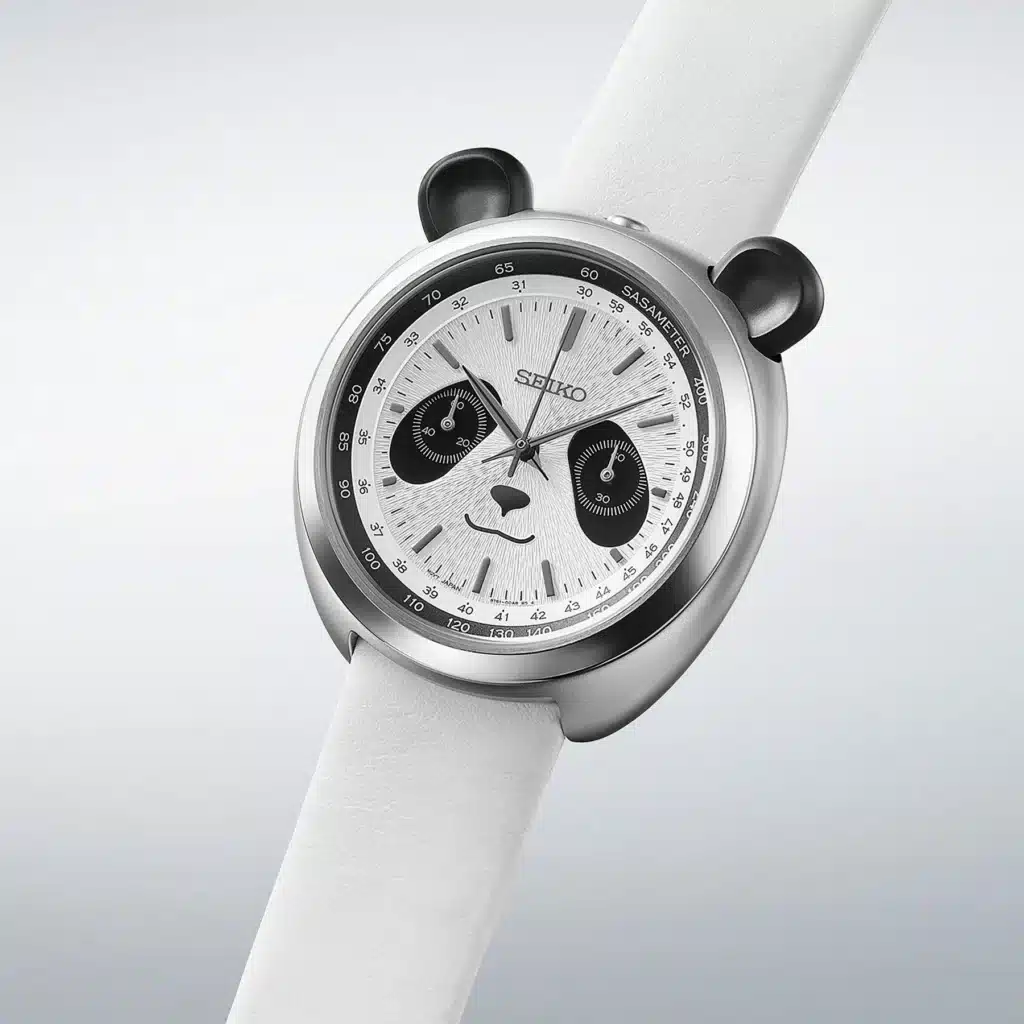
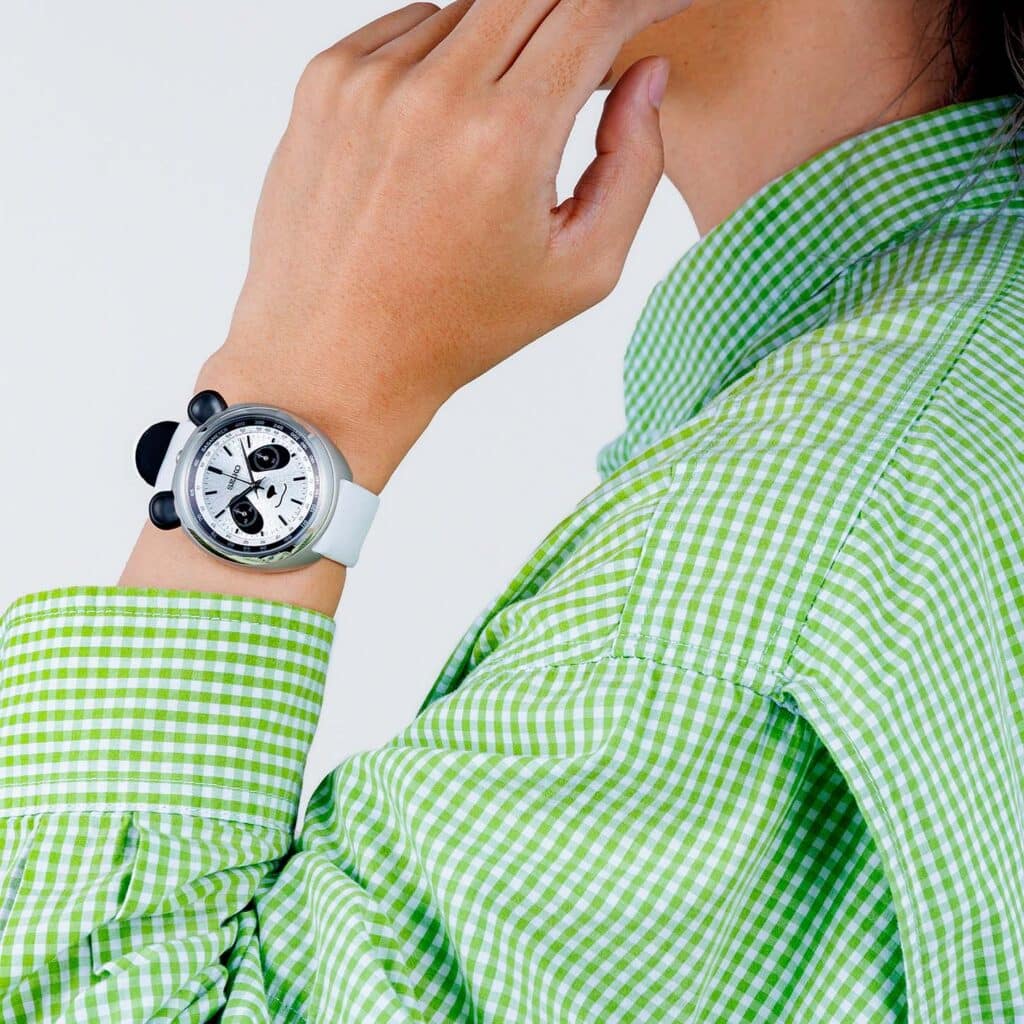
Now Seiko is putting it into production for November 2026, and I think the interesting part is how little the company appears to have toned it down along the way. The 43mm stainless steel case has a rounded cushion shape meant to resemble a panda’s head. Because it uses a bullhead chronograph layout, the crown and recessed pushers sit at 12 o’clock, where the pushers conveniently become ears. The dial has a radial texture inspired by fur, the black chronograph registers form the eyes, and a nose and mouth complete the face toward 6 o’clock. Even the hands are shaped like bamboo leaves.
Then there’s the “Sasameter,” Seiko’s panda-specific take on a tachymeter. Sasa refers to bamboo grass in Japanese, and the scale includes a reference to a panda’s roughly 30 km/h top speed. Turn the watch over and there’s another panda detail on the caseback, this time viewed from behind and complete with the animal’s white tail. My take is that this degree of commitment is precisely why the Pandagraph works.
There are plenty of ways Seiko could have made the production version safer. Keep the panda eyes, put them inside a conventional case, and call it finished. Instead, almost every major visual component participates in the same idea. It’s excessive, but at least the excess feels deliberate.

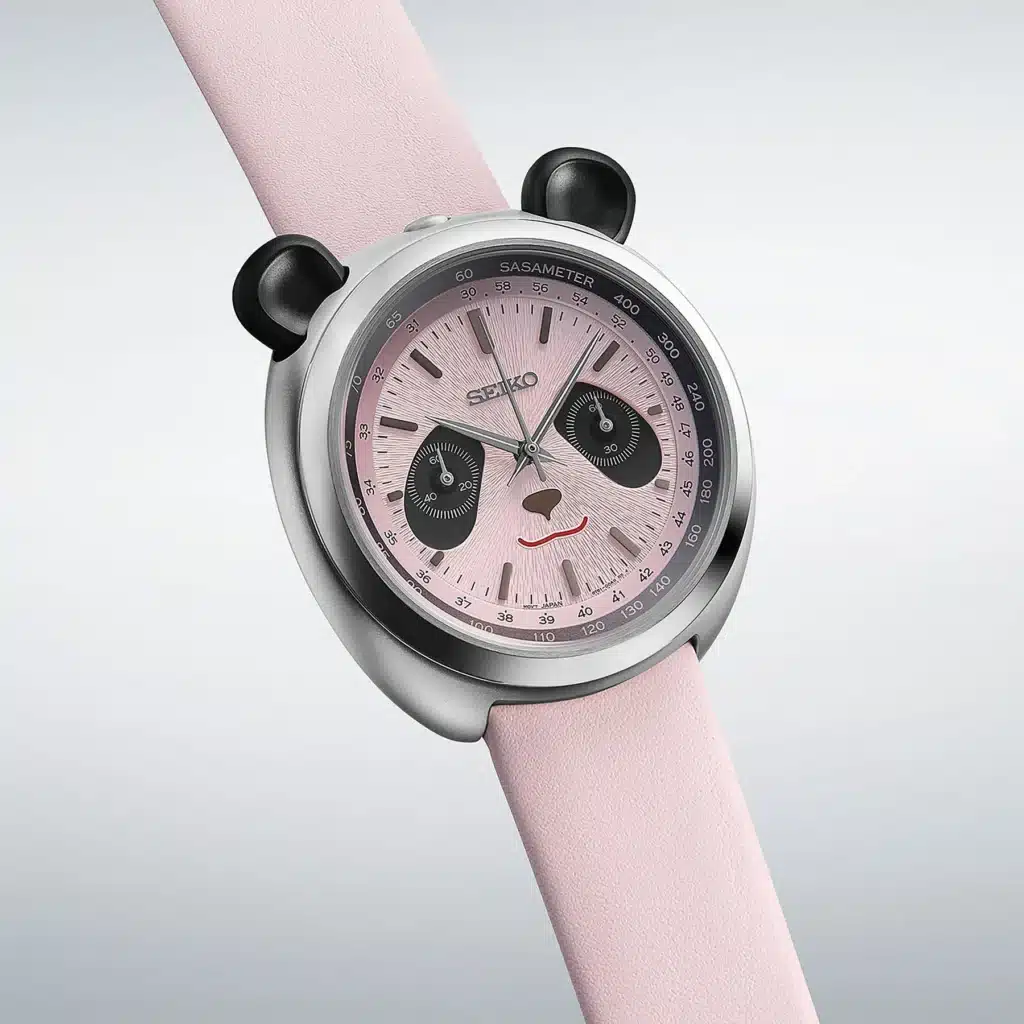
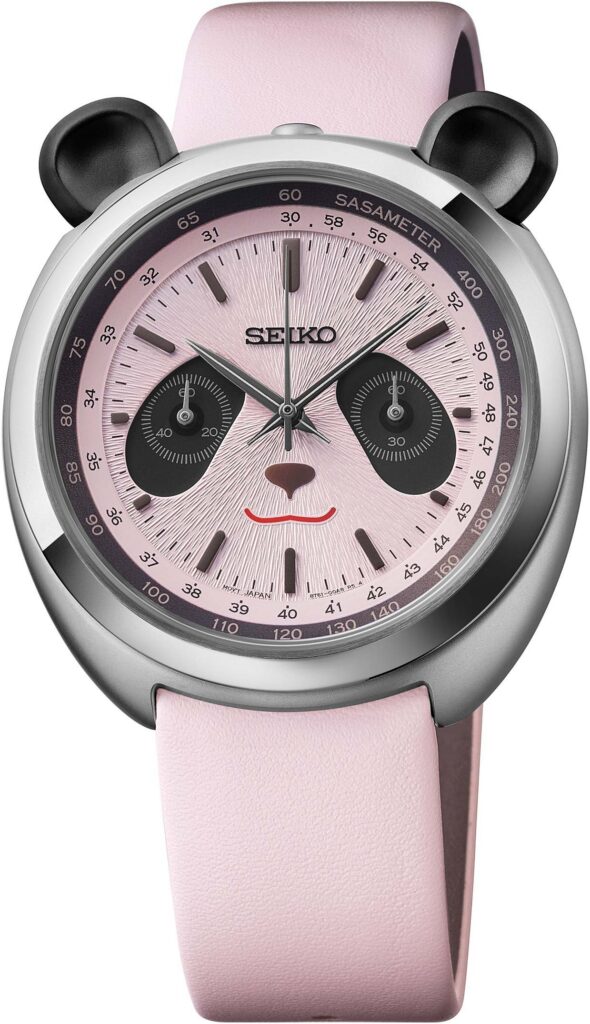
Of the two, I think the HHK001 makes the strongest case for the concept. Its white-and-black color scheme preserves the visual connection to the panda chronographs collectors already know. The HHK002 goes pink, which Seiko says references the coloring of a newborn panda. I appreciate that Seiko went there, although the original black-and-white version makes the joke click immediately for me. Inside is Seiko’s caliber 8T61 quartz chronograph movement, accurate to a claimed ±15 seconds per month and good for approximately three years on a battery. It can measure up to 60 minutes in 1/5-second increments.
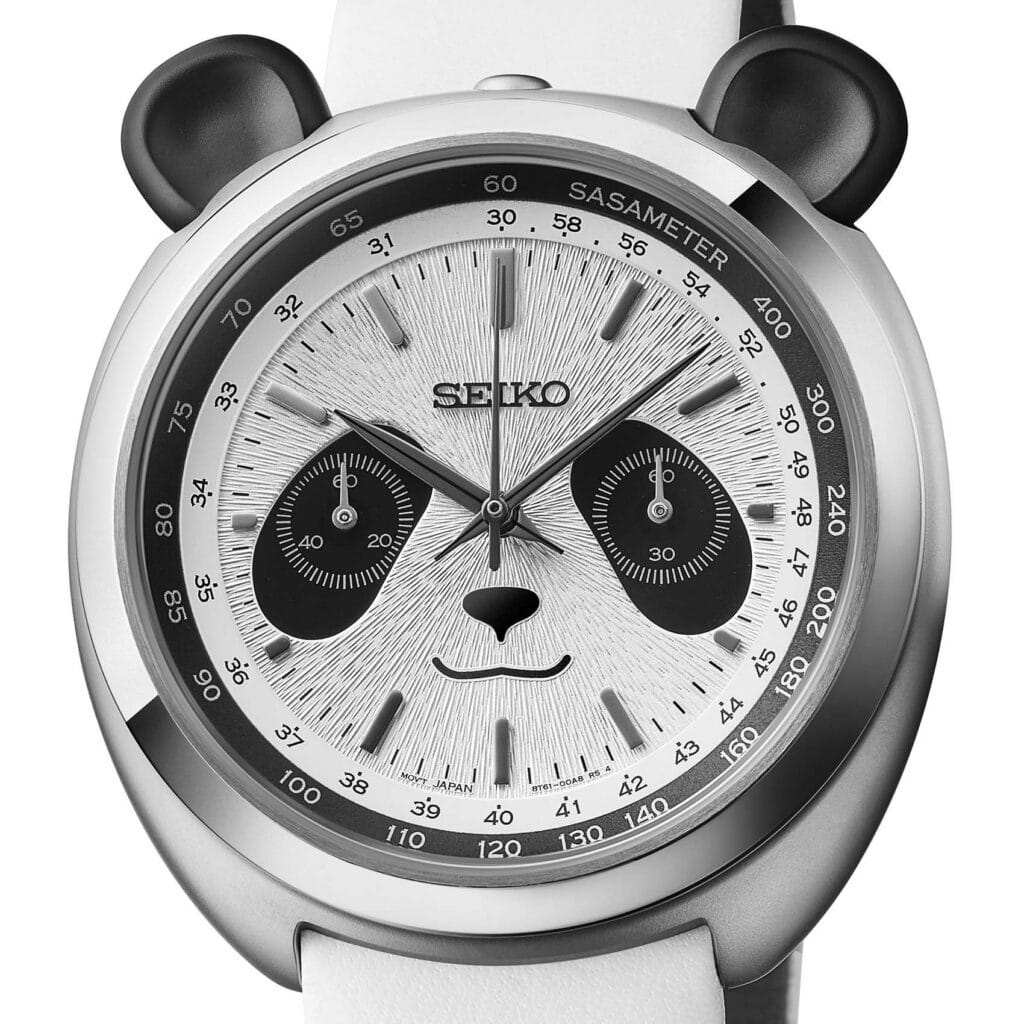
And honestly, I think quartz was the right decision. The interesting engineering here is happening on the outside. Putting a mechanical chronograph inside would almost certainly increase the price, and I’m not convinced it would make the Pandagraph any more successful at what it’s trying to accomplish. The remaining specs are fairly ordinary. The case measures 43mm across, 14.6mm thick, and only 44.1mm lug-to-lug. There’s a Hardlex crystal, leather strap, and splash resistance. I wouldn’t point to any of that as a compelling value argument on its own.
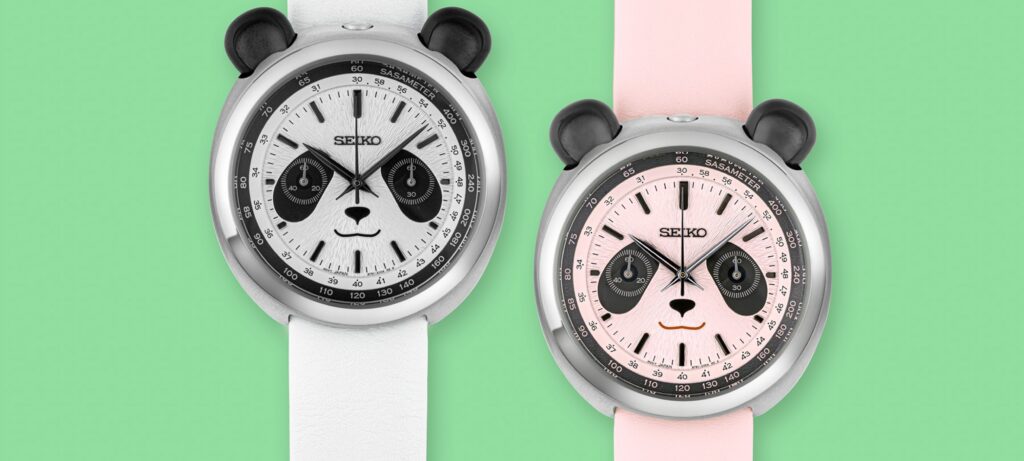
The price is $540, and strangely enough, I’m fine with it. To me, the value proposition here comes down to design rather than specifications. Seiko will make 3,000 examples of the white HHK001 and 2,000 of the pink HHK002. For that money, you’re getting something that still feels remarkably close to an experimental design exercise instead of a committee-approved interpretation of one.
That’s what interests me most about the Pandagraph. A designer had a strange idea, pushed it much further than necessary, and somehow Seiko decided thousands of people should be allowed to buy the result. In my opinion, watches could use a little more of that.

Co-Founder & Senior Editor
Michael Peñate is an American writer, photographer, and podcaster based in Seattle, Washington. His work typically focuses on the passage of time and the tools we use to connect with that very journey. From aviation to music and travel, his interests span a multitude of disciplines that often intersect with the world of watches – and the obsessive culture behind collecting them.