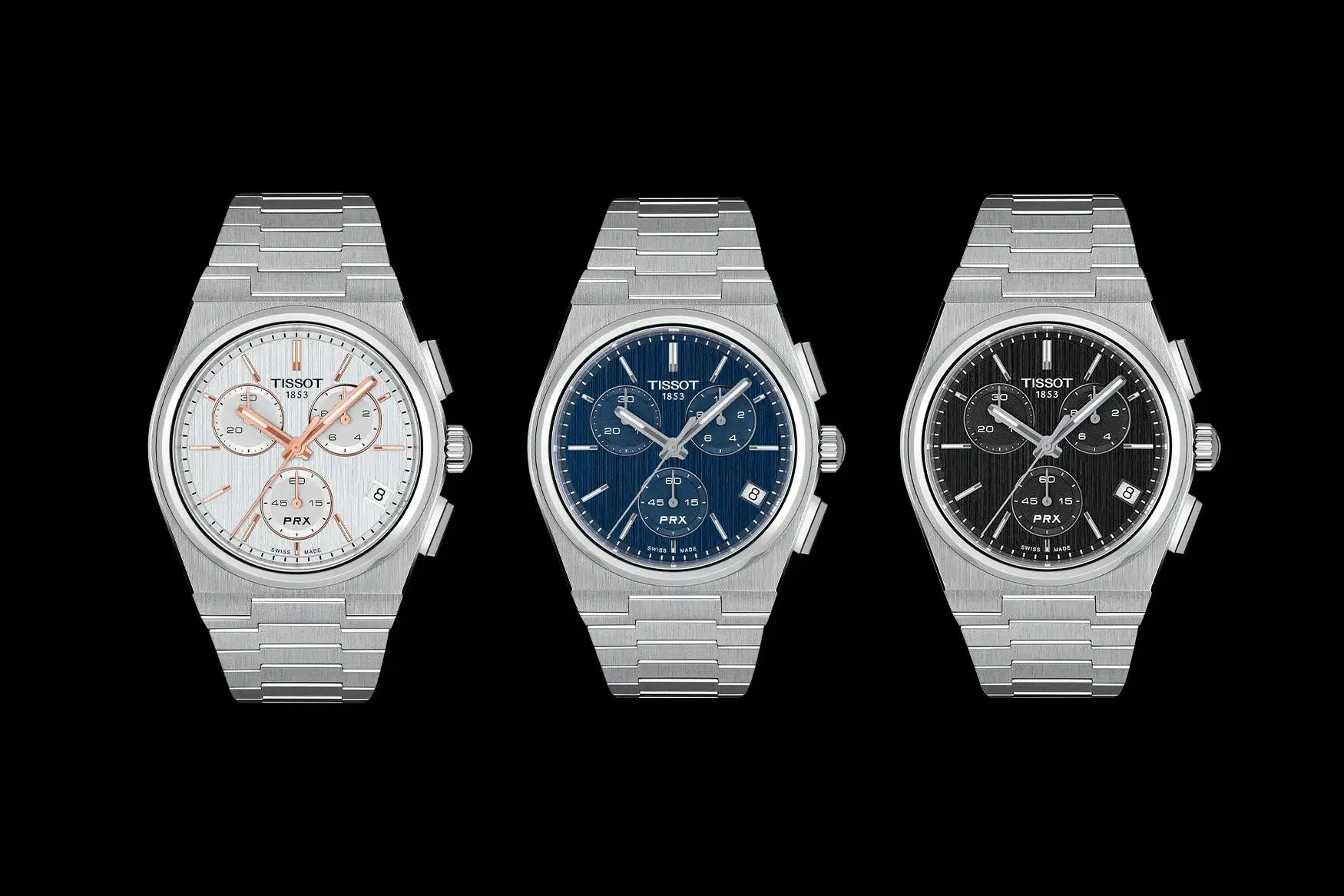
The automatic PRX Chronograph has always been an interesting proposition, although its 42mm case, 14.54mm thickness, and $2,150 price put some distance between it and the accessible appeal of the original PRX. Tissot’s new PRX Chronograph Quartz brings that idea back down to $525, trims the case to 41mm by 11.65mm, and adds a few functions that benefit from going quartz. I think this might be the PRX chronograph that makes more sense for the collection.
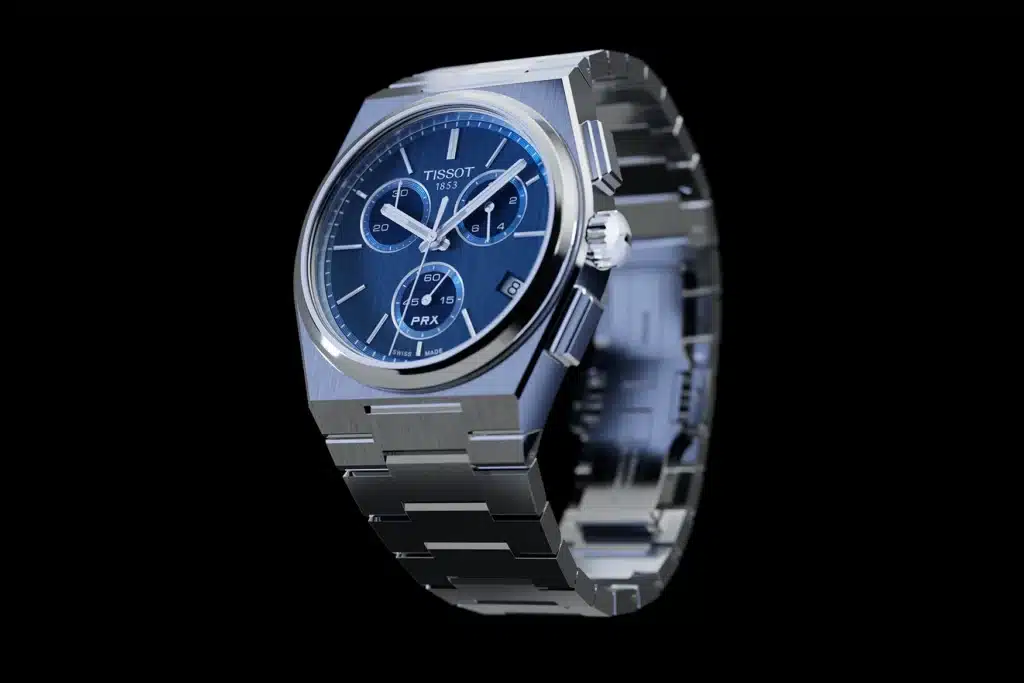
We adore quartz chronographs here at TBWS. The original Seastar design that inspired the modern collection arrived in 1978, and Tissot launched the contemporary PRX as a quartz watch before introducing the Powermatic 80 models. To me, putting a quartz chronograph movement into this case feels like a pretty natural extension of the idea. It also allowed Tissot to do something about the size.
The new PRX Chronograph Quartz measures 41mm across and 11.65mm thick, compared with 42mm and 14.54mm for the automatic PRX Chronograph. In my opinion, losing nearly three millimeters of thickness is much more interesting than shaving a single millimeter from the diameter.
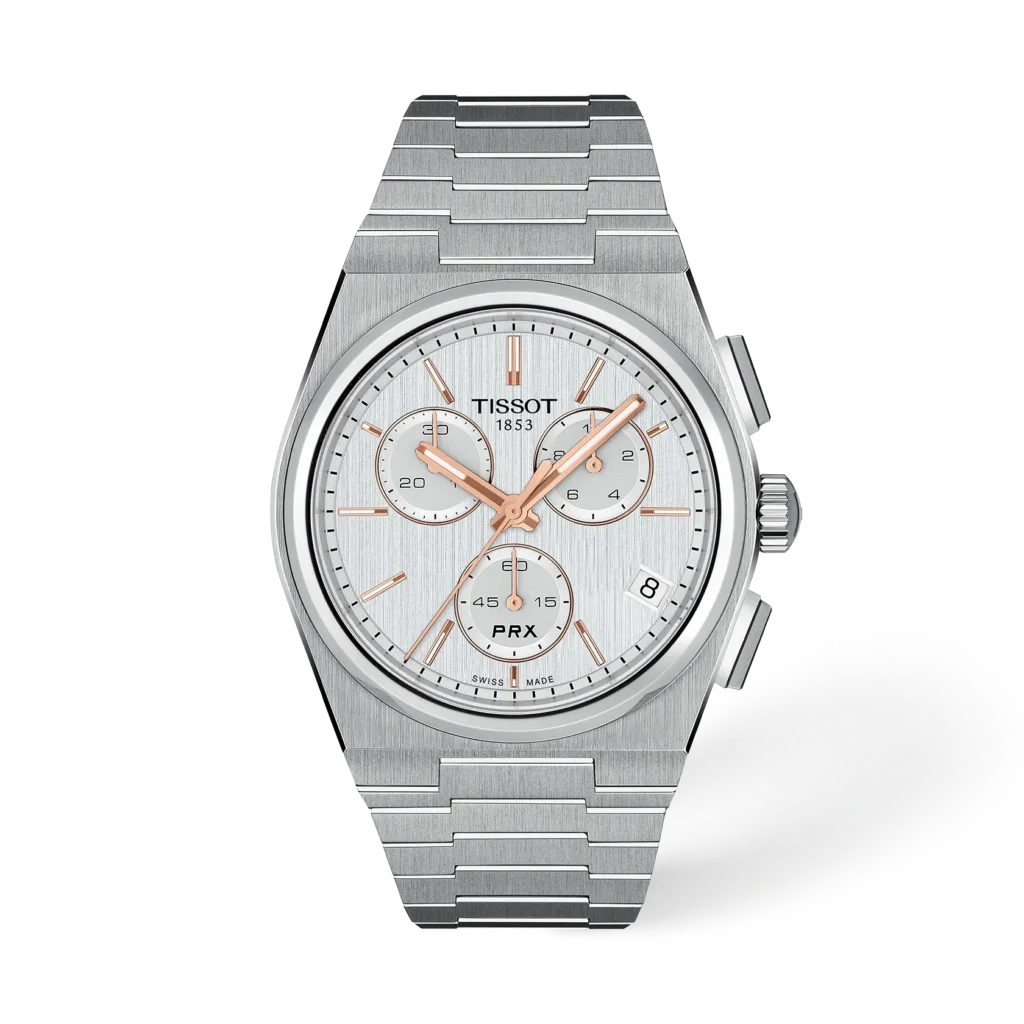
Still, I wouldn’t assume this will suddenly wear small. The PRX has a broad case and integrated bracelet architecture that gives it plenty of presence, and 41mm remains a substantial diameter. We’ll need to get one on the wrist before making any calls about comfort. The dimensions alone suggest a less bulky watch than the automatic chronograph.
Inside is the ETA G10.212 PowerDrive quartz chronograph movement. You get running seconds, a 30-minute chronograph counter, a 1/10-second display, and ADD and SPLIT functions. With the latter, pressing the lower pusher temporarily stops the central chronograph hand so you can record an intermediate time. The movement keeps counting, and another press sends the hand forward to catch up.
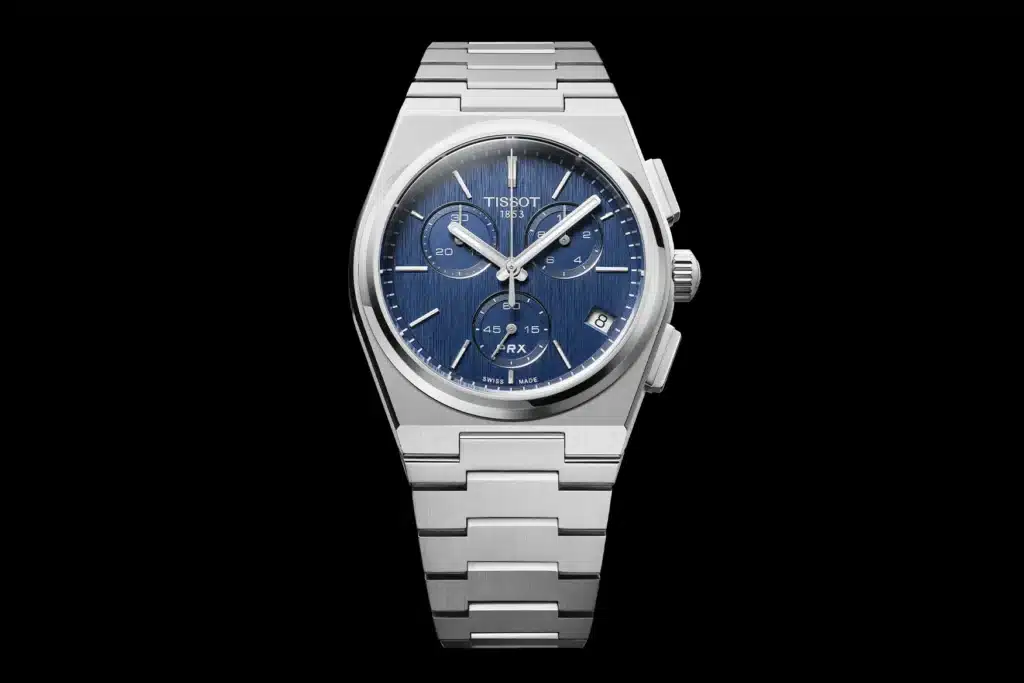
My take is that this functionality gives the quartz movement a reason to be here beyond price. Quartz chronographs can do this stuff simply and inexpensively, and Tissot is taking advantage of that rather than treating the movement solely as a cheaper route into the design.
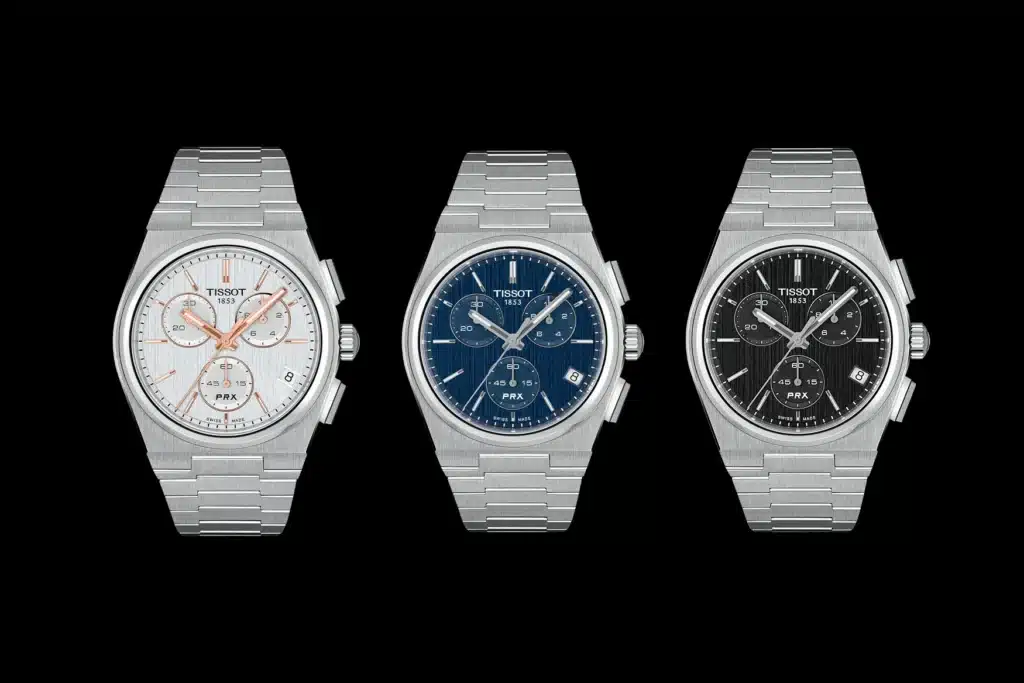
The rest of the watch is familiar PRX territory. The case is 316L stainless steel with a sapphire crystal and 100 meters of water resistance. It comes on Tissot’s quick-release steel bracelet with a butterfly clasp. Three vertically brushed dial options are available at launch: silver, black, and blue.
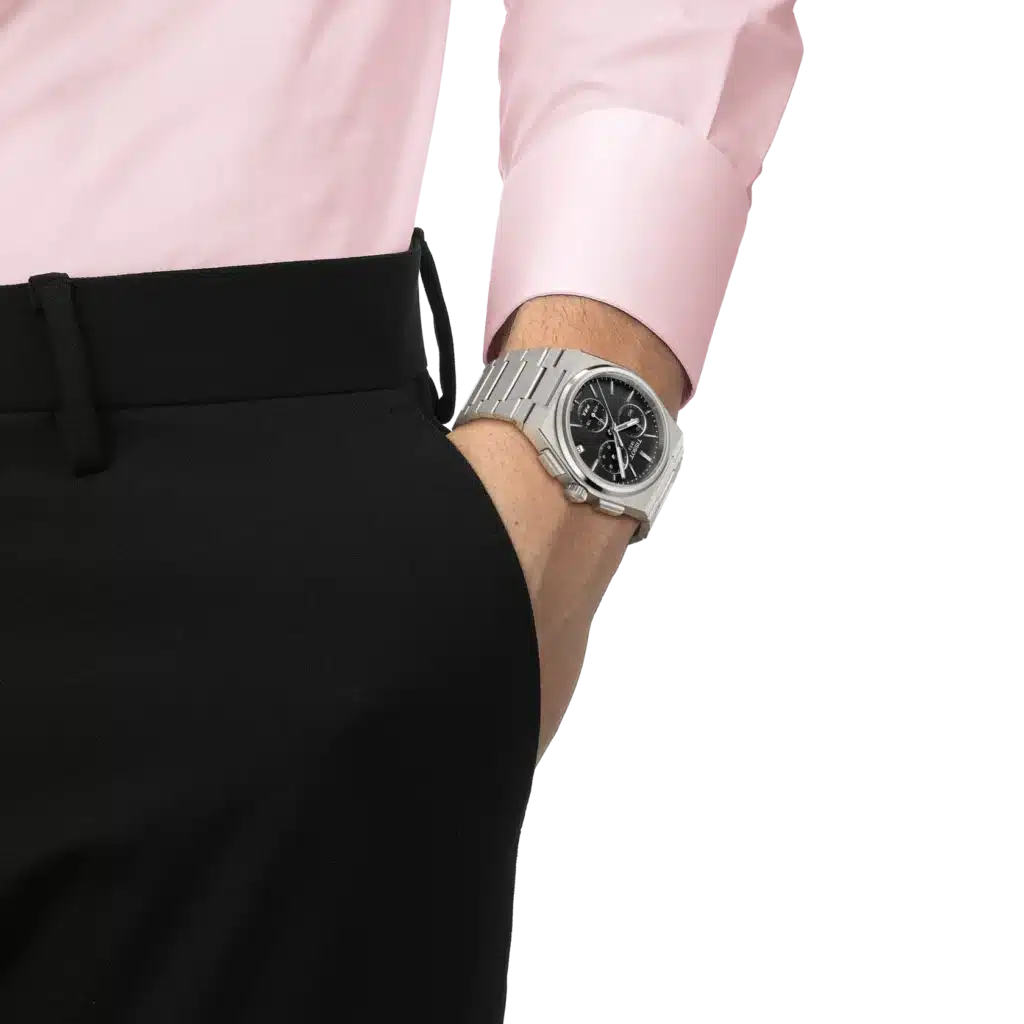
I also think the dial was handled well. Tissot gave the quartz chronograph its own three-register arrangement rather than copying the appearance of the automatic model. The 4 o’clock date will probably be the divisive part, but the overall layout gives this version some visual separation within a PRX lineup that has become increasingly crowded. Then we get to $525.
That’s only $75 more than the standard 40mm quartz PRX at $450. The automatic PRX Chronograph currently sits at $2,150. Those prices make the relationship between the two chronographs particularly interesting. I don’t think $525 automatically makes this a bargain. There are plenty of quartz chronographs competing around this territory, including several within Tissot’s own catalog. Still, the price makes sense in the context of the PRX range.
To me, the more interesting question is what happens when the cheaper version also ends up being thinner, functionally capable, and historically consistent with the quartz side of the PRX family. Mechanical chronographs have their own appeal, and the automatic PRX Chronograph remains the obvious option for someone who specifically wants one. For everyone else, I think Tissot may have landed on the more straightforward version of the idea. Whether 41mm still feels like too much PRX is the question we’d want answered after spending some time with one.

Co-Founder & Senior Editor
Michael Peñate is an American writer, photographer, and podcaster based in Seattle, Washington. His work typically focuses on the passage of time and the tools we use to connect with that very journey. From aviation to music and travel, his interests span a multitude of disciplines that often intersect with the world of watches – and the obsessive culture behind collecting them.