I think the chronograph carries more baggage than any other complication. Decades of racing campaigns, moon missions, and motorsport marketing have a way of making each new one feel like a reissue of the same idea, a tachymeter and three registers dressed up in whatever color the brand hasn’t used yet. The chronographs that landed this year spread across the entire map: a five-figure Swiss icon running a brand-new in-house movement, a Japanese GPS solar flagship that finally slimmed down, a space-program quartz legend reborn at its smallest size yet, a 500-piece collaboration built around a guitar pedal, and an affordable quartz openly chasing the look of an $80,000 Daytona. Different prices, different technology, and each one earns its spot. Here are five of the best chronograph watches of 2026 so far.
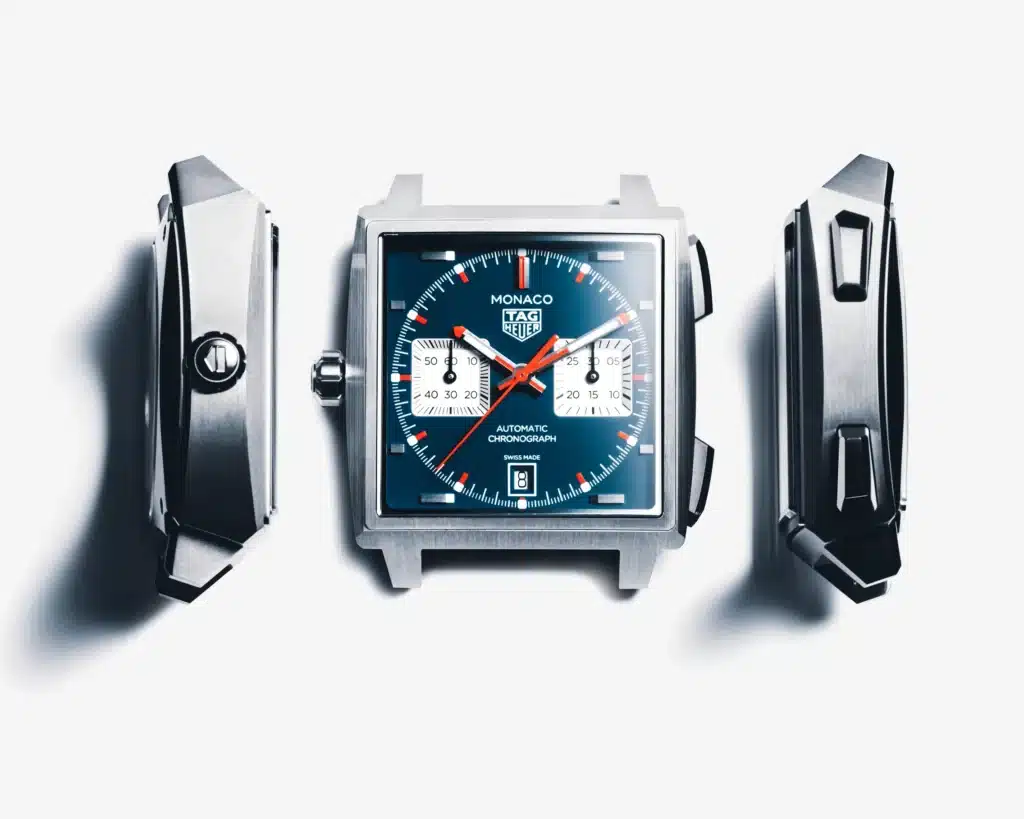
TAG Heuer Monaco Chronograph
Start with the icon, because for once the icon did something I can’t get my mind off of. The Monaco Chronograph returns for 2026 in Grade 5 titanium, with the square case sharpened into more geometric lines and a small flat-topped bezel that nods at integrated steel sports watches without losing what makes a Monaco a Monaco. The crown stays at 9 o’clock, the bumper-style pushers still splay to the corners, and the case measures 39mm across and 13mm tall with 100 meters of water resistance under a domed sapphire.
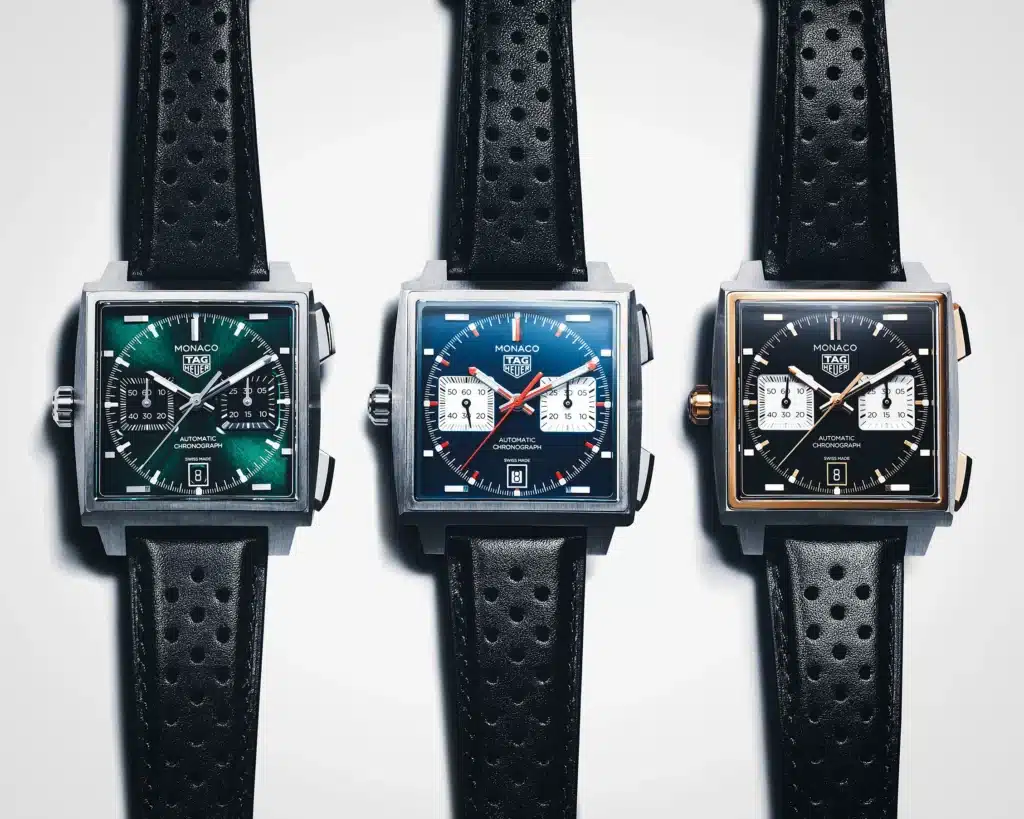
This is the first Monaco powered by TAG Heuer’s TH20 movement family, here as the TH20-11, a deliberate reference to the Caliber 11 that ran the 1969 original co-developed by Heuer, Breitling, and Hamilton. It beats at 4Hz with an 80-hour reserve, visible through a sapphire window in the titanium caseback. Three dials launch, including the classic blue McQueen. The reservations are real: $9,350 in titanium and $13,050 in rose gold is buy-into-the-legend money, there’s no bracelet option, and how a brand-new in-house chronograph caliber holds up over years is something nobody can answer yet.
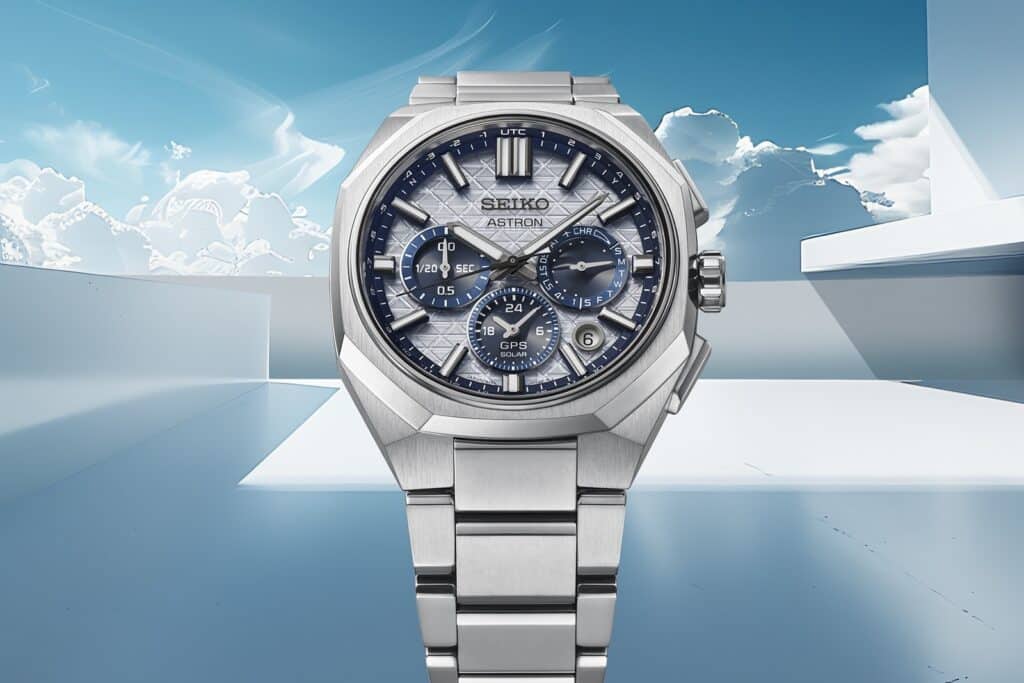
Seiko Astron GPS Solar Dual-Time Chronograph
Seiko’s quartz flagship has always been a technical showcase that asked you to put up with a lot of watch to enjoy it. The updated Astron finally meets buyers partway. The new Calibre 5X63 replaces the 5X83 and moves the second time zone to a 24-hour subdial, which lets Seiko rework the face into a cleaner tricompax layout instead of the awkward vertical stack the line wore for years. The case drops a full millimeter to 12.4mm thick, sitting at 43.4mm wide and 50mm lug to lug, and a two-piece octagonal bezel in brushed and polished finishes reads more refined than the old ceramic chronograph bezel.
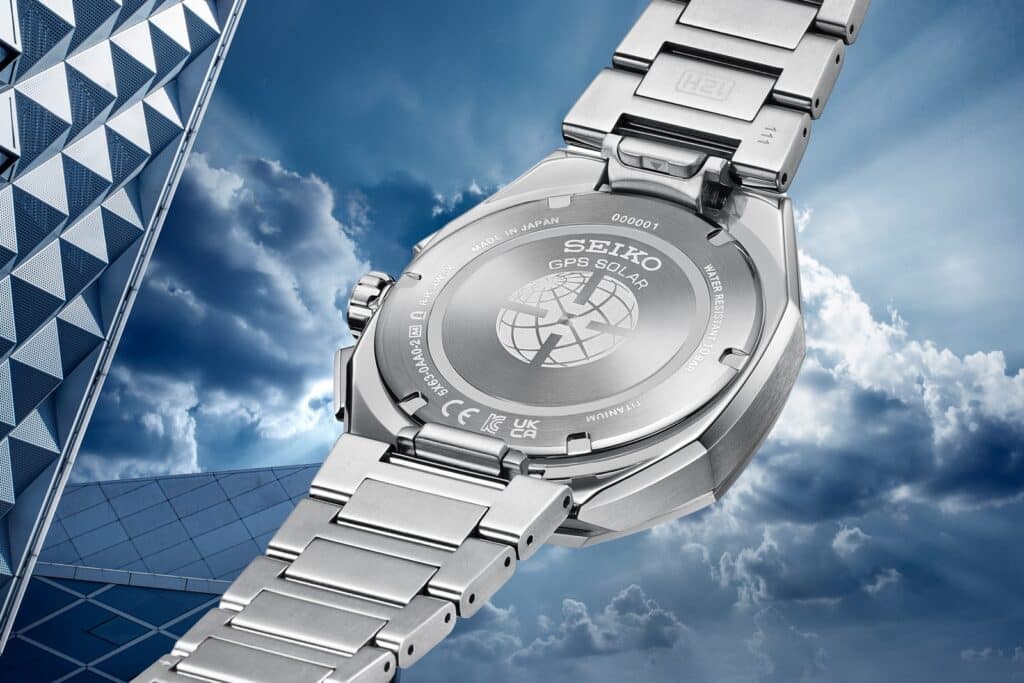
The surprise is underneath: a new push-button quick-release system that swaps the titanium bracelet for rubber with a click, the kind of tool-free trick that’s been living in pricier luxury releases. Four references run from $2,600 to $2,900, topped by the HAB004, a 2,000-piece 145th-anniversary panda that ships with both straps. It’s still a large watch, and how that quick-release mechanism survives years of swapping is the open question.
Bulova Lunar Pilot Black Hole
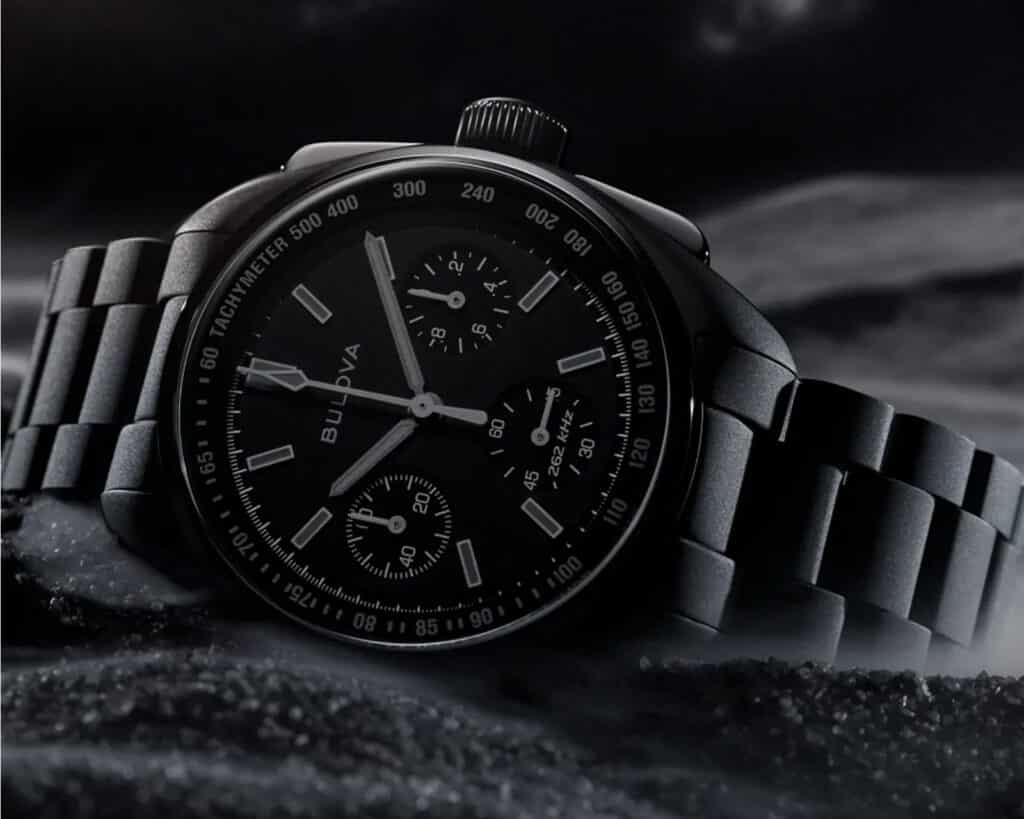
The Lunar Pilot has earned a strange kind of credibility, built on Bulova’s real role in the Apollo program, the Dave Scott prototype story, and a 262kHz high-precision quartz movement that does things mechanical watches at the price can’t. What the line hadn’t done was take a design risk, until the Black Hole. At 41mm it’s the smallest Lunar Pilot yet, and to most eyes the best looking. The steel case wears black ion plating with a matte finish, broken up by a polished bezel and pushers, and under the flat sapphire the dial is painted in Musou Black, a coating Bulova says absorbs 99.4% of light, with recessed grooved subdials and gunmetal markers in grey lume.
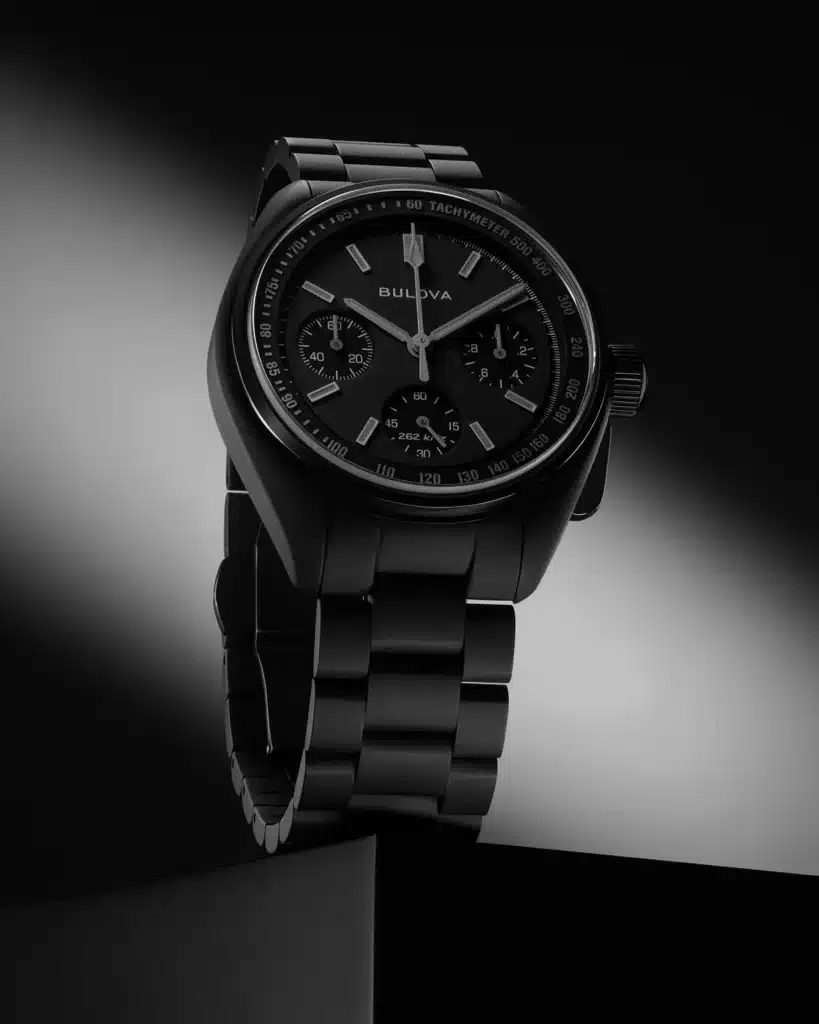
The NP20 quartz inside is rated to roughly 10 seconds a year, with the sweeping chronograph hand that makes this caliber feel special, and water resistance climbs to 100 meters from the original’s 50. Price is the sticking point at $1,650, limited to 6,000 pieces with a travel case and matching clock, which puts it above the standard Lunar Pilots that anchor the line’s value reputation. A light-eating dial like this can also flatten into a void in the wrong lighting, so it’s one to see in person.
Citizen Tsuno Chrono Custom Tube Screamer
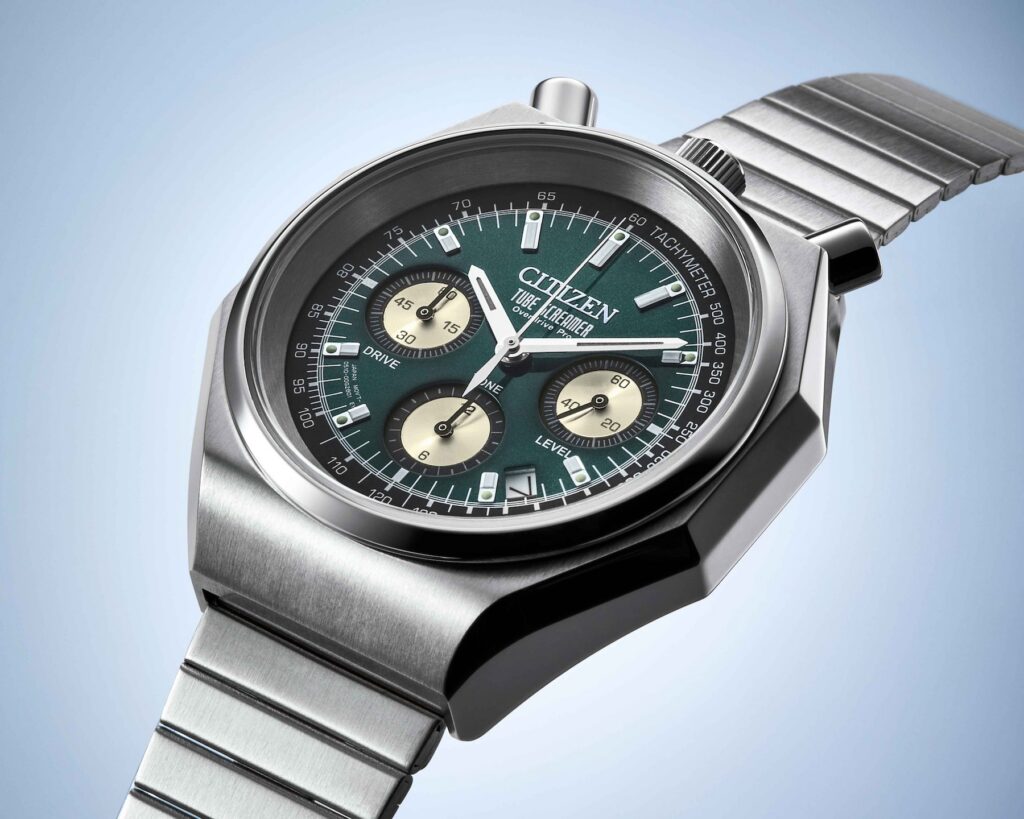
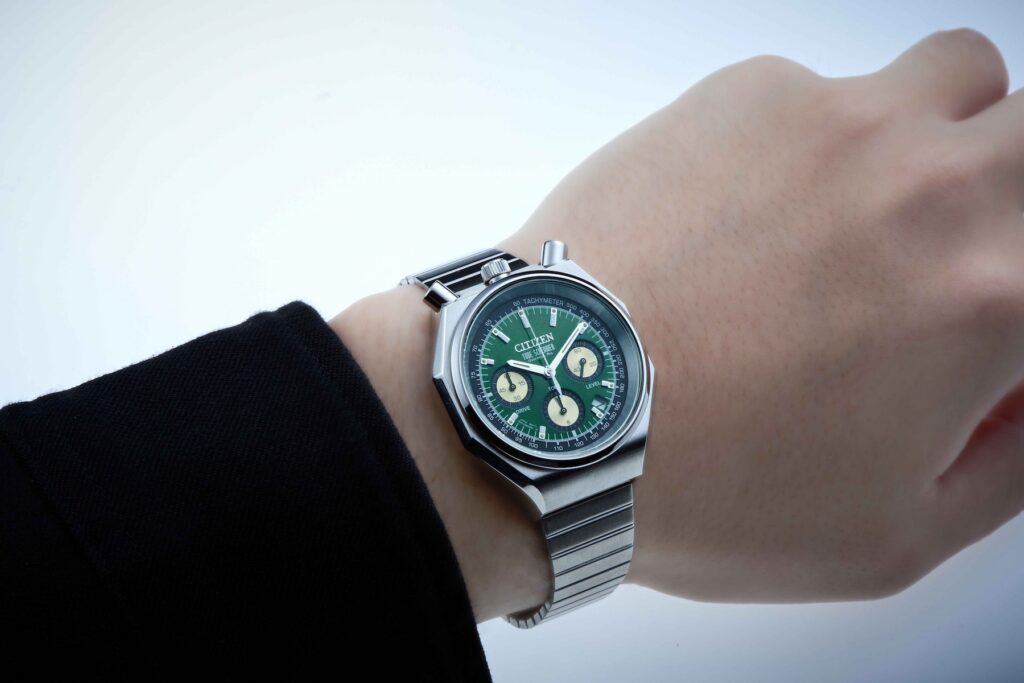
My personal favorite, and the one nobody had on their 2026 list. The Tsuno Chrono Custom Tube Screamer is a collaboration between Citizen and Ibanez built around the Tube Screamer, the late-1970s overdrive pedal that became the blueprint for modern guitar tone and the secret weapon of players like Stevie Ray Vaughan. The watch borrows its green from the hand-wired TS808HWV2, runs 38mm wide and a slim 10.8mm thick in steel, and labels its three subdials Drive, Tone, and Level after the pedal’s three knobs.
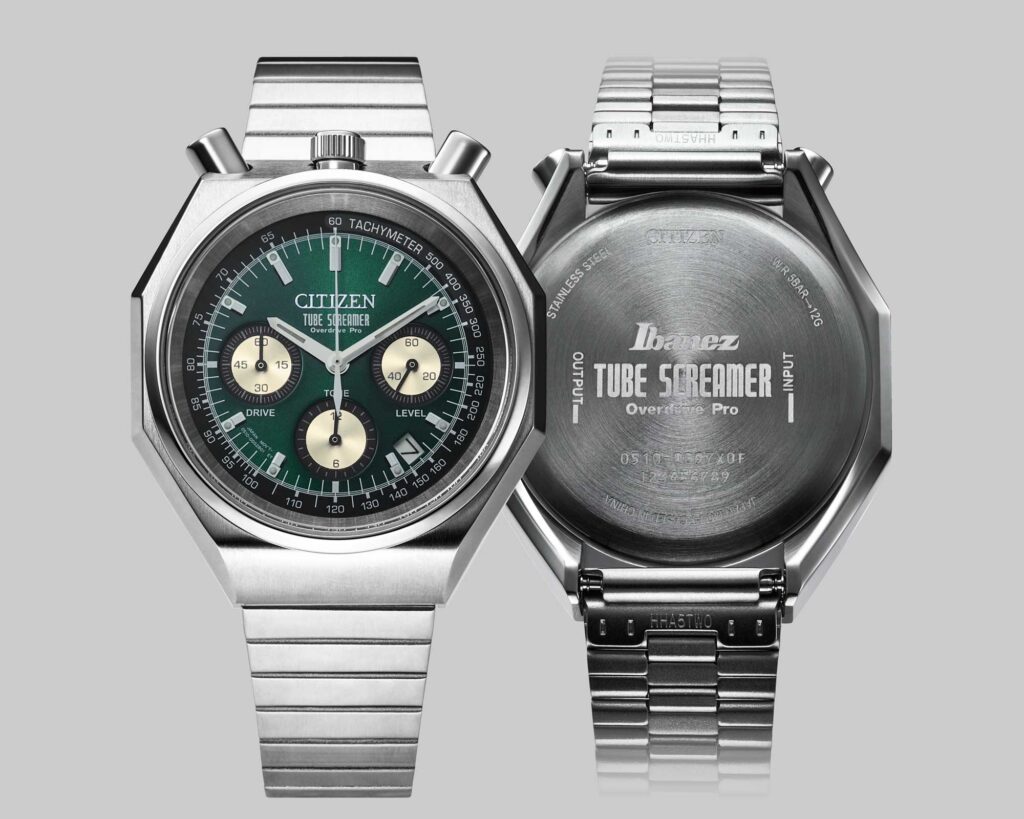
It’s a quartz chronograph with 1/1-second timing, a 12-hour totalizer, a date, and luminous hands, rated to 5 bar and backed by a three-year international warranty. The references are specific enough to mean something to people who know the pedal, without tipping into costume. At roughly $277 it’s a bargain, but the catch is brutal. It’s limited to 500 pieces and sold only in Japan through instrument retailers, so most of us will admire it from a distance, and the mineral crystal is a visible cost-cut at this price.
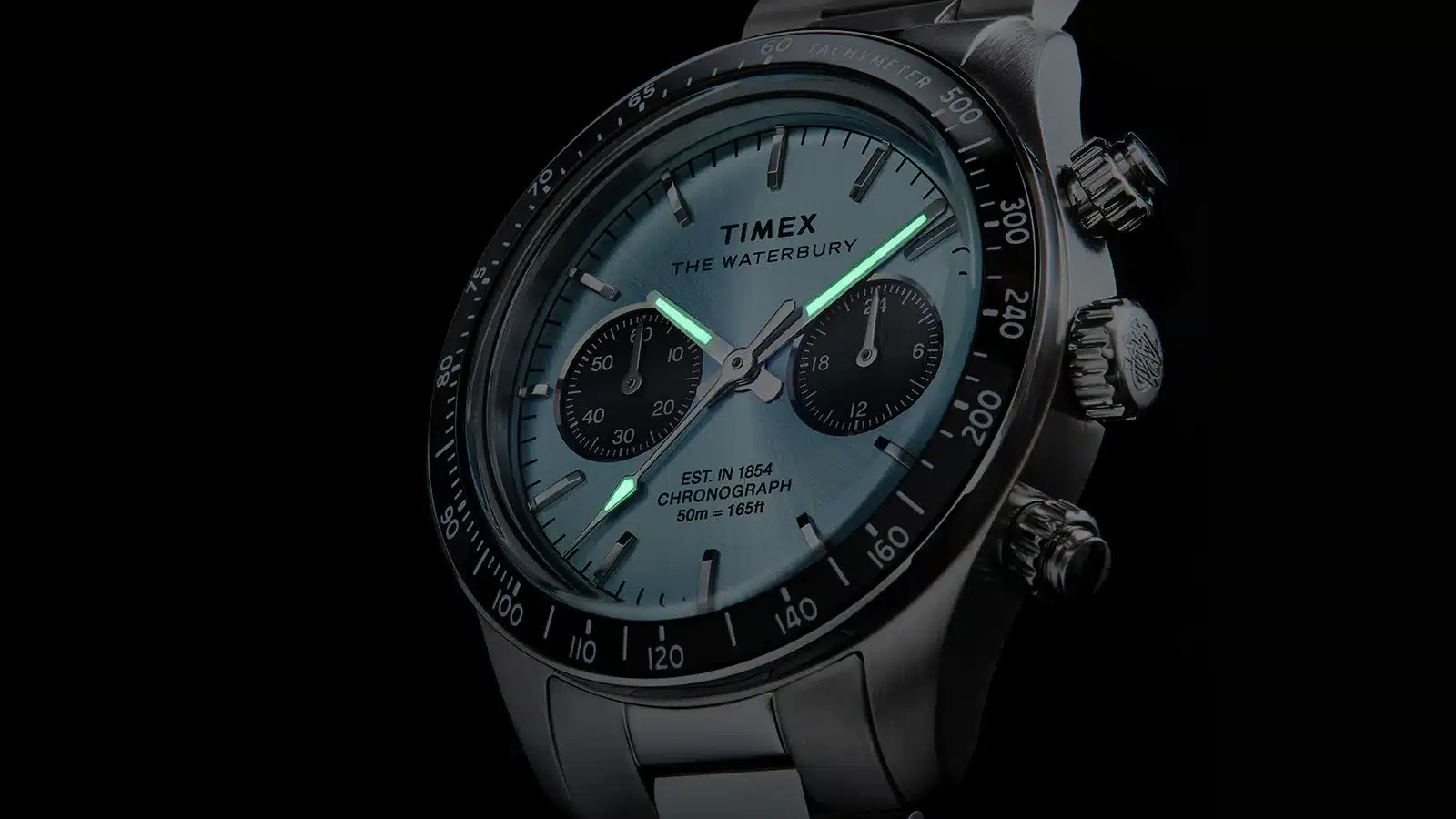
Timex Waterbury Heritage Chronograph Ice Blue
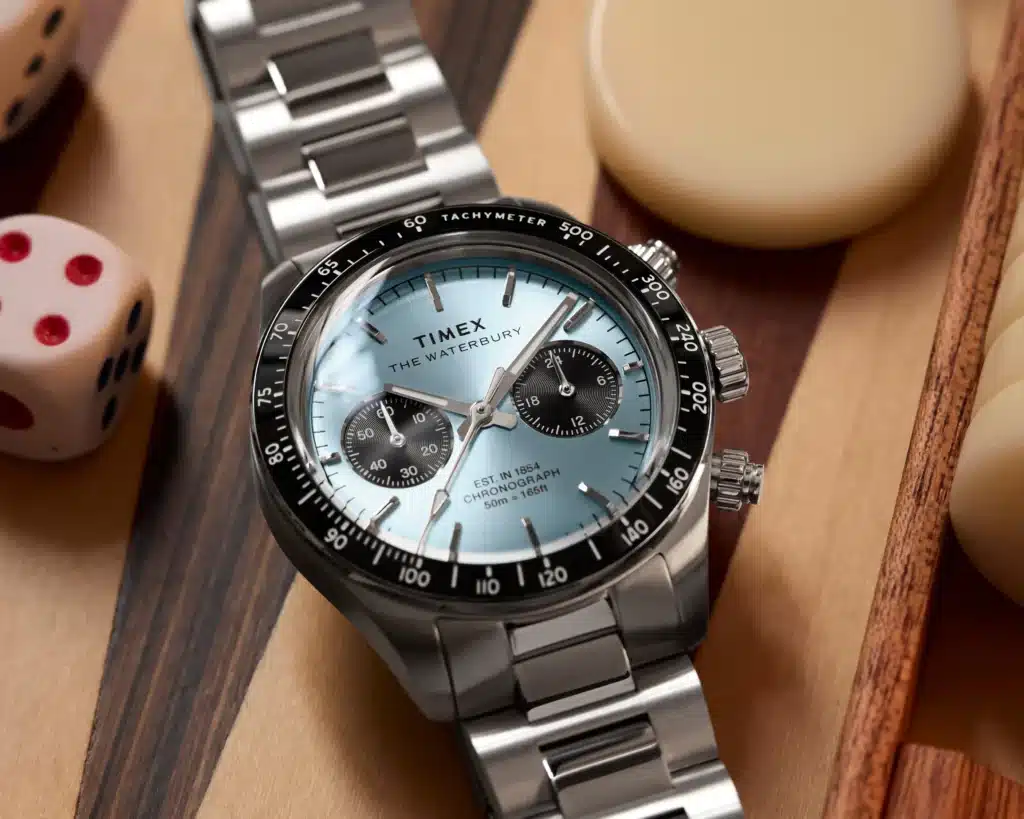
The Waterbury Heritage Chronograph in Ice Blue is a straightforward steel quartz chronograph with a fixed tachymeter bezel and vintage motorsport styling, and on paper that’s nothing new. The dial is the trick. That ice blue sunburst pulls directly from the platinum Rolex Daytona reference 126506, the one that runs north of $80,000, and Timex hands you the look for a rounding error.
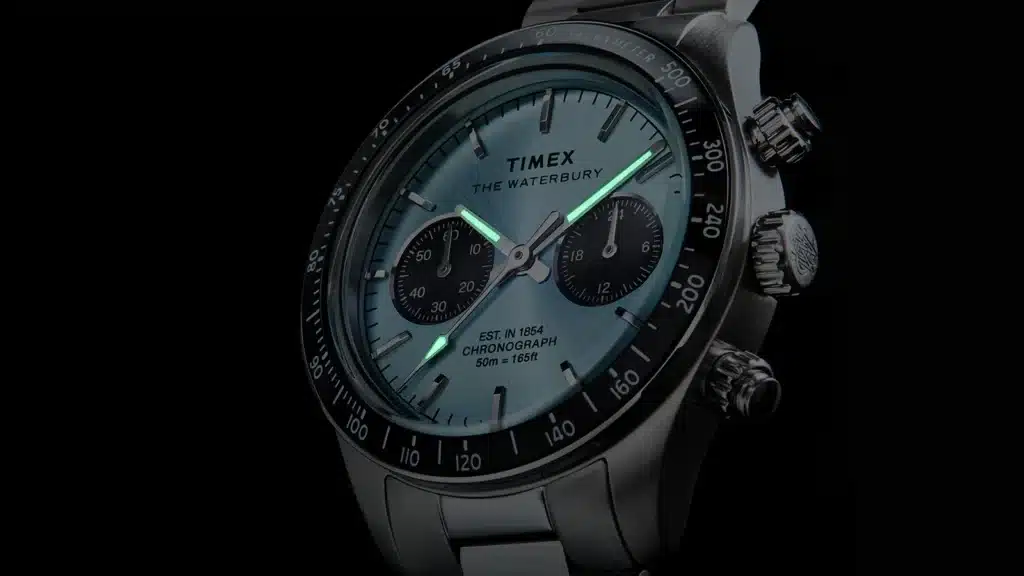
The layout is bicompax, with a 60-minute counter at 9 o’clock and a 24-hour indicator at 3 and no running seconds subdial, which keeps the face cleaner than expected, finished with baton hands, chamfered applied indices, and a spear-tipped chronograph hand for a little drama. It comes in at $349 on a quick-release steel bracelet or $299 on a brown perforated racing strap. The compromises are the honest ones at this price: 50 meters of water resistance means daily wear rather than the pool, and the indices aren’t lumed, so low-light reading leans entirely on the hands.
Where this leaves us
Roughly $277 to five figures. Mechanical, high-precision quartz, and GPS solar. A square Swiss icon carrying a brand-new in-house caliber, a Japanese flagship that finally learned restraint, a moon-program legend reborn in its best case yet, a guitar-pedal joke that somehow lands as a real watch, and an $80,000 dial for the cost of a nice dinner. The chronograph is the complication most likely to feel exhausted, weighed down by decades of the same racing-and-rockets marketing. 2026 made the case that it’s doing some of its most varied, most interesting work in years, at every tier a collector might actually shop. If the first half is any indication, the back half should keep it coming.

Co-Founder & Senior Editor
Michael Peñate is an American writer, photographer, and podcaster based in Seattle, Washington. His work typically focuses on the passage of time and the tools we use to connect with that very journey. From aviation to music and travel, his interests span a multitude of disciplines that often intersect with the world of watches – and the obsessive culture behind collecting them.
Timex also recently released their Atelier quartz chronograph, which is a beautiful watch for $700.
That’s true! The quartz version makes the most sense to me.