Spending close to $2,000 on a dive watch should make the decision easier. However, in our experience, it usually does the opposite. By the time you reach this price point, outright bad watches have mostly disappeared, leaving you to sort through dozens of genuinely convincing options that all promise to be your last diver for a long while. That’s where ownership starts to separate one watch from another. A bracelet that never quite settles, a case that looks balanced until you’ve worn it for eight hours, or a bezel that gradually loses the crisp feel it had on day one will shape your opinion far more than another line on a specification sheet. That’s why choosing the best dive watch under $2,000 is harder than it sounds. This list is built to help you make that decision with the benefit of long-term perspective instead of first impressions.
We’ve changed our minds about plenty of dive watches over the years, and that’s why we trust extended wrist time more than launch-day excitement. Some pieces quietly became favorites because they stayed comfortable through long days, remained easy to read in every kind of light, and never gave us a reason to swap out the bracelet. Others slowly exposed little annoyances that only surfaced after weeks of wear, whether it was an awkward clasp, a bezel that lost some of its precision, or proportions that looked better in photos than they felt on the wrist. Every recommendation here comes from those longer relationships, and every pick includes the compromises alongside the qualities that kept us coming back.
Citizen Promaster Diver BN0151

| Price: | $250 – $300 |
| Water Resistance: | 200m |
| Case Dimensions: | 43mm (diameter) x 48mm (lug-to-lug) x 11.5mm (thickness) |
| Lug Width: | 20mm |
| Movement: | Citizen Eco-Drive E168 (solar quartz) |
There’s something refreshing about coming back to the Promaster Diver BN0151 after spending time with watches that cost two or three times as much. It doesn’t pretend to be a future collectible or lean on vintage nostalgia. It just gets on with the job. Even in a list that stretches to $2,000, it’s a reminder that reliability often outlasts novelty. The Eco-Drive movement is a big reason why. Once it’s charged, it runs for around six months without asking anything of you. That means winding, battery swaps, and discovering a dead watch after it sits untouched for a few weeks simply stop being part of the ownership experience. Throughout our hands-on testing period, we only managed to trigger the low-power indicator once, and a short spell under a light was enough to get it back to full health.
Citizen applied that same practical mindset everywhere else. The dial stays uncluttered, with oversized hands, bold markers, restrained printing, and a framed date window that make it effortless to read at a glance. The blue dial also has more personality than product photos indicate, picking up a subtle purple cast as the light changes. After dark, the aqua-toned lume hangs around for hours, while the glowing second-hand pip gives you an instant confirmation that everything is still ticking away.
On paper, a 43mm diver sounds like it could dominate the wrist, but the short lug-to-lug, downward-curving case, light weight, and 4 o’clock crown keep it quite easy to forget you’re wearing. That’s probably the BN0151’s biggest strength. It never feels like a watch demanding your attention.
Its flaws are equally honest. The 60-click bezel stayed well aligned while testing, but the grip becomes slick with wet hands, which feels like an odd miss for a purpose-built diver. The mineral crystal also won’t satisfy anyone who insists on sapphire, although ours handled everyday knocks better than expected without picking up obvious scratches. Then there’s the polyurethane strap. It’s secure and functional, but the strap isn’t winning any comfort contests during its first few weeks on the wrist. We ended up preferring the watch on a NATO, where it felt lighter and a little more relaxed. None of those compromises change the overall verdict, though. The BN0151 succeeds because it’s uncomplicated, dependable, and remarkably easy to live with—qualities that don’t become less valuable just because your budget goes up.
Pros
- Wears more comfortably than its 43mm diameter suggests thanks to its short lug-to-lug, curved case, light feel, and 4 o’clock crown.
- Eco-Drive movement offers around six months of runtime with almost maintenance-free ownership.
- The clean dial layout, bold handset, and long-lasting lume make it very easy to read in any lighting.
- The blue dial develops subtle purple tones depending on the light, adding character without compromising legibility.
- Robust 200m water resistance makes it an easy choice for daily wear, travel, or time in the water.
Cons
- The stock polyurethane strap feels noticeably stiff before it breaks in.
- The bezel becomes difficult to grip with wet hands.
- Mineral crystal doesn’t offer the scratch resistance of sapphire.
Citizen NY0040
| Price: | $250 – $350 |
| Water Resistance: | 200m |
| Case Size: | 42mm (diameter) x 47.3mm (lug-to-lug) x 12.6mm (thickness) |
| Lug Width: | 20mm |
| Movement: | Miyota automatic Caliber 8204 |
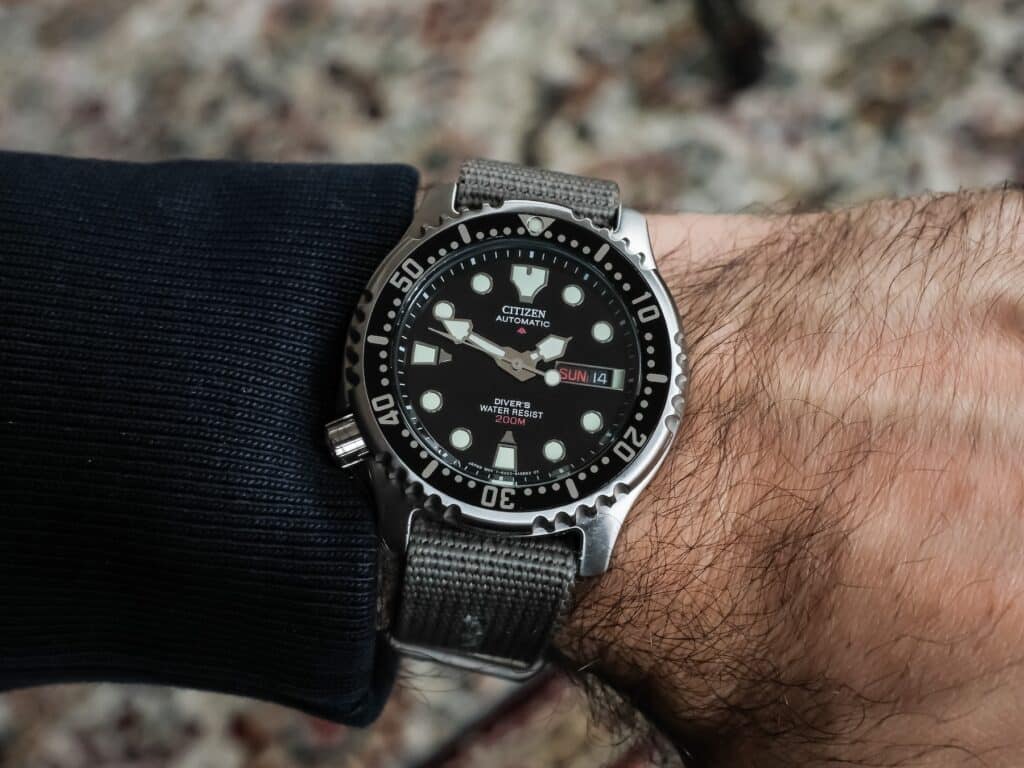
Some dive watches spend a lot of effort trying to convince you they’re tool watches. The Citizen NY0040 never bothers. It has the scars, quirks, and straightforward personality of something that was designed to be worn first and admired second, and that’s why it’s remained relevant for so long. Even in such a lineup, it reminds us that honest design rarely goes out of style. The matte black dial keeps distractions to a minimum with oversized hands, bold markers, restrained “Citizen Automatic” printing, a small red arrow, and a day-date display that blends into the background instead of shouting for attention. The 60-click bezel follows the same philosophy. Its deeply cut coin edge gives plenty to grab onto with wet hands, and the particular watch we reviewed stayed well aligned with smooth, confidence-inspiring clicks and no noticeable back play.
Citizen also did a nice job of disguising the watch’s skin-diver-inspired dimensions. While the case sits just under 42mm, the compact dial opening, inward-sloping bezel, restrained thickness, and just-over-47mm lug-to-lug stop it from wearing as the numbers suggest. The 200m water resistance feels equally honest. Rather than reading like another line on the spec sheet, it gives the impression that Citizen expects this watch to spend time in the water instead of simply looking the part. We also came around quickly to the left-side crown. It feels unconventional for a day or two, but once we settled into it, we appreciated the crown not digging into the back of the wrist while typing or driving.
Inside, the Miyota 8204 isn’t trying to win movement beauty contests, but hacking and hand-winding make everyday ownership quite straightforward. The rotor, on the other hand, has never learned the value of keeping a low profile. When it moves, you’ll probably hear about it.
There are a few compromises, but none of them feel like deal breakers. The lume is dependable once your eyes adjust, even if it doesn’t deliver the same dramatic first burst as some Seiko divers we’ve tested. The flat mineral crystal is another reminder of where Citizen chose to save money, although ours handled daily wear better than we expected. We were also happier once the thick rubber strap came off. It’s perfectly functional, but the NY0040 feels much more at home on a NATO or an aftermarket bracelet, both of which are easy upgrades thanks to the strong support this model enjoys. That’s ultimately the NY0040’s appeal. It isn’t the most refined diver you’ll find under $2,000, but it’s one of the most honest ISO-rated picks. After enough wrist time, that distinction ends up mattering far more than polished edges or fancier materials.
Pros
- Wears smaller than expected thanks to its compact dial opening, short lug-to-lug, restrained thickness, and inward-sloping bezel.
- Miyota 8204 adds hacking and hand-winding for hassle-free daily use.
- Deep coin-edge bezel offers excellent grip with wet hands and stays accurately aligned with smooth action.
- The left-side crown becomes more comfortable during long hours of activity.
- Clean dial layout with bold hands, restrained text, and practical lume makes the watch very easy to read.
- Excellent aftermarket bracelet support and easy strap swaps let you tailor the watch to your taste.
Cons
- The Miyota rotor is noticeably louder than many competing automatic movements.
- Lume is reliable but lacks the initial punch of comparable Seiko divers.
- Mineral crystal isn’t as scratch-resistant as sapphire.
- The left-side crown takes a brief adjustment period if you’ve only worn conventional crown placement.
Orient Kamasu
| Price: | $250 – $375 |
| Water Resistance: | 200m |
| Case Dimensions: | 41.5mm (diameter) x 47mm (lug-to-lug) x 13mm (thickness) |
| Lug Width: | 22mm |
| Movement: | Orient F6922 (automatic movement) |
One of the nice things about shopping for a dive watch under $2,000 is realizing you don’t always have to spend anywhere near that much. The Orient Kamasu is one of the biggest reasons why. It checks so many of the boxes enthusiasts usually associate with pricier watches that it forces every more expensive contender to justify itself with a genuinely better ownership experience instead of a longer feature list. After spending extensive time with it, we found ourselves thinking less about what it costs and more about how little it asks you to compromise. The F6922 automatic movement quietly gets on with the job, adding hacking and hand-winding to make daily ownership pretty straightforward. Pick it up after a few days, give it a wind, set the time, and you’re ready to go.
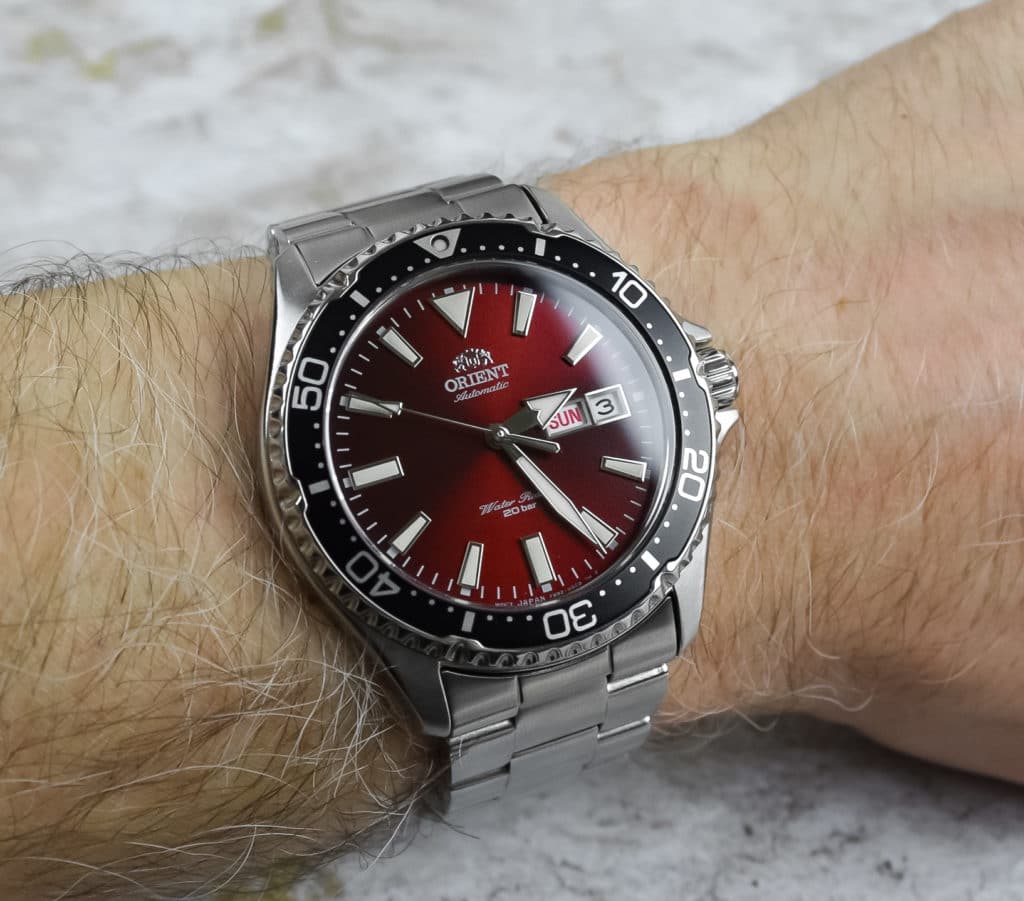
The dial is what kept drawing us back. The wine-red sunburst finish has plenty of personality without drifting into dress-watch territory, while the applied markers, generously sized hands, and handset that actually reaches the minute track make reading the time effortless. The framed day-date stays neatly tucked away at three, the Orient logo avoids dominating the dial, and the layered construction catches light just enough to keep things interesting. Once darkness falls, the lume charges quickly and hangs around long enough to outlast several similarly priced Seiko divers we’ve worn. The 41.5mm case also wears with less presence than expected thanks to its curved lugs, sensible thickness, and well-balanced proportions. The 200m water resistance feels entirely in keeping with the watch’s everyday, go-anywhere attitude.
The compromises are there if you look for them, but they’re also where Orient wisely chose to save money. The aluminum bezel insert will pick up scratches sooner than ceramic, yet the bezel itself feels tight and deliberate enough that we stopped thinking about the material after a while. The bracelet offers four positions of micro-adjustment, making it easy to fine-tune the fit as your wrist changes throughout the day, even if the clasp and end links feel less refined than the rest of the watch. The crown is another small reminder of the budget, with its compact size and protective guards making it a little fiddly to grip.
None of those drawbacks changed our overall impression. The Kamasu spends its money on the parts you’ll notice every day, which is exactly why it remains one of the hardest dive watches in this list to overlook.
Pros
- Wine-red sunburst dial delivers plenty of character while remaining highly legible.
- The F6922 movement adds hacking and hand-winding for straightforward everyday ownership.
- The sapphire crystal and 200m water resistance combination makes it feel far more capable than its price indicates.
- Applied indices, properly proportioned hands, and excellent hand reach make the dial very easy to read.
- Four-position micro-adjust clasp helps dial in a comfortable fit throughout the day.
- Lume charges quickly and stays visible long into the night.
Cons
- The clasp and end links aren’t as refined as the rest of the bracelet.
- Small crown and protective guards make winding and setting a little fiddly.
- The aluminum bezel insert is more susceptible to scratches than ceramic alternatives.
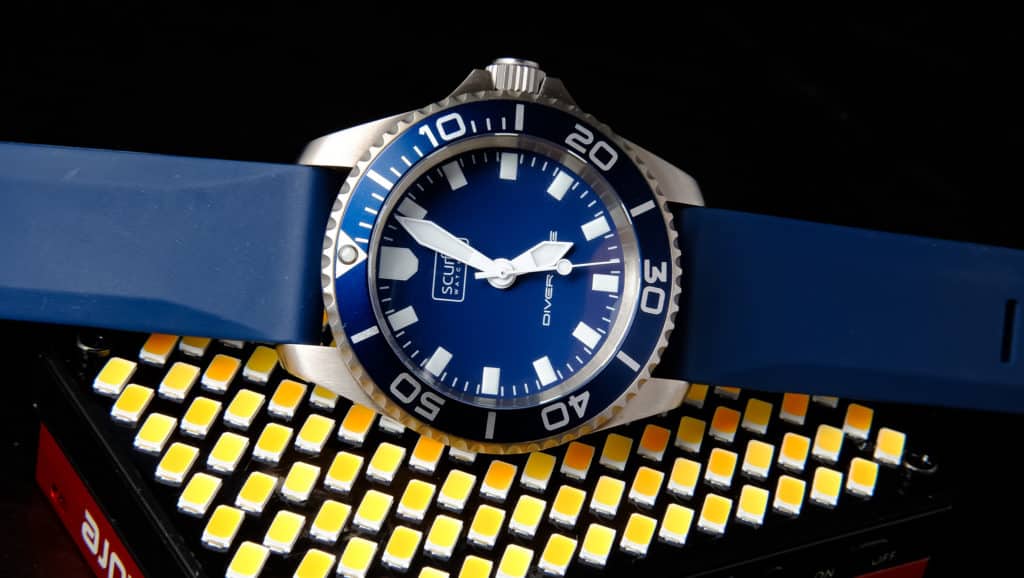
Scurfa Diver One
| Price: | $250 – $399 |
| Water Resistance: | 500m |
| Case Dimensions: | 40mm (diameter) x 47mm (lug-to-lug) x 14mm (thickness) |
| Lug Width: | 20mm |
| Movement: | ETA.F06 (Quartz Movement) |
The further you climb toward $2,000, the easier it is to confuse refinement with usefulness. The Scurfa Diver One has very little interest in that game. It isn’t trying to charm you with elaborate finishing or a mechanical movement you’ll admire through a display caseback. Instead, it focuses almost obsessively on being ready whenever you decide to wear it. After a while, that became its biggest strength. The ETA F06 quartz movement fades into the background in the best possible way, delivering dependable accuracy, an estimated five-year battery life, and none of the little rituals that come with mechanical ownership. We found ourselves reaching for it on busy mornings simply because there was never anything to think about.
As covered in our in-depth review, that same character runs through the rest of the watch. The titanium case feels surprisingly light without drifting into “is it still on my wrist?” territory, and the cleverly contoured mid-case helps its 40mm by 14mm proportions wear lower than the numbers suggest. Scurfa didn’t stop at keeping the weight down, either. The 500m water resistance, screw-down crown, and helium escape valve all feel like features included because the watch was built to be used, not because someone needed another bullet point for a product page.
Up front, the matte blue dial remains distraction-free. Broad sword hands, oversized markers, the subtle distortion from the domed sapphire crystal, and BGW9 Super-LumiNova make it easy to read. At the same time, the bezel delivers crisp, reassuring clicks with virtually no play.
However, collectors who enjoy the charm and interaction of a mechanical movement probably won’t be convinced by quartz, regardless of how practical it is. The case is also thick enough that smaller wrists may notice it more than we did. Beyond that, there’s very little to complain about. The rubber strap is soft enough for all-day wear, the titanium hardware keeps the experience feeling cohesive, and the drilled lugs make strap swaps almost effortless. That’s ultimately why the Diver One belongs in this roundup.
Pros
- 500m water resistance, screw-down crown, and helium escape valve reinforce its genuine tool-watch focus.
- Bezel action is crisp, deliberate, and virtually free of play.
- Matte dial, broad sword hands, domed sapphire crystal, and BGW9 lume make legibility excellent day or night.
- The titanium case feels impressively light while remaining solid on the wrist.
- Comfortable rubber strap, titanium hardware, and drilled lugs make daily wear and strap changes easy.
Cons
- Quartz movement won’t satisfy collectors looking for a mechanical ownership experience.
- The 14mm case height is more noticeable on smaller wrists.
Momentum Sea Quartz 30
| Price: | $279 |
| Water Resistance: | 300m |
| Case Dimensions: | 42mm (diameter) x 47mm (lug-to-lug) x 11.3mm (thickness) |
| Lug Width: | 20mm |
| Movement: | Ronda R507 high-torque quartz |
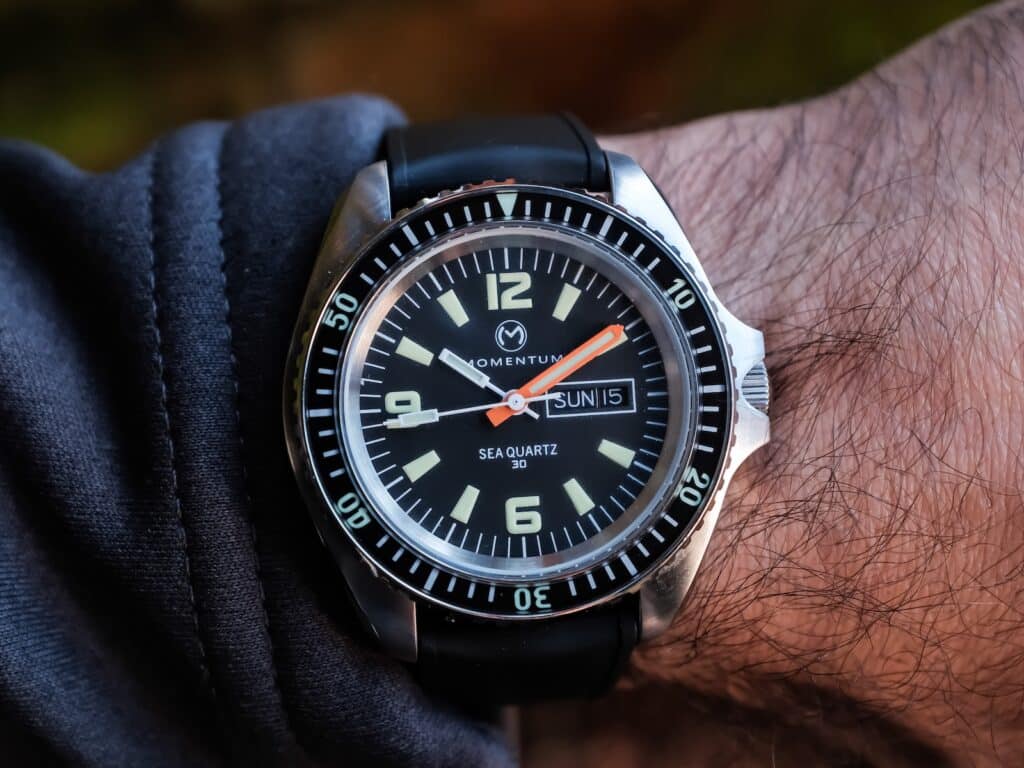
The Momentum Sea Quartz 30 isn’t trying to win the spec sheet or dominate a watch meetup. It wins you over in a less obvious way. After a few weeks, it simply became one of the easiest watches in the collection to live with. The Ronda R507 high-torque quartz movement quietly removes the little ownership chores that come with mechanical watches, while the 300m water resistance means there’s never a sense that you’re asking too much of it. Momentum’s decision to use a sapphire bezel insert also fits that philosophy. It gives up a little vintage warmth, but it stands up far better to the sort of knocks an everyday diver inevitably collects.
That practical mindset carries through the rest of the watch. Rather than chasing elaborate textures or vintage flourishes, the matte black dial focuses on legibility with printed markers, paddle-style hands, and an orange minute hand that immediately draws your eye when timing something. The subtle late-’70s inspiration gives it character without turning it into another homage.
On the wrist, the 42mm case has more presence than we’d expected, but the 47mm lug-to-lug, flat caseback, and balanced proportions keep it comfortable over long days. Momentum broke up the brushed upper surfaces with polished case sides, adding enough contrast to stop the watch from feeling too utilitarian, while the supplied Tropic-style rubber strap was comfortable from the outset and just as happy paired with a NATO or Momentum’s jubilee-style bracelet.
That said, the bezel could use more grip and takes more effort to turn than we’d like, while the lume fades earlier than some of the stronger performers here. We also found the polished underside and lugs picked up scratches quickly during strap changes. Those criticism pointers are easy to understand after a few days with the watch, just as its strengths are. It never feels precious, never asks for much attention, and simply gets on with the job. Among a lineup full of excellent mechanicals, there’s still plenty to be said for one that’s this honest about what it’s trying to be. We get into this more in our full write-up.
Pros
- 300m water resistance gives the watch genuine everyday capability.
- Ronda R507 quartz movement delivers reliable, virtually maintenance-free ownership.
- The sapphire bezel insert is a practical choice for long-term durability.
- Clear dial layout with an orange minute hand makes timing quick and intuitive.
- Comfortable Tropic-style rubber strap, with excellent compatibility for NATOs and bracelets.
- Balanced proportions keep the 42mm case comfortable over extended wear.
Cons
- Lume doesn’t last as long as some rivals in this category.
- Polished underside and lugs are prone to scratches during strap changes.
- Bezel action is stiffer than it should be and lacks grip.
Seiko Turtle
| Price: | $370 – $525 |
| Water Resistance: | 200m |
| Case Dimensions: | 44.3mm (diameter) x 48mm (lug-to-lug) x 14mm (thickness) |
| Lug Width: | 22mm |
| Movement: | Seiko 4R36 |
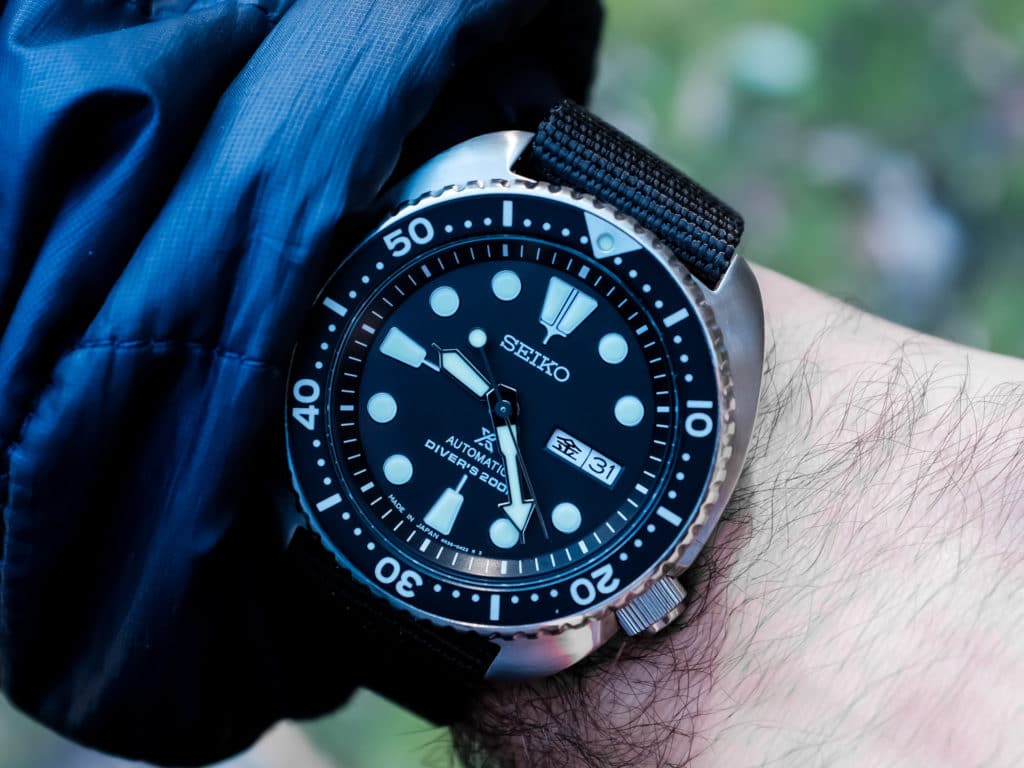
You’d think the Seiko Turtle would have been left behind by now. After all, the market is full of dive watches with sapphire crystals, tighter tolerances, and movements that promise better accuracy. Yet every time we spend a few weeks with a Turtle, we’re reminded that most of those watches solved problems we stopped thinking about long before we stopped enjoying the Seiko. The 4R36 movement isn’t especially accurate—our review sample hovered around +35 to +45 seconds per day—and we’d still check bezel alignment before buying. Neither has ever been enough to stop the Turtle from becoming one of those watches we genuinely miss once it leaves.
A lot of that comes down to the case. On paper, 44mm-plus should wear like a dinner plate. Somehow, it doesn’t. The rounded cushion case spreads its weight so naturally across the wrist that it feels more settled than plenty of smaller dive watches we’ve worn. The offset crown is another detail you stop noticing precisely because it works so well. It never digs into the back of your hand, even after a full day of wear.
The dial follows the same concept. Seiko doesn’t waste your attention with unnecessary decoration. Between the oversized Lumibrite markers, broad hands, matte black dial, and lume that still ranks among the best in the business, reading the time becomes almost effortless. Even the much-debated Prospex “X” quickly fades into the background. The optional Kanji day wheel is harder to ignore, though. It’s fun for a while, but we eventually found ourselves wishing for the standard English wheel whenever we glanced down in a hurry.
If there’s one reminder that the Turtle isn’t trying to chase every modern trend, it’s the Hardlex crystal. We’d still take sapphire if given the choice, although Hardlex proved resilient enough during everyday wear that it rarely crossed our minds outside the spec sheet. The stock silicone strap is also a welcome improvement over Seiko’s older rubber offerings, but the Turtle really finds its personality on a NATO, where the rounded case somehow feels even more at home during beach trips, holidays, and weekends spent outdoors. That’s ultimately why it still belongs in this conversation. Plenty of watches under $2,000 outperform the Turtle in individual categories. Very few have proven as consistently enjoyable to wear for as many years.
Pros
- Cushion case wears much smaller and more comfortably than its 44mm-plus dimensions suggest.
- Matte black dial, oversized hands, and bright Lumibrite make legibility excellent in any lighting.
- Offset crown avoids digging into the wrist during extended wear.
- Stock silicone strap is comfortable, while the watch feels at home on a NATO.
- The 4R36 movement adds hacking and hand-winding for a more user-friendly ownership experience.
Cons
- Accuracy varies from watch to watch, and bezel alignment is still worth checking before purchase.
- Hardlex crystal isn’t as scratch-resistant as sapphire.
- The Kanji day wheel is charming but takes a little longer to read at a glance.
- The broad case won’t suit collectors who prefer compact divers.
Seiko Samurai
| Price: | $400 – $500 |
| Water Resistance: | 200m |
| Case Dimensions: | 43.8mm (diameter) x 47mm (lug-to-lug) x 13mm (thickness) |
| Lug Width: | 22mm |
| Movement: | Seiko 4R35 (Mechanical) |
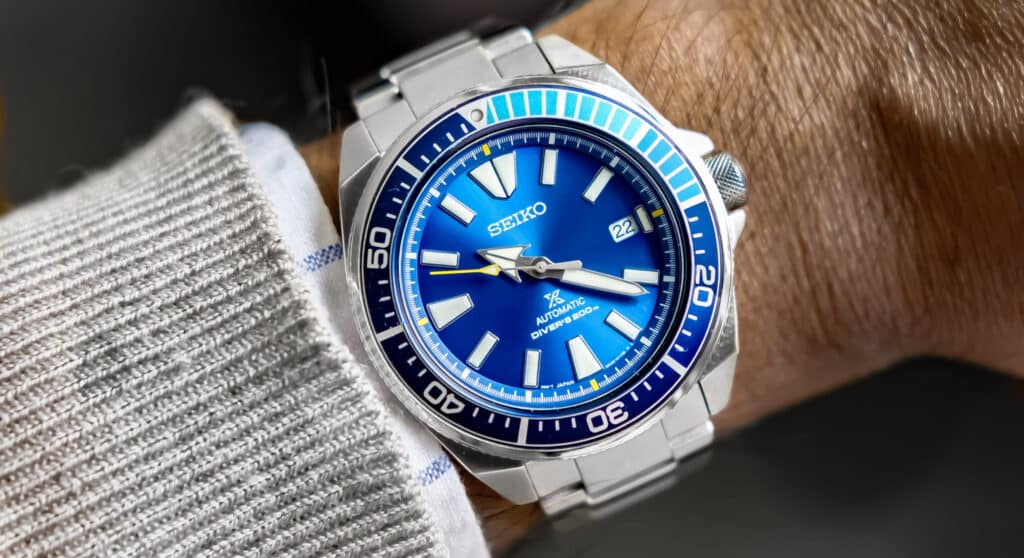
The Samurai is proof that Seiko never expected every diver to appeal to the same person. We know plenty of collectors who swear by the Turtle, and just as many who never warmed to its rounded, almost playful shape. The Samurai exists for that second group. It keeps the familiar Seiko recipe but wraps it in something that feels sharper, more deliberate, and a little more confident. Under the hood, the 4R35 won’t surprise anyone. You get hacking, hand-winding, and roughly 40 hours of power reserve, while accuracy lands firmly in “good enough” territory rather than chronometer territory. That’s been part of the deal with Seiko’s entry-level automatics for years, but it never stopped us from enjoying the watch.
Where the Samurai really earns its place is on the wrist. All those crisp bevels, broad brushed surfaces, and hard edges look as though they should make the case wear awkwardly, but they never did. Instead, the watch settled in quite well and felt more balanced than its aggressive styling initially suggested. We also came away with a greater appreciation for the bracelet than expected. The 22mm width suits the case perfectly, the end links transition cleanly into the lugs, and unlike plenty of Seikos we’ve handled over the years, this one did not have us immediately browsing aftermarket straps. If the mood does strike, the drilled lugs make changing straps uncomplicated. Even the bezel and crown feel intentionally overbuilt, with deep knurling that gives plenty of purchase and sloped crown guards that protect the screw-down crown without making it awkward to operate.
The dial is just as unapologetic. Oversized Monster-style hands, applied markers, and Seiko’s characteristically excellent lume make it almost impossible to misread. The blue dial constantly shifts between lighter and darker shades depending on the light without becoming flashy. Those hands can look a little exaggerated in photos, but after a few days they simply feel right for the rest of the watch. The bezel on the model we tested hands-on was stiffer than we’d have liked, and the sharply defined case will show scratches sooner than Seiko’s softer designs.
Even so, those quirks somehow suit its personality. Among Seiko’s dive watches, the Samurai has always been the one with the strongest point of view. It doesn’t try to be universally appealing. It knows exactly what it is, and that confidence makes it far more memorable than plenty of technically “better” divers.
Pros
- Distinctive angular case stands out from the sea of rounded dive watches.
- Excellent legibility thanks to applied markers, oversized Monster-style hands, and long-lasting Seiko lume.
- The bracelet integrates cleanly with the case and feels better than many expect.
- Drilled lugs make strap changes quick and painless.
- Deep knurling and well-shaped crown guards make the bezel and screw-down crown easy to use.
Cons
- Sharp case geometry shows scratches more readily than Seiko’s rounded designs.
- Bezel action is stiffer than we’d prefer.
Nodus Sector Deep
| Price: | $599 |
| Water Resistance: | 500m |
| Case Dimensions: | 38mm (diameter) x 47mm (lug-to-lug) x 13.6mm (thickness) |
| Lug Width: | 20mm |
| Movement: | Seiko NH35 (Mechanical Movement) |
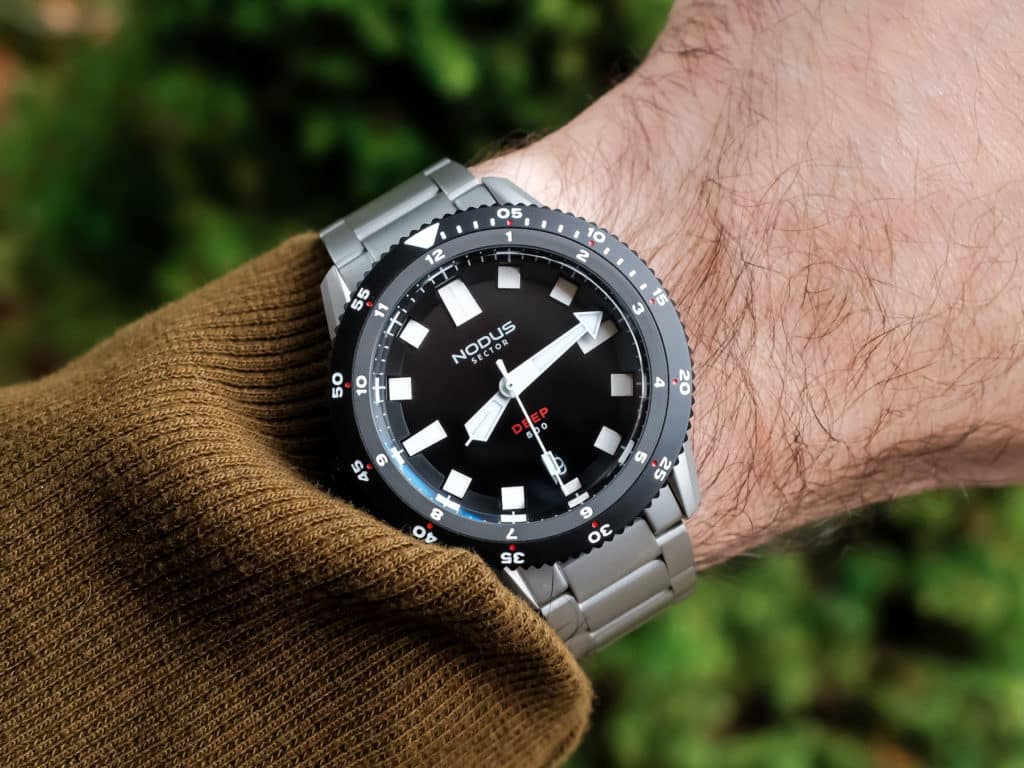
The funny thing about spending more on a dive watch is that the little annoyances don’t always disappear with the bigger price tag. We’ve worn plenty of watches that cost considerably more than the Nodus Sector Deep yet still managed to dig a crown into the back of the wrist, made bracelet sizing unnecessarily frustrating, or left us wishing for on-the-fly adjustment halfway through a hot afternoon. The Sector Deep quietly fixes those problems without making a fuss. The Seiko NH35 isn’t here to impress movement snobs, but after Nodus regulates it in-house, ours stayed within ±10 seconds per day throughout testing. Add roughly 41 hours of power reserve, and it’s the sort of dependable movement we’d want in a watch that’s meant to be worn, not admired.
That ideology is obvious the moment the watch goes on the wrist. The 38mm case feels purposeful rather than small, and the left-side crown is one of those decisions you stop noticing because it simply works. No wrist bite, no awkward pressure points—just a watch that gets out of your way. The bracelet deserves equal praise. Screw links make sizing painless, the 20mm-to-18mm taper keeps it feeling balanced, and the NodeX micro-adjustment clasp proved to be one of those features we kept using without thinking about it.
The asymmetrical case shape won’t be universally loved, but after living with it, we cared a lot more about how it wore than how unconventional it looked. The dial follows the same “less but better” approach. White PVD marker surrounds catch the light without becoming flashy, the lume-filled plots taper toward the cardinal markers to create subtle depth, and BGW9 Super-LumiNova stays visible throughout the night. Around the edge, the matte DLC bezel offers plenty of grip, cuts reflections effectively, and fits a dual-scale insert into the design without making the watch feel cluttered.
The only thing that consistently broke the cohesion was the clasp. Extend it all the way, and the exposed hardware looks less resolved than the rest of the watch. Beyond that, it’s difficult to fault. What impressed us most wasn’t any single specification; it was how many small ownership frustrations Nodus had already thought through before we even noticed them. That’s a quality you usually associate with brands charging a lot more, which is exactly why the Sector Deep feels so comfortable holding its own in a roundup like this.
Pros
- Left-side crown and compact 38mm case make for exceptional everyday comfort.
- NodeX micro-adjustment clasp, screw links, and tapered bracelet create one of the best wearing experiences in the category.
- The in-house regulated NH35 delivered around ±10 seconds per day during testing.
- Matte DLC bezel provides excellent grip with minimal glare, while the dual-scale insert remains intuitive.
- Clean dial, white PVD surrounds, tapered lume plots, and BGW9 Super-LumiNova deliver outstanding legibility.
Cons
- Exposed clasp hardware looks unfinished when the clasp is fully extended.
- People who prefer traditional dive-watch proportions won’t like the asymmetrical case.
Baltic Aquascaphe
| Price: | $650 – $750 |
| Water Resistance: | 200m |
| Case Dimensions: | 39mm (diameter) x 47mm (lug-to-lug) x 12mm (thickness) |
| Lug Width: | 20mm |
| Movement: | Miyota 9039 (Mechanical Movement) |
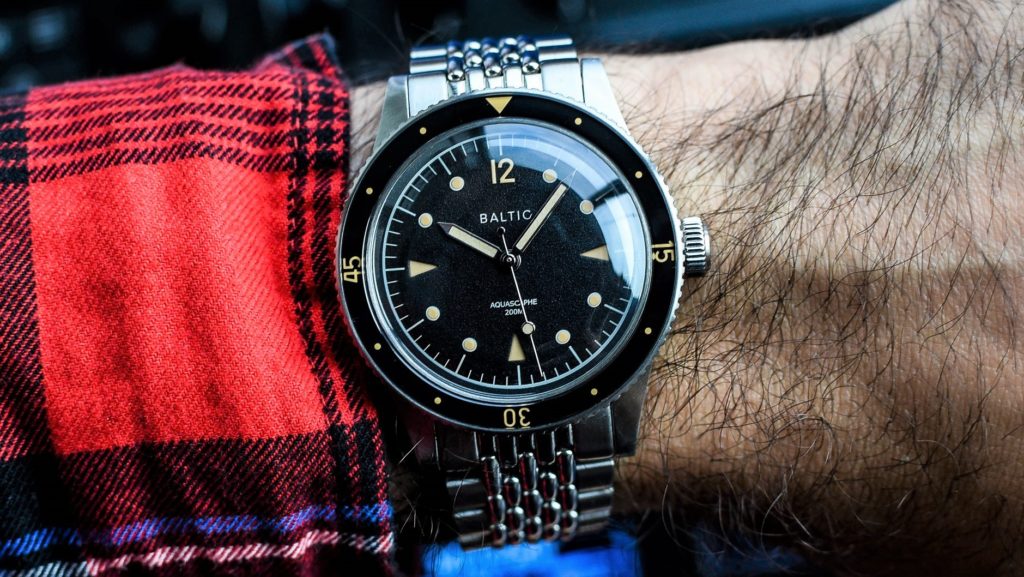
Not everyone looking at dive watches under $2k wants the one that shouts the loudest across the room. After spending time with the Baltic Aquascaphe, we came away thinking its biggest strength is knowing exactly when to stop. The design never feels underdone, but it also resists the temptation to pile on extra textures, oversized markers, or vintage gimmicks just because it can. The hybrid sandwich dial is a perfect example. The cutout indices reveal a fully lumed layer beneath, creating genuine depth without cluttering the display. Add the matte dial, restrained gilt accents, perfectly proportioned pencil hands, a lollipop second hand that reaches cleanly to the chapter ring, and a sapphire bezel insert, and the result feels quietly confident rather than eager to impress. During our in-depth testing, the BGW9 lume remained bright and evenly distributed well into the night.
That same restraint carries through to the wearing experience. At a little over 12mm thick with a 47mm lug-to-lug, the Aquascaphe slides under a cuff more naturally than many dive watches while still feeling reassuring on the wrist. The mostly brushed finish also proved forgiving of the small marks that inevitably appear with regular wear, even if collectors who enjoy brighter polished accents may find it a touch too subtle.
We were equally impressed by the beads-of-rice bracelet, which drapes naturally around the wrist, tapers cleanly toward the clasp, and never became tiresome over a full day. Baltic also includes quick-release spring bars, making the switch to the supplied Tropic-style rubber strap almost effortless depending on the mood.
Powering everything is the Miyota 9039, a movement that suits the Aquascaphe’s personality perfectly. It beat smoothly at 28,800 vph, delivered a practical 42-hour power reserve, and remained consistently reliable throughout our review period. The absence of a date also means a simple two-position crown, making setting the watch simple, even if some collectors will miss having a calendar. That’s ultimately what separates the Aquascaphe from many competitors. It isn’t trying to win you over with bigger numbers or louder styling. It trusts careful proportions, thoughtful execution, and the sort of refinement you tend to appreciate more the longer the watch stays in your collection.
Pros
- The beads-of-rice bracelet is comfortable and wears beautifully throughout the day.
- Hybrid sandwich dial adds depth while remaining clean, airy, and highly legible.
- Miyota 9039 delivers smooth, reliable performance, while the no-date layout keeps operation simple.
- Fully lumed indices, restrained gilt accents, and a sapphire bezel insert balance vintage character with modern usability.
- The quick-release spring bars make switching to the Tropic-style rubber strap effortless.
Cons
- The no-date display won’t suit those who like having a calendar at a glance.
- The predominantly brushed finish may feel too restrained for those who prefer stronger polished accents.
Raven Trekker Gloss Grey
| Price: | $690 |
| Water Resistance: | 200m |
| Case Dimensions: | 39mm (diameter) x 48mm (lug-to-lug) x 12.5mm (thickness) |
| Lug Width: | 20mm |
| Movement: | Miyota 9015 |
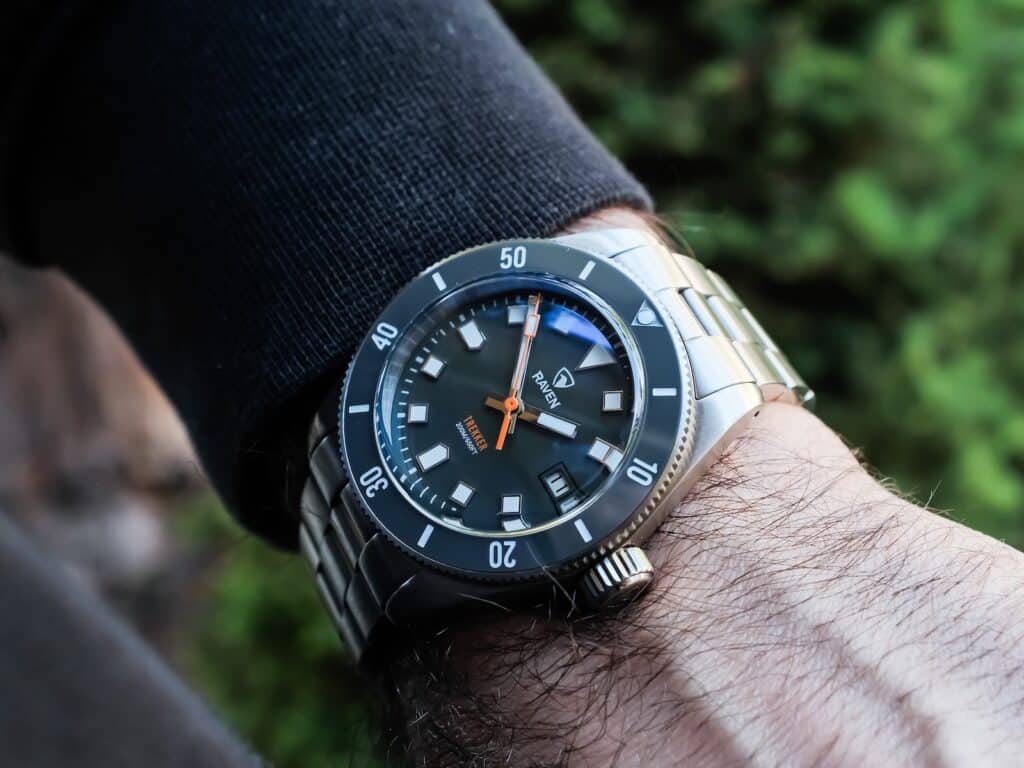
It’s easy for brands to mistake “new” for “better.” Raven took the harder route. Instead of starting over every few years, it kept refining the Trekker until it became one of those rare dive watches where almost every change feels like it came from actually living with the previous version. That’s why it earns a place here. The latest case is the best example. At 39mm across, 48mm lug-to-lug, and just 12.5mm thick including the boxed sapphire crystal, it’s the slimmest Trekker yet. That doesn’t sound dramatic on paper, but paired with the flat caseback, it settles onto the wrist noticeably better than earlier models. Raven also dropped the water resistance to 200 meters, yet we never once found ourselves wishing for the old 300-meter rating. It still feels every bit like the tool watch it’s supposed to be, right down to the oversized screw-down crown.
The dial shows the same restraint. Rather than chasing another faux-military grey diver, Raven gave the Trekker a glossy grey dial and matching ceramic bezel that constantly change character with the light. Outdoors, it leans charcoal; indoors, it can look almost blue-black, thanks to the assertive blue anti-reflective coating beneath the crystal. Polished hands and applied markers stay easy to track at a glance, while the restrained orange accents add just enough energy without becoming the watch’s defining feature. Around the outside, the coin-edge bezel is exactly what we want from a diver: easy to grip, crisp through all 120 clicks, and completely free of unnecessary drama. Inside, the Miyota 9015 follows the same philosophy. It wound smoothly, kept excellent time throughout our review, and avoided the noisy rotor or other quirks that sometimes creep into movements at this price.
The bracelet quietly completes the package. We expected to spend plenty of time swapping straps thanks to the drilled lugs, yet we kept leaving the Trekker on its oyster-style bracelet because Raven got the fundamentals right. The 20mm-to-16mm taper feels balanced, single-sided screws make sizing simple, and the NodeX clasp makes on-the-fly adjustment something you’ll use instead of showing off in a spec sheet. The extension mechanism could look cleaner when deployed, and our review sample developed a slight amount of side-to-side play, while the aggressive blue AR coating occasionally makes its presence known in certain lighting.
Those improvements don’t radically change what the Trekker is. They simply remove the little friction points that make some dive watches less enjoyable to own. That’s harder to appreciate in a display case than it is after six months on the wrist.
Pros
- Revised 39mm case wears flatter and more comfortably than previous Trekker generations.
- Gloss grey dial and ceramic bezel create a distinctive look that shifts beautifully with changing light.
- The coin-edge bezel delivers excellent grip with a precise, confidence-inspiring 120-click action.
- Miyota 9015 keeps excellent time and winds smoothly.
- Oyster-style bracelet, drilled lugs, and NodeX micro-adjustment make everyday wear versatile.
Cons
- The NodeX clasp extension looks awkward when deployed, and our review sample exhibited slight lateral play.
- The blue anti-reflective coating can create noticeable reflections in certain lighting.
Christopher Ward C65 Super Compressor
| Price Range: | $1025 – $1145 |
| Water Resistance: | 150m |
| Case Dimensions: | 41mm (diameter) x 47.12mm (lug-to-lug) x 13mm (thickness) |
| Lug Width: | 22mm |
| Movement: | Sellita SW200-1 |
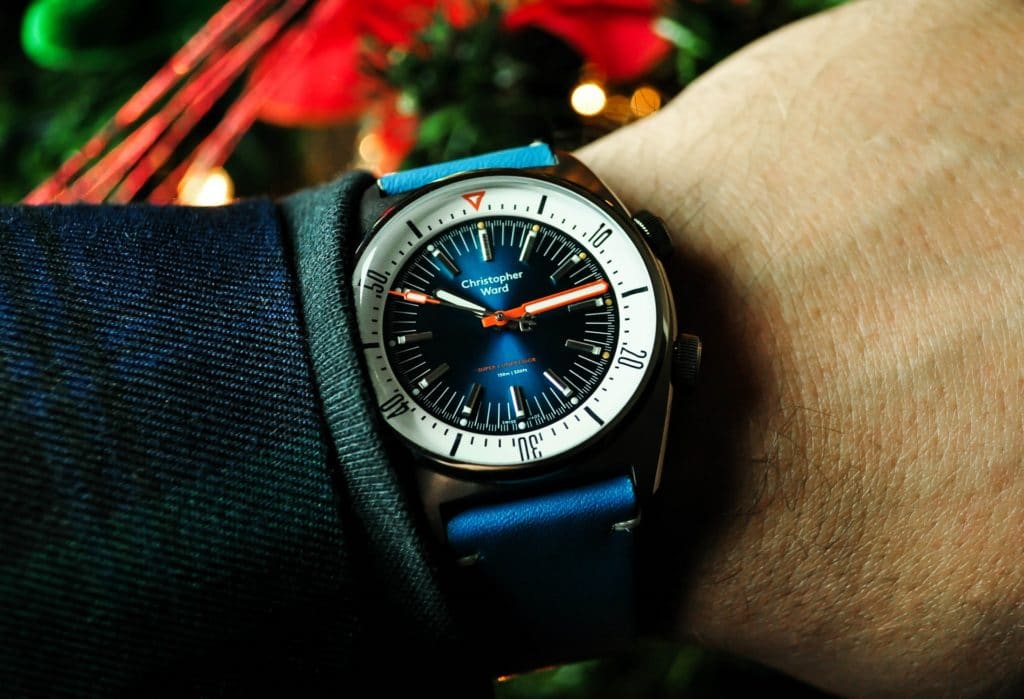
Spend enough time looking at dive watches around $2,000 and they start to blur together. Most rely on the same external bezel, familiar case shape, and predictable formula. The Christopher Ward C65 Super Compressor breaks that pattern without feeling like it’s trying too hard. Rather than borrowing the look of a vintage compressor, it brings back the part that actually made those watches interesting to use. The twin crowns aren’t decorative throwbacks, either. While reviewing it hands-on, the lower crown screwed down with reassuring precision, while the upper crown rotated the internal bezel with a firm, tactile feel that quickly became one of our favorite parts of interacting with the watch. Hiding the timing bezel beneath the domed sapphire also gives the C65 a cleaner, more elegant profile than most divers in this price range.
That same sense of restraint carries over to the dial. The Ocean Blue sunburst finish constantly shifts from deep navy to a brighter blue depending on the light, giving the watch far more personality than static product photos imply. Applied indices and crisp minute markings make quick time checks effortless, while the orange minute hand and trident-tipped second hand add just enough contrast without disrupting the balance. At 41mm across and 13mm thick, the case feels substantial without becoming cumbersome, and it slipped under a cuff more easily than we expected. We spent most of our time on the supplied Tropic strap, where the watch felt light and secure through long days, but switching to leather revealed a dressier side that few dive watches pull off convincingly.
Christopher Ward also knew not to overcomplicate what works. The no-date Sellita SW200-1 is dependable, easy to service, and visible through the display case back with its decorated rotor quietly doing its job. The 38-hour power reserve is modest by today’s standards, and the stated ±20-second tolerance won’t excite specification hunters, but neither affected our enjoyment during extended wear. Instead, we’d be more inclined to criticize the bracelet clasp, which doesn’t feel quite as refined as the rest of the watch, and the lume, which faded sooner than we expected.
Still, the C65 Super Compressor stands out for a reason that has very little to do with specifications. In a market full of excellent dive watches that often differ only in the details, this is one of the few that genuinely changes how you interact with it every time you put it on.
Pros
- The functional twin-crown Super Compressor system offers a truly distinctive ownership experience.
- The Ocean Blue sunburst dial has exceptional depth while remaining legible.
- Balanced 41mm × 13mm case wears comfortably and transitions well between rubber and leather straps.
- Excellent overall build quality and finishing, complemented by an attractive display case back.
Cons
- Lume fades faster than expected.
- The bracelet clasp feels less premium than the rest of the watch.
- 38-hour power reserve is modest compared to many modern alternatives.
Mido Ocean Star Titanium
| Price: | $1040 |
| Water Resistance: | 200m |
| Case Dimensions: | 42.5mm (diameter) x 42.5mm (lug-to-lug) x 11.75mm (thickness) |
| Lug Width: | 22mm |
| Movement: | Caliber 80 |
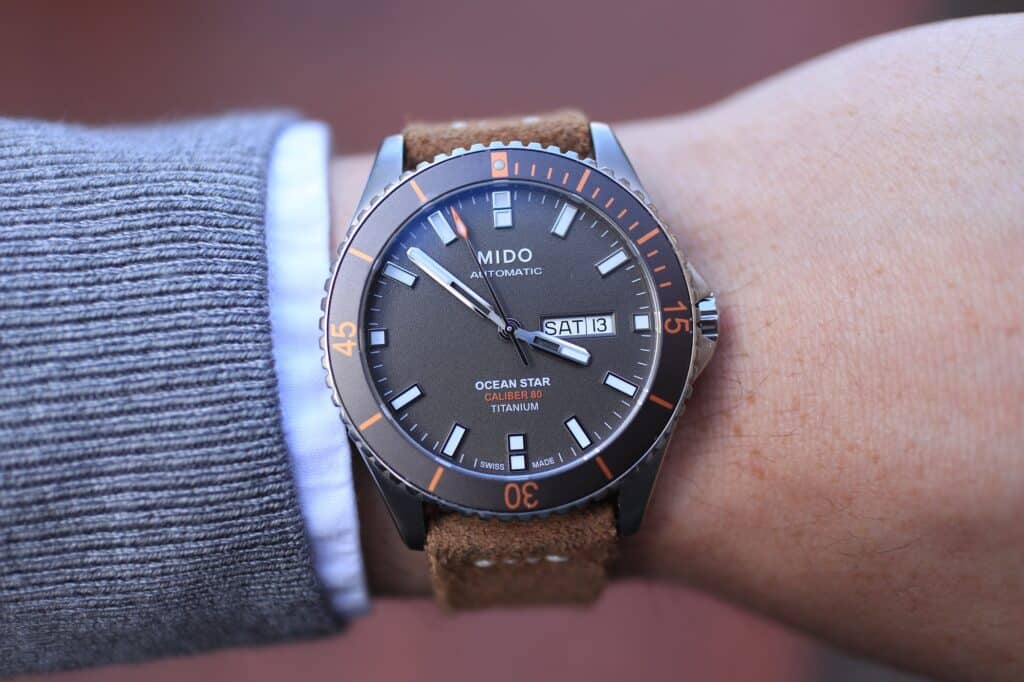
Some dive watches constantly remind you they’re on your wrist. The Mido Ocean Star Titanium does the opposite. After a few days of wearing it, we found ourselves noticing what wasn’t happening: no mid-afternoon wrist fatigue, no glare fighting for attention outdoors, and no rush to reset the watch after leaving it in the box for a weekend. It isn’t the most attention-grabbing diver in this price range, but it’s certainly one of the easiest to live with. The Caliber 80 deserves plenty of the credit. Based on the ETA 2824 architecture, it stretches the power reserve to 80 hours, which means it happily survives a couple of days off the wrist.
That same practicality shows up everywhere else. The fully brushed titanium case measures 42.5mm across yet wears lighter than the numbers, and at roughly 11.75mm thick, it’s slimmer than many modern dive watches. From our time with the watch, it stayed comfortable through commutes, desk work, and everyday errands without ever developing the top-heavy feel that some steel divers pick up as the day goes on. The subtly contoured case and sloping bezel help distribute that weight naturally, while a polished chamfer along the edge adds enough contrast without breaking the watch’s understated character. The titanium bracelet follows the same philosophy. Curved links wrap comfortably around the wrist, the 22mm-to-19mm taper keeps it from feeling blocky, and the ratcheting clasp makes quick fit adjustments throughout the day effortless.
The dial rewards a closer look than first impressions suggest. Its anthracite texture shifts between reflecting and absorbing light depending on the angle, while the double AR-coated sapphire crystal keeps glare well controlled whether outdoors or under office lighting. Mido also paid attention to the details that keep the dial balanced, shortening the nine o’clock marker to mirror the three o’clock day-date window instead of leaving the layout visually lopsided. Pencil hands filled with BGW9 Super-LumiNova charge quickly and glow with a cool blue-green hue after dark, while the orange-tipped second hand remains easy to track as it sweeps around the dial.
Our complaints were relatively minor. The screw-down crown could be reluctant to get started without a fingernail, the lugs could curve down more aggressively for smaller wrists, and the specific combination of titanium and anthracite doesn’t pair as naturally with a wide range of straps as some competitors. None of those issues overshadowed what the Ocean Star does best: quietly disappearing into everyday life while continuing to do everything you’d expect from a modern Swiss dive watch.
Pros
- Lightweight brushed titanium case remains very comfortable through long days.
- Curved titanium bracelet, 22mm-to-19mm taper, and ratcheting clasp create an outstanding everyday fit.
- Caliber 80 offers an excellent 80-hour power reserve.
- The anthracite textured dial and double AR-coated sapphire crystal deliver excellent legibility in changing light.
- BGW9 Super-LumiNova charges quickly and provides a strong blue-green glow.
Cons
- Screw-down crown can be stubborn to unscrew initially.
- Titanium and anthracite color combination limits strap versatility compared to more neutral divers.
- Lugs could curve down more for a better fit on smaller wrists.
Mido Ocean Star Tribute

| Price: | $1,350 |
| Water Resistance: | 200m |
| Case Dimensions: | 40.5mm (diameter) x 47mm (lug-to-lug) x 13.5mm (thickness) |
| Lug Width: | 21mm |
| Movement: | Mido Caliber 80 |
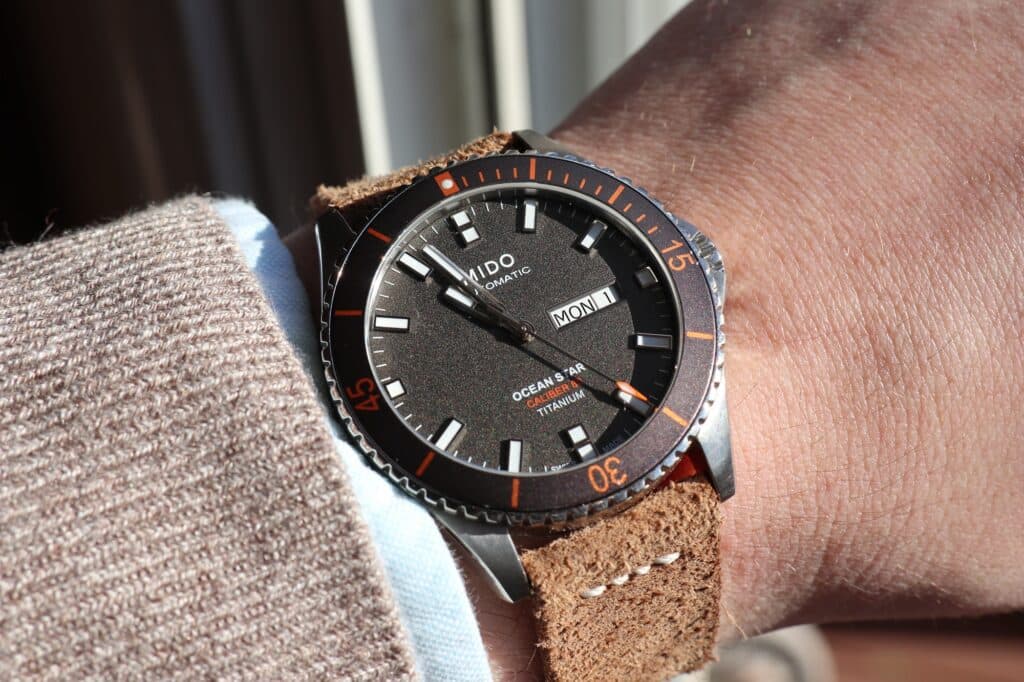
Once you get into four-figure dive watches, there’s a temptation to expect everything to feel newer, sharper, and more technically impressive. The Mido Ocean Star Tribute deliberately swims against that current. It embraces the quirks that made vintage dive watches appealing in the first place without making you live with vintage-watch headaches. The Mediterranean Blue dial is the heart of that experience. The darker aluminum bezel looks exactly right beside it, where ceramic would have felt too pristine and faux bakelite a little too eager to sell the illusion. Topped with a box sapphire crystal, the whole watch has the soft, rounded profile of an older diver. There’s a little distortion around the crystal’s edge, but never enough to distract, and we never found ourselves wishing Mido had added anti-reflective coating. The reflections suit the personality of the watch better than perfectly sterile clarity would have.
That personality carries through the rest of the design. The printed dial remains quite airy despite the Datoday display, with painted baton markers, smaller minute markers, chromed paddle hands, and an orange lollipop second hand all working together without making the dial feel busy. At 40.5mm with a 47mm lug-to-lug, the case makes its place in that sweet spot where it feels substantial without becoming tiring. The full polish gives it plenty of presence, though it also means every hairline scratch becomes part of the ownership story.
We expected the bracelet to be the weak link because an all-polished multi-link design usually looks better than it wears. Instead, it became one of our favorite parts of the watch. It drapes naturally over the wrist, captures just enough ’70s charm without feeling flimsy, and the clasp extension proved handy once the weather turned warm. The supplied blue canvas strap looks the part too, although it takes a while to stop feeling stiff. Our biggest frustration came from the bezel. The 60-click action is precise with very little play, but the polished coin edge simply doesn’t offer enough grip, especially with wet hands.
Behind the vintage styling is a movement chosen with everyday ownership in mind. The Caliber 80 stretches its power reserve to 80 hours, making it easy to rotate with other watches, and our review sample averaged around +2 seconds per day on the timegrapher. Some enthusiasts will point to the 21,600 bph beat rate or the fact that it’s less straightforward to regulate than a standard ETA 2824, but neither changed the experience on the wrist. The lume was harder to overlook. For a 200-meter diver, the green Super-LumiNova fades sooner than we’d like, with even affordable Seiko divers outlasting it after dark. Strangely, that never became the defining memory of the watch. What stayed with us was how confidently the Tribute stuck to its own personality in a segment where so many dive watches are trying to look as modern as possible. Read our dedicated review for the smaller on-wrist details.
Pros
- The Mediterranean Blue dial, aluminum bezel, and box sapphire crystal deliver vintage character without feeling unrealistic.
- Comfortable 40.5mm × 47mm proportions suit a wide range of wrists.
- Caliber 80 combines an 80-hour power reserve with excellent real-world accuracy.
- Multi-link bracelet wears beautifully, and the clasp extension is useful on warm days.
- Box sapphire crystal captures the look of vintage acrylic without the drawbacks.
Cons
- Fully polished case and bracelet pick up visible scratches quickly.
- Lume performance trails expectations for a 200-meter dive watch.
- Canvas strap needs a proper break-in before it becomes comfortable.
- The polished coin-edge bezel can be difficult to grip, particularly with wet hands.
Serica 5303-2
| Price: | $1,720 – $1,950 |
| Water Resistance: | 300m |
| Case Dimensions: | 39mm (diameter) x 46mm (lug-to-lug) x 12.2mm (thickness) |
| Lug Width: | 20mm |
| Movement: | Soprod Newton (current model has Soprod M100) |
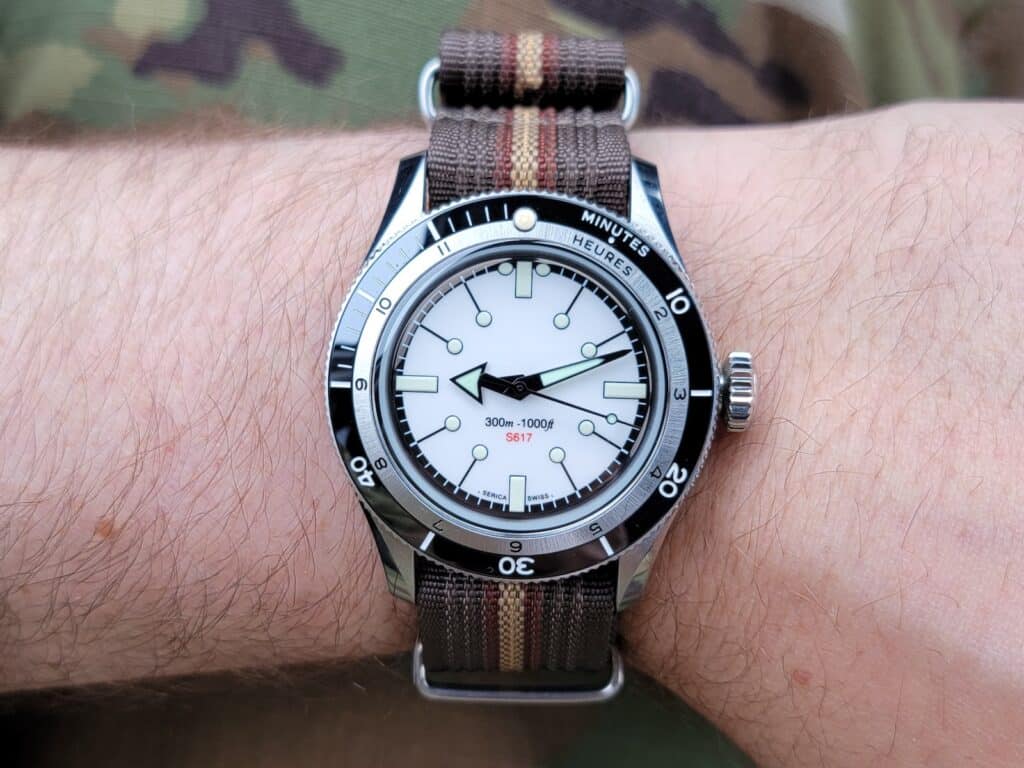
The longer we wore the Serica 5303-2, the harder it became to describe in a single sentence. Call it a dive watch, and you’re only telling half the story. It has the capability, sure, but it spends most of its time feeling like a purposefully designed, casual sports watch that happens to be ready for the water. That’s a surprisingly rare balance in this price bracket, where so many divers seem determined to remind you how serious they are every time you glance at your wrist.
A lot of that comes from the way Serica approached the design. The metallic silver dial often reads closer to matte white, creating a crisp backdrop for the textured geometric markers and sparse branding. Nothing feels decorative for its own sake, yet the watch has far more character than another black-dial diver ever could. We also found ourselves using the bezel more than expected. The black ceramic outer ring handles elapsed timing, while the steel inner 12-hour scale quietly adds a second time zone without turning the watch into an instrument panel. The combination sounds more complicated than it feels in practice, and the crisp, play-free 120-click action quickly becomes one of those details you appreciate every time you reach for it.
Legibility remained excellent throughout our testing, with the lume staying strong enough after dark to back up the clean daytime design. The same restraint carries over to the case. Measuring 39mm across, 46mm lug-to-lug, and 12.2mm thick, the 5303-2 feels compact without ever feeling slight. Brushed surfaces are broken up by polished chamfers along the lugs, while the oversized 8mm crown offers excellent grip whether winding or setting the watch.
Our review sample used the earlier Soprod Newton movement, which occasionally displayed minor crown-engagement and hacking quirks but remained dependable in everyday wear; newer models now receive the revised Soprod M100, addressing those issues without changing the overall experience. The integrated mesh bracelet looks fantastic, but it’s also where most of our criticisms landed. The clasp can feel sharp, there’s no safety catch, and some of the hand-finishing doesn’t quite live up to the standard set by the rest of the watch. Thankfully, the standard 20mm lug spacing makes changing straps effortless—a good thing, because the Serica is one of those watches that genuinely changes character depending on what you pair it with.
We spent considerably more time with the 5303-2 than this roundup allows, so check out our full hands-on impressions for a closer look at its unusual bezel, on-wrist comfort, and the small details that set it apart.
Pros
- The metallic silver dial, textured markers, and restrained branding create a distinctive, highly legible design.
- Compact 39mm proportions and an oversized crown make for an excellent everyday wearing experience.
- Crisp brushing and polished chamfers give the case plenty of character without feeling overstyled.
- The dual-scale bezel is useful, combining elapsed timing with a second time zone.
- Strong lume keeps the vintage-inspired dial practical after dark.
Cons
- The mesh bracelet clasp feels sharp and lacks a safety catch.
- The dual-scale bezel takes a little time to master if you’re used to a traditional dive bezel.
Squale Sub-37 Legend
| Price: | $1,750 |
| Water Resistance: | 300m |
| Case Dimensions: | 37mm (diameter) x 45mm (lug-to-lug) x 11.2mm (thickness) |
| Lug Width: | 19mm |
| Movement: | Sellita SW200-1 |
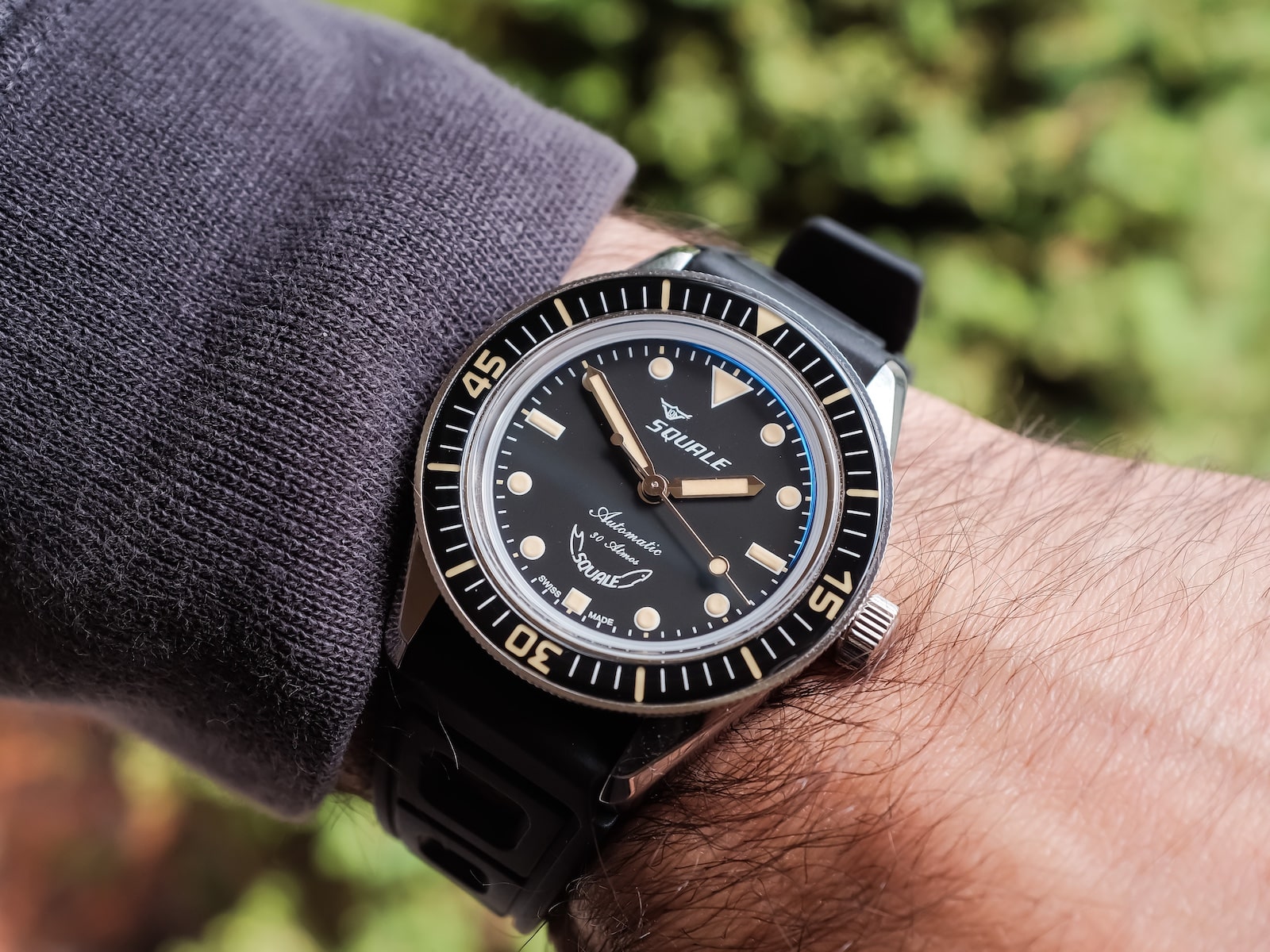
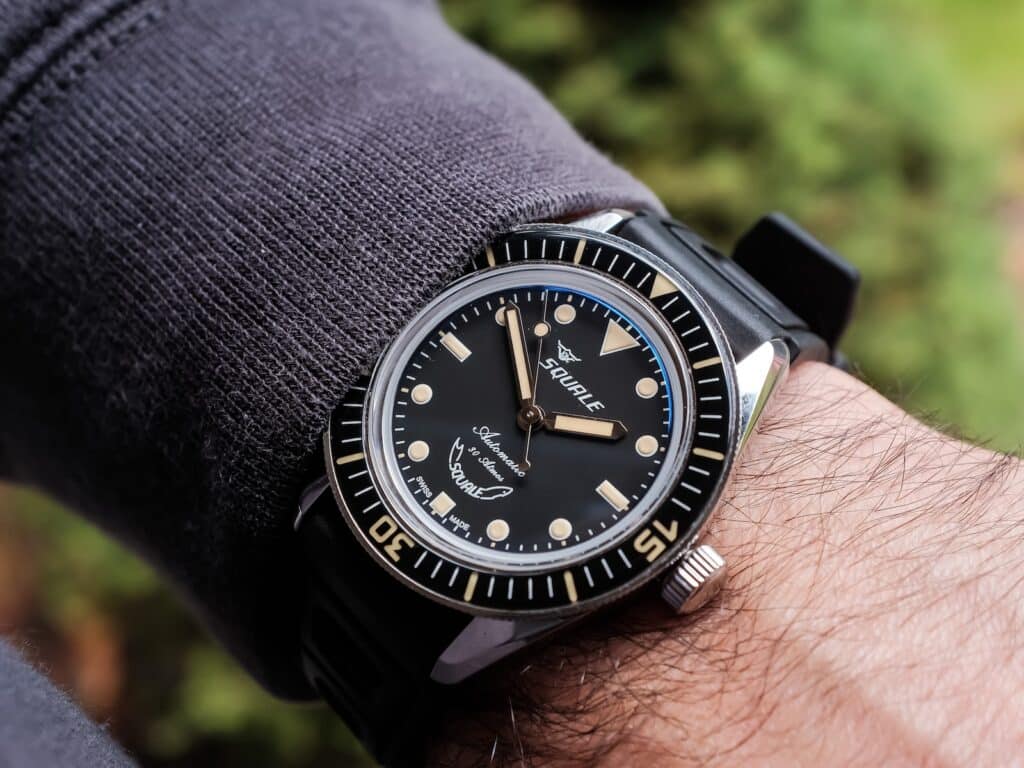
When the Sub-37 Legend was announced, we thought we’d appreciate it more than we’d actually enjoy wearing it. Turns out those were two very different things. On paper, a 37mm dive watch priced around $1,750 feels like a niche proposition in a market that keeps drifting toward larger cases. On the wrist, none of that mattered. Within a couple of days, the dimensions stopped feeling like a design decision and simply felt right. The 45mm lug-to-lug and remarkably slim 11.2mm profile give it enough presence to avoid feeling delicate, while the way it sits low on the wrist makes many modern 40mm divers suddenly feel unnecessarily bulky. More importantly, it never feels like a brand trying to recreate the past. It feels like Squale revisiting its own history with the benefit of modern materials and finishing.
That restraint is what makes the rest of the watch work so well. The black dial is clean, highly legible, and free from unnecessary distractions. The old radium-toned lume adds warmth without looking artificially aged, while the curved black bezel insert and double-domed sapphire crystal create the impression of a vintage diver without sacrificing the durability you’d expect at this price. We also appreciated that the polished case wasn’t afraid to catch the light. It gives the watch more personality than a fully brushed tool watch without making it feel flashy. The bezel clicks positively with smooth action, and although there’s a small amount of play if you deliberately go searching for it, it never crossed our minds during everyday wear. The only visual quirk worth mentioning is the anti-reflective coating, which can throw a noticeable blue hue depending on the lighting.
Mechanically, the Sellita SW200-1 is the sort of movement we like seeing in a watch like this. It isn’t trying to steal the spotlight. It simply works. Accuracy remained consistent throughout our time with the watch; the crown action was smooth and confidence-inspiring, and the signed von Büren crown is one of those small details that reminds you attention was paid to the entire package. The 300 meters of water resistance only reinforces that sense of confidence, while the Bonetto Cinturini rubber strap ended up being one of our favorite surprises. It’s soft from day one, conforms naturally to the wrist, and despite the uncommon 19mm lug width, we never once felt the urge to replace it.
By the end of our time with the Sub-37 Legend, what impressed us most was how complete the watch felt. Nothing seemed included to satisfy forum wish lists or marketing copy. Every decision served the ownership experience. If you’re considering one, our extended review dives deeper into the ownership experience and the finer details.
Pros
- The exceptionally balanced 37mm case wears larger than its dimensions suggest while remaining slim and comfortable.
- Vintage styling feels authentic, with restrained old radium lume and a beautifully executed double-domed sapphire crystal.
- The Bonetto Cinturini rubber strap is supple, comfortable, and good enough that strap swapping never felt necessary.
- Clean, highly legible dial remains easy to read in bright sunlight and low light alike.
- Sellita SW200-1 offers dependable performance with smooth winding and reassuring crown action.
Cons
- The anti-reflective coating can produce a noticeable blue tint at certain viewing angles.
- The bezel has a slight amount of play, even though it doesn’t affect normal use.
Those are the dive watches under $2,000 that have earned a permanent place in our rotation after real hands-on time. Now it’s your turn. Which one would you trust on your wrist, and which watch do you think deserves to be here once we’ve had the chance to review it ourselves? Let us know in the comments. We’re always happy to add another watch to the never-ending “must review” list.

Co-Founder and Senior Editor
Kaz has been collecting watches since 2015, but he’s been fascinated by product design, the Collector’s psychology, and brand marketing his whole life. While sharing the same strong fondness for all things horologically-affordable as Mike (his TBWS partner in crime), Kaz’s collection niche is also focused on vintage Soviet watches as well as watches that feature a unique, but well-designed quirk or visual hook.
Glad you put the Scurfa Diver One on your list. I have one (Orange) on my wrist right now (on a WOE NATO strap) and it is probably my favorite watch. I’m surprised there weren’t any Vaer or Sangin watches on your list.
So bummed I sold my Scurfa.
My Tissot Seastar 1000 is prettier than all these. Grey dial and bezel, steel bracelet. 300m Automatic, well under $1000. Peace 🙏