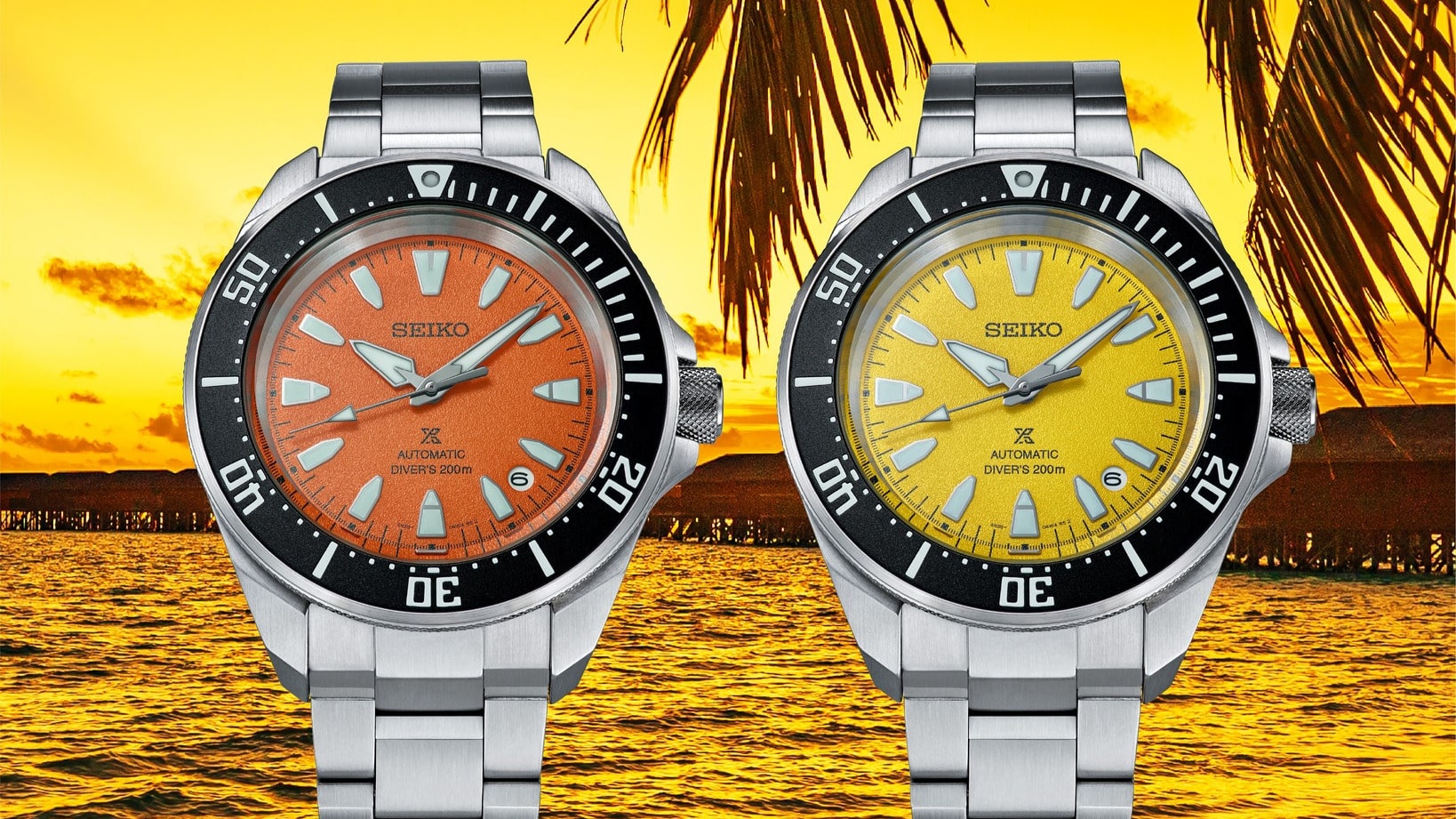
Back in May, I picked the five best Seiko releases of 2026 so far and came away thinking Seiko had started listening to enthusiasts again. The rest of the year mostly backed that up. Seiko pushed its 8L45 movement into watches that blur the line with Grand Seiko, gave the Speedtimer two very different updates, and spread its 145th anniversary across nearly every collection. It also kept frustrating me in familiar ways, with Hardlex on watches that should have sapphire, region-locked references, and prices that keep creeping up. This list covers the whole catalog, from a $400 Seiko 5 to a $3,900 Marinemaster, and every watch on it has a confirmed US price. Here are our 10 favorite Seiko watches of 2026, in the order they arrived.
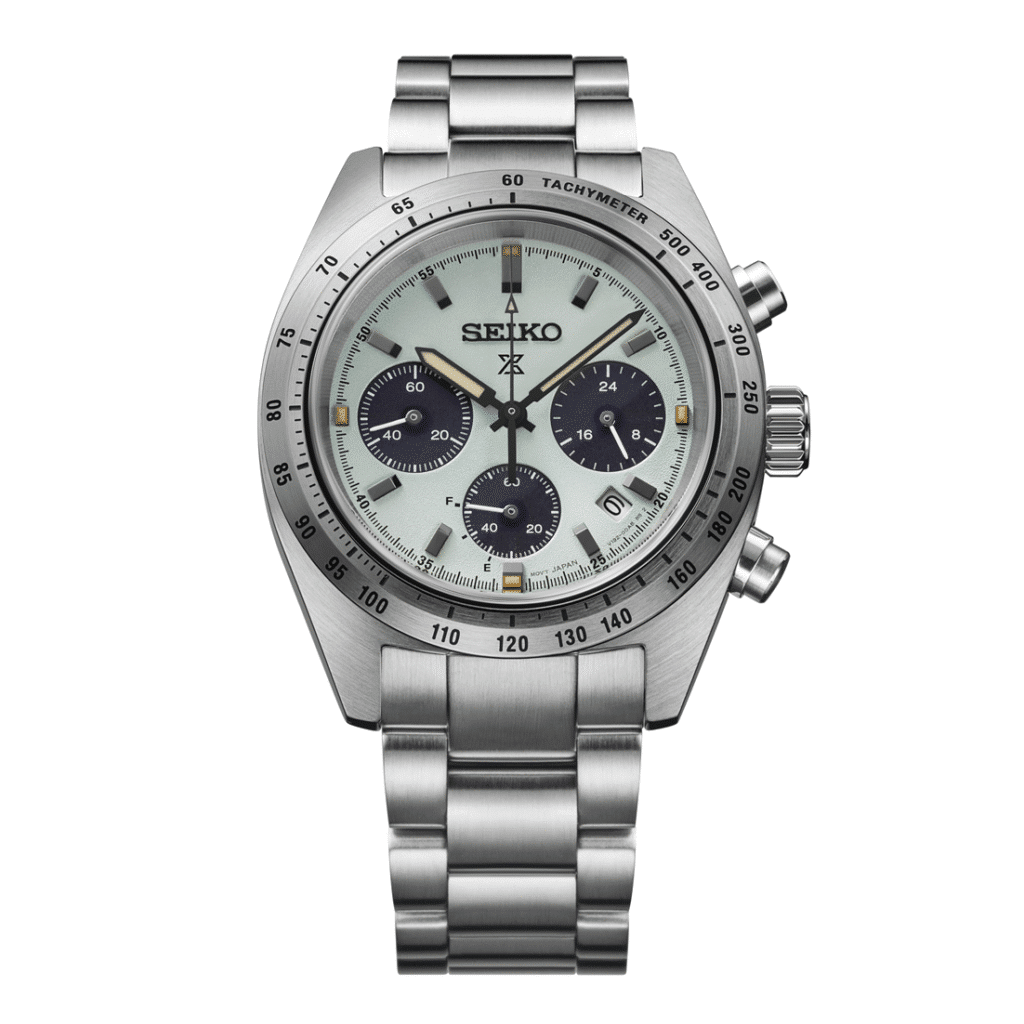
Seiko Speedtimer SSC961, SSC963, and SSC965
The solar Speedtimer was already one of the easiest Seiko recommendations around, and February’s SSC961, SSC963, and SSC965 mostly add color. Silver, salmon, and surf green dials sit in the same 39mm case, 13.3mm thick and 45.5mm lug-to-lug, with the V192 solar chronograph, a curved sapphire crystal, and 100 meters of water resistance. That case is still one of the best sizes in modern chronographs, and it’s the reason this line keeps landing on our lists. Seiko also skipped the limited-edition treatment this time, which I appreciate. US dealers list them at $750. New colors alone make a thin case for new references when the SSC813 panda already exists, and for everyday wear I’d still pick the panda.

Seiko 5 Sports SSK059 GMT
For a couple of years, the white-dial SBSC009 was a Japan-only GMT you had to import or wait out. The SSK059 brought that watch to the rest of the world, and it was my favorite Seiko of the first half. The 39.4mm case is 13.6mm thick and 47.9mm lug-to-lug, with 100 meters of water resistance, a stark white dial, an orange GMT hand, and a fixed steel 24-hour bezel that makes the Explorer II reference obvious. Inside is the 4R34 with a 41-hour power reserve. At $450, it’s one of the most practical ways into a mechanical GMT. The 4R34 is an office-style GMT, so you set the 24-hour hand instead of jumping the local hour. Seiko’s +45/-35 seconds-per-day accuracy spec also looks rough, though the owner reports I’ve read put real-world numbers closer to +10 to +15.

Seiko Prospex Marinemaster HBF001 and HBF002
Older Marinemasters like the SBDX017 earned their following with overbuilt cases and serious movements, and the HBF001 and HBF002 tried to live up to that with a new movement. Caliber 8L45 replaces the 8L35, borrowing architecture from Grand Seiko’s 9S65 for a 72-hour reserve and a +10/-5 seconds-per-day rating. The 42.6mm case is 49.3mm lug-to-lug with 300 meters of water resistance, and the bracelet gets a toolless micro-adjust clasp with 16mm of travel. The HBF001 pairs a textured black dial with a black ceramic bezel and moves the date to 3 o’clock. The 1,000-piece JAMSTEC HBF002 goes with a blue gradient dial and a gold seconds hand. They’re $3,600 and $3,900. I still prefer those older MM300 references, the case has grown to just over 14mm thick, and these would make more sense to me at $500 to $1,000 less.

Seiko 5 Sports Field HDB006 to HDB009
The compass bezel finally reached the Seiko 5 with the HDB006 through HDB009, and it felt overdue. Two versions pair a brushed steel bezel with a multi-link bracelet and glossy black or silver-white dials. The other two get coated bezels matched to khaki green or brown dials on nylon straps. Seiko also added LumiBrite to the Arabic numerals, which makes a real difference to legibility on a field watch. Underneath is the familiar 4R36 automatic with a day-date, a Hardlex crystal, and 100 meters of water resistance. US dealers list the HDB006 at $400. Size is the catch. At 41mm wide, 13.2mm thick, and 48.5mm lug-to-lug, these run bigger than the 38mm to 39mm I’d want from a field watch.

Seiko Prospex HBC005
Seiko’s 145th anniversary touched most of its collections this year, and the diver I’d single out is the HBC005. It uses the 62MAS-inspired platform in the silver-and-blue scheme Seiko carried across the anniversary lineup, with a brushed silver dial and a blue seconds hand matched to a blue bezel. The 40mm case is 13mm thick and 46.4mm lug-to-lug, with 300 meters of water resistance and the 6R55’s 72-hour reserve. The 62MAS platform has a way of growing on you, and this version looks sharp. It’s $1,400 and limited to 4,000 pieces. It’s the familiar 62MAS formula in new colors, and its Samurai-based sibling, the HBB001, stretches the word “limited” with a 9,999-piece run.

Seiko Astron GPS Solar Dual-Time Chronograph
The Astron has always been Seiko’s GPS solar showcase, with a big case and a crowded dial as the cost of entry. The 5X63 Astron trims both. The new caliber moves the second time zone to a 24-hour subdial, so the dial settles into a clean tricompax layout, and the case drops a full millimeter to 12.4mm thick at 43.4mm wide and 50mm lug-to-lug. A two-piece octagonal bezel in brushed and polished finishes replaces the old ceramic chronograph bezel. Seiko also added a push-button quick-release that swaps the titanium bracelet for rubber without tools, a trick that usually shows up on pricier watches. Four references run $2,600 to $2,900, topped by the 2,000-piece HAB004 anniversary panda. It’s still a large watch, and how the quick-release holds up after years of swapping is the open question.

Seiko Presage Classic Series Tomioka Silk
I rarely reach for a Presage, which is why these four caught me off guard. The Tomioka Silk watches take their dial textures from Japanese silk, in white, pale bamboo green, and soft pink, plus a 2,000-piece rose gold-tone HCC008 that I keep coming back to. The 38mm case is 12.9mm thick and 43.8mm lug-to-lug, with a dual-curved sapphire crystal, a display caseback, 10 bar of water resistance, and the 6R51 with a 72-hour reserve. US dealers list the white-dial HCC001 at $950. These sell through Seiko’s Global Brand Core Shops, so they won’t be easy to find in the US for a while, and the HCC008 carries a different reference number in Japan, which makes Seiko’s catalog that much harder to follow. I’d also want to see those silk textures in person.
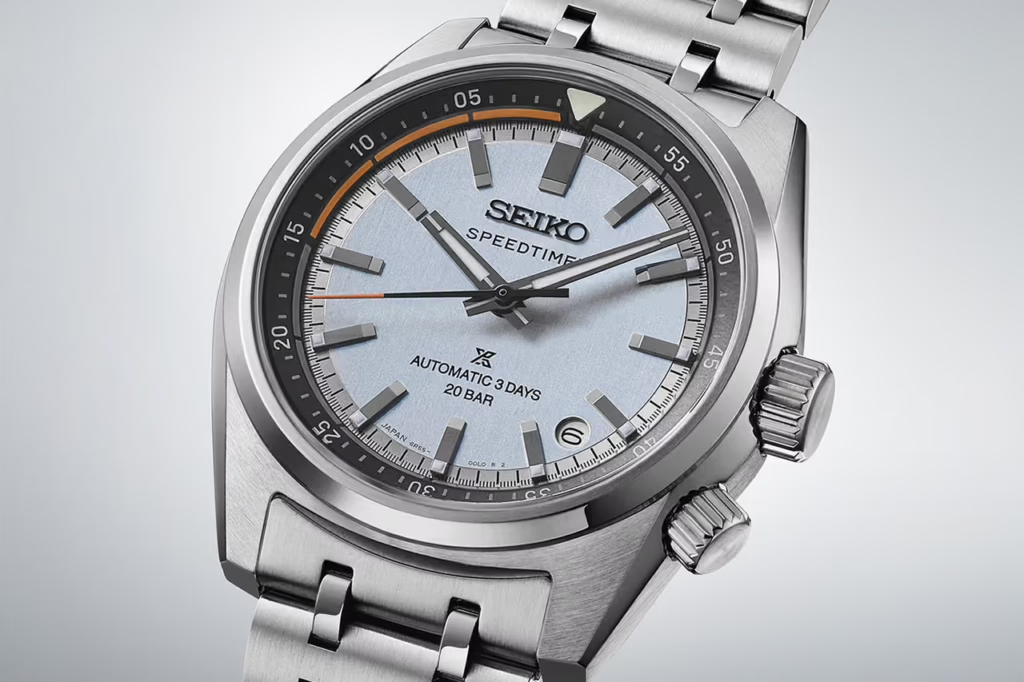
Seiko Prospex Speedtimer HBC003 and HBC004
The second Speedtimer update of the year was the more interesting one. The HBC003 and HBC004 remix Seiko’s 1970s motoring watches without a chronograph at all, using an internal 60-minute countdown scale that still gives you a working timer. The HBC003 pairs a powder-blue dial with a bracelet and is the one I’d pick. The HBC004 goes petrol blue on embossed leather. Both use a 39.5mm case, 12mm thick and 44.5mm lug-to-lug, with curved sapphire, 200 meters of water resistance, and the 6R55’s 72-hour reserve. They’re $950 on leather and $995 on the bracelet. That’s a lot for a 6R55 rated to +25/-15 seconds a day, and I’d want time with one before calling it worth nearly $1,000.
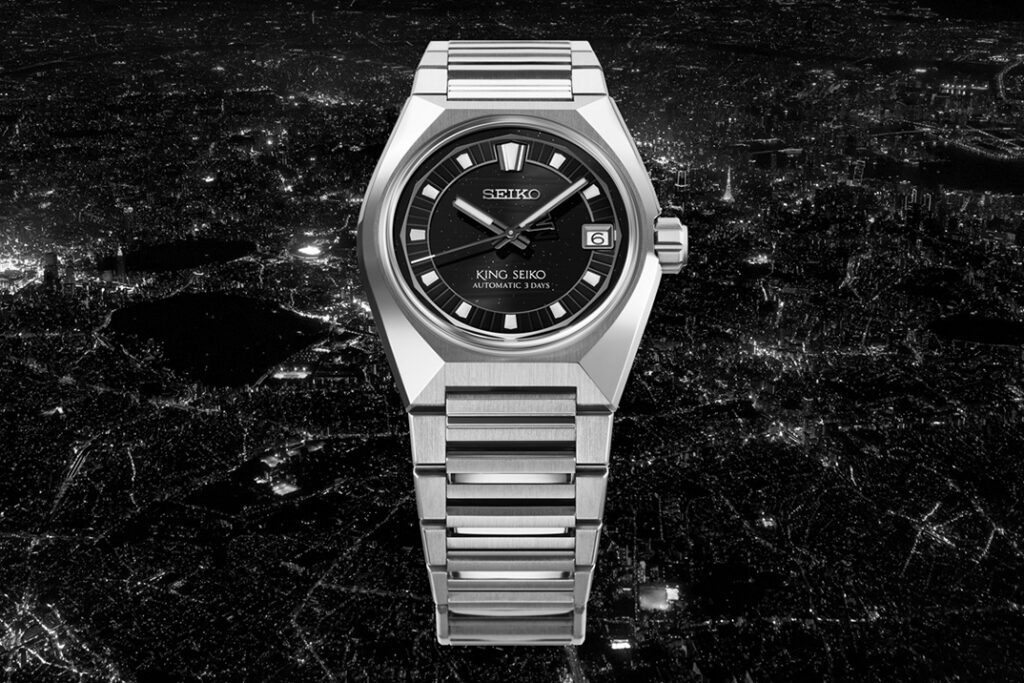
King Seiko Vanac HKF005
King Seiko put the 8L45 in the Vanac twice this year. March brought a titanium version at $3,850, and September’s HKF005 put the same Caliber 8L45 in steel with a glitter dial. The movement is built on Grand Seiko 9S65 architecture, runs at 28,800 vph with a 72-hour reserve, and is rated to +10/-5 seconds a day. The 41mm case is 14.3mm thick and 45.1mm lug-to-lug, with a box-shaped sapphire crystal and 100 meters of water resistance. At $3,300, it invites comparisons well outside Seiko’s own catalog, and the 8L45 makes a stronger case than any Vanac before it. Glitter dials need to be seen in person, and the HKF005 blurs the line between King Seiko and Grand Seiko without settling where that line should sit.

Seiko Pandagraph HHK001 and HHK002
Seiko saved its silliest watch of the year for October, and it’s one of my favorites. The Pandagraph, from Seiko’s Power Design Project, turns a panda-dial chronograph into an actual panda. The black registers become eyes, a nose, and a mouth on a fur-textured dial, the hands are shaped like bamboo leaves, and the tachymeter is relabeled a “Sasameter.” Underneath is a bullhead chronograph, with the crown and pushers at 12 o’clock, in a 43mm cushion case running the 8T61 quartz movement. Quartz was the right call, since a mechanical caliber would have raised the price without improving the joke. It’s $540, limited to 3,000 white and 2,000 pink pieces, with availability starting in November. The supporting hardware is ordinary, with Hardlex, a leather strap, and only splash resistance. You’re paying for the design, and the commitment is what makes it work.
A few more worth a look
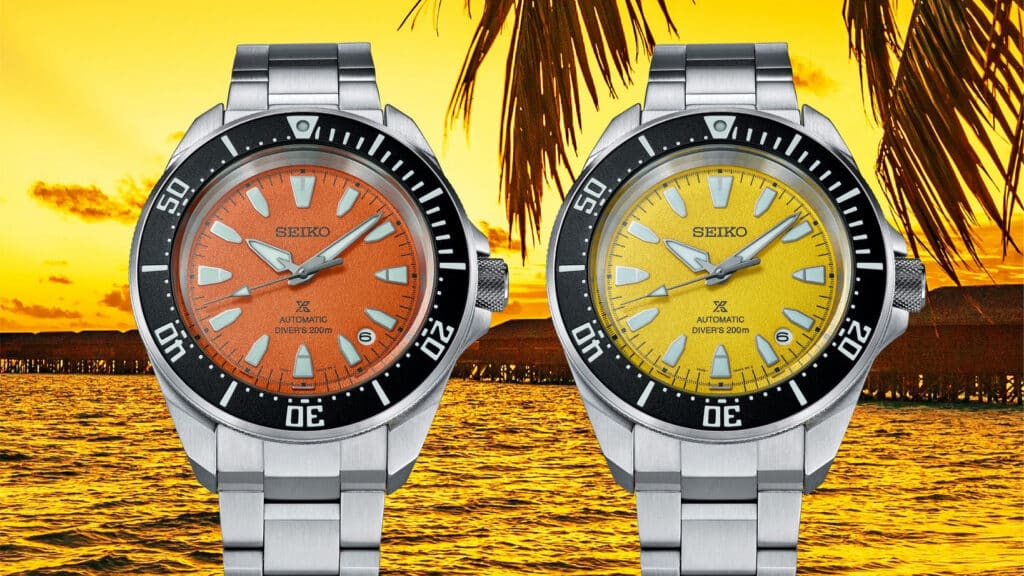
Some of my favorite Seiko releases this year missed the list on availability or price. The Prospex HBB003 and HBB004 are the most compelling Samurai in years, especially in orange, but they’re 2,500-piece Asia-Pacific exclusives with no US price. The Seiko 5 Sports Honda Motocompo HDB010 puts a fun collaboration in a 36.4mm case, limited to 8,000 pieces, and Seiko still hasn’t confirmed US pricing. The Marinemaster HBF003 Save the Ocean edition is one of the better-looking Marinemasters in the line, limited to 900 pieces and also unpriced in the US. The PADI King Turtle HBB002 puts an anniversary globe dial on the familiar 45mm King Turtle for $750.

Where this leaves us
Line these ten up and Seiko’s year has a clear center of gravity: the 8L45. It turned the Marinemaster and King Seiko into watches you can reasonably compare against Grand Seiko, at prices that make the comparison unavoidable. Below that tier, Seiko spent most of 2026 refining formulas that already worked, from the Speedtimer to the 62MAS platform, while the Seiko 5 kept supplying the fun with Hardlex and 4R movements that deserve more scrutiny as prices climb. The frustrations from May haven’t gone anywhere, and regional exclusives and missing US prices kept some of the year’s best ideas out of reach. Whether Seiko fixes that in 2027 matters more to me than any single release. The Pandagraph at least suggests the brand hasn’t lost its sense of humor while it figures that out.
If you’re comparing Japanese brands, we also picked the 5 best Citizen releases of 2026 so far.

Co-Founder & Senior Editor
Michael Peñate is an American writer, photographer, and podcaster based in Seattle, Washington. His work typically focuses on the passage of time and the tools we use to connect with that very journey. From aviation to music and travel, his interests span a multitude of disciplines that often intersect with the world of watches – and the obsessive culture behind collecting them.