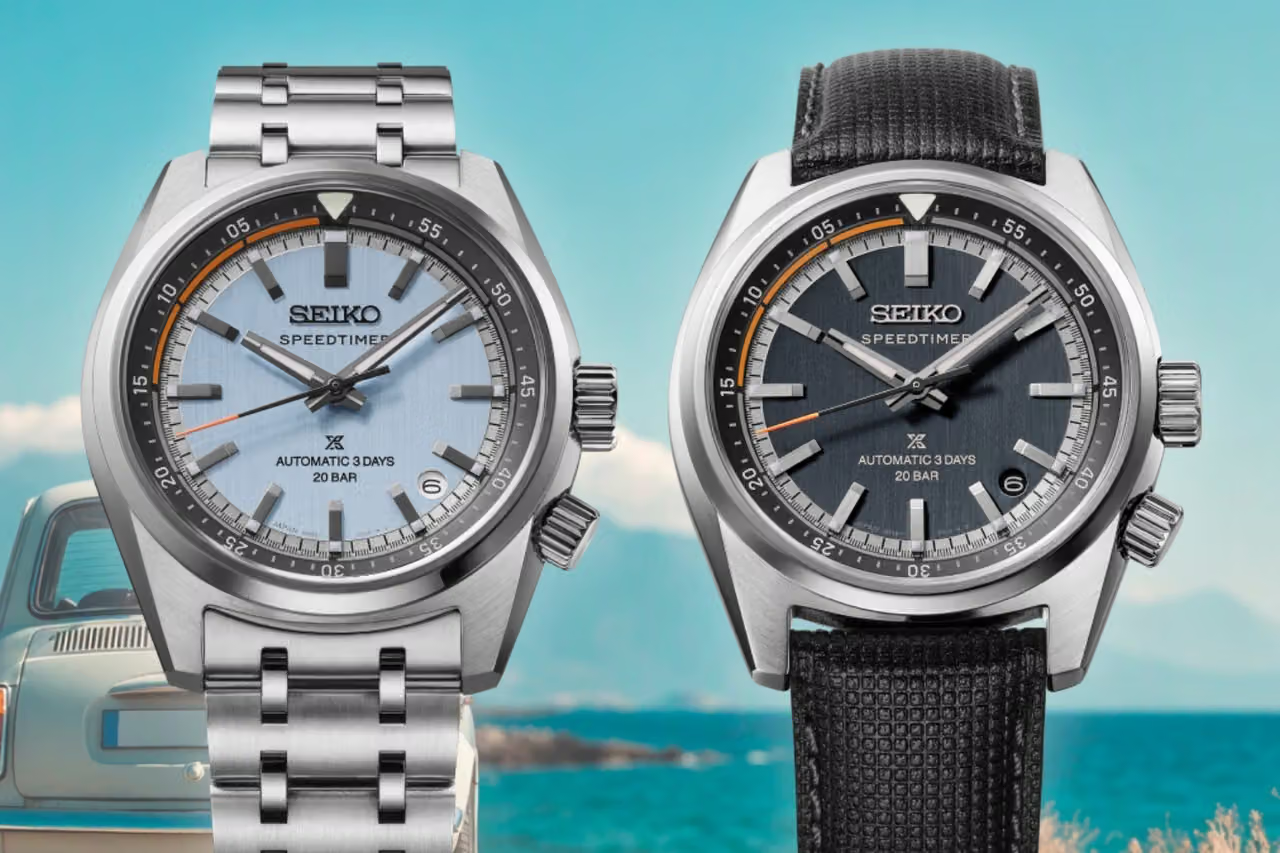
Seiko has added two new watches to the Prospex Speedtimer family, and these are a little strange in a way I think works. The new Heritage Motoring Countdown Speedtimers take recognizable pieces of Seiko’s motorsport history and rearrange them into three-hand automatic watches with internal countdown bezels. There’s no chronograph here, which makes the Speedtimer designation worth talking about.
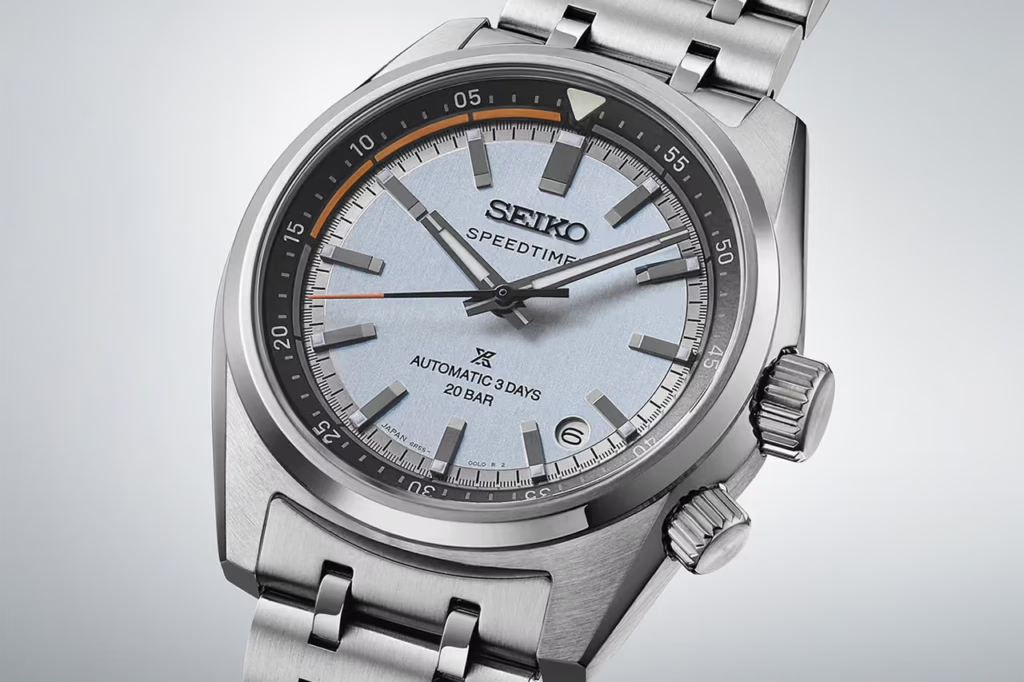
The pair consists of the powder-blue HBC003 and petrol-blue HBC004. Seiko points back to its 1969 Speedtimer and subsequent 1970s chronographs when explaining the collection, while the broader aesthetic story involves classic cars from the period. I’d take some of the automotive language as the framing Seiko has chosen rather than something inherent to the watches. However, the connection to older Seiko design is easier to see.
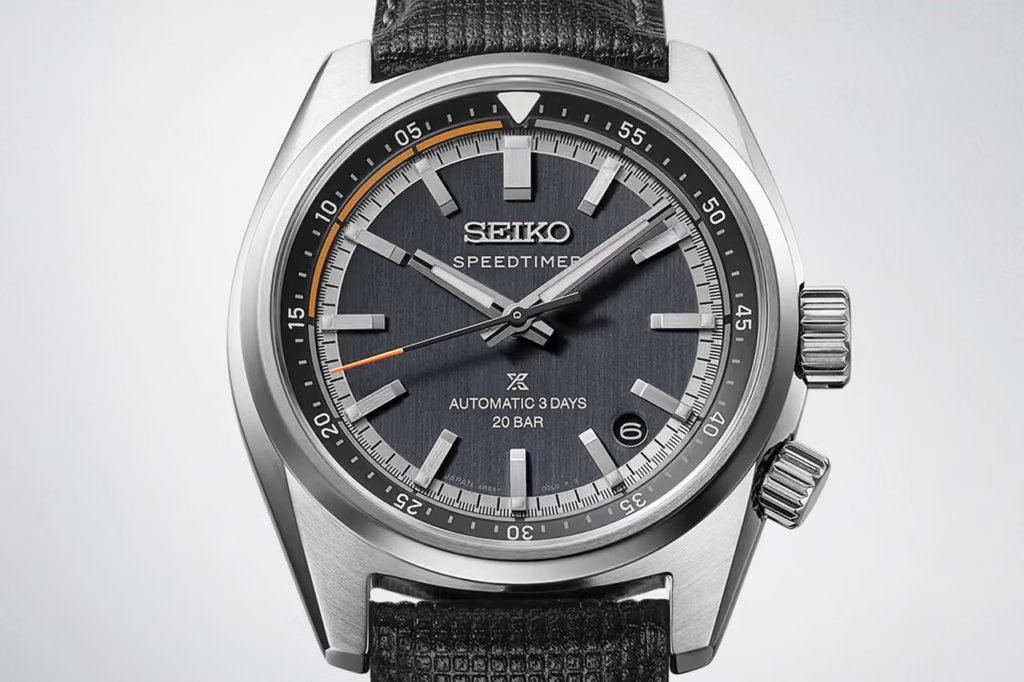
To me, the HBC003 is the more interesting of the two. Its pale blue dial, black countdown scale, orange accents, and multi-row bracelet give it enough vintage Seiko flavor without turning the whole thing into a straight reissue. The HBC004 goes darker, with a petrol-blue dial and an embossed leather strap that Seiko says references vintage car interiors. That connection requires a little more imagination.

The countdown function is where things get interesting. A second crown at four o’clock rotates the internal 60-minute scale, allowing you to set a remaining interval against the minute hand. Is everyone going to use this to time their next motorsport-related activity? Probably not. I think most owners will simply appreciate having another functional element to play with, and there are plenty of everyday uses for a countdown scale. More importantly, it gives these watches a legitimate timing function despite the absence of a chronograph. If you ask me, that makes the Speedtimer name easier to accept. Seiko could keep reproducing increasingly literal variations of its historic chronographs. Instead, this feels like the company treating its archive as a collection of ideas it can rearrange.
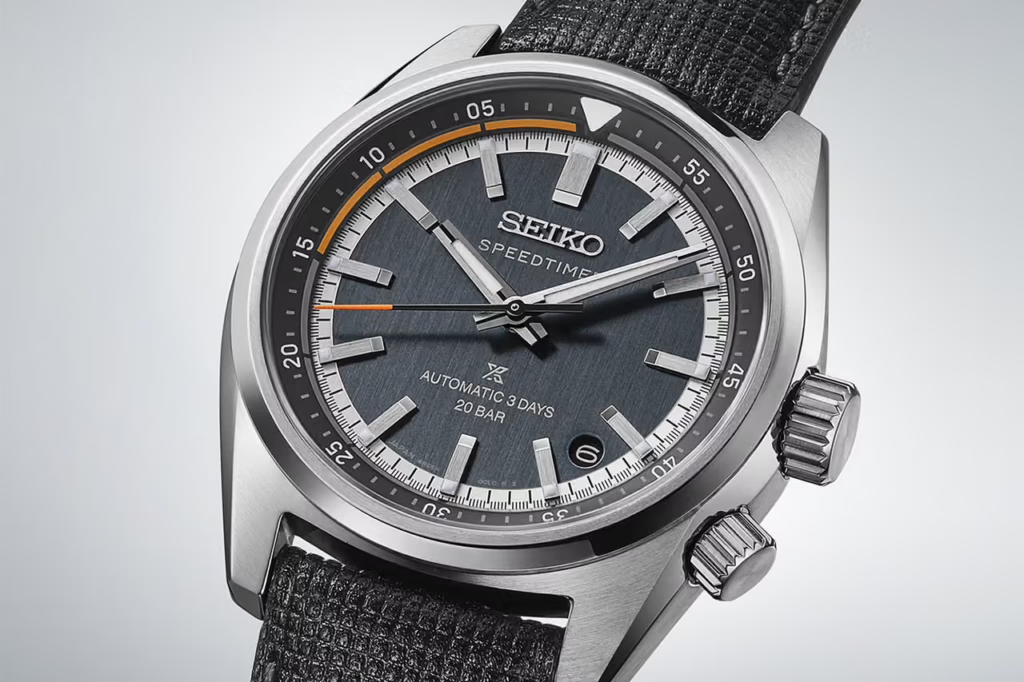
The underlying package is also pretty sensible. Both watches measure 39.5mm across, 12mm thick, and 44.5mm lug-to-lug. The stainless-steel cases receive Seiko’s “super-hard” coating, while curved sapphire crystals with internal anti-reflective coating cover the dials. Water resistance is 200 meters. Inside is the automatic 6R55, delivering approximately 72 hours of power reserve. Seiko rates accuracy at +25/-15 seconds per day.
My take is that pricing introduces the biggest hesitation. The leather HBC004 comes in at $950, while the bracelet-equipped HBC003 costs $995 in the U.S., with both scheduled for September 2026. That feels a little expensive for a relatively straightforward 6R55-powered watch, especially considering that published accuracy range. Still, the case dimensions, sapphire crystal, 200-meter rating, and unusual countdown execution make the overall package easier to understand than the movement specification alone might suggest.

I think the bigger story here is what Seiko is doing with its history. The company has a huge archive to draw from, and these Speedtimers suggest that referencing it doesn’t always have to mean rebuilding an old watch. The HBC003 especially looks like an interesting remix. Whether it feels worth nearly $1,000 is something we’d want to settle after actually spending time with one.

Co-Founder & Senior Editor
Michael Peñate is an American writer, photographer, and podcaster based in Seattle, Washington. His work typically focuses on the passage of time and the tools we use to connect with that very journey. From aviation to music and travel, his interests span a multitude of disciplines that often intersect with the world of watches – and the obsessive culture behind collecting them.