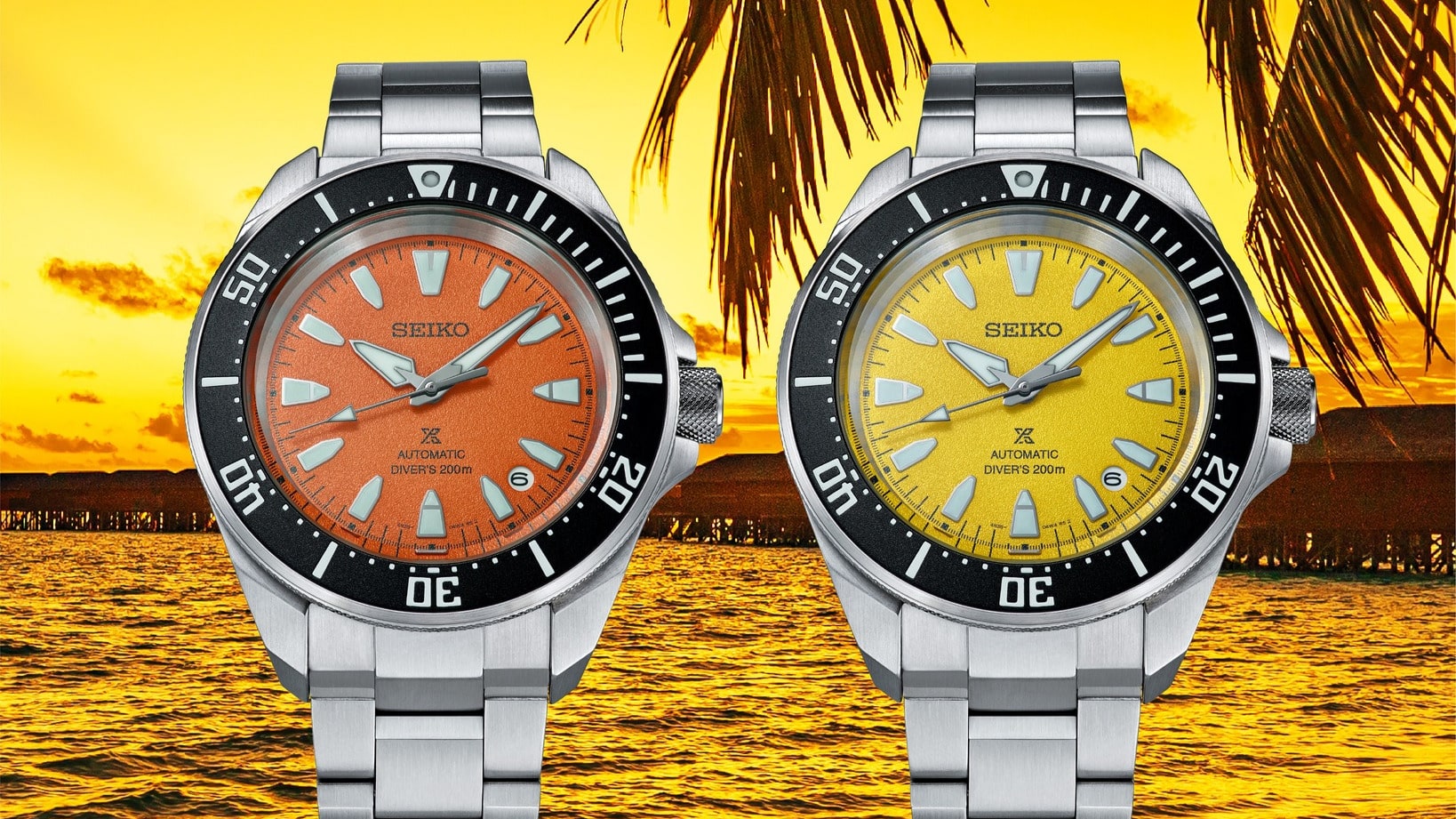
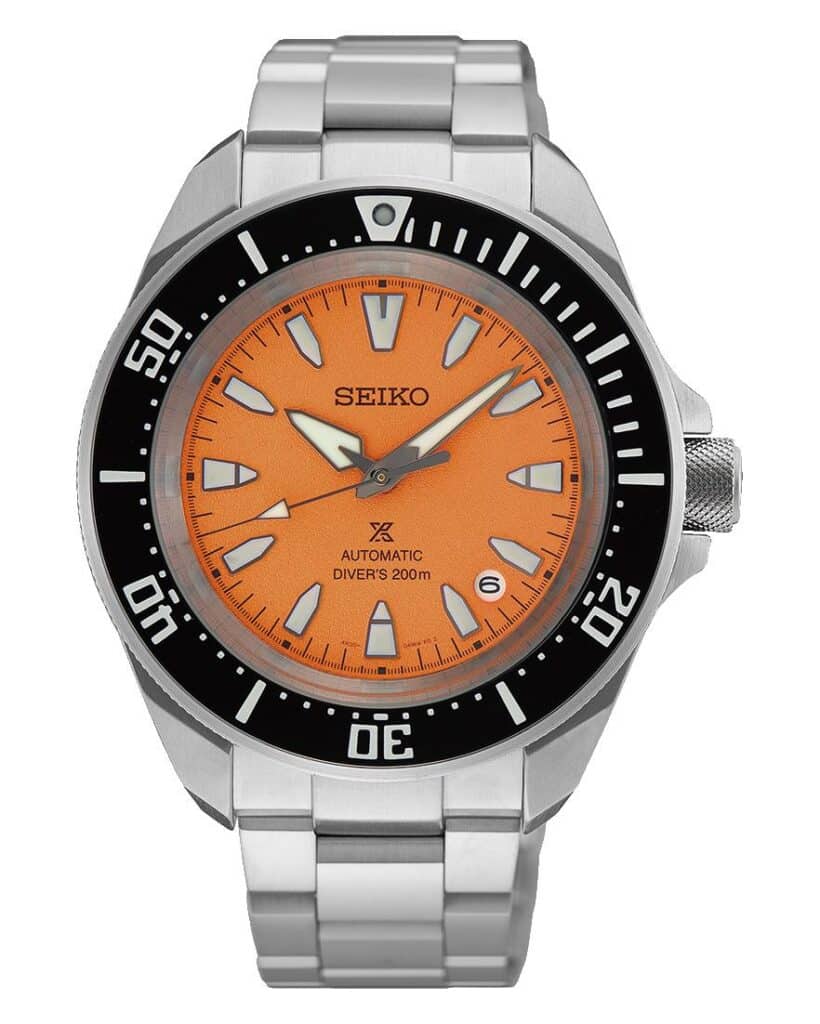
I’ve spent years politely nodding at the Seiko Samurai before moving on to something else. The angular case has never grabbed me, and outside of a rare exception or two, the collection has always sat in someone else’s corner rather than mine. My co-founder Kaz had a lovely aqua-blue limited edition a while back, and I’ve kept a soft spot for the rare titanium orange original from the mid-2000s, but the modern Samurai and I have mostly kept our distance. That’s what makes this week strange. Two new dials stopped me cold: the yellow HBB003 and the orange HBB004.
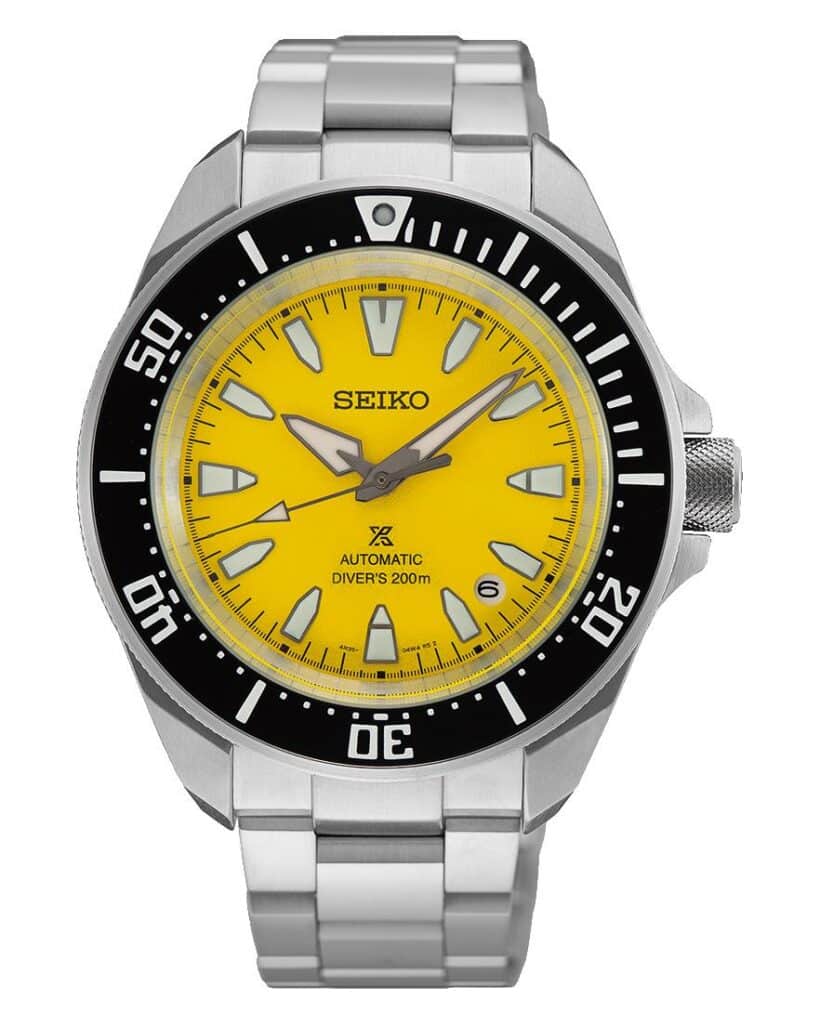
Color is really doing all the heavy lifting here, and that’s why I think it works. The Samurai’s faceted case and hard bezel edge can read cold in steel and monochrome, but a saturated orange or yellow dial warms the whole watch up and gives it a reason to exist beyond the usual black-and-blue rotation. From the press photos, the applied markers read to me almost like little bullets, a shape that nods back to some of the earlier, more sought-after Samurai layouts. The orange dial pulls at me the hardest, because it lands close to the SBDA005, the gen-one titanium Samurai from around 2005 that collectors still track down. This is a different watch with a different movement, so the link is aesthetic rather than mechanical, though the family resemblance is hard to miss.
If the HBB003 and HBB004 names look unfamiliar, that’s by design. Seiko overhauled its entire reference system on March 1st, and the alphanumeric patterns collectors had memorized no longer apply. The same shift is why this year’s 145th-anniversary Samurai arrived as the HBB001 rather than another SRP reference, something we walked through when that watch launched. Underneath the new label, the hardware is standard modern Samurai. Both run the 4R35 automatic, sit in a 41.7mm steel case, and carry 200 meters of water resistance under a black rotating bezel. None of that is thrilling on paper, and it doesn’t need to be. The dials are the story.
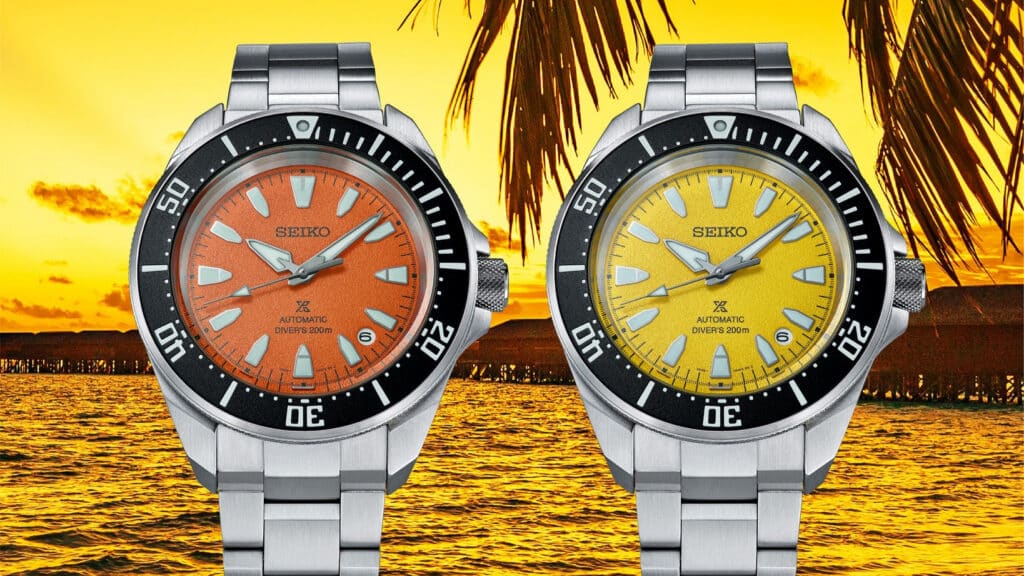
Getting one is the catch. Both references are capped at 2,500 pieces each and sold only across the Asia-Pacific region, which, oddly, leaves out Japan. Stranger still, the announcement came from Seiko’s India account, yet there’s no confirmation the watches will actually reach India, or anywhere beyond the launch region. Pricing hasn’t landed either, just a “coming soon” pointed at Seiko’s regional e-store. Seiko frames the pair around a coastal-resort theme, describing a move from golden sunset to tranquil night, though it never says which watch is meant to be which. I’ll let you decide whether the yellow or the orange reads as dusk.
So a corner of the world just got what looks, to me, like the most compelling Samurai in a long time, and the rest of us are pressed up against the glass. That’s a familiar spot. I’ve tracked down region-locked Seiko models before, and there’s usually a way in for anyone patient and slightly unreasonable about it. Whether these two ever slip out of the Asia-Pacific bubble is anyone’s guess. For now, I’m just glad the Samurai finally handed me a reason to smile.

Co-Founder & Senior Editor
Michael Peñate is an American writer, photographer, and podcaster based in Seattle, Washington. His work typically focuses on the passage of time and the tools we use to connect with that very journey. From aviation to music and travel, his interests span a multitude of disciplines that often intersect with the world of watches – and the obsessive culture behind collecting them.
The orange Samurai, that already exists, looks far better than this muted, boring looking version. Orange/black surrounding the dial, better looking markers and hands, there is nothing that’s not better about it, beyond the “limited availability” of this new one… but, does that really matter?
Hey Elron. I could be wrong, but if you’re talking about the SRPB97 (SRPC07), I’m not entirely sure that model is available directly from Seiko anymore. I get what you’re saying though – good points.