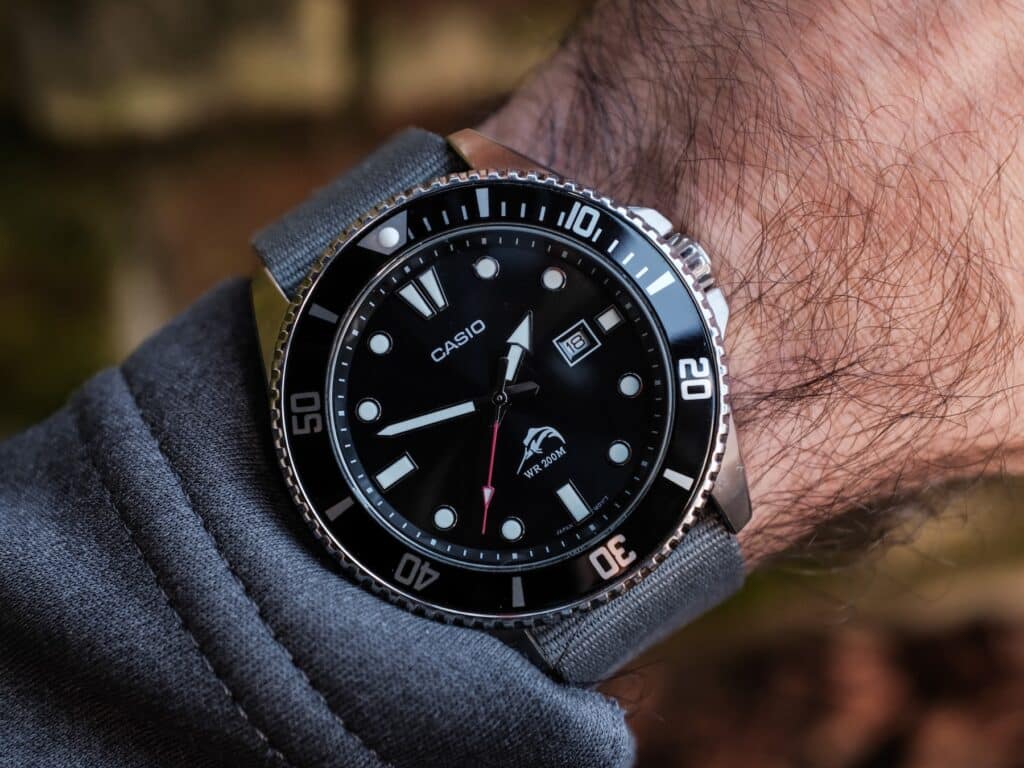
The Casio Duro has a habit of ending the conversation before it really starts. Someone asks for an affordable dive watch, the Duro gets recommended, and after spending meaningful time hands-on testing one ourselves, we understood why. It wears comfortably, the bezel has a reassuring precision that almost feels out of place at this price, and the simple case design seems to work on almost any strap you throw at it. That’s what makes it so easy to recommend. But after months of ownership, we found ourselves looking down at our wrists wanting something the Duro never set out to deliver. Not better water resistance or a different movement—just a watch with a stronger point of view and a little more personality every time we put it on. That’s where these alternatives begin to make sense.
Evaluating these watches against the Duro also changed how we looked at them. Some justified the extra money the first time we put them on. Others only made sense after a few weeks, when better proportions, a more interesting dial, or a smoother bracelet started to matter more than the Duro’s straightforward competence. That’s what shaped these recommendations. Every watch here offers a different answer to the same question: what do you gain by moving beyond the Duro, and what do you give up in return?
Invicta Pro Diver 8926OB
| Price: | $60 – $80 |
| Water Resistance: | 200m |
| Case Dimensions: | 40mm (diameter) x 48mm (lug-to-lug) x 14mm (thickness) |
| Lug Width: | 20mm |
| Movement: | NH35A (Mechanical) |
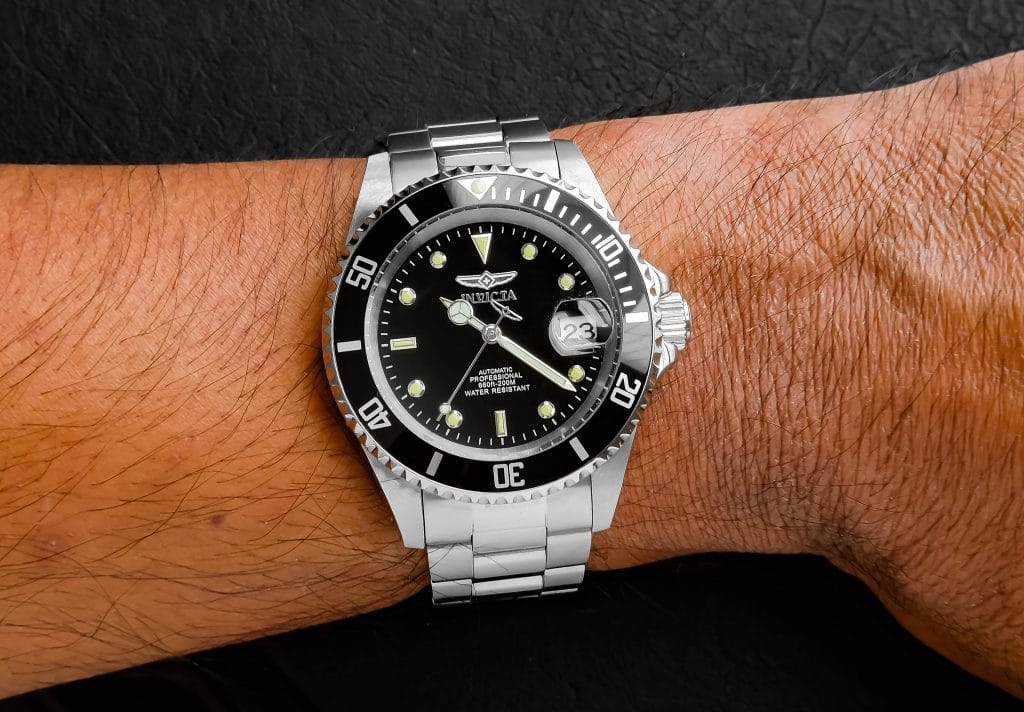
If the Casio Duro leaves you wondering whether it’s worth spending a little more for a mechanical watch, the Invicta Pro Diver 8926OB is probably the first place we’d send you. Ignore the reputation for a minute and judge the watch on its own merits. That’s what we did, and the experience was difficult to dismiss. The familiar 40mm Sub-style case wears naturally, sits flatter than expected, and never needed that week-long adjustment period some affordable divers seem to require. It isn’t adventurous, but that’s also why it works. The proportions simply disappear on the wrist, letting the rest of the watch do the talking.
The biggest difference from the Duro is something you interact with. Swapping a quartz grab-and-go watch for the NH35A changes the ownership experience in small but satisfying ways. Winding the watch every few days never felt like a chore thanks to the oversized crown, and the movement proved consistently dependable throughout our hands-on time with it. Screw the crown down, and swimming, unexpected rain, or a weekend at the beach never feel like pushing the watch beyond its comfort zone. If you’re curious about mechanical watches but don’t want the ownership experience to become fussy, the 8926OB makes a convincing case.
The aluminum bezel has firm, positive clicks with only a hint of play, making it genuinely enjoyable to use instead of something you tolerate because of the price. The applied markers and polished hands also give the dial a little more life than the Duro’s straightforward approach. That illusion fades once the lights go out, though. The lume gets the job done for a glance, but the markers fade well before the hands, so don’t expect an all-night performer.
The bracelet is another reminder that this watch punches above expectations. Its taper from 20mm to around 18mm helps it wrap the wrist comfortably, the links articulate smoothly, and it avoids the sharp edges that make many budget bracelets feel disposable. You still notice the hollow end links, the flip-lock clasp is stiffer than we’d like, and the mineral crystal will collect scratches sooner than sapphire. Then there’s the oversized Invicta branding running down the case side, which remains the easiest reason to walk away. But if what you’re missing from the Duro is a little mechanical charm and a watch that feels more engaging every time you pick it up, the 8926OB is one of the easiest upgrades to justify without leaving the affordable end of the hobby.
Pros
- Comfortable 40mm case with proportions that settle naturally on the wrist.
- Dependable NH35A movement that’s easy to wind and simple to live with.
- Surprisingly solid bezel action with firm clicks and minimal play.
- Bracelet wears better than expected thanks to its taper and smooth articulation.
Cons
- Lume fades quickly, especially on the hour markers.
- Mineral crystal scratches more easily than sapphire.
- Flip-lock clasp feels stiff and wears sooner than we’d like.
- Large Invicta branding on the case side is flashy and divisive.
Vostok Amphibia
| Price: | $100 – $150 |
| Water Resistance: | 200m |
| Case Dimensions: | 39mm (diameter) x 46mm (lug-to-lug) x 15mm (thickness) |
| Lug Width: | 18mm |
| Movement: | Vostok 2416 Automatic Movement (in-house) |
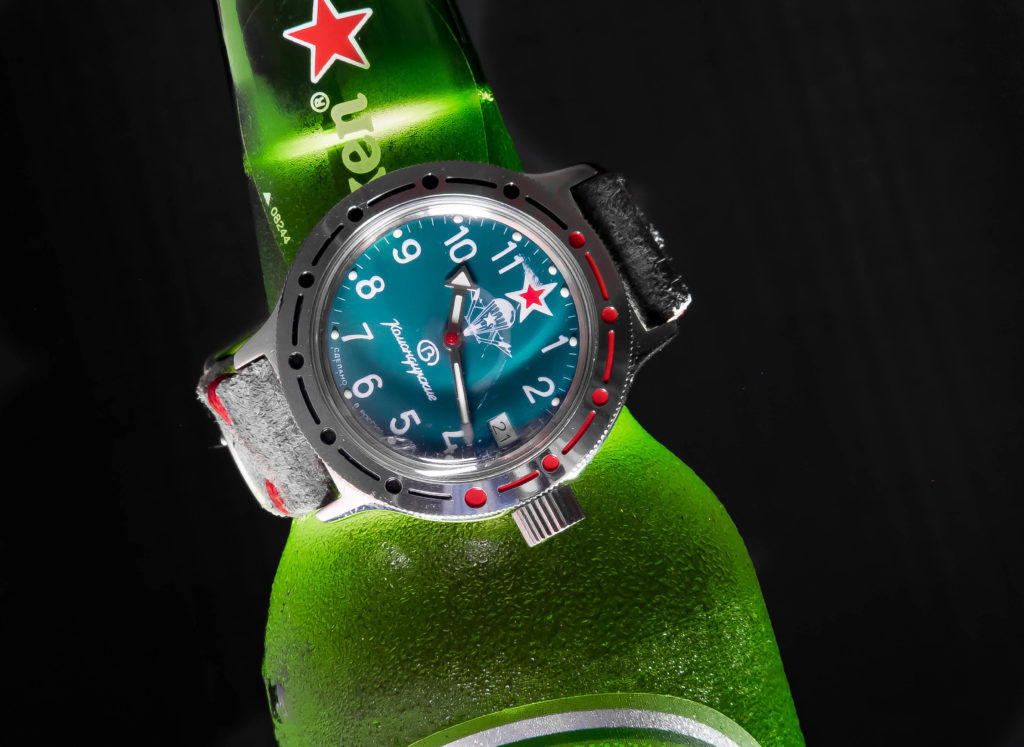
The first instinct with the Vostok Amphibia is to assume something isn’t right. The crown wobbles. The bezel feels almost too free. Even the acrylic crystal looks like it belongs to another era. Then you realize every one of those details exists for a reason, and that’s when the Amphibia starts making far more sense than many budget dive watches that initially seem easier to understand. If you’ve reached the point where the Casio Duro feels a little too predictable, the Amphibia offers the opposite experience: a watch with quirks that gradually become part of its appeal rather than reasons to move on.
As covered in our dedicated review, the engineering is what ties those quirks together. The loose, spring-loaded two-piece crown isn’t a manufacturing mistake; it’s part of Vostok’s compression-case system, which uses increasing water pressure to improve the seal rather than simply relying on a thicker case. Knowing that doesn’t stop the crown from feeling unusual the first few times you unscrew it, but it does make you appreciate the thinking behind it. The bidirectional friction bezel follows the same philosophy. It’s effortless to adjust, though just as easy to nudge out of place if you’re not paying attention. Neither detail feels as polished as the Duro’s straightforward approach, but both give the Amphibia a personality that’s difficult to mistake for anything else.
That personality carries onto the wrist. Despite measuring around 15mm thick, the rounded case, downward-sloping lugs, and lack of crown guards stop it from wearing as the dimensions suggest. The polished steel quickly collects scratches, yet they somehow suit the watch instead of spoiling it. We’d replace the hollow bracelet without much hesitation, partly because it feels flimsy and partly because the Amphibia almost begs to live on a NATO or suede strap. The dial is another reminder that Vostok isn’t chasing convention. Our green paratrooper example paired painted Arabic numerals, a subtle metallic sheen, a red star at twelve, vintage-style hands, and a domed acrylic crystal into something that felt its own. The trade-offs are easy to spot, too. The red second hand occasionally disappears into the dial, and the lume, limited mainly to small plots above the markers, is good for a glance rather than an entire night.
The in-house 2416 automatic is equally unapologetic. Its roughly 31-hour power reserve and stated accuracy of -20/+60 seconds per day won’t impress anyone reading spec sheets, and modern production can still suffer from inconsistent lubrication or the occasional hand-setting quirk. But it is simple, hand-windable, inexpensive to repair, and backed by a thriving modding community that encourages owners to experiment instead of babying the watch. That’s ultimately where it separates itself from the Duro. The Casio is happy to stay exactly as it left the factory. The Amphibia feels like it’s only getting started once you’ve made it your own.
Pros
- Compression-case construction gives it a distinctive engineering identity.
- Huge range of dials and case styles makes every Amphibia feel personal.
- The acrylic crystal and vintage details give it character few affordable divers can match.
- The rounded case wears better than its 15mm thickness suggests.
- Affordable parts and an active modding community reward tinkering.
Cons
- The wobbling crown takes time to trust, and the crown threading on newer examples can feel thin.
- The stock bracelet feels hollow and is easy to outgrow.
- Current production quality can be inconsistent, with occasional lubrication or hand-setting issues.
- The friction bezel and modest lume won’t suit everyone looking for a modern dive watch.
Orient Mako II
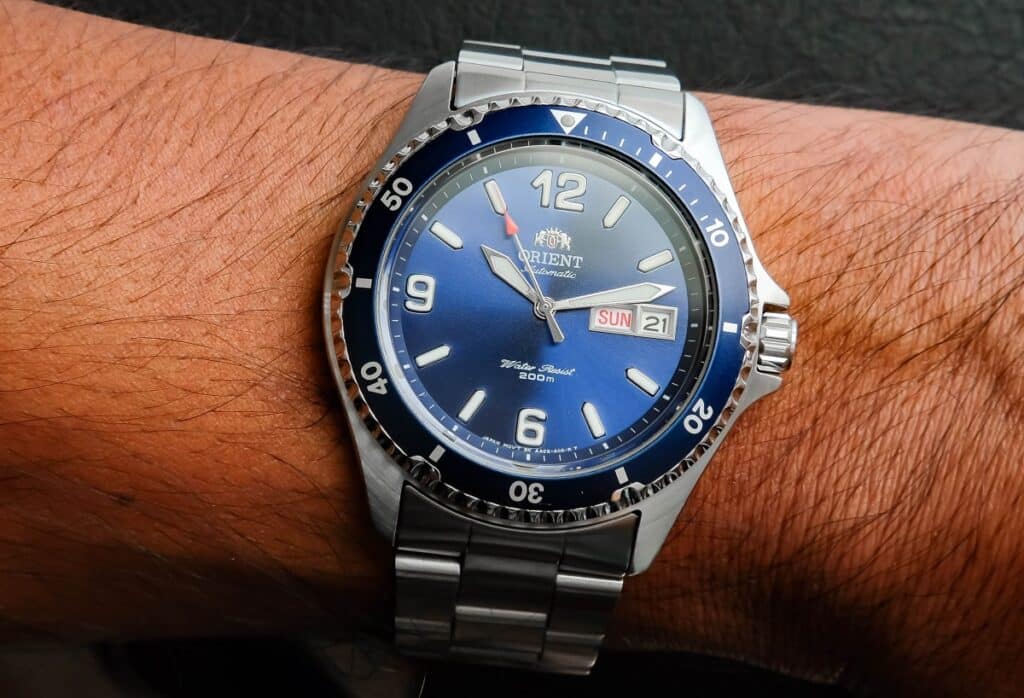
| Price: | $160 – $220 |
| Water Resistance: | 200m |
| Case Dimensions: | 41.5mm (diameter) x 47mm (lug-to-lug) x 13mm (thickness) |
| Lug Width: | 22mm |
| Movement: | Orient Caliber F6922 (Mechanical Movement) |
The Orient Mako II isn’t the watch that steals the conversation. It usually ends it. We kept coming back to ours because every time we tried to find the obvious compromise, it answered with, “Is that really a problem?” That’s a difficult habit to shake after spending time with the Casio Duro. If you’re looking for more character, the Mako II doesn’t chase it with louder colors or vintage gimmicks. It simply feels like a more complete watch the longer you live with it.
A lot of that comes from the details rather than any single headline feature. During our review of the watch, the sunburst dial has enough life to keep changing throughout the day without becoming distracting, while the applied markers, polished hands, framed day-date, and red-tipped second hand give it a little more depth than the Duro’s straightforward layout.
The 41.5mm case also gets the proportions right. It sits securely without feeling oversized; the brushed lugs flowing into polished case sides add just enough contrast, and the bracelet feels reassuring once sized. Pick it up off the wrist, and the hollow end links remind you this is still an affordable watch, but they’re easier to forgive once it’s back on your arm. Even the 120-click bezel lands with a satisfying confidence, although we’d happily trade some of that sloped styling for a little more grip.
The F6922 automatic is where the ownership experience starts to separate itself. Hacking and hand-winding mean the watch is ready with a few turns of the crown instead of the familiar shake-and-go routine, and that’s one of those conveniences that quietly becomes difficult to give up. The lume won’t compete with the brightest divers we’ve worn, fading sooner than we’d like, but it’s perfectly adequate for checking the time in the middle of the night. That’s ultimately why the Mako II belongs here. It doesn’t replace the Duro by doing everything differently. It simply smooths out enough of the rough edges that you stop thinking about what the watch costs and start thinking about how often you’re wearing it.
Pros
- In-house F6922 movement with hacking and hand-winding makes daily ownership more enjoyable.
- Sunburst dial, applied markers, polished hands, and framed day-date add genuine depth.
- Positive 120-click bezel action feels reassuring in use.
- Well-proportioned 41.5mm case wears securely without feeling bulky.
- The bracelet is comfortable and secure once sized.
Cons
- Lume is adequate but doesn’t last as long as the strongest performers.
- Hollow end links feel inexpensive off the wrist.
- The sloped bezel edge could use more grip.
Orient Ray II
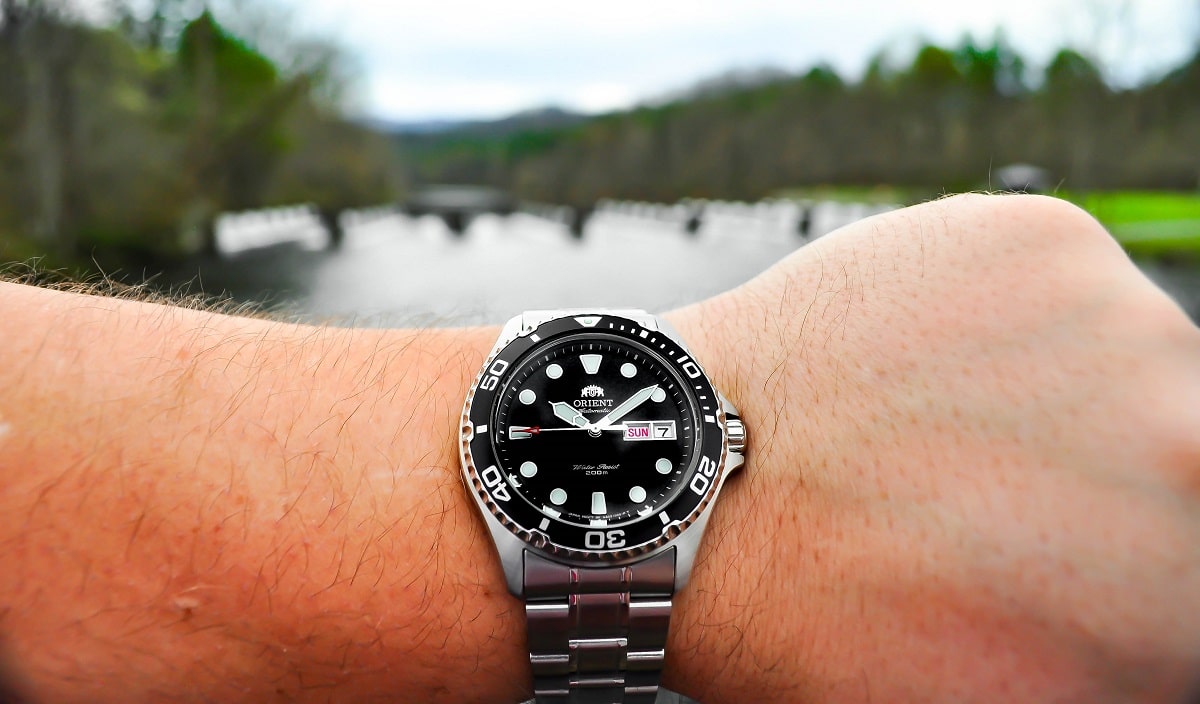
| Price: | $160 – $220 |
| Water Resistance: | 200m |
| Case Dimensions: | 41.5mm (diameter) x 47mm (lug-to-lug) x 13mm (thickness) |
| Lug Width: | 22mm |
| Movement: | Orient Caliber F6922 (Mechanical Movement) |
The Orient Ray II never struck us as a watch trying to be versatile. It knows exactly what it wants to be. Compared to the Casio Duro, there’s less of that “works with everything” attitude and more of a sense that this was designed by people who genuinely like dive watches. That’s not because it’s louder or flashier. It’s because almost every detail nudges it a little further in that direction.
The dial is a big part of that. Instead of relying on polished surfaces or dramatic textures, it keeps things functional without becoming sterile. The matte black backdrop lets the chrome-framed round indices, oversized trapezoidal quarter-hour markers, polished sword hands, and red-tipped second hand stand out cleanly, while the framed day-date and applied Orient logo add enough depth to stop the dial feeling flat. We also appreciated that Orient quietly retired the awkward 2 o’clock day-correction pusher from the previous generation, leaving the 41.5mm case looking cleaner and making day-to-day setup far less fiddly. The curved lugs, softened case edges, and combination of brushed and polished finishing make it wear comfortably, and even the little dolphin stamped into the caseback gives it a bit of personality that feels unmistakably Orient.
Mechanically, there’s very little to complain about. The in-house F6922 gives you hacking, hand-winding, roughly 40 hours of power reserve, and claimed accuracy of -15/+25 seconds per day, making the Ray II feel like a genuine step into mechanical ownership rather than simply a cheap automatic. The bright green lume also outperformed our expectations and is one of the strongest reasons to choose it over the Mako II if you’ll actually be checking the time after dark.
The weak points are mostly tactile. The signed crown is small and tucked behind protective guards, the shallow coin-edge bezel often requires more fingernail than fingertip, and the bezel action itself can vary depending on the example. The mineral crystal won’t shrug off scratches like sapphire, and the bracelet, with its hollow end links and conservative taper, is probably the first thing we’d replace. We’d happily throw it on a NATO or leather strap and call it a day. That’s what makes the Ray II such an easy recommendation after the Duro. It keeps the same sensible, everyday attitude but adds enough thoughtful touches that you notice them every time you put it on. Read our full review for the smaller on-wrist details.
Pros
- In-house F6922 movement offers hacking, hand-winding, and dependable everyday performance.
- Bright green lume punches well above its price in low-light conditions.
- Matte dial, chrome-framed markers, polished sword hands, and red-tipped second hand strike an excellent balance between legibility and character.
- Cleaner second-generation case eliminates the old 2 o’clock day-correction pusher.
- Comfortable case proportions with curved lugs and thoughtful finishing wear effortlessly.
Cons
- The small signed crown is difficult to grip because of the crown guards.
- The mineral crystal is more scratch-prone than sapphire.
- The stock bracelet feels average, with hollow end links and a modest taper.
- Bezel grip is awkward, and the action can vary between examples.
Citizen Promaster Diver BN0151
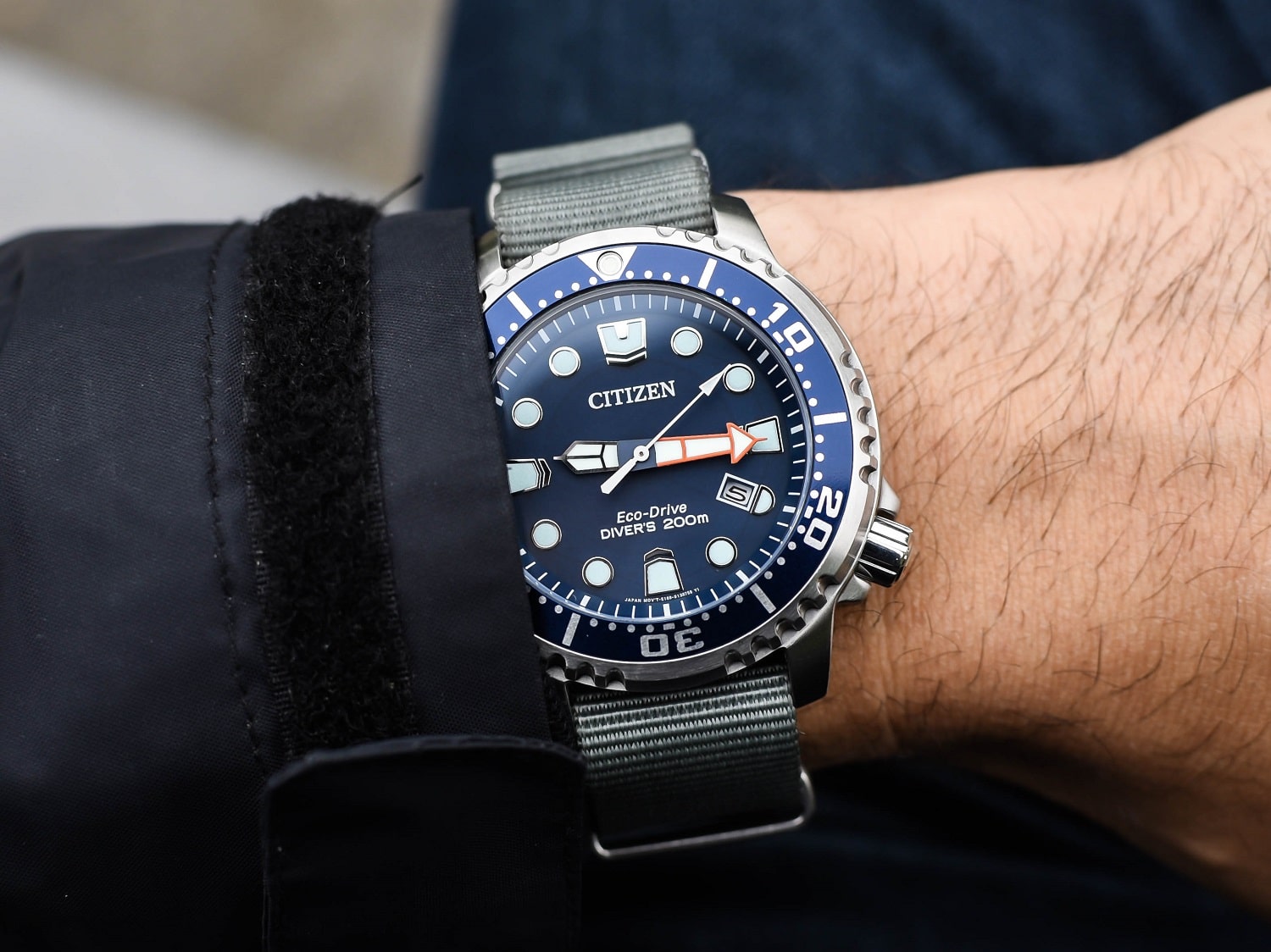
| Price: | $250 – $300 |
| Water Resistance: | 200m |
| Case Dimensions: | 43mm (diameter) x 48mm (lug-to-lug) x 11.5mm (thickness) |
| Lug Width: | 20mm |
| Movement: | Citizen Eco-Drive E168 (solar quartz) |
The Citizen Promaster Diver BN0151 has a habit of making itself easy to overlook. That’s usually a compliment. While the Casio Duro wins people over by asking almost nothing of its owner, the Promaster carries that philosophy even further. After enough wrist time, you stop thinking about winding, battery changes, or whether it’s been sitting untouched for a week. You simply put it on and get on with your day. It isn’t the sort of watch collectors romanticize, but it quietly earns a place in the rotation by being one of the least demanding dive watches we’ve worn.
That attitude extends well beyond the Eco-Drive movement. A full charge is good for around six months of runtime, with Citizen claiming accuracy of ±15 seconds per month, and throughout our hands-on time with the watch, the low-power warning appeared only once before a short spell in the light had everything back to normal. The rest of the watch follows the same practical script. Large hands, bold markers, restrained dial text, and a framed date window make it immediately legible. The blue dial occasionally shifts toward purple in bright light, giving it just enough personality to avoid feeling clinical. Once the lights go down, the aqua-toned lume hangs around for hours, and the lumed pip on the second hand confirms the watch is still running.
Although the case measures 43mm, the short lug-to-lug, curved profile, relatively light weight, and 4 o’clock crown stop it from ever feeling like the oversized diver the dimensions suggest. Whether it was a day at the beach or a completely unremarkable Tuesday in the office, the BN0151 never felt out of place.
Its compromises are straightforward. The 60-click bezel stayed well aligned, but the grip became quite slippery once wet, which feels like an odd oversight on a dive watch. The mineral crystal won’t satisfy anyone set on sapphire. However, ours shrugged off daily wear better than expected, and the polyurethane strap starts life with all the flexibility of a garden hose before eventually softening up. We’d still move it onto a NATO, where the watch feels lighter and even more natural on the wrist. None of those complaints change what makes the BN0151 special. Between the Eco-Drive movement, comfortable case, and highly legible dial, it’s the kind of watch that quietly becomes the default choice whenever you don’t feel like making a decision.
Pros
- The Eco-Drive movement delivers around six months of runtime with virtually maintenance-free ownership.
- Aqua-toned lume lasts for hours, and the lumed second-hand pip confirms the watch is still running.
- Large hands, bold markers, framed date window, and restrained dial layout make it very easy to read.
- 200m water resistance and a robust case are ready for everyday wear, travel, and swimming.
- Despite its 43mm diameter, the short lug-to-lug, curved case, light weight, and 4 o’clock crown make it wear comfortably.
Cons
- The polyurethane strap is quite stiff until broken in.
- The bezel becomes slippery to grip with wet hands.
- Mineral crystal isn’t as scratch-resistant as sapphire.
Orient Kamasu
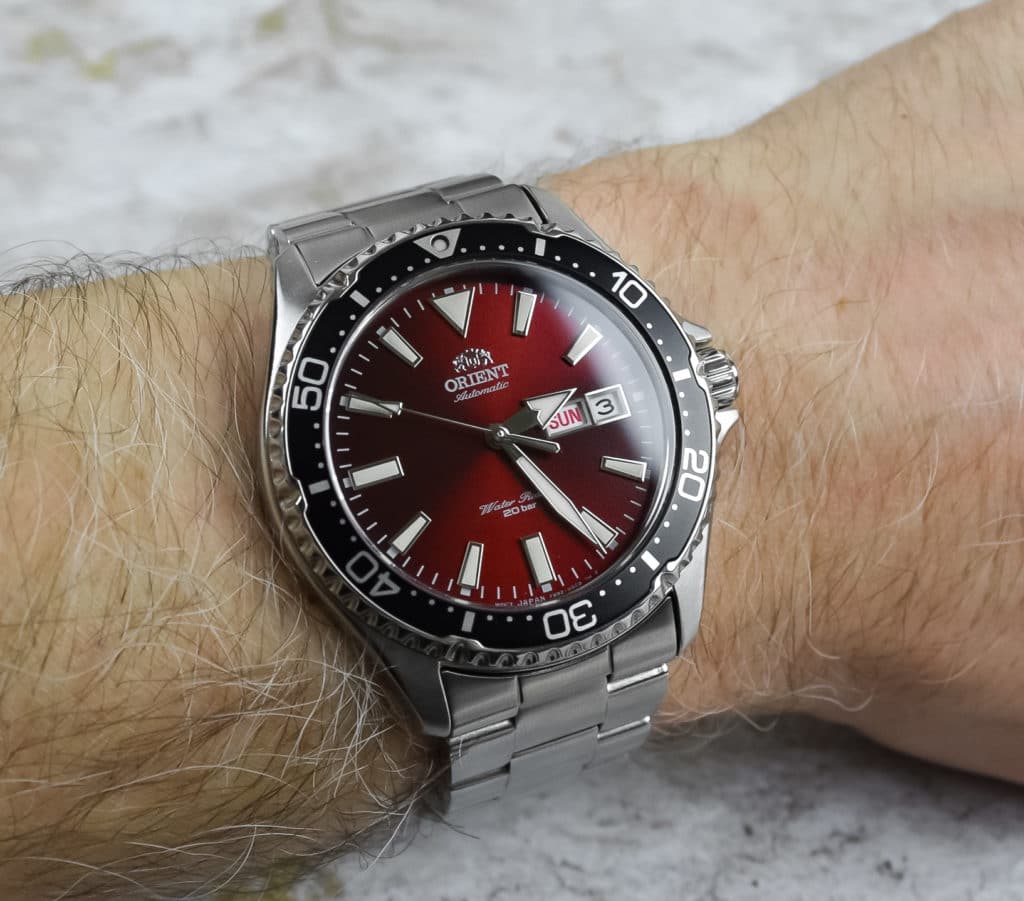
| Price: | $250 – $375 |
| Water Resistance: | 200m |
| Case Dimensions: | 41.5mm (diameter) x 47mm (lug-to-lug) x 13mm (thickness) |
| Lug Width: | 22mm |
| Movement: | Orient F6922 (automatic movement) |
The Orient Kamasu is the sort of watch you appreciate more once you’ve become annoyingly particular. You start noticing when hands don’t quite reach the minute track, when lume fades before you’ve finished the movie, or when a crystal picks up scratches that didn’t need to be there. The Kamasu quietly fixes a surprising number of those little frustrations without making a fuss about any of them. That’s what gives it more personality than the Casio Duro.
The dial is where that attention to detail shows up first. The wine-red sunburst finish has far more depth than you’d expect at this price, yet it never overwhelms the practical side of the watch. Applied indices, generously proportioned hands, a neatly framed day-date, restrained Orient branding, and hands that actually reach the minute track all make the display feel carefully considered rather than merely attractive. Once darkness falls, the lume charges quickly and stays bright long enough to outperform more than a few similarly priced Seiko divers we’ve worn.
According to our review team, the rest of the watch follows the same pattern. The 41.5mm case wears comfortably thanks to its curved lugs and sensible thickness, while the in-house F6922 movement, complete with hacking and hand-winding, makes picking the watch up after a few days uneventful. Add a sapphire crystal and 200 meters of water resistance, and there’s very little about daily ownership that feels compromised.
That said, the corners Orient did cut are easy enough to spot. The crown threads smoothly but is a little fiddly to grip because of its size and protective guards. The clasp and end links don’t quite match the quality of the head of the watch, and the aluminum bezel insert will show wear sooner than ceramic. Even then, the bezel action itself is crisp enough that we quickly stopped thinking about the material. The bracelet also earns back a few points with its four-position micro-adjust clasp, which makes finding the right fit much easier than you’d expect. That’s ultimately why the Kamasu lands in this roundup. It rewards you for paying attention and shows up as the sort of watch where the small details gradually become the reason you keep reaching for it.
Pros
- The wine-red sunburst dial gives the watch a distinctive personality without compromising legibility.
- Lume charges quickly and remains visible for hours.
- The sapphire crystal, along with 200m water resistance, makes it well-equipped for everyday wear.
- Four-position micro-adjust clasp makes finding a comfortable fit easy.
- Applied markers, properly proportioned hands, and accurate hand reach make the dial effortless to read.
Cons
- The clasp and end links feel less refined than the rest of the watch.
- The aluminum bezel insert is more susceptible to scratches than ceramic.
- The small crown is quite fiddly to grip due to the protective guards.
Timex Deepwater Meridian 200
| Price: | $259 |
| Water Resistance: | 200m |
| Case Dimensions: | 44mm (diameter) x 50.5mm (lug-to-lug) x 12.5mm (thickness) |
| Lug Width: | 20mm |
| Movement: | Seiko Epson VX42E |
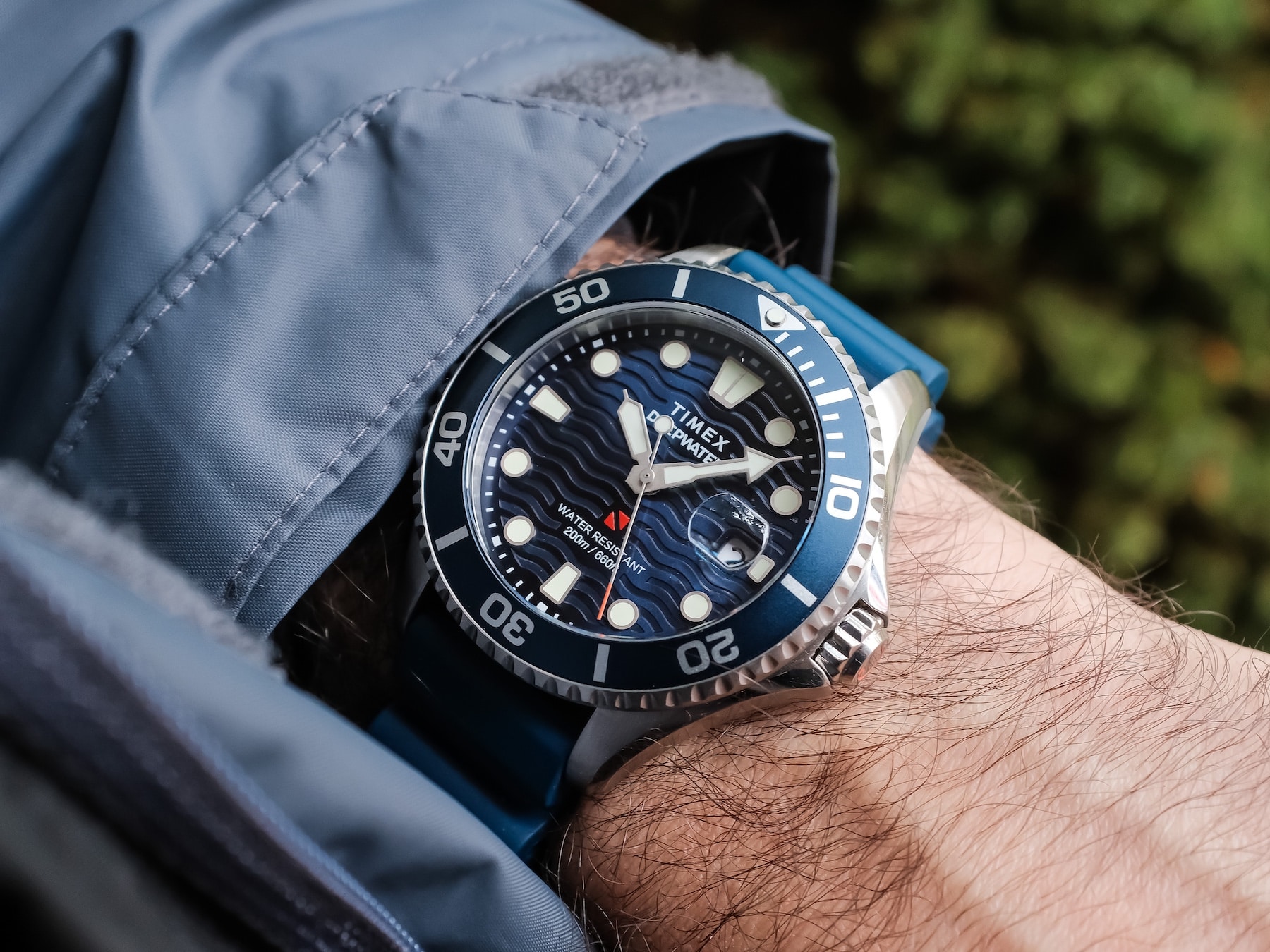
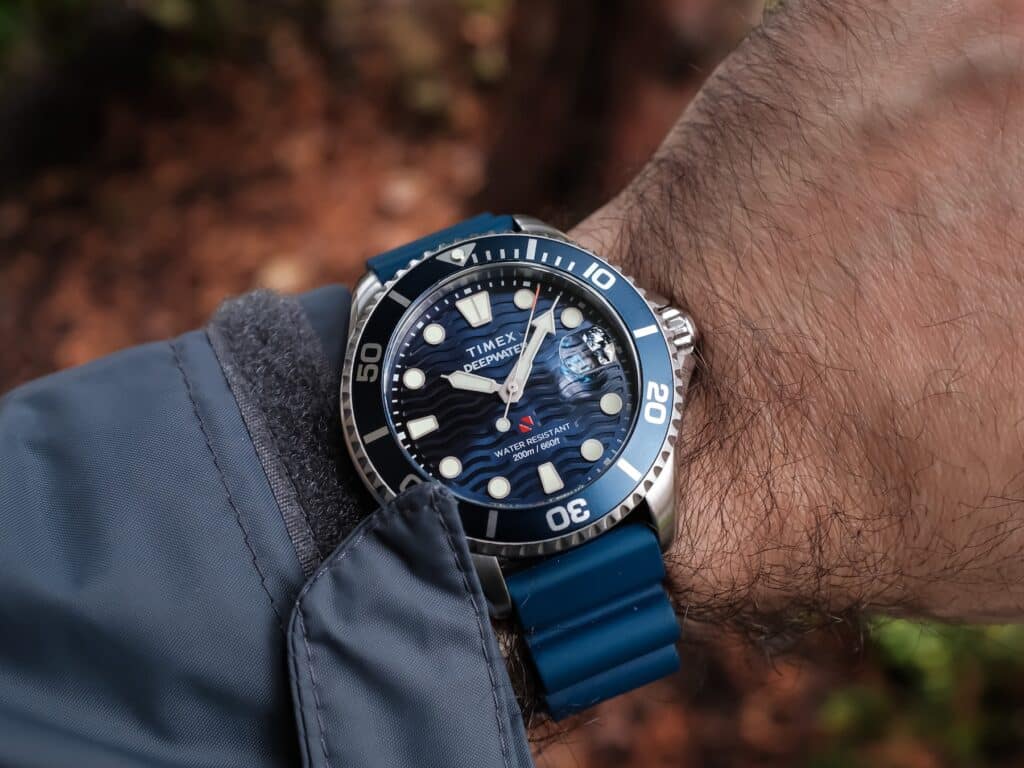
The Timex Deepwater Meridian 200 feels like the moment Timex stopped treating the dive watch as a fun weekend project. Everything about it has a little more intent than you’d expect from the brand. The screw-down crown and caseback, sapphire crystal with AR coating, and 200 meters of water resistance aren’t there to pad a spec sheet; they make the watch feel truly ready for a day in the water rather than simply dressed for one.
As we pointed out in our full write-up, that confidence carries over to the design. Instead of leaning on vintage tropes, Timex gives the Meridian a matte blue dial with a subtle wave texture, applied indices, and a small red diver’s flag at 12 o’clock that gives the watch its own identity without trying too hard. The date magnifier will divide opinion, but it never distracted us in day-to-day wear. At the same time, the Super-LumiNova remained usable after dark, even if it fades sooner than the strongest performers here. Despite measuring 44mm across, the case avoids feeling cumbersome thanks to curved lugs and a restrained 12.5mm thickness, although smaller wrists will still notice its footprint.
The quartz-powered Seiko Epson VX42E movement suits the watch’s personality better than an automatic probably would. A quick-set date, roughly three years of battery life, and a crown that operates smoothly make it the sort of watch you can leave in a drawer for a week, grab on Friday afternoon, and head straight for the beach without giving it a second thought.
If you’ve always thought of Timex as the brand behind the Weekender or Expedition, the Meridian 200 is a surprisingly convincing argument that it deserves a place in a serious dive-watch conversation too.
Pros
- Wears more comfortably than a 44mm diver, thanks to the curved lugs and relatively slim profile.
- The wave-textured blue dial has enough visual interest to stand apart without sacrificing legibility.
- Battery-powered quartz simplicity means you can pick it up weeks later, set the date if needed, and go.
- Sapphire crystal, solid water resistance, and bright Super-LumiNova make it an easy watch to live with.
Cons
- Lume starts strong but fades sooner than the best divers in this price range.
- The cyclops over the date is a styling choice some owners will never warm to.
- Unless you enjoy larger watches, the 44mm diameter will be hard to ignore.
Have a dive watch that deserves to be mentioned alongside the Duro? Tell us in the comments. We try to keep these roundups limited to watches we’ve actually lived with, not just admired from a spec sheet, so your suggestion might end up on our review shortlist.

Co-Founder and Senior Editor
Kaz has been collecting watches since 2015, but he’s been fascinated by product design, the Collector’s psychology, and brand marketing his whole life. While sharing the same strong fondness for all things horologically-affordable as Mike (his TBWS partner in crime), Kaz’s collection niche is also focused on vintage Soviet watches as well as watches that feature a unique, but well-designed quirk or visual hook.
In place of the Timex Deepwater Meridian, I much prefer the Timex Deepwater Reef 200 and the Deepwater Arctic. The reef is much more wearable at 41mm diameter and 12mm thick. It has that awesome skindiver case shape, sapphire glass, and 200m WR with the screw down crown and case back. I owned the blue Deepwater Reef 200 and can attest to its beautiful wearability, specs and skindiver goodness. The dial has a ton of character, as well. It is just a fantastic affordable diver. I also had some wrist time with the Deepwater Arctic. It adds a ceramic bezel insert and a pretty nice jubilee-style bracelet to the spec monster list. The Deepwater Arctic is just a stunning beauty of a diver. It really does look like it could cost US$2000 instead of US$299, IMO.
Eric, all of the recent Deepwater stuff is blowing my mind. Thanks for reading 🙂
Ratio free diver 1000 m. Tank.
Nice, Glenn. Worth checking these out.
Not one of these is a “real” dive watch that was used by divers when you needed a dive watch. They alll have count up bezels. When we used to dive off of charts, you didn’t want to have to do subtraction math for your intervals. You needed to look at your watch and see how much time is left, not how much time has passed and then hope you remember the correct bottom time to subtract from what is on the dial.
Original dive watches used a countdown bezel. The numbers run “backwards” on the bezel. You put your time (say 23 minutes) on the big hand and it. Punts down to zero.
These wanna be watches were made for non divers who didn’t understand that purpose and complained about how it “looks wrong”. These watches are made for people that think they look “cool”, and want to project an image rather than using them as a tool for SCUBA diving. They were produced this way because there are way more “posers” than there are divers and purely for sales. Let’s call them what they are, a cosmetic adornment that will work while swimming while projecting something that they aren’t.
I wouldn’t buy any of them.
The hobby moved on for a reason, and dive computers replaced bezel math for anyone doing serious bottom time a long time ago. Calling everyone who enjoys a dive watch without a wetsuit a “poser” is the kind of gatekeeping we’re not really into here. People are allowed to like things. Thanks for the perspective, though.
Citizen Promaster Diver and the Timex are the only ones I’d track with the Duro. I have one in blue, on a well worn orange nato strap and get components compliments on it every time I wear it, especially for the $60 I paid for it on Amazon.
the worst is the bunch is the fake Rolux Invicta… nothing worse than that.
I also like the Timex… has a nice dial but at 4X the price is the Duro, you can’t beat it…
I also v have a couple of Rolex, a vintage 5 digit Sub and a Yachtmaster, along with Omega planet ocean chrono and Seamaster, so I’m just not a sucker for thrifty v watches… but good balance of looks, analog simplicity and rugged workness is what i think a good diver watch should have.
$60 on a blue Duro with an orange NATO getting compliments next to a Sub and a Yachtmaster. That’s how the Duro rolls. Thanks for reading.