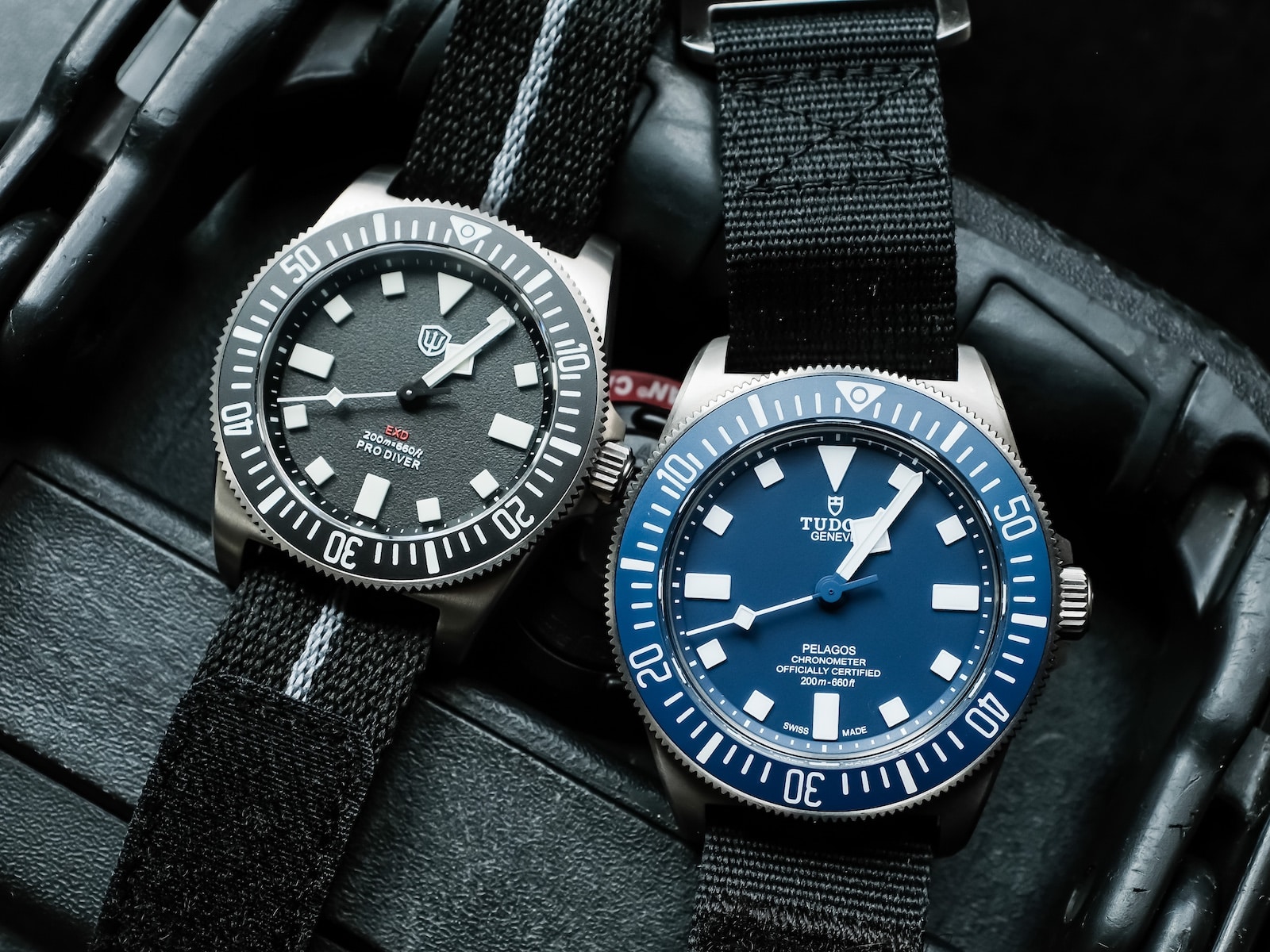
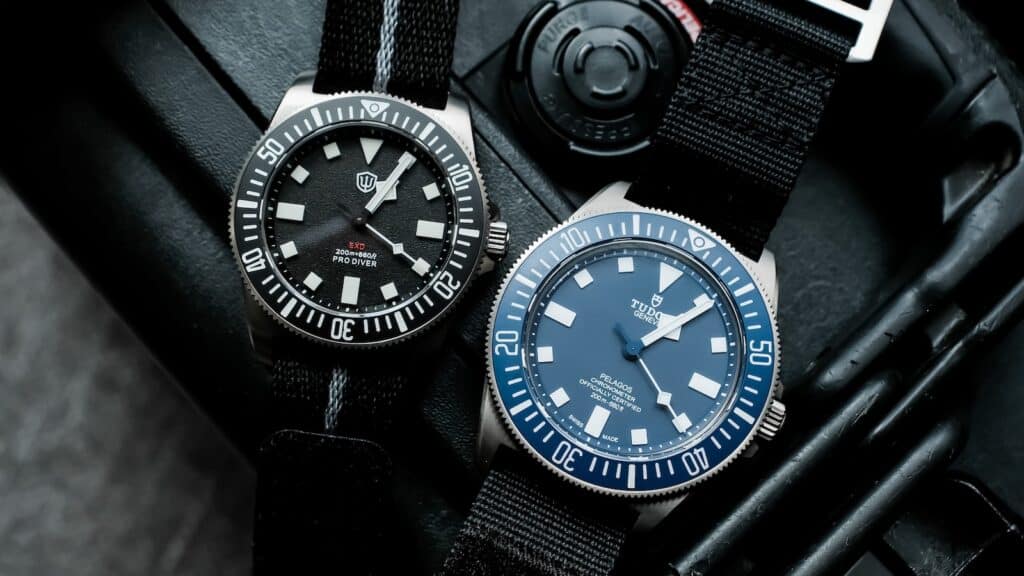
Putting a $149 Watchdives EXD next to a $5,025 Tudor Pelagos FXD looks almost rigged on paper. One is the watch a faithful homage is built to chase; the other is the homage. It’s less a fair fight than a cover band sharing a stage with the original act, and if you’ve ever caught yourself wondering whether the gap between the two is really as wide as the price tag insists, you’re in good company. We’ve spent real wrist time with both of these dive watches, and the more interesting question isn’t which one is “better.” It’s how close $149 actually gets before the difference stops mattering.
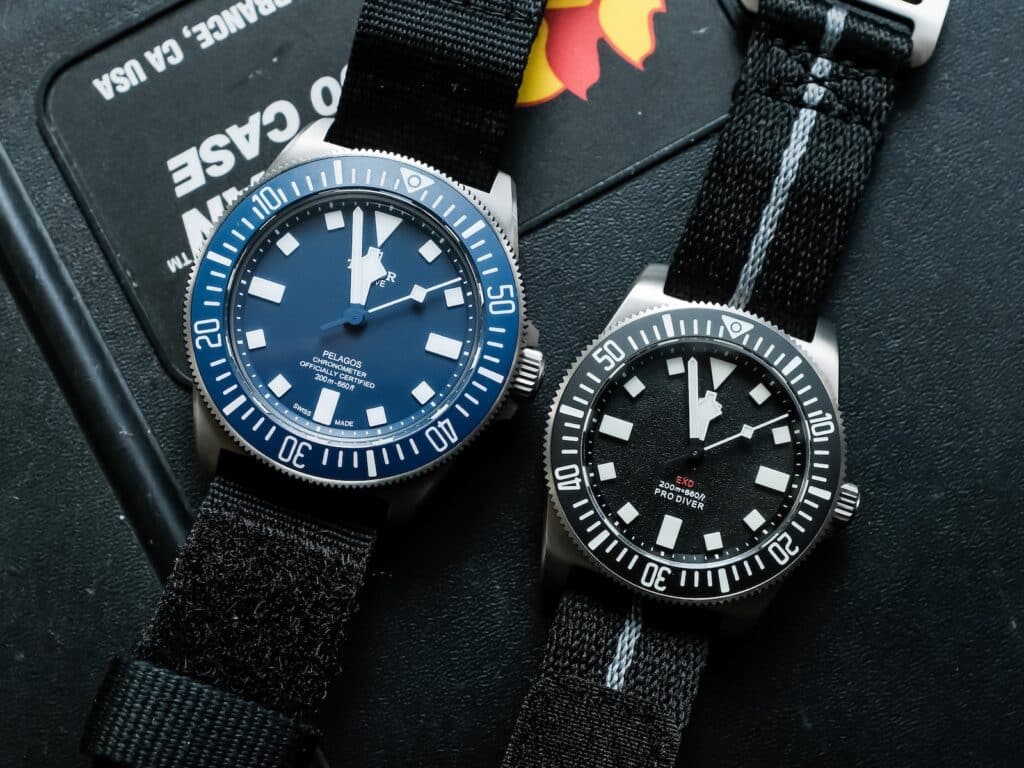
That’s the comparison we want to have. We’re not here to recite spec sheets, because you can find those on either of our standalone reviews. Here at TBWS, what we care about is how these two behave once they’re on the wrist for a week at a time, from the strap you reach for to the movement you stop thinking about. When one watch costs about as much a decent dinner and the other costs more than most people’s entire collection, the real differences tend to surface in places the numbers never quite reach.
Overview & Identity
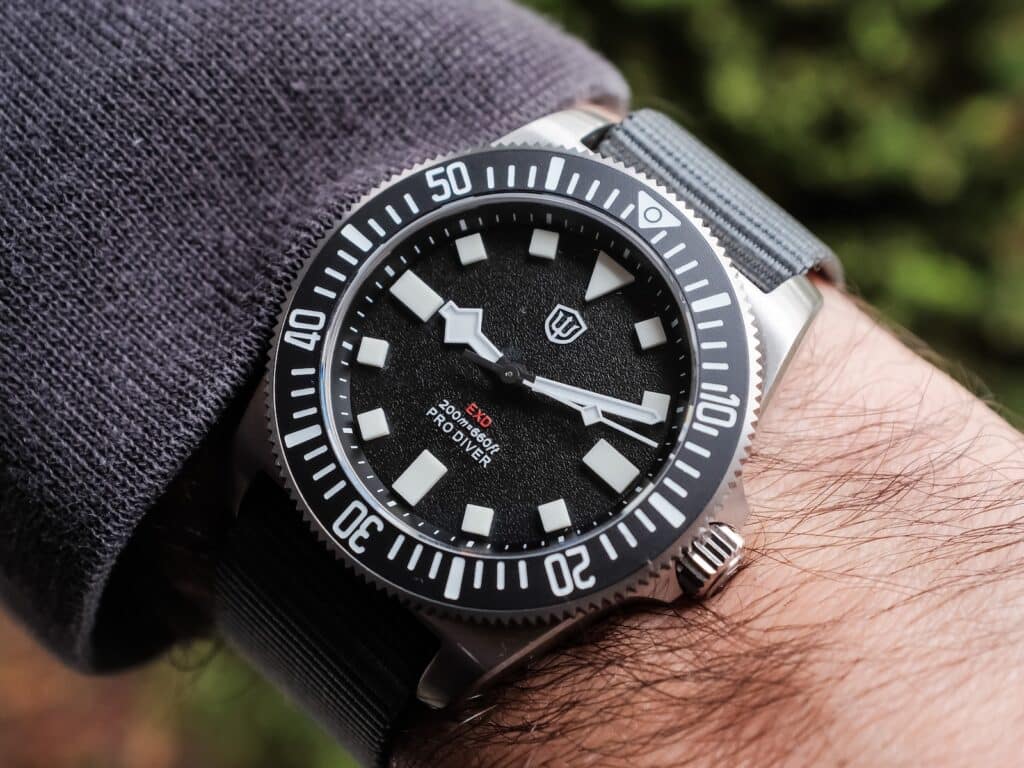
The Watchdives EXD knows exactly what it is. In our hands-on review, it never felt like a disposable placeholder pretending to be something more expensive. The full titanium construction, the ceramic bezel insert, the fully lumed timing scale, and the grab-and-go Seiko VH31 quartz movement read almost like a checklist of enthusiast preferences, and the proportions carry a confidence the price simply doesn’t predict. Crucially, it swaps the fixed-bar layout it references for traditional spring bars, which turns a niche tribute piece into a watch you can actually live with every day. It understands its assignment, and that’s most of why it works.
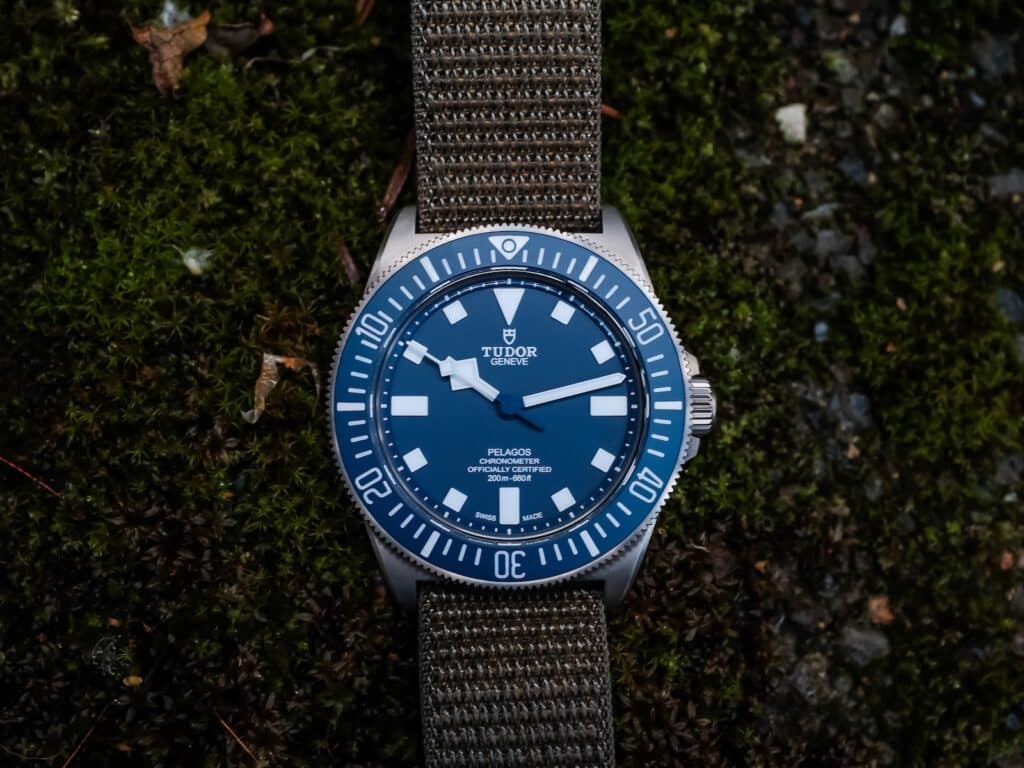
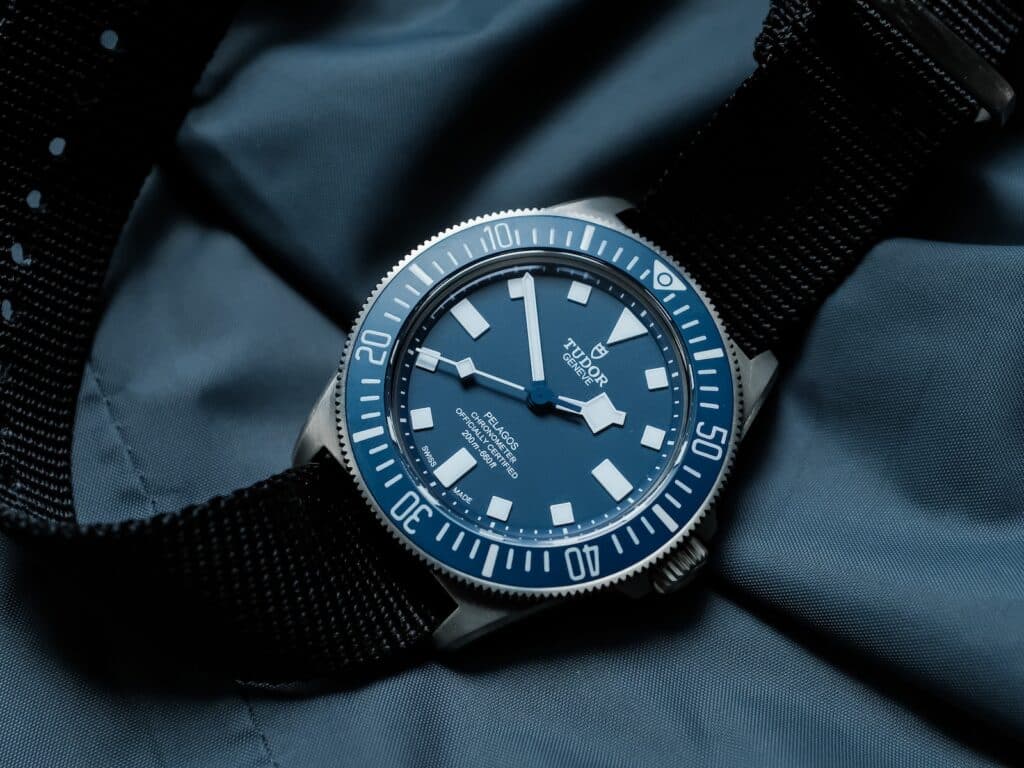
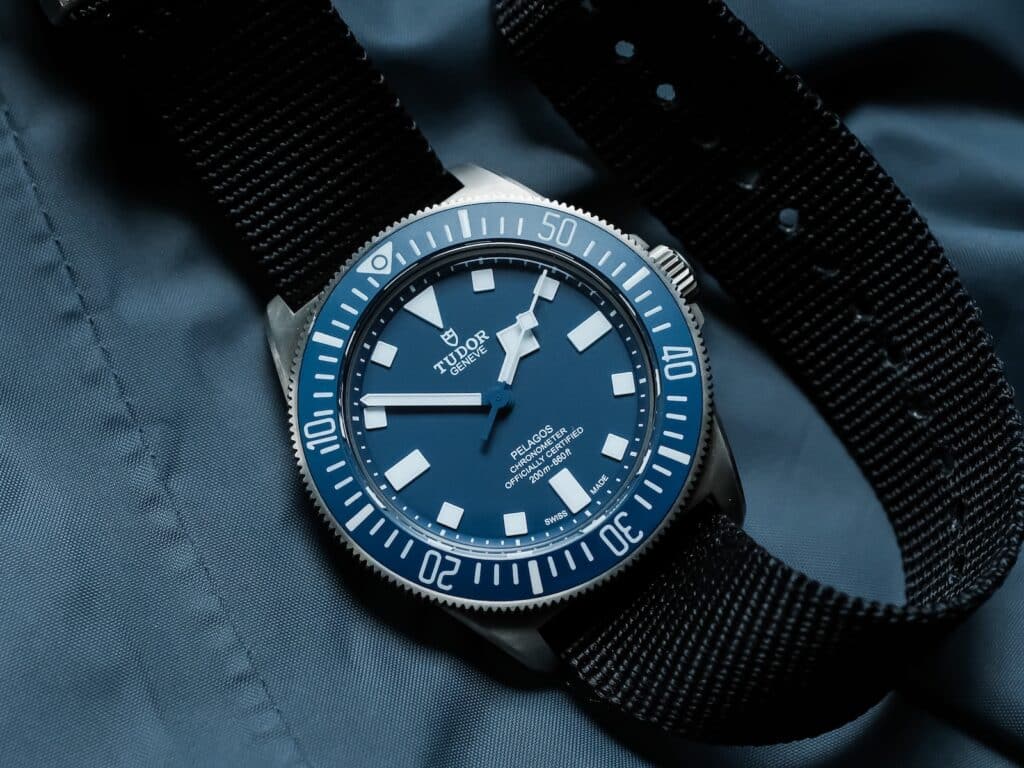
The Tudor Pelagos FXD carries a heavier reputation, and unusually for a watch this hyped, it earns most of it. As we found after a week with the Marine Nationale version, the appeal has almost nothing to do with the military branding or the collector noise surrounding it. The matte titanium case, blocky snowflake handset, oversized bezel, and machined-in fixed bars all sound aggressive on paper, then settle into daily wear far more easily than the internet would have you believe. This isn’t a status trophy and it isn’t trying to be. It’s a purpose-built tool watch that feels like its own thing, restrained where you expect drama, and that restraint is exactly what makes it convincing.
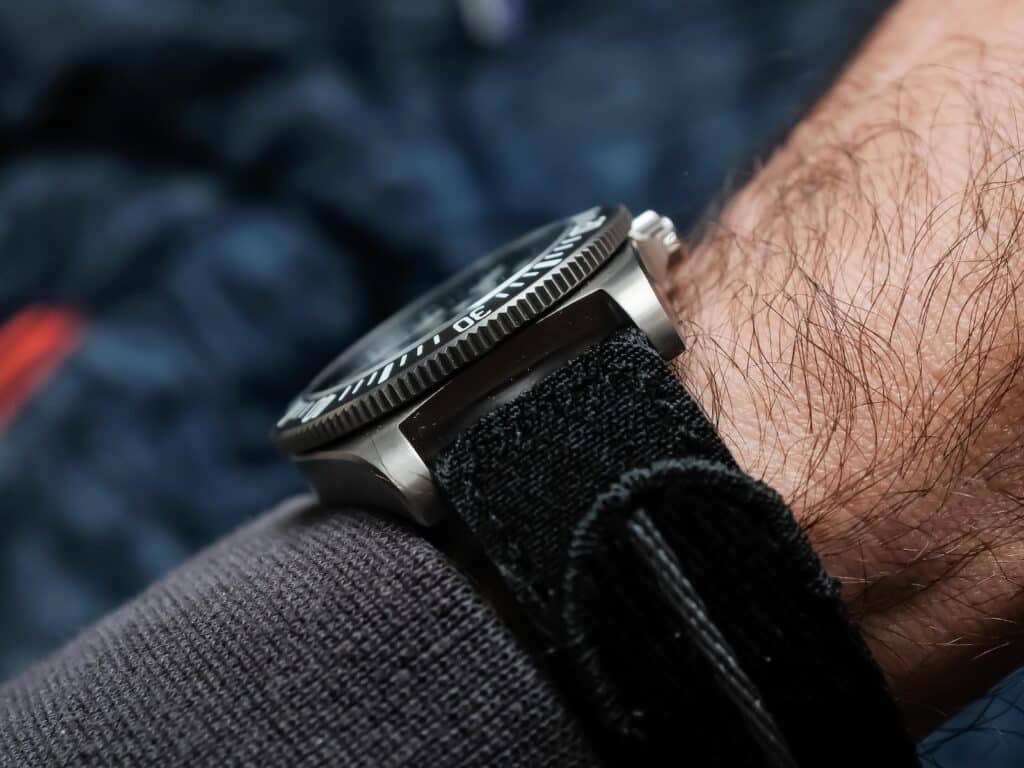
- The Watchdives EXD is an affordable titanium homage that earns respect by being easy to live with, sensibly engineered for daily wear, and far more cohesive than $149 has any right to be.
- The Tudor Pelagos FXD is a modern military diver whose identity is defined by restraint, purpose, and a level of execution that holds up long after the hype fades.
Design & Wearability: Easygoing Homage vs Purpose-Built Military Tool
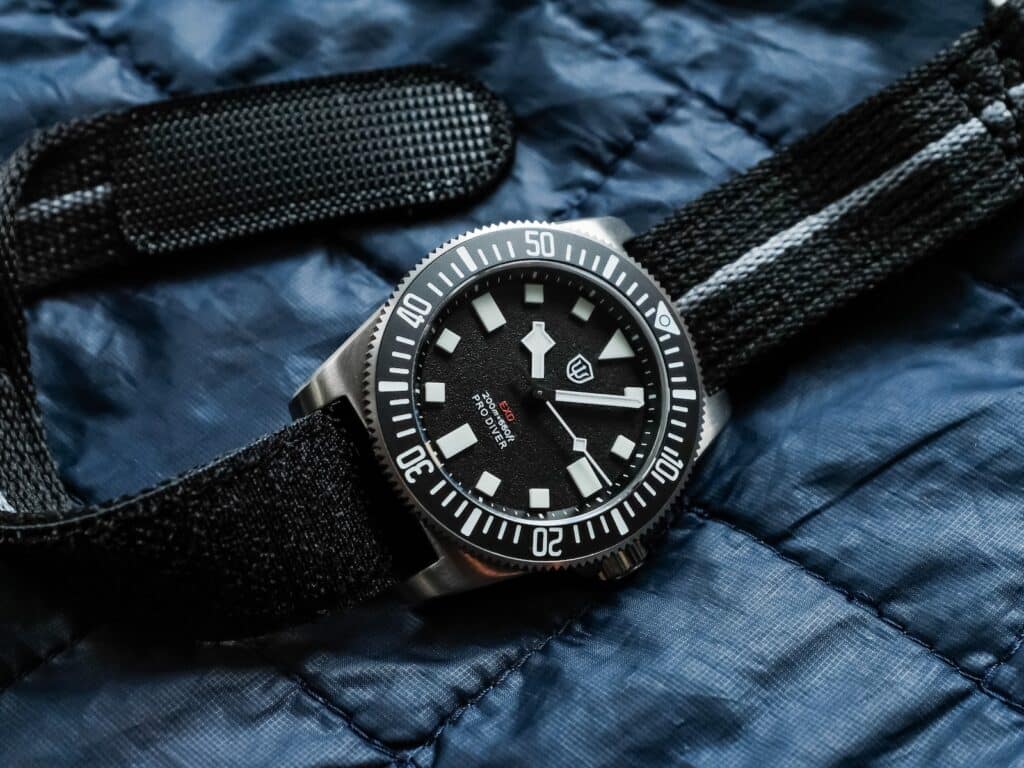
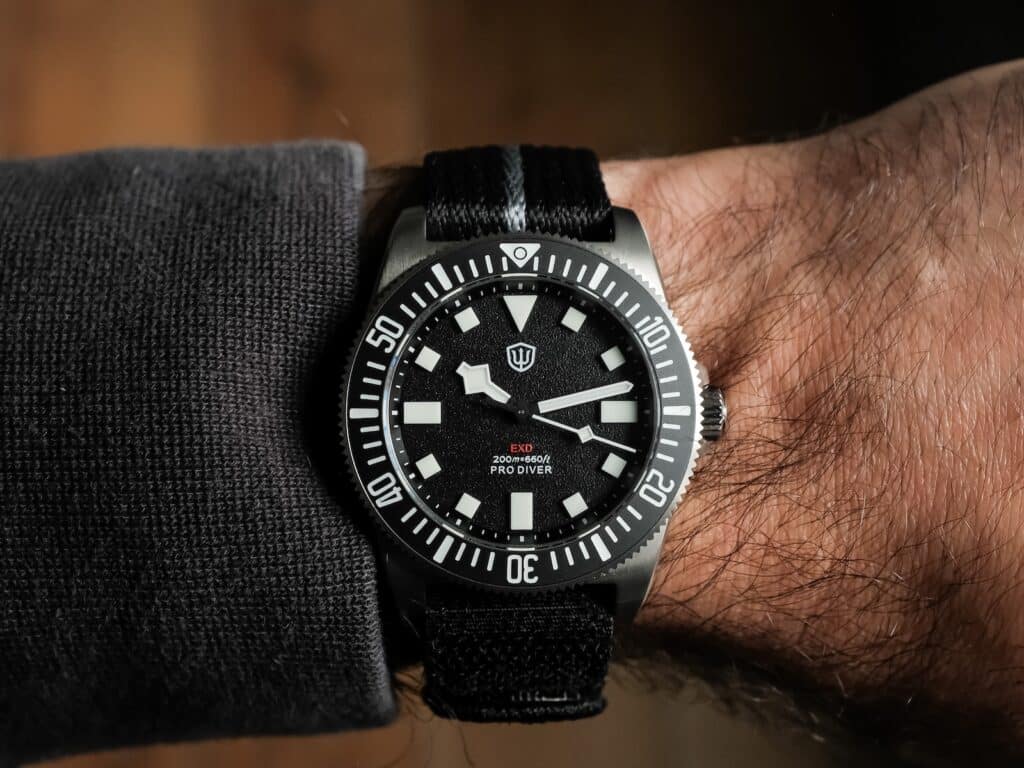
The EXD sticks close to the stripped-back military-diver language it references, and the execution is more thoughtful than the category usually delivers at this price. It measures 40.18mm wide with a 47.95mm lug-to-lug, but the number that matters most is the 10.58mm thickness. Combined with the lightweight titanium case, that slim profile lets the EXD sit flat and disappear on the wrist the way a good field watch does. The matte surfaces and sharp geometry could read flat in titanium, but a polished chamfer along the upper edge adds just enough refinement to keep the watch from looking one-dimensional. The lugs turn down far enough to keep everything planted, and the slight bezel overhang gives it some depth from certain angles. The single decision that defines its wearability, though, is the move to traditional spring bars. Fixed bars photograph beautifully, but they box you in fast; the EXD lets you swap straps endlessly without losing anything, and that flexibility is the smartest thing Watchdives did here.
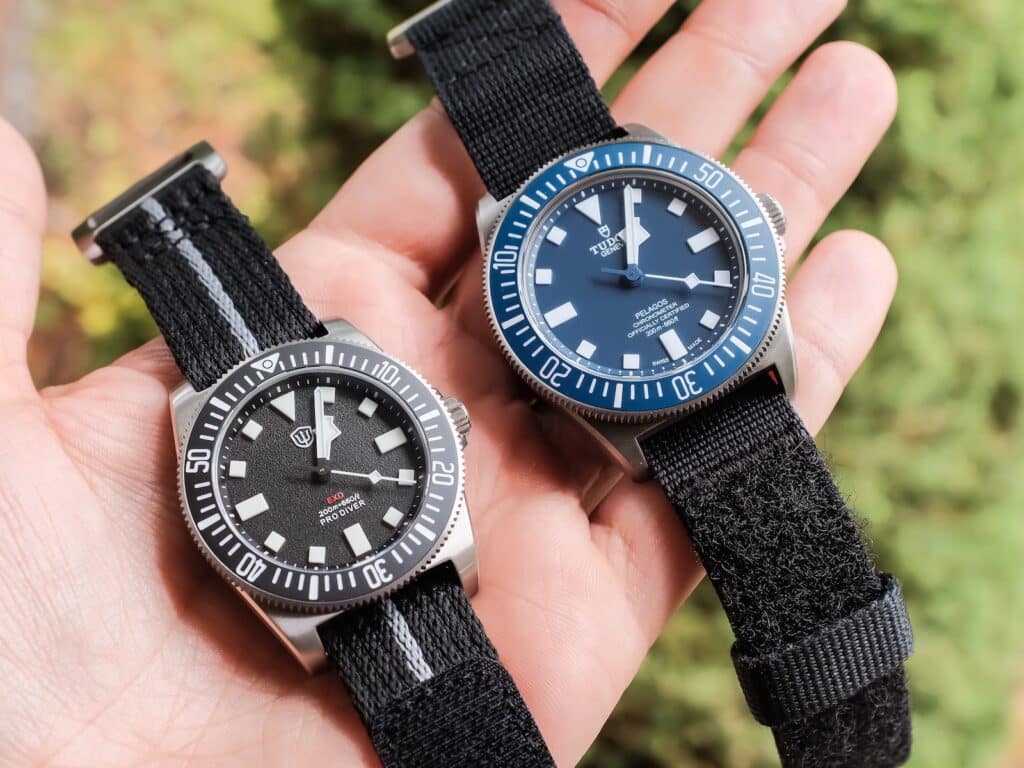
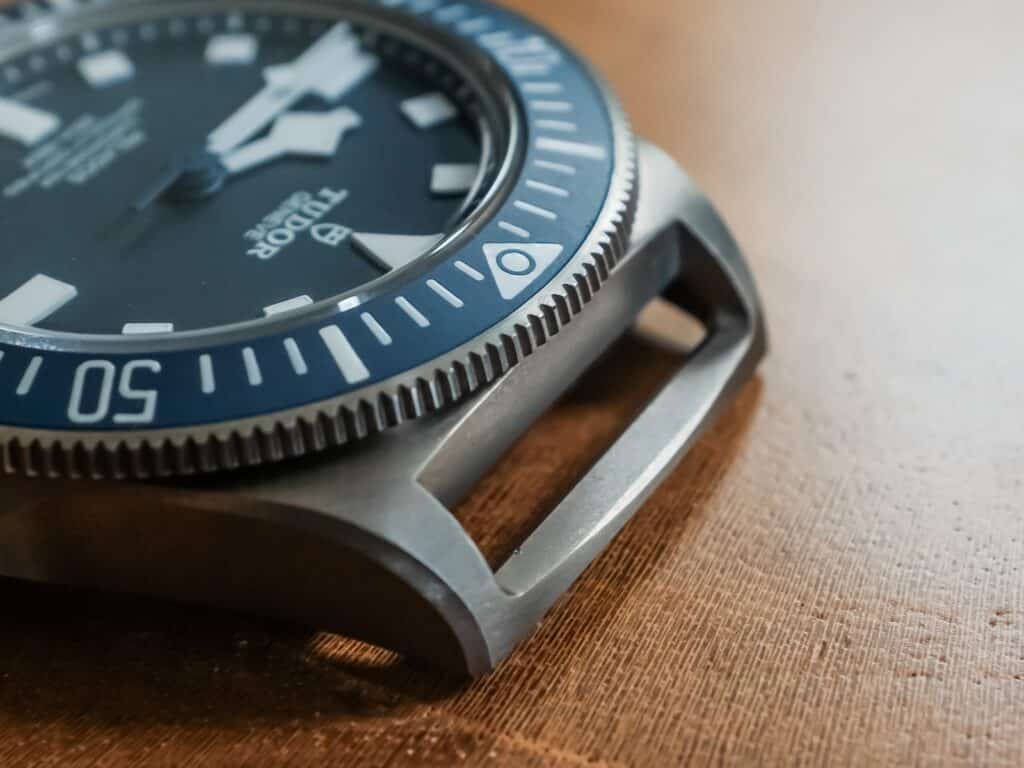
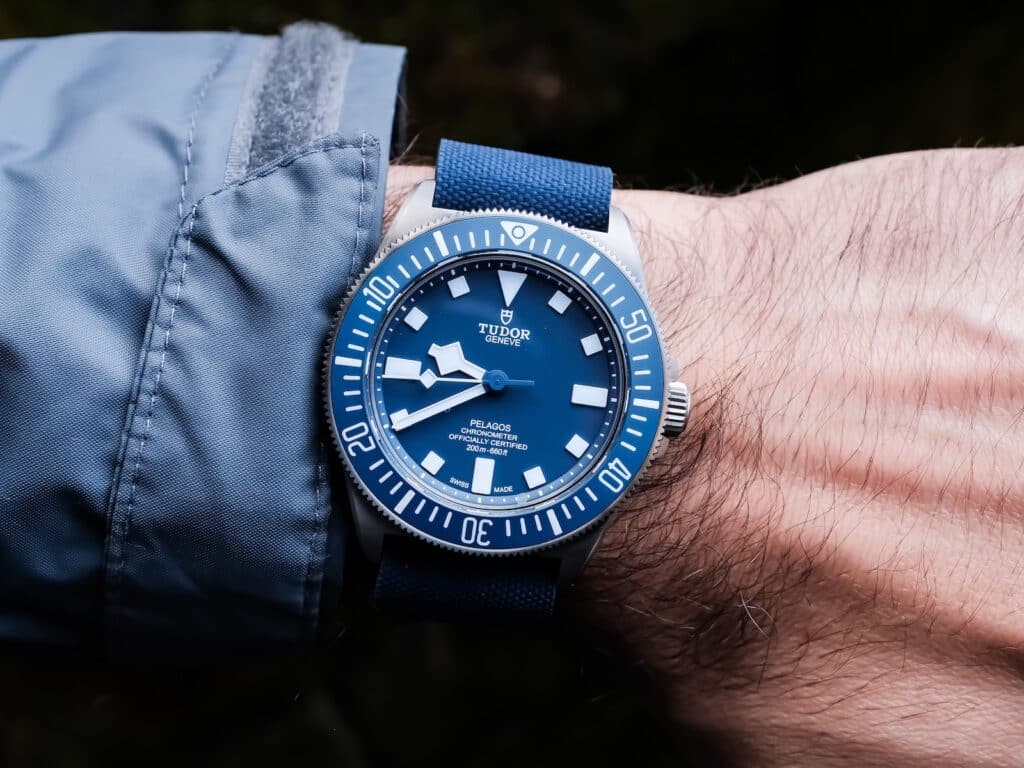
The FXD takes the opposite stance on that exact question, and it’s the heart of the watch. On paper the 42mm case and 52mm lug-to-lug sound large, yet at 12.75mm thick it wears noticeably smaller than the spec sheet suggests, shedding the slab-sided feel of the standard Pelagos. The fully matte titanium case is crisply brushed and utilitarian without looking unfinished, and the widely knurled bezel is easier to grip with wet hands than most of Tudor’s other divers. Then there are the fixed bars, machined directly into the case with a slight chamfer to spare your fabric straps. They’re the defining feature and the defining compromise: authentic, secure, addictive once you start experimenting with NATOs and elastics, and a hard limit on versatility if you’re the type who likes to throw a watch on a bracelet one day and a leather strap the next.
- Watchdives EXD: A slim, lightweight titanium diver built around everyday practicality. The spring bars and disappearing wrist presence make it easy to wear and effortless to personalize.
- Tudor Pelagos FXD: A purpose-built military tool that wears smaller than its numbers and nails the details, but commits hard to the fixed-bar concept. That focus is its strength and its only real constraint.
Build Quality & Technical Approach
Both of these titanium divers are rated for more abuse than most of us will ever subject a watch to. What separates them is philosophy: one is built around low-maintenance simplicity, the other around engineering and finishing you mostly notice over time. Once they move from the desk to the wrist, that gap gets easier to see.
Movements:
The EXD runs Seiko’s VH31 sweep quartz, and we think Watchdives made the right call. A mechanical movement would have looked better on the spec sheet, but it wouldn’t have improved the ownership experience. The VH31 gives you a smoother sweeping seconds hand than standard quartz while keeping everything that makes a grab-and-go watch appealing: no winding, no resetting after a week in the box, no worry about accuracy drifting. The honest caveat is that this will divide people. Some collectors simply want a mechanical movement in a military-style diver regardless of practicality, and whether the VH31 reads as a smart decision or a compromise depends entirely on what you wanted before you strapped it on.
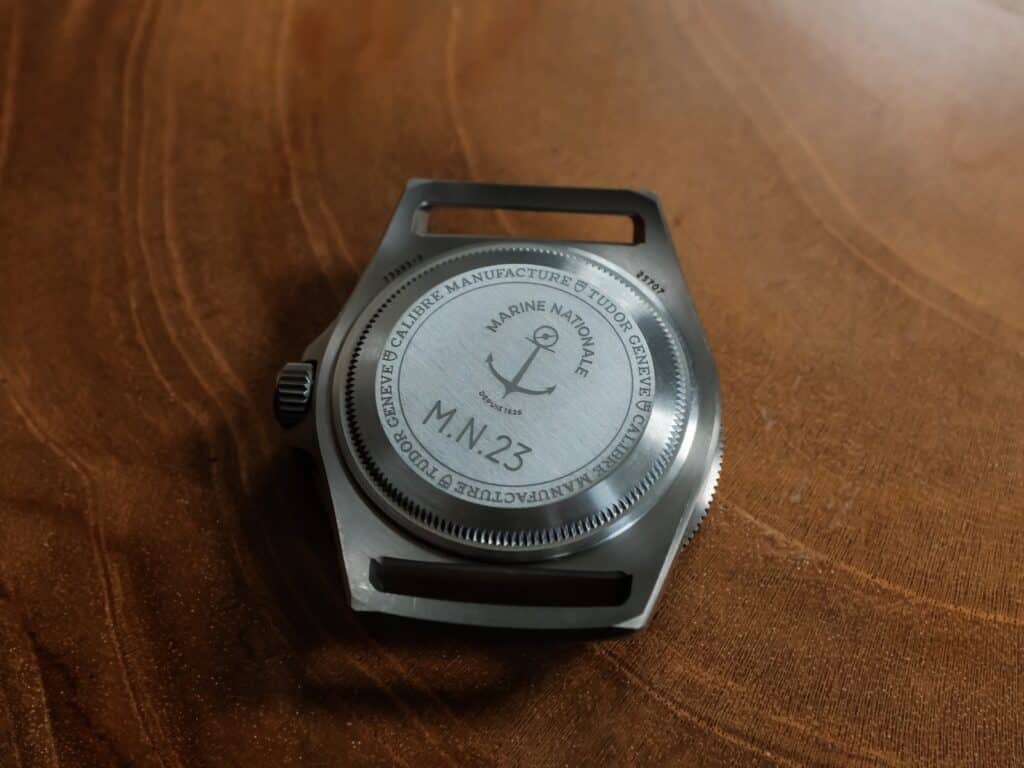
The FXD answers with Tudor’s in-house MT5602, and we came in skeptical, because our past experiences with Tudor’s in-house movements haven’t been uniformly positive. It won us over anyway. Accuracy held up well across the review, the 70-hour power reserve makes the watch easy to rotate in and out during the week, and most importantly the movement simply stayed out of the way. That’s the highest compliment we tend to give a workhorse caliber. The honest caveat is the obvious one: you are paying a steep premium for that mechanical architecture, and if your daily reality is grab-and-go convenience, it’s worth being honest with yourself about whether you’ll value it.

Case Construction & Finishing:
The EXD’s case is where the value really shows. Full titanium, leaning into matte textures and sharp geometry, with that polished chamfer along the upper edge doing the work of keeping it from looking cheap. The midcase is nicely balanced, the sides stay clean, and the signed screw-down crown threads smoothly enough in regular use. None of it reinvents the category, but it feels carefully considered rather than loosely copied, which is not a given at this price.
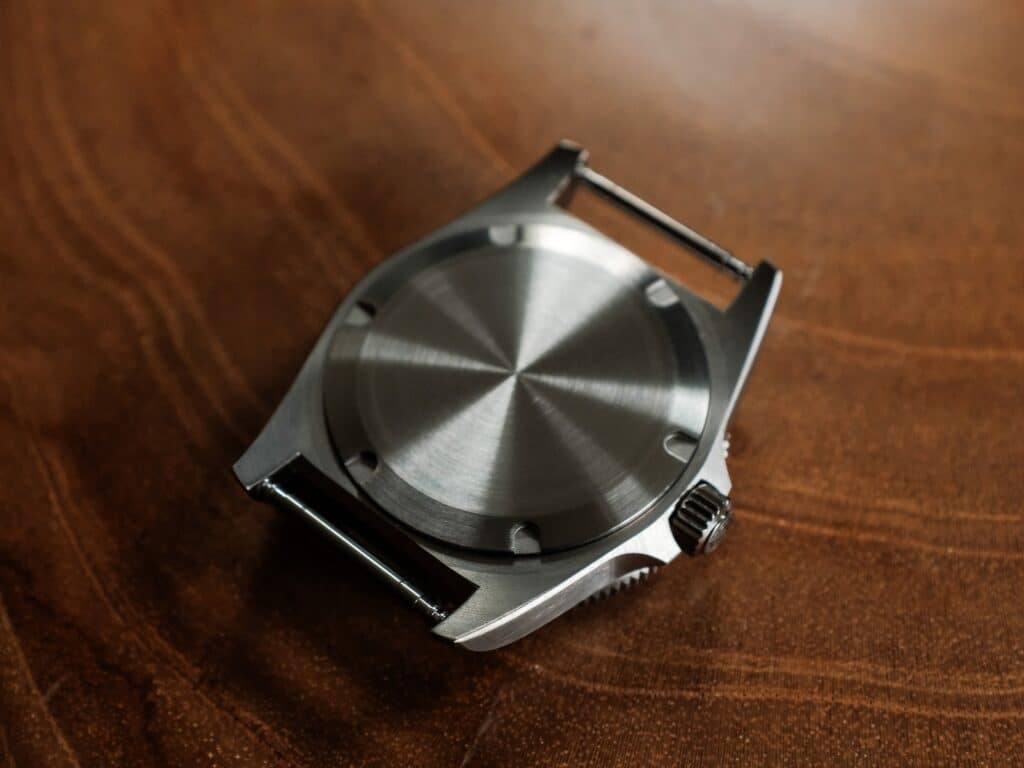
The FXD’s case is exactly what we’ve come to expect from Tudor lately: crisp lines, consistent brushing throughout, and fully matte surfaces that look utilitarian without feeling raw. The standout decision is structural. Tudor dropped the helium escape valve and took water resistance from 500m down to 200m, and rather than treating that as a downgrade, the FXD feels more honest for it. Nothing here is engineered around spec-sheet bragging rights. The fixed bars machined into the case, chamfered to protect your straps, are the kind of detail you only appreciate after living with the watch.
Dial & Legibility:
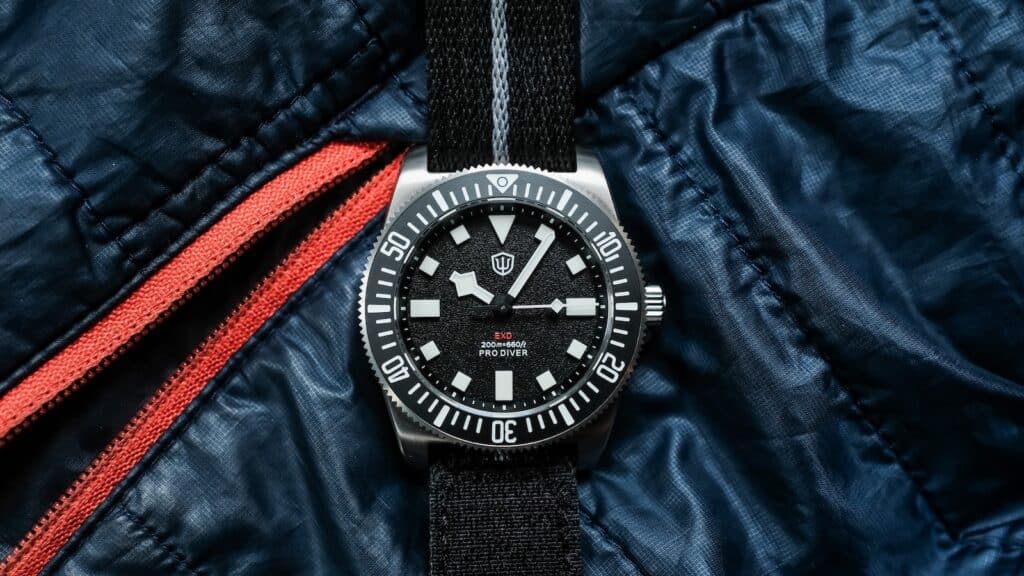
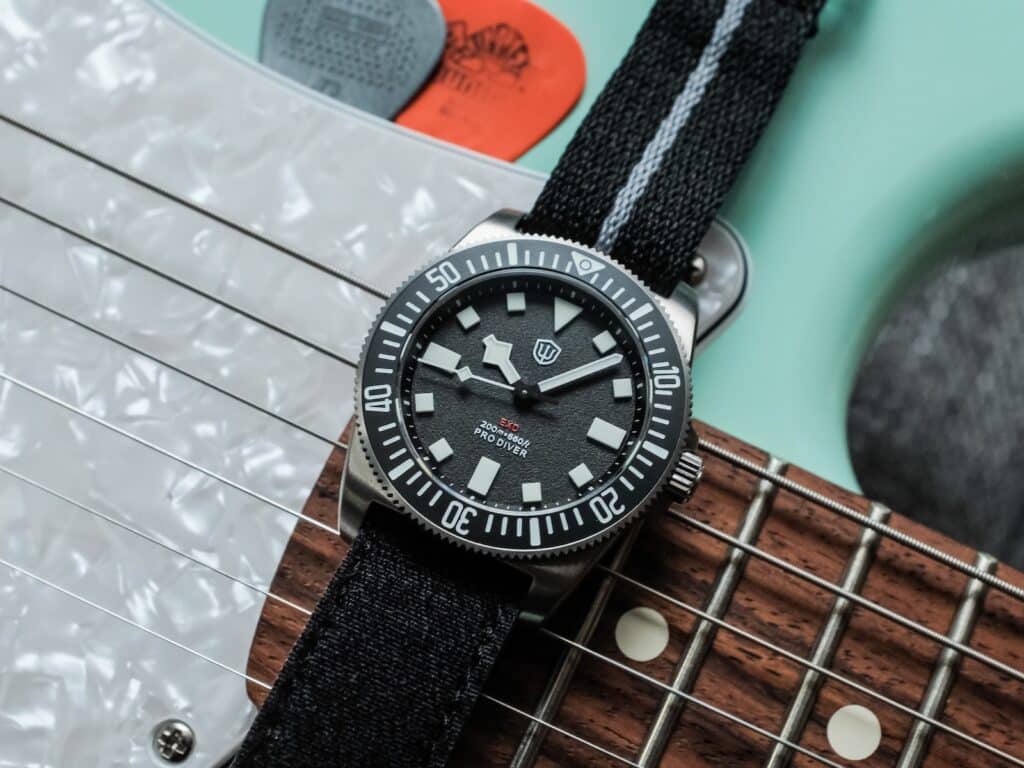
Under its flat sapphire crystal, the EXD keeps things visually restrained and instrument-like. The coarse matte black dial has a slightly raw character, the rehaut slopes inward to add depth without clutter, and the contrast between the dark surface and the stark white markers does most of the heavy lifting. The triangle at twelve, elongated markers at three, six, and nine, and square plots elsewhere reinforce the tool-watch layout, and branding stays minimal throughout. Legibility is excellent.
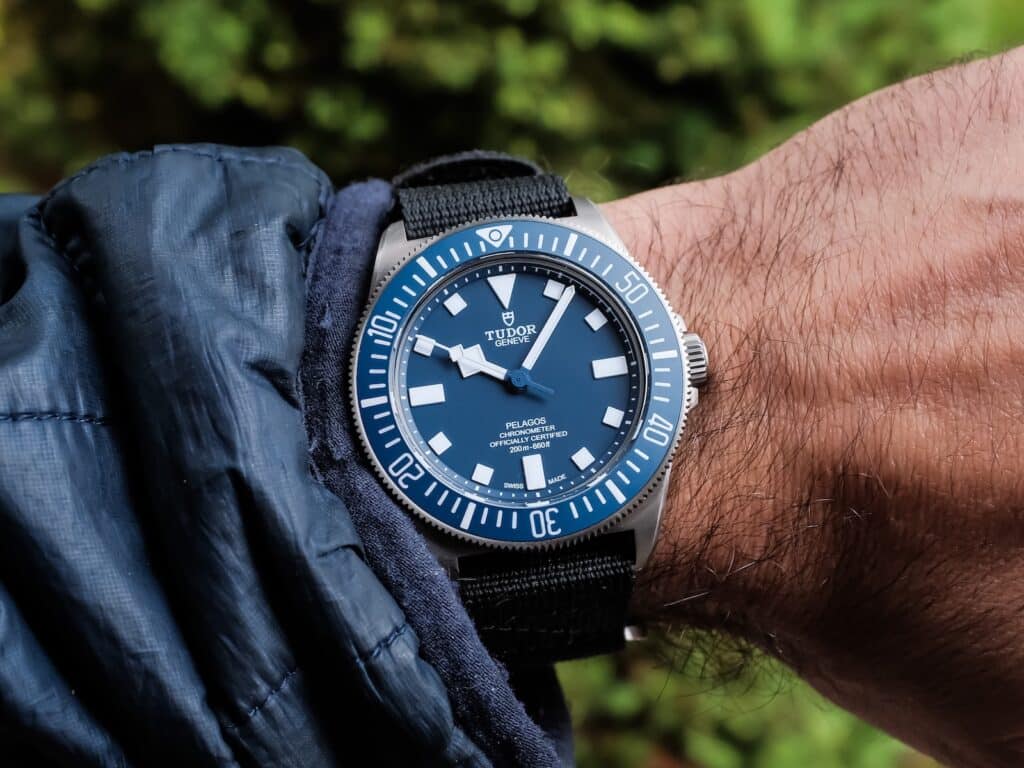
The FXD treats legibility as the entire point. Tudor cleaned the dial up considerably: the unnecessary text is gone, the rehaut no longer crowds the markers, and dropping the date keeps the layout balanced and purposeful. The darker navy tone (deliberately deeper than the standard Pelagos blue) keeps the watch from looking attention-seeking against the matte titanium. Between the snowflake handset, the matte dial texture, and the strong contrast, it reads instantly in nearly any light. This is a watch designed around being read first and admired second.
Water Resistance & Lume:
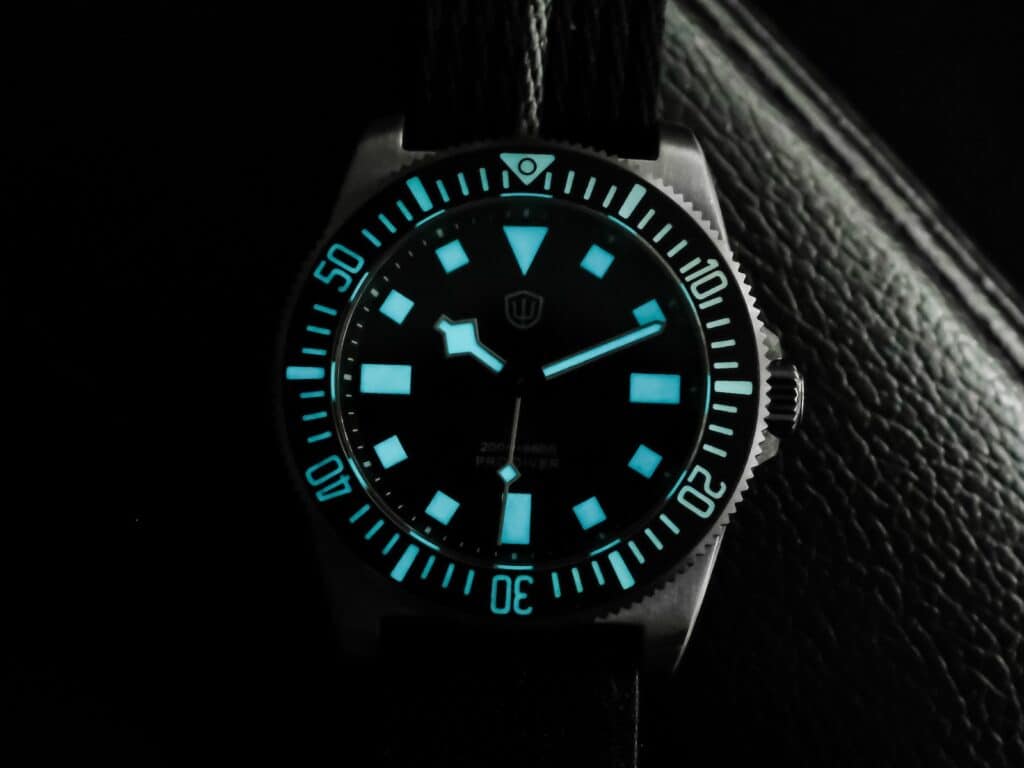
The EXD comes correctly equipped for what it claims to be. The signed screw-down crown and screw-down caseback back a 200-meter rating that feels appropriate to the rest of the watch, and the lume punches above its price: a strong, even blue glow across both the dial and the fully lumed bezel that stayed visible far longer than we expected.
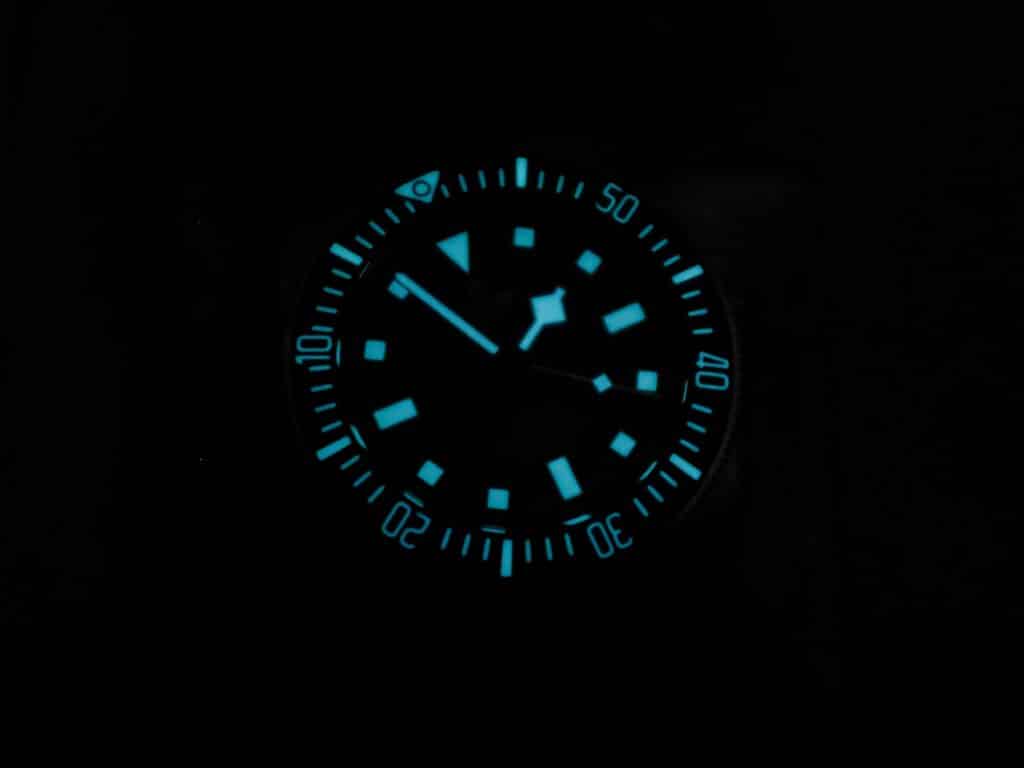
The FXD matches the 200-meter rating and answers the lume question with its fully lumed ceramic bezel insert, one of the more distinctive things about the watch once the light drops. The lume is excellent across the dial and handset, consistent and easy to read deep into the night. Both watches are capable here; the difference is execution and materials, not capability.
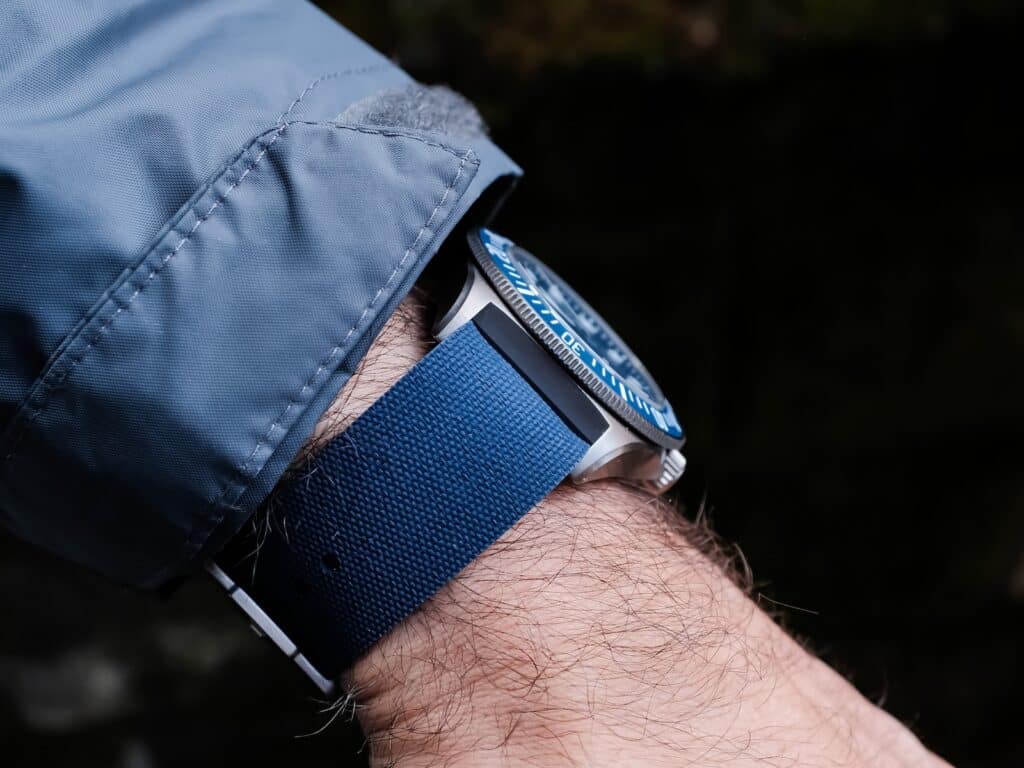
- Built around simplicity, the EXD favors low-maintenance toughness and grab-and-go convenience. Quartz accuracy, real 200m water resistance, strong lume, and a titanium case that punches well above $149.
- The FXD layers durability through engineering and finishing, delivering a refined, purpose-built tool watch that feels overbuilt in the best way and confident in daily use.
Cost Considerations
The Watchdives EXD lands in territory where the price almost reads like a typo. At $149, it’s a low-risk, high-reward pickup rather than a decision you agonize over. There’s no pressure to baby it, the traditional spring bars make it endlessly easy to re-strap, and nothing about owning it carries weight beyond the cost of the watch itself. For a full-titanium diver with a ceramic bezel and sweep quartz, that’s close to absurd value.
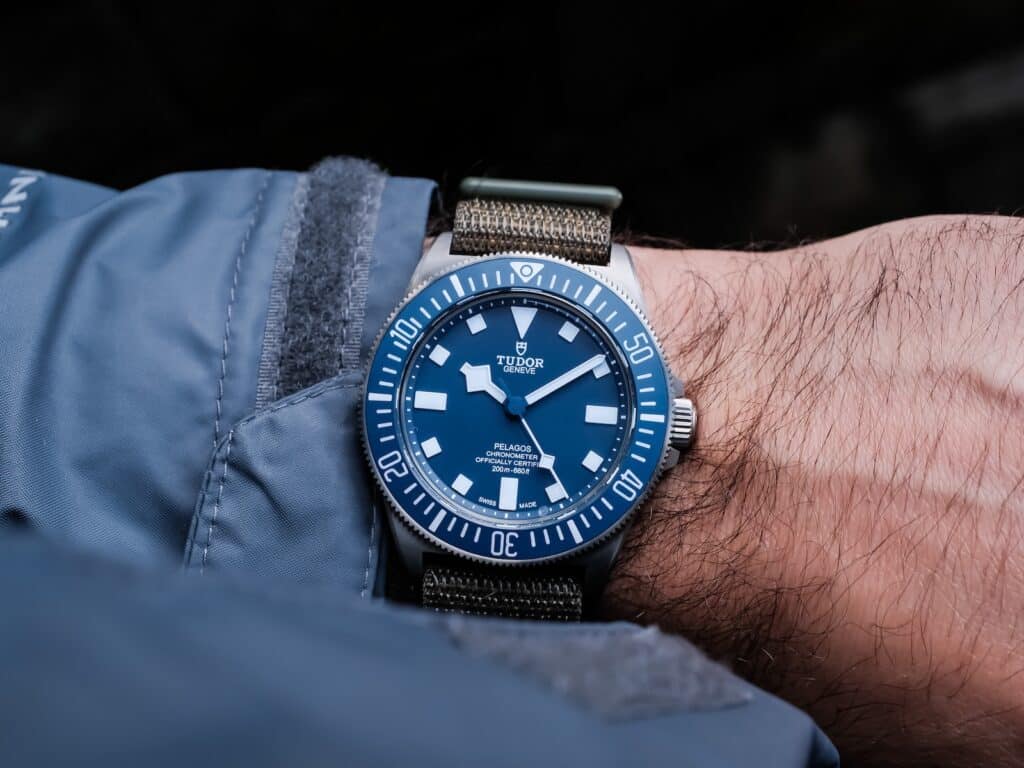
The Tudor Pelagos FXD sits at the opposite end at $5,025, but it’s worth being precise about what that money does and doesn’t buy. This is not the kind of luxury diver that drags status baggage behind it: there’s no waitlist theater, no gray-market gouging, and it isn’t one of the most counterfeited watches on the planet. You’re paying for engineering, in-house movement architecture, materials, and finishing, not for access or a logo’s social currency. That makes the FXD a cleaner value proposition than most watches at its price, even though the absolute number is still a serious commitment that demands you actually want what it’s offering.
Final Thoughts: What Do $149 and $5,025 Actually Buy You on the Wrist?
After living with both, here’s the truth: if you measure value the way most people actually live (daily wear, low stress, maximum utility) the Watchdives EXD wins, and it isn’t close. It’s slim, light, legible, water-capable, and cheap enough that you’ll wear it the way a tool watch is meant to be worn instead of tiptoeing around door frames. The EXD also does something the cheaper watch in these comparisons usually can’t: it beats the more expensive piece on a real axis. Those traditional spring bars make it more versatile in everyday life than the FXD’s fixed bars, and the VH31 makes it a more effortless grab-and-go. For most people, most days, the EXD simply does the job, and it does it for $149.
The Tudor Pelagos FXD doesn’t win on value, and it doesn’t need to. It wins on being the real thing. If you care about how an in-house movement feels over time, how crisp the case finishing is, how deliberately every decision was made, the FXD is operating at a level the EXD isn’t trying to reach. It’s the reference these homages chase for a reason, and the appeal has nothing to do with flexing a name. The catch is that you commit to its worldview: the fixed bars, the countdown bezel, the single-minded focus. Nothing about it is watered down to please a broader audience, which is exactly why it’s so good and exactly why it asks $5,025 to come along.
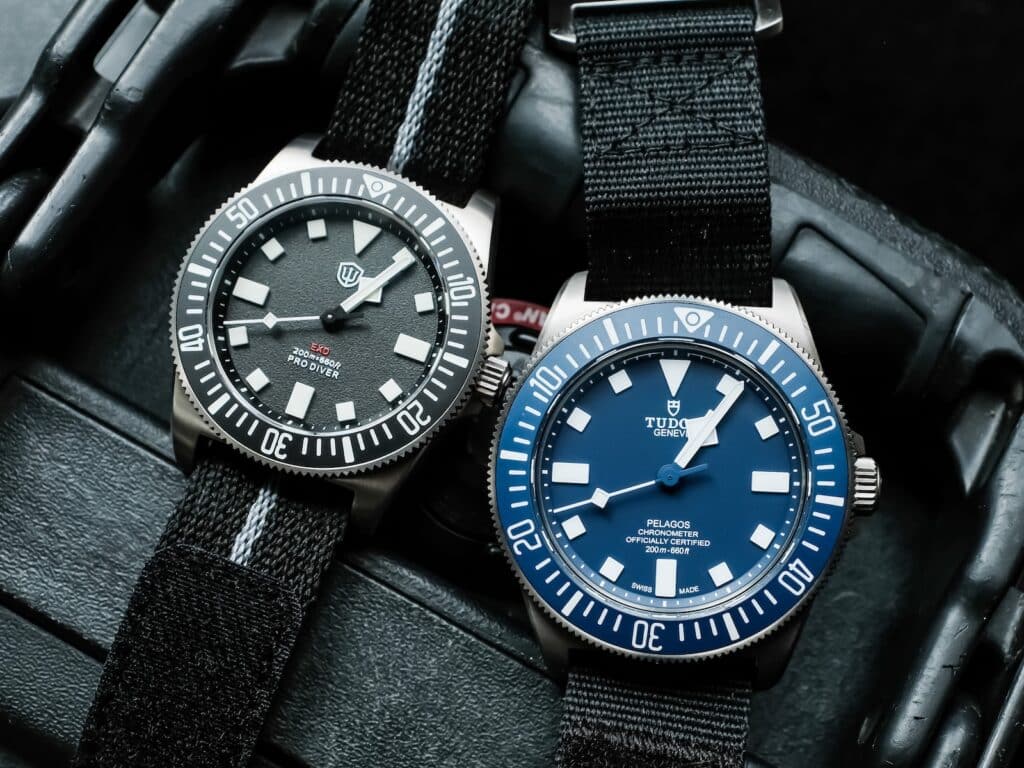
So here’s the stance we’ll actually stand behind:
- If you want the smartest watch decision, buy the Watchdives EXD. It’s the more versatile, lower-stress, more practical watch to actually own, and the value is hard to argue with.
- If you want the reference itself (the engineering, the finishing, the feeling of wearing the real thing) and you’re at peace with what that costs, the Tudor Pelagos FXD still earns it. It’s the benchmark for a reason, but it isn’t the value play.
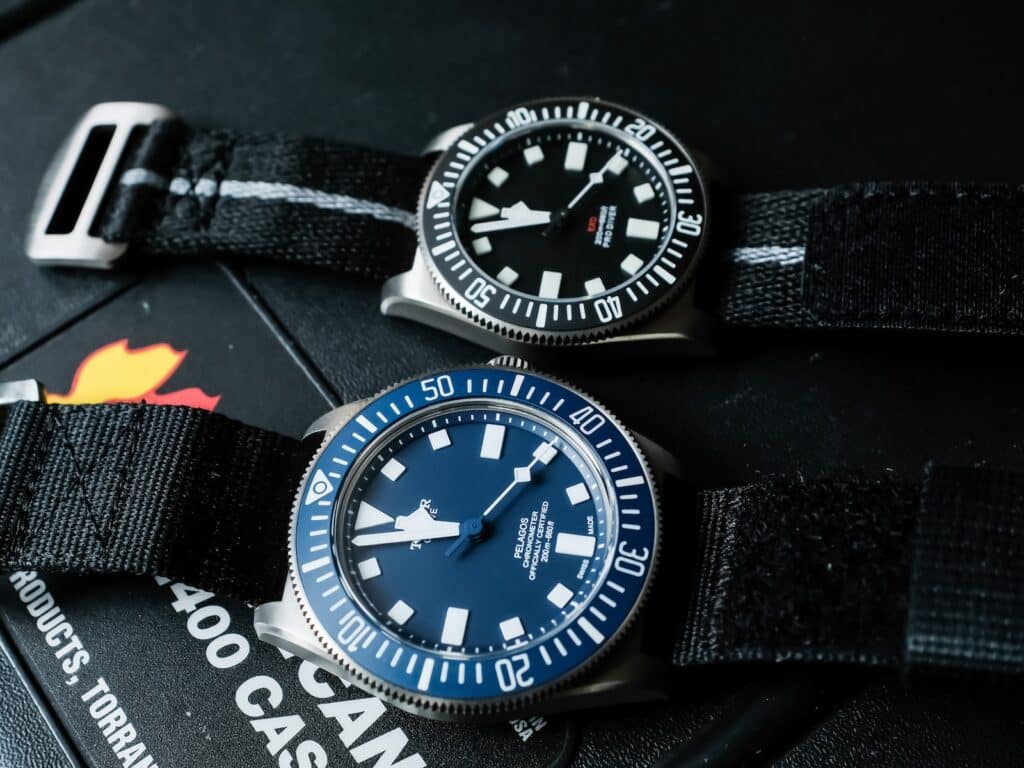
In other words: the EXD is the better recommendation, and the FXD is the better object. The hard part, the question we’re still chewing on ourselves, is whether the emotional gap between them is really worth the price gap that separates them. When a $149 homage gets this close, that’s no longer a rhetorical question. For some collectors the answer will always be the Tudor, and that’s a perfectly fine reason to buy one. Just call it what it is.
If you want to dig deeper on either watch, our full hands-on takes live here: the Watchdives EXD review and the Tudor Pelagos FXD review. You can find the EXD over at Watchdives and the FXD at Tudor. Let us know in the comments which side of the gap you land on.

Co-Founder & Senior Editor
Michael Peñate is an American writer, photographer, and podcaster based in Seattle, Washington. His work typically focuses on the passage of time and the tools we use to connect with that very journey. From aviation to music and travel, his interests span a multitude of disciplines that often intersect with the world of watches – and the obsessive culture behind collecting them.
you buy a $5000, $15,000, $50,000 watch over a $150 knock off because you can.
it’s a statement. it’s not about telling time
That’s part of it for some buyers, sure. But there are differences in engineering, finishing, and long-term ownership experience that go beyond making a statement. Whether those differences are worth the price gap is the more interesting question.
A better comparison would have been with the Chinese brand Tactical Frog. The “gap” is much smaller and will make you question reality.
I’ve seen those online and have been curious about snagging one for a review.
I have the watch dives EXD And also their Palagos homage. The handset on the Palagos homage is larger. And proportionally better looking. If they had used this handset on the EXD It would have looked much better. I’m glad they chose to use a normal case back for the EXD as opposed to copycat Rolex style on their Pelagos homage this move would make battery changes extremely easy for the EXD and incredibly difficult for the other.
Hey Murdoch. The handset proportions on homage watches can make or break the dial, and a standard caseback for easy battery swaps is one of those practical decisions that pays off over time. Thanks for the firsthand insight.
Tudor MN FXD features a premium titanium case with indestructible fixed strap bars and a high-end, automatic movement with a 70-hour power reserve. From its flawless matte finish to its real military history, it offers a level of quality, engineering, and authentic value that a cheap homage simply cannot match.
There are definitely more than a few reasons it made its way into my collection.
It’s funny. It’s a great looking watch the knock The EDX that is if they can just put a mechanical psycho movement in it and charge $500-$700, I’d buy it for a good knock around watch. I just don’t like quartz movements.
A mechanical version in that $500 to $700 range would be interesting. Quartz isn’t for everyone, and the preference for something ticking away inside is completely valid.
Great comparison article, but for a more apple to apples comparison, the pelagos 39 vs the Chinese Thorn shy036 housing a pt5000 automatic movement might be surpringly enlightening.
That would be a more direct mechanical-to-mechanical comparison. I don’t know much about the PT5000. Seems like a capable movement for the price, and pairing it against the Pelagos 39 could make for a revealing piece. Appreciate the suggestion.
Interesting read. I have been looking at relatively inexpensive homage watches recently, and they seem to be getting better all the time. As others have mentioned an automatic movement would be more enticing. There are some nice homage watches featuring NH35 and Miyata automatic movements at pricing that’s not a whole lot more than this.
The other thing is spring bars vs fixed. I would be far more interested in this watchdive offering if it had fixed bars. Even if the watch costs only a couple hundred dollars I would hate to lose it while banging around, especially in or over water. Spring bars are extremely weak. Even with a NATO or Zulu strap, once one spring bars goes, the other can also quickly let go before you even realize the first one did (especially with activities like surfing etc.).
Hey Mark – the spring bar point is a good one that doesn’t get raised enough. Fixed bars add real security for active use, and at any price point, losing a watch off your wrist because a spring bar failed is a bad experience.