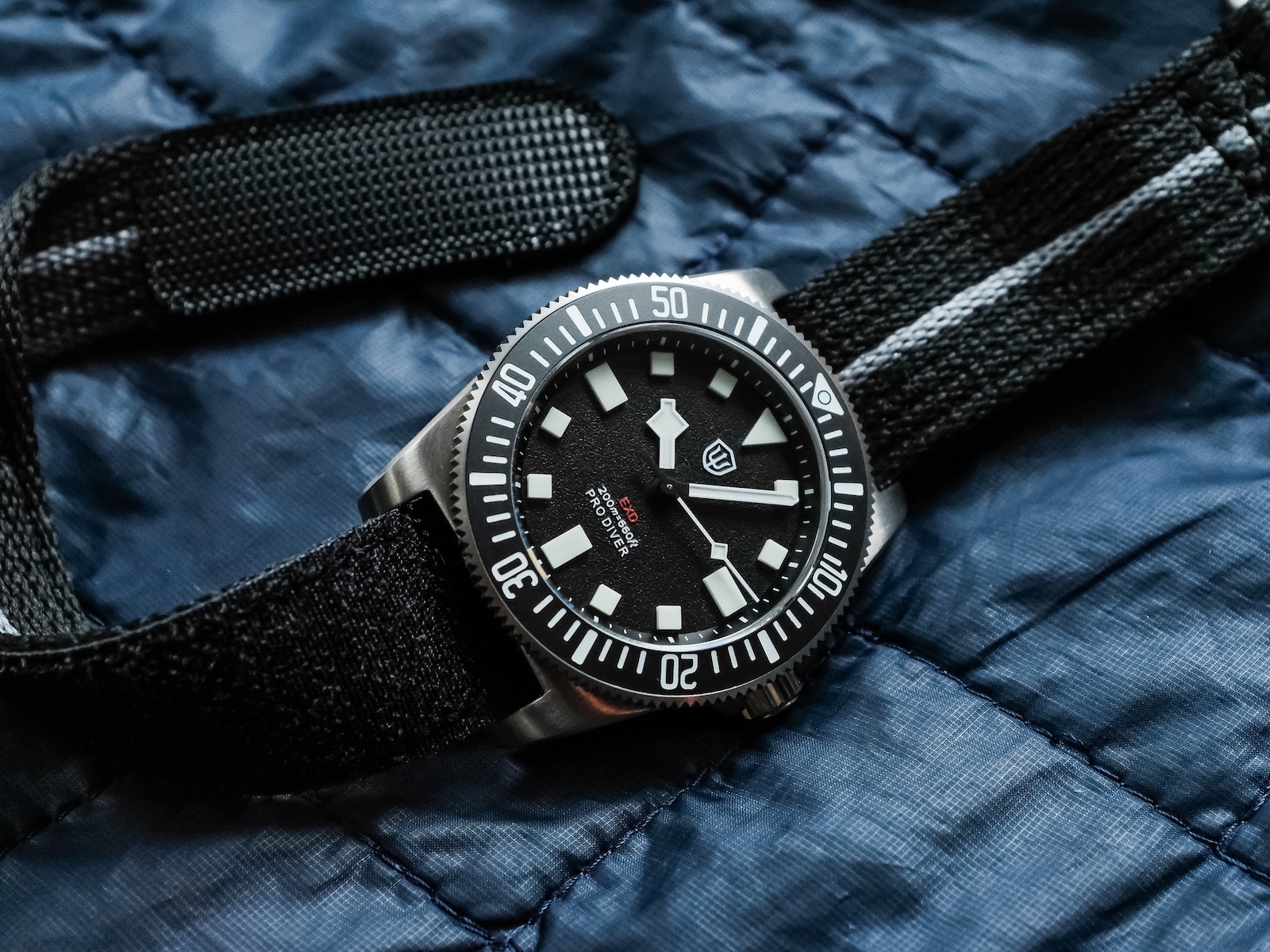
I’ve spent a fair amount of time lately thinking about what an homage watch is supposed to do for a collector. The last Watchdives model I reviewed pushed me into that conversation because, for a while, I thought it might help me decide whether I really wanted the Tudor that inspired it. The funny part is that even after living with that watch, enjoying it, and appreciating how well it was executed for the money, I still never ended up buying the Tudor. Now I’m back in a similar spot with the Watchdives EXD. After spending time with it on the wrist, I can say the experience feels familiar in more ways than one.
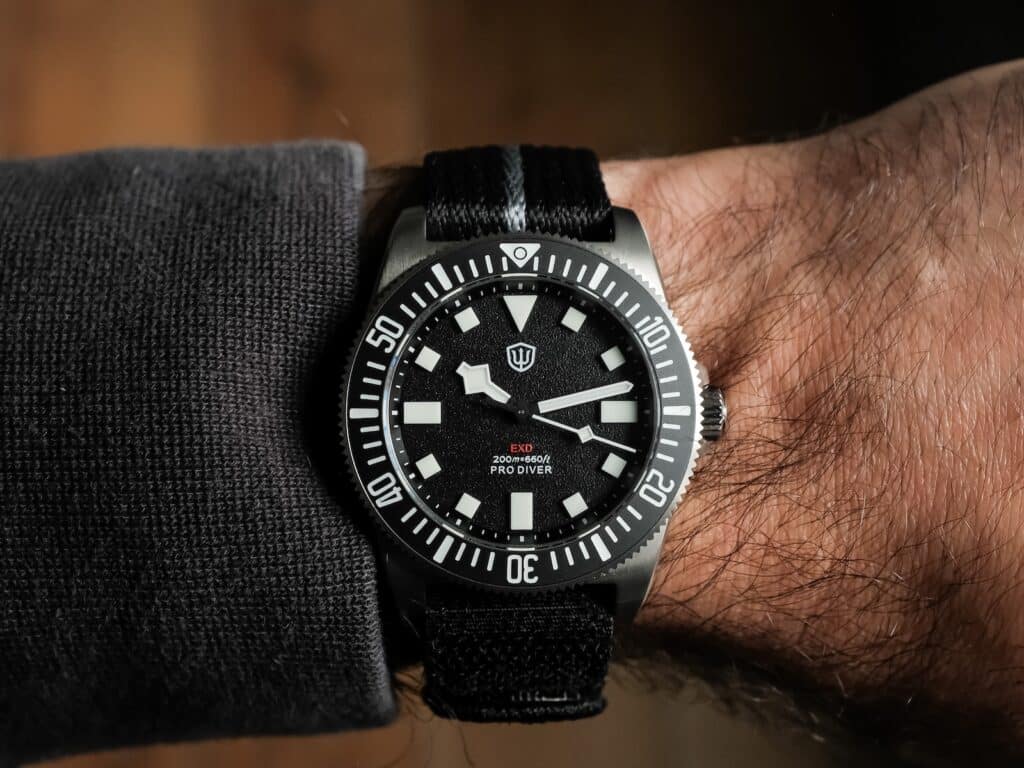
This is another watch that gets surprisingly close to the thing it’s referencing, at least in the areas most people care about during day-to-day wear. The proportions feel great, the overall execution is better than the price would suggest, and the watch carries itself with a level of confidence that makes the whole homage conversation harder to dismiss outright. At the same time, this is where collecting gets a little complicated. Because once a watch gets this close for $129, I start asking myself a different question entirely. Not whether I still want the more expensive watch, but whether the emotional gap between the two is really large enough to justify the financial one. For some collectors, the answer will always be yes.
Familiar Territory
The EXD doesn’t spend much time hiding where its inspiration comes from. The overall layout, blocky titanium case, and stripped-back military diver aesthetic all point in a familiar direction. Still, Watchdives made one decision here that immediately changed how I approached the watch during the review period. Unlike the FXD-style layout it references, the EXD uses traditional spring bars instead of fixed lugs, and that alone makes the watch feel much easier to live with day to day.

That flexibility matters more than I expected. Fixed spring bars always look great in photos, especially if you enjoy military-inspired tool watches, but living with them can get limiting pretty quickly. The EXD avoids that problem entirely. I swapped straps constantly while wearing this watch, and it never felt like the design lost anything in the process. The rest of the package reads almost like a checklist of enthusiast preferences. Full titanium construction, 200 meters of water resistance, ceramic bezel insert, fully lumed timing scale, and a Seiko VH31 sweep quartz movement inside.
On the Wrist
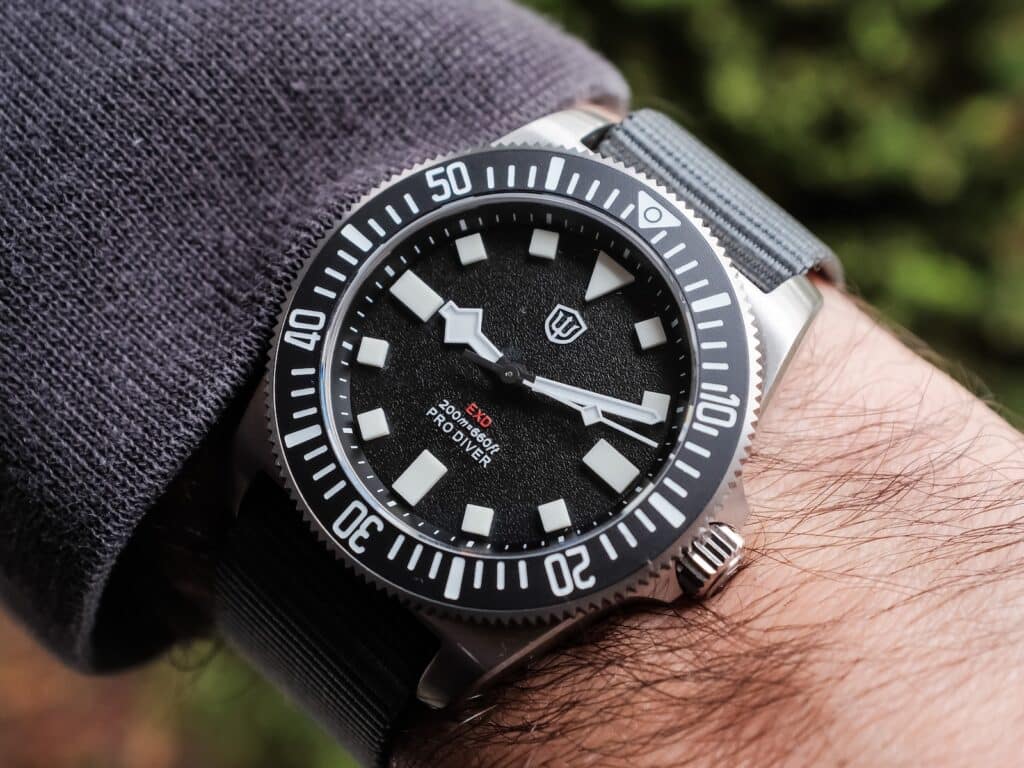
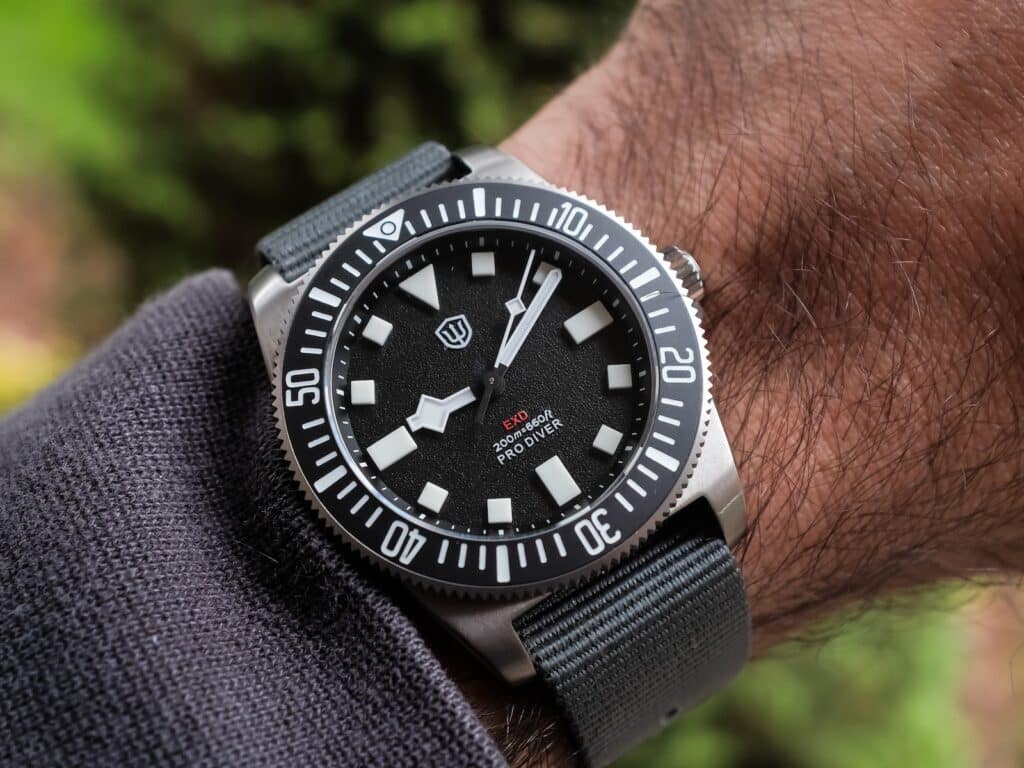
What surprised me more was how cohesive the EXD feels on the wrist. The watch measures 40.18mm wide with a 47.95mm lug-to-lug length, though the more important number ended up being the thickness. At just over 10.58mm tall, the EXD sits flatter than most divers in this category, especially once the lightweight titanium case enters the equation. After a few days of wear, it started disappearing on my wrist in the same way good field watches tend to.
The case itself leans heavily into matte textures and sharp geometry, though the polished chamfer running along the upper edge adds a little refinement without changing the tool-watch personality. Titanium cases at this price point can sometimes feel visually flat, but the contrast here keeps the watch from looking one-dimensional.
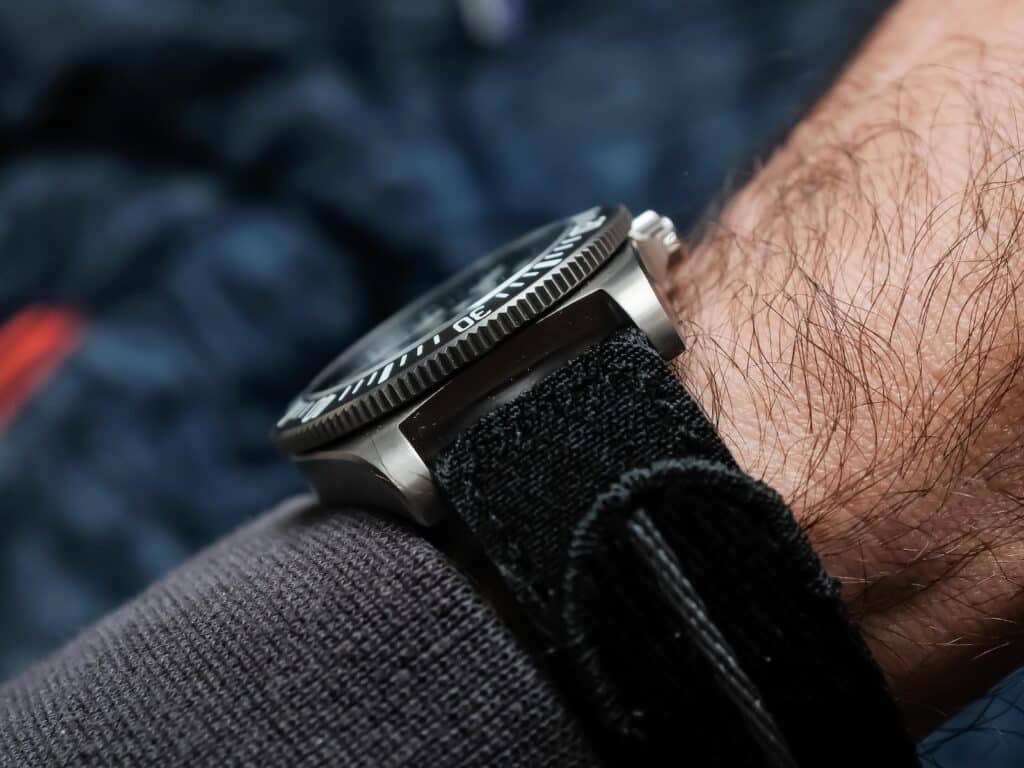
The midcase design is also nicely balanced. The lugs turn downward enough to keep the watch planted, the sides stay relatively clean, and the slight bezel overhang adds some visual depth from certain angles. None of this reinvents the category, but it does feel carefully thought through instead of loosely copied.
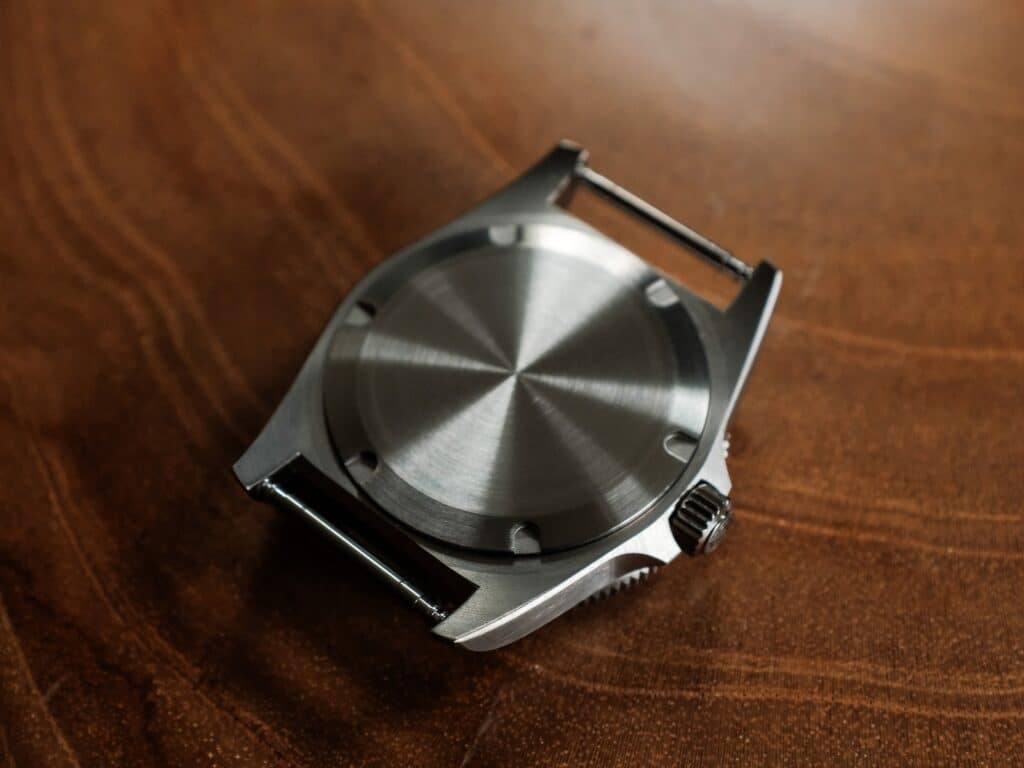
The signed screw-down crown threads smoothly enough in regular use, and together with the screw-down case back, gives the EXD a 200-meter water resistance rating that feels appropriate for the rest of the watch.
The Bezel and the Trade-Offs
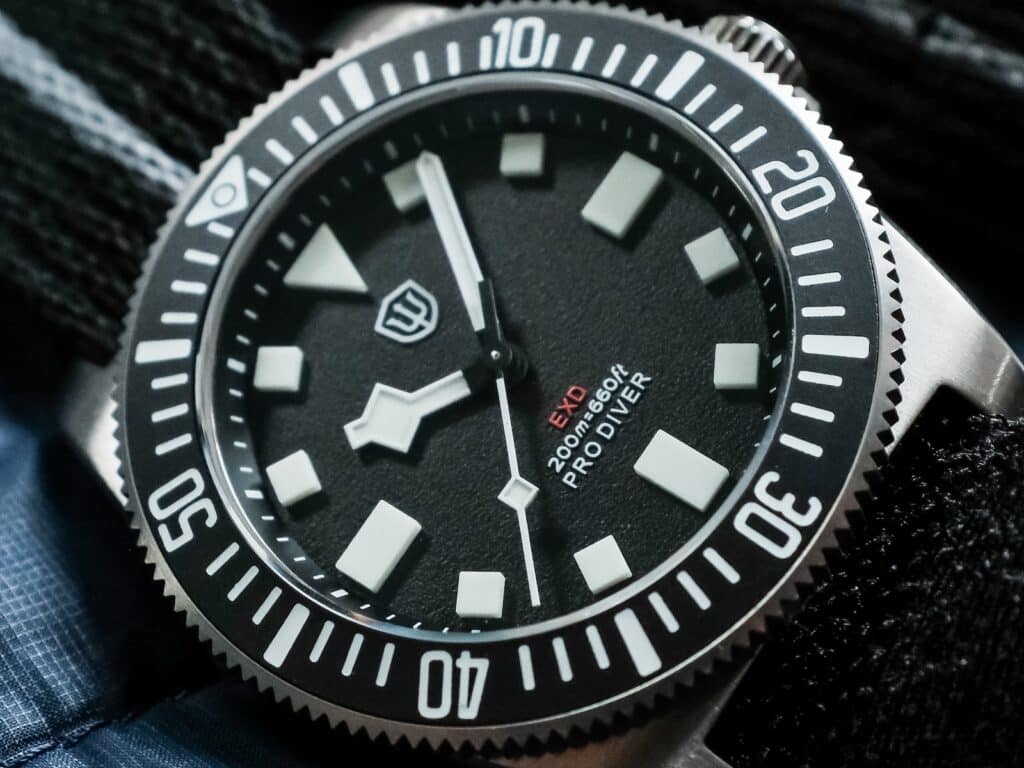
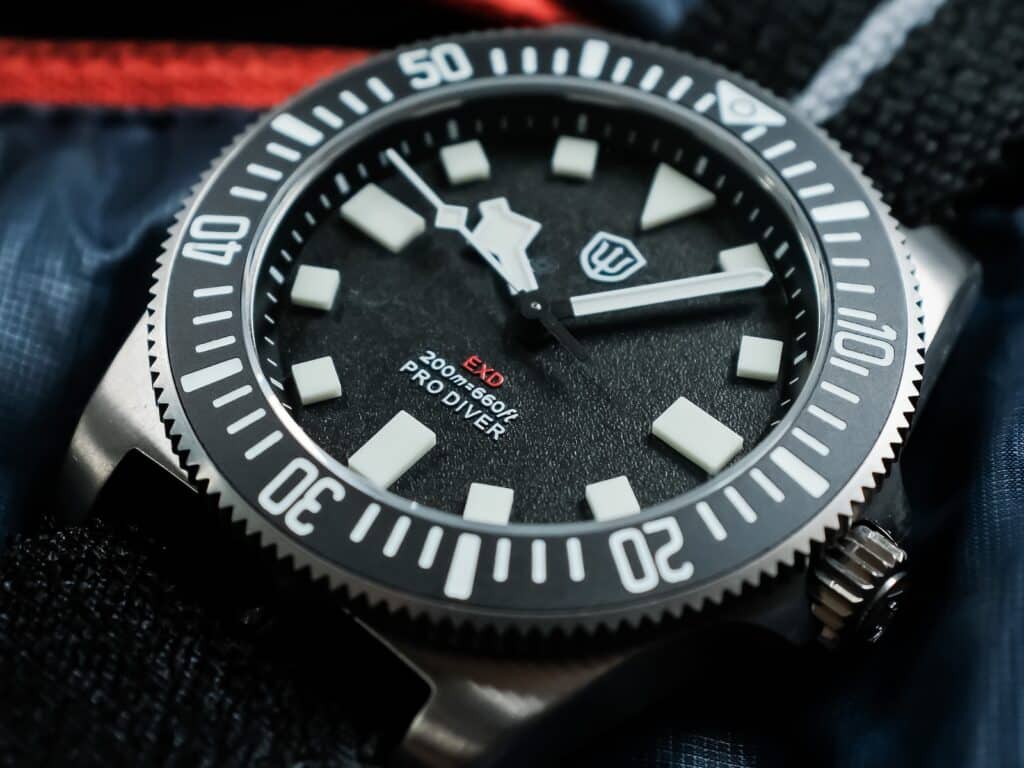
The bezel ended up being one of the more interesting parts of the experience because it’s also where some of the compromises become easier to notice. The fully lumed insert looks great in darker conditions and adds real functionality beyond aesthetics. Grip is excellent too. The deep coin-edge pattern makes the bezel easy to manipulate even with wet hands, and the lighter bidirectional action suits the watch’s low-maintenance personality pretty well.
That said, the bezel doesn’t feel especially tight or overly mechanical in its feedback. There’s a small amount of movement at each stop, and the ratcheting sound has a softer, slightly grainy feel to it. Some collectors will immediately interpret that as a weakness. I didn’t find it particularly bothersome in practice, though it does remind you where the watch sits financially.
Sweeping Quartz
Inside the EXD is Seiko’s VH31 sweep quartz movement. I think Watchdives made the right call using it here. A mechanical movement probably would have looked better on a spec sheet, but I’m not convinced it would have improved the ownership experience. The VH31 gives you a smoother seconds hand than standard quartz while keeping the convenience that makes grab-and-go watches appealing in the first place.
That practicality started making more sense the longer I wore the EXD. The lightweight titanium case, slim proportions, and low-maintenance movement all work toward the same goal. This is a watch designed to be picked up without much thought. No winding, no reset ritual after sitting in the watch box for a few days, and no real concern about accuracy drifting during the week.
At the same time, I can already tell this movement choice will divide collectors a bit. Some people simply want a mechanical movement in a military-inspired diver regardless of price or practicality. I understand that perspective too. Whether the VH31 feels like a compromise or a smart decision probably depends on what you wanted from the EXD before you even put it on your wrist.
Dial and Daily Wear
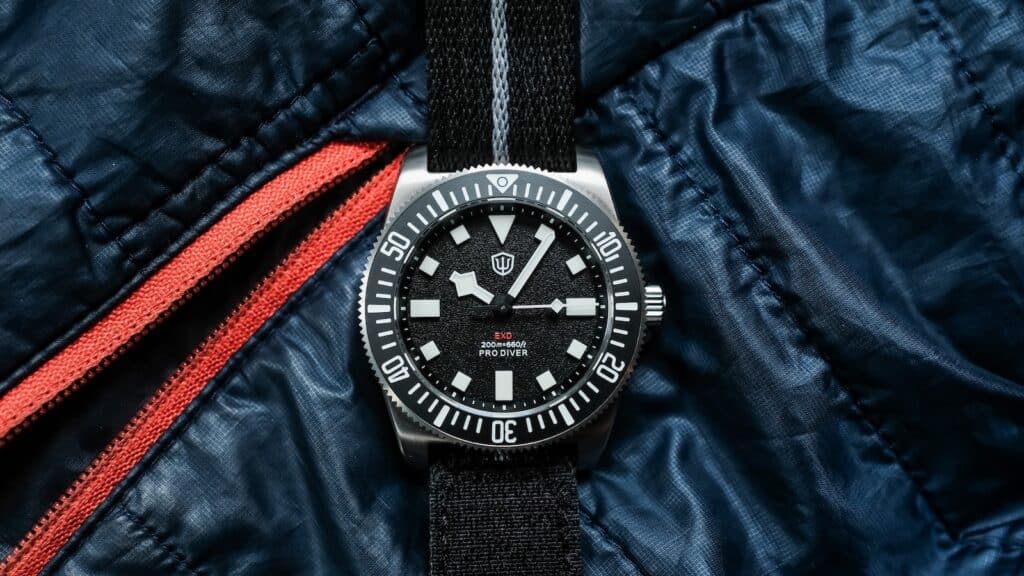
The dial execution ended up being another pleasant surprise. Under the flat sapphire crystal, the EXD keeps things visually restrained. The matte black rehaut slopes inward toward the dial and adds just enough depth without making the watch feel busy.
The coarse matte black dial has a slightly raw appearance that works well with the rest of the watch. Most of the visual impact comes from the contrast between the dark dial surface and the stark white markers and hands. There’s no polished framing around the indices or unnecessary decorative details trying to dress the watch up.

That approach works well here because legibility is excellent. The broad hands and large applied markers make the watch easy to read instantly, while the triangle at 12, elongated markers at 3, 6, and 9, and square plots elsewhere reinforce the instrument-style layout.
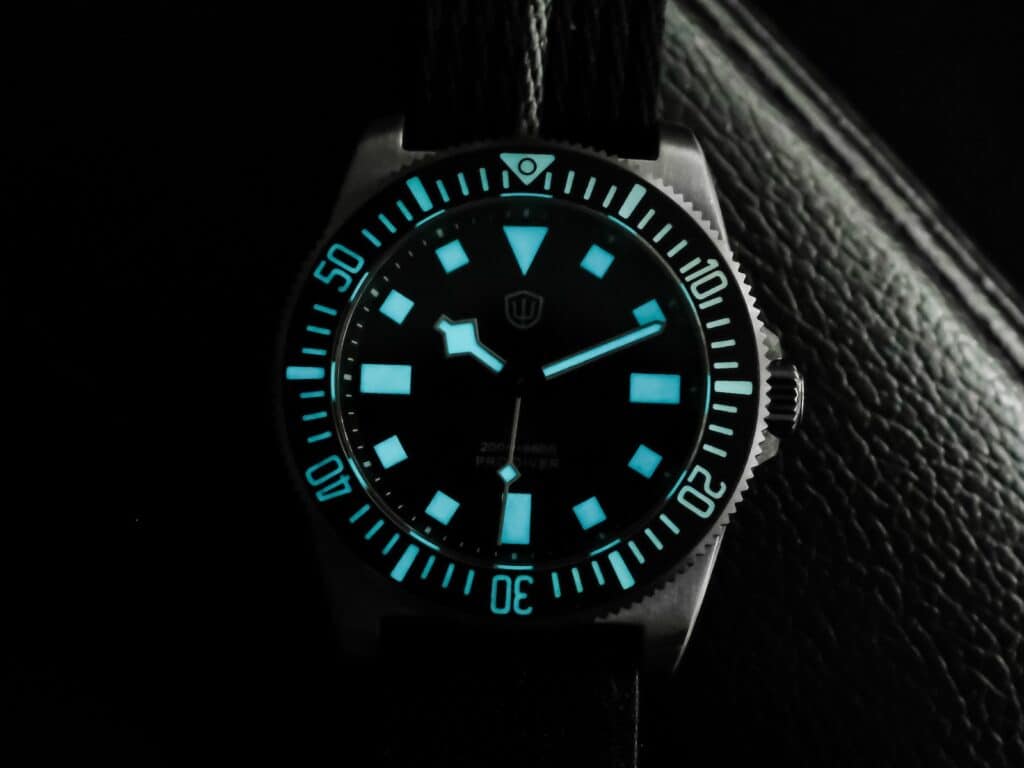
Branding stays minimal too, which I appreciated. The EXD never feels cluttered or eager to fill space with text. Lume performance also delivers above expectations here. The dial and bezel both glow with a strong blue tone that remains visible far longer than I expected, and the application looked surprisingly even throughout the watch.

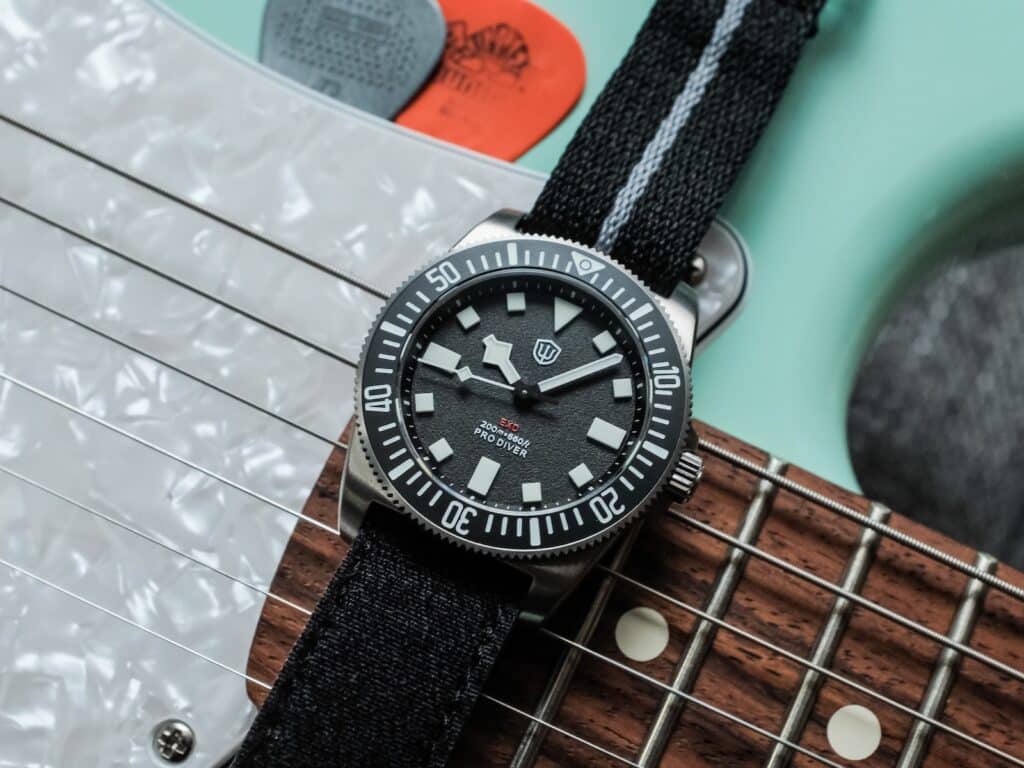
The included Velcro canvas strap fits the overall character of the EXD well enough. It’s soft immediately and wraps comfortably around the wrist without much break-in. The matching titanium hardware also helps the setup feel cohesive right out of the box.
That said, I ended up moving the watch onto a grey CWC NATO fairly quickly because that pairing felt more natural during daily wear. More importantly, the EXD gives you the freedom to experiment in the first place. The use of traditional spring bars instead of fixed lugs keeps coming back as one of the smartest decisions Watchdives made here because it opens the watch up considerably beyond the narrow FXD-style lane it references.
Closing it Out
The Watchdives EXD obviously doesn’t replace the Tudor Pelagos FXD. On paper, the Tudor still exists in an entirely different category when you start looking at movement architecture, overall finishing, and the level of engineering behind the watch itself. It’s one of the stronger modern Tudor models for a reason.
What surprised me is how little that mattered once I settled into wearing the EXD. After a while, I stopped thinking about what the watch was referencing and started appreciating it for what it was doing well on its own. The lightweight titanium case, slim profile, strong lume, and low-maintenance VH31 movement all come together in a way that makes the watch incredibly easy to live with. More importantly, it stays enjoyable long after the novelty of the homage aspect wears off.
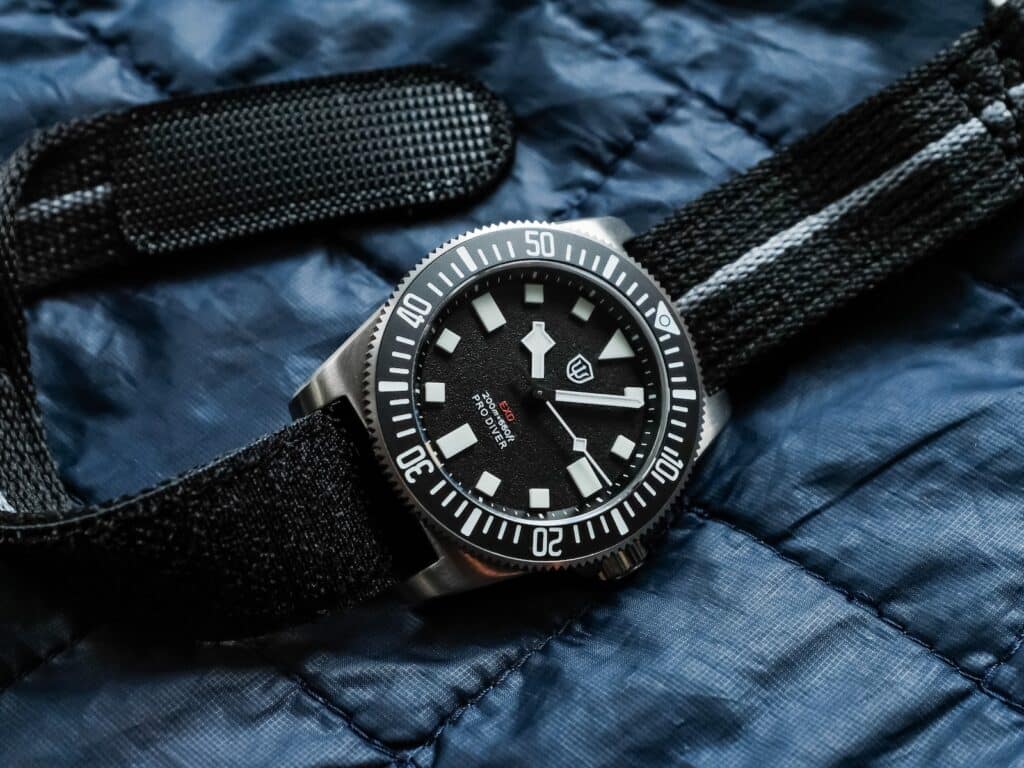
That probably ends up being the biggest strength of the EXD. It understands its assignment. This is not a watch chasing luxury polish or trying to convince you it belongs in some higher tier of collecting. It’s a straightforward tool watch built around comfort, legibility, and everyday practicality, and for $129, it accomplishes that better than I expected it would.

The bigger question is whether getting closer to the FXD experience changes anything emotionally for collectors like me chasing the Tudor itself. For me, I’m still figuring that out. What I do know is that I genuinely enjoyed wearing the EXD, and at no point during the review period did it feel like a disposable placeholder watch pretending to be something else.

Co-Founder & Senior Editor
Michael Peñate is an American writer, photographer, and podcaster based in Seattle, Washington. His work typically focuses on the passage of time and the tools we use to connect with that very journey. From aviation to music and travel, his interests span a multitude of disciplines that often intersect with the world of watches – and the obsessive culture behind collecting them.
Totally enjoyed your article!
Thanks for reading!
It’s a nice watch. That being said , anyone buying a big name watch is not considering an anonymous marque. It’s all about flexing.
I think that’s true for some buyers, but there are plenty of people who just want a well-made watch and couldn’t care less about the name on the dial. The homage market exists because the design works, not just because of what it references.
I agree Michael,.. I love what this watch stands for and it’s a beauty.
My point exactly. But the guy thinking Tudor is not thinking a no name . For the prestige buyer, the name is the game.
That is exactly right – and I’d count myself in that category. In particular, while I respect the artistry, I don’t personally want an automatic that’s less accurate than quartz and costs much more to maintain.
I’ve had an EXD for a week, and I’m very surprised at how much I like it. Basically, I agree with all your points. In particular, I’d say the dial was a little gritty for the first 10 revolutions but feels very natural now (maybe it changed, maybe I changed – IDK!).
Excellent, balanced review.
That’s right. Also, while I certainly respect the history of mechanical movements and their craftsmanship, I’m not interested in it, especially the cost and hassle of maintaining it; that’s what was keeping me from buying a Tudor FXD. I much prefer quartz for its superior accuracy and value. The VH31’s 14,400 vph on the EXD is just icing on the quartz 🎂.
Solid review and nicely balanced IMO. A big fan of quartz movements especially the VH31 so might have biased me a bit but like you said the overall result is pretty solid.
Thanks. The VH31 is easy to like, and I think it deserves more attention than it gets in the enthusiast space. Glad you liked the review.
I might be sold on this if I didn’t already have a couple of electric watches (GA-1000, Lunar Pilot).
But if my son wants a diver….
Hey Robert. Sounds like you’ve already got the quartz side covered. Could be a solid pickup for the kid, though. Passing the watch bug along is half the fun.
Great take on this watch
Thanks for reading, Marc!
Your article is very well written. I am 67 and I have been collecting watches since I was 12.. I used to go to the local flea market. Bought a solid gold Gruen Curvex for 35.00 and sold it for 750.00 and I have been hooked ever since. I like this watch and was surprised by the price. Thank you for your articles
That Gruen Curvex story is incredible. $35 at a flea market is the kind of find that hooks you for life. Glad you’re still at it after all these years, and thanks for the kind words. Appreciate you reading.