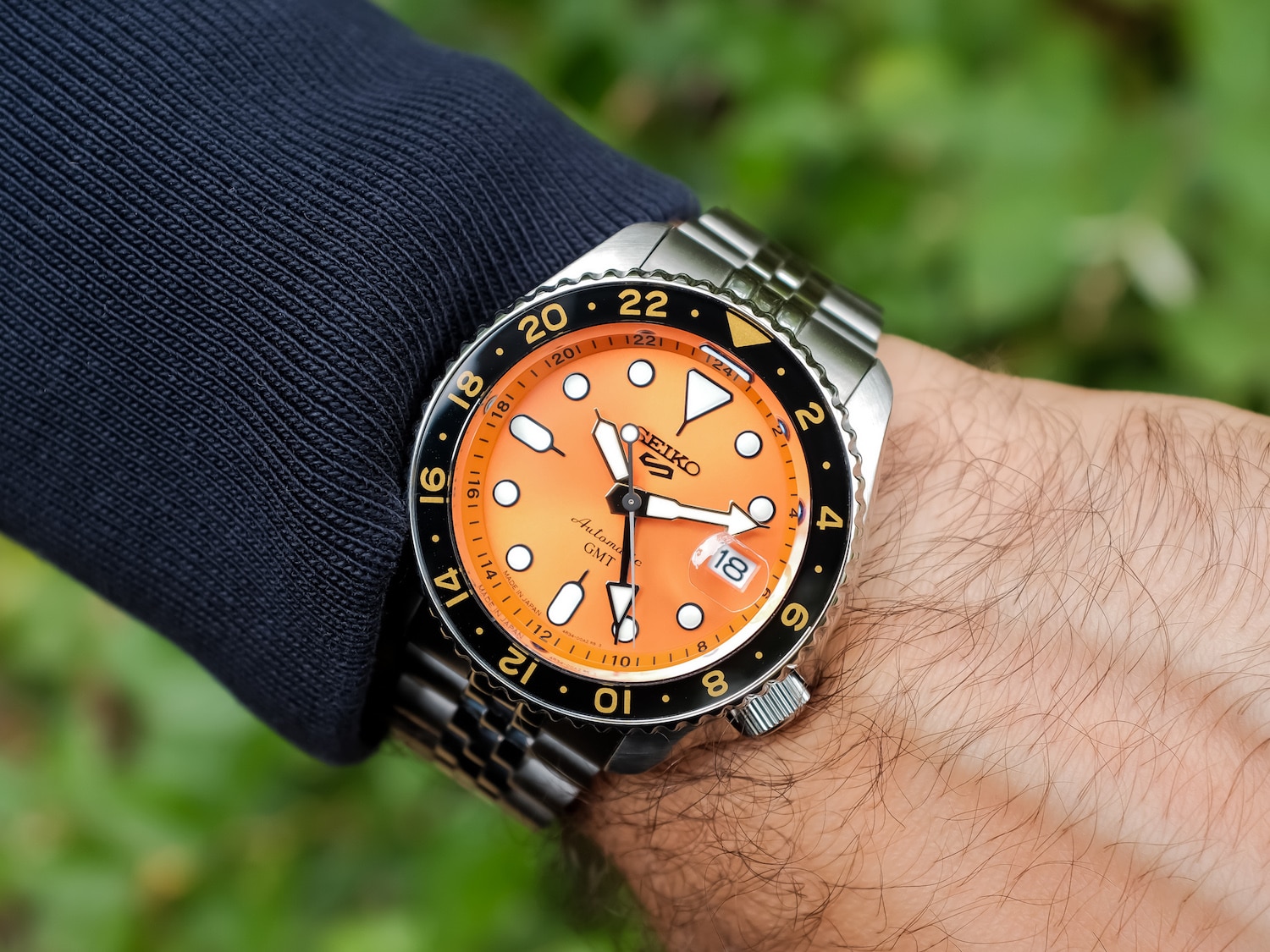
Putting the Seiko 5 GMT up against the Vaer G2 Meridian GMT feels like a fair fight. Both watches land under $500, both track a second time zone with a caller-style movement, and both borrow from designs the hobby has loved for decades. What separates them is philosophy. One is the automatic that finally gave us an affordable in-house GMT movement from Seiko, something I’d been asking for out loud on the podcast for years. The other is a quartz GMT from a California brand that prioritizes convenience, slimness, and everyday reliability.
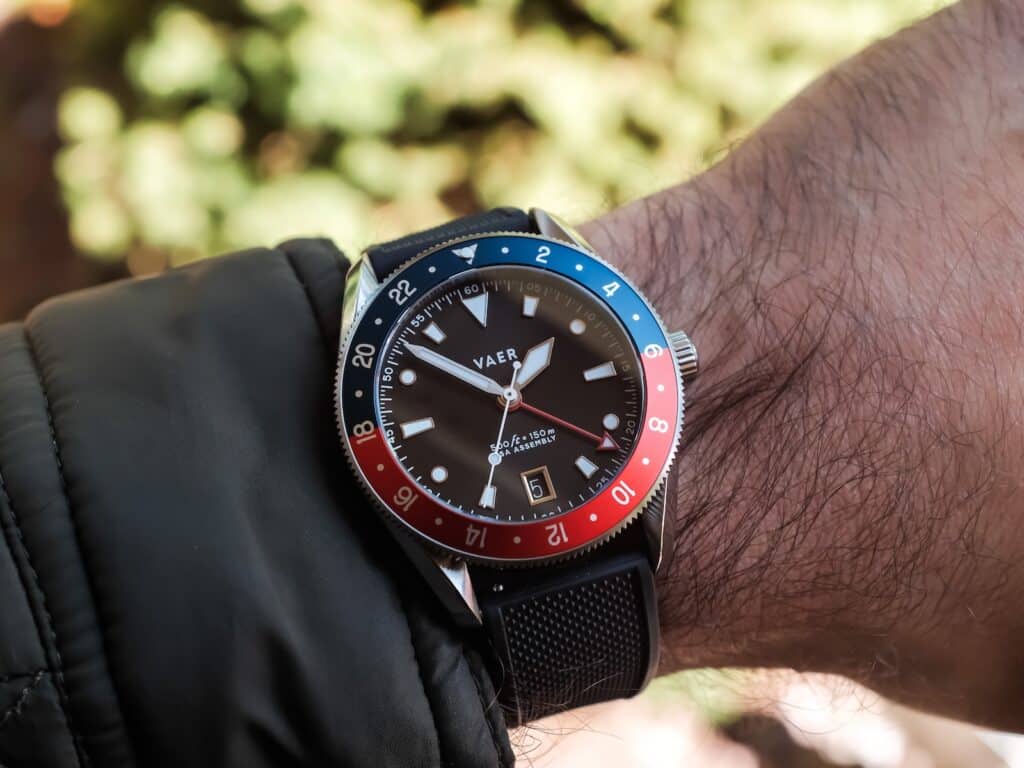
I’ve reviewed both of these watches for TBWS and spent real wrist time with each, so this comparison pulls directly from those hands-on impressions rather than spec sheets alone. The question I kept circling back to is a simple one. When you’re choosing a single affordable GMT, do you want the mechanical charm of a movement you wind and live with, or the grab-and-go practicality of a watch that’s always ready? After wearing both, I think the answer depends on what kind of collector you are, and the differences turned out to be more interesting than the price tags suggest.
Overview and Identity
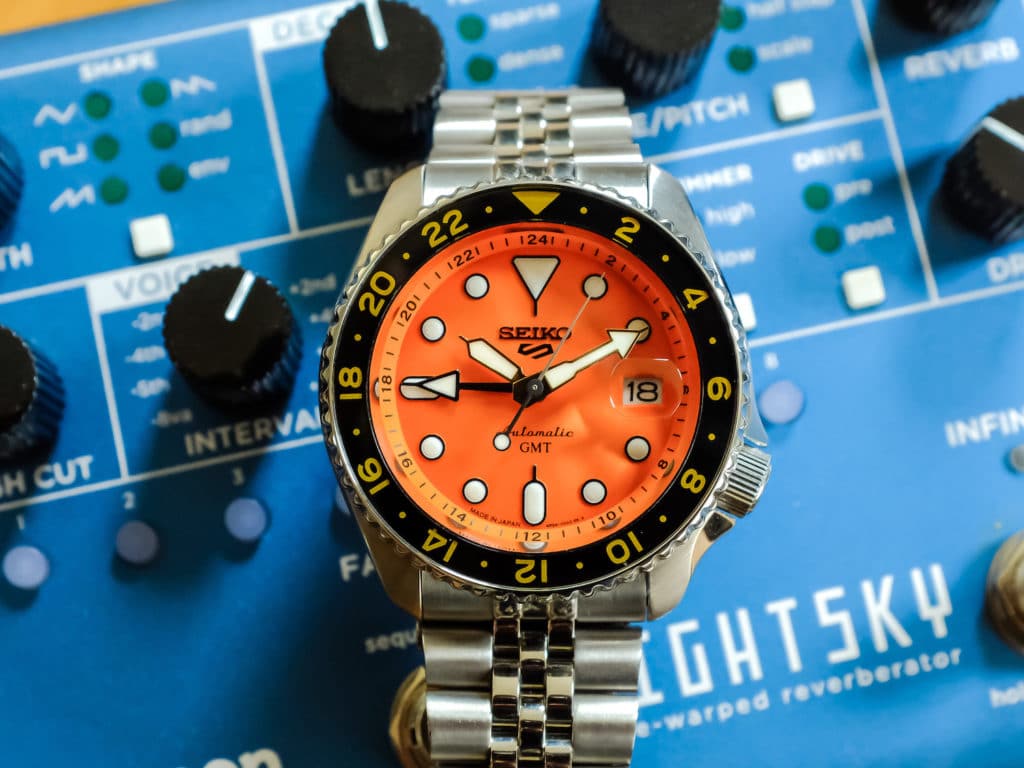
The Seiko 5 GMT exists because Seiko finally listened. Long ago on the podcast, I claimed the old SKX007-style case was superior to the Rolex Submariner’s, and that if Seiko ever dropped a GMT movement into it, the result would be close to an end-game watch for me. Then the SKX line was discontinued, the revamped Seiko 5 Sports collection arrived in 2019, and in 2022 the SSK series delivered exactly the watch I used to daydream about. When I reviewed the orange SSK005, I called the 4R34 a movement about to transform affordable automatic GMT offerings everywhere. A few years on, with NH34-powered microbrand GMTs all over the market, that prediction aged pretty well.
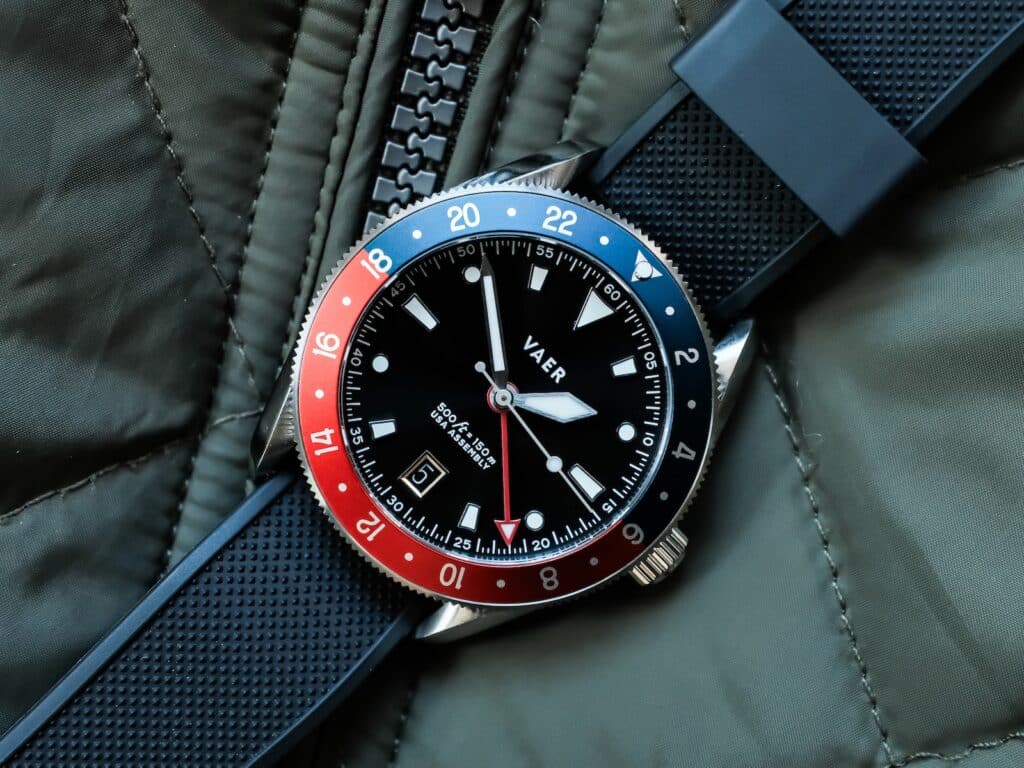
The Vaer G2 Meridian GMT comes at the category from the opposite direction. It wears the familiar Pepsi bezel that every brand eventually takes a swing at, but Vaer’s whole identity is built around usability and everyday wear rather than manufactured heritage. When I reviewed the G2 Meridian, what struck me was the restraint. An aluminum insert instead of ceramic, a solid caseback, a quartz movement chosen on purpose, and a footprint that disappears on the wrist. It never pretends to be a vintage tribute or a luxury alternative. It’s a travel tool that happens to look good, and that clarity of purpose is rarer than it should be at this price.
- The Seiko 5 GMT is the affordable automatic GMT enthusiasts spent years asking for, built around the familiar SKX-derived case shape that started the whole conversation.
- The Vaer G2 Meridian is a quartz Pepsi GMT with a practicality-first identity, aimed at people who want a travel watch rather than a heritage story.
Dial, Bracelet & Wearability: Sunray Depth vs Lightweight Restraint
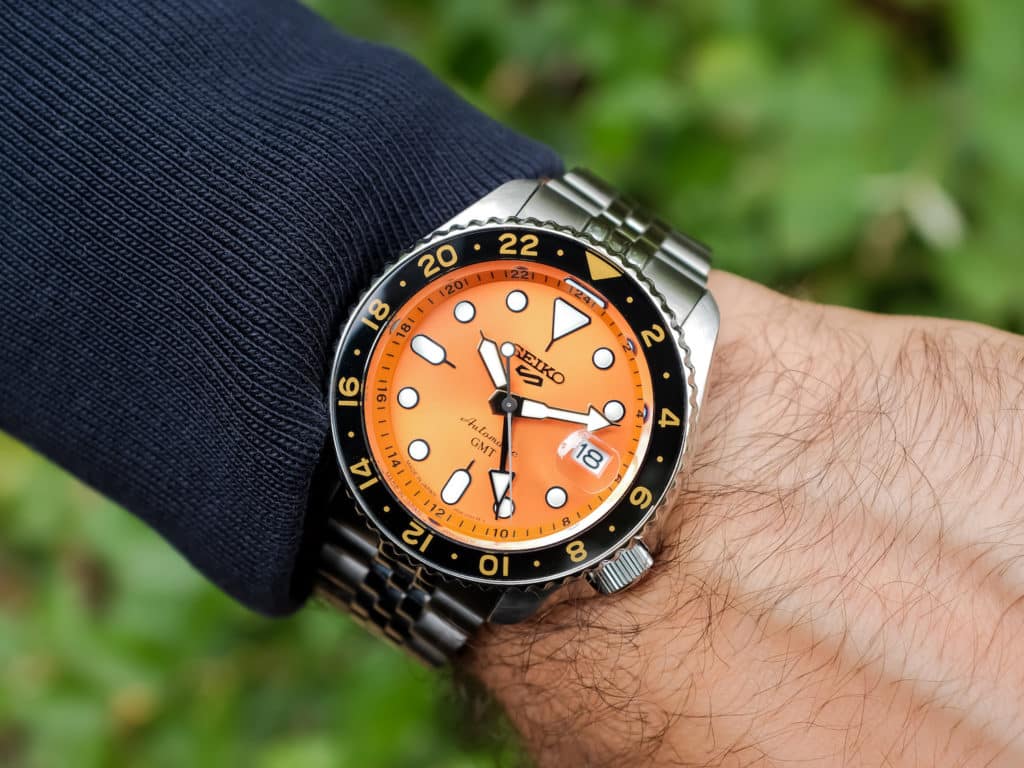
The Seiko 5 GMT’s dial is doing more than its price suggests. On my orange SSK005, the sunray finish shifts constantly in the light, and the applied indices with black surrounds read more refined than what I’ve seen on some Prospex models. The gilt hour and minute hands feel like a tribute to the SKX011J, while the glossy black GMT hand ties into the inner 24-hour scale on the chapter ring. There’s real depth here without a crowded look. My one hesitation was personal taste. The orange paired with that sunray pattern never fully clicked for me, which is why I’d point most people toward the black SSK001 or blue SSK003.
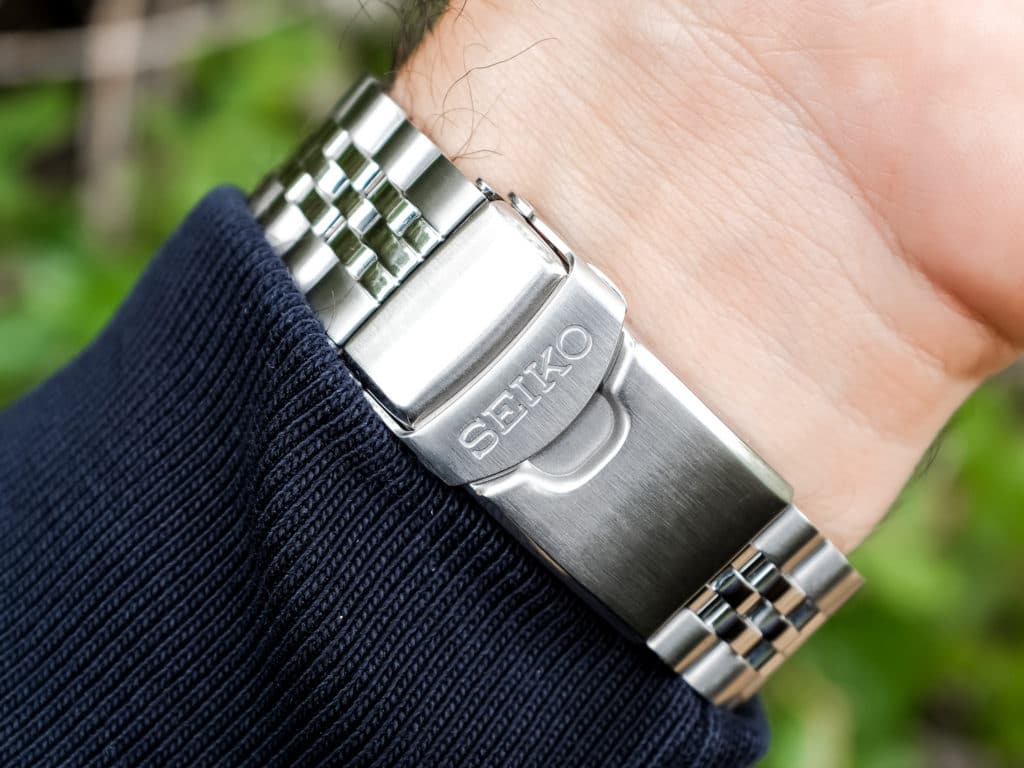
The bracelet is classic Seiko 5, and I mean that as a compliment. It’s a jangly, lightweight, jubilee-style bracelet with a 22mm width tapering toward the clasp, and it feels instantly familiar to anyone who owned an SKX. The clasp is stamped and comes with a dual push-button release, and I’ve watched people complain that it doesn’t feel premium enough. I disagree. A cheap-feeling, lightweight stainless bracelet suits this watch perfectly, and I miss the one on my old SKX all the time. At 42.5mm across and 13.6mm thick, the case sounds big on paper, but those melted-looking lugs and the 46mm lug-to-lug keep it wearing smaller than the numbers suggest.
The Vaer’s dial walks a familiar line with enough small decisions to avoid feeling derivative. Applied markers add depth, the date at six keeps things balanced, and legibility is strong in daylight and low light alike. The lume covers enough of the hands and markers to be usable rather than a party trick. What stood out to me most is that despite the vintage cues, the watch reads as a modern interpretation that borrows what works and leaves the rest behind.
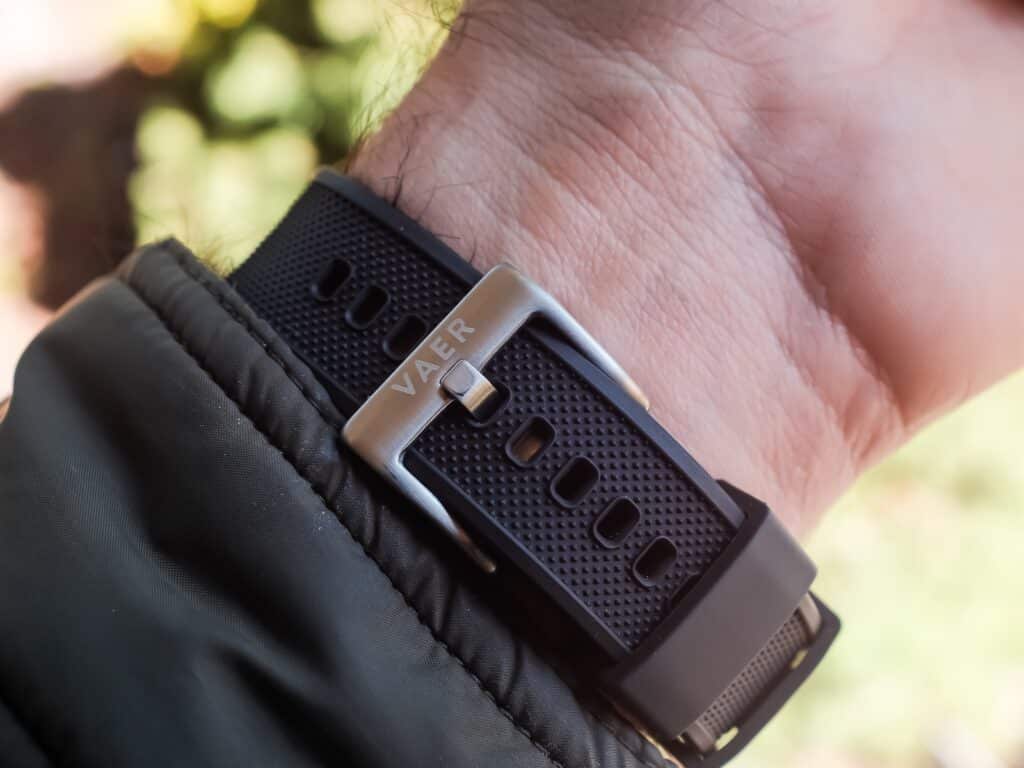
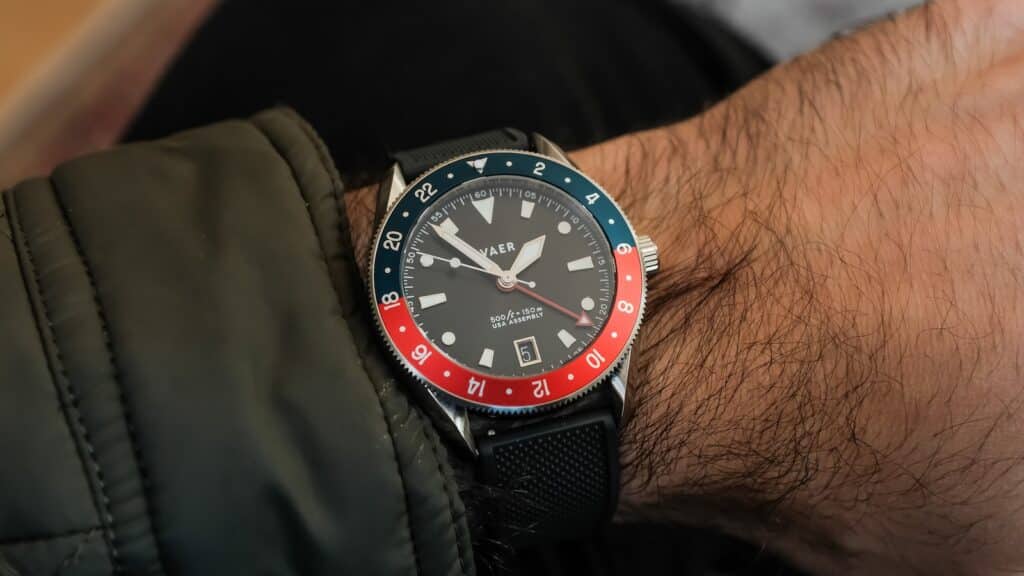
On the wrist is where the G2 Meridian pulls away. At 39mm across, 46mm lug-to-lug, and just over 10mm thick, it wears flatter and lighter than almost any GMT I’ve handled at this price. I spent most of my review period on the rubber strap, which tapers nicely and feels more substantial than Vaer’s earlier entry-level straps. The included NATO is a fine extra, though it ran stiff for my liking and I kept returning to the rubber. Between the two watches, the Vaer is the one you forget you’re wearing by mid-morning.
- The Seiko 5 GMT delivers a deeper, more characterful dial and a nostalgic jubilee-style bracelet, though the 42.5mm case asks for a little more wrist.
- The Vaer G2 Meridian trades some dial personality for effortless wearability, with a thin, light case and a rubber strap that suits its travel-watch mission.
Build Quality & Technical Approach
These two share a category and a price bracket, but the engineering priorities split fast once you get past first impressions. Seiko spent its budget on an in-house automatic movement and dial execution. Vaer spent its budget on case refinement, water resistance hardware, and a movement chosen for zero-maintenance reliability. Neither approach is wrong. They’re just answering different questions about what an affordable GMT should be.
Movements:
Neither watch is a true traveler GMT because both independently adjust the GMT hand rather than the local hour hand. That means they are better at tracking a second time zone than quickly changing local time after landing.
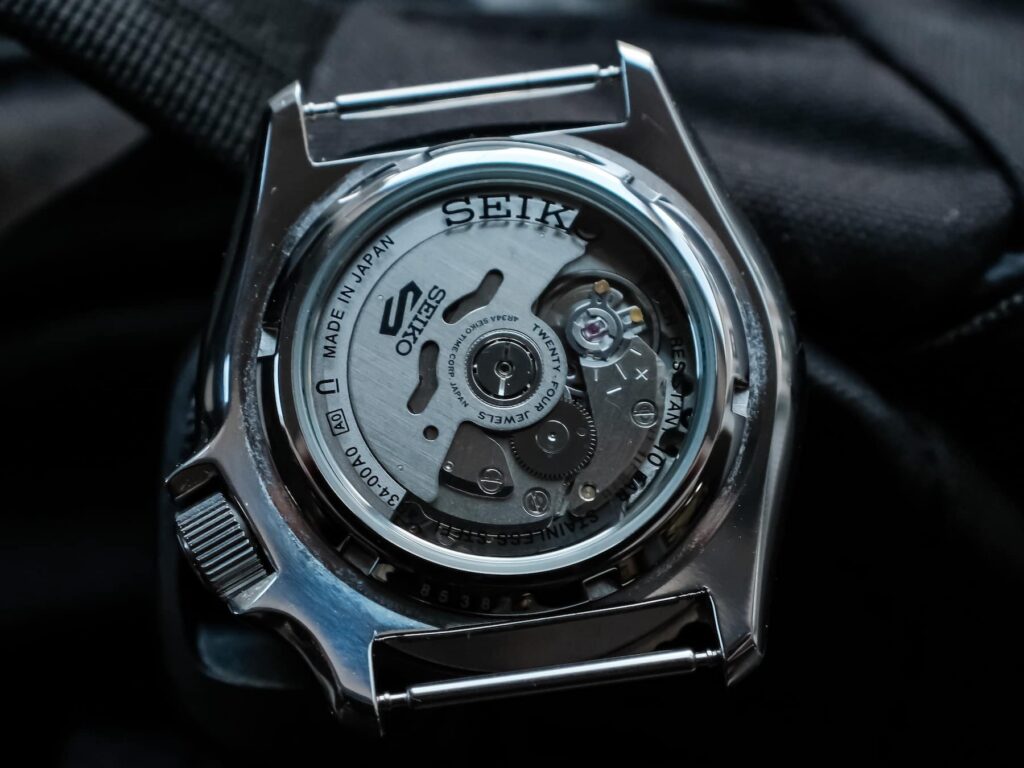
The Seiko 4R34 is the headline here, and honestly, it’s the reason this watch matters. An in-house automatic caller GMT with hacking, hand winding, and roughly 41 hours of power reserve, at this price, from Seiko, still feels a little unreal. During my time with the SSK005 it tracked a second time zone without complaint, and I stayed punctual through every engagement that mattered. The stated accuracy range is loose by modern standards, which is typical for the 4R family, but my example behaved well. The date and GMT hand both set from the crown’s second position, exactly like any other caller GMT.
The Vaer runs the Swiss-made Ronda 515.24H, a quartz caller GMT that shows up in a number of accessible travel watches. Going in, quartz wasn’t something I needed to warm up to. I already enjoy it for what it offers, and here it reinforces the watch’s whole character. You adjust the 24-hour hand independently, the independently adjustable GMT hand makes tracking another time zone straightforward, and the battery stretches out to several years. It’s always ready and always running. After the novelty wears off, that consistency becomes more valuable than any mechanical complexity, at least for the role this watch is built to fill. Neither watch is a true traveler GMT because both independently adjust the GMT hand rather than the local hour hand.
Case Construction & Finishing:
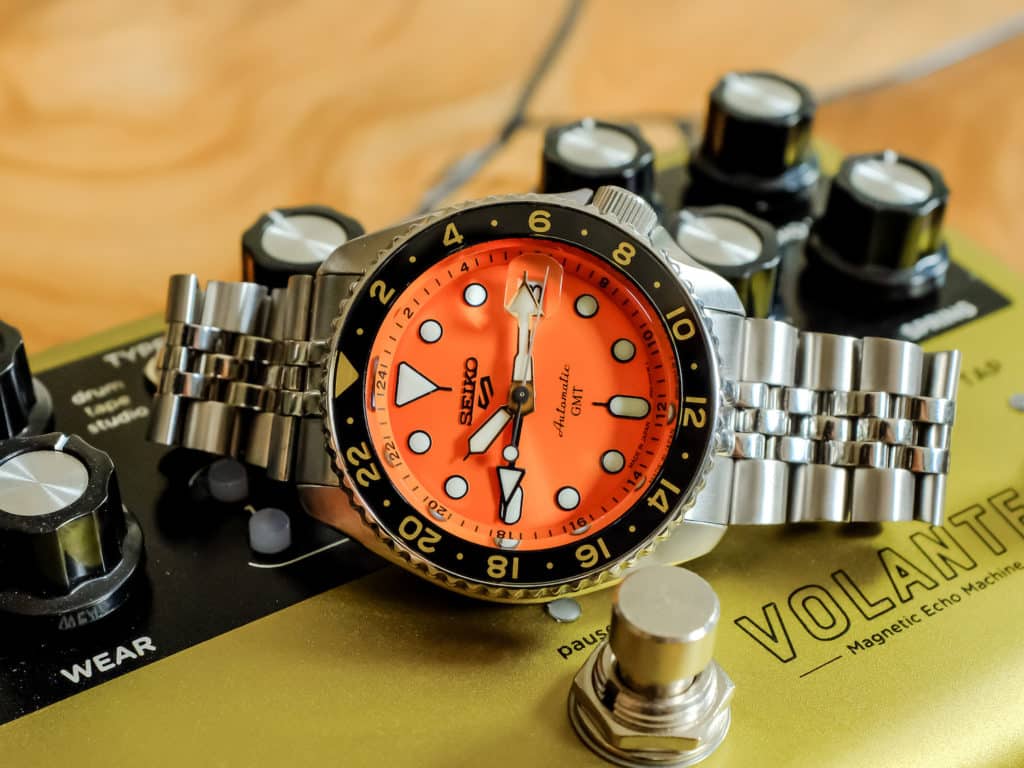
The Seiko’s case is the SKX story continued. You get the asymmetrical crown placement with guards, one of my favorite design features from the old divers, plus that mix of brushed and polished finishing across those organic, melted-looking lugs. The exhibition caseback is one of the biggest structural changes from the SKX days, while the GMT construction contributes to its substantial 13.6mm profile. It’s a case with decades of goodwill behind it, and Seiko wisely changed very little.
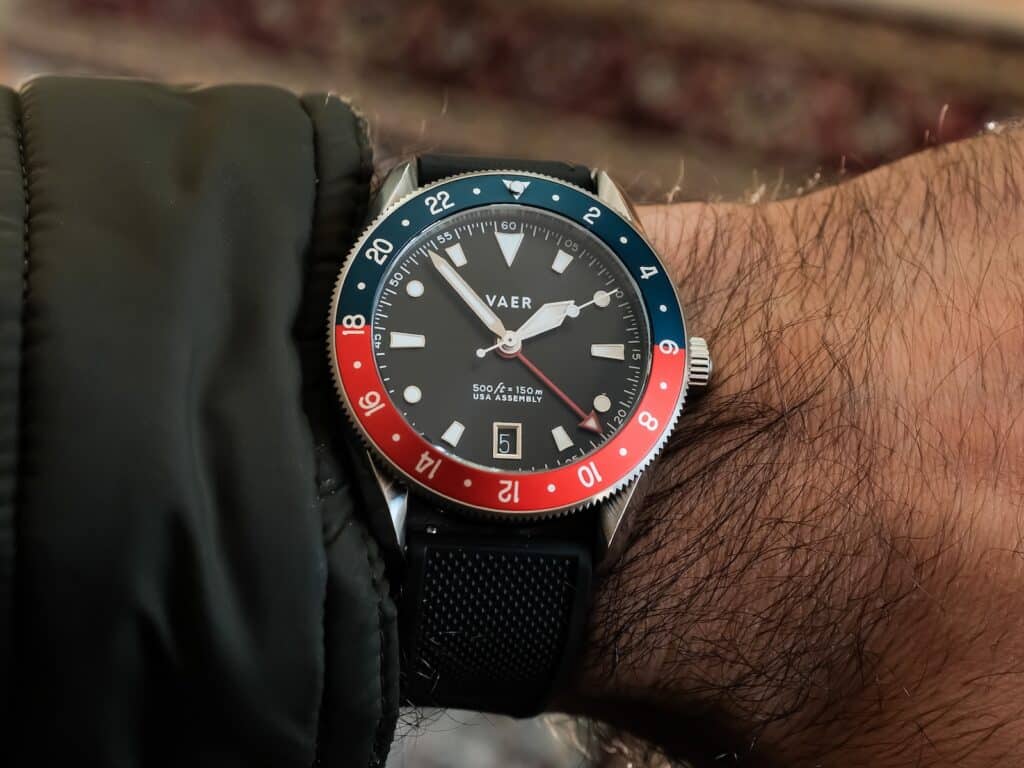
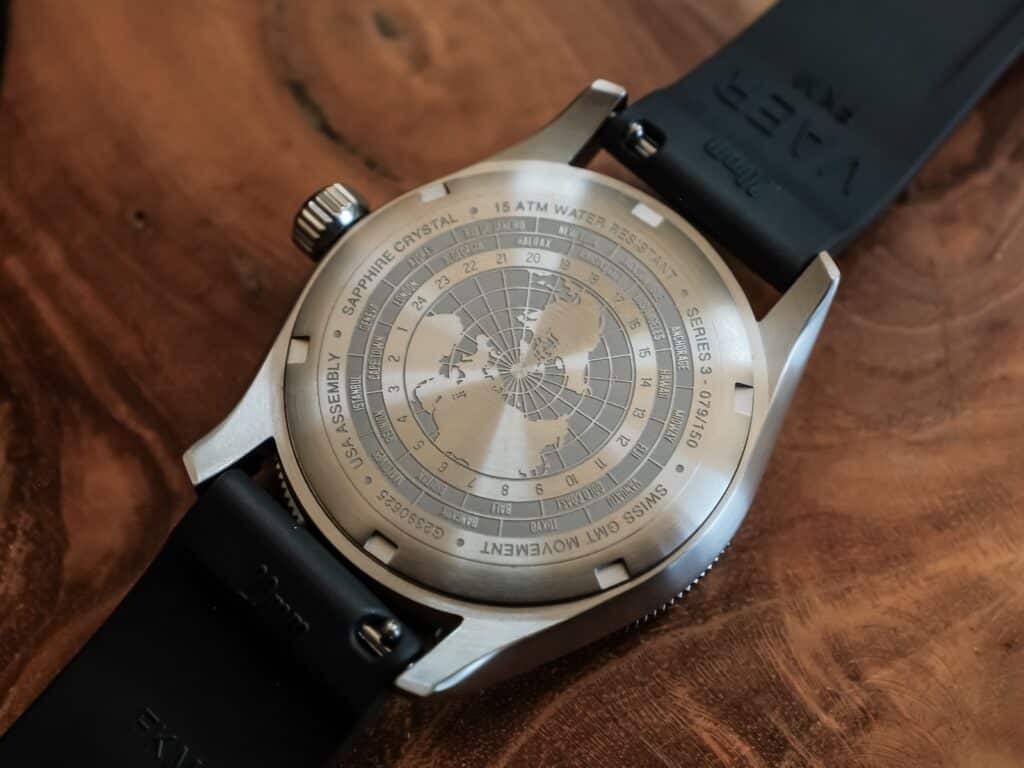
The Vaer’s case is subtle and, in some ways, more complete. The brushed and polished mix keeps it from feeling overly utilitarian without crossing into anything precious. The screw-down crown is easy to grip, the solid caseback carries an engraving that adds personality without becoming a focal point, and the thin profile does most of the talking. Nothing here demands attention, which is exactly why it works as a daily piece.
Crystals & Bezels:
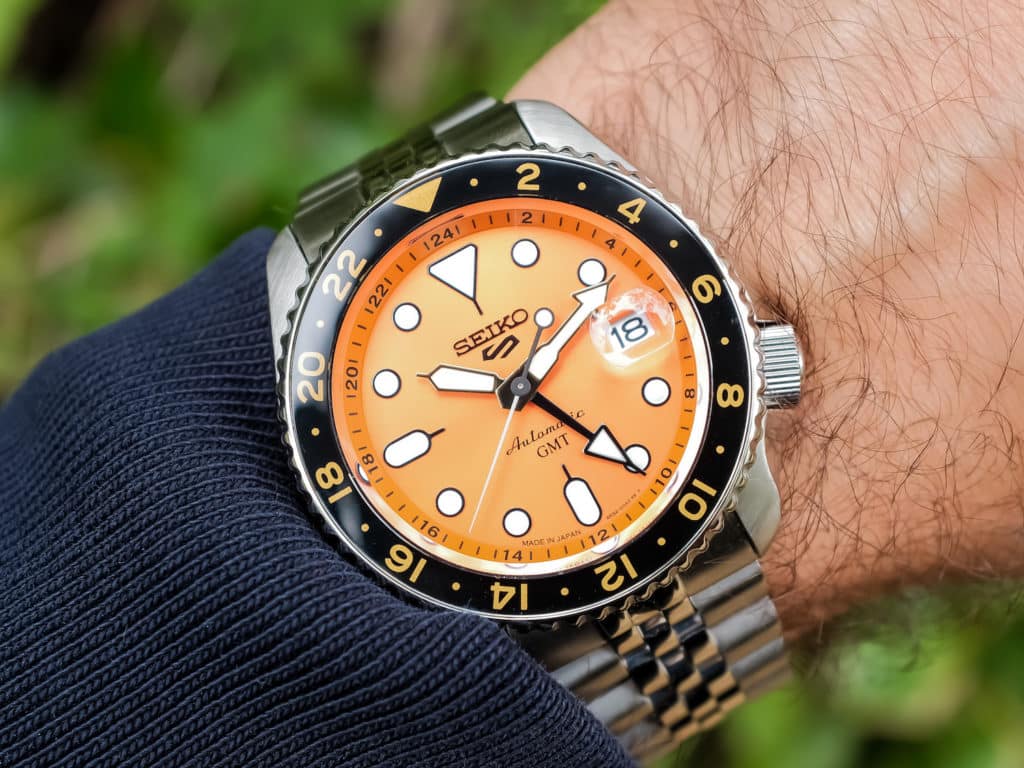
Seiko fits the SSK with Hardlex up front, complete with a take-it-or-leave-it cyclops over the date. The bezel is the more interesting story. It’s bi-directional and free-floating with no clicks, topped with a glossy, crystal-like covering that gives the insert unusual depth. The party trick is how Seiko visually bisected the 24-hour scale, so the daylight portion reacts with greater reflectivity and creates a shifting black and grey division depending on the angle. I’d never seen anything like it on a Seiko before, and it still might be my favorite detail on the watch.
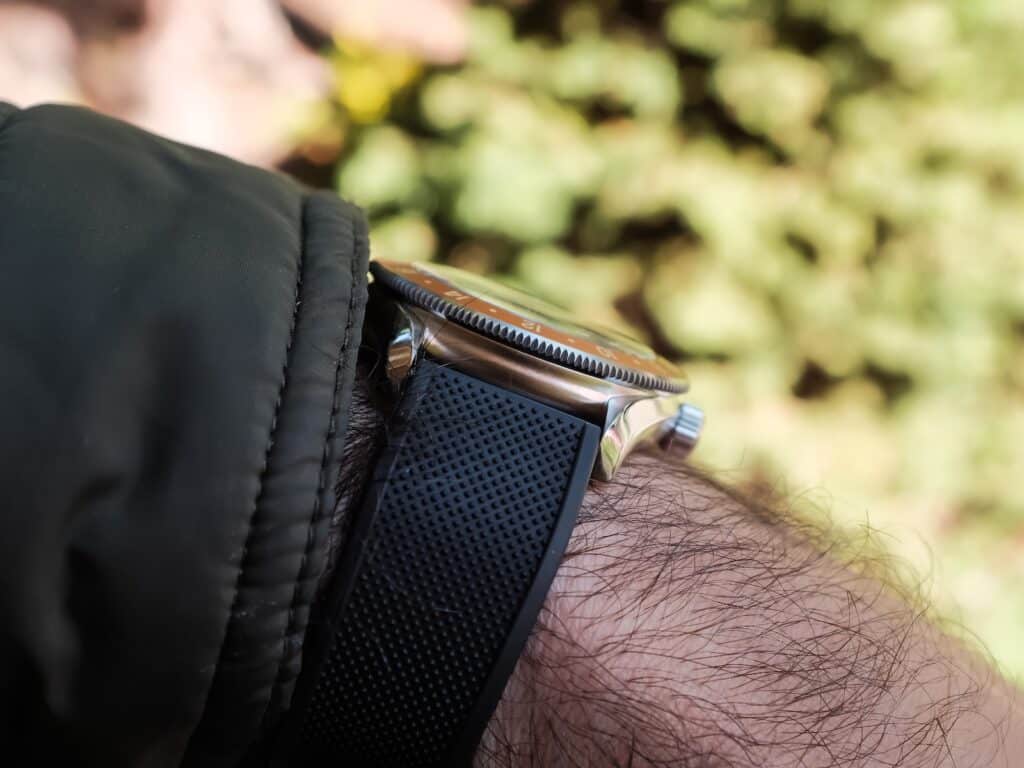
The Vaer takes the conventional route with a bidirectional bezel, defined clicks, and an aluminum Pepsi insert. The action feels good in isolation, and setting a second time zone is easy. There is some play, though, and more noticeably, the alignment on my example didn’t always land perfectly on the markers. It was the one detail that consistently stood out during wear. It’s a small thing, and far from a dealbreaker, but it’s the kind of miss some collectors won’t be able to ignore once they see it.
Water Resistance & Lume:

The Seiko carries 100m of water resistance with a push/pull crown, and I’ll admit I wrestled with this. Part of me still thinks a screw-down crown and a 200m rating would have made the watch perfect. In practice, Spencer Klein’s pressure test showed the case handles far more than I’d ever put it through, and the vintage TR-900 military diver never had a screw-down crown either. The LumiBrite application is classic Seiko, which is to say excellent, with strong charge and glow across the indices and hands.
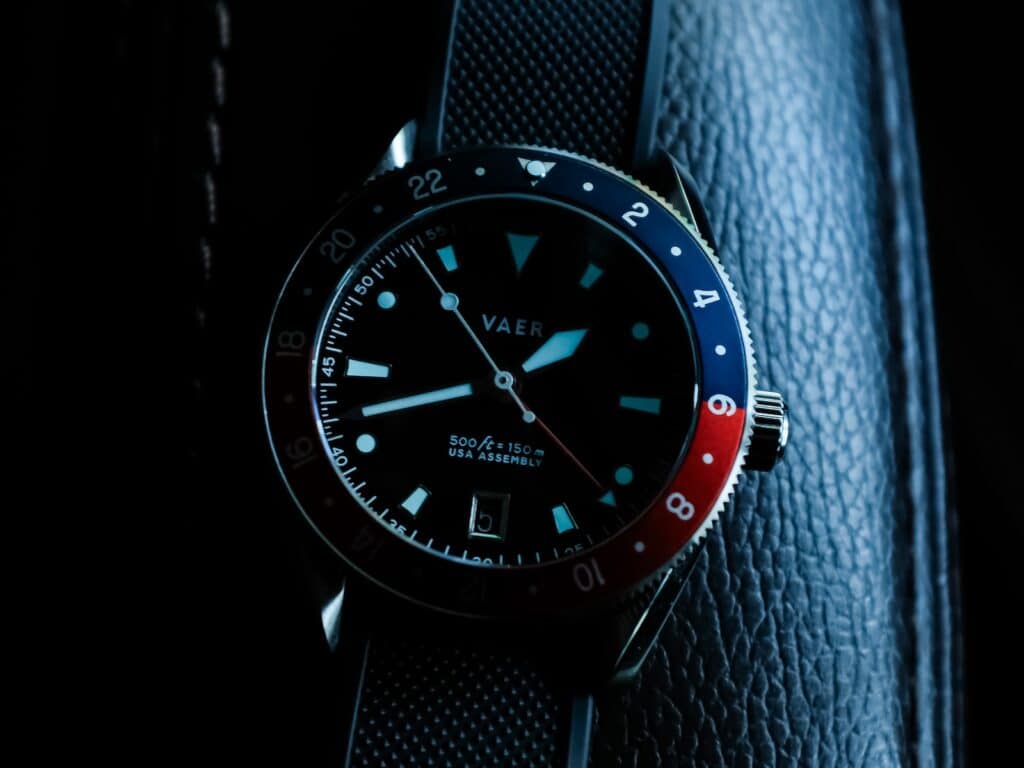
The Vaer answers with 150m of water resistance backed by an actual screw-down crown, which wins this particular spec battle. In real-world terms, that rating removed any hesitation about wearing it in situations where a GMT might not be the first pick, and I never thought twice about it. The lume holds up well too, with enough coverage on the markers and hands to stay usable through the night rather than fading after a few minutes.
- The Seiko 5 GMT wins on movement significance and dial execution, with the in-house 4R34 and that bisected bezel as standout details, though the push/pull crown and 100m rating remain compromises on paper.
- The Vaer G2 Meridian wins on practical hardware, pairing a screw-down crown and 150m rating with a zero-maintenance Ronda quartz GMT, though the bezel alignment on my example was a consistent annoyance.
Cost Considerations
The Seiko 5 GMT launched at $475 back in 2022, and Seiko’s official pricing now sits at $495. Street prices from major online dealers routinely dip below that, sometimes near the $400 mark, which keeps the value story intact. The colorway situation has also expanded well beyond the original black, blue, and orange trio, so there’s more room to find a dial that suits you than when I reviewed mine. Factor in the eventual cost of servicing an automatic movement and the buy-in extends a bit beyond the sticker, but that’s true of any mechanical watch at this level.
The Vaer G2 Meridian comes in at $399 and includes both the rubber strap and a NATO in the box. Ownership costs after that are about as low as watches get. A battery swap every several years is the entire maintenance plan, which fits the grab-and-go brief perfectly. You’re paying slightly less up front, and long-term maintenance should generally cost less than it would for the automatic Seiko. Whether that math matters depends entirely on whether you see maintenance as a chore or as part of the mechanical experience.
Final Thoughts: Which Affordable GMT Earns the Travel Slot?
After living with both, I’ve stopped thinking of these as competitors and started thinking of them as answers to two different questions. The Seiko is the watch you buy because the object itself delights you. The in-house movement, the SKX lineage, the bezel trick, the jangly bracelet, all of it adds up to a watch with character and a story I got to watch unfold from wish to reality. The Vaer is the watch you buy because your life includes airports, pools, and mornings where you don’t want to think about what’s on your wrist.
So here’s my verdict:
- Choose the Seiko 5 GMT if the mechanical experience is the point. The 4R34 remains a landmark movement at this price, the SKX-derived case has real history behind it, and the whole package rewards the kind of collector who enjoys winding, setting, and living with an automatic.
- Choose the Vaer G2 Meridian if practicality wins your internal debate. The thin, light case, screw-down crown, 150m rating, and always-ready quartz movement make it the easier watch to bring traveling because it is thinner, quartz-powered, and always ready, provided you can make peace with an aluminum insert and a bezel that may not align perfectly.
If I’m honest about my own habits, the Seiko is the one I’d daydream about and the Vaer is the one I’d grab at 5 a.m. on the way to the airport. Those are two very different kinds of affection, and I’m not sure one is worth more than the other. The affordable GMT space has never been this good, and the fact that this choice is even difficult tells you everything about where the category is right now.

Co-Founder & Senior Editor
Michael Peñate is an American writer, photographer, and podcaster based in Seattle, Washington. His work typically focuses on the passage of time and the tools we use to connect with that very journey. From aviation to music and travel, his interests span a multitude of disciplines that often intersect with the world of watches – and the obsessive culture behind collecting them.