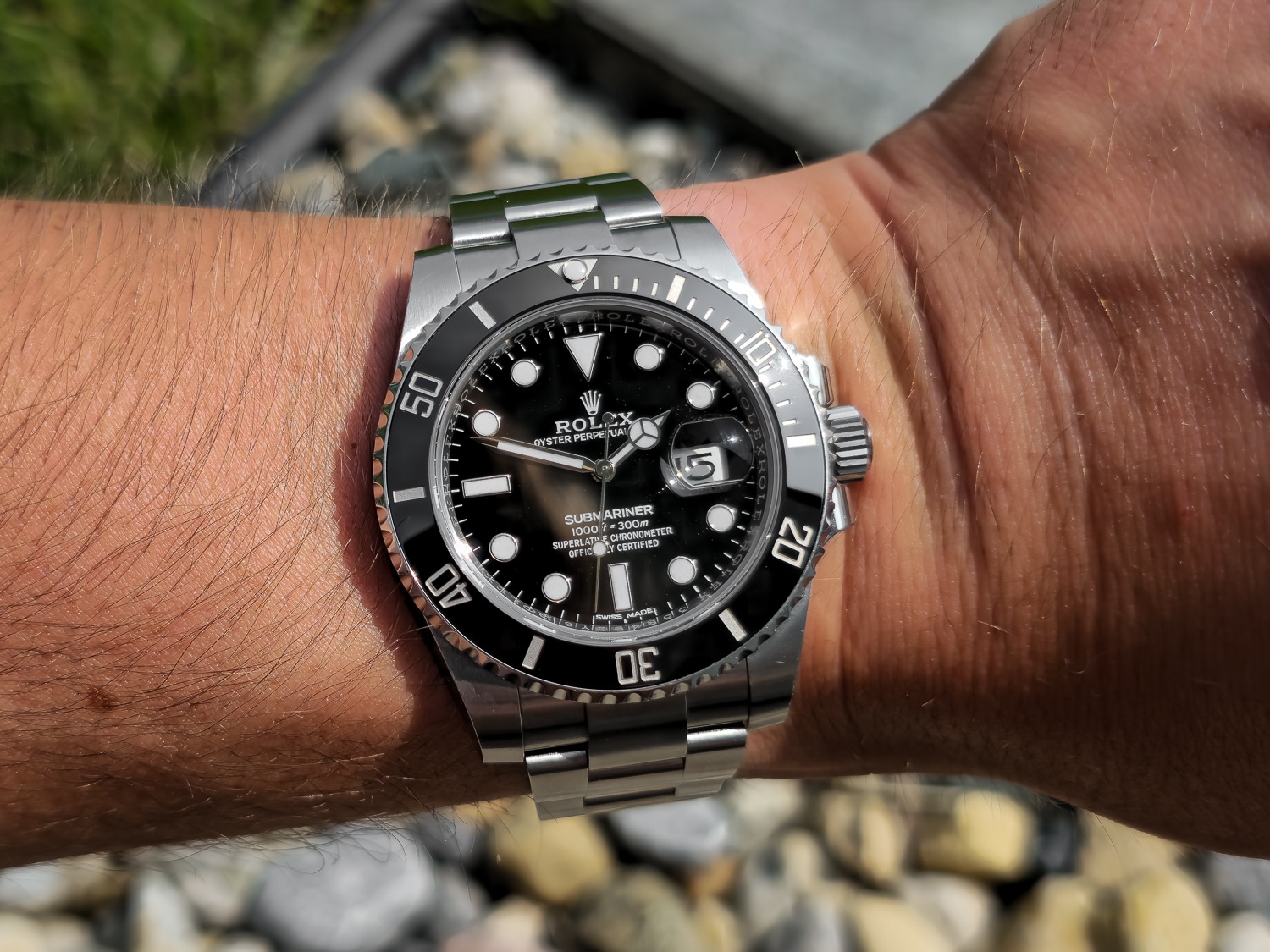
There are some watches you recognize before you’ve even had time to think about what you’re looking at. The Rolex Submariner is one of them. That familiar case, bezel, dial layout, and overall shape have become so deeply associated with the idea of a dive watch that we still catch ourselves using the Sub as a reference point whenever we put another diver on the wrist. After years of reviewing and wearing everything from Citizen and Casio to Tudor, Omega, Sinn, Doxa, and Glashütte Original, that benchmark is hard to escape.
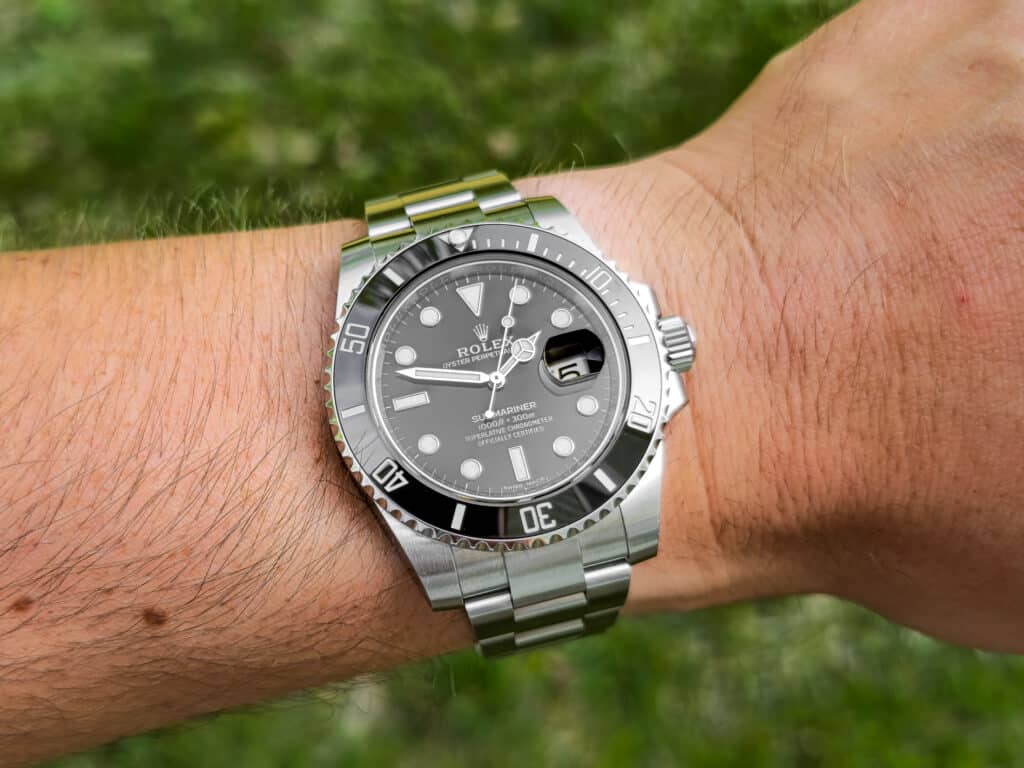
But the more dive watches we handle, the less straightforward that benchmark becomes. The Submariner may still be the reference, but the more dive watches we wear, the harder it becomes to treat that as the end of the discussion. Some alternatives we’ve worn offer more specialized tool-watch credentials, others deliver a different kind of refinement, and a few make us question how much of the Rolex experience most people actually need. So, does the Submariner still deserve to be the standard for dive watches, or has the category evolved enough that the benchmark and the best choice are no longer the same thing? That’s what we’re putting to the test here: its design, its real-world tool-watch credentials, and whether we’d still recommend it over the alternatives we’ve actually worn.
What Does “Dive Watch Standard” Actually Mean?
After you’ve worn enough dive watches, you start to notice that “standard” gets used pretty loosely. Sometimes it means the watch everyone recognizes. Sometimes it means the one with the strongest specifications. And sometimes it simply means the watch people keep bringing up whenever another diver comes along. With the Submariner, all three ideas tend to get mixed together. We think they’re worth separating.
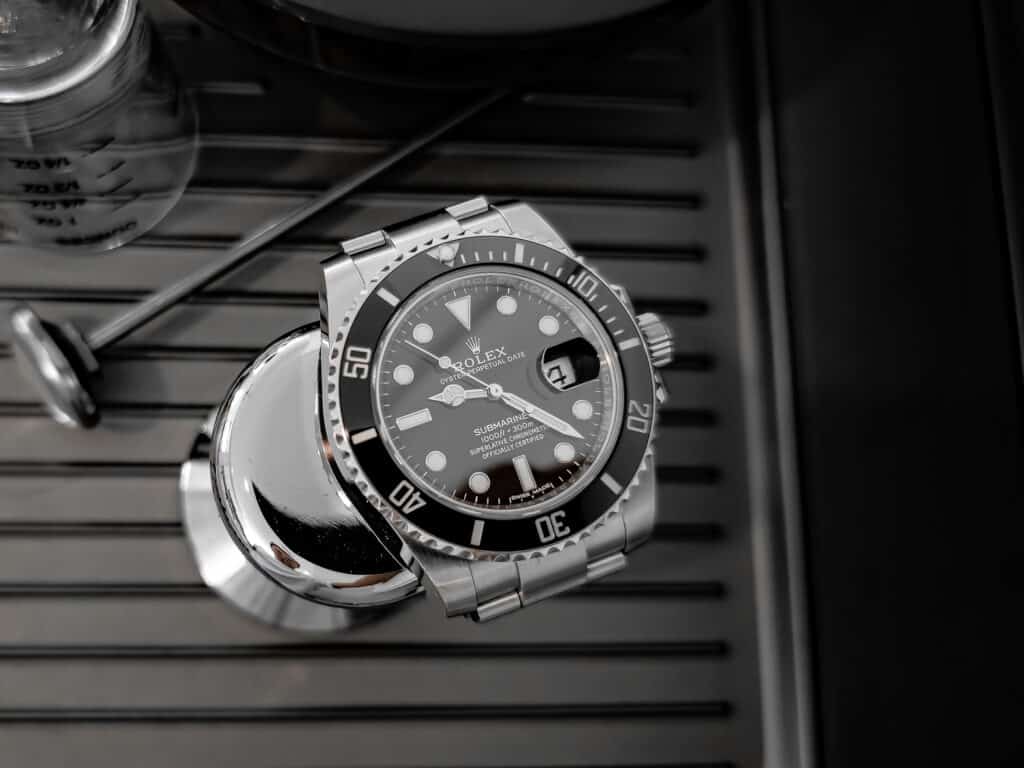
First, there’s the design standard. Wear enough divers, and you’ll notice how many still orbit the same basic formula: familiar proportions, a rotating bezel, high-contrast markers, a straightforward handset, and a case that feels purposeful without becoming a wrist brick. The Submariner remains one of the clearest expressions of that formula. That doesn’t mean every dive watch should look like a Sub, but it does mean we instinctively judge a lot of them by how well they pull those elements together.
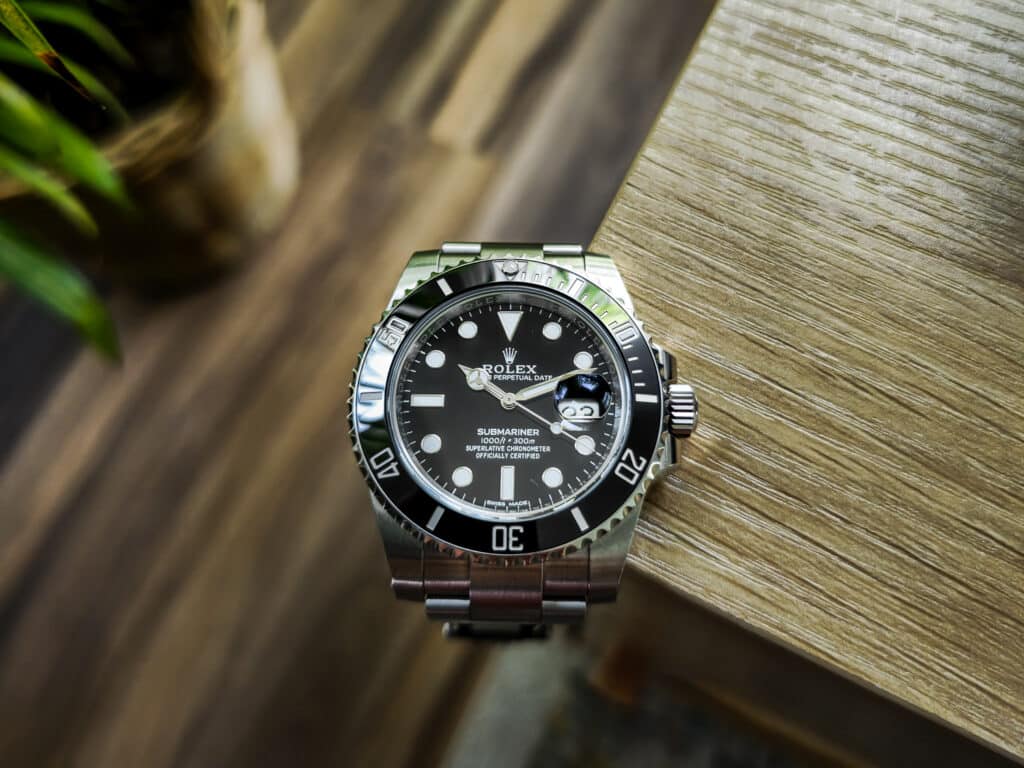
Then there’s the tool-watch standard, which gets more interesting once you stop reading specifications and start wearing the watches. Does the bezel feel precise? Is the dial easy to read outdoors and in low light? Does the crown feel intuitive? Does the bracelet stay comfortable after several hours on the wrist? Does the watch feel like something you could actually use rather than something designed to suggest that you could? Those details tell us far more than a specification sheet ever will.
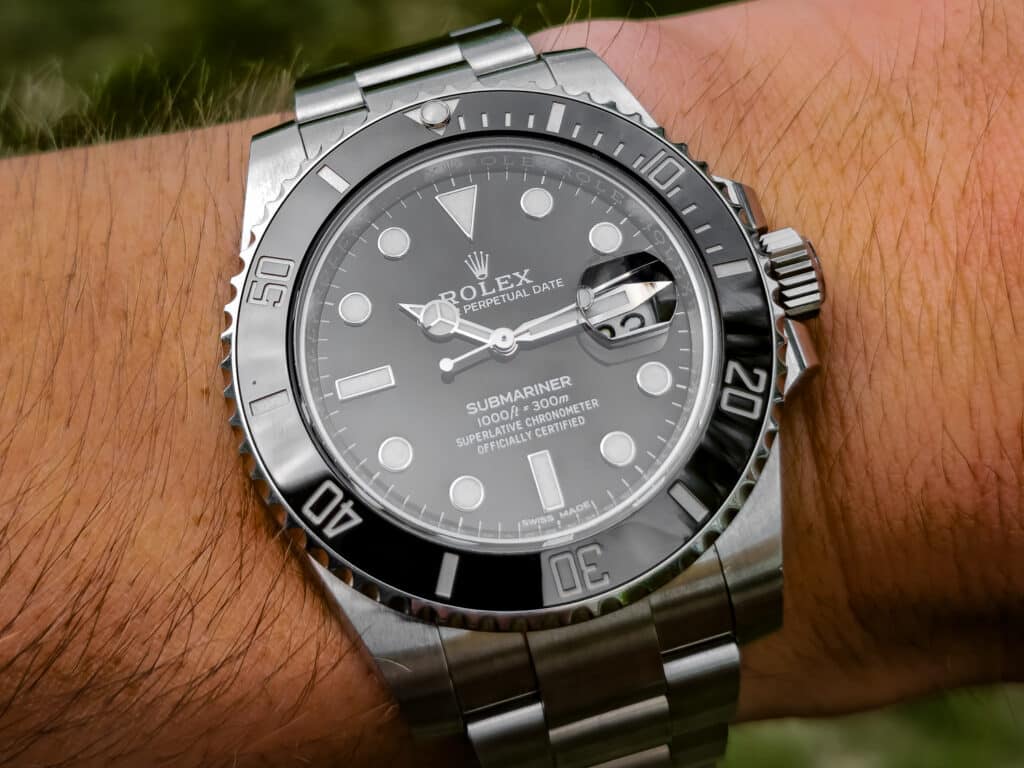
Finally, there’s the recommendation standard. This is where the Submariner has the most to prove. We can acknowledge that it remains an exceptionally well-rounded watch while still asking whether it makes the most sense for someone spending their own money. Once you’ve worn enough alternatives, it becomes obvious that “standard” and “best choice” don’t always point to the same watch. That distinction is where this article gets interesting.
The Submariner Still Sets the Bar for Wearability
The Submariner’s strongest argument isn’t that it does anything spectacular. It’s that so many small decisions work together without getting in the way. The 40mm case in the reviewed 116610 is 12.5mm thick with a 48mm lug-to-lug, and on the wrist that combination lands in a sweet spot between tool-watch heft and something you can forget you’re wearing. The newer 41mm version has nearly identical wrist presence. The caseback is plain and smooth, and while that simplicity won’t excite anyone looking for movement decoration, it helps the watch sit comfortably on the wrist. After living with it, we understand why the Sub can move from actual tool-watch duty to sitting neatly under a cuff without feeling out of place.

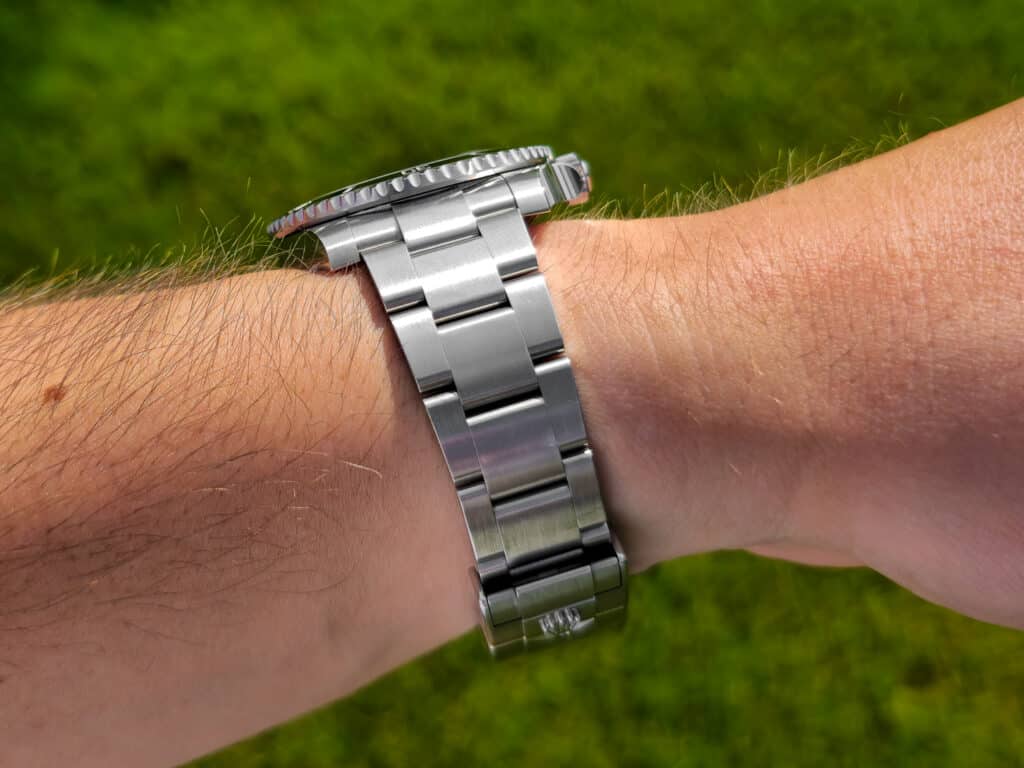
The bracelet is where the Sub starts making a much stronger case for itself. Rolex’s Oyster bracelet articulates easily over the wrist, the end links sit tightly against the case without noticeable wiggle, and the 20mm-to-16mm taper gives it enough visual weight without turning the watch into a block of steel. More importantly, the thin Glidelock clasp provides roughly a link and a half of quick adjustment, with a smooth release and none of the hotspots you can run into on lesser bracelets. That matters more than it sounds when a watch is on your wrist all day, and it’s one reason our hands-on Submariner review calls this bracelet possibly the best in the world. Even the brushed links do a good job of disguising the desk-diving scratches that inevitably show up on a watch you wear.
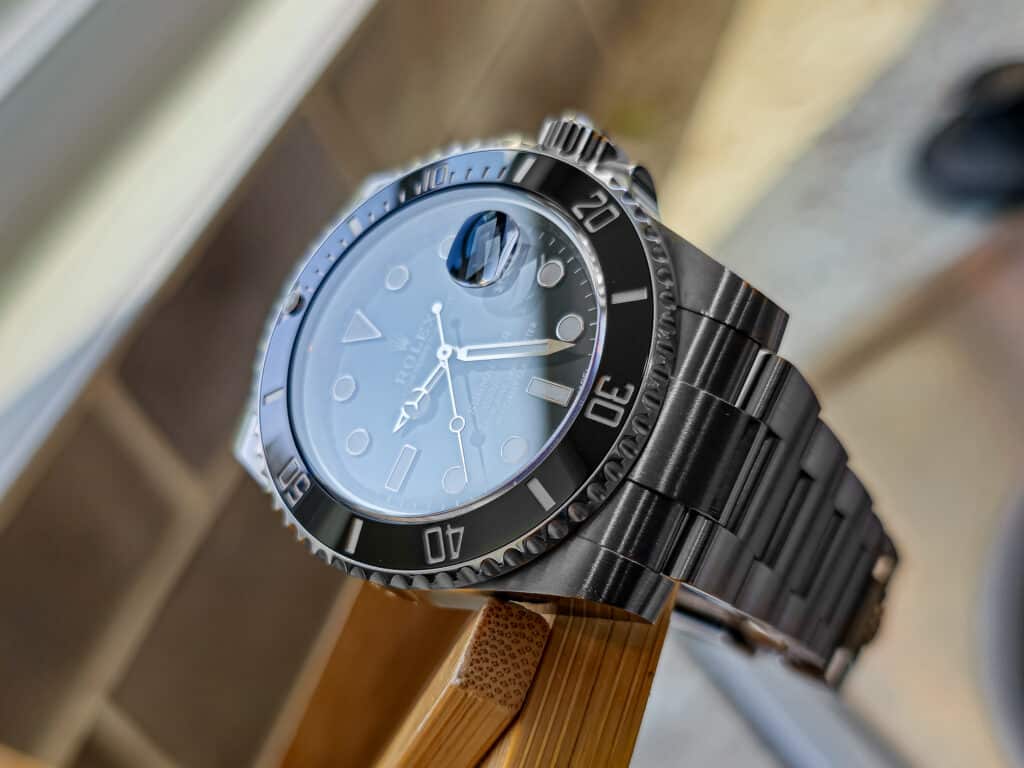
Then there’s the bezel, which is one area where the Sub feels almost annoyingly difficult to criticize. There is no back play, each click feels precise, and the bezel aligns cleanly with the minute track. We specifically noted how differently it glides around the dial compared with other watches, while the slightly overhanging profile gives the coin-edge bezel plenty of grip. Even the raised lume pip at 12 is locatable by touch. These details don’t make for particularly exciting marketing copy, but they matter when you’re actually timing something with the watch. That combination of tactile precision, comfort, and restraint is a big part of why the Sub remains such a tough reference point for every dive watch that comes after it.
Where the Submariner Stops Being the Obvious Answer
The funny thing about the Submariner is that our complaints tend to sound less convincing the longer we wear it. The watch is that good at being a watch. But once the price climbs into five-figure territory, “it’s incredibly well made” stops being the end of the conversation. We’re spending a serious amount of money on a time-and-date watch with a movement that, while rugged and impressively accurate, doesn’t exactly invite us to stare at the caseback with a loupe. At that point, we start asking the slightly annoying question that watch people are so good at asking: what else could we have bought?
The buying experience doesn’t exactly help either. We had to wait for ours, and there’s something strange about spending that much money while feeling like we should be grateful for the opportunity. Then there’s the counterfeit problem. We don’t have statistics proving the Sub is the most-faked watch in the world, and counterfeiters aren’t publishing annual reports, but there’s no shortage of fake Subs out there. We’ve seen enough convincing fakes to understand why buying a used Sub can feel like a gamble, especially when even experienced watch people can struggle to separate a genuine one from a very convincing counterfeit. That makes the used market harder to navigate than it should be for a watch this expensive.

Moreover, that makes the Sub’s sheer familiarity more complicated. We can walk into a room wearing one and almost certainly get recognition, but that recognition doesn’t always come from another enthusiast admiring the watch. It might be someone asking whether it’s real, or someone telling us about the Rolex they bought on a cruise for $250. That’s the unfortunate side effect of owning one of the world’s most recognizable luxury dive watches.
And then there’s the Sub itself. Its restrained dial, straightforward movement finishing, and generally conservative execution give us plenty to appreciate, but they don’t offer much mechanical weirdness or visual personality like some alternatives. We wouldn’t call it boring. We’d term it disciplined. The problem is that discipline gets a lot harder to justify when the alternatives are allowed to have a little fun.
Tudor Black Bay vs. Rolex Submariner — The Most Direct Challenge
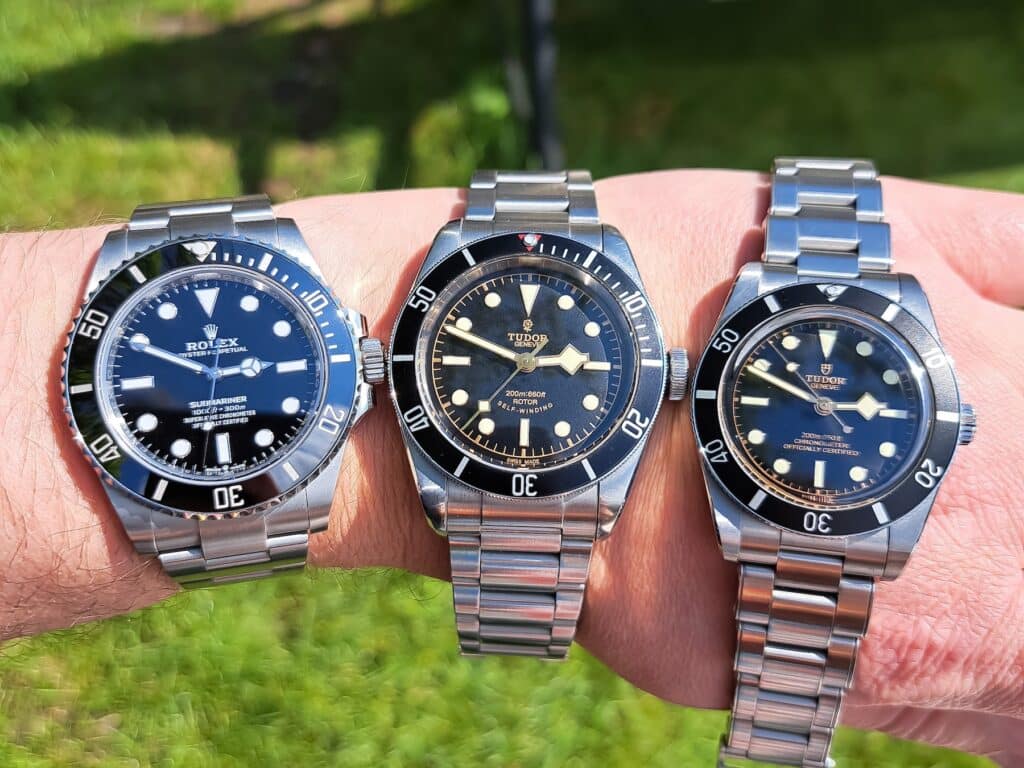
The Tudor Black Bay makes this comparison unusually awkward for the Submariner because Tudor isn’t coming at Rolex from some completely different corner of the watch world. We’ve already spent enough time with both to know they can coexist in the same collection, and the interesting part is figuring out why. In our hands-on comparison, the 79220N Heritage Black Bay, the 79000N Black Bay 54, and the 124060 Submariner all occupy broadly the same dive-watch territory, but they go about it very differently.
What the Black Bay Gets Right
The older 79220N makes a particularly strong case through sheer character. Its gilt details, smiley dial, rose logo, red triangle, and subtle aluminum bezel give it that greatest-hits-of-vintage-Tudor look without feeling delicate. We’ve worn one hard for nine years, and it’s remained robust without getting unnecessarily heavy on the wrist. Yes, it’s around 12.7mm thick and slab-sided, but on a 175mm wrist, it sits comfortably enough that the thickness becomes more of a talking point than a daily nuisance.
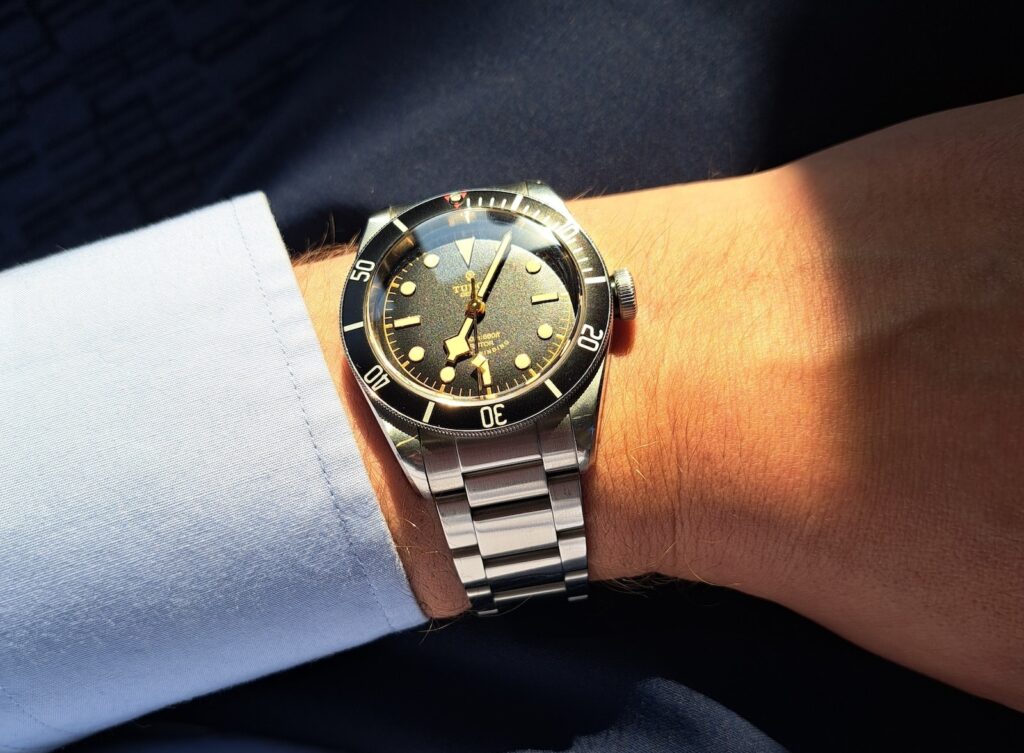
The ETA 2824 inside is another reason the 79220N remains easy to live with. It’s a proven, relatively reliable movement that should have no trouble outliving us, even if a 70-hour power reserve and better anti-magnetism would be welcome upgrades. The old three-position clasp is less impressive, too. We’d happily take one of Tudor’s newer T-Fit clasps with tool-free 8mm adjustment over reaching for a spring-bar tool to get the fit right. Fortunately, the original bracelet fits us well enough, and the included black fabric strap is always there when summer makes things feel a little snug.

The Black Bay 54 takes the opposite approach. At 37mm and 11.2mm thick, with a 70-hour movement and T-Fit clasp, it packages a more modern ownership experience into a smaller case. It also shows how much of the original Tudor diver formula can survive without simply copying the Submariner beside it. After getting used to the 79220N’s big crown, smiley dial, and red triangle, looking down at the BB54 can briefly produce the horological equivalent of an error message. But it’s a great watch, and we’d happily recommend it for the way it combines vintage-inspired design with modern technology.
Where the Sub Pulls Ahead
Then we put the 124060 Sub on the wrist, and Rolex starts making its argument through all the little things. The Sub is only about 12mm thick and, at roughly 159g, weighs less on the wrist than we might expect. The Oyster bracelet articulates beautifully, the Glidelock allows tool-free adjustment, and the whole watch is so comfortable that we can forget it’s there. That sounds unremarkable until we wear enough watches that remind us they’re attached to our arm every few hours.
The difference is also emotional. The Sub’s polished case and ceramic bezel feel more formal and imposing than the Black Bay, and there’s no getting away from the fact that wearing one carries some baggage. We’ve felt that ourselves: the Sub can be intimidating. It represents something beyond the watch, whereas the Tudor can fly under the radar when we want it to.
What the Comparison Actually Proves
For us, the Black Bay doesn’t expose the Submariner as some overpriced imposter. It does something more interesting. It shows that a serious dive watch can deliver robustness, history-inflected design, and plenty of wrist appeal without demanding the same kind of psychological commitment that comes with wearing the Crown.
And that is the first crack in the Submariner’s position as the unquestioned standard. The Rolex may be the more refined watch, but the Tudor can be the one we reach for because it feels more relaxed and asks less of us. In our own collection, that distinction was enough for both to earn a place.
The Pelagos FXD and Sinn T50 Show That “Tool Watch” Can Mean Something Different
The Submariner has perfected the idea of the dive watch as an all-rounder, but the Tudor Pelagos FXD and Sinn T50 remind us that a tool watch doesn’t have to be universally agreeable. Both take a more specialized approach, and after wearing them, we think that’s worth considering when deciding what “standard” should mean.
Tudor Pelagos FXD — When Tool-Watch Purpose Matters More Than Polish
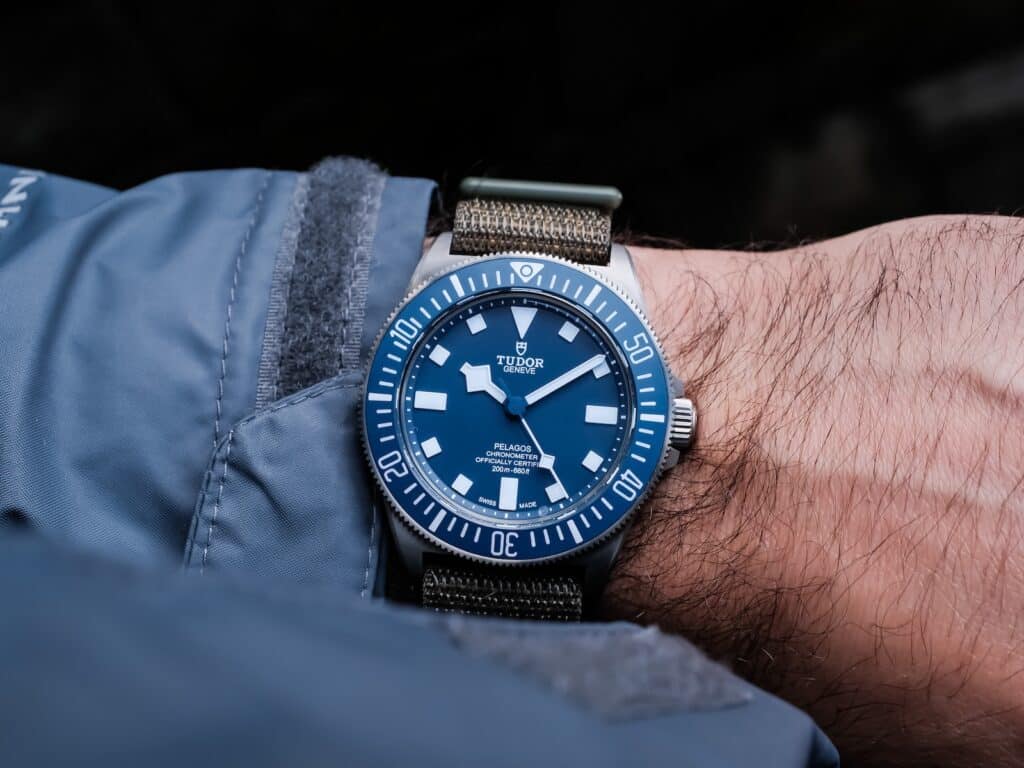
The Pelagos FXD initially looks like the sort of watch that should feel much larger and more aggressive than it does. Its 42mm titanium case and 52mm lug-to-lug sound substantial, but the relatively thin profile and low weight make it quite easy to wear. The fully matte finish also gives it a completely different personality from the Submariner’s polished, more formal character. It seems to be a tool first and a luxury object second, which is exactly the point.
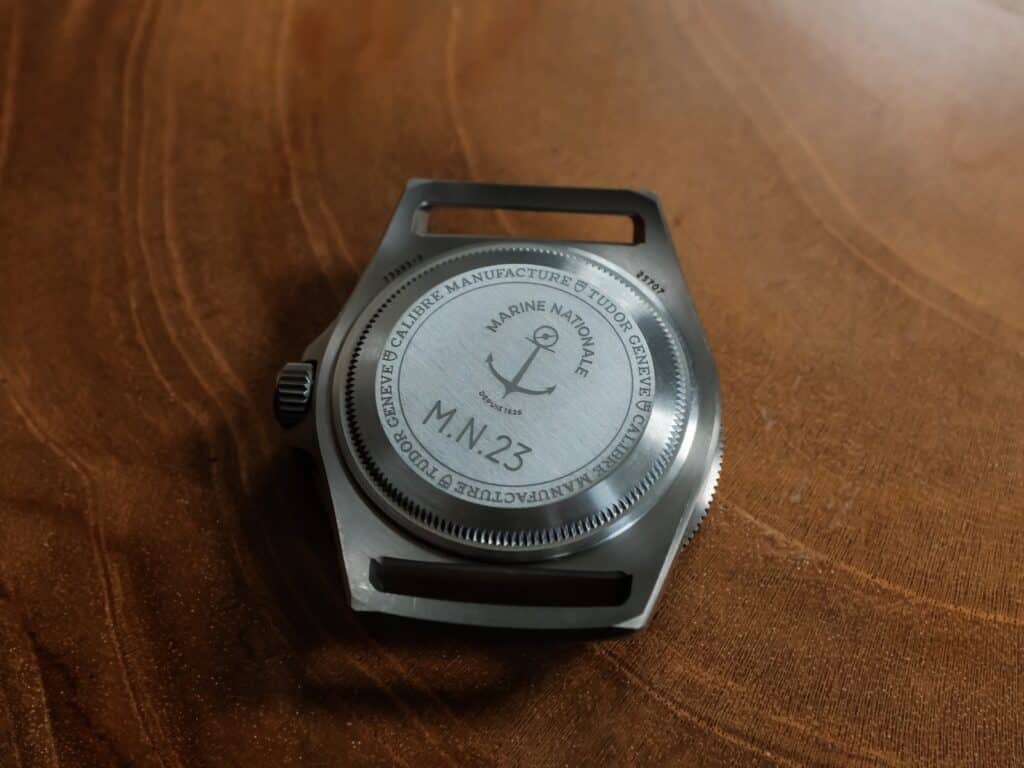
The fixed strap bars are the bigger departure. They limit your options, but they also give the FXD a very deliberate purpose, and we found the watch became more enjoyable rather than less once we started treating it that way. The bezel is similarly practical, with large knurling and a crisp, easy-to-use action. The FXD makes an argument: a dive watch can trade some versatility for a more focused tool. That makes it a compelling alternative for someone who values low weight, military-tool-watch character, and purposeful design more than the Submariner’s polished all-day versatility. We go deeper into that wearing experience in our hands-on review.
Sinn T50 — When Robust Engineering Becomes the Point
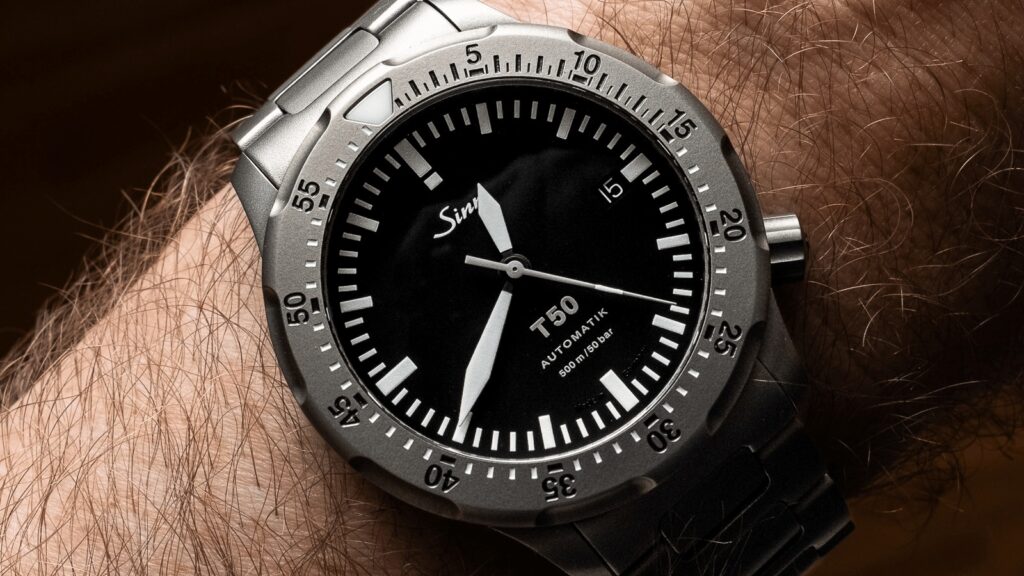
The Sinn T50 takes the same idea in a more technical direction. We wore one for two weeks in Scotland, and that extended hands-on time made the watch’s engineering feel more relevant than it would have on a specification sheet. The titanium case keeps the watch light, while Sinn’s hardened surfaces and restrained design give it an almost deliberately unfussy presence.
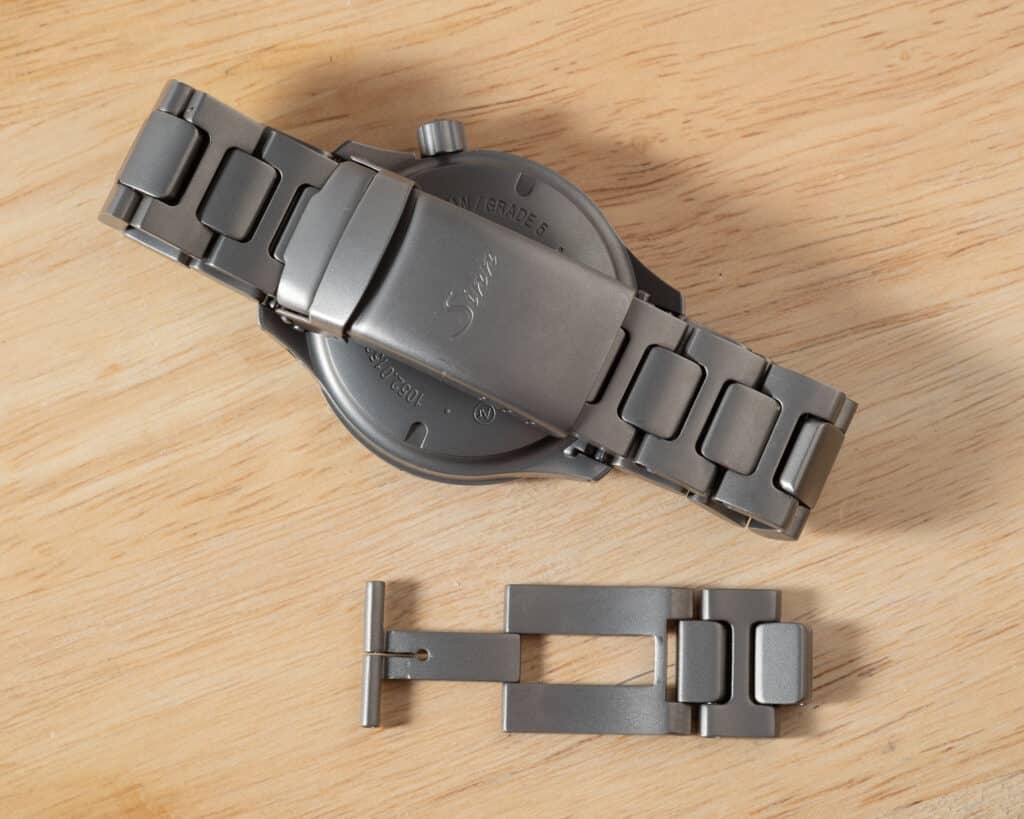
Then you encounter the details that make a Sinn a Sinn: the tegimented captive bezel, the Ar-Dehumidifying system, the 4 o’clock crown, and the generally obsessive approach to case construction. None of those features are there to make the watch broadly appealing. They solve specific problems, or at least attempt to. That’s what makes the T50 interesting here. It shows that a dive watch can be built around engineering priorities rather than the goal of being the easiest possible watch for everyone to like.
Neither watch replaces the Submariner. They simply broaden our definition of what a serious dive watch can be: one built around a specific mission rather than one designed to cover almost every situation.
Omega Shows the Submariner Isn’t Alone at the Luxury End
Omega makes this comparison awkward for the Submariner in a different way than Tudor does. It isn’t simply trying to offer Rolex-like refinement for less money. The Seamaster takes the same basic dive-watch job and gives itself more room to play with finishing, dial design, movement technology, and, depending on the model, a very different idea of what a luxury diver should look like. We’ve worn enough Omegas to know that the differences aren’t confined to a spec sheet.
Omega Seamaster Diver 300M
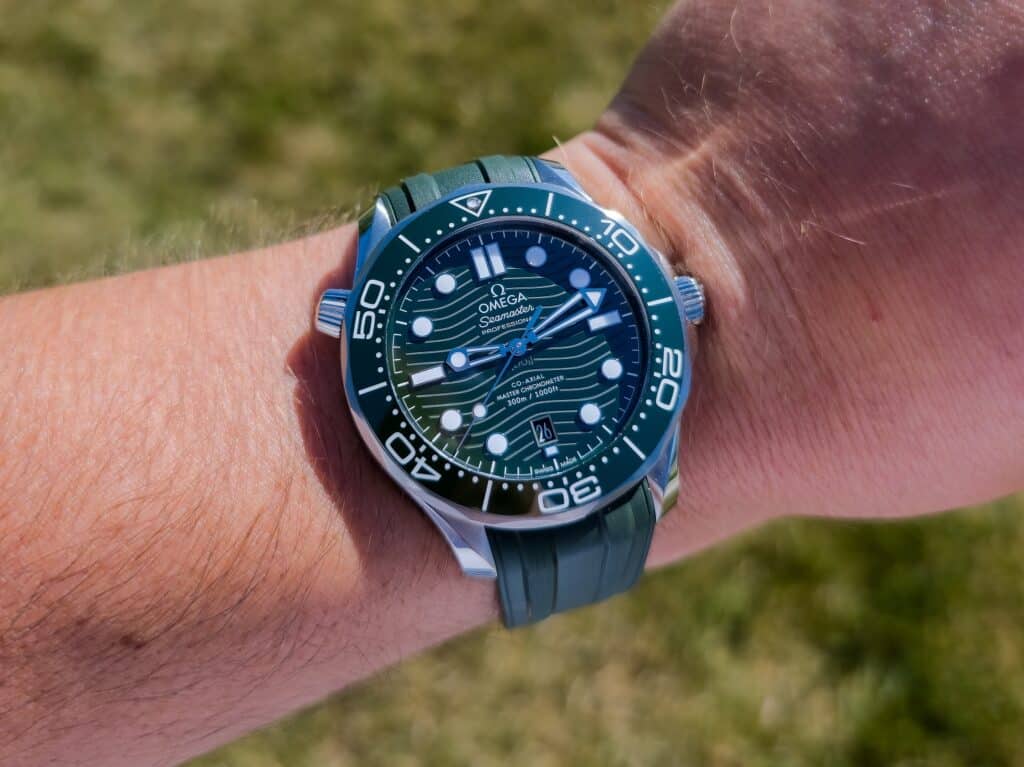
The modern Seamaster Diver 300M is the more extroverted of the two. The wave dial catches the light constantly, and the laser-engraved pattern gives the watch an identity the Sub largely avoids. The skeletonized hands are part of that character, although we found ourselves wishing they gave up a little less legibility for the sake of looking interesting. The crystal is excellent, too. Its external anti-reflective coating makes the sapphire almost disappear, although that treatment can pick up tiny scratches if the watch gets enough real-world abuse.
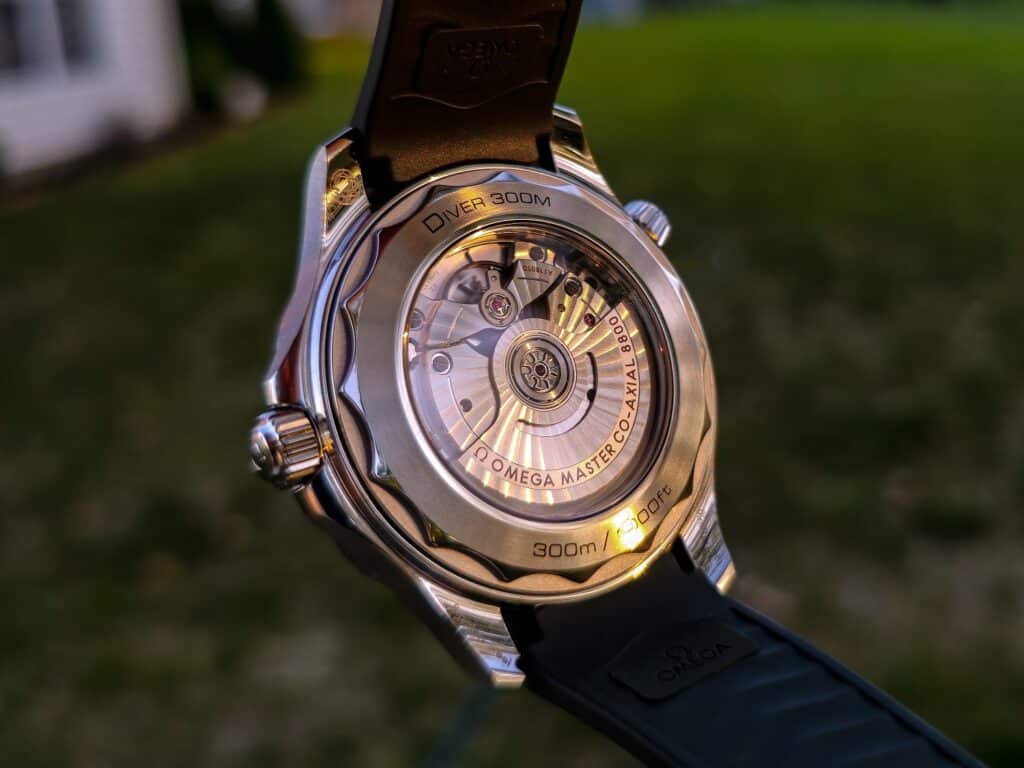
The movement is where Omega gets properly nerdy. The Caliber 8800 is METAS certified, resistant to 15,000 gauss, and our reviewed example averaged around +1 second per day. Those are impressive numbers, but they’re only useful if the rest of the watch makes us want to wear it. Fortunately, the rubber strap fits the wrist better than the bracelet we tested, which felt a little too broad and lacked the taper we prefer. The scalloped ceramic bezel is beautifully made but not our favorite to operate, particularly with wet fingers.
That leaves us with a watch that pushes the Sub in specific areas without making a convincing case that the overall wrist experience is better. We get more visual drama and more advanced movement technology, but the Rolex still feels more effortless.
Omega Seamaster 2254.50
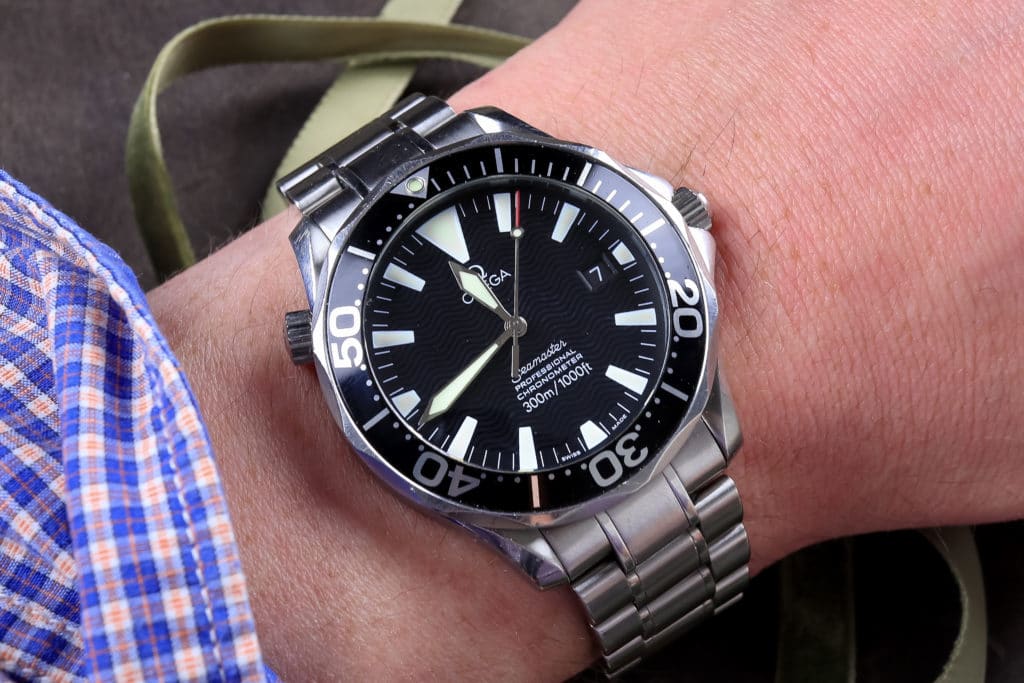
The 2254.50 takes a much quieter swing at the Sub. Its 41mm by 12mm case wears beautifully. At the same time, the black wave dial, sword hands, and fully lumed markers give it the sort of straightforward legibility we appreciate after spending time with the modern Seamaster. The waves can disappear completely in some light and suddenly pop back into view in others, giving the dial personality without making it busy.
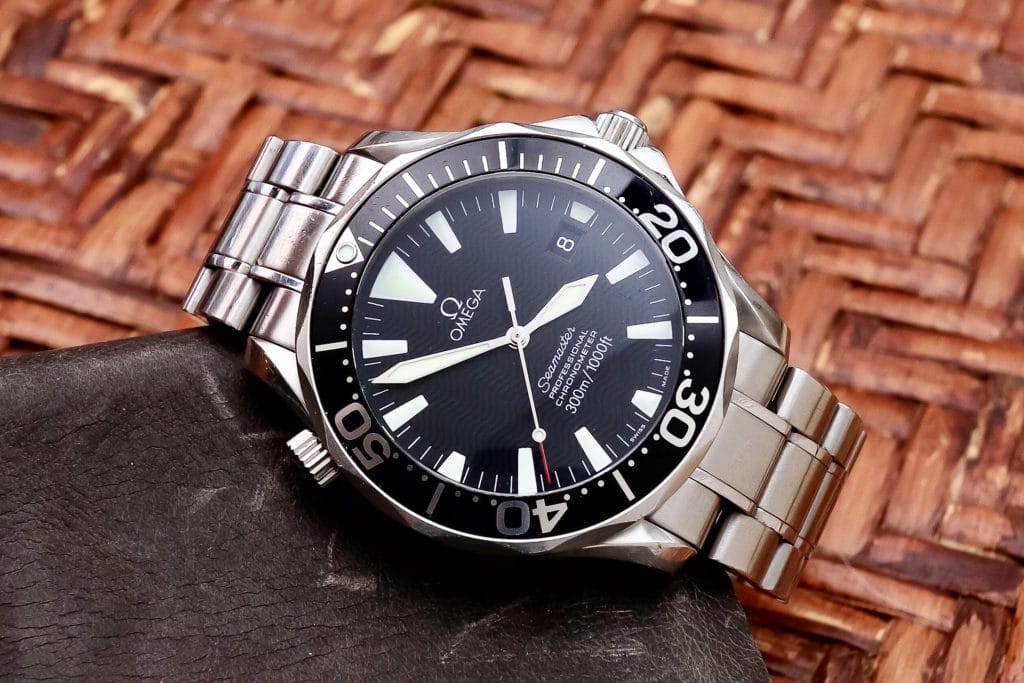
The three-link bracelet is comfortable and articulates nicely, though we’d gladly take a bit more micro-adjustment. The older Caliber 1120 isn’t going to win a modern movement-specification contest, but our example still came in within COSC standards at around +4.2 seconds per day. The aluminum bezel is another mixed bag. We like the warmth and the way it will pick up character over time, but that thin scalloped edge can be a pain when we’re trying to turn it with anything less than perfectly cooperative fingers.
And that’s useful for our Submariner argument. Omega doesn’t need to beat Rolex at everything. It only has to show that there are other ways to make a luxury dive watch compelling. The 2254.50 does that with a more understated personality and a few quirks we’re willing to tolerate. For a closer look at the 2254.50 and all of its little quirks, check out our review.
Doxa and SeaQ Challenge the Sub From Completely Different Directions
The Doxa Sub 300 and Glashütte Original SeaQ make the Submariner’s job harder without trying to beat it at its own game. The Doxa asks whether a dive watch needs to be broadly agreeable to be great. The SeaQ asks whether the money-and-finishing argument can be made more interesting elsewhere. Both give us reasons to question whether the benchmark should be our default choice.
Doxa Sub 300 — When Diving Identity Matters More than Versatility
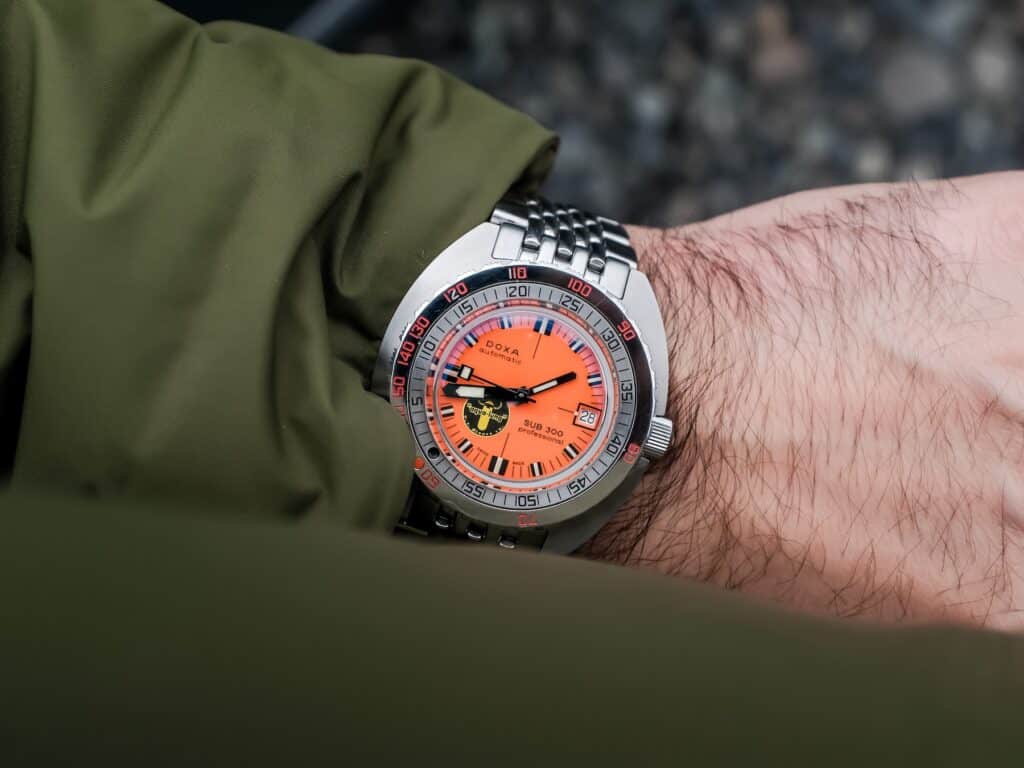
We’ve had the Doxa Sub 300 Aqua Lung since 2017, and nearly a decade of wearing it has made one thing obvious: this watch isn’t designed to disappear into the background. The 42.5mm cushion-shaped case looks large on paper, but the short lugs and roughly 12mm thickness keep it compact on the wrist. Then there’s that orange dial. It’s not subtle, and that’s part of the charm. The Doxa has a personality before we’ve even started talking about specifications.
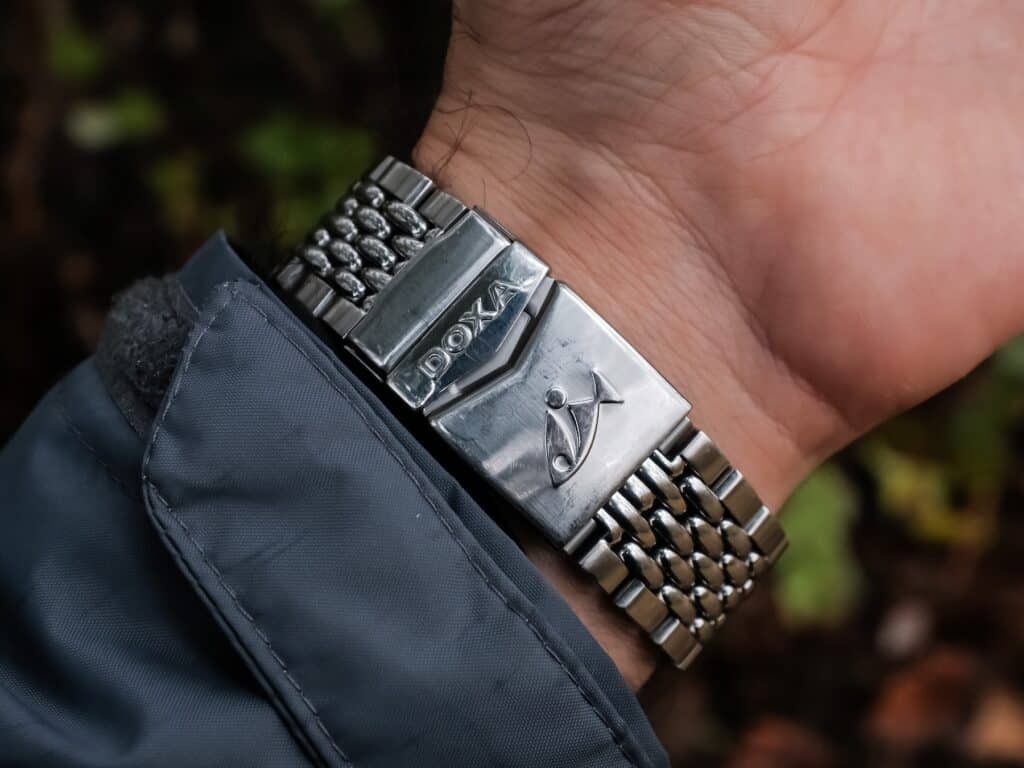
What surprised us more was how usable the oddball design proved. The bubble-shaped crystal makes the dial look smaller than expected, but the broad black minute hand and chunky markers keep it easy to read. The bezel gives firm clicks and no noticeable back play, and the case settles securely enough that the unusual shape becomes something we enjoy rather than tolerate. The old-school no-decompression scale isn’t perfect in low light, but this watch wasn’t built to please everyone.
That is precisely why it matters here. The Submariner wins points for being incredibly versatile. The Doxa wins by refusing to care. We can imagine someone choosing the Doxa specifically because it has more character, more diving identity (supported by its 300m WR rating), and less interest in being the right watch for every situation. For the full story of how it has held up over years of actual ownership, check out our hands-on review.
Glashütte Original SeaQ — When Finishing and Personality Matter
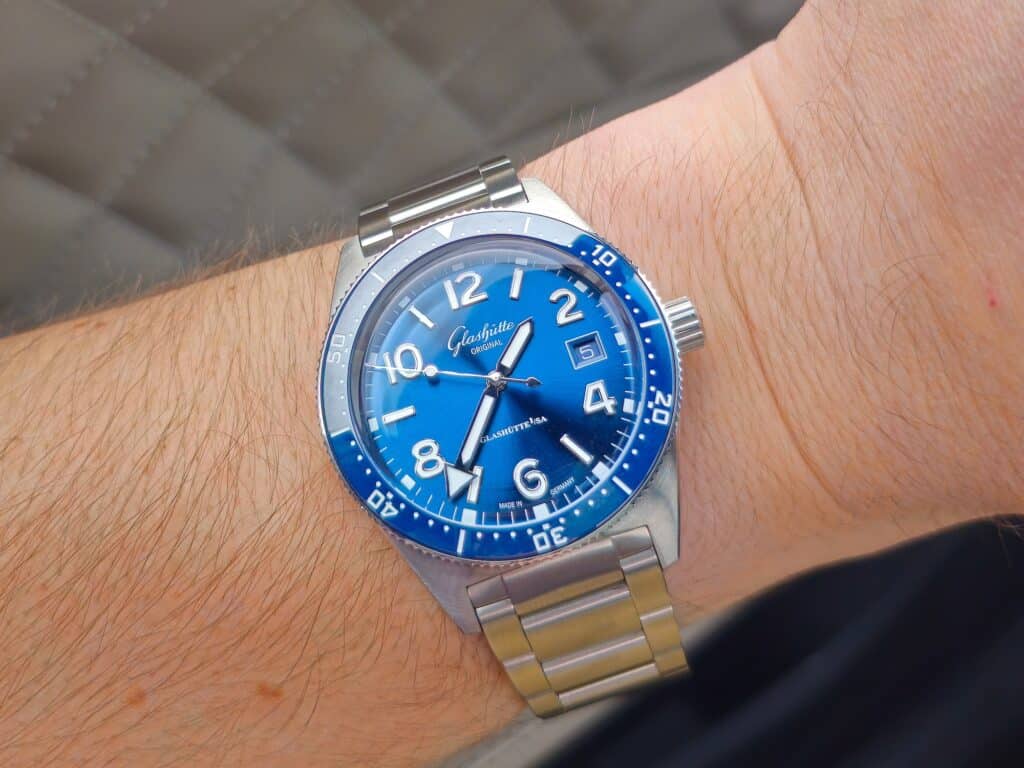
The SeaQ takes the opposite approach. Rather than asking us to accept a few quirks in exchange for personality, it makes almost every part of the luxury-diver experience feel considered. At 39.5mm, it wears compactly despite its roughly 12.5mm thickness, and the combination of brushed surfaces, polished bevels, domed crystal, and deep blue dial gives it a presence the Sub doesn’t really chase. It looks like someone spent a suspicious amount of time thinking about how light should move across a dive watch.
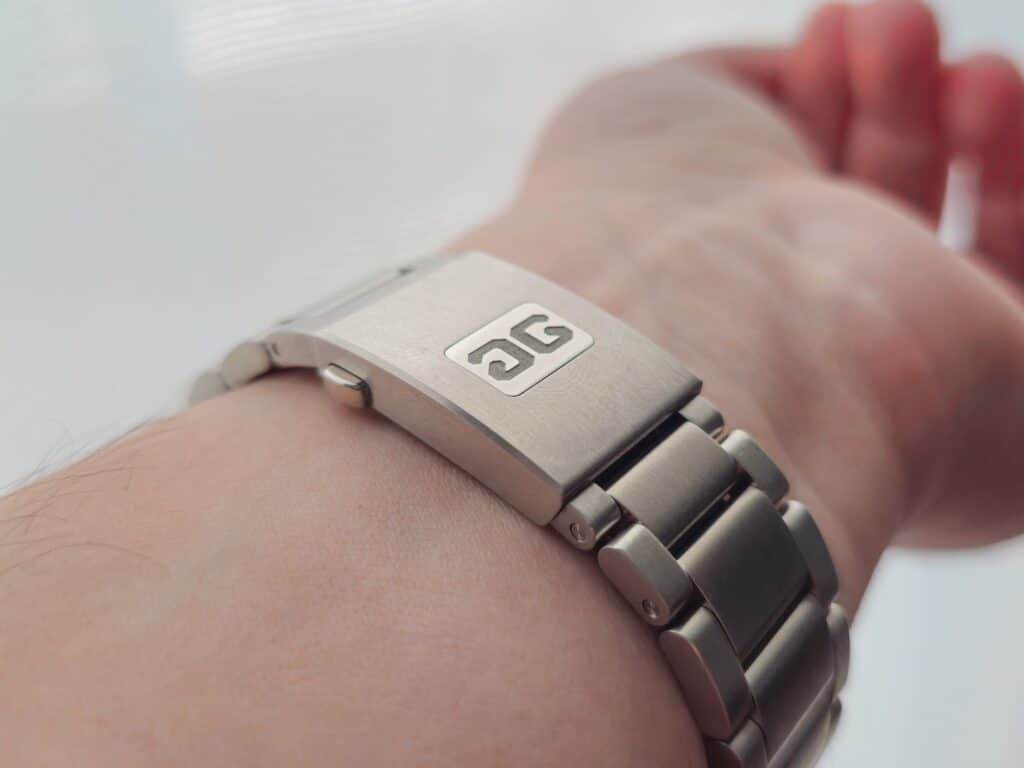
The bracelet is another area where the SeaQ makes its case through details we notice while wearing it. The links articulate smoothly, the quick-adjust clasp is compact and easy to use, and the whole bracelet feels “luxury level” refined. One slightly awkward bracelet-to-case transition keeps it from being completely flawless, but that almost makes the rest of the execution more impressive. The dial also changes dramatically in the light, while the bezel delivers the crisp, tight, precise action we want from a serious diver.
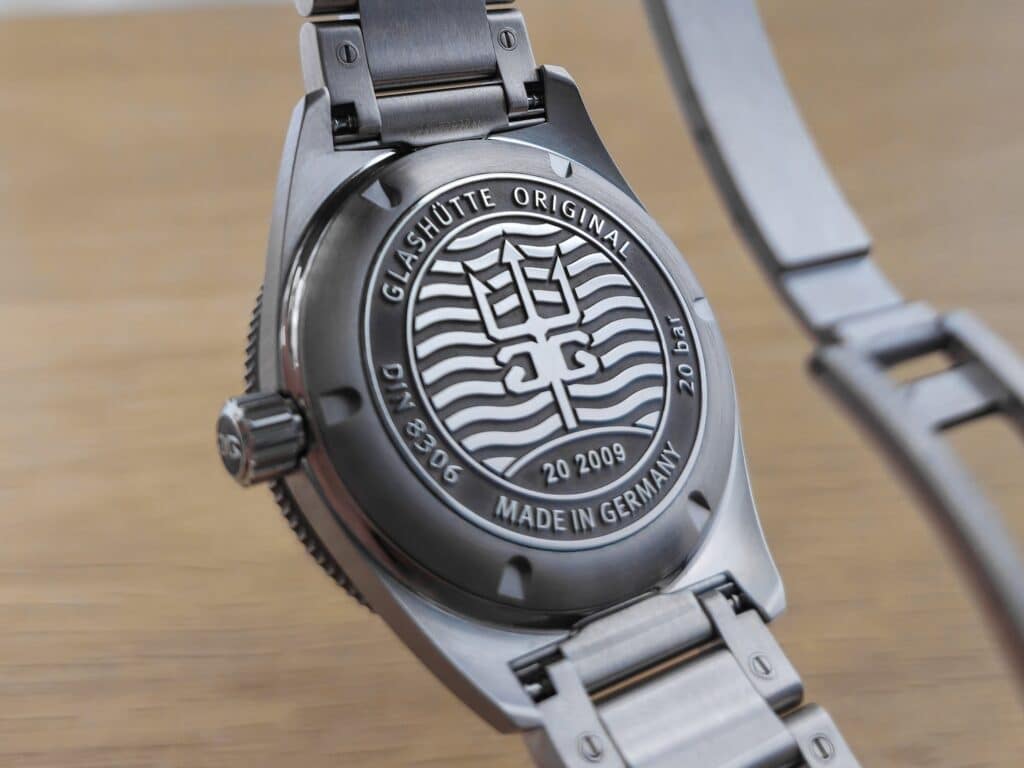
Then we get the movement decoration, where the SeaQ starts playing a completely different game from the Sub. You have a beautifully finished Caliber 39-11 beneath the closed caseback rather than a movement we mostly appreciate for what it does. Is that useful underwater? Not remotely. Is it enjoyable to own? Absolutely. That distinction is why the SeaQ matters to this article.
The SeaQ can make a stronger case than the Sub in finishing, movement presentation, and visual personality. Yet after wearing both, we still find the Rolex unusually difficult to dislodge as the more complete all-around package. That’s the uncomfortable part: the SeaQ can be more interesting without necessarily becoming the better benchmark. For a deeper look at that trade-off, go through our hands-on insights.
Oris and Mido Make the Value Argument Harder to Ignore
This is where the Submariner’s status starts running into a very TBWS question: how much of what makes a great dive watch actually requires a Rolex-sized budget? The Oris Aquis New York Harbor II and Mido Ocean Star Titanium don’t offer the same kind of all-around polish as the Sub, and neither is trying to. What they do offer is something equally relevant to people who wear their watches every day: personality, comfort, and enough capability that we don’t spend our wrist time wishing they were something else.
Oris Aquis New York Harbor II — Character Without Pretending to Be a Sub
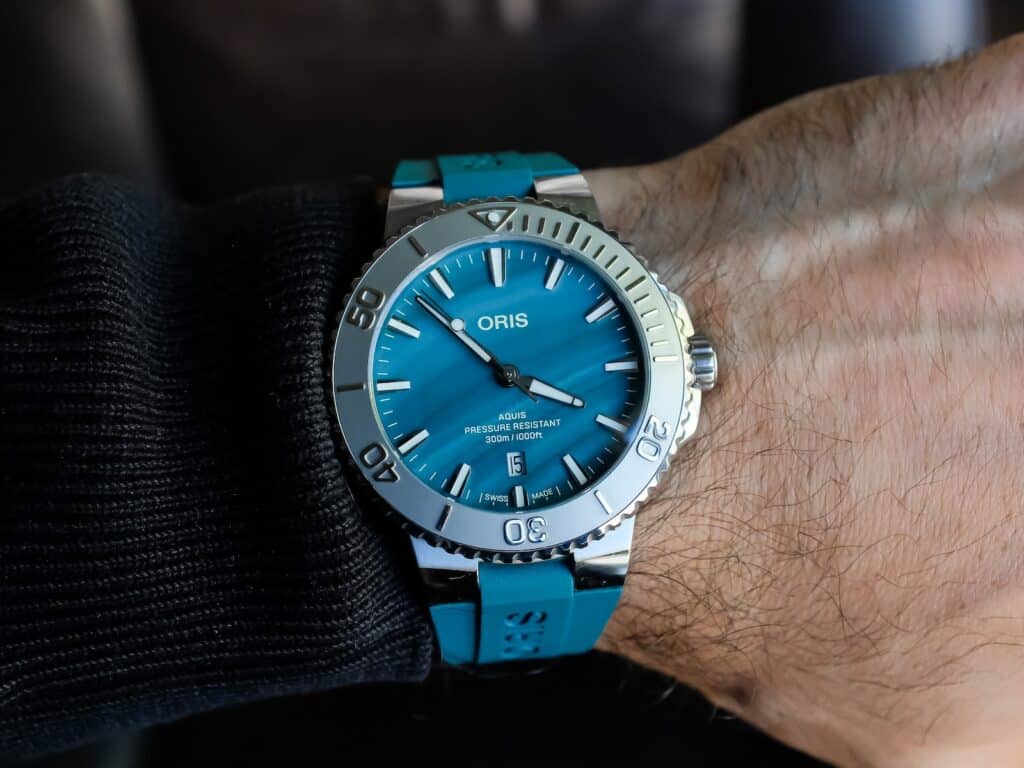
We initially didn’t expect much from the Oris Aquis New York Harbor II. The aqua-green mother-of-pearl dial sat outside our usual comfort zone, and the whole thing looked like it might be trying a little too hard. Then we put it on the wrist. The dial shifts dramatically with the light, moving from bright layers of green to something much more muted, but it never becomes difficult to read. That was the surprise: the watch has plenty of personality without sacrificing its basic job as a dive watch.
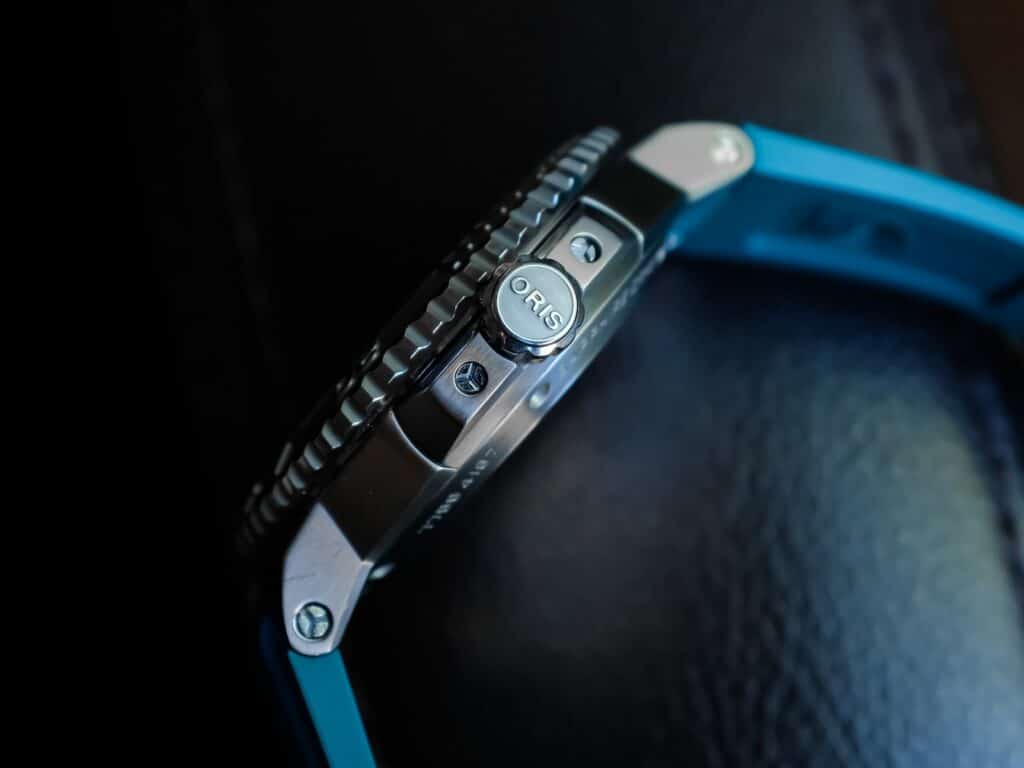
The Aquis is also a good reminder that dimensions on paper don’t always tell us how a watch wears. At 43.5mm across and just over 13mm thick, it should feel enormous. Instead, the curved lugs and integrated rubber strap pull the case down comfortably on the wrist. We ended up preferring the aqua green rubber strap because adding more weight with a bracelet would have pushed an already substantial watch further into “maybe not all day” territory. The 300m water resistance and firm, precise bezel make sure there’s still a serious diver underneath all that dial drama.
That makes the Aquis useful here. It doesn’t need to imitate the Submariner’s restrained versatility. It can be a more situational watch that we reach for when we want something with a bit more attitude. For a closer look at what convinced us, read our review.
Mido Ocean Star Titanium — When Comfort Becomes the Killer Feature
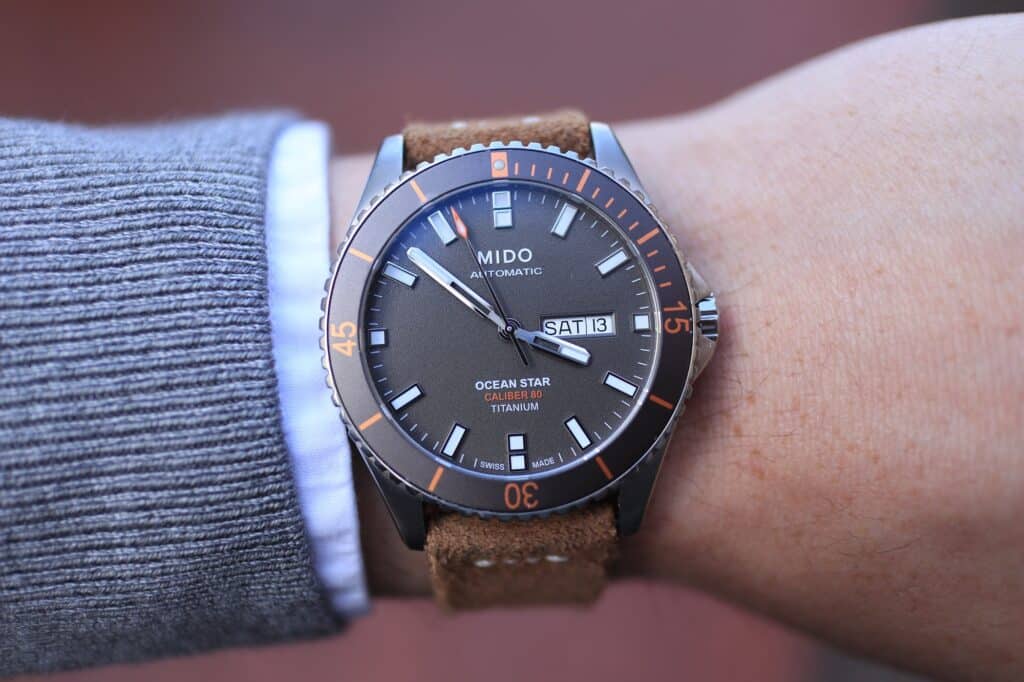
The Mido Ocean Star Titanium makes the value argument in a much less glamorous way. After a year and a half, it was still in heavy rotation despite having 15–20 other watches competing for wrist time. That’s the sort of endorsement we trust more than a paragraph full of specifications.
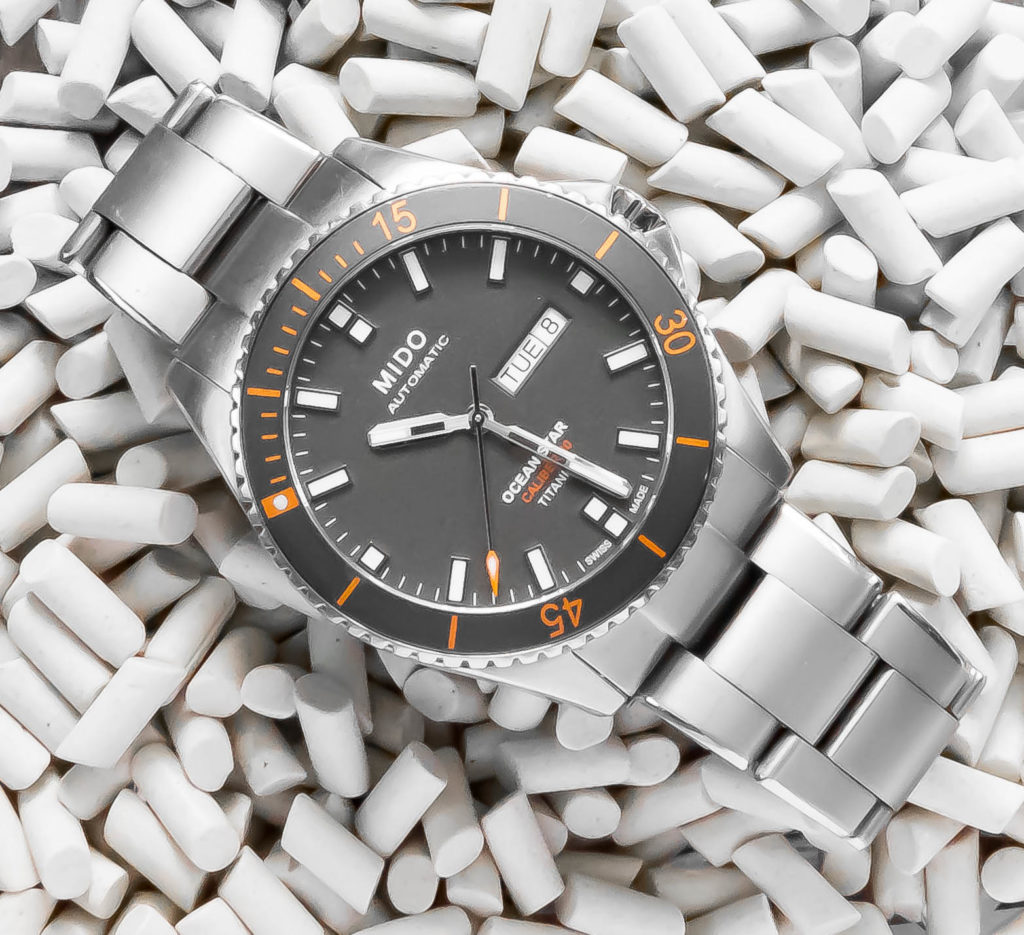
As covered in our dedicated review, the 42.5mm titanium case is only 11.75mm thick, and the lightness keeps it from wearing like the chunky diver those dimensions might indicate. The bracelet is a big part of that experience. Its curved fixed links follow the wrist naturally, it tapers from 22mm to 19mm, and the ratcheting clasp makes adjustment unusually painless. The textured dial and double AR-coated sapphire add a little visual depth without making the watch fussy. That said, there’s one real annoyance: the crown takes more effort than it should to unscrew. Otherwise, the watch gives us very little to complain about.
And this is where the Mido becomes relevant to the Submariner question. We don’t need to pretend it delivers Rolex-level refinement. We need to ask whether that refinement is necessary for a watch we plan to wear every day. When a comparatively inexpensive titanium diver is slim, comfortable, durable, and good enough to stay in heavy rotation, value stops being a price comparison. It becomes a question of how much enjoyment we’re getting for the money.
Citizen and Casio Ask the Uncomfortable Question
By this point, we’ve established that the Submariner can be beaten in specific areas: better engineering here, more personality there, lower weight somewhere else. But the Citizen Promaster Diver and Casio Duro force us to step back from all of that and ask something less flattering to expensive watches: how much of that stuff do we actually need from a dive watch?
Citizen Promaster Diver — Practicality Can Beat Luxury
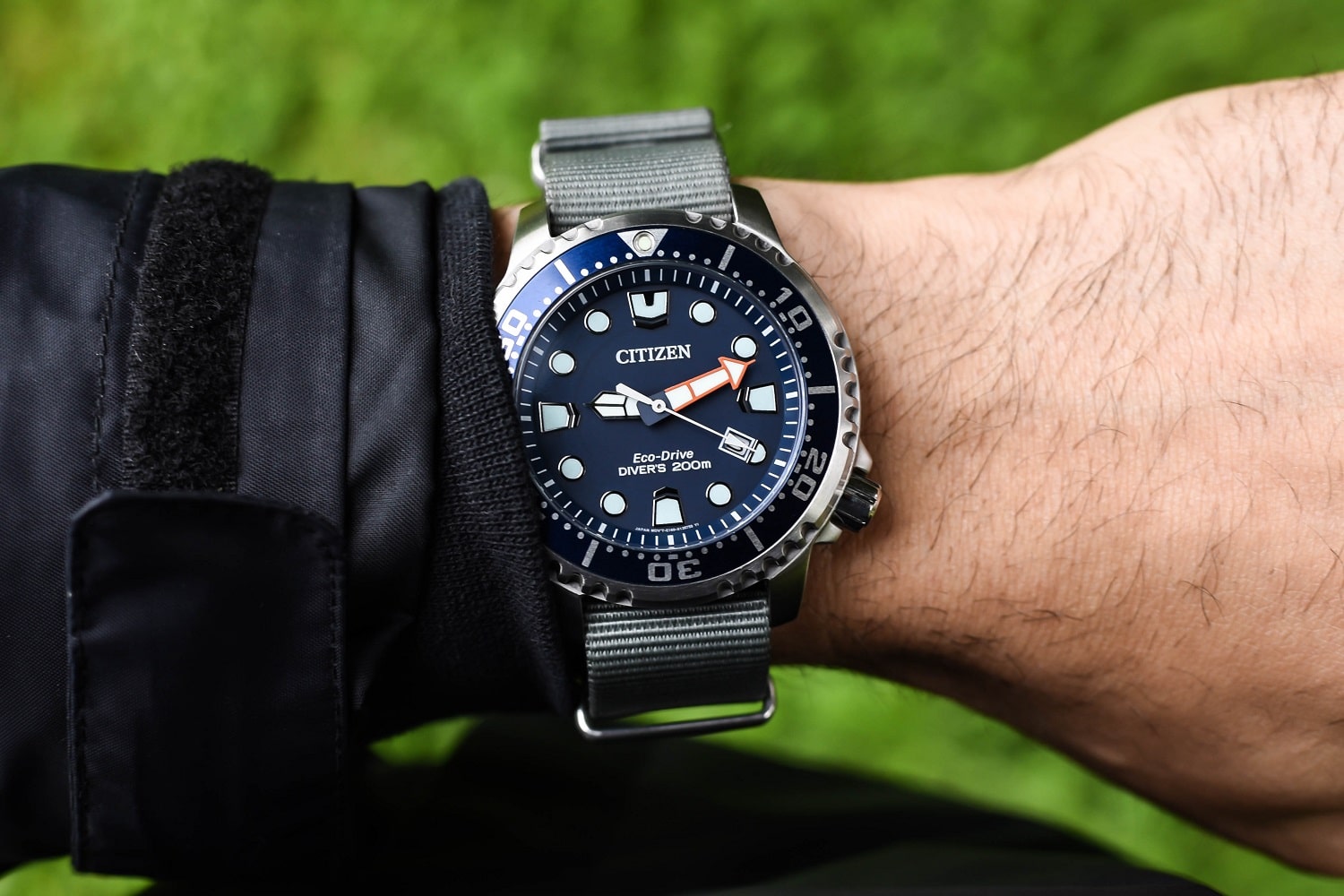
The Citizen Promaster Diver BN0151 is the sort of watch that quietly ruins a luxury-diver argument. We’ve owned and worn ours for years, and it has become a genuine “grab and go” watch. Hike? Sure. Swim? Absolutely. Head out the door without setting or winding anything? Even better. It holds a special place in the collection precisely because we don’t have to think about it.
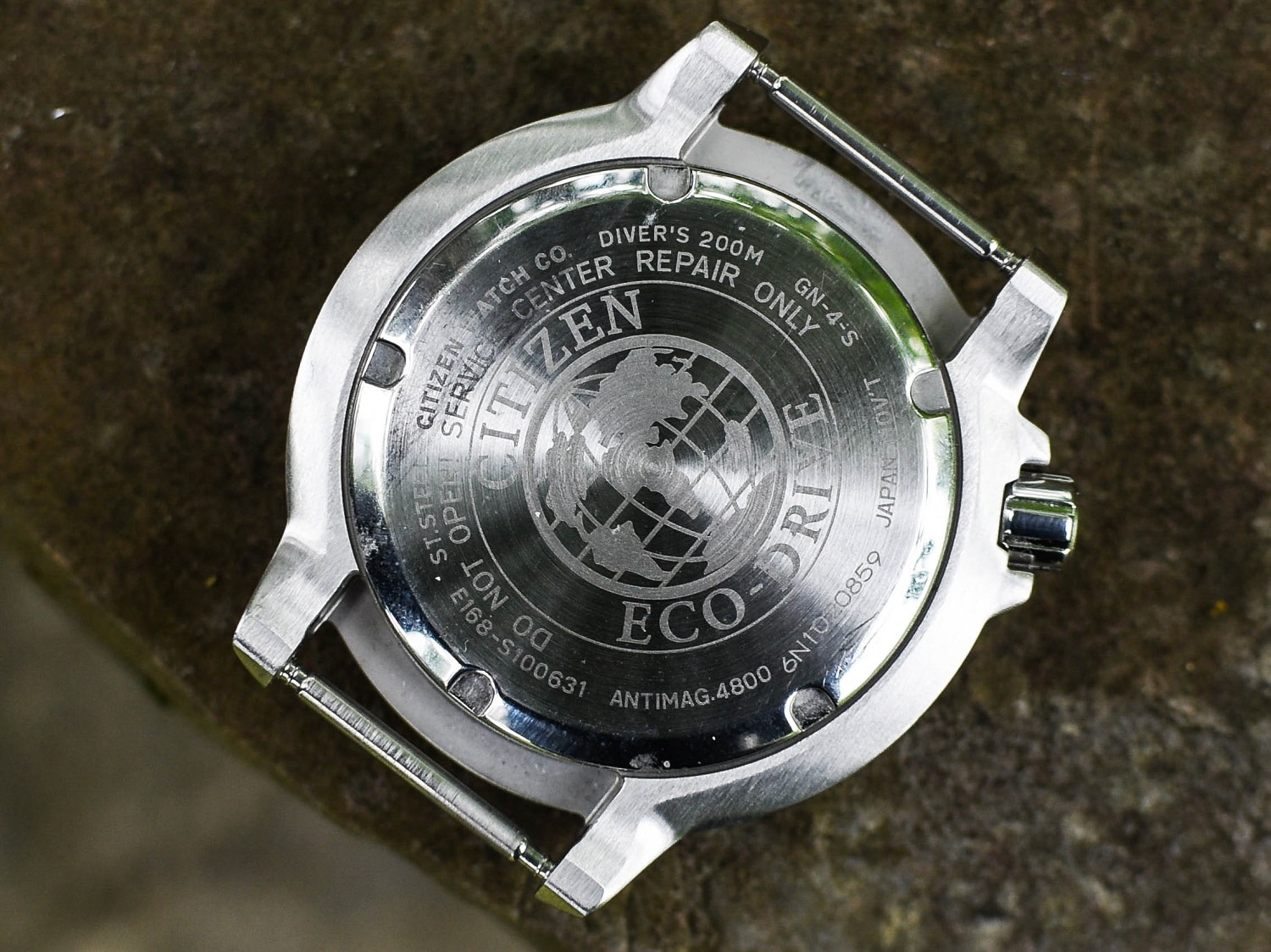
The Eco-Drive movement is a big part of that. With roughly six months of power when fully charged and an accuracy rating of around ±15 seconds per month, the E168 gives us the set-it-and-forget-it ownership we sometimes miss when we obsess over mechanical watches. Add 200m water resistance and ISO certification, and there’s no need to make excuses for the Citizen’s diving credentials. It’s built to do the job.
However, it isn’t perfect. The stock polyurethane strap isn’t our favorite for long stretches, and the bezel could use a little more bite. But those are easy complaints to make about a watch that costs a fraction of a Submariner and then spends years doing what we need. For a closer look at why this became one of our reliable grab-and-go watches, see our full hands-on review.
Casio Duro — The $100 Question Nobody Wants to Answer
The Casio Duro takes the argument from “practical alternative” to “okay, now you’re just being rude.” We’d spent years talking about watches without giving the Duro much serious wrist time, so a proper review was overdue. Once we wore it, the biggest surprise wasn’t how much watch we got for the money. It was how little we felt compelled to complain about.
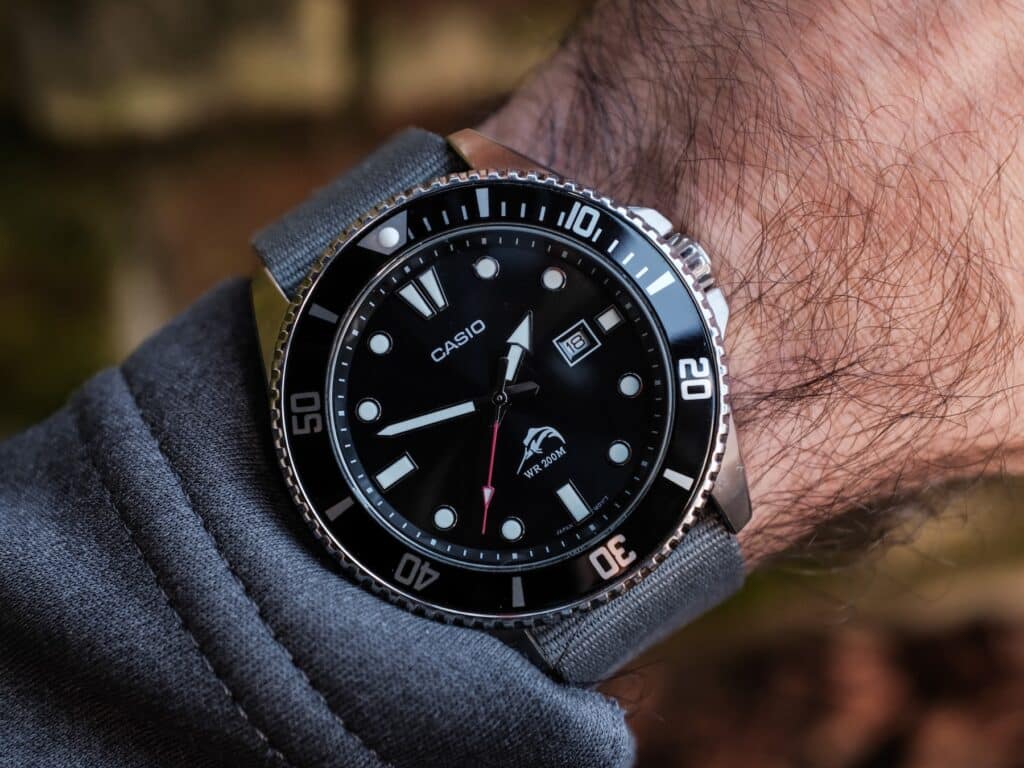
Yes, the 44.2mm case is big. But the curved lugs and 48.5mm lug-to-lug keep it from becoming the wrist-mounted dinner plate those numbers suggest. The quartz movement is quite uncomplicated, too. It gives us roughly three years of battery life and about ±20 seconds per month, so grabbing the Duro means exactly that: grab it, put it on, go. No power reserve anxiety, no setting ritual, no tiny mechanical ballet required.
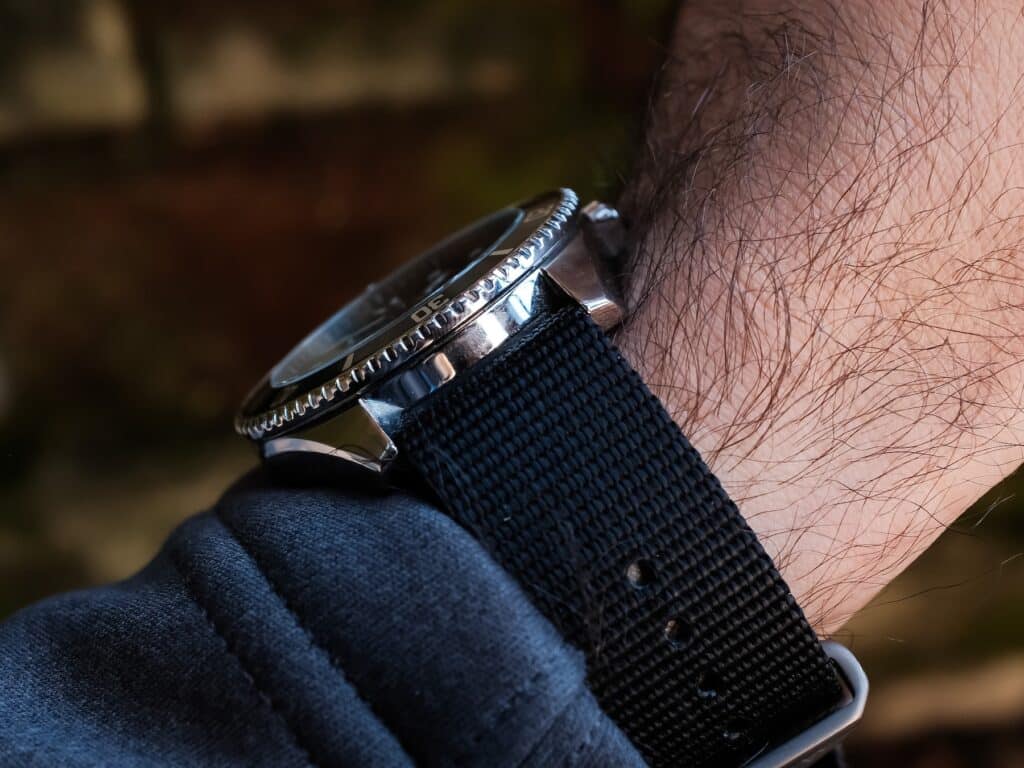
It also covers the fundamentals: 200m water resistance, a screw-down crown, a unidirectional aluminum bezel, lume that’s perfectly adequate for the job, and a dial that is much easier to take seriously once it’s on the wrist. It won’t give us the Submariner’s bracelet, finishing, movement, or tactile refinement, and nobody is confusing the Duro for haute horlogerie. That’s exactly why it belongs here.
Because once a roughly $85 watch handles the basic dive-watch job this well, the Submariner has to justify itself on things beyond necessity. We’re buying craftsmanship, refinement, tactile pleasure, prestige, and the emotional satisfaction of owning a special object. Those are perfectly valid reasons to spend more. They just have very little to do with whether we can time a dive.
For the full story of how the Duro went from “the watch we somehow never reviewed properly” to a genuine TBWS favorite, check out our detailed review.
So, Does the Submariner Still Deserve to Be the Dive Watch Standard?
Yes. After putting the Submariner against this many different interpretations of the dive watch, we still think it deserves the title. What has changed is what that title means. The Submariner isn’t the standard because it is the most technically ambitious, the most distinctive, or the most affordable. It earns that position because few watches make the entire experience feel as resolved.
As a Design Standard: Yes
This is where the Sub remains hardest to dislodge. Its proportions make sense, the dial is immediately legible, the bezel feels purposeful, and the bracelet completes the package rather than merely attaching it to the wrist. We’ve worn watches with more personality and watches with more elaborate finishing, but the Sub’s restraint has a staying power that is harder to replicate than it looks.
As a Tool Watch Standard: Mostly
This is where the competition has made the category more interesting. We’ve worn enough alternatives to know that a serious diver can be more specialized, more technically adventurous, more distinctive, or dramatically less expensive without losing sight of the job.
The Sub still makes a compelling case because it leaves remarkably few compromises for the person who wants one watch to cover almost every situation. The difference is that we can no longer confuse versatility with superiority in every category. The alternatives have shown us that “tool watch” can mean very different things depending on what we actually want from the watch.
As a Buying Recommendation: No, Not Automatically
This is the part we’d want buyers to take seriously. The Submariner is still an exceptional choice for someone who specifically wants its combination of refinement, flexibility, and Rolex ownership experience. But there is no sensible reason to treat it as the mandatory answer to “I want a great dive watch.”
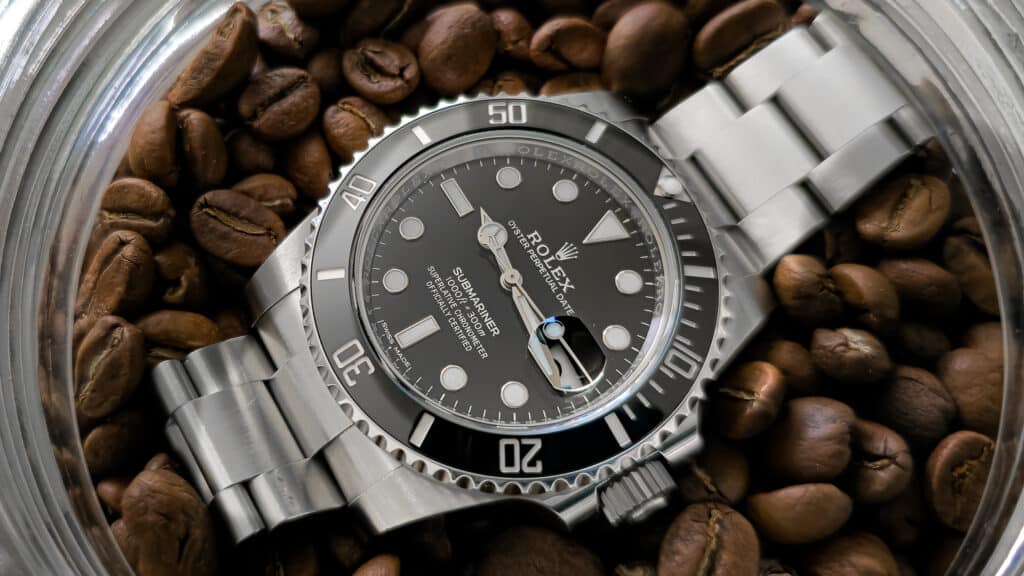
That’s the useful takeaway from all this wrist time. The Sub earns its place as the benchmark, but the alternatives make it easier to decide what we actually want from a dive watch. For some of us, that means refinement. For others, it means low weight, personality, engineering, low-maintenance ownership, or simply getting the fundamentals right without spending five figures.
The Submariner remains the watch we’ll use to measure other divers. That’s what being the standard means. It doesn’t mean every answer has to be Rolex.

Co-Founder and Senior Editor
Kaz has been collecting watches since 2015, but he’s been fascinated by product design, the Collector’s psychology, and brand marketing his whole life. While sharing the same strong fondness for all things horologically-affordable as Mike (his TBWS partner in crime), Kaz’s collection niche is also focused on vintage Soviet watches as well as watches that feature a unique, but well-designed quirk or visual hook.
None of the above. For the True State of the Art: Rolex Sea Dweller Ref #126600.
My wrist can’t pull it off but that’s a killer watch.
i have 4 of those you listed… Omega, Rolex, Doxa and Duro…
watches are so subjective. Rolex does set the standard, but the “value” is perception… you buy a Rolex because you can. my 5 digit “vintage” Rolex Sub is worth 3x what I paid for it… so is my 1978 Orange Doxa 300.
my Omega is just nice and my blue Duro is a weekly knock around watch that I use with a Nato strap…
I like them all because they are all unique in looks and value.
That’s a really healthy way to look at this crazy hobby, Clive