
Dive watches have a way of lowering the bar for how careful you need to be, and that’s a big reason we keep going back to them. At some point, most of us stop babying our watches and start reaching for the ones that can handle a weekend swim, a sudden downpour, or the general chaos of daily wear. Over the years, pieces like the Orient Kamasu, Citizen Promaster Diver BN0151, and even something as no-nonsense as the Casio Duro kept showing up in our rotation because they made life easier. They’re the watches we grabbed when we didn’t want to think too hard, and that’s usually the highest compliment we can give.
This list is our attempt to answer a simple question: What are the best dive watches under 500 bucks that actually hold up once the novelty wears off? We’re not pulling from spec sheets or first impressions here. These are watches we’ve worn through long stretches of normal life: timed against each other, knocked around on desks, taken into water, and occasionally sidelined when something didn’t quite live up to expectations. That’s the lens we’re using here, and it’s the same one we rely on when deciding what stays in the box and what keeps getting worn.
Casio Duro
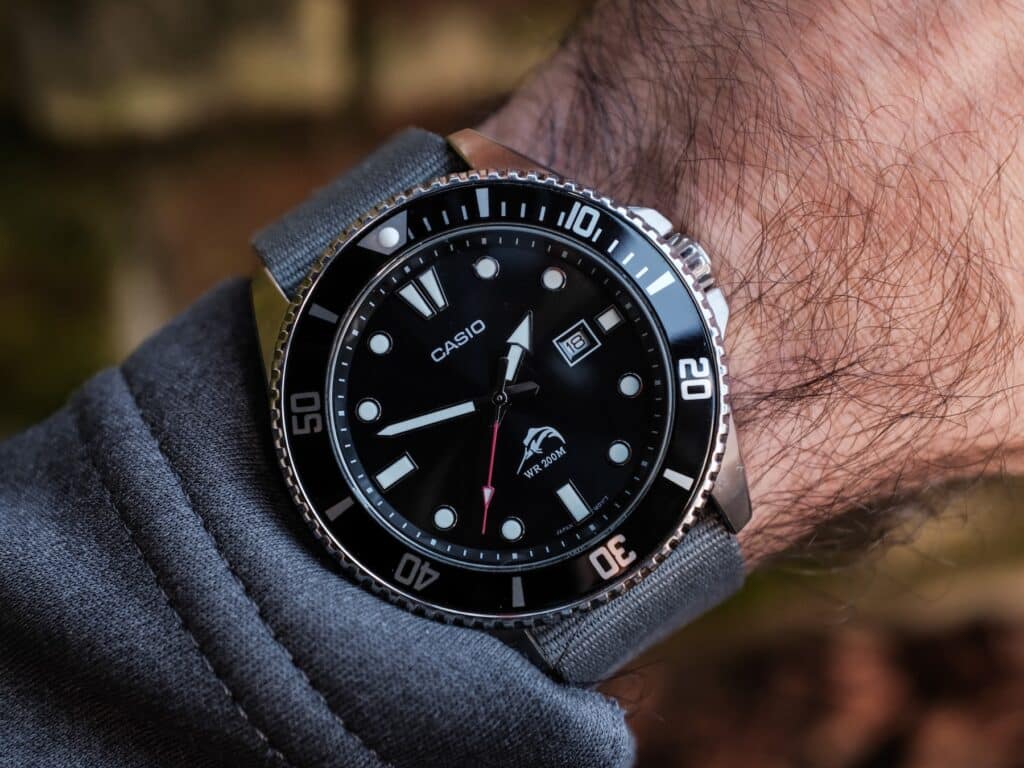
| Price: | $85 |
| Water Resistance: | 200m |
| Case Dimensions: | 44.2mm (diameter) x 48.5mm (lug-to-lug) x 12.1mm (thickness) |
| Lug Width: | 22mm |
| Movement: | Casio 2784 Quartz |
There’s something to be said for a dive watch that doesn’t demand attention. The Casio Duro falls squarely into that category. It’s one of those pieces we’ve kept around because it quietly handles the basics without introducing new problems. In the context of the best dive watches under 500, that kind of reliability matters more than finishing flourishes or brand distinction.
What makes the Duro easy to live with starts with the movement. The quartz setup hacks, includes a quickset date, and in our testing experience, stayed within about ±20 seconds per month. That consistency changes your habits: you can leave it untouched for a few days and pick it back up without needing to reset anything. There’s no winding, no fuss, and very little upkeep beyond the occasional battery change. For a lot of people, that’s exactly what a budget dive watch should be.
On the wrist, the Duro wears large but not clumsy. The 44mm case might raise eyebrows on paper, but the shorter lug-to-lug and downward curve help it sit more securely than expected. It still has presence, though, and if you’re used to something like the Seiko Turtle, the overall feel won’t be far off. The finishing keeps things practical with brushed surfaces up top, polished sides, and a small bevel separating the two. It adds enough variation without trying too hard.
Legibility is another area where Casio kept things grounded. The dial is clean, with minimal text and a straightforward layout. The arrow-shaped hands reflect light well, and the applied indices add a bit of depth beneath the flat mineral crystal. The framed date at three is easy to read at a glance, which is something we tend to appreciate more over time. Lume is usable and covers enough surface area, though it fades sooner than we’d like during extended periods in the dark.
Functionally, it behaves like a proper dive watch. The screw-down crown and solid caseback provide confidence in water resistance, and the aluminum bezel has a controlled, deliberate rotation. It never developed the loose or rattly feel that can creep into watches at this price point. Add in the 22mm lug width, and it becomes an easy platform for swapping straps. We’ve run it on rubber, nylon, and bracelets without any issues.
Pros:
- The quartz movement stays accurate and requires almost no attention day-to-day.
- 200m of water resistance, along with a screw-down crown, makes it suitable for use in water.
- The bezel action feels controlled and doesn’t degrade quickly.
- Clean dial layout keeps things readable in most lighting conditions.
- Standard 22mm lugs make strap changes simple.
Cons:
- The 44mm case can feel oversized, especially on smaller wrists.
- The mineral crystal is more prone to scratches compared to sapphire.
- Lume is decent initially, but doesn’t hold brightness as long as some alternatives.
G-Shock GW6900
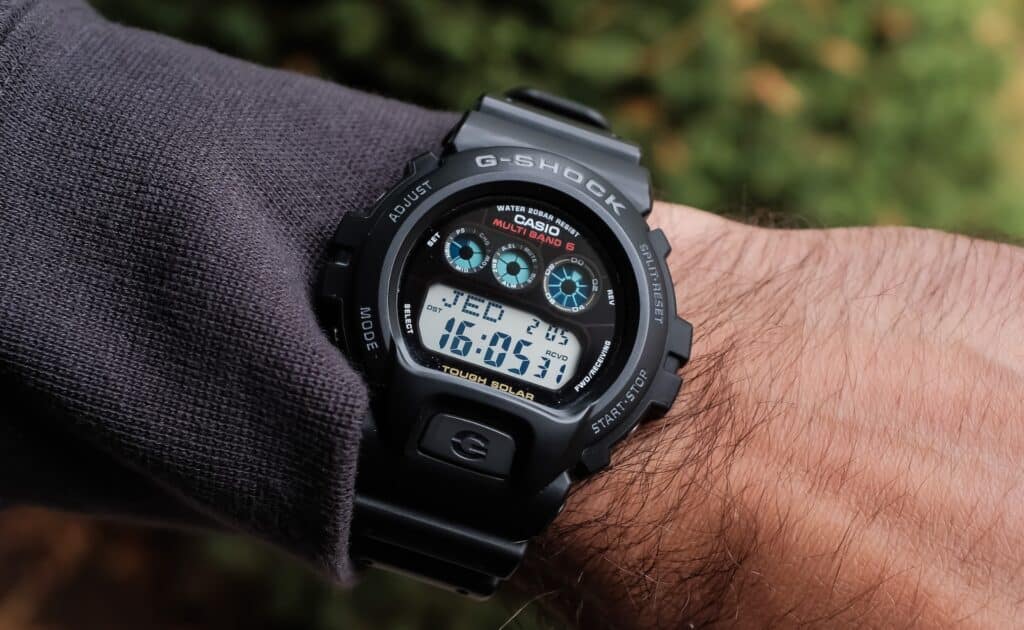
| Price: | $140 |
| Water Resistance: | 200m |
| Case Dimensions: | 53.2mm (diameter) x 50mm (lug-to-lug) x 17.7mm (thickness) |
| Lug Width: | 16mm |
| Movement: | Solar Quartz Module 3179 |
Not every watch in this price range needs to follow the traditional dive watch formula to earn a spot here. The Casio G-Shock GW6900 is a good example of that. It’s the one we reach for when the day looks unpredictable: yard work, rushed mornings, or anything involving impact, water, and general neglect. In a lineup of the best dive watches under 500, this is the piece that trades a rotating bezel for outright durability and convenience.
The case tells most of that story. It’s full resin with a steel caseback, and despite measuring over 50mm wide and around 18mm thick, it doesn’t wear like a brick. The weight stays quite low, and on the wrist, it feels more like a lightweight shell than a solid chunk of material. You forget it’s there until it takes a hit, and more often than not, the surrounding environment takes the damage instead. That kind of shock resistance is more practical than traditional dive specs in many everyday scenarios.
Functionality leans heavily into digital utility. The layout can feel busy at first with the signature triple “eye” display, but it settles into something intuitive after a few days. The main screen clearly shows time and date, while the upper indicators track things like stopwatch activity or radio sync. That stopwatch goes down to 1/100 of a second, and we’ve used it for everything from workouts to timing a pour-over. There’s also a countdown timer and five alarms, which add flexibility even if you don’t use them all. A small but useful detail we found during our review is the dual time display tucked into the corner, which stays visible without interrupting the main readout.
Where this watch really separates itself is how little attention it needs. Tough Solar charging keeps the battery topped up with regular light exposure, so there’s no real maintenance cycle to think about. Multi-Band 6 radio sync checks atomic time signals overnight (across regions such as the U.S., UK, Japan, Germany, and China), and, in our experience, it corrects itself automatically most nights. You can leave it sitting for weeks and come back to a perfectly accurate time. The EL backlight, triggered by the large front button, emits a bright green glow that evenly illuminates the display. It’s not the newer LED system, but it gets the job done without any fuss.
The resin strap plays its part too. It can feel a bit stiff and slightly squeaky out of the box, but it softens quickly and conforms well to the wrist. It also dries fast after water exposure and stays comfortable through long wear sessions. We’ve seen people swap straps, but honestly, we never felt the need.
Pros:
- Tough Solar charging keeps the watch running without battery swaps.
- Multi-Band 6 sync automatically maintains near-perfect accuracy.
- Lightweight resin build absorbs shocks and stays comfortable despite its size.
- Functional digital layout with stopwatch, timer, alarms, and dual time
- Bright EL backlight makes nighttime checks easy.
Cons:
- The large case can feel bulky, especially on smaller wrists.
- The multi-display layout takes some time to get used to.
- The stock resin strap is slightly stiff and squeaky at first.
Orient Mako II
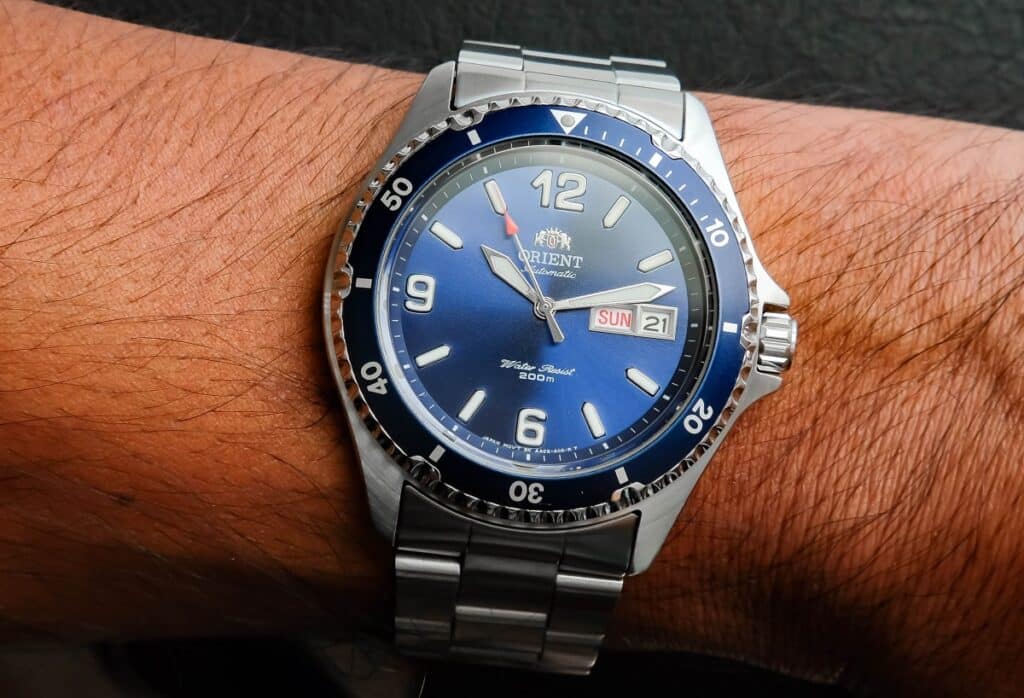
| Price: | $160 – $220 |
| Water Resistance: | 200m |
| Case Dimensions: | 41.5mm (diameter) x 47mm (lug-to-lug) x 13mm (thickness) |
| Lug Width: | 22mm |
| Movement: | Orient Caliber F6922 (Mechanical Movement) |
The Orient Mako II is one of those watches that quietly makes a strong case for itself in this list, not by relying on standout gimmicks or aggressive styling. Instead, it leans into balance, something we’ve come to appreciate more after spending extended time with it.
On the wrist, the proportions are easy to get along with. At 41.5mm, it avoids the oversized feel that some dive watches fall into, and the lug-to-lug distance keeps things compact enough for smaller wrists. It sits flat, doesn’t wobble, and never feels top-heavy during daily wear. What stood out over time was how cohesive the case design feels. The brushed lugs transition cleanly into polished case sides, and that contrast looks intentional rather than decorative. Even the way the bracelet meets the case feels considered, with end links that follow the lines naturally instead of feeling like an afterthought.
The dial adds enough character without sacrificing usability. The sunburst finish gives it depth in changing light, while the applied indices remain easy to pick out at a glance. There’s a consistency to the detailing: the framed day-date window echoes the polished accents on the hands, and the red-tipped second hand adds a bit of contrast without pulling focus. Lume is present and usable, though it doesn’t last as long as some of the stronger performers in this category.
From a functional standpoint, the bezel and movement carry most of the experience. The 120-click bezel feels firm once you engage it, though the sloped edge can be a bit awkward to grip compared to more aggressively textured designs. Inside, the in-house F6922 movement adds hacking and hand-winding, making it easier to interact with the watch, especially after it’s been sitting for a few days.
The bracelet rounds things out. It feels solid enough on the wrist, with a clasp that stays secure throughout the day. That said, the hollow end links are noticeable when handling the watch off-wrist, and they remind you of the compromises made to hit this price point. The mineral crystal falls into that same category: it does the job, but you’re trading off some scratch resistance compared to sapphire.
Pros:
- The well-proportioned case wears comfortably across a range of wrist sizes.
- Sunburst dial and applied markers add depth without hurting readability.
- In-house movement with hacking and hand-winding improves everyday usability.
- The bezel action feels firm and controlled once engaged.
- The bracelet feels secure and integrates cleanly with the case.
Cons:
- Mineral crystal is more prone to scratches than sapphire.
- The bezel edge can be tricky to grip due to its sloped design.
- Lume is serviceable but not particularly long-lasting.
- Hollow end links are noticeable when the watch is off the wrist.
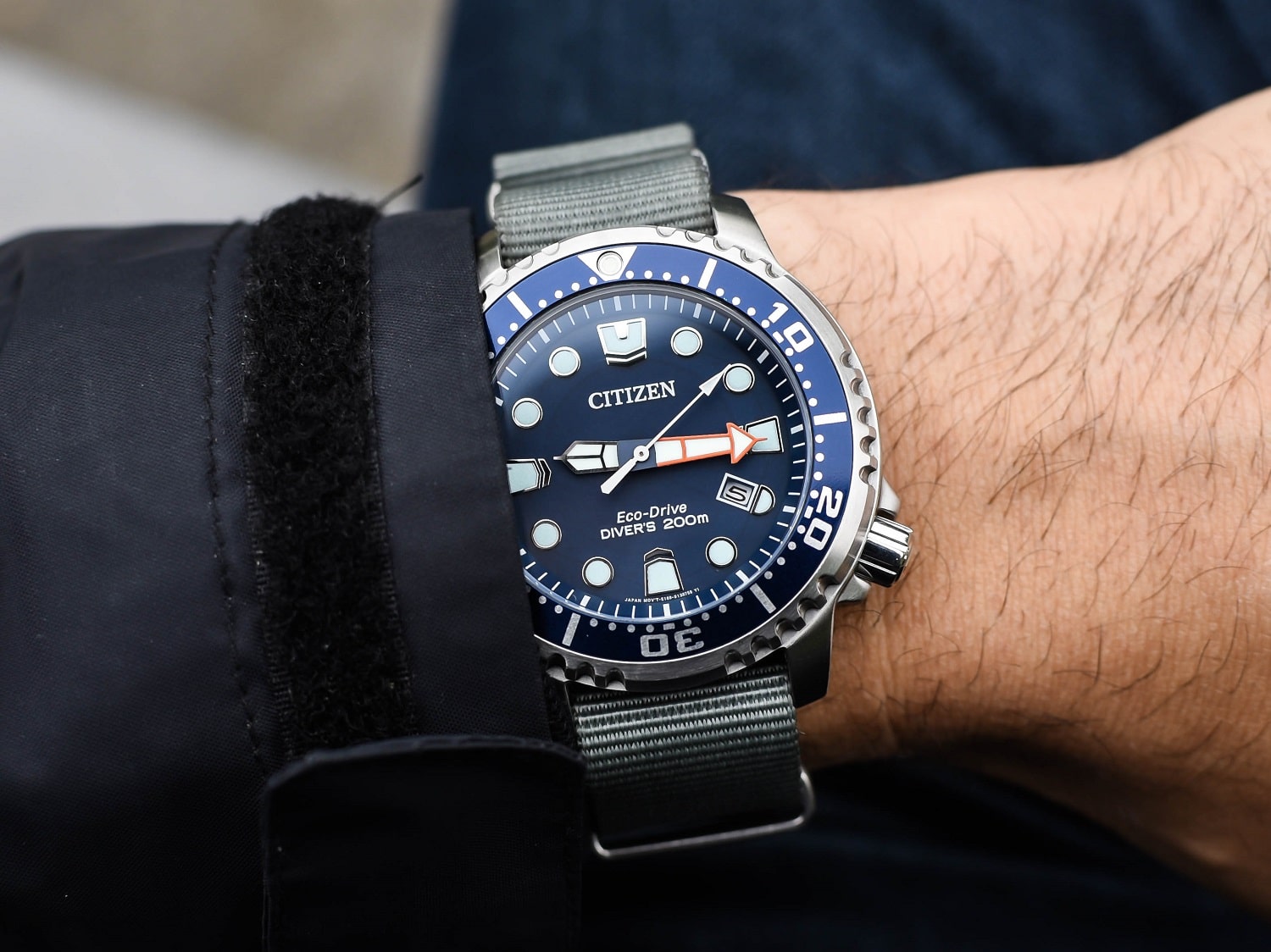
Citizen Promaster Diver BN0151
| Price: | $250 – $300 |
| Water Resistance: | 200m |
| Case Dimensions: | 43mm (diameter) x 48mm (lug-to-lug) x 11.5mm (thickness) |
| Lug Width: | 20mm |
| Movement: | Citizen Eco-Drive E168 (solar quartz) |
The Citizen Promaster Diver BN0151 is one of those watches that becomes a default option. Not because it stands out immediately, but because it removes friction from daily use. In a lineup of the best dive watches under 500, that kind of reliability, where you don’t have to think about the watch at all, ends up mattering more than most specs on paper.
A big part of that comes down to the Eco-Drive movement. Once fully charged, we consistently saw around six months of runtime, with accuracy staying within roughly ±15 seconds per month during testing. It’s the kind of setup that changes your relationship with the watch. You don’t worry about winding, and battery changes are off the table. We only encountered the low-power indicator once, and a short exposure to light brought it right back. It’s one of the more low-maintenance options in this category.
On the wrist, the watch wears more comfortably than its 43mm case size suggests. The short lug-to-lug distance and downward curve help it sit securely, and the overall weight feels lighter than expected, almost bordering on titanium-like. The crown at 4 o’clock is another thoughtful touch. It stays out of the way and avoids digging into the wrist during extended wear. With 200 meters of water resistance, it’s a watch we didn’t hesitate to take swimming or wear in rougher conditions.
Legibility is what builds long-term trust for the Promaster. The dial is easy to read in daylight, with bold hands and markers that stand out clearly. In low light, the aqua-toned lume holds visibility for hours, and the small lume pip on the seconds hand gives that extra confirmation that the watch is still running. The blue dial can shift slightly toward purple depending on the viewing angle, adding a bit of visual interest without affecting readability. The mineral crystal held up better than expected during extended wear, avoiding any obvious scratches.
The bezel takes a more restrained approach. The 60-click action feels deliberate and controlled, and alignment stayed consistent in our experience. The trade-off shows up when your hands are wet. The grip can feel a bit slick compared to more aggressively textured bezels. The stock polyurethane strap is another weak point. It works, but it’s stiff out of the box and takes time to break in. Most of us swapped it out early, and on a NATO strap, the watch feels more balanced and easier to wear throughout the day.
Pros:
- Eco-Drive movement delivers long runtime and consistent accuracy with minimal upkeep.
- Strong legibility, with lume that remains visible for extended periods
- Wears smaller and lighter than the case dimensions suggest
- 200m water resistance with a comfortable, low-profile crown at 4 o’clock
Cons:
- Mineral crystal lacks the scratch resistance of sapphire.
- The stock polyurethane strap feels stiff and takes time to break in.
- The bezel grip can be slippery when wet.
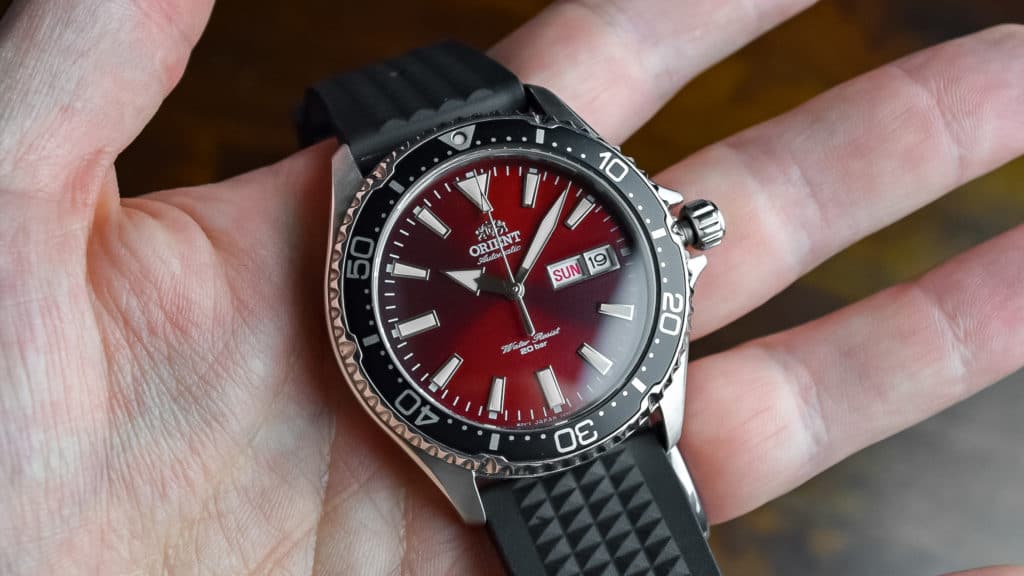
Orient Kamasu
| Price: | $250 – $375 |
| Water Resistance: | 200m |
| Case Dimensions: | 41.5mm (diameter) x 47mm (lug-to-lug) x 13mm (thickness) |
| Lug Width: | 22mm |
| Movement: | Orient F6992 (automatic movement) |
The Orient Kamasu is one of those watches that makes you double-check the price after handling it. The first thing that stood out to us was how solid everything felt in our hands. The brushed case surfaces are clean and consistent, the bezel action is tight without feeling stiff, and the crown operation is smooth. There’s a sense that the finishing decisions were made carefully rather than just to hit a price point. The inclusion of a sapphire crystal reinforces that impression: it’s still not something you see often at this level. On the wrist, the 41.5mm case sits comfortably, helped by curved lugs and a manageable thickness of around 13mm. It feels balanced rather than bulky.
The dial brings most of the personality. The wine-red sunburst finish catches light in a way that adds depth without becoming distracting. Applied indices sit slightly above the dial, giving a subtle floating effect that adds to the overall sense of precision. The handset is well-proportioned, with the minute and second hands reaching cleanly out to the edge for easy reading. The day-date window is framed neatly, and the Orient logo doesn’t overpower the layout. Lume performance is a highlight. It’s bright, quick to charge, and in our experience holds its own against many Seiko divers we’ve tested.
Inside, the in-house F6922 movement adds to the ownership experience. You get hacking and hand-winding, and accuracy stayed within expected tolerances during our review period. It’s not about chasing precision here; it’s about consistency and ease of use. The bracelet complements the watch well, with a fully brushed finish and a secure feel on the wrist. The four micro-adjust positions make it easier to dial in a comfortable fit, which we appreciated over longer wear sessions.
Pros:
- Strong overall finishing, with brushed surfaces that feel deliberate and well-executed
- The sapphire crystal paired with 200m of water resistance adds real durability.
- In-house movement with hacking and hand-winding improves usability.
- Lume performance is bright and holds up well compared to peers.
- Comfortable fit with useful bracelet micro-adjustments
Cons:
- The small crown can be difficult to grip, especially with crown guards.
- The bracelet feels sturdy but lacks refinement in the clasp and end links, which don’t match the rest of the watch.
- The aluminum bezel insert is more prone to scratches over time.
- The sunburst dial may feel too flashy for more minimal tastes.
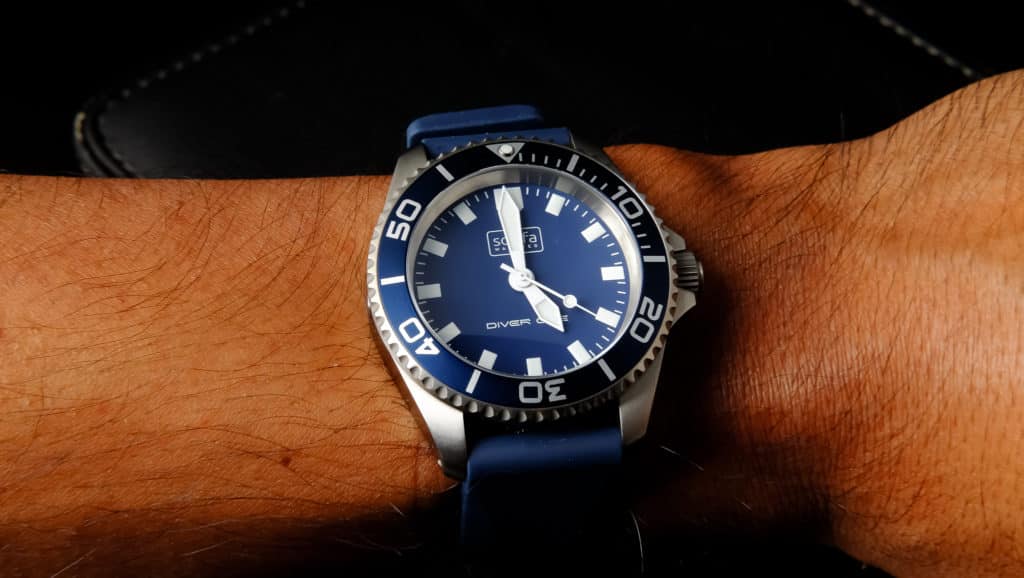
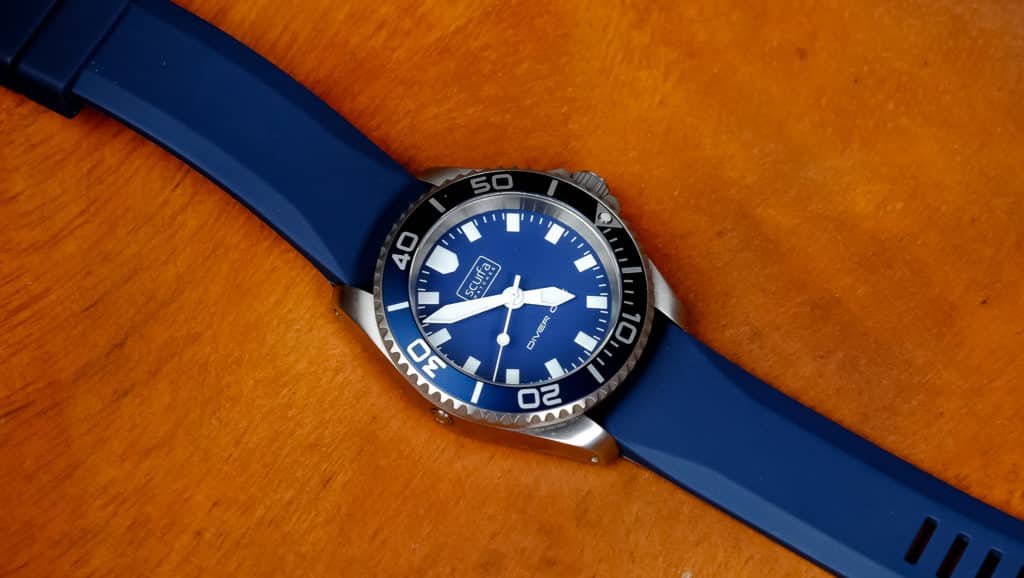
Scurfa Diver One
| Price: | $250 – $399 |
| Water Resistance: | 500m |
| Case Dimensions: | 40mm (diameter) x 47mm (lug-to-lug) x 14mm (thickness) |
| Lug Width: | 20mm |
| Movement: | ETA F06.402 Quartz |
The Scurfa Diver One is one of those watches that makes you rethink what “budget diver” even means. Designed by Paul Scurfield, a saturation diver, it’s clear this watch was made by someone who has spent years under pressure, designing one that’s built to survive it. The titanium case is a major standout here. It’s ultra-light without sacrificing any of the solid, high-quality feel you’d expect from something built for serious use.
At 40mm across and 14mm thick, you might think it’s a bulky dive watch, but the Scurfa Diver One wears surprisingly flat. The contoured mid-case minimizes wrist contact, making it comfortable for extended wear on land or in water. The 500m water resistance is backed by real-world design considerations, including a screw-down crown and a helium escape valve, making it a true tool watch. It’s not just built to survive the depths; it’s built to perform when needed most.
The dial and bezel stick to function over flash. Our review team found that the sword hands and oversized hour markers ensure legibility in even the murkiest light, and the matte blue dial shifts subtly in daylight, adding some character without being distracting. The domed sapphire crystal adds enough distortion to keep things visually interesting. The Super Luminova BGW9 lume is strong and bright, glowing even after a few minutes in what we like to call “day lume.” The bezel, with its precise clicks, is firm and offers great feedback when timing anything from a dive to a coffee break.
Inside, the Swiss Ronda 713SM quartz movement keeps everything running accurately and reliably. With a five-year battery life, it’s a set-it-and-forget-it solution that suits the Diver One’s no-nonsense nature perfectly. The included rubber strap is another point in its favor—secure, comfortable, and matching the watch’s utilitarian feel. Titanium hardware and drilled lugs further reinforce its purpose-driven design.
Pros:
- The ultra-light titanium case feels solid and durable without being heavy.
- 500m water resistance, combined with a helium escape valve and a screw-down crown, provides real-world durability.
- Superb legibility with clear sword hands and bright BGW9 lume
- Smooth, precise bezel action with excellent grip for practical use
- Comfortable, durable rubber strap that complements the watch’s purpose
Cons:
- 14mm thickness might feel a bit tall for smaller wrists.
- The quartz movement won’t appeal to mechanical enthusiasts.
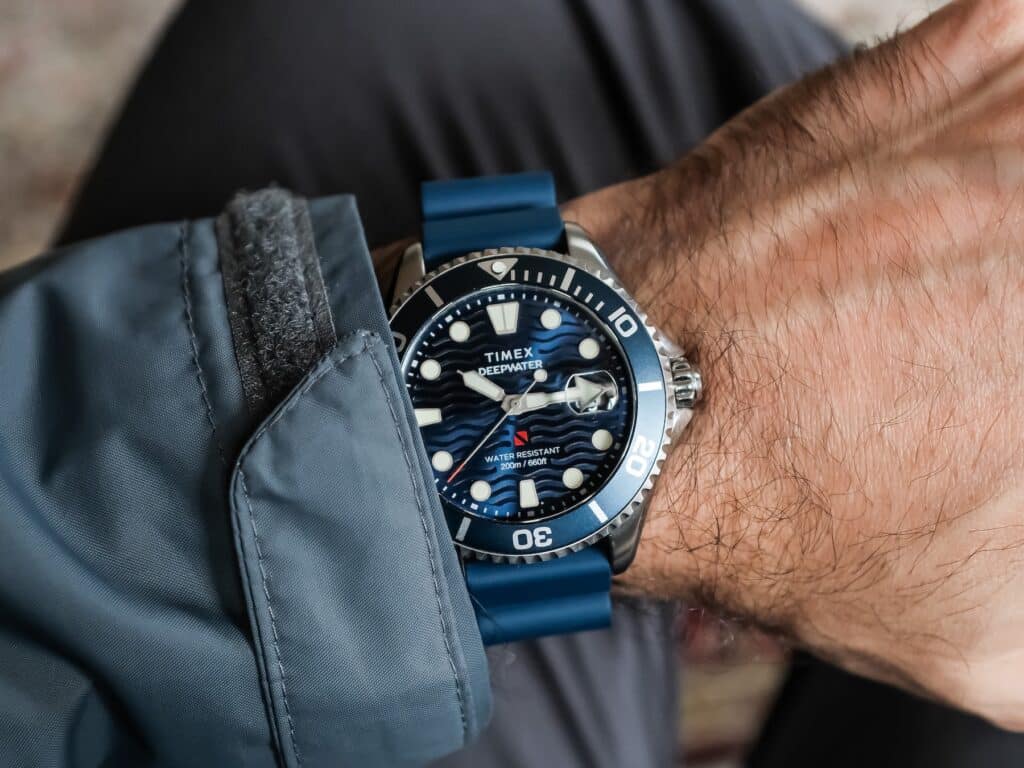
Timex Meridian 200
| Price: | $259 |
| Water Resistance: | 200m |
| Case Dimensions: | 44mm (diameter) x 50.5mm (lug-to-lug) x 12.5mm (thickness) |
| Lug Width: | 20mm |
| Movement: | Seiko Epson VX42E |
The Timex Meridian 200 is a bold, unapologetic attempt by Timex to create a dive watch that doesn’t rely on nostalgia or brand prestige. At 44mm, it’s big but not overbearing, with enough wrist presence to feel like a real tool watch without becoming clunky. The case sits comfortably thanks to the lugs’ curve and the relatively flat 12.5mm thickness. Despite its size, it never felt like it was fighting our wrist during everyday wear, whether at home or on a walk. That’s an accomplishment for a dive watch with 200m of water resistance.
The real surprise here is how Timex manages to make this watch feel solid, not just for the price but for what it sets out to be. The materials are a step above what you might expect in this category. A sapphire crystal with anti-reflective coating, combined with the screw-down crown and caseback, makes the watch feel like it could take a beating. The matte blue dial, with its subtle wave pattern and applied indices, adds some flair without crossing into flashy territory. The red diver’s flag is a nice touch too, offering contrast without cluttering the dial. It’s these details that give the watch a touch of personality, something you don’t always get from dive watches in this price range.
Legibility is straightforward and effective. Super-LumiNova on the hands and markers glows brightly enough to be useful, even during low-light conditions. While the magnifier over the date might not be everyone’s favorite feature, it’s clear, and the distortion is minimal. In practice, it doesn’t hinder the watch’s function, and for some, it’ll be a useful feature. The crown operates smoothly, making time setting and date adjustments simple.
Inside, the Seiko Epson VX42E quartz movement does exactly what you want: it’s reliable, has a quickset date, and offers the simplicity of a single battery lasting up to three years. For anyone looking for a dive watch that doesn’t require constant maintenance but still delivers solid performance, this is it. It’s a “set it and forget it” type of movement, and we appreciated that during our in-depth testing.
What this watch over-delivers is in its no-nonsense design. It’s not trying to be anything more than a functional dive watch, and it feels like Timex’s attempt to grow up in the dive space. It’s sturdy and reliable, and it doesn’t force you to choose between durability and affordability.
Pros:
- Comfortable wear thanks to curved lugs and manageable thickness
- Durable materials, including sapphire crystal and screw-down components
- Solid lume performance, providing long-lasting visibility in low light
- Simple, effective movement with a quick-set date and long battery life
Cons:
- Magnifier over the date might not appeal to everyone.
- The 44mm case may feel large for those with smaller wrists.
- Lume could be brighter for extended low-light visibility.
Seiko Turtle
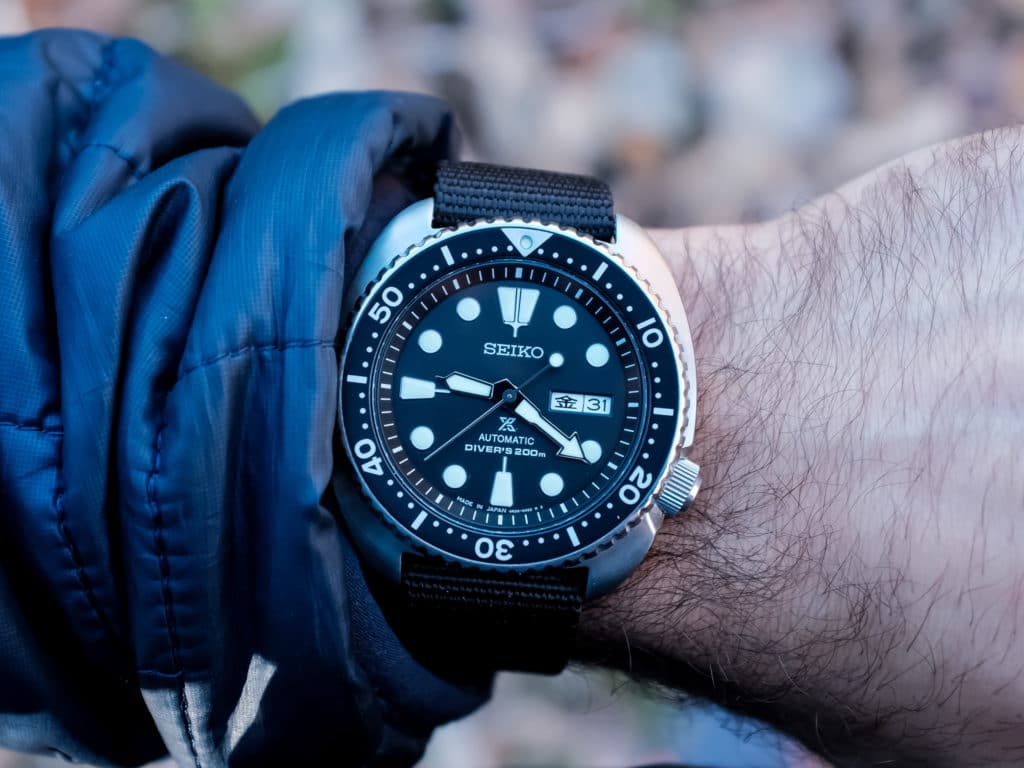
| Price: | $370 – $499 |
| Water Resistance: | 200m |
| Case Dimensions: | 44.3mm (diameter) x 48mm (lug-to-lug) x 14mm (thickness) |
| Lug Width: | 22mm |
| Movement: | Seiko 4R36 |
The Seiko Turtle is one of those dive watches that keeps earning wrist time long after the initial excitement fades. In the context of the best dive watches under 500, it stands out not because it’s the most precise or refined, but because it’s easy to live with. During our time testing it, we’ve worn it on trips, around water, and through regular weekday routines where switching watches didn’t feel necessary.
What surprises most people is how it wears. On paper, the case pushes past 44mm, which can sound intimidating. In practice, the cushion-shaped design spreads that size across the wrist, making it feel balanced rather than oversized. The curved profile helps it sit lower than expected, and the offset crown placement keeps it from digging into your wrist during daily use.
Legibility is where the Turtle quietly excels. Our review team found that the matte dial reduces reflections, and the oversized Lumibrite markers remain visible even when lighting conditions drop off. A glance is usually enough to read the time without hesitation. Seiko uses Hardlex instead of sapphire, which might sound like a compromise, but in our experience, it holds up well and keeps the price in check. The Prospex “X” logo tends to divide opinions online, though on the wrist, it fades into the background pretty quickly.
The movement is a familiar talking point. The 4R36 automatic inside features hacking and hand-winding, making adjustments straightforward. Accuracy can vary, though. We’ve seen ours run somewhere in the +35 to +45 seconds per day range, but that variability is part of what you’re signing up for at this level. In everyday use, it rarely becomes a dealbreaker unless you’re constantly checking it against a reference clock.
Around the edges, there are a few quirks worth noting. The bezel action feels solid when timing, but alignment isn’t always perfect, which is something we’ve seen across multiple Seiko divers. Strap options are flexible: the included silicone is softer than older Seiko straps and comes with a sturdy buckle and steel keeper, though many end up swapping it out for a NATO or similar setup. There are also variations, such as the “Made in Japan” models and versions with a Kanji day wheel. The Kanji adds personality, even if it slows down a quick day check once the novelty wears off.
Pros:
- The cushion case design makes the watch more comfortable than its size suggests.
- Large Lumibrite markers keep the dial readable in low light.
- Screw-down crown and 200m water resistance add practical durability.
- Works well on a wide range of straps, especially NATOs
Cons:
- 4R36 movement accuracy can vary noticeably between pieces.
- Bezel alignment inconsistencies still show up on some units.
In the end, the best dive watches under $500 prove that you don’t have to break the bank to get a solid, reliable watch. Whether you’re diving into deep waters or just into your day-to-day, each of these pieces delivers the goods without making you feel like you need to impress anyone. Let us know your thoughts in the comments below on our picks. And if you think we’ve missed a watch that should be added, let us know and we’ll work on trying to get one in for review.

Co-Founder and Senior Editor
Kaz has been collecting watches since 2015, but he’s been fascinated by product design, the Collector’s psychology, and brand marketing his whole life. While sharing the same strong fondness for all things horologically-affordable as Mike (his TBWS partner in crime), Kaz’s collection niche is also focused on vintage Soviet watches as well as watches that feature a unique, but well-designed quirk or visual hook.
The Scurfa “features an ETA F06.402 brass 3 jewel Swiss made movement with HeavyDrive anti-shock & PreciDrive thermo-compensating precision.”
Hi, Adam:
Thank you for flagging that! The original version of this watch we reviewed had the Ronda and the current ones do indeed use the ETA F06.402. I’ve gone ahead and made that update.
Best,
-Kaz
The Scurfa divers are ALWAYS sold out.
It’s a bummer, Brent. Definitely ramped up in popularity over the past 5 years and they’re tough to snag. Especially the “mil” editions.