
Most microbrand dive watches aren’t worth your money. That’s the general, blunt answer here. A handful absolutely are, but they’re the exception. Over the years, we’ve handled more than a few of these watches alongside the usual benchmarks from Seiko, Orient, and Citizen. These brands basically define the affordable dive watch space. When you’ve spent time wearing those watches day-to-day, on rubber straps in the heat, under sleeves at a desk, banging against door frames, you start to notice pretty quickly which microbrand divers hold up and which ones feel like clever spec sheets wrapped in mediocre execution. And that distinction matters when you’re spending a few hundred bucks on what’s supposed to be an everyday tool watch.

And our perspective here isn’t built from browsing product pages or reading press releases. It comes from years of actually wearing these things, reviewing them, and comparing them side-by-side with the watches most enthusiasts already trust. So instead of debating theory, we’re going to break down what we’ve seen from actual wrist time, and why only a very specific group of microbrand dive watches end up being worth the money in 2026.
When Microbrand Divers Are 100% Worth It
When microbrand dive watches get it right, they can easily stand shoulder-to-shoulder with the big names, and sometimes feel better thought-out than the usual Seiko or Citizen alternatives in the same price bracket. The key difference we’ve noticed during testing is the attention to the small things that actually affect daily wear: case proportions, crown feel, bezel action, bracelet comfort, and dial legibility.
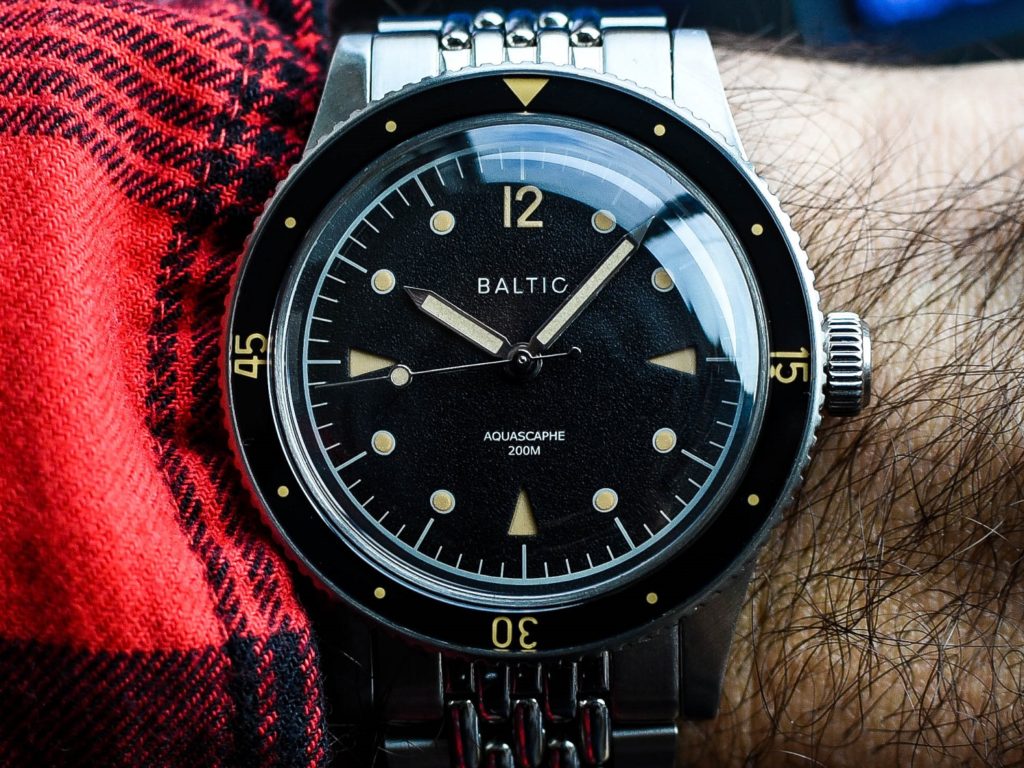
Take the Baltic Aquascaphe. During our hands-on testing, what stuck with us was how well the watch wore day to day. The 39mm case with a 47mm lug-to-lug sat compact and stable on the wrist, giving it the planted feel of an older skin diver rather than a bulky modern tool watch. The slim ~12mm profile helped it slip under sleeves easily, and the beads-of-rice bracelet conformed to the wrist in a way that many microbrand bracelets don’t. Details like the textured crown, drilled lugs, and lumed sapphire bezel made interacting with the watch feel intentional rather than decorative. Even the hybrid sandwich dial added practical depth and strong nighttime visibility thanks to a fully lumed layer beneath the cut-out indices.

The Nodus Sector Deep takes a more performance-focused approach. Instead of leaning on vintage aesthetics, the watch feels engineered for real use. As mentioned in our detailed review, the standout element was the NodeX clasp, which allowed on-the-go micro-adjustments throughout the day as wrist size changed with heat or activity. That sounds minor until you’ve worn a diver all day in warm weather. The case also delivers extreme depth capability of 500m while still wearing low and balanced, avoiding the top-heavy feel that plagues many serious dive watches. Add the firm-grip DLC bezel and bright BGW9 lume, and the whole watch feels built around practical usability rather than marketing specs.

The Halios Seaforth Titanium impressed us a great deal. It wasn’t a watch we planned to wear constantly; but it kept ending up on our wrists. Titanium changes the entire experience here. The watch feels almost weightless compared to steel divers, which makes long days with it far more comfortable than expected. At roughly 41mm with a sensible, compact lug span, it wears slimmer than the numbers suggest, and the uniform brushing with subtle polished chamfers adds enough refinement without compromising the tool-watch character. Even with that lightweight feel, the screw-down crown, sapphire crystal, and 200m water resistance kept it firmly in dive-ready territory. For more in-depth insights, check out our hands-on review.

The Scurfa Diver One leans even harder into real-world functionality. During our hands-on review, the titanium construction made it noticeably lighter and easier to wear for extended periods, especially compared with traditional stainless steel divers. That weight reduction sounds small on paper, but on the wrist, it reduces fatigue and makes the watch feel far more versatile for both outdoor use and everyday wear. It’s a good example of a tool watch that prioritizes usability instead of trying to look like something from a vintage catalog.

With the Imperial Royalguard 200, the standout factor was wearability. The 38mm case with a 47mm lug-to-lug landed in that sweet spot that works for a wide range of wrists, while the bracelet, which tapers to 16 mm and uses screw-link construction, made sizing straightforward. Even with the practical tool-watch layout and solid 200m water resistance, the watch still felt comfortable enough for daily wear rather than just occasional dive duty. To learn more about how this piece shines as a microbrand diver, read our testing insights.
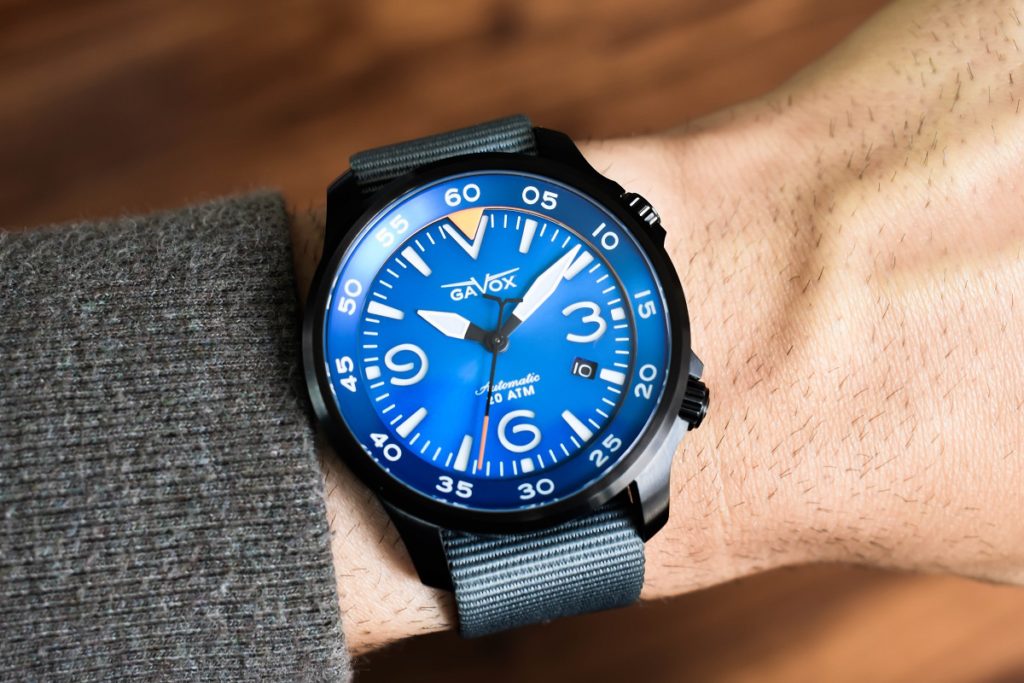
Finally, the Gavox Avidiver showed how creative microbrands can be when they’re not trying to imitate legacy designs. On paper, it looks unusual: a diver with pilot-watch influences and an internal timing system, but it works better than expected once worn. The twin-crown layout allows you to rotate a lumed triangle inside the dial to track elapsed time or a second time zone, while the sloped lugs and relatively slim, hardened 316L stainless steel case keep the 43mm watch from feeling bulky. The triple sandwich dial and bold markers made it very easy to read during our time with it, which is exactly what a functional diver should prioritize.
That’s the pattern we keep seeing with the best microbrand dive watches. The good ones obsess over usability: balanced proportions, thoughtful crowns and bezels, comfortable bracelets, and lume that’s actually readable when the lights go down. Those watches earn their place. But if a microbrand diver doesn’t feel at least this deliberate once it’s on your wrist, it’s probably not worth buying.
The Reality Check: Why Most Microbrand Divers Disappoint
The uncomfortable truth about microbrand dive watches is that the average one looks fantastic online but feels a lot less convincing on the wrist. Instagram renders and Kickstarter launch photos tend to show the watch in perfect lighting, with every brushed surface glowing and every lume plot lined up as it came out of a CAD drawing. Real life is less forgiving. After spending time with a wide range of microbrand watches, we’ve run into enough small problems to recognize the pattern pretty quickly.
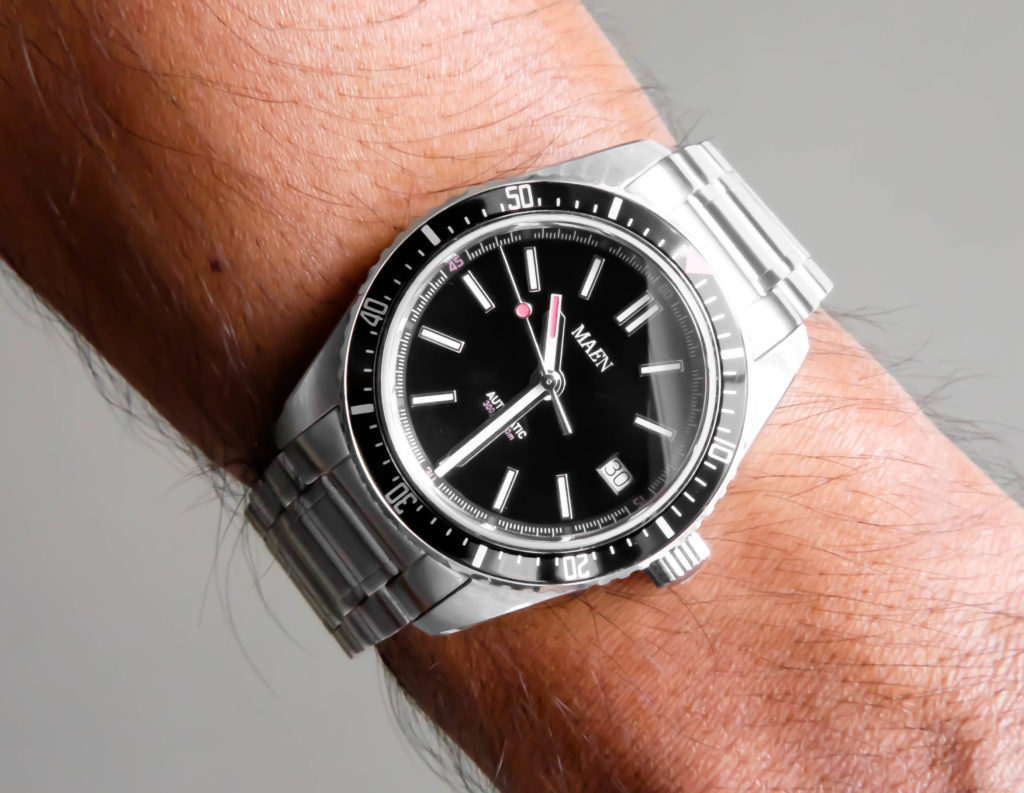
Quality control is usually the first place things start slipping. Misaligned bezels are quite common, especially on watches where the insert is supposed to line up perfectly with dial markers. We’ve also encountered crowns that feel gritty or uneven when threading down, which doesn’t inspire much confidence in a watch that’s supposed to handle water without a problem. A few pieces even arrived with visible dust under the crystal, something that breaks the illusion of quality once you notice it during daily wear. Bracelets are another recurring issue. Many look solid in product photos, but after a few weeks on the wrist, the end links start rattling, the clasp feels thin, and the whole thing gets swapped for a strap to make the watch tolerable.
Finishing inconsistencies show up as well. Some microbrand divers reveal sharp case edges or uneven finishing once you handle them. Brushing lines can fade out halfway across a lug. Polished chamfers sometimes appear softer or sloppier than expected. None of these problems is catastrophic on its own, but together they create a watch that feels unfinished compared with similarly priced pieces from Seiko or Citizen. Even small touches like clasp design make a difference in daily wear. For instance, when the clasp feels flimsy or poorly machined, you notice it every time you put the watch on.

Then there’s the ownership side of things, which doesn’t always get discussed in launch campaigns. Microbrands often operate with small teams and limited infrastructure, which can lead to delays, vague shipping updates, or warranty processes that take longer than expected. That doesn’t mean every brand handles support poorly, but the inconsistency is real. When something goes wrong, the experience can vary widely depending on the company behind the watch.
Overall, the big issue is the gap between launch hype and long-term ownership. A watch can look incredible in the announcement phase: beautiful renders, glowing lume shots, and spec lists that promise a lot for the money. Six months later, after daily wear and a few bumps against a desk or door frame, the reality becomes clearer. The watches that hold up are the ones we keep reaching for. The rest tend to disappear into the watch box.
Microbrand vs Big Brand: What You’re Really Giving Up (and Sometimes Gaining)
When someone asks whether microbrand dive watches are worth buying, the comparison is usually framed incorrectly. It’s not “microbrand or nothing”. The real choice is between a microbrand diver and the proven mainstream options we already know hold up over time. We’ve spent years reviewing watches from huge, established brands that have set the baseline for what a dependable, affordable diver should feel like. If a microbrand wants to compete in that space, it has to offer something meaningfully better than what those watches already deliver.

That said, some microbrands genuinely do beat the big brands in specific areas. One of the places we’ve noticed this during testing is bracelet quality and general tolerances. In our hands-on time with the Seiko Turtle, the watch impressed us with its unmistakable cushion case and the way it wears smaller than its 44mm diameter, thanks to the curved case geometry and tucked-away crown. But once you start looking at the rest of the package, the cost-cutting becomes easier to spot. The movement inside (the 4R36) is dependable, but accuracy can vary within Seiko’s broad tolerance range of -35/+45 seconds per day. That’s the area where some microbrands leap ahead. They’ll often include milled clasps, tighter link tolerances, and more thoughtful bracelet adjustments because they know collectors notice those small interactions.

We’ve seen a similar trade-off in our Seiko Sumo review. The Sumo’s case finishing is legitimately impressive for the money. Those twisted lugs and the alternating brushed and polished surfaces give it a much more sophisticated look than many divers in the same category. But the bracelet design has always been a divisive point among collectors, especially with the narrower 20mm lug width paired with wider first links. It doesn’t ruin the watch, but it’s a reminder that Seiko tends to prioritize case design over bracelet refinement. Again, this is where some of the better microbrands focus their energy.

Sizing and ergonomics are another area where microbrands sometimes move faster than the legacy brands. In our Seiko 5 Sports 5KX review, the watch worked well as a casual everyday diver with the familiar SKX-inspired layout and Seiko’s automatic movement. But it still follows Seiko’s established diver proportions, which can feel large on some wrists. Microbrands often experiment with smaller diameters and shorter lug-to-lug measurements to make the watch more wearable across different wrist sizes. Even a couple of millimeters less lug span can completely change how balanced a diver feels during long days at a desk or outdoors.

Design variety is another area where microbrands have freedom that the larger brands don’t always exercise. Watches like the Orient Mako II and Citizen Promaster BN0151, both of which we’ve spent a lot of time with, succeed because they’re straightforward, dependable tool watches. The Mako II leans into a traditional mechanical diver experience with its in-house F6922 automatic movement that adds hacking seconds and manual winding—small usability improvements that make daily ownership easier.

The Citizen Promaster BN0151 takes a different approach entirely. During our testing period, it consistently became the watch we grabbed when we didn’t want to think about winding or power reserve. Its Eco-Drive E168 solar movement lasts for months on a charge and stays accurate to within roughly ±15 seconds per month, making it a true grab-and-go diver. The dial design is also very practical, with large hands and bold markers that make it readable in both daylight and low light. Still, both watches stick to fairly traditional diver aesthetics. Microbrands tend to take more risks with dial textures, layered indices, colorways, and unusual bezel treatments. Sometimes those experiments fail, but when they work, they make the watch feel far more distinctive than the typical catalog diver.
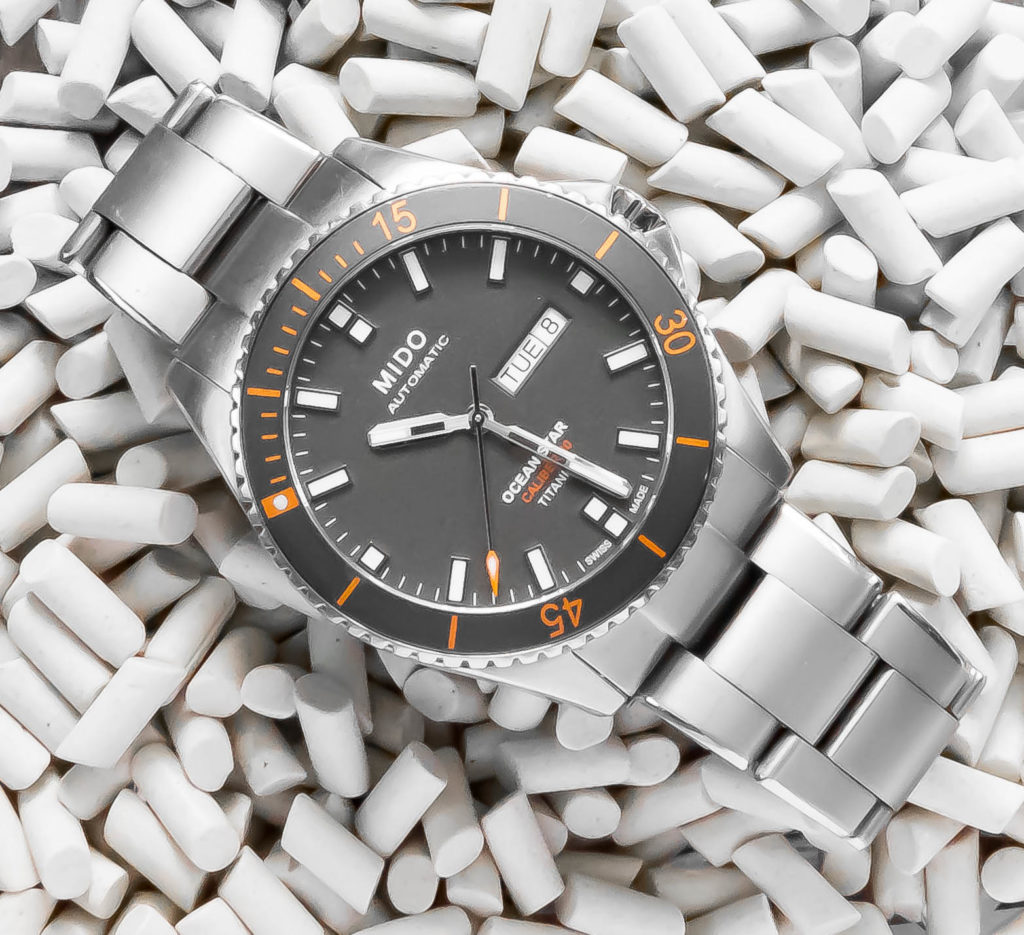
Where the big brands still dominate is ownership confidence. Once the novelty of a new watch wears off, things like servicing, availability of spare parts, long-term reliability, and resale value matter more than dial color. Brands like Seiko and Citizen already have decades of infrastructure behind them, and Swiss brands further leverage that advantage. When we tested the Mido Ocean Star Titanium, the lightweight titanium construction made it very comfortable for extended wear while still delivering the kind of refined finishing you’d expect from an established Swiss manufacturer. And in our Longines HydroConquest review, the watch felt like a product of deep manufacturing experience: solid, well-engineered, and backed by a global service network that makes long-term ownership straightforward.

That’s the real trade-off when you choose a microbrand diver. You might gain sharper finishing, more modern sizing, or a design that feels more interesting than the standard catalog diver. What you give up, at least in most cases, is the confidence that comes from owning a watch backed by decades of infrastructure and support. For some enthusiasts, that trade is worth making. For others, the reliability and long-term security of a mainstream brand still carry significant weight.
When You Should and Shouldn’t Buy a Microbrand Diver
The decision is simpler than the internet usually makes it out to be. After years of wearing microbrand dive watches alongside the usual benchmarks, the pattern becomes pretty obvious. The watches worth buying tend to come from brands that have already proven they can design, build, and support a watch long after the launch hype fades. The rest look better in renders than they do after a few months of actual wrist time. That said, here’s a clear decision framework you can use to consider whether to pursue a microbrand diver (or not).
You should consider buying a microbrand diver if:
- The brand already has a track record. Names like Baltic, Nodus, Halios, Scurfa, etc., didn’t earn their reputations through a single successful release. They built them over multiple watches that collectors (including us) wore and reviewed. By the time pieces like the Baltic Aquascaphe or Halios Seaforth gained momentum, there were already plenty of real-world insights on bezel feel, lume performance, and long-term durability.
- There’s independent owner feedback and hands-on reviews. A good sign is when multiple reviewers and everyday owners report the same experience around build quality, QC, and customer support. That kind of consistency usually means the brand has figured out its manufacturing and support process.
- The watch clearly does something unique from the mainstream alternatives. Maybe the bracelet and clasp feel more refined than those on watches like the Seiko Turtle. Maybe the case sizing is more wearable than the typical Seiko diver proportions. Maybe the price is saving you a few hundred bucks over a diver from the regular frontrunner brands. Or maybe the finishing and dial design push beyond the familiar look of something like the Orient Mako II or Citizen Promaster BN0151. If a microbrand actually improves the experience in a meaningful way, the watch starts to justify itself.

You should not buy a microbrand diver if:
- The biggest selling points are specs and polished renders. Sapphire crystal, ceramic bezel, and 300 meters of water resistance sound great on paper. None of that tells you whether the crown feels smooth when threading down or whether the bezel lines up correctly after a few months of wear.
- It’s the brand’s first diver with no track record. That’s because every company has to start somewhere, but the first batch of customers often discovers QC issues the brand hasn’t yet worked through.
- You can’t clearly explain what it does better than a Mako II, Turtle, or Promaster. If the answer is vague: “it looks cool” or “the specs are better,” then chances are the mainstream diver is still the safer choice.
That’s the simplest rule we’ve landed on after years of testing watches in this category: most microbrand divers end up feeling like a side quest you take before eventually landing on something like a Seiko, Orient, or Citizen anyway. But every once in a while, a microbrand gets it right. Those watches earn their spot because the design, build quality, and long-term ownership hold up, not because the marketing said they would.

Co-Founder and Senior Editor
Kaz has been collecting watches since 2015, but he’s been fascinated by product design, the Collector’s psychology, and brand marketing his whole life. While sharing the same strong fondness for all things horologically-affordable as Mike (his TBWS partner in crime), Kaz’s collection niche is also focused on vintage Soviet watches as well as watches that feature a unique, but well-designed quirk or visual hook.
Great piece. Thanks
Thanks for reading!
Recently bought an Addiesdive diver and everything you listed as possible poor quality points is rock solid. The NH35 is within 5 seconds a day. The case finish is amazing, the bezel lines up perfectly and turns with a quality sound on every one of the120 clicks, the lume is good too. It is a bit heavy with the bracelet on, but i immediately put a NATO on it. I’ve only had it a few days but so far it’s been crazy impressive.
That’s great to hear. Early impressions like that are always encouraging, especially when the basics are all landing. I’d be curious how it holds up after six months or so, since that’s usually where the separation between good and great starts to show. Keep us posted.
Vero – OpenWater is a great Microbrand dive watch as well.
We’re trying to get one in for review 🙂