There’s a point in building a watch collection when the hobby starts creating its own little inconveniences. A mechanical watch that feels effortless when worn every few days can be a different story after sitting in the box for two weeks. You pull it out for a quick trip and find the movement stopped and the date is wrong. Now you’re winding it, setting the time, correcting the date, and wondering whether you still have time to do all that before leaving. After years of wearing, reviewing, and testing watches across different price points and movement types, we’ve experienced this often enough to ask a simple ownership question: does mechanical charm still matter when you can’t give every watch regular wrist time?
We still think it does. Winding a watch, feeling the crown engage, and wearing a mechanical piece you enjoy can add to the fun. But when some watches sit untouched for weeks, convenience matters. Some are ready when you reach for them, while others need attention first. That difference is easy to overlook when comparing movements on paper, but harder to ignore in daily rotation. The watches here are all pieces we’ve reviewed or handled ourselves, so this discussion comes from actual wrist time rather than spec-sheet theory. We’re looking at what that extra interaction feels like once collecting turns one watch into several.
When You Own a Few Watches: Mechanical Friction Barely Matters
With only a few watches in the collection, the ownership trade-off is still fairly easy to live with. These four watches show why mechanical charm can outweigh a little extra fuss when a small collection gives each watch plenty of wrist time.
Quartz and Solar: The Watches You Can Grab Without Thinking
Casio F-91W
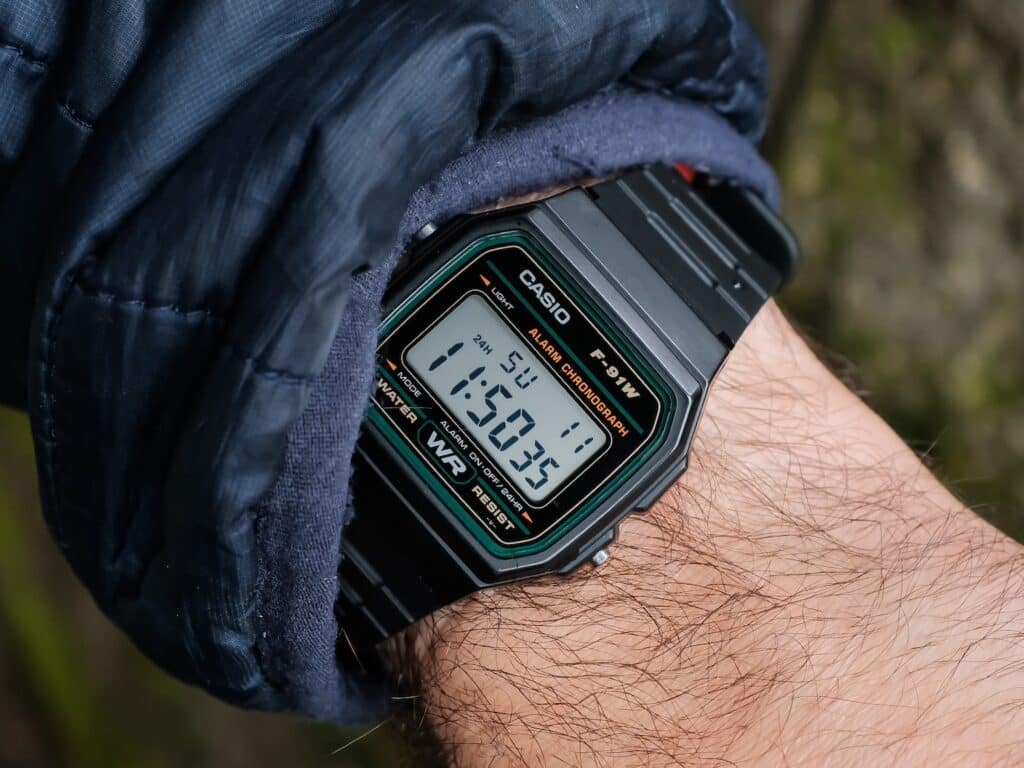
The Casio F-91W is what happens when a watch has absolutely no interest in making your life complicated. It’s 34mm wide, 8.5mm thick, and the example we reviewed weighed a laughably light 20.5 grams. The resin case and strap aren’t pretending to be anything else, but that’s also why the watch disappears on the wrist so easily. There are no precious finishing details to worry about, and the little buttons give the watch a surprisingly positive feel when you’re cycling through the alarm, stopwatch, calendar, and other functions.
That simplicity is useful in a rotation because the F-91W doesn’t punish you for ignoring it. We found ourselves wearing it more often than expected for exactly that reason. It isn’t trying to recreate the tactile experience of a mechanical watch, and that’s fine. Its appeal is that you can forget about it until you need it, then put it on and go.
Timex Expedition Field Post Solar
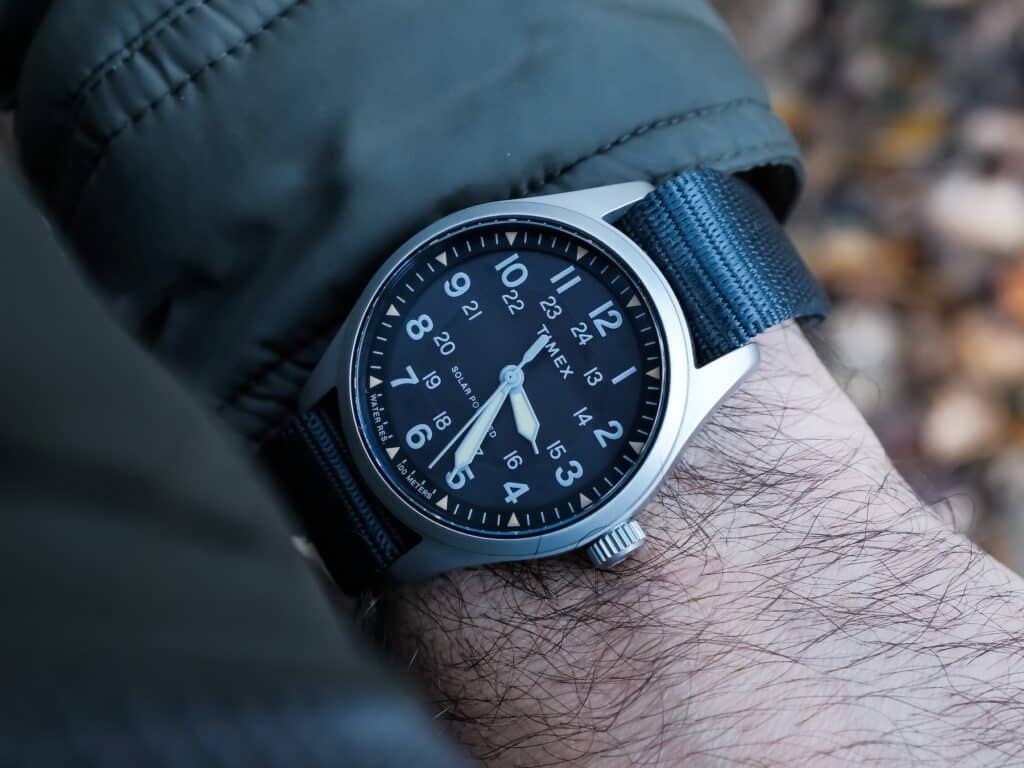
The Timex Expedition Field Post Solar shows that low-maintenance ownership doesn’t have to mean wearing a digital beater. At 36mm with a roughly 44mm lug-to-lug, it wears compact without feeling dainty. The brushed and bead-blasted case, black dial, full Arabic numerals, and slightly domed sapphire give it the straightforward military-tool character we wanted in the first place. Even the crown feels appropriately utilitarian. It threads in without drama, which is about as much ceremony as this watch needs.
Then solar power quietly changes the ownership equation. Once charged, the movement offers up to four months of power reserve. During our hands-on time with it, that translated into the behavior we’d want from a field watch: no winding, no resets, and no wondering whether it would still be ticking after sitting around. That’s a bigger deal than it sounds when the point is to have a reliable watch ready for ordinary life. The weak lume is a genuine letdown on such a purpose-built design, but it doesn’t change the bigger point. The Field Post Solar gives us the look and feel of a conventional field watch without asking us to maintain its daily rhythm.
Mechanical: Why We Still Put Up With It
Orient Bambino
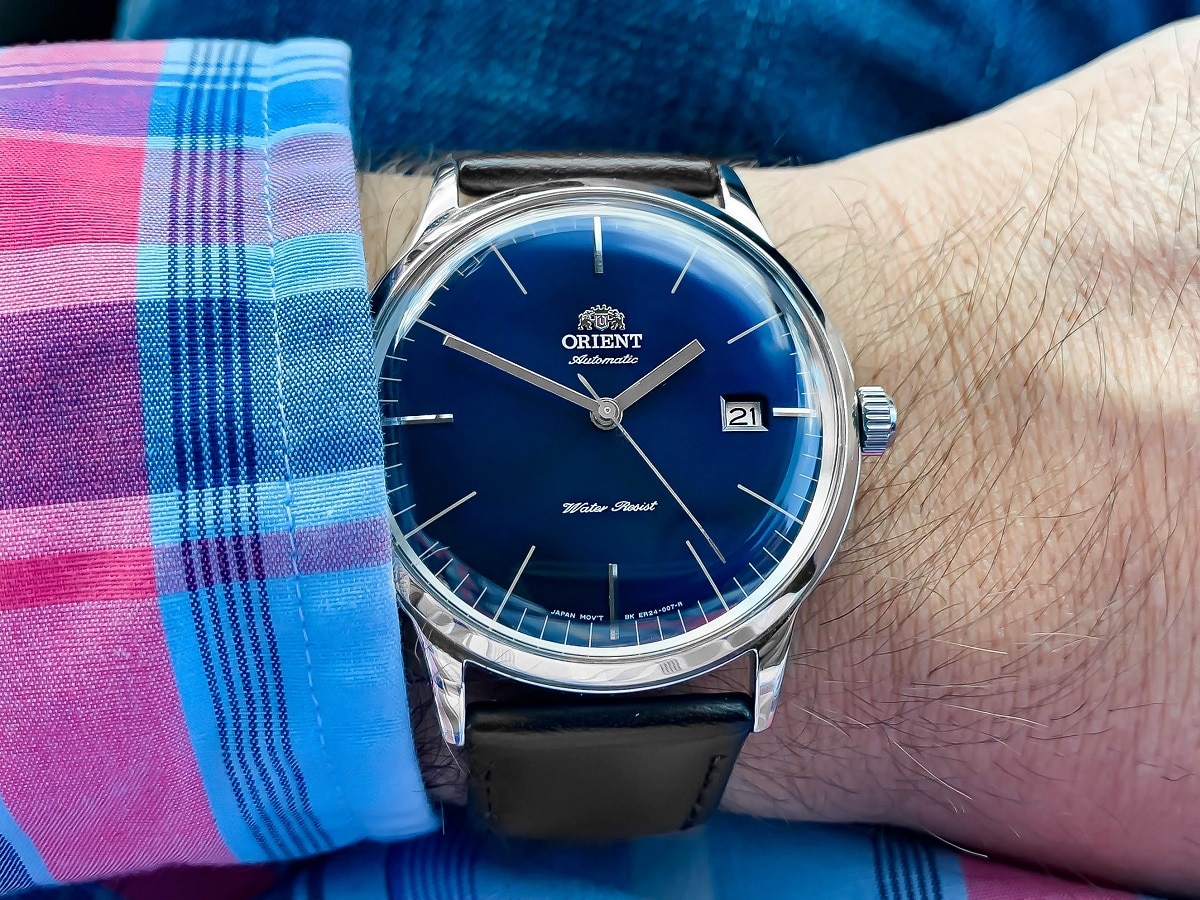
The Orient Bambino makes a good case for accepting a little inconvenience in exchange for character. The V3 we tested measures 40.5mm, but the 44.3mm lug-to-lug and short, gently sloping lugs make it wear considerably smaller than the diameter indicates. The deep blue dial is the real attraction. It can look almost black until the light catches the sunburst, while the domed crystal gives it a bit of old-school dress-watch charm. We also found the case comfortable across a range of wrist shapes, which helps explain why the Bambino works so well as an entry-level mechanical watch.
Of course, this isn’t the watch we’d pick when minimizing fuss is the goal. The 5.3mm crown makes winding awkward, and the F6724 gave us less than 30 hours of practical power reserve. It does hack and hand-wind, which helps, but leave it alone for long enough, and you’re back at the crown. But with only a few watches in rotation, that interaction still feels like part of the appeal.
Seiko 5 SNK793
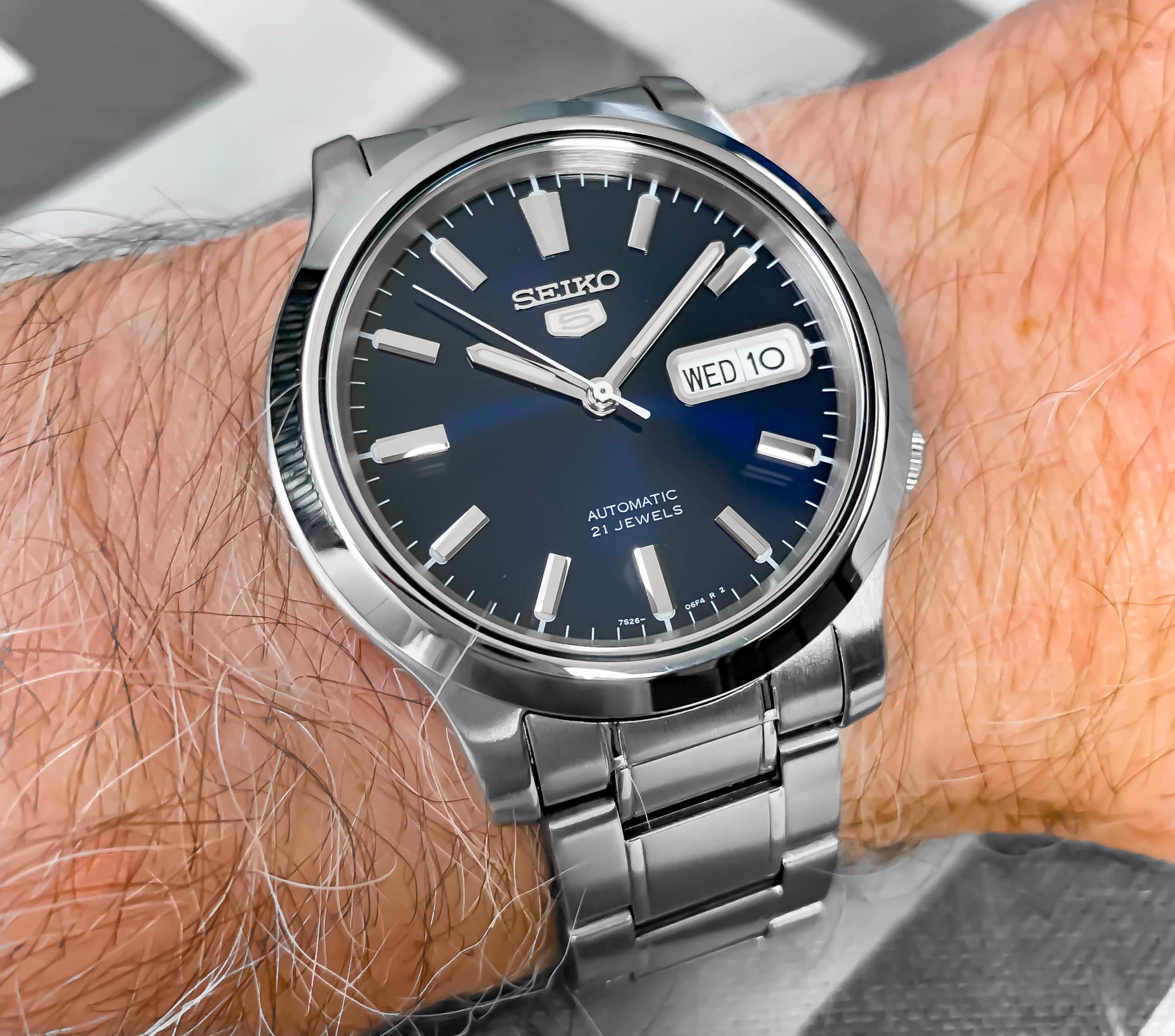
The Seiko 5 SNK793 is even easier to forgive because its appeal is so immediate. At 37mm by 43mm and 11mm thick, it has compact proportions that make an everyday mechanical watch easy to live with, especially on smaller wrists. The dark midnight-blue dial is the star of the show. In darker light, it can look almost black, then the sunburst appears when the light hits it properly. The applied markers catch light nicely, and the whole thing feels more interesting than the price would suggest.
The bigger issue is the 7S26C movement. It doesn’t hack or hand-wind, and the watch we reviewed didn’t appear to reach its full stated 40-hour reserve. So when the watch stops, there’s no quick wind-and-set routine to get it ready. That matters more in a rotation because the inconvenience isn’t only that the watch stopped. It’s that bringing it back into service is less convenient than with a mechanical movement that lets you wind and hack it.
With only a few watches in rotation, mechanical friction is still easy to forgive. The Bambino and SNK793 give us reasons to interact with them, while the F-91W and Field Post Solar remind us how nice it is when a watch can sit untouched and still be ready. At this stage, winding and resetting still feel like part of the hobby. The problem is that the definition of “few watches” can change faster than we expect.
When the Rotation Gets Busier: Grab-and-Go Starts to Matter
Once a few more watches enter the rotation, the ownership difference becomes harder to ignore. Tool watches make that especially obvious because we tend to expect them to be ready for whatever the day throws at us. At this point, solar and quartz start feeling genuinely useful rather than merely convenient.
Solar and Quartz: Convenience Becomes a Genuine Feature
Vaer C4 Tactical Field Solar
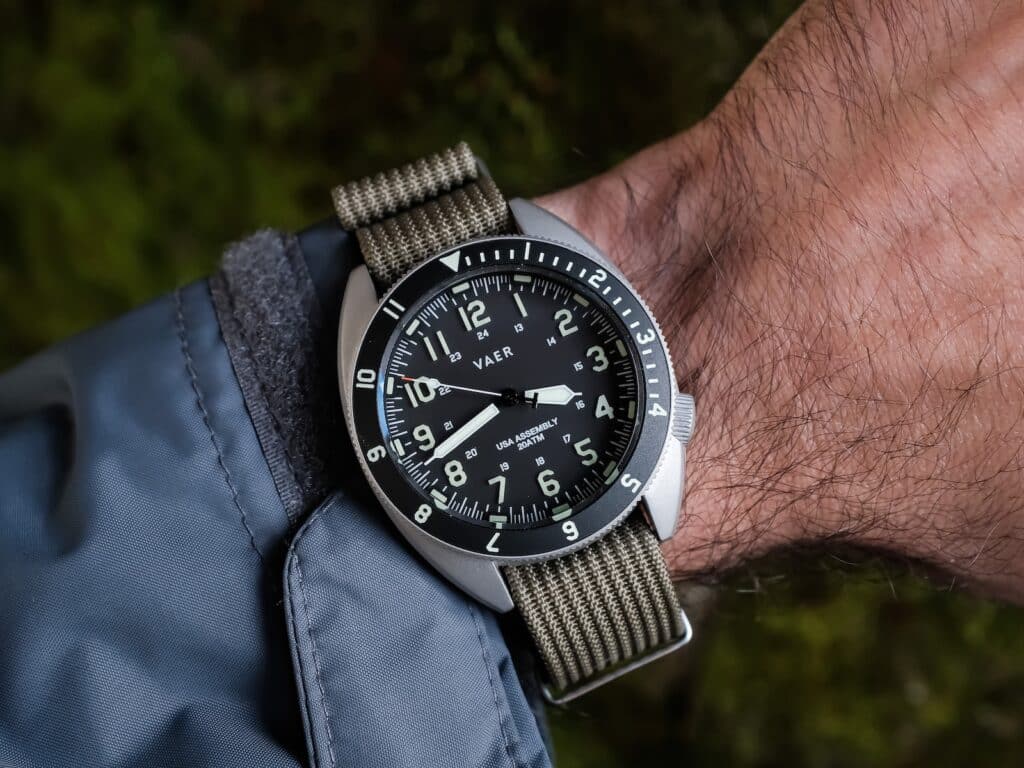
The Vaer C4 Tactical Field Solar is practical here because it doesn’t look like a watch chosen for convenience alone. The 41.5mm case, bead-blasted finish, rotating bezel, screw-down crown, and military-style dial give it plenty of tool-watch character. At 12.8mm thick, it sounds chunky on paper, but on our wrist it sat better than expected, helped by the compact lug-to-lug and the 4 o’clock crown staying out of the way. The bezel was easy to use even with damp fingers, which matters more in practice than another line in the specifications.
As covered in our in-depth review, the Epson VS-42 is the part that makes the C4 easier to forget about. It can build roughly six months of charge from light, so you don’t need regular wrist time to keep it alive. We could set it aside without feeling like we were neglecting it. The second hand on our example didn’t always line up perfectly with the markers, which is the sort of small annoyance that gets harder to unsee once you’ve spotted it. Still, the bigger appeal is straightforward: the C4 retains the look and feel of a proper tool watch while removing one of the chores that comes with owning a mechanical one.
Citizen Promaster Diver BN0151
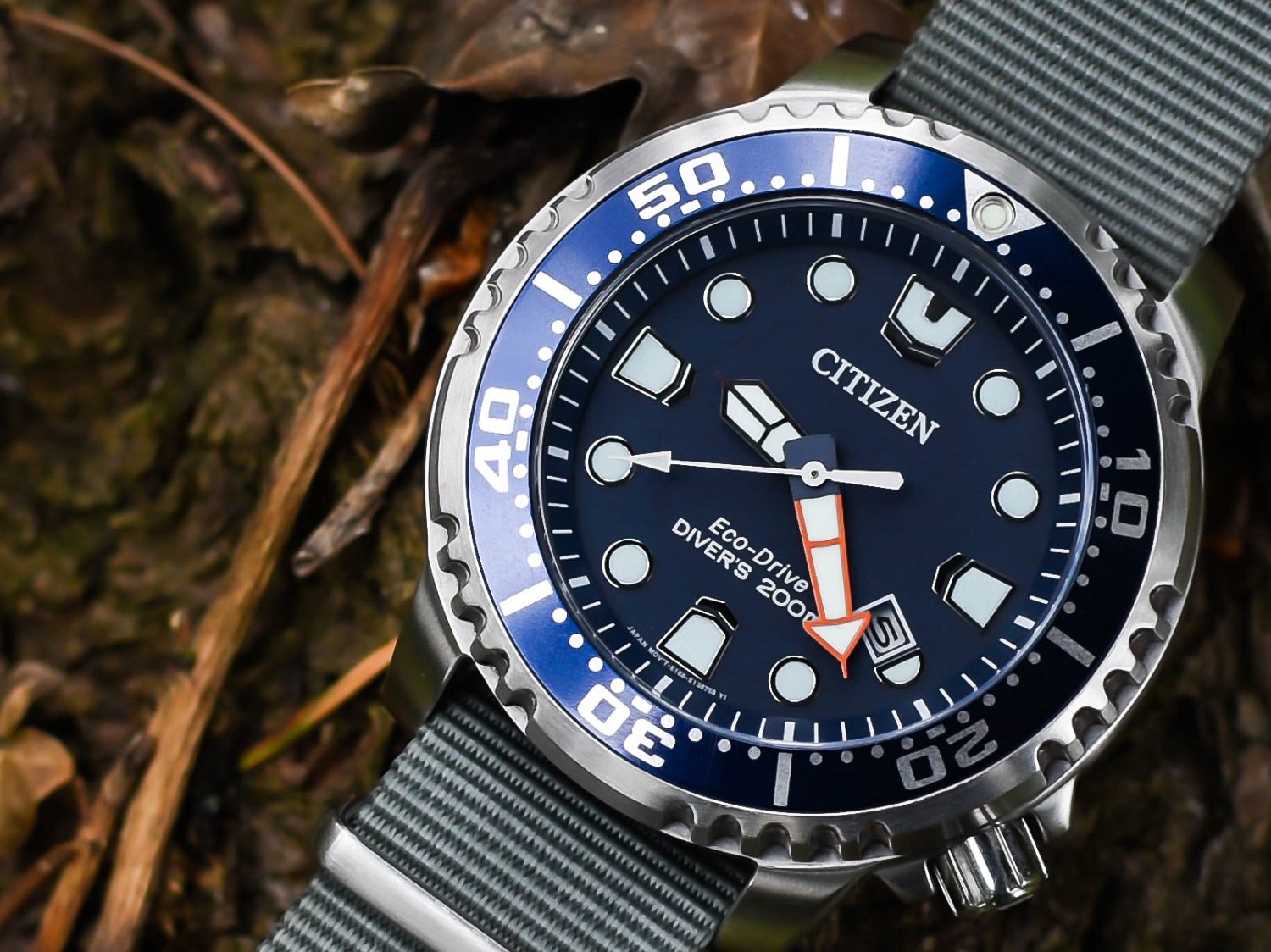
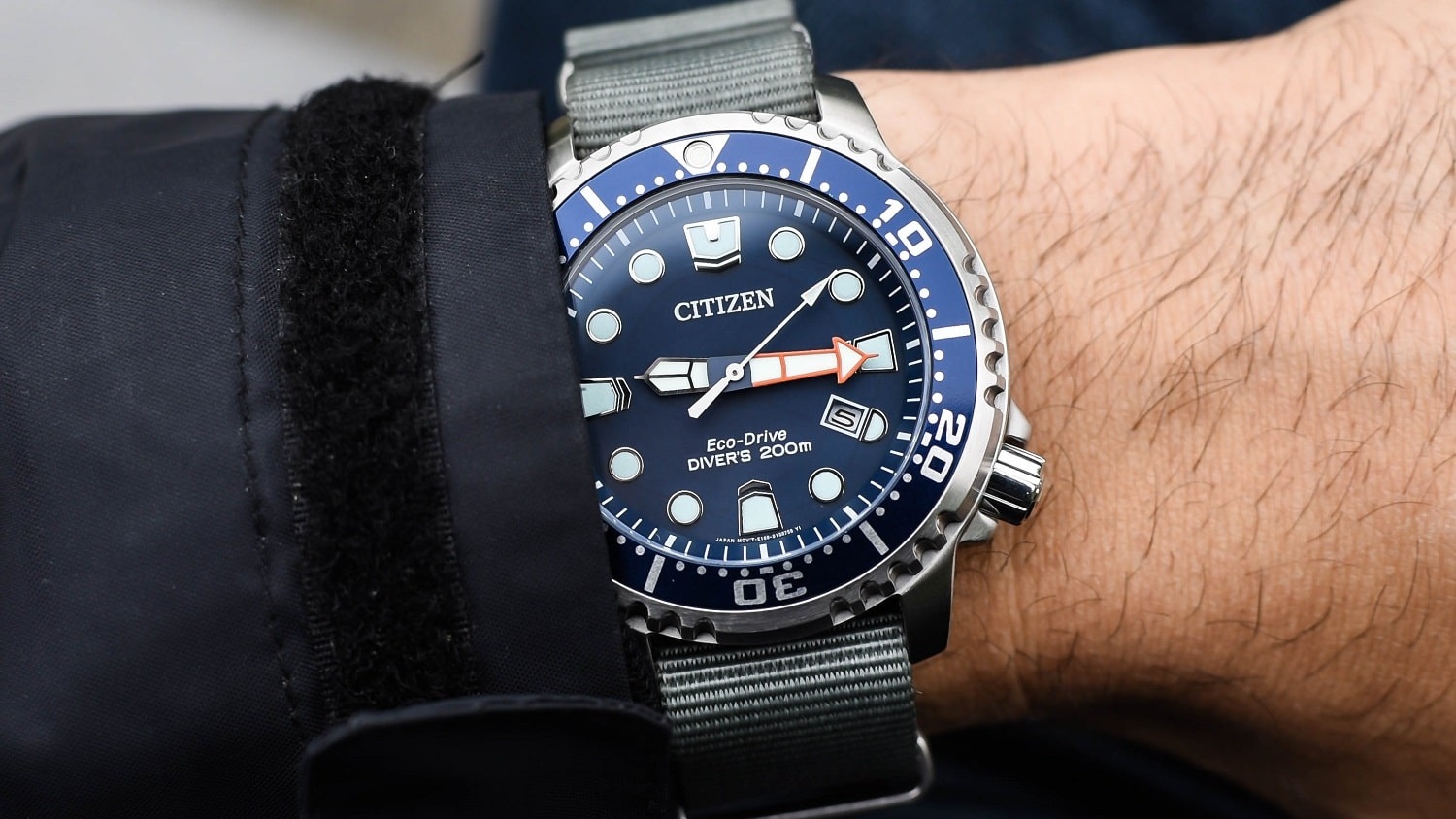
The Citizen Promaster Diver BN0151 is an even better example because ours has spent years proving the point. It has seen hikes, lake outings, jogging, and ordinary workdays, but it keeps earning wrist time because it fits those situations without much ceremony. Despite the 43mm case, the 48mm lug-to-lug and 11.5mm thickness keep the proportions fairly compact, while 200 meters of water resistance means we don’t have to treat it like a dress diver that needs constant supervision.
The Eco-Drive E168 gives us roughly six months of power when fully charged and an accuracy rating of around ±15 seconds per month. After years with the BN0151, what stands out is less the specification than how little the watch has to prove before we put it on. The stock polyurethane strap isn’t our favorite for long stretches, and the bezel could use a little more bite, but those compromises haven’t stopped it from becoming one of the dependable watches in the collection. That matters when a watch gets used for everything from outdoor days to ordinary errands. We don’t need to plan around it, and that simplicity is a big reason it keeps finding its way back onto the wrist. We go into that long-term ownership experience in our review of the Citizen Promaster Diver.
Mechanical: The Watches We Still Enjoy Resetting
Hamilton Khaki Field Mechanical
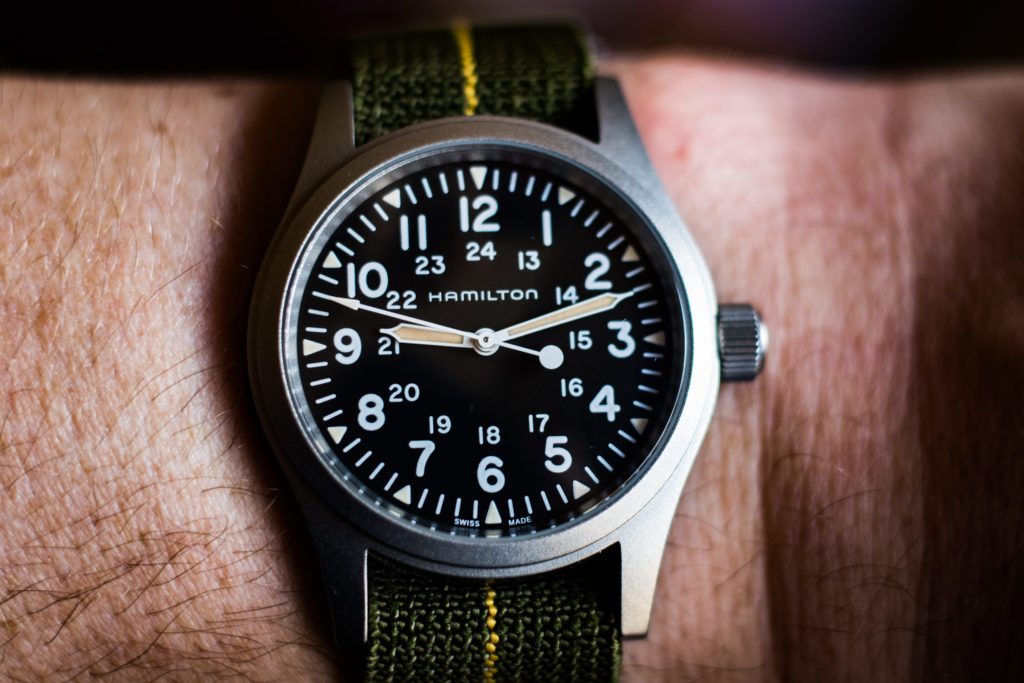
The Hamilton Khaki Field Mechanical is the watch that makes us question whether every inconvenience needs fixing. Winding it is part of the experience. The compact case, starkly legible dial, and military-style details all feel intentionally straightforward, and the H-50’s 80-hour reserve gives us enough breathing room that winding doesn’t become a daily obligation. Better still, the crown action is smooth and satisfying.
Leave it untouched long enough, and we still have to wind it, but that’s not necessarily a deal breaker here. The fixed bars and nylon straps reinforce the field-watch character, and winding feels like part of wearing the watch rather than maintenance we’ve been assigned. This is the better fit for someone who enjoys that interaction, even knowing another watch could make life easier. Our dedicated review of the Khaki gets into that further.
Orient Kamasu
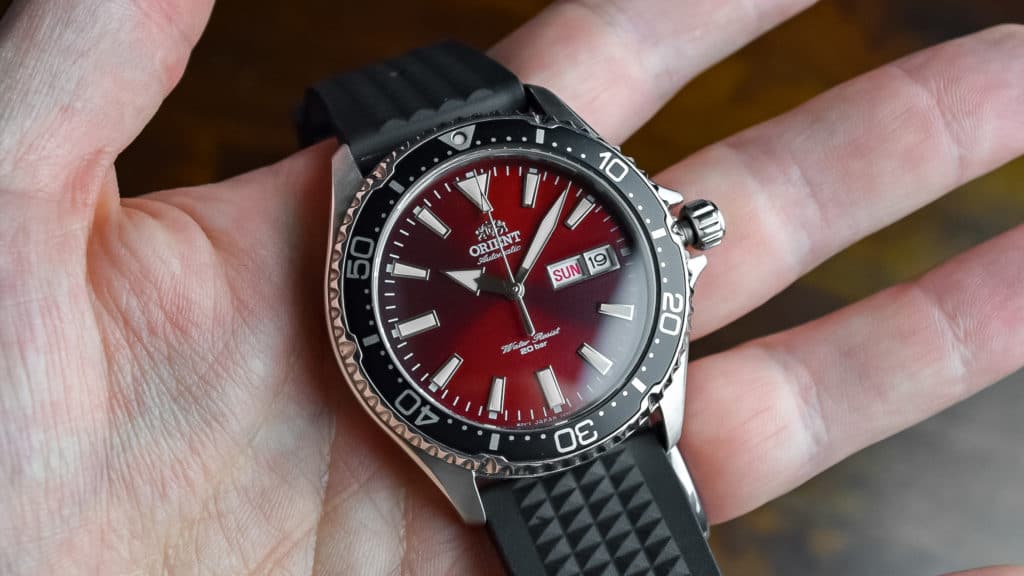
The Orient Kamasu we tested hands-on lands somewhere in the middle of our analysis. It has an automatic movement, not a hand-wound one, so bringing it back to life isn’t especially frustrating once it has stopped. The roughly 40-hour reserve makes the practical trade-off obvious. A weekend away from the wrist can be enough to turn Monday morning into a winding-and-setting job. That’s hardly a crisis, but it’s something we don’t have to think about with the Citizen.
And that’s why the two divers make such a useful pair. The Kamasu gives us the mechanical experience and the satisfaction of wearing an affordable automatic diver. The Citizen BN0151 asks less of us between wears. Neither is trying to solve the same problem in the same way, and that difference becomes more noticeable as the rotation gets busier.
This is where the trade-off becomes practical, not theoretical. The Hamilton and Kamasu remind us that mechanical interaction can still be part of the appeal. The Vaer and Citizen show what happens when a watch doesn’t need regular wrist time to stay useful. When you’re choosing between several watches each morning, that difference carries more weight.
When the Collection Gets Big: Readiness Becomes Hard to Ignore
At the enthusiast end, watches usually spend longer between wears, so downtime becomes harder to ignore. These four show both sides of that equation: increasingly sophisticated quartz and radio-controlled watches that stay ready, and mechanical pieces whose refinement gives us reasons to tolerate the reset.
Radio-Controlled and Solar Quartz: When Accuracy Meets Zero Fuss
Casio G-Shock GW6900-1
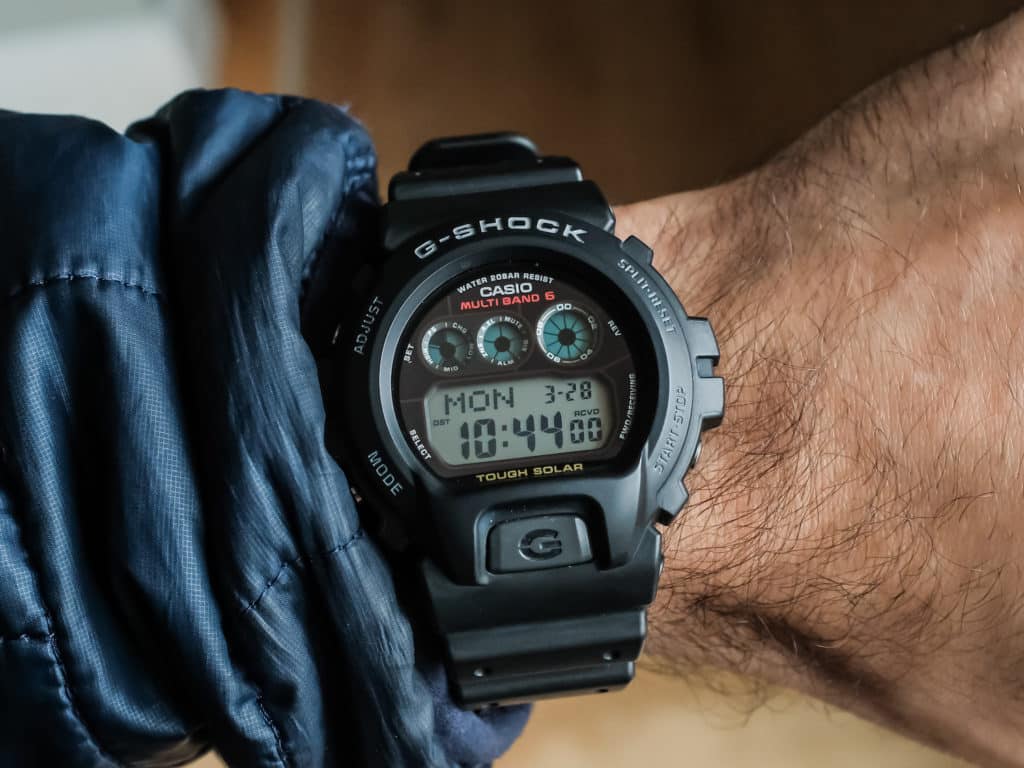
The GW6900-1 might be the least romantic watch in this group, which is precisely why it makes such a good case for itself. We’ve had ours for years, and it routinely gets chosen for the jobs where thinking about the watch is the least interesting part of the day: yard work, travel, airport security, dropped tools. At 53.2mm long and 17.7mm thick, it looks substantial on paper, but the resin construction keeps the weight manageable. More importantly, the layout is straightforward, the backlight is easy to use, and the oversized case suddenly makes sense once you start treating the watch like a tool. (Our long-term GW6900-1 review gets into why it has survived the rotation.)
Tough Solar and Multi Band 6 atomic sync let this thing sit around indefinitely without becoming tomorrow morning’s problem. We don’t have to remember whether we wore it recently, and we don’t have to correct the time when we pull it back out manually. That leaves the five alarms, countdown timer, stopwatch, and world-time functions to do their jobs without creating more work. The G-Shock isn’t trying to recreate the pleasure of a mechanical watch. It has found a different place in the collection: the watch we grab when checking whether another watch is running would already feel like too much work.
Casio Oceanus T200
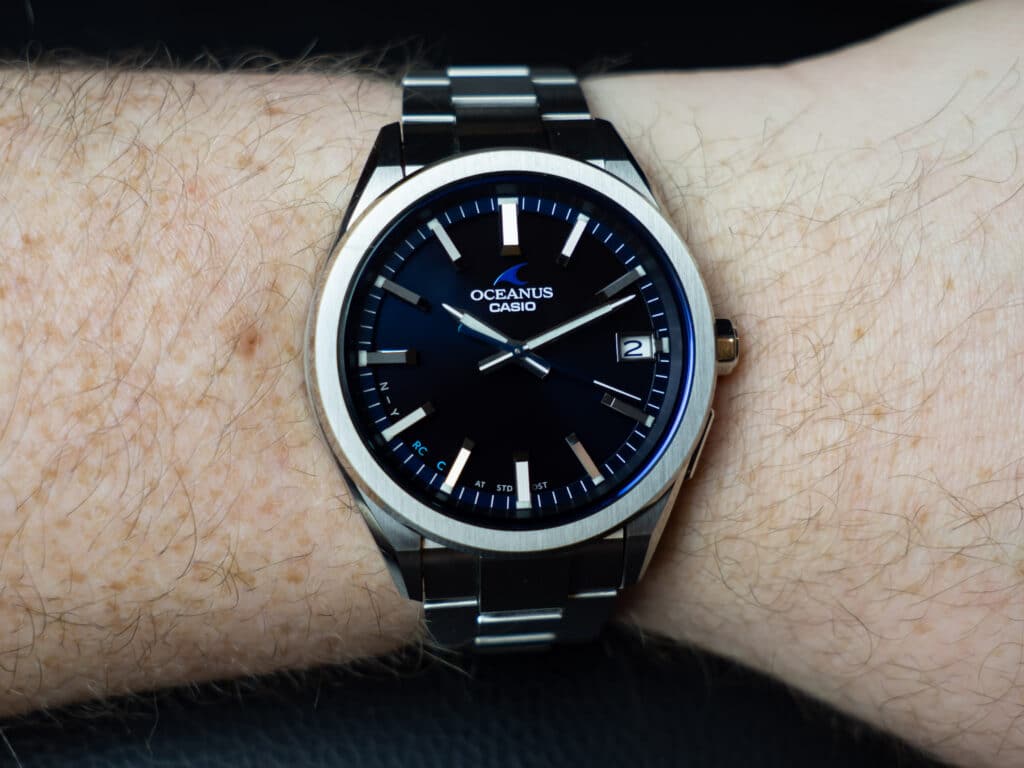
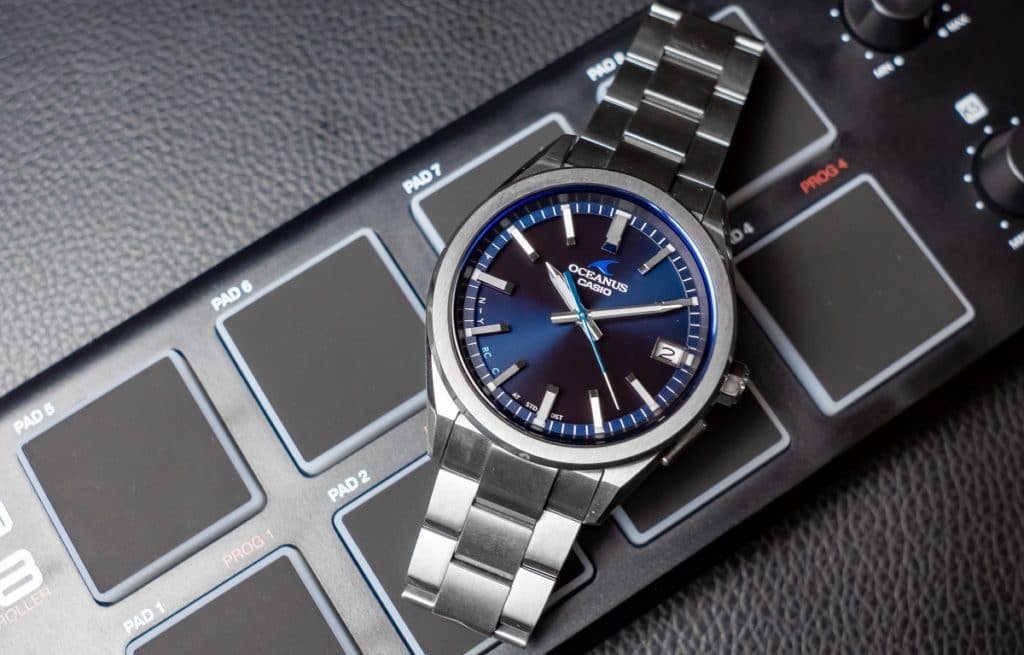
The Casio Oceanus T200 makes the opposite case to the G-Shock: low-maintenance ownership doesn’t have to look remotely utilitarian. At 41.4mm across and only 10.7mm thick, it has conventional proportions, sapphire crystal, a clean dial, and enough case finishing to feel at home beside more traditionally minded enthusiast watches. The floating markers are particularly good in person, with visible separation from the dial that gives the face some depth without clutter. Even the thin blue edge around the crystal is the sort of detail that made more sense once we had the watch in hand.
The clever part only becomes obvious once we live with it. Tough Solar, Multi Band 6, an auto calendar, and Bluetooth synchronization handle the jobs we’d otherwise do ourselves, while the watch still looks like a conventional enthusiast piece. In our initial testing, connecting it to the app took seconds, and the hands synchronized precisely with the phone. However, there are still reasons to grumble. The bracelet has more jangle than we’d like, and sizing it with the pin-and-collar system takes patience. That’s what makes the T200 interesting here. The technology stays mostly invisible, so we’re getting the ownership benefits without wearing something that looks like it was designed around the electronics.
Mechanical: When the Interaction Becomes Part of the Point
Seiko SARB033
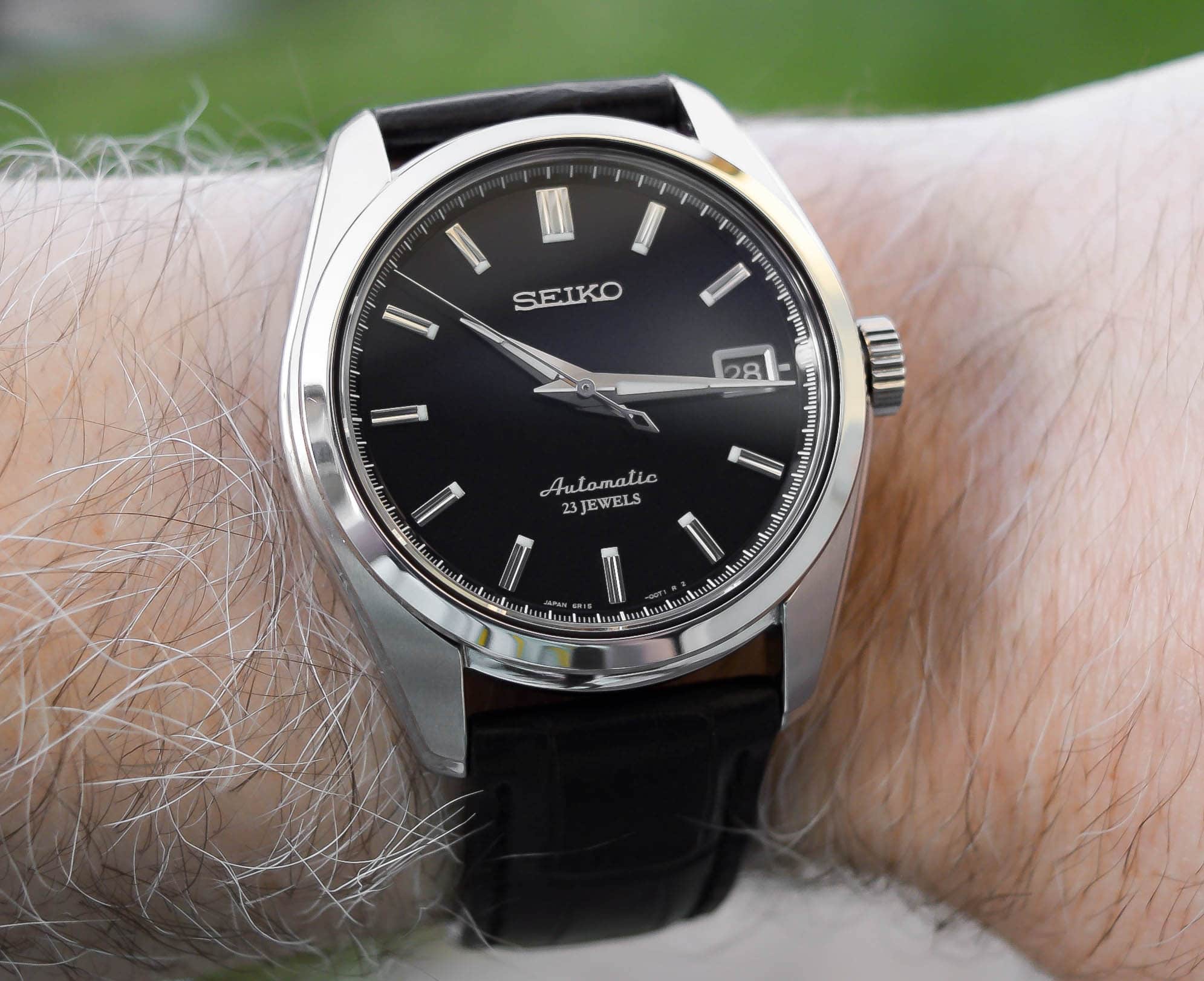
The Seiko SARB033 is where the mechanical side gets a fair chance to fight back. We keep coming back to this watch because it gets so much right on the wrist. The 38mm case, 46mm lug-to-lug, gently curved lugs, and alternating polished and brushed surfaces make it unobtrusive without making it bland. The black dial also rewards a closer look, picking up warmer brown tones in stronger light while the dauphine hands remain easy to read. This is the sort of watch where we can understand why someone would reach past a more convenient quartz option because the wearing experience itself is the point.
The 6R15 helps, too. The watch we tested averaged around ±3 seconds per day, and hacking and hand-winding make bringing it back after downtime considerably less annoying than on a movement such as the SNK793’s 7S26C. The roughly 50-hour reserve also buys some breathing room. The 6R15 can’t keep it running forever, but it does make the aftermath relatively painless. With hacking, hand-winding, and roughly 50 hours of reserve, the SARB033 is about as cooperative as we could reasonably ask of a mechanical watch once rotation finally catches up.
Mido Commander Datoday
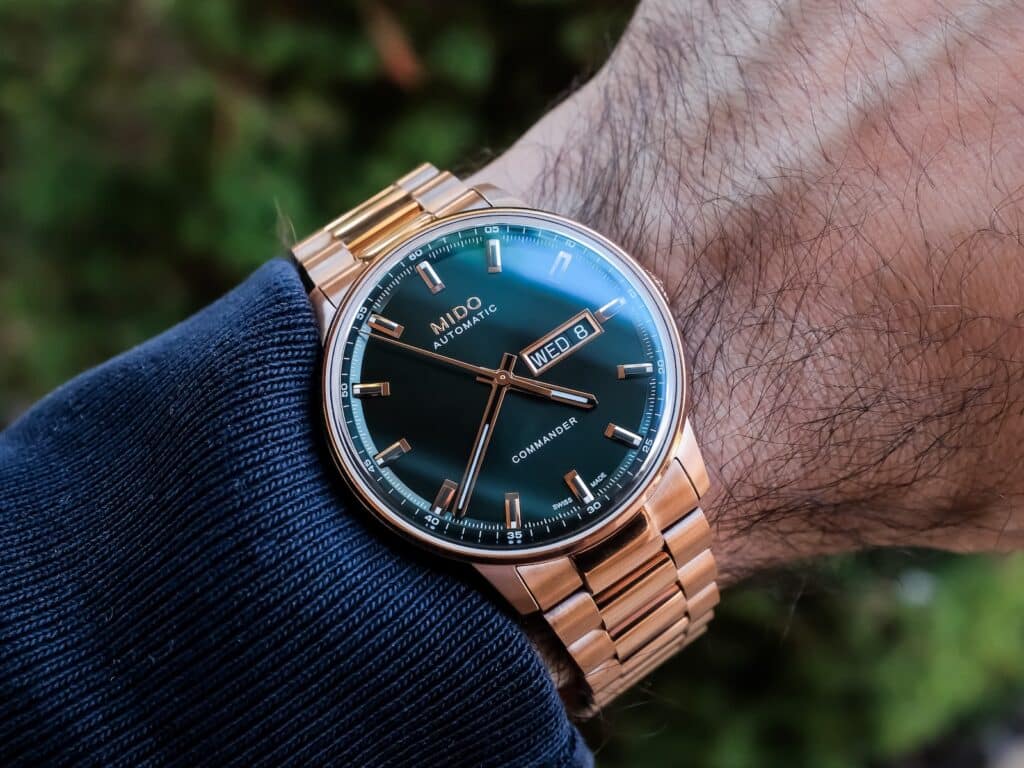
The Mido Commander Datoday makes the reset problem more complicated because there is more information to get wrong. Its framed day-date display is one of the watch’s strengths, but it also means that a fully stopped watch isn’t simply a matter of setting the hands and moving on. The good news is that Caliber 80 gives us an 80-hour reserve, so a couple of days off the wrist may not be a problem. That 80-hour reserve matters in practice because a couple of days off the wrist doesn’t necessarily leave us with a blank watch and a pile of settings to fix.
There are still some small annoyances. The crown could be larger, and the 50m water resistance keeps this firmly in everyday territory. But the green dial and rose-gold-tone case give it enough personality that we don’t think of it as an efficiency exercise in the first place. The Commander Datoday reminds us that thoughtful design can make mechanical watches’ inconveniences easier to tolerate. The 80-hour reserve doesn’t remove the reset. It simply gives the day-date some breathing space before it asks for a date, a time, and our attention. We get into the finer points in our hands-on Commander Datoday review.
Final Thoughts: What Actually Changes When Your Collection Gets Big?
There’s a slightly absurd side effect to owning a lot of watches: the more interesting the collection becomes, the easier it is to end up wearing the one that was easiest to grab.
That doesn’t make the mechanical pieces any less appealing. The winding, the setting, the feeling of bringing a watch back to life—all of that can be part of why we collect them. But once enough watches are competing for attention, being ready starts to have its own appeal.
That’s probably the strangest lesson here. We can spend years hunting down affordable watches, obsessing over the best value watches, and finding mechanical watches under $1,000 that deserve a place in the box, only to discover that the watch getting the most wrist time is sometimes the one that was already running.
That’s not quartz winning the argument. It’s the collection changing the question.

Co-Founder and Senior Editor
Kaz has been collecting watches since 2015, but he’s been fascinated by product design, the Collector’s psychology, and brand marketing his whole life. While sharing the same strong fondness for all things horologically-affordable as Mike (his TBWS partner in crime), Kaz’s collection niche is also focused on vintage Soviet watches as well as watches that feature a unique, but well-designed quirk or visual hook.