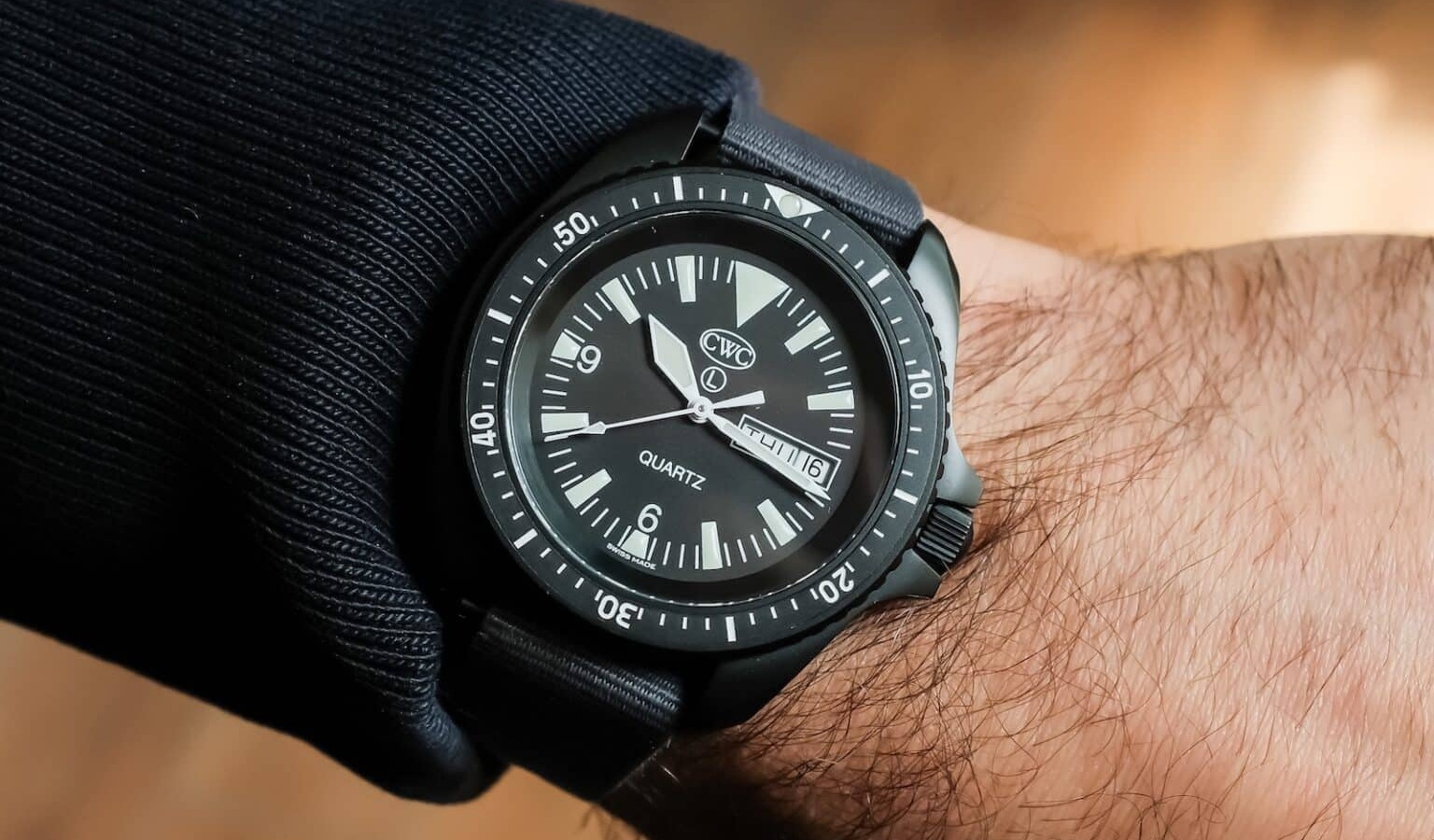
Military watches were never meant to be luxury objects. They were tools: easy to read at a glance, tough enough to take abuse, simple enough to keep running, and practical enough that nobody had to think twice about scratching one. That makes the modern military-watch market an odd place. Spend more, and you can get titanium, elaborate movements, tighter case engineering, and the kind of finishing that makes you hesitate before putting the watch down on a desk. But none of that changes the basic job. In some cases, the cheaper watch can be closer to the original military idea precisely because it doesn’t try to be anything more than a tool. The expensive one may be much more sophisticated, but sophistication and military usefulness aren’t always the same thing.
After nearly a decade of hands-on reviews, we’ve worn, tested, and lived with enough military field watches, tactical watches, military divers, and pilot watches to know that the price tag tells only part of the story. This comparison is built around watches we’ve actually reviewed or handled, not a pile of specifications pulled from brand websites. As you move from affordable military watches into higher-end territory, what are you actually paying for? That question gets more complicated once you put the watches on your wrist and live with them, because some differences that look significant on paper matter far less in daily use, while others become obvious the moment you start wearing the watch.
Affordable Military Watches: How Much Do You Need to Spend for the Real Thing?
Affordability isn’t much of a handicap when the original brief is utilitarian. A military watch doesn’t need an expensive movement or elaborate finishing to be useful. It needs to be legible, durable, comfortable enough to wear all day, and simple enough that you don’t worry about treating it like precious cargo. That makes this end of the market more interesting than it first appears.
The Tool-First Military Watches
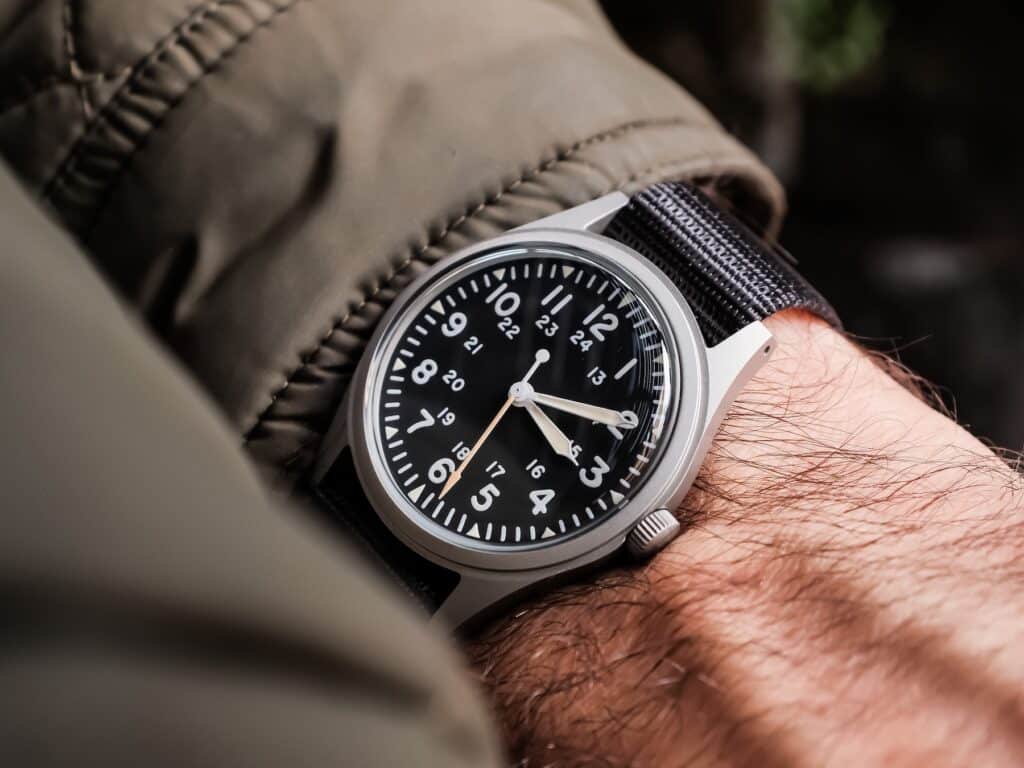
The simplest military watches are often the easiest to understand. The Rdunae RA02 Field Watch, as described in our hands-on review, is a good place to start. At roughly 35mm across with a compact lug-to-lug, it has the sort of footprint that makes many modern field watches look oversized by comparison. At a little over 35 grams, it practically disappears once it’s on the wrist. The matte black dial, sterile presentation, sandblasted case, and basic Miyota 2035 quartz movement aren’t trying to impress anyone. That’s the point. The RA02 gets surprisingly close to the visual and functional spirit of an old issued field watch without requiring much of an investment.
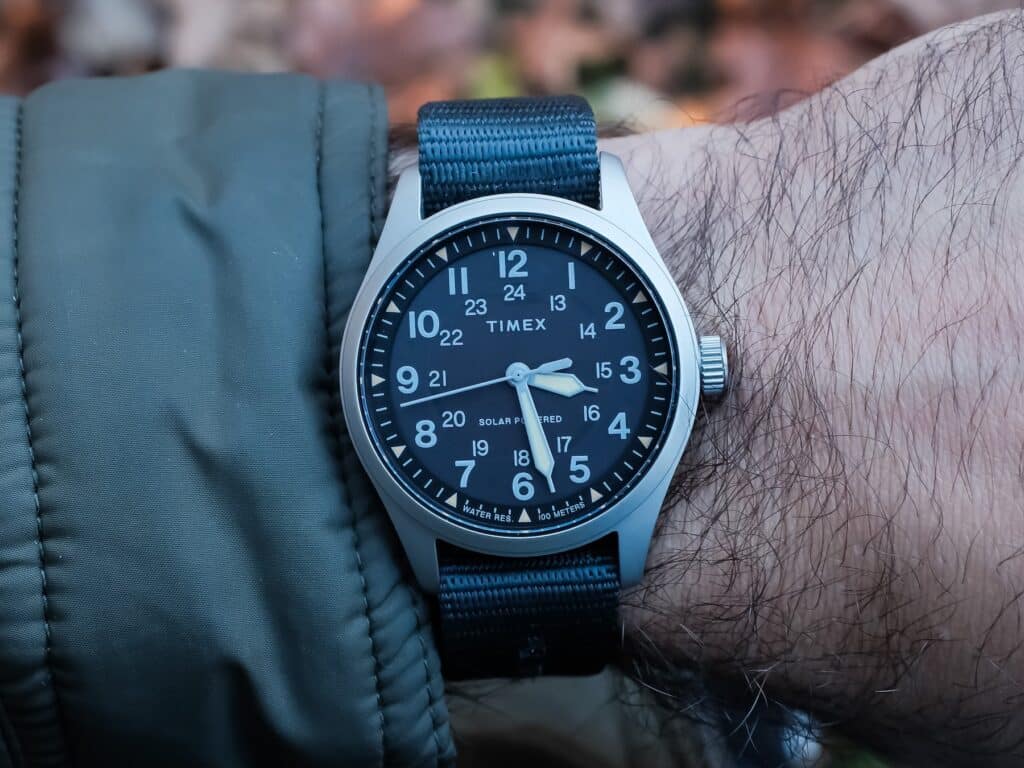
The Timex Expedition Field Post Solar takes the same uncomplicated approach and adds a little modern convenience. In our in-depth testing, the 36mm case and roughly 44mm lug-to-lug settled naturally on the wrist without feeling undersized. Solar quartz with up to four months of power reserve also means there’s little to fuss over once it’s charged, which fits the grab-it-and-go philosophy nicely. The supplied strap wasn’t an ideal match for the case in terms of thickness, and the lume isn’t memorable, but neither issue changes what makes the watch useful. You’re getting a simple, military-styled field watch that asks remarkably little from its owner.

The Minuteman A11 makes the toolish argument from a much more practical angle than simply saying “quartz is fine.” The 38.5mm case, 45mm lug-to-lug, and downward-sweeping lugs gave it comfortable all-day proportions, while the bead-blasted stainless steel case reinforced the watch’s functional, no-nonsense character. More importantly, its FTS USA-built Ameriquartz 7122 isn’t some disposable black-box movement: it is fully serviceable, and our four-day tracking recorded a remarkably consistent +0.2 seconds per day. The A-11 specification prized accuracy and durability alongside legibility, and this modern interpretation delivers those qualities without asking the buyer to pay for mechanical complexity they may not need. The 100m water resistance and flat sapphire crystal add useful everyday robustness, too, while the lume showed room for improvement.
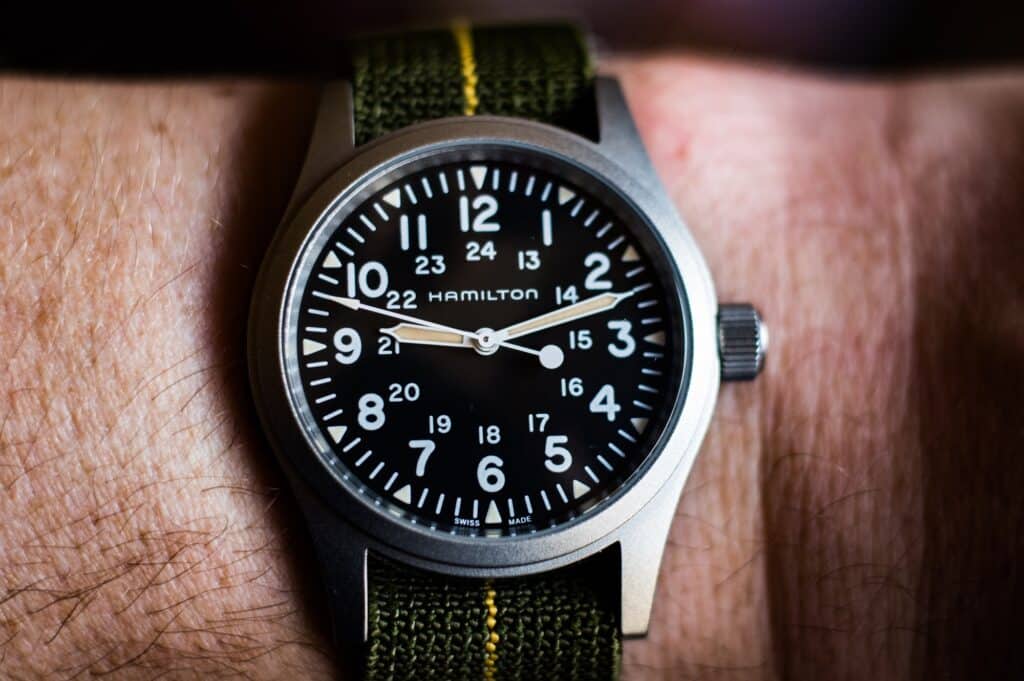
Then the Hamilton Khaki Field Mechanical adds the enthusiast’s itch back into the equation. Our dedicated testing of the Hamilton Khaki Field Mechanical showed how the 38mm case, hand-wound H-50 movement, sapphire crystal, and 80-hour power reserve make it more engaging to interact with than the basic quartz options, while its proportions stay firmly rooted in the same field-watch tradition. The 50m water resistance and push-pull crown are worth keeping in mind, but they don’t detract from the central appeal. You get the ritual of winding a mechanical watch without giving up the restrained, practical character that makes a military-inspired field watch worth considering.
At this end of the market, less of the price goes to finishing and prestige, leaving more room for what made military watches useful in the first place. Whether that means grab-and-go convenience, quartz accuracy, or the small pleasure of winding a mechanical movement comes down to the ownership experience you prefer. None requires luxury money.
When Affordable Still Means Serious Capability
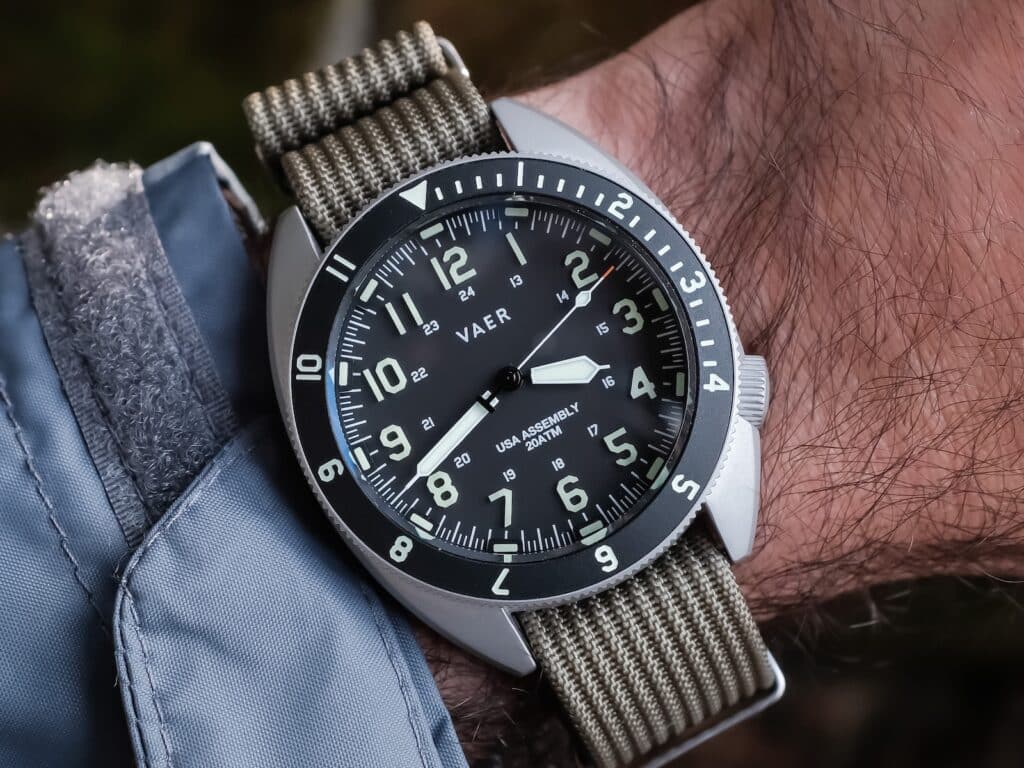
The affordable category gets harder to dismiss once brands start putting genuinely useful engineering into it. The Vaer C4 Tactical Field Solar is a good example. Throughout our testing period, its 41.5mm case proved more substantial than the traditional field watches above, but the profile kept it from feeling unnecessarily bulky. More importantly, 200m water resistance, a screw-down crown and caseback, sapphire, solar power, and a 120-click unidirectional bezel give it a much wider operating envelope. It feels less like a delicate field watch with a few extra tricks and more like a genuine do-a-lot tool watch. The larger, more tactical personality won’t suit everyone, but the capability is difficult to dismiss at this price.
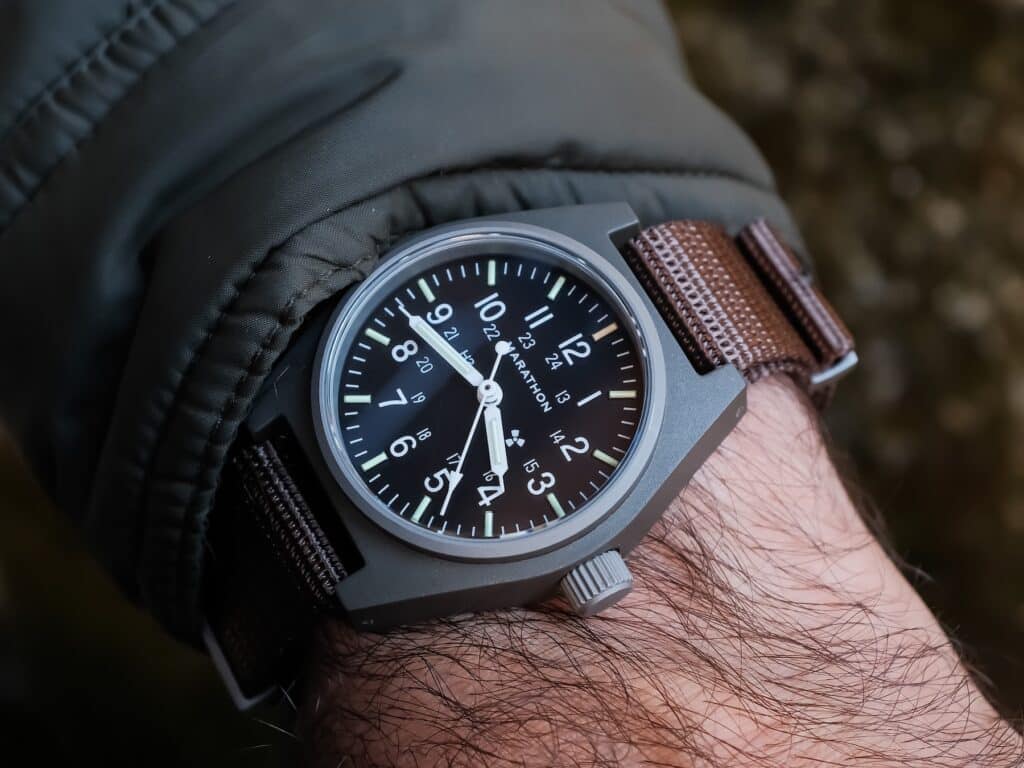
We found during our review that the Marathon General Purpose Mechanical approaches the problem from almost the opposite direction. The compact 34mm case, government-oriented markings, tritium illumination, and unfussy layout give it a much more direct connection to the instrument concept than many military-inspired watches that simply borrow the aesthetic. The tritium is genuinely useful after dark, too, because it doesn’t require the same initial charge as conventional lume. But the 30m water resistance and non-screw-down crown deserve equal attention. Military pedigree doesn’t magically make every specification bulletproof, and that’s exactly the sort of limitation worth understanding before buying one.
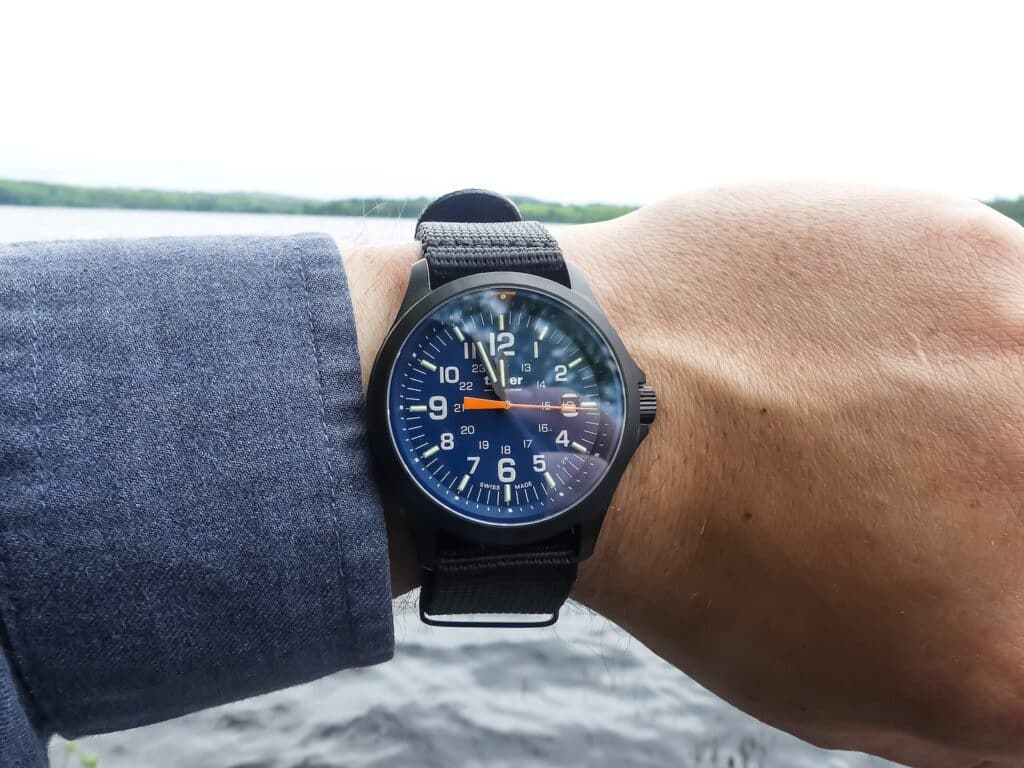
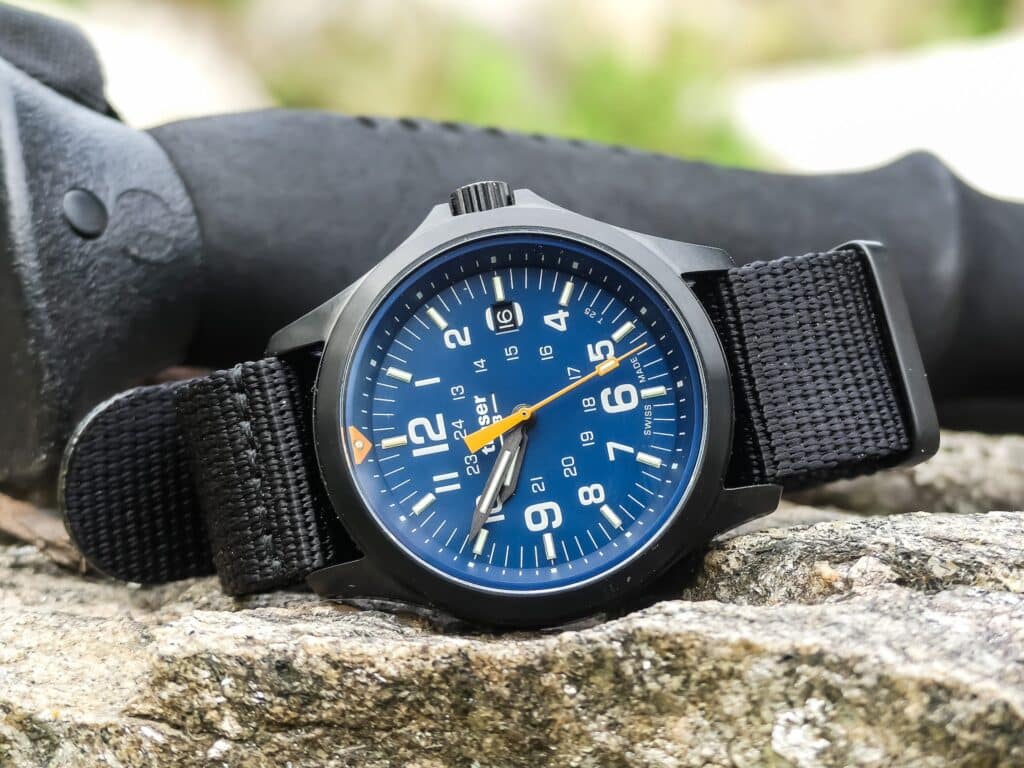
The Traser P67 Officer Pro shifts the emphasis toward illumination. Our dedicated testing of the Traser P67 Officer Pro showed why its tritium system is more than another line on a spec sheet. The tritium tubes provide continuous low-light illumination, keeping the hands and hour markers visible throughout the night. The orange second-hand tube and matching dial marker also make it easier to orient in the dark. With sapphire and 100m water resistance, the P67 puts its money into a capability that directly improves how the watch works after sunset.
That’s an important dividing line on the affordable side. You can get serious water resistance, sapphire, solar power, tritium, and, in Marathon’s case, a direct connection to military procurement without entering luxury-watch territory. At this price level, more of the money is going toward capabilities you can use rather than refinements you mainly notice when you stop and look closely.
When You’re Paying for Military Character
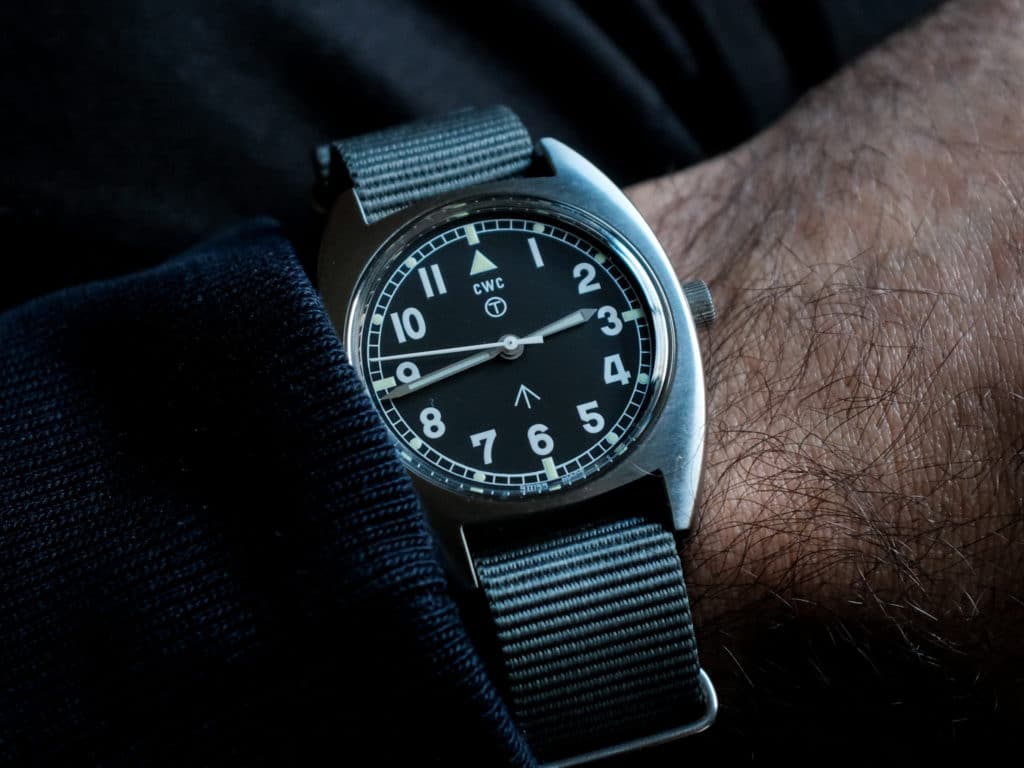
The upper end of the affordable category is where functionality starts sharing the stage with military character and collector appeal. For instance, the CWC Mellor 72 is still a straightforward three-hander, but its higher price isn’t really about adding more capability. While testing it in detail, the 35mm case, 42mm lug-to-lug, fixed spring bars, broad-arrow marking, large Arabic numerals, and restrained brushed finish gave it the unmistakable feel of a watch built around military specifications rather than modern luxury-watch conventions. The fixed bars are less convenient for strap changes, but they reinforce the rugged, permanent-tool character. Add the Hesalite crystal and hand-wound Sellita SW210, and you’re paying less for extra functionality than for the experience of wearing a carefully executed military-spec design with genuine character.
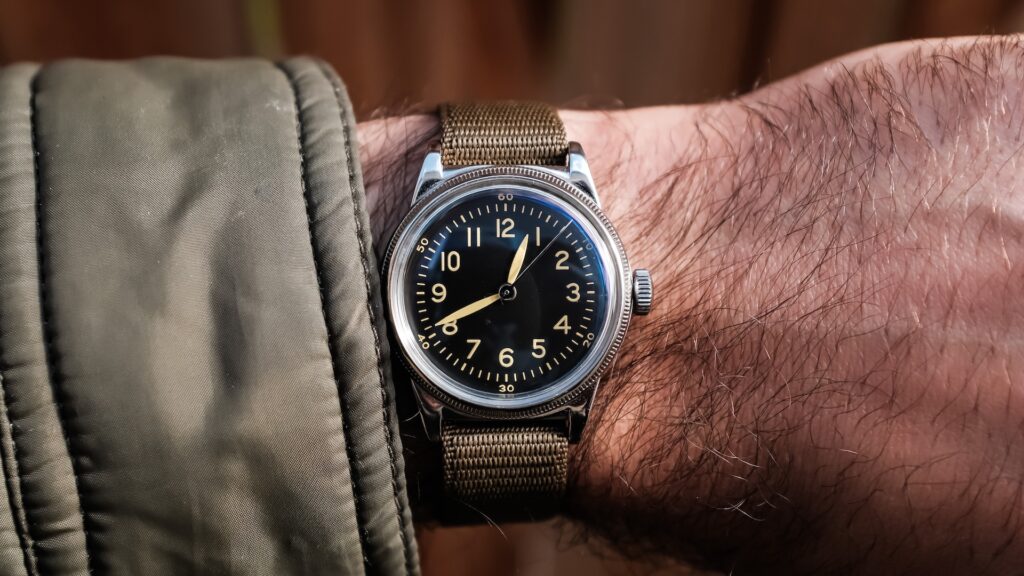
The Praesidus A-11 Type 44 Patina takes that idea further toward historical recreation. Its 32mm case and 39mm lug-to-lug give it the compact proportions of an actual vintage military watch. At the same time, the hand-wound Landeron L21, acrylic crystal, logo-free dial, and intentionally aged finish reinforce the period feel. During our review period, those details worked together rather than feeling like retro decoration; even the small dimensions become part of the experience. You’re paying for a watch that captures the character and proportions of a specific military era.
That’s where the affordable ceiling gets interesting. With the RA02, you’re largely paying for the freedom to enjoy a simple military design without worrying about it. With the CWC and Praesidus, you start paying for the story behind the design: military lineage, period-correct proportions, mechanical interaction, and the quirks that make the watch feel more specific. That doesn’t make these watches less practical. It means practicality isn’t the entire reason to own them anymore. You’re paying for identity, too. And once character, materials, engineering, and provenance start carrying more of the price, the line between an affordable military watch and a premium one becomes considerably more interesting.
Premium Military Watches: What Are You Actually Paying More For?
Higher prices don’t automatically make a military watch more useful. Once you move beyond the affordable end of the category, though, the differences become easier to see. More money can go into the case itself, the way a bezel or crown operates, the materials chosen for the job, the movement, or technologies that aren’t necessary for basic timekeeping but can make the watch more capable in specific situations. Then there is the less tangible stuff: military provenance, historical accuracy, finishing, and the satisfaction of owning something engineered with far fewer compromises. The interesting part is working out which of those upgrades you’ll actually notice on the wrist.
Better Materials and Purpose-Built Engineering
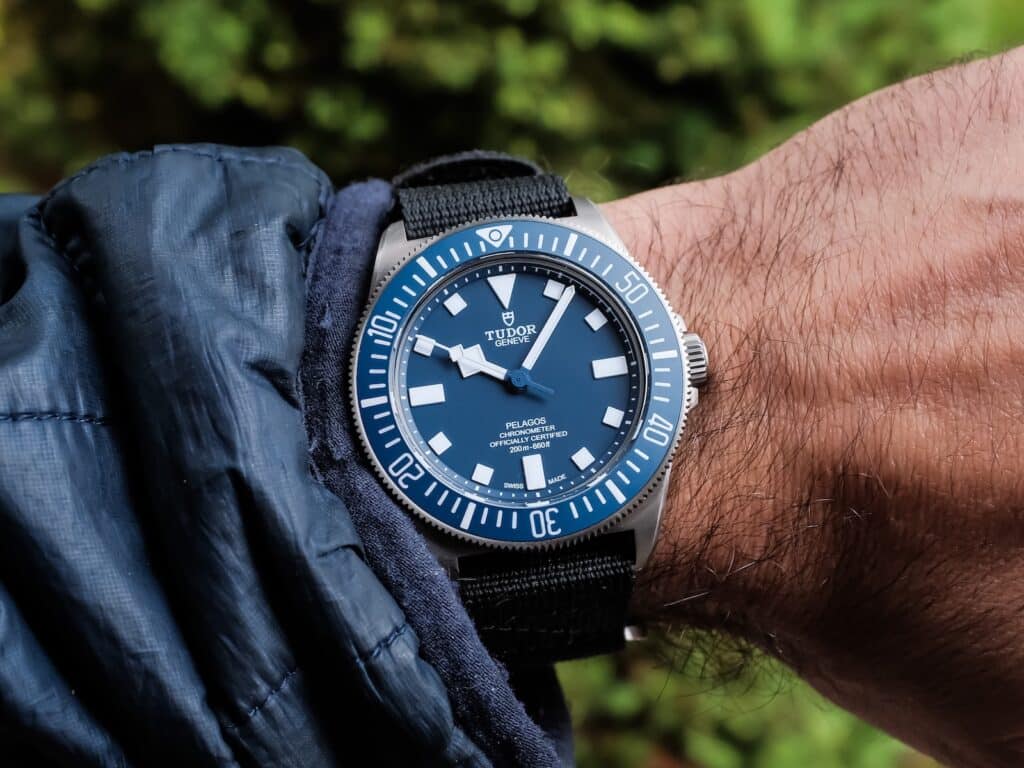
The Tudor Pelagos FXD is a good place to start because its premium pricing is surprisingly easy to connect to things you can feel. In our hands-on review, the 42mm case never wore as large as its 52mm lug-to-lug suggested, thanks in part to its 12.75mm thickness and relatively simple case profile. The matte titanium case also changes the watch’s personality. It feels light, doesn’t throw reflections around, and looks more like equipment than jewelry. More importantly, the fixed strap bars are machined directly into the case, while the edges are chamfered to reduce wear on fabric straps. That’s a small detail, but it’s the sort of detail you notice when you actually swap straps and live with the watch. The 200m water resistance, easy-grip 120-click bezel, and stripped-back dial aren’t there to win a specification contest. They make the FXD feel purpose-built.
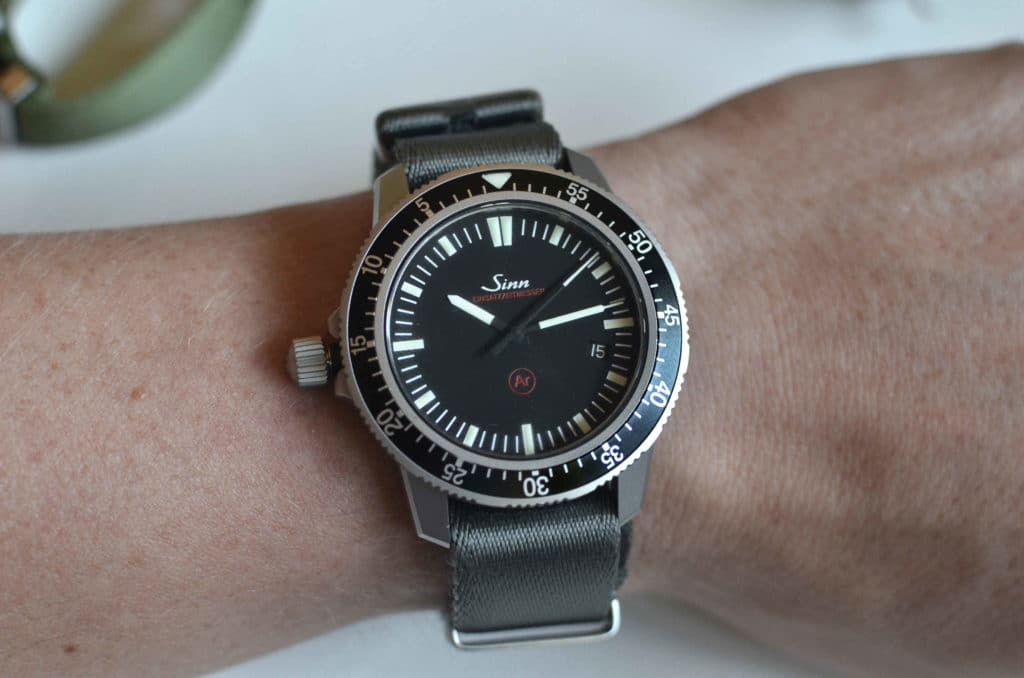
The Sinn EZM 3F takes that same philosophy and gets even more obsessive. As we tested the Sinn EZM 3F in-depth, almost every design decision seemed to have a practical reason behind it. The 41mm case is bead-blasted rather than polished, the layout avoids unnecessary decoration, and the left-side crown placement, anti-magnetic construction, countdown bezel, Sinn’s patented Ar-Dehumidifying Technology that keeps humidity under control, and 200m water resistance all support the watch’s austere-environment brief. Even the thickness and proportions make sense once you stop seeing it as another “rugged” watch and start thinking about what you’d actually want from a tool meant to be used, not admired.
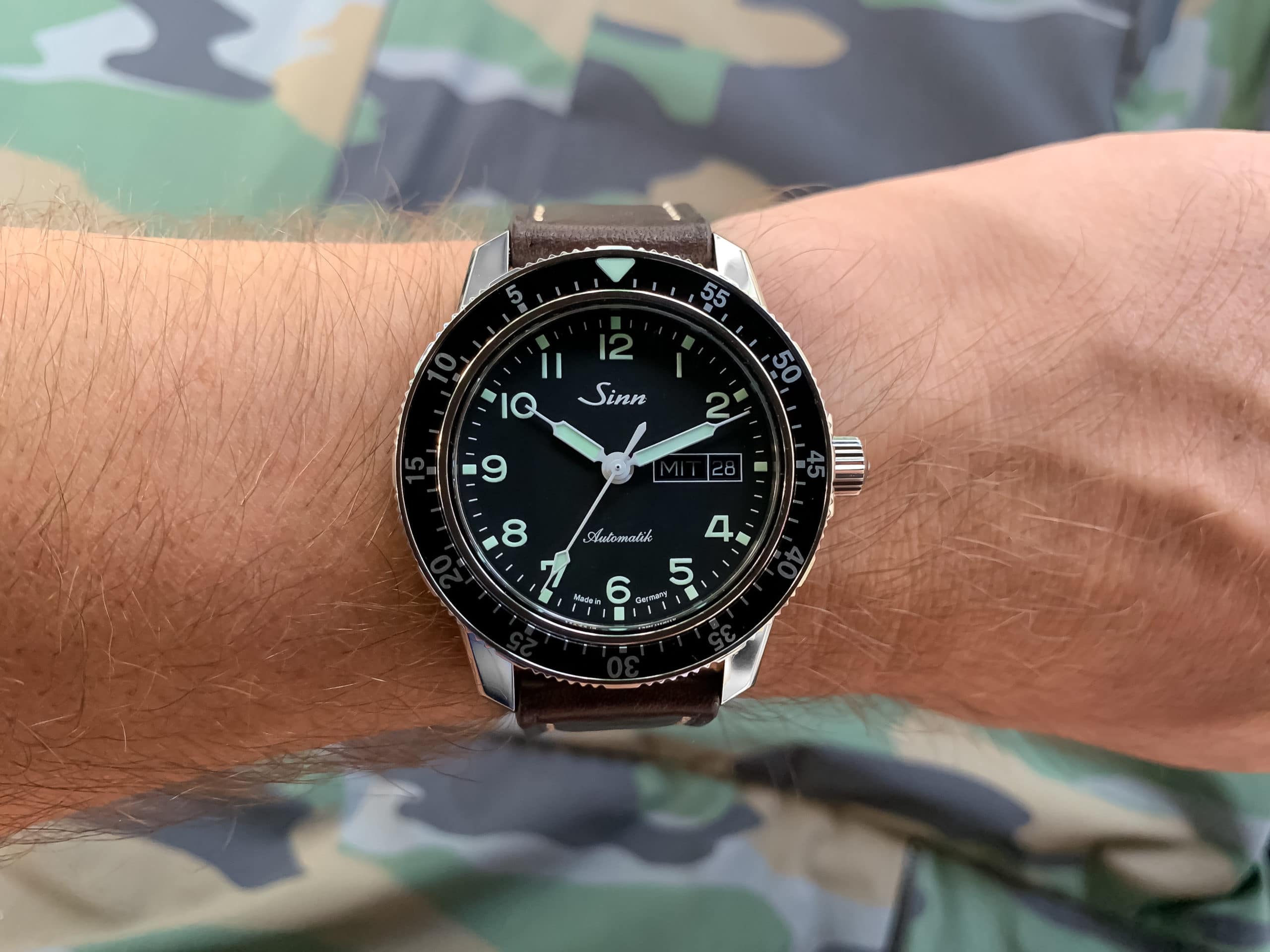
The Sinn 104 is more interesting because it doesn’t take that specialization as far. Our review team’s experience with the Sinn 104 showed how much thoughtful case engineering can change an otherwise straightforward tool watch. Its 41mm diameter wears closer to 39–40mm because of the sharply sloping lugs, while the smooth 45-degree bevels and short crown guards keep the case sitting neatly against the wrist. Most of the case is polished, an unusual choice for a watch this tool-oriented. Still, that extra refinement is what makes the 104 easier to wear with a leather strap and a button-down without losing its utilitarian character. The bidirectional 60-click bezel is another standout: its reversed five-minute scale turns it into a countdown timer, while the ball-bearing mechanism gives the action a firm, precise feel. Add 20-bar water resistance and a clean, highly legible dial, and the premium is less about adding brute-force capability than making a tool watch more versatile, tactile, and enjoyable to live with.
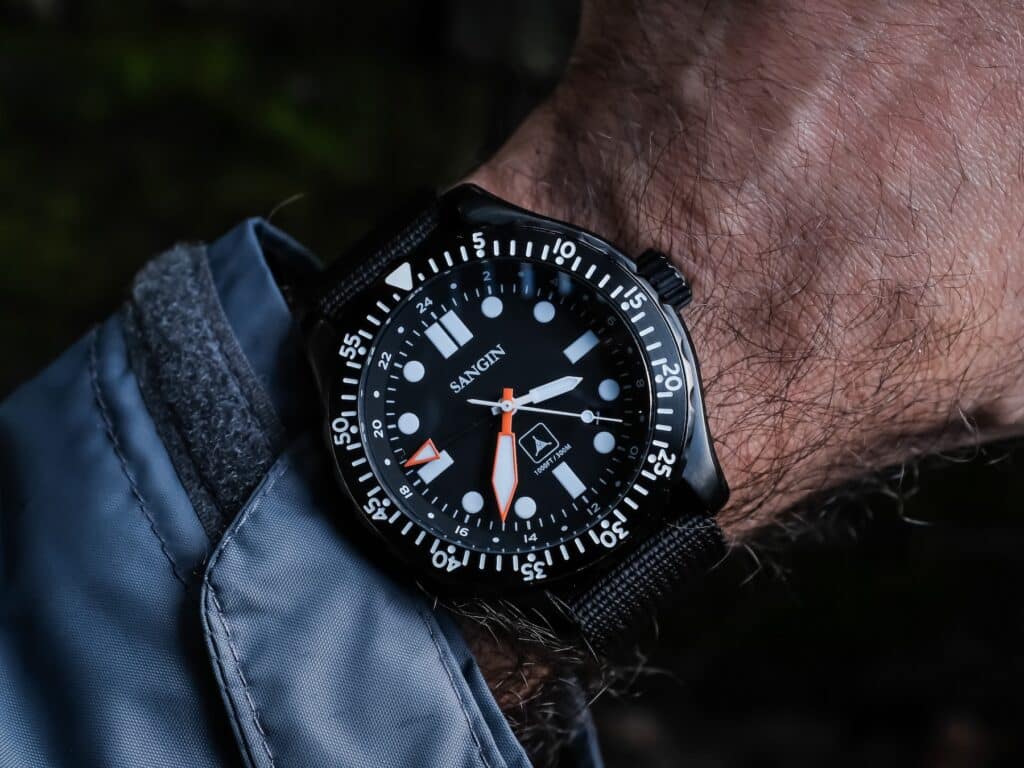
The Sangin Professional brings a modern interpretation to the same conversation. Throughout our dedicated testing, the 43.5mm case initially looked like a lot of watch, but the 12mm thickness, matte DLC finish, and light quartz movement kept it quite manageable. The real giveaway that you’re paying for execution comes in the smaller details: tight crown engagement, confident 120-click bezel action, crisp case tolerances, polished chamfers that catch the light without becoming flashy, double-domed sapphire with internal blue AR coating, and extremely strong lume. Its 300m water resistance and screw-down crown add capability, but the more important point is that the watch never feels like a generic quartz tool piece in a military costume.
That’s where the premium becomes tangible. You’re paying for engineering decisions that affect weight, wearability, legibility, durability, and how confidently the thing operates when you use it.
Specialized Technology and Military Utility
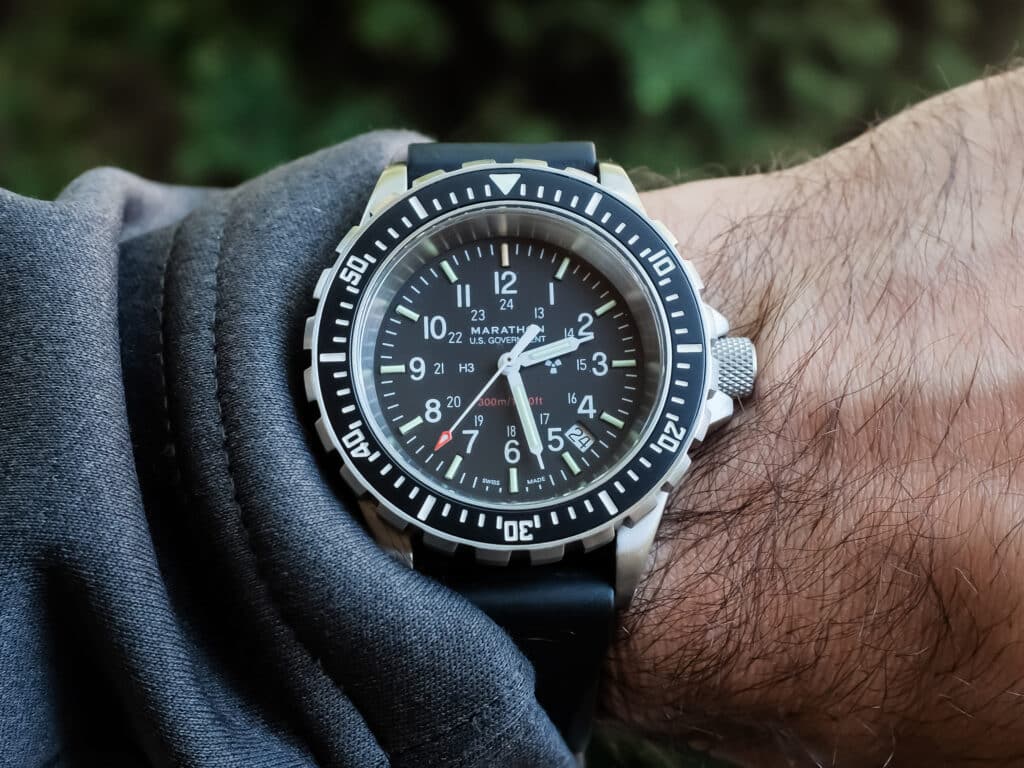
The Marathon TSAR shows that premium military utility doesn’t necessarily require luxury-style finishing. As found in our testing of the Marathon TSAR, the 41mm case is thick and fully brushed, the 120-click bezel is aggressively toothed for use with gloves, and the oversized, knurled screw-down crown is similarly easy to operate. The dial makes the watch’s purpose even clearer: tritium tubes keep the markers visible in darkness without needing a charge, while the high-torque ETA F06 quartz movement prioritizes reliable, accurate operation over mechanical complexity. Marathon’s actual government-supply history matters here, too, because the watch isn’t merely borrowing a military aesthetic. The TSAR was designed for Canadian search-and-rescue use, and the practical choices make considerably more sense in that context.
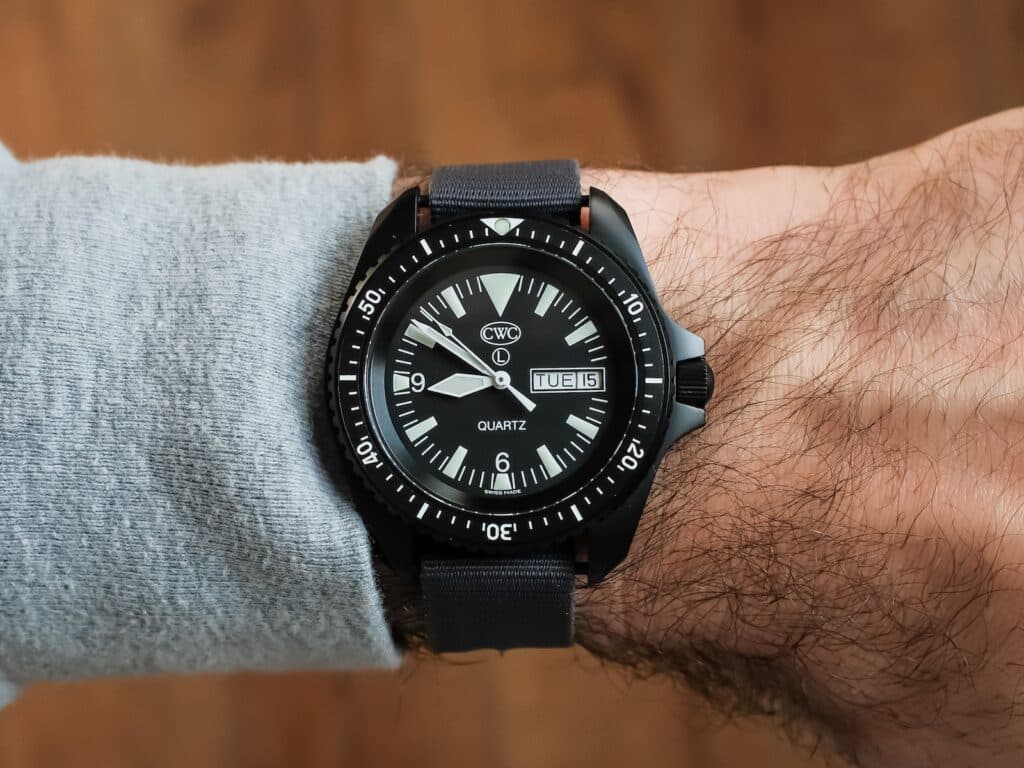
The CWC SBS Diver we reviewed hands-on shifts the value discussion from engineering alone to military authenticity. The watch felt smaller than expected but had reassuring heft, and the all-black PVD-coated case, busy dial, bright lume, and fabric strap made it feel like equipment rather than a polished luxury diver. More importantly, the model was offered as overstock from a military contract, with the next production batch earmarked for British military delivery, and its design follows specifications dating back to original MOD orders. That’s a different kind of value from titanium or a fancy movement. You’re buying into a real military context, not just a visual interpretation of one.
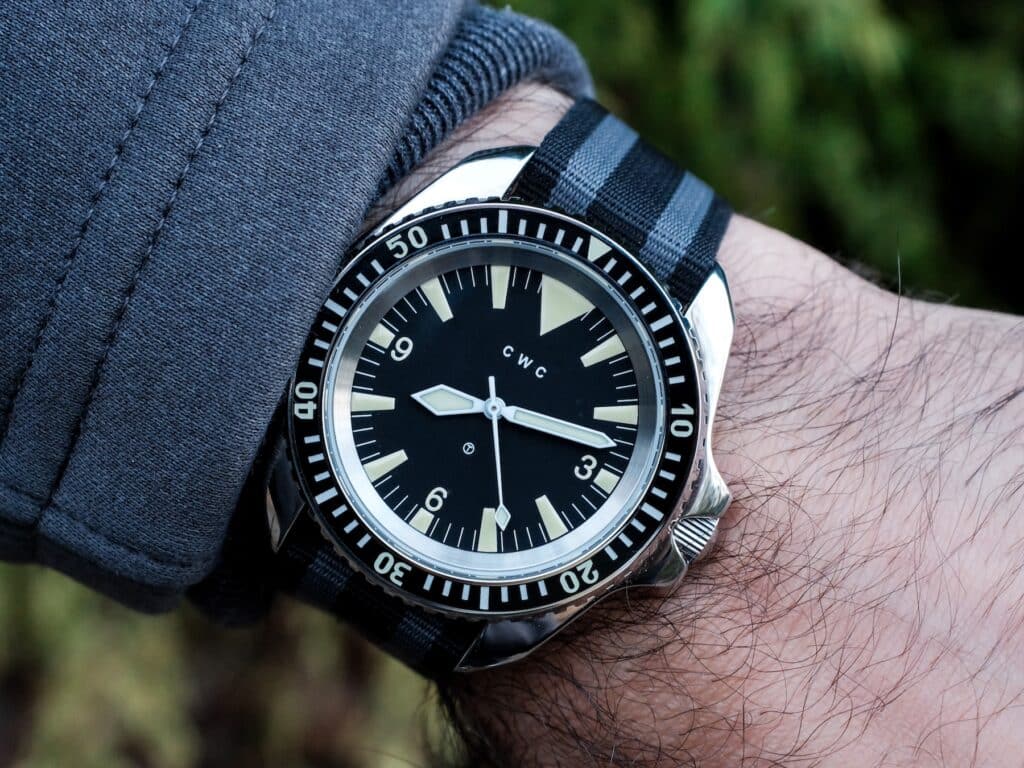
The CWC 1980 Royal Navy Diver makes the historical argument even more directly. As our testing shows, this isn’t a vague nod to naval history; the reissue is based on a model CWC supplied to Royal Navy divers and retains details like fixed spring bars and the case proportions associated with that lineage. The 300m water resistance gives it plenty of modern capability, while the 60-click bezel and polished case keep the wearing experience close to the original’s character. The bezel isn’t perfect — there is a little wobble — but that’s also a reminder that this is a faithful reissue rather than a modern exercise in engineering perfection. Its appeal comes from carrying a real design lineage forward without sanding off its personality.
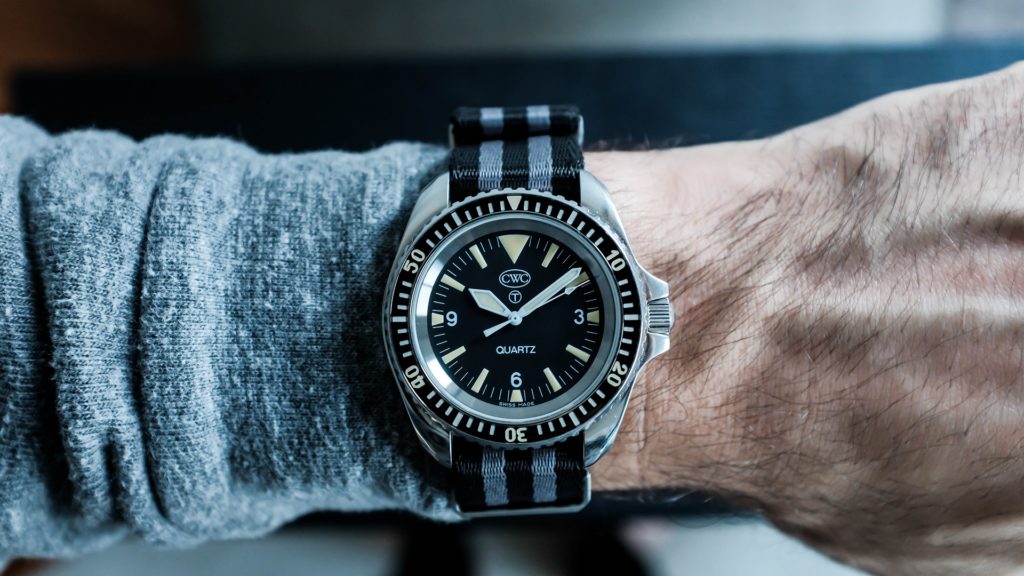
Then the CWC 1983 Quartz Royal Navy Diver makes one of the article’s most useful arguments. Our experience owning and testing it showed why quartz can make perfect sense in a serious military watch. The 41mm asymmetrical case, fixed spring bars, oversized crown guards, and 300m water resistance all come from a Ministry of Defense specification. The glossy acrylic bezel closely recreates the look of the original Bakelite insert. Its 60-click bezel has almost no play, full graduations, and fully lumed 10-minute intervals, while the massive sword hands and high-contrast dial make the time very easy to read. The ETA 955.122 quartz movement is hardly glamorous. Still, its roughly six-year battery life and measured accuracy of around -0.3 to +0.5 seconds per day fit the watch’s grab-and-go purpose perfectly. You’re paying for military specification, unusual case engineering, and a design with real provenance—not mechanical theater.
This is where the price question becomes harder to answer with a calculator. You’re sometimes paying for technology, sometimes for procurement history, and sometimes for the fact that the watch represents a very specific piece of military watchmaking that you simply can’t get from a generic field watch. The trick is knowing which of those things matters to you, because military provenance, specialized technology, and collector appeal aren’t interchangeable forms of value.
When Military Watchmaking Becomes Luxury Watchmaking
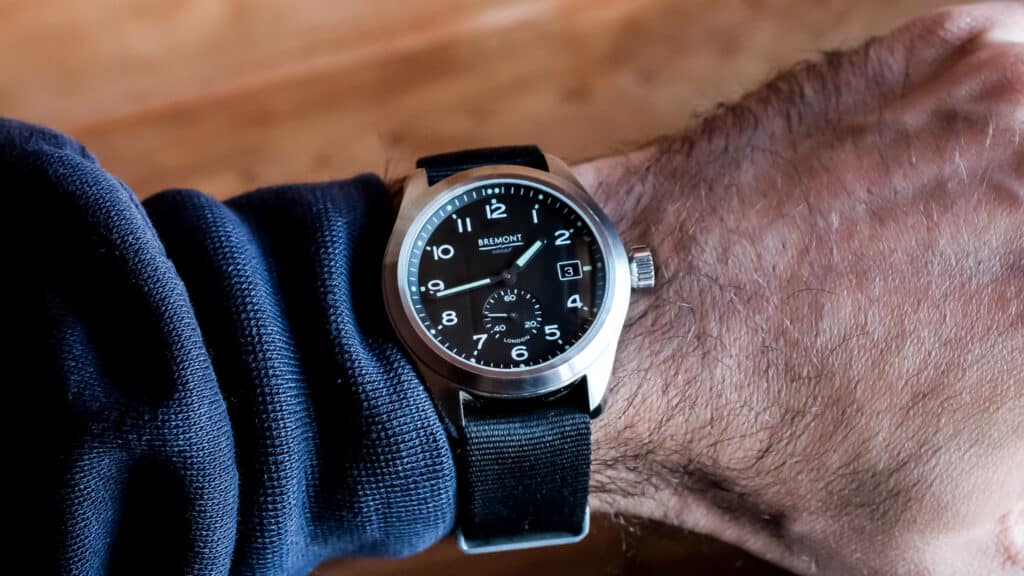
The Bremont Broadsword sits right on that dividing line. While testing it, the 40mm case proved substantial without becoming cumbersome, and the 47mm lug-to-lug made it comfortable across a range of wrists. The matte black dial, large Arabic numerals, sword hands, generous lume, sapphire crystal, and 100m water resistance all keep the watch firmly within military-tool territory. But this is also where the ownership experience starts carrying more weight. The finishing, the Armed Forces collection positioning, the modified automatic movement, and the option of a steel bracelet all push it beyond the stripped-down brief of an issued field watch. At its price, the question isn’t whether it can perform the basic military job. It plainly can. The question is how much value you place on getting that more refined, more polished ownership experience.
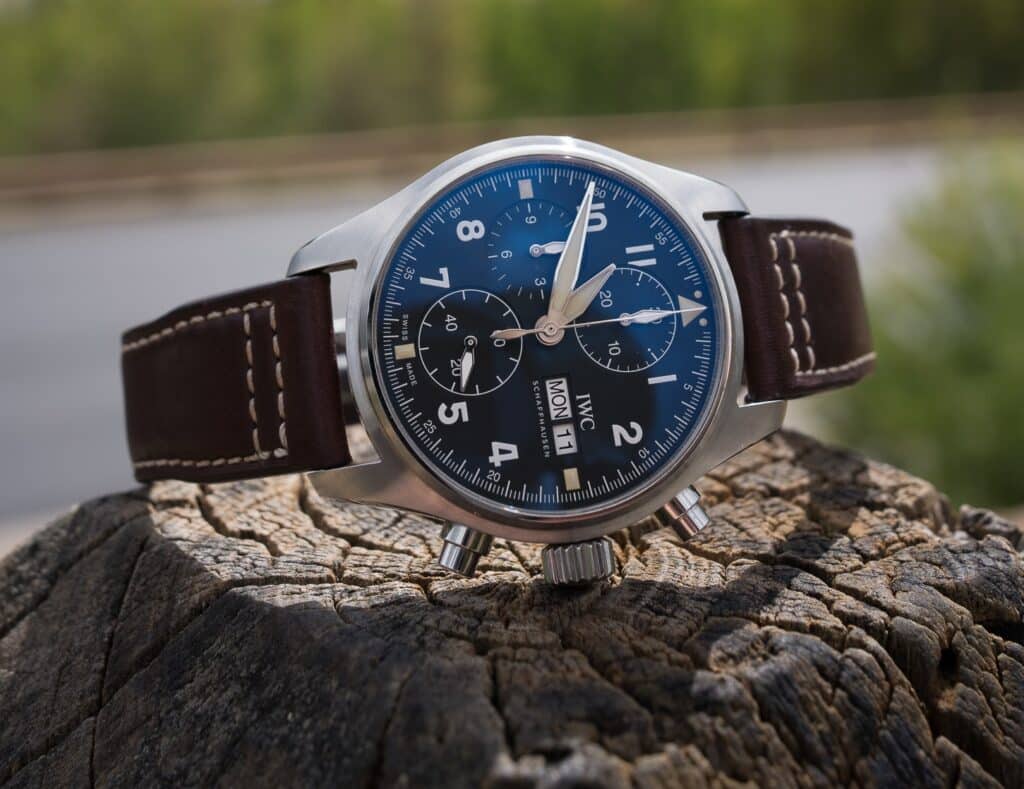
The IWC Spitfire Chronograph pushes that distinction even further because the watch is doing considerably more than a basic military instrument needs to do. The 41mm case and 51.5mm lug-to-lug proved much more wearable than the larger pilot chronographs that preceded it. The 69000-series movement lets IWC retain the chronograph while keeping the case more wearable than its larger predecessors. Convexed sapphire, double AR treatment, a screw-down crown, and the 69380 caliber all contribute to a far more sophisticated object. The dial still speaks the language of a pilot’s instrument. Still, once you add a chronograph, day/date display, and a movement built around that additional complexity, you’re no longer simply buying a more capable field or military watch. You’re buying a luxury chronograph that happens to carry that utilitarian lineage.
And that’s the real distinction at the top end. A Tudor FXD or Sinn EZM 3F can justify its premium through engineering you can feel. A Marathon TSAR or CWC can justify it through specialized utility or military provenance. A Bremont or IWC adds another layer: higher-end finishing, more elaborate movement execution, stronger brand identity, and the experience of owning a genuinely sophisticated horological object. None of that makes these watches inherently more military than the inexpensive field watches we talked about earlier. They’re simply much more elaborate ways of expressing the same idea.
Affordable Military Watches vs Luxury Military Watches: The Verdict
The easiest mistake with military watches is treating price as a measure of authenticity. It isn’t. A military watch earns its credibility through how convincingly it does the job it was built to do, not through how much it costs. That is why an inexpensive field watch can feel completely right on the wrist, while a far more expensive military watch can be compelling for reasons that have little to do with the basics.
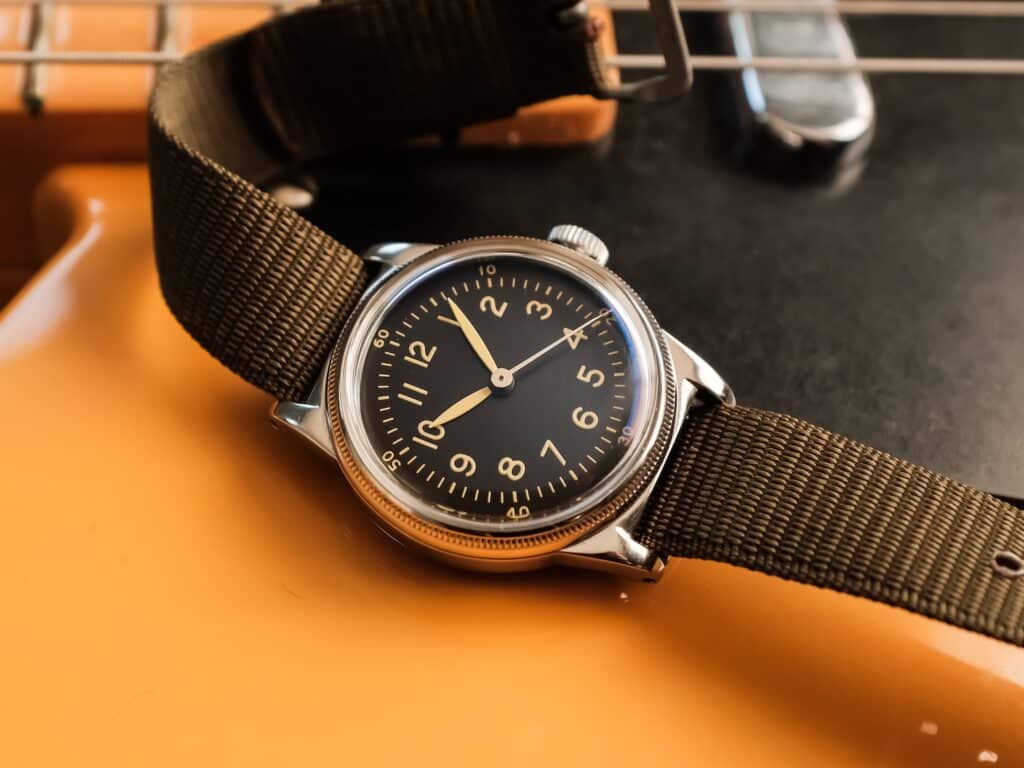
The better question is what kind of ownership experience you’re looking for. Some buyers want a watch they can wear hard, read instantly, and forget about until they need it again. Others enjoy the engineering itself: the way a case is shaped, how a bezel clicks, how a crown operates, or how a particular material changes the weight and feel on the wrist. For another collector, the connection to an actual military specification or the satisfaction of owning a beautifully executed piece of watchmaking may be the whole point. None of those priorities is more legitimate than the others. They simply make different watches make sense.
That’s also why “value” gets slippery in this category. Functional value is easy enough to understand, but emotional and collector value are personal. You can measure water resistance or accuracy; you can’t measure what a particular military connection, unusual design, or decades-old specification means to the person wearing it. The trick is recognizing which kind of value you’re buying before the price tag starts deciding for you.
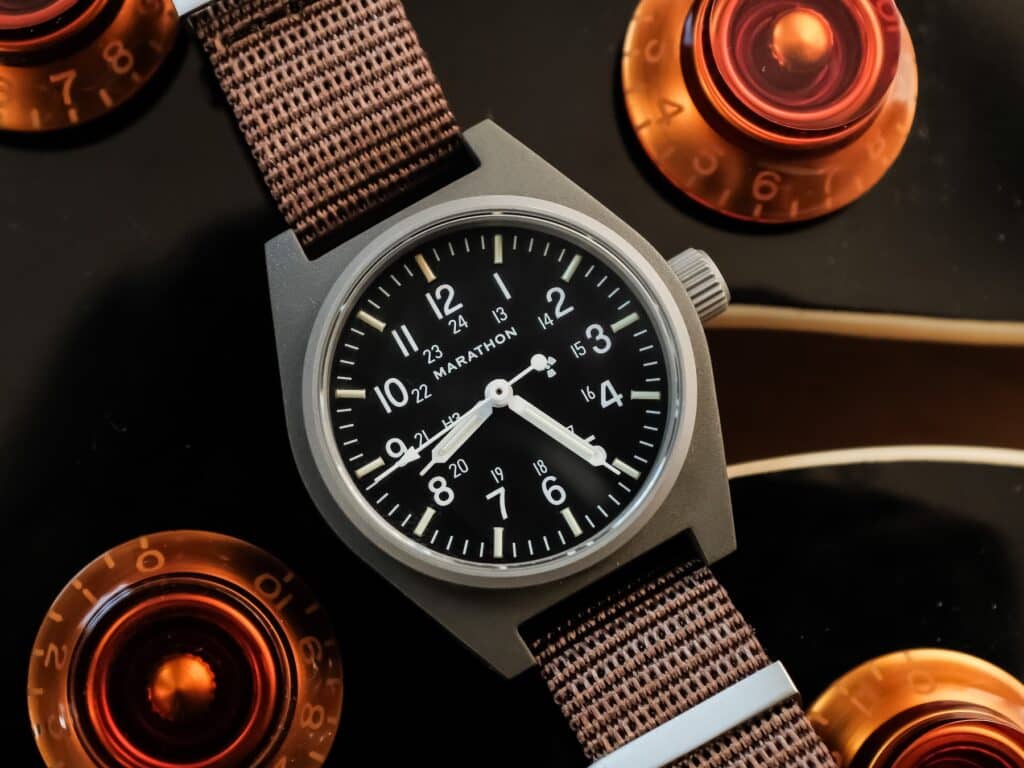
Military watches, after all, started life as tools. The best modern examples don’t have to abandon that idea just because the price goes up. They can refine it, reinterpret it, or turn it into something considerably more sophisticated. The useful takeaway is simple: don’t pay more merely to own a more expensive military watch. Pay more when what you get in return genuinely improves, deepens, or enriches the way you want to wear and enjoy it.

Co-Founder and Senior Editor
Kaz has been collecting watches since 2015, but he’s been fascinated by product design, the Collector’s psychology, and brand marketing his whole life. While sharing the same strong fondness for all things horologically-affordable as Mike (his TBWS partner in crime), Kaz’s collection niche is also focused on vintage Soviet watches as well as watches that feature a unique, but well-designed quirk or visual hook.