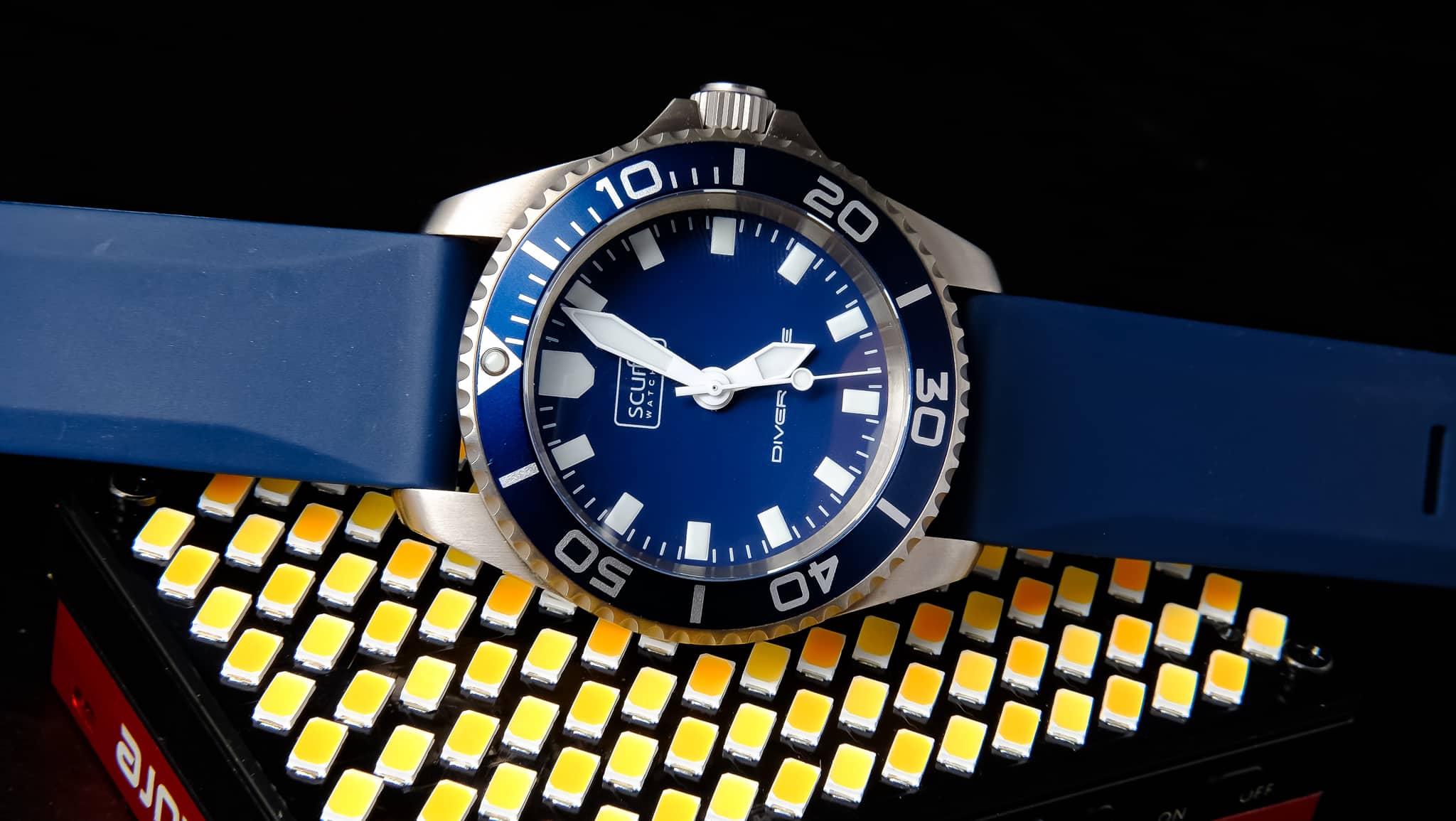
Somewhere along the way, “just buy a Seiko” became the answer to almost every affordable dive watch conversation. We’ve given that advice ourselves, and for plenty of people it’s still the right call. But after years of rotating affordable divers, we’ve also reached the point where another Seiko isn’t automatically the most interesting answer. The watches that survive collection reshuffles aren’t always the ones with the biggest reputation—they’re the ones you instinctively throw on for a grocery run, a weekend trip, or a day at the office because they simply fit your routine better. This list is for people who’ve reached that point and want an affordable dive watch that offers something genuinely different, rather than another variation on the default recommendation.
Over the years, we’ve owned dive watches that impressed us the moment we opened the box but somehow never left the watch roll again. Others kept earning wrist time because the bezel felt better every morning, the bracelet never became an annoyance, or the movement simply disappeared into the background, letting us enjoy wearing the watch. Those are the patterns we’ve leaned on while putting this list together. Every watch here is one we’ve spent real time with, so we’ll tell you where each one improves on the typical Seiko experience and where it falls short.
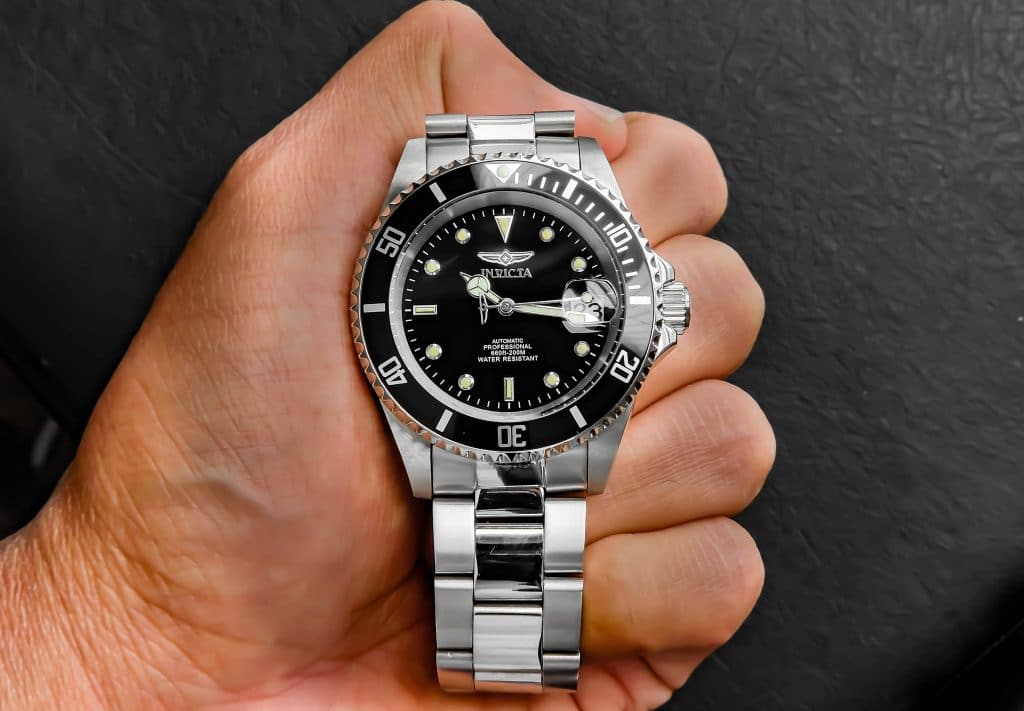
Invicta Pro Diver 8926OB
| Price: | $60 – $80 |
| Water Resistance: | 200m |
| Case Dimensions: | 40mm (diameter) x 48mm (lug-to-lug) x 14mm (thickness) |
| Lug Width: | 20mm |
| Movement: | NH35A (Mechanical) |
The Invicta Pro Diver 8926OB makes the most sense for the collector who’s tired of hearing “just buy a Seiko” every time they need an affordable dive watch. It’s not trying to out-Seiko Seiko, and that’s why it belongs here. Once you stop thinking about the logo and spend some actual wrist time with it, the appeal becomes obvious. The familiar 40mm Sub-like case won’t spark conversation, but it gets the basics right. It sits flat, avoids the long lug overhang that can make larger budget divers feel awkward, and never needed that week-long adjustment period where we tried convincing ourselves it fit better than it did. Sometimes you simply want a reliable mechanical diver that doesn’t come with the same recommendation everyone else gives.
That practicality carries through the rest of the watch. The NH35A isn’t exciting anymore, but that’s almost the point. It winds smoothly, keeps dependable time in everyday wear, and shifts into the background in the best possible way because it rarely asks anything of you. The oversized crown is easy to grip, manual winding feels effortless, and the 200m water resistance means rain, weekends by the pool, or an impromptu swim aren’t reasons to second-guess wearing it.
Throughout our testing period, we were pleasantly surprised by the bezel as well. For a watch at this price, the clicks feel deliberate, with only a hint of play, making it something we actually use rather than a feature that exists simply because dive watches are supposed to have one. The bracelet deserves similar praise. The taper from 20mm to around 18mm helps the watch stay balanced throughout the day, the articulation is smoother than we’d normally expect at this price, and it avoids the sharp edges that often give entry-level bracelets away the moment you put them on.
That said, the compromises are easy to spot, but they’re honest ones rather than deal-breakers. The lume gets you through a quick nighttime glance, though the markers fade before the hands. The mineral crystal will collect scratches sooner than sapphire if you’re hard on your watches, and the flip-lock clasp feels stubborn. It starts showing wear earlier than we’d like, and the oversized Invicta branding along the case flank remains a love-it-or-hate-it detail. None of those are reasons to avoid the watch. They’re simply the trade-offs that let it deliver a genuinely enjoyable automatic-dive-watch experience for very little money. If you’re skipping Seiko because you already own one, or because you simply want something different without sacrificing day-to-day dependability, this one makes a stronger case than the internet often gives it credit for.
Pros:
- The bracelet wears better than you’d expect, with a comfortable taper and smooth articulation.
- The bezel action feels positive instead of overly loose or toy-like.
- The NH35A remains an easy movement to live with and service.
- The compact 40mm case settles naturally on the wrist from day one.
Cons:
- The large Invicta branding on the case side is difficult to ignore.
- The lume is usable but fades quickly, especially on the markers.
- The flip-lock clasp is stiff, and shows wear sooner than the rest of the watch.
- The mineral crystal is easier to scratch than sapphire.
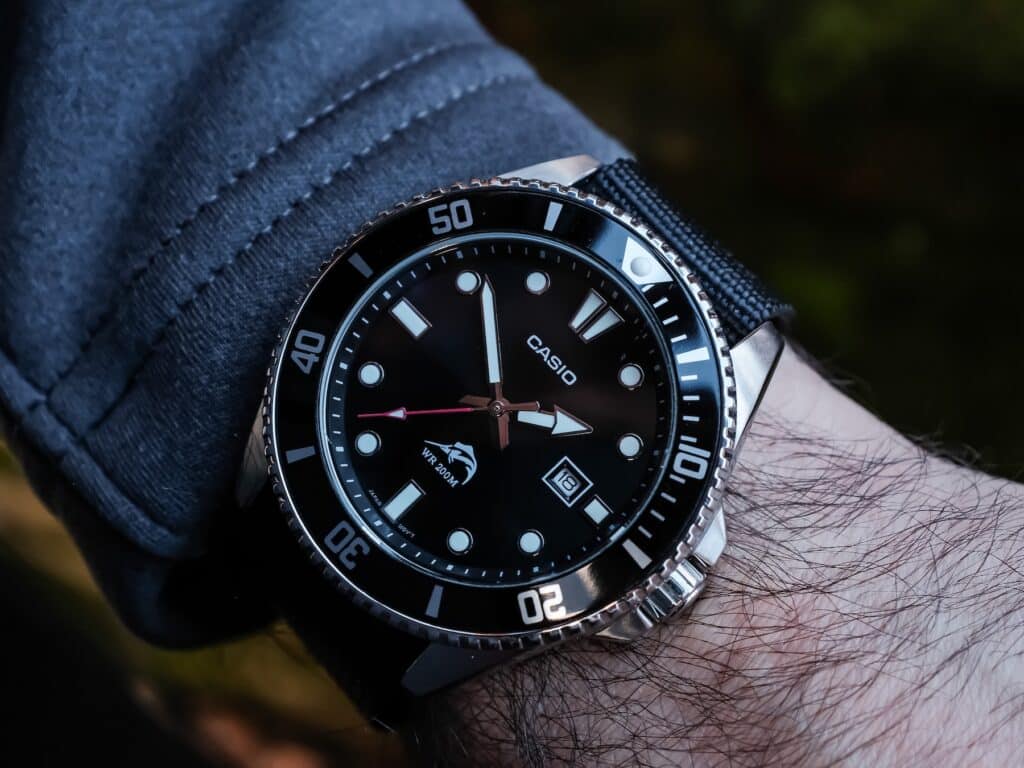
Casio Duro
| Price: | $85 |
| Water Resistance: | 200m |
| Case Dimensions: | 44.2mm (diameter) x 48.5mm (lug-to-lug) x 12.1mm (thickness) |
| Lug Width: | 22mm |
| Movement: | Casio 2784 Quartz |
The Casio Duro is probably the easiest watch on this list to underestimate because nothing about it feels like it’s trying very hard. It doesn’t have the enthusiast mythology that follows Seiko around, it isn’t chasing vintage nostalgia, and it certainly isn’t pretending to be a microbrand darling. It’s simply a dive watch that keeps showing up, keeps doing its job, and keeps making us question why we sometimes overcomplicate this hobby. If you’re avoiding Seiko because you’re tired of another automatic needing a reset after a few days in the watch box, the Duro offers a different ownership experience. Pick it up, set the bezel if you need it, and get on with your day.
That low-maintenance personality is the Duro’s biggest advantage. The quartz movement hacked cleanly, the quick-set date made it genuinely grab-and-go, and in our hands-on experience, it stayed within roughly ±20 seconds a month without asking for anything in return. Around water, it’s equally uncomplicated. The screw-down crown, solid caseback, and 200m water resistance meant we never found ourselves treating it differently from watches costing several times more. Even the aluminum bezel feels more deliberate than the price has any right to promise. There’s only a hint of play, the clicks are positive, and it never comes across like an afterthought.
At 44mm, though, the Duro still wears like a big dive watch. The downward-curving lugs and relatively compact lug-to-lug spacing help rein it in, but smaller wrists shouldn’t expect it to shrink because the internet keeps calling it magically wearable. However, it avoids trying to look more expensive than it is, and we think that’s better. The brushing across the case, polished flanks, and modest bevel are clean rather than flashy, while the uncluttered dial, applied markers, reflective hands, and framed date make it easy to read during everyday wear. The 22mm lug spacing practically encourages strap swapping—rubber one week, NATO the next, bracelet after that—which is either part of the fun or another excuse to keep buying watch accessories instead of admitting you’re already perfectly happy.
Nevertheless, the mineral crystal will pick up scratches sooner than sapphire, and the lume fades well before sunrise even if it starts brightly enough. In short, if you’re looking beyond Seiko because you want something simpler, lower maintenance, and free of enthusiast baggage, the Duro makes a stronger case than its price tag—or its reputation as the “cheap diver everyone buys”—might suggest.
Pros:
- Quartz movement is accurate, dependable, and effortless to live with.
- The bezel feels more precise and confidence-inspiring than many budget rivals.
- 200m water resistance and a screw-down crown make it a true no-nonsense beater.
- The clean dial layout delivers excellent daytime legibility.
- The 22mm lug width makes experimenting with straps easy.
Cons:
- The 44mm case still wears large despite the well-managed lug-to-lug.
- Lume starts well but loses intensity sooner than we’d like.
- The mineral crystal scratches more easily than sapphire.
Watchdives WD7922
| Price: | $94 – $110 |
| Water Resistance: | 200m |
| Case Dimensions: | 37mm (diameter) x 45.5mm (lug-to-lug) x 11mm (thickness) |
| Lug Width: | 20mm |
| Movement: | Seiko VH31 Quartz |
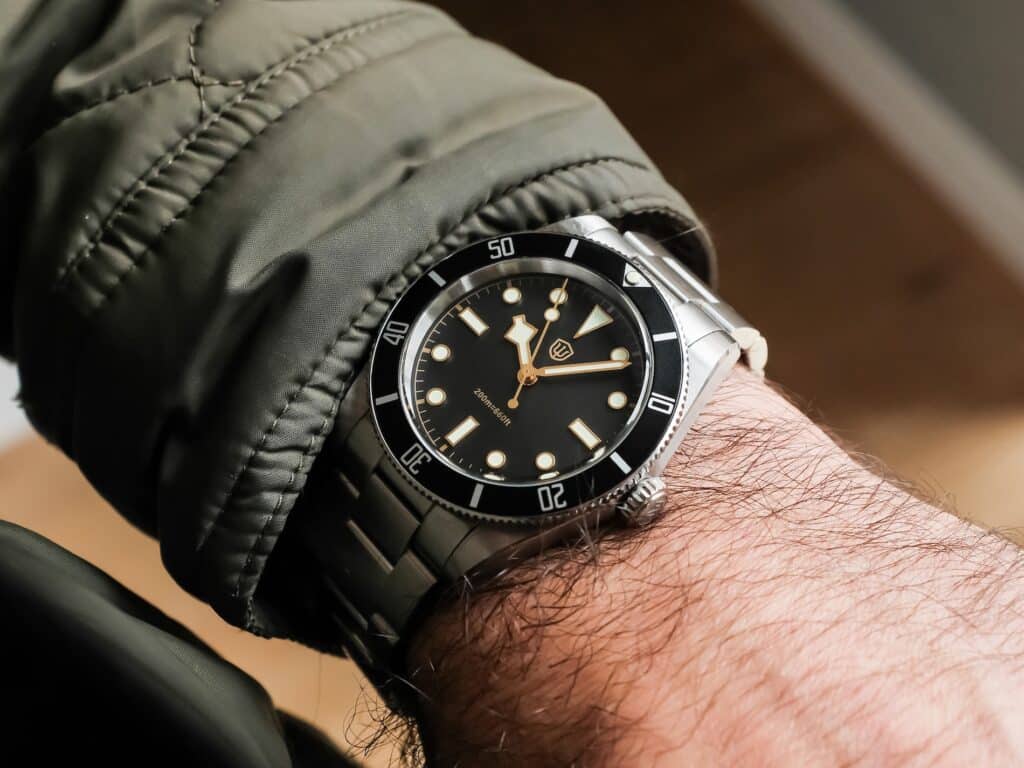
If you’re avoiding Seiko because you’re tired of every affordable diver feeling like another variation on the same theme, the WD7922 is one of the few watches that genuinely changes the conversation. It doesn’t rely on a familiar automatic movement or decades of enthusiast goodwill to win you over. Instead, it succeeds by feeling well thought out from the moment it hits the wrist.
We’ve handled plenty of vintage-inspired divers that looked fantastic in product photos before becoming oddly disappointing once the novelty wore off. Cases wore awkwardly, polished surfaces collected scratches faster than memories, or the whole thing felt like it was trying too hard to convince us it belonged in another decade. The WD7922 never fell into that trap. The compact mid-30mm case wears with far more confidence than its dimensions suggest, while the brushed case flanks quietly shrug off everyday wear, making you less precious about actually using the watch. Even the slim, polished chamfer shows restraint rather than screaming, “Please notice my finishing.”
The bezel was the moment we stopped thinking about what the watch cost. The grip is positive, the alignment is clean, and every click feels deliberate enough that we found ourselves using it without the little mental disclaimer, “It’s good…for the money.” The dial follows a familiar formula, but familiarity isn’t the same as laziness. The matte black surface keeps reflections under control, the gilt accents stop before drifting into faux-vintage cosplay, and the lume hangs around long enough to remain useful after lights out instead of disappearing before you’ve found your way back to bed. It’s the kind of execution that makes the watch feel considered rather than assembled from enthusiast buzzwords.
The VH31 sweeping quartz movement is probably the biggest reason we’d recommend this to someone who’s deliberately moving away from Seiko. You still get the visual satisfaction of a sweeping second hand, but without signing yourself up for another watch that needs winding and resetting after a quiet week in the watch box. Over time, that convenience became something we appreciated more than we expected.
However, the screw-down crown can be fiddly to thread back in, the bracelet’s mixed finishes aren’t quite as cohesive as the rest of the watch, and the sweeping quartz movement burns through batteries faster than a conventional quartz caliber. None of those compromises change the fact that the WD7922 feels like it has its own personality. If the WD7922 sounds like your kind of Seiko alternative, our hands-on review covers the long-term ownership experience in greater detail.
Pros:
- The bezel is crisp, well-aligned, and satisfying enough that we actually kept using it.
- The compact case wears with surprising confidence instead of feeling delicate or toy-like.
- The brushed case hides everyday wear exceptionally well.
- The VH31 offers smooth seconds, quartz reliability, and very little ownership fuss.
- Lume performs well beyond what we’d normally expect at this price.
Cons:
- The screw-down crown occasionally takes patience to thread correctly.
- The sweeping quartz movement uses batteries faster than a standard quartz movement.
- Bracelet finishing lacks consistency across different surfaces.
Watchdives EXD Titanium

| Price: | $129 |
| Water Resistance: | 200m |
| Case Dimensions: | 40.18mm (diameter) x 47.95mm (lug-to-lug) x 10.58mm (thickness) |
| Lug Width: | 20mm |
| Movement: | Seiko VH31 sweep quartz |
The EXD Titanium is one of those watches that can make collecting slightly inconvenient. Not because there’s anything difficult about owning it, but because it asks a question plenty of us would rather avoid: once a watch gets this good for $129, how much more are we actually paying for the next one? That’s not to say it replaces the watches it’s clearly inspired by. For some collectors, the emotional gap will always justify the financial one. We understand that. What surprised us was how quickly that debate faded into the background once we stopped thinking about what the EXD was referencing and started wearing it for what it was. If you’re looking beyond Seiko because you’re curious about what else the affordable end of the hobby has to offer, this is one of the few watches that changes the conversation rather than simply joining it.
The watch makes sensible decisions almost everywhere. The move to traditional spring bars instead of fixed lugs turned out to be far more important than we’d expected. We spent the review period constantly swapping between straps, something that would have been impossible with the military-diver formula it’s borrowing from, and the watch never looked out of place. The titanium case deserves just as much credit. At 40.18mm across, 47.95mm lug-to-lug, and only 10.58mm thick, it sits flatter than many affordable divers and gradually fades into the background on the wrist, much like a good field watch. The matte finish, sharp case geometry, polished chamfer, and neatly balanced mid-case stop the titanium from looking flat, while the signed screw-down crown threads smoothly and, together with the screw-down caseback, gives the watch a reassuring 200m water resistance.
The EXD also understands that practicality isn’t the enemy of enthusiast appeal. The Seiko VH31 sweep quartz movement is the movement we’d have chosen here. A mechanical caliber might have looked better in a sales listing, but it wouldn’t have made the watch more enjoyable to own. The smooth second hand adds some visual charm, while the grab-and-go convenience is something you appreciate more every week. Up front, the coarse matte dial stays beautifully restrained. The stark white hands, oversized applied markers, sloping rehaut, and minimal text make it instantly readable. At the same time, the blue lume on both the dial and fully lumed ceramic bezel lasts much longer than we’d expected.
The bezel itself is easy to grip thanks to the deep coin edge, although the lighter bidirectional action and slight movement at each stop remind you this is still a budget watch. The included Velcro canvas strap is comfortable from day one, but we found ourselves preferring a grey NATO simply because the watch encourages that sort of experimentation. That’s ultimately why the EXD earned a place here. It stopped feeling like “the affordable homage” quite quickly and started feeling like an enjoyable toolish dive watch.
Pros
- Traditional spring bars make the watch dramatically more versatile than fixed-lug alternatives.
- The slim titanium case wears flatter and lighter than most divers in this price range.
- The VH31 sweep quartz combines smooth seconds with effortless ownership.
- Excellent legibility thanks to the restrained dial, strong blue lume, and fully lumed ceramic bezel.
- The deep coin-edge bezel offers excellent grip, even with wet hands.
Cons
- The bezel action feels softer and slightly grainier than that of more expensive divers.
- Collectors looking exclusively for mechanical movements may never warm to the VH31.
- The obvious design inspiration will remain a sticking point for some enthusiasts.
Orient Mako II
| Price: | $160 – $220 |
| Water Resistance: | 200m |
| Case Dimensions: | 41.5mm (diameter) x 47mm (lug-to-lug) x 13mm (thickness) |
| Lug Width: | 22mm |
| Movement: | Orient Caliber F6922 (Mechanical Movement) |
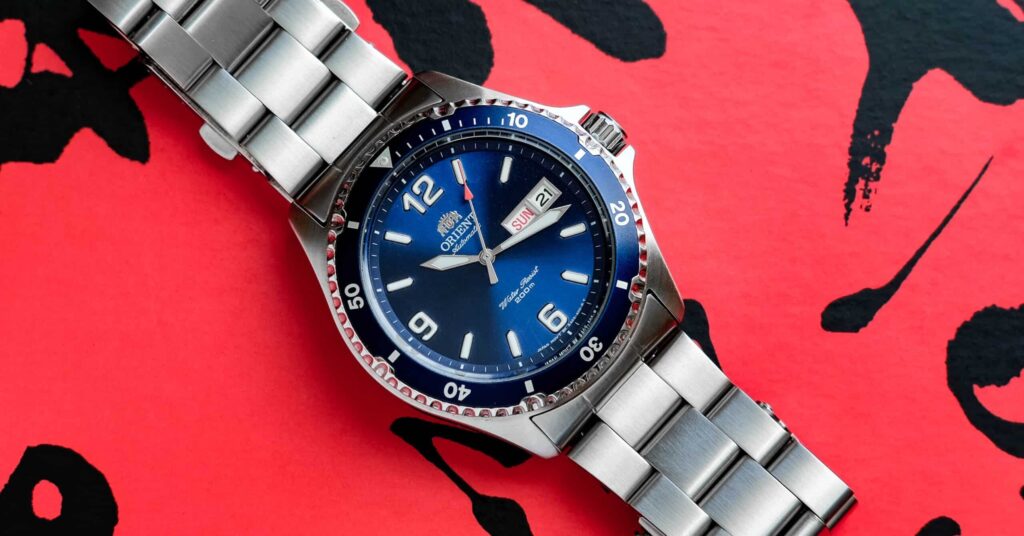
The Mako II has always felt like the watch that accidentally wandered into the affordable dive watch argument and quietly got on with its day. It doesn’t chase bragging rights, it doesn’t wave a spec sheet around hoping you’ll be impressed, and it certainly doesn’t feel like it’s trying to dethrone Seiko. After enough wrist time, that’s what we came to appreciate.
The Mako II isn’t constantly reminding you how much value you supposedly bought. It simply gets enough of the ownership experience right that you stop thinking about it altogether. That’s why we’d point someone here instead of automatically saying, “Go for another Seiko.” The in-house F6922 movement brings hacking and hand-winding, so after a few days in the watch box, you’re not standing there giving it the familiar shake-and-hope routine before heading out the door. It’s a small convenience, but those are the little things that decide which watches survive long-term collection reshuffles.
During in-depth testing, we found that the same quiet confidence shows up everywhere else. Rather than chasing oversized dimensions to look more “serious,” the 41.5mm case wears compact and stays planted on the wrist without feeling top-heavy. The brushing across the lugs, polished case sides, and tidy transition into the bracelet make it feel more mature than its price would suggest, even if the hollow end links remind you where Orient chose to keep costs under control once the bracelet is off the wrist. Up front, the dial has enough personality to avoid disappearing into a sea of black dive watches. The sunburst finish catches light without becoming flashy, while the applied markers, polished hands, framed day-date, and red-tipped second hand add character without tipping into the “look at me” territory that some affordable divers mistake for personality.
The 120-click bezel has a reassuring, positive action, although we’d happily trade a little of its tidy appearance for a bezel edge with more grip. The lume is perfectly capable for a late-night time check, but it won’t be the last one glowing in the room. Those compromises never felt like excuses because they don’t get in the way of enjoying the watch. That’s ultimately why the Mako II belongs on this list. It isn’t trying to be Seiko with a different logo. It offers a different ownership experience for collectors who’ve already been down that road and are ready for something that feels familiar without feeling repetitive.
Pros:
- The F6922 movement adds hacking and hand-winding, making everyday ownership straightforward.
- The dial has plenty of character while remaining clean and easy to read.
- The 120-click bezel delivers firm, confidence-inspiring action.
- The bracelet feels secure during daily wear and integrates cleanly with the case.
- The compact 41.5mm case stays balanced instead of feeling bulky or top-heavy.
Cons:
- Hollow end links feel less substantial once the watch is off the wrist.
- Lume is useful but doesn’t last as long as the strongest performers in this roundup.
- The sloped bezel edge could offer more grip.
Citizen Promaster Diver BN0151-09L
| Price: | $250 – $300 |
| Water Resistance: | 200m |
| Case Dimensions: | 43mm (diameter) x 48mm (lug-to-lug) x 11.5mm (thickness) |
| Lug Width: | 20mm |
| Movement: | Citizen Eco-Drive E168 (solar quartz) |
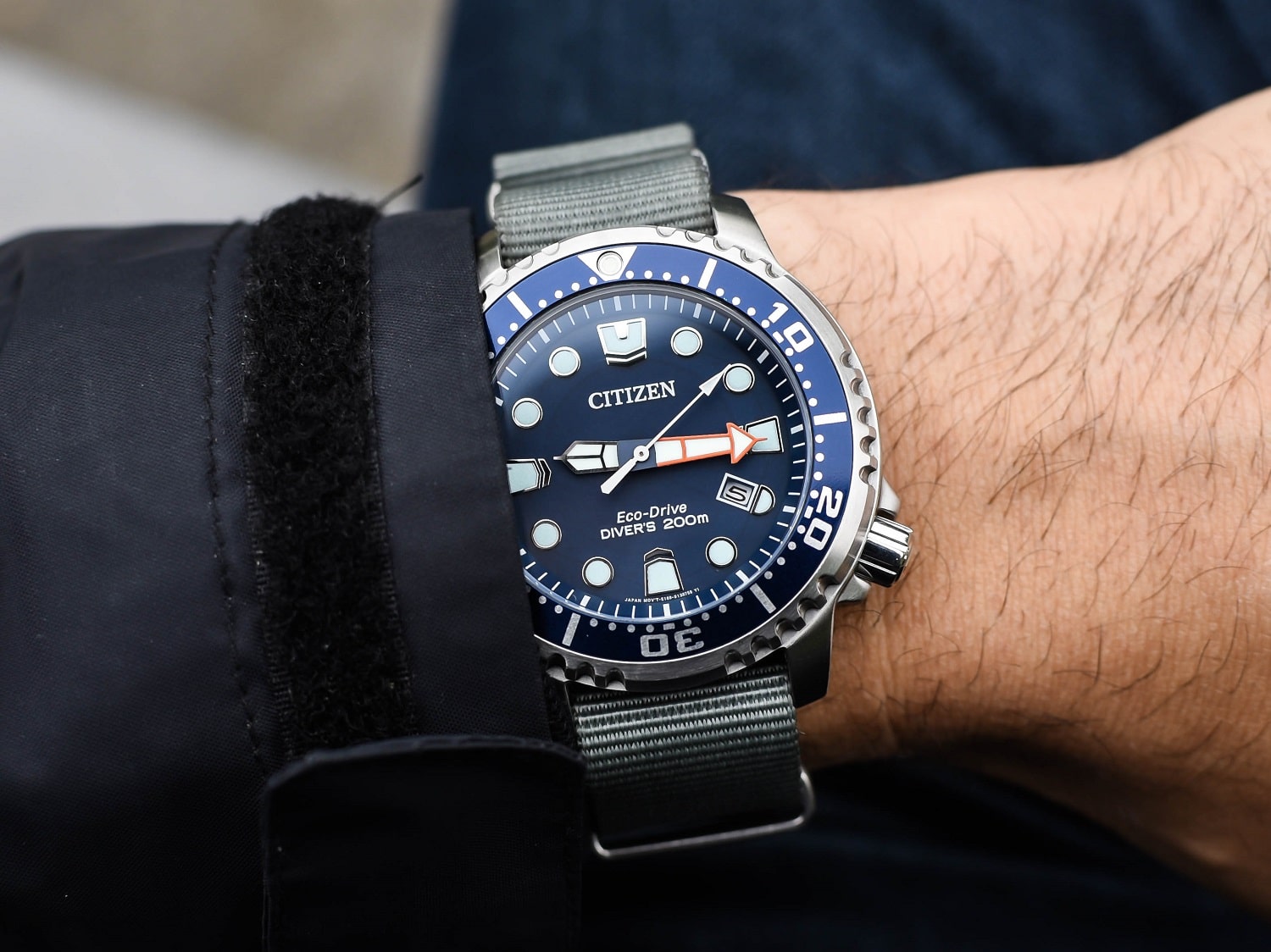
We’ve all owned that dive watch that quietly turned into another small job. Wind it before you leave. Reset the time because it stopped over the weekend. Fix the date because it’s now three days behind. Plenty of us enjoy that ritual, until we don’t. That’s where the Citizen Promaster Diver BN0151 caught us off guard. It was the one that never gave us another thing to think about. If you’ve reached the point where another Seiko automatic feels more familiar than fun, the BN0151 offers a completely different ownership experience without asking you to give up what makes a proper dive watch satisfying.
That attitude starts with the Eco-Drive movement. Citizen claims around six months of runtime on a full charge and roughly ±15 seconds per month, but what mattered more during our time with the watch was how little we noticed it. We only managed to trigger the low-power indicator once, and a short spell in natural light had it back to normal before it ever became an inconvenience. The rest of the watch follows the same philosophy. The dial skips faux-aged lume plots and unnecessary text in favor of large hands, bold markers, and a framed date window, making it almost effortless to read the time. Even the blue dial refuses to stay predictable, picking up a subtle purple hue when the light hits it just right. Once darkness arrives, the aqua-toned lume hangs around for hours, and the lumed pip on the second hand is one of those details you stop noticing until another watch doesn’t have it.
Citizen also deserves credit for making a 43mm dive watch that doesn’t constantly remind you it’s 43mm. The short lug-to-lug span, curved profile, modest weight, and 4 o’clock crown make it wear far smaller than the specifications indicate, whether you’re swimming, traveling, or doing absolutely nothing more adventurous than answering emails on a Tuesday afternoon.
The 60-click bezel stayed well aligned throughout our testing, but its grip became noticeably slippery with wet hands. The mineral crystal lacks sapphire’s scratch resistance, even if ours handled everyday wear better than expected, and the polyurethane strap arrives with all the flexibility of fresh garden hose before softening with use. We eventually preferred it on a NATO anyway. Overall, the BN0151 isn’t the watch you buy because it wins comparison charts. It’s the one you buy because six months later you realize you haven’t had to think about it once, and that’s why it keeps earning wrist time.
Pros:
- The case wears smaller than its 43mm diameter thanks to the curved profile, short lug-to-lug, and 4 o’clock crown.
- Eco-Drive delivers roughly six months of runtime with virtually maintenance-free ownership.
- The dial is easy to read, while the blue finish adds subtle character in changing light.
- Aqua-toned lume lasts for hours, and the lumed second-hand pip makes it easy to confirm the watch is still running.
- 200m water resistance and robust construction make it an easy everyday companion.
Cons:
- The polyurethane strap starts stiff before breaking in.
- The bezel becomes slippery to grip with wet hands.
- The mineral crystal isn’t as scratch-resistant as sapphire.
Orient Kamasu
| Price: | $250 – $375 |
| Water Resistance: | 200m |
| Case Dimensions: | 41.5mm (diameter) x 47mm (lug-to-lug) x 13mm (thickness) |
| Lug Width: | 22mm |
| Movement: | Orient F6922 (automatic movement) |
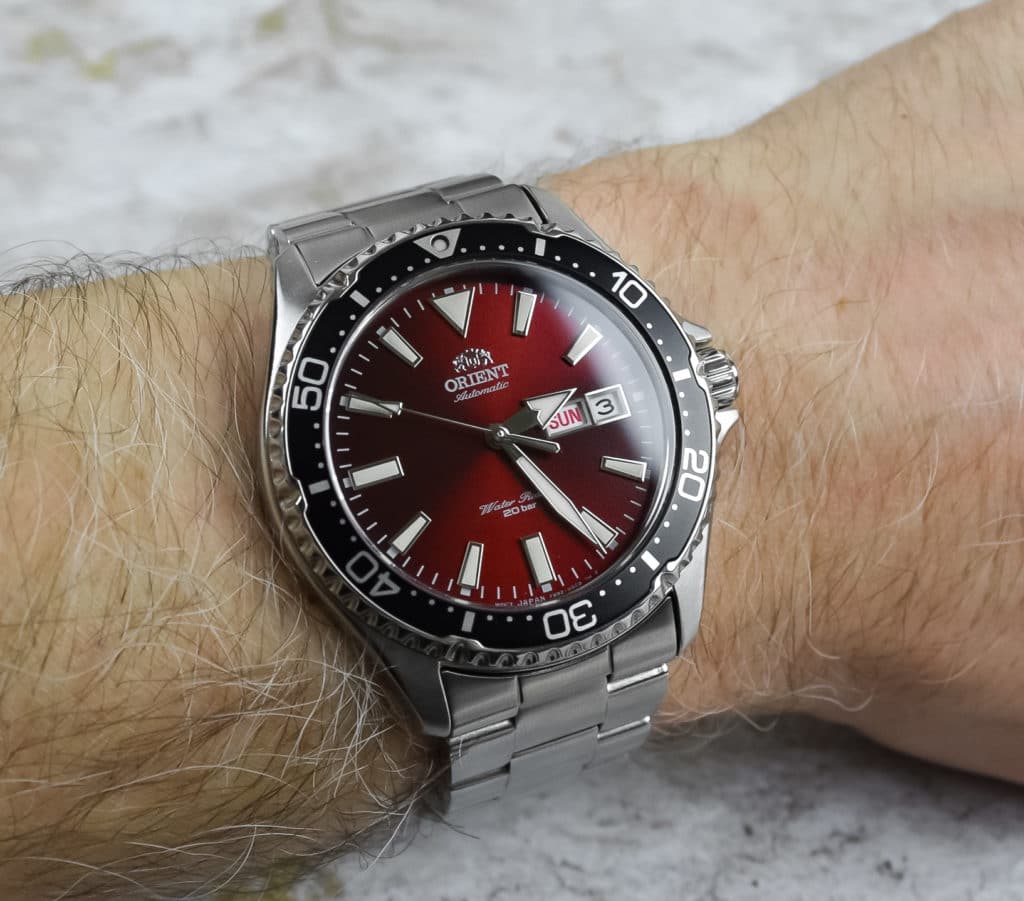
The Kamasu is the watch we’d hand to someone who keeps waiting for the “next step up” from an affordable diver. We’ve been there ourselves. You convince yourself another few hundred dollars must unlock a noticeably better watch, then the Kamasu turns up and starts asking uncomfortable questions. It isn’t trying to reinvent the dive watch or pull you away from Seiko with a dramatic twist. Instead, it quietly demonstrates how much of the ownership experience can already be sorted before you even get close to spending four figures. More than once, we’ve found ourselves comparing pricier divers back to the Kamasu instead of the other way around.
A lot of that comes from the details you interact with every day rather than the ones that look good on a comparison chart. As discussed in our dedicated review, the F6922 automatic movement brings hacking and hand-winding, making those mornings after a few days in the watch box pleasantly uneventful. The 41.5mm case wears smaller than expected, thanks to its balanced proportions and curved lugs. The bezel has the kind of tight, deliberate action that quickly makes you forget the insert is aluminum rather than ceramic. The crown threads smoothly, although the combination of its modest size and protective guards leaves little to grab onto.
Then there’s the dial, which is where the Kamasu stops blending into the crowd. The wine-red sunburst finish changes character throughout the day without becoming loud, and the applied markers, properly proportioned hands, and hands that actually reach the minute track make reading the time wonderfully straightforward. Even after dark, the lume charges quickly and hangs around long enough to embarrass more than a few similarly priced Seiko rivals.
Orient didn’t spend money everywhere, and honestly, we’re glad it didn’t. The bracelet feels secure on the wrist, and the four-position micro-adjust clasp does a good job of keeping up when your wrist inevitably swells in the afternoon. Off the wrist, though, the clasp and end links don’t quite match the quality of the watch head, and the aluminum bezel insert will show scratches sooner than a ceramic bezel would if you’re hard on your watches. If you keep those compromises away, the Kamasu succeeds by putting the budget where your hands and eyes spend the most time, and that’s why we’d recommend it to someone who wants to move beyond the usual Seiko suggestion without feeling like they’ve wandered into a completely different kind of dive watch.
Pros:
- The wine-red sunburst dial gives the watch real personality while staying highly legible.
- The sapphire crystal, along with the 200m water resistance rating, makes it well-equipped for the price.
- The F6922 movement with hacking and hand-winding makes everyday ownership straightforward.
- Four micro-adjust positions help the bracelet stay comfortable throughout the day.
- The bezel action feels tight and confidence-inspiring.
Cons:
- The aluminum bezel insert is more susceptible to scratches than a ceramic one.
- The clasp and end links don’t feel quite as refined as the rest of the watch.
- The small crown is fiddly to grip because of the crown guards.
Scurfa Diver One Titanium
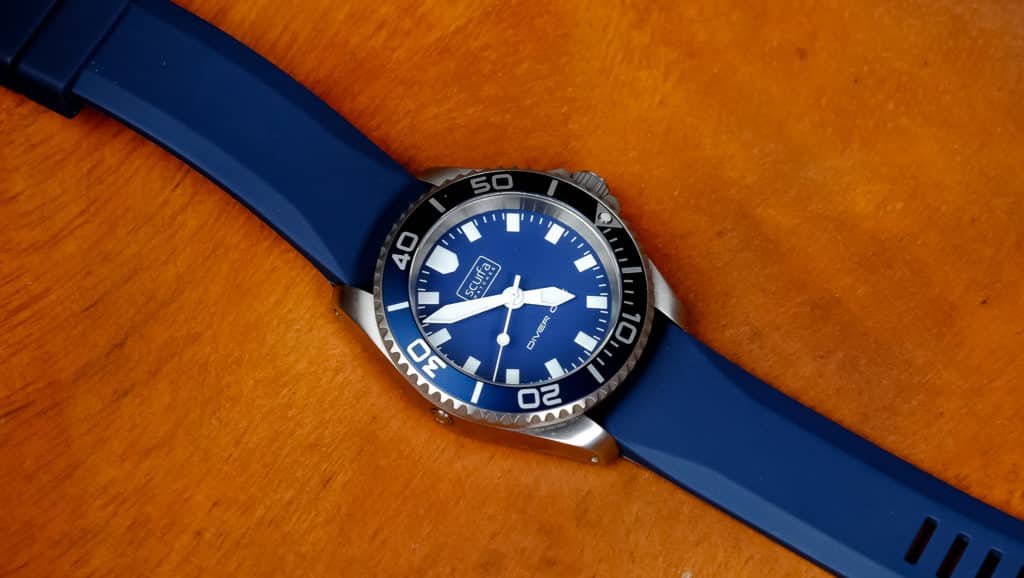
| Price: | $250 – $399 |
| Water Resistance: | 500m |
| Case Dimensions: | 40mm (diameter) x 47mm (lug-to-lug) x 14mm (thickness) |
| Lug Width: | 20mm |
| Movement: | ETA.F06 (Quartz Movement) |
The Scurfa Diver One has absolutely no interest in winning the “all-time best affordable dive watch” argument, and that’s probably why we like it so much. It doesn’t arrive with a heritage story, a romantic mechanical movement, or a dial designed to make Instagram photographers happy. Instead, it feels like someone sat down with a checklist that simply read, “Build a dive watch we’d trust,” then stopped once every box was ticked. If you’re moving away from Seiko because you’ve grown tired of debating movements and specifications, the Diver One feels almost refreshing. It doesn’t ask for admiration. It asks to be worn, knocked around, rinsed off, and worn again.
That philosophy becomes obvious the longer you spend with it. The ETA F06 quartz movement quietly goes about its business with dependable accuracy, an estimated five-year battery life, and none of the little ownership rituals that eventually become chores. The titanium case deserves just as much appreciation. On paper, 40mm wide and roughly 14mm thick suggests something more substantial than what actually ends up on your wrist. On the wrist, the contoured mid-case disguises much of the watch’s thickness by distributing the weight evenly, making it feel balanced rather than bulky.
Up front, the matte blue dial feels equally purposeful. The broad sword hands and oversized markers don’t need dramatic textures or faux-aged lume to stand out, while the domed sapphire crystal adds just enough distortion around the edges to stop everything looking too clinical. Once darkness arrives, the BGW9 Super-LumiNova hangs around for hours, and the bezel is exactly what we’d hope for on a watch with professional diving credentials: crisp, precisely aligned, and completely free of the vague, spongy feel we still excuse on too many affordable divers.
Even the extras avoid feeling like marketing. Five hundred meters of water resistance, a helium escape valve, and a screw-down crown all make perfect sense here because the rest of the watch is built with the same mindset. The rubber strap, fitted with titanium hardware, became one of our favorite parts of living with the watch because it disappeared on the wrist almost immediately, and the drilled lugs make changing straps drama-free.
The compromises are mostly philosophical. If a mechanical movement is non-negotiable, the ETA quartz won’t change your mind, and collectors with smaller wrists will notice the thickness more than the weight. Otherwise, the Diver One ends up making a surprisingly strong argument for thinking beyond another Seiko.
Pros
- Titanium construction keeps the watch remarkably light without feeling insubstantial.
- The bezel action is crisp, precise, and free of noticeable play.
- The matte dial, oversized markers, domed sapphire crystal, and BGW9 lume make legibility outstanding.
- The comfortable rubber strap, titanium hardware, and drilled lugs make everyday use easy.
- 500m water resistance, a screw-down crown, and a helium escape valve give it genuine tool-watch capability.
Cons
- The case thickness is more noticeable on smaller wrists.
- Collectors who only buy mechanical watches are unlikely to be persuaded by the ETA quartz movement.
Timex Deepwater Meridian 200
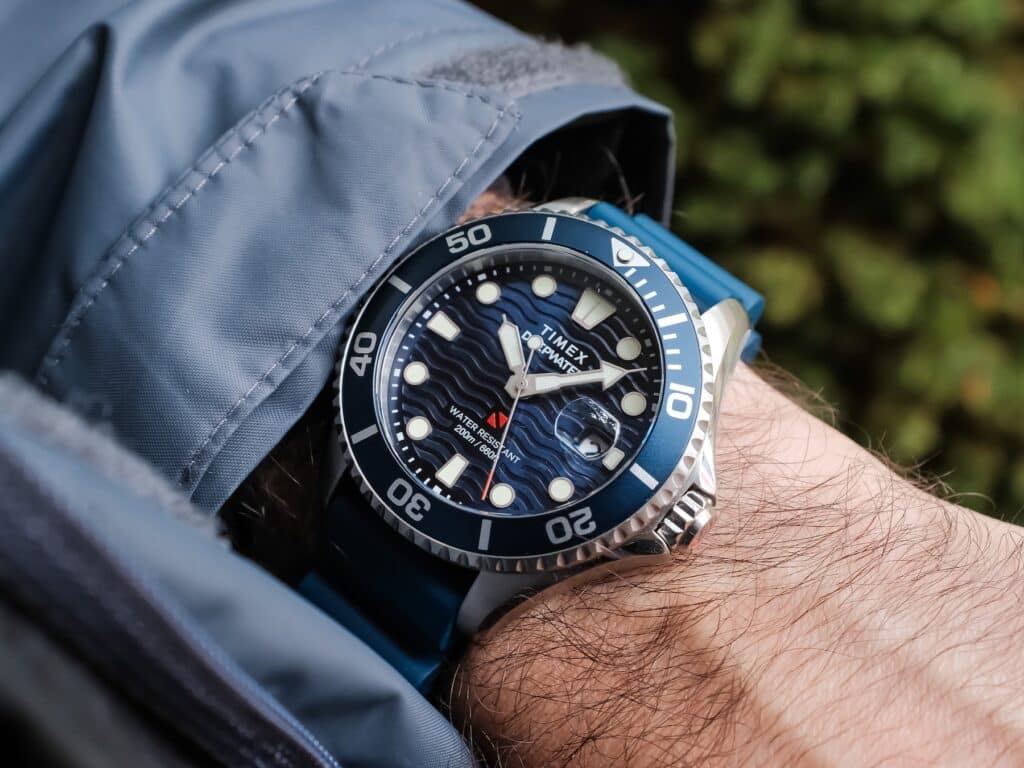
| Price: | $259 |
| Water Resistance: | 200m |
| Case Dimensions: | 44mm (diameter) x 50.5mm (lug-to-lug) x 12.5mm (thickness) |
| Lug Width: | 20mm |
| Movement: | Seiko Epson VX42E |
We’ll admit it—we didn’t expect the Deepwater Meridian 200 to make this list when we first strapped it on. Timex has built plenty of watches we enjoy, but a genuinely convincing dive watch wasn’t something we’d automatically associate with the brand. The Meridian 200 tends to correct that assumption within a few days. It never feels like Timex took a regular quartz watch, added a bezel, and hoped nobody would ask difficult questions. Everything about it suggests someone cared whether the watch would still make sense once it left the product page and ended up in a suitcase, on holiday, or getting knocked around on an ordinary Tuesday.
The practical approach continues across the entire watch. The Seiko Epson VX42E quartz movement quietly gets on with the job, offering a quick-set date, roughly three years of battery life, and a crown that’s smooth whenever you need to adjust the time. Up front, the matte blue dial avoids pretending it’s a vintage diver, which immediately earns points with us. The subtle wave texture gives it enough depth to stay interesting, the applied markers keep the dial crisp, and the little red diver’s flag at 12 o’clock adds enough personality without turning into a design gimmick. The Super-LumiNova is equally honest. It stays bright enough for evening use, although it isn’t trying to compete with the brightest lume monsters in the drawer. That’s perfectly fine because the rest of the dial is so easy to read that it rarely needs to.
The dimensions tell a more intimidating story than the wrist does. At 44mm, we’d normally brace ourselves for another oversized diver, but the curved lugs and restrained 12.5mm thickness do a surprisingly good job of calming everything down. We’d still hesitate to recommend it to someone with a smaller wrist, but on medium and larger wrists, it feels planted rather than cumbersome.
That balance carries through the rest of the watch. The sapphire crystal, anti-reflective coating, 200m water resistance, and screw-down crown and caseback never feel like marketing bullets; they simply make the Meridian 200 a watch you stop worrying about. That’s probably the biggest compliment we can give it. Rather than trying to imitate what made Seiko successful, Timex built a dive watch that feels comfortable doing its own thing, and that’s why it deserves a place on this list. If you’d like to see how it held up over longer-term wear, our hands-on review covers the experience in much greater detail.
Pros:
- The matte blue wave-textured dial stands out without compromising legibility.
- Curved lugs and a restrained thickness make it more comfortable than the 44mm diameter implies.
- The reliable quartz movement offers quick-set date functionality and long battery life.
- Smooth crown action makes setting the watch straightforward.
- Super-LumiNova provides dependable visibility after dark.
Cons:
- The 44mm case can feel oversized on smaller wrists.
- Lume starts strong but doesn’t maintain peak brightness for as long as some rivals.
- The date magnifier won’t appeal to everyone.
Momentum Sea Quartz 30
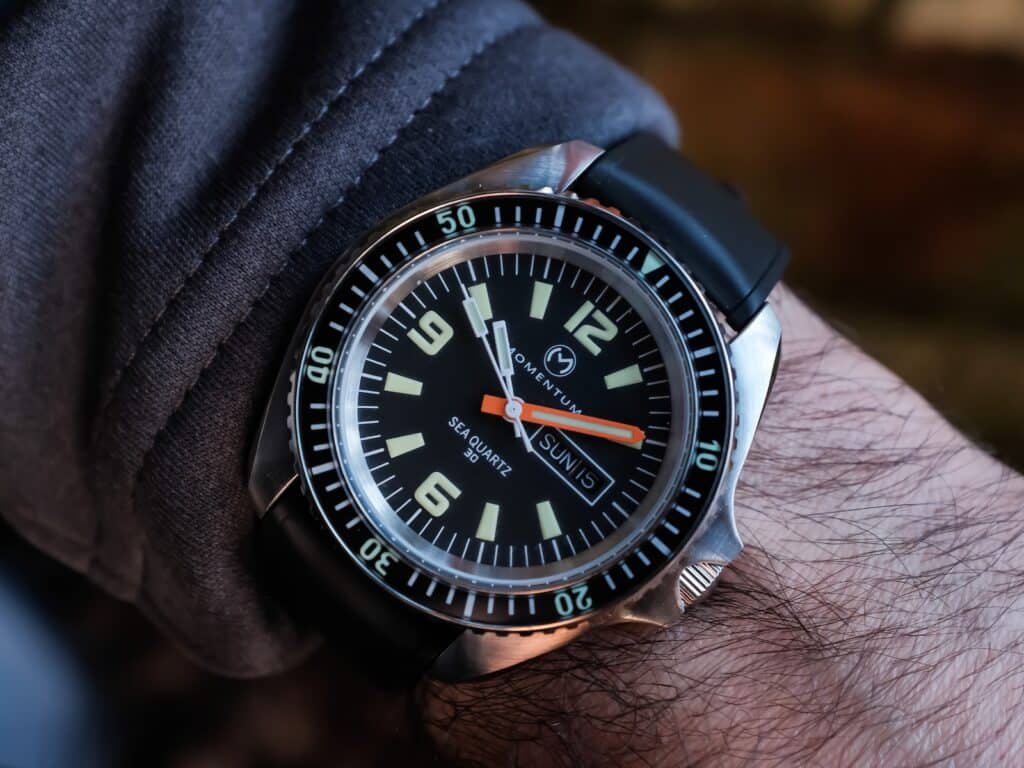
| Price: | $279 |
| Water Resistance: | 300m |
| Case Dimensions: | 42mm (diameter) x 47mm (lug-to-lug) x 11.3mm (thickness) |
| Lug Width: | 20mm |
| Movement: | Ronda R507 high-torque quartz |
The Sea Quartz 30 is one of those watches that almost dares you to overlook it. There’s no famous movement to talk about, no heritage story stretching back generations, and no dial color that changes names depending on the lighting. It simply turns up every morning ready to go and quietly gets on with being useful. Oddly enough, that’s what kept pulling us back to it. After you’ve owned enough affordable dive watches, you eventually realize the ones that stay in the rotation are the ones that never become another thing on your to-do list. If you’re looking beyond Seiko for something that feels free of enthusiast baggage, the Momentum starts to make a lot of sense.
Momentum clearly spent its budget on the parts we’d notice six months later instead of six minutes later. The Ronda R507 high-torque quartz movement all but disappears from the ownership experience. The 300m water resistance means we never caught ourselves wondering whether the watch was up for whatever the day had planned. The sapphire bezel insert tells a similar story. It might not have the softer charm of aluminum, but after the inevitable knocks against desks and door frames, we’d happily take durability over nostalgia. The dial follows the same philosophy. The matte black surface, printed markers, paddle-style hands, and bright orange minute hand make timing instinctive, while the subtle late-’70s influence gives it character without sliding into vintage cosplay. It’s distinctive enough that nobody is going to mistake it for another Seiko from across the room.
The 42mm case initially sounded larger than we’d normally gravitate toward. But after living with it beyond the first impression, the 47mm lug-to-lug, flat caseback, and balanced proportions stopped it from ever feeling cumbersome. The case sides also break up the otherwise toolish brushing nicely, and the Tropic-style rubber strap was comfortable from the first day rather than requiring a week-long negotiation with our wrist. It also looked equally at home on a NATO and Momentum’s Jubilee-style bracelet, which inevitably encouraged more strap swapping than was strictly necessary.
That said, the bezel asks for more grip than we’d like, the lume clocks out before some of the heavier hitters in this roundup, and the polished underside of the lugs picks up strap-changing scars more eagerly than we’d prefer. Still, none of that changes the reason we’d recommend it. The Sea Quartz 30 feels like an alternative because it’s playing an entirely different game—one where reliability, practicality, and quietly competent design matter a lot more than enthusiast approval.
Pros
- The Ronda R507 quartz offers reliable, virtually maintenance-free ownership.
- The sapphire bezel insert is a practical upgrade for long-term use.
- The orange minute hand and clean dial layout make elapsed-time reading almost effortless.
- The Tropic-style strap is comfortable immediately and works well with NATOs and bracelets.
- Balanced proportions keep the 42mm case comfortable throughout the day.
- 300m water resistance means it never feels out of its depth.
Cons
- Lume fades sooner than several rivals.
- The bezel could use more grip and lighter action.
- The polished underside and lugs collect scratches quickly during frequent strap changes.
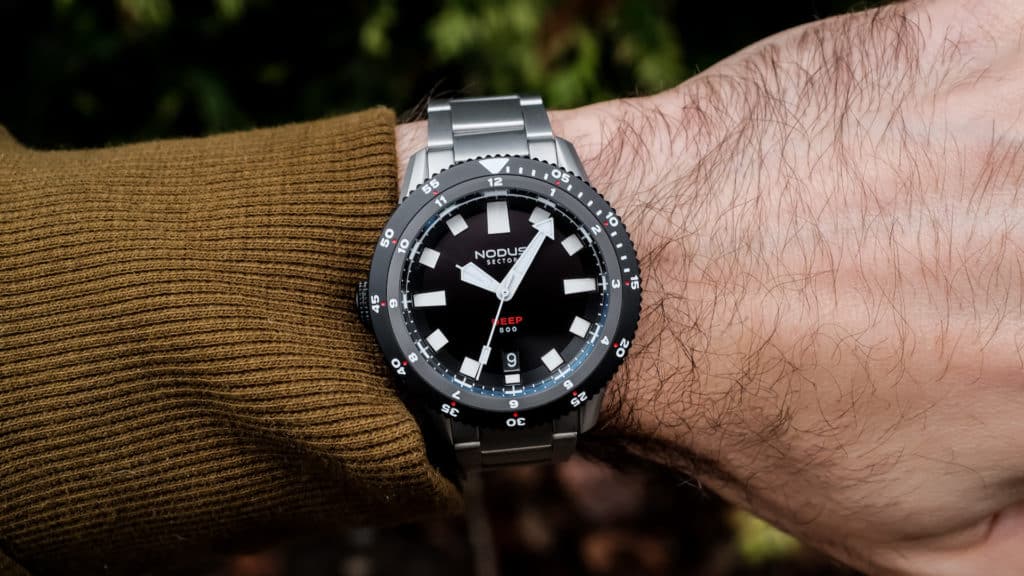
Nodus Sector Deep
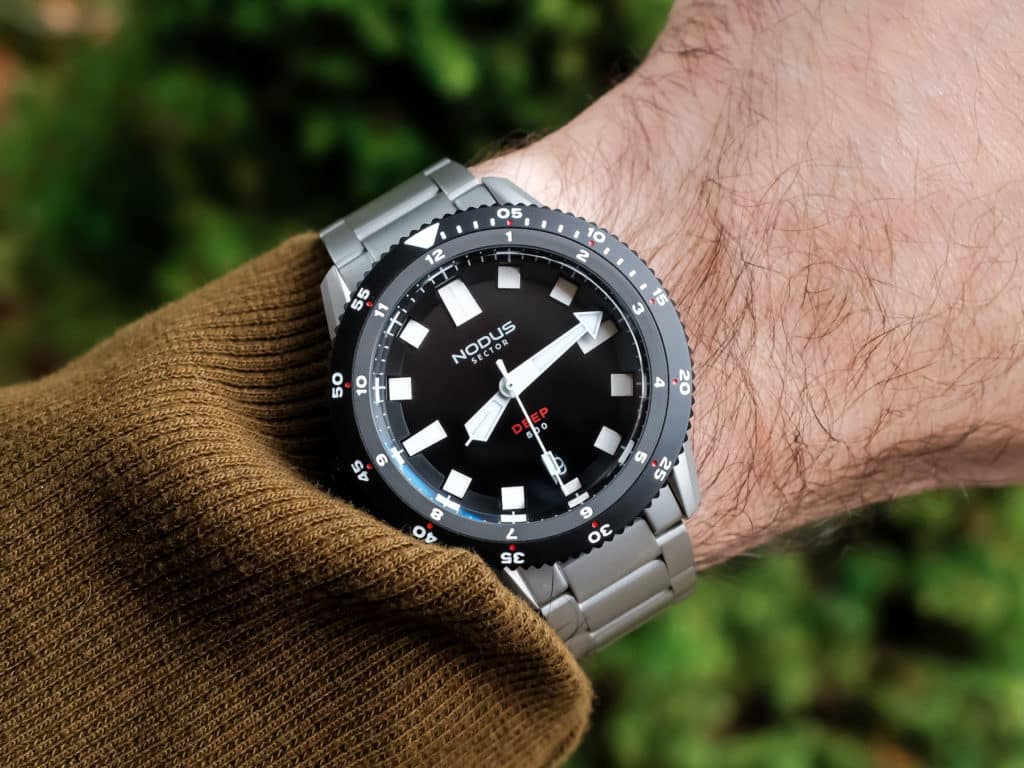
| Price: | $599 |
| Water Resistance: | 500m |
| Case Dimensions: | 38mm (diameter) x 47mm (lug-to-lug) x 13.6mm (thickness) |
| Lug Width: | 20mm |
| Movement: | Seiko NH35 (Mechanical Movement) |
Microbrands love telling you how much thought went into every design decision. The Sector Deep is one of the few that made us believe it after we stopped reading the brochure and started wearing the watch. It isn’t trying to lure Seiko owners with a higher beat movement or another “better value” argument. Instead, it solves problems that many affordable divers still treat as unavoidable. After enough time on wrist, that ended up mattering far more than another specification on the box. If you’ve reached the stage where another Seiko feels a little too familiar, the Sector Deep doesn’t feel like the obvious alternative—it feels like the more considered one.
That starts with the parts you interact with dozens of times a day. Nodus regulates the NH35 in-house, and ours hovered around ±10 seconds per day throughout testing, but we spent far less time thinking about the movement than we did the bracelet and case. The left-side crown looked unconventional until we realized we hadn’t noticed it for several days because it never dug into the back of the wrist. The bracelet had the same effect. Screw links made sizing simple, the 20mm-to-18mm taper kept everything feeling balanced, and the NodeX micro-adjust clasp became one of those features we started using almost unconsciously whenever the temperature changed. Those aren’t glamorous upgrades. They’re the sort of decisions that make a watch easier to own six months later.
The styling is equally confident. The asymmetrical case won’t appeal to everyone, but we’d rather wear something comfortable than spend months trying to convince ourselves that symmetry automatically means better. The dial keeps things restrained, using white PVD marker surrounds, tapered lume plots, and BGW9 Super-LumiNova to create depth without clutter. The matte DLC bezel grips confidently, cuts reflections well, and somehow accommodates a dual-scale insert without looking overcrowded.
Our only recurring complaint came when extending the clasp, where the exposed hardware looked less refined than the rest of the watch. Otherwise, the Sector Deep kept reinforcing the same conclusion. It doesn’t feel like a watch built to win comparison charts. It feels like one designed by people who spend enough time wearing dive watches to know what starts bothering you after the honeymoon period ends.
Pros:
- The NodeX micro-adjust clasp, screw links, and tapered bracelet create one of the best wearing experiences in this category.
- The in-house-regulated NH35 delivered ±10 seconds per day during our testing.
- The left-side crown and compact 38mm case make for outstanding all-day comfort.
- The matte DLC bezel offers excellent grip while minimizing reflections.
- The dial remains legible thanks to the white PVD surrounds, thoughtful lume layout, and BGW9 Super-LumiNova.
Cons:
- The exposed clasp hardware looks unfinished when the clasp is fully extended.
- The asymmetrical case shape won’t appeal to collectors who prefer more traditional dive watch proportions.
Know an affordable dive watch that convinced you to skip the usual Seiko recommendation? Let us know in the comments. We keep these lists grounded in watches we’ve actually worn and reviewed, so there’s a good chance your suggestion ends up on our wrists before it ever lands in a roundup.

Co-Founder and Senior Editor
Kaz has been collecting watches since 2015, but he’s been fascinated by product design, the Collector’s psychology, and brand marketing his whole life. While sharing the same strong fondness for all things horologically-affordable as Mike (his TBWS partner in crime), Kaz’s collection niche is also focused on vintage Soviet watches as well as watches that feature a unique, but well-designed quirk or visual hook.
As a freediver and someone who wears watches both in the sea and in the office I would like to mention Ratio freediver professional 200m Quartz watch. For under 90$ it comes with crazy good specs, sapphire crystal, screwdown crown, excellent quality bracelet with divers extension, great lume and a super thin and comfortble case at just 10mm.
We keep hearing about this, Ivan. May be time to pick one up for testing.
I like Invicta but don’t by from Invicta. They take a long, long time to get the watch to you, and they seem to be more expensive than Invicta watches sold on other sites like Amazon. They are no help if you call them and if you do call them be prepared to stay on the phone for quite a while before somebody who can’t help you anyway finally answers.
You’re right, Tom. So many great deals elsewhere. Doesn’t make much sense to buy direct.
Hey Kaz I’m Zak Mirza, how freaky os that? Great review, which would be your one choice?
sugess review vs citizen?
Hey Gino – haven’t gone hands-on with a Sugess yet but it may be time! Thanks.
This article is somewhat confusing. The whole premise of the article is that there are suggested alternatives to Seiko dive (diver’s) watches. Watches which are of course ISO 6425 certified and compliant. However, your suggested alternatives are not dive watches, are not ISO 6425 compliant and therefore do not have the same features or build quality. As I see things the article is at the very best, misleading. Thanks.
Thanks for reading, David.
I enjoyed this article and going to look around for more articles and other ways to get your watch reviews. It was particle and gave me an idea of aome watch brands I want to look into. I have to look for the budget kind not because I am conscious of the waste of high priced watches but for the reason I font make a lot of money. Thankyou,
Rob
Thanks for reading! Glad the article helped, Rob.