This is one of those affordable GMT debates where the obvious question isn’t the most useful one. The Imperial Oceanguard GMT vs. Steinhart Ocean 39 GMT comparison isn’t about which watch gets closest to the Rolex GMT-Master II. The better question is which one wins on the wrist for most people once the novelty wears off, the bracelet is sized, the bezel has been fiddled with too many times, and the watch has to earn its place in normal life.
We’ve been reviewing affordable watches for nearly a decade, and these are exactly the kinds of comparisons where wrist time matters more than spec-sheet chest thumping. In our hands-on reviews, both watches made a strong case as affordable GMT watches, but in different ways. One leaned more into the fun of an enthusiast microbrand, while the other carried the weight of being one of the long-standing names in the budget Rolex-alternative conversation. That difference is what makes this comparison worth unpacking for anyone trying to choose the better everyday GMT.
Overview & Identity
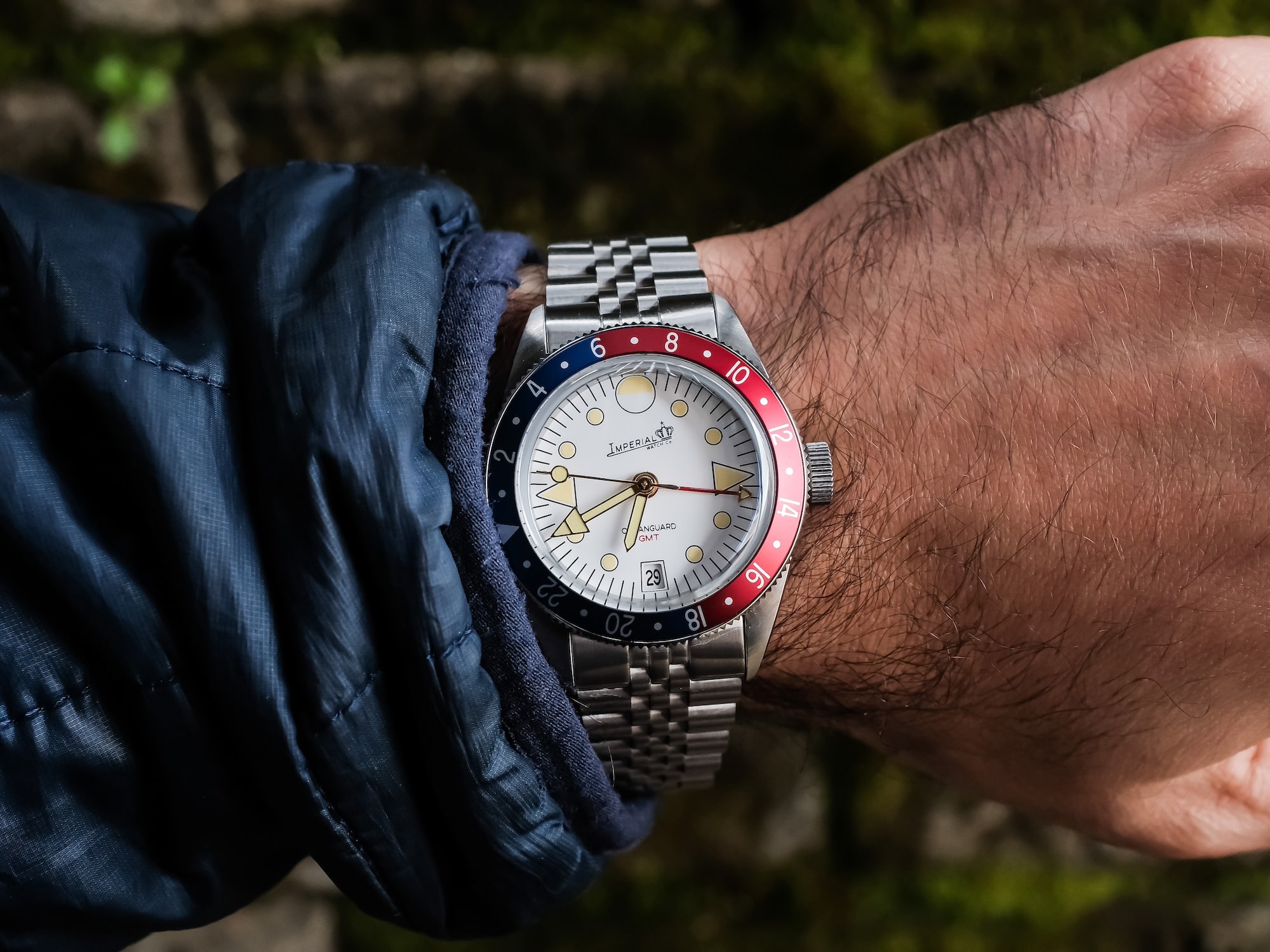
The Imperial Oceanguard GMT comes across as the more enthusiast-flavored pick in this comparison. As reflected in our Imperial Oceanguard GMT review, it felt like a natural next move after the Royalguard, not a random “hey, GMTs are hot now” release. The Jet Wash White version we reviewed also hit that sweet spot of being interesting without crossing into “fun to look at, impossible to wear daily” territory. On the wrist, its identity is less about chasing the GMT-Master II and more about giving microbrand fans a comfortable, vintage-leaning travel watch with enough personality to feel its own. That matters if you want something familiar, but not so familiar that every glance turns into a Rolex comparison spiral.
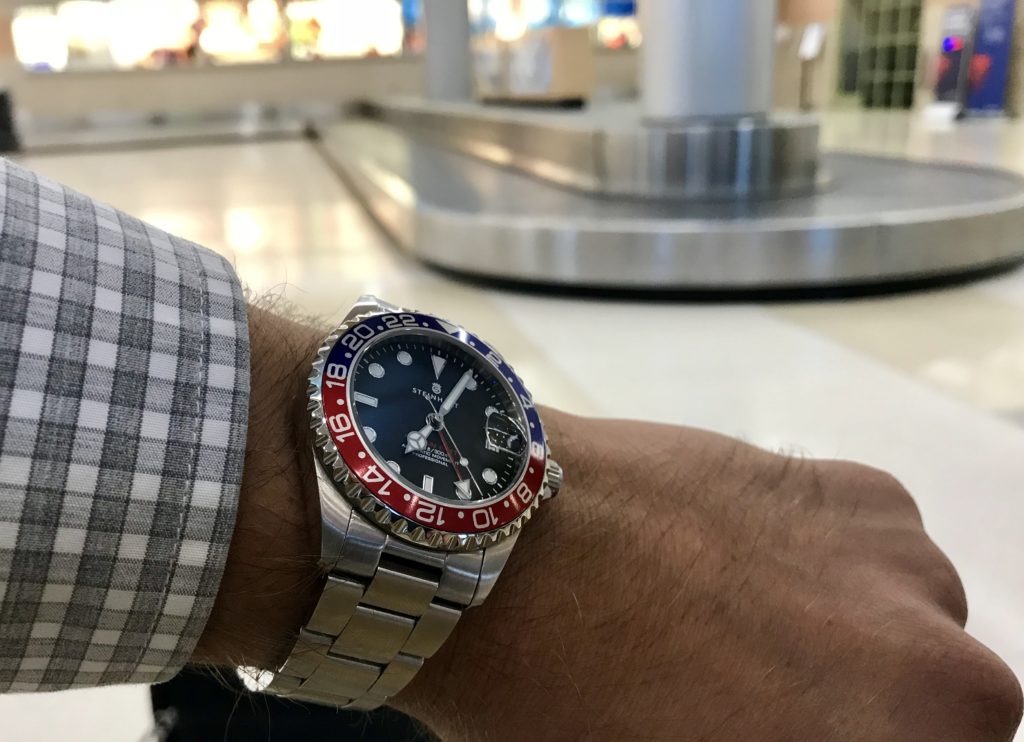
Meanwhile, the Steinhart Ocean 39 GMT has a very different kind of baggage, and that is part of the point. In our Steinhart Ocean 39 GMT review, the watch lived directly in that affordable Pepsi GMT lane, where the value is obvious but the “is this too close?” question follows it around like a needy group chat. Still, the wearing experience helped cut through some of that noise. The Ocean 39 felt like a watch that could work with almost anything, from casual weekend stuff to more dressed-up situations, which is probably why Steinhart has remained such a default answer for budget Rolex-inspired shoppers. It may ask you to get over the homage awkwardness, but once you do, there is a capable everyday GMT underneath.
- The Imperial Oceanguard GMT is the more characterful microbrand GMT, built around enthusiast appeal and daily-wear charm.
- The Steinhart Ocean 39 GMT is the established, affordable Rolex GMT-style option, stronger on familiarity and broad everyday versatility.
Design & Wearability: Vintage Microbrand Charm vs Familiar Pepsi-GMT Comfort
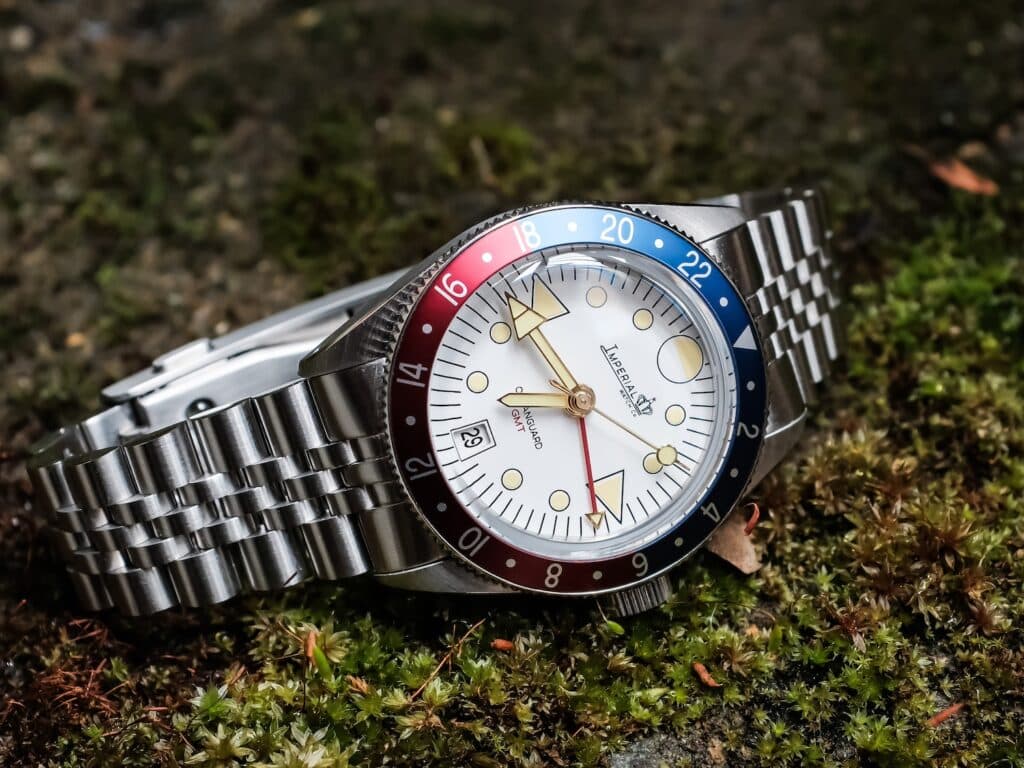
The Imperial Oceanguard GMT has the more distinctive design personality of the two. During our in-depth testing, the pale colorway immediately stood out because it nodded to the mysterious “Albino” GMT-Master look without feeling like a straight-up costume piece. The dial also carries some of the same Eberhard-inspired thinking we saw on Imperial’s Royalguard 200, with a 4-hand configuration with big dots, triangles, a date at 6 o’clock, and a circular 12 o’clock marker. That configuration looked odd at first, but made more sense in person. Once on the wrist, it helped with orientation and kept the watch easy to read.
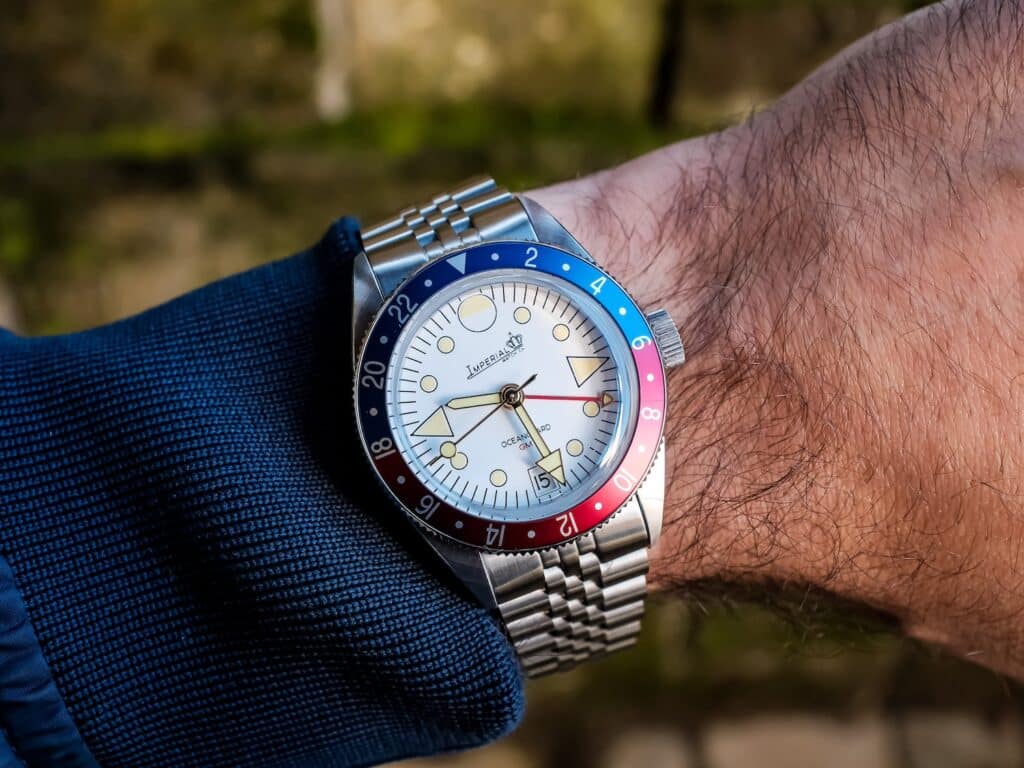
Wearability is where the Imperial makes its strongest case. The jubilee-style bracelet feels solid, is well articulated, tapers from 20mm to 16mm, and gives the watch the kind of relaxed vintage GMT comfort that works for daily use. The clasp is a little thick, but the tool-less microadjust makes that easier to forgive. Nothing about the setup feels overbuilt or precious, and that helps the Oceanguard GMT settle in as one of those affordable GMT watches you can wear without overthinking it.
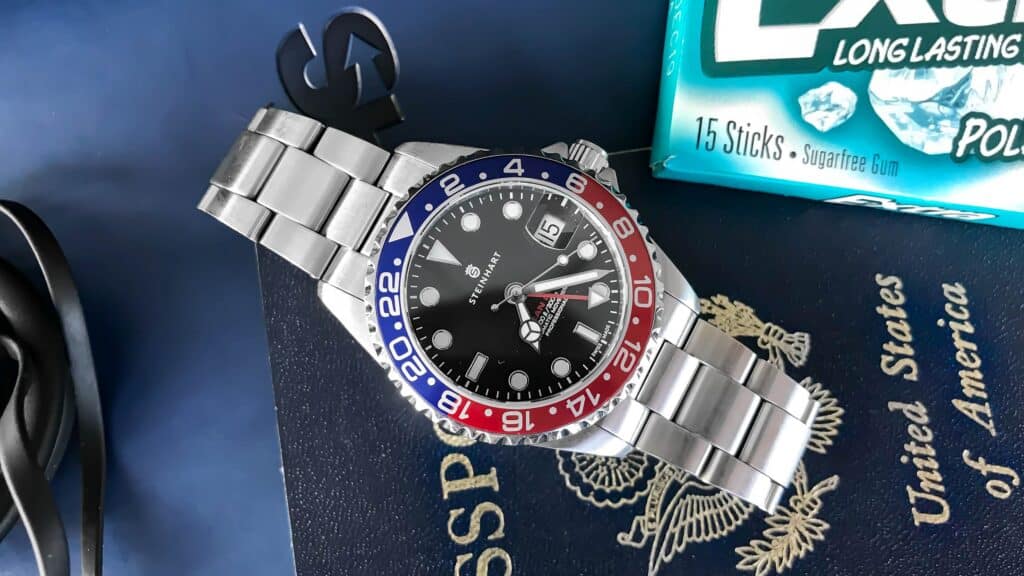
The Steinhart Ocean 39 GMT is much more direct about its design language, and there’s no real mystery about the inspiration. The matte black dial, white five-line text, red model designation, Mercedes-style hands, applied markers, cyclops, and crowned logo all put it deep in Rolex sports-watch territory. From a few feet away, the Steinhart name and crowned “S” can blur into something more Rolex-adjacent, which is not exactly an accident. Still, the dial has some charm of its own. The black has a slightly softened, almost-fauxtina feel rather than a modern glossy finish, and the Pepsi bezel colors are dead-on in that “yep, that’s a soda can” kind of way. We also liked that the red-stemmed GMT hand reaches all the way to the minute track. The bigger issue is depth: the hands and applied markers are too thin, which leaves the dial flatter than it should feel up close. The date window belongs on a watch like this, and the cyclops is a useful touch, but stronger magnification or a thicker date font would make it easier to read at a glance.
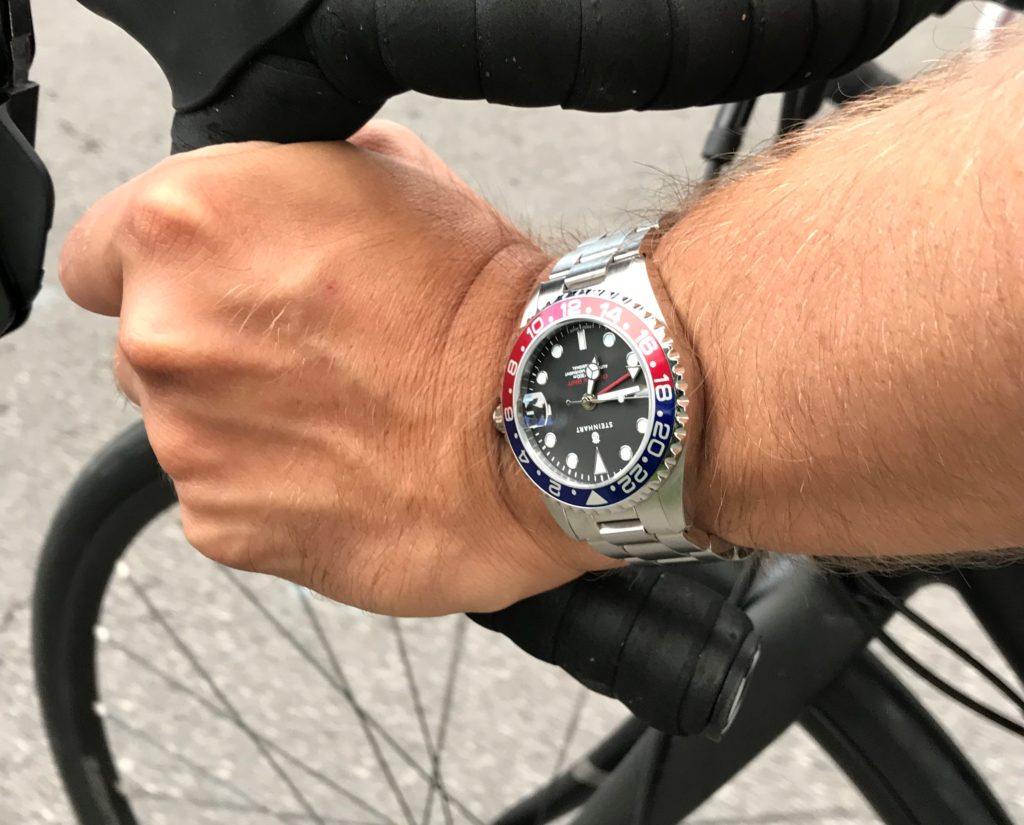
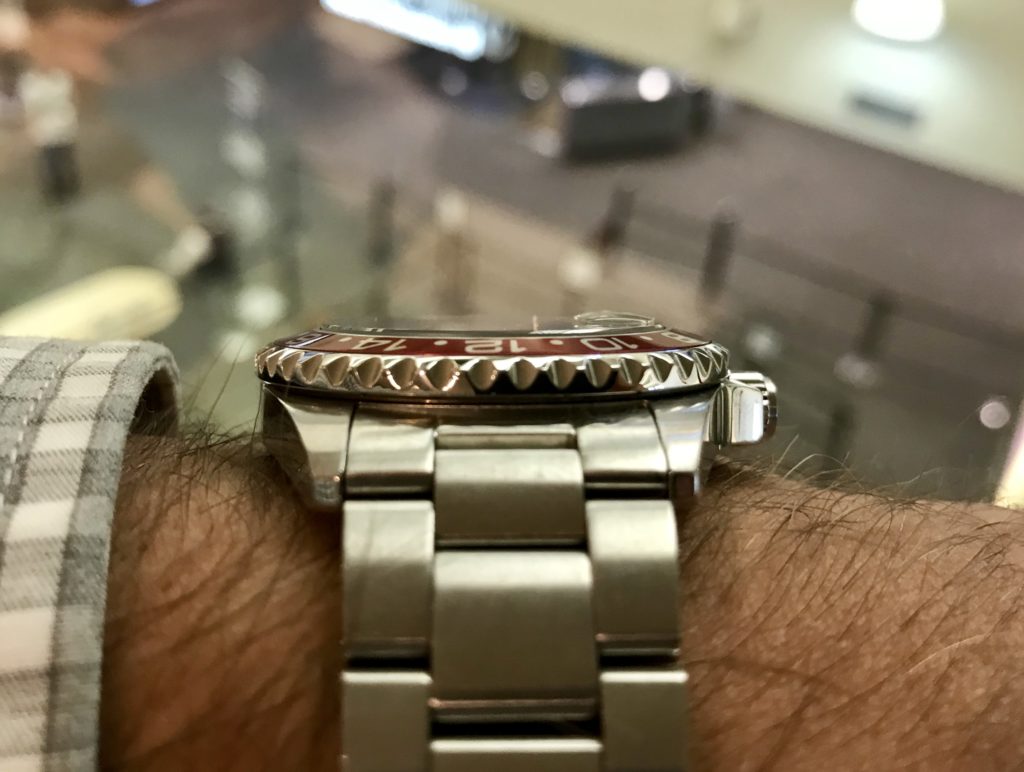
On the wrist, the Steinhart has the bones of a strong everyday GMT, but a few details keep poking at you. The bezel is where the watch feels less like a flyer and more like a diver that wandered into the wrong airport lounge. It’s a unidirectional 120-click setup, and in our hands-on review, it was brutally stiff; even firmer than a Seiko Samurai, which is not a sentence anyone writes lightly. The bracelet is better than most homage-watch bracelets, with solid end links, screwed links, a good taper, and a clasp that feels sturdy for the price. That said, fit is the problem. The flip-lock felt loose, the clasp wore tight, and the micro-adjustment spacing left us bouncing between too snug and too slack. That’s the kind of small sizing annoyance that slowly becomes the whole personality of a watch by mid-afternoon.
- The Imperial Oceanguard GMT feels more characterful and easier to wear, with vintage-inspired details that support the daily experience.
- The Steinhart Ocean 39 GMT delivers the more recognizable Pepsi-GMT look, but its bezel and clasp quirks make it less effortless on the wrist.
Build Quality & Technical Approach
Both the Imperial Oceanguard GMT and Steinhart Ocean 39 GMT are built around the same basic promise: give us the rotating-bezel GMT experience without making the price feel ridiculous. But they approach that promise differently.
Movements:
The Imperial Oceanguard GMT keeps things simple with the Seiko NH34, and that suits the watch. In our time with it, the movement felt less like a technical talking point and more like a practical way to track another time zone without overthinking the whole “caller vs. flyer” debate. The GMT hand is the one that jumps, but using the bezel to manage a second time zone felt natural enough, mostly because plenty of vintage GMT watches worked that way for years. We didn’t put this one on a timegrapher, but we also didn’t run into any accuracy issues or a sense that the movement was dragging behind. For an affordable microbrand GMT, that’s the kind of boring reliability you’d want.
On the other hand, the Steinhart Ocean 39 GMT uses the ETA 2398-2, which brings a similar dependable, cost-conscious logic but with the same functional limitation. The GMT hand jumps instead of the local hour hand, so this is more “caller GMT” than true traveler GMT. That means it works well if you’re tracking someone else’s time zone from home, like trying not to call a West Coast client at a cruelly stupid hour from New York. It’s less convenient if you’re the one landing in a new time zone and expecting GMT-Master II behavior. Power reserve didn’t become a problem during our review because the watch stayed on the wrist, but as a second watch in a rotation, that estimated mid-30s-to-40-hour range is something to keep in mind.
Case Construction & Finishing:
The Oceanguard GMT takes the more vintage-focused route, and that works in its favor on the wrist. While testing, the 38mm stainless steel case felt smaller, easier to handle, and more comfortable than the thickness might suggest. At 14mm tall, it is not quite wafer-thin, but the overall proportions kept it from feeling awkward. The 47mm lug-to-lug and 20mm lug width hit that sweet spot for people who like compact, older-school tool watches. The stainless-steel finish is utilitarian rather than flashy, which suits the watch’s personality. Nothing screams for attention, and that is why it wears so easily.
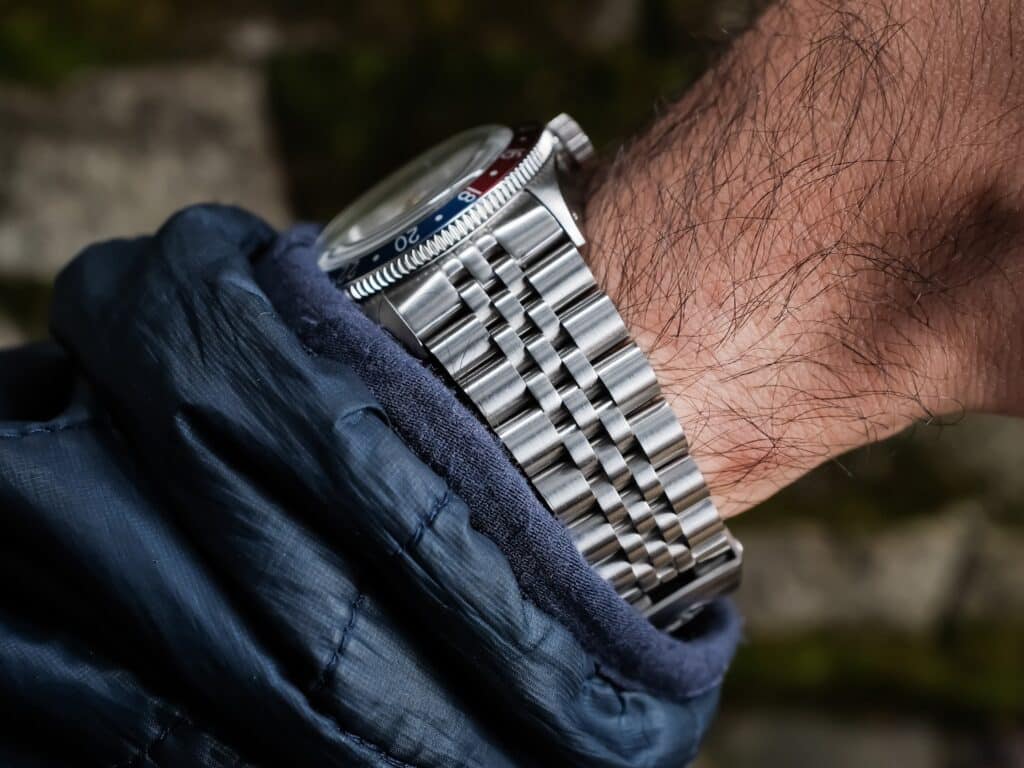
The case shape also gives the Imperial a bit of skin-diver character, which pairs quite well with the aviation-inspired GMT color scheme. The oversized crown could have looked goofy on paper, but in use, it tied the design together. It is grippy, easy to operate, and feels proportionate to the rest of the watch. The bi-colored bezel adds the travel-watch function without making the case feel overloaded. It reminded us a bit of the Seiko 5 GMT we reviewed, where the watch manages to feel useful, vintage-adjacent, and comfortable without trying too hard.
The Steinhart Ocean 39 GMT follows a much more familiar case formula. The shape is clearly in the Rolex GMT-Master II ref—16710 neighborhood, with the classic oyster-style profile and a few Steinhart-specific quirks. The crown protrudes from the guards when locked, and the lugs are not drilled, which feels like a missed chance to add a little more vintage flavor. Still, the 39mm case wears slightly smaller than expected thanks to the slimmer lugs, and the 47mm lug-to-lug width makes it a strong fit for smaller wrists. On a 6.75-inch flat wrist, it felt proportional and refreshing, especially compared to the larger 42mm and 44mm versions.
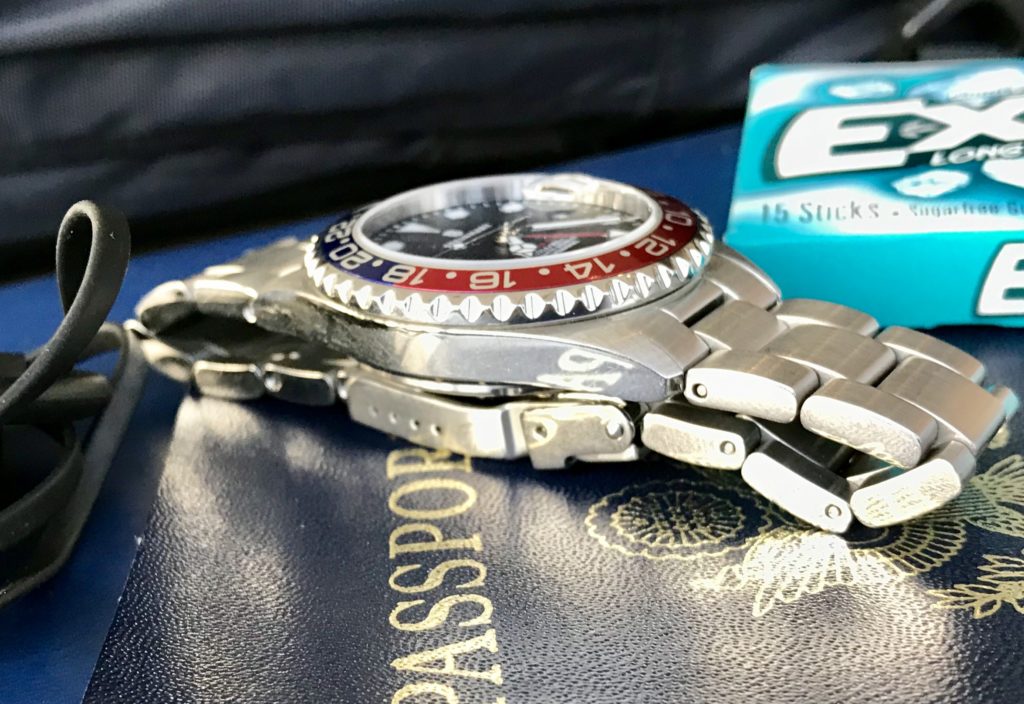
Finishing on the Steinhart is solid for the price, but not without trade-offs. The brushed stainless steel case is consistent and not too shiny, which helps keep the watch from feeling too flashy. The polished sidewalls also make the 13mm thickness look slimmer than it is, borrowing that old Oyster-case visual trick. The bezel teeth, though, are polished, so the watch catches light less subtly than the real thing it references. And although the Steinhart Ocean 39 case is made of 316L stainless steel, expect scratches on the way. Finally, the caseback adds some personality with its etched Neptune and seahorse chariot design, a nice reminder that this is still Steinhart’s watch, not just a Rolex-shaped shadow.
Water Resistance & Lume:
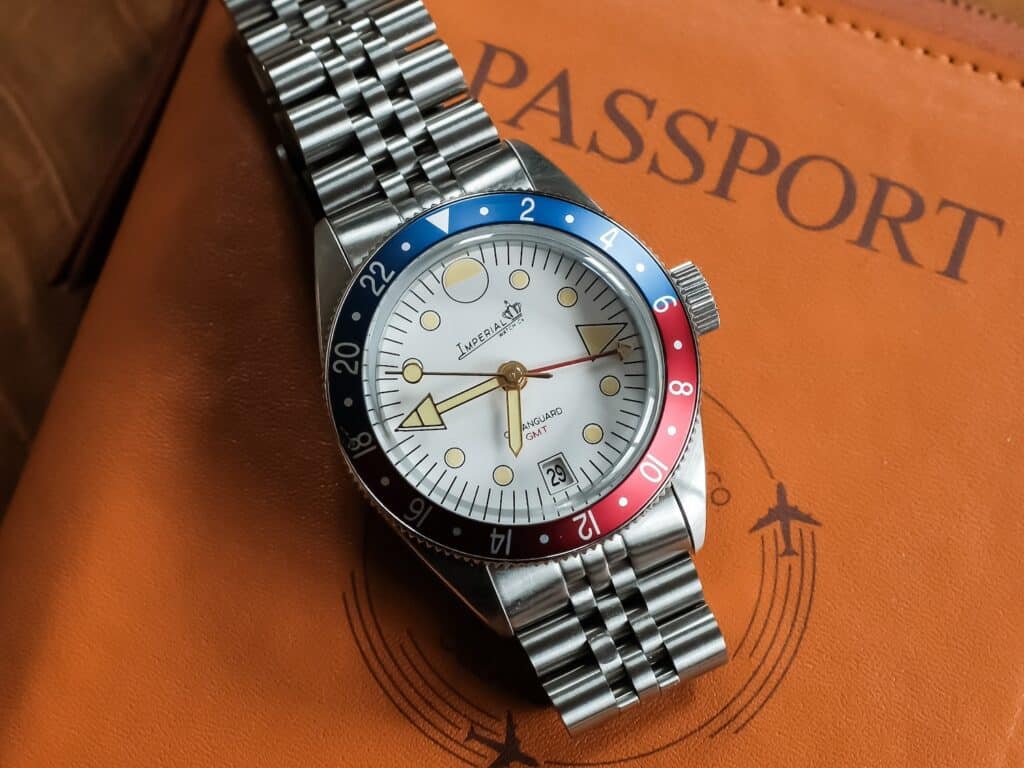
The Imperial Oceanguard GMT keeps things reassuring with 200m of water resistance. Along with the screw-down crown, it gives it enough real-world toughness for swimming, travel, weather, and the usual “I forgot I was wearing a watch” moments. The lume is more about visual balance than about torch-like performance, as described in our review. On the Jet Wash White dial, the vintage-toned lume plots worked well against the white backdrop without looking overcooked or fake-aged to death. That restraint helped the dial feel warmer without turning the whole thing into a costume.
The Steinhart Ocean 39 GMT pushes harder on water resistance with a very solid 300m rating, which is more than most people will ever need from a GMT watch. The funny part is that the GMT bezel does not have a luminous pip like a dive watch, which is normal for this kind of watch, but still easy to forget if your brain sees a rotating bezel and immediately thinks “diver.” Its BGW9 lume gives off that cool blue glow, activates easily, and holds a charge better than most homage watches we’ve handled.
- Imperial is the easier technical choice to live with. Its NH34 setup keeps the GMT function approachable, the case feels compact despite the thickness, and the 200m rating gives it enough toughness for normal travel, swimming, and daily abuse without making the watch feel overbuilt.
- Steinhart wins on raw capability but loses some ease. The Swiss movement, 300m water resistance, and solid case finishing give it stronger spec appeal, but the caller-style GMT function, scratch-prone steel, polished bezel teeth, and no-lume pip bezel make it feel less seamless in everyday use.
Cost Considerations
The Imperial Oceanguard GMT sits around the $600 mark, which is where a watch like this starts to make dangerous sense. We felt it’s a great buy for GMT lovers who want the rotating-bezel travel-watch experience without drifting into “well, technically it’s an investment” territory. The catch is availability. Imperial’s runs have been very limited, and this is the kind of watch people would likely buy in steady numbers if the brand made more of them. Great value is less fun when you have to treat the checkout button like a concert ticket drop.
The Steinhart Ocean 39 GMT comes in around $650. For that money, the value argument is still hard to ignore: automatic Swiss movement, GMT function, and the familiar Pepsi look without the vintage Rolex price spiral. The trade-off is that buying one in the U.S. means ordering sight unseen, not wandering into a shop, trying it on, and pretending you’re “just browsing.” New and used prices can vary, and if it’s sold out online, patience usually helps. There’s no grand production-cut conspiracy here. The bigger cost is emotional: deciding whether you’re ready to explain that, no, it’s not a Rolex, and yes, you’re still fine with that.
Final Thoughts: Which Affordable Rolex GMT-Master II Alternative Wins on the Wrist?
After comparing the Imperial Oceanguard GMT vs. the Steinhart Ocean 39 GMT, our pick for most people would be the Imperial Oceanguard GMT. The Steinhart wins some paper arguments, and we get why it has remained such an obvious answer in the affordable Pepsi GMT space. But this comparison was never about which watch checks the most familiar boxes. It was about which one feels better to live with once the Rolex-adjacent excitement settles down and the watch has to become part of your normal rotation.
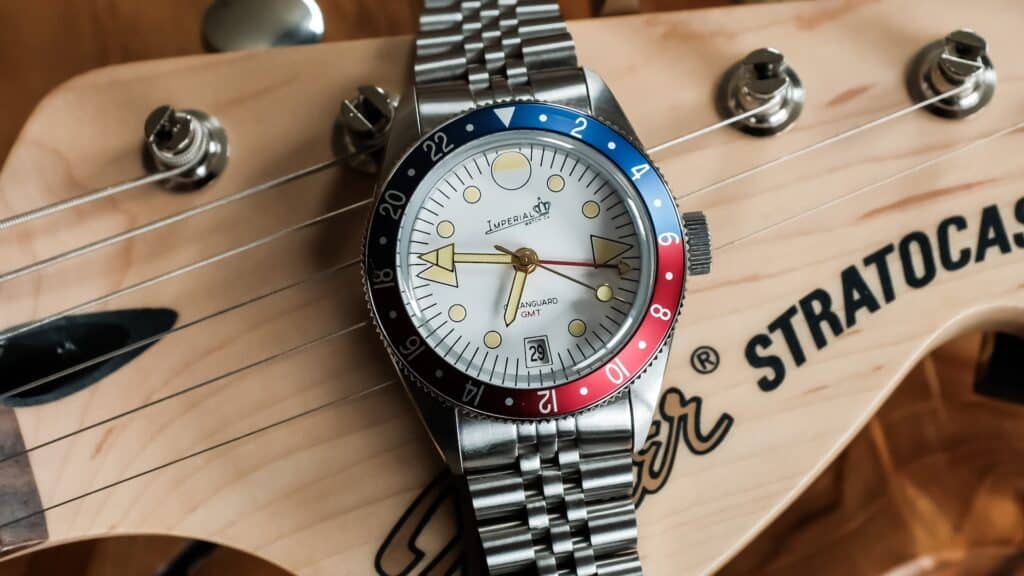
The Imperial wins because it feels less burdened by the watch it’s referencing. It has the vintage GMT charm, the rotating-bezel travel-watch appeal, and the daily comfort that makes an affordable GMT worth owning in the first place. The bracelet wears well, the design has personality without getting too weird, and the whole thing feels more like an enthusiast watch than a budget shortcut. It is the better fit if you want a fun, value-driven microbrand GMT that feels easy on the wrist and doesn’t spend the whole day begging to be compared to a Rolex.
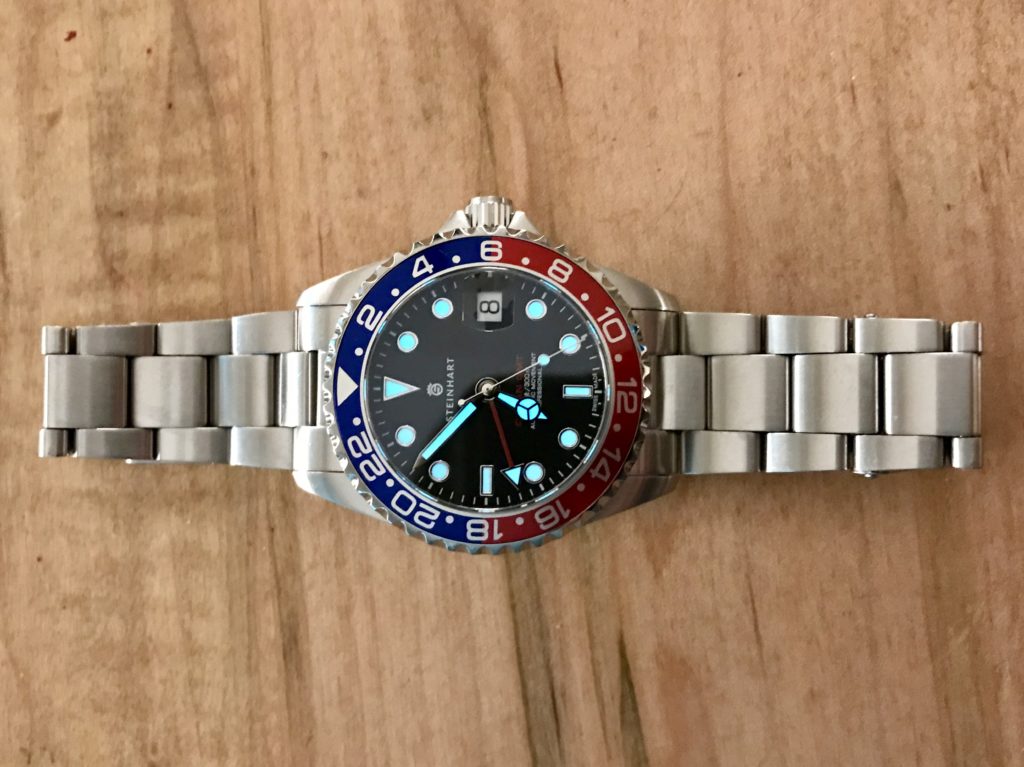
The Steinhart Ocean 39 GMT still makes sense for a specific buyer. If you want the more direct Pepsi GMT look, stronger water resistance, Swiss movement appeal, and a familiar case shape, it remains a strong value. But it is not the one we’d recommend to most people first. The stiff bezel, fussy clasp fit, thinner dial furniture, sight-unseen buying experience, and constant homage baggage all add up. None of those are dealbreakers on their own, but together they make the Steinhart feel less effortless than it should be.
So the verdict is clear: choose the Imperial Oceanguard GMT if you want a better, everyday-wearing, affordable GMT watch. Choose the Steinhart Ocean 39 GMT only if you specifically want the established Swiss-made Rolex GMT-Master II alternative and can live with the quirks that come with that choice.
Let us know your thoughts on our analysis in the comments below (especially if you own either or both of these watches)!

Co-Founder and Senior Editor
Kaz has been collecting watches since 2015, but he’s been fascinated by product design, the Collector’s psychology, and brand marketing his whole life. While sharing the same strong fondness for all things horologically-affordable as Mike (his TBWS partner in crime), Kaz’s collection niche is also focused on vintage Soviet watches as well as watches that feature a unique, but well-designed quirk or visual hook.
So, no Pagani GMT?
Ed – I’ve been wanting to review one for a while!
I have a Steinhart GMT Ocean 1. The case comes in slightly bigger at 42 mm, but uses the same ETA 2893-2 movement so the specs are fundamentally the same. I love the number font on the bezel, and it does have a luminous pip as the “24” hour marker. Totally agree with your comments on the date window font and/or cyclops magnification. Overall a great watch.
Would love to see a review of the Bernhardt line of GMT watches. Bernhardt is a NC-based US microbrand that assembles nice watches at a reasonable price. The GMT watches under the Globemaster, Meridian or Dateline models also use a 25 jewel ETA movement, although I’m not sure of the reference number.
The Steinhart GMT has earned its following for good reason. Solid movement choice and a lot of watch for the money. Bernhardt is a brand we haven’t spent enough time with, so thanks for putting it on our radar.