Dive watches are easy to get wrong. Somewhere along the line, a category that started as straightforward underwater equipment became polished desk divers with helium valves that only a handful of people will ever touch and bracelets that feel more delicate than the laptop they’re parked next to. We’ve owned and worn plenty of those, and they usually end up staying home when things get wet, rough, or unpredictable. This list exists because the dive watches we actually reach for don’t feel precious. They’re the ones we trust around saltwater, cold mornings, travel days, and long stretches where the watch just does its job.
We’ve been reviewing watches for close to a decade now, but more importantly, we’ve lived with these dive watches in ways that don’t always make it into marketing copy. Some of the pieces below come from real military lineage, others from independent brands that had to prove themselves through design and execution rather than reputation. We’ve worn them back-to-back, swapped straps, lived with their quirks, and noticed which ones kept ending up on our wrists when we needed something dependable. This isn’t about finding the flashiest diver or the one that photographs best. It’s about highlighting dive watches that behave like tools.
Citizen Promaster Diver

| Price: | $250 – $350 |
| Water Resistance: | 200m |
| Case Dimensions: | 43mm (diameter) x 48mm (lug-to-lug) x 11.5mm (thickness) |
| Lug Width: | 20mm |
| Movement: | Citizen Eco-Drive E168 |
Wearing the Citizen Promaster Diver never felt like making a decision. Instead, it felt like defaulting to something dependable. It’s the watch that kept ending up on our wrists when the day didn’t have a clear plan. Despite the 43mm case size on paper, the short lug-to-lug and downward curve of the case keep it controlled and comfortable, even on smaller wrists. The low overall weight from the Eco-Drive movement gives it a light, almost titanium-like feel, and the screw-down crown at 4 o’clock stays out of the way during daily wear. With 200 meters of water resistance, it’s a watch we took swimming and into rougher conditions without hesitation.
The bezel experience is more measured than flashy. Its 60-click rotation is slow and intentional, making timing tasks straightforward, and alignment stayed consistent during our hands-on testing. The drawback is grip: when hands are wet, the bezel can feel a bit slick. Where the watch earns trust is the dial. Legibility is excellent in daylight, with bold hands and markers that are easy to read at a glance. In low light, the aqua-toned BGW9-style lume stays visible for hours, and the small lume plot on the seconds hand adds reassurance that the watch is still running. The blue dial shifts toward purple at certain angles, adding visual interest without affecting clarity. And over extended wear, the mineral crystal held up better than expected, avoiding noticeable scratches.
The factory polyurethane strap does the job, but it is awkward to break in, and most of us swapped it out quickly. On a NATO strap, the watch feels better balanced and more in line with how it’s meant to be worn. What builds long-term confidence is the Eco-Drive movement itself. Once fully charged, it consistently delivered up to six months of runtime, with accuracy staying within the stated ±15 seconds per month during testing. We only saw the low-power warning once, and a short recharge took care of it.
Pros
- Strong legibility with lume that remains visible for hours
- Lightweight feel that works well on nylon straps
- The Eco-Drive movement offers reliable accuracy and extended runtime.
- Wears smaller and more comfortably than its 43mm size suggests
- 200 meters of water resistance and a low-profile screw-down crown
Cons
- The mineral crystal doesn’t offer the same scratch resistance as sapphire.
- The stock polyurethane strap is stiff and rigid to shape.
- The bezel can be difficult to grip with wet hands.
Scurfa Diver One
| Price: | $250 – $399 |
| Water Resistance: | 500m |
| Case Dimensions: | 40mm (diameter) x 47mm (lug-to-lug) x 14mm (thickness) |
| Lug Width: | 20mm |
| Movement: | Ronda 713SM (Quartz Movement) |
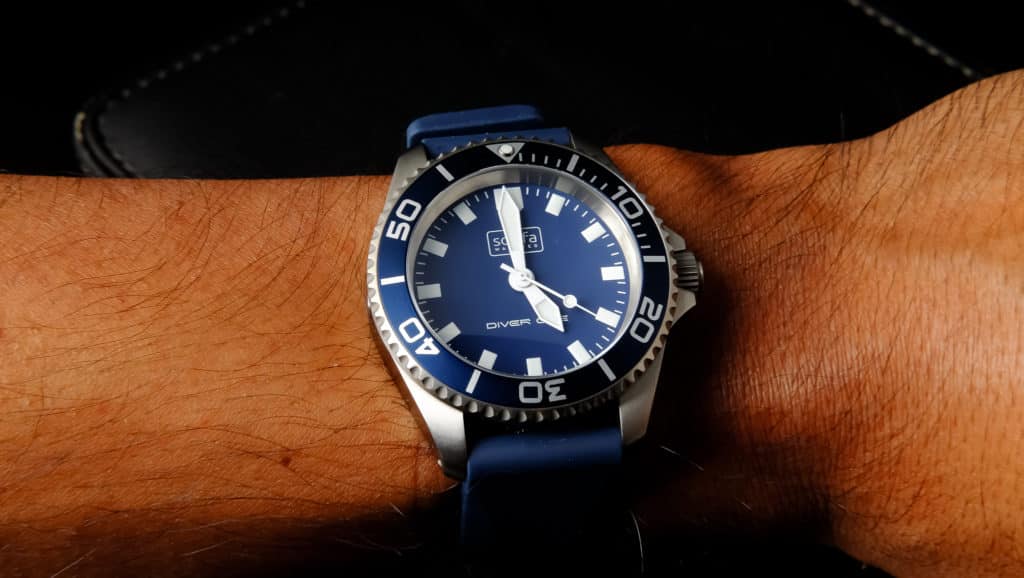
What sets the Scurfa Diver One apart is how little it feels like it’s trying to impress anyone. Designed by Paul Scurfield, a professional saturation diver, it carries the kind of confidence that comes from firsthand experience with what breaks underwater, and what doesn’t. During testing, the titanium case stood out. It’s light on the wrist, but never in a way that feels insubstantial. The finishing is clean, tolerances are tight, and nothing about it comes across as rushed or cost-cut. On paper, 40mm wide and 14mm thick suggests a chunky presence, yet the contoured mid-case helps it sit flatter than expected, keeping pressure points to a minimum during long days of wear.
Timekeeping is handled by a Swiss Ronda 713SM quartz movement, which suits the Diver One’s no-fuss approach. Accuracy was spot on, servicing is straightforward, and the five-year battery rating reinforces its set-it-and-forget-it nature. Around that movement is a case built for serious depth, with 500 meters of water resistance backed by a screw-down crown and a helium escape valve. These aren’t decorative touches; they align with the watch’s purpose and the background of its designer. The bezel action matches that intent, clicking firmly with no back play and offering clear, confident feedback whether you’re timing a dive or something far more mundane.
Legibility is handled without compromise. Our review team found that the sword hands and oversized hour markers make reading the time immediate, even in poor lighting. The matte cobalt-blue dial shifts slightly in daylight but remains restrained. Super-LumiNova BGW9 lume glows clean and bright, and it charges quickly enough that it often appears active even under ambient light. A domed sapphire crystal adds a touch of distortion at the edges, giving the watch some visual character without hurting clarity. The supplied rubber strap deserves mention as well. It’s soft, secure, and well-matched to the watch’s overall feel, with titanium hardware and drilled lugs reinforcing its practical focus. After weeks of wear, the Diver One came across as a piece that feels credible through use, not marketing.
Pros
- 500 meters of water resistance, paired with a helium escape valve, adds real depth capability.
- The titanium case is very light yet feels solid and well finished.
- Bezel action is firm and precise with no noticeable play.
- Comfortable, durable rubber strap that suits the watch’s purpose
- Strong legibility thanks to sword hands and bright BGW9 lume
Cons
- 14mm thickness may feel tall on smaller wrists.
- Quartz movement won’t appeal to collectors who only want mechanical options.
Seiko Turtle
| Price: | $370 – $525 |
| Water Resistance: | 200m |
| Case Dimensions: | 44.3mm (diameter) x 48mm (lug-to-lug) x 14mm (thickness) |
| Lug Width: | 22mm |
| Movement: | Seiko 4R36 |
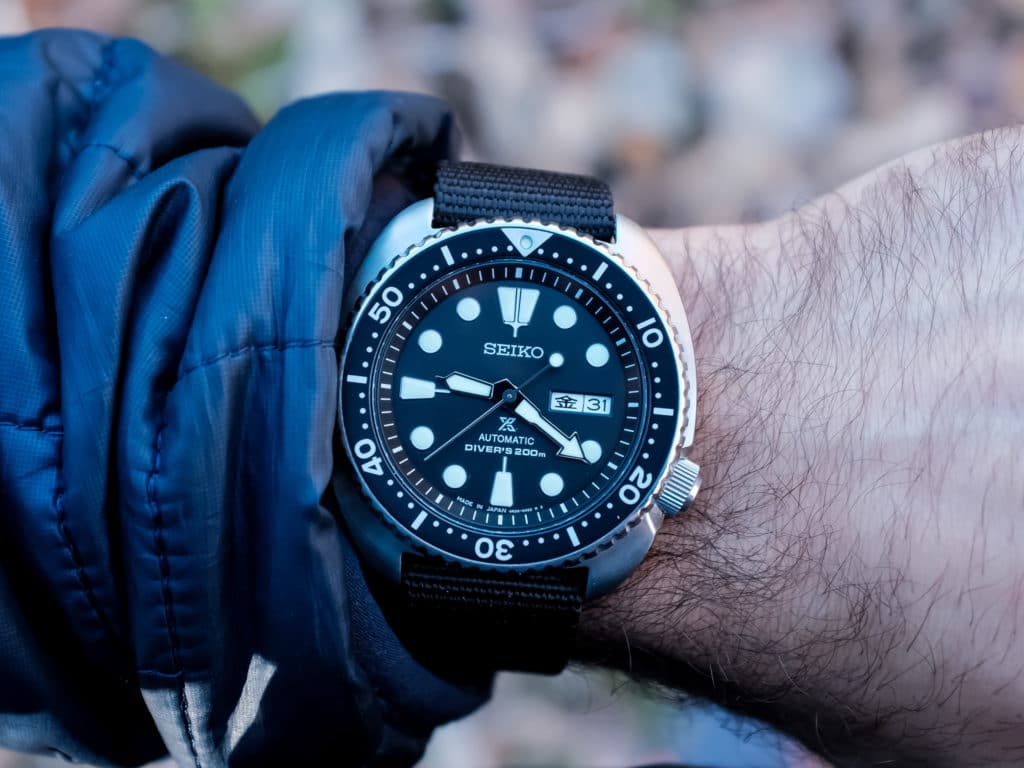
The Seiko Turtle has a habit of finding its way onto the wrist when the goal is to wear something capable without thinking too much about it. It’s one of those watches that sounds intimidating on paper, with a case size pushing past 44mm, but wears far more agreeably than the numbers suggest. Even on wrists around 6.75 inches, the cushion-style case spreads the weight evenly and keeps the watch from feeling top-heavy. The asymmetrical profile tucks the screw-down crown out of the way, so it never digs into the back of your hand. That’s an everyday reminder that this watch was designed to be worn often, not treated delicately.
Living with the Turtle also shows why Seiko has remained a constant in this category. As mentioned in our dedicated review, the bezel turns smoothly with a reassuring feel, though alignment inconsistencies are still part of the package you have to accept. For those who enjoy a bit of personality, options like the “Made in Japan” version or the Kanji day wheel add some charm, but they come with a trade-off. Once the novelty wears off, the Kanji can slow you down when you’re trying to check the day quickly.
Legibility is one of the Turtle’s strongest points. The matte-black dial, combined with oversized Lumibrite markers, is easy to read at a glance and difficult to misinterpret, which builds confidence in daily use. Hardlex, instead of sapphire, has never been a deal-breaker for us; it has held up well over years of wear and helps keep the price reasonable. The Prospex “X” logo tends to spark debate online, but on the wrist, it fades into the background quickly. Strap versatility is another win. The stock silicone strap is comfortable, with a softer feel, a solid buckle, and a steel keeper, but the watch often feels even better on NATOs or other casual options. The 4R36 movement can vary from one example to another, yet ours stayed within its expected range of 35/+45 seconds per day and never became an issue.
Pros
- Excellent legibility from large Lumibrite markers
- The screw-down crown and 200m water resistance inspire confidence.
- The cushion case wears smaller and more comfortably than its size suggests.
Cons
- Accuracy can vary between individual movements.
- Bezel alignment issues still occur.
Nodus Sector Deep
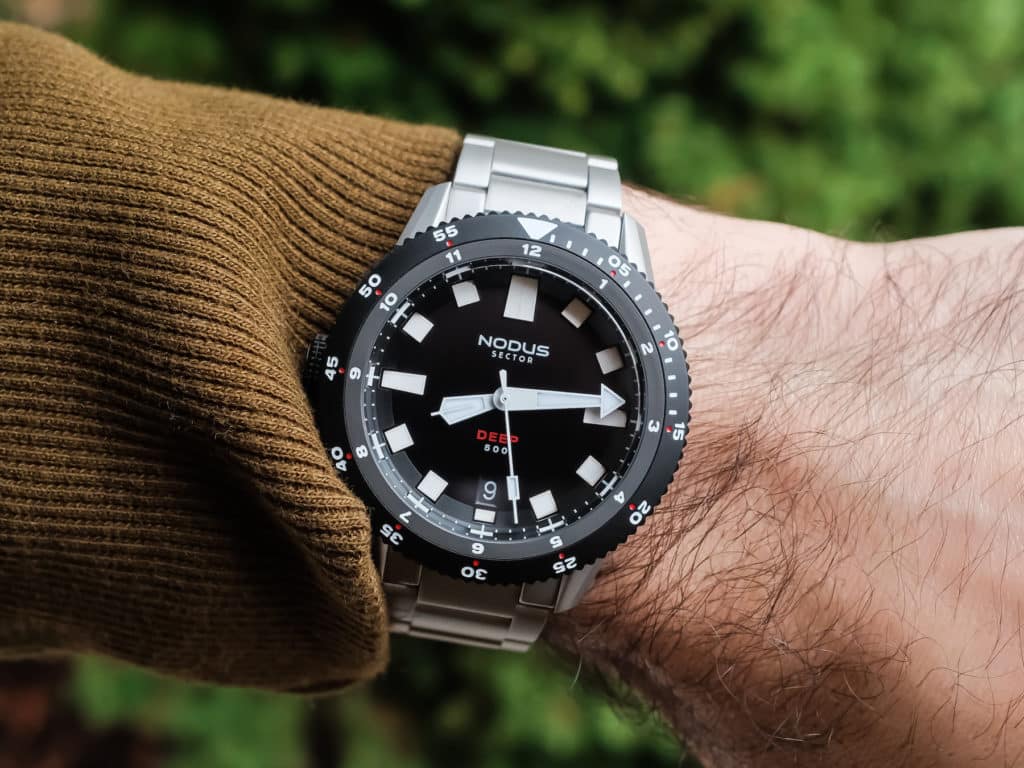
| Price: | $599 |
| Water Resistance: | 500m |
| Case Dimensions: | 38mm (diameter) x 47mm (lug-to-lug) x 13.6mm (thickness) |
| Lug Width: | 20mm |
| Movement: | Seiko NH35 (Mechanical Movement) |
The Nodus Sector Deep felt like a clear turning point for the brand once we spent real time with it. We’ve worn plenty of Nodus models over the years, but this was the first one in which durability and function clearly took precedence over visual symmetry. That shift shows up in use. The 38mm case sits low and balanced on the wrist, which is notable given the extreme depth rating. Such numbers often translate into top-heavy wear on comparable watches. The left-side crown is a brilliant decision. It gives the watch a slightly unconventional look and keeps the case from digging into the wrist during long days of wear.
The bezel is another area where practicality takes the lead. The matte DLC finish provides excellent grip, even when conditions aren’t ideal, and the dual-scale layout proved helpful. During in-depth testing, being able to track elapsed time and reference a second time zone added flexibility beyond basic timing tasks. Legibility carries through to the dial as well. White PVD-coated index frames with lume-filled centers taper outward at the cardinal points, creating a subtle pseudo-domed effect when viewed head-on. It adds depth visually without compromising clarity. BGW9 Super-LumiNova performed well in low light, making transitions from bright to dark environments easy.
Powering the Sector Deep is the familiar Seiko NH35, but Nodus regulates it in-house, and that effort shows. Our example ran at roughly ±10 seconds per day, tighter than a stock setup, and the 41-hour power reserve fit nicely into a regular rotation. The bracelet and clasp system held up equally well in daily wear. Screw-secured links made sizing straightforward, and the taper from 20mm (at the lugs) to 18mm (at the clasp) helped keep the watch feeling balanced. Dual push-buttons on the clasp felt secure, and the NodeX adjustment system allowed quick micro-adjustments on the fly, even if the fully extended position leaves some hardware visible.
Pros
- The compact 38mm case wears low and comfortably despite the high depth rating.
- The left-side crown improves comfort during extended wear.
- The NodeX clasp makes micro-adjustments quick and easy.
- The matte DLC bezel offers a firm grip and precise dual timing scales.
Cons
- The utility-focused design sacrifices symmetry, which won’t suit every taste.
- The fully extended clasp exposes some hardware.
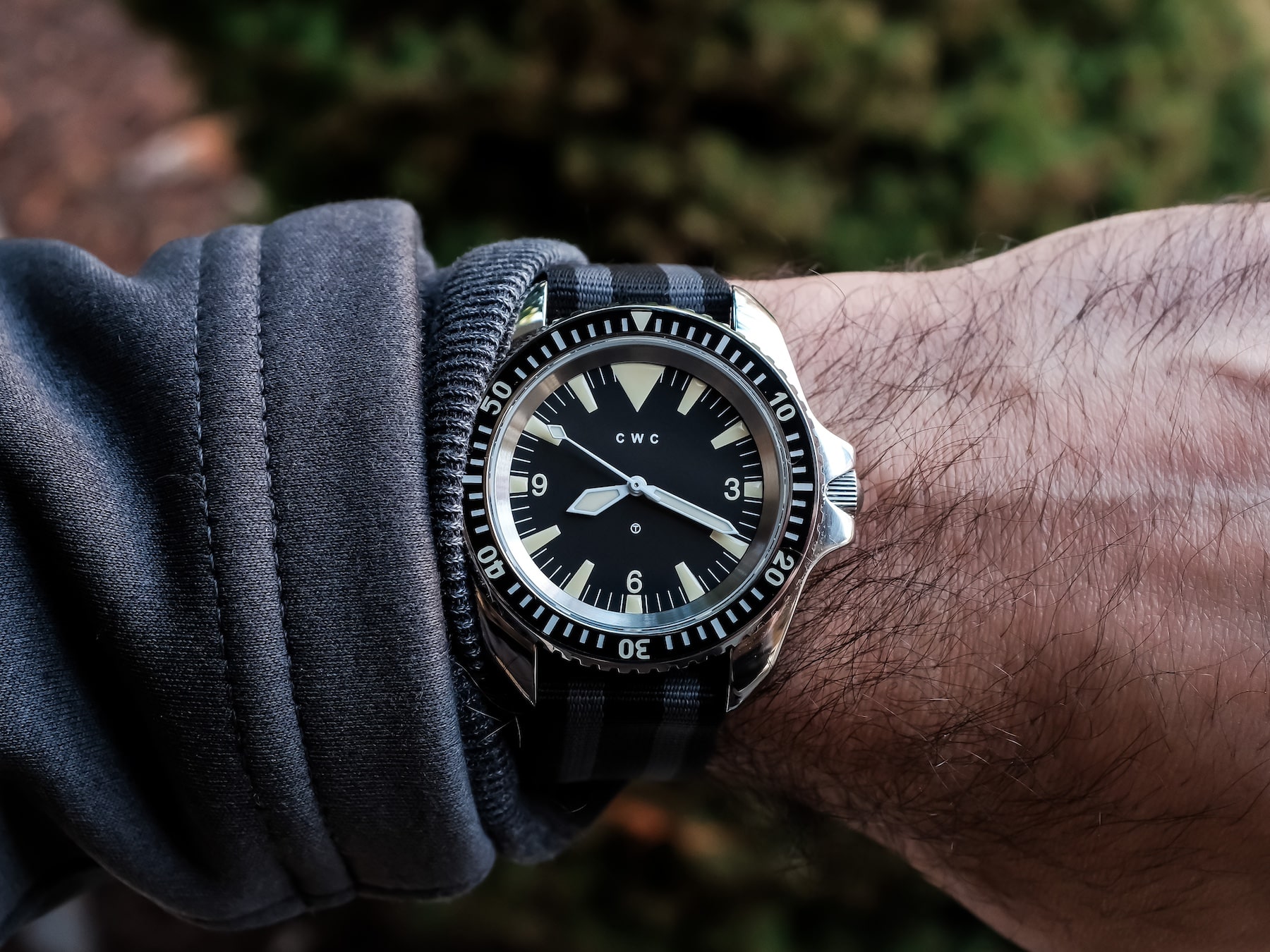
CWC SBS Diver
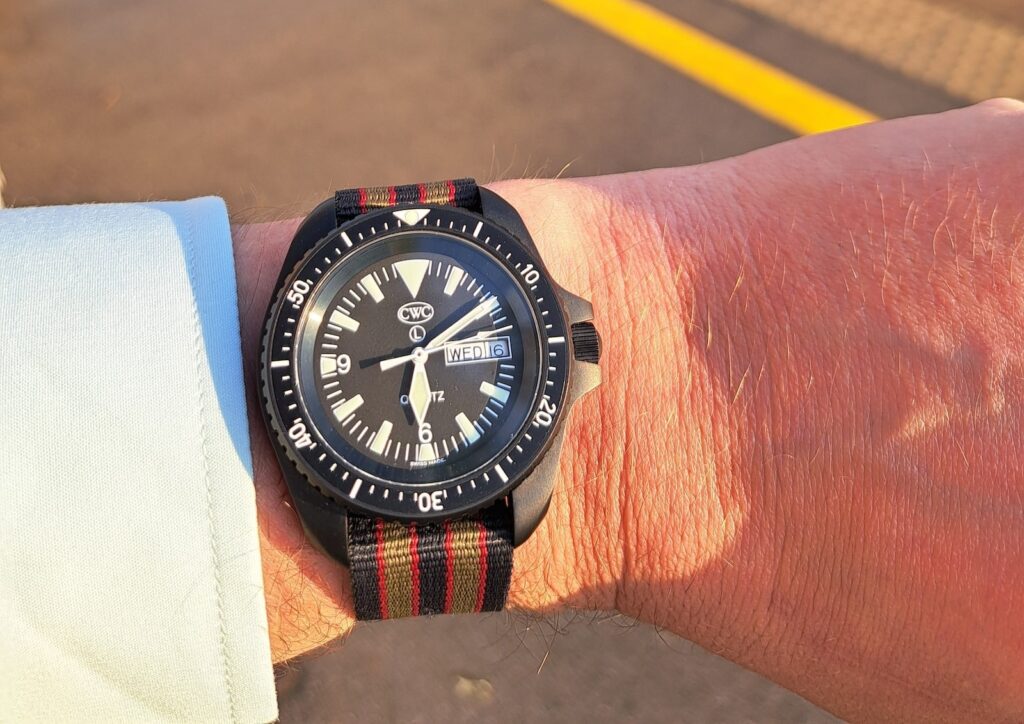
| Price: | $960 |
| Water Resistance: | 300m |
| Case Dimensions: | 45mm (diameter incl. crown) x 47mm (lug-to-lug) x 11mm (thickness) |
| Lug Width: | 20mm |
| Movement: | Ronda Swiss-made 517 quartz |
The CWC SBS Diver doesn’t announce itself, and that’s the point. Spending reviewing it makes it clear this watch wasn’t designed to win attention; it was built to meet the demands of elite British military units. The black PVD case keeps everything visually subdued, while the overall construction feels dense and reassuring, even heavier than the dimensions suggest. Despite that solidity, it never felt clumsy on the wrist. One of the unexpected pleasures was how well it adapted to different straps. Single-pass nylons, RAF-style straps, and other utilitarian options all worked naturally, subtly changing the feel without ever softening the watch’s straightforward character. It felt equally at home on a camping trip, during long days out, or handling everyday errands.
Legibility is handled with purpose. The dial can feel slightly busy at first glance, but that impression fades once you start using it. Oversized hour markers and sword hands make quick time checks easy, especially when conditions aren’t ideal. The “circle L” marking indicates the use of Luminova, and in practice, the lume charges quickly and remains visible for most of the night. The flat crystal helps reduce glare outdoors, making a noticeable difference during extended time outside.
The quartz movement inside reinforces the watch’s reliability-first approach. Over five weeks of wear and timing, it stayed within five seconds of accuracy, delivering what you want from something designed to be dependable with minimal attention. Even with its rugged intent, the watch wears lighter than expected and never feels overbuilt or awkward.
Pros
- Purpose-driven design with real-world military credibility
- Strong legibility from oversized markers and long-lasting lume
- Accurate quartz movement with minimal upkeep
- Strap versatility adds flexibility to its wear.
Cons
- The dial layout may feel crowded for some wearers.
- Priced higher than many comparable quartz alternatives
Marathon TSAR
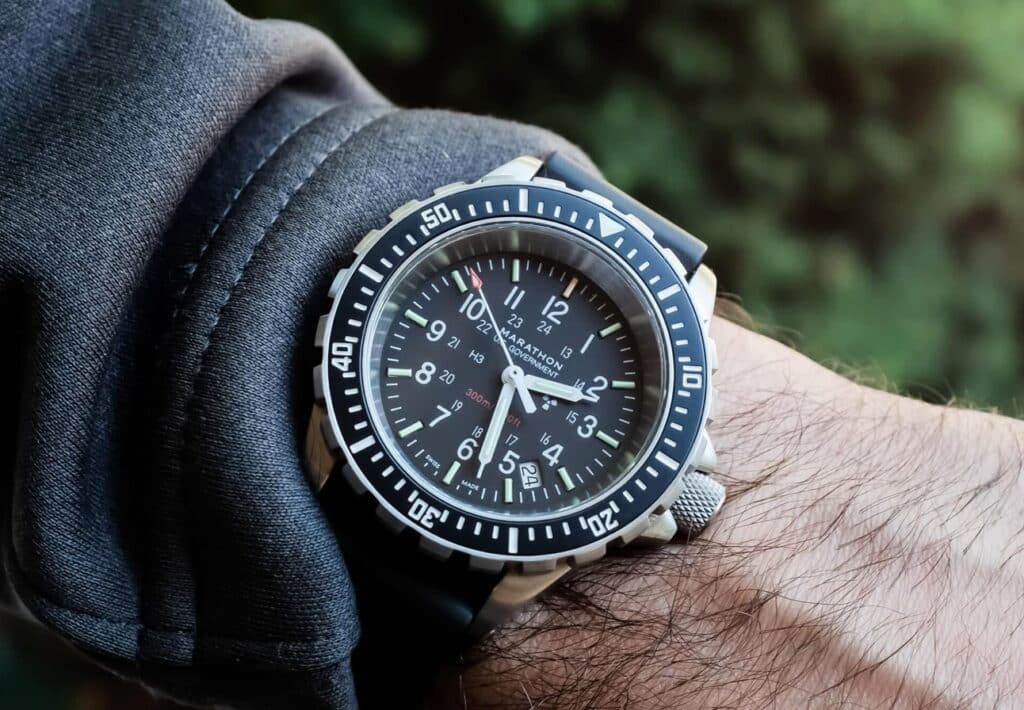
| Price: | $1200 |
| Water Resistance: | 300m |
| Case Dimensions: | 41mm (diameter) x 48mm (lug-to-lug) x 14mm (thickness) |
| Lug Width: | 20mm |
| Movement: | ETA F06 quartz |
The Marathon TSAR was developed to meet the demands of search-and-rescue work, and that background comes through in its build and behavior on the wrist. The 41mm case is thick, thoroughly brushed, and deliberately slab-sided, giving it a dense, industrial feel that never comes across as awkward once it’s on. There’s real weight here, and instead of feeling excessive, it adds a sense of confidence. The oversized crown and the deep, aggressively cut bezel teeth feel purpose-driven, making the watch easy to operate even with gloves on. The 120-click bezel turned with authority during our time with it, and never felt vague or imprecise.
Legibility is where the TSAR separates itself from most dive watches. Whether you choose the dial marked “US GOVERNMENT” or the cleaner version, the layout stays clear and functional. A minor hit of red from the depth rating breaks up the black dial enough without becoming decorative. The tritium tube hour markers define the experience. During hands-on use, that constant, low-level glow meant the watch was readable in complete darkness, no charging required. The MaraGlo accents add extra brightness when exposed to light, but they never overpower the dial or become distracting once the lights go out.
Inside is the ETA F06 quartz movement, chosen more for dependability than marketing appeal. While it isn’t positioned as a high-accuracy quartz caliber, our testing showed consistent performance at roughly half a second per day. Battery life is rated at around 3 years, which aligns with the watch’s ready-at-any-time approach. Strap options continue that theme. The steel bracelet feels solid and secure, though it lacks modern features like micro-adjustments or quick-release spring bars. The rubber strap is thick, durable, and comfortable, with a faint vanilla scent that longtime Marathon fans will recognize.
The price may give pause for a quartz watch, but the TSAR justifies it through execution; it’s something you can take into salt water, knock against concrete, or wear through physically demanding days without concern.
Pros
- The deep, aggressive bezel and oversized crown are easy to use with gloves.
- Tritium illumination provides constant visibility in any lighting.
- Solid quartz movement with enough torque for heavy hands
- Robust bracelet and rubber strap options suited to demanding conditions
Cons
- The chunky case profile can feel bulky under tighter sleeves.
- The bracelet lacks micro-adjustment and quick-release features.
- Battery life trails some modern high-accuracy quartz movements.
- The purpose-driven design limits versatility with dressier outfits.
CWC 1983 Quartz Royal Navy Diver
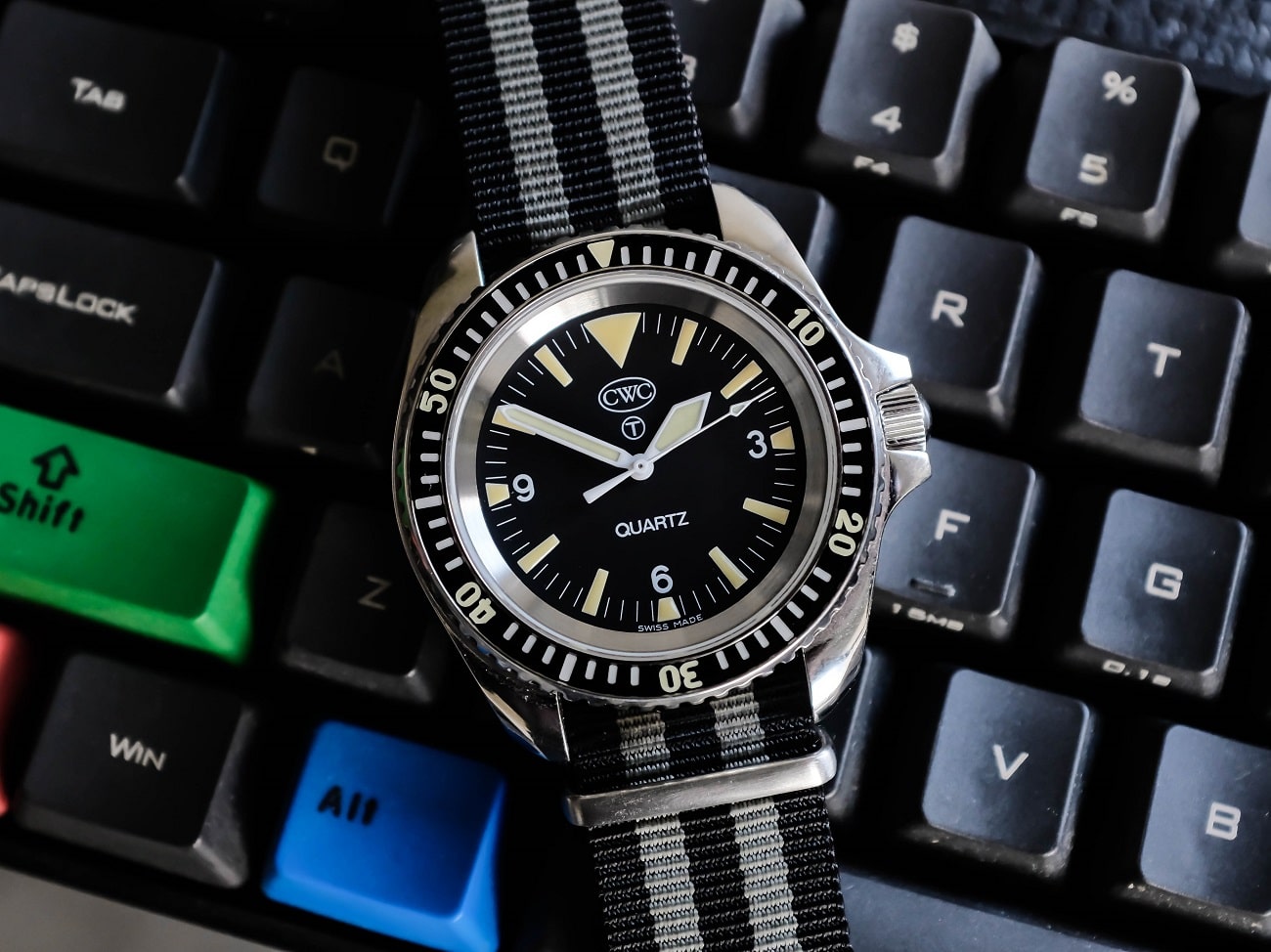
| Price: | $1,210 approx. |
| Water Resistance: | 300m |
| Case Dimensions: | 45mm (diameter incl. crown) x 47mm (lug-to-lug) x 11mm (thickness) |
| Lug Width: | 20mm |
| Movement: | ETA 955.122 Quartz |
The CWC 1983 Quartz Royal Navy Diver doesn’t ease you into its personality. Instead, it stays firmly committed to its original purpose from the moment it’s on the wrist. The asymmetrical case follows old Ministry of Defence specifications, complete with oversized crown guards and a no-nonsense layout that prioritizes function. With 300 meters of water resistance, it wears similarly to a no-date Submariner, but with a tougher, more utilitarian edge that feels intentional rather than styled. On the supplied Phoenix NATO, it stays light, balanced, and easy to wear day after day without ever feeling precious.
Where the watch really shows its character is the bezel. The acrylic insert has a glossy, slightly domed appearance that sets it apart from modern ceramic options, catching light in a way that feels true to its origins. The 60-click action is firm with very little play, and the lumed 10-minute markers make timing tasks intuitive. The matte dial reinforces that clarity-first approach. Bold sword hands and thick markers remain easy to read at a glance, while the vintage-toned lume continues glowing long after the lights go out. The familiar “circle T” remains on the dial as a visual reference, even though the watch now uses Super-LumiNova instead of tritium.
In testing, the ETA 955.122 quartz movement proved precise, running between -0.3 and +0.5 seconds per day. The quiet tick is subtle enough to fade into the background, and while initial setup can feel a bit awkward due to the hidden day-and-date mechanism, it’s a one-time inconvenience. Once set, there’s little reason to interact with it again for years. This isn’t an impulse purchase. Its appeal comes from authenticity and restraint: a dive watch with genuine military credibility that still works comfortably as an everyday companion.
Pros
- Rugged MOD-spec construction with real-world military credibility
- The acrylic bezel adds distinctive character and a satisfying tactile feel.
- Clear dial layout with strong, long-lasting lume
- Highly accurate, low-maintenance ETA quartz movement
Cons
- The price may feel steep for those expecting a mechanical movement.
- Decorative “circle T” may not satisfy strict purists.
- The fixed spring bars limit strap-swapping options.
CWC 1980 Royal Navy Diver
| Price: | $2,800 approx. |
| Water Resistance: | 300m |
| Case Dimensions: | 41mm (diameter) x 47mm (lug-to-lug) x 12.7mm (thickness) |
| Lug Width: | 20mm |
| Movement: | ETA 2824-2, CWC-engraved |
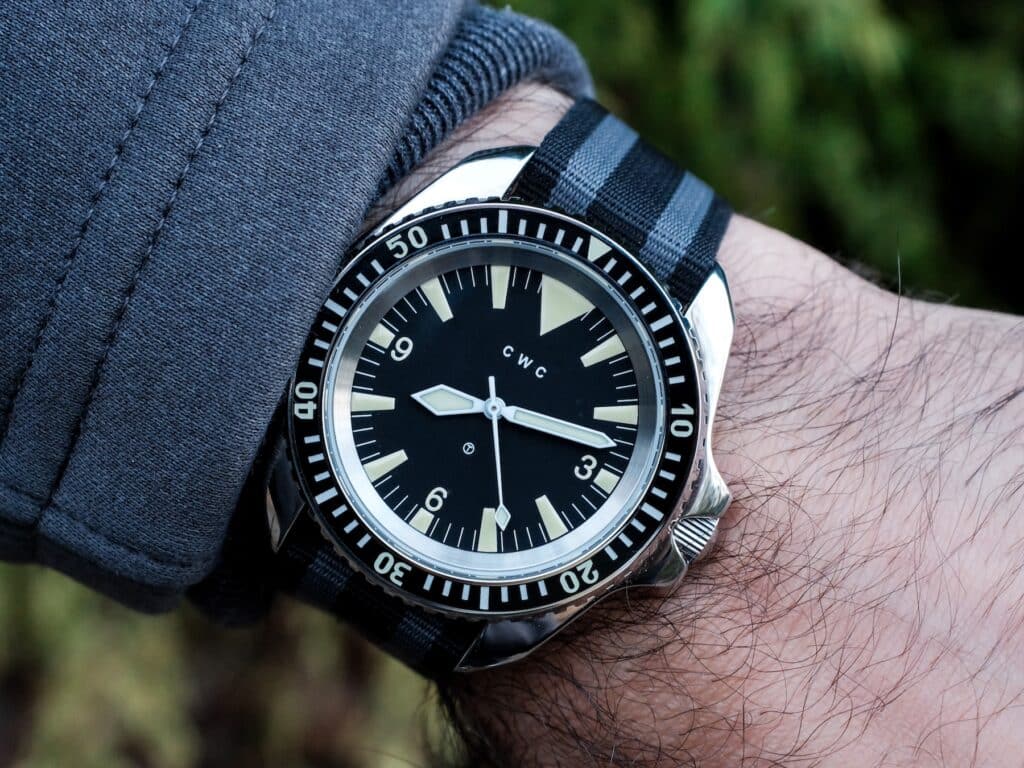
The CWC 1980 Royal Navy Diver feels less like a modern release and more like something that simply never stopped being made. From the first few days on the wrist, it gives off the same confidence you get from issued equipment: solid, straightforward, and built with a clear purpose. At around 41mm, the case wears smaller than the dimensions suggest, landing closer to a 1990s Submariner than most contemporary dive watches. The polished case and gently curved profile help keep it compact, and while the fixed spring bars limit strap choices, that constraint is part of the original military specification. We wore it on the included Cabot Military Watch Strap and later switched to a Phoenix Bond NATO. Both setups reinforced how adaptable and comfortable it is for everyday wear.
Extended wrist time highlights how carefully CWC balanced historical accuracy with practical updates. The dial layout sticks to the classic mil-sub formula, with a restrained CWC logo and the familiar circle T marking, now purely decorative and paired with vintage-tinted Super-LumiNova. That’s where opinions may split. Compared to earlier executions, the current lume options feel a bit off. The brighter white comes across as too clean, while the darker pumpkin tone feels too deliberate. On the plus side, the sapphire crystal does an excellent job of controlling glare, even under harsh sunlight. The trapezoidal hour markers and sword hands remain legible.
Performance backs up the watch’s purposeful appearance. After regulation, the ETA 2824-2 movement ran consistently within roughly 3 to 5 seconds per day during testing. That level of accuracy, combined with the movement’s widespread serviceability, makes long-term ownership straightforward. For those deep into functional dive watches, or tired of alternatives that never quite capture the right balance, this is a watch that feels settled in its identity. It isn’t inexpensive, especially given its niche appeal, but the construction, finishing, and intent suggest it was built to be worn for decades rather than admired briefly.
Pros
- Clear, easy-to-read dial with lume that performs well in different lighting conditions
- Reliable ETA 2824-2 movement that’s straightforward to service and accurate
- Wears comfortably and stays well-balanced on the wrist
Cons
- Pricing is on the higher side for a niche, historically driven diver piece
- The polished surfaces pick up fine scratches with regular wear.
- Current lume color choices lack the natural warmth seen in earlier executions.
- Minor bezel play is noticeable when handled closely
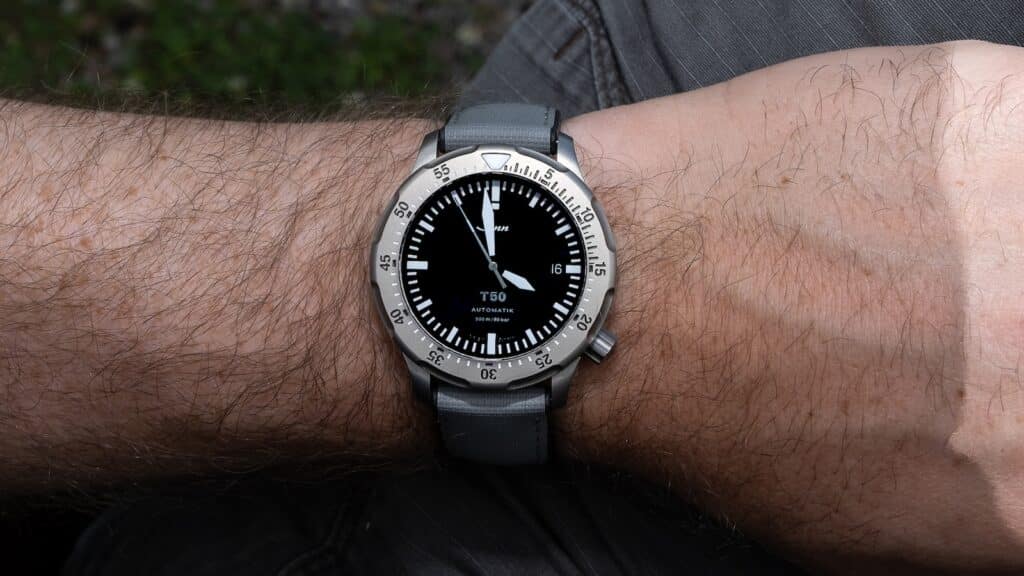
Sinn T50
| Price: | $4,280 |
| Water Resistance: | 500m |
| Case Dimensions: | 41mm (diameter) x 47mm (lug-to-lug) x 12mm (thickness) |
| Lug Width: | 20mm |
| Movement: | Sellita SW 300-1 |
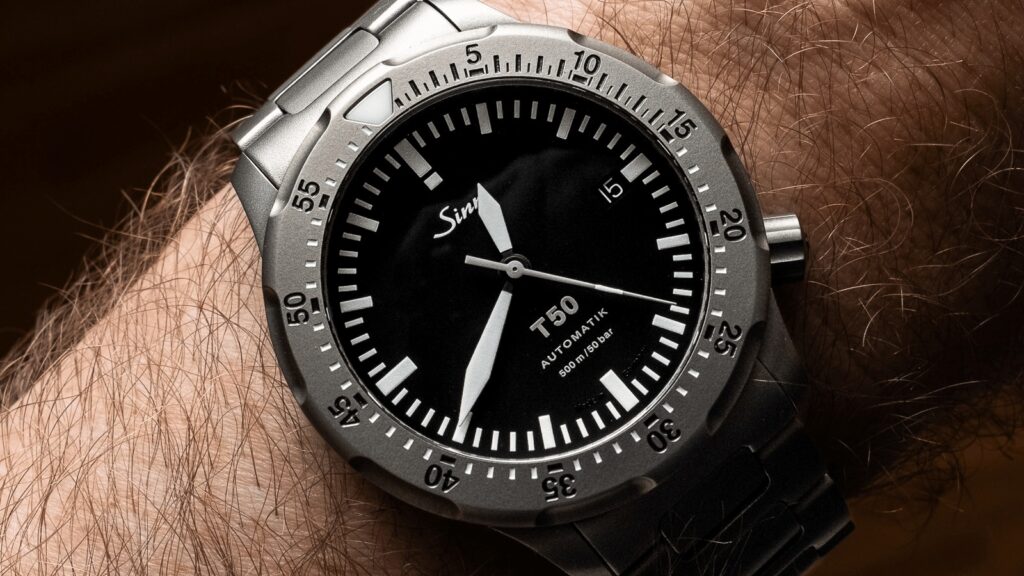
The Sinn T50 makes a strong case for toolish restraint done right. Spending time with it feels like Sinn took the core ideas behind the U50, stripped away anything unnecessary, and rebuilt the watch around comfort and durability. The matte titanium case is central to that experience. It keeps reflections to a minimum and never tries to dress itself up, which makes it easy to forget you’re wearing it once it’s on. At around 95 grams on a 7-inch wrist, it stays light and well balanced, sliding under sleeves without fuss, whether you’re working with your hands, riding, or just moving through a typical day. The crown at 4 o’clock was easy to operate during testing and stayed clear of wrist movement.
One of the more distinctive features is the captive bezel system. Having to press down before rotating adds a sense of security, and in real-life wear, it prevented any accidental movement when the watch took a bump. The tegimented bezel also earned its keep, showing far fewer scuffs than untreated titanium tends to pick up. Sinn’s familiar black-and-white dial layout stays readable. Sword hands, stark markers, and a date window blend into the dial to minimize visual noise. The lume patch on the seconds hand helped confirm the watch was running in the dark, though we found ourselves wishing it were a bit larger for quicker checks.
The SW300 inside delivered consistent performance, averaging roughly +2 to -3 seconds per day during our time with it. The compromise comes in the form of its 42-hour power reserve. If you rotate watches frequently and skip a day, the T50 can stop. Also, the bracelet sparked mixed feelings. The H-link design is comfortable and visually cohesive, but the diver extension proved more annoying than helpful. It could be released with minimal effort, which wasn’t reassuring. Removing the extension and securing the end link with a spring bar improved the experience. Thankfully, drilled lugs make strap changes painless, and the T50 feels equally at home on rubber, canvas, or a NATO.
Pros
- The tegimented bezel holds up well against scratches compared to standard titanium.
- Titanium construction keeps the overall weight low and improves all-day comfort.
- The dial layout stays straightforward to read, with the date window blending in cleanly.
- The built-in moisture control offers added protection for the movement over time.
Cons
- Limited power reserve makes it less usable if you rotate watches often.
- The diver extension feels insecure and can release with minimal force.
- Small lume detail on the seconds hand isn’t ideal for quick checks in the dark.
- Any servicing or repairs need to go directly through Sinn.
If you’ve spent time with any of these in real conditions, we’d love to hear how they’ve held up for you. And if there’s a dive watch you think earns its keep through use (not Instagram lighting), drop it in the comments and give us an excuse to put another one through review. We’re always happy to add more wrist time (and a few more scratches) in the name of finding the ones that actually deliver.

Co-Founder and Senior Editor
Kaz has been collecting watches since 2015, but he’s been fascinated by product design, the Collector’s psychology, and brand marketing his whole life. While sharing the same strong fondness for all things horologically-affordable as Mike (his TBWS partner in crime), Kaz’s collection niche is also focused on vintage Soviet watches as well as watches that feature a unique, but well-designed quirk or visual hook.
The Scurfa hasn’t used a Ronda for ages. It’s equipped with an ETA.F06 that’s accurate to +/- 15 seconds/year, making it an even better choice.
3 CWCs, again ignoring the tooliest of tool divers, the Pelagos. 3rd strike no less Consider me unsubscribed.
Hi, Nathan:
Apologies if we missed a previous comment where you mentioned the Pelagos, but that is a watch that we here at TBWS do love. Mike and I specifically have spent some wrist time with that watch and it remains one of the most underrated Tudor models out there in our opinion. That said, despite how we personally feel about the watch, we actually haven’t conducted a formal, hands-on review of the watch.
We only try to include watches in these lists that we have formal reviews for. However, we will be actively working to keep these all updated. So as soon as we’re able to conduct a hands-on review of the Pelagos, it will be considered for inclusion in this list and any other applicable ones we’ve published.
Thank you for taking the time to comment and thank you for your understanding.
Best,
-Kaz
Who the hell measures the diameter of a watch case including the crown?!
Me