Japanese dive watches tend to make collectors argue about things that should be simple. We want something legible, dependable, wearable, and priced somewhere below “I should probably talk to my spouse first.” But once Seiko nostalgia, Citizen tool-watch loyalty, Orient value math, and Casio internet folklore enter the room, the conversation gets messy fast. So this list exists to answer one practical question: which Japanese dive watches under $1,000 still make sense once the forum mythology fades and all that’s left is wrist time?
The useful part of reviewing watches for the last decade isn’t just that we’ve handled a bunch of watches. Plenty of people have done that. The useful part is that we’ve changed our minds in public, bought the same watch again after selling it, admitted when a cult favorite took too long to understand, and lived with affordable watches long enough for the annoying parts to stop being cute. The best dive watches from Japanese brands under $1,000 aren’t always the ones with the loudest specs or the most nostalgic case shape. They’re the ones that keep earning their spot after swimming, commuting, strap swapping, desk diving, and sitting in the box while some newer distraction gets its turn.
Casio Duro
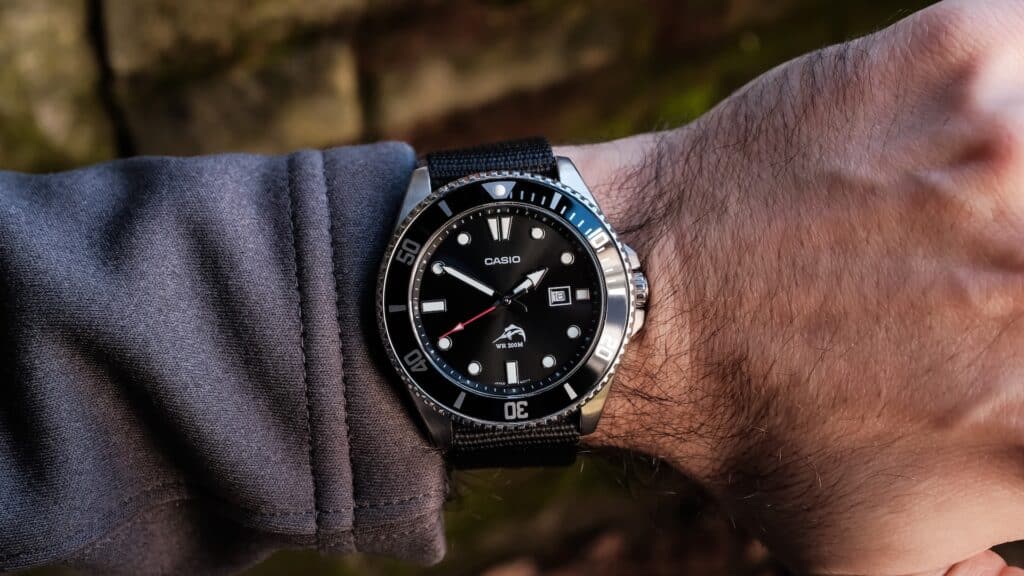
| Price: | $85 |
| Water Resistance: | 200m |
| Case Dimensions: | 44.2mm (diameter) x 48.5mm (lug-to-lug) x 12.1mm (thickness) |
| Lug Width: | 22mm |
| Movement: | Casio 2784 Quartz |
The Casio Duro belongs here because every list of the best Japanese dive watches under $1,000 needs a proper floor, and this is the watch that keeps that floor from feeling cheap in the wrong way. It is inexpensive, quartz, common, and quietly unpretentious, which is also why it works. There’s no artificial scarcity routine here, no enthusiast cosplay, and no sense that you need to baby it around water. With 200m of water resistance, a solid caseback, and a screw-down crown, it has the practical bones for swimming, travel, yard work, and the usual daily nonsense where a watch gets bumped, soaked, and forgotten about until you check the time later.
The dial is one of the reasons the Duro still feels useful rather than merely affordable. The layout is clean, the text stays restrained, the reflective arrow-style hands are easy to catch at a glance, and the applied markers give the dial enough depth without making it busy. The framed date at three o’clock helps it function as an everyday watch, not just a weekend water watch. The flat mineral crystal is part of the trade-off, though. It keeps the price down, but it will not shrug off scratches the way sapphire would. The lume also starts helpful but fades earlier than we’d want if you expect strong visibility deep into the night.
The movement is where the Duro makes a quietly strong case against mechanical snobbery. In our hands-on review, the quartz movement ran within ±20 seconds per month and also hacks and offers a quick-set date. That matters in real ownership. You can leave it on the dresser for a few days, pick it back up, and skip the whole winding-and-setting ceremony while pretending you always enjoy it. No, it does not have the mechanical charm some collectors want, and nobody is buying the Duro for movement romance. But as a first affordable diver, a travel watch, or the thing you keep near the door when you don’t want to think too hard, the low-maintenance side is a legitimate strength.
The case gives the Duro more presence than the price suggests, for better and worse. At 44mm, it is a large watch, and those with smaller wrists should take that into account. The shorter lug-to-lug span and downward-curving lugs help it sit more securely than its diameter would suggest, especially if you are already comfortable with something in the general Seiko Turtle footprint. The finishing is simple but not careless, with brushed upper surfaces, polished case sides, and a small bevel that gives the case some shape without pretending to be fancy. The 22mm lug width opens it up to rubber, nylon, and bracelet options, so it is easy to tune for summer, travel, or general abuse. Add in a bezel that turns with a controlled, deliberate feel instead of the loose, rattly action common on cheap dive-style watches, and the Duro stands out as the ultra-affordable Japanese pick that keeps the whole under-$1,000 conversation honest.
Pros
- 200m water resistance, screw-down crown, and solid caseback make it genuinely useful around water.
- Bezel action feels controlled and deliberate rather than loose or rattly.
- Strong everyday legibility from the clean dial, reflective hands, applied markers, and framed date.
- Quartz movement is accurate, low-maintenance, hacks, and includes a quick-set date.
- 22mm lugs make it easy to swap between rubber, nylon, and bracelet options.
Cons
- The lume is useful early on but fades sooner than we’d like.
- The 44mm case is large, especially on smaller wrists.
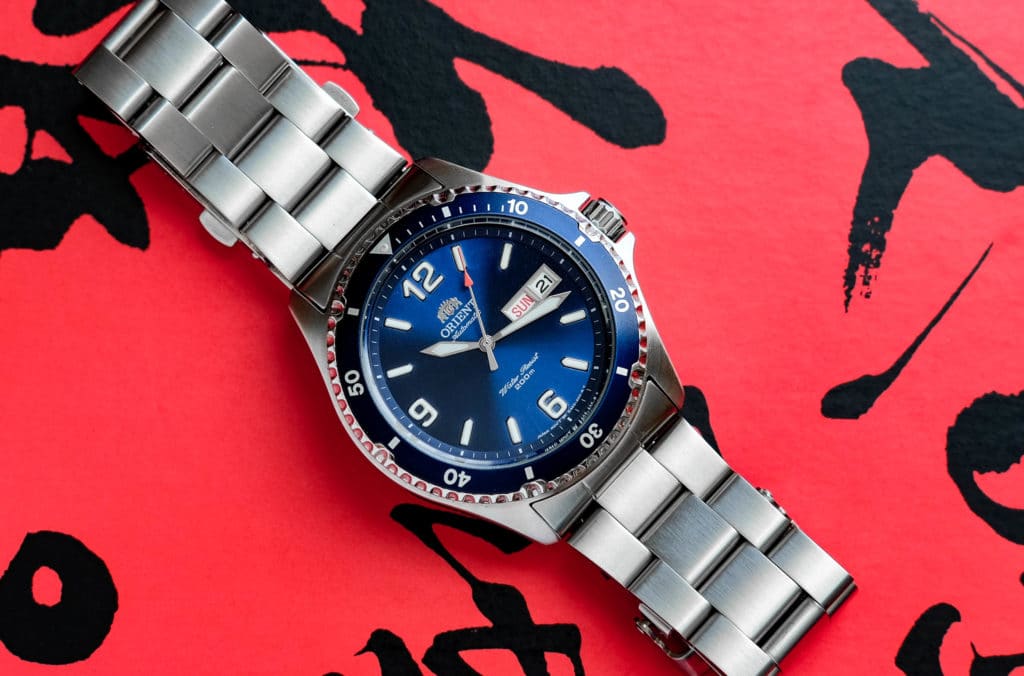
Orient Mako II
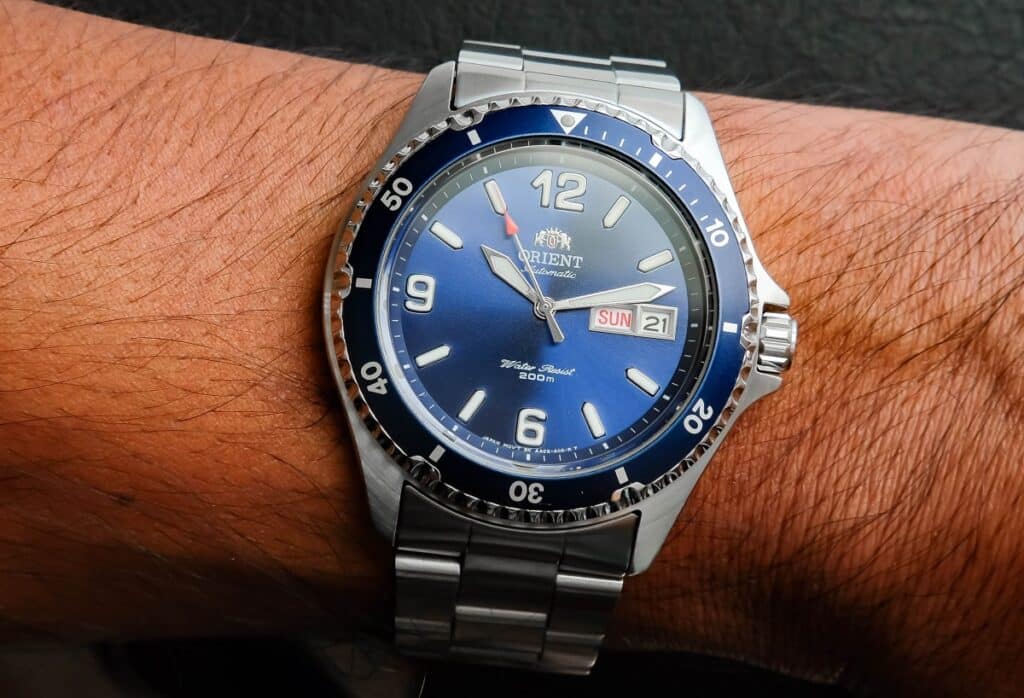
| Price: | $160 – $220 |
| Water Resistance: | 200m |
| Case Dimensions: | 41.5mm (diameter) x 47mm (lug-to-lug) x 13mm (thickness) |
| Lug Width: | 22mm |
| Movement: | Orient Caliber F6922 (Mechanical Movement) |
The Orient Mako II earns its place among Japanese dive watches under $1,000 because it feels like a proper entry point into mechanical divers, not a novelty purchase you outgrow by the next strap change. It pairs naturally with the Kamasu in Orient’s affordable diver lineup, but the Mako II has its own appeal: it is calmer, more familiar, and easier to wear without turning every glance at your wrist into a design analysis session. The 41.5mm case is a big part of that. It avoids the oversized, wrist-furniture feeling some budget divers fall into, and the compact lug-to-lug keeps it planted across more wrist sizes than the diameter alone would suggest. It sits flat, does not feel top-heavy, and the mix of brushed lugs, polished case sides, and a cleaner case-to-bracelet transition gives it a more finished look than the price would suggest.
The dial keeps things practical while still giving the watch a little personality. The sunburst finish shifts enough in changing light to keep the watch from feeling flat, but the applied markers remain easy to read at a glance. While testing the piece, we also liked how the smaller details work together: the framed day-date window feels integrated rather than slapped in, the polished accents on the hands catch light cleanly, and the red-tipped second hand adds contrast without making the whole thing look like a toy. The lume is usable for quick low-light checks, but it does not hang around as long as stronger dive-watch lume. That matters if you’re buying with serious nighttime or underwater legibility in mind. For daily wear, it works; as a low-light tool, it has limits.
The F6922 in-house automatic movement is one reason the Mako II feels easier to live with than older entry-level automatics. Hacking and hand-winding make a real difference once the watch has been sitting for a few days. You can stop the second hand, set the time cleanly, wind it manually, and get out the door without doing the old shake-it-awake routine that made earlier budget mechanical watches feel a little more needy than charming. It is not a luxury movement, and it is not trying to be one, but it gives new collectors the right kind of mechanical experience: simple, usable, and not annoying.
The value story is strongest when you look at the Mako II as a watch that helps you figure out what you care about. The 120-click bezel feels firm and controlled once it is moving, though the sloped edge makes it less intuitive to grip than chunkier bezels with sharper coin edges. The bracelet feels secure during normal wear, and the clasp holds up well day-to-day, but the hollow end links are noticeable when the watch is off the wrist. The mineral crystal follows the same pattern: functional, but more scratch-prone than sapphire. Still, for someone getting into affordable Japanese divers, the Mako II matters because it shows how useful compact proportions, a day-date layout, and restrained diver styling can be before you start spending more money chasing upgrades.
Pros
- The 120-click bezel feels firm and controlled once engaged.
- F6922 in-house movement adds hacking and hand-winding for easier daily use.
- Sunburst dial, applied markers, framed day-date, and red-tipped second hand add personality without hurting legibility.
- Compact lug-to-lug helps the watch sit flat and avoid feeling top-heavy.
- The bracelet feels secure, and the clasp holds up well during normal daily wear.
Cons
- The sloped bezel edge can be awkward to grip.
- The hollow end links are noticeable while handling the watch off the wrist.
- Lume does not last as long as stronger dive-watch options.
Orient Ray II
| Price:: | $160 – $220 |
| Water Resistance: | 200m |
| Case Dimensions: | 41.5mm (diameter) x 47mm (lug-to-lug) x 13mm (thickness) |
| Lug Width: | 22mm |
| Movement: | Orient Caliber F6922 (Mechanical Movement) |
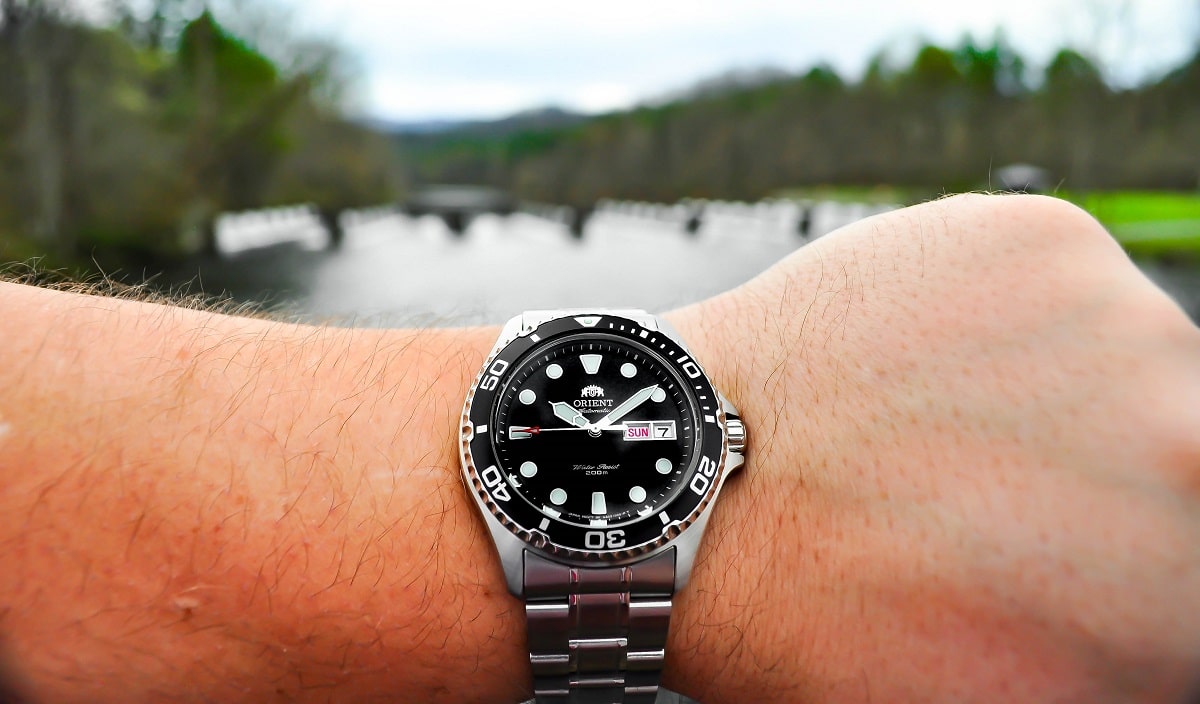
The Orient Ray II is important here because it represents the middle step in Orient’s affordable diver progression. If the Mako II is the familiar all-rounder and the Kamasu is the sharper spec play, the Ray II is the dressier, black-dial alternative with enough dive-watch cred to stay useful. It is the second generation of the original Ray, which was closely related to the Mako but used different hands and dial furniture. The biggest functional change is easy to miss if you only look at photos: the old screw-down day-correction pusher at 2 o’clock is gone. Orient’s F6922 in-house movement made that pusher unnecessary, and daily ownership is better for it. Hacking and hand-winding make the Ray II easier to restart after it sits for a few days. The 22-jewel movement’s claimed -15 to +25 seconds per day and roughly 40-hour reserve are strong numbers for a watch that has often lived far below the $1,000 ceiling.
The case is one of the Ray II’s strongest arguments. It lands in that useful zone where it can feel like a proper diver without turning into a wrist appliance. The proportions leave little wasted space, which helps the watch look tidy and slightly more refined than many entry-level dive watches. The top surface is brushed, the case sides are polished, and the lugs curve down gently enough to help it sit naturally on the wrist. The softened case edges keep it from feeling slabby, while the dolphin caseback gives it a bit of old-school Orient personality. A mineral crystal keeps the view clear, though it is still a compromise if you are used to sapphire and tend to scrape watches through door frames like the rest of us apparently do.
The dial is where the Ray II separates itself from the Mako side of the family. The round, chrome-edged indices give it a familiar dive-watch look (read Submariner-style), but the trapezoidal quarter-hour markers retain some of that Japanese character. The matte black dial feels more dressed-up than expected, especially with the surrounding chapter ring adding depth. Orient also handles the small details well here: the applied logo sits above the printed name, the little red dot on the shield adds charm if you notice it, and the split day-date window is cleanly framed in chrome. The chromed sword hands are easy to read; the hour hand has a slight arrow-like shape, and the red-tipped second hand includes a lumed end. Lume is one of the pleasant surprises. It glows bright green, holds up better than the price suggests, and gives the Ray II more low-light usefulness than plenty of watches that cost much more.
The frustrating parts are very real, and they mostly involve the things you touch. The 120-click bezel is an upgrade over the original Ray, featuring a polished bezel with an aluminum insert and a small lume pip at 12. The problem is grip. The coin edge is not tall enough, and the bezel sits a bit inside the case diameter, so turning it can become a fingernail exercise. Quality can vary, too, with some examples rotating smoothly and others feeling nearly seized. The crown is worse. It has a nice engraved Orient logo, but it is small, polished, guarded, and short on grip. If you rotate watches and need to wind or set them often, that can get old fast. The bracelet is also typical affordable Orient: usable, partly solid, partly hollow, with 22mm hollow end links and a mild taper to 20mm that still feels too broad for how elegant the watch can look. The clasp is sharp and secure, but many buyers will be happier with a NATO, leather, or a sturdier aftermarket bracelet like the Strapcode option with screws.
That is the Ray II in a sentence: sharper in person than most photos suggest, genuinely strong for the money, and held back by a few tactile annoyances that seasoned collectors will notice immediately. For deeper hands-on insights, read our dedicated review.
Pros
- The dimensions make it easy to wear as both a diver and a dressier daily watch.
- Removing the old 2 o’clock day pusher makes the case cleaner and the day-to-day setup simpler.
- Bright green lume performs quite well for an affordable Orient diver.
- Soft case edges, downward-curving lugs, brushed top surfaces, and polished sides make the watch feel handsome in person.
- Works well with NATO, leather, or aftermarket bracelets if the stock bracelet does not work for you.
Cons
- The small polished crown has a poor grip, especially with the crown guards in the way.
- The bezel grip is awkward, and the bezel quality can vary between examples.
- The stock bracelet feels only okay, with hollow 22mm end links and a taper that still feels too wide.
- The watch loses the quirky old 2 o’clock pusher, which some Orient fans may miss.
Seiko 5 Sports SRPD51 / 5KX
| Price: | $200 – $350 |
| Water Resistance: | 100m |
| Case Dimensions: | 42.5mm (diameter) x 46mm (lug-to-lug) x 13.5mm (thickness) |
| Lug Width: | 22mm |
| Movement: | Seiko 4R36 |
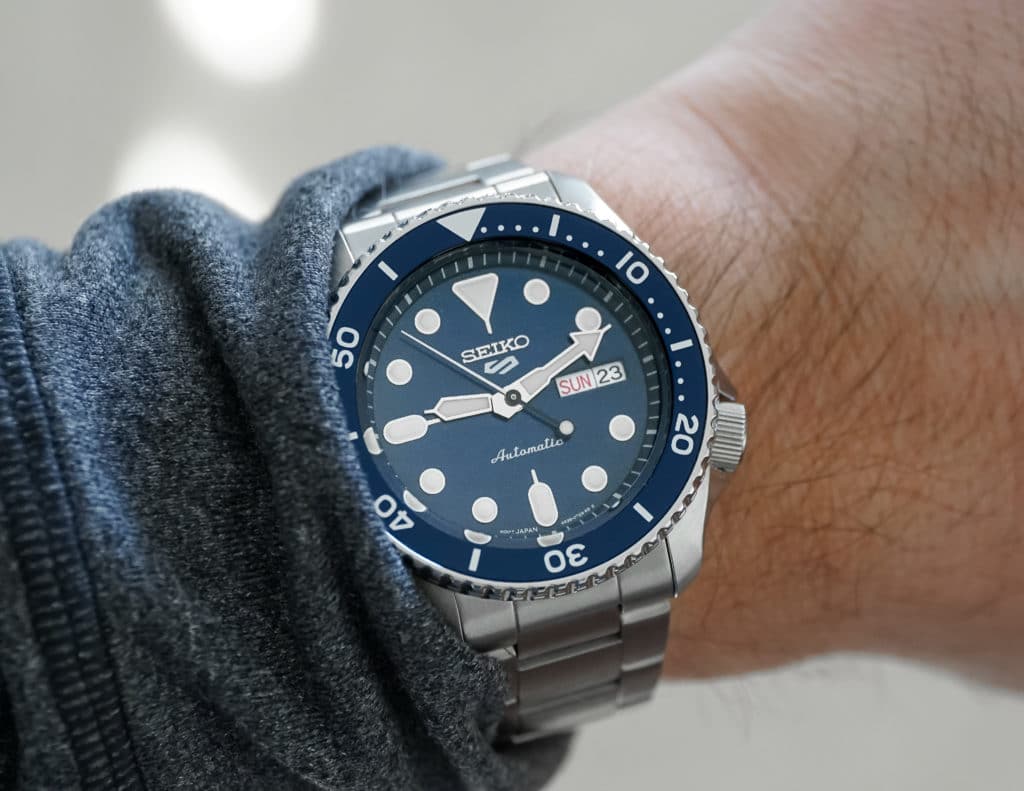
The Seiko 5 Sports SRPD51, often dragged into the room under the 5KX nickname, belongs in this Japanese dive-watch conversation with an asterisk. It is dive-style, not a true ISO-style diver, and that distinction matters. Anyone expecting it to carry the old SKX’s full tool-watch credentials will probably feel shortchanged. But as an affordable Japanese watch with Seiko’s familiar diver silhouette, everyday durability, and easier mechanical ownership, it still has a real place under $1,000. The tension is what makes it interesting: longtime SKX fans tend to see the missing certification first, while newer buyers may notice the cleaner finish, upgraded movement, and more polished daily-wear feel.
The blue sunburst dial is where the SRPD51 makes its strongest emotional case. It moves from deep navy to a brighter, more electric blue under stronger light, while the matte blue aluminum bezel keeps the whole thing from becoming too glossy. Applied indices and an applied logo give the dial more depth than many older SKX-era designs, and the result feels a bit more refined without losing the easygoing Seiko character. The Lumibrite is also a major strength. As mentioned in our hands-on review, it was bright, long-lasting, and stronger than what we often see from watches around this price, with staying power that felt closer to some higher-end Prospex models than expected.
The case keeps the recognizable Seiko dive-watch shape, but it wears more neatly than the numbers might suggest. The 46mm lug-to-lug gives it presence without making it sprawl across the wrist, while the 13.5mm thickness adds some visual height and weight. Smaller wrists may notice that height from the side, but the overall footprint stays manageable. The compact 4 o’clock crown keeps the familiar Seiko feel, and the milled grip makes it easier to operate than some older executions. Drilled lugs are another small but useful detail because the SRPD51 almost invites strap changes. On the stock bracelet, it feels more conventional; on a NATO or rubber, it leans harder into the casual dive-watch-adjacent role, where it arguably makes the most sense.
Inside, the in-house 4R36 gives the SRPD51 the two upgrades Seiko fans wanted for years: hacking and hand-winding. The display caseback also suits the Seiko 5 identity, especially for newer collectors who like seeing the mechanical side of the hobby. The bracelet is less convincing, though. The clasp feels thin, the adjustment links are fiddly, and the overall bracelet experience does not match the case and dial as well as it should. That is the trade-off here. The SRPD51 is not the watch to buy if you want a proper certified Japanese dive watch, and it should not be treated as a straight SKX replacement. It works better as a tough, wearable, distinctly Seiko everyday watch that borrows dive-watch language without fully living in the same category.
Pros
- Familiar Seiko diver-style case shape with better finishing than many older entry-level Seikos.
- Bright, long-lasting Lumibrite outperforms many watches around this price.
- Drilled lugs make strap changes easier and suit the watch’s casual personality.
- 4R36 movement adds hacking and hand-winding.
- Blue sunburst dial, matte blue bezel, applied markers, and applied logo give the watch real visual depth.
Cons
- Not ISO-certified, so it lacks the credibility of a true dive watch.
- 13.5mm case height may look tall on smaller wrists.
- The clasp feels thin, and the adjustment links can be frustrating to use.
- The bracelet feels a step behind the case and dial in terms of finish.
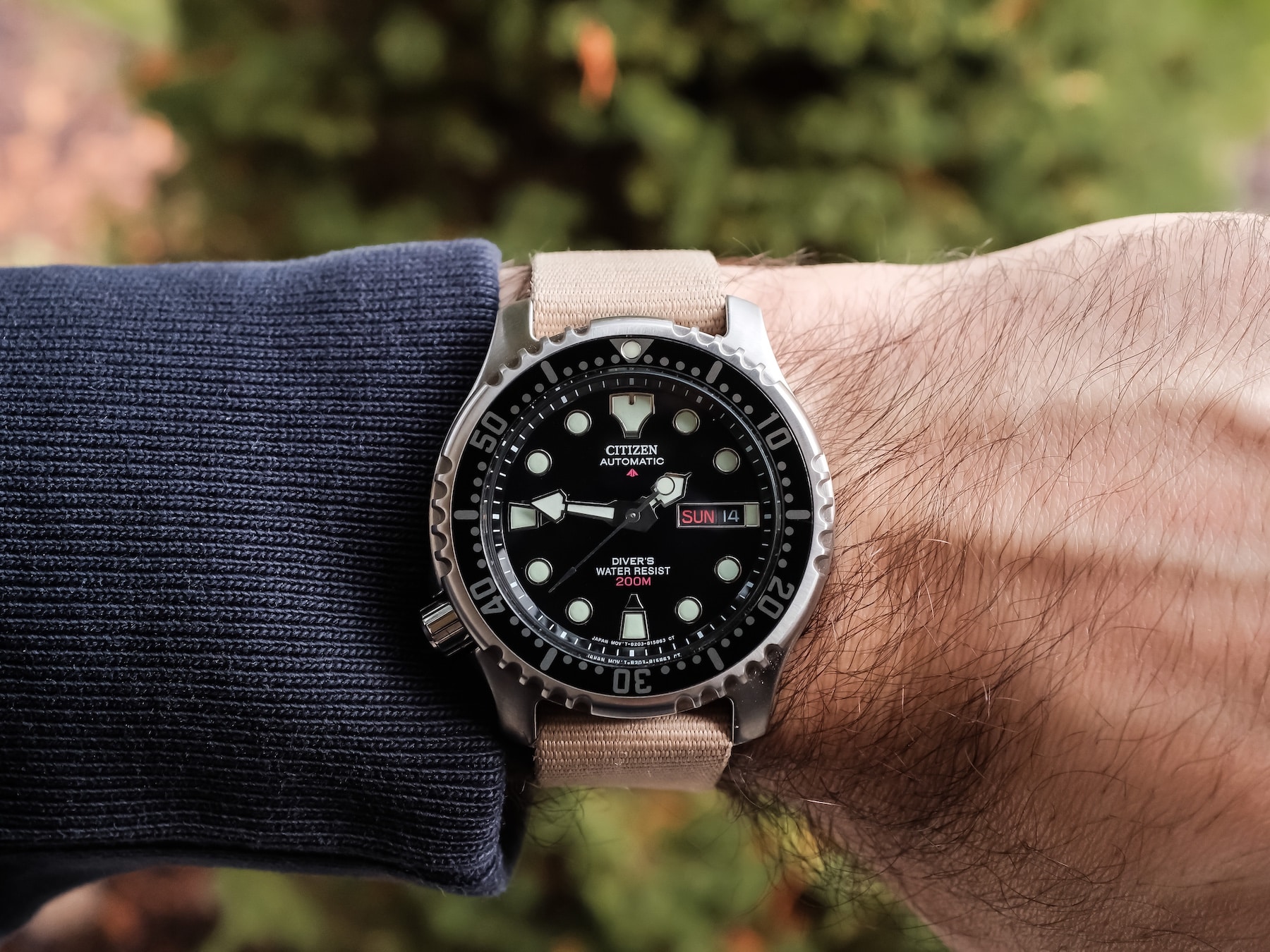
Citizen Promaster Diver BN0151
| Price: | $250 – $300 |
| Water Resistance: | 200m |
| Case Dimensions: | 43mm (diameter) x 48mm (lug-to-lug) x 11.5mm (thickness) |
| Lug Width: | 20mm |
| Movement: | Citizen Eco-Drive E168 (solar quartz) |
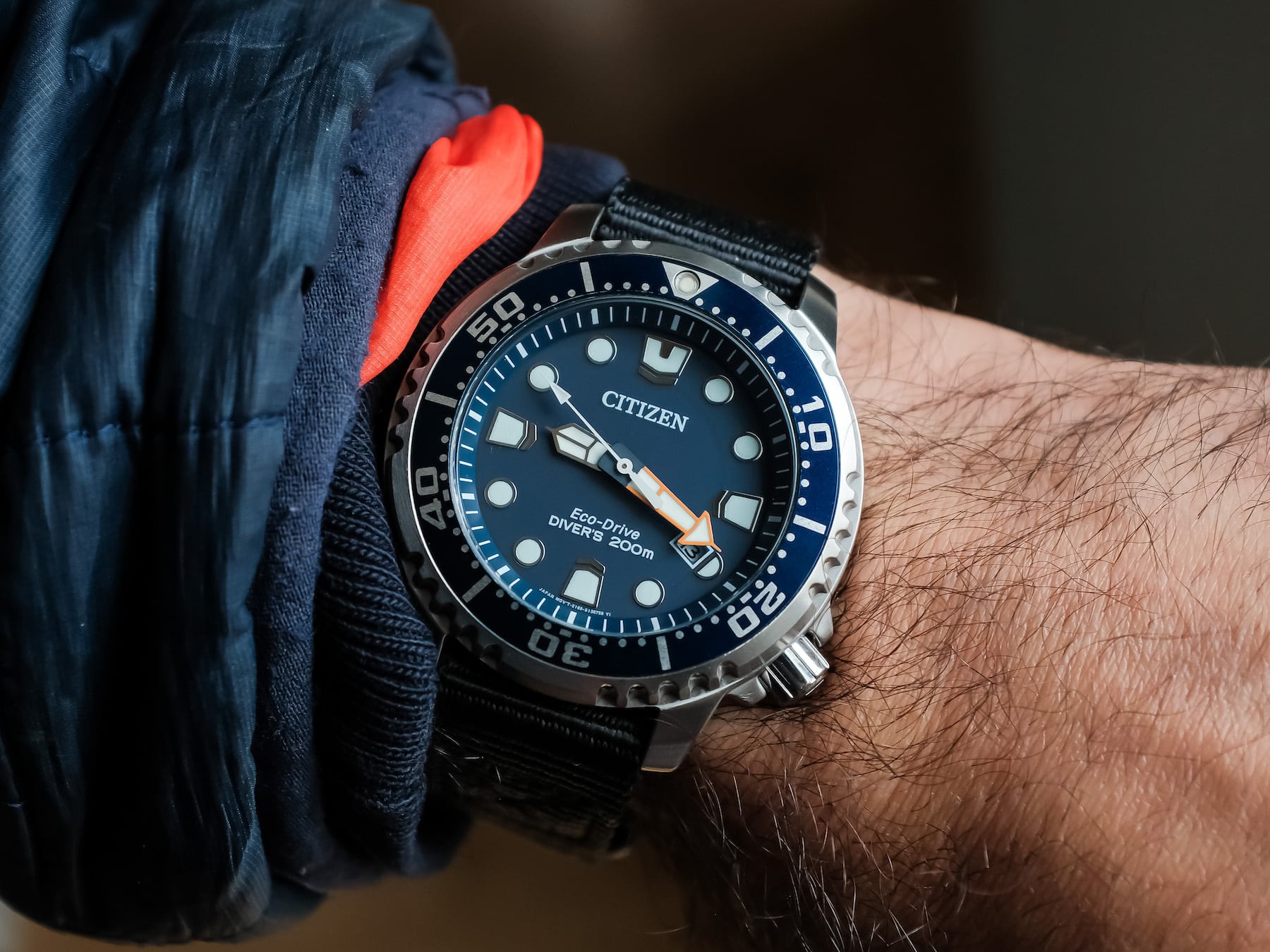
The Citizen Promaster Diver BN0151 is one of the cleanest fits for this list because it is a true Japanese Eco-Drive diver that makes ownership feel almost suspiciously easy. It sits above the pure budget tier without pretending to be some precious collector object, and that’s the appeal. You get 200m of water resistance, a case that feels ready for swimming and rougher use, and the kind of no-drama personality that makes it easy to grab before travel, a beach day, or a weekend where you know the watch is going to get knocked around.
The dial does a lot of the practical work. The hands and markers are bold enough to read quickly in daylight, and the blue dial has a slight purple shift from certain angles, giving it some character without turning legibility into a guessing game. In low light, the aqua-toned lume stays visible for hours, and the lume pip on the second hand is a small but useful detail because it confirms the watch is still running at a glance. The mineral crystal is still the compromise here. Sapphire would be better, obviously, but during extended wear, it held up better than expected and avoided obvious scratching. The 60-click bezel also stayed aligned and felt deliberate, though the grip can get slick when wet, which is annoying because wet hands are not really an edge case for a dive watch.
On the wrist, the BN0151 wears better than the 43mm case size suggests. The short lug-to-lug distance and downward-curving case profile help it sit securely rather than spreading out flat and awkwardly. It also feels lighter than expected, almost titanium-like in how little attention it draws during a long day. The 4 o’clock crown adds to that comfort by staying out of the way rather than digging into the wrist. The stock polyurethane strap fits the tool-watch idea and works, but it starts stiff and needs time to soften. We preferred the watch on a NATO, where the whole package felt more balanced, more casual, and easier to wear for hours without thinking about it.
The Eco-Drive movement is what makes the Promaster Diver such a strong value under $1,000. Once charged, we saw around six months of runtime, and accuracy stayed around ±15 seconds per month in testing. That changes the relationship with the watch. No winding, no routine battery swaps, and no resetting it every time it sits for a few days. We only triggered the low-power indicator once, and a short session in the light brought it back without any drama. In short, the BN0151 is not the flashiest Japanese diver in this range, and its restrained personality may feel too plain for someone chasing a louder design. But for durability, legibility, comfort, and low-maintenance ownership, it makes a very strong case as one of the most sensible picks here.
Pros
- Eco-Drive movement delivers long runtime, steady accuracy, and very little upkeep.
- 200m water resistance makes it easy to trust for swimming and rougher daily use.
- The blue dial adds subtle visual interest without compromising readability.
- The 43mm case wears better than expected, thanks to the short lug-to-lug and the downward-curved case.
- Aqua-toned lume stays visible for hours, with a useful lume pip on the seconds hand.
Cons
- Mineral crystal is still more scratch-prone than sapphire.
- The stock polyurethane strap starts stiff and takes time to break in.
- The bezel grip can feel slippery when your hands are wet.
Citizen NY0040
| Price: | $250 – $350 |
| Water Resistance: | 200m |
| Case Size: | 42mm (diameter) x 47.3mm (lug-to-lug) x 12.6mm (thickness) |
| Lug Width: | 20mm |
| Movement: | Miyota automatic Caliber 8204 |
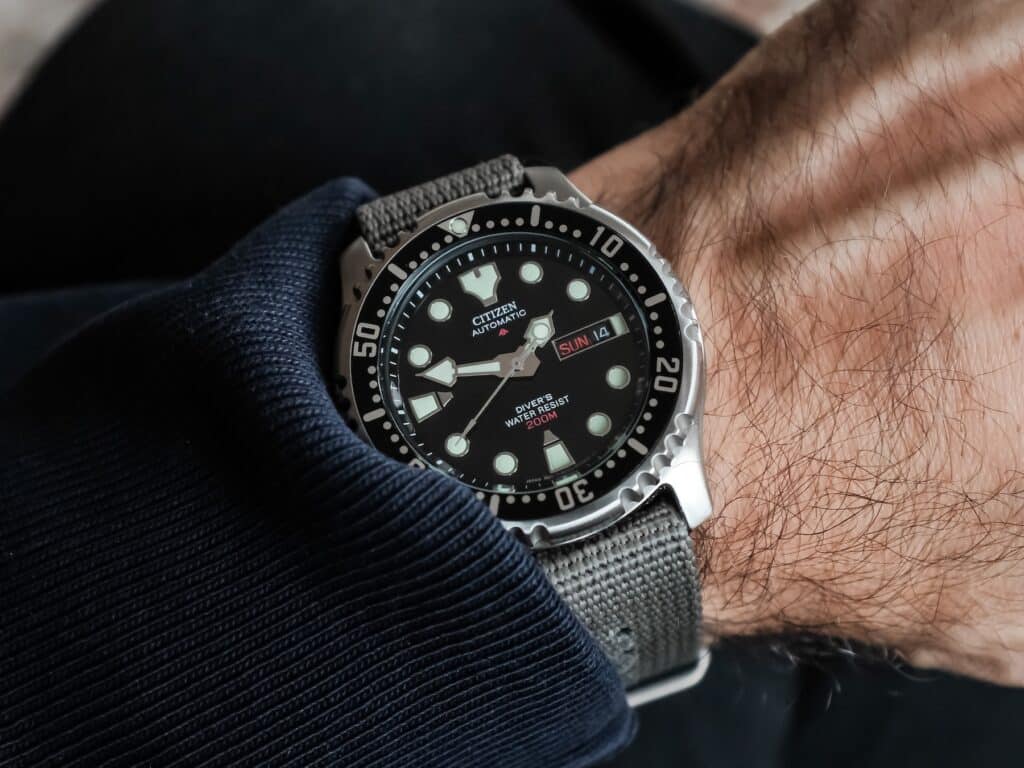
The Citizen NY0040 gives this under-$1,000 Japanese diver list a proper enthusiast-focused automatic option that doesn’t have to cosplay as a Seiko alternative. That matters. Affordable mechanical divers are too often dragged into the same SKX-shaped argument. Still, the NY0040 is more interesting when treated as its own thing: a classic Citizen automatic diver with ISO-rated tool-watch credibility, a functional streak, and a design that feels built for use rather than admiration. Its professional-diver connection, including use by the Italian Navy’s COMSUBIN unit, adds some weight to the story, but the everyday appeal is less romantic. It feels like a watch made by people who cared more about wet hands, timing bezels, and durability than collector mythology.
The case is where the NY0040 begins to separate itself from the usual affordable diver template. It measures nearly 42mm, but the just-over-47mm lug-to-lug, restrained thickness, compact dial opening, inward-sloping bezel, and shorter visual footprint make it wear smaller than expected, even around a 6.75-inch wrist. In hand, it has a reassuring density without feeling bulky. Brushed upper surfaces, polished flanks, and broad tooth-like shoulders give the case more personality than a simple straight-lug diver, with a little old-school skin-diver warmth underneath the practical shape. The left-side crown looks unusual at first, but on the wrist, it quickly makes sense. Nothing presses into the back of your hand while typing, driving, or during extended wear, and it also works naturally for left-handed wearers or anyone who wears a watch on the right wrist. Right-handed users may need a few days to adjust when winding or setting it, but the awkwardness fades.
The bezel and dial keep the same tool-first energy. The coin-edge bezel is easy to grip with wet fingers, the alignment on our example was dead-on, and there was no noticeable wobble or slack between clicks. Its 60-click action and aluminum insert fit the watch’s practical personality, and the rotation felt smooth and confident. The black dial is straightforward in the best way: clear hands, readable hour markers, plain “Citizen Automatic” text under twelve, and a small red arrow that adds character without clutter. The day-date window at three blends better than expected thanks to the darker background and lighter text, while the 200m water resistance text near six reinforces that this is a watch we’d feel comfortable swimming, snorkeling, or casually abusing near saltwater.
Inside, the Miyota 8204 gives the NY0040 the mechanical appeal that Citizen sometimes gets less credit for. Hacking and hand-winding make it easier to live with than older entry-level automatics, and the accuracy expectations feel fair for the price. The rotor is loud, though. Miyota people will recognize the sound immediately, and whether that counts as charm or irritation depends on your tolerance for tiny wrist machinery announcing itself. The flat mineral crystal is another compromise compared to sapphire, though less catastrophic in normal wear than spec-sheet arguments suggest. Lume is dependable rather than explosive; it does not hit as hard as some Seiko divers at first glow, but the hands and markers hold enough light to stay useful once your eyes adjust. The stock thick rubber strap works, but it is not the most charming part of the watch, so the easy strap changes and strong aftermarket bracelet support matter. On NATO straps, the NY0040 feels more relaxed, balanced, and honest. For more wrist-time insights, check out our dedicated review.
Pros
- Compact lug-to-lug, inward-sloping bezel, tight dial opening, and restrained thickness help it wear smaller than the nearly 42mm case suggests.
- Clear black dial, practical lume, and 200m water resistance make it feel like a proper tool diver.
- Miyota 8204 movement adds hacking and hand-winding for better daily usability.
- The coin-edge bezel has a strong wet-finger grip, clean alignment, smooth 60-click action, and no noticeable play.
- Easy strap changes and strong aftermarket bracelet support make personalization simple.
Cons
- Mineral crystal does not offer the scratch resistance of sapphire.
- Right-handed users may need a short adjustment period with the left-side crown.
- Miyota rotor noise may bother some wearers.
Orient Kamasu
| Price: | $250 – $375 |
| Water Resistance: | 200m |
| Case Dimensions: | 41.5mm (diameter) x 47mm (lug-to-lug) x 13mm (thickness) |
| Lug Width: | 22mm |
| Movement: | Orient F6922 (automatic movement) |
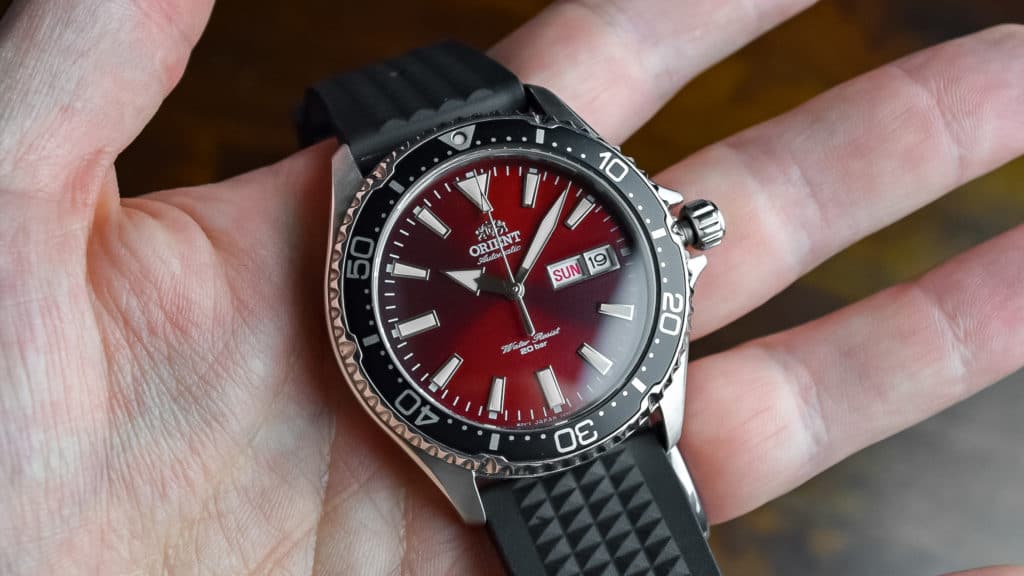
The Orient Kamasu is one of the easiest picks for a list of Japanese dive watches under $1,000 because it offers a mechanical-diver package that still feels a little unreasonable for the money. What stood out to us first was not one flashy detail, but how cohesive the whole thing felt in hand. The brushed case surfaces look clean and consistent, the bezel action is tight without becoming stiff, and the crown operation feels smooth enough to make the watch feel more considered than its price suggests. Add the sapphire crystal and 200m water resistance, and the Kamasu starts to separate itself from the usual affordable-diver compromises pretty quickly.
The case keeps that value story grounded in actual wearability. At 41.5mm, with curved lugs and a thickness of around 13mm, it sits comfortably without feeling bulky or slabby. The proportions make it easy to wear all day, and the watch feels balanced rather than top-heavy. The bracelet helps, too. Its fully brushed finish suits the case, it feels secure on the wrist, and the four micro-adjust positions make it easier to fine-tune the fit when your wrist size changes during the day. The clasp and end links are not as refined as the rest of the watch, though, which is one of those reminders that Orient still had to make budget decisions somewhere.
The dial is where the Kamasu brings most of its character. The wine-red sunburst finish catches light with enough movement to feel lively, but it does not get in the way of reading the time. That said, anyone who prefers a quieter, more minimal diver may find the dial a bit too expressive. The applied indices sit slightly above the dial and create a subtle floating effect, while the handset is properly sized, with the minute and second hands reaching cleanly toward the edge for quick reading. The framed day-date window is neatly executed, and the Orient logo remains proportionate rather than taking over the dial. Lume is another strength: it charges quickly, glows brightly, and, in our experience, holds up well against many Seiko divers we’ve tested.
Inside, the in-house F6922 movement gives the Kamasu the right kind of everyday usability. Hacking and hand-winding make setting and restarting the watch easier after it has been off the wrist, and accuracy stayed within expected tolerances during our review period. This is not a precision-flex watch, and it does not need to be. The appeal is consistency, ease of use, and the feeling that you are getting a complete mechanical Japanese diver without stretching anywhere near the $1,000 ceiling. The small crown can be difficult to grip, especially with the crown guards, and the aluminum bezel insert will pick up scratches more easily than a ceramic or steel bezel insert. Still, for someone who wants strong specs, good looks, and legitimate daily-wear value, the Kamasu remains one of Orient’s strongest arguments.
Pros
- Sapphire crystal and 200m water resistance give it stronger durability than many affordable divers.
- In-house F6922 movement adds hacking and hand-winding.
- Lume is bright, quick to charge, and holds up well against many Seiko divers we’ve tested.
- The bracelet feels secure, with four micro-adjust positions for a better daily fit.
- Wine-red sunburst dial, applied indices, and well-sized hands add depth without hurting legibility.
Cons
- The small crown can be hard to grip, especially with the crown guards.
- The aluminum bezel insert is more prone to scratches over time.
- The sunburst dial may feel too flashy for more minimal tastes.
- Clasp and end links feel less refined than the rest of the watch.
Seiko SKX007

| Price: | $350 – $650+ (based on condition, since it’s discontinued) |
| Water Resistance: | 200m |
| Case Dimensions: | 42.5mm (diameter) x 46mm (lug-to-lug) x 13.25mm (thickness) |
| Lug Width: | 22mm |
| Movement: | 7S26 |
The Seiko SKX007 remains here partly because it helped shape what this whole category became, and partly because it still makes sense in a way that annoys anyone trying to move on from it. Availability and pricing are messier now that the model has been discontinued, so this is not the same easy retail recommendation it once was. But historically and editorially, it has to be here. Plenty of collectors have owned one, sold it, tried more complicated watches, and then realized the SKX did the basics with very little fuss. It never felt delicate, precious, or overthought. It felt like the watch you reached for when you wanted the decision-making process to end.
The case is a big reason the SKX007 stayed in rotation for so many people. It lands in that comfortable middle ground where it has enough presence to feel like a proper diver, but not so much that it becomes a wrist appliance. The proportions work across a wide range of wrist sizes, and it responds well to how you want to wear it. The stock bracelet has that familiar Seiko tool-watch feel: functional, simple, and a little basic. Move it to nylon, and the watch becomes lighter, more casual, and easier to forget about during the day. That strap flexibility is part of the charm.
The dial is still the strongest part of the watch’s real-world argument. The black layout is clean, the text stays restrained, and nothing distracts from the time. The hands are easy to separate at a glance, and the markers stay readable in bright sun, dim rooms, and those awkward in-between lighting situations where some watches become tiny wrist-mounted riddles. Seiko’s lume also does real work here. It charges quickly and remains useful after the first bright burst fades, which matters more than a lume shot on the internet would have you believe. For a watch that spends most of its life doing everyday duties, that kind of legibility is what keeps it relevant.
The 7S26 movement is both part of the SKX007’s honesty and one of its obvious limitations. It does not hack or hand-wind, and if you are used to newer, affordable automatics, that can feel dated fast. But the movement’s simplicity is also part of why the watch has been so easy to live with. In our hands-on testing experience, the appeal was never precision theater. It was that the thing kept running, and when service eventually became relevant, the movement’s commonness helped keep maintenance approachable. Overall, the SKX007 is no longer the most convenient or affordable Japanese diver, and its bracelet will not impress anyone seeking refinement. But as a readable, comfortable, tough-enough, historically important diver that many of us had to buy more than once before admitting the point, it still earns its space.
Pros
- Clean black dial with restrained text and strong everyday legibility.
- Hands and markers are easy to read in the sun, dim rooms, and awkward mixed lighting.
- 7S26 movement is simple, reliable, common, and approachable to service.
- Seiko lume charges quickly and stays useful beyond the initial bright glow.
- Works well on the stock bracelet, but becomes lighter and more casual on nylon.
Cons
- Discontinued status means pricing and availability are less straightforward now.
- No hacking or hand-winding feels dated next to newer, affordable automatic divers.
- The stock bracelet is practical, but basic.
Seiko Turtle
| Price: | $370 – $525 |
| Water Resistance: | 200m |
| Case Dimensions: | 44.3mm (diameter) x 48mm (lug-to-lug) x 14mm (thickness) |
| Lug Width: | 22mm |
| Movement: | Seiko 4R36 |
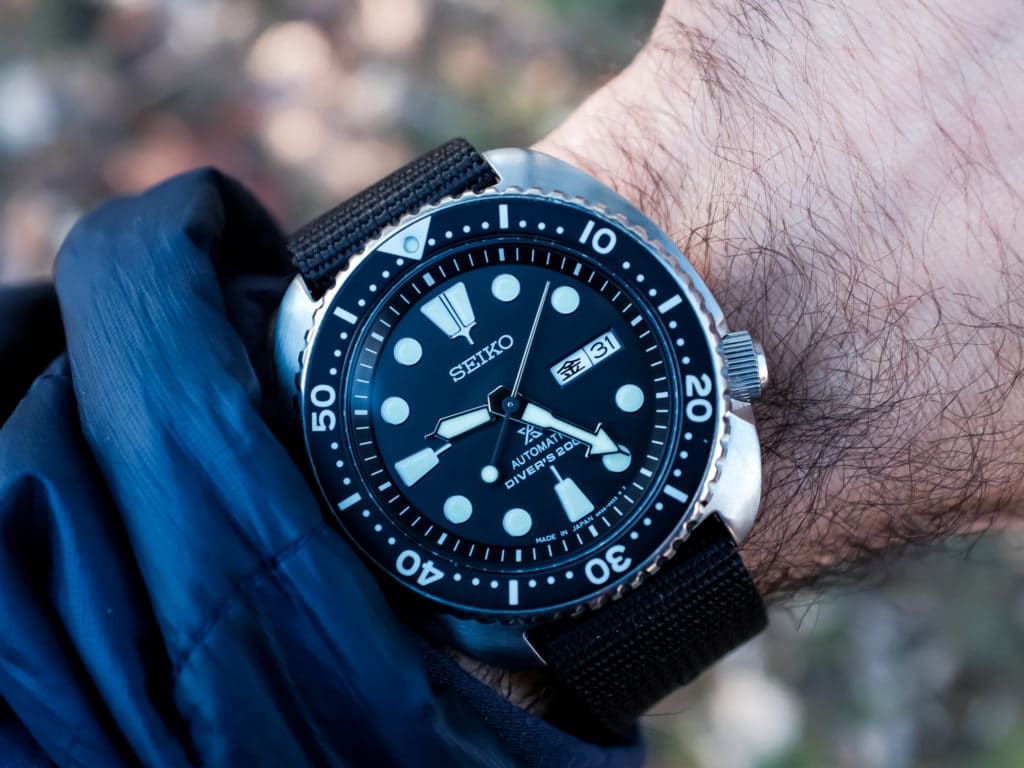
The Seiko Turtle is a natural fit for any list of Japanese dive watches under $1,000 because it offers the defining shape, wrist presence, and practicality people usually associate with an affordable Seiko diver. It carries real dive-watch lineage, but it does not feel like something you’re supposed to admire through glass and then put back in the box. The Turtle works because it still feels like a working watch first. The dimensions can look intimidating on paper, especially with a case over 44mm, but the cushion shape changes the story on the wrist. Instead of sitting tall and clumsy, the case spreads out with a broad, planted feel that makes more sense once you wear it, especially if your wrist can handle larger divers.
Comfort is one of the Turtle’s better tricks. The offset crown sits out of the way, so it avoids digging into the back of the hand when your wrist bends. That matters more over a long day than a spec sheet can explain. Plenty of smaller divers somehow feel more awkward once you start moving around, while the Turtle’s wide case and tucked crown help it settle in. The stock silicone strap is also more usable than older Seiko rubber straps, soft enough that you do not immediately feel the need to shop for a replacement. That said, the Turtle opens up once you put it on different straps. NATOs work especially well with the case shape, making it feel more casual, more knockaround, and better suited for travel, beach days, or weekends where the watch is going to get treated like a watch instead of a collectible.
The dial keeps the experience practical. The matte black surface cuts glare outdoors, and the large Lumibrite markers make the Turtle easy to read without squinting. In low light, those oversized plots help the watch stay useful, whether you are near water or half-awake, and trying to check the time. Hardlex remains the obvious compromise for anyone who wants sapphire, but in normal wear, it holds up well enough and helps keep the watch in a more approachable price range. Even the Prospex “X,” which gets more online attention than it probably deserves, tends to fade into the background once the watch is worn rather than inspected under macro-level scrutiny.
Inside, the 4R36 automatic movement gives the Turtle the everyday usability modern Seiko buyers expect, with hacking and hand-winding that make it easier to live with than older entry-level movements. Accuracy can vary, though. During our review, the watch ran about +35 to +45 seconds per day, which isn’t great if you enjoy timing logs and mild frustration, but it is manageable for daily wear. The bezel action feels solid and reassuring, though alignment can still vary from one example to another. Some versions add extra collector appeal through “Made in Japan” details or a Kanji day wheel. The Kanji display adds character, but it can slow down quick reading once the novelty wears off. That is the Turtle in miniature: full of personality, occasionally imperfect, and still one of the defining affordable Seiko diver shapes for a reason.
Pros
- Offset crown improves long-wear comfort and avoids digging into the hand.
- Matte black dial and large Lumibrite markers offer strong outdoor and low-light legibility.
- The cushion case makes the over-44mm dimensions wear more comfortably than expected.
- 4R36 movement adds hacking and hand-winding for easier everyday ownership.
- Some “Made in Japan” versions and Kanji day-wheel references add extra collector appeal.
Cons
- Bezel alignment can vary between examples.
- 4R36 accuracy may be looser than some buyers want.
- The broad case presence may still be too much for buyers who prefer compact divers.
Seiko Samurai
| Price: | $400 – $500 |
| Water Resistance: | 200m |
| Case Dimensions: | 43.8mm (diameter) x 47mm (lug-to-lug) x 13mm (thickness) |
| Lug Width: | 22mm |
| Movement: | Seiko 4R35 (Mechanical) |
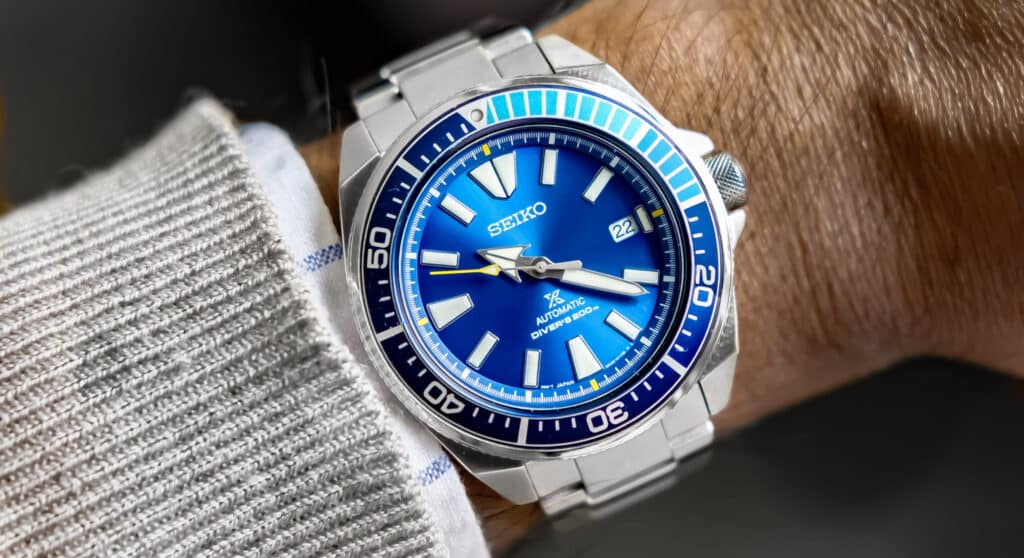
The Seiko Samurai gives this list its angular Seiko option as a sharper, more modern alternative to the rounder SKX and Turtle shapes. It has that familiar Seiko Prospex toughness, but the personality is different. Where the Turtle feels broad and cushiony, the Samurai feels angular, faceted, and a little more severe. The stainless steel case is full of brushed planes, hard transitions, and deep shadow lines, which makes it look more aggressive than many Seiko divers in this price range. On paper, that kind of geometry sounds like it should wear tall and awkward, but in our hands-on experience, the case hugs the wrist better than expected. It still has presence, but not in a clumsy way.
The bracelet is one of the more pleasant surprises. A lot of Seiko divers quietly encourage strap swaps the moment you open the box, but the Samurai’s case and end links flow together well enough that the watch feels complete on its stock bracelet. The 22mm bracelet gives the case enough visual support without making the whole thing feel clunky, and our example felt secure and comfortable for the category. Drilled lugs are still welcome because they make strap changes painless if you want to experiment, but we never felt the same immediate urge to throw it on a NATO. That is not always something we get to say about affordable Seiko divers without laughing a little.
The bezel and crown keep the tool-watch feel moving. The sloped crown guards protect the screw-down crown while still leaving it easy to grip, and the coarse knurling adds to the Samurai’s no-nonsense character. The bezel uses the same visual language, with bold knurling and a firm, confident feel. Our example was noticeably stiff to turn, though, which is worth knowing before buying. It does not ruin the watch, but it is one of those Seiko quirks that reminds you this is still a real-world, affordable diver, not some frictionless fantasy object. The dial helps balance that toughness with day-to-day usability. The blue finish shifts between lighter and darker tones depending on the light, while the applied markers and strong Seiko lume keep the watch easy to read. We also warmed up to the Monster-style hands. They may not please everyone, but they suit the case better than expected and make the design feel more coherent.
Inside, the 4R35 automatic movement keeps things simple and familiar, with hacking, hand-winding, and a 40-hour power reserve. It is dependable, but accuracy expectations should stay realistic. This is not the movement you buy because you enjoy staring at timing results and feeling superior to everyone at dinner. You buy the Samurai because it feels tough, distinctive, and more angular than most affordable Japanese diver picks. The one long-term hesitation is cosmetic: sharp case geometry can show wear less gracefully than a rounder, softer Seiko case. So while the Samurai is absolutely durable, it is not necessarily the carefree beater some people may expect. It is better suited to someone who wants a proper Seiko Prospex diver with toughness, wrist presence, and a little attitude.
Pros
- The angular brushed case feels tough, distinct, and more modern than many classic Seiko diver shapes.
- Sloped crown guards protect the screw-down crown while keeping it easy to use.
- Applied markers, strong Seiko lume, and bold Monster-style hands keep legibility high.
- Bracelet integration is excellent, and the stock bracelet is comfortable for the category.
- Drilled lugs make strap changes easy.
- 4R35 movement adds hacking, hand-winding, and a 40-hour power reserve.
Cons
- The bezel action on our example was very stiff.
- The aggressive case and handset may feel like too much for buyers who prefer softer, more classic dive-watch designs.
- Sharp case geometry may show scratches and wear less gracefully than rounder Seiko divers.
Citizen Promaster Aqualand Depth Meter JP2007-17W
| Price: | $550 |
| Water Resistance: | 200m |
| Case Dimensions: | 50.7mm (diameter) x 51mm (lug-to-lug) x 14.8mm (thickness) |
| Lug Width: | 24mm |
| Movement: | Citizen C520 Quartz |
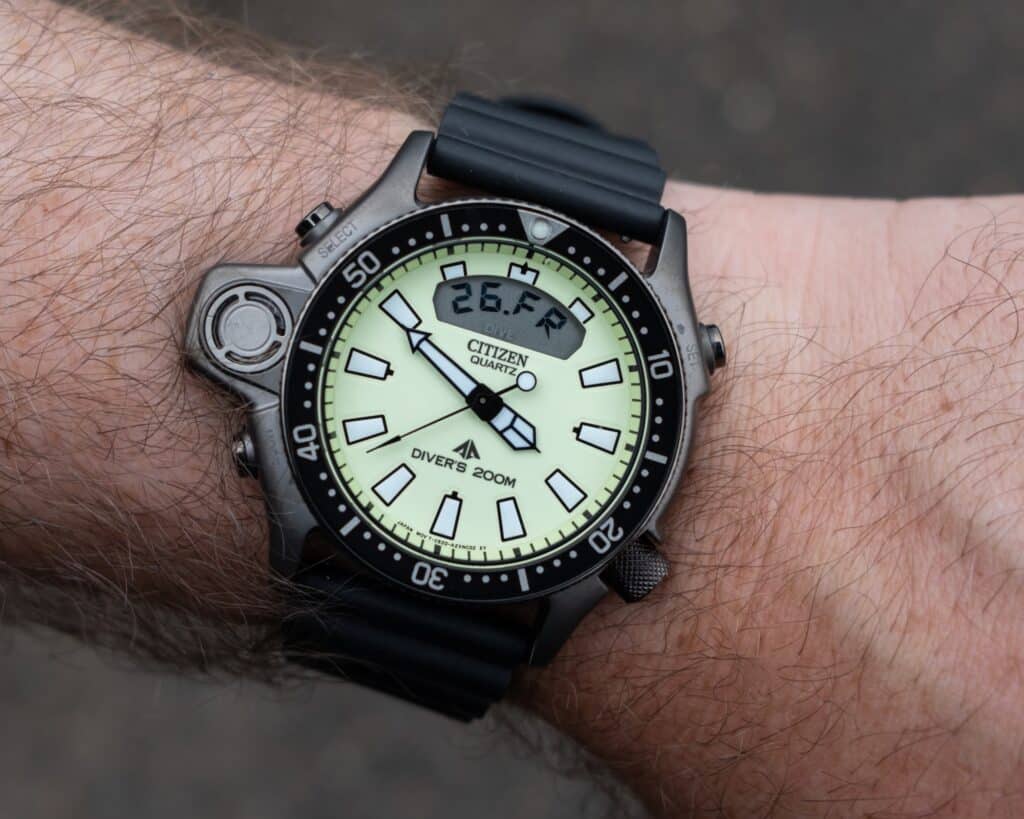
The Citizen Promaster Aqualand earns the wildcard spot here because it is not trying to be another clean, tasteful, three-hand Japanese diver. It is unmistakably Japanese in the best slightly odd way: functional, overbuilt, and more interested in doing a job than looking discreet under a cuff. The main case is around 43mm, but the external depth sensor stretches the total footprint closer to 50mm, and the 24mm strap gives it a wide, planted stance. That sounds like a lot because it is. Smaller wrists may find it excessive, but the size never felt random to us. It reads like equipment, and the bulk makes more sense once you remember what the watch was built to handle.
The feature set is why the Aqualand matters on a list of Japanese dive watches under $1,000. Its dive-computer-style functionality is not decorative window dressing. It can track depth, log dives, set alerts, and warn you if you ascend too quickly. Most owners probably will not use all of that regularly, and we did not either, but that capability changes the watch’s whole personality. It feels more like an instrument that also tells time. On land, the digital side still earns its keep with alarms, chronograph timing, elapsed time, and calendar functions. The interface takes a little patience, but once it clicks, the analog hands and digital display work independently while staying synced after setup, which keeps daily ownership easier than the first few button presses suggest.
The controls and hardware support that tool-first personality. The bezel action is firm, positive, and properly aligned, which we never assume to be guaranteed at this price. The oversized screw-down crown is easy to grip, and the pushers become more intuitive after some wrist time, once you stop prodding at the watch as if it owes you money. Quartz accuracy stays quietly in the background, and honestly, that suits the Aqualand better than a mechanical one would. This is not a watch that needs romance ticking away inside it. The rubber strap fits the same logic: soft, ventilated, secure, and long enough to wear comfortably without constant fiddling. The catch is the 24mm lug width, which limits practical strap options if you like casually remixing your divers.
Legibility is strong, but the piece has its own quirks. The fully lumed dial glows brightly and remains visible for hours, making low-light reading easy. The trade-off is that lighting up the entire dial can soften contrast compared to designs where only the hands and markers glow. It was not a major problem during our testing, but it is noticeable. That sums up the watch pretty well: capable, memorable, slightly strange, and not for everyone. Pre-owned pricing can make it especially appealing if you want a Japanese diver under $1,000 that feels more like functional gear than another familiar case-and-bezel formula.
Pros
- Full dive-computer-style functionality, including depth tracking, dive logging, alerts, and ascent-rate warnings.
- Firm, positive, properly aligned bezel supports the tool-watch feel.
- Oversized screw-down crown is easy to grip.
- Soft, ventilated rubber strap feels secure and comfortable.
- Quartz accuracy suits the low-fuss, instrument-like personality.
Cons
- The overall footprint can feel too large on smaller wrists.
- The fully lumed dial can reduce contrast in certain low-light conditions.
- 24mm lug width limits strap flexibility to an extent.
- The feature interface takes some time to learn.
Seiko Sumo
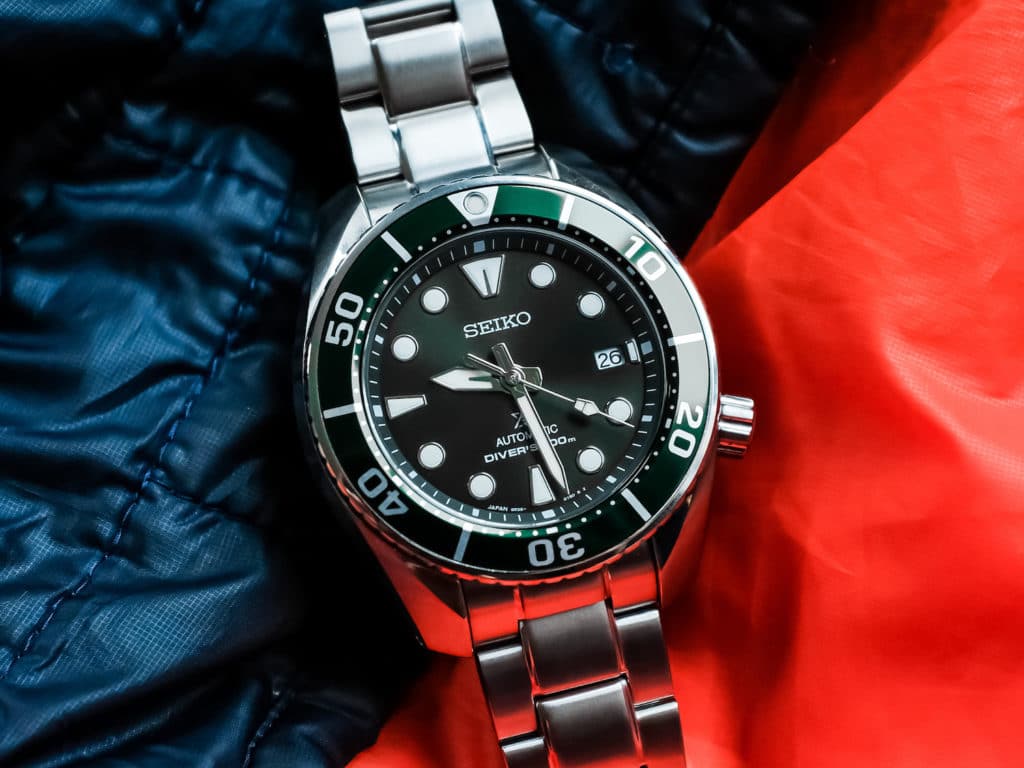
| Price: | $600 – $800 |
| Water Resistance: | 200m |
| Case Dimensions: | 45mm (diameter) x 52.6mm (lug-to-lug) x 13.5mm (thickness) |
| Lug Width: | 20mm |
| Movement: | 6R35 (Automatic Movement) |
The Seiko Sumo enters this conversation because it is one of those enthusiast-loved Seikos that makes more sense on the wrist than on paper. A 45mm case sounds like a warning label, especially if you have been burned by large divers that wear like steel coasters. The Sumo is different. Its long, sweeping lug-to-lug curves and rounded mid-case help the watch sit naturally, so the size feels more controlled than the numbers suggest. For larger wrists especially, this is where the Sumo hits its stride: plenty of presence, but with a softer case profile that keeps it from feeling blocky.
The dial helps the watch feel more versatile than a big Seiko diver. On the blue “Blumo” variant, the color shifts with the light, moving from deep and muted to brighter and more vibrant depending on the angle. Applied round markers with polished surrounds add depth, while the hand-to-dial contrast keeps the time easy to read at a glance. The beveled chapter ring is a nice detail, too. It pulls the eye inward and gives the dial more structure without making the whole thing feel crowded. It still reads as a tool watch, but not one that only works with wet shorts and sunscreen.
Our review team found that the case finishing is a big part of that split personality. You still get the proper dive-watch hardware: 200m of water resistance, a screw-down crown, and a solid caseback. But the mix of brushed and polished surfaces makes the Sumo feel a touch dressier than something like the Turtle. In changing light, the polished edges catch reflections while the brushed surfaces keep the watch from feeling too shiny or precious. That balance is the Sumo’s appeal. It has real diver credibility, but it can stretch into more everyday situations without looking like you forgot to take off your weekend watch.
The bracelet is solid, with brushed tops and polished sides that match the case well, though the proportions can be divisive. The lug width feels narrower than expected for a watch this large, which can make it look a little unusual to some. Strap pairing is also trickier than it should be because the spacing between the case and lugs means not every strap fills the gap cleanly. NATOs tend to work best if you want to change the feel, but the stock bracelet remains the easiest and most coherent option. Inside, the 6R35 automatic movement gives the Sumo a practical ownership edge with hand-winding, hacking, and roughly 70 hours of power reserve. Depending on market pricing, it can sit in an awkward middle ground compared to other Seiko divers. Still, for someone who wants a larger Japanese diver with presence, comfort, and a more refined case personality, the Sumo still earns its place.
Pros
- The large 45mm case wears better than expected, thanks to curved lugs and a balanced, rounded profile.
- 200m water resistance, screw-down crown, and solid caseback give it proper diver credibility.
- Brushed and polished finishing adds versatility beyond a typical tool diver.
- Solid bracelet with brushed tops and polished sides feels coherent with the case.
- 6R35 movement adds hacking, hand-winding, and roughly 70 hours of power reserve.
Cons
- The lug width can feel narrow for a watch this large, which may make the proportions look off.
- Strap pairing can be tricky due to the spacing between the case and the lugs.
- Smaller wrists may still find the 45mm case too much, even with the curved profile.
Please let us know what you think of these Japanese dive watch picks in the comments below. If there’s an affordable sub-$1,000 Japanese diver we missed, especially one you’ve actually worn past the honeymoon phase, share it with us. We’ll do our best to get one in for hands-on review and consider it for a future update to this list.

Co-Founder and Senior Editor
Kaz has been collecting watches since 2015, but he’s been fascinated by product design, the Collector’s psychology, and brand marketing his whole life. While sharing the same strong fondness for all things horologically-affordable as Mike (his TBWS partner in crime), Kaz’s collection niche is also focused on vintage Soviet watches as well as watches that feature a unique, but well-designed quirk or visual hook.
Would love to see a Casio Frogman in this list!!
I’m not super familiar with them but they look great. Don’t they get pretty pricey?
I own a Seicko Turtle watch that needs maintenance and rest accuracy!
Where do I send it for Garnett’s of service
The last place I sent it to Did not correctly tune, maintenance,or accurately reset my Turtles Seicko
Please give me a reputable address and dealer whom will do professional work!
Ross. Sorry to hear about the bad service experience. I’d recommend asking for watchmaker recommendations on WatchUSeek or r/SeikoMods on Reddit. Those communities usually have vetted suggestions based on your location. Good luck getting it sorted.