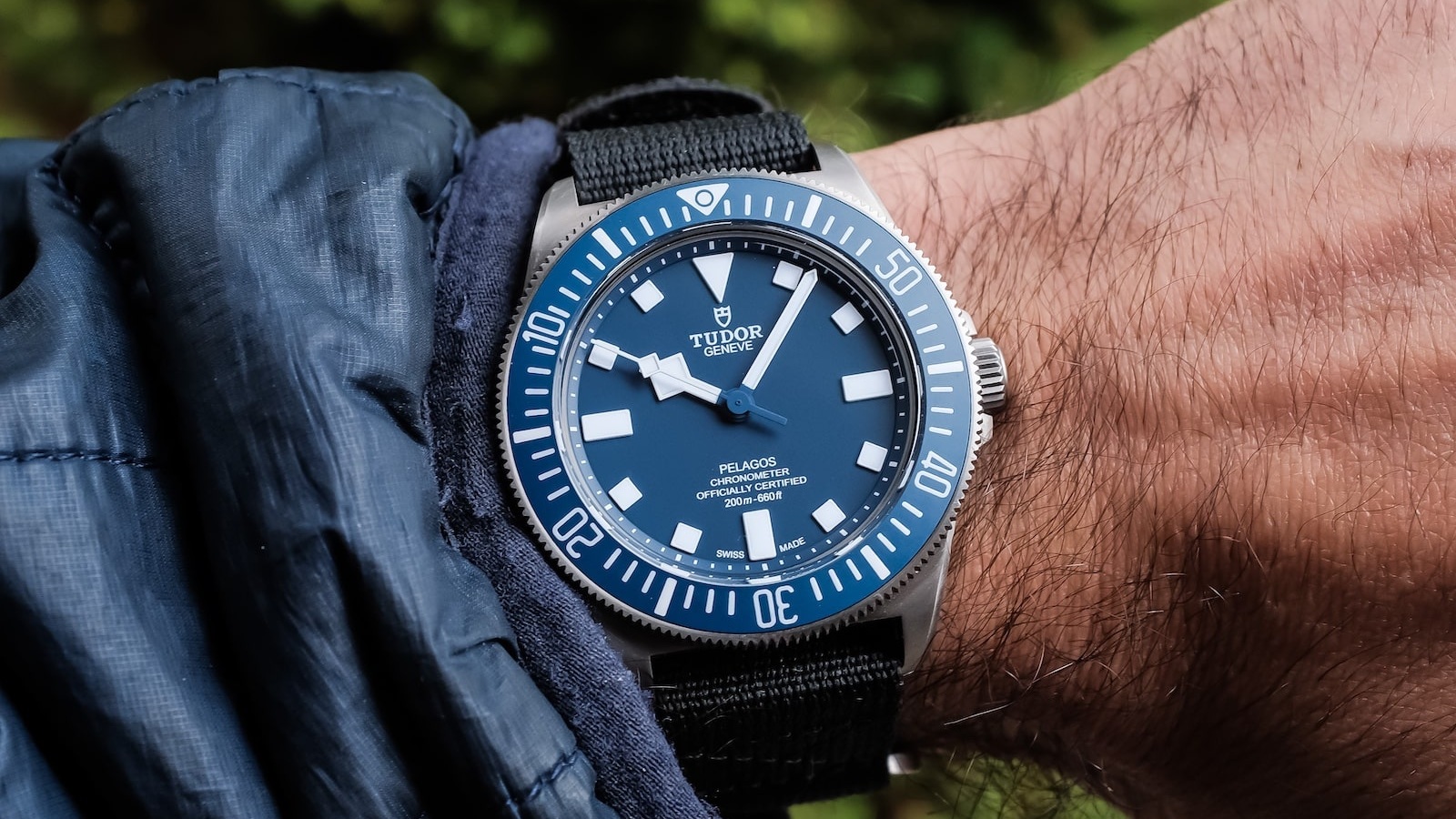
Military dive watches occupy an unusual place in modern collecting. Built around specialized operational demands, the best examples prioritize legibility, durability, and straightforward functionality, qualities that have made them popular far beyond military service. Yet not every watch associated with military diving was originally designed for that purpose. Some were developed to meet specific requirements, while others earned their reputations simply by proving dependable in demanding environments. That distinction becomes particularly interesting when we consider two of the most recognizable dive-watch designs from Tudor and Seiko.
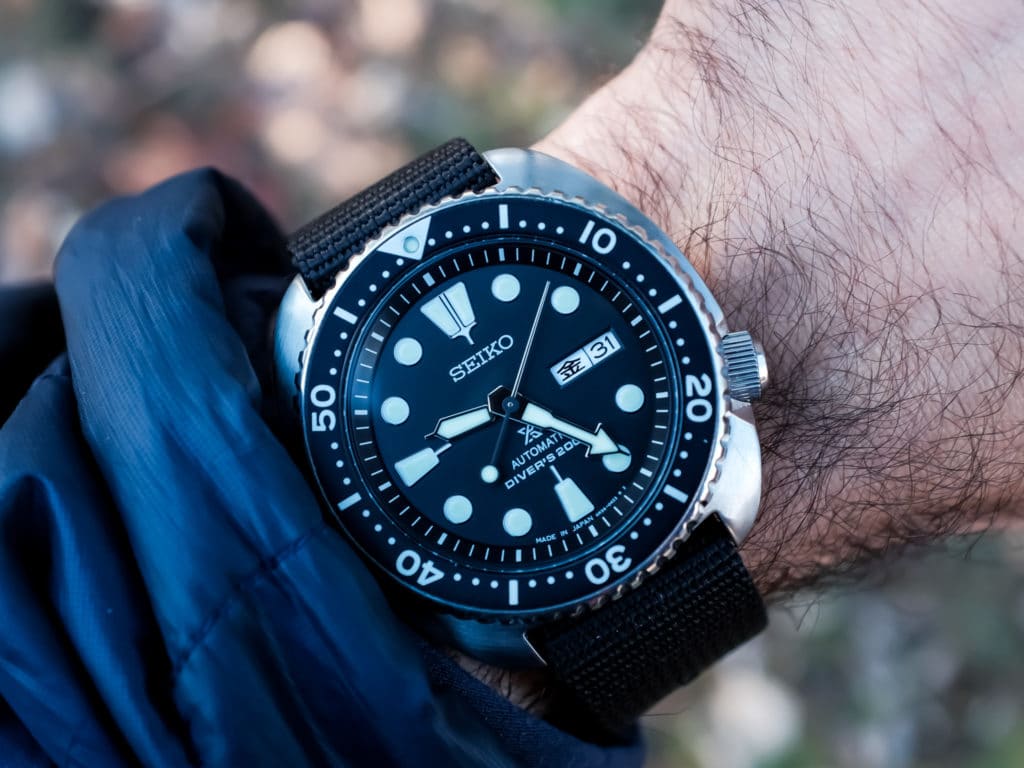
The Tudor Pelagos FXD and Seiko Turtle illustrate that distinction particularly well. Tudor developed the FXD with French Navy combat swimmers, incorporating specialized features that reflect their operational requirements. Seiko’s original 6309 Turtle followed a different path, gaining a reputation among military personnel through its durability, availability, and relatively accessible price. The modern Turtle retains much of that familiar design, even if it isn’t itself a purpose-built military-issued watch. We’ve spent time with both, and the comparison raises an interesting question: how much does specialized military engineering really add to the experience of wearing a capable dive watch?
Overview and Identity
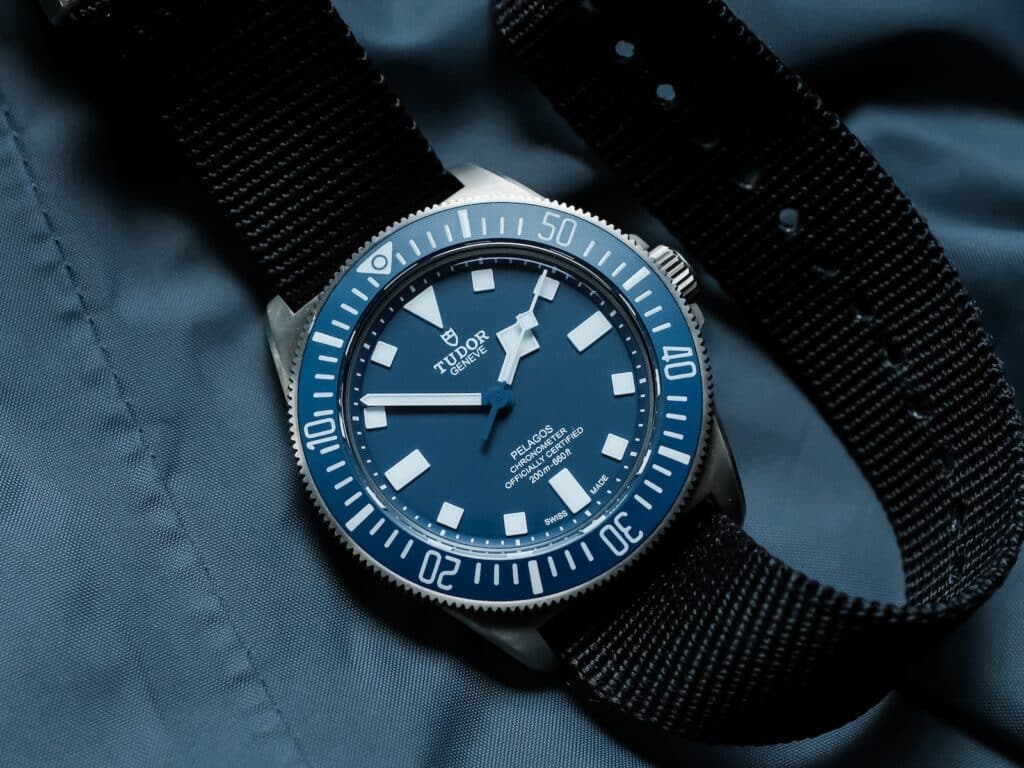
The Tudor Pelagos FXD emerged from a collaboration with the French Navy’s combat swimmers, reviving a connection that stretches back to the military-issued Tudor divers of previous decades. Unlike many watches that borrow military styling for aesthetic purposes, the FXD incorporates features developed around actual underwater navigation requirements. Our hands-on review focused on the original blue Marine Nationale model, which we wore for approximately a week. We were initially skeptical of the enthusiasm surrounding the watch, particularly given how quickly it had become a favorite among tool-watch enthusiasts. Surprisingly, the strongest impression wasn’t its military pedigree. It was how easily such a specialized watch settled into ordinary daily wear.
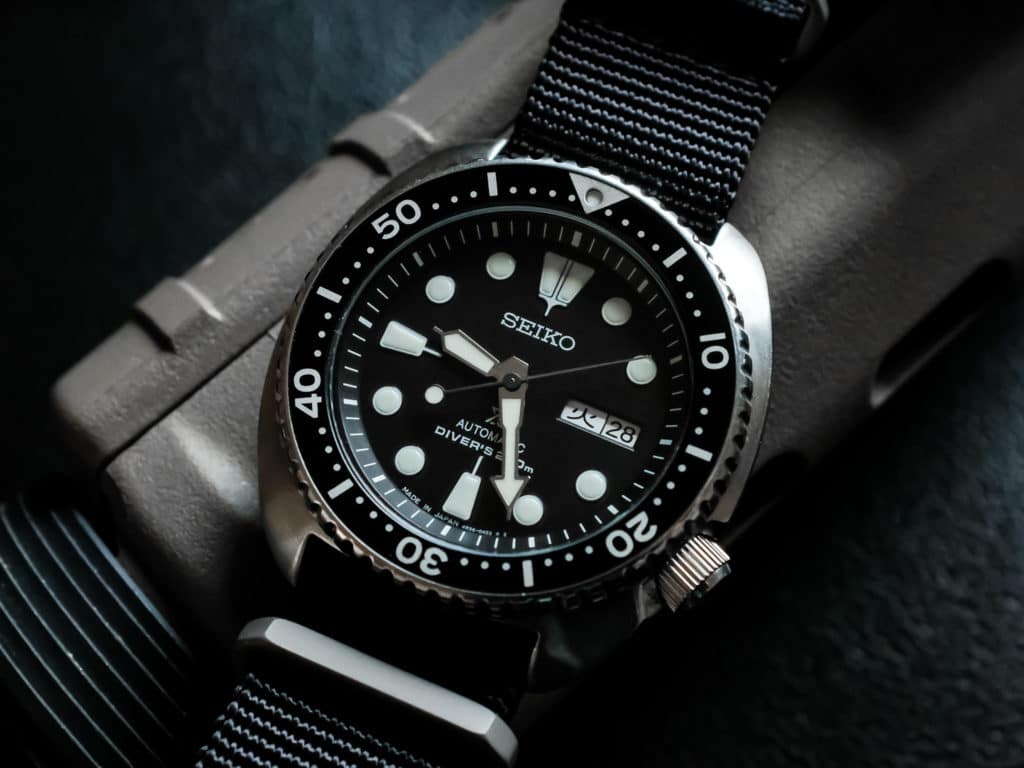
The Seiko Turtle has a different relationship with military history. The original 6309, produced beginning in the 1970s, became a familiar sight among military divers and special operations personnel, with documented examples entering military service. But its origins were fundamentally different from the Tudor’s. It was a relatively inexpensive civilian dive watch whose practicality made it attractive to people working in demanding environments. Our review covers the SBDY015, a Japanese-market interpretation of the SRP777 with a black dial and Kanji day wheel. After owning several modern Turtles over the years, this was the example that remained in our collection. That extended ownership gives us a particularly useful perspective on whether Seiko’s straightforward approach continues to make sense.
Dial and Straps/Bracelets: Tudor’s Military Precision vs Seiko’s Familiar Simplicity
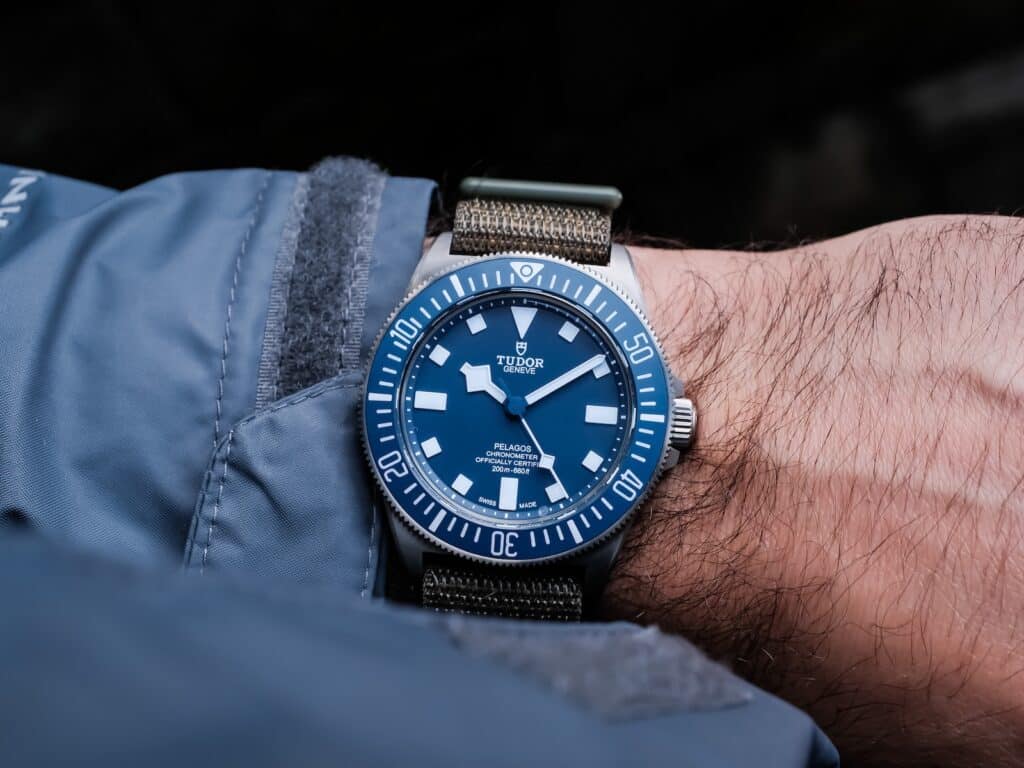
The Tudor Pelagos FXD features a dark navy-blue dial that looks considerably more restrained in person than the brighter blue associated with some other Pelagos models. Against the fully matte titanium case, the color gives the watch a distinctly utilitarian appearance without making it feel dull. Tudor also simplified the dial by eliminating the date and reducing some of the visual clutter found elsewhere in the collection. The familiar snowflake hands and large hour markers create excellent contrast, while the uncluttered arrangement makes reading the time almost effortless. During our week with the watch, we appreciated how little attention the dial demanded despite its unmistakable identity.
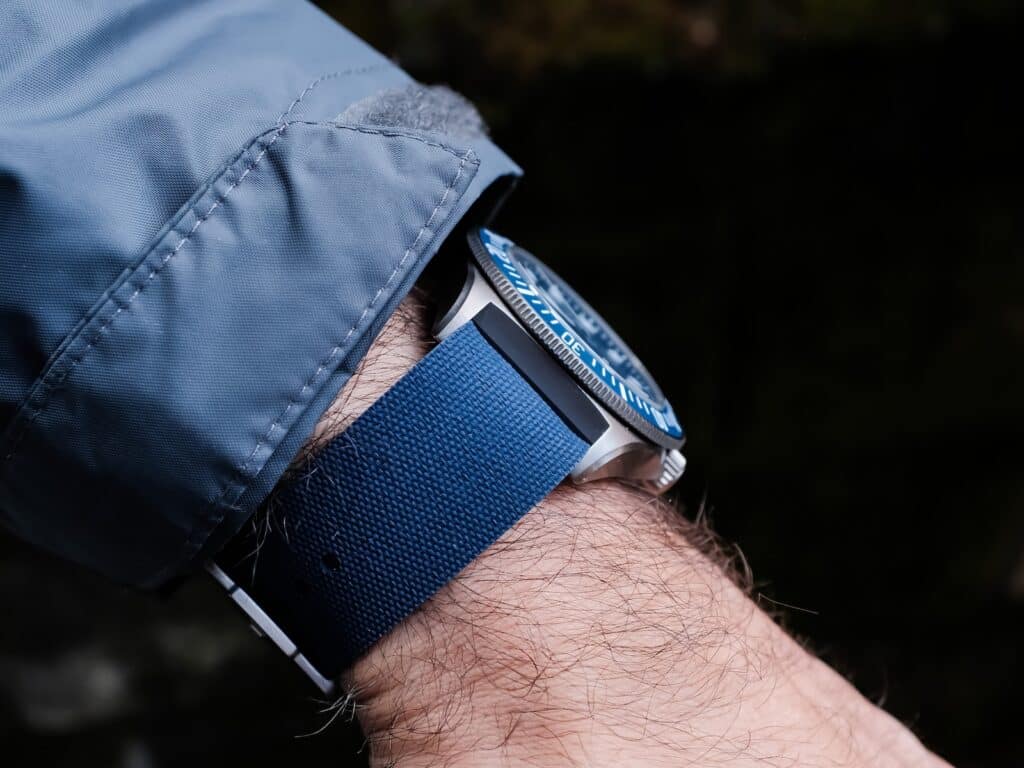
The FXD’s fixed strap bars are central to its military-inspired construction, and they also influence how we wear it. Rather than relying on conventional spring bars, Tudor machines the bars directly into the titanium case, providing additional security at the expense of some strap flexibility. The included rubber strap felt suitably robust, but we spent much of our review experimenting with aftermarket options. A Prometheus Design Werx Ti-Ring strap and a Watches of Espionage Glomar Explorer strap were particular favorites, while even inexpensive elastic straps worked surprisingly well. There’s a slight chamfer along the fixed bars to help reduce strap wear, a detail we appreciated once we started experimenting. The obvious limitation is that traditional bracelets and many conventional two-piece straps are effectively off the table.
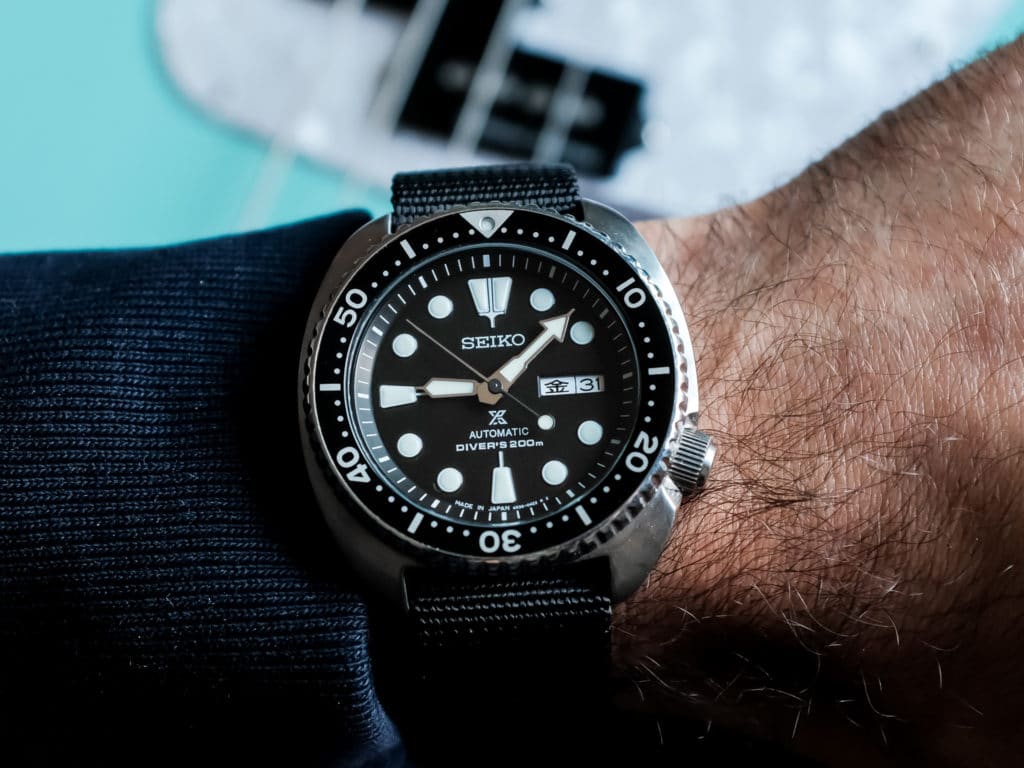
The Seiko Turtle SBDY015 is considerably more traditional, with a matte black dial, substantial luminous markers, and the familiar handset that has defined generations of Seiko divers. It’s difficult to identify anything especially elaborate about the design, but that’s precisely why it works. The large markers are easy to distinguish, and the overall balance makes the time immediately legible. Our Japanese-market example adds a few details that appeal to the collector in us, particularly the Made in Japan dial printing and Kanji day wheel. Neither improves the practical experience, and we occasionally find the Kanji display less useful than an English day wheel. Still, they’re the sort of small distinctions that make owning a particular reference enjoyable.
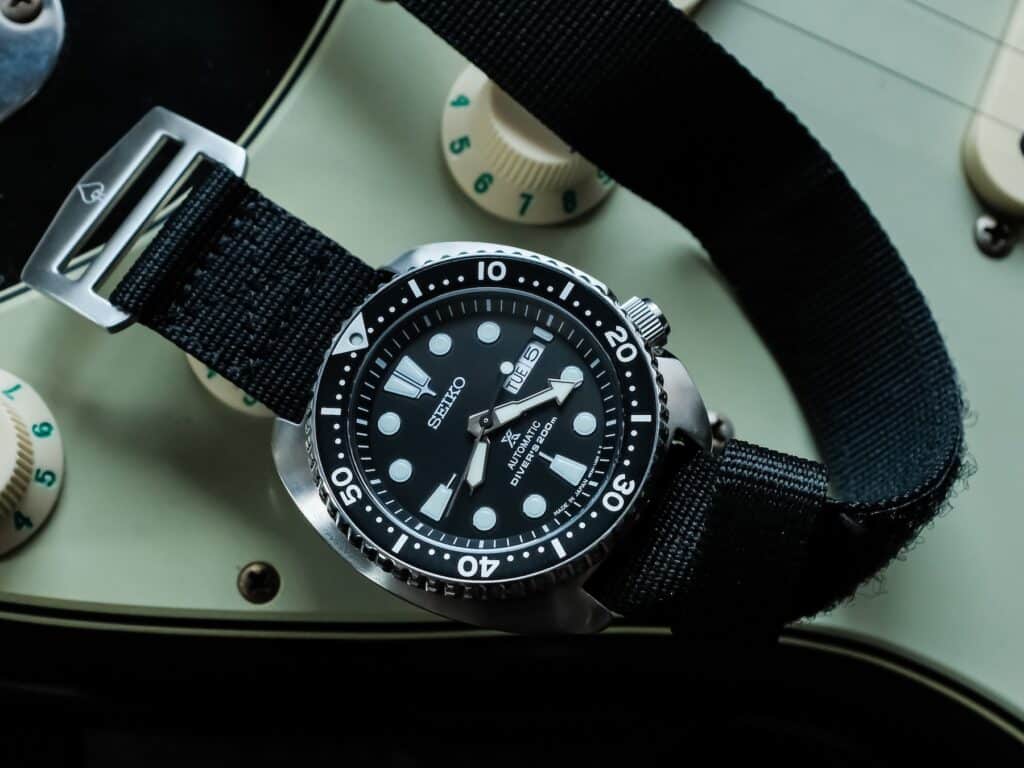
The Turtle is also exceptionally accommodating when it comes to straps. Our example originally arrived with one of Seiko’s soft, vented silicone straps, complete with a substantial buckle and steel keeper. It’s a comfortable factory option, although we’ve spent considerably more time wearing the watch on alternatives. A Ute strap became a regular choice, and a Prometheus Design Werx Ti-NATO with titanium hardware proved particularly satisfying. There’s something about the Turtle’s familiar cushion case that seems to work with almost anything. Unlike the Tudor, it also retains conventional spring bars, leaving us free to experiment with a much wider range of configurations. We haven’t tested this particular Turtle on its available factory steel bracelet, so we wouldn’t want to invent impressions about that setup.
Build Quality & Technical Approach
Both watches demonstrate how effective a straightforward mechanical dive watch can be, but their construction reflects very different priorities. Tudor has concentrated on specialized features, carefully controlled finishing, and movement performance appropriate for a modern professional instrument. Seiko offers a more conventional dive-watch design that has developed a reputation for practical reliability without demanding an especially large investment. Their shared 200-meter water-resistance rating suggests some common ground, but the details reveal two distinct philosophies.
Movements
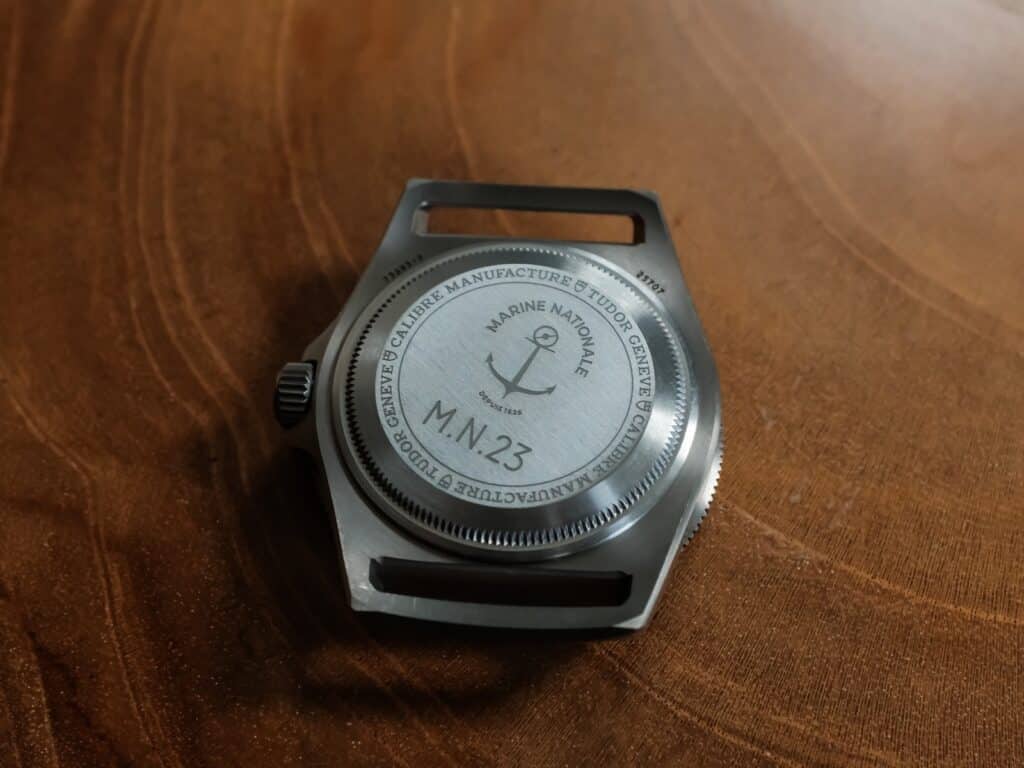
The Tudor Pelagos FXD uses the automatic MT5602 manufacture caliber, offering approximately 70 hours of power reserve and COSC chronometer certification. We approached the movement with some skepticism because our previous experiences with Tudor’s in-house calibers hadn’t always been entirely positive. Fortunately, the FXD performed exceptionally well during our review. Accuracy was consistently reassuring, and the extended power reserve made it convenient to rotate the watch in and out of the collection without constantly resetting it. There isn’t much spectacle associated with the movement, particularly because Tudor conceals it behind a solid caseback. But that restraint seems appropriate for a watch intended to prioritize reliability over decorative complexity.
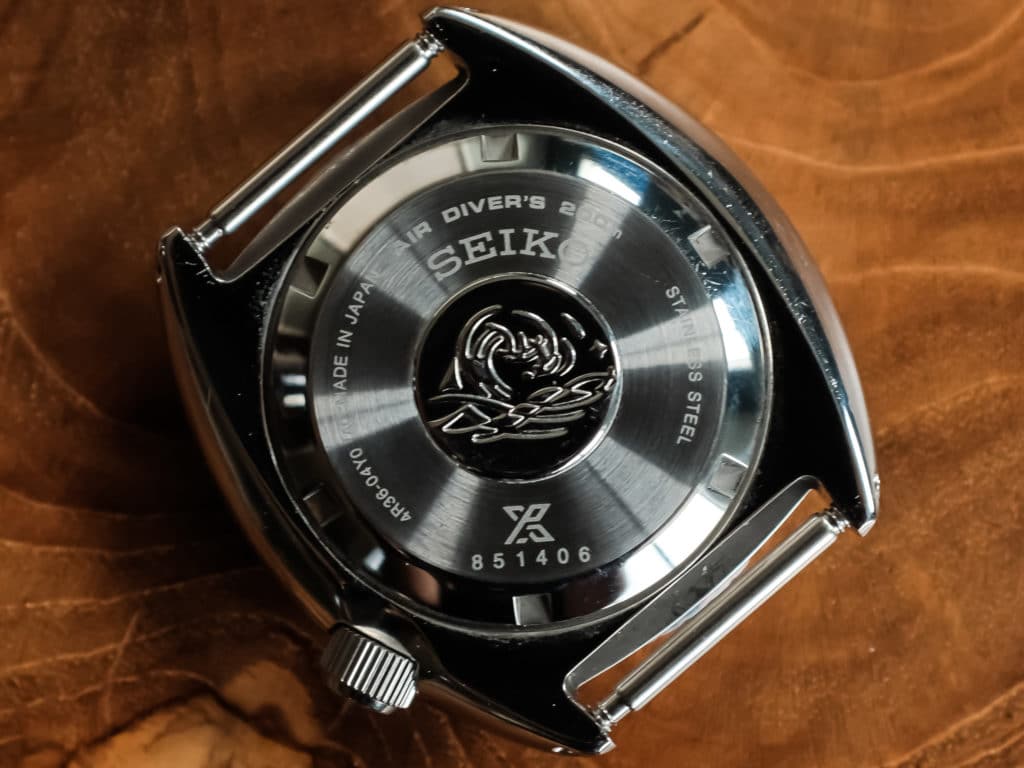
The Seiko Turtle uses the familiar 4R36 automatic movement, offering hacking seconds, manual winding, and approximately 40 hours of power reserve. It’s an evolution of the architecture that powered generations of affordable Seiko watches, and its appeal comes largely from that familiarity. Our SBDY015 performed comfortably within Seiko’s published accuracy tolerances, although we’ve always felt that 4R movements can vary considerably from one example to another. We wouldn’t expect it to match the Tudor’s chronometer certification or extended power reserve, but that doesn’t make it unsuitable for regular use. After living with the Turtle for years, we’ve found the movement dependable enough that any desire for greater precision feels more like a collector’s preference than a practical necessity.
The Tudor unquestionably offers the stronger movement specifications. Its chronometer certification, longer power reserve, and demonstrated performance during our review provide meaningful advantages over the Seiko. Nevertheless, we’re not convinced those differences alone would justify spending several thousand dollars more for someone who simply wants a reliable automatic diver. Both movements support the fundamental experience of wearing a mechanical watch, and neither requires much attention during ordinary use. We’d choose Tudor for refinement and accuracy, but Seiko remains difficult to criticize when viewed in the context of its price.
Case Construction, Finishing & Wearability
The Tudor Pelagos FXD measures 42mm across, approximately 52mm lug to lug, and 12.75mm thick. On paper, that length sounds particularly demanding, especially when we consider that the fixed bars extend across the case rather than allowing conventional spring bars to sit between the lugs. In practice, we were surprised by how comfortably it wore. The relatively slim profile and lightweight titanium construction help offset the substantial footprint, and the FXD feels noticeably less bulky than the standard Pelagos. Despite its longer lug-to-lug measurement, the FXD manages to feel remarkably balanced on the wrist, particularly when compared with the thicker and heavier Seiko Turtle.
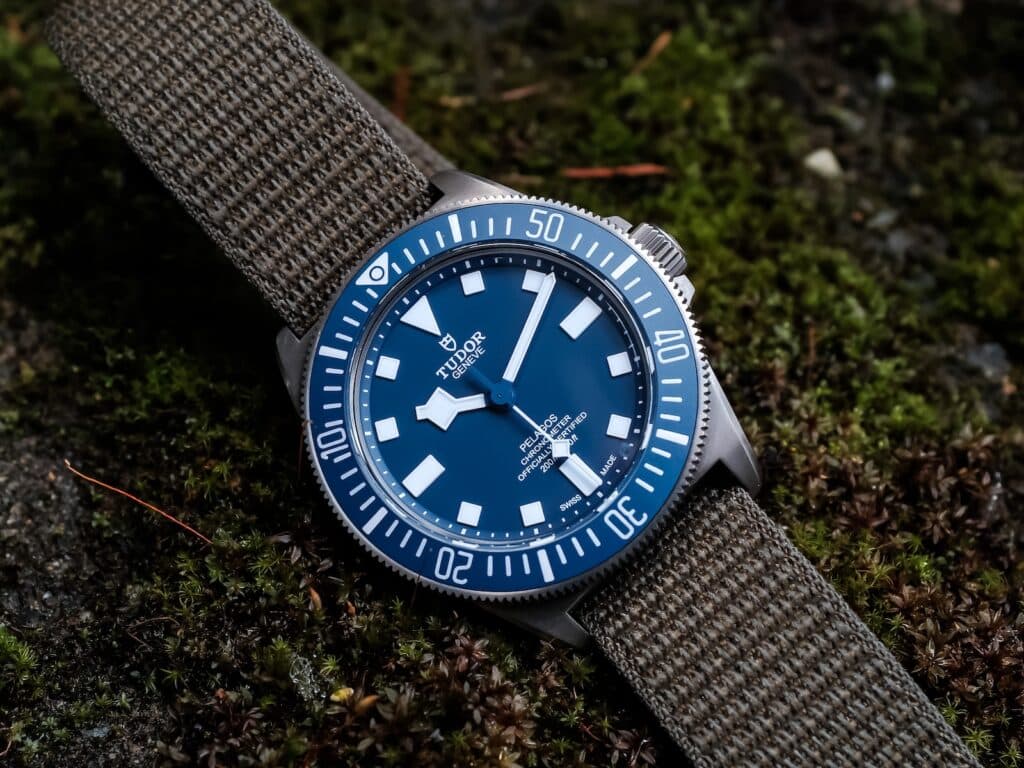
Tudor’s case finishing is particularly impressive without becoming unnecessarily elaborate. The brushing is consistent, the lines are sharply defined, and the matte surfaces reinforce the FXD’s functional identity. We also appreciate that Tudor resisted the temptation to include every possible dive-watch feature. The standard Pelagos’s helium escape valve is gone, and the water-resistance rating drops from 500 to 200 meters. Those changes might look like compromises in a specification comparison, but they contribute to a more focused design. The fixed bars are another example of Tudor prioritizing a particular use case rather than trying to accommodate every collecting preference. It’s a remarkably thoughtful piece of construction.
The Seiko Turtle takes a different approach to wrist presence. Our SBDY015 measures 44.3mm across, approximately 48mm lug to lug, and 14mm thick, making it wider and thicker than the Tudor but notably shorter from end to end. Those dimensions contribute to the surprisingly comfortable fit that has made the Turtle popular for so many years. The cushion-shaped case curves naturally around the wrist, while the recessed crown at four o’clock avoids the awkward contact we occasionally encounter with more conventionally positioned crowns. We’ve worn the watch extensively on a 6.75-inch wrist and never found its substantial diameter particularly difficult to accommodate.
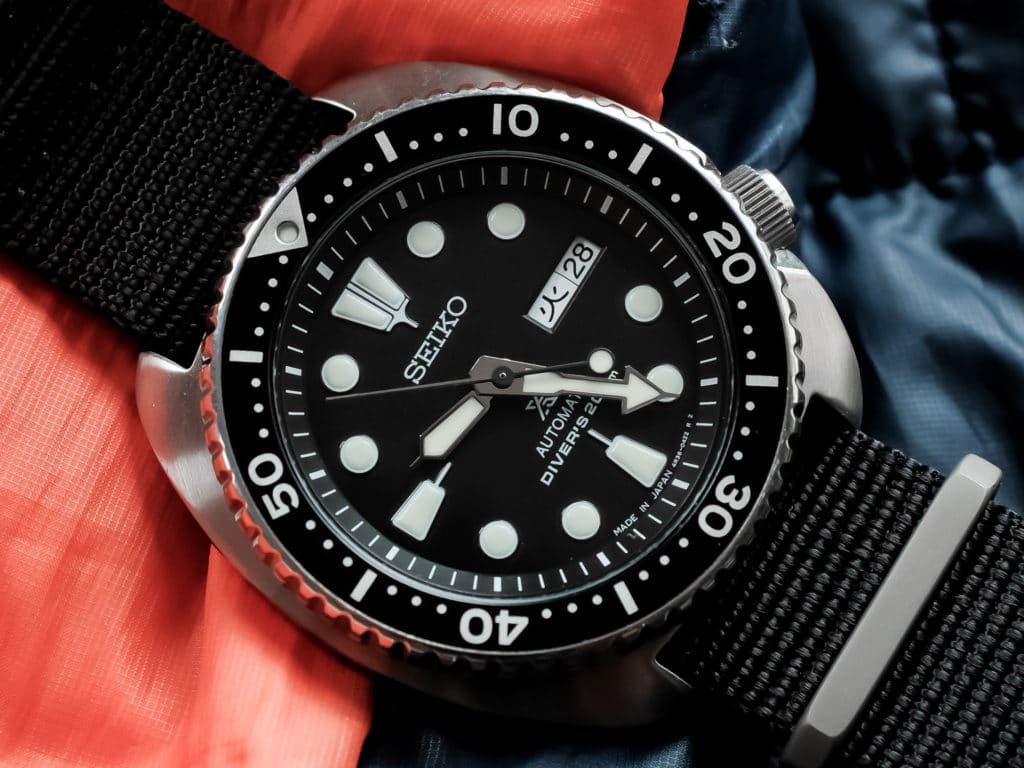
The Turtle’s stainless steel construction doesn’t attempt to match Tudor’s refined titanium finishing, but it has its own strengths. The asymmetrical case design provides a reassuring sense of solidity, and the short lugs help balance what would otherwise be a fairly imposing watch. We still wish Seiko had preserved the even shorter lug arrangement of the original 6309, although the modern interpretation remains comfortable. Our biggest frustration concerns the familiar alignment problems associated with some Seiko dive watches. Our example has a noticeably misaligned bezel insert, which is disappointing given how satisfying the bezel otherwise feels to operate. Tudor delivers the more precise construction, but the Seiko’s proportions and durability continue to make it an extremely enjoyable everyday diver.
Crystals and Bezels
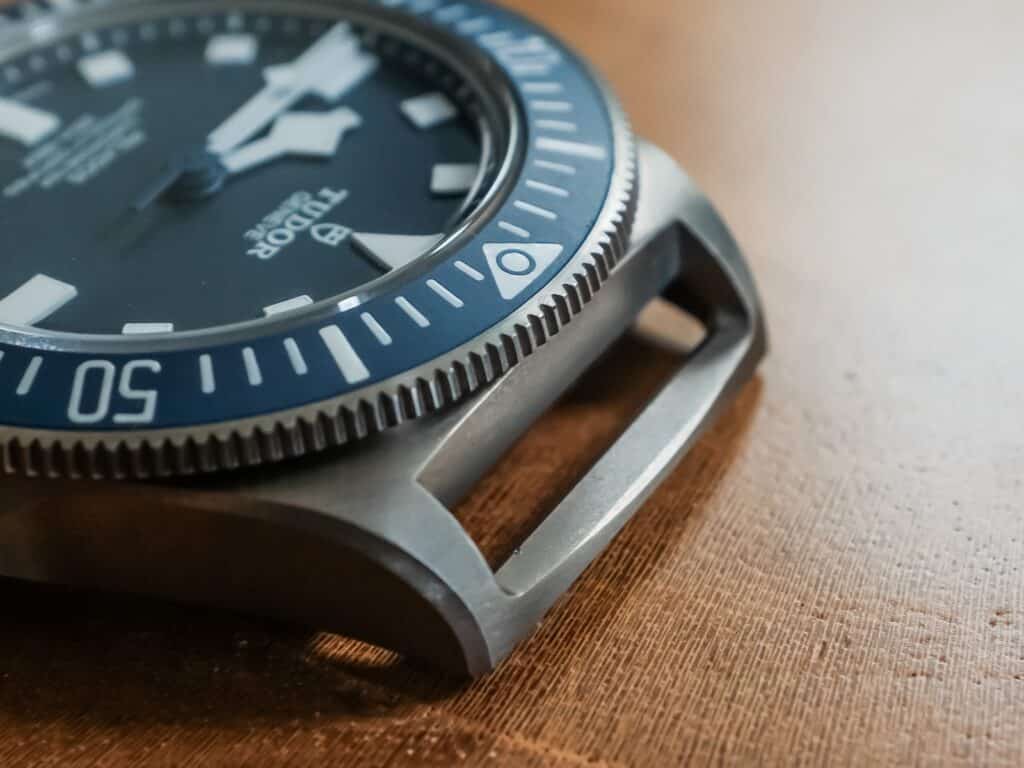
The Tudor Pelagos FXD uses a sapphire crystal and a bidirectional rotating bezel with a fully luminous ceramic insert. Unlike a conventional dive bezel intended to measure elapsed time, the FXD’s countdown-style markings are arranged for underwater navigation using predetermined stages. The distinction isn’t merely decorative, and it helps explain why the watch was developed in collaboration with military divers rather than simply inspired by them. During our review, the 120-click action felt particularly crisp, and the substantial knurling made the bezel remarkably easy to grip. Combined with the full luminous treatment, it’s one of the most distinctive and satisfying elements of the watch.
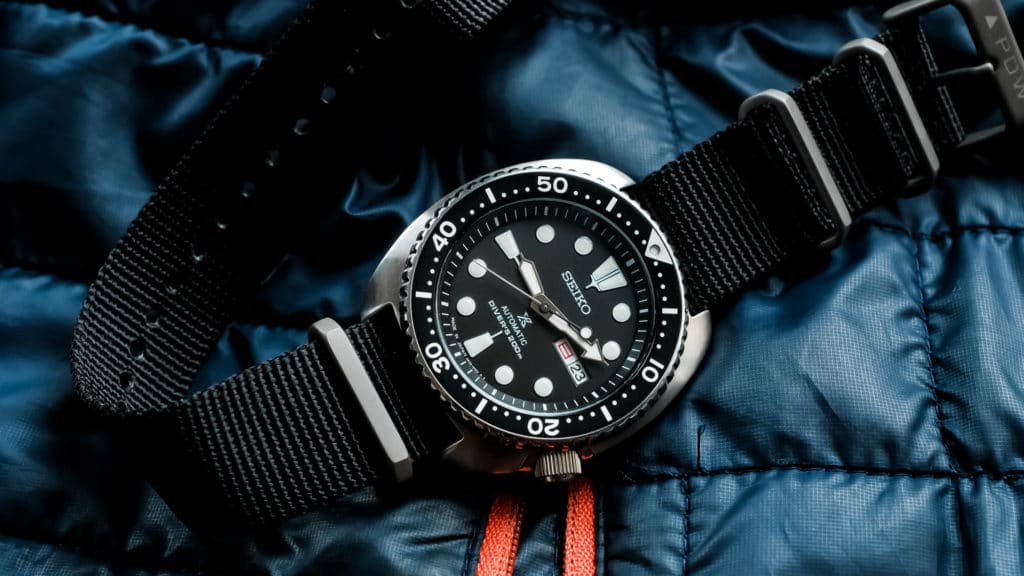
The Seiko Turtle uses a Hardlex crystal and a conventional unidirectional rotating bezel with an aluminum insert. Neither material sounds particularly impressive next to Tudor’s sapphire and ceramic, although we’ve never found Hardlex to be a major obstacle during our years of ownership. The bezel operates smoothly and feels appropriate for a practical dive watch, even if the alignment issue on our example remains difficult to overlook. Seiko’s elapsed-time arrangement is also more familiar to most recreational divers and watch enthusiasts. Where Tudor offers specialized navigation functionality, Seiko provides a straightforward timing bezel that’s easy to understand and use. We’d give Tudor the advantage in materials and execution, but the Seiko’s conventional design has its own practical appeal.
Water Resistance & Lume
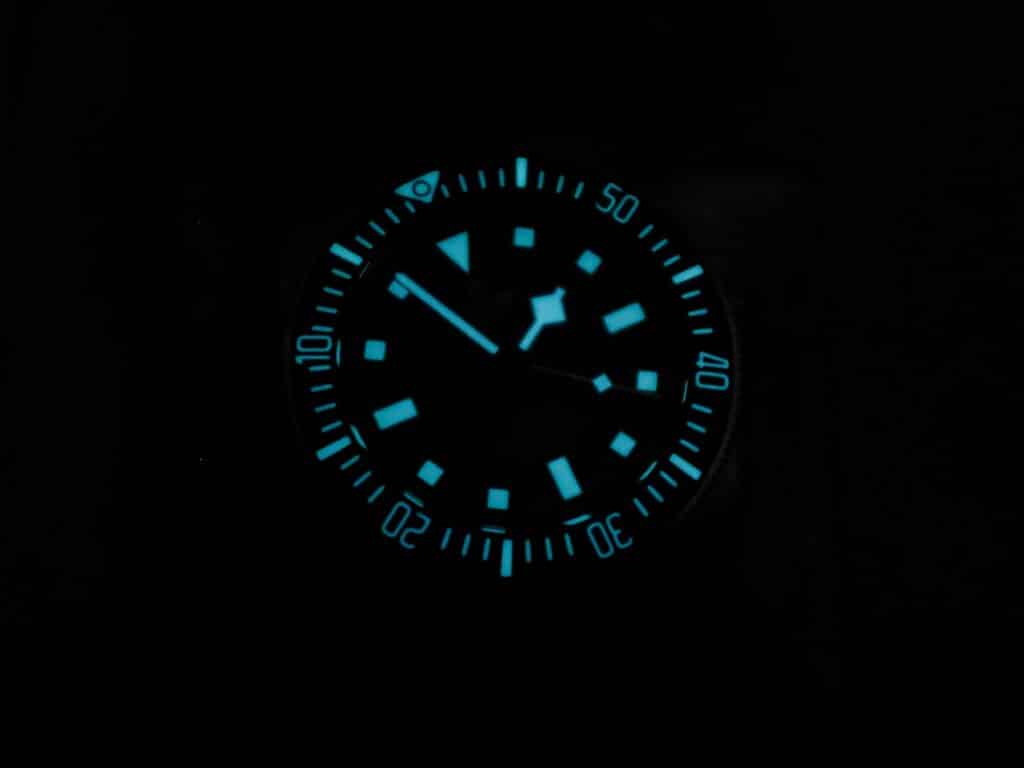
The Tudor Pelagos FXD offers 200 meters of water resistance, supported by a screw-down crown and its specialized case construction. That rating is lower than the standard Pelagos, but it remains entirely appropriate for the FXD’s intended purpose. The luminous treatment is another standout feature, with the dial markers, hands, and bezel insert designed to remain clearly visible in darkness. We found the combination exceptionally legible during our review, particularly because Tudor hasn’t crowded the dial with unnecessary information. It’s a watch that communicates its purpose through practical details rather than relying solely on military branding.
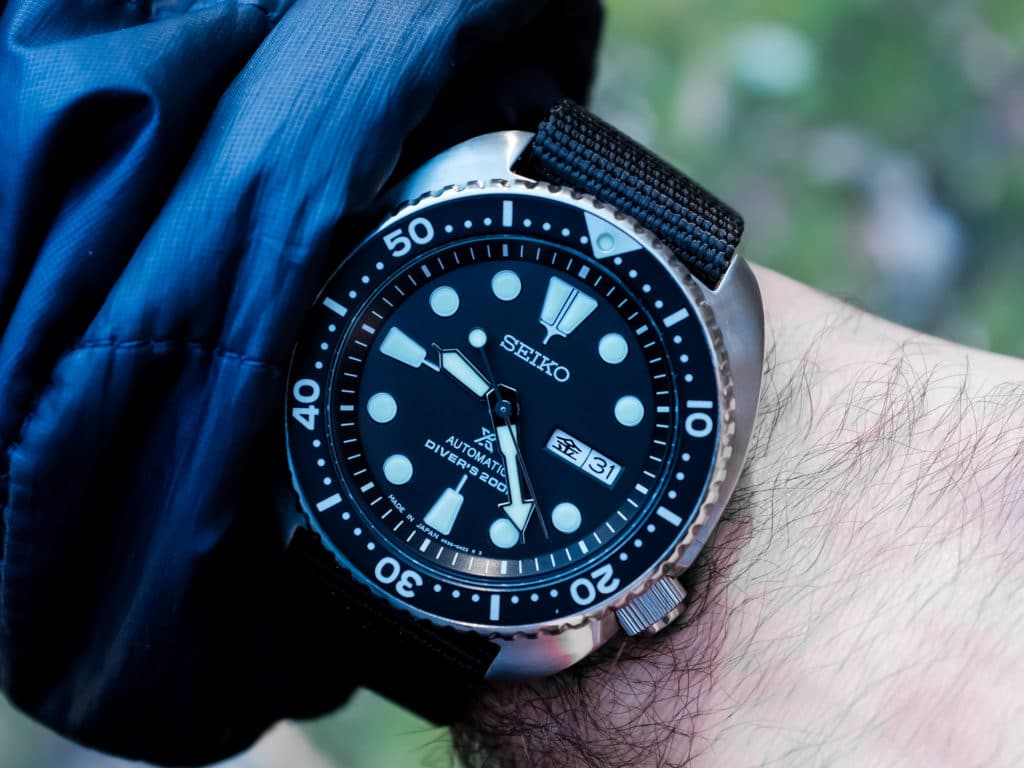
The Seiko Turtle also offers 200 meters of water resistance, supported by a screw-down crown positioned at four o’clock. Its straightforward construction has made the design appealing to recreational divers and everyday enthusiasts for decades. The generously applied LumiBrite is one of Seiko’s familiar strengths, and our example has always been exceptionally easy to read in low light. We appreciate how clearly the large markers stand apart from one another, especially against the matte black dial. The Tudor’s fully luminous bezel introduces another useful dimension, but the Seiko remains a genuinely capable diver without requiring a more elaborate display. We wouldn’t claim a winner for luminous longevity without a controlled comparison.
Cost Considerations
The Tudor Pelagos FXD currently carries a U.S. retail price of approximately $5,025 for the blue model. That’s a considerable investment for a three-hand automatic dive watch, although the FXD offers features that go well beyond basic timekeeping. Its titanium case, chronometer-certified movement, specialized countdown bezel, and fixed strap bars reflect a deliberate effort to create something suited to professional underwater navigation. We also appreciate that the watch feels genuinely refined without becoming overly polished or delicate. After spending a week with it, we understood why so many enthusiasts had embraced the design, particularly those who appreciate military watches with a direct connection to their intended purpose.
Nevertheless, spending more than $5,000 on a dive watch introduces expectations that aren’t necessarily relevant to the way most of us wear our watches. The FXD’s fixed bars limit bracelet compatibility, and its specialized bezel isn’t something we’d use for underwater navigation during an ordinary week. Neither concern diminishes the quality of the execution, but they make it difficult to justify the purchase purely through practical functionality. What we’d really be paying for is the combination of refinement, a distinctive design philosophy, and the satisfaction of owning a modern Tudor that feels particularly faithful to its military roots.
The Seiko Turtle currently carries a U.S. retail price of $525 for the SRPE93, the modern counterpart to the Japanese-market SBDY015 we reviewed. While there are minor differences between these references, including the Kanji day wheel on our example, they share the fundamental design and functionality that make the Turtle appealing. At roughly one-tenth the retail price of the Tudor, the Seiko offers an automatic movement, a comfortable stainless steel case, substantial water resistance, and the familiar styling that has made this collection so enduring.
The strongest argument for the Seiko isn’t simply that it costs less. We’ve owned several Turtles over the years, and the SBDY015 has remained in the collection while other watches have come and gone. That kind of lasting appeal matters more than another list of specifications. We enjoy its familiar case design, straightforward dial, comfortable strap options, and generally uncomplicated ownership experience. The movement could be more precise, and the bezel alignment issue is frustrating, but neither has prevented us from appreciating the watch. For someone who wants a capable automatic diver without committing thousands of dollars, the Turtle remains remarkably difficult to dismiss.
The price difference ultimately makes this a comparison of priorities rather than a conventional contest between similarly positioned products. Tudor delivers finer finishing, stronger movement specifications, and genuinely specialized functionality. Seiko counters with a design that has already demonstrated its appeal through decades of use and a modern interpretation that remains highly accessible. We don’t think the FXD needs to be ten times better to justify its existence, and the pleasure of owning a particularly well-executed watch shouldn’t be dismissed simply because a cheaper alternative performs many of the same tasks. But if we’re concentrating on value and everyday functionality, the Seiko makes an exceptionally persuasive argument.
Final Thoughts: Tudor Pelagos FXD or Seiko Turtle?
The Tudor Pelagos FXD surprised us with how approachable it felt despite its specialized construction. We expected a watch defined by military features, aggressive dimensions, and a somewhat demanding wearing experience. Instead, we found an exceptionally comfortable titanium diver with a thoughtfully restrained dial, excellent bezel action, and enough personality to stand apart from other modern Tudor models. The fixed bars and countdown bezel won’t appeal to everyone, but that’s also what makes the FXD interesting. It’s one of those uncommon watches where the specialized features feel like genuine design decisions rather than details included primarily to impress enthusiasts.
The Seiko Turtle has earned our appreciation through a different kind of experience. After owning several examples and eventually settling on the SBDY015, we’ve come to regard the design as one of Seiko’s most satisfying affordable divers. Its familiar case shape, excellent legibility, and ability to work with almost any strap make it remarkably easy to enjoy. There’s also something appealing about knowing that the original 6309 established a reputation through actual use rather than a modern marketing campaign. The current Turtle isn’t a military-issued watch, but it carries forward many of the qualities that made its predecessor attractive to people who needed dependable equipment.
There are convincing reasons to choose either watch. Tudor offers the more refined movement, superior finishing, and specialized military-oriented construction, while Seiko delivers the essentials in a package that has proven comfortable and dependable over years of ownership. The FXD would be particularly appealing to collectors who appreciate the details of its Marine Nationale collaboration and want something more specialized than a conventional recreational diver. The Turtle makes more sense for someone who values versatility, familiarity, and the ability to wear a watch regularly without worrying about an especially expensive purchase. Neither philosophy is inherently more authentic, even if the watches arrived at their reputations through different paths.
Our pick for overall value is the Seiko Turtle, although that shouldn’t be mistaken for a criticism of the Tudor Pelagos FXD. The Tudor is unquestionably the more sophisticated watch, and its specialized design gives it an identity few modern divers can match. But the Seiko delivers an enormous amount of the practical enjoyment we associate with a good mechanical dive watch at a fraction of the price. We’ve kept coming back to the Turtle for years, and the FXD’s impressive performance during a week of wear doesn’t erase that experience. If money were no object, we’d happily make room for the Tudor. But if we’re deciding where our own money goes, the Turtle reminds us that a great dive watch doesn’t necessarily need to be an expensive one.

Co-Founder and Senior Editor
Kaz has been collecting watches since 2015, but he’s been fascinated by product design, the Collector’s psychology, and brand marketing his whole life. While sharing the same strong fondness for all things horologically-affordable as Mike (his TBWS partner in crime), Kaz’s collection niche is also focused on vintage Soviet watches as well as watches that feature a unique, but well-designed quirk or visual hook.