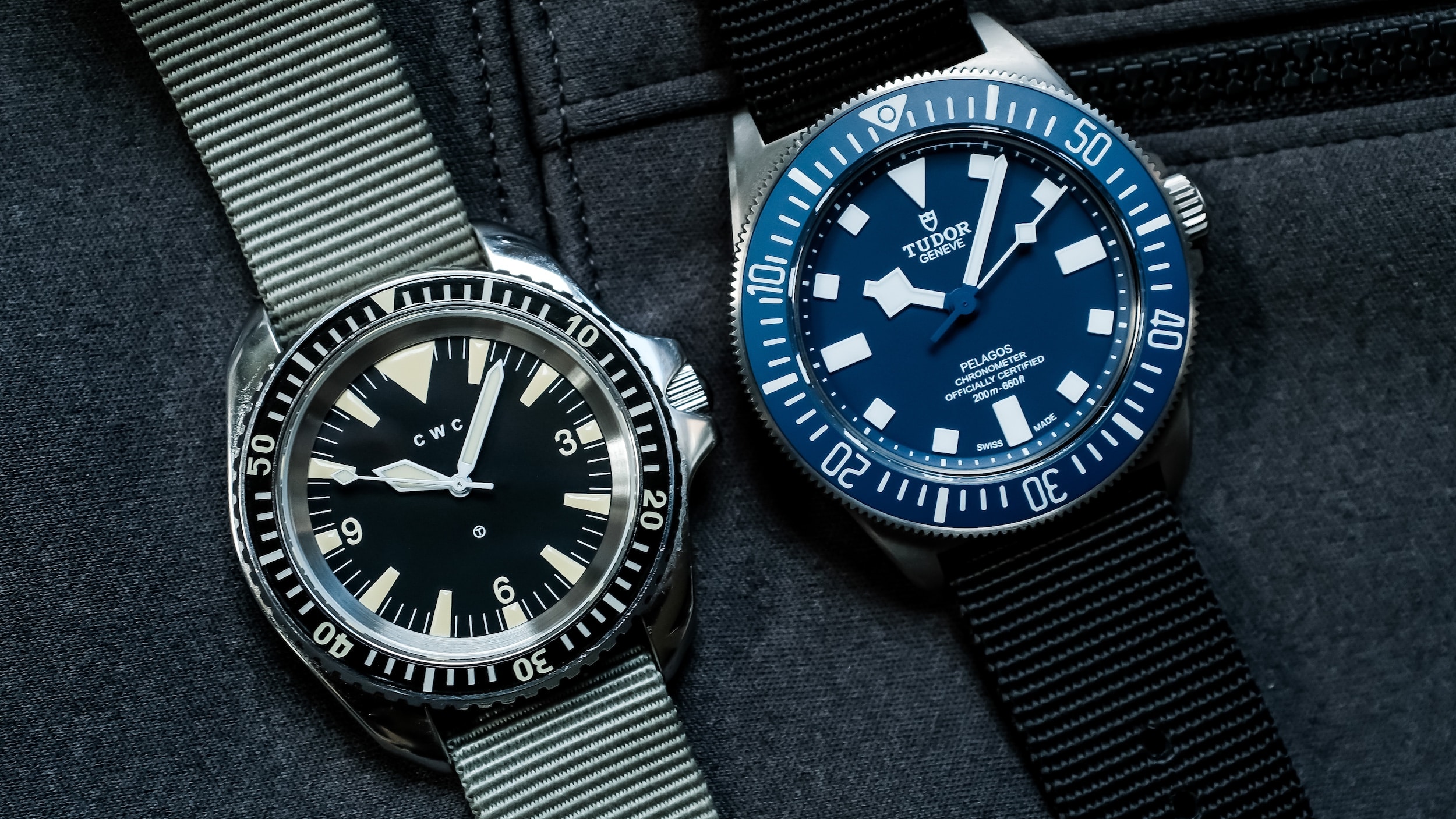
Owning two watches that do the same job is tough to defend, and I’ve stopped trying. Somewhere along the way I put my own money down, twice, on a pair of military divers that occupy almost the exact same slot in a collection. Both are fixed-bar, issued-lineage tool watches. Both are automatics that descend from watches issued to divers who actually earned a living underwater. The internet would tell you that on paper, one dive watch should have made the other redundant the day it arrived. Instead I think they’ve both become permanent fixtures, worn in rotation, and neither one has managed to make the other pointless. At least to me. Those two watches are the CWC 1980 Royal Navy Diver and the Tudor Pelagos FXD.
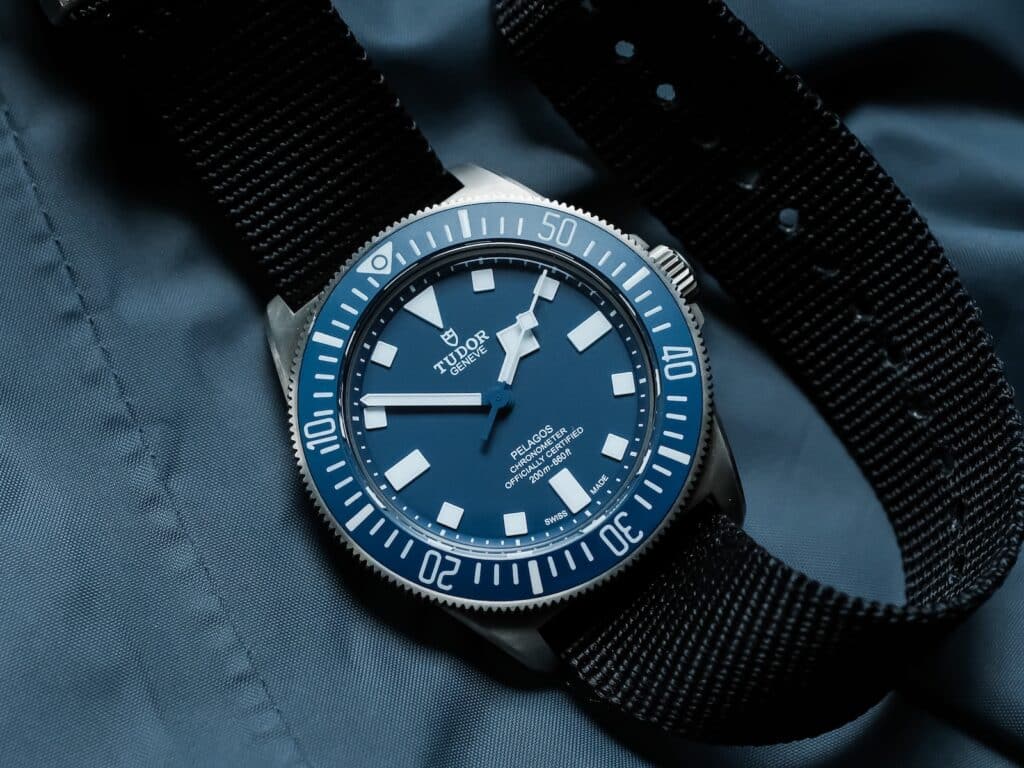
The prices don’t make the decision any easier to rationalize. The Tudor sits at $5,025 at retail, while the CWC has been retired and now trades somewhere between $3,000 and $3,500 (maybe around $2,500?) on the used market. That’s serious money on both sides, and neither one is the budget stand-in for the other. I think what keeps them from canceling each other out in my collection is that they answer the same brief in almost opposite ways. One is steel, the other titanium. One has British Royal Navy heritage, the other the French Marine Nationale. One runs a movement any watchmaker can service, the other a modern in-house caliber. They scratch completely different itches for me, and that’s the whole reason both stuck around.
Overview and Identity
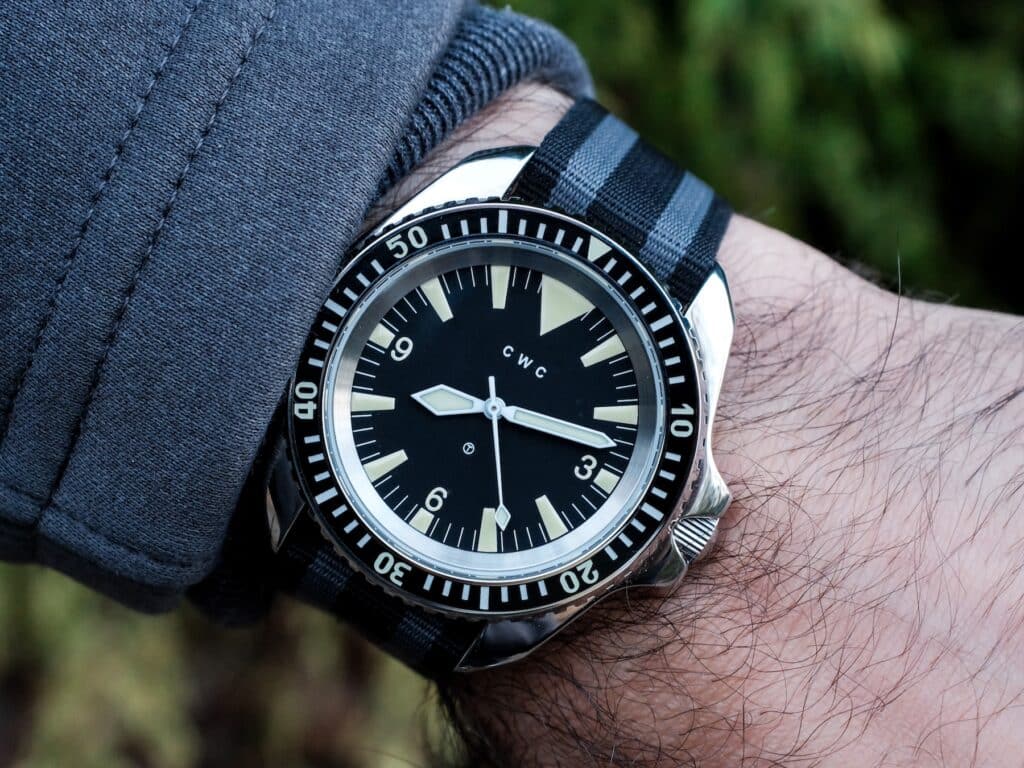
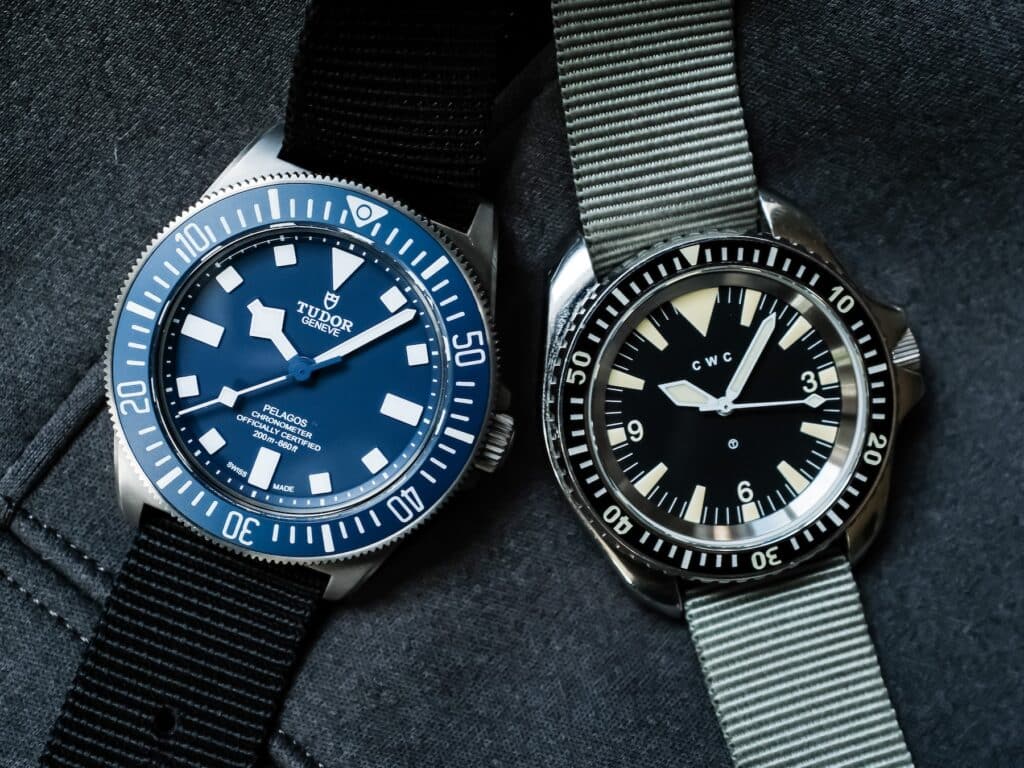
The CWC 1980 Royal Navy Diver “is what it is,” and it doesn’t need fancy marketing to say so. This is the reissue of the watch that famously replaced the Rolex Mil-Sub on Royal Navy wrists in the early 1980s, built to follow the MOD DEF STAN 66-4 dive-watch guidelines as closely as a modern watch can. The dial carries only the small CWC logo and a tiny circle-T above six o’clock, a level of restraint that only makes sense once you understand the standard behind it. It’s entirely polished steel, and even at its listed size it wears like a mid-90s Submariner on my smaller wrist. For me, this is the watch that ended years of chasing mil-sub homages. It’s the real deal.
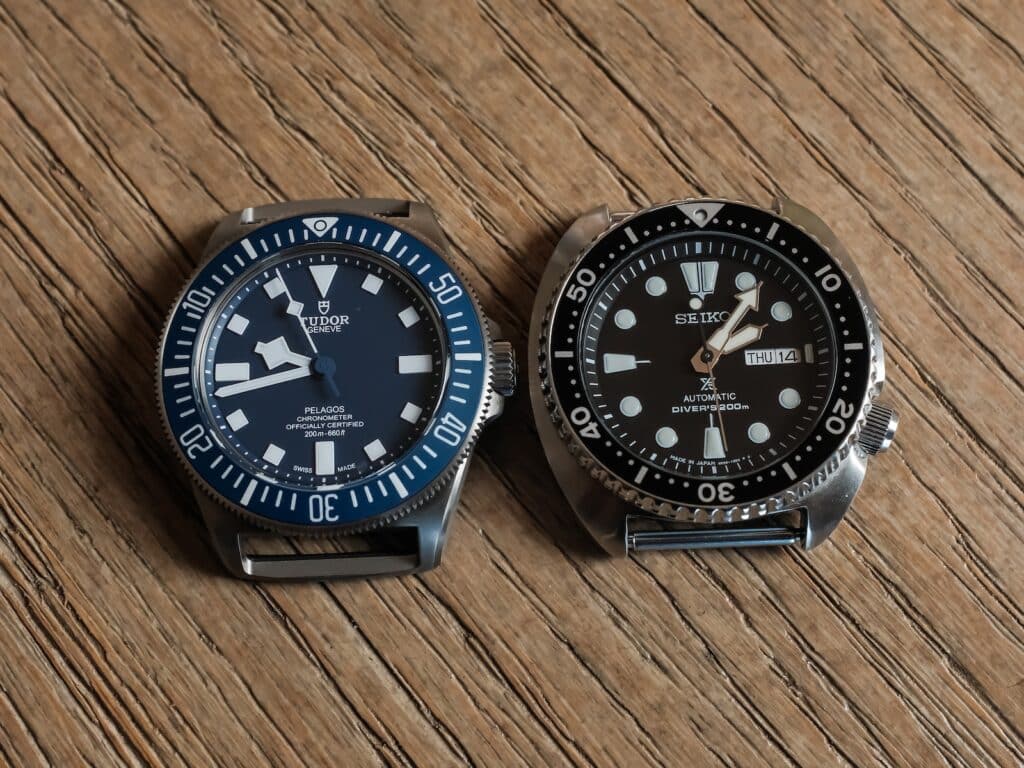
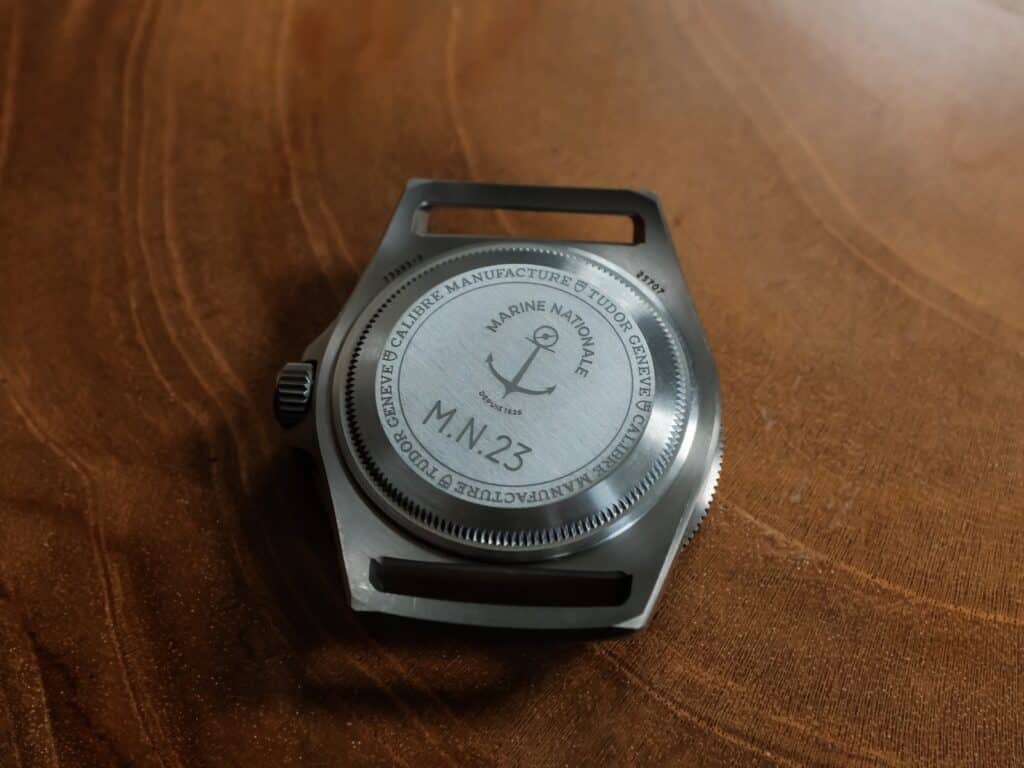
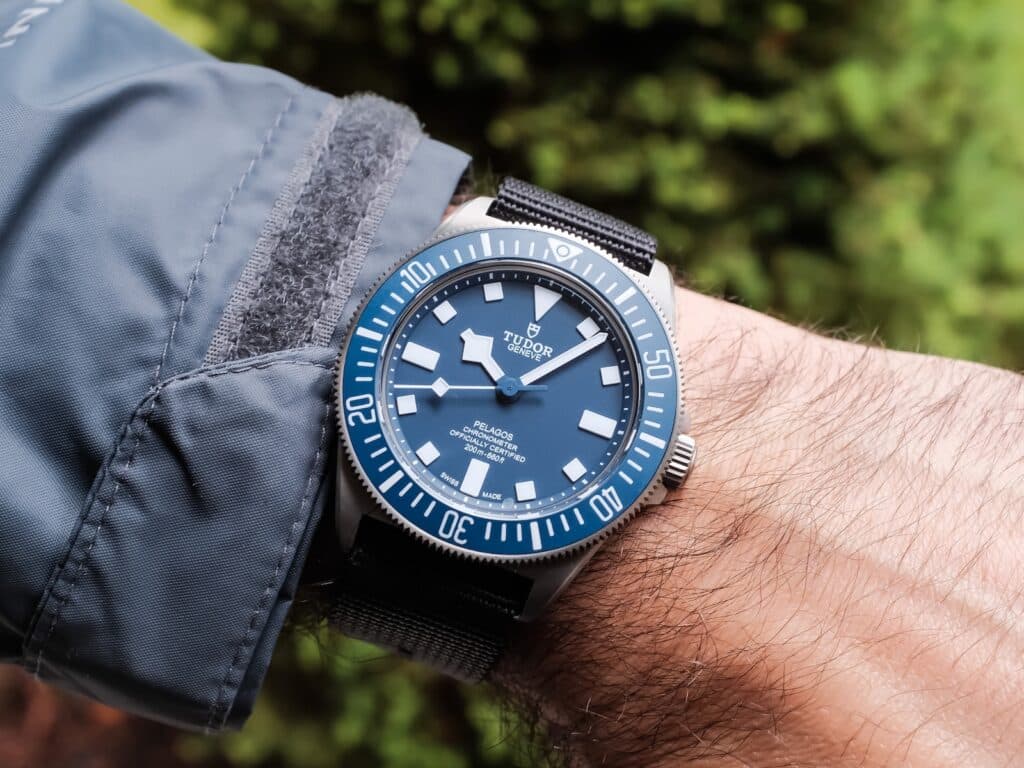
The Tudor Pelagos FXD comes at the same idea from the modern side. It’s a Marine Nationale diver developed around the way French Navy divers actually use a watch, and its snowflake handset traces a line back through Tudor’s issued military pieces all the way to the Submariners that still sit on my white-whale list. On paper it sounds aggressive, with a matte titanium case, oversized bezel, and those machined fixed bars. In person, it’s far more restrained than the internet lets on. The longer I’ve owned the blue version, the more the hype holds up, and the appeal has very little to do with the Marine Nationale branding and almost everything to do with how naturally it settles into daily wear.
- The CWC 1980 Royal Navy Diver is the issued-lineage pick, a polished steel diver built to a published MOD standard that once replaced the Rolex Mil-Sub on Royal Navy divers.
- The Tudor Pelagos FXD is the modern issued tool, a matte titanium Marine Nationale diver that wears far more easily than its size suggests.
Dial, Straps & Wearability: Polished Steel Tradition vs Matte Titanium Restraint
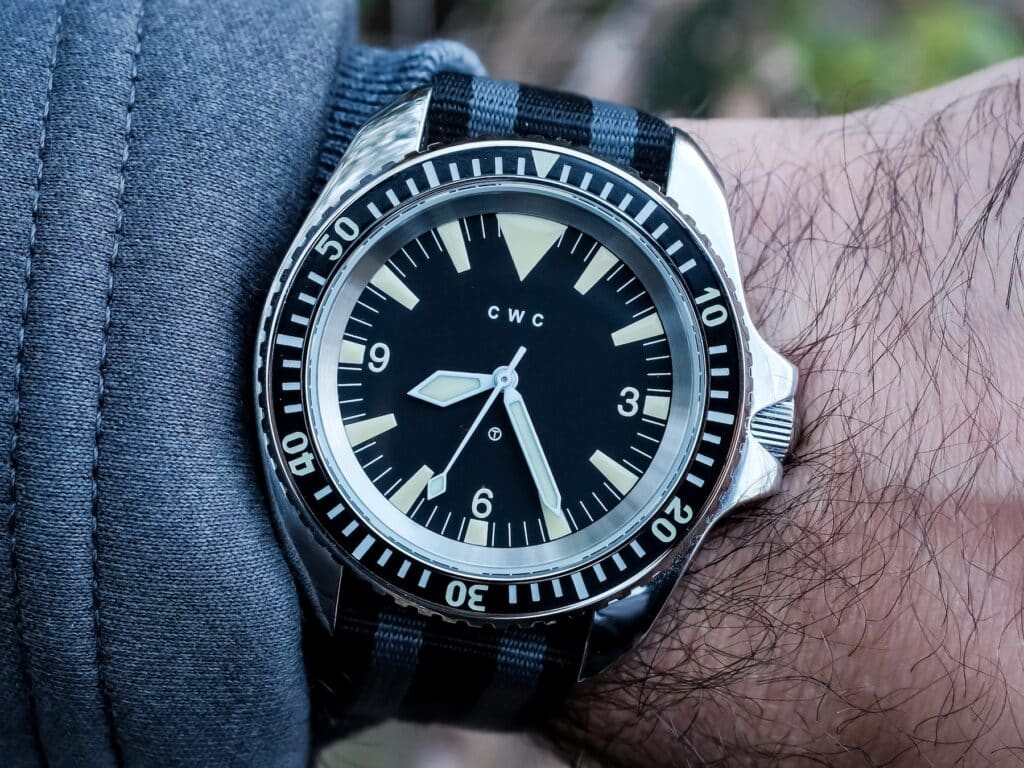
The CWC leans hard into legibility, and it’s better for it. Large trapezoidal hour markers, a chunky set of sword hands loaded with lume, and Arabic numerals at three, six, and nine give it the clarity of a much bigger pilot’s watch in a diver you can live with. The light vintage Super-LumiNova is the right call too, warmer than the sterile modern tone and cleaner than the burnt-pumpkin dark vintage option. On the wrist, the case sits close to a 90s Sub, and the 47mm lug-to-lug keeps it planted without overhanging. There’s no bracelet in the picture here. Those fixed bars mean pass-through or open-ended straps only, and the watch ships on CWC’s Cabot Military strap in an excellent shade of admiralty grey.
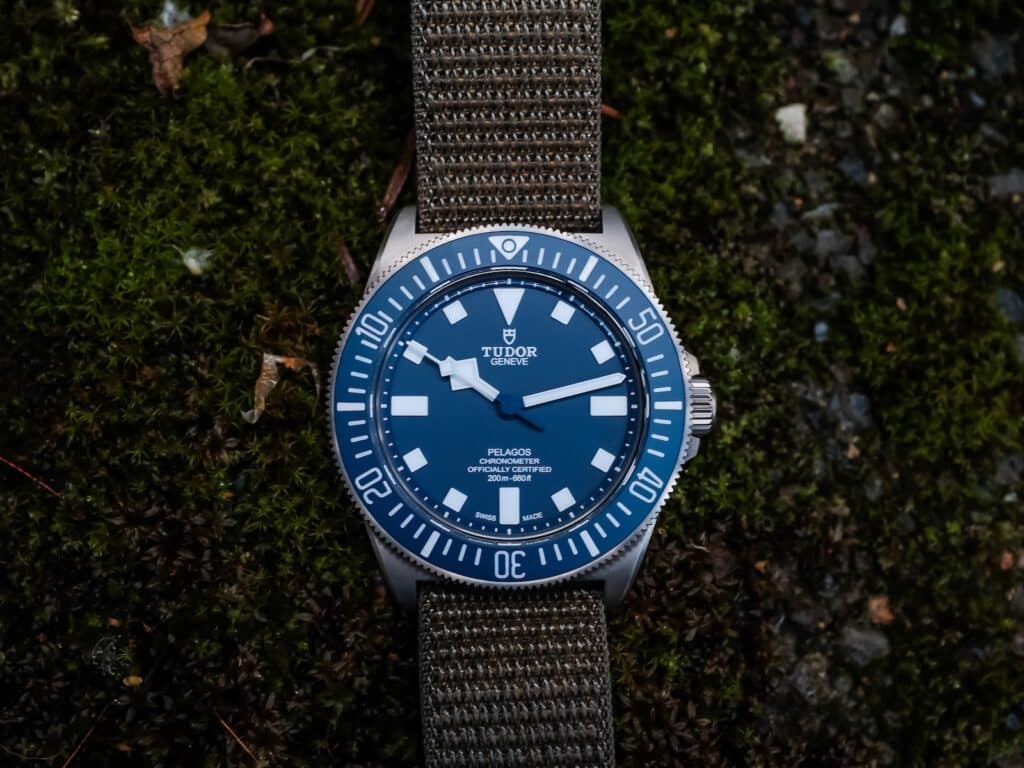
For me, the FXD plays a more subtle game and wins in a different way. Tudor cleaned up the dial considerably over the standard Pelagos, dropping the date so the layout reads as purpose-built rather than busy. The darker navy tone, matte titanium case, snowflake handset, and strong contrast all serve the same goal, which is a watch you can read instantly in almost any light. The numbers say 42mm across with a long 52mm lug-to-lug, so it should wear large. It doesn’t. The thinner 12.75mm profile and the lightness of titanium pull it in, and it never wears as big as you’d think. Like the CWC, it’s fixed-bar only, though Tudor machined the bars directly into the case with a slight chamfer to spare your straps. The stock rubber is fine, but the FXD sings on aftermarket options, from a Prometheus Design Werx Ti-Ring to cheap Garmin-style elastics. Strap-swapping on this thing gets addictive, fast.
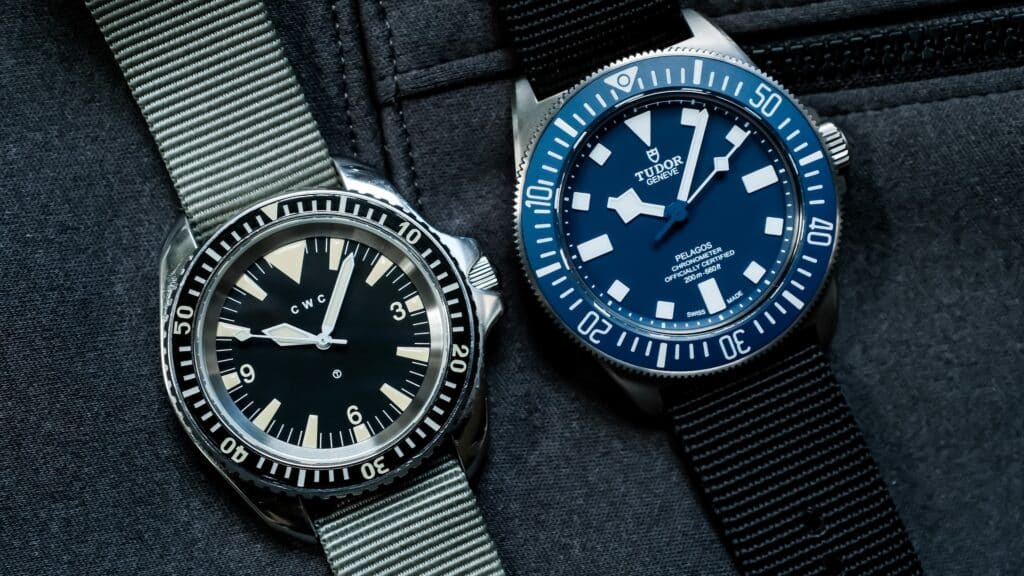
- The CWC trades bracelet versatility for maximum legibility and a heritage-correct strap, and wears like a vintage Sub despite its issued-tool bones.
- The Tudor hides a big lug-to-lug behind thin titanium and a cleaned-up dial, then makes almost any pass-through strap look right.
Build Quality & Technical Approach
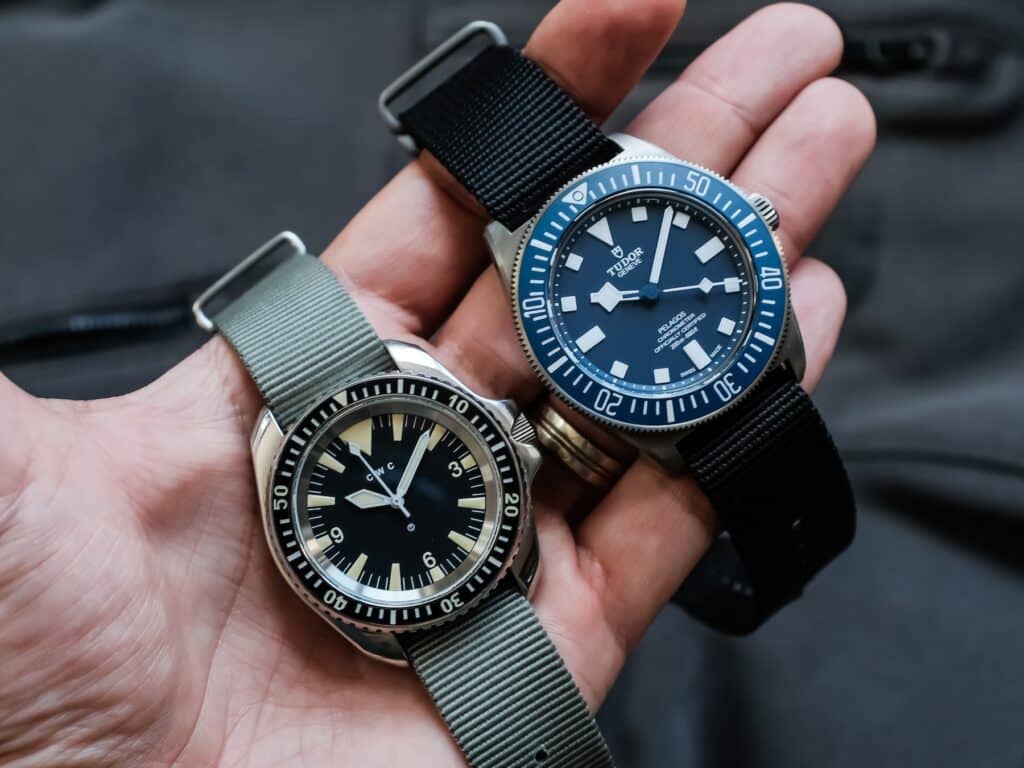
Both watches share a silhouette and a mission, and that’s roughly where the overlap stops. Once you get past first impressions, you’re looking at two different philosophies about what makes a military diver trustworthy. This is where it gets interesting: movements, case construction, bezels, crystals, and the water resistance and lume that earn their keep on a tool watch.
Movements:
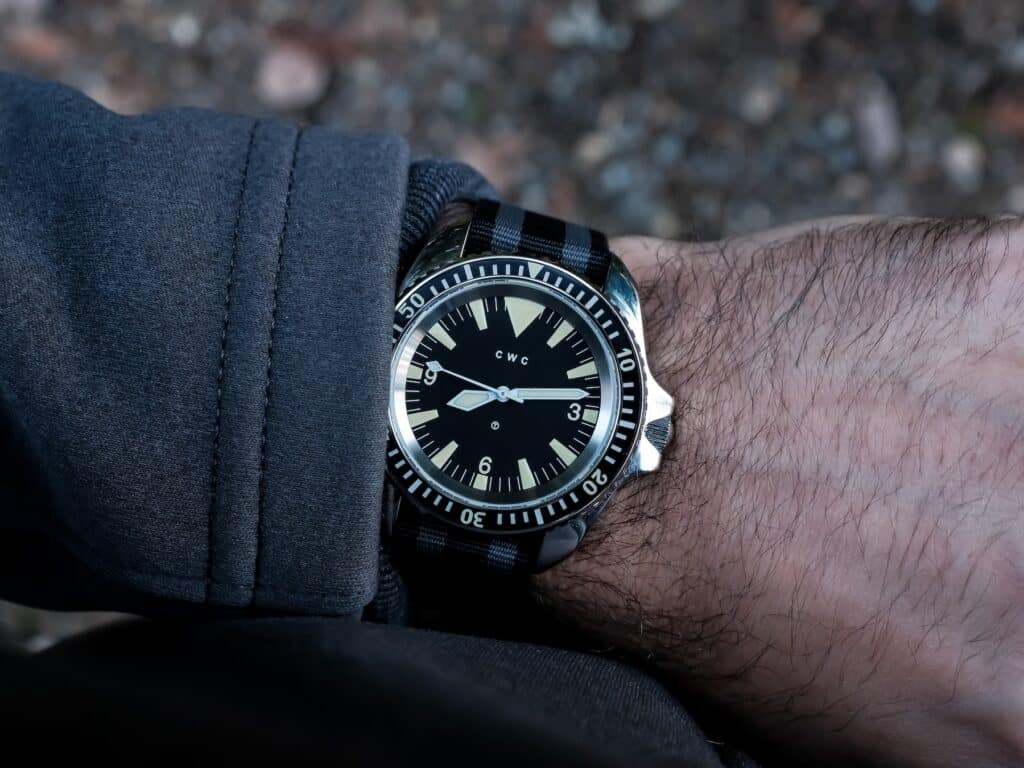
The CWC runs an ETA 2824-2 engraved by CWC, with about 38 hours of power reserve. It’s automatic, it hand-winds, and it’s a movement any competent watchmaker on the planet can service without a second thought. Mine actually arrived running a little slow, and CWC turned it around inside two weeks after I wrote in. I was told they regulate their movements tighter than ETA’s own claims, and it settled at a comfortable +/-3 to 5 seconds per day. The deeper I get into this hobby, the more I appreciate a serviceable ETA over anything sealed and proprietary. There’s peace of mind in owning a tool watch you’ll never have to send back to a single authorized service center.
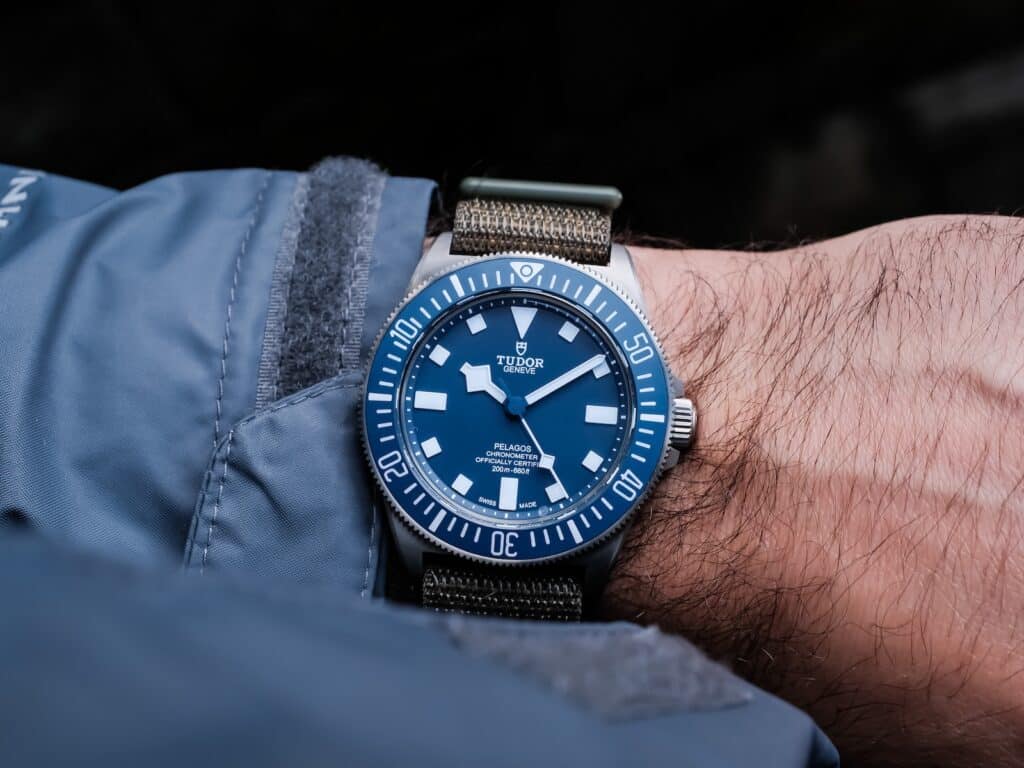
The FXD carries Tudor’s in-house MT5602 with a 70-hour power reserve, and I’ll admit I came in skeptical. My past run with Tudor’s in-house calibers hasn’t been spotless, so I still watch this one closely. Since it joined the collection, though, it’s behaved. Accuracy has held up, the long reserve makes it easy to rotate in and out, and the movement mostly stays out of the way, which is the highest compliment I can pay a tool-watch caliber. That extra reserve is a daily-wear advantage over the CWC. By comparison, servicing is the trade. This is a modern in-house movement, not something your corner watchmaker will crack open on a whim.
Case Construction & Finishing:
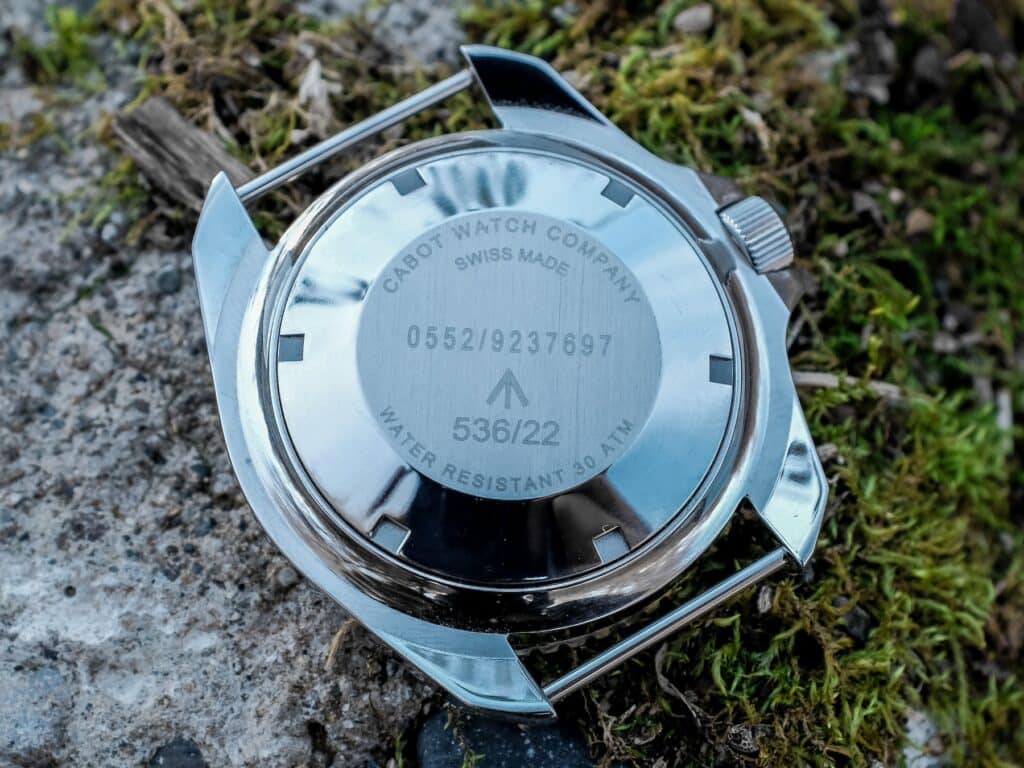
The CWC’s case is fully polished steel, exactly like the original and like most of CWC’s popular models. There’s a bit of old-school magic in how it catches light, and the burly crown guards and screw-down crown push the overall footprint out to around 45mm across if you measure the whole package. It still doesn’t wear like a 45mm watch. The proportions feel great, the crown is easy to grip, and the whole thing feels like a tool built to a spec rather than a design exercise. If you don’t get on with fully polished cases, that’s the one caveat worth pointing out here.
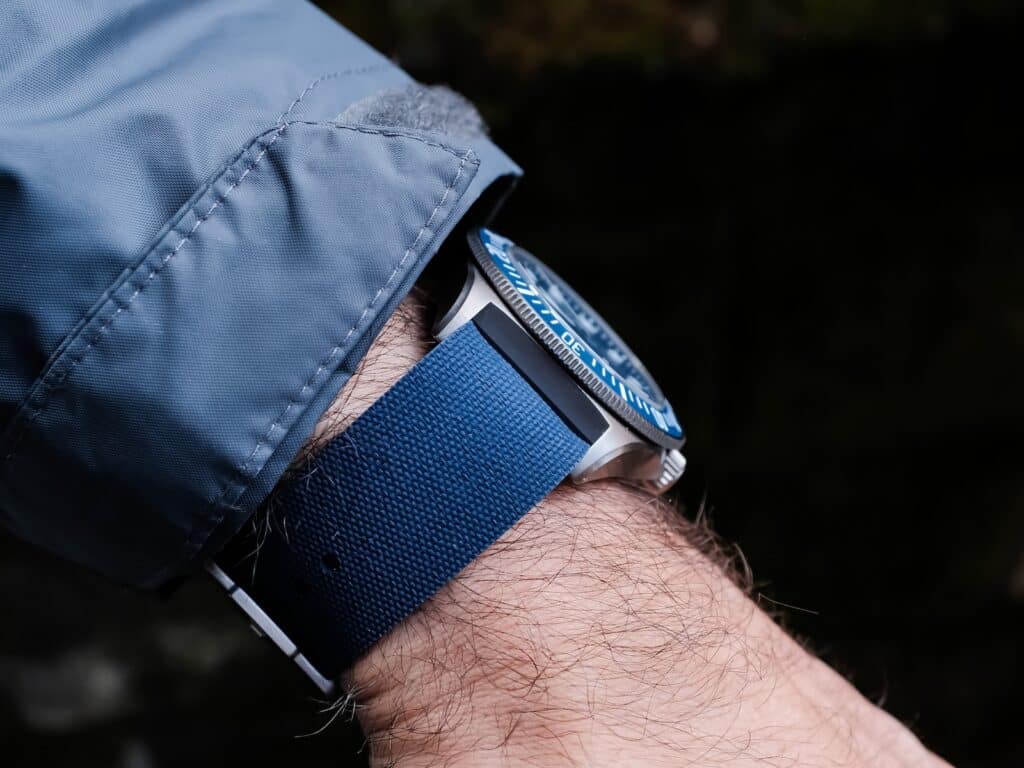
The Tudor goes the opposite direction with fully matte titanium. The brushing is consistent, the lines are crisp, and the surfaces stay utilitarian without ever looking unfinished. Tudor also made some choices here that read as restraint. The helium escape valve is gone and water resistance drops relative to the standard Pelagos, and instead of feeling watered down, the FXD feels more real for it. It’s lighter than the steel CWC by a noticeable margin, which matters more over a long day than either watch’s dimensions suggest.
Crystals & Bezels:
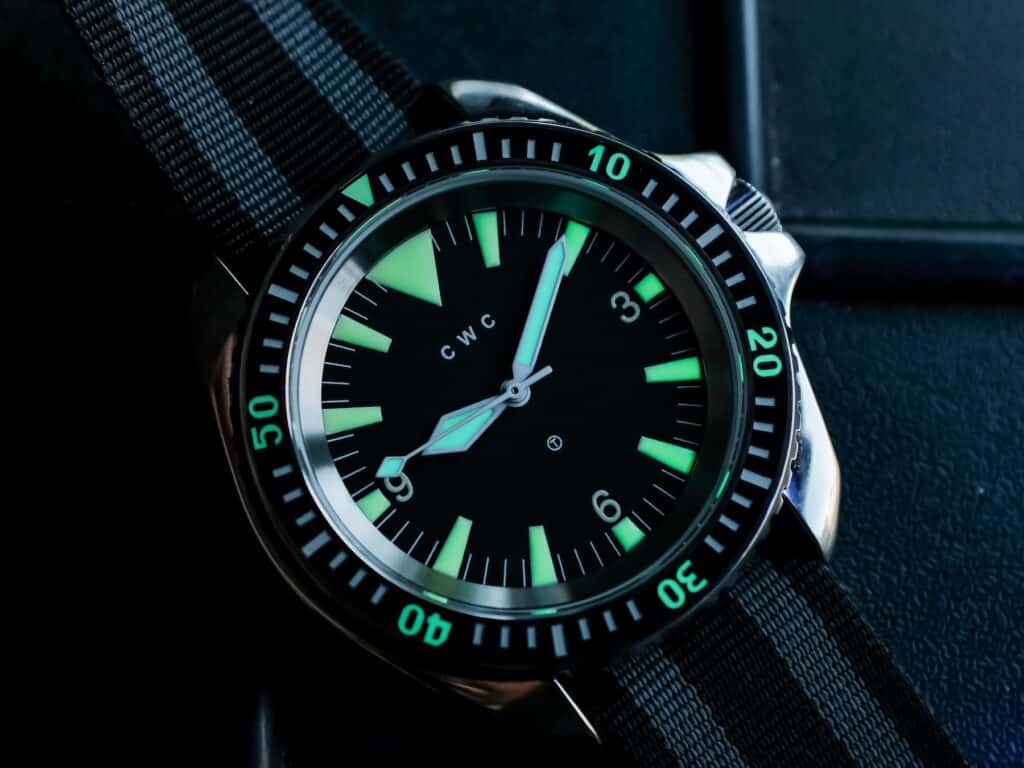
The CWC pairs a sapphire crystal with good anti-reflective treatment, and I’ve rarely fought glare on these. The bezel is a 60-click unit with a fully graduated glossy acrylic insert, and the color match between the bezel and dial is as close to an old-school CWC as you’ll find today. Action is positive, with just a touch of wobble. Some collectors would call that a flaw. I’d call it period-correct character, and I’m not sure I’d want it any other way on a watch like this.
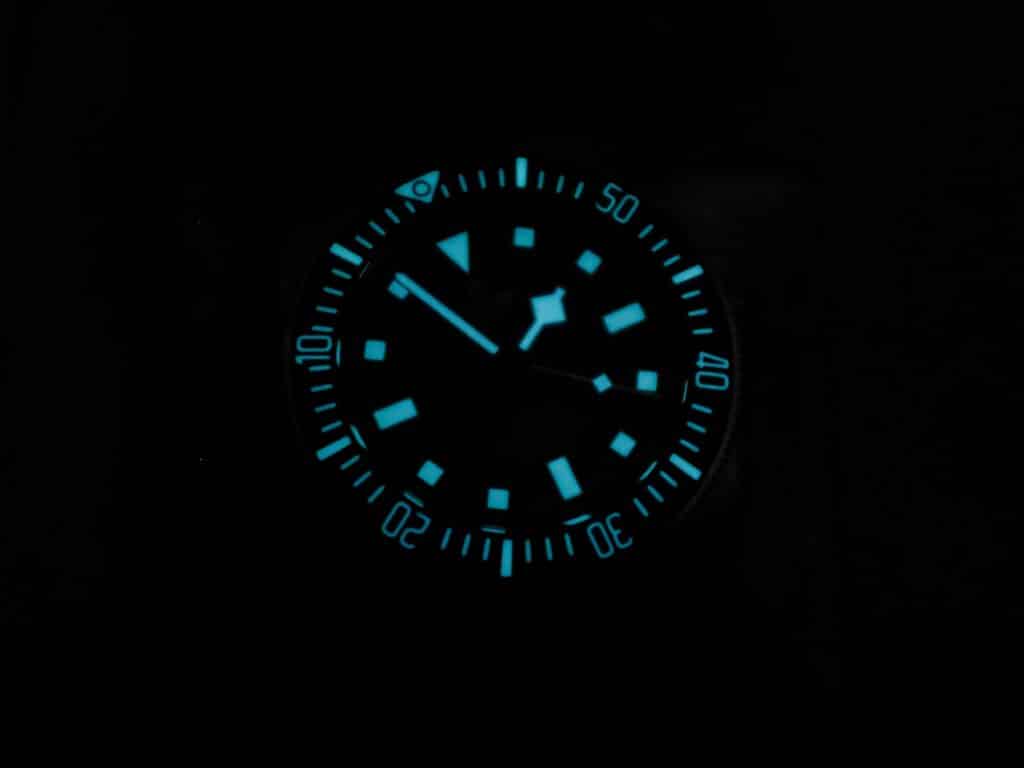
The FXD is the more modern execution, no surprise. It runs a sapphire crystal up front and a wider, easier-to-grip bezel with a crisp 120-click action that feels more deliberate than older Pelagos bezels I’ve handled. The real standout is the fully lumed ceramic insert, which turns into its own light show once the sun goes down. The larger knurling is a small thing that pays off constantly, especially with wet hands. Where the CWC’s bezel charms you with its quirks, the Tudor’s simply outperforms.
Water Resistance & Lume:
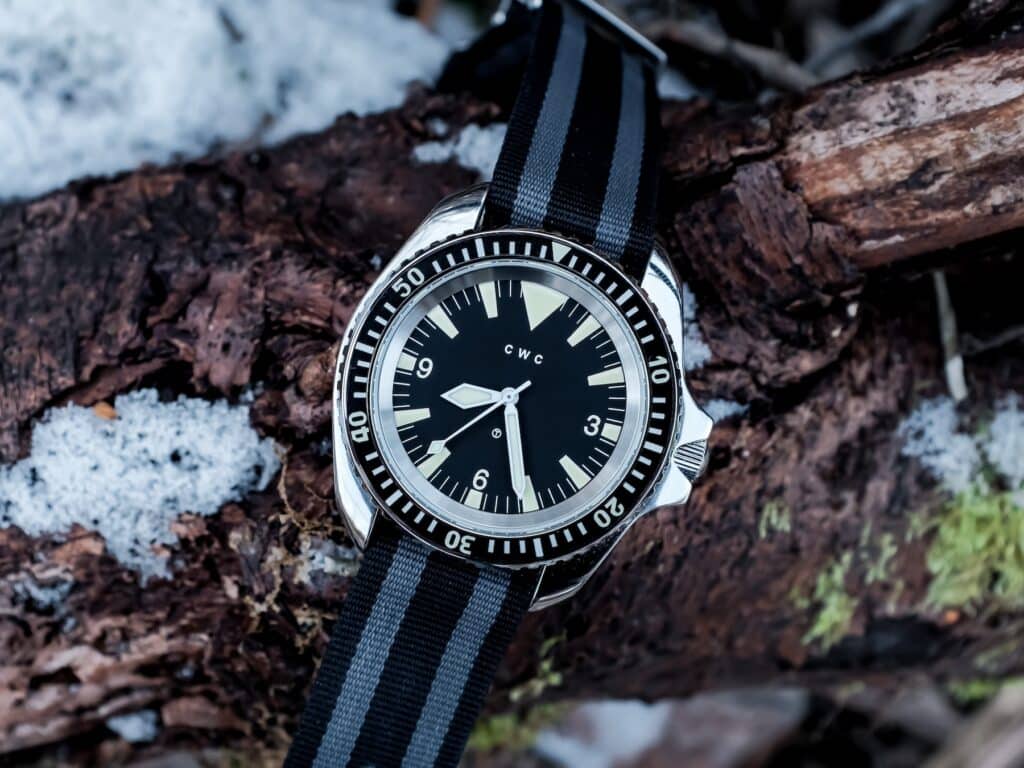
Here’s a fun inversion: the steel British diver is rated deeper than the titanium French one. The CWC carries 300m of water resistance, more than anyone reading this will ever test, and the lume is applied generously. Between the fat sword hands, the trapezoidal markers, and that warm light vintage tone, legibility is never in question. This is a watch built to be read at a glance under bad conditions, and it delivers.
The FXD sits at 200m, down from the 500m of the standard Pelagos, and as I mentioned, that reduction reads as a strength rather than weakness. Where it pulls ahead is the lume. The snowflake handset, the strong dial contrast, and that fully lumed ceramic bezel add up to one of the more usable low-light packages I’ve worn recently. Still, if the raw number matters to you, note that the older, cheaper steel watch out-specs the modern titanium one on paper. Neither of you is going saturation diving, so treat that inversion as trivia more than a deciding factor.
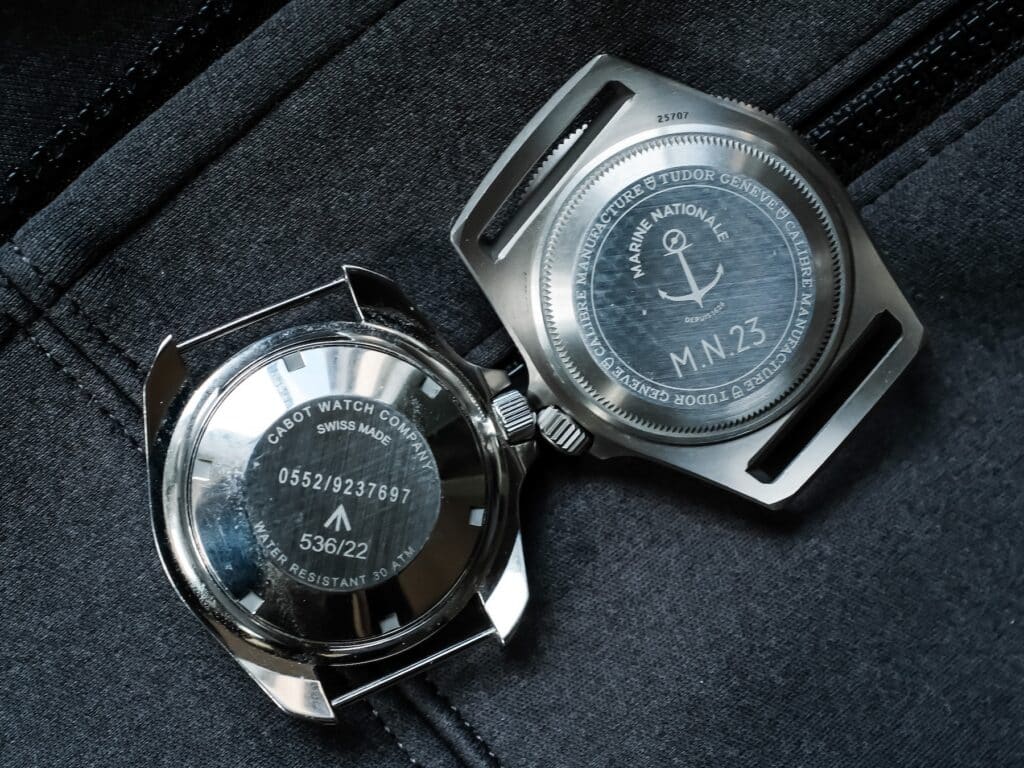
- The CWC gets the fundamentals of a mil-diver right, pairing a serviceable ETA with a deep water rating and lume you can read across a dark room.
- The Tudor earns its premium through modern engineering, from the long-reserve in-house caliber to a lumed ceramic bezel and a titanium case that outclasses its own specs.
Cost Considerations
The CWC is the trickier buy now, and it has nothing to do with the watch. This reference has been discontinued, so the days of ordering one new around its original £1,999 price are gone. Today you’re hunting the used market, where clean examples tend to land between $3,000 and $4,000 depending on condition, box, papers, and which lume run you’re after. I’m sure you can find it for less if you take your time. The upside is that servicing costs stay sane thanks to that standard ETA, so the long-term math is friendlier than the sticker suggests. If you want one, patience and a bit of vetting will serve you better than urgency.
The Tudor is the more straightforward transaction. At $5,025 it’s the pricier watch, but you can actually walk in and buy one without the years-long dealer dance that follows a steel Rolex around. There’s no gray-market premium to swallow on the used market. The offset is service. This is an in-house movement, so factor Tudor’s service network and pricing into the ownership picture the same way you’d factor the CWC’s used-market hunt into its total cost. Different friction I think, roughly the same lesson: the buy-in price is only part of your journey here.
Final Thoughts: Can Two Issued Divers Share One Box?
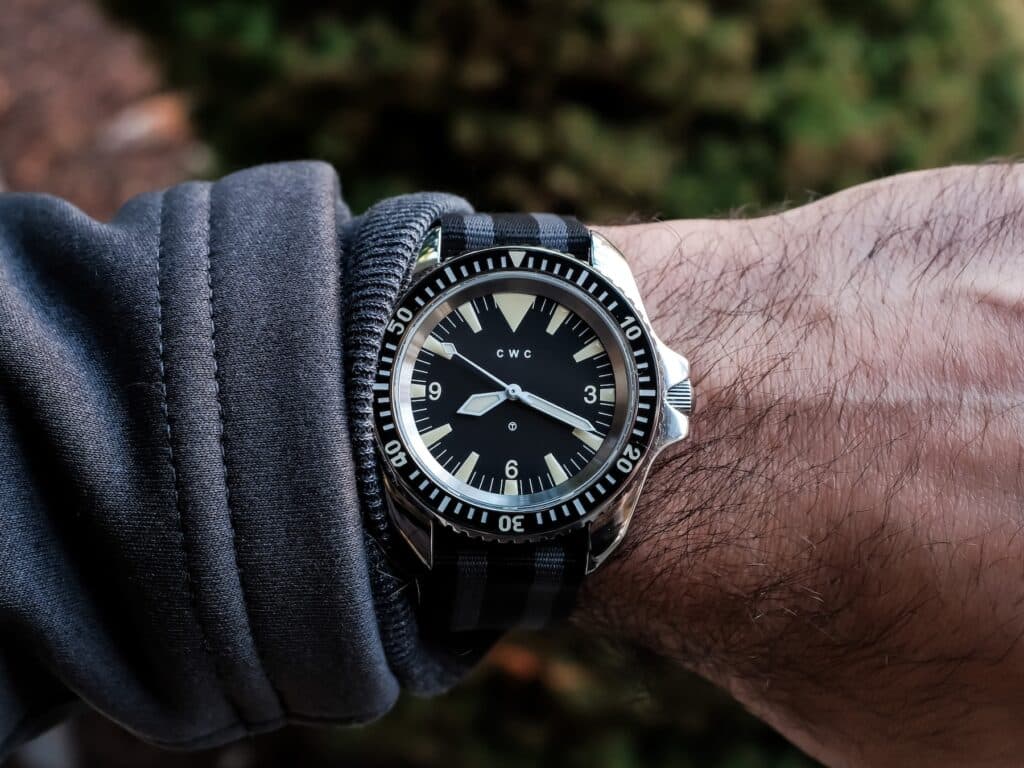
After plenty of time with both in the collection, I don’t think this is the kind of comparison that ends with a loser. These two aren’t fighting over the same buyer so much as representing two answers to the same question. The CWC is heritage you can service anywhere, a polished steel Royal Navy piece that connects to a specific published standard and a real moment in dive-watch history. The FXD is the modern read on the same idea, a lightweight titanium Marine Nationale tool that earns its reputation through daily wear. One looks backward with intent. The other looks forward without losing the thread.
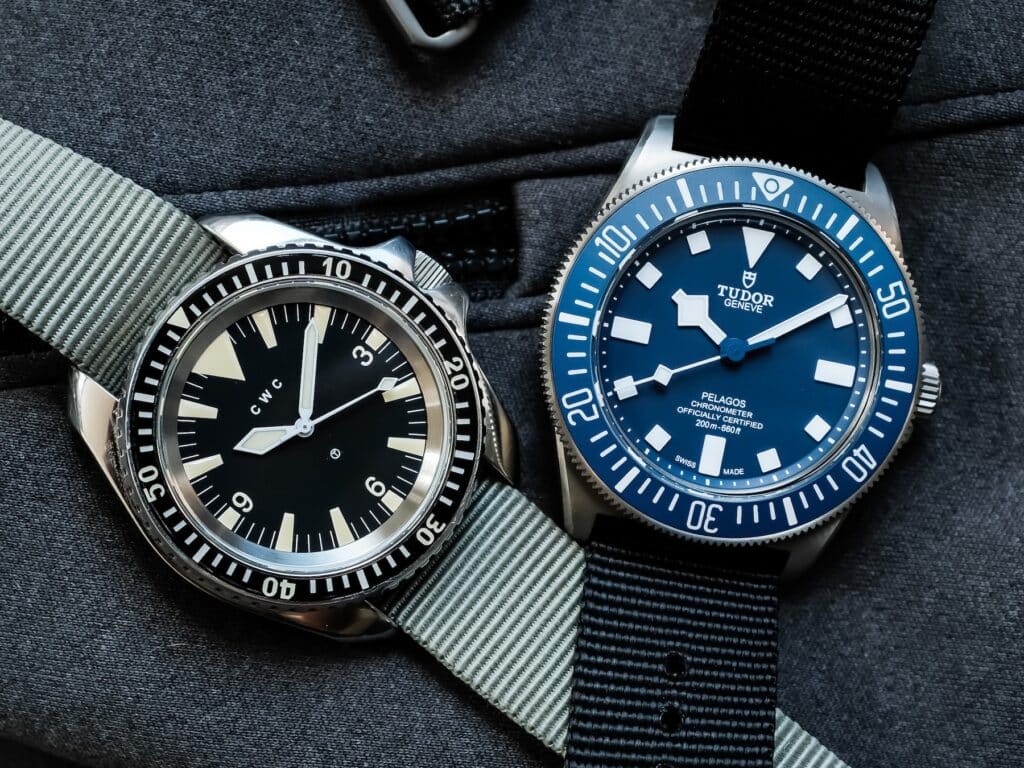
So here’s how I’d split it:
- Choose the CWC 1980 Royal Navy Diver if you want Royal Navy issued lineage, a fully serviceable ETA you can hand to any watchmaker, polished-steel vintage-Sub proportions, and you’re willing to work the used market now that it’s discontinued.
- Choose the Tudor Pelagos FXD if you want a lightweight modern titanium tool with Marine Nationale pedigree, a 70-hour in-house caliber, a fully lumed ceramic bezel, and the ability to just buy one at retail, and the longer lug-to-lug and in-house servicing don’t bother you.
The answer is that these two already sit side by side in my box without ever stepping on each other. One is steel, one is titanium. One flew a British flag, the other a French one. One runs an ETA I can get serviced forever, the other an in-house caliber I’ve come to trust more than I expected to. They pull from the same well of issued military history and come out the other side as completely different objects. That’s exactly why both snagged a permanent spot instead of one edging out the other. I didn’t buy these to crown a winner. I bought them because a collection has room for both answers to the same question.

Co-Founder & Senior Editor
Michael Peñate is an American writer, photographer, and podcaster based in Seattle, Washington. His work typically focuses on the passage of time and the tools we use to connect with that very journey. From aviation to music and travel, his interests span a multitude of disciplines that often intersect with the world of watches – and the obsessive culture behind collecting them.