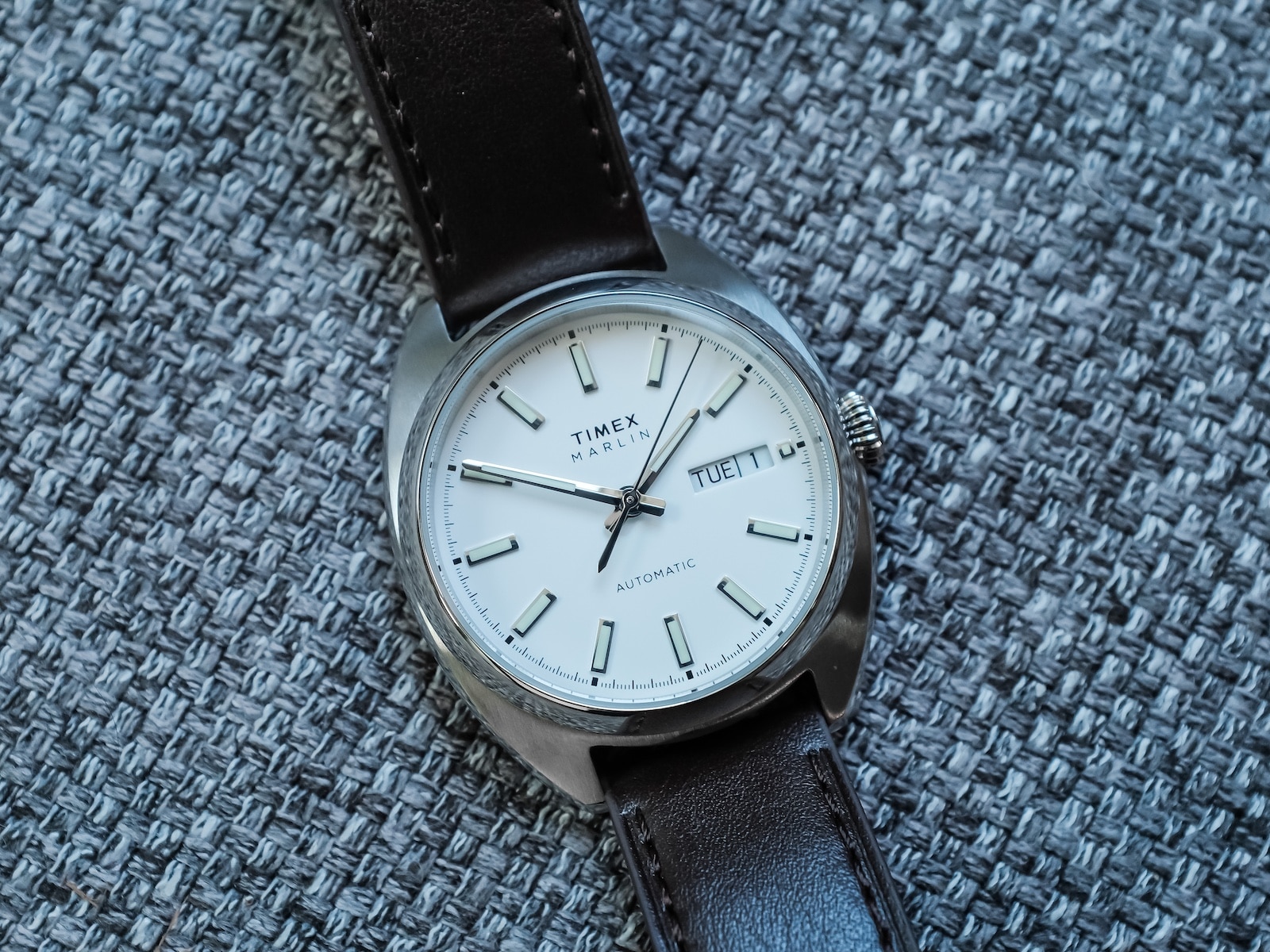
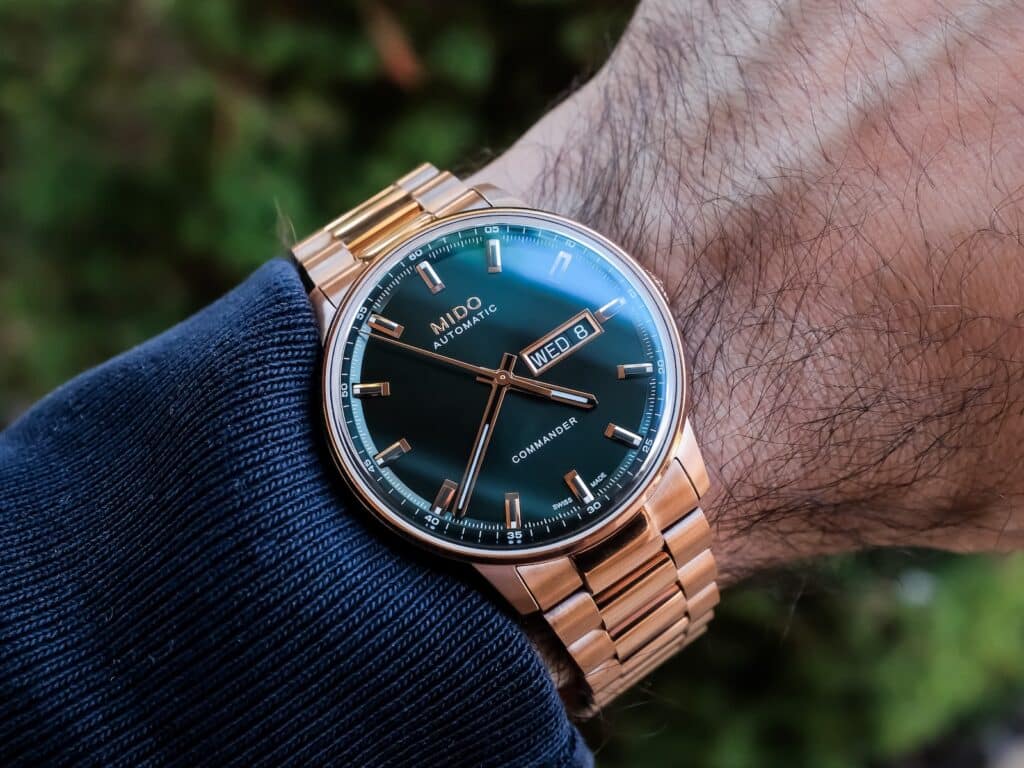
Earlier this year, two watches crossed my desk that I couldn’t help but compare. The Timex Marlin Draper Automatic costs $279. The Mido Commander Datoday, in the rose-gold-tone configuration I tested, costs $1,260. Both are day-date watches built on mid-century design language, both avoid modern sports-watch bulk, and both target someone who wants a little polish in the rotation without chasing luxury pricing. The gap between them is roughly 4.5x. So where does that extra money actually go once the watch is on your wrist, and does it change anything about daily wear?
I reviewed both watches for TBWS within a few weeks of each other, so the impressions here come from recent wrist time rather than spec sheets or press photos. Both arrived as review units, which means I’m comparing them as a reviewer rather than a long-term owner. Even so, a couple of weeks with each is enough to figure out where the compromises live and which ones you’d actually notice. The goal here is to map out what the step from an entry-level dress watch to a Swiss step-up piece really buys, and whether that difference matters to the person wearing it.
Overview and Identity
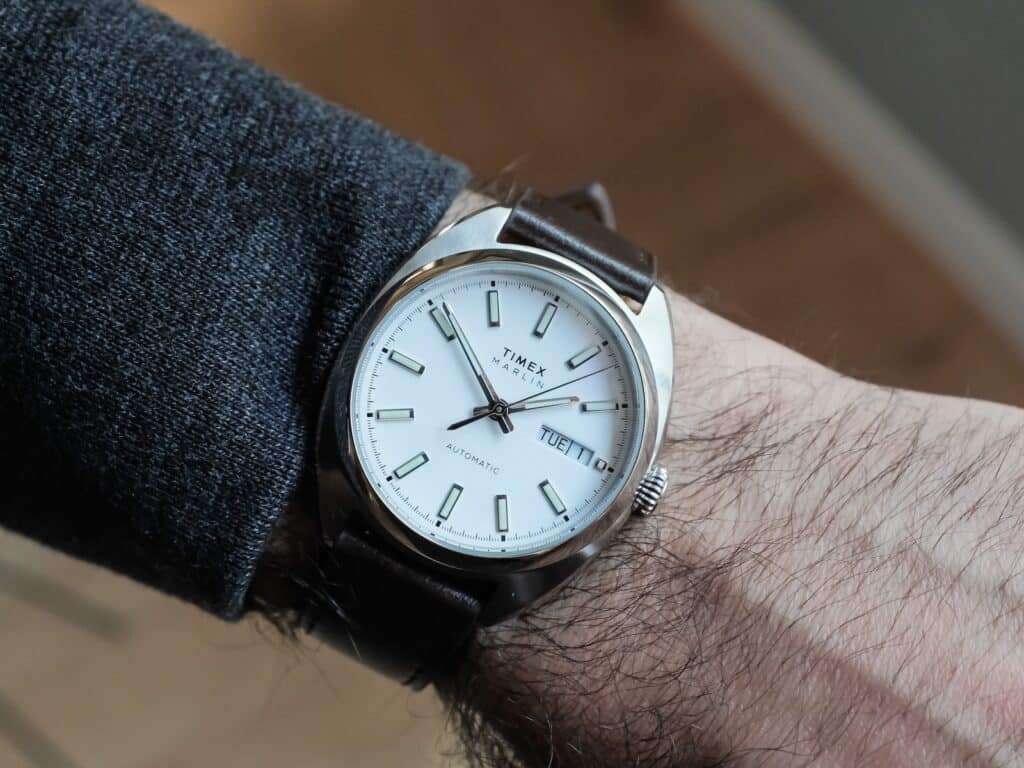
The Timex Marlin Draper Automatic is part of the brand’s long-running Marlin revival, and it caught my attention before I ever handled one. The cushion-shaped case and restrained dial layout suggested Timex had resisted the urge to over-modernize the mid-century idea, which is usually where archive-inspired releases lose me. After a couple of weeks of wear for my full review, that first impression mostly held up. The proportions feel great at 37mm, the case design stands out without begging for attention, and the design references its era without slipping into costume. I respected the watch more than I emotionally connected with it, and that distinction matters for this comparison. The Draper naming and the Mad Men tie-in never did much for me. The case did.
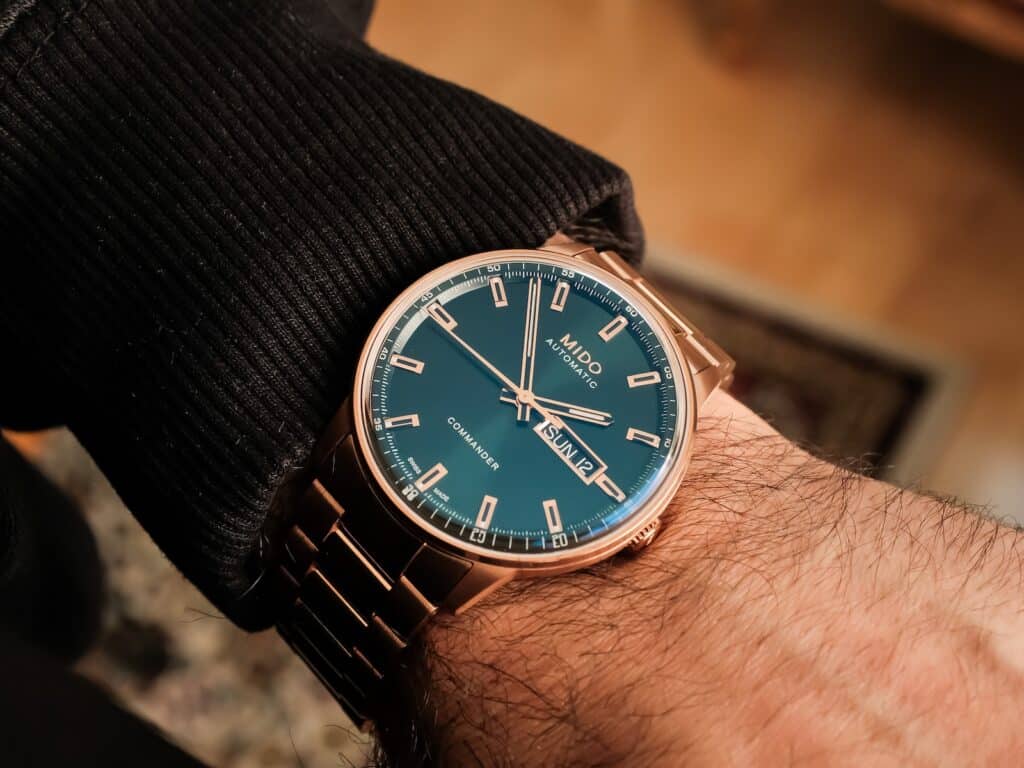
The Mido Commander Datoday comes from a different place. Mido has long been one of our favorite recommendations for anyone ready to break into the four-figure range, and the refreshed Datoday looked like a smart everyday option from the moment it was announced. Then I opened the box for my review and found the rose-gold-tone PVD model with the green dial instead of steel. I’ve never been a gold watch guy. Steel has always been home base for me. However, this configuration made the whole idea far more convincing than I expected. The integrated case profile, the color pairing, and the slim 10.7mm build all add up to a watch that moves between everyday wear and dressier settings without effort. Mido pitches the Commander line as a design that dates back decades, and this version wears that history lightly.
- The Timex Marlin Draper Automatic is the low-buy-in path into mid-century dress watch territory, and it succeeds through restraint rather than nostalgia theatrics.
- The Mido Commander Datoday is the step-up piece with genuine Swiss substance underneath the retro warmth, and it wears more versatile than its dressy first impression suggests.
Dial, Bracelet & Wearability: Silver Restraint vs Green-and-Gold Warmth
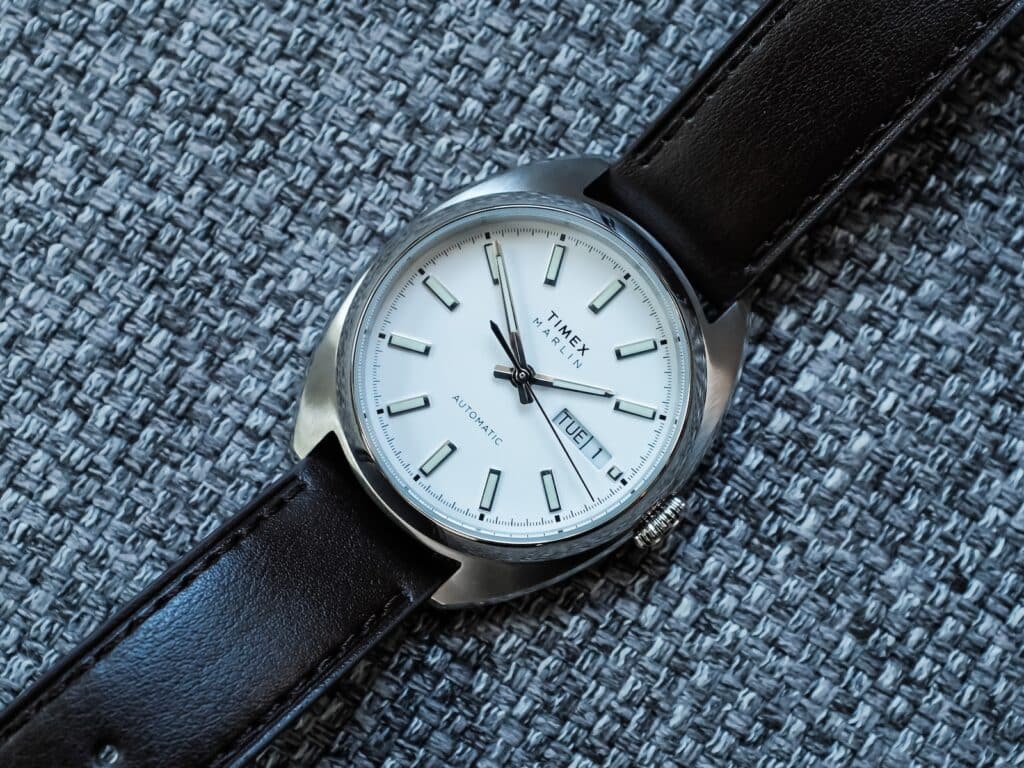
The Marlin Draper’s dial is clean without feeling empty, and that balance is harder to pull off than it sounds. You get applied markers, a practical day-date layout, and enough texture in the silver surface to keep light moving across the dial through the day. Legibility stays solid thanks to the darker hands and markers, and the lume is present without becoming a talking point. Timex exercised real restraint here, and the dial benefits from it. Nothing on the surface begs for attention, and nothing feels like filler either.
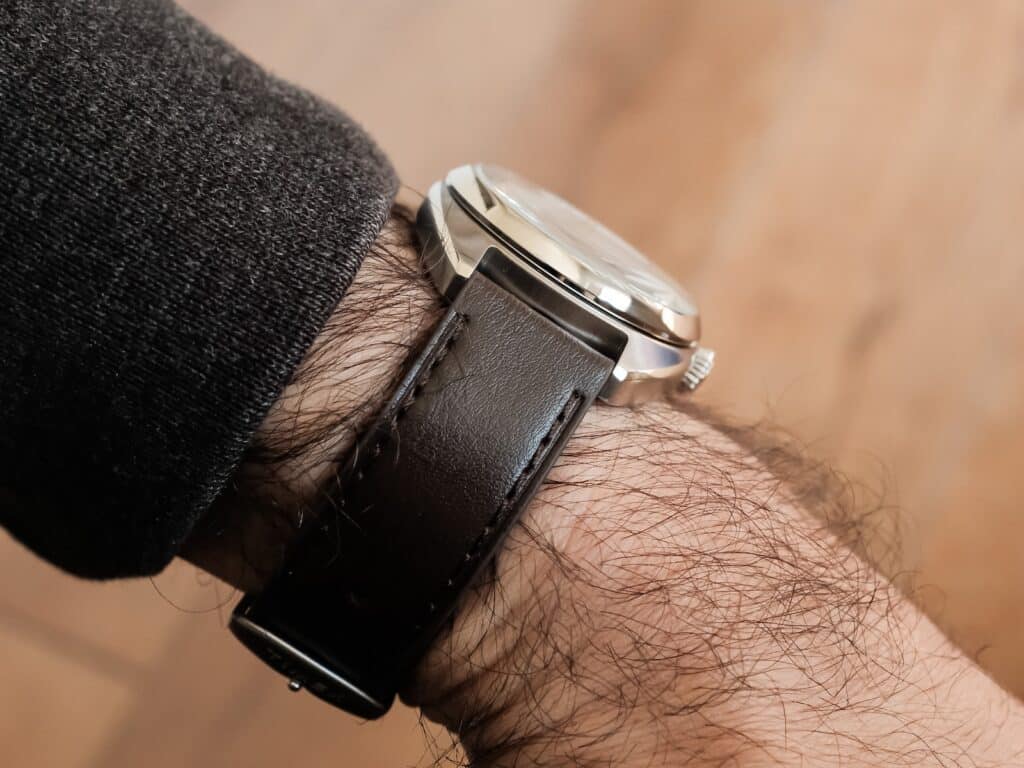
At 37mm wide, 43.5mm lug-to-lug, and 12.5mm thick, the Timex lands in a size category I naturally gravitate toward on my 6.75-inch wrist. The cushion architecture stretches the watch visually, but the compact dial opening keeps everything from reading as vintage costume. The stock brown leather strap ended up being one of my favorite parts of the package. It’s thin, tapers gently, and lets the watch settle close to the wrist instead of hovering above it. I swapped straps a few times during the review period and kept returning to the stock leather. That says something.
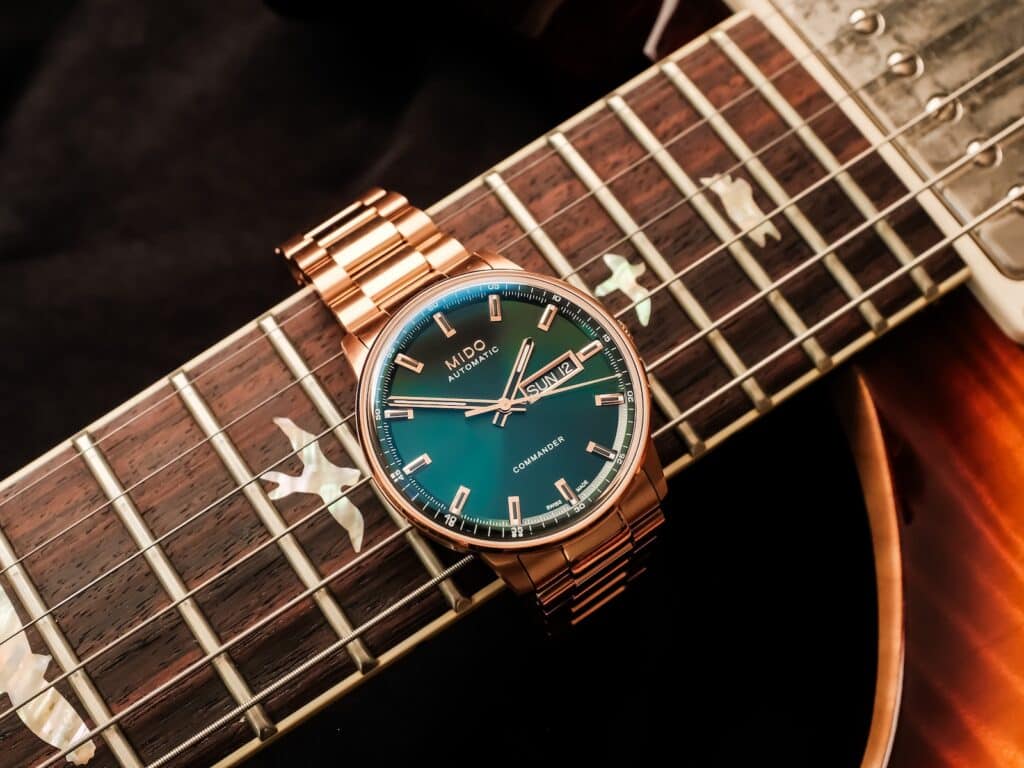
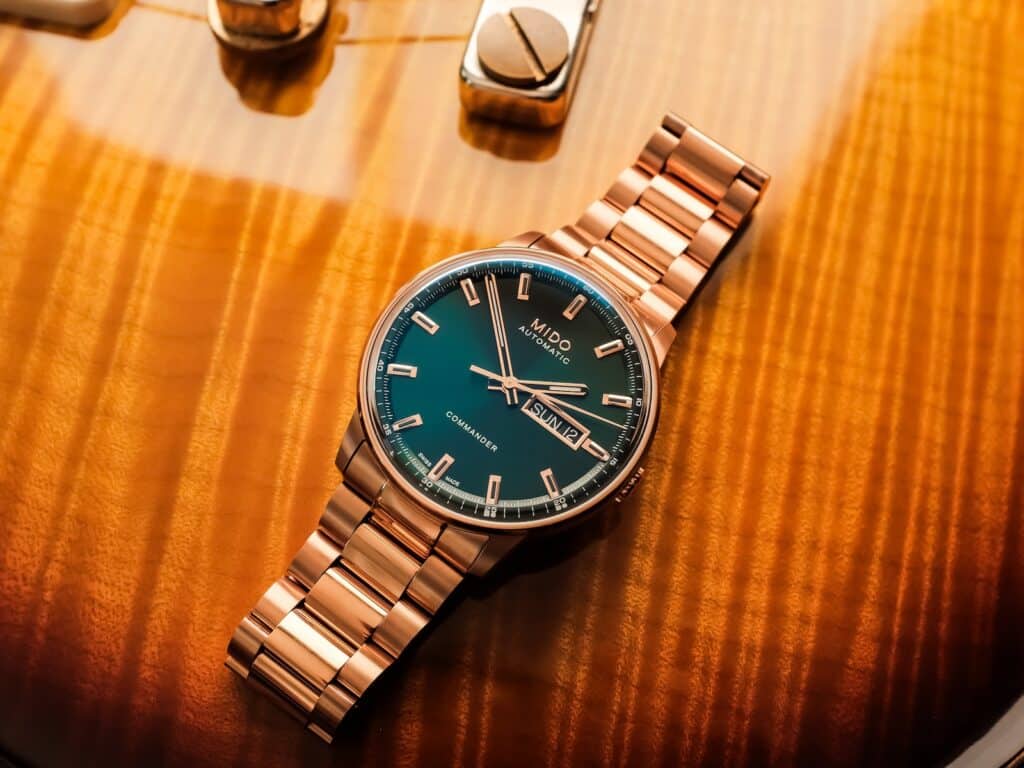
The Datoday’s dial plays a completely different game. That deep green has a bluish cast that caught me off guard in person, then shifts warmer and closer to a forest tone depending on the light. I honestly can’t think of another dial color I’ve handled that lands quite like it, and it pairs surprisingly well with the rose-gold-tone case. The stepped outer section adds depth, the white perimeter markings keep things precise, and the whole layout stays crisp when this color combination could have easily gone muddy. It has a retro vibe for sure, and Mido never forces a heavy-handed throwback story onto it.
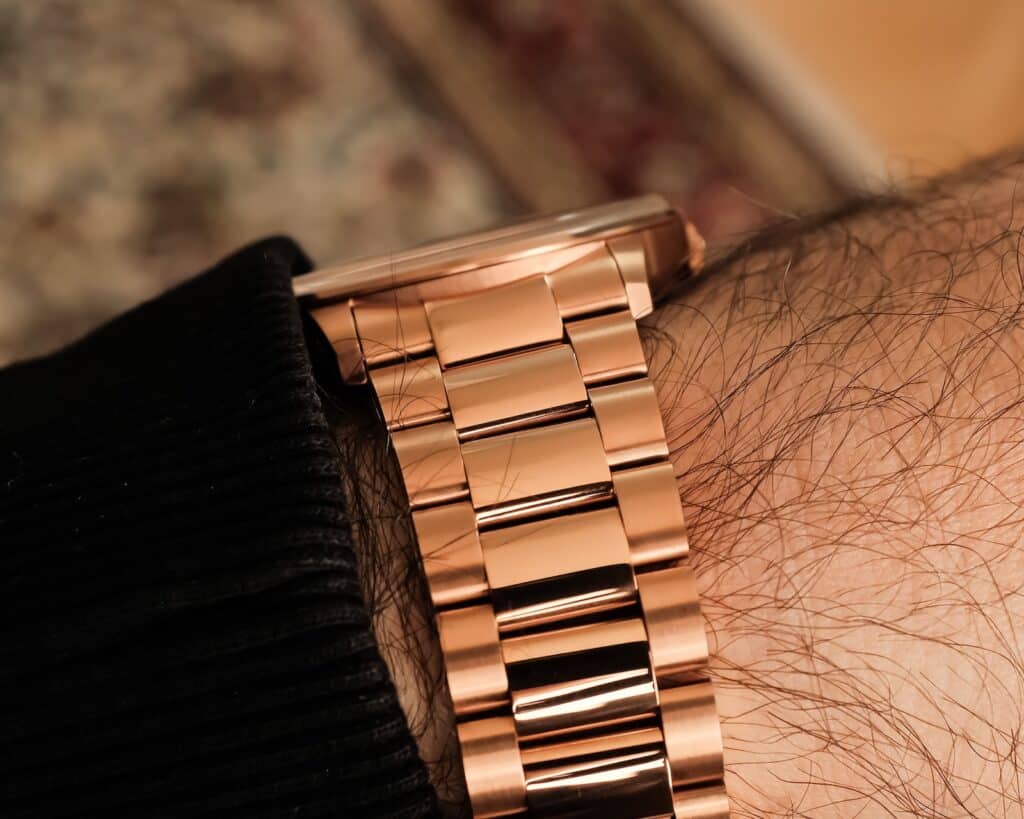
The bracelet continues the integrated look with a three-link design in matching rose-gold-tone PVD and 21mm lugs. The butterfly clasp worked better than I expected, and I’m usually not a fan of them. That said, the missed opportunities are real. There are no screw links at a time when easier bracelet sizing is becoming standard across the industry, and I would’ve liked a stronger taper toward the clasp. Quick-release spring bars soften the blow, and this is absolutely a watch I’d try on dark brown leather. The warmth is already there. Leather would lean into it.
- The Timex pairs a restrained silver dial with a genuinely good stock leather strap, and the 37mm cushion case wears smaller and friendlier than the numbers suggest.
- The Mido’s green dial carries the visual story, while the integrated bracelet impresses on the wrist despite skipping screw links and a stronger taper.
Build Quality & Technical Approach
The two watches share a mid-century vocabulary, but the engineering underneath tells you exactly where the price gap lives. This is where the comparison gets less emotional and more concrete: movements, case execution, crystals, and the small decisions that only start to matter after the honeymoon phase ends.
Movements:
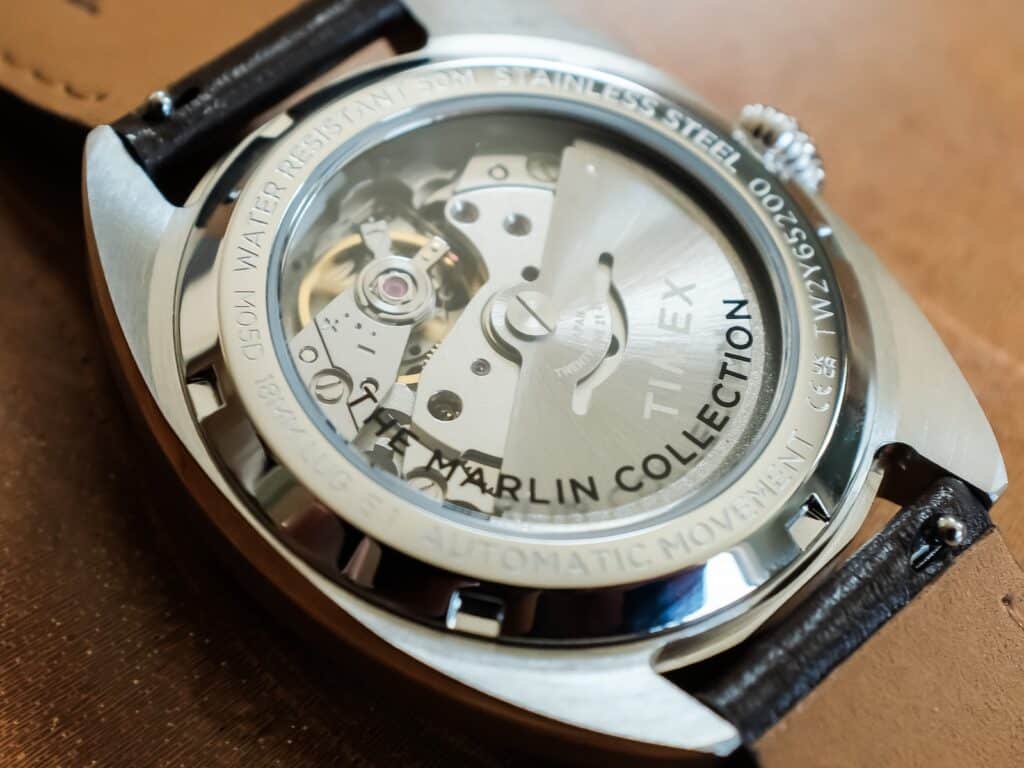
Underneath the exhibition caseback, the Marlin Draper runs what appears to be a Miyota 8-series automatic with around 40 hours of power reserve. Timex doesn’t name the caliber outright, so I’ll keep the hedge my review carried. Nothing about it is exotic, and nothing needs to be. Timekeeping stayed consistently solid during my time with the watch, rotor noise never became distracting, and the whole experience felt stable in the way you want an affordable automatic to feel. At this price, a proven third-party movement with a track record beats a marketing story every time.
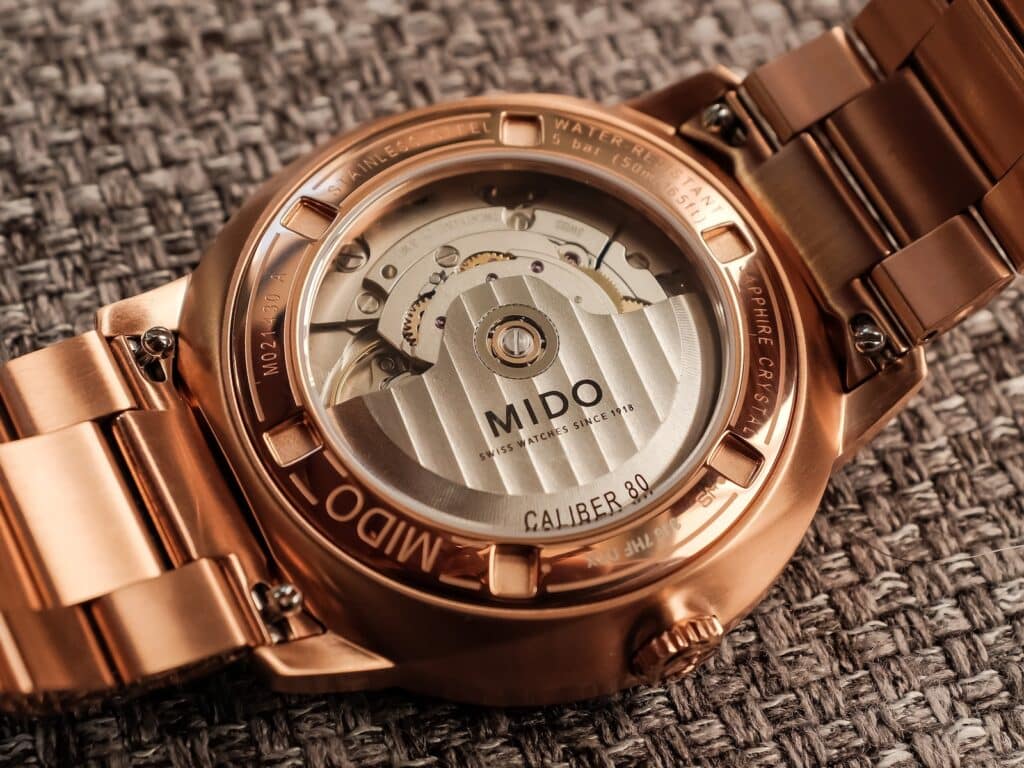
The Datoday answers with Mido’s Caliber 80, and this is the clearest technical win in the entire comparison. You get an 80-hour power reserve, roughly double the Timex, plus a Nivachron balance spring for better resistance to magnetism and shocks. This is the same basic architecture as the Powermatic 80 in my wife’s Tissot PRX, and that track record is reassuring rather than boring. On a day-date, where letting the watch die means cycling through days and dates to reset everything, being able to set it down Friday and pick it up Monday changes how the complication actually gets used. That reserve is worth real money here.
Case Construction & Finishing:
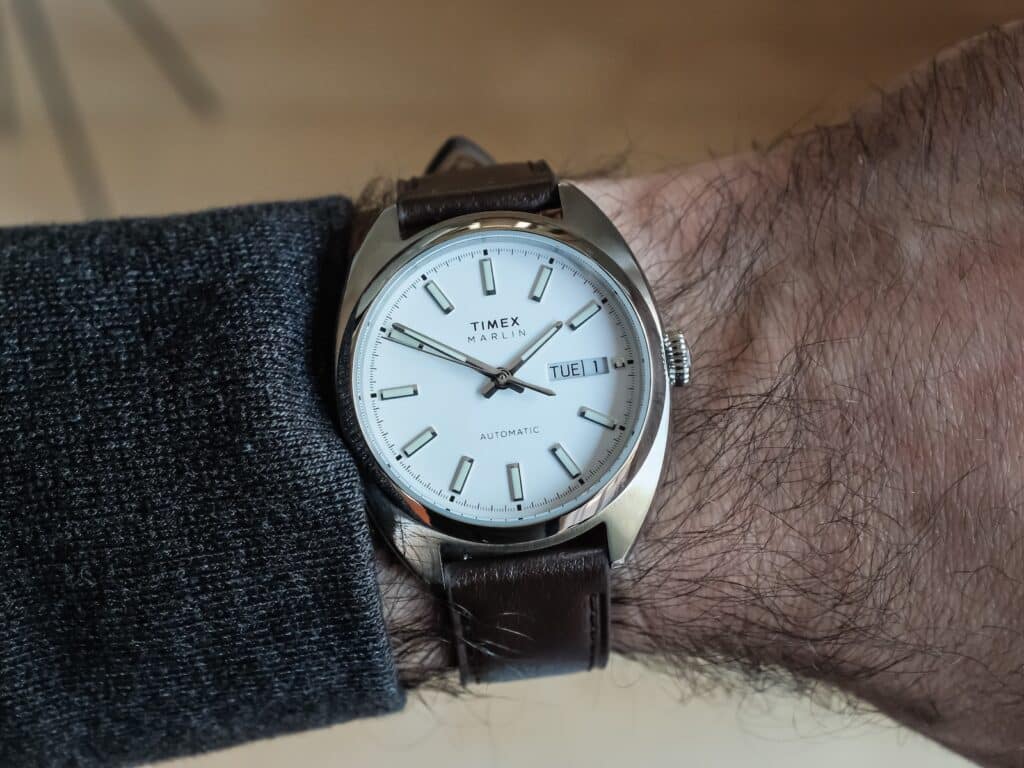
The Marlin Draper’s case is the reason the watch works. The barrel shape has a distinctly mid-century feel, the polished bezel plays against mostly brushed surfaces, and a thin polished chamfer runs along the outer edge for just enough visual separation. Timex resisted the urge to over-finish things, and even the buckle stays brushed. A heavily alternating brushed-and-polished treatment would’ve pushed the watch into faux-luxury territory. Instead, it feels straightforward, and that honesty suits the design.
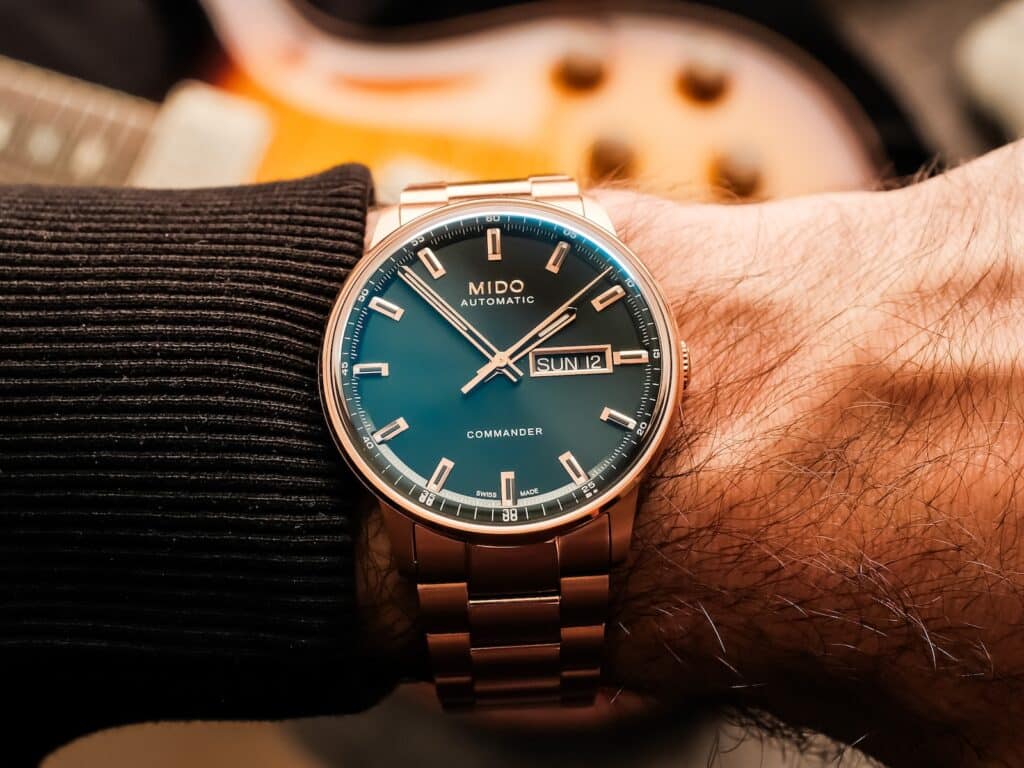
The Datoday’s case takes the opposite approach and leans into refinement. At 40mm across and only 10.7mm thick, the proportions are the real achievement. The case flows directly into the bracelet for that unified integrated look, and the warm PVD coating stays consistent across every surface. The push-pull crown did its job, though I wish it were a little chunkier for easier interaction. By comparison, the Timex feels charmingly simple, while the Mido feels engineered. Both approaches are valid. They just serve different customers.
Crystals & Day-Date Execution:
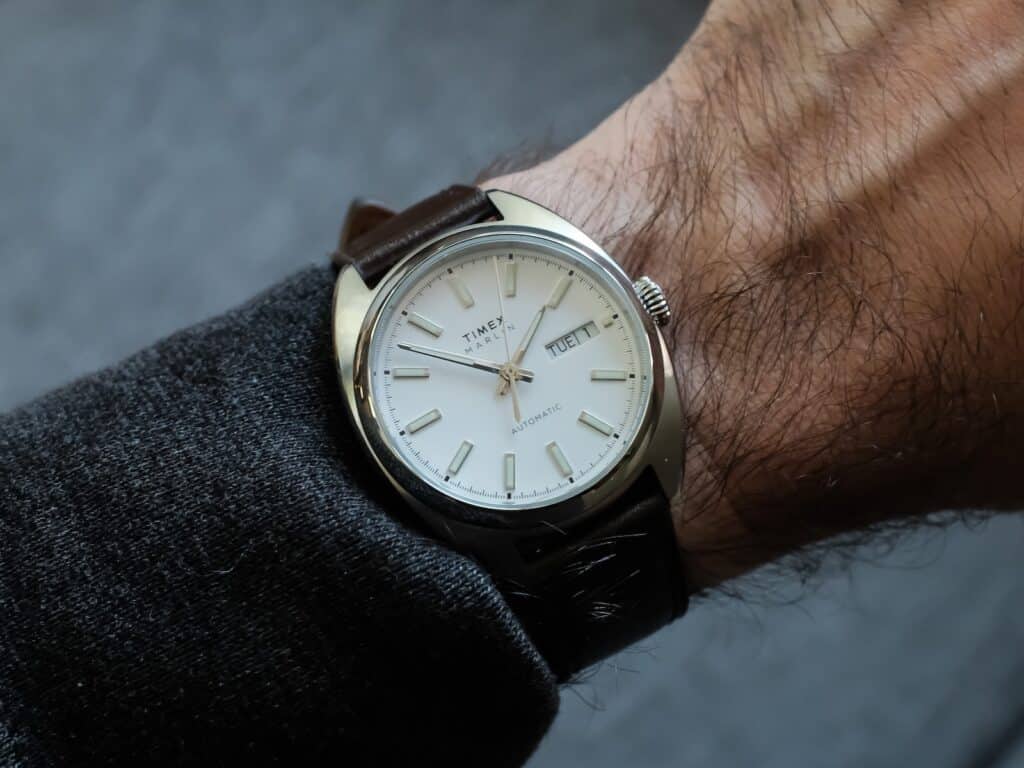
The Marlin Draper uses a mineral crystal, and this is my biggest gripe with the whole package. The mineral glass never bothered me in daily wear, and I made peace with mineral crystals on affordable watches a long time ago. Still, sapphire would’ve elevated the package considerably and made the watch feel more complete long term. The day-date display itself is practical and cleanly executed, and it fits the dial without crowding it. It just never delivers a particular moment of delight. It tells you the day. That’s the job.
The Datoday counters with a sapphire crystal and one of my favorite day-date executions anywhere near this price. The big, framed display pops with real legibility under the crystal, and the quick, positive snap of the day and date wheels past midnight is the kind of mechanical detail that makes a watch feel finished. Sapphire also changes the long-term ownership math. A dress-adjacent watch collects desk scuffs and door frames like anything else, and scratch resistance matters more on a piece you plan to keep nice for years.
Water Resistance & Lume:
Here’s the surprising part: both watches carry 50 meters of water resistance, so the price gap buys you nothing on this front. The Marlin Draper’s rating covers rain, hand washing, and honest daily life, which is the realistic use case for a watch like this. I said in my review that 100 meters would’ve added welcome versatility, and I still feel that way. The lume is functional without becoming a design feature, and for a mid-century dress piece, that’s about right.
The Datoday matches it at 50 meters with that push-pull crown, and I actually appreciate that Mido never pretended otherwise. This is a watch that knows what it is. The lume situation is similar: it’s there when you need it, applied to hands and markers that stay readable, and it never tries to steal the show. If you want glow-in-the-dark theatrics, both of these watches will disappoint you equally. Consider that a category trait rather than a flaw.
- The Timex gets the fundamentals right with a stable automatic and honest case finishing, while the mineral crystal remains the clearest budget compromise in the package.
- The Mido justifies its price through the Caliber 80’s 80-hour reserve, a sapphire crystal, and a day-date display executed with more care than the category usually gets.
Cost Considerations
At $279, the Marlin Draper feels fair almost across the board. You’re getting a distinctive case, a well-judged dial, a genuinely good strap, and a dependable automatic in a package that barely exists elsewhere at this price. The compromises, mainly the mineral crystal and the 50-meter rating, read as understandable rather than cynical. My hesitation had more to do with connection than value. My collection leans utilitarian these days, and the Draper occupies a softer, design-focused lane. Respecting a watch and reaching for it every morning are two different things, and only you know which side of that line you shop on.
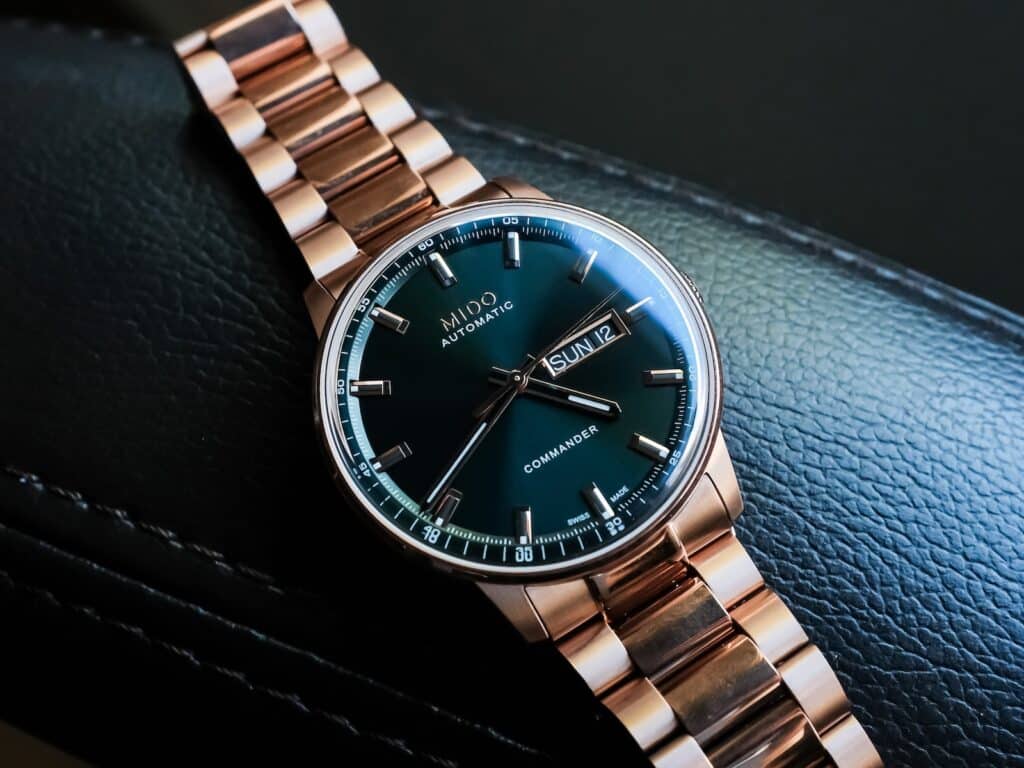
The Datoday’s $1,260 price puts it in genuine decision territory. That’s real money, and Mido knows it’s competing against everything from a used Datejust daydream to the flood of integrated-bracelet watches under $2,000. What you’re paying for is coherence. The movement, the finishing, the dial execution, and the proportions all feel like they belong to the same watch. You buy a Datoday because you like the Datejust formula, refuse to pay Rolex money, and want something that holds up under close inspection. On those terms, the price feels grounded rather than aspirational.
Final Thoughts: Does the Step Up Change Daily Life on the Wrist?
After time with both, my answer is more nuanced than I expected going in. The extra $981 buys execution rather than function. Both watches tell time, track the day and date, and shrug off rain equally well. Where the Mido pulls ahead is sapphire over mineral, 80 hours over 40, an integrated case-and-bracelet package over a strap watch, and a dial with real depth next to one built on tasteful restraint. Those are meaningful differences. They’re also differences you only appreciate up close, over time, in the small moments of ownership.
The bigger question is which watch fits the person actually reading this. If you’re building a first rotation and want a dress-adjacent piece for weddings, dinners, and office days, the Timex covers most of the experience for a fraction of the money, and that math is difficult to argue with. If you already own the basics and you’re ready for a watch that rewards close attention instead of merely tolerating it, the Mido is the more complete object, and it earns its place on your wrist.
So here’s my verdict:
- Choose the Timex Marlin Draper Automatic if you want the mid-century dress watch look at the lowest sensible buy-in. It nails the proportions and the restraint, and the compromises are easy to live with at $279.
- Choose the Mido Commander Datoday if you’re stepping up on purpose. The Caliber 80, the sapphire crystal, and the integrated design deliver a genuinely more refined daily experience at a price that still sits far below the luxury pieces it references.
The honest ending, for me personally, is that neither watch stayed in the collection, and that’s fine. The Timex earned my respect without earning a permanent slot. The Mido moved me closer to being a gold-tone guy than any watch before it, and I’m still thinking about that green dial. Maybe that’s the real difference $981 buys. Both watches do their jobs. Only one of them followed me home in my head.

Co-Founder & Senior Editor
Michael Peñate is an American writer, photographer, and podcaster based in Seattle, Washington. His work typically focuses on the passage of time and the tools we use to connect with that very journey. From aviation to music and travel, his interests span a multitude of disciplines that often intersect with the world of watches – and the obsessive culture behind collecting them.
A very interesting article! It is very familiar to me as I purchased both the black dial Draper and the Commander this very week. Yesterday the Mido arrived from Ashford, and I had actually purchased it 2 days prior. More importantly, with tax and two day shipping I got the watch for $430.00 USD. I did pay the full amount for the Timex, however. That watch arrived today.
I can say unequivocally that the Timex is tidy and tiny, with a similar butterfly clasp, but a less stellar bracelet. I purchased it for the novelty as the 14th Timex in my collection, and it will sit in the box for the most part.
The Mido, however, is an absolutely stunning watch, well finished, and the two-tone bracelet is beautiful. Readability with the sapphire crystal is amazing, there is obvious AR coating.
I don’t believe you will ever have to purchase the Mido for the RRP, and I can say that because this is the third Mido I purchased this year, and I’ve purchased brand new watches with full AD warranty for perhaps half of RRP. At this price point, comparing the Timex to the Mido doesn’t make any sense, and value of juxtapositioning these pieces doesn’t make much sense.
Hi, Lonnie:
Thank you for sharing your thoughts and perspective on this. You’ve made a fair observation and $430 makes the Commander an especially strong value. The comparison was less about presenting them as direct equivalents and more about exploring what you gain by stepping from an accessible vintage-inspired watch into a more refined Swiss option.
Real-world pricing can certainly narrow that step, though, and your experience owning both is a useful perspective. It sounds like the Mido has fully justified the upgrade for you.
Best,
-Kaz