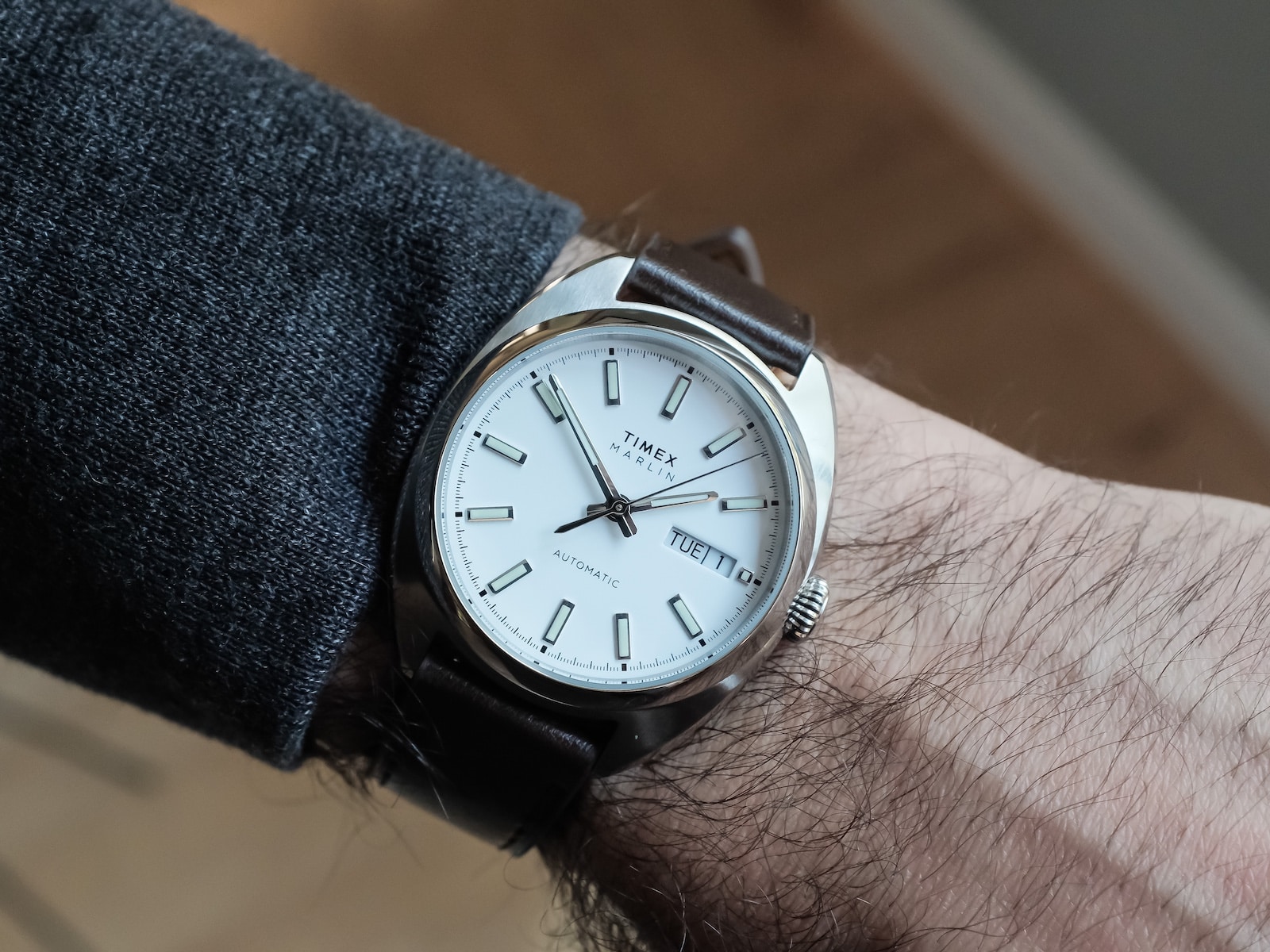
Ask around for a first mechanical dress watch under $300, and the same name comes back so often. The Orient Bambino has spent years as the default recommendation, the piece enthusiasts hand newcomers before anyone gets to a follow-up question. It also means the category rarely gets challenged, which is what makes a watch like the Timex Marlin Draper Automatic worth stopping for. It wears a completely different flavor of vintage, and it arrives with enough character to make this a real comparison.
We’ve reviewed both of these watches on their own terms, and the temptation with a matchup like this is to crown a winner and move on. That’s not the interesting part. Both sit in the same rough price bracket, both lean on mid-century design language, and both ask you to accept a few compromises that come with the territory. What separates them is tone. One channels round, classic, understated dress-watch tradition. The other leans into cushion-cased, American, Mad Men era styling. Figuring out which flavor earns a place on your wrist matters more than deciding which spec sheet looks better on paper.
Overview and Identity
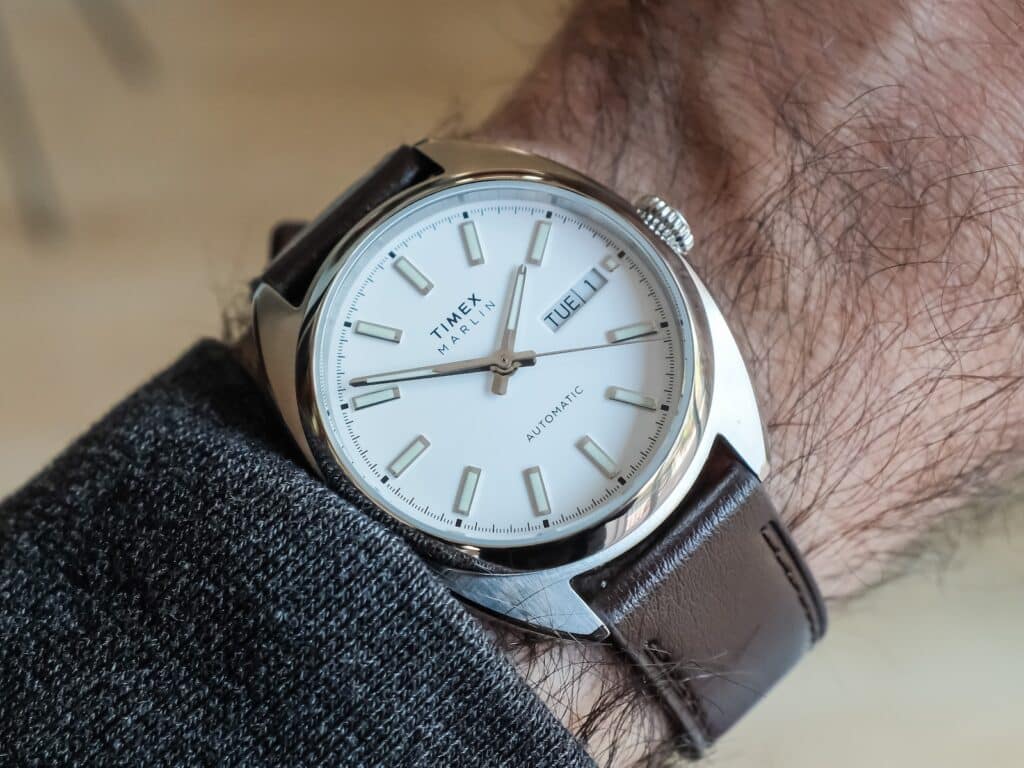
The Timex Marlin Draper Automatic is the newer and more stylistically specific of the two. Timex built the whole watch around a barrel-shaped cushion case and a restrained mid-century dial, then tied it to Don Draper and the Mad Men era through the name. When we spent time with it, the television connection mattered far less than the proportions did. The case design carries the watch on its own, and Timex mostly resisted the urge to over-modernize a vintage idea, which is usually where these archive-inspired releases start to fall apart. At 37mm, it reads as a small, deliberate, design-first piece rather than a nostalgia costume.
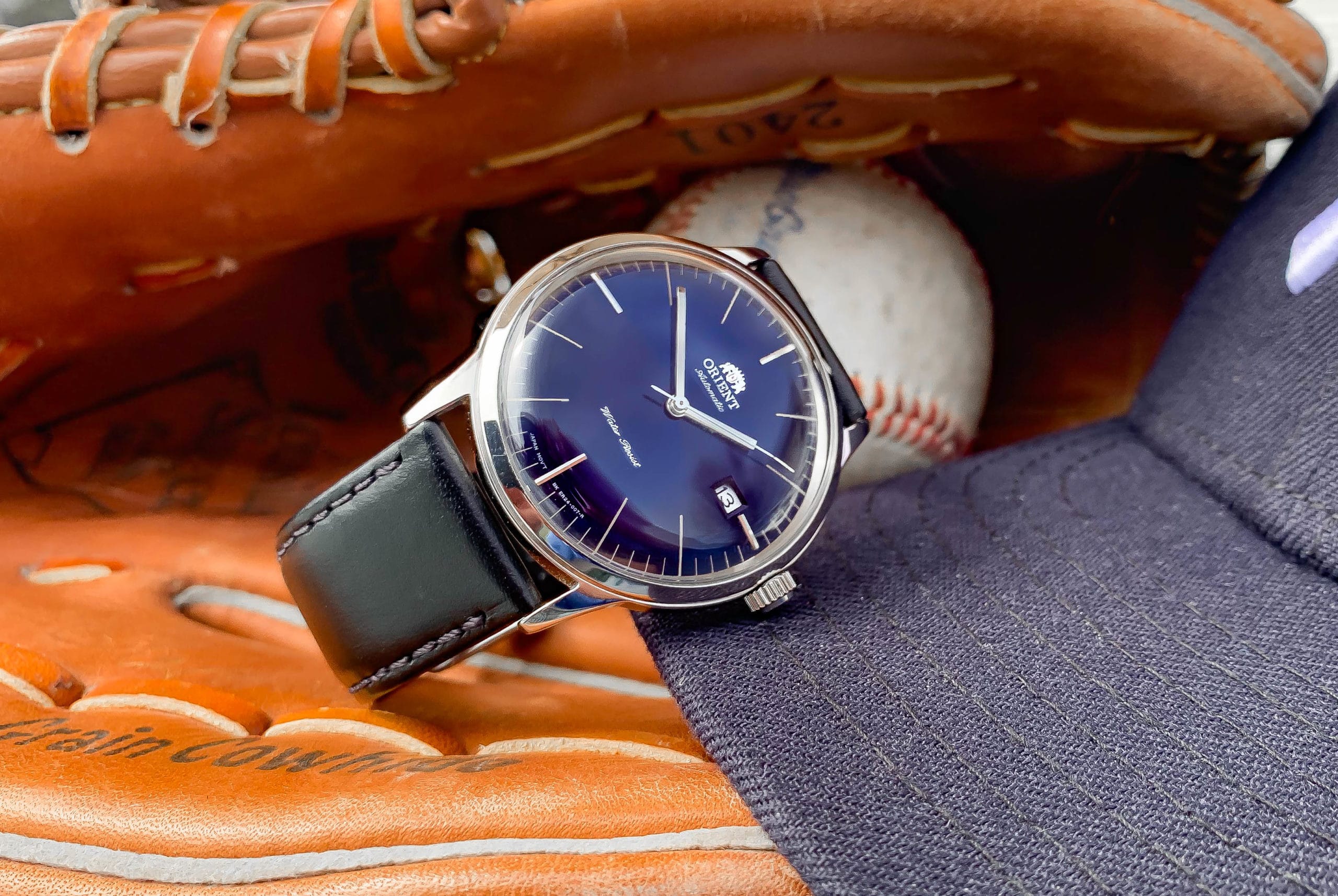
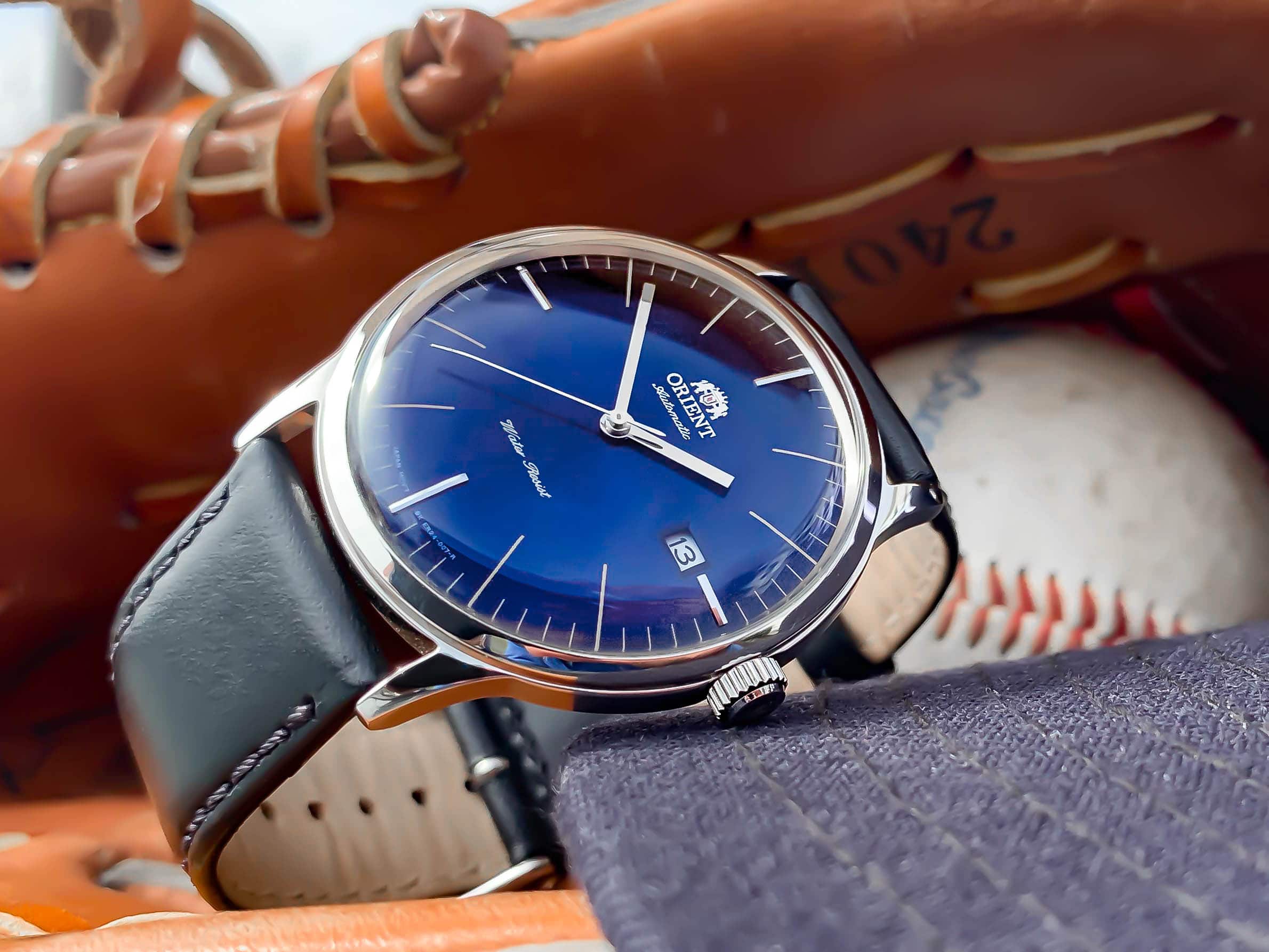
The Orient Bambino carries a different kind of weight. It’s really a whole family of watches rather than a single model, reviewed here in its clean, modern V3 blue form, and it has become the go-to entry point into affordable mechanical dress watches. Part of that comes from the in-house automatic movement, which is unusual at this price. Part of it comes from the sheer range of dials and case styles, from pointed dauphine classics to more contemporary layouts. The Bambino is the watch that teaches a lot of people what they like before they know enough to have real preferences, and that role shapes how we judge it.
- The Timex Marlin Draper is the character pick, a small cushion-cased dress watch that commits to a specific mid-century American look without leaning on its television tie-in.
- The Orient Bambino is the default recommendation for a reason, offering an in-house movement and an enormous range of dial options at a price that keeps the entry low.
Dial, Strap & Wearability: Restrained Character vs Classic Comfort
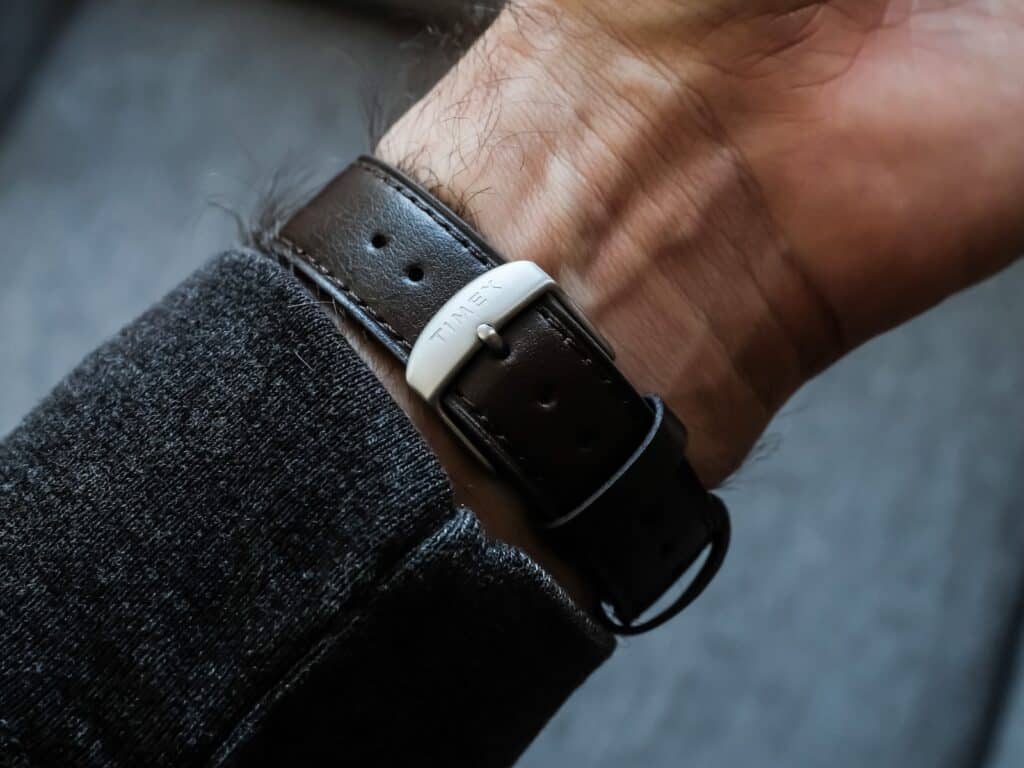
The Timex dial is where the restraint pays off. You get applied markers, a practical day-date layout, and a silver surface with just enough texture to keep light moving across it through the day. The darker hands and markers give it real legibility, which turns out to be one of the advantages it holds in this matchup. Lume is present, but it never becomes a talking point, and for a dress-leaning watch that feels like the right call.
On the wrist, the 37mm cushion case wears smaller than the numbers suggest because the dial opening stays compact. The 12.5mm thickness sounds slightly chunky for something this dressy, though the strap does a lot of work to fix that. Timex kept the brown leather thin with a gentle taper, so the watch settles close to the wrist instead of hovering above it. The quick-release setup makes swapping straps painless, and the mostly brushed case avoids the faux-luxury trap that ruins so many watches at this price.
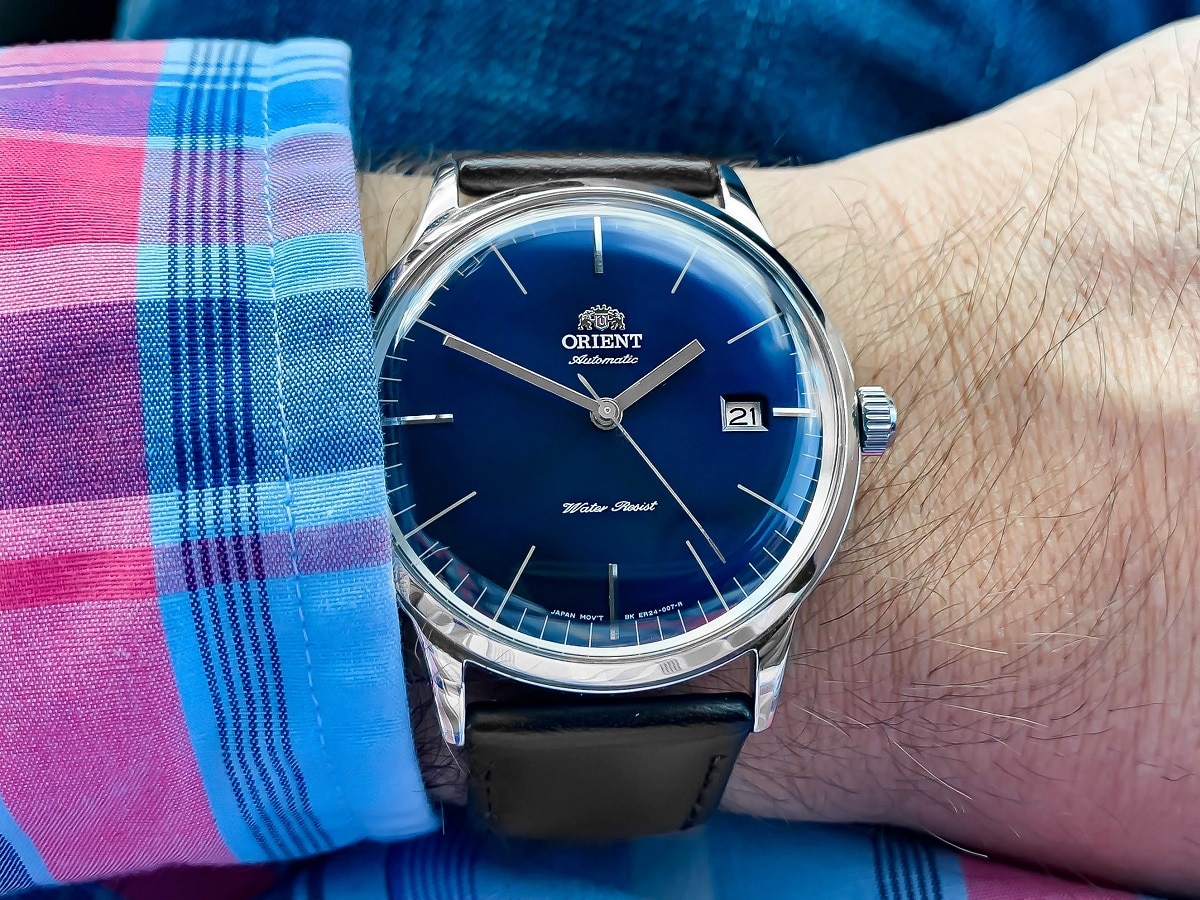
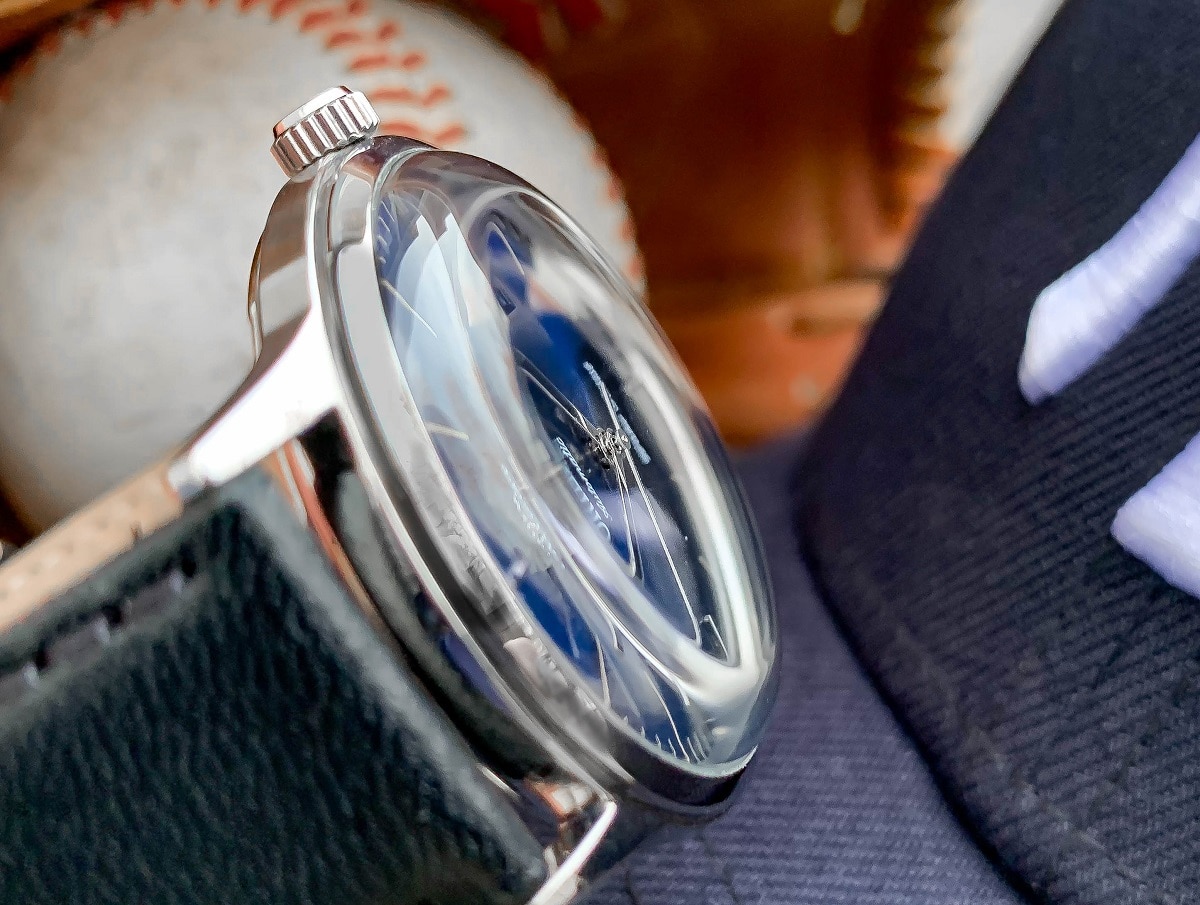
The Bambino takes the opposite approach to the dial, and it’s a more complicated story. The domed mineral crystal is lovely, and on the blue V3 the color has real depth. The problem is legibility. The crystal, hands, and indices are all reflective enough that the dial can be hard to read at certain angles, and the flat polished hands have a habit of disappearing into the background. It’s the kind of trade-off that looks like character in photos and turns into a mild daily annoyance in practice.
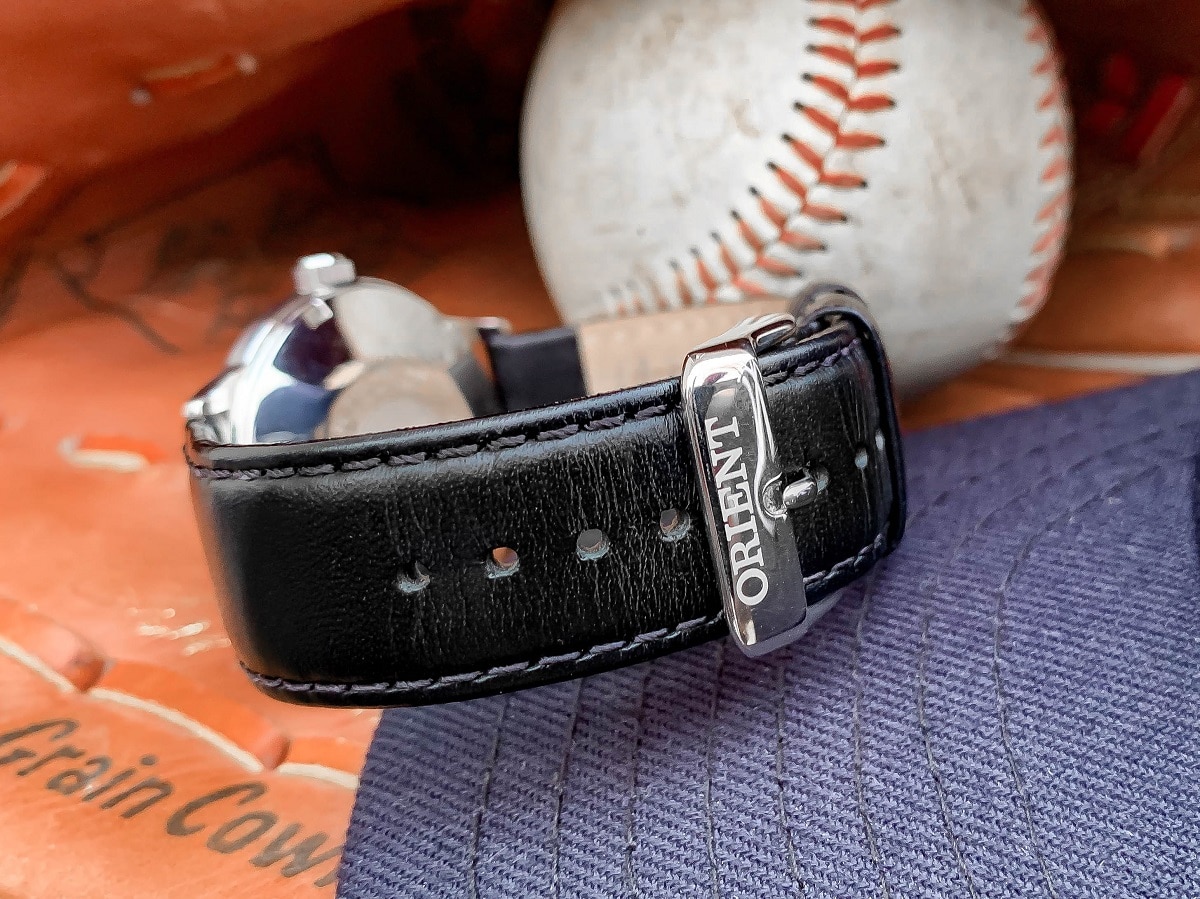
Wearability is where the Bambino has always made its case. The 40.5mm diameter wears smaller than it sounds thanks to short, gently sloped lugs that adapt to a wide range of wrist sizes. At around 12mm thick, it slides under a cuff without fuss, and the domed crystal gives it a presence that belies the price. The 21mm leather strap is cheap in the way you’d expect, but it’s comfortable, and swapping it for something nicer is an easy first upgrade.
- The Timex Marlin Draper pairs a restrained, legible dial with a thin tapered strap and quick-release convenience, and the cushion case wears smaller and dressier than its 37mm spec implies.
- The Orient Bambino leans on a beautiful domed crystal and a forgiving case shape, though the reflective dial and disappearing hands make legibility the clearest compromise you accept for the look.
Build Quality & Technical Approach
The two watches start to separate once you get past styling and into how they’re actually built. This is where a comparison like this earns its keep, because the surface similarities give way to two different philosophies about where an affordable dress watch should spend its money. Movements, case finishing, crystals, and everyday durability each tell part of the story.
Movements:
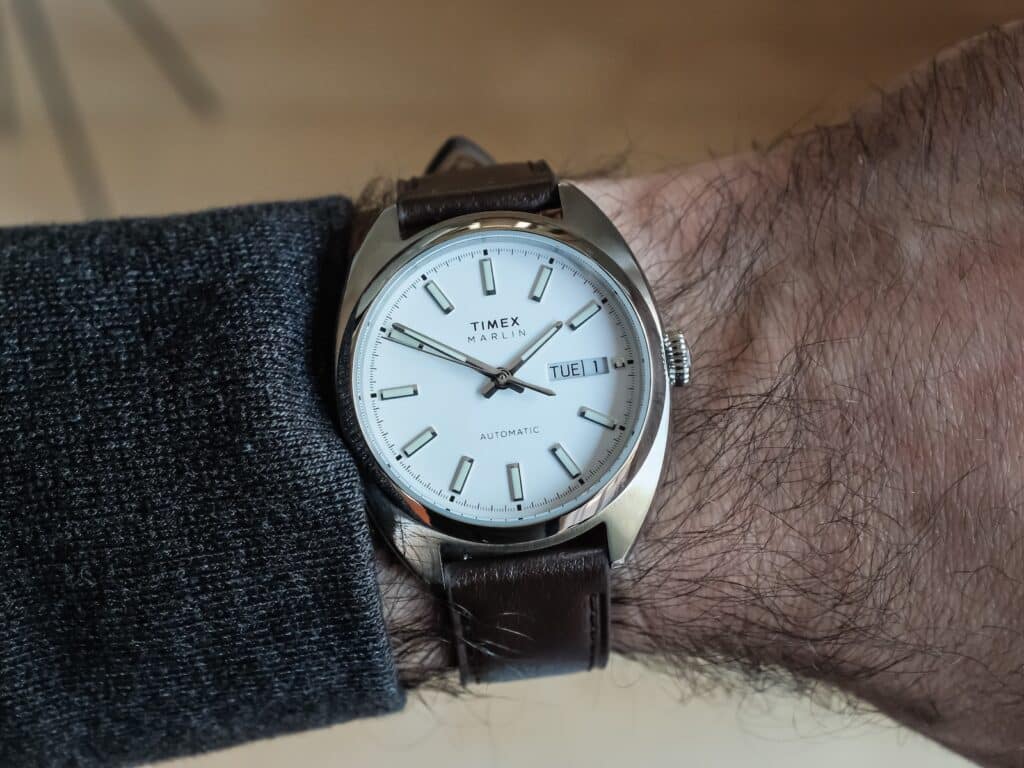
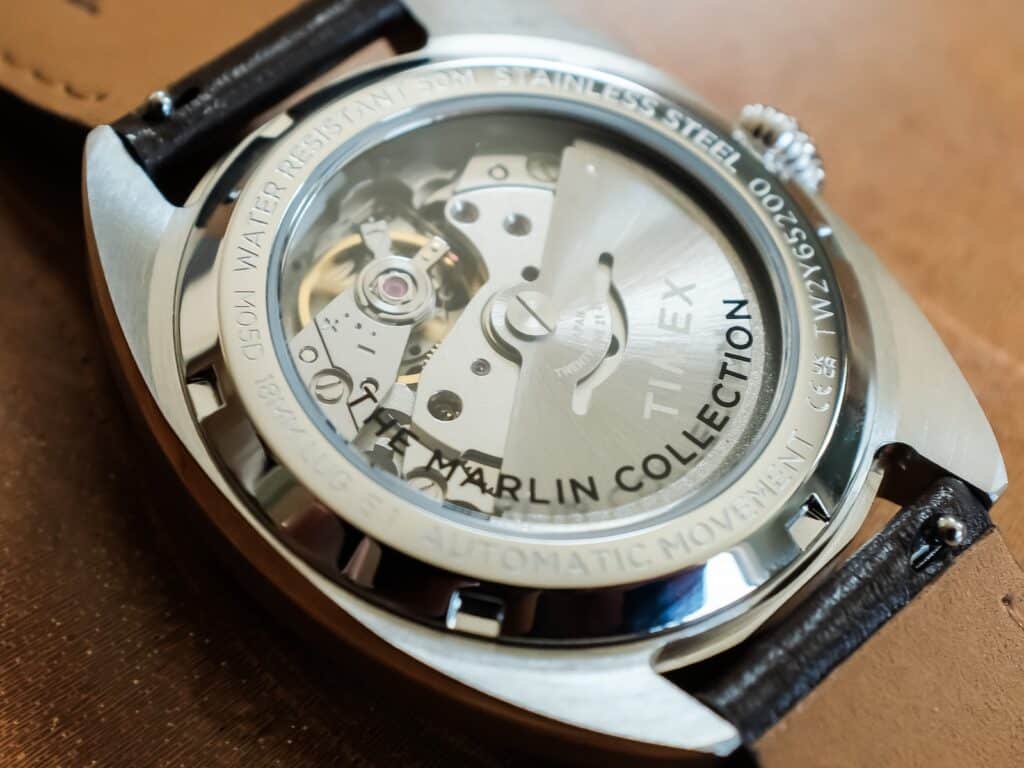
The Timex runs a Miyota 8-series automatic, the kind of proven Japanese movement you find across a huge swath of affordable watches. Timex doesn’t publish the exact caliber, but the day-date function, roughly 40-hour power reserve, and 21-jewel construction all point squarely at the 8-series family. During our time with the watch, it did exactly what you want an affordable automatic to do. Timekeeping stayed consistent, the rotor never got distracting, and nothing about it invited a second thought. It’s an outsourced movement, and that’s fine, because it’s a good one with a long track record.
The Bambino answers with something you rarely see at this price, an in-house movement. Orient builds the caliber F6724 itself, and it hacks and hand-winds, which older Bambino generations couldn’t do. Orient rates it at around 40 hours of power reserve, though our review sample tended to fall a little short of that in practice, and the rotor sits on the loud side. Neither issue is a dealbreaker, but they’re worth knowing about, because the in-house label sets an expectation the movement doesn’t always meet. What you’re really paying for here is the philosophy. Orient makes its own, and for some buyers that matters more than the numbers.
Case Construction & Finishing:
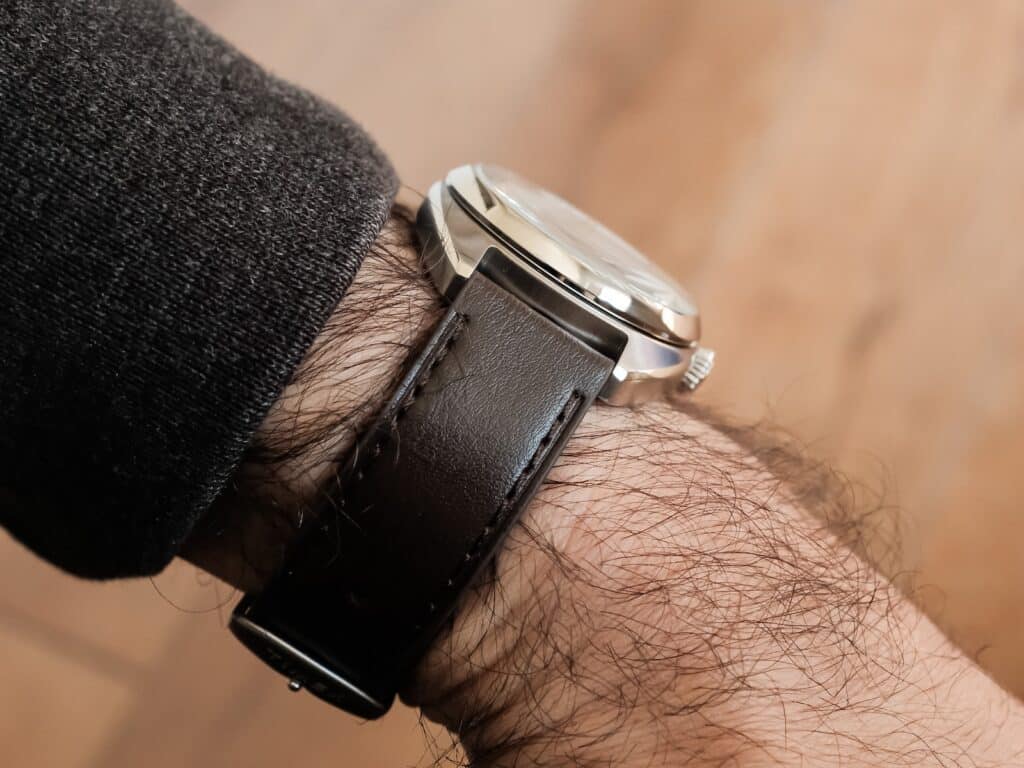
Timex kept the Marlin Draper’s finishing deliberately simple. The case stays mostly brushed, with a polished bezel and a thin polished chamfer running along the outer edge to give the profile some separation. That’s the whole trick. A heavier mix of brushing and polishing would have pushed the watch toward faux-luxury territory, and the restraint is exactly what keeps the cushion case feeling honest. Nothing about the finishing pretends to be more expensive than it is, which suits the design.
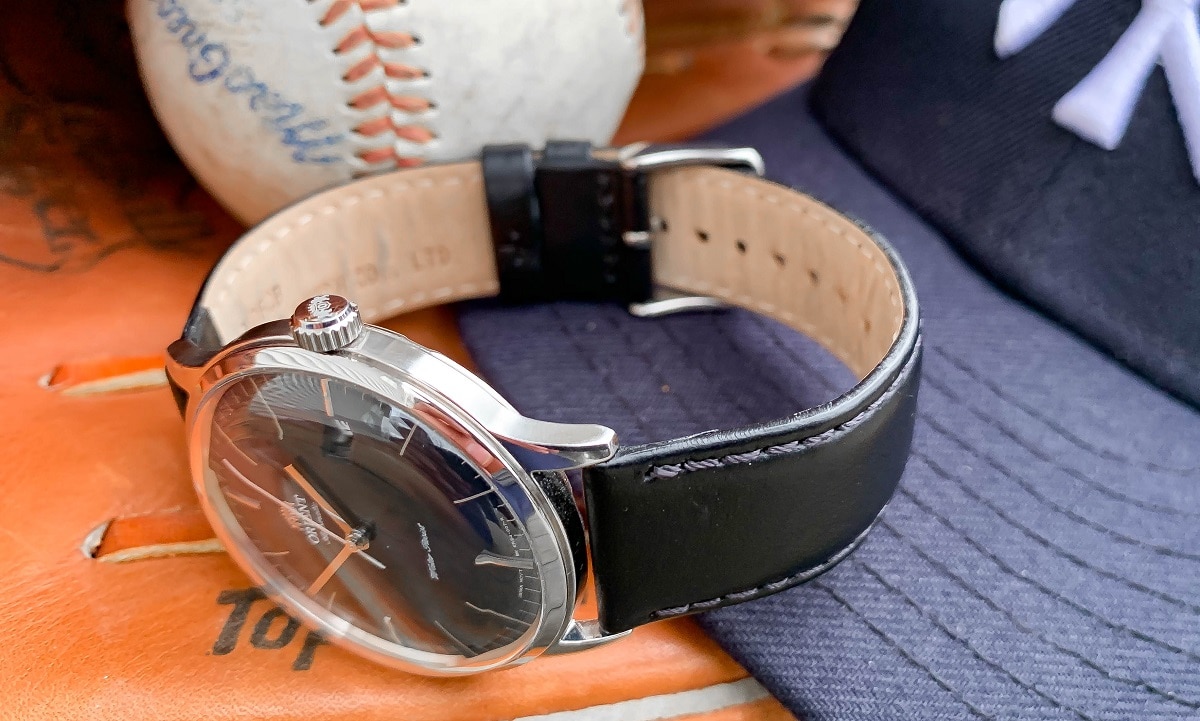
The Bambino’s case is cleaner and rounder, built around a smooth stainless bezel that sits tight to the crystal. It’s a well-judged shape, and the polished surfaces give it a slight luxury-watch impression that over-delivers for the money. The one recurring gripe is the crown. At 5.3mm it’s small and a little fiddly to grip, especially when you’re hand-winding or setting the time. It’s a minor thing, but it’s the sort of detail you notice repeatedly rather than once.
Crystals & Legibility:
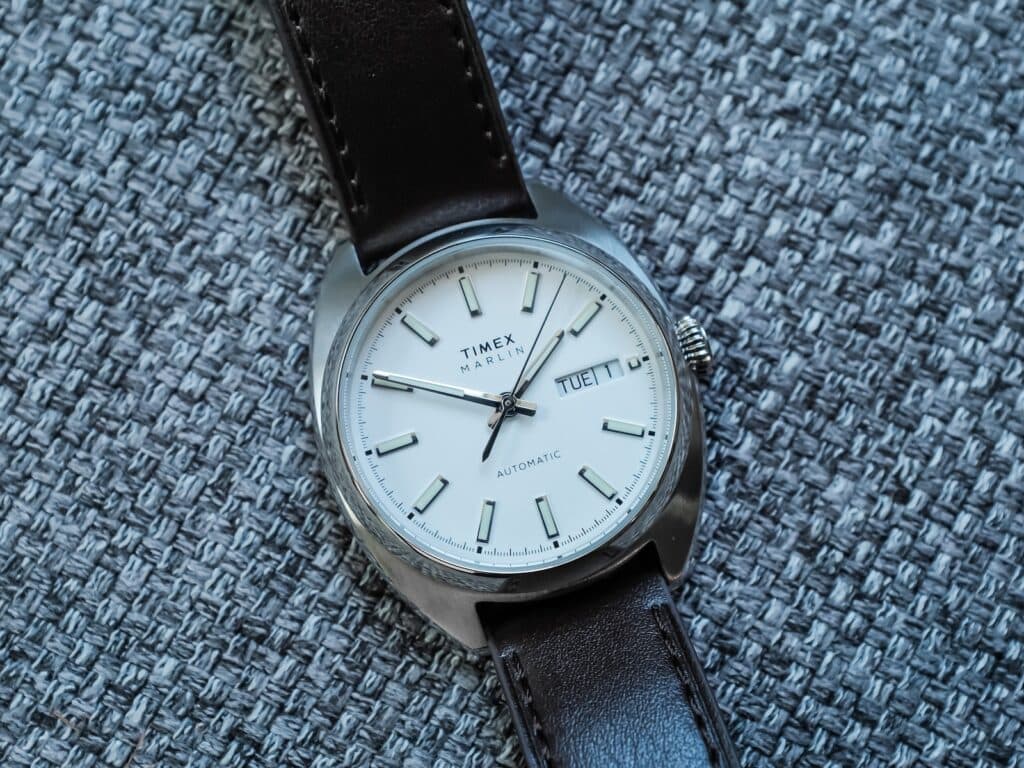
Both watches use mineral crystal, and both would be better with sapphire, but they handle the compromise differently. On the Timex, the crystal sits fairly flat and stays out of the way, so legibility holds up well in most light. It isn’t a scratch-proof setup, and we made peace with mineral crystals on affordable watches a long time ago, though sapphire would have elevated the whole package. For daily wear, it does the job without drawing attention to itself.

The Bambino’s domed mineral crystal is prettier and more problematic at once. The dome catches light beautifully from an angle, which is a big part of the watch’s charm. That same dome, combined with the reflective dial, is also the main reason legibility suffers. You end up tilting your wrist to read the time more often than you should, and in bright light the reflections can wash out the hands entirely. It’s a fair trade for some buyers and an irritation for others.
Water Resistance & Everyday Durability:
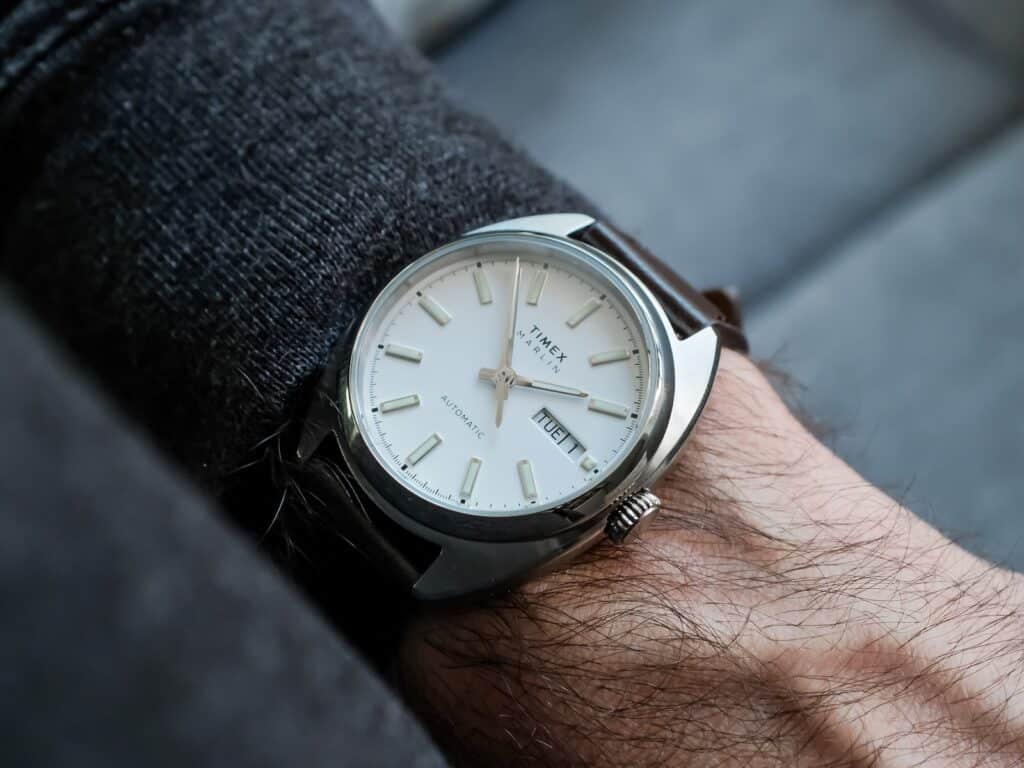
Neither of these is a watch you take swimming, and the specs make that clear. The Timex carries a 50-meter rating, which covers rain, hand-washing, and the occasional accidental splash without worry. We’d have preferred 100 meters for the extra peace of mind, but 50 is honest for a dress-leaning piece, and the exhibition caseback is a nice touch that lets you watch the rotor spin.
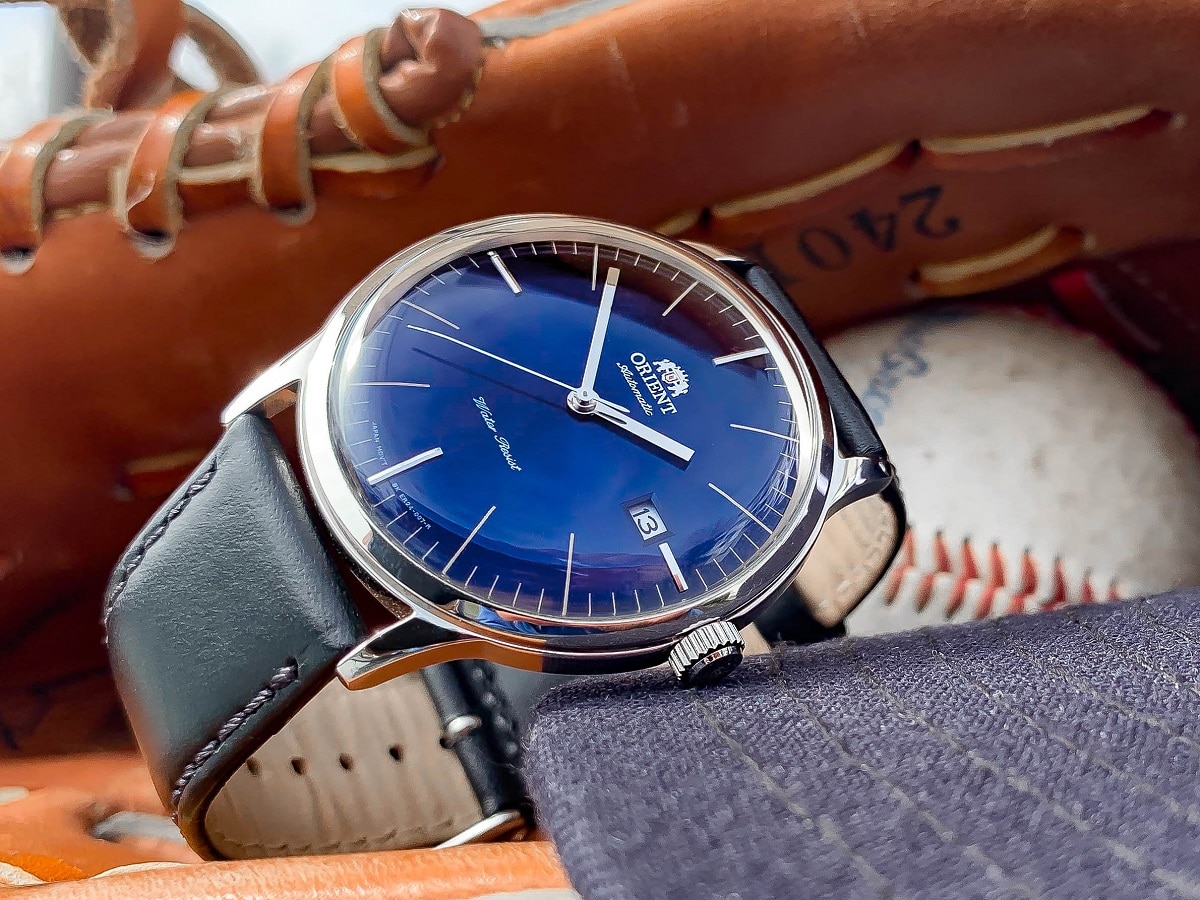
The Bambino is the more cautious of the two here. The V3 we reviewed is rated to just 30 meters, and other models in the line reach 50, so it’s worth checking the exact reference before buying. Orient is upfront that this is a dress watch and not built for the elements, and we’d treat that 30-meter figure conservatively. Hand-washing and a surprise rain shower are fine. Anything more than that, and you’re pushing your luck with a watch that was never meant for it.
- The Timex leans on a proven outsourced Miyota, restrained finishing, and an honest 50-meter rating, delivering a package that feels complete for the money even with the mineral crystal.
- The Bambino counters with an in-house movement and a beautifully shaped case, though the short power reserve in our sample, small crown, and reflective crystal are the compromises that come with it.
Cost Considerations
The Timex Marlin Draper Automatic sits around $279 at retail, which puts it at the higher end of this comparison. For that money you get the cushion case, the day-date, quick-release straps, and the mid-century styling that’s the entire reason to want it. Timex pricing tends to stay fairly stable, so you’re less likely to catch it at a steep discount than you would the Bambino. Whether that number feels right depends on how much you value the specific look, because you’re paying for design and restraint as much as anything mechanical.
The Bambino plays the value game harder. Depending on the reference and where you shop, it often lands well under the Timex, sometimes closer to $150 on the street, with Orient’s list prices climbing higher before the near-constant discounting kicks in. That lower entry point, combined with the in-house movement and the enormous range of dials, is a big part of why it’s stayed the default recommendation for so long. If your main goal is the most mechanical dress watch for the least money, the Bambino still makes that argument better than almost anything else.
Final Thoughts: Two Very Different Takes on Vintage
After spending real time with both, the honest answer is that this was never going to end with one watch beating the other into submission. They’re too different for that. The Timex and the Bambino are chasing two separate ideas of what an affordable vintage dress watch should be, and each one nails its own brief. The more useful question is which version of old-school you actually want strapped to your wrist.
The Timex is the more finished, more legible, and more stylistically committed of the two, and you pay a little extra for that. The Bambino is the value benchmark, the watch that hands you an in-house movement and endless dial options for less, as long as you can live with a reflective dial and a small crown. Both are easy to recommend to the right person. Neither is a mistake.
So here’s our verdict:
- Choose the Timex Marlin Draper Automatic if you want the stronger everyday package, better legibility, a distinctive cushion case, and mid-century American styling, and you don’t mind paying a bit more for the finish and the look.
- Choose the Orient Bambino if you want the lower entry price, an in-house movement, and the widest range of dial and case options anywhere near this bracket, and you can accept a reflective dial as the cost of that classic dress-watch charm.
The two flavors of vintage on offer here rarely appeal to the same buyer at the same moment, which is what makes the comparison useful. One is a small, deliberate slice of American mid-century design. The other is the affordable mechanical dress watch the whole category still measures itself against. Spec sheets won’t decide this one. The right pick is the watch whose particular brand of old-fashioned you’ll still want to wear a year from now.

Co-Founder & Senior Editor
Michael Peñate is an American writer, photographer, and podcaster based in Seattle, Washington. His work typically focuses on the passage of time and the tools we use to connect with that very journey. From aviation to music and travel, his interests span a multitude of disciplines that often intersect with the world of watches – and the obsessive culture behind collecting them.