If you’ve ever bought a field watch because it looked ready for a muddy trail, only to mostly wear it through grocery runs, rainy commutes, and the occasional “I should probably go outside more” weekend, this debate gets practical fast. Solar field watch vs mechanical field watch sounds like a movement argument, but in daily wear, it often comes down to patience. A solar field watch is easy to forget about in the best way. A mechanical field watch asks you to participate a little, which can be charming until you’re late and the watch is dead.
After 10+ years of reviewing affordable watches we’ve learned that the smarter choice depends less on what sounds cooler and more on what you’ll tolerate on a normal Tuesday. But none of these watches gets a free pass because of the movement inside. So we’re going to pit models from both camps against the stuff that matters in real ownership: accuracy, maintenance, reliability, and how these watches are actually used after the romance wears off. That’s a prudent way to reach a conclusion that helps outside of a forum argument.
Category Identity & Philosophy: Set-It-Down Practicality vs Hands-On Satisfaction
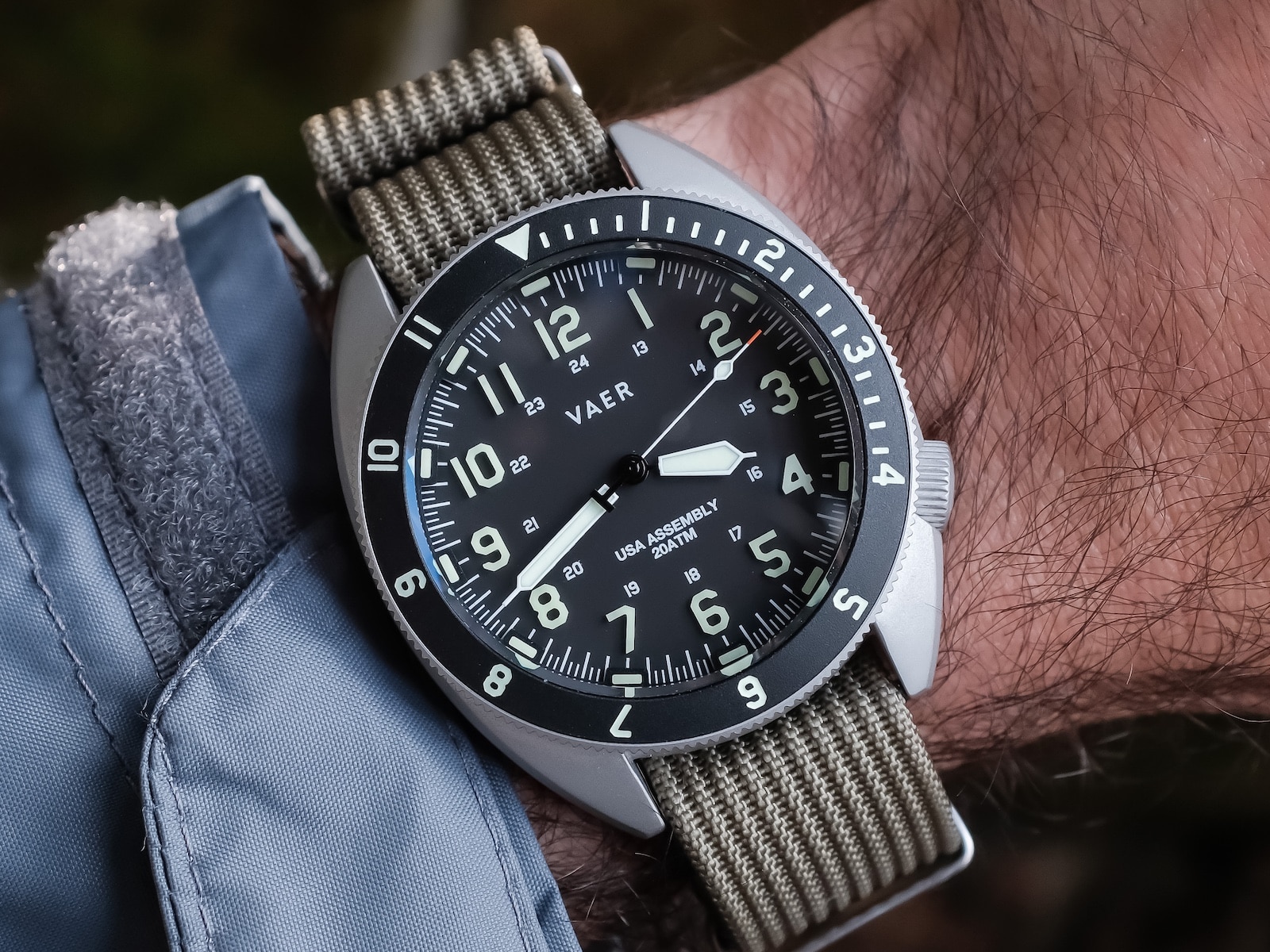
Solar field watches approach the job from a very specific place: reduce the number of things the owner has to think about. After wearing pieces like the Vaer C4 Tactical Field Solar and Timex Expedition Field Post Solar, that identity becomes hard to ignore. These watches are not trying to make the ownership experience feel ceremonial. They are trying to stay ready. The appeal is in how little drama they add to the day: leave one on the dresser, wear something else for a while, come back to it, and there’s a good chance it’s still doing its job without needing a reset, a wind, or a small moment of regret before coffee. In our Timex review, that mattered because the watch became the easy grab for commutes, errands, sink splashes, and the sort of daily nonsense that field watches usually pretend is more heroic than it is. The Vaer pushed that same idea further, feeling less like a nostalgic field-watch exercise and more like a tool watch that borrows the field-watch language.
That is the solar field-watch philosophy at its best. It treats convenience as part of capability. Not in a lazy way, either. More in the “I have enough tiny obligations already” way. Solar makes sense when the watch is meant to be worn hard, rotated casually, or picked up without checking whether it still has any life left. The trade-off is that some of the collector pull gets stripped away. There is less ritual and mechanical intimacy.
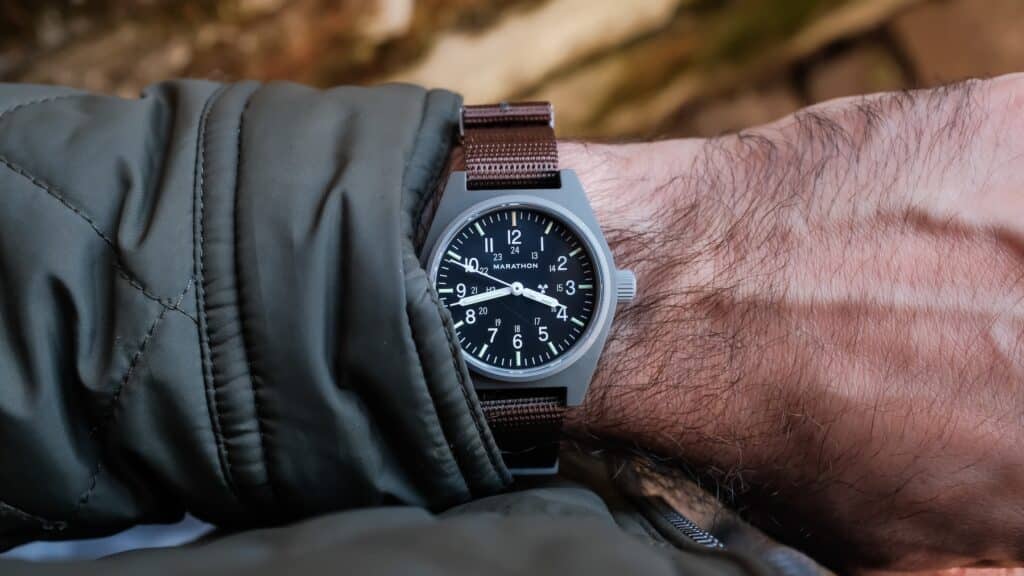
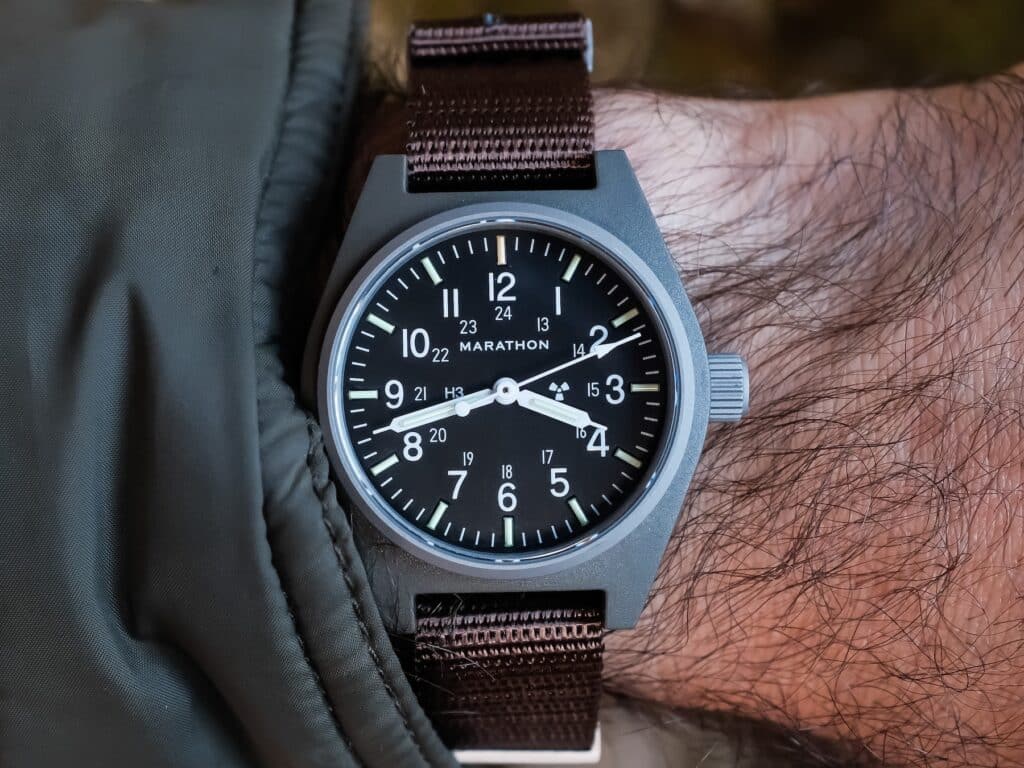
Mechanical field watches start from a different emotional place. They ask for involvement, and depending on your mood, that can feel either satisfying or mildly ridiculous. Watches like the Hamilton Khaki Field Mechanical and the Marathon General Purpose Mechanical work because they make that involvement feel tied to the object itself. The Hamilton has that hand-wound rhythm where the watch becomes part of the morning routine, and when it’s running well, there’s a small pleasure in knowing you helped keep it going. The Marathon takes a more blunt approach. It does not feel precious or polished, but that is part of the charm. It wears its purpose plainly, keeps things simple, and reminds you that mechanical field watches can still feel like gear rather than jewelry.
But mechanical charm has a cost, and pretending otherwise is how people end up annoyed with watches they thought they were supposed to love. A mechanical field watch can be more personal, more tactile, and more satisfying over time, but it also asks for more patience. You may need to wind it, set it, live with accuracy shifts, and accept that water resistance or shock tolerance may not always match the “rugged” energy of the design. That does not make mechanical field watches worse. It makes them more specific. They connect best with people who enjoy the small interactions: the crown feel, the winding resistance, the sense that the watch is doing something physical on your wrist.
So, the split isn’t really about solar being modern and mechanical being traditional — that’s too tidy, and watch collecting rarely is. Both types can offer watches worth the money, but they satisfy very different needs.
- Solar field watches are usually about low-fuss reliability, practical ownership, and having a watch that stays ready without much drama.
- Mechanical field watches are about interaction, routine, and the satisfaction of wearing a small machine that keeps you engaged.
Movement Practicality: Accuracy, Power Reserve, and Reliability
This is where the solar field watch vs. mechanical field watch debate starts being about how often you want to check your watch. Field watches are supposed to be easy to trust. That does not mean they need to survive a documentary-level expedition every weekend, but they should be ready for everyday use without becoming one more small obligation. Accuracy, power reserve, and movement reliability matter because they affect the boring yet crucial moments: grabbing the watch before leaving, checking the time in a rush, setting it after a few days off the wrist, or realizing it stopped sometime yesterday because you forgot to wind it.
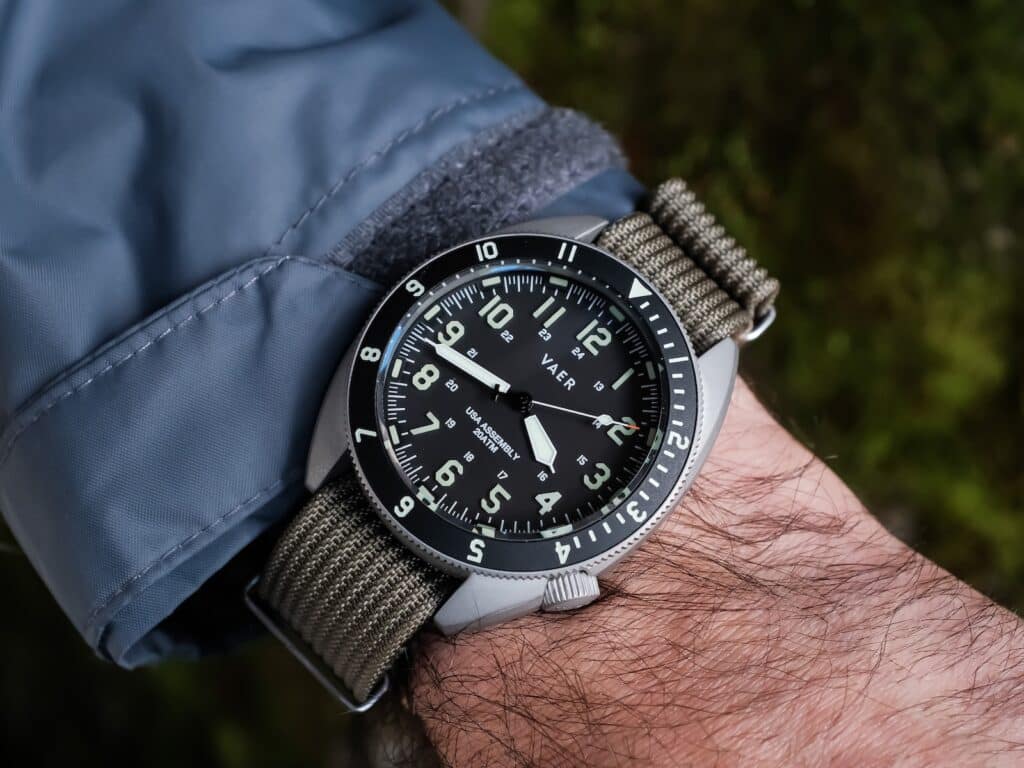
On the solar side, the Vaer C4 Tactical Field Solar makes a pretty convincing case for practical ownership. Vaer uses a Japanese-made Epson VS-42 solar movement, and in practice, that choice suits the watch better than a mechanical option would. As mentioned in our dedicated review, roughly six hours of light can give it up to six months of charge, which means it works well if you rotate through a few affordable watches instead of wearing the same one every day. Set it down, come back to it later, and it should still be ready. That matters more than we sometimes admit, especially with a field watch that leans into harder-use territory. You are also skipping the usual battery-swap cycle and avoiding some of the shock-sensitivity concerns that come with mechanical movements. The catch is the one solar-quartz annoyance collectors love to pretend they do not care about: the second hand did not hit every marker perfectly. Not a dealbreaker, but once noticed, it does sit there quietly judging you.
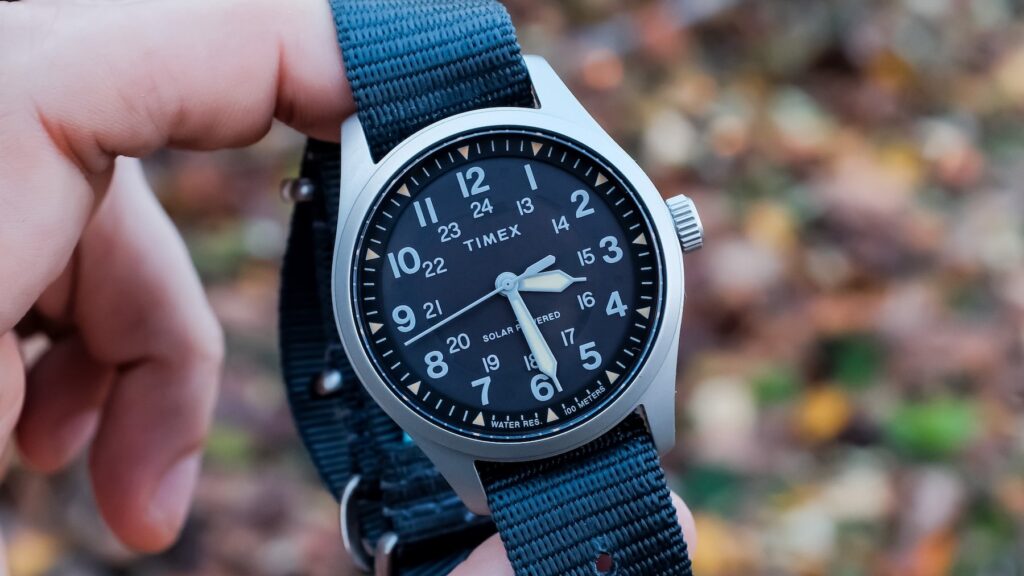
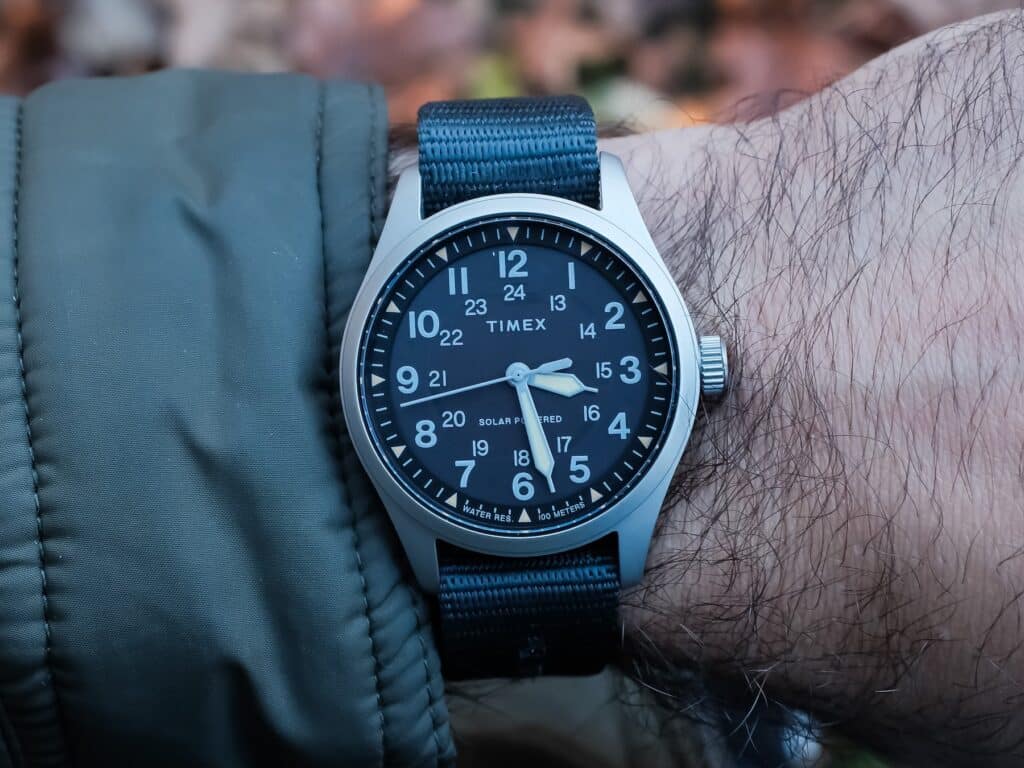
The Timex Expedition Field Post Solar supports the same argument from a more affordable, everyday angle. Its solar quartz movement offers up to four months of power reserve, and once charged, it mostly disappears from the ownership equation. No winding. No resetting after a weekend in the drawer. No little accuracy guilt trip while you wonder whether the watch is drifting enough to bother fixing. The crown action also mattered in daily use. Setting the time felt quick and clean, with enough tactile reassurance to avoid the cheap, hollow feeling that sometimes sneaks into budget watch brands.
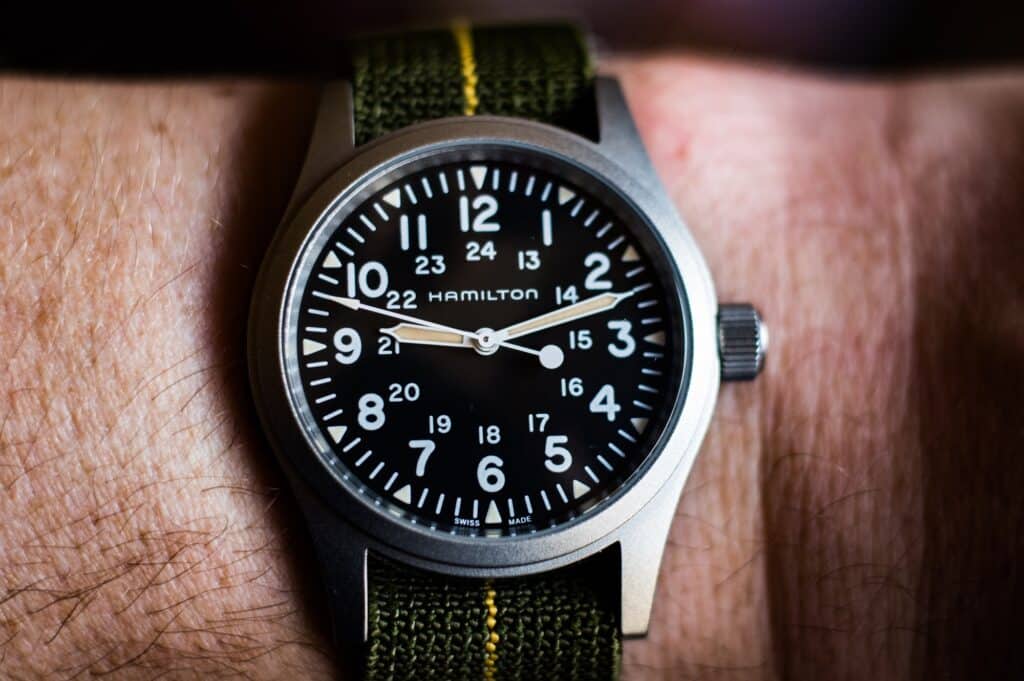
Mechanical field watches answer that convenience argument with involvement. The Hamilton Khaki Field Mechanical is the cleanest example here because its hand-wound movement makes the owner part of the process. Older versions used the ETA 2801-2, while current models use the H-50 with an 80-hour power reserve, which makes the watch much easier to live with than the old daily-wind stereotype suggests. Still, this is not a solar grab-and-go piece. If you do not wind it, it stops. That sounds obvious, but it becomes very real when you are late, and your charming little mechanical field watch has decided to take the morning off. The upside is that Hamilton makes that interaction feel pretty painless. The big crown is easy to use, and because there’s no date window, setting the watch is quicker than dealing with a day/date automatic that’s been sitting for a few days. You also do not have to baby the winding process too much; once fully wound, the crown stops turning, so you are not going to casually destroy the movement by over-winding it like some nervous first-time hand-wound owner. In our hands-on review, the Khaki Field Mechanical also showed how much consistency matters. Over a week, it averaged +0.8 seconds per day, which is excellent, with most days ranging from +2.7 to +4.7 seconds. The one ugly swing came on the day it was not wound periodically, when it dropped to -8 seconds. That is the mechanical trade-off in one sentence: it can perform beautifully, but it rewards attention.
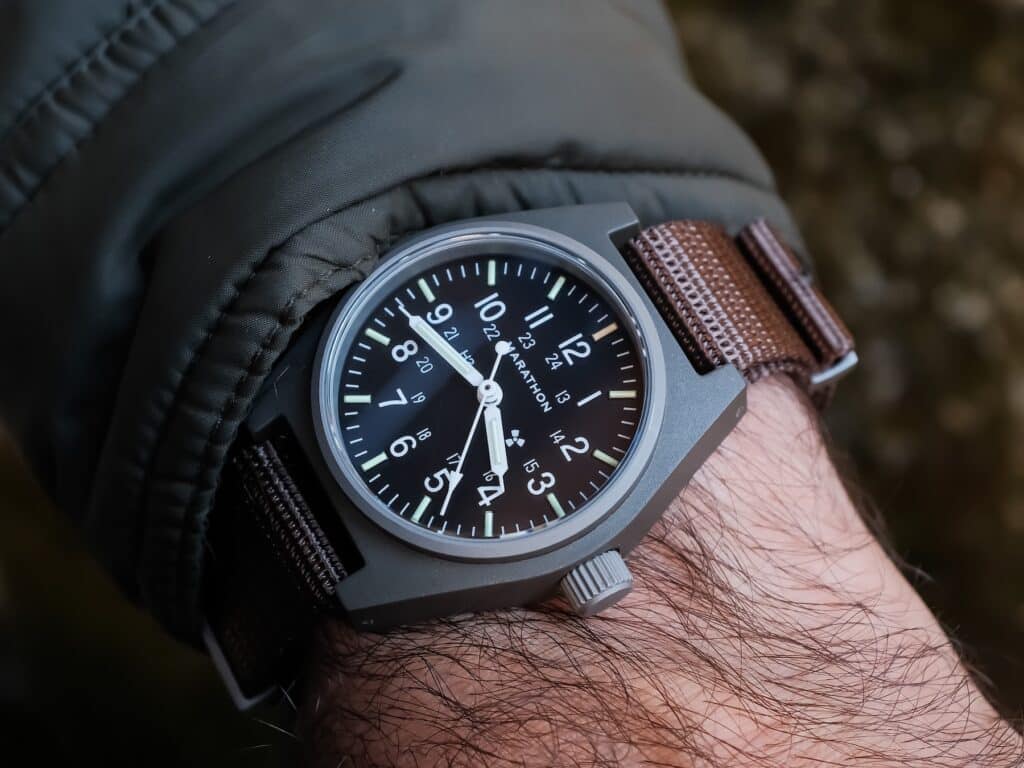
The Marathon General Purpose Mechanical makes the mechanical case differently. It is not trying to impress anyone with movement exoticism. Inside is the Seiko NH35A, a familiar, accessible movement with a 41-hour power reserve. That sounds less exciting than a boutique Swiss caliber until you remember what kind of watch this is supposed to be. In use, the movement ran well day-to-day, and the bigger appeal is how easy it would be to deal with if something went wrong. An NH35A is not precious. It is common, proven, and replaceable without turning the repair bill into a personal crisis. For a mechanical field watch, that counts as its own kind of reliability. It may not beat solar in terms of accuracy or convenience, but it keeps ownership stakes low.
So, in terms of accuracy and movement reliability, the category difference is pretty easy to feel once you stop arguing from principle and start thinking about ownership. Solar gives you fewer timing interruptions, while mechanical rewards attention.
Durability and Upkeep: Case Toughness, Water Worries, and Ownership Headaches
Durability in a field watch is not only about whether the case looks ready for mud, maps, and nylon straps. It is about what happens after the first few months of real wear: rainy commutes, sink splashes, strap changes, crown use, desk-diving scars, and whatever other deeply heroic activities happen between the couch and the grocery store. This is where the solar field watch vs. mechanical field watch comparison becomes less theoretical. Both categories can handle everyday life, but upkeep is where the ownership experience begins to diverge.
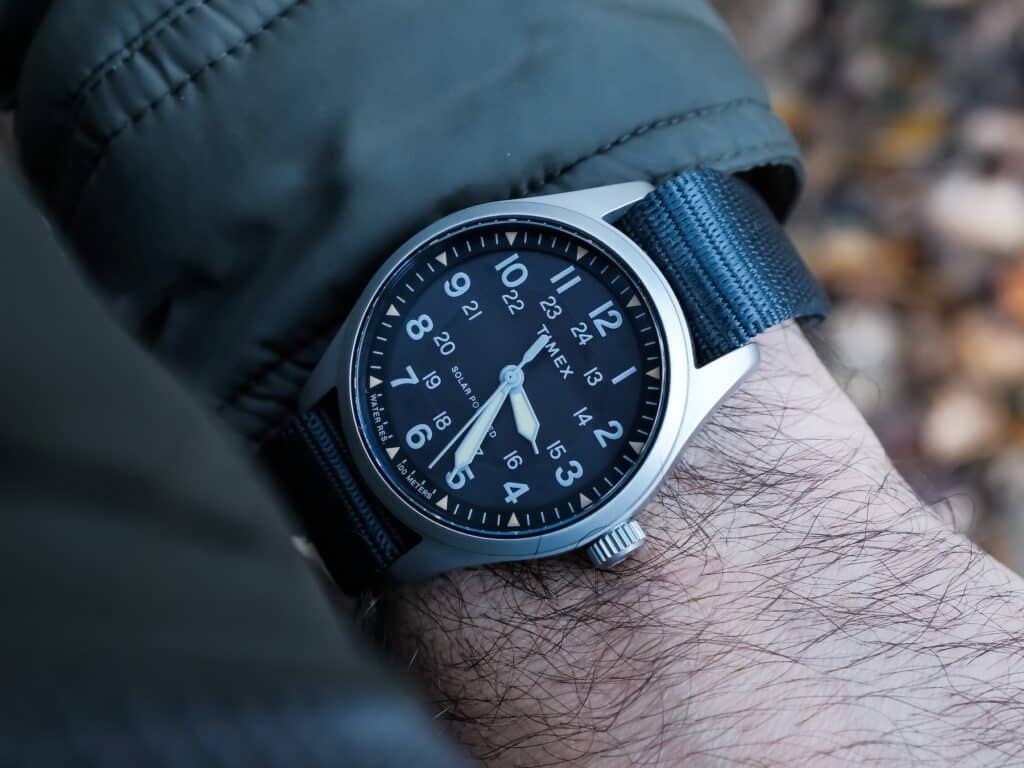
The Timex Expedition Field Post Solar we reviewed is the cleanest example of practical, everyday durability because it does not try to be overbuilt. It tries to be useful. The 36mm case wears lean and low, with a brushed, bead-blasted stainless-steel finish that looks ready to take on scratches without turning every mark into a tragedy. On the wrist, it stayed centered, slipped under sleeves, and never needed constant adjustment during the day. The screw-down crown threaded in without drama, the 100 meters of water resistance handled rainy commutes and sink splashes without a second thought, and the whole thing felt ready for grocery runs, early commutes, rushed errands, and even wrestling the dog through her nightly medicine dose like a mil-spec style field watch.
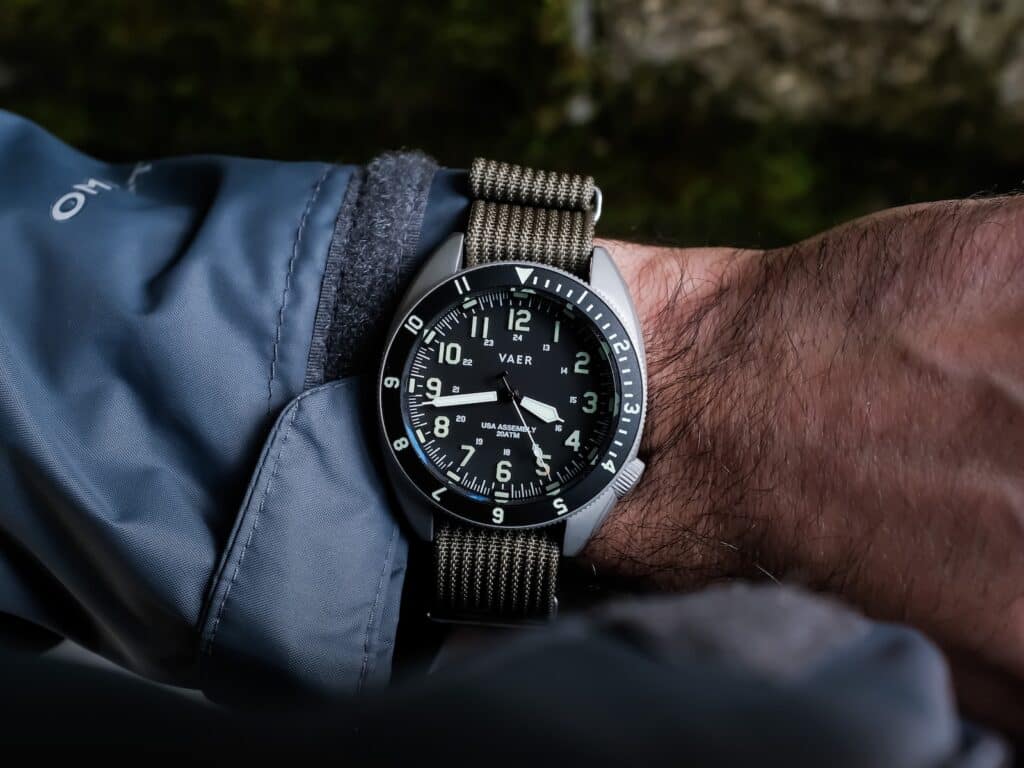
The Vaer C4 Tactical Field Solar pushes that same low-stress durability into a more serious shell. With 200 meters of water resistance, a caseback and crown (both screw-down), sapphire crystal, and a more tool-like build, it feels closer to a tactical diver than a fragile field watch. It also keeps upkeep fairly simple because there are fewer service worries in normal ownership. You are not thinking about regular mechanical servicing, parts wear, or whether a tiny component will eventually become a repair conversation that costs more than expected. The main solar caveat is light. “Low maintenance” still assumes the watch sees enough of it. Keep it buried in a closed watch box, under sleeves all winter, or forgotten in a drawer long enough, and it can still run down. Solar is easier, not magic.
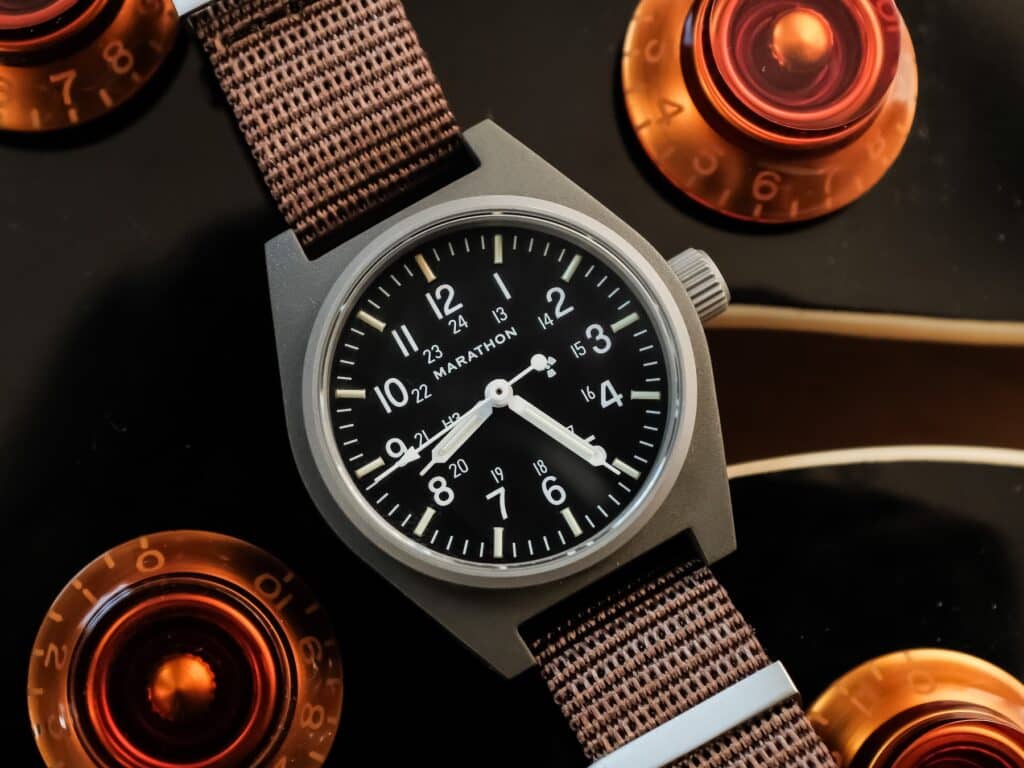
The Marathon General Purpose Mechanical makes the mechanical side more interesting because it does not rely on heavy steel to feel tough. Its 34mm resin case sounds small on paper, but the 12.5mm thickness, 41mm lug-to-lug, and beefy NATO strap give it more presence than expected. During our dedicated, hands-on review, the case feels light, practical, and genuinely gear-like, helped by the blunt military caseback text and NSN information. The updated steel crown is also a welcome touch, winding easily and feeling properly sized for the case. But the real-world caveat matters: it does not screw down, and water resistance is only 30 meters. That is not a disaster for a field watch, but it does put a ceiling on how careless you should be around water. The supplied ballistic nylon looks the part, but it felt stiff out of the box, and the tight spring-bar clearance made fitting it more annoying than expected. None of that ruins the watch, but it does remind you that durability isn’t a single spec. It is a bunch of small ownership friction points adding up over time.
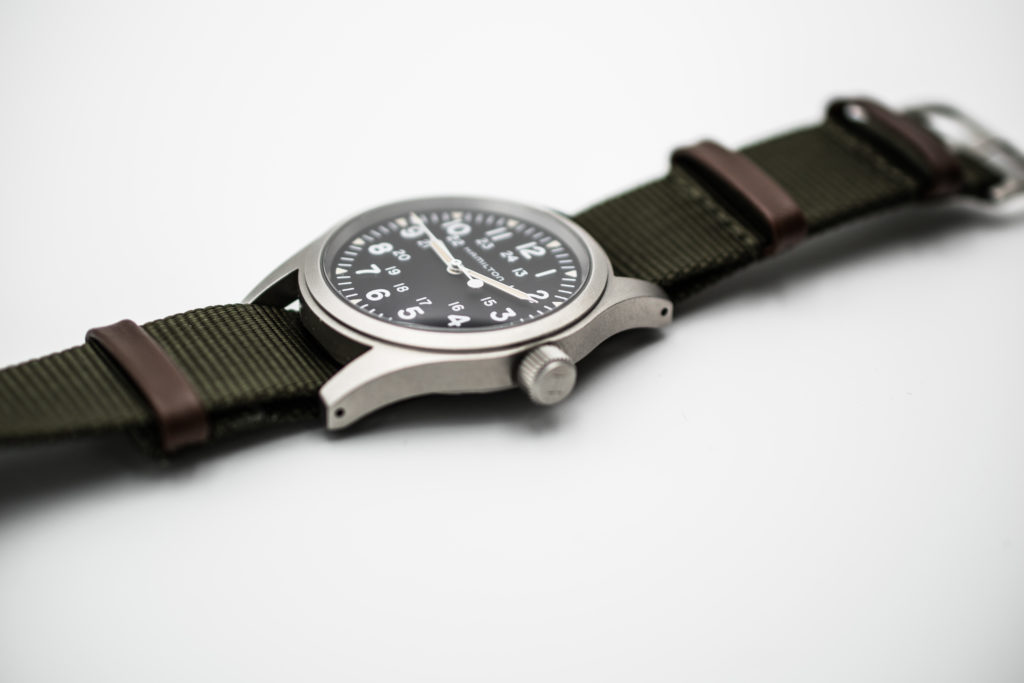
The Hamilton Khaki Field Mechanical follows a similar “durable, but use common sense” pattern. Its 38mm stainless steel case, sapphire crystal, drilled lugs, and 20mm strap compatibility make it practical for regular wear and easy to move across straps. But the non-screw-down crown and 50 meters of water resistance mean its rugged styling should not be mistaken for carefree abuse.
So, durability matters, but it is not a simple solar-versus-mechanical scoreboard. The better question is how carefree each watch feels once water, straps, crowns, scratches, light exposure, and future service enter the picture.
- Solar-powered field watches reduce upkeep stress, especially when their cases, crowns, and water resistance are built for daily mess. They still need enough light to stay charged, but day-to-day ownership is mostly low-drama.
- Mechanical field watches can still feel tough and honest, but crown design, water resistance, strap fit, and access for servicing matter more than the field-watch aesthetic would have you believe.
Cost Considerations and Resale: What Still Feels Worth It Later?

Cost is where solar field watches make their least romantic, most useful argument in the solar field watch vs. mechanical field watch debate. The Timex Expedition Field Post Solar landed at $199 for us, which puts it in that rare zone where the value discussion stays quite sane. You are not buying it because you expect some heroic resale story later. You are considering it because it solves the everyday field-watch problem cheaply and cleanly. In our hands-on review, that mattered because the watch kept becoming the easy grab rather than the precious object. At that price, the better question is not “will I get my money back?” It is “Will I wear this enough to stop caring?”
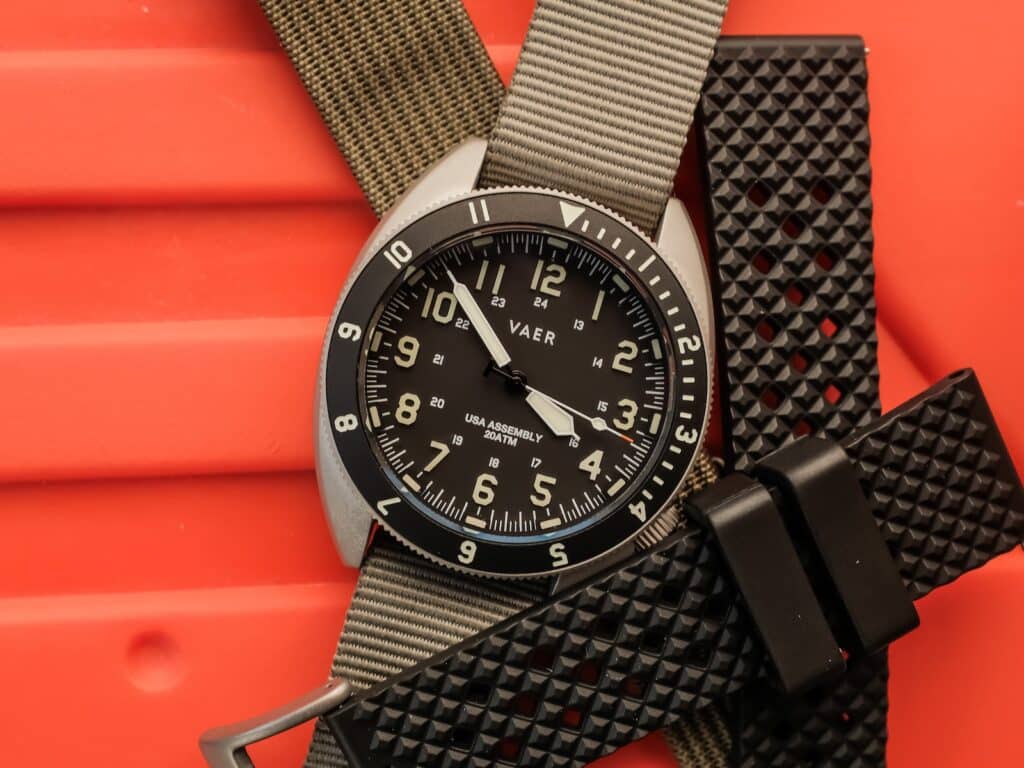
The Vaer C4 Tactical Field Solar makes the case for higher-priced solar. It sits just under $500, and the value case still feels practical. This is not a future collectible play. It is the watch you buy because the price feels fair for something you can wear hard, rotate easily, and not overthink. That matters in this corner of affordable watches, where value is less about resale theater and more about whether the watch earns regular wrist time after the novelty wears off.
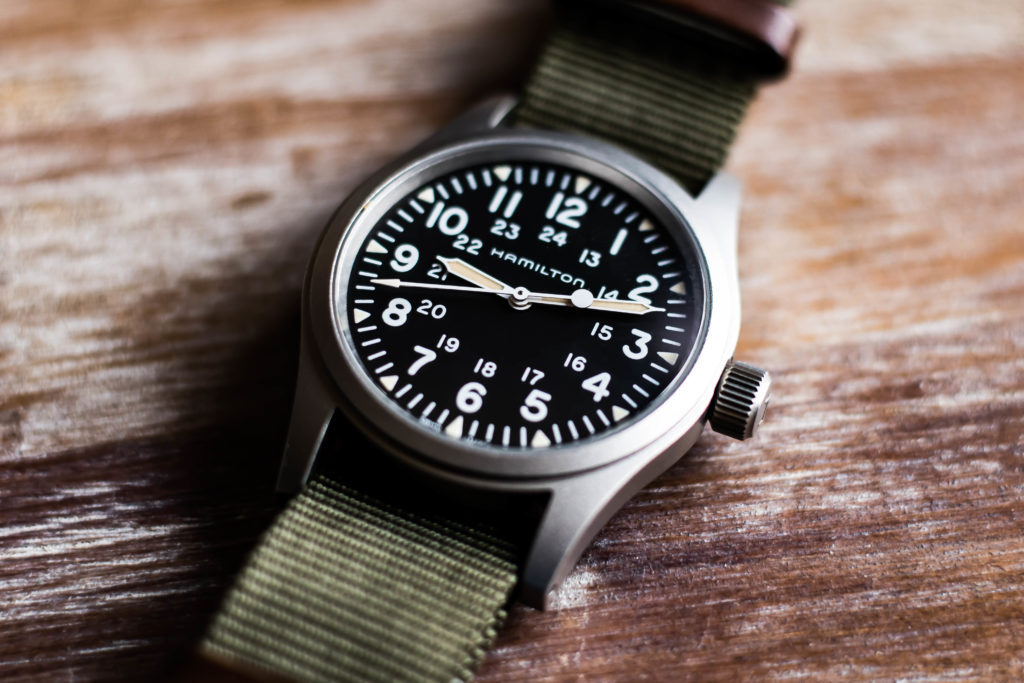
The Hamilton Khaki Field Mechanical makes the mechanical side easier to justify because it lives in a price range that enthusiasts already understand. The Khaki Field line starts around $395 and stretches into four figures, but most of the models people cross-shop here still land under $1,000. That matters because Hamilton has the name recognition to make the spend feel safer, especially if you eventually sell or trade it. It is not immune to depreciation, but it is far easier to move than a more obscure field watch that needs a whole explanation before the buyer even gets interested.

The Marathon General Purpose Mechanical is more specific, typically priced between $525 and $725, depending on the version and configuration. That puts it above the cheap-and-cheerful end of the field-watch world, so the value case has to come from more than “it looks military.” The appeal is in the real tool-watch credibility, compact sizing, resin case, and blunt practicality. Someone shopping purely by specs may get hung up on the water resistance or size before the charm has a chance to work. That also affects resale. It is not the kind of watch that sells itself to everyone, but for the buyer who understands what Marathon is doing, the price starts to make more sense.
So the cost story is not as simple as solar being cheap and mechanical being expensive. It is more about how quickly the value becomes obvious. With solar field watches, the math tends to work out sooner: lower buy-in, fewer ownership costs, and less pressure to think about resale as a retirement plan. With mechanical field watches, the value often depends more on recognition, enthusiast interest, and whether the watch has enough personality to justify the extra spend.
Final Thoughts: The Better Pick for Real-World Use?
Mechanical field watches still have a hold on us. The Hamilton Khaki Field Mechanical and Marathon General Purpose Mechanical both remind us why this category refuses to go away. There is something satisfying about winding a watch, setting it by hand, and feeling like the thing on your wrist is a small machine you are actively keeping alive. That connection matters. It is part of why people fall into watch collecting in the first place, and pretending it does not matter would be peak spreadsheet behavior.
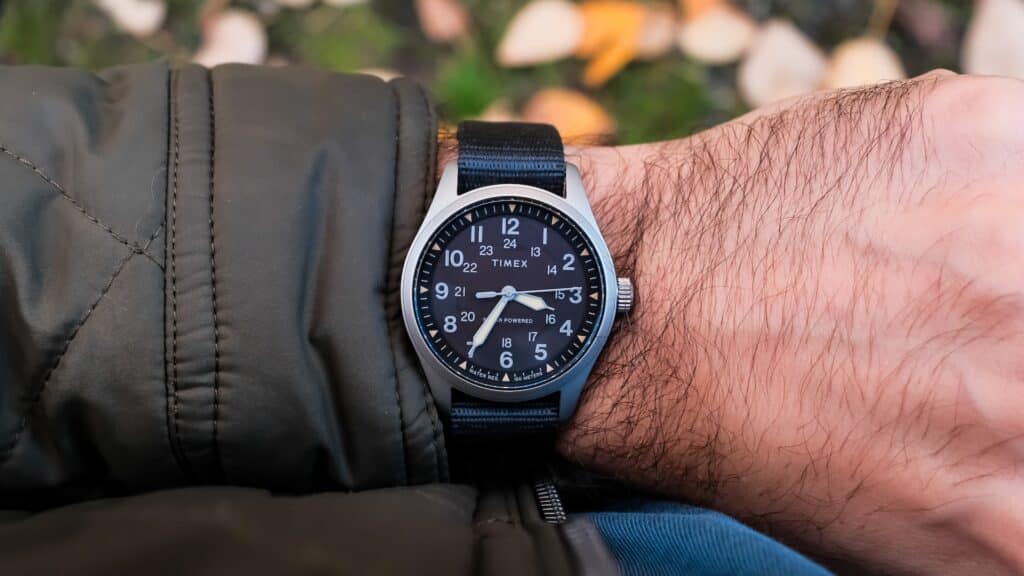
But the question here is real-world use, and that shifts the answer. Most field watches are worn casually, rotated inconsistently, and expected to work when we grab them. In that world, a solar field watch makes more sense for most buyers. The Timex Expedition Field Post Solar and Vaer C4 Tactical Field Solar show why: they reduce friction without stripping away the everyday usefulness that makes field watches appealing in the first place.
- Buy a mechanical field watch when the ownership experience matters as much as the convenience. If the extra involvement makes the watch more enjoyable, the compromise is easy to understand.
- But if you want one of the best-value watches for daily wear, low upkeep, and fewer ownership headaches, solar field watches are the easier recommendation. They may not feel as romantic, but they are often the watches worth the money once the new-watch glow wears off and normal life starts doing normal life things.
Let us know your thoughts on our hands-on analysis in the comments below. This is a topic we’re very passionate about and are looking forward to hearing everyone else’s thoughts.

Co-Founder and Senior Editor
Kaz has been collecting watches since 2015, but he’s been fascinated by product design, the Collector’s psychology, and brand marketing his whole life. While sharing the same strong fondness for all things horologically-affordable as Mike (his TBWS partner in crime), Kaz’s collection niche is also focused on vintage Soviet watches as well as watches that feature a unique, but well-designed quirk or visual hook.
I agree wholeheartedly. I own a Seiko Speedtimer (solar quartz) for show and a Citizen Promaster Dive watch (solar quartz) for swimming/biking. ULTRA-CONVENIENCE!!! I rotate between these two watches daily. I also own a vintage Seiko “Pogue” which is very high maintenance. I wear it for nostalgic reason occasionallyl. Solar quartz with screw downdown crown equals no wind/battery, no daily time adjustment, water proof (not resistence), convenient strap adjustment when wrist swells, 2 sec accuracy per month, convenient watch swapping!
Leo – That’s a dialed-in two-watch rotation with the Pogue as a sentimental wild card. Solar quartz with a screw-down crown is hard to beat for pure daily convenience. Sounds like you’ve figured out exactly what works for you.
What I want to know is how come something like a solar powered 262KHz quartz movement hasn’t been offered yet. The convenience of solar and high accuracy.
Derrick – I thinktThe tech exists in both directions, so the barrier is probably more about production economics than engineering. If anyone’s going to do it, my money would be on Citizen. But we’ll see.
Hello and thank you for this comparison! What I have trouble finding is <34mm case field watch, much less solar quartz. I routinely take pulse rates and wash hands as a veterinarian. If you have any suggestions at all I would really appreciate them!
While not solar, I’d check out the Hamilton Khaki Field Quartz collection. There are several 33mm variations/dial colors.