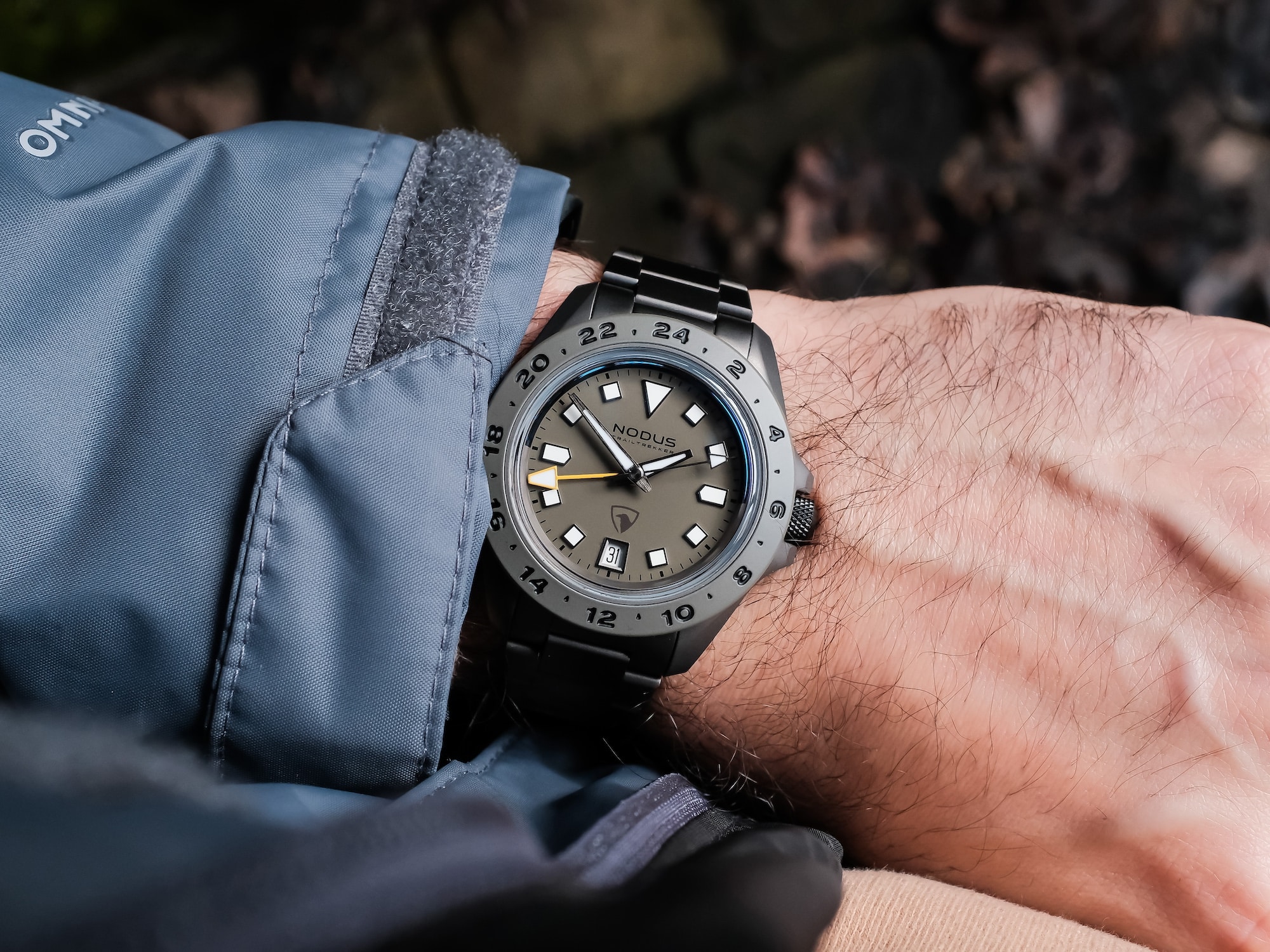
At a certain point, making a watch smaller exposes every compromise in how it wears. We’ve worn compact watches that sit beautifully on the wrist but lose practicality through awkward bracelets, fussy controls, or proportions that look better in photographs than they feel after a full day. We’ve also handled smaller watches that never felt like they were giving anything up. That’s what makes sub-40mm cases interesting to us: retaining serious water resistance while keeping the watch comfortable, legible, and useful takes some careful balancing. The same compact proportions can also work very differently when the job involves diving, tracking a second time zone, or wearing a field watch from morning to night. So this list focuses on which watches make the most sense for each use and where their compromises show up.
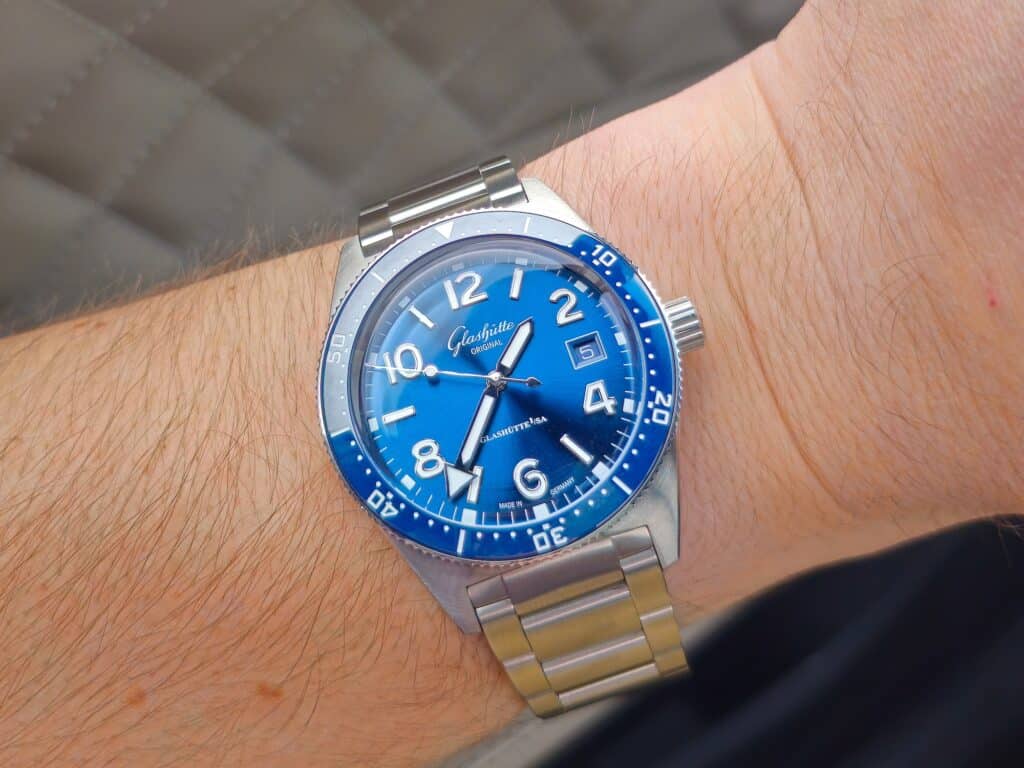
More than a decade of hands-on reviews has changed how we judge watches like these. We’ve learned that a compact case works only when the rest of the watch is considered with the same restraint. Lug shape can matter more than a millimeter of diameter, a well-designed bracelet can make a substantial watch disappear on the wrist, and clear dial layouts become invaluable when a watch moves between bright daylight and low light. We’ve also learned not to confuse rugged construction with good everyday design. Some watches tolerate knocks beautifully but wear awkwardly; others make small compromises that matter less once they’re on the wrist every day. That’s the perspective we’re bringing here: recommendations based on how these watches function in practice.
Invicta Pro Diver (8926OB)
| Price: | $60 – $100 (Check Current Price) |
| Water Resistance: | 200m |
| Case Dimensions: | 40mm (diameter) x 48mm (lug-to-lug) x 14mm (thickness) |
| Lug Width: | 20mm |
| Movement: | NH35A (Mechanical) |
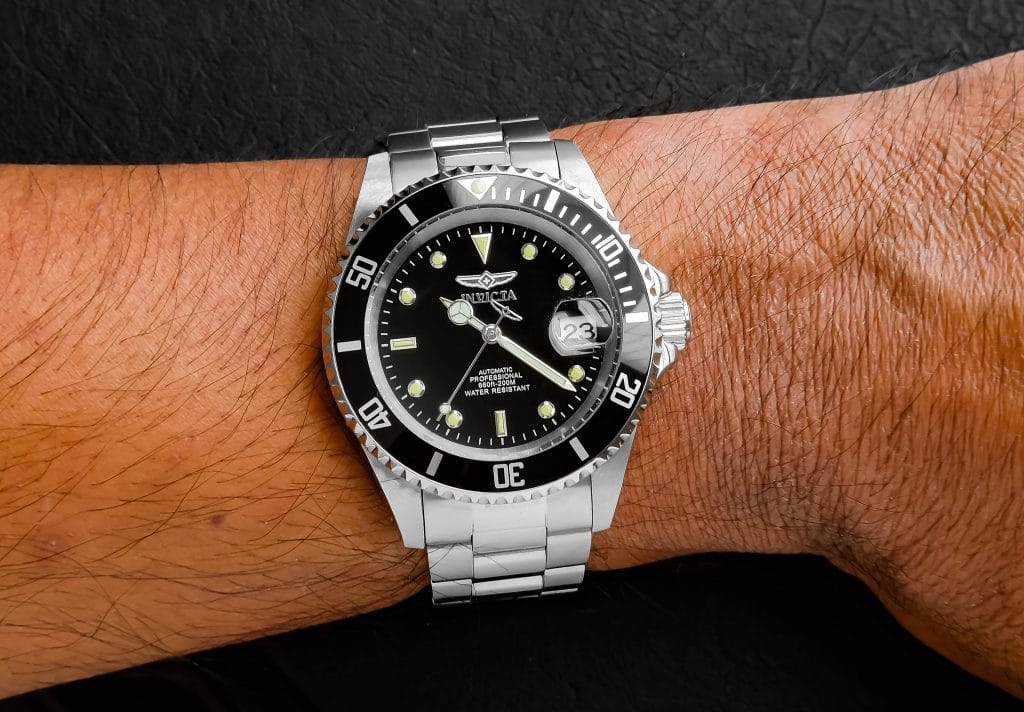
With the 40mm ceiling in this list, the Invicta Pro Diver 8926OB sits right on the boundary rather than comfortably inside it. That makes it useful here because it shows how much wearability can depend on proportions rather than diameter alone. The case wears flatter and more naturally than its measurements suggest, and after enough time on the wrist, we found it easy to forget it was there. That matters when the goal is a compact watch that can handle real daily use without feeling like a chunky piece of dive gear. It doesn’t bring much originality to the table, but the Sub-like proportions are resolved well enough that we never wished the design had made a bigger statement.
The bracelet does more of the heavy lifting than you might expect from a watch at this price. Its 20mm-to-roughly-18mm taper, smoothly articulated links, and lack of sharp edges let it sit all day comfortably, while the oversized screw-down crown is easy to grip when winding the NH35A. That movement proved dependable during our hands-on time, and choosing the mechanical experience here feels more meaningful than simply buying the cheapest watch that meets the spec. The bezel helps too, clicking with solid, confidence-inspiring action and only a little back play.
Invicta rates the watch to 200 meters, but at this price, we’d be cautious about treating that figure as a blanket promise for every individual example in actual dive conditions. We have no doubt some Pro Divers can handle 200 meters without issue, but under $100, consistency across every piece is harder to take for granted. For us, that doesn’t make the water resistance a deal-breaker; it simply means the rating deserves a little perspective.
The dial follows the same formula. Applied markers and polished hands give it more visual depth than a budget tool watch has any right to, though the lume exposes the cut corner. The hands remain useful after dark, but the markers fade sooner, so the nighttime legibility doesn’t stay equally strong across the dial. The budget compromises are easier to spot elsewhere, too. Hollow end links feel appropriately hollow, the flip-lock clasp lacks the refinement of the case and bracelet, and the mineral crystal is far less forgiving of knocks and scratches than sapphire. Then there’s that oversized Invicta branding on the case side, which will remain a deal-breaker for some collectors before the watch even gets to the wrist.
However, for anyone willing to live with the branding and the hardware compromises, the 8926OB makes a convincing case for keeping a smaller, uncomplicated automatic in the rotation. It’s comfortable, mechanically engaging, and more enjoyable to wear than its reputation might lead you to expect. The catch for this particular roundup is obvious: at 40mm, it technically sits at the cutoff rather than below it. That makes it a useful boundary case, but not a strict sub-40mm pick.
Pros
- Compact-feeling proportions make the 40mm case wear flatter than expected.
- NH35A delivers a dependable mechanical ownership experience.
- Tapered, flexible bracelet is very comfortable for the price.
- The bezel action feels firm, with very little unwanted movement.
- Applied markers and polished hands add useful dial character.
Cons
- The oversized Invicta branding on the case side remains hard to ignore.
- Mineral crystal is more vulnerable to scratches than sapphire.
- Lume on the markers fades noticeably sooner than the hands.
- Hollow end links and the flip-lock clasp expose the budget construction.
San Martin SN004 MilSuB
| Price: | $167 – $200 (Check Current Price) |
| Water Resistance: | 200m |
| Case Dimensions: | 38mm (diameter) x 46mm (lug-to-lug) x 13mm (thickness) |
| Lug Width: | 20mm |
| Movement: | NH35 Seiko Automatic |
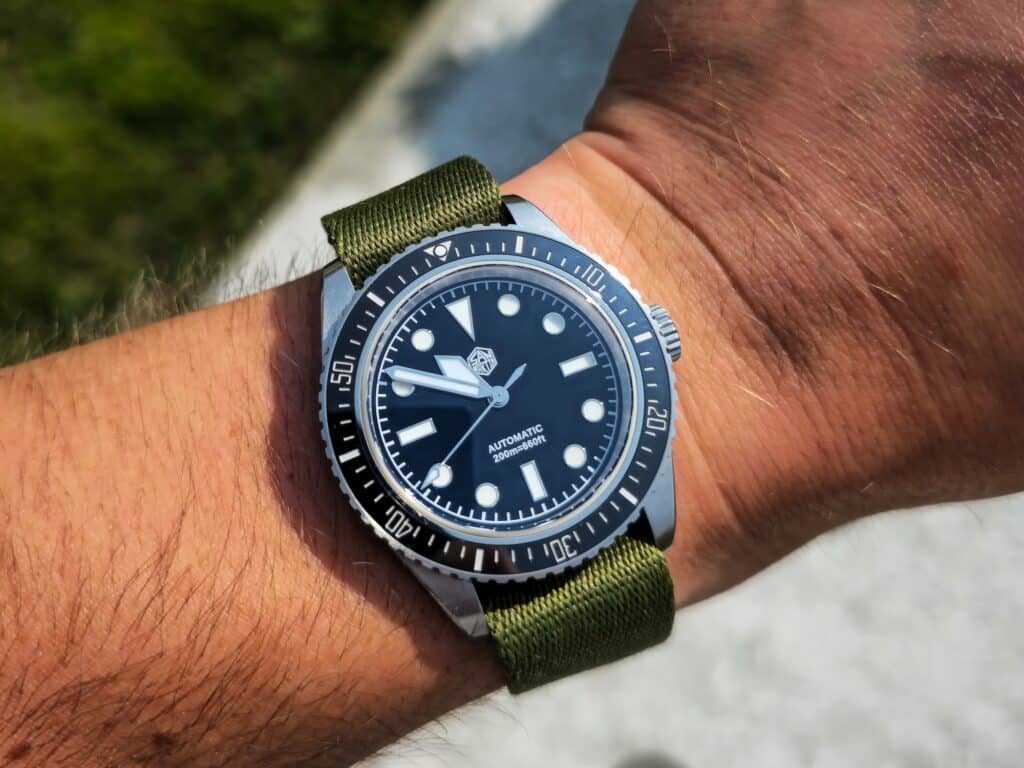
The San Martin SN004 makes a strong case for keeping a serious diver compact without pretending it invented a new design language. At 38mm, the 200m water-resistance-rated case sits neatly on smaller wrists and feels balanced rather than merely smaller. We found enough heft and solidity across different wrists to make it feel substantial without drifting into the chunky-diver territory that often undermines smaller cases. The 13mm thickness is noticeable, but the domed sapphire accounts for much of it, giving the watch some visual lift without making it feel top-heavy. From certain angles, that crystal also introduces a little distortion that softens the dial nicely. The styling borrows heavily from familiar vintage dive-watch cues, but the execution is good enough that the homage discussion becomes less interesting than how well the thing wears.
That attention to execution continues with the bezel and dial, which are where the SN004 feels most convincing as a practical tool. The glossy black dial catches light nicely, while the applied markers sit high enough above the surface to give it genuine depth. We found the blue BGW9 lume particularly impressive after extended testing, staying readable longer than plenty of watches we’ve handled in this category.
The ceramic bezel deserves similar credit. Its gear-like edge gives wet fingers plenty to grab, and the 120-click action stayed smooth and consistent without the noticeable wobble that can turn a rotating bezel into a fidgeting exercise. The hands are nicely finished, although their flat profile can disappear against the dial when harsh light and crystal glare line up. Even the clean, straightforward printed text feels slightly underdone compared with the rest of the watch.
Underneath, the NH35 keeps the ownership side uncomplicated. Our testing had it running around 7 to 9 seconds per day, which is reasonable for the movement and price, while its familiarity to watchmakers makes future servicing relatively painless. The bracelet is similarly practical, with clean brushing and screw links that make sizing straightforward. However, the clasp edges are sharper than they should be and managed to catch the occasional stray hair during longer wear. More than one of us eventually preferred the SN004 on a NATO or canvas strap, where the watch felt lighter, and its utilitarian character made more sense. That doesn’t make the bracelet a failure, but it does show how much strap choice can change the experience of a compact, capable diver.
Pros
- The 38mm case fits smaller wrists quite well without feeling insubstantial.
- The ceramic bezel has a smooth 120-click action with no noticeable wobble.
- BGW9 lume stays readable long after exposure.
- Case finishing, tolerances, and domed sapphire feel well executed for the price.
Cons
- Flat hands can lose contrast when glare hits the crystal.
- Printed dial text feels less refined than the surrounding details.
- At 13mm thick, it has more height than its 38mm diameter suggests at first glance.
- Sharp clasp edges can become irritating during extended wear.
Belhamel Contra A39
| Price: | $482 (Check Current Price) |
| Water Resistance: | 300m |
| Case Dimensions: | 39mm (diameter) x 47mm (lug-to-lug) x 12mm (thickness) |
| Lug Width: | 20mm |
| Movement: | Miyota 9039 |
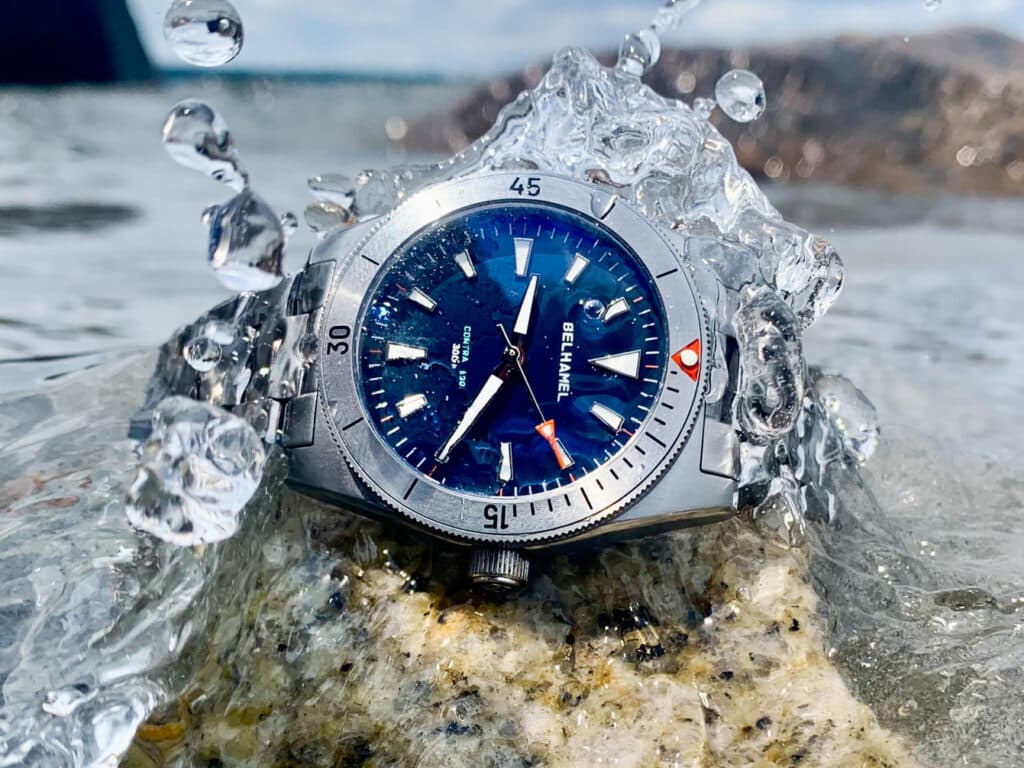
The Belhamel Contra A39 is the kind of small diver that makes you notice the details, not the silhouette. The 39mm case measures only 12mm thick, so it sits close to the wrist without feeling like Belhamel achieved its compact size by simply removing half the watch. The slim Miyota 9039 helps here, and its 28,800 BPH beat rate, roughly 42-hour reserve, and genuinely no-date layout make ownership simple. More importantly for this roundup, Belhamel didn’t stop at the usual 200-meter figure. The signed screw-down crown helps the A39 reach 300 meters of water resistance, while a hardened case adds some extra insurance against the scratches and knocks that arrive when a watch leaves the desk. For someone with a smaller wrist who wants one watch for swimming, weekends, and everyday wear, that combination makes the A39 considerably more interesting than its restrained appearance indicates.
Belhamel’s approach to the design is similarly understated. The case is mostly brushed, but polished edges add enough refinement to stop it looking purely utilitarian, while the steel bezel gives the package a clean, purposeful finish. The diamond-cut hands and polished indices are nicely executed, although the indices are thick enough to catch light from almost every direction. That can be charming in the right light and mildly irritating when the glare lands where we need to read the time. The dial keeps the branding under control, with the name at 12 and only the model designation and water-resistance marking at 6. Both Raisin Black and Charcoal Blue versions get orange accents over the five-minute markers, an orange seconds tip, and an orange triangle surrounding the lume pip on the 120-click bezel. None of those details scream for attention, but together they give the A39 a personality that becomes more apparent the longer we wear it.
The bracelet is where the A39 completely derailed our original expectations. We planned to take it off and reach for rubber or nylon. Instead, we spent far more time admiring the bracelet than expected. The solid female end links are milled around the case’s unusual lug shape, so the bracelet flows neatly into the case without stretching beyond the compact 47mm lug-to-lug measurement. It starts at 20mm and narrows to 16mm, with individually finished links and broad polished sections bordering each one. That makes a substantial difference on the wrist. Even on a 7.5-inch wrist, we could get a good fit without removing links by using the clasp’s micro-adjust holes. They aren’t on-the-fly, so this isn’t ideal for rapid changes on a hot day, but Belhamel includes a separate clasp with a diver’s extension.
That is the sort of thoughtful extra that makes the 300-meter rating more useful in practice, rather than just another number printed on the dial. Quick-release spring bars are also there for anyone determined to experiment with straps, and the Charcoal Blue version proved particularly adaptable. We suspect the included bracelet will win that argument more often than not. For a closer look at how those small details come together on the wrist, check out our hands-on review.
Pros
- 300-meter water resistance gives the compact 39mm case unusually serious dive capability.
- Hardened case adds useful resistance to everyday scratches and knocks.
- Miyota 9039 provides a high-beat sweep, roughly 42-hour reserve, and true no-date simplicity.
- Female end links are custom-milled to the lug shape for a clean bracelet transition.
- Separate diver’s clasp and extension add practical flexibility beyond everyday wear.
- Quick-release spring bars make strap swaps straightforward.
Cons
- Thick polished indices can catch distracting amounts of light at certain angles.
- Clasp adjustment is useful but not available on the fly.
- The intentionally restrained design may feel too generic for collectors wanting a more immediately recognizable watch.
Steinhart Ocean 39 GMT
| Price: | $730 (Check Current Price) |
| Water Resistance: | 300m |
| Case Dimensions: | 39mm (diameter) x 47mm (lug-to-lug) x 13mm (thickness) |
| Lug Width: | 20mm |
| Movement: | ETA 2893-2 |
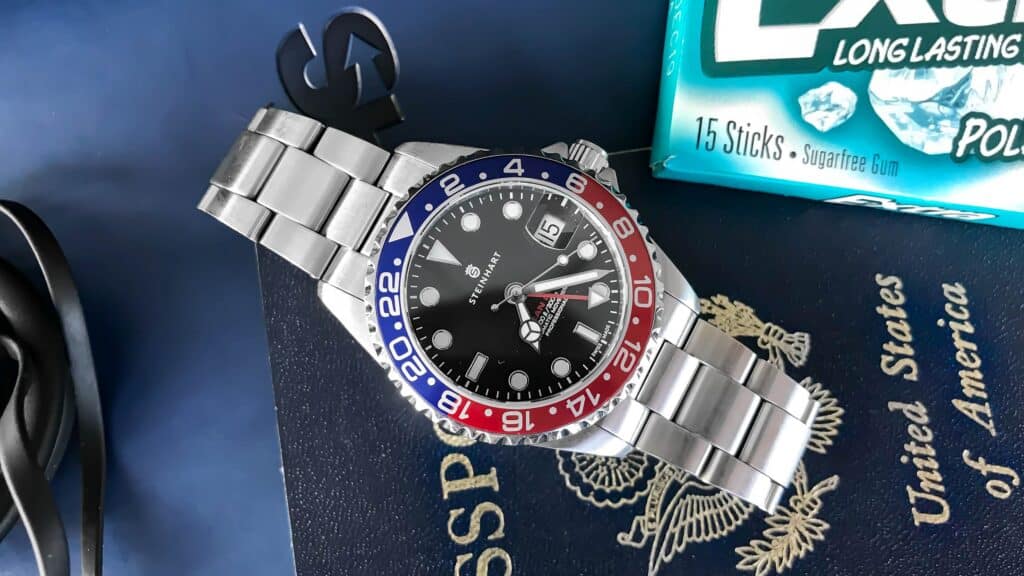
The 39mm case is the reason the Steinhart Ocean 39 GMT fits this roundup so well. A GMT with 300 meters of water resistance can easily become thick and overbuilt, yet this one keeps a compact footprint without feeling flimsy. During our detailed testing, the roughly 13mm thickness wore slimmer than the measurement suggests, settling comfortably on smaller wrists while retaining enough presence for everyday sports-watch use. Brushing across the case keeps the finish from getting too flashy, while the polished sides add contrast, and the engraved Neptune caseback gives the familiar design a little Steinhart personality. The 300-meter rating is the unusual part here: it gives a 39mm travel watch far more water-resistance headroom than we’d normally expect, making it easier to treat as an everyday watch rather than something that only comes out for trips.
The dial makes the GMT function refreshingly easy to live with. The matte black surface keeps reflections under control, while the red-tipped GMT hand stands out cleanly against the minute track for quick second-time-zone checks. The hands and markers are crisp and functional, even if they don’t have much of the layered depth found on more expensive pieces. The Cyclops speeds up date checks, although its magnification could be stronger. The ETA 2893-2 inside also keeps ownership straightforward, but its caller-style GMT layout suits monitoring another time zone better than constantly resetting local time while traveling. That distinction matters when choosing a compact GMT: the Ocean 39 is more useful as a second-time-zone companion than a frantic airport-hopping instrument.
The Pepsi bezel is still the visual hook, with red and blue colors that look clean rather than plasticky. Its familiar layout is intuitive, and the 120-click action feels secure and substantial. It is also unidirectional and notably stiff, which makes sense on a watch built around 300-meter water resistance but works against it as a frequently adjusted GMT bezel. The bracelet is similarly sturdy, with screwed links and a dependable safety clasp, although the flip-lock can become annoying when dialing in the fit. After several days of wear, the polished surfaces and bezel teeth had picked up scratches. We wouldn’t call that a flaw unique to this watch, but it is something to accept if you plan to use all that capability instead of preserving it under glass.
Overall, the Ocean 39 GMT works best for someone who wants a compact travel watch that can also shrug off water, with the caveat that its diver-style hardware isn’t always optimized for GMT duties.
Pros
- The 39mm case keeps a high 300-meter water-resistance rating wearable on smaller wrists.
- ETA 2893-2 provides a proven Swiss GMT ownership experience.
- The matte black dial and red-tipped GMT hand make the second time zone easy to spot.
- BGW9 lume is even and lasts longer than expected.
- Screwed bracelet links and a secure safety clasp give the bracelet a solid feel.
- Pepsi bezel colors are vivid without looking cheap.
Cons
- The flip-lock clasp can be frustrating when fine-tuning the fit.
- Cyclops magnification isn’t quite strong.
- The stiff 120-click unidirectional bezel is awkward for frequent GMT adjustments.
- Polished areas and bezel teeth show scratches quickly.
- Design stays heavily rooted in familiar Rolex GMT styling rather than pushing originality.
Baltic Aquascaphe
| Price: | $650 – $750 (Check Current Price) |
| Water Resistance: | 200m |
| Case Dimensions: | 39mm (diameter) x 47mm (lug-to-lug) x 12mm (thickness) |
| Lug Width: | 20mm |
| Movement: | Miyota 9039 (Mechanical Movement) |
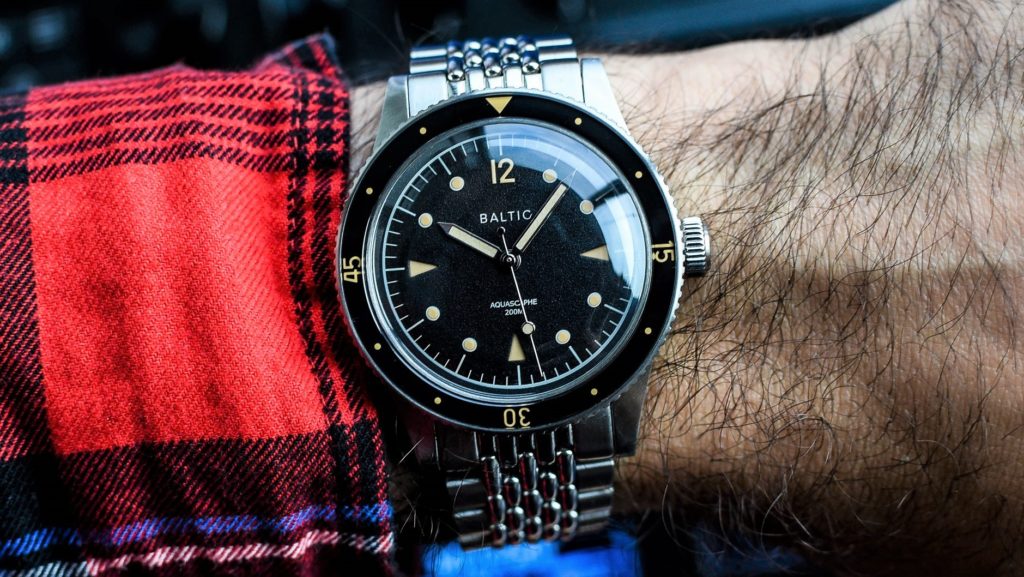
The Baltic Aquascaphe shows how useful a compact 200-meter diver can be when the case isn’t trying to look tougher than it needs to. At a little over 12mm thick with a 47mm lug-to-lug, it sits securely without becoming cumbersome, and the mostly brushed finishing is the sort of choice we appreciate once the watch starts encountering table edges, door frames, and the other hazards of being worn instead of admired.
The beads-of-rice bracelet helps considerably, draping naturally over the wrist and tapering neatly toward the clasp. The quick-release spring bars also make swapping to the supplied Tropic-style rubber strap almost effortless, a small convenience that becomes valuable when we’re wearing the watch all day and getting it wet without much thought. For a sub-40mm case, having 200 meters of water resistance without sacrificing that easygoing wearability is a big part of the Aquascaphe’s appeal.
The dial is equally well judged for real use. Its sandwich construction gives the cutout indices real depth, while the matte surface, restrained gilt details, pencil-shaped hands, and lollipop second hand keep the layout legible without getting busy. Throughout our review period, the BGW9 lume stayed bright and evenly spread well into the night, so the watch remains just as practical after the sun goes down. The sapphire bezel insert adds another useful layer of scratch resistance, particularly on a watch likely to see plenty of travel and outdoor wear. None of this feels like decoration for its own sake; the details work because they keep a relatively small diver easy to read and comfortable to use.
The Miyota 9039 also suits the watch’s straightforward character. It runs at 28,800 vph and offers roughly 42 hours of power reserve, while the no-date layout means the two-position crown stays uncomplicated when the watch has spent a few days off the wrist. That simplicity is refreshing, though it comes with the obvious trade-off: no date to glance at. The predominantly brushed case can also leave collectors wanting a little more polished contrast, but we never found ourselves missing it during actual wear.
Pros
- 200-meter water resistance gives the compact case plenty of practical headroom for swimming and everyday water use.
- The beads-of-rice bracelet conforms naturally to the wrist and stays comfortable through long days.
- Quick-release hardware makes switching to the supplied Tropic-style rubber strap very easy.
- Sandwich-style dial adds depth while keeping the layout clean and readable.
- BGW9 lume stays bright and evenly distributed well into the night.
- The sapphire bezel insert provides useful added scratch resistance.
Cons
- No-date layout won’t satisfy anyone who relies on a calendar at a glance.
- The mostly brushed finish may feel understated to collectors who prefer more polished detailing.
Nodus x Raven TrailTrekker
| Price: | $925 – $1075 (Check Current Price) |
| Water Resistance: | 200m |
| Case Dimensions: | 39.5mm (diameter) x 46.6mm (lug-to-lug) x 11.8mm (thickness) |
| Lug Width: | 20mm |
| Movement: | Miyota 9075 |
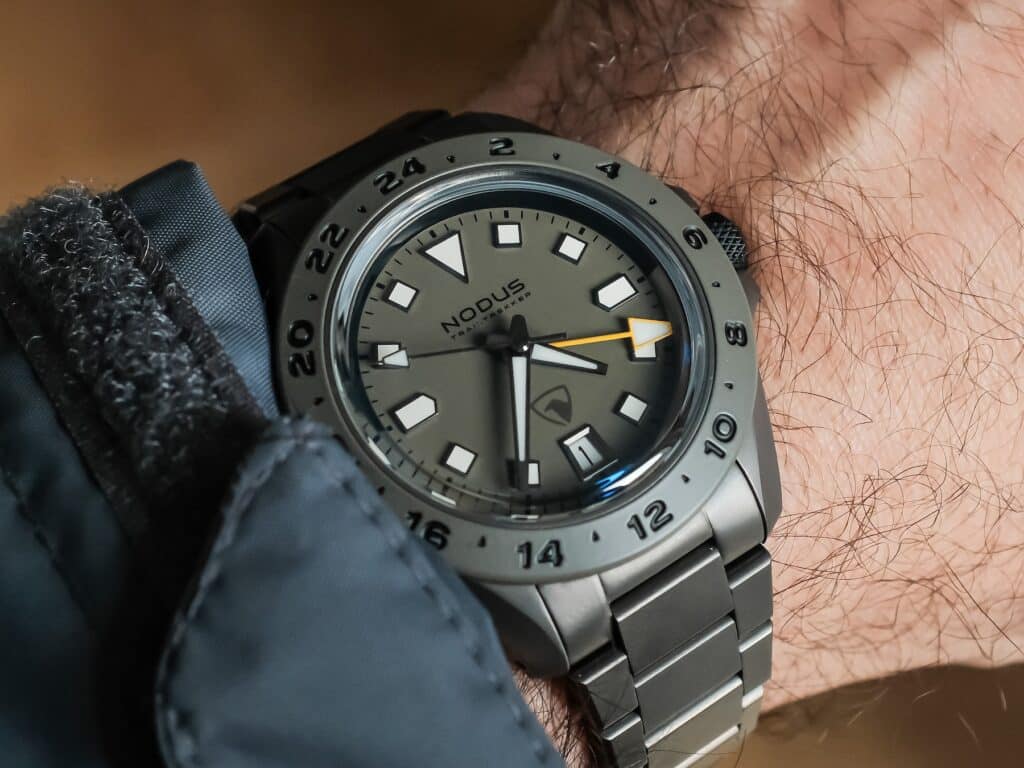
The TrailTrekker wears like a watch designed to leave the airport rather than spend the afternoon in it. Its 39.5mm DLC-coated case stays small without losing the rugged presence we’d expect from something built for active use, and the muted grey coating avoids the glossy tactical look that can make some blacked-out watches feel more like a costume than a tool. The sand-colored Cerakote bezel reinforces that practical character, while the sapphire crystal, deeply knurled screw-down crown, and 200-meter water resistance give the compact case enough protection for swimming, bad weather, and the sort of outdoor use where we’d rather not baby our watches. At just under 40mm, it’s a convincing reminder that serious water resistance doesn’t require a massive case.
The Miyota 9075 makes the TrailTrekker particularly useful for travel. Its flyer GMT lets the local hour hand jump independently, making time-zone changes much easier to manage than on a caller-style GMT. During our hands-on review, those adjustments felt clean and precise, with accuracy staying within a few seconds of our reference time, while the jumping hour also made the date rollover more intuitive when crossing time zones. It is still a relatively young movement, so we’d want more years on the mechanism before making any grand claims about longevity. For now, though, the ownership experience is strong. The high-contrast 24-hour scale is easy to follow, and that bright yellow GMT hand is impossible to miss when we need a quick second-time-zone read (traditionalists may want to look away for a second).
The textured dial carries the same sandy character as the bezel, with applied markers, gunmetal hands, and a balanced date at 6 o’clock keeping the extra GMT information under control. The restrained dual branding helps too. After dark, the lume is perfectly usable, although it won’t compete with the brightest watches we’ve handled.
What impressed us more during longer wear was the bracelet. The flat links sit close to the wrist, taper from 20mm to 16mm, and quickly became our preferred option over the supplied nylon strap. The NodeX clasp is the real star here: roughly 10mm of on-the-fly adjustment makes it easy to change the fit as the wrist expands and contracts during the day. Once we got used to that, a conventional clasp felt prehistoric.
Pros
- 39.5mm case combines a compact footprint with 200-meter water resistance.
- Flyer-style Miyota 9075 makes changing local time quick and intuitive while traveling.
- DLC case and Cerakote bezel are rugged without looking overly glossy or tactical.
- The flat-link bracelet sits close to the wrist and tapers neatly from 20mm to 16mm.
- The NodeX clasp provides around 10mm of convenient on-the-fly adjustment.
- High-contrast GMT layout keeps second-time-zone reading straightforward.
Cons
- Lume is functional rather than exceptional.
- Bright yellow GMT hand is visually loud and won’t suit every collector.
Glashütte Original SeaQ
| Price: | $11,600 (Check Current Price) |
| Water Resistance: | 200m |
| Case Dimensions: | 39.5mm (diameter) x 47.5mm (lug-to-lug) x 12.5mm (thickness) |
| Lug Width: | 20mm |
| Movement: | SeaQ Caliber 39-11 Automatic |
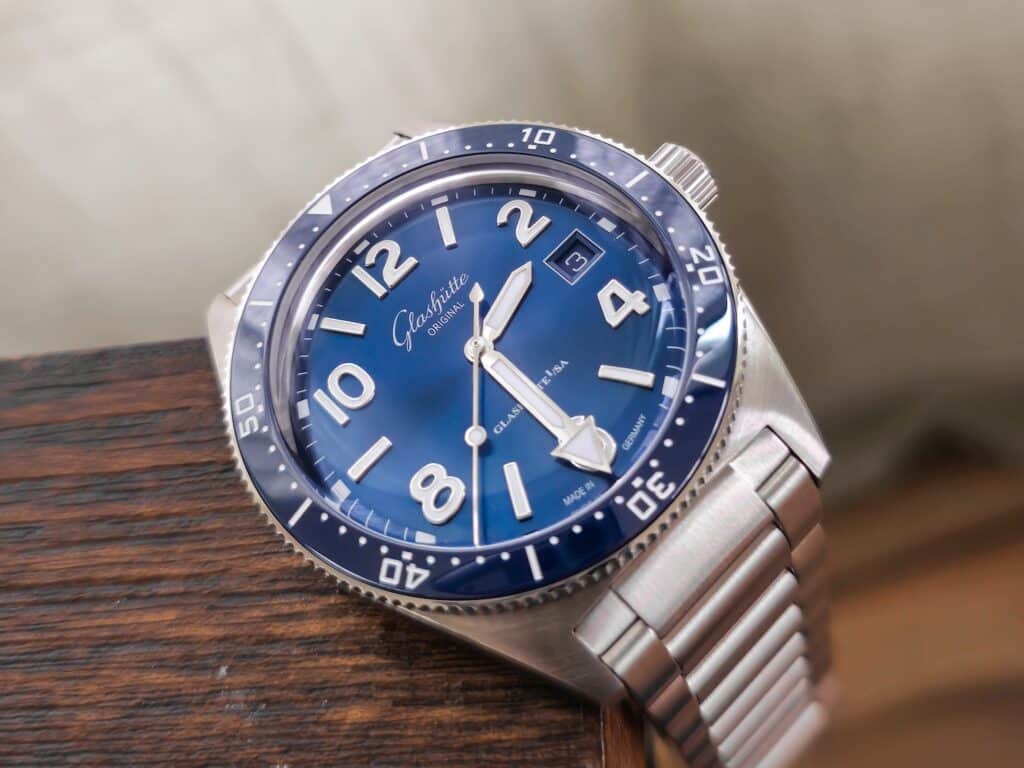
The SeaQ makes a convincing case for a compact diver without resorting to the usual “look how rugged I am” routine. The case is compact enough to stay comfortable, but the mix of brushed surfaces and polished edges gives it enough refinement to remind us this isn’t a disposable piece of dive equipment. More importantly for this list, 200 meters of water resistance gives that smaller package legitimate capability without turning it into a wrist-mounted hockey puck. The brushed 20mm bracelet adds comfort, though its transition into the case is quite clumsy given how carefully the rest of the watch has been executed. The quick-adjust, tool-free clasp is much easier to appreciate during actual wear, particularly when a warm day turns our wrist into a slightly different-sized wrist.
The dial is where the SeaQ gets a lot more interesting. Its sunburst surface changes dramatically with the lighting, shifting from brighter tones in direct light to darker, almost inky shades indoors. Usually, that much dial activity invites legibility problems, but the clean Arabic numerals and restrained text keep it from becoming visual wallpaper. The domed sapphire adds some curvature without throwing a funhouse mirror between us and the time.
The bezel is equally well behaved. Its unidirectional action is firm and precise, while the screw-down crown has the kind of deliberate resistance that makes cheap-feeling controls more obvious by comparison. After enough wrist time, those interactions become part of the reason the SeaQ feels expensive in a useful way, rather than expensive merely because someone put a nicer logo on it.
Then there’s the Caliber 39-11, most of which we have to admire secondhand thanks to the closed caseback. There’s plenty to admire: beveled edges, polished screws, a swan-neck regulator, and a skeletonized rotor. During our testing period, it also ran consistently. The roughly 40-hour power reserve, however, feels like someone forgot the rest of the sentence. At this level, we’d expect more time between winding sessions, especially when the movement has enough finishing to make us wish we could actually see it.
Still, the SeaQ gets the important stuff right for a watch this compact: 200-meter water resistance, strong legibility, satisfying controls, and enough personality to function as a daily watch rather than a delicate trophy. The compromises are there; thankfully, so is the charm. We dug into that mix of everyday usability and premium finishing in our hands-on review.
Pros
- 200-meter water resistance gives the compact case proper dive-watch chops without excessive bulk.
- The sunburst dial has enough personality to keep things interesting without sacrificing legibility.
- Bezel and crown action feel controlled and precise.
- Tool-free clasp adjustment is useful when wrist size changes during the day.
- Brushed and polished finishing gives it refinement without making it feel precious.
- The Caliber 39-11 offers impressive finishing beneath the closed caseback.
Cons
- The bracelet-to-case transition is quite awkward for such an otherwise polished package.
- A roughly 40-hour power reserve feels stingy at this price.
- The closed caseback means most of that Caliber 39-11 eye candy stays hidden.
That’s our take on the small watches that prove serious water resistance doesn’t require taking up half the wrist. Each one approaches the sub-40mm problem differently, whether the priority is diving, travel, field use, or simply having a compact watch you can wear without thinking about it. None is perfect, and that’s part of the point. The interesting ones make the compromises easy to understand and the wrist time easy to enjoy. Let us know which compact, high-water-resistance watches have earned a permanent spot in your rotation.

Co-Founder and Senior Editor
Kaz has been collecting watches since 2015, but he’s been fascinated by product design, the Collector’s psychology, and brand marketing his whole life. While sharing the same strong fondness for all things horologically-affordable as Mike (his TBWS partner in crime), Kaz’s collection niche is also focused on vintage Soviet watches as well as watches that feature a unique, but well-designed quirk or visual hook.