Putting the Tudor Pelagos FXD next to the Rolex Submariner feels a little like comparing two answers to the same exam question, written decades apart. Both come from the same corporate family. Both trace their lineage back to watches that were actually issued to military divers. And yet they’ve drifted to opposite ends of what a modern dive watch can be. One is a matte titanium instrument with fixed strap bars and zero interest in your dinner reservation. The other is the most recognizable luxury watch on the planet, polished to the point where most owners forget it was ever a tool at all.
That contrast is exactly why this comparison is worth doing. We’ve spent real time with both watches during our reviews, and the question that kept surfacing wasn’t which one is “better.” It was something more useful: when Tudor and Rolex start from the same dive watch DNA, what do you actually give up, and what do you gain, when one brand chases purpose and the other chases refinement? After living with both, we think the answer says as much about the buyer as it does about the watches.
Overview and Identity

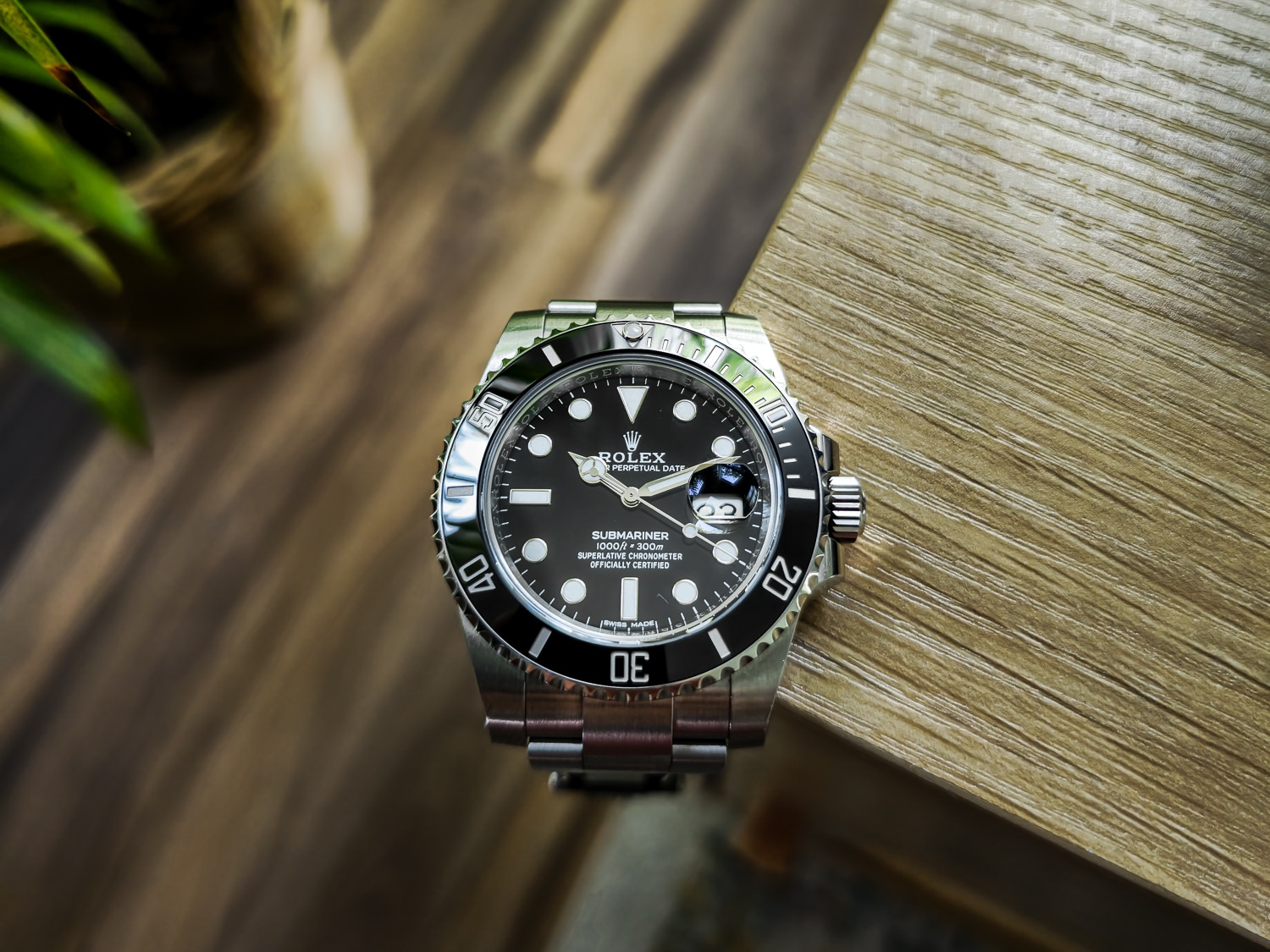
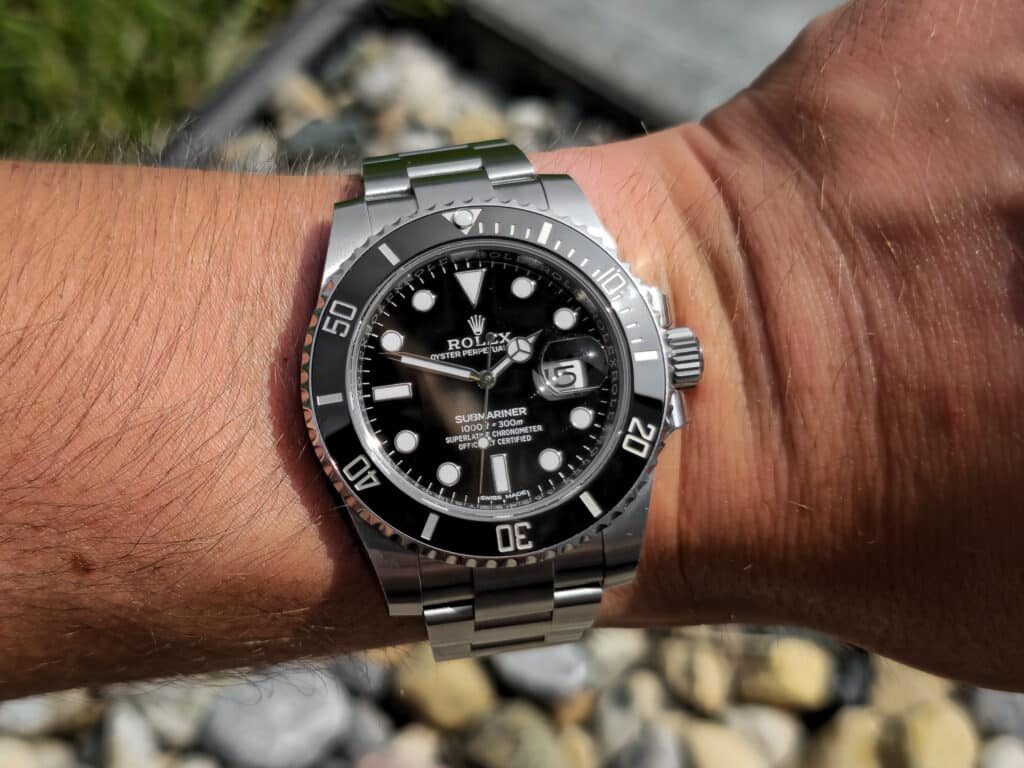
The Rolex Submariner needs no introduction, which is part of its problem. For this comparison, we tested the previous-generation 40mm Submariner Date ref. 116610LN, rather than the current 41mm model. Plenty of people chase the Crown on the dial before they ever consider the watch underneath it, and our hands-on time with the Submariner confirmed that the hype obscures an excellent watch. The longer we wore it, the less we thought about individual features and the more we noticed how cohesive everything felt. The case, bracelet, bezel, and dial read as one continuous decision refined over seventy years. It still wears like the watch that defined the modern dive format, even if most Submariners today never see open water. That said, buying one means accepting waitlists, counterfeit anxiety, and an ownership game that has little to do with horology.
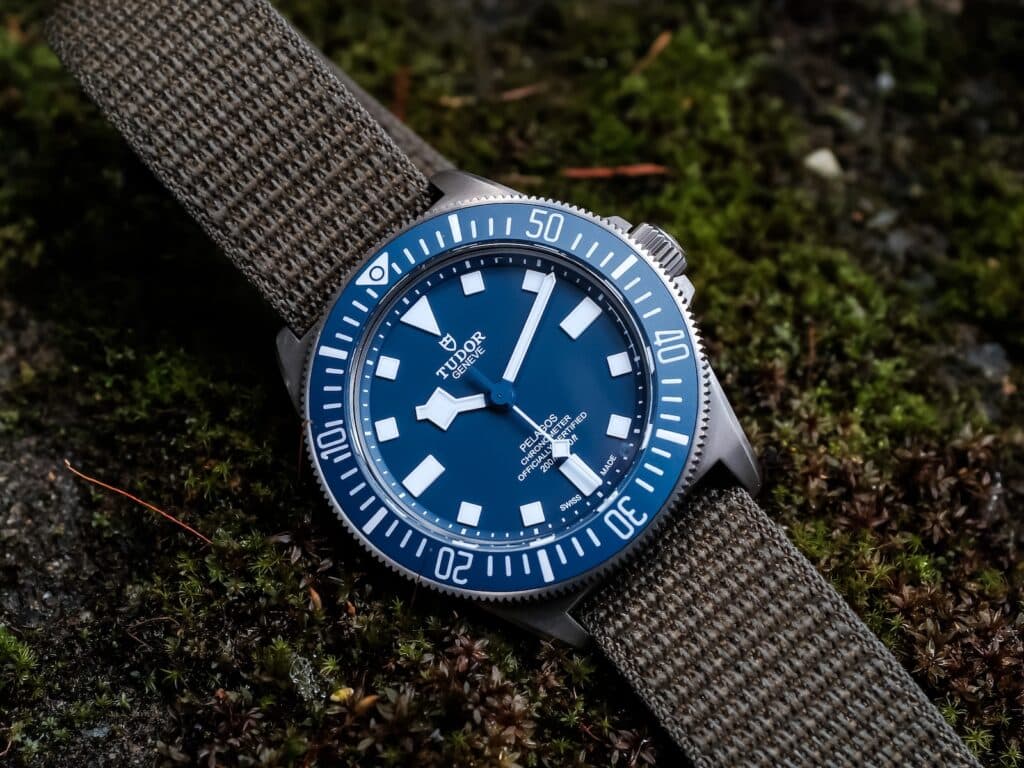
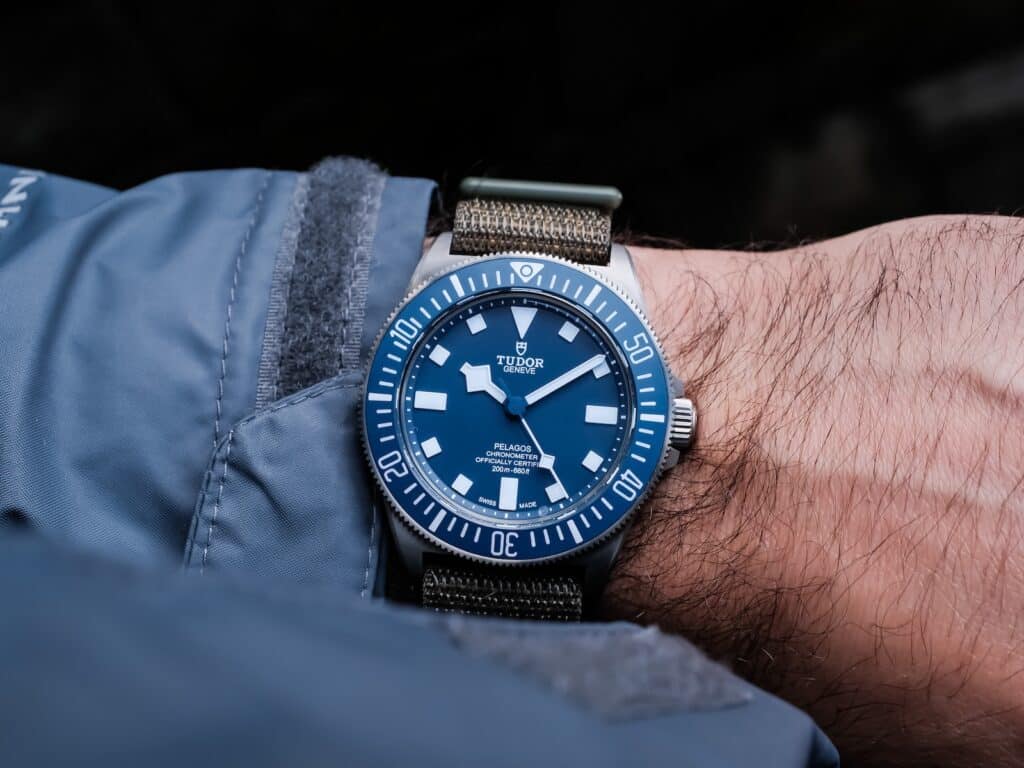
The Tudor Pelagos FXD comes at the same heritage from the opposite direction. Developed with the French Marine Nationale, whose combat swimmers wore issued Tudor Submariners for decades, the FXD strips the formula down instead of dressing it up. Our hands-on review revealed a watch that’s far more restrained in person than the internet discourse suggests. The fully matte titanium case, fixed strap bars, and oversized bezel sound aggressive on paper. On the wrist, the FXD settles into daily wear with surprising ease. It developed a reputation as an almost untouchable modern tool watch, and after real time with it, we think it earns most of that reputation for reasons that have nothing to do with the military branding.
- The Rolex Submariner is the benchmark diver, cohesive and refined to the point of near invisibility, with an ownership experience that carries as much baggage as prestige.
- The Tudor Pelagos FXD is the purpose-built descendant of the same lineage, and it earns its cult status through restraint rather than spec-sheet flexing.
Dial, Strap & Wearability: Legibility First vs Effortless Polish
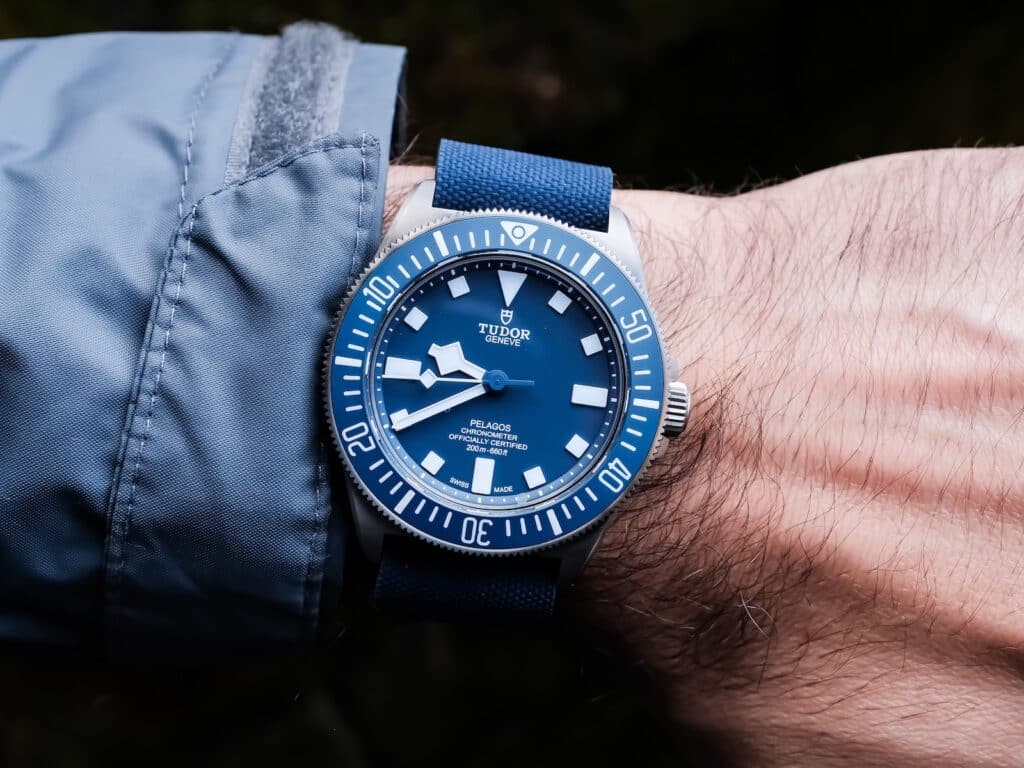
The FXD’s dial is where Tudor’s editing shows. The unnecessary text is gone, the rehaut no longer crowds the hour markers, and deleting the date keeps the layout balanced. Between the snowflake handset, matte dial texture, and strong contrast, the FXD reads instantly in almost any lighting condition. Tudor also chose a darker navy for this dial compared to the brighter blue on the standard Pelagos, and the watch benefits from the shift. Combined with the matte case, nothing here asks for attention. This is a dial designed around legibility first, and it shows every time you glance at it.
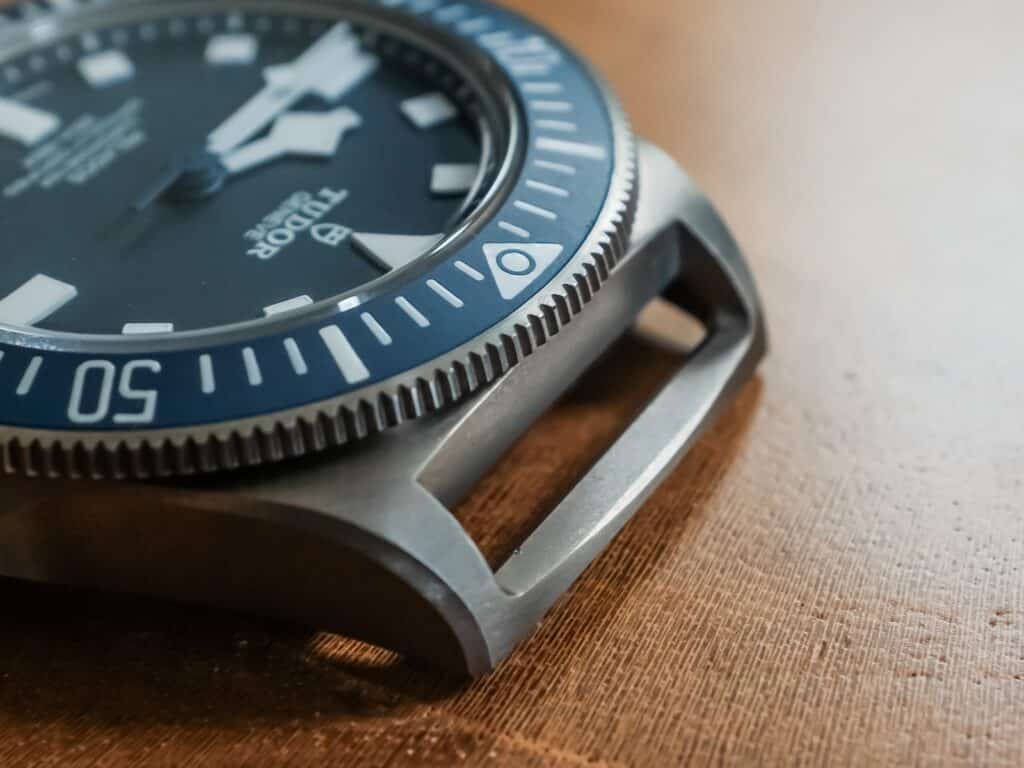
The strap situation is the FXD’s defining quirk. Those bars are machined directly into the titanium case, with a slight chamfer to reduce wear on fabric straps. That single decision deletes the bracelet conversation entirely. The included rubber strap is solid and appropriately overbuilt, but the FXD has that rare ability to make almost every aftermarket strap feel right, and during our review we cycled through everything from premium single-pass options to cheap elastic three-packs. It becomes addictive. Even so, if you’re the type who wants a proper bracelet in the rotation, the FXD simply says no, and you should take that answer seriously before buying.
The Submariner’s dial takes the opposite path to a similar destination. There’s nothing minimal about seven lines of text, white gold surrounds, and a cyclops, yet the layout never feels cluttered. The crisp printing, lume-filled Mercedes handset, and glossy black dial are executed to a standard that makes the busyness disappear. It’s drama-free in the way only decades of iteration can produce. The one quirk worth knowing is the faint milky haze the crystal can throw in certain light, a byproduct of Rolex’s famously stingy approach to anti-reflective coating. You either notice it or you don’t.
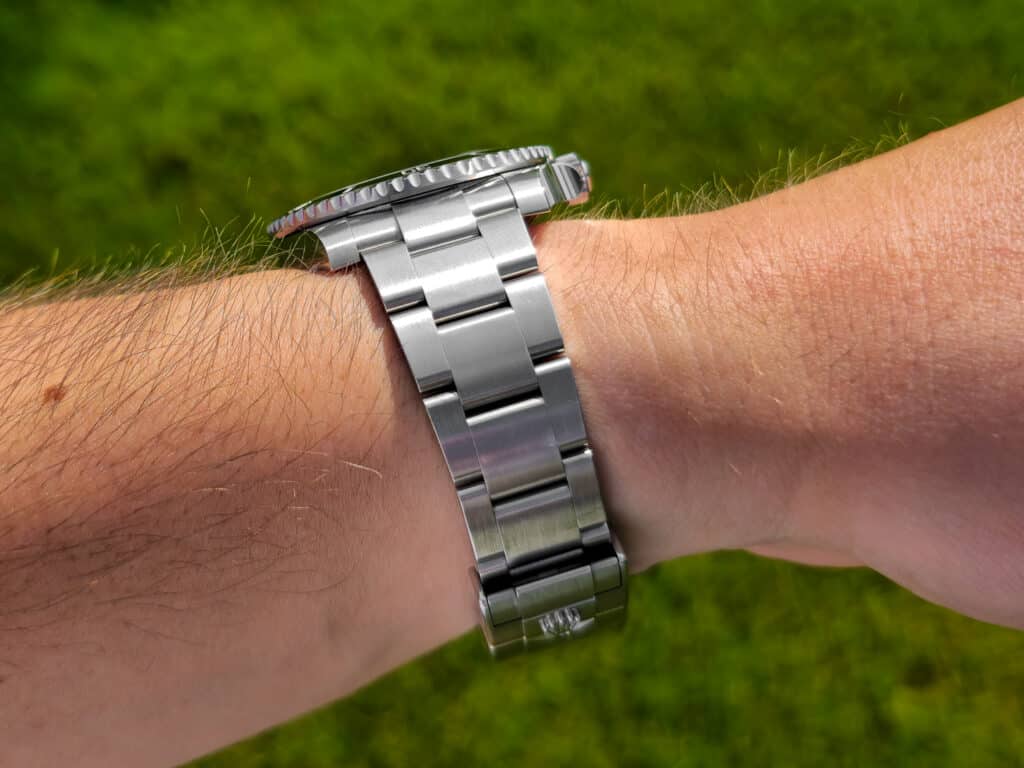
Where the Submariner runs away with this category is the bracelet. The Oyster bracelet on the generation we tested remains one of the best in the industry, full stop. The 20mm to 16mm taper gives the watch a substantial yet elegant presence, without pinching or creating pressure points. or pressure points, and the Glidelock clasp offers smooth, tool-free adjustment that we used constantly. The brushed finish even hides desk-diving scars well. If the FXD’s fixed bars represent one philosophy of security, the Oyster bracelet represents the other, and it’s the single strongest argument for the Rolex in daily wear.
- The Tudor Pelagos FXD pairs a ruthlessly legible dial with a fixed-bar strap system that rewards experimentation but permanently rules out a bracelet.
- The Rolex Submariner delivers a busier but flawlessly executed dial and an Oyster bracelet with a Glidelock clasp that remains the benchmark for all-day comfort.
Build Quality & Technical Approach
These two share a corporate parent and a design ancestor, but the engineering philosophies diverge fast. The FXD was built to a military requirement. The Submariner was refined toward an ideal of everyday perfection. Once you get into movements, cases, bezels, and water resistance, you’re really looking at two different definitions of what “overbuilt” means.
Movements:
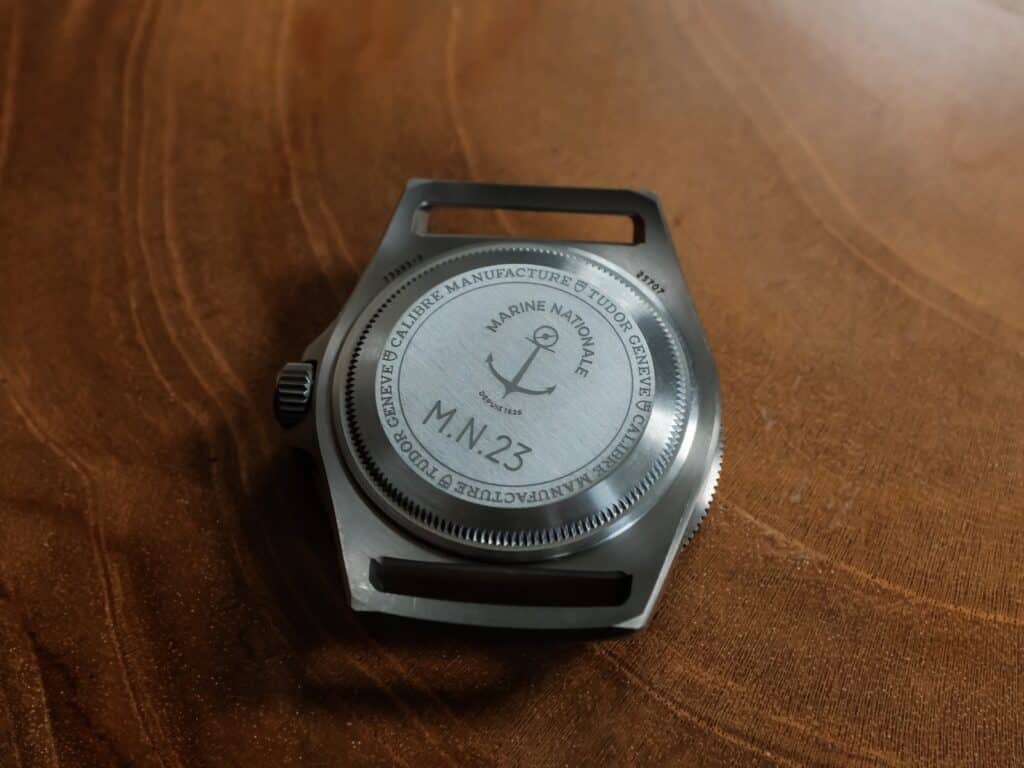
The FXD runs Tudor’s in-house MT5602, a COSC-certified caliber with a 70-hour power reserve and a silicon balance spring. We came into our review carrying some skepticism about Tudor’s in-house movements based on past experiences, and we’ve been open about that history on the site. The FXD did a lot to rebuild that trust. Accuracy stayed solid throughout testing, the long reserve makes the watch easy to rotate in and out during the week, and the movement simply stayed out of the way. The caseback carries the Marine Nationale insignia and production year engraving, a reference to markings on vintage issued Tudors that feels appropriate rather than forced.
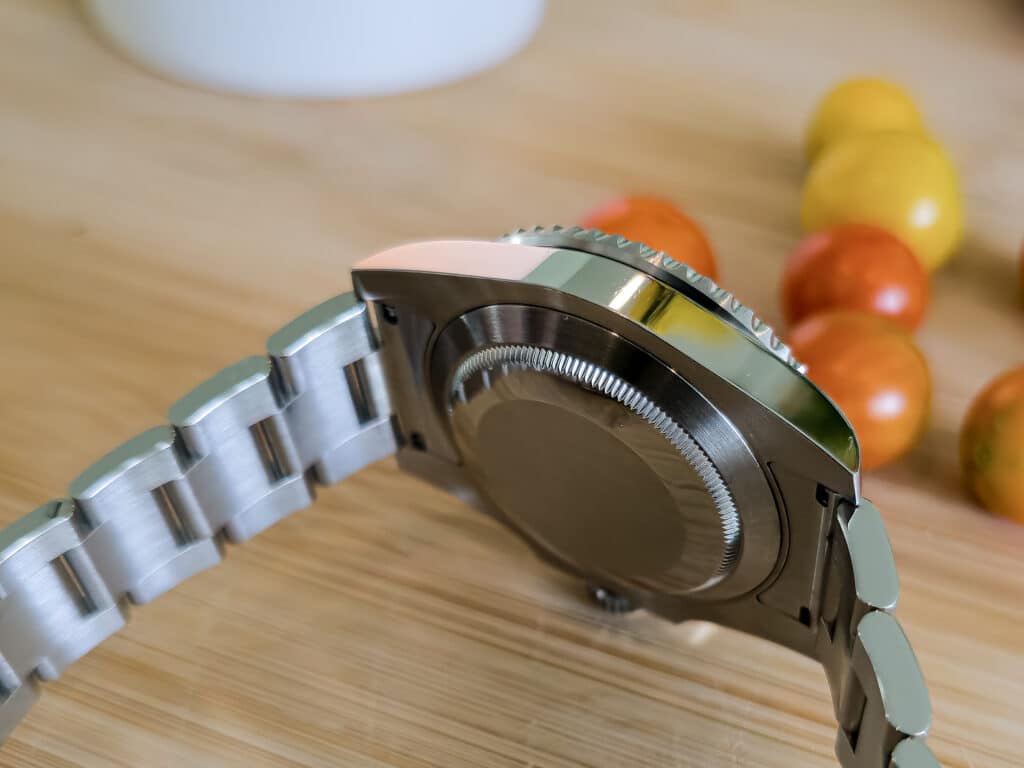
The Submariner we tested runs the in-house Caliber 3135, the date-equipped movement that anchored Rolex’s professional line for decades. On paper it looks ordinary today, with a 48-hour power reserve and plain finishing hidden behind a solid caseback. In practice it’s one of the most proven calibers ever made, and our test watch ran at roughly half a second per day, comfortably inside Rolex’s own standards. Neither of these movements wins on decoration. Both win on the thing that actually matters after the honeymoon phase, which is never thinking about them again. The Tudor takes the reserve advantage; the Rolex takes the track record.
Case Construction & Finishing:
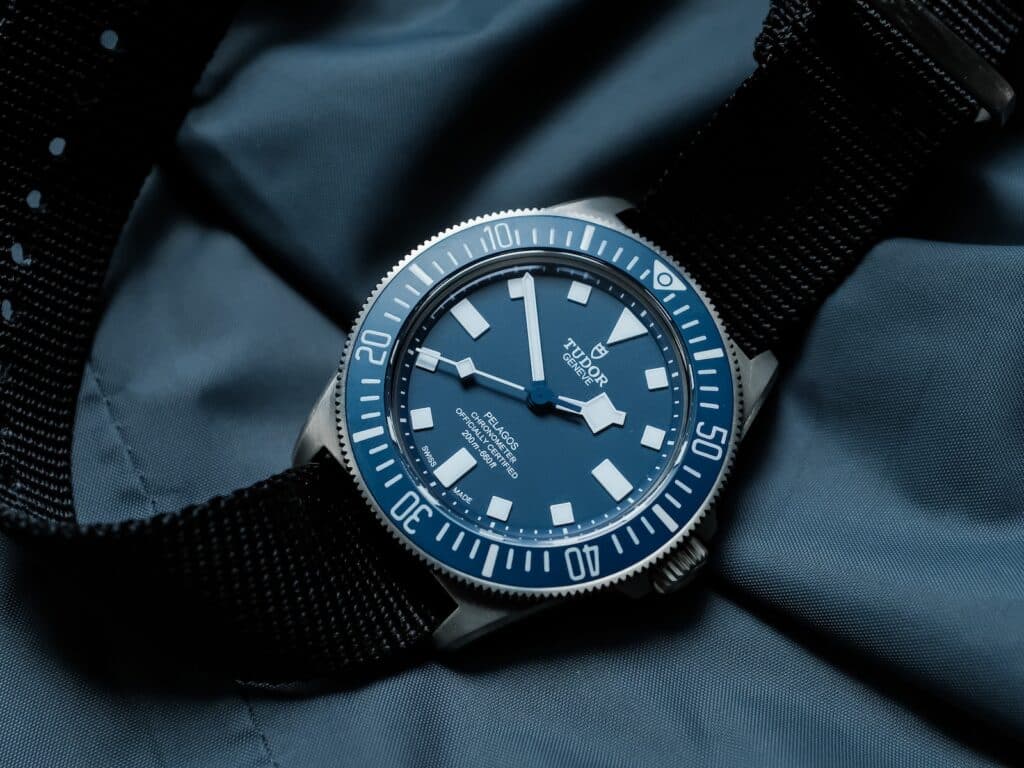
The FXD’s numbers scare people off before the watch gets a fair shot. At 42mm across with a 52mm lug-to-lug, it sounds enormous. In practice it wears far smaller than the specs suggest, and much of that comes down to the 12.75mm thickness and the featherweight titanium construction. The brushing is consistent, the lines are crisp, and the fully matte surfaces give the case a utilitarian look without feeling unfinished. Tudor also deleted the helium escape valve and dropped water resistance from the standard Pelagos’s 500 meters to 200. Enthusiast culture usually treats reductions like that as compromises. Here they read as honesty, because nothing about this case was designed around spec-sheet competition.
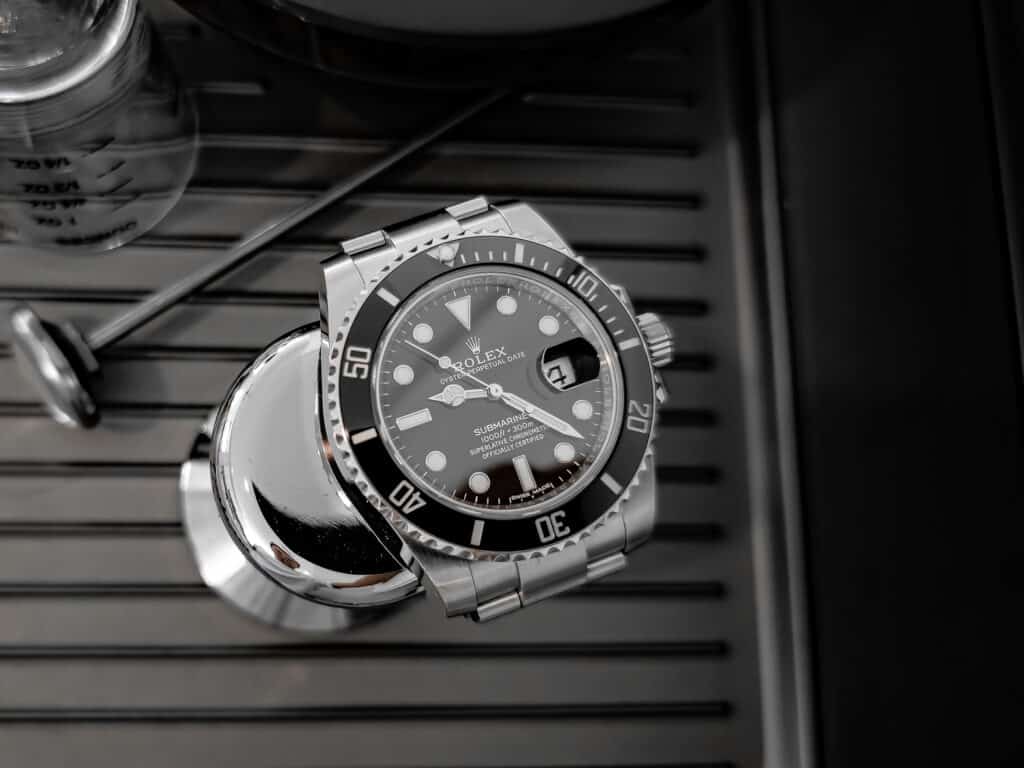
The Submariner’s case is more streamlined and, at 40mm, 48mm lug-to-lug, and just 12.5mm thick, it remains one of the great packaging jobs in watchmaking. That thickness with 300 meters of water resistance is impressive. Rolex will tell you Oystersteel is harder and more corrosion-resistant than the 316L steel most watches use, and in years of wear we couldn’t point to a moment where that difference announced itself. What did stick was how naturally the case disappears, brushed on top, polished on the flanks, equally at home under a cuff or in the pool. If anything, it borders on plain. That’s also why it has aged so well.
Crystals & Bezels:
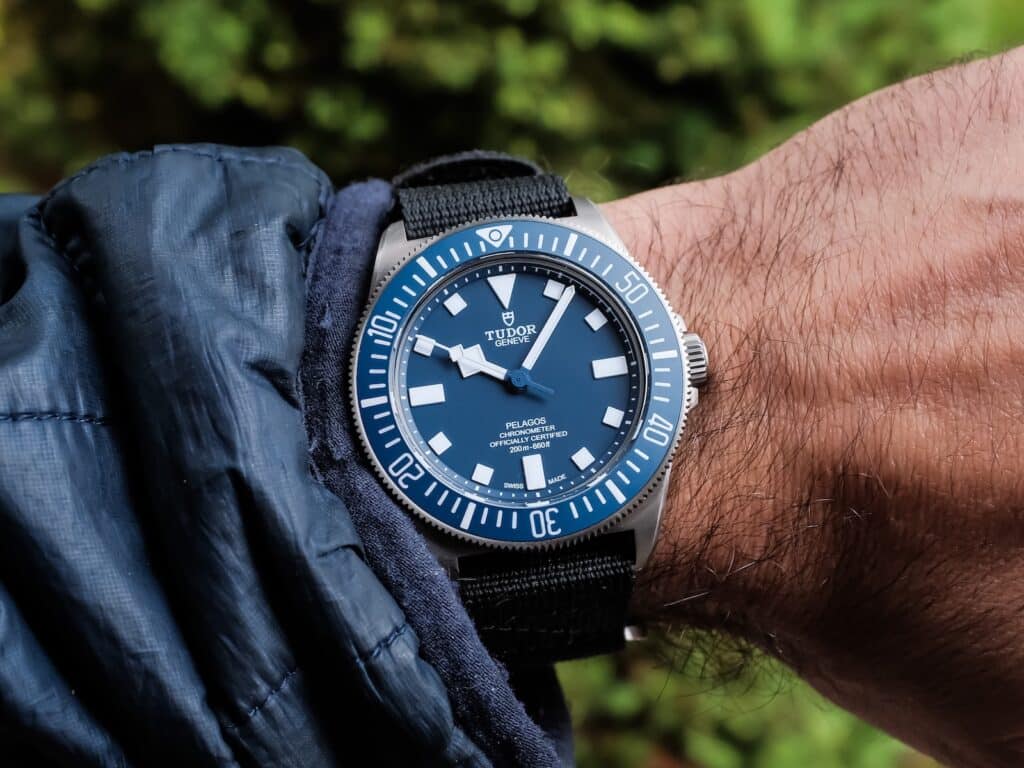
The FXD’s bezel is the most functionally distinct part of the watch. It’s a bidirectional countdown bezel with a fully lumed ceramic insert, built to Marine Nationale specification for underwater navigation legs rather than conventional dive timing. The knurling is noticeably easier to grip than Tudor’s other divers, especially with wet hands, and the 120-click action feels more deliberate than older Pelagos bezels we’ve handled. Purists may balk at a bidirectional bezel on a dive watch. In context, it’s the entire point. This bezel exists for a documented military use case, and once the lights drop, the fully lumed insert is one of the most distinctive sights in modern watchmaking.

The Submariner’s unidirectional bezel plays the traditional role and plays it about as well as it can be played. There’s no back play at all, the action glides from click to click with real precision, and the alignment with the minute track is dead-on. The Cerachrom insert’s engraved numerals are filled with platinum, and the raised lume pip at 12 o’clock sits under a tiny sapphire cap you can locate by feel in the dark. The sapphire crystal above is clean and legible, with the cyclops delivering a date check that looks unnecessary until you stop arguing with it. Two bezels, two philosophies, both executed with total conviction.
Water Resistance & Lume:
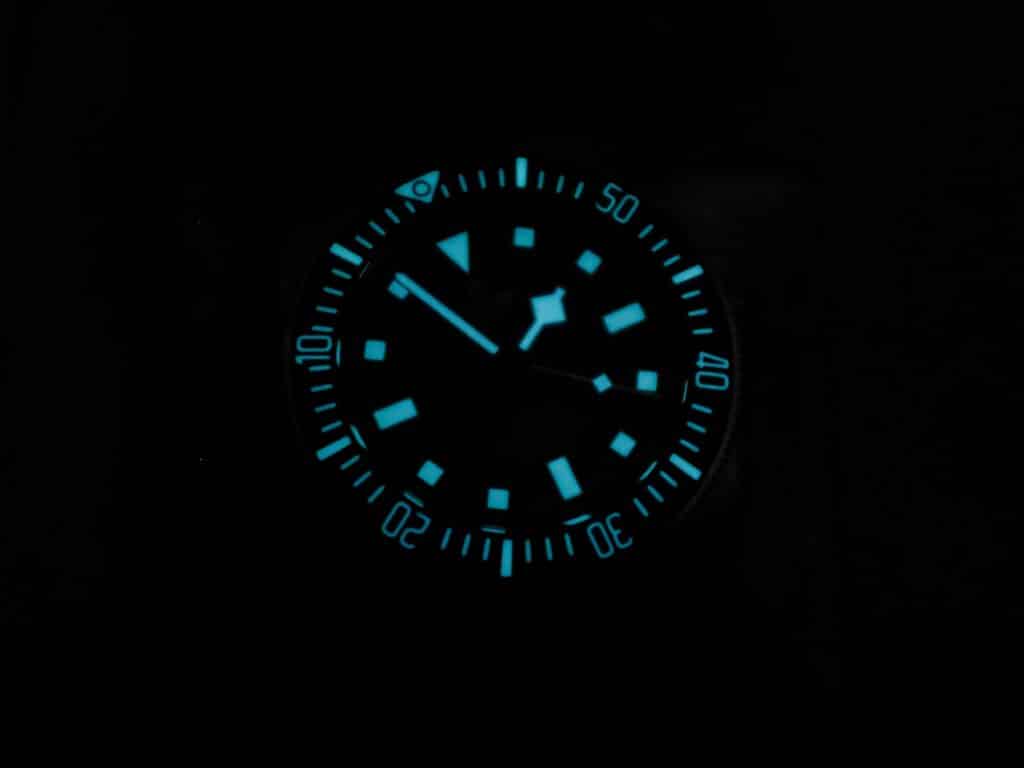
The FXD’s 200-meter rating comes with a screw-down crown and the credibility of a watch actually developed for combat swimmers. On the lume front, this is one of the strongest packages Tudor makes. The oversized snowflake handset, generous markers, and that fully lumed bezel insert combine into a low-light display that makes most dive watches look shy. During our review, legibility in the dark was never once a question.
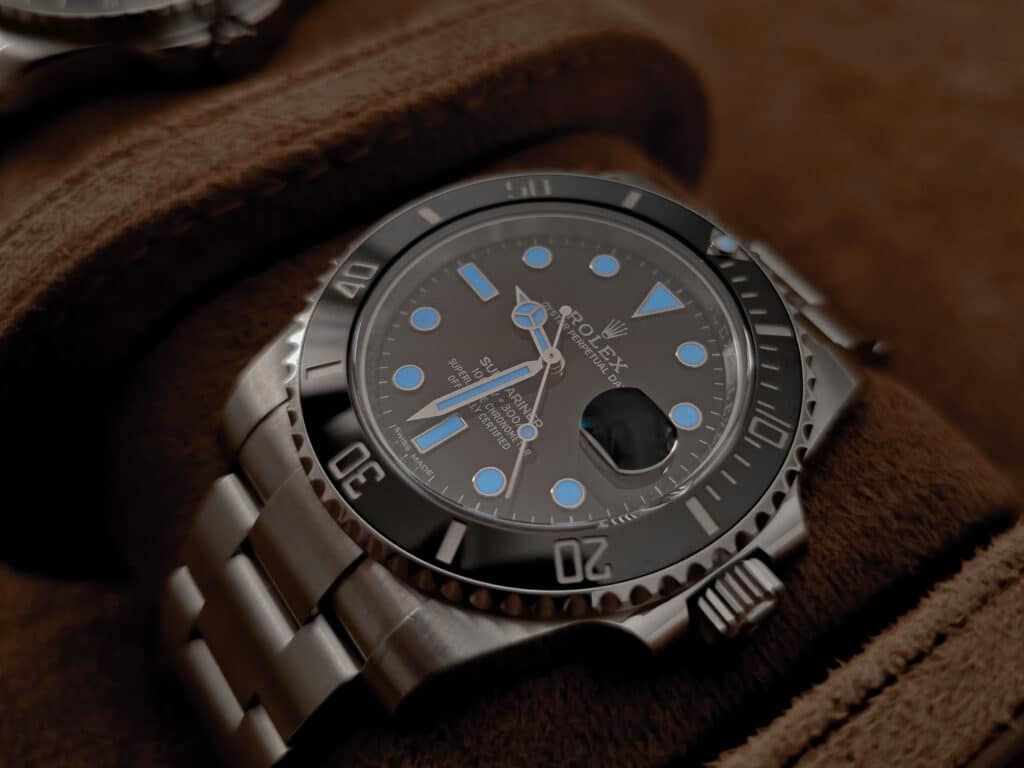
The Submariner counters with 300 meters and the Triplock crown, whose silky action outclasses nearly every screw-down crown we’ve handled. The blue Chromalight lume isn’t the brightest in the business, and a good Seiko will out-glow it, but it burns consistently through the night with an even, sophisticated hue. On paper the Rolex takes the depth rating. In the dark, the Tudor takes the room.
- The Tudor Pelagos FXD is engineered around a documented military brief, with a featherweight titanium case, a bidirectional countdown bezel, and lume that embarrasses most of the category.
- The Rolex Submariner packages 300 meters of resistance into a 12.5mm case with the Triplock crown and a unidirectional bezel that remains the reference for precision.
Cost Considerations
The Tudor Pelagos FXD came in at $5,025 during our review, and for a titanium, COSC-certified, purpose-built diver with military provenance, that figure holds up well. You can walk into a Tudor dealer and buy one, which sounds like faint praise until you remember what the alternative looks like. The buy-in also includes real constraints. The fixed bars limit versatility, the countdown bezel makes the watch more niche than a Black Bay 58, and there’s no bracelet option now or ever. Those tradeoffs are the price of the concept, and we’d argue they’re also why the watch works.
The Submariner’s $10,250 retail price is only the opening chapter of its cost story. Getting the opportunity to pay retail often proves the harder task, with authorized dealer waitlists stretching months or years and gray-market premiums making the value proposition difficult to defend. Then there’s the counterfeit problem. The Submariner is likely the most faked watch on earth, and modern super clones are convincing enough to make pre-owned buying feel like a gamble for many collectors. The watch itself is excellent. The ownership game surrounding it is the part we struggle with, and it’s a cost that never shows up on the price tag.
Final Thoughts: Purpose or Polish?
After time with both, the comparison resolves into something cleaner than we expected. These watches share a bloodline but serve different masters. The FXD answers to a military requirement, and every decision, from the fixed bars to the bidirectional bezel to the deleted helium valve, flows from that brief. The Submariner answers to the accumulated expectations of seventy years, and every surface has been refined until nothing catches, snags, or surprises.
So here’s our verdict:
- Choose the Tudor Pelagos FXD if you want the most honest expression of the modern military dive watch, you enjoy the strap rotation game, and you’d rather have a tool with a documented purpose than a status object with a waitlist.
- Choose the Rolex Submariner if all-day refinement is what you actually value, the Oyster bracelet and Glidelock clasp matter to your daily wear, and you’re prepared for an ownership experience that extends well past the watch itself.
Here’s the part that stuck with us. Most dive watches sold today never get wet, and both of these will spend their lives timing parking meters and coffee breaks. Yet one wears its purpose openly, while the other buries comparable capability beneath a much smoother layer of luxury and refinement. Some of the price gap reflects engineering and refinement. Much of the rest reflects philosophy, positioning, and everything that comes with the Rolex name. Which part you’re willing to pay for is the question only you can answer.

Co-Founder and Senior Editor
Kaz has been collecting watches since 2015, but he’s been fascinated by product design, the Collector’s psychology, and brand marketing his whole life. While sharing the same strong fondness for all things horologically-affordable as Mike (his TBWS partner in crime), Kaz’s collection niche is also focused on vintage Soviet watches as well as watches that feature a unique, but well-designed quirk or visual hook.
I have both (2026 Sub Starbucks and a 22 MN FXD) I love them both. The FXD was my daily. It was perfect for Work, the Boat, backyard work, Jumping into the Ocean or Pool. A do everything watch.. however its not refined. The only way to Dress it up was using a Leather strap. Nice dinners out and business meetings it lacked refinement. But then again, those who know, know.
Then I got the call from the AD after 6 months and got my Submariner Starbucks. It’s beautiful, refined, shiny, and a statement. It covers where the FXD lacked. It can still go into the Ocean or Pool and still hit the town on the weekend. It’s my new daily, but im not wearing it while doing my yard work, working in the garage, thats where the trusty FXD comes in acting like the work horse it is. Im blessed to be able to own both.
Hi, Chris:
This is exactly the distinction. The FXD is the better pure tool watch. It’s the one you grab for the boat, yard work, pool, or anything where you don’t want to think about the watch too much. But the Sub gives you that extra refinement, bracelet feel, polish, and versatility that the FXD just doesn’t really try to offer. On paper they overlap, but in real life they solve different problems.
Thank you so much for reading and sharing your personal insights and experiences!
Best,
-Kaz