
The Rolex Submariner and Breitling Superocean are two established Swiss dive watches with 300 meters of water resistance, automatic movements, ceramic bezels, and the kind of construction we’d expect from watches costing several thousand dollars. Yet a pre-owned Submariner Date 116610LN currently commands around $11,600, nearly twice the $5,900 retail price of a new Superocean Automatic 42. That’s roughly $5,700 separating two watches designed to accomplish essentially the same things. Rolex has spent decades refining the Submariner into one of the most recognizable sports watches ever made, while Breitling offers a more distinctive design with plenty of technical credibility of its own. But at these prices, we’re interested in more than which watch has the better specifications. We want to understand whether the Rolex actually delivers an experience worth paying almost twice as much for.
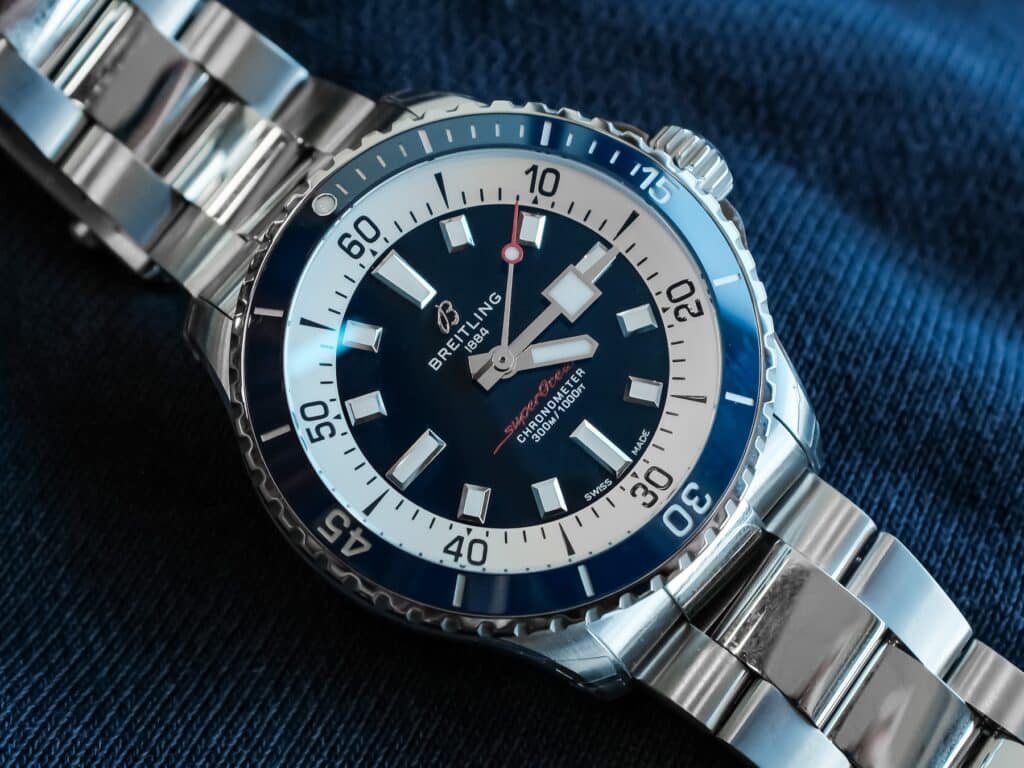
We’ve spent time with both models through our hands-on reviews, and what makes this comparison interesting is that Breitling isn’t necessarily trying to produce its own version of the Submariner. Rolex has spent decades refining one of the most recognizable designs in watchmaking, while the modern Superocean embraces oversized markers, more expressive colors, and a noticeably different personality. There are aspects of the Rolex that genuinely justify its reputation, particularly its bracelet and exceptional everyday wearability. But the Breitling gets several important details right, including a bezel and crystal that left a strong impression on our review team. So how much of that additional Rolex expense translates into a better watch, and how much are we paying for the name and everything associated with owning it?
Overview and Identity
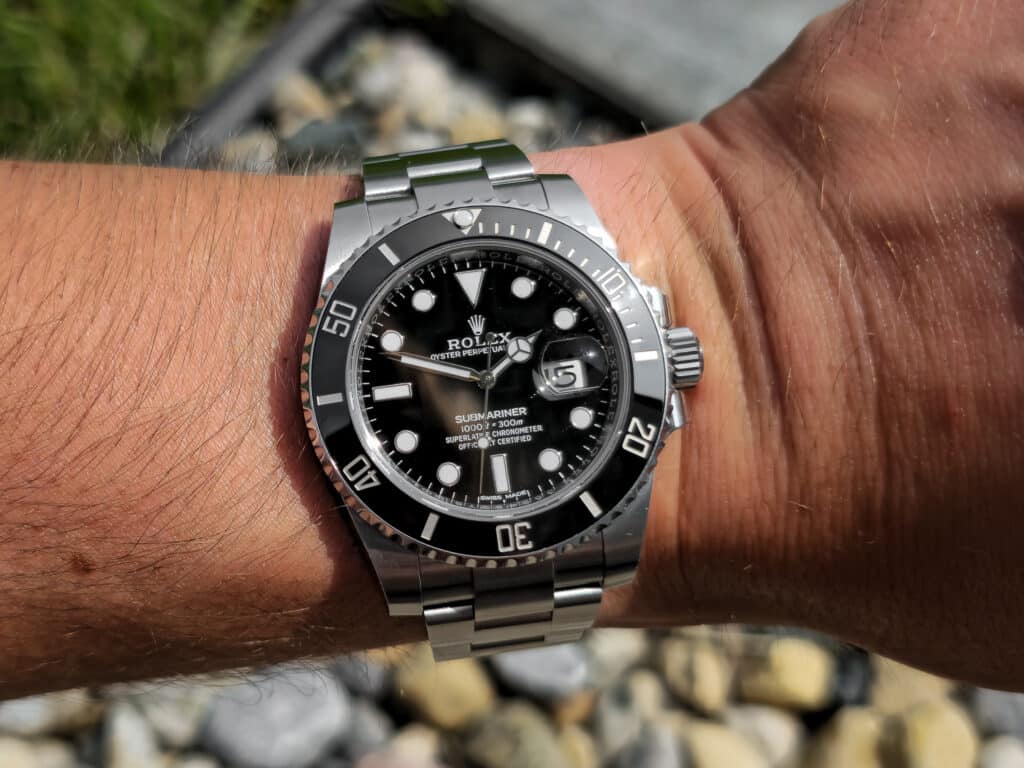
Few watches have influenced modern dive-watch design quite like the Rolex Submariner. Introduced in 1953, the collection has evolved through relatively small changes rather than frequent reinventions, gradually adopting improvements in case construction, materials, and movement technology while preserving its recognizable appearance. Our Rolex Submariner review focuses on the Date reference 116610, a 40mm model featuring the broader Maxi-case lugs, ceramic bezel, and Caliber 3135 movement. We’ve spent years with this generation, and it’s difficult not to appreciate how thoroughly Rolex has developed what is ultimately a straightforward stainless steel dive watch. At the same time, the Submariner carries an enormous amount of cultural baggage. Its popularity, limited availability, and inflated market pricing can make evaluating the actual watch more complicated than it should be.
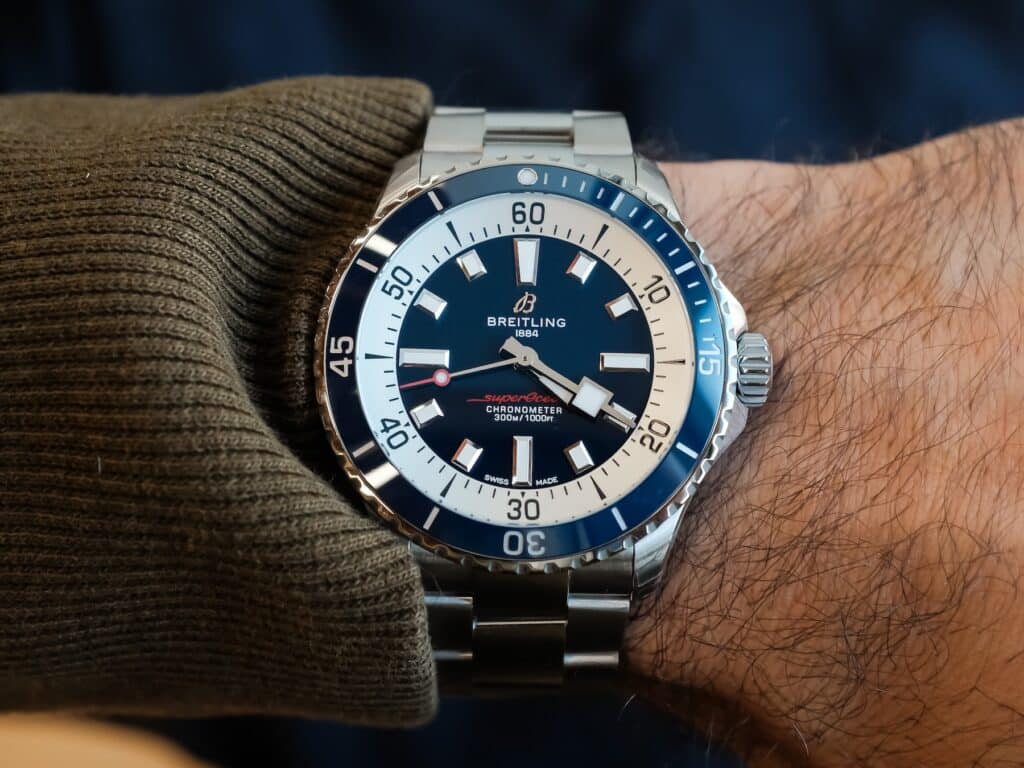
Breitling’s Superocean has its own substantial history, dating back to 1957, although the current Automatic 42 takes a more unconventional approach than many earlier generations. Its design borrows inspiration from the Superocean Slow Motion watches of the 1960s, particularly their oversized geometric markers and distinctive emphasis on legibility. Our Breitling Superocean review covered the blue-dial A17375E71C1A1 on its stainless steel bracelet, a configuration that made a stronger impression than we initially expected. Breitling is still a brand we instinctively associate with aviation watches and the Navitimer, but the Superocean demonstrates that its dive-watch catalog deserves serious attention. Rather than competing through understatement, Breitling has given this generation a recognizable design that doesn’t need to borrow much from Rolex to establish its identity.
Dial and Straps/Bracelets
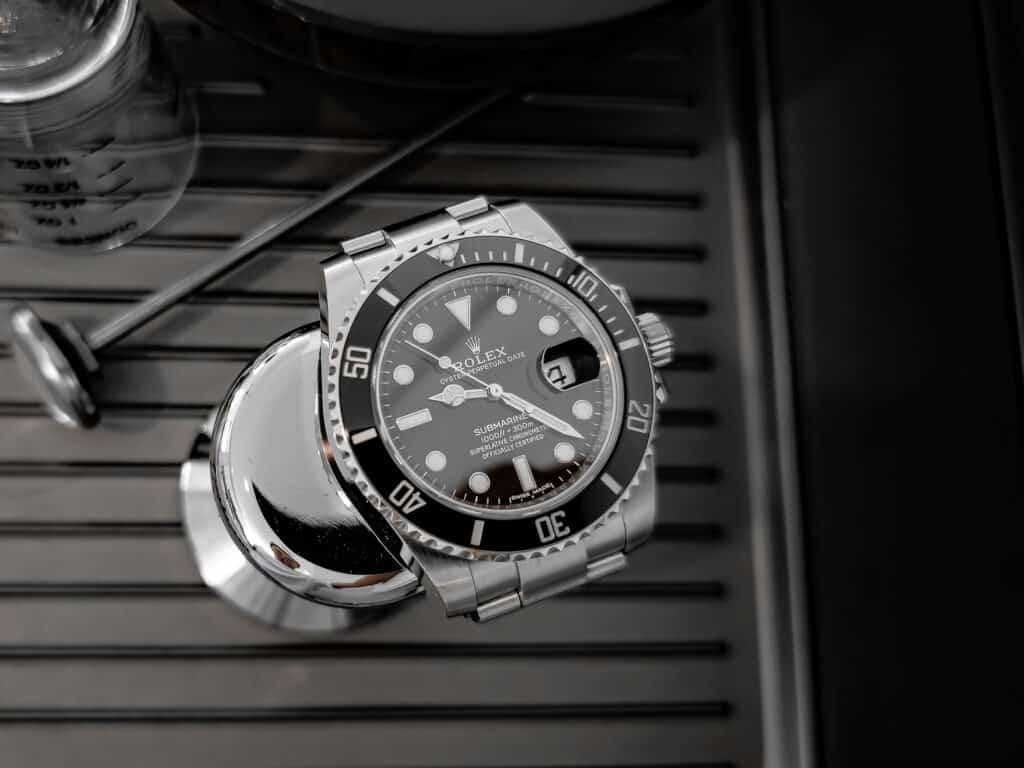
The Submariner’s dial is one of those designs that can seem almost unremarkable until we’ve spent enough time with it to understand why it works. The glossy black surface, Mercedes-style hands, and familiar arrangement of circular and rectangular markers have become so widely imitated that it’s easy to overlook the quality of the original execution. Rolex uses white gold surrounds for the applied markers and hands, while the printing remains exceptionally crisp despite the considerable amount of text occupying the dial. There are seven lines of printing on the version we reviewed, yet the arrangement doesn’t feel particularly crowded. The Cyclops magnifier above the date window has also become one of our favorite details. We understand why some collectors dislike its appearance, but there’s no denying how convenient it makes checking the date. The Submariner doesn’t have the most adventurous dial in this comparison, and that’s precisely why it continues to work so well in different situations.
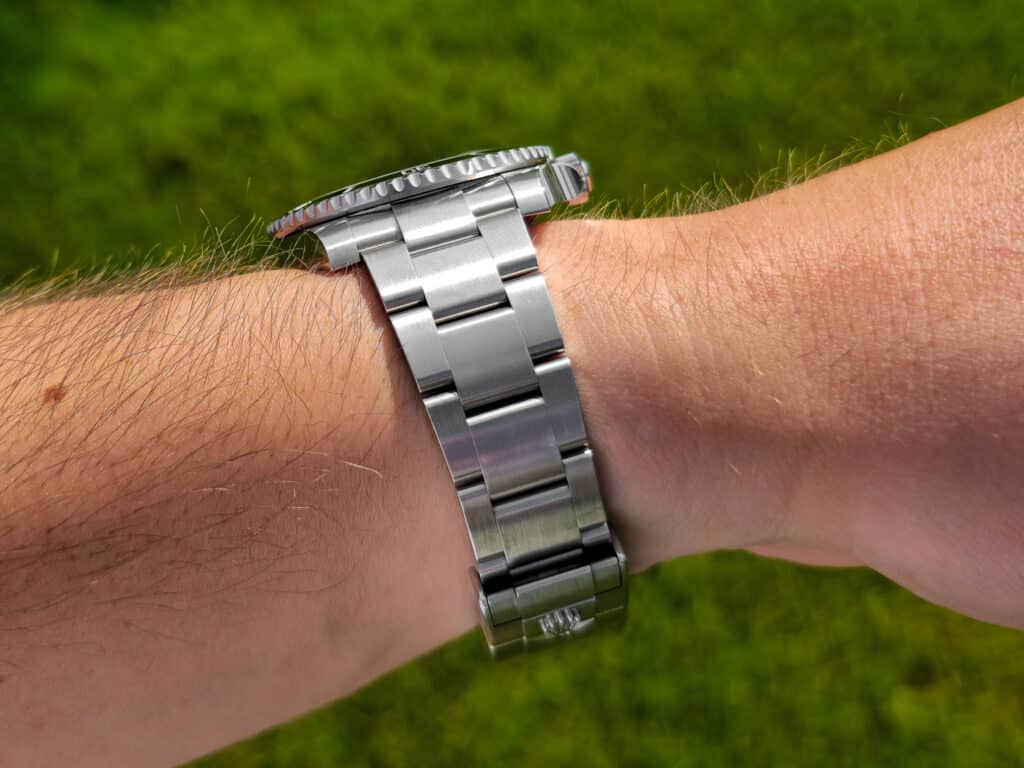
Where the Rolex really separates itself is the Oyster bracelet. We’ve handled enough expensive watches to recognize that spending several thousand dollars doesn’t automatically guarantee an exceptional bracelet, but this generation of the Submariner is about as convincing as they come. The links articulate naturally and follow the wrist without creating uncomfortable pressure points, while the solid end links fit tightly against the case without noticeable movement. The taper from 20mm at the lugs to 16mm near the clasp also makes a meaningful difference to how the watch wears, giving it enough substance without making the bracelet feel unnecessarily bulky. Then there’s the Glidelock clasp, which provides a generous range of adjustment without tools. It’s one of those features that becomes difficult to give up after living with it, particularly when wrist size changes throughout the day. The brushed surfaces also conceal ordinary wear reasonably well. We’d have no hesitation calling this one of the strongest arguments for owning the Submariner.
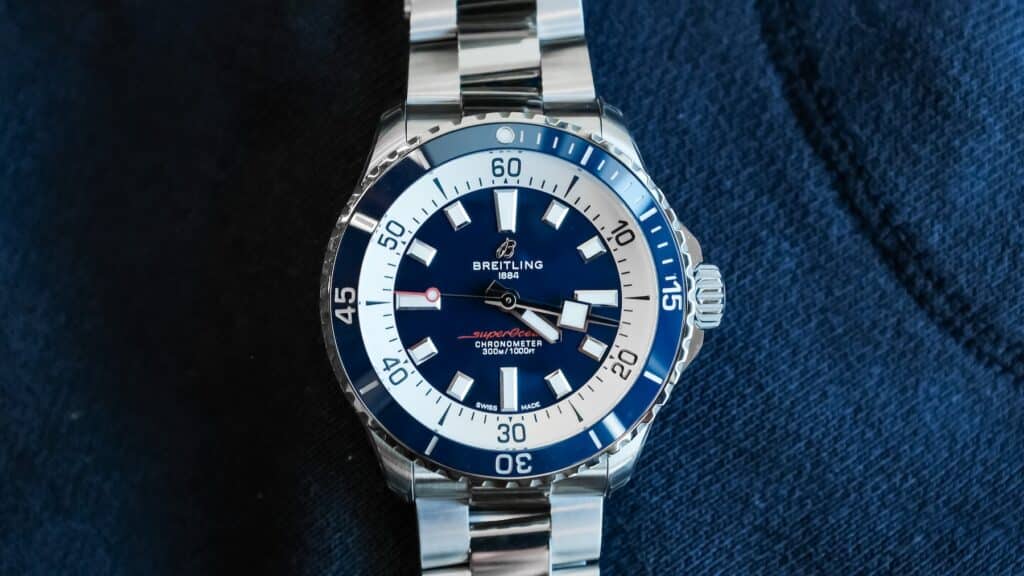
Breitling takes almost the opposite approach with its dial, and we appreciate that it hasn’t attempted to create another conservative Swiss diver. The blue Superocean features oversized rectangular and square markers with polished surrounds, a prominent white minute track, and broad hands that make the time exceptionally easy to read. The lollipop-style seconds hand adds another vintage-inspired detail without making the watch feel like a straightforward reproduction of something from the 1960s. One of the more interesting visual effects comes from how the large markers and peripheral track occupy so much of the available space, making the central blue section appear smaller than we’d expect from a 42mm watch. There’s a lot happening, but the layout feels deliberate rather than cluttered. Where the Rolex succeeds through familiarity and restraint, the Breitling gives us something genuinely different to appreciate every time we look at it.
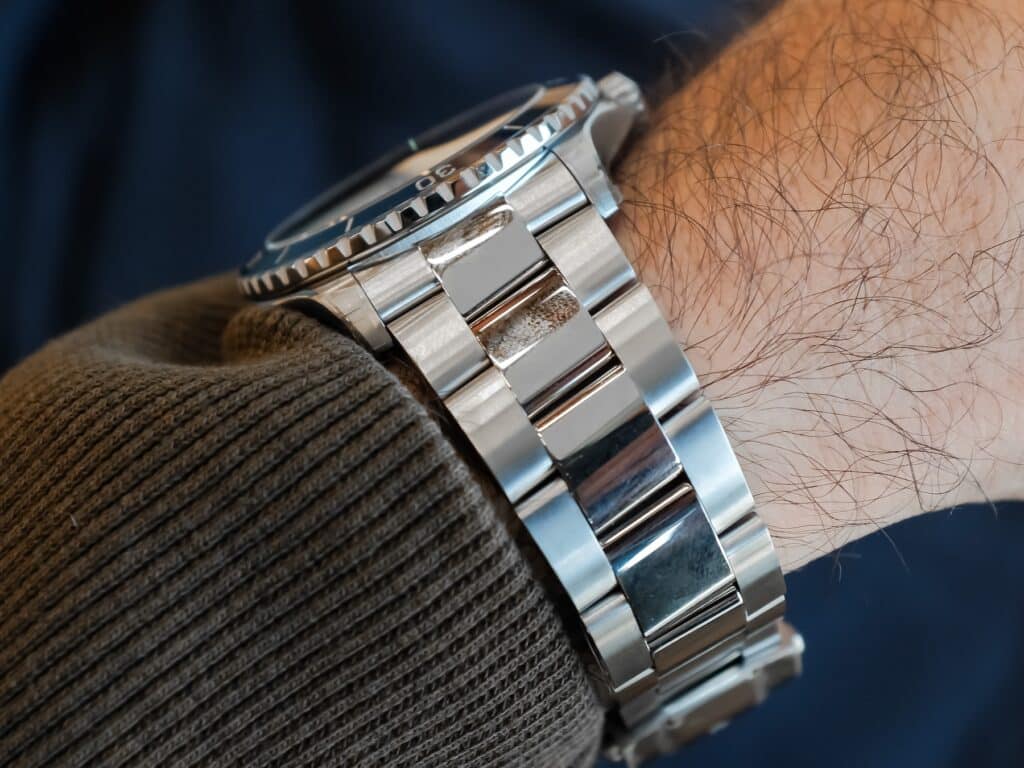
Unfortunately, the Superocean’s bracelet didn’t leave quite the same positive impression as its dial. The stainless steel three-link construction features angled links that work beautifully with the case, carrying the combination of brushed and polished surfaces through the entire watch. There’s nothing inherently wrong with the finishing or the feeling of solidity, either. Our issue was the amount of weight the bracelet introduced to an otherwise well-proportioned diver. The complete watch felt noticeably bulkier than the case dimensions suggested, and that physical presence became difficult to ignore during wear. Breitling also offers a matching rubber strap, which could potentially make the watch more comfortable, although our hands-on experience was with the steel configuration. This is an important distinction between the two. The Superocean’s bracelet looks substantial and feels appropriately expensive, but the Rolex manages to combine outstanding construction with a level of comfort that makes us forget just how much steel we’re wearing.
Build Quality & Technical Approach
Both watches meet the fundamental expectations of a premium Swiss diver, but the similarities begin to fade when we look at how their movements, cases, and other components are executed. Rolex’s greatest strength has always been the way small improvements come together into a watch that feels unusually complete. Breitling is doing something different with the Superocean, emphasizing bold design and tactile details without necessarily matching the Submariner’s mechanical sophistication.
Movements
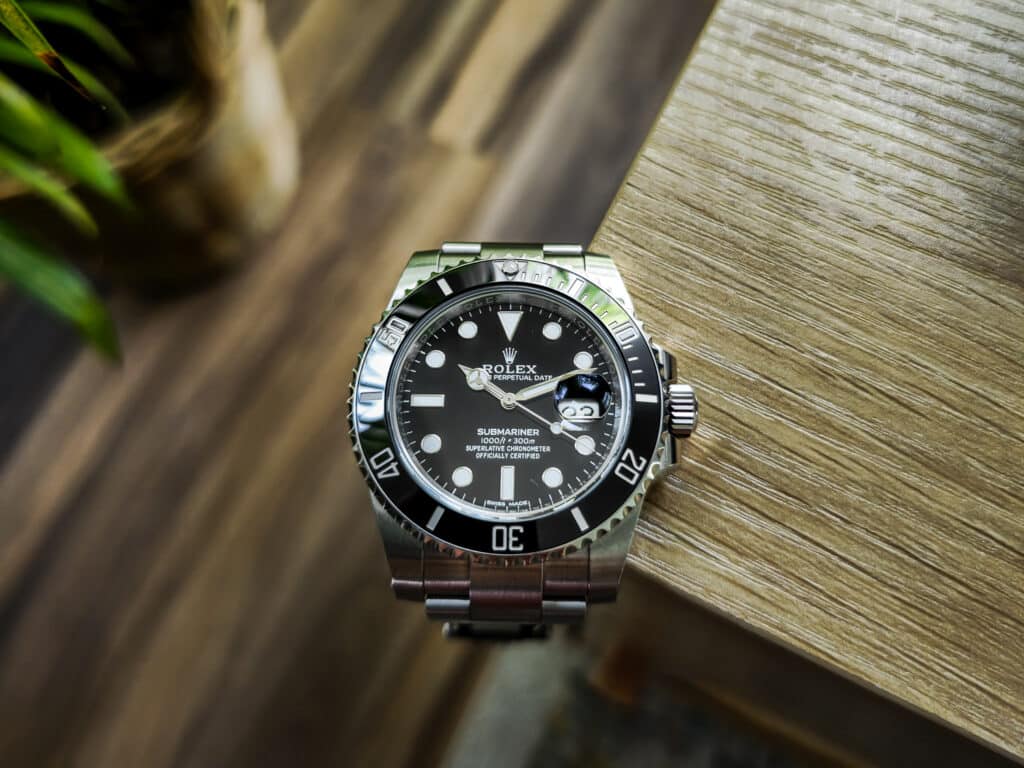
The Submariner Date 116610 uses Rolex’s in-house Caliber 3135, an automatic movement operating at 28,800 vibrations per hour with approximately 48 hours of power reserve. It’s a well-established caliber rather than the latest generation of Rolex movement technology, but our experience with it has been exceptional. The example documented in our original review ran at approximately half a second fast per day, which is an outstanding result for a mechanical watch. Rolex’s Superlative Chronometer standard specifies accuracy within -2/+2 seconds per day, and the movement has proven more than capable of meeting those expectations. We also appreciate the smooth winding action and the operation of the Triplock screw-down crown, whose carefully engineered sealing system contributes to the watch’s dependable water resistance. The movement itself isn’t particularly decorative, and the solid caseback keeps it hidden, but we’ve never considered either characteristic a meaningful disadvantage on a watch like this.
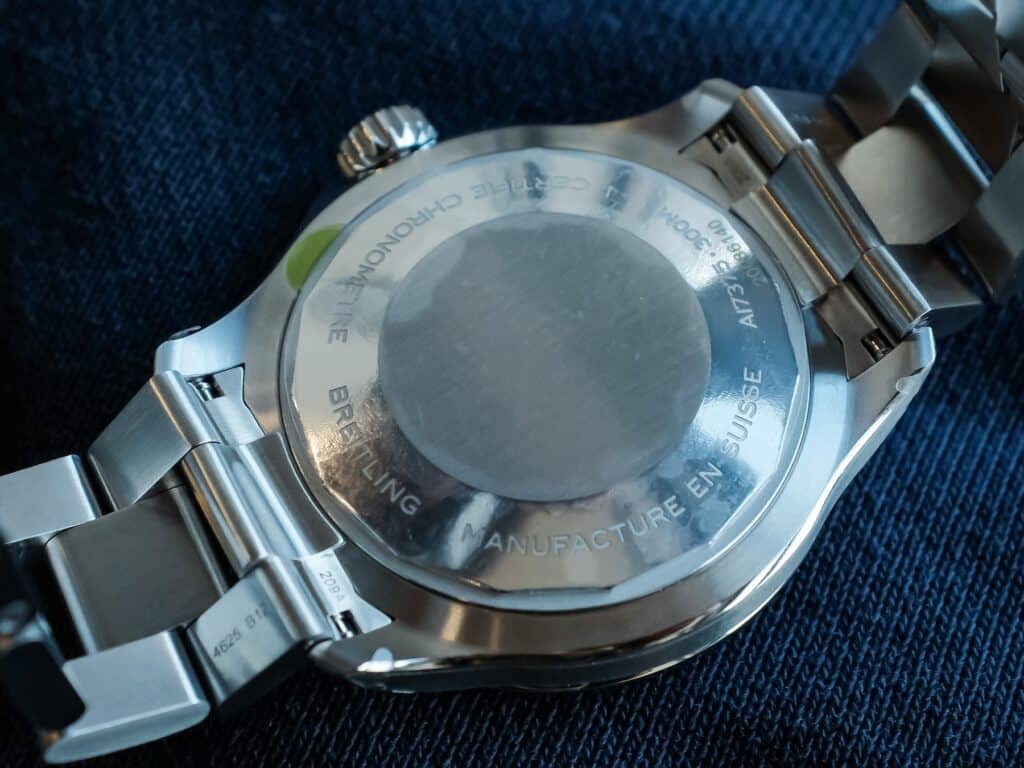
Breitling equips the Superocean Automatic 42 with its Caliber 17, a self-winding movement based on established ETA architecture. It also operates at 28,800 vibrations per hour, using 26 jewels and offering approximately 38 hours of power reserve. COSC chronometer certification is a welcome inclusion, and the movement performed reliably during our hands-on experience without any noticeable problems. There’s also something reassuring about a familiar movement architecture that has been widely used and serviced across the Swiss watch industry. The difficulty comes when we consider what Breitling is charging for the watch. At nearly $6,000, a 38-hour power reserve feels limited, especially for collectors who regularly rotate through several pieces. Leave the Superocean unworn for a couple of days, and there’s a good chance you’ll find yourself resetting it. That isn’t a catastrophic inconvenience, but it’s an area where we’d have liked Breitling to offer more.
Neither of these movements represents the latest development in mechanical watchmaking, and we wouldn’t pretend that the Rolex’s additional ten hours of reserve alone justify thousands of dollars. What makes the comparison interesting is the difference in how thoroughly each watch delivers on its intended purpose. The Caliber 3135 has given us excellent accuracy and dependable operation throughout ownership, and the crown itself is a pleasure to use. Breitling’s Caliber 17 is perfectly capable of keeping time accurately, but it doesn’t give us the same reasons to get excited about the movement inside the watch. We can understand the appeal of a proven, serviceable Swiss caliber, although that argument becomes harder to make when the surrounding watch commands this kind of premium. Rolex has the stronger movement here, even if the gap isn’t nearly as dramatic as the difference in their prices.
Case Construction, Finishing & Wearability
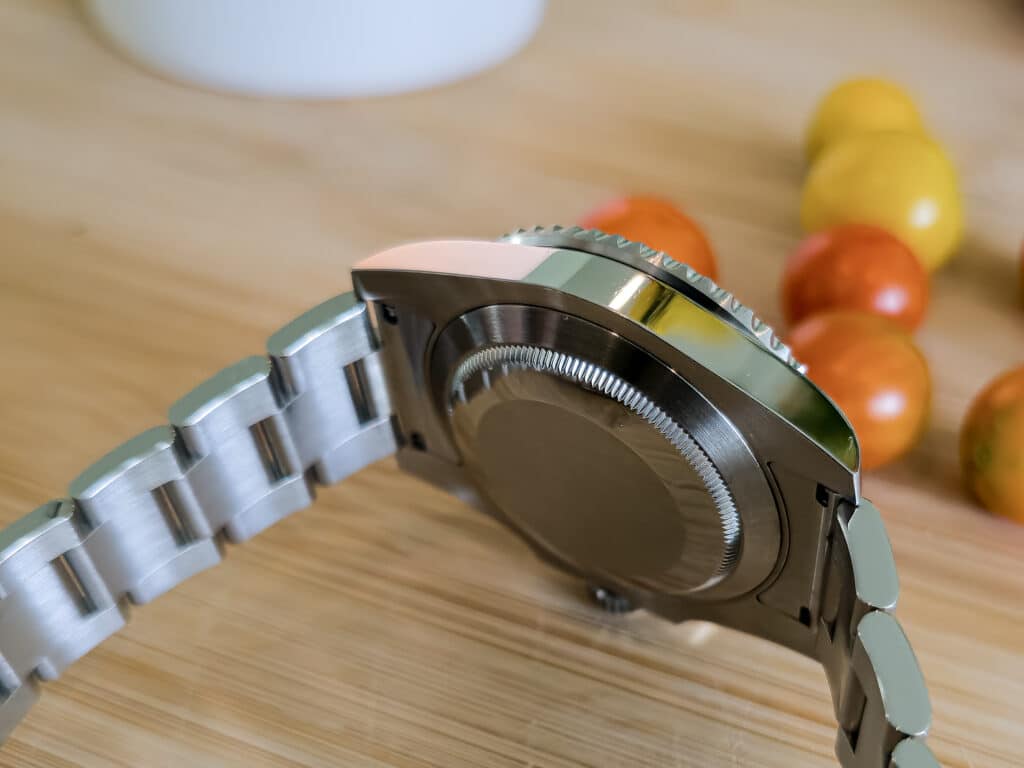
The Submariner 116610 measures 40mm in diameter, approximately 48mm lug to lug, and 12.5mm thick, dimensions that contribute to one of the most enjoyable wearing experiences we’ve encountered from a luxury dive watch. Its Oystersteel case features brushed upper surfaces and highly polished sides, with the broader Maxi-case lugs giving this generation a substantial appearance that isn’t necessarily our favorite part of the design. In fact, the case can look relatively ordinary compared with more elaborate Swiss sports watches. But Rolex has managed to get the proportions right in ways that aren’t immediately apparent from photographs. The relatively modest thickness, smooth caseback, and natural integration with the bracelet allow the Submariner to sit comfortably throughout the day. It’s substantial enough to feel like a proper tool watch without becoming a constant reminder that we’re wearing one. There’s a reason we’ve often considered it among the easiest luxury divers to wear, even in situations where a larger sports watch might feel out of place.
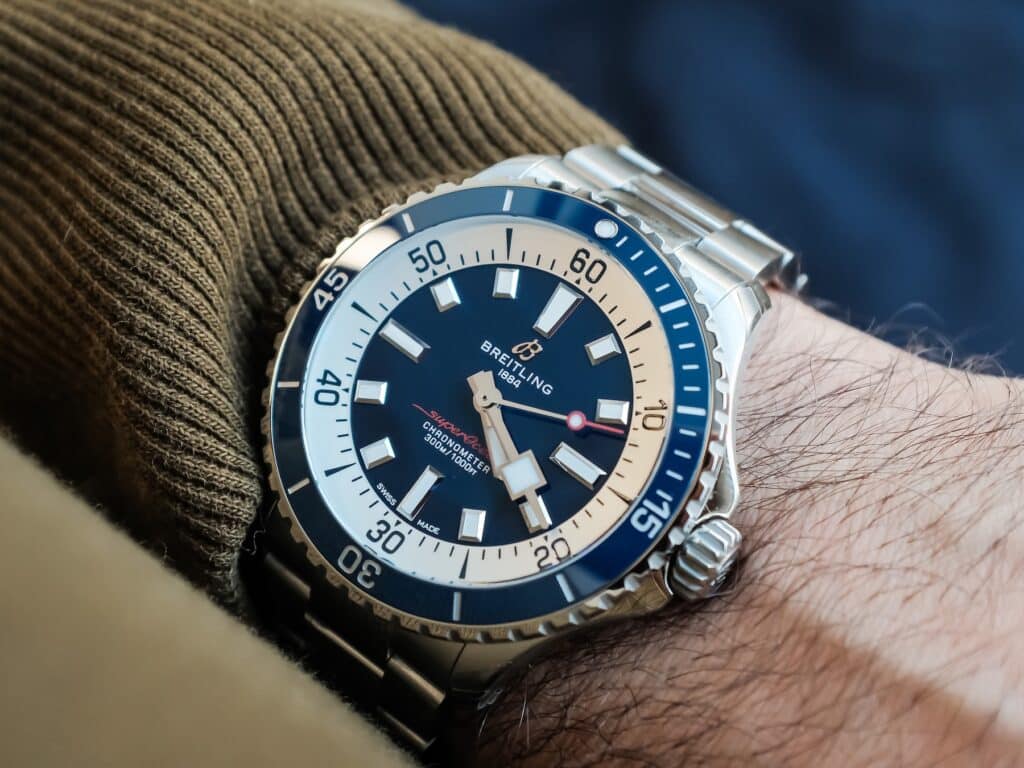
The Superocean is slightly larger at 42mm in diameter, although its 12.56mm thickness is almost identical to the Rolex. Given Breitling’s historical enthusiasm for oversized sports watches, we were pleased by how reasonable this configuration felt on the wrist. The case finishing also deserves attention, with brushed lug tops and sides transitioning into polished bevels that continue toward the crown guards. Those edges give the watch a more expressive profile than the relatively restrained Submariner, particularly when viewed from an angle. The case itself feels thoughtfully proportioned, and we didn’t find the 42mm diameter intimidating during our review. What ultimately complicated the experience was the bracelet rather than the case construction. The additional weight made the complete Superocean feel less comfortable than its dimensions suggested, which is a frustrating outcome considering how much we otherwise liked the case. The Rolex’s advantage here isn’t that it uses more elaborate finishing. It’s that the entire watch works together more naturally once it’s on the wrist.
Crystals and Bezels
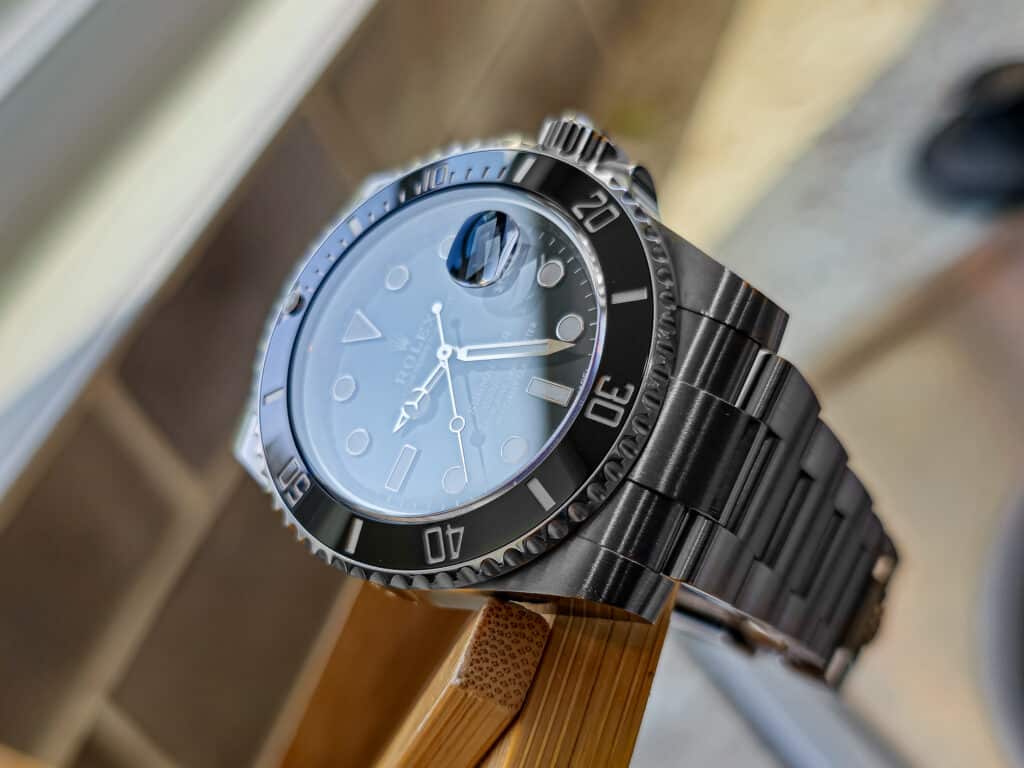
Rolex equips the Submariner 116610 with a sapphire crystal and its familiar Cerachrom ceramic bezel, featuring engraved graduations and numerals filled with platinum. The bezel itself is outstanding. Its coin-edged outer surface offers an excellent grip, while the unidirectional action moves with a level of precision that remains difficult to fault after years of use. There’s no noticeable backplay, the bezel aligns perfectly with the minute track, and the raised luminous marker at twelve o’clock can even be identified by touch. It’s the kind of component that reminds us how much attention Rolex pays to details that don’t necessarily show up in a specification sheet. The crystal is less impressive, however. On this generation, the Cyclops magnifier benefits from anti-reflective treatment, but the rest of the sapphire lacks the coating we’d prefer. Under certain lighting conditions, that creates a subtle milky haze over the dial. It doesn’t significantly compromise legibility, but it’s an irritating omission on a watch whose other components are executed so carefully.
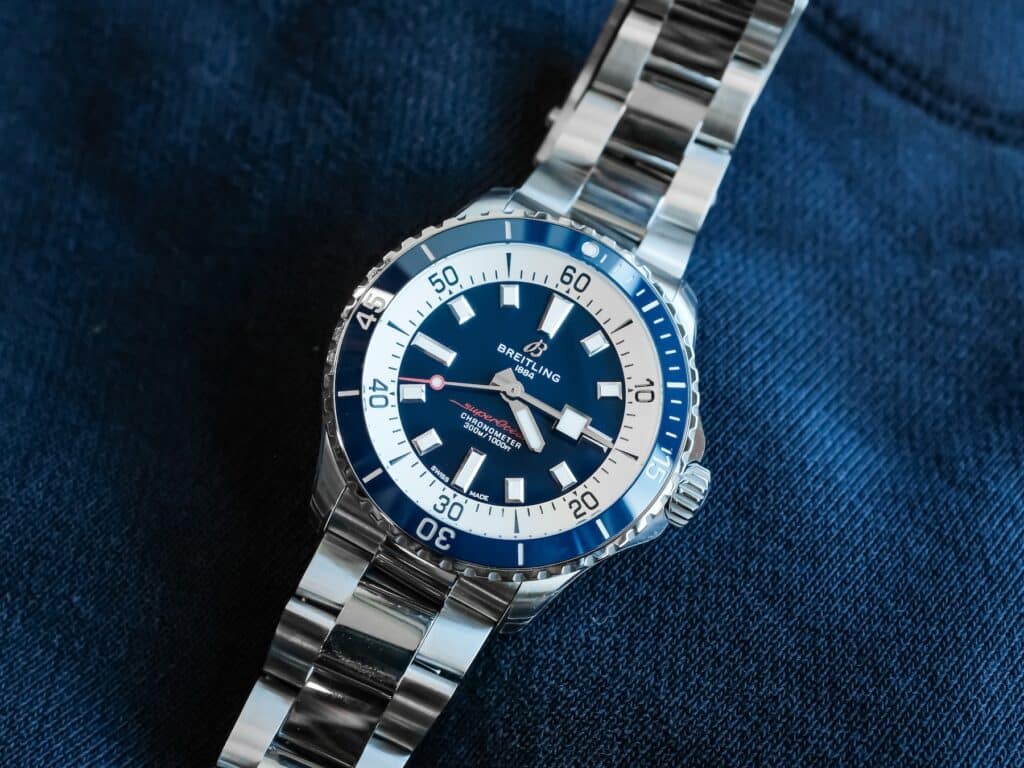
Breitling manages to challenge Rolex more convincingly here than we might initially expect. The Superocean uses a gently curved sapphire crystal treated with anti-reflective coating on both sides, and the results were excellent during our review. Reflections are controlled enough that the blue dial and oversized markers remain clearly visible, even when lighting conditions would normally make a glossy watch difficult to read. The unidirectional ceramic bezel also made a particularly strong impression. Its deeply textured outer edge provides plenty of grip, and the action feels firm and precise, with satisfying clicks and no noticeable looseness. We wouldn’t dismiss Rolex’s bezel advantage after years of enjoying the Submariner, but the Breitling doesn’t feel like a compromise in this department. If anything, its superior crystal treatment gives it an advantage in overall dial clarity. That’s an important distinction when evaluating watches at this price, and one of the reasons we wouldn’t simply assume that the more expensive option gets every detail right.
Water Resistance & Lume
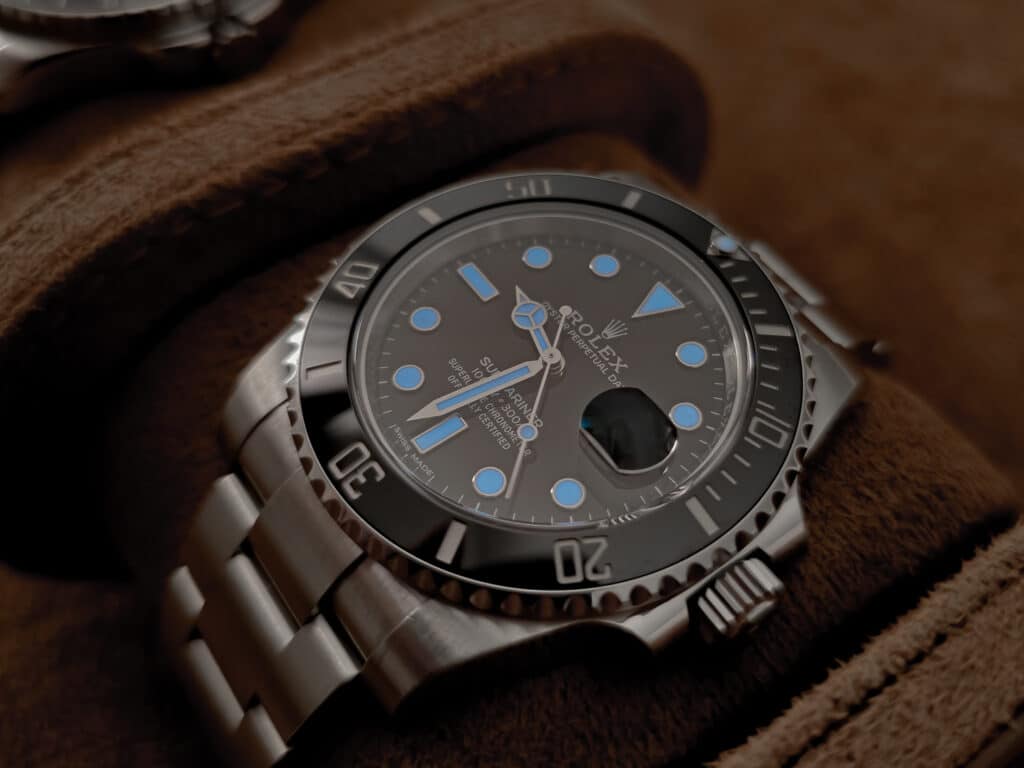
Both watches offer 300 meters of water resistance, supported by screw-down crowns and substantial case construction. Rolex’s Triplock crown system is among the more recognizable examples of the brand’s approach to sealing a dive watch, while the Submariner’s Chromalight treatment gives its hands and markers a distinctive blue glow. We’ve found the lume highly usable during everyday ownership, remaining legible well into the night without requiring us to make much effort to read the dial. The Mercedes-style hands and familiar arrangement of hour markers also help distinguish important information quickly. It isn’t necessarily the brightest luminous treatment we’ve encountered from a diver, and some inexpensive Seikos remain extremely competitive in this regard, but the Rolex delivers a dependable combination of visibility and water resistance without making any unnecessary compromises to its traditional design.
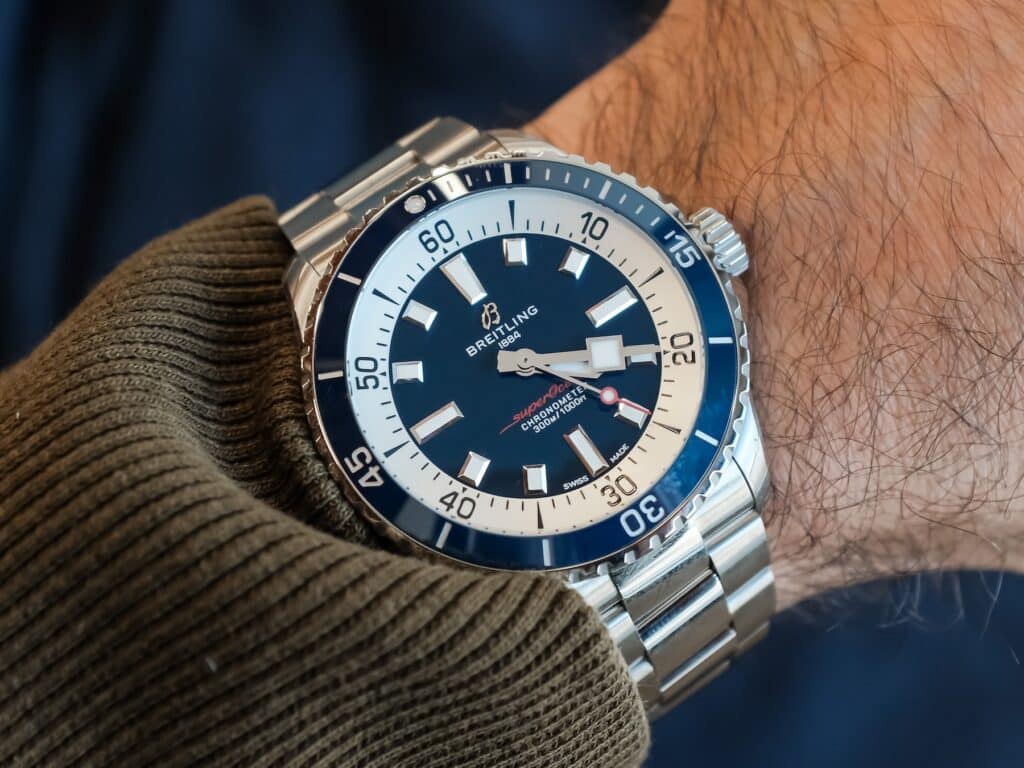
Breitling matches that 300-meter rating with a screw-locked crown and generously proportioned luminous markers that reinforce the Superocean’s emphasis on legibility. The oversized rectangular indices and broad hands are easy to identify, while the effective crystal coating allows the dial to remain clear without the reflection issues we’ve occasionally noticed on the Rolex. The arrangement feels particularly well suited to a watch intended to be read quickly, and we appreciate that Breitling has used its vintage-inspired design to improve functionality rather than simply adding visual nostalgia. We didn’t conduct a controlled side-by-side lume endurance test, so we wouldn’t claim that either watch maintains its glow longer than the other. What we can say is that both provide excellent practical visibility and more than enough water resistance for the activities most owners are likely to encounter. There’s no meaningful advantage to spending twice as much on the Rolex if depth rating alone is the deciding factor.
Cost Considerations
The financial difference between these watches is substantial, although comparing their prices requires some context. The Rolex Submariner Date 116610LN has been discontinued, so acquiring this exact reference generally means shopping the pre-owned market. Recent completed sales place its typical value around $11,600, although condition, accessories, and seller type can move the price considerably. The Breitling Superocean Automatic 42 A17375E71C1A1, meanwhile, carries a current U.S. retail price of $5,900 on its stainless steel bracelet. That puts the Rolex at almost twice the Breitling’s official price, despite comparing a pre-owned watch with a brand-new one. We aren’t dealing with a minor premium for better finishing or a more elaborate movement. We’re talking about spending roughly another $5,700 to own a Submariner from an earlier generation.
To Rolex’s credit, the additional money does buy some genuinely exceptional details. The Oyster bracelet remains one of the best we’ve experienced, and the Glidelock clasp is the sort of practical improvement we’d want to see on more expensive sports watches. The Caliber 3135 has also impressed us with its accuracy and consistency, while the case proportions make the Submariner exceptionally comfortable for regular wear. Those qualities aren’t simply the product of clever marketing or a recognizable logo. We’ve spent enough time with the watch to appreciate how thoroughly Rolex has refined its core design, and we’d have a difficult time identifying many luxury divers that provide the same combination of comfort, mechanical reliability, and everyday versatility. The problem is that the Submariner’s quality doesn’t exist independently of its reputation, and that reputation is responsible for a considerable portion of what buyers are now expected to pay.
The Breitling makes a strong case for keeping that extra money. Its case finishing is attractive, the bold dial offers a distinctive alternative to Rolex’s familiar layout, and the crystal and bezel are genuinely impressive. We also appreciate that Breitling has developed a visual identity that feels separate from the Submariner rather than producing another watch built around the same design conventions. The Superocean isn’t without compromises, and we’d expect more mechanical sophistication from a watch approaching $6,000. But those criticisms don’t erase the quality of the surrounding watch. The Superocean is still a serious Swiss diver with chronometer certification and 300 meters of water resistance. For someone who enjoys its appearance and finds the bracelet comfortable, the remaining $5,700 could fund another excellent watch, or simply stay in the bank. That’s an increasingly difficult consideration to ignore.
There’s also the matter of actually acquiring a Rolex. Our experience purchasing the Submariner in 2018 involved a three-month wait through an authorized dealer, which seems relatively straightforward compared with the stories we’ve subsequently heard from collectors navigating Rolex availability. Long waiting periods, purchase histories, and the expectation that buyers should feel fortunate to receive an opportunity to spend thousands of dollars have never been particularly appealing to us. Shopping for a discontinued model introduces different concerns, including verifying authenticity, condition, and service history in a market where convincing counterfeit Submariners are an unfortunate reality. That doesn’t mean buying a pre-owned Rolex is inherently risky when dealing with a reputable seller, but it adds another consideration to an already expensive purchase. We can admire the Submariner enormously while still finding much of the buying experience difficult to defend.
Of course, resale value complicates the comparison. Rolex has historically maintained stronger demand in the secondary market than many competing Swiss brands, and the Submariner remains one of its most recognizable and actively traded models. That can make the higher initial expense easier to rationalize for collectors who expect to sell or trade their watches later. The Breitling may offer more opportunity for discounts, particularly outside authorized retail channels, but its lower purchase price also comes with different resale considerations. We wouldn’t treat either watch as an investment or assume that historical price behavior guarantees future returns. What matters more is whether we’re comfortable spending the money for the experience each watch offers. On that basis, the Breitling delivers an enormous amount of what makes a premium Swiss diver enjoyable without requiring us to pay the additional price associated with Rolex ownership.
Final Thoughts: Is Rolex Worth Twice the Price?
The Rolex Submariner Date 116610 remains one of the most satisfying luxury sports watches we’ve experienced. After years of ownership, what stands out isn’t any particular specification, but how naturally everything comes together. It’s comfortable enough to wear all day, versatile enough to work in almost any setting, and mechanically dependable in a way that makes ownership feel relatively uncomplicated. We have our criticisms, particularly when it comes to Rolex’s pricing and the culture surrounding its availability, but those frustrations shouldn’t diminish what the brand has accomplished with the watch itself. There’s a reason the Submariner continues to serve as a benchmark for the category, even if its popularity has made us increasingly skeptical of what collectors are expected to pay for one.
The Breitling Superocean Automatic 42 deserves more consideration than it sometimes receives in conversations dominated by Rolex and Omega. Its bold dial design gives it a personality that feels genuinely different from the Submariner, while the quality of its crystal, bezel, and case finishing provides plenty to appreciate once we move beyond the brand name. It’s not a perfect watch, and there are aspects of the complete wearing experience we’d change, but we came away from our review with a greater appreciation for what Breitling is doing with the collection. More importantly, the Superocean doesn’t feel like an inexpensive substitute for the watch we’d rather own. It has enough character to make a convincing argument on its own.
If money weren’t part of the equation, we’d probably choose the Submariner. There’s something about its proportions, construction, and overall wearing experience that we’ve continued to appreciate throughout ownership, and those qualities are difficult to replace. But the difference between choosing a favorite watch and recommending someone spend thousands of dollars on one is substantial. At $5,900, the Breitling delivers nearly everything we’d expect from a premium Swiss diver, along with a more expressive design and some genuinely impressive finishing details. The Rolex is better in certain areas, but we’d struggle to argue that those improvements make the overall experience almost twice as satisfying. That’s especially difficult when the Superocean occasionally gets individual details right that the Submariner doesn’t.
For overall value, we’d choose the Breitling Superocean. The Rolex is arguably the better all-around watch, and we’d have no hesitation acknowledging that its comfort, construction, and mechanical performance are exceptional. But those advantages don’t justify another $5,700 for most buyers, particularly when the Breitling already delivers such a convincing experience. Collectors who specifically want a Submariner probably won’t be satisfied with an alternative simply because it’s less expensive, and we understand that sentiment. Still, wanting a Rolex and being able to justify its asking price are two different things. If we’re answering whether the Submariner is worth twice the money, our answer is no. The Breitling offers more than enough of what makes a great Swiss dive watch enjoyable without requiring us to pay the substantial premium attached to the Rolex name.

Co-Founder and Senior Editor
Kaz has been collecting watches since 2015, but he’s been fascinated by product design, the Collector’s psychology, and brand marketing his whole life. While sharing the same strong fondness for all things horologically-affordable as Mike (his TBWS partner in crime), Kaz’s collection niche is also focused on vintage Soviet watches as well as watches that feature a unique, but well-designed quirk or visual hook.