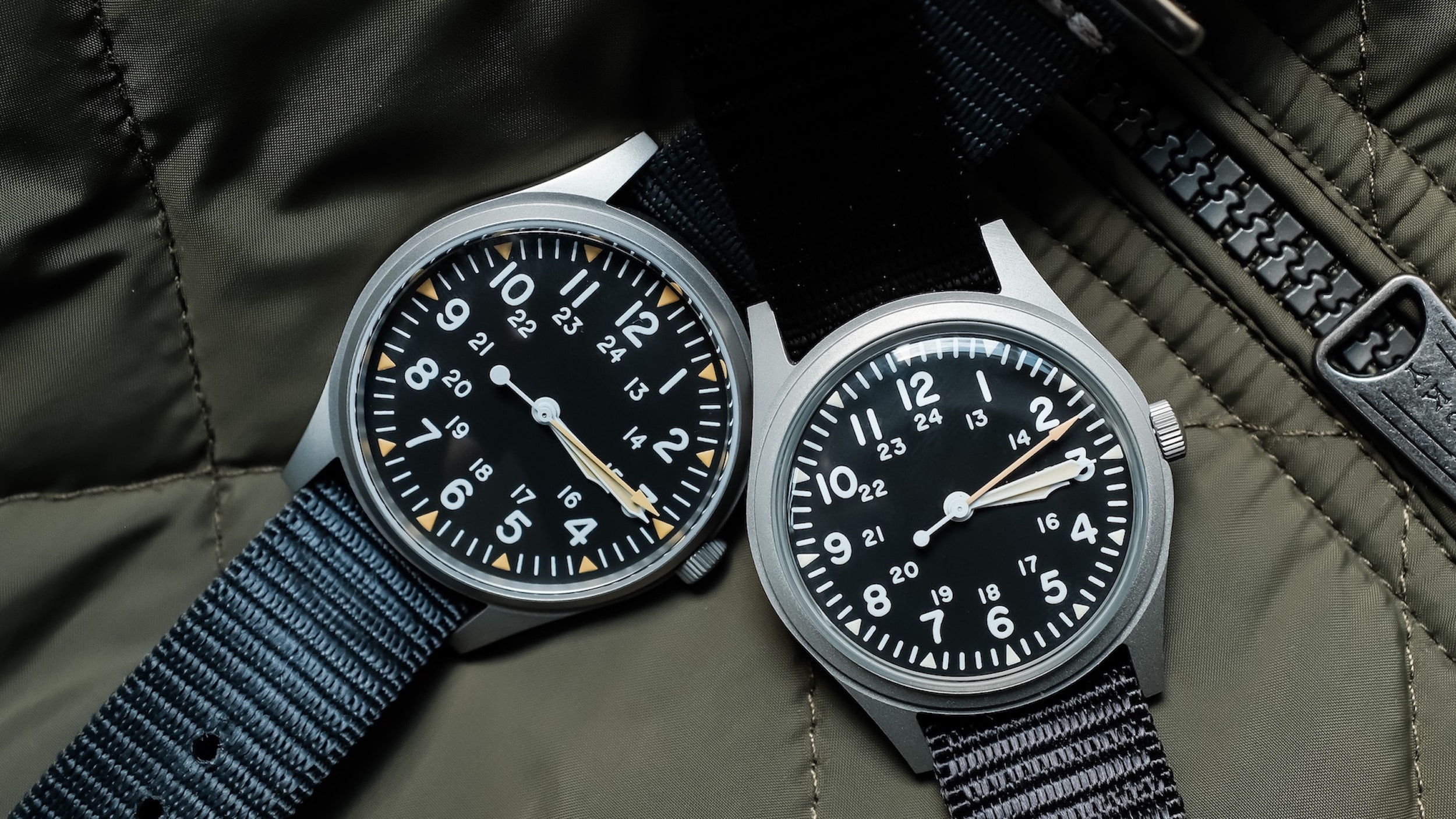
So, I have a field watch problem now. It really took hold after I picked up my Hamilton Khaki Field Mechanical 250 earlier this year. At around $725, it isn’t an inexpensive watch, but after spending time with it, I understood where that money goes. The proportions feel right, the design stays faithful to its military roots, and it’s the kind of watch that rewards long-term ownership rather than just first impressions.
That experience sent me in a different direction recently. I started wondering how close I could get to that same military field watch aesthetic without spending hundreds of dollars. Not because I expected to find another Hamilton for fifty bucks, but because affordable watches continue to surprise me when brands focus on getting the fundamentals right instead of chasing specifications or marketing buzzwords.
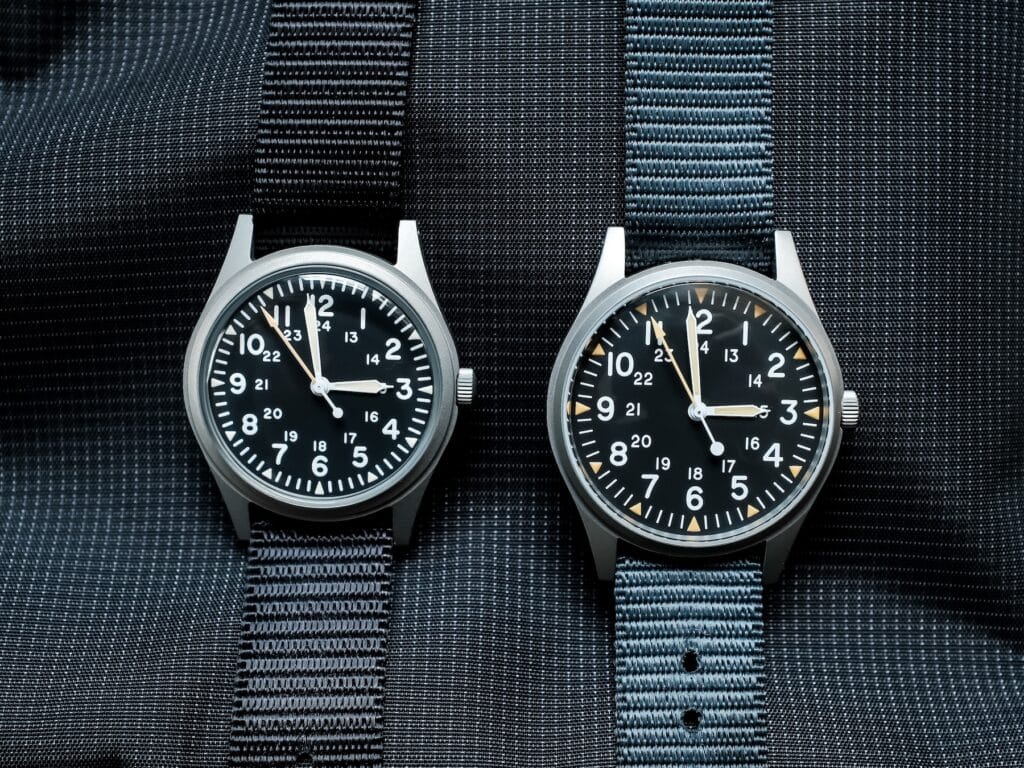
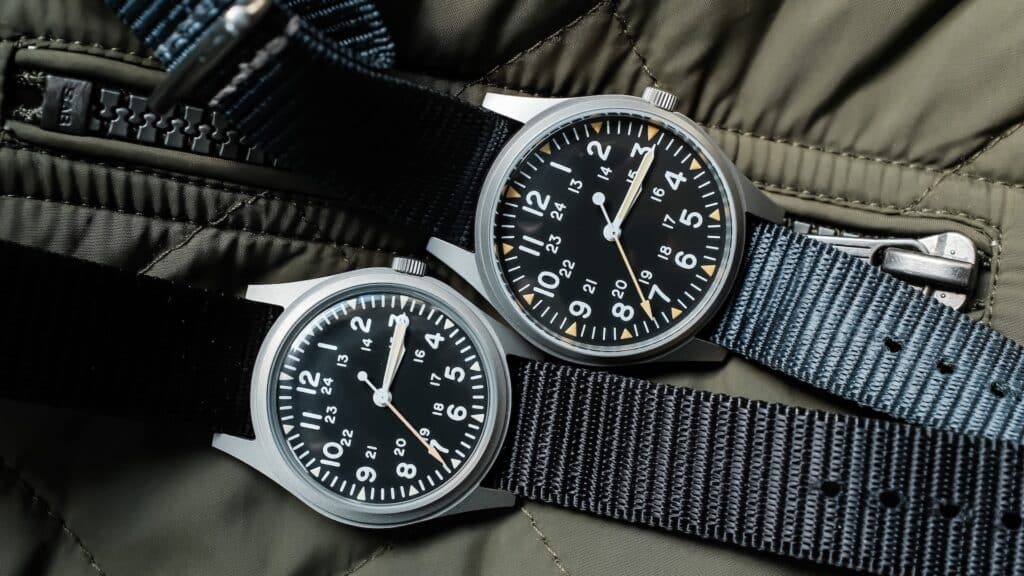
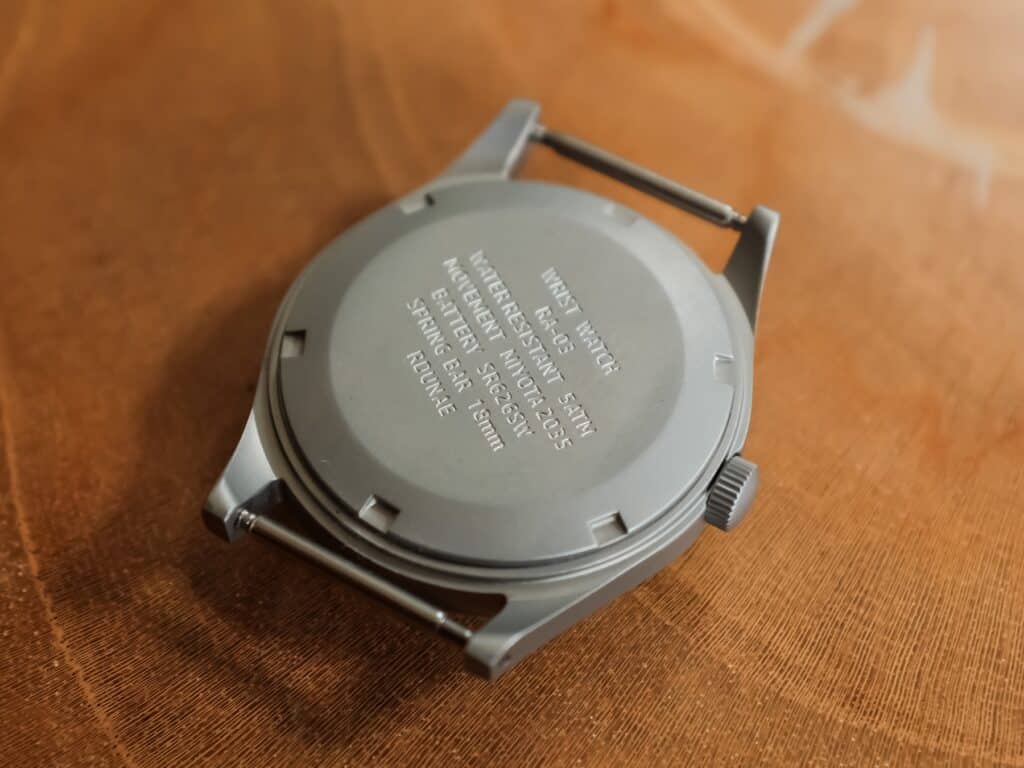
That’s what led me to the Militado ML07B and the Rdunae RA03. I’ve spent time with watches from both brands over the past year, and they’ve consistently delivered the kind of inexpensive fun that reminds me why this hobby doesn’t have to be expensive. Both of these sell for about $45, both rely on the dependable Miyota 2035 quartz movement, and both draw inspiration from the same era of military field watches. On paper, they’re remarkably similar.
What surprised me after spending time with both is just how differently each brand chose to spend the same forty-five dollars.
Different Priorities, Same Budget
The deeper I got into this comparison, the less interested I became in the spec sheet. These watches share the same Miyota 2035 quartz movement, so reliability and battery life were never going to separate them. Both should deliver around four years of service before needing a battery change, and that’s the sort of ownership experience I wanted from an inexpensive field watch that might spend weeks sitting in the watch box between wears. Instead, the real differences came down to philosophy.
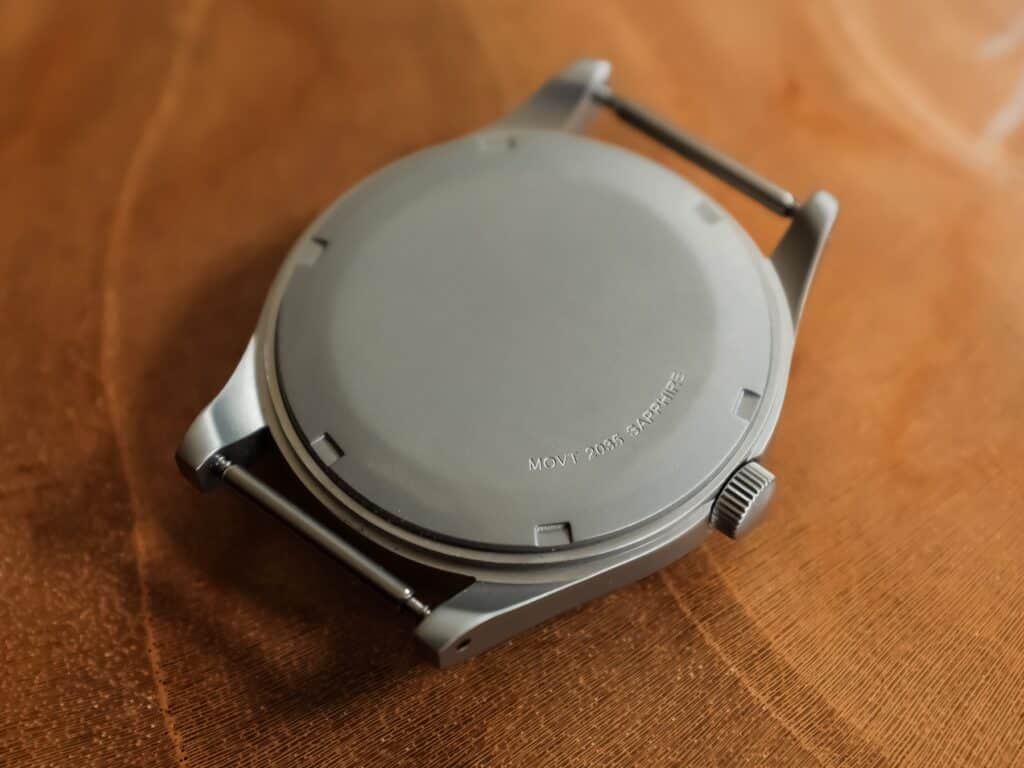
Militado put its money into features enthusiasts immediately recognize. Sapphire crystal. A respectable 100 meters of water resistance. On paper, it’s difficult to argue with that approach, especially at this price.
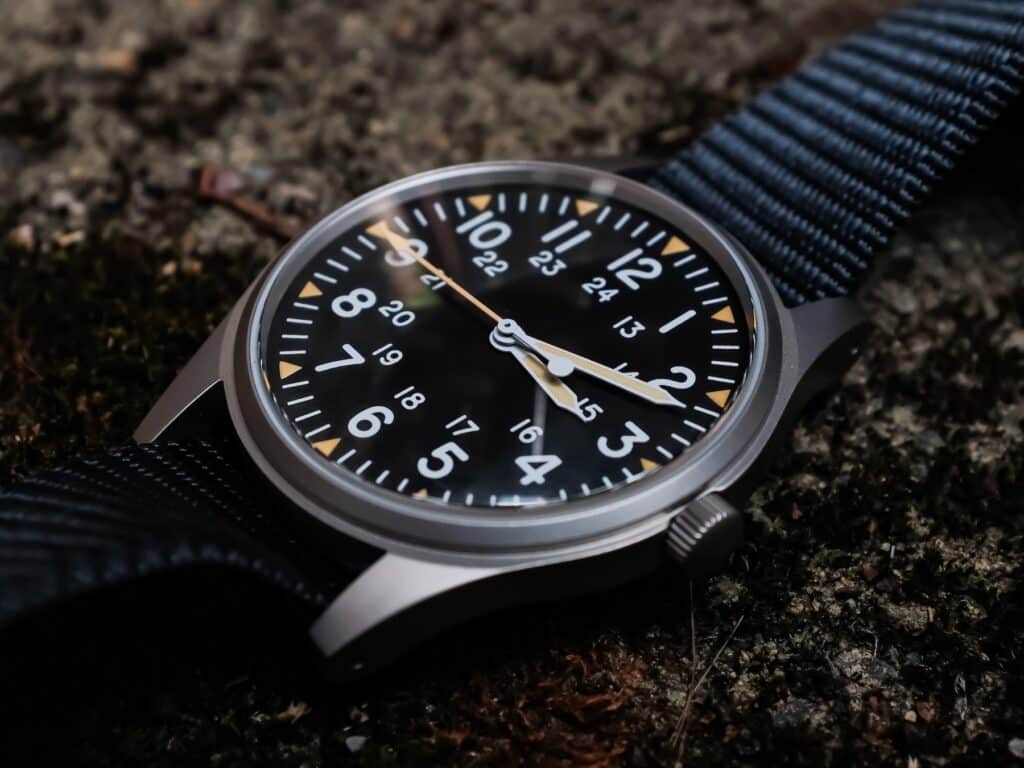
The Rdunae went in another direction. It focused on proportions, dial execution, and recreating the character of the military field watches that inspired it. Those choices don’t stand out in a spec list, but they become obvious once the watch is on the wrist. That became the story of this comparison.
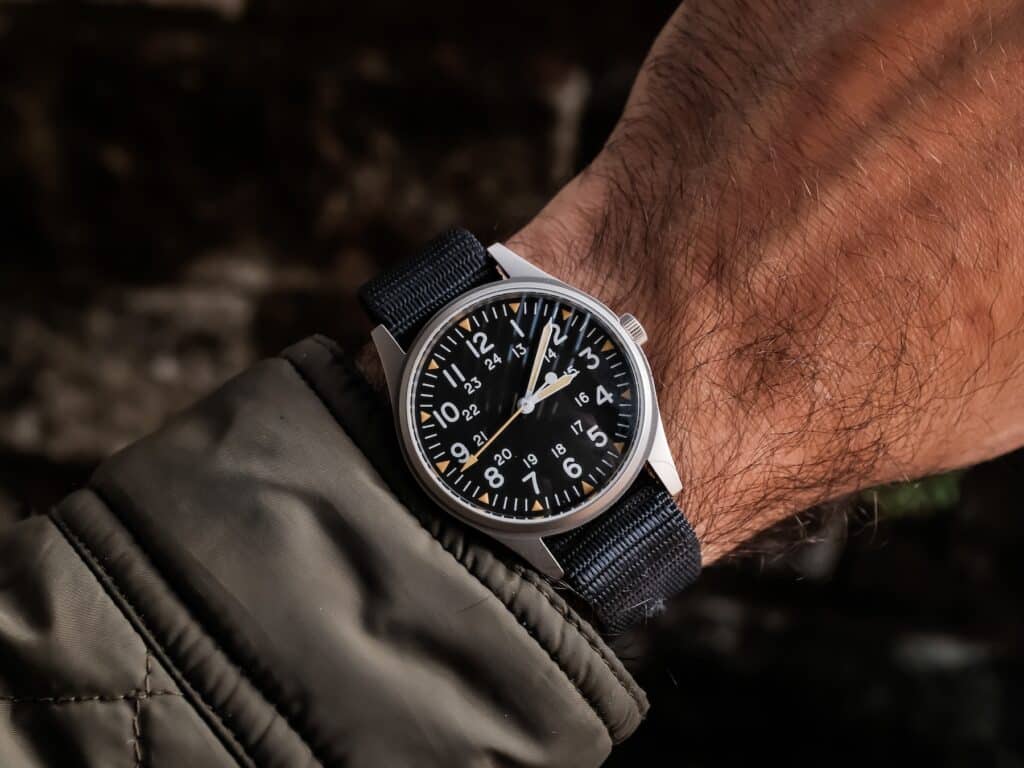
On the Wrist
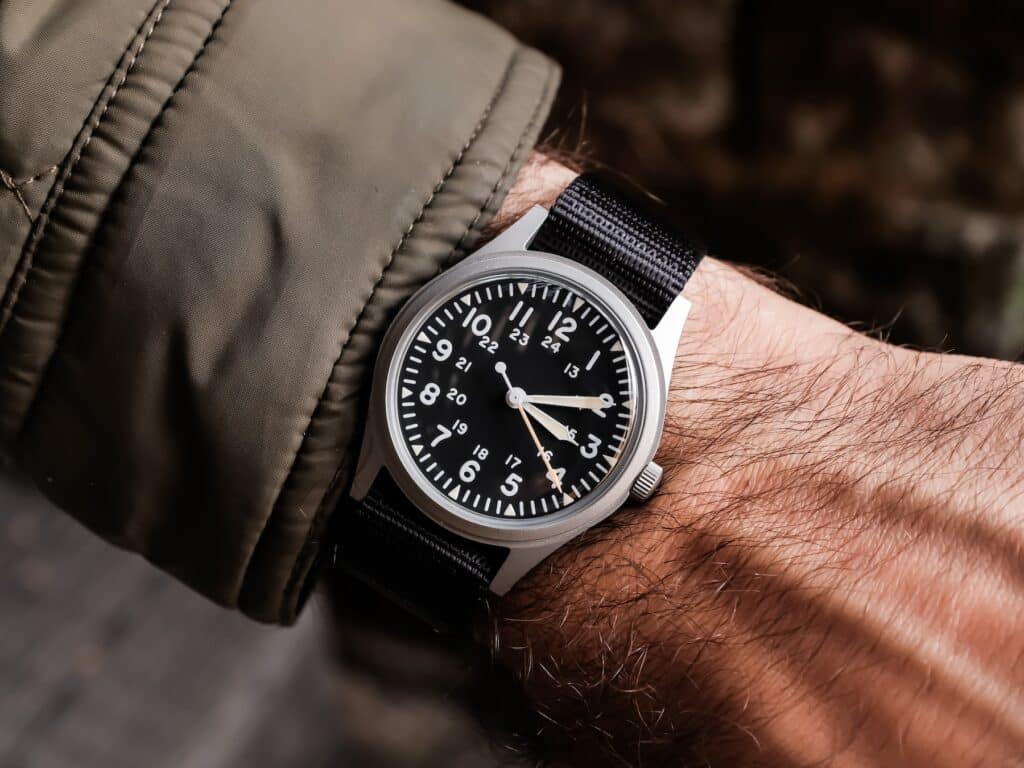
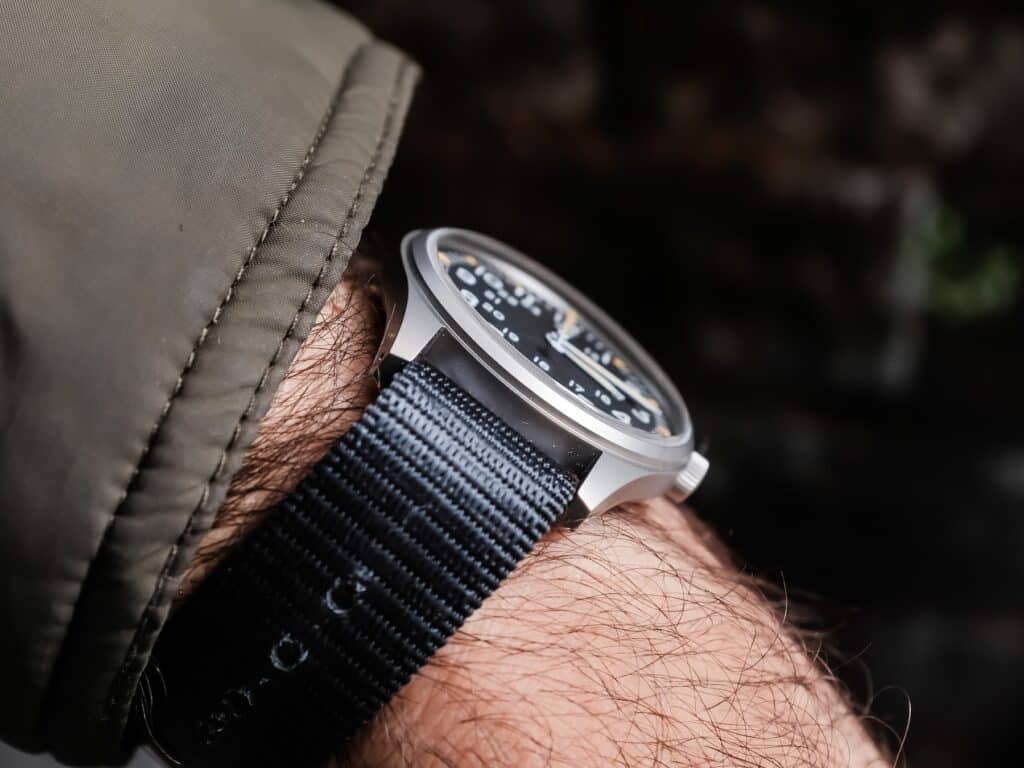
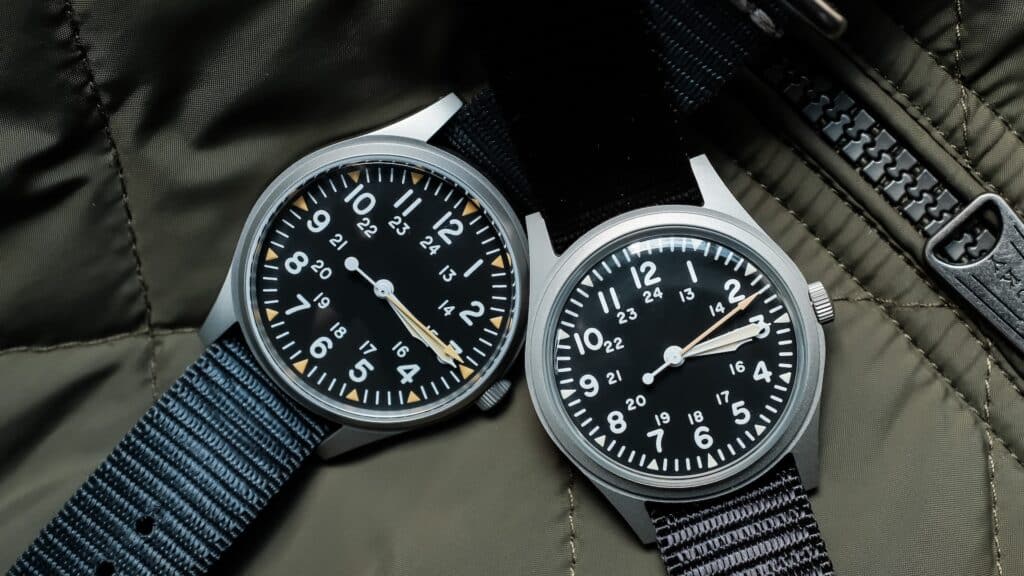
The Militado measures 36mm across, 43.5mm lug-to-lug, and only 10mm thick, including its domed sapphire crystal. The Rdunae is smaller at 34.5mm wide with a 41.7mm lug-to-lug measurement and a slightly thicker 10.5mm profile beneath its dramatically domed hardened mineral crystal. Reading those numbers, I expected the difference to be noticeable. Wearing them, I was surprised by how familiar the Rdunae felt.
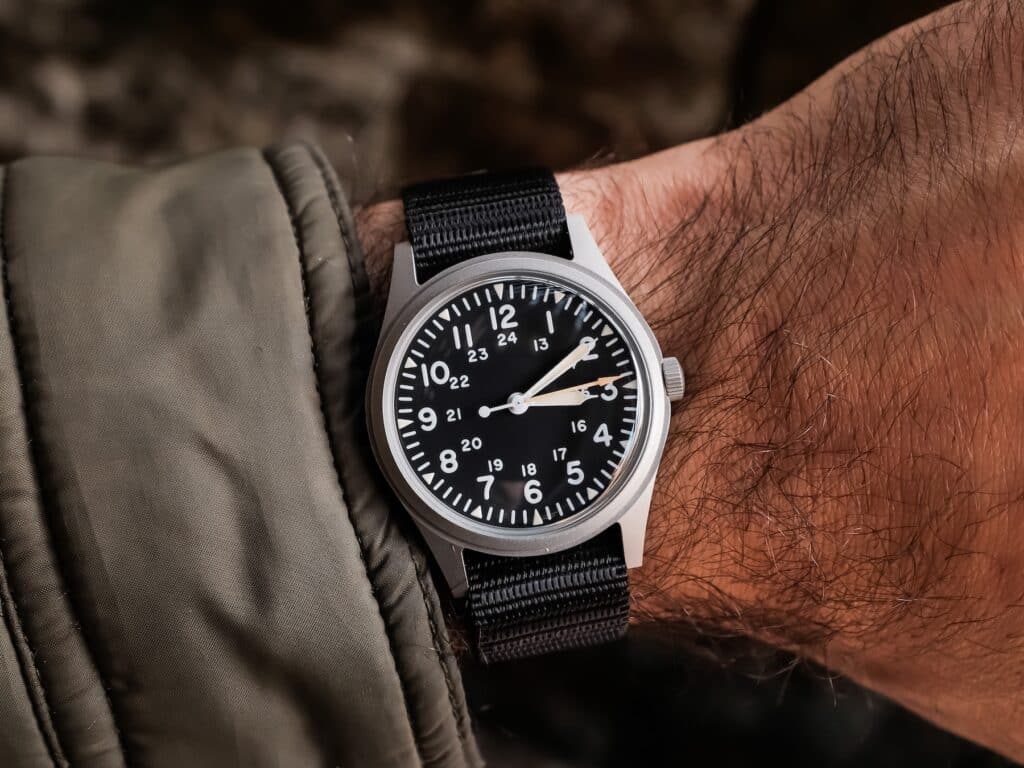
In fact, it wears remarkably close to my Hamilton Khaki Field Mechanical. I think much of that comes down to the bezel. The Militado’s slimmer bezel creates a much larger dial opening, which gives the watch more visual presence than its 36mm dimensions suggest. It isn’t oversized by any means, but it feels larger than I wanted for a vintage-inspired field watch.
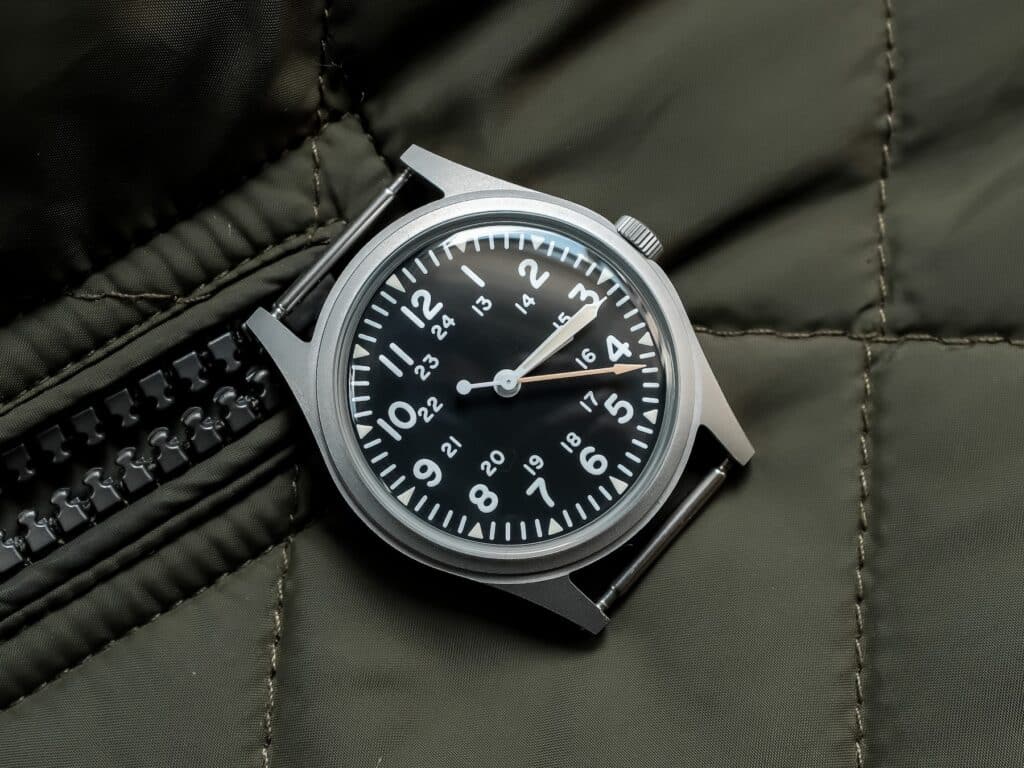
The Rdunae takes the opposite approach. The proportions feel compact without ever feeling too small, and it disappeared on my wrist in a way only comfortable field watches tend to do. Every time I reached into the watch box for a casual weekend wear, I found myself grabbing the Rdunae without giving it much thought. That’s usually a good sign.
The Details That Matter
One of the more interesting discoveries was realizing that both of these watches clearly trace their design back to the U.S. military’s MIL-W-46374 specification. You don’t need to study vintage military watches to recognize the influence. It’s there in the case shape, the straightforward dial layout, and the emphasis on legibility over decoration. From there, each brand made different decisions.
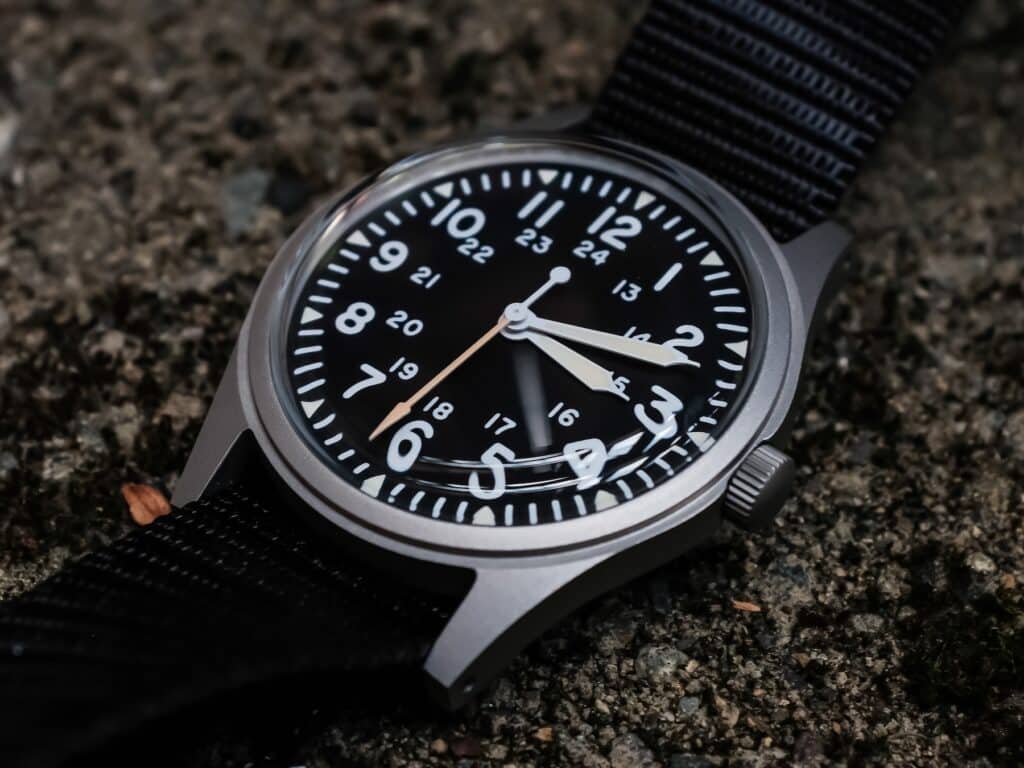
The Rdunae immediately struck me as the more refined watch visually. To me, the dial printing is cleaner, the matte finish has more depth, and the monochromatic execution feels more convincing. The dramatically domed crystal introduces really cool distortion near the edges, and I found myself enjoying that effect far more than I expected. It adds character without becoming too distracting.
The Militado takes a slightly different approach by introducing warmer faux-aged accents across portions of the dial. I actually like those touches, and I suspect I would appreciate them even more if they were paired with slightly smaller, more period-appropriate proportions.
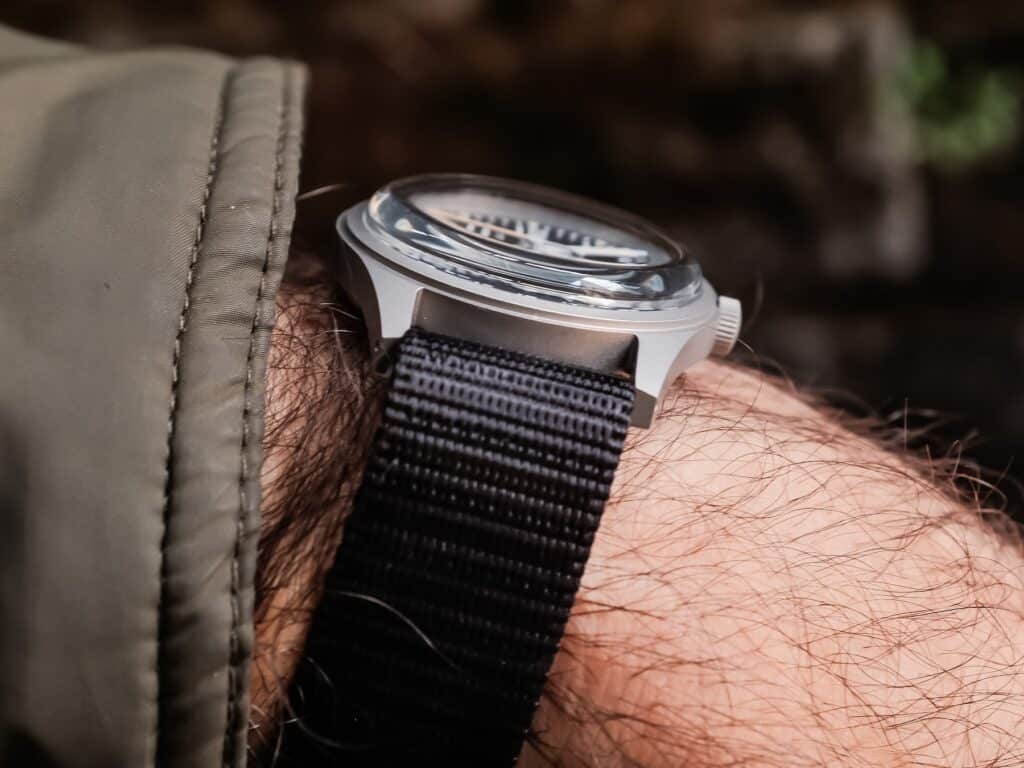
Neither watch impressed me with its anti-reflective coating. The Militado’s sapphire crystal should have had an advantage, but both suffered from noticeable reflections, particularly while photographing them. In everyday wear it became less obvious, though it never completely disappeared.
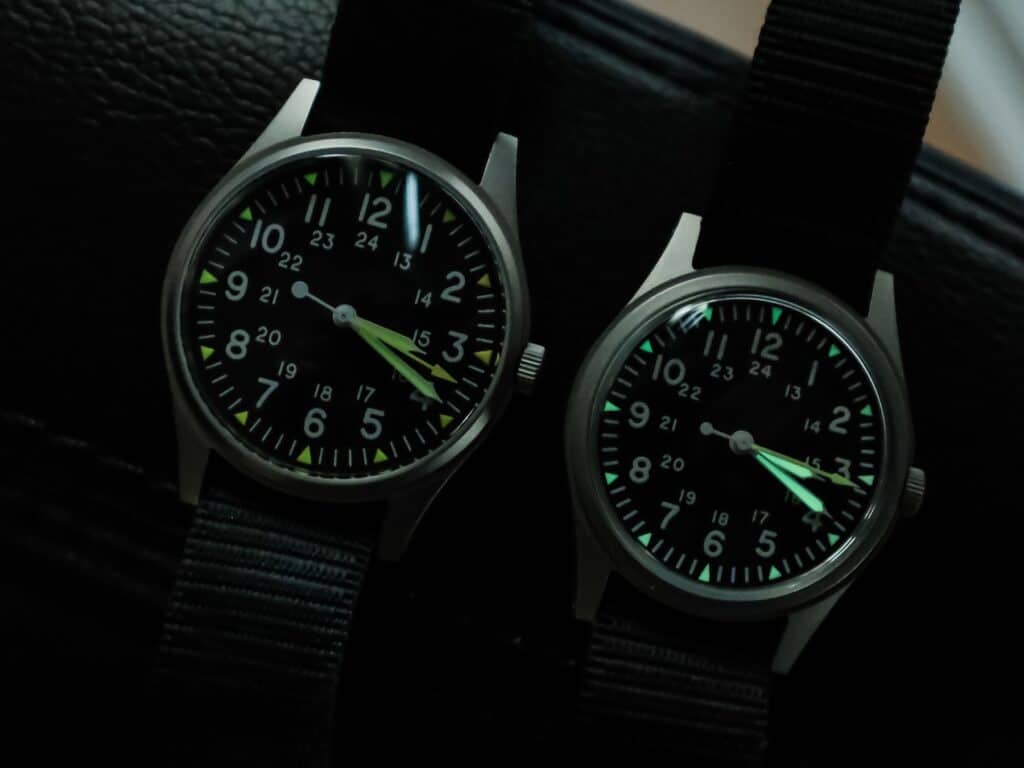
Lume performance followed a similar pattern. Both are perfectly usable, but the Rdunae consistently produced a stronger, longer-lasting glow.
Living With Them
Because both watches use the same Miyota quartz movement, there wasn’t much to separate them from a timekeeping perspective. They simply worked, and that’s exactly what I wanted. I wasn’t looking for a mechanical experience here. I wanted a dependable grab-and-go watch that didn’t demand too much fuss.
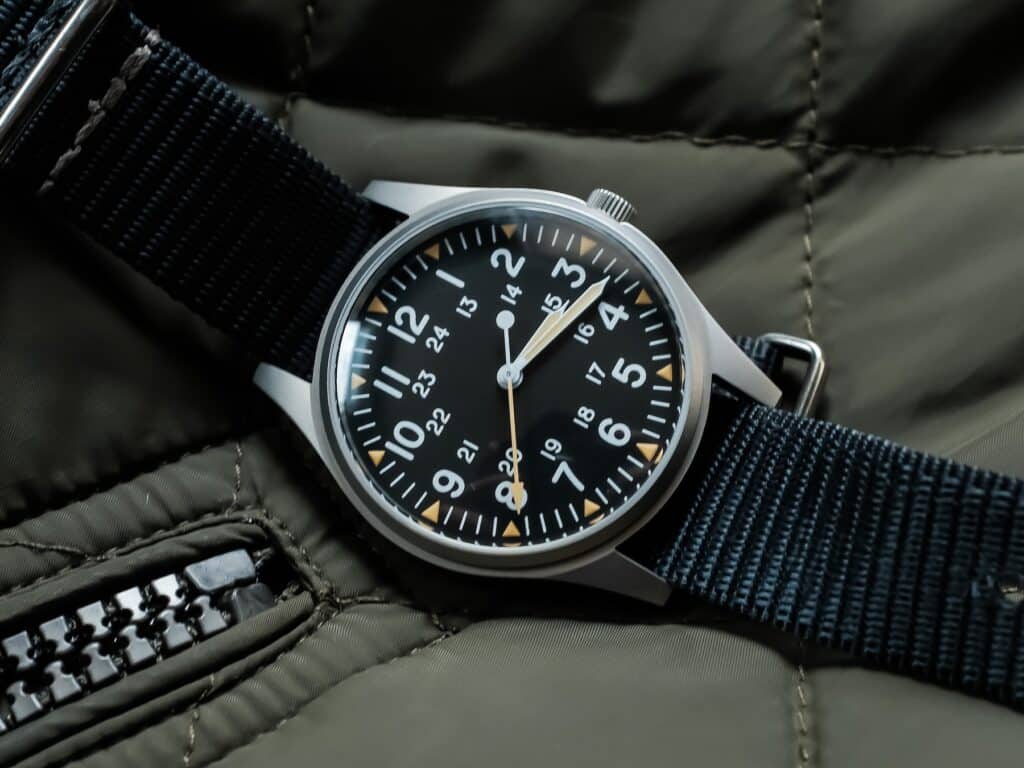
The Militado does earn credit for offering sapphire crystal and 100 meters of water resistance at this price. Those aren’t insignificant upgrades. If your version of a field watch leans toward being an everyday do-anything companion, those specifications may carry real weight. The supplied straps, however, didn’t last very long in my ownership.
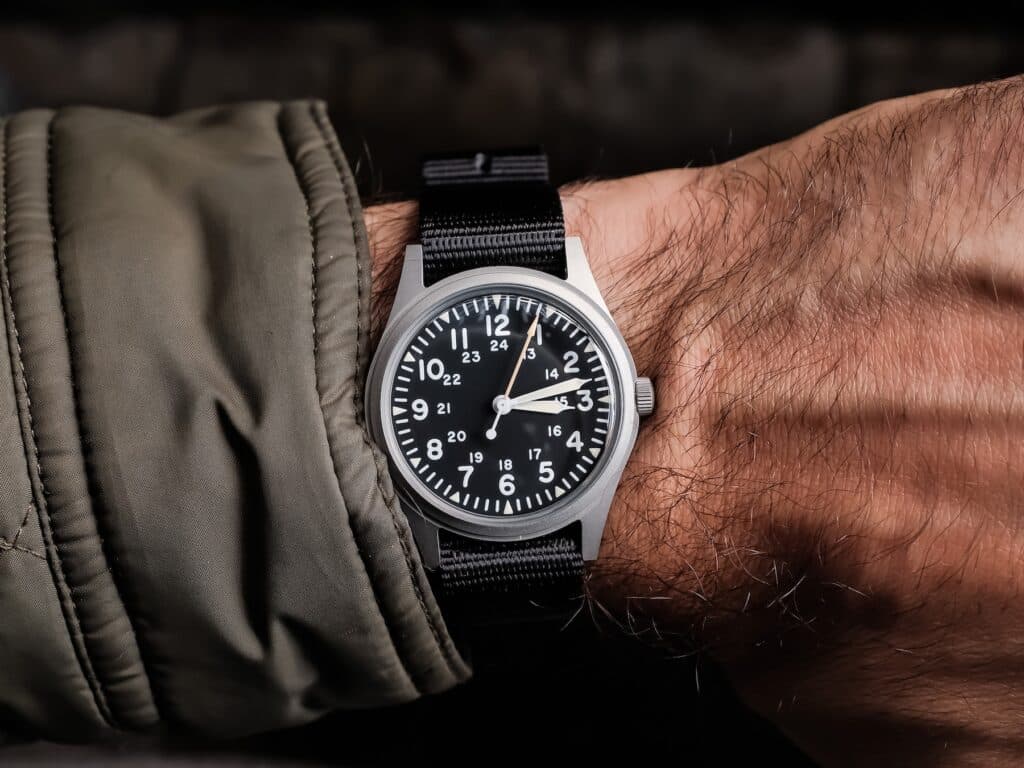
Both came off almost immediately and found their way into the trash. I wore each watch on either an 18mm Maratac single-pass nylon strap or an ADPT NATO, and both became considerably more enjoyable once paired with better straps. That’s hardly unusual at this end of the market, and I suspect many enthusiasts would make the same swap on day one.
Wrapping Things Up
This comparison didn’t change the way I think about affordable watches. If anything, it confirmed what I’ve believed for a long time. When brands are working with the same limited budget, they have to make choices. Some spend more on measurable specs. Others spend more on the parts of the watch that shape the ownership experience every time you glance at your wrist.
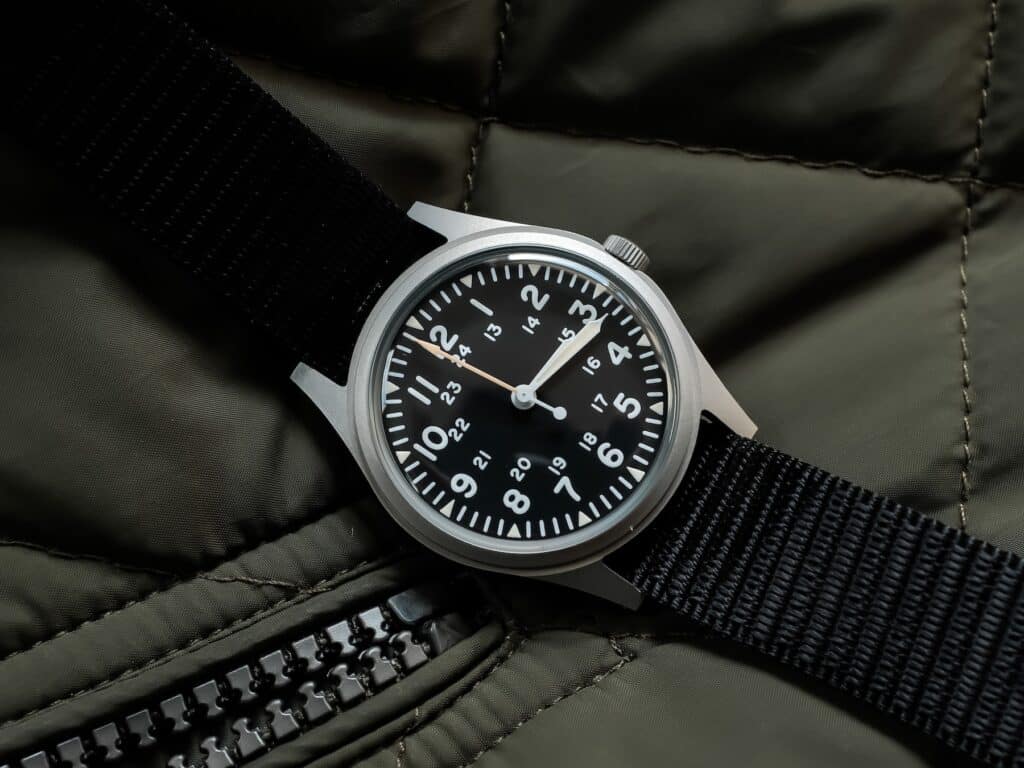
For me, the Rdunae simply made better choices. That doesn’t mean the Militado is a bad watch. In many ways it’s more impressive. Give it the Rdunae’s proportions and bezel design, and I might feel very differently because I actually like its take on the dial. As it sits today, though, it wears larger than I was hoping for, and that was enough to keep me from reaching for it as often.
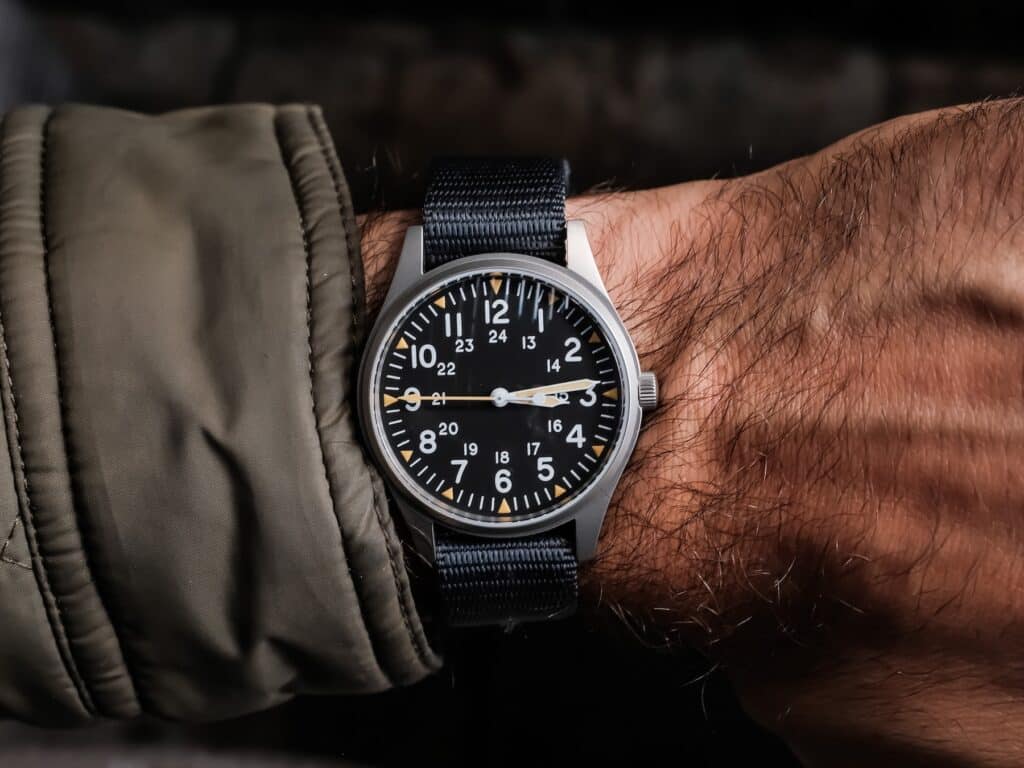
The Rdunae doesn’t have sapphire crystal. It only offers 50 meters of water resistance. On paper, those are compromises. On my wrist though, they never felt like meaningful ones. Six months from now, I fully expect the Rdunae to still be in my collection. It didn’t replace my Hamilton Khaki Field Mechanical, and I never expected it to. What it did prove is that capturing the feel of a great field watch has very little to do with price alone. Sometimes getting the proportions, the dial, and the overall execution right is worth more than another fifty meters of water resistance or a sapphire crystal. Maybe that’s just me.

Co-Founder & Senior Editor
Michael Peñate is an American writer, photographer, and podcaster based in Seattle, Washington. His work typically focuses on the passage of time and the tools we use to connect with that very journey. From aviation to music and travel, his interests span a multitude of disciplines that often intersect with the world of watches – and the obsessive culture behind collecting them.