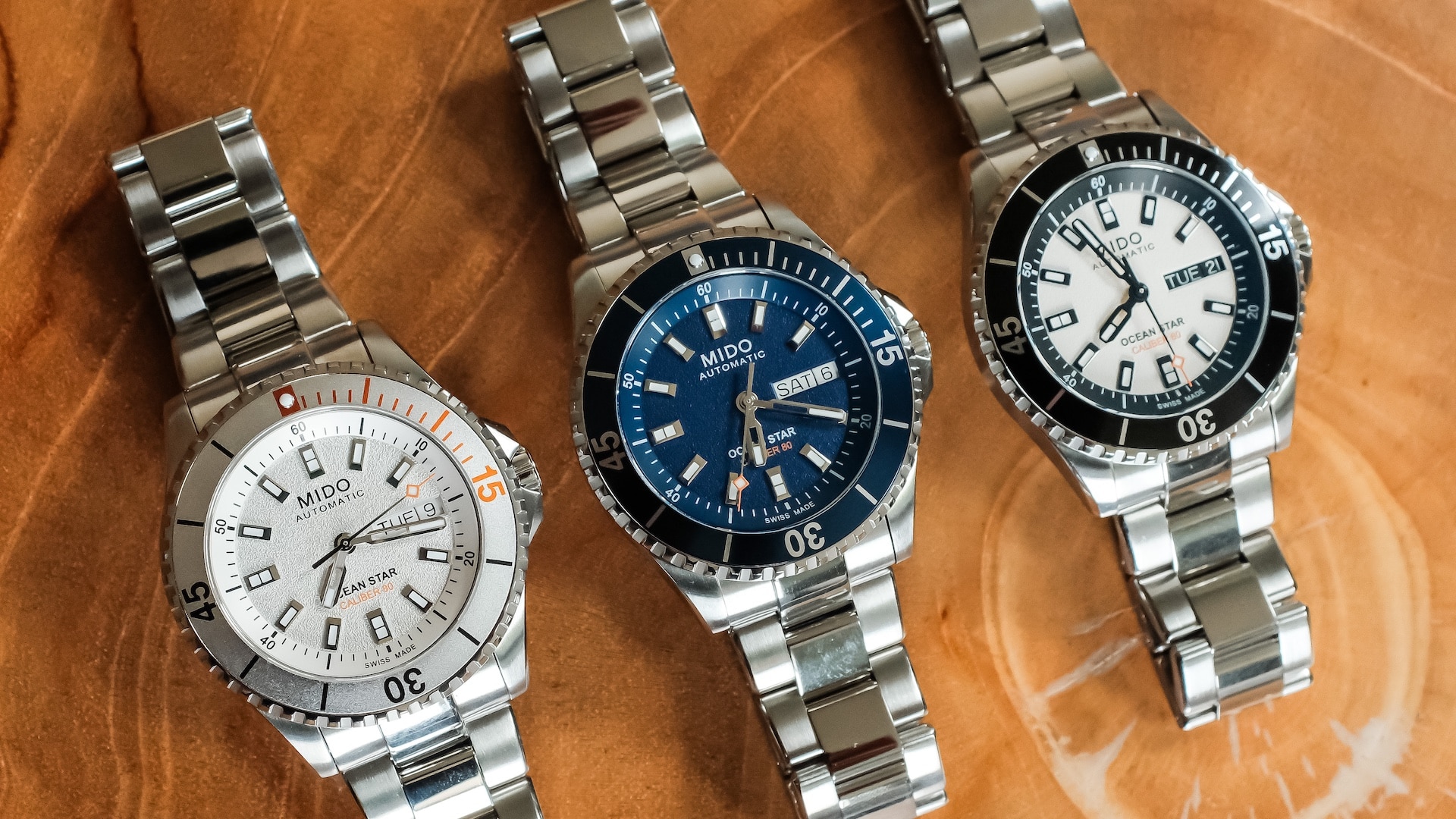
When Mido refreshed the Ocean Star 200 collection back in June, I described it as one of the most compelling Swiss dive watch releases of the summer. After spending a few weeks with three of the new references, I don’t see much reason to walk that back.
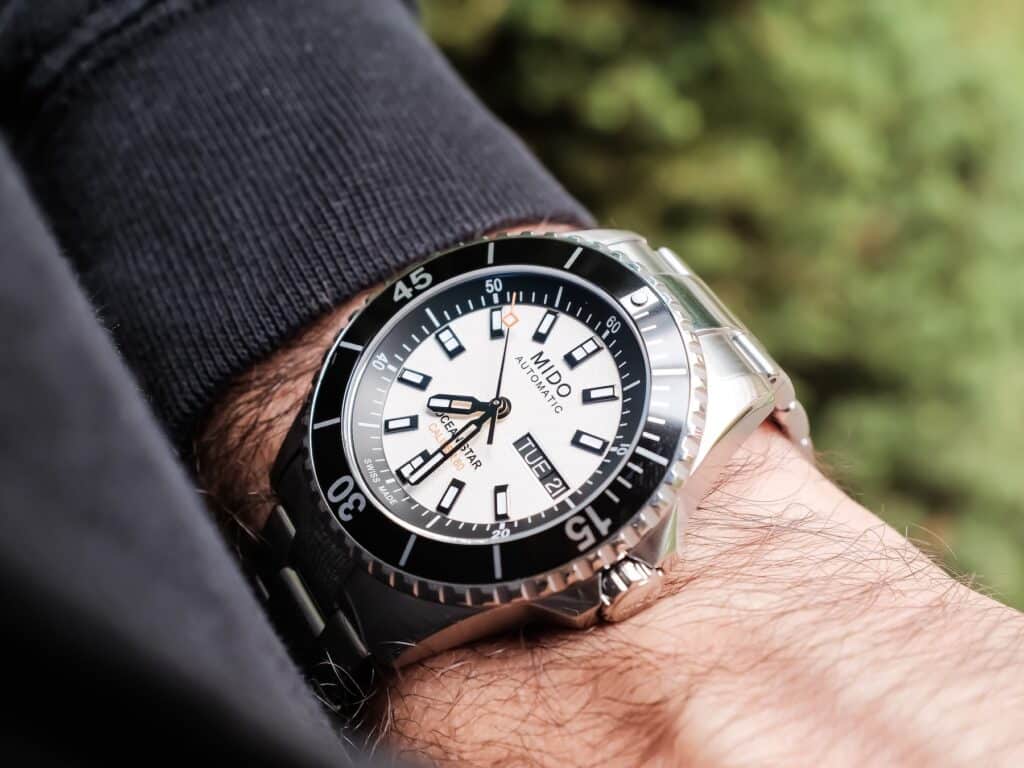
Mido has earned a fair amount of goodwill with us over the years. Time and again, the brand has delivered watches that feel thoughtfully designed and well executed without pushing into pricing that makes them difficult to recommend. That’s what made this latest Ocean Star 200 refresh particularly interesting, so I reached out to Mido to see if I could spend some hands-on time with one.
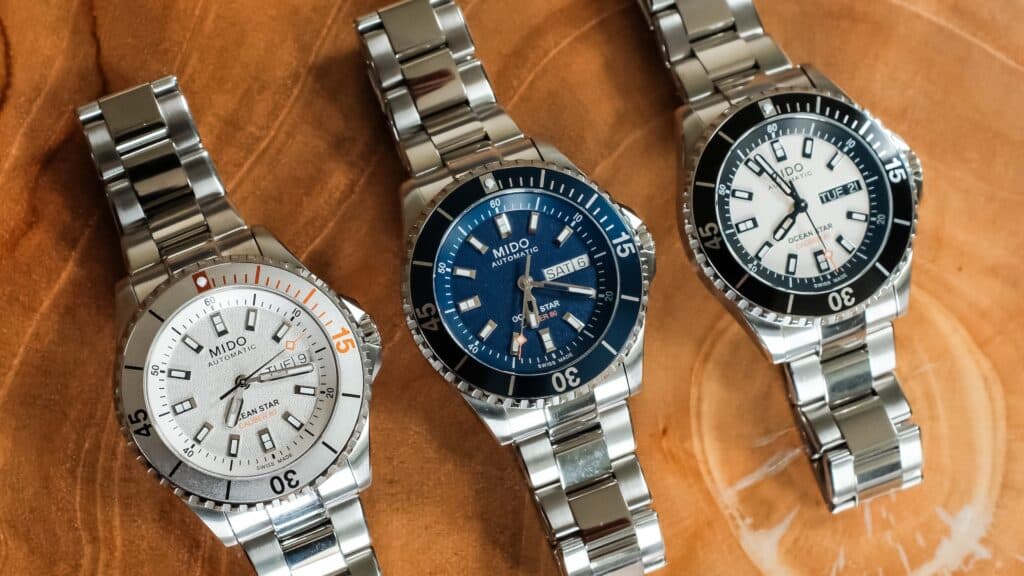
Instead, a large box arrived containing three different colorways, each priced under the $1,000 mark. Having the opportunity to wear them side by side ended up revealing much more than I expected. Beneath the shared case and movement, each version brought a different personality to the wrist, making this feel less like evaluating three colors and more like exploring three distinct takes on the same idea.
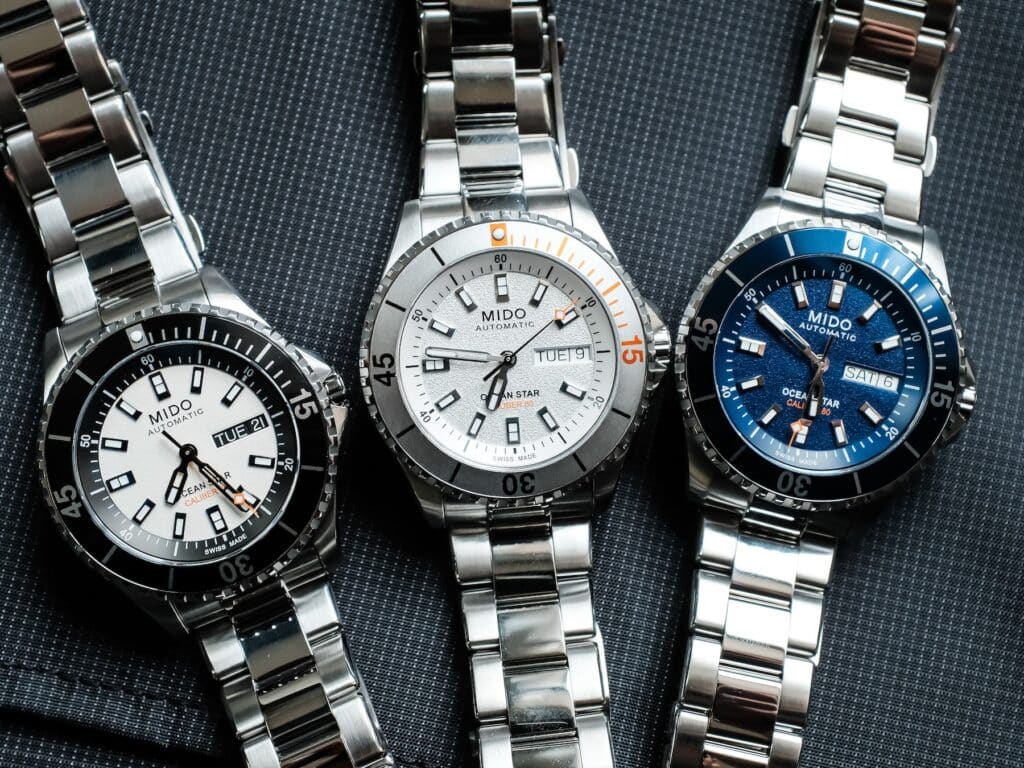
One Platform, Three Different Personalities
Although Mido sent over three different references, it didn’t take long to realize this wasn’t a case of choosing between three fundamentally different watches. Underneath the different dial and bezel combinations sits the same Ocean Star 200 platform.
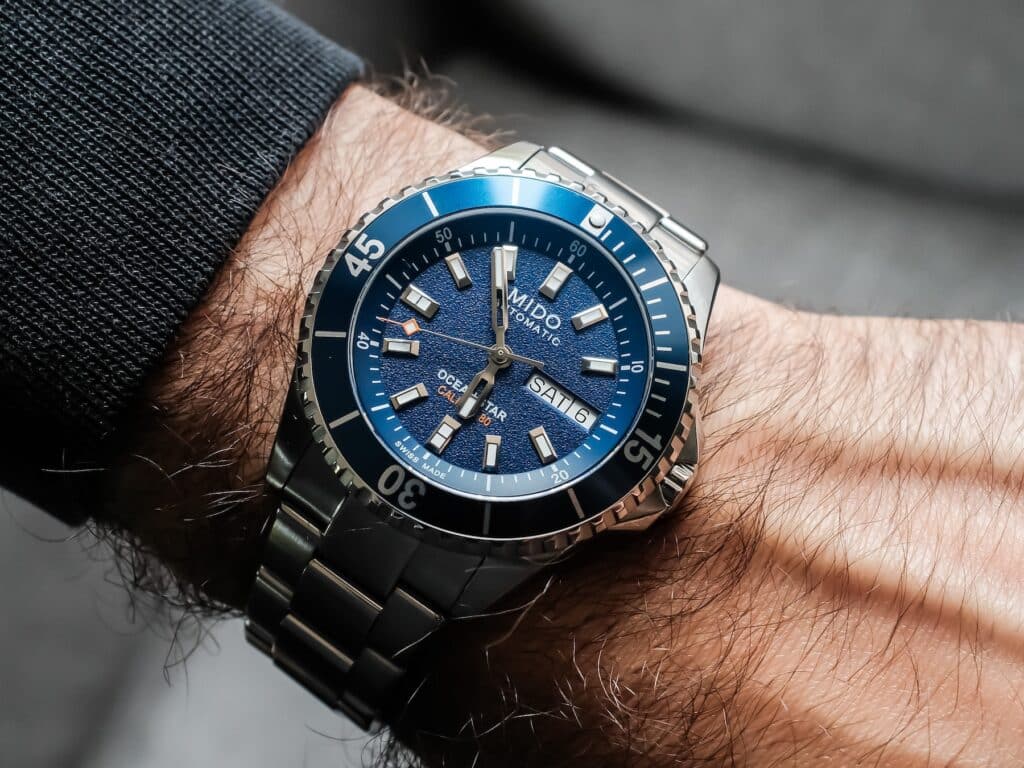
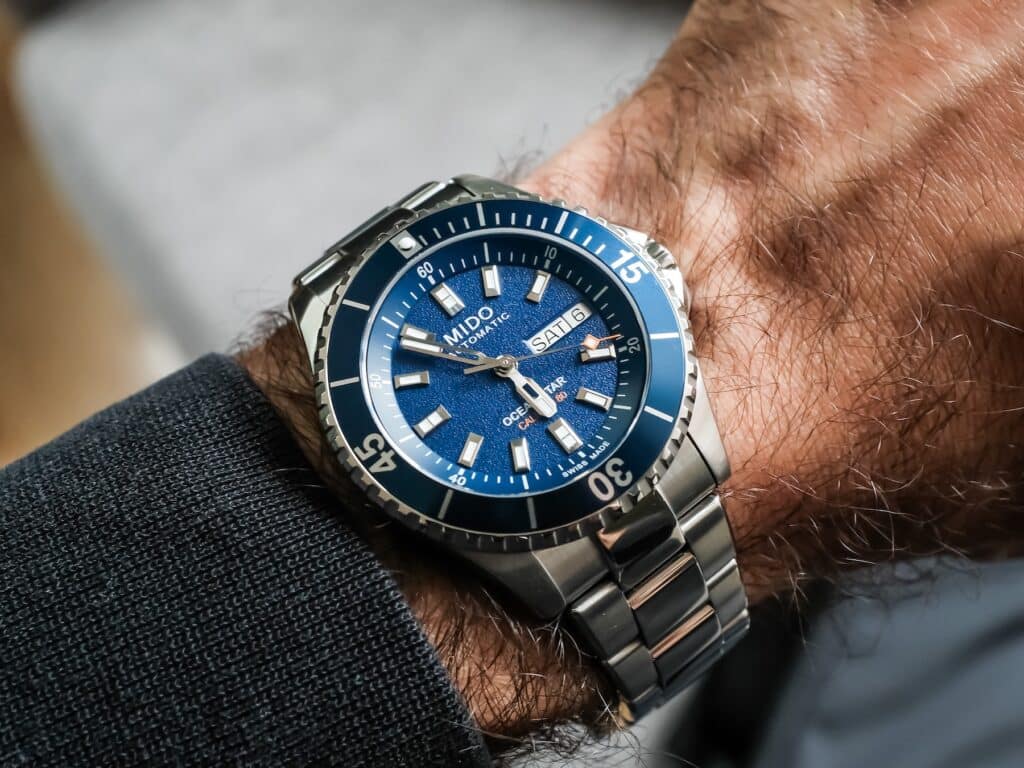
The refreshed case measures 41mm across with a 47.03mm lug-to-lug and comes in at just 11.7mm thick. Those numbers tell part of the story, but what stood out after rotating all three over several weeks was how balanced the proportions felt on the wrist. Modern dive watches have a habit of growing larger or thicker than they need to be. The Ocean Star 200 avoids that trap. At 172 grams on the bracelet, there’s enough heft to remind you it’s a substantial stainless steel dive watch, but it never crossed into feeling cumbersome during a full day of wear.
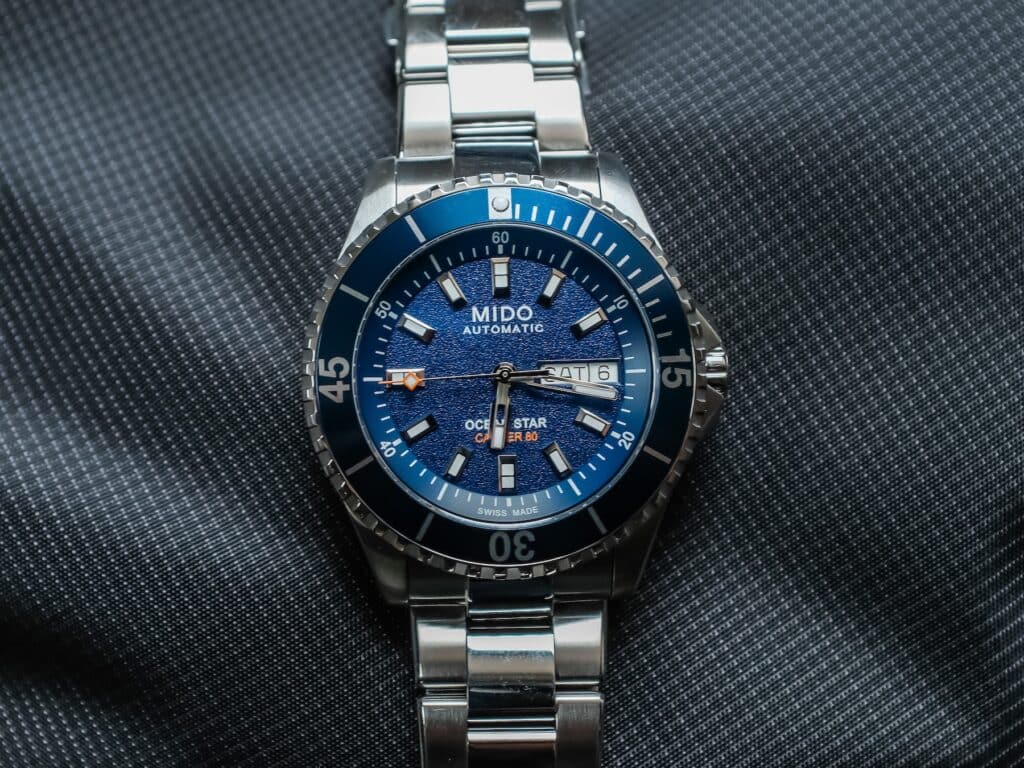
The redesign is immediately noticeable if you’re familiar with the previous Ocean Star 200. The broader chamfer running along the case catches the light more effectively and gives the watch a sharper profile, while the enlarged crown guards and revised bezel add a little more visual confidence without making the watch feel overly aggressive. Even after spending time with all three versions, I kept coming back to how cohesive the overall package felt. Nothing appears exaggerated simply for the sake of looking more modern.
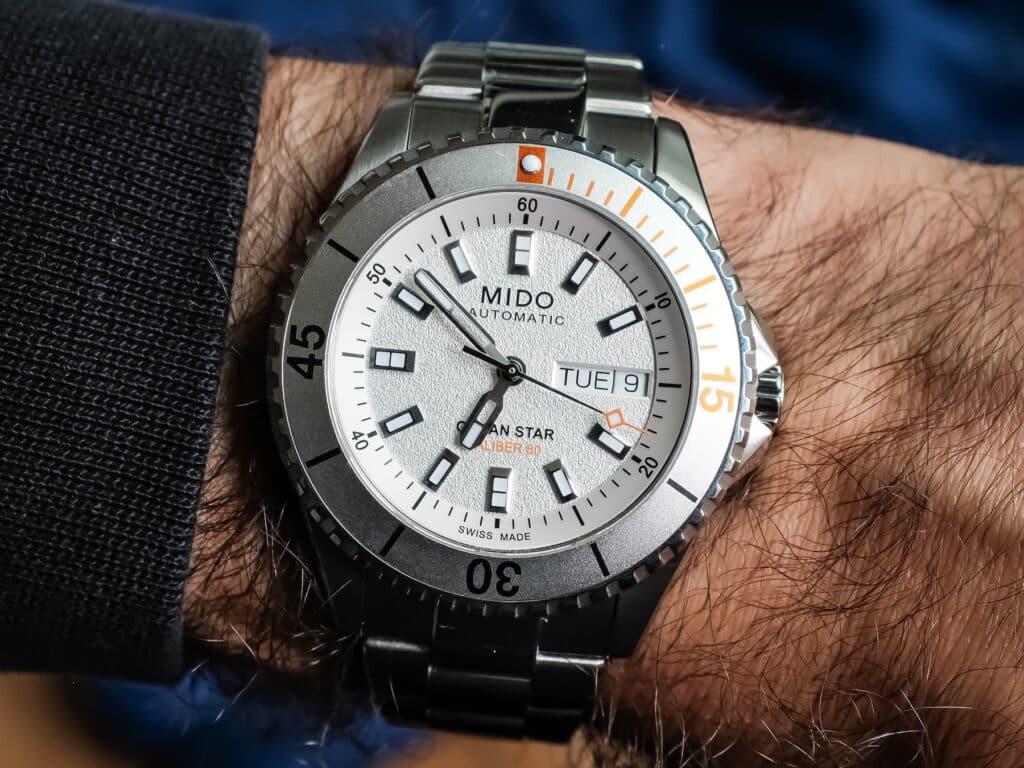
That same approach carries over to the bezel. The larger numerals and markers make it easier to read at a glance, and the bezel itself has enough presence to reinforce the Ocean Star’s identity as a capable dive watch. Combined with the screw-down crown, 200 meters of water resistance, and sapphire crystal with anti-reflective coating on both sides, the specifications never felt like marketing bullet points. They simply contributed to a watch I never had to think twice about wearing.
The Dial Makes the Difference
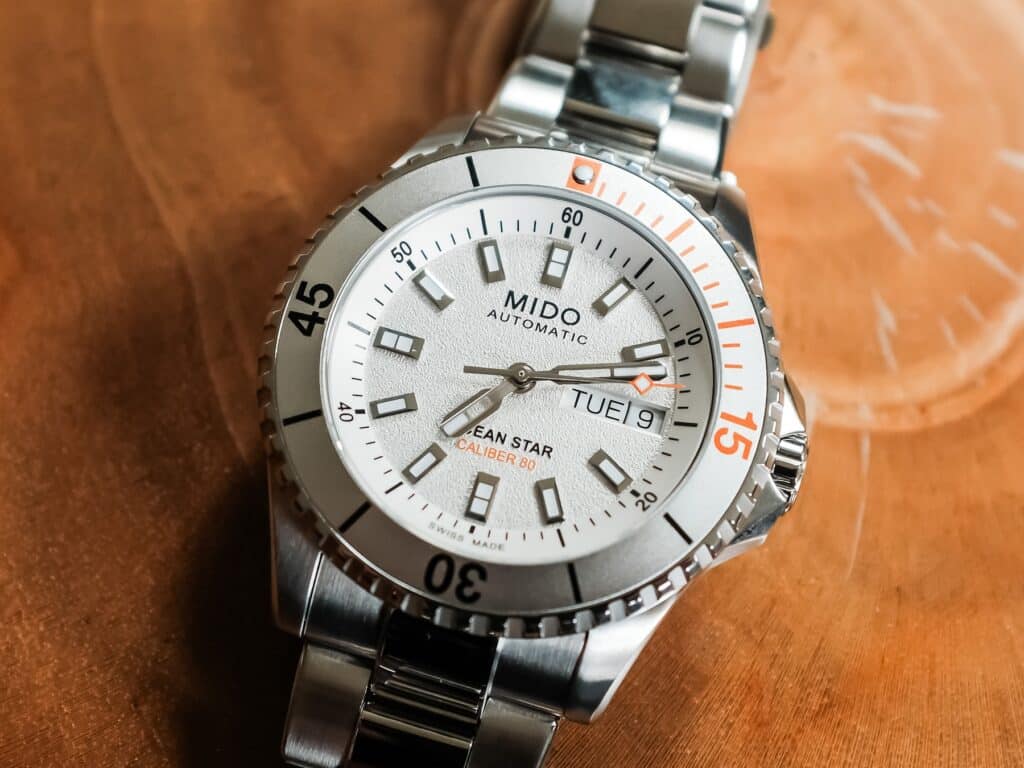
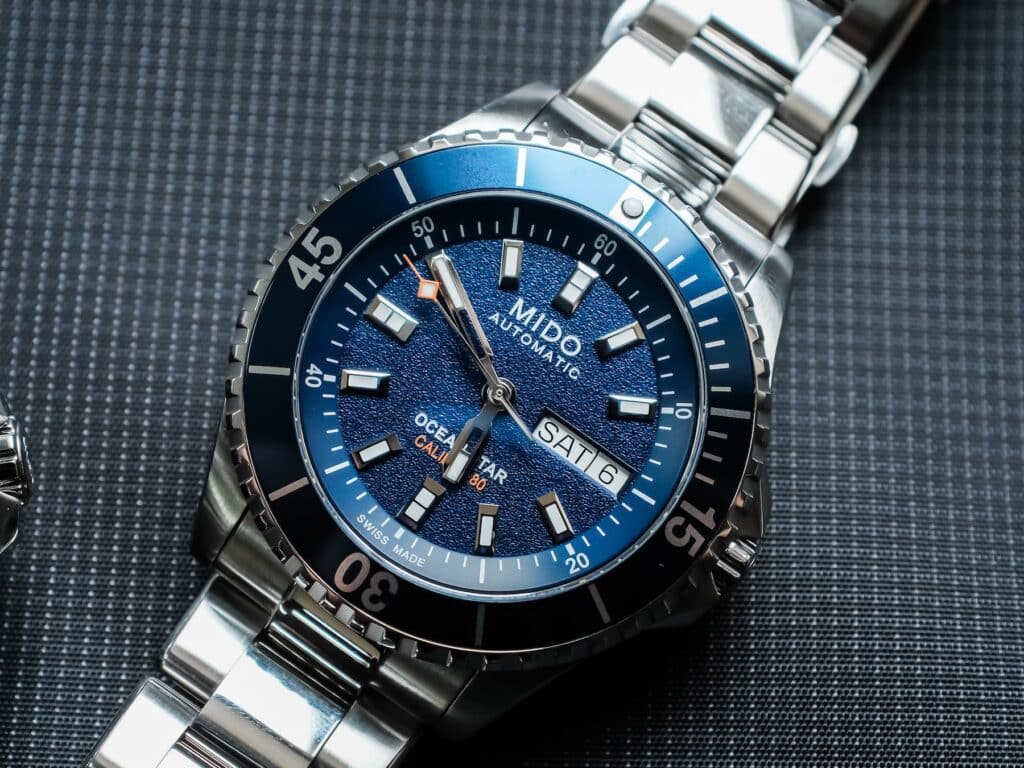
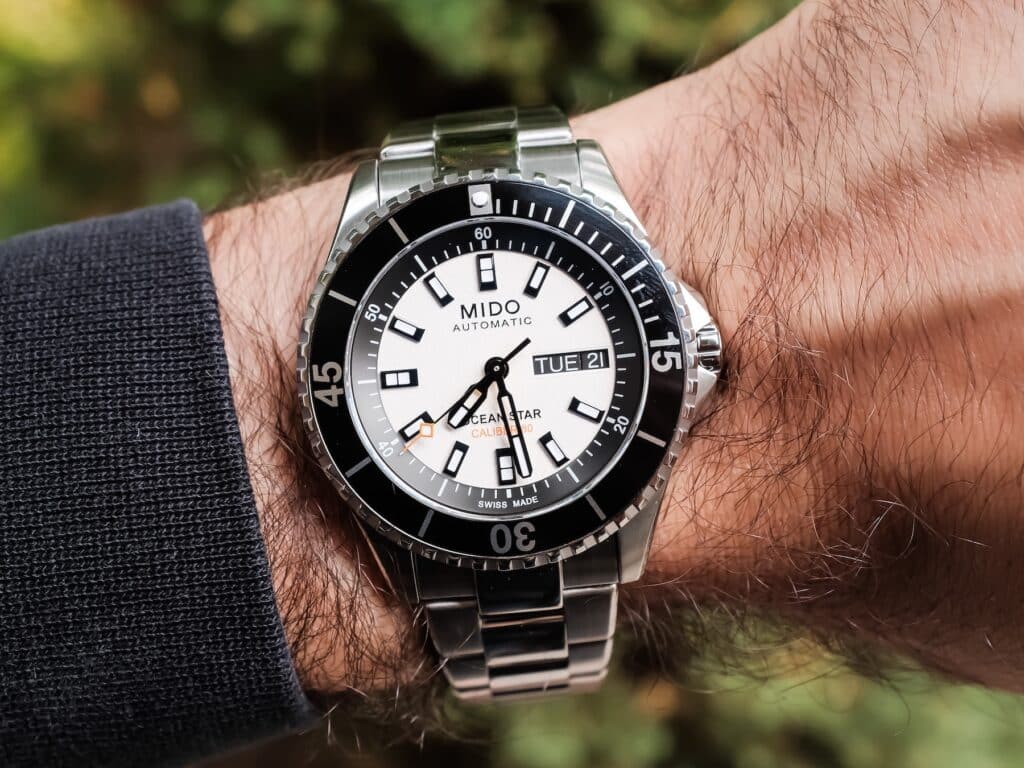
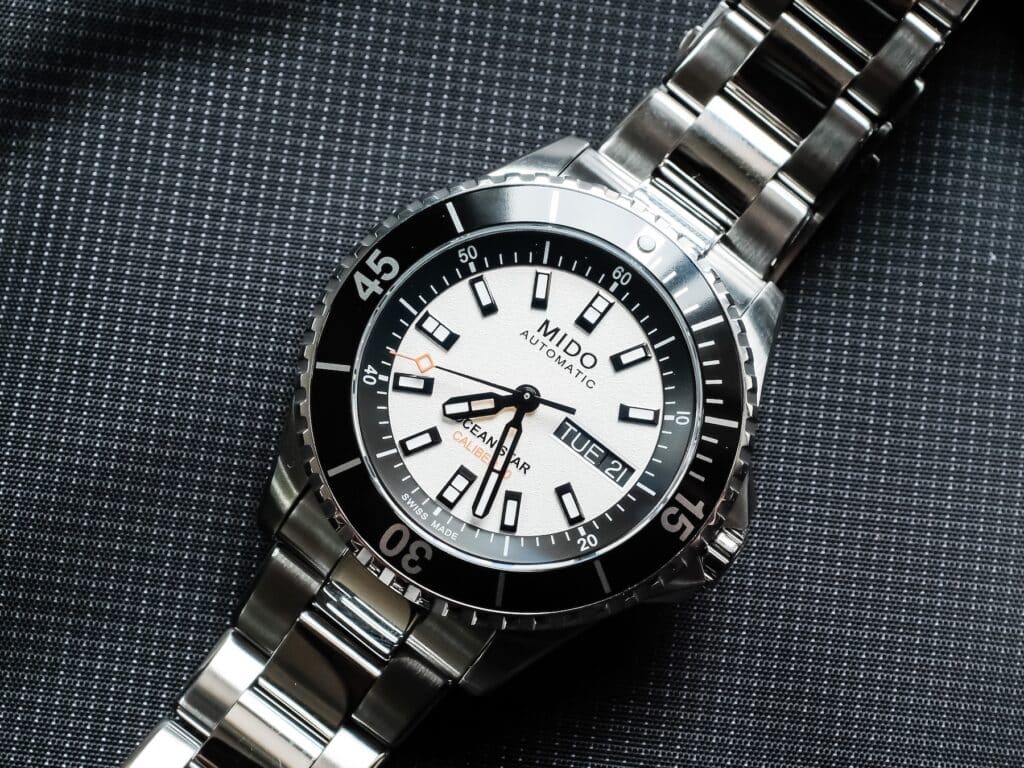
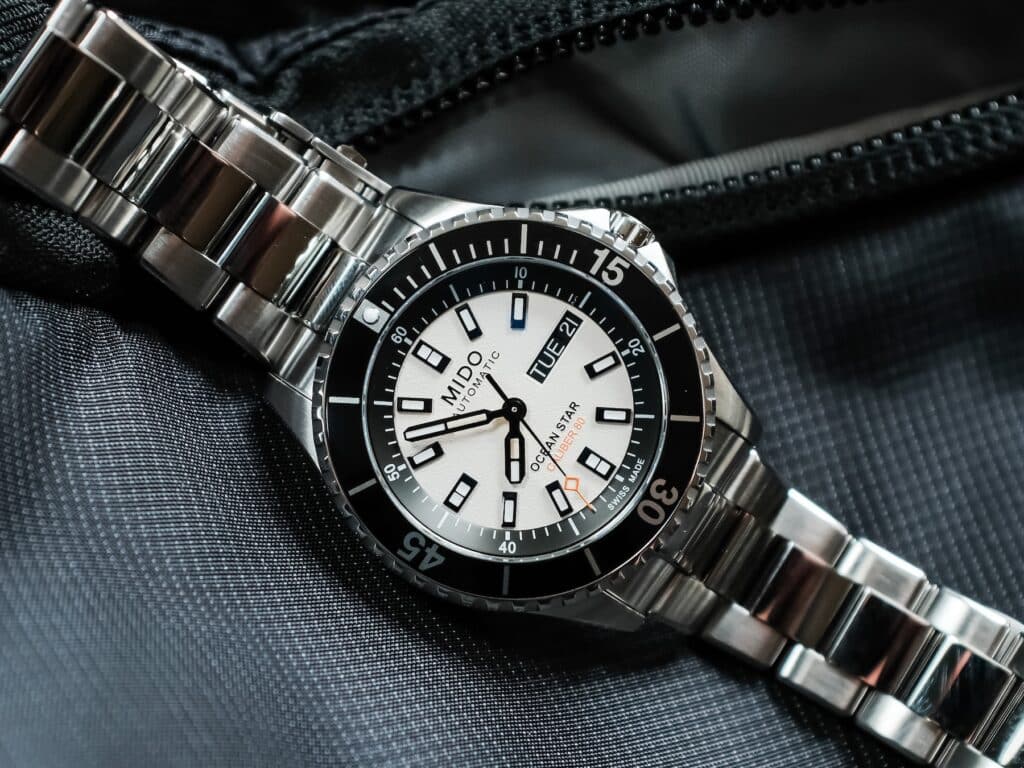
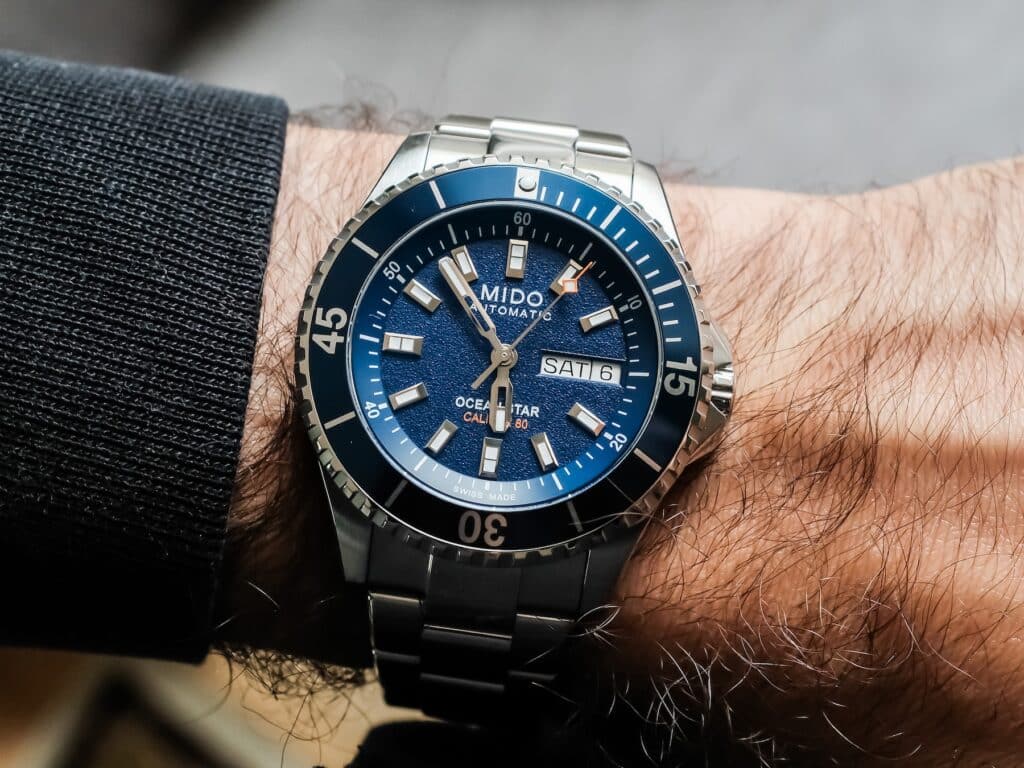
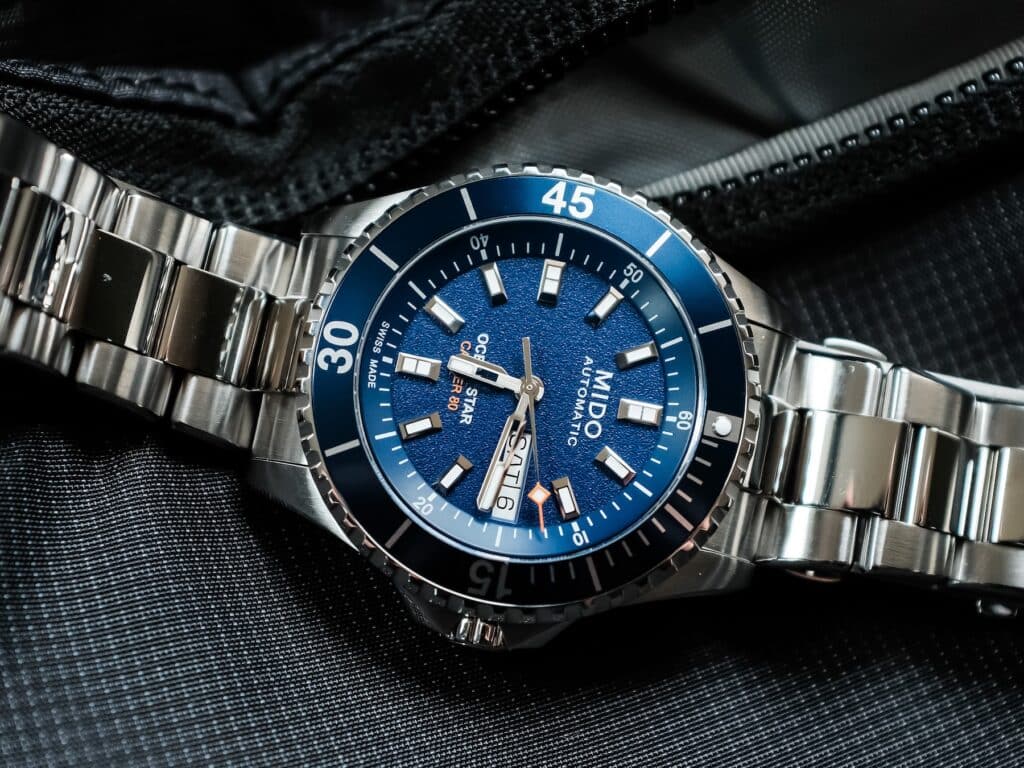
The redesign goes beyond adding texture. The raised outer flange gives the dial more depth, the applied markers have more substance than before, and the thicker handset brings everything into better balance. The grained finish changes throughout the day as light moves across the surface, giving each version considerably more visual interest than a flat dial would have offered. Mido also exercised restraint with its signature orange accents. The orange seconds hand tip and Caliber 80 text remain recognizable details, but they never distract from the overall design.
Out of the three, the white dial was the one I found myself reaching for most often. The contrast between the white textured dial and black bezel gives it the strongest tool watch character of the group, while the dial itself remains exceptionally easy to read in almost every lighting condition. It feels fresh without trying too hard to stand apart, and the texture prevents the white surface from appearing sterile.
The blue version is probably the safest choice. It’s the one I imagine will appeal to the broadest audience because it delivers exactly what most people expect from a contemporary dive watch. The matching blue bezel and dial create a familiar look, and there’s very little to criticize. At the same time, it never surprised me the way the white dial did.
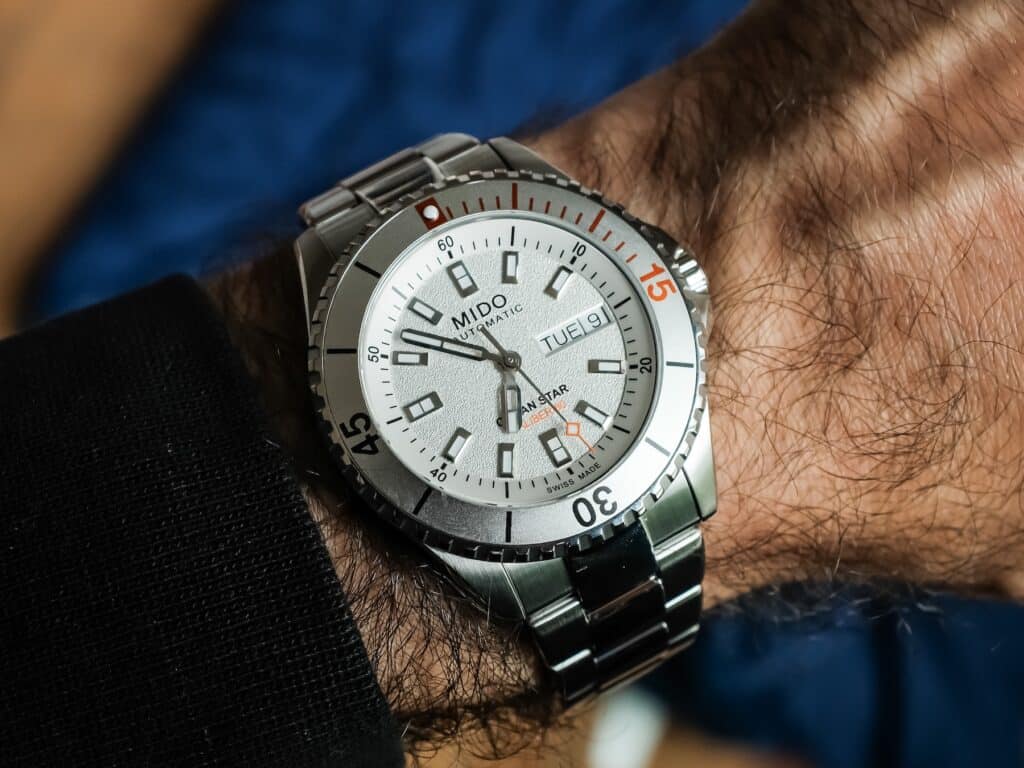
The silver dial occupies an interesting middle ground (it was my wife’s favorite of the three). Depending on the light, the textured finish becomes the main attraction, while the orange accents give it just enough personality to separate it from the more conventional options. I appreciated it more the longer I wore it, although it never quite displaced the white dial as my favorite of the three.
The Caliber 80
Powering each watch is Mido’s Caliber 80 Day-Date, and after years of seeing this movement across the Swatch Group portfolio, it continues to make a strong case for itself in an everyday sports watch. The 80-hour power reserve was particularly useful during this review because I was constantly rotating between three nearly identical watches. I could set one aside for a couple of days, come back to it, and find it still running without needing to reset everything.
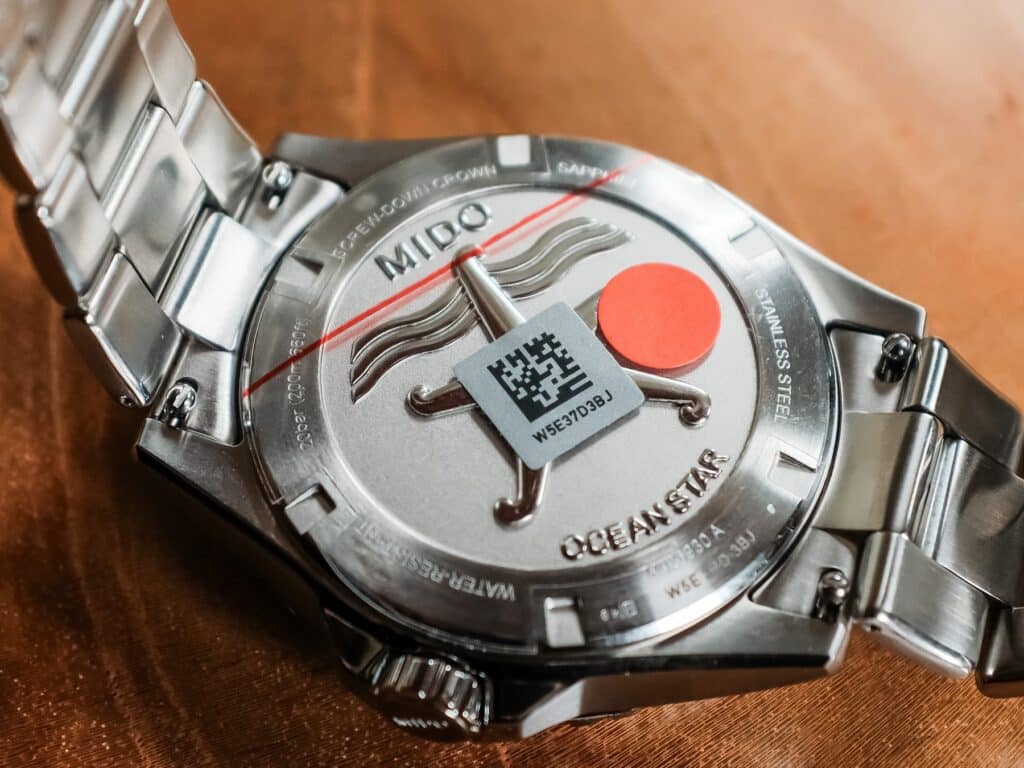
The movement also uses a Nivachron balance spring to improve resistance to magnetism and everyday environmental influences. That’s the sort of feature that’s easy to overlook until you consider how most people actually wear a watch. It’s a practical improvement rather than a headline feature, and that fits the Ocean Star’s overall philosophy. Hidden behind the embossed solid caseback, the movement itself isn’t meant to be admired. Its job is to deliver dependable performance, and throughout my time with these watches, that’s exactly what it did.
Finishing the Package
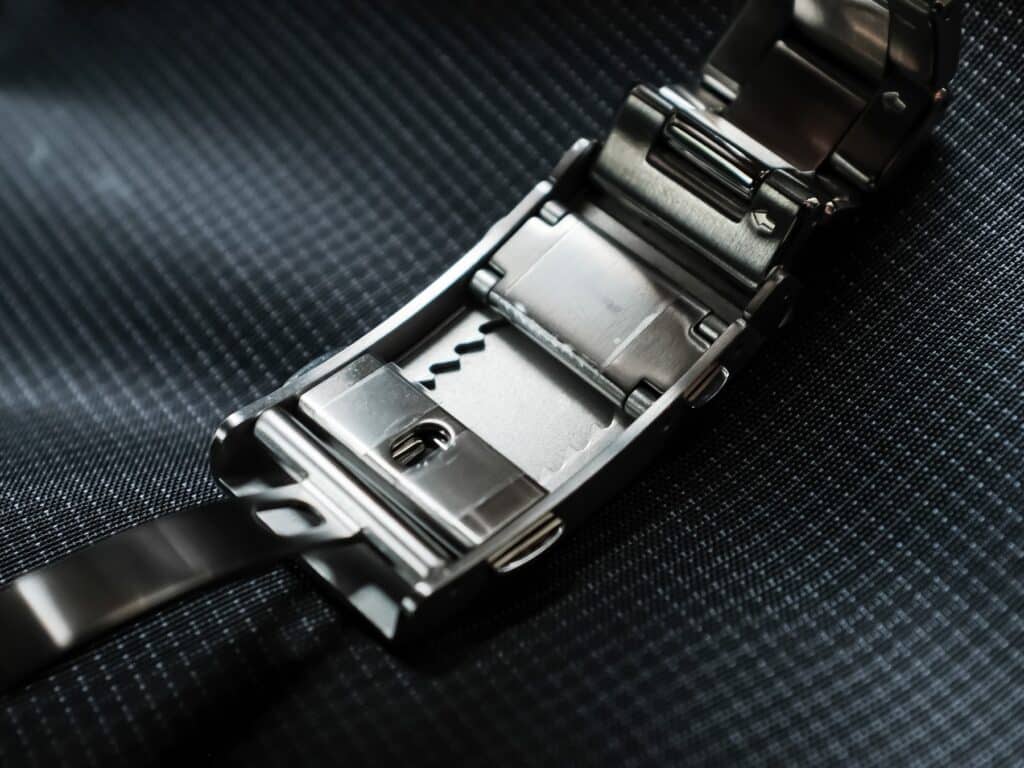
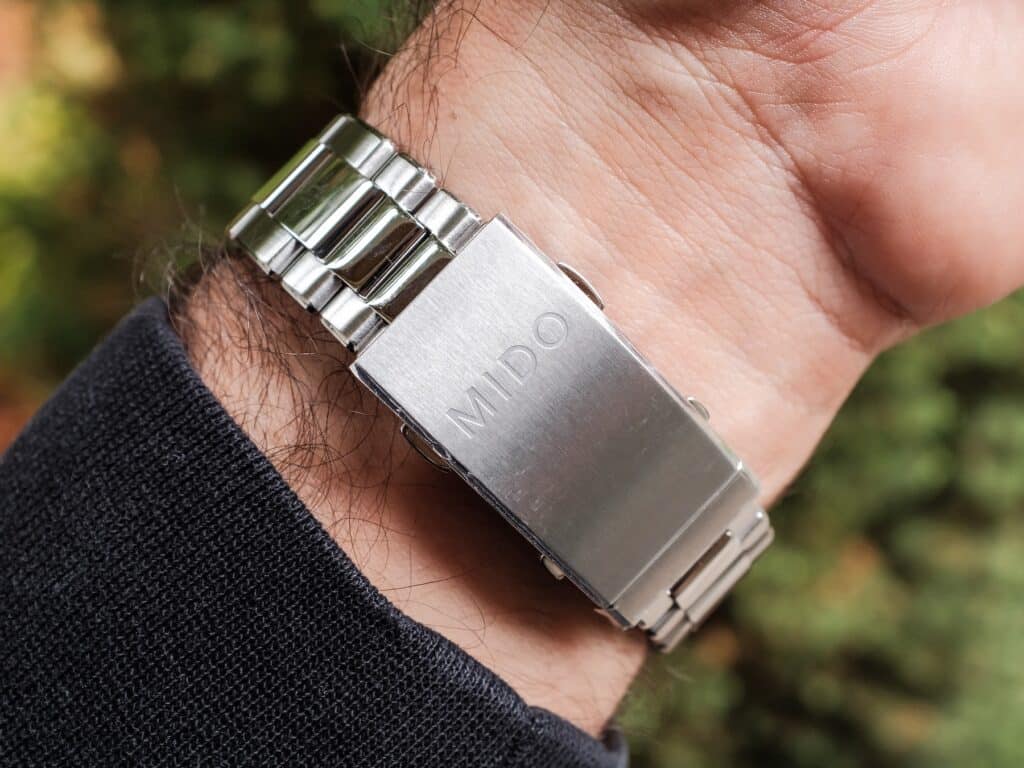
Mido pairs the case with a redesigned three-link bracelet that mixes brushed outer links with polished center links, adding a little refinement without pushing the watch into dressier territory. The quick-release spring bars are useful if you enjoy changing straps, and the integrated diver’s extension adds welcome flexibility without complicating the clasp.
After spending several weeks moving between these three Ocean Star 200 references, I came away appreciating the collection for more than its specifications. Mido has taken a familiar platform and refined it in ways that make a noticeable difference once it’s on the wrist. The proportions are solid, the updated case has more presence, and the dial redesign gives the watch considerably more character than the previous generation.
Again, if I were choosing one for myself, the white dial would be the easy decision. It struck the best balance between modern styling, legibility, and everyday versatility. The blue remains the dependable choice for anyone who prefers a more traditional dive watch aesthetic, while the silver offers something a little different without feeling unconventional.
More than anything, spending time with all three reinforced the impression I had back in June. The refreshed Ocean Star 200 is a thoughtful evolution of an already capable dive watch, and after wearing each variant side by side, I think Mido has made meaningful improvements where they matter most.
Wrapping Things Up
After spending a few weeks rotating between all three versions, I came away with a greater appreciation for what Mido was trying to accomplish with this refresh. The changes aren’t dramatic in isolation, but together they make the Ocean Star 200 feel more refined and more complete than the model it replaces. At around $990 at the time of this review, the updated case has better definition, the redesigned dial adds welcome depth, and the overall package feels more cohesive without losing the straightforward character that made the previous generation easy to like.
What surprised me most was how much the different dial colors influenced the experience. I expected to settle on the blue as the obvious choice, but I kept coming back to the white dial. Its combination of contrast, texture, and overall presence made it the version I looked forward to putting on each morning. Like I said—blue remains the safe, familiar option, while the silver offers something a little different for anyone who wants a subtler take on the collection.
Looking back at what I wrote when these watches were announced, I don’t feel the need to revise my initial impression. If anything, spending real time with them reinforced it. Mido didn’t reinvent the Ocean Star 200. Instead, the brand refined nearly every aspect of the watch in ways that become more apparent on the wrist than they do in a press release. After living with all three, that feels like exactly the right approach.

Co-Founder & Senior Editor
Michael Peñate is an American writer, photographer, and podcaster based in Seattle, Washington. His work typically focuses on the passage of time and the tools we use to connect with that very journey. From aviation to music and travel, his interests span a multitude of disciplines that often intersect with the world of watches – and the obsessive culture behind collecting them.
Nice watch but the day is a deal-breaker. Wish they’d leave these off. Who really wants a day window these days, irritating to reset too. Other than that, good dimensions and like all the colours.
I can see that. Mido produces so many different dive watch variants I wouldn’t be surprised if we got some no-day/date models in the future.