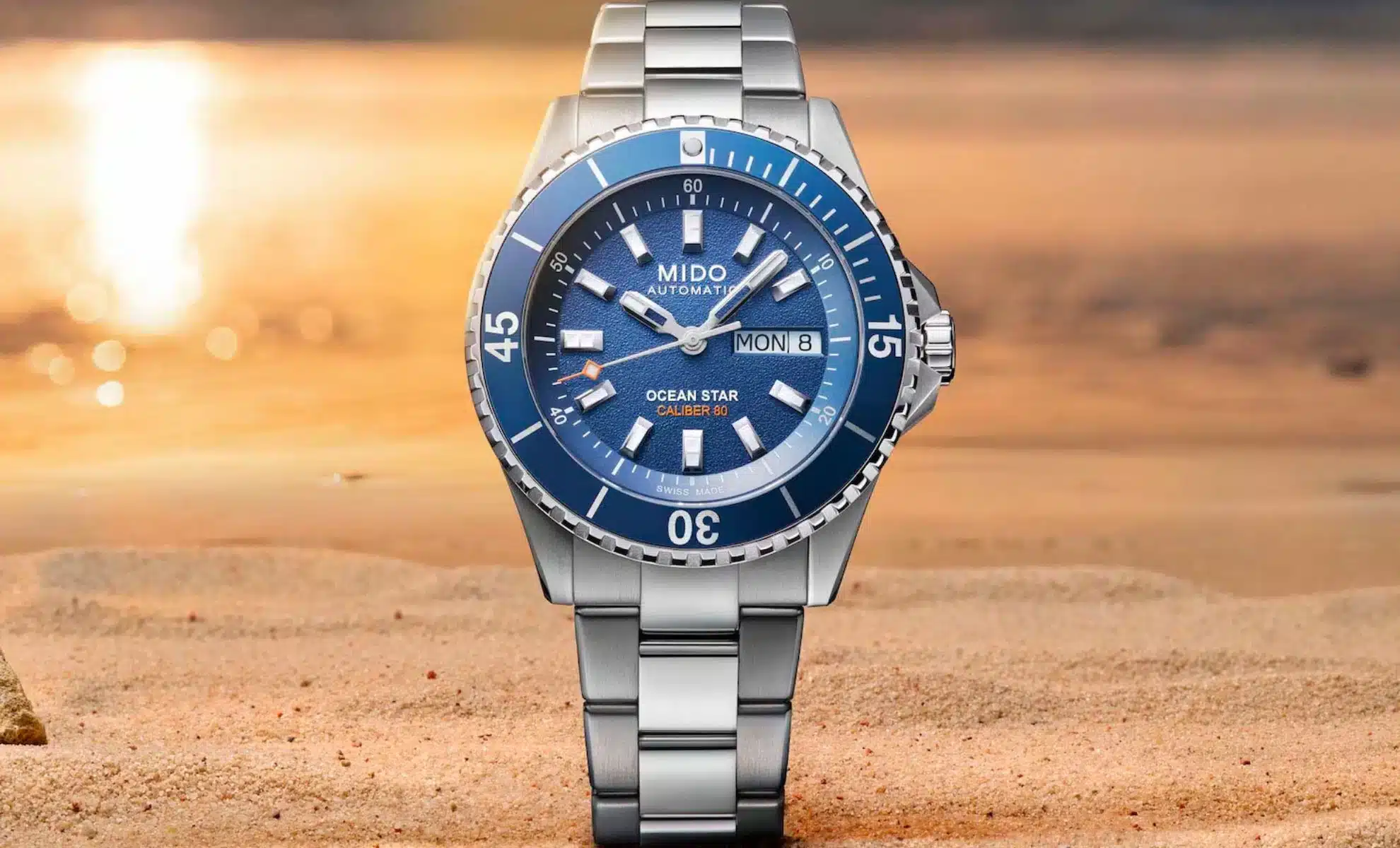
Mido doesn’t make much noise. The brand tends to revisit its core watches every few years with small, sensible changes instead of chasing trends, and the Ocean Star has anchored its dive lineup since 1944. So when a refreshed Ocean Star 200 turns up running the Caliber 80, an 80-hour power reserve, and a Nivachron balance spring at this price, my reaction is a familiar one. Mido does this a lot. It keeps happening, and it keeps working.
The Ocean Star has never been the flashiest diver in the room. It’s spent years under the radar while buyers reach for the Tudor Black Bay, the Longines Hydroconquest, or an entry-level Breitling Superocean. Mido’s whole argument rests on the Swatch Group’s manufacturing scale, which is how you end up with a Nivachron hairspring and a long-reserve movement at this price. The new version refines the formula rather than reinventing it.
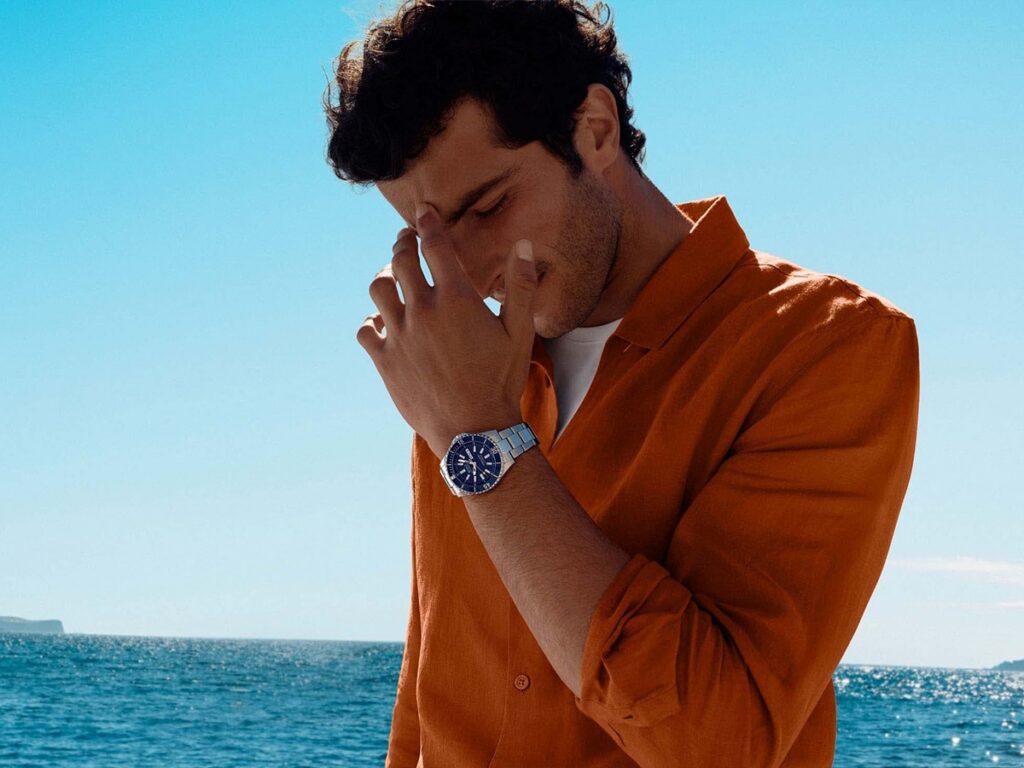
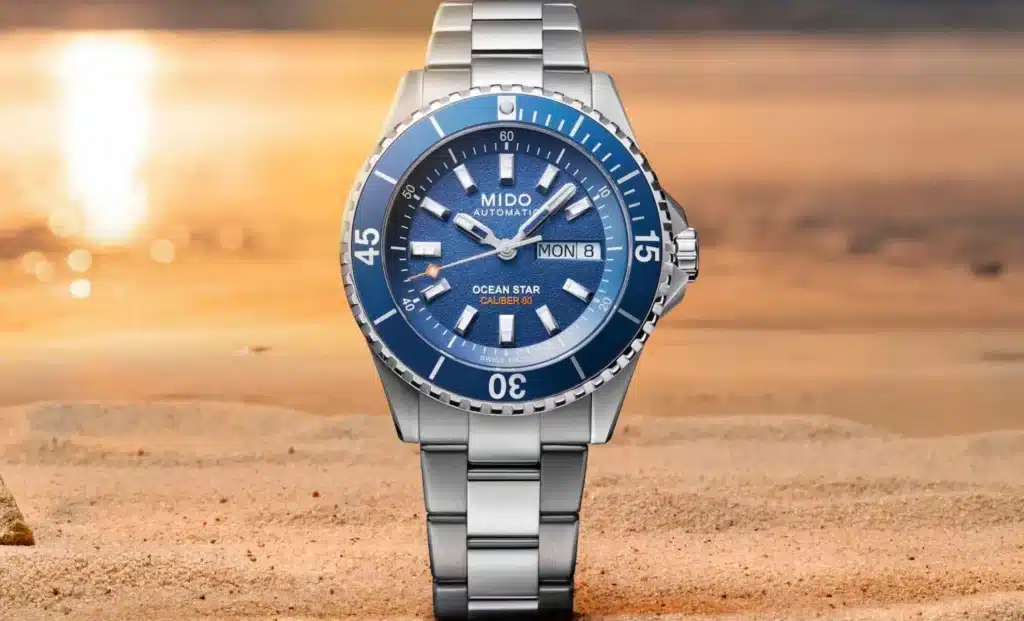
The dimensions are the part I keep coming back to. The case sits at 41mm wide and 11.7mm thick, with a 47.03mm lug-to-lug that should keep it honest on smaller wrists. Mido mixes satin and polished surfaces across the steel, with a screw-down crown tucked behind the case flank and a uni-directional bezel that uses an aluminum ring instead of chasing ceramic. The grained blue dial picks up light inside a sandblasted flange, and the day-date sits at 3 o’clock.
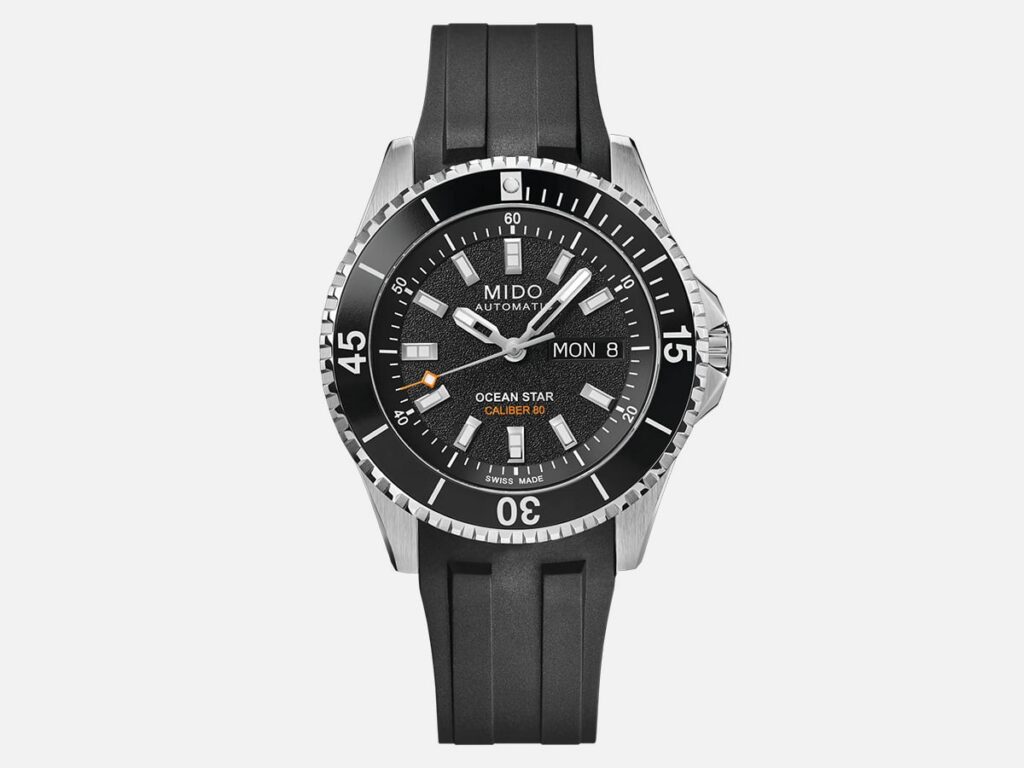
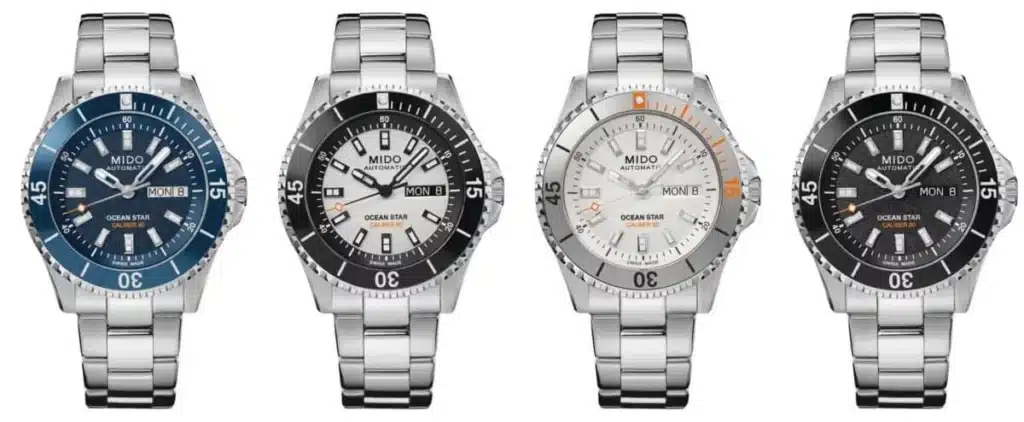
The brand also moved to its quick-change bracelet system, so swapping the steel bracelet for a strap doesn’t require tools. Four dial and bezel configurations round out the range, all carrying Mido’s signature orange on the tip of the seconds hand.
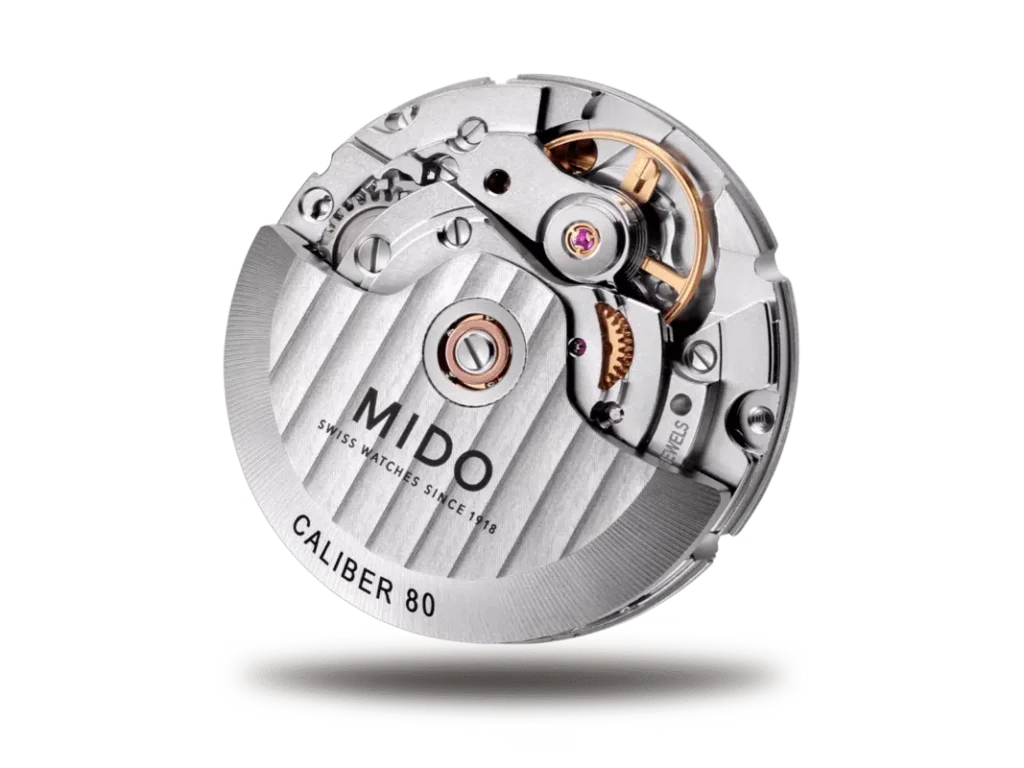
For my money, the Nivachron spring is the quietest and most useful change here. It shrugs off the magnetic fields coming off laptops and phones better than a standard hairspring, and that matters more for daily wear than spec sheets usually let on. The 80-hour reserve helps too. Take it off Friday and it’s still running Monday.
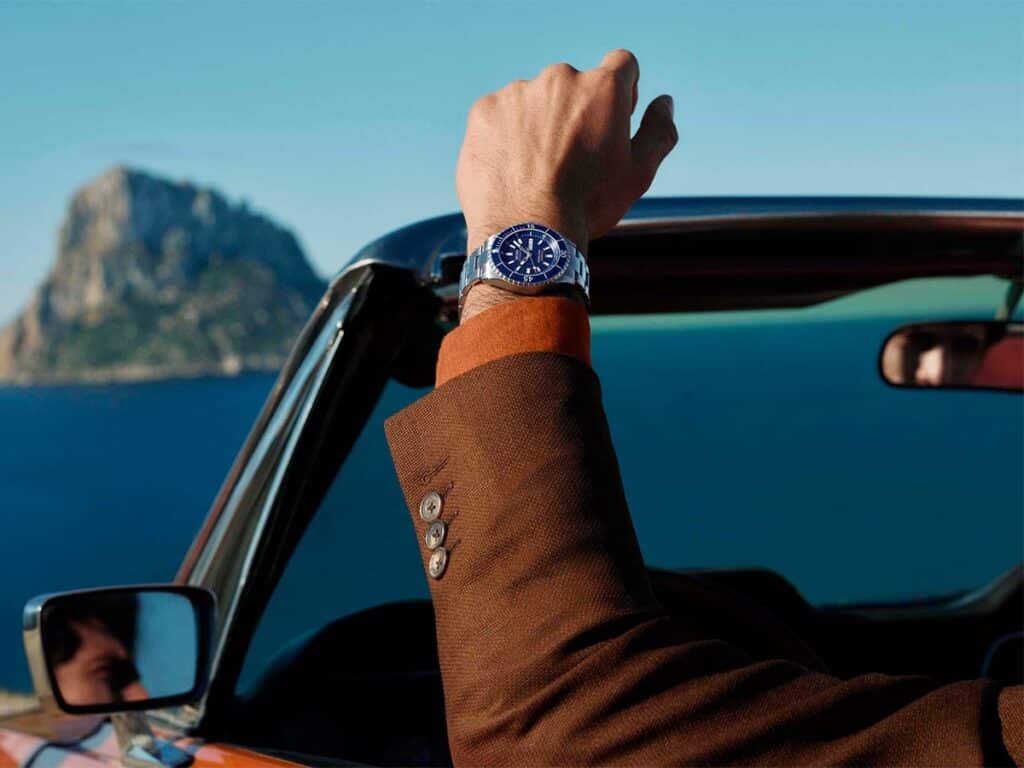
That reserve comes from a familiar tradeoff, though. The Caliber 80 runs at 3Hz, or 21,600 beats per hour, slower than the 4Hz movements you’ll find in plenty of watches near this price. You give up a little sweep smoothness for the long runtime. For a daily diver, that’s an easy trade, but it’s worth knowing if you came in expecting a high-beat caliber.
Mido keeps putting out divers that read pricier than they ring up, and at $950 to $980 this one slots right into that habit. Whether it wears as well as the numbers suggest is the part I can’t settle from a screen, since I haven’t had one on yet. I’d like to spend real time with it before summer, when a watch like this tends to find its crowd. For now, it’s another Mido release that makes you check the price twice.

Co-Founder & Senior Editor
Michael Peñate is an American writer, photographer, and podcaster based in Seattle, Washington. His work typically focuses on the passage of time and the tools we use to connect with that very journey. From aviation to music and travel, his interests span a multitude of disciplines that often intersect with the world of watches – and the obsessive culture behind collecting them.