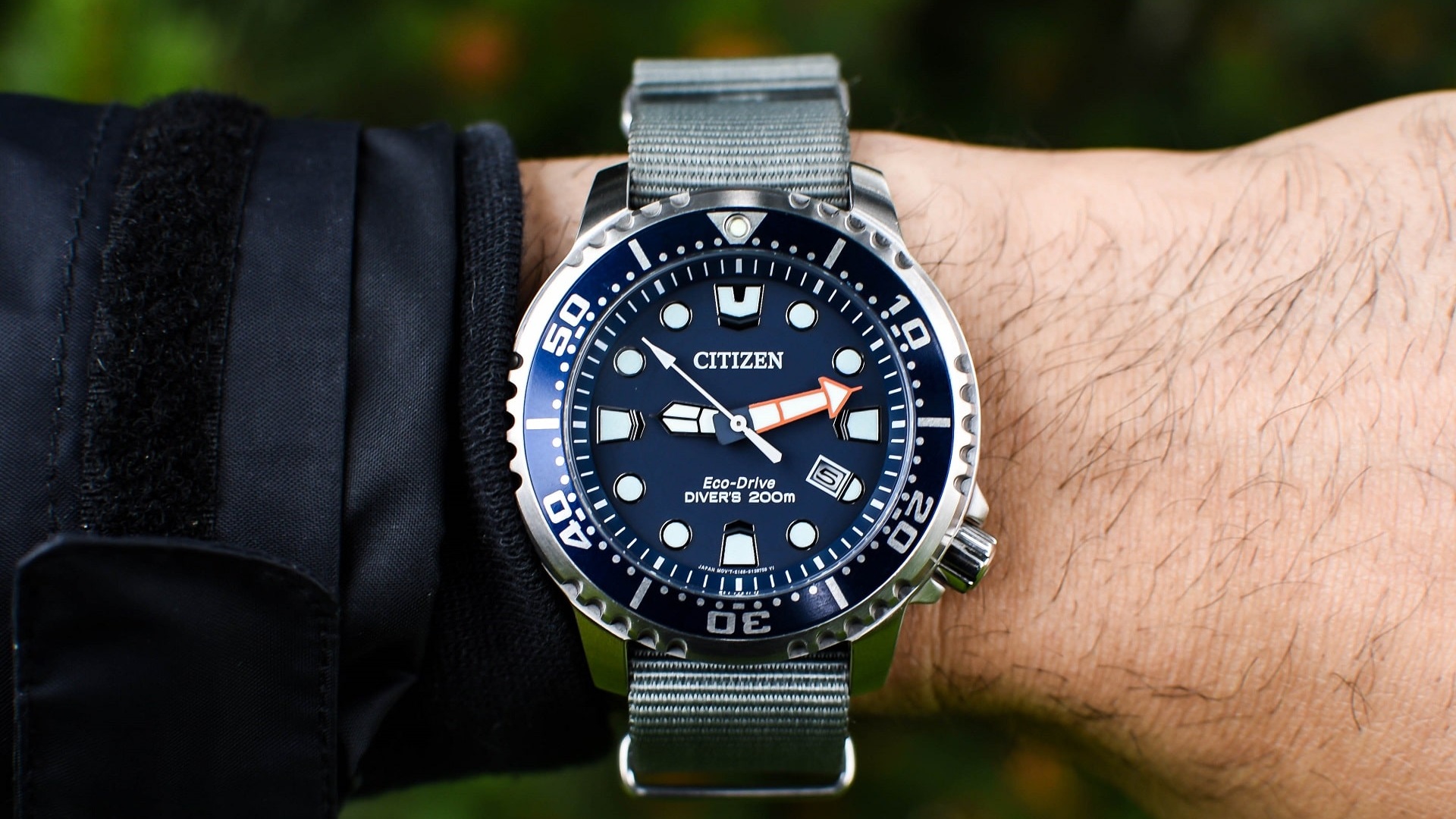
Putting a roughly $300 Citizen Promaster next to an Omega Seamaster Diver 300M that costs $6,000 feels a little ridiculous on paper. One is the kind of watch you can buy without rearranging your finances; the other is firmly in luxury-watch territory. Yet that’s exactly why the comparison is worth having. Once both are on the wrist, the useful question isn’t which one costs more. We already know that. It’s how much that extra premium changes the experience of owning and actually using a dive watch.
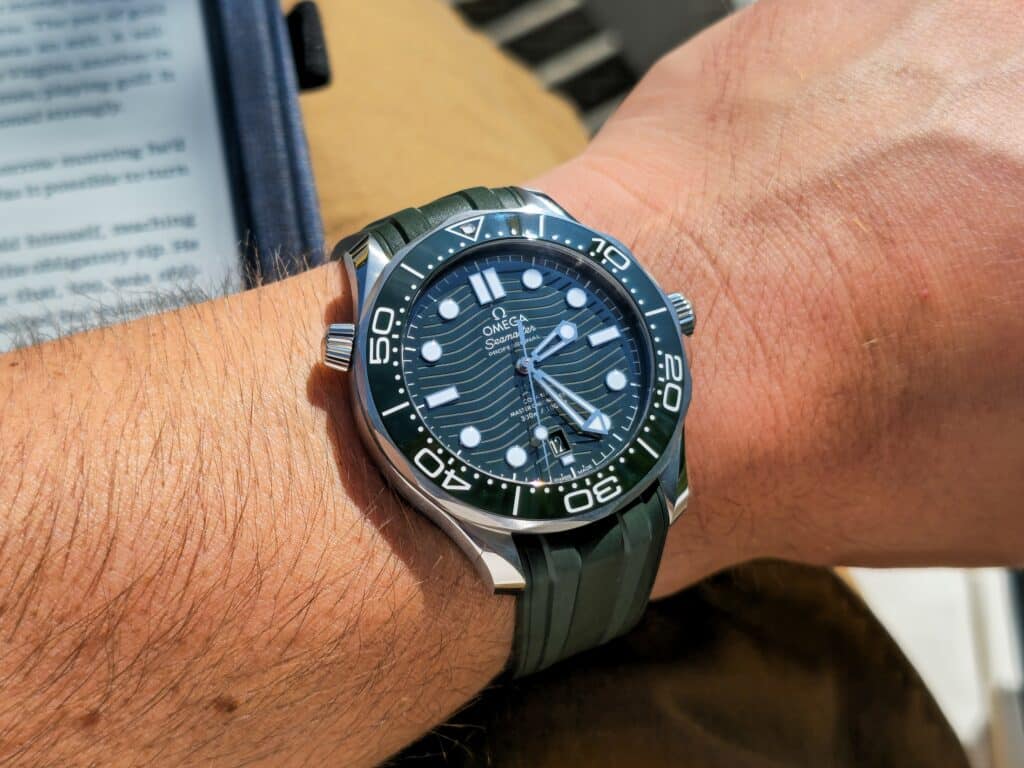
We’ve spent more than a decade at TBWS wearing, testing, and living with watches long enough for the novelty to wear off and the little annoyances to show themselves. That tends to make us less impressed by price tags and more interested in what survives regular wrist time. So rather than treating this as another spec-sheet showdown, we’re looking at the things that matter when you actually have to live with one: how dependable it is, how much maintenance it asks of you, how comfortable it is to wear, and whether you’ll hesitate before putting it through a normal day. Because spending six grand on a dive watch should buy you more than a good story at the watch meetup.
Overview and Identity
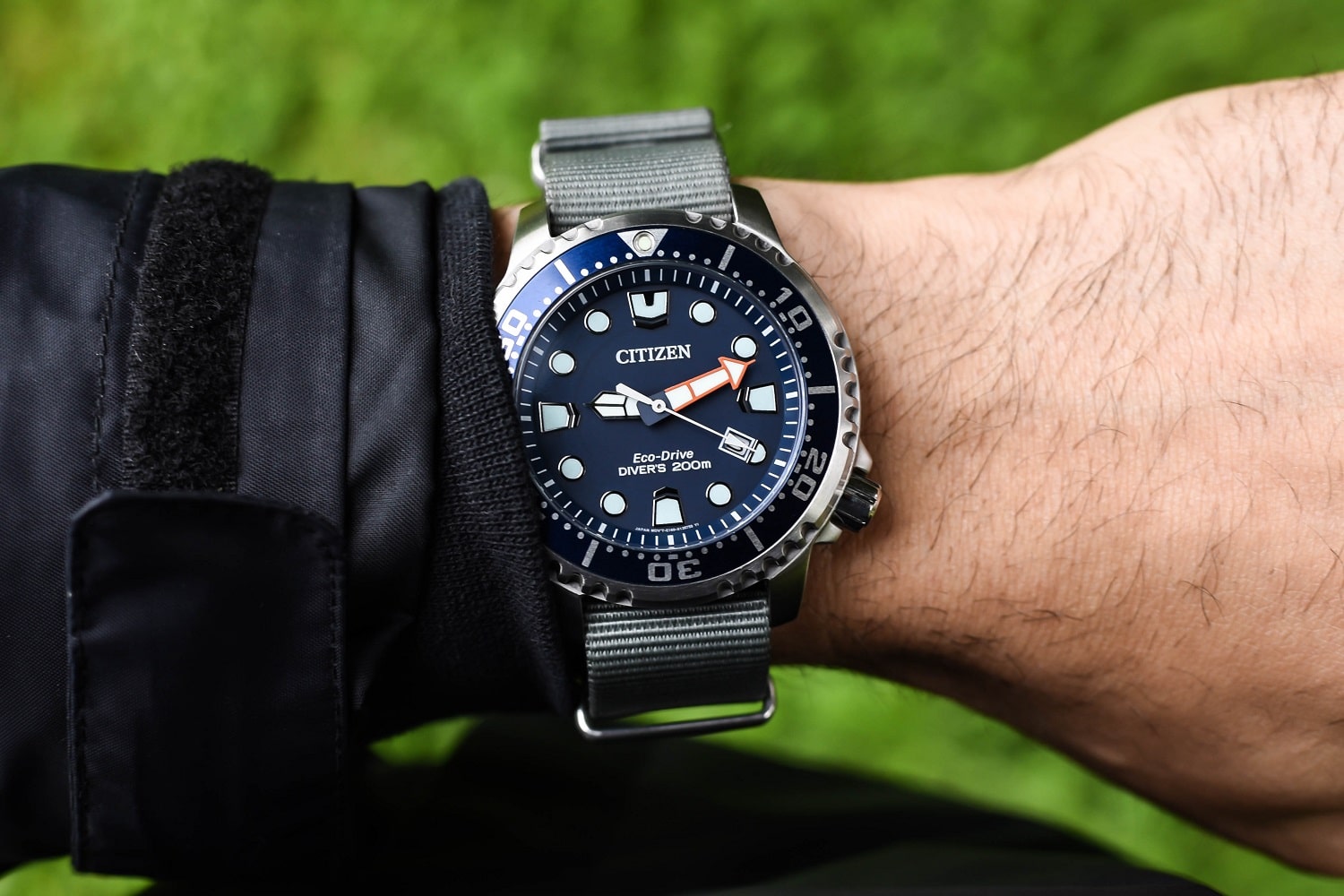
The Citizen Promaster Eco-Drive Diver has an identity that makes sense once you’ve owned enough watches to get tired of resetting them, babying them, or wondering whether you should have worn something else. During our hands-on testing period, it quickly became a “grab and go” option thanks to its low price, compact-feeling case, and carefree Eco-Drive movement. It also earned the rather fitting “Honda Civic” comparison, becoming a regular choice for hikes, lake outings, jogging, and casual office days. That’s the Promaster’s appeal in a nutshell: it doesn’t need a ceremony before it leaves the house, and its value comes from how little fuss it creates once it’s there.
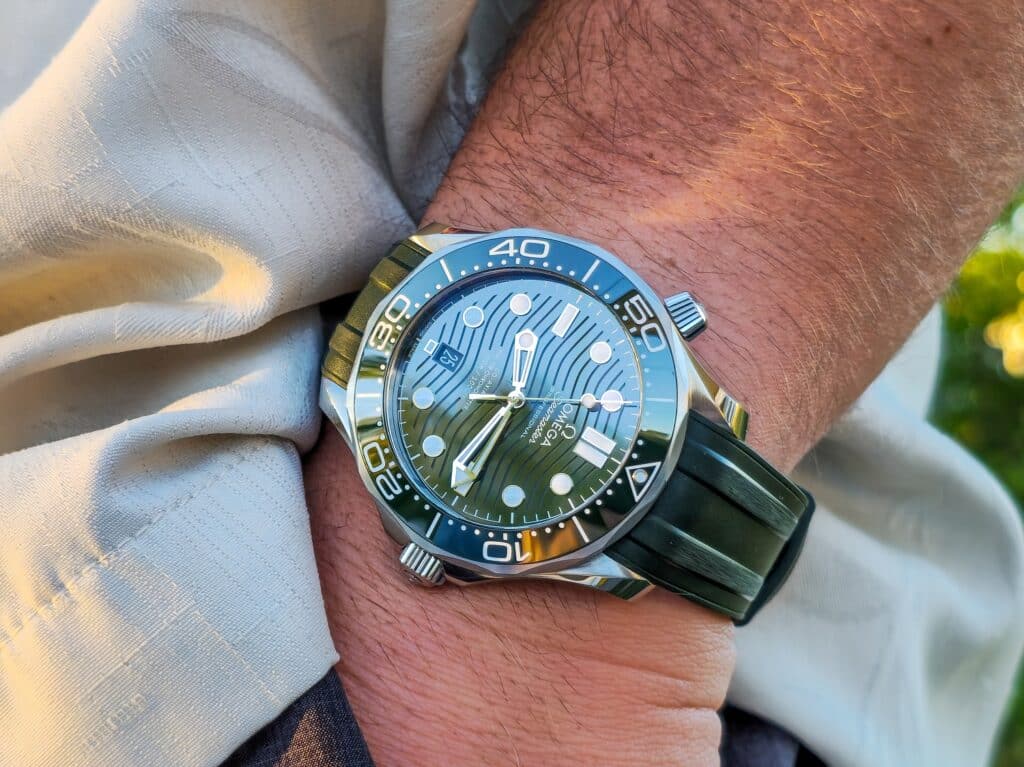
The Omega Seamaster Diver 300M comes from the opposite end of the watch-buying spectrum, where the object itself is part of the reason you’re reaching for it. It has the visual identity and execution that have made the Seamaster one of Omega’s most recognizable dive watches, along with a level of detail that gives it plenty to admire once you’ve stopped gawking at the logo. But we also found a curious tension while we tested it hands-on: for all its dive-watch credentials, the Seamaster leans heavily into the luxury side of the equation. It’s a watch with plenty of emotional pull.
- The Citizen Promaster is the low-fuss tool watch, built around grab-and-go ownership and getting on with the day.
- The Omega Seamaster Diver 300M is the luxury dive watch, built around refinement, distinctive design, and the pleasure of owning something you can admire as much as wear.
Dial, Straps & Wearability: Tool-Watch Clarity vs Luxury Diver Drama
The Citizen Promaster’s dial is almost comically committed to being useful, which is exactly what we want from an affordable dive watch. In our testing, the large analog handset and clearly defined markers made the time easy to read without any squinting or second-guessing, while the 4 o’clock date window was tucked in neatly enough that it didn’t disrupt the hour marker. The blue dial is the fun part. Depending on the light, it can move from a straightforward blue to something closer to deep purple, giving the Promaster more personality than its price suggests. There’s also a black-dial version for anyone who wants to keep things more traditional. In short, this dial is designed around legibility first, and it shows every time you glance at it rather than study it.
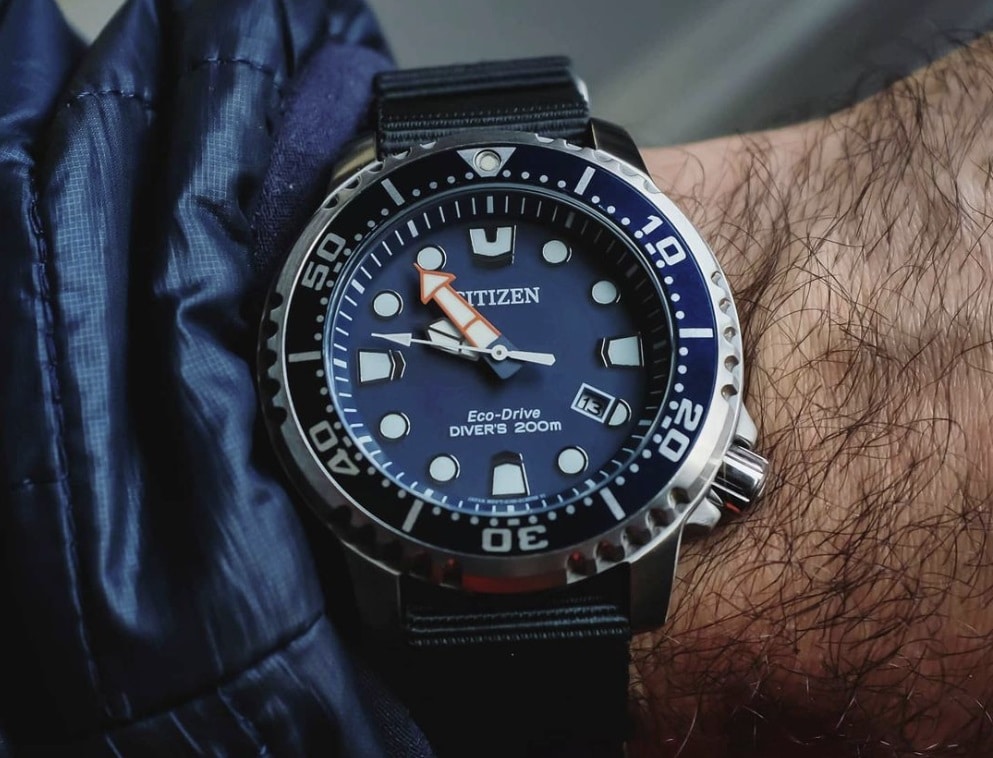
The strap setup is where the Promaster reminds us that affordable doesn’t always mean perfectly sorted. The supplied polyurethane strap with no-decompression limits is comfortable on the wrist. Still, we found it awkward to manipulate and shape for a consistently comfortable fit, so we set it aside quickly. A standard BluShark NATO became the preferred choice instead, and the 20mm lug width makes that kind of experimentation easy. Citizen does offer a stainless steel bracelet, but we’d be reluctant to add the extra heft because part of the Promaster’s charm is how light and uncomplicated it feels. Sailcloth would make sense too. The point is that the watch gives you plenty of inexpensive ways to tune the wearing experience without turning strap changes into a financial decision.
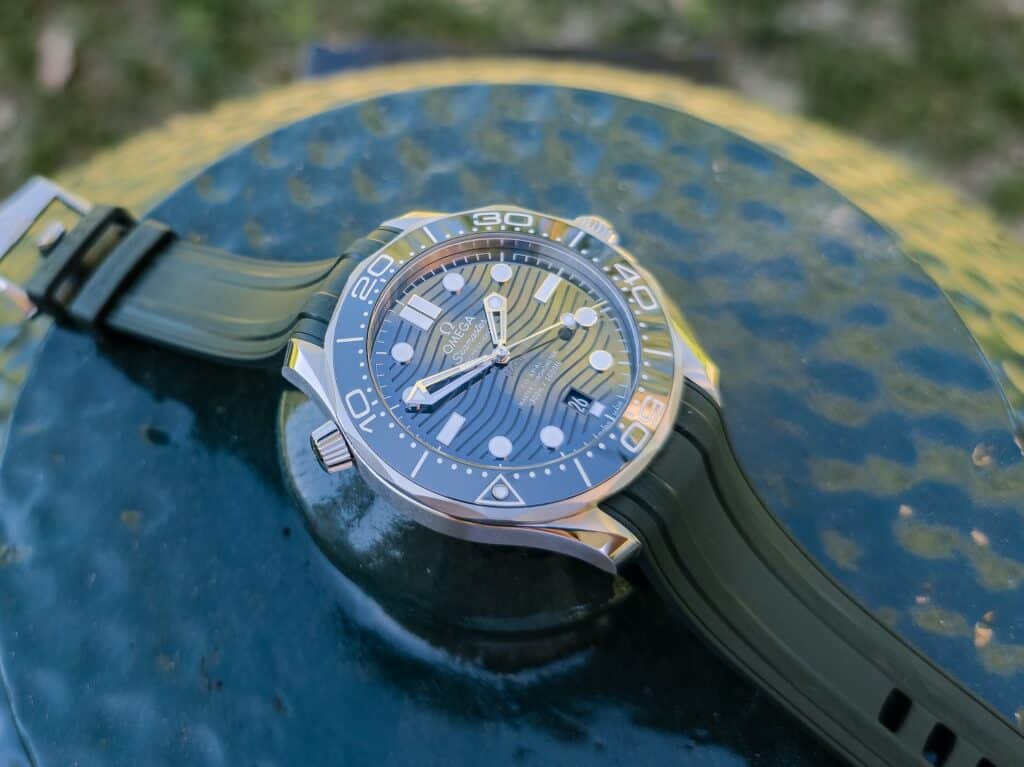
The Omega Seamaster Diver 300M is far more visually demanding. The wave dial immediately adds width on the wrist, and the deeply laser-engraved pattern has a glossy, almost porcelain-like quality that constantly catches the light. The printing is exceptionally crisp, and small details like the green date disc matching the green dial keep the whole thing feeling deliberately executed rather than assembled from a parts bin. The green also shifts, moving from an olive, almost military shade to a brighter tropical green depending on the light. The trade-off is the skeletonized hands. They add to the Seamaster’s distinctive look, but against the lumed hour markers, they give up some of the instant readability we get from the much simpler Citizen.
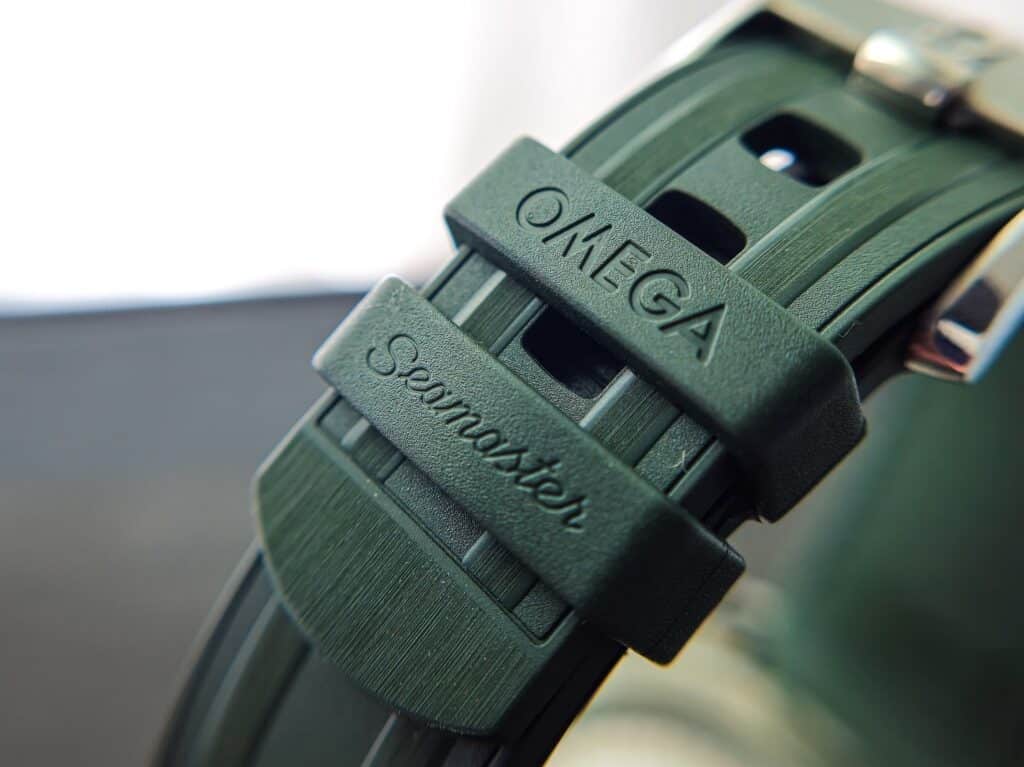
On the wrist, the Seamaster is more comfortable than its dimensions indicate. It looks broad, but the thinness of the watch head keeps it from feeling like a nearly 14mm slab, and on the rubber strap it settles into what we consider a very easy all-day wearing profile. We strongly preferred that setup to the stainless steel bracelet, which feels too concerned with adding weight and doesn’t taper from its 20mm width at the lugs. The green rubber strap suits the watch better anyway: it’s soft, supple, carefully finished, and even the brushed center ribs add nice detail. The strap holes are spaced a little farther apart than we’d like, while the rubber keepers and polished/brushed tang buckle show the same attention to finish as the case. NATOs and leather can work too, but the rubber setup best preserves the Seamaster’s mix of comfort and luxury character.
- The Citizen Promaster stays legible, light, and quite uncomplicated, with a blue dial that adds color to an otherwise no-nonsense tool watch.
- The Omega Seamaster leans harder into dial drama and finishing, with laser-engraved waves, a chameleon-like green dial, and a bracelet that apparently never got the memo about tapering.
Build Quality & Technical Approach
The Citizen Promaster and Omega Seamaster are built around the same basic idea—make a watch that can handle getting wet—but they arrive there from very different directions. The Citizen is unapologetically practical, leaning on a proven quartz-based approach and straightforward construction, while the Omega brings more engineering, finishing, and mechanical sophistication. That makes this section less about counting specifications and more about what all that extra engineering means once the watches are subjected to actual wrist time.
Movements:

The Citizen Promaster’s Eco-Drive E168 is almost aggressively practical. It’s a three-hand solar quartz movement with around six months of power reserve on a full charge, and Citizen rates it to +/-15 seconds per month. During our testing period, the low-charge warning mode appeared only once, with the second hand jumping at two-second intervals. A few hours on a windowsill brought it back to a full charge. There’s not much romance to that process, but there’s a strong argument for a movement that essentially tells you, “Relax, I’ve got this.” The Eco-Drive also keeps the watch pretty light, which fits the Promaster’s grab-and-go personality very well.
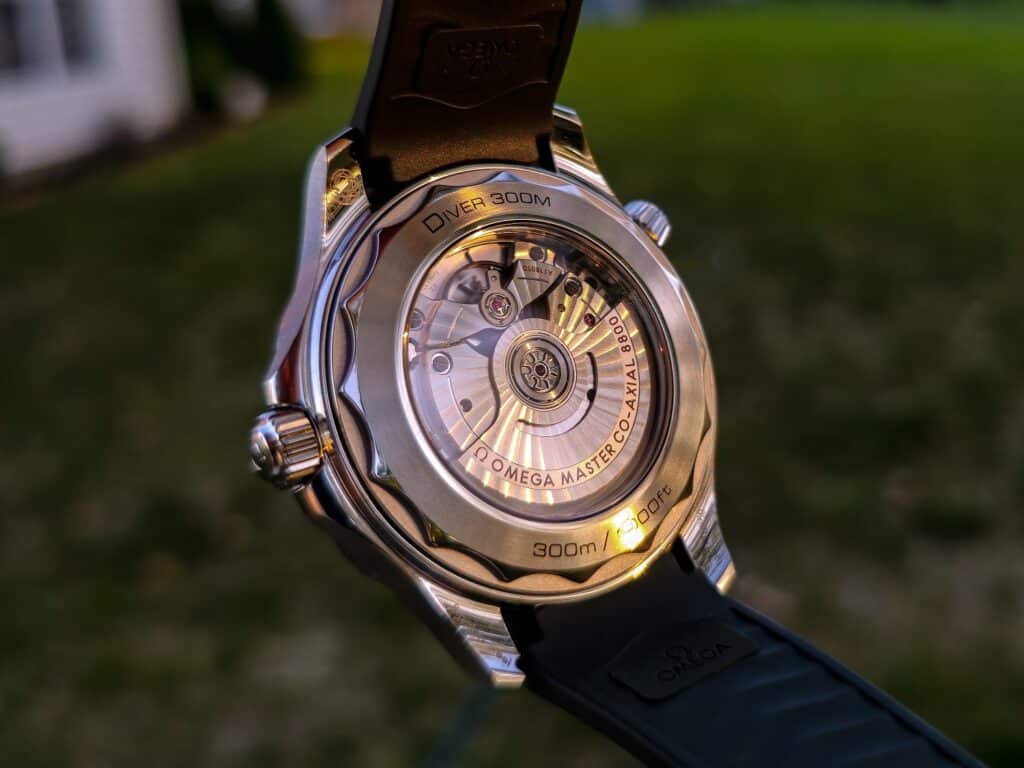
The Omega Caliber 8800 takes the long way around. This is a METAS-certified Master Chronometer rated to 0/+5 seconds per day, and our example was running within about +1 second per day. The certification process puts the movement through eight tests covering accuracy, temperature, shocks, magnetic fields, power levels, and different usage conditions. Then Omega adds 15,000-gauss anti-magnetism and the George Daniels Co-Axial escapement, designed to reduce friction and stretch service intervals. The tactile side is arguably more interesting. Winding the 8800 through the crown is exceptionally smooth, with a consistent, almost absurdly refined feel. The movement is also properly enjoyable to look at through the display back, with Omega’s characteristic finishing drawing you in under a loupe or macro lens. It isn’t finished like a hand-built haute horlogerie movement, but that misses the point. This is a mass-produced movement executed to a very high standard, with the engineering credentials to back it up. The small crown is less pleasant to unscrew or tighten, but once you’re winding, the Seamaster reminds you where some of that price difference went.
Case Construction & Finishing:
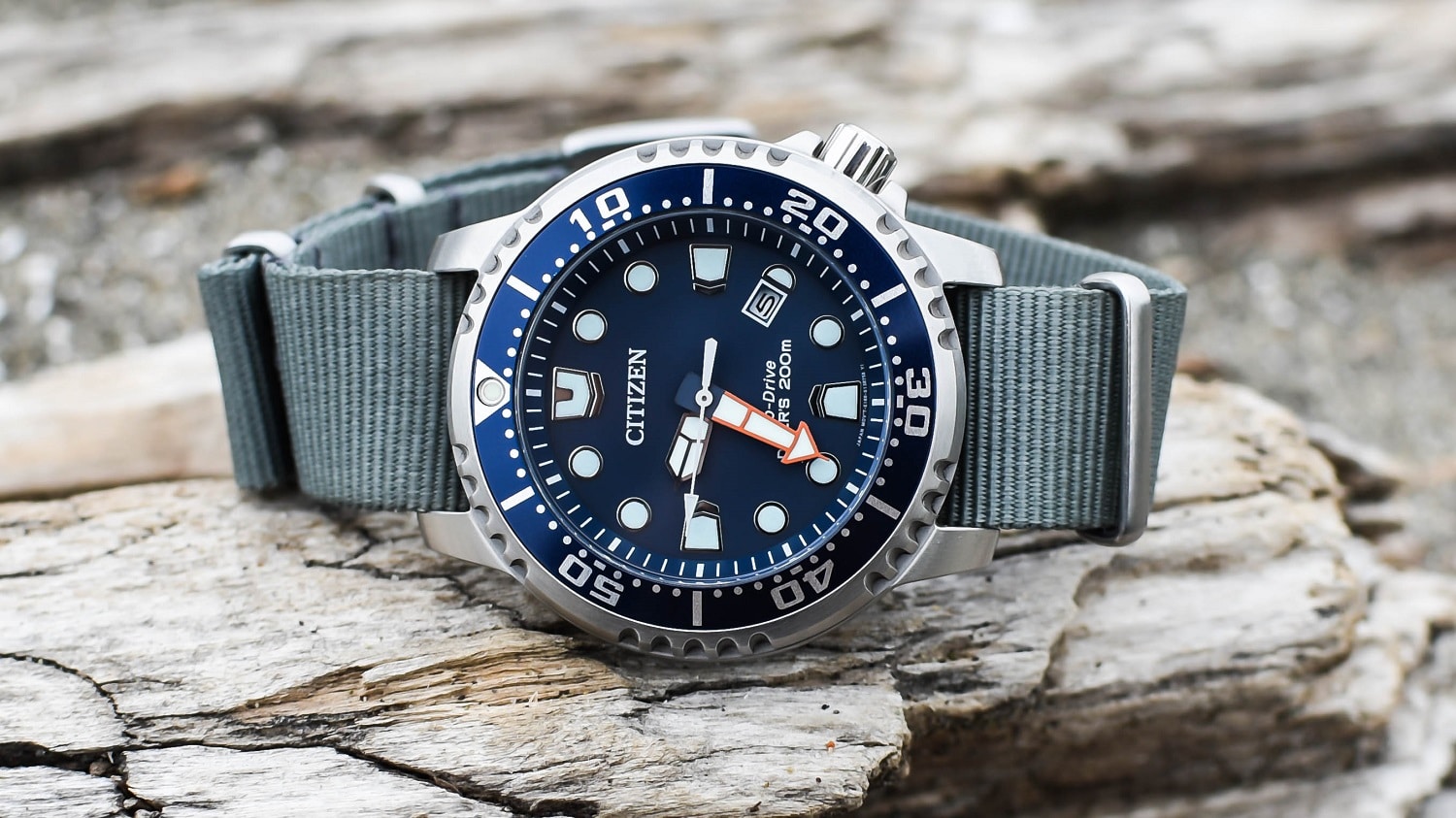
The Citizen Promaster is a good reminder that case diameter can lie to your face. At 43mm across, 48mm lug-to-lug, and 11.5mm thick, it looks like a large diver on paper, but the compact case shape makes it wear much smaller. The lugs sit close enough to the case that it almost feels lugless, and we found that effect works particularly well on the stock polyurethane strap or a NATO. There’s no elaborate case finishing trying to justify the price, either. The Promaster’s appeal comes from the opposite approach: straightforward construction, lightness, and proportions that make a 43mm dive watch pretty easy to forget once it’s on your wrist. That fits the whole watch rather well.
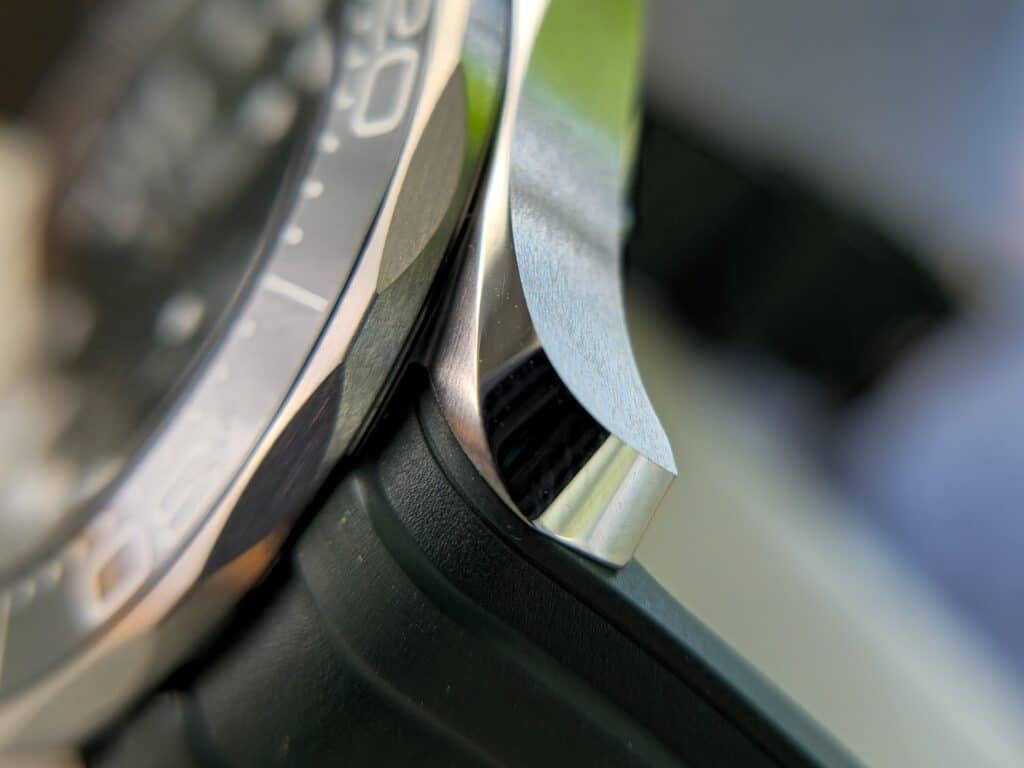
The Omega Seamaster is considerably less interested in keeping things simple. At 42mm, the dimensions themselves never became a problem, but the finishing is where the difference between the two watches becomes obvious. The twisted lyre lugs are well executed, with highly polished tops flowing into an extremely thin polished bevel beneath the bezel. In contrast, the inner lugs and case flanks carry fine, deep brushing that gives the case plenty of visual depth. The caseback adds more of the same, with its art deco, gear-tooth design surrounding a clear sapphire display window. These details don’t make the Seamaster a better dive watch on their own, but they do make it much more satisfying to handle and look at. It occasionally wants you to stop what you’re doing and admire where the money went.
Crystals and Bezels:
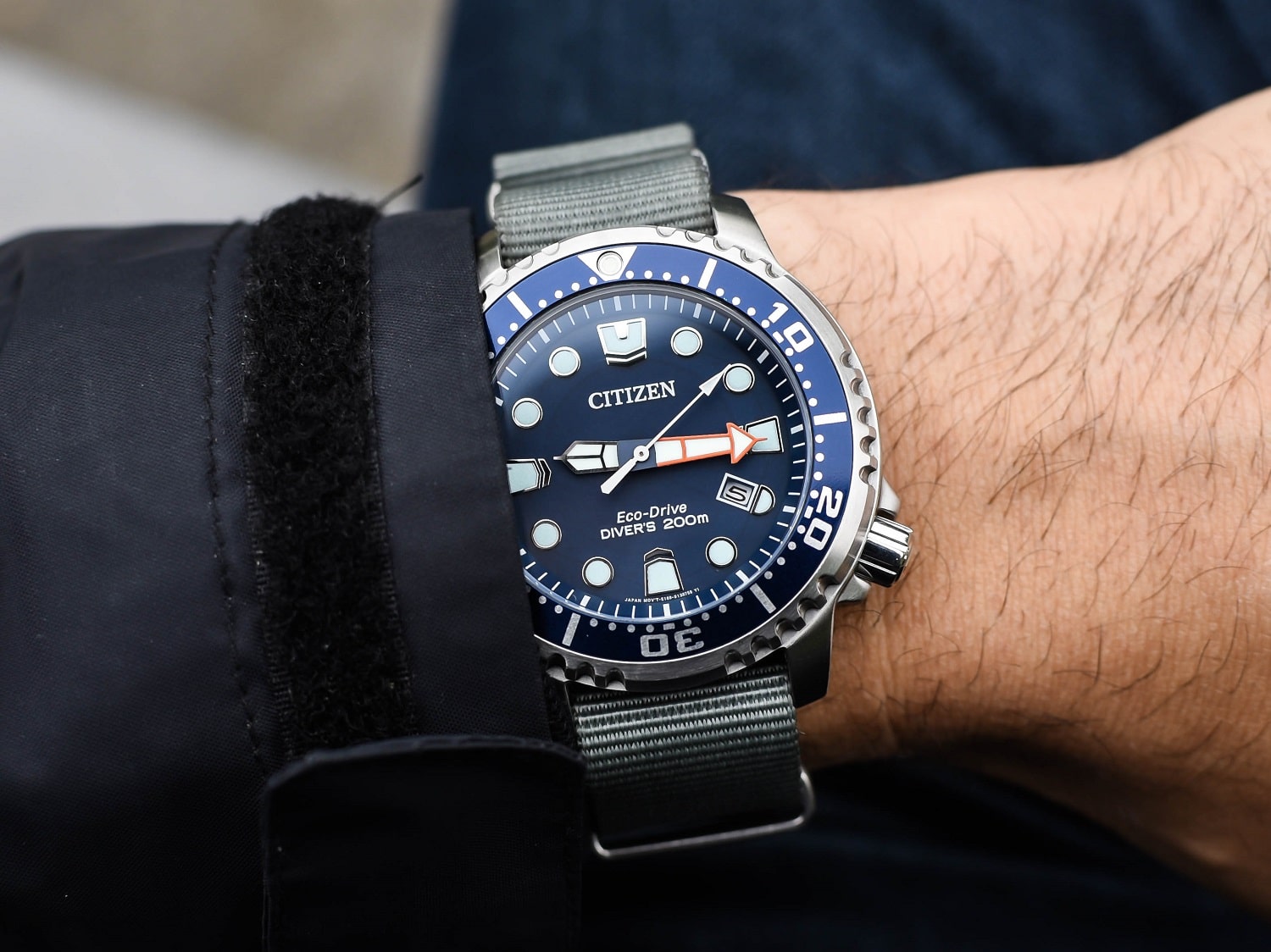
The Citizen Promaster keeps this part quite uncomplicated. The AR-coated mineral crystal gave us no trouble during our time with it, with no chips or scratches to report, which is what we want from something built to be worn rather than displayed. The aluminum unidirectional bezel has a 60-click mechanism we prefer for quick timing, and the fully graduated insert makes it easy to use. Our only complaint is the grip. The tooth pattern isn’t as aggressive as we’d like, so the bezel can feel a little slippery, even though it takes very little effort to turn. For a watch at this price, that’s a pretty short list of complaints: we wanted more grip from the bezel, and that’s about it.
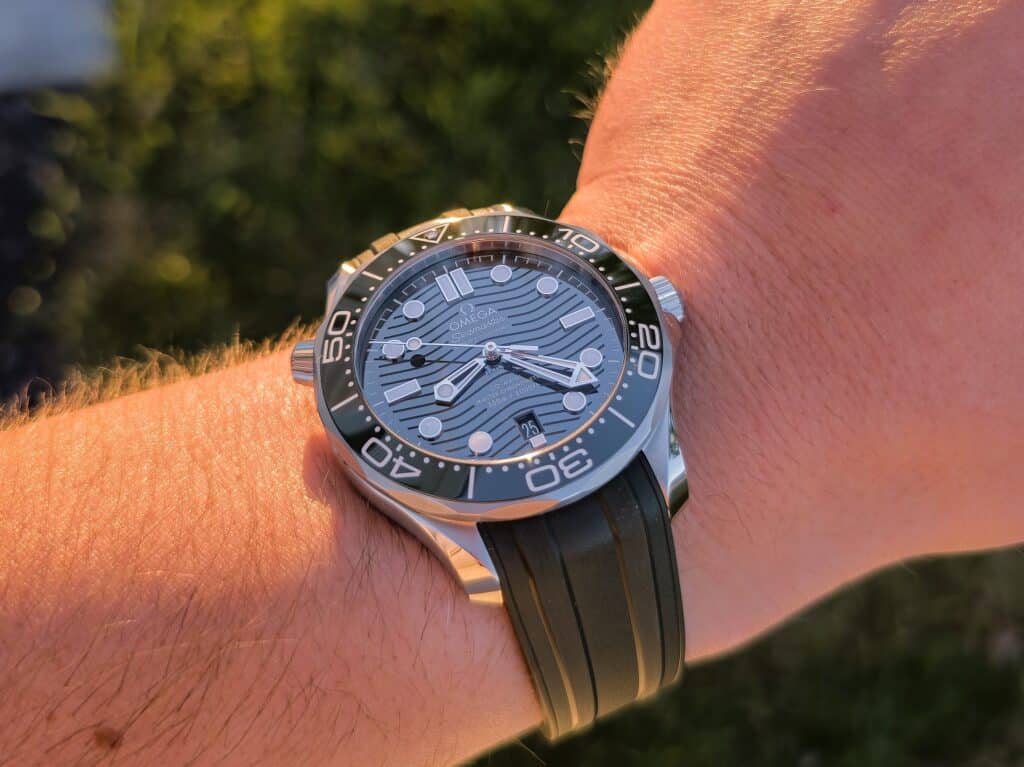
The Omega takes the expensive route, and its sapphire crystal gives the game away immediately. With multiple layers of external AR, it can almost disappear on the wrist, making the crystal feel more like an absent pane of glass than something sitting between you and the dial. That is fantastic for enjoying the watch, though the external coating is worth watching because it can develop micro-scratches at certain angles. The green ceramic bezel looks the part, with alternating brushed facets and a glossy insert that tracks the dial’s constantly changing shade of green. Then you use it. The 60-click action is crisp and has no backplay, but it lacks personality, and the scalloped edge is quite awkward to grab. Getting a reliable turn with wet fingers or gloves sounds like a great way to discover new swear words. The Seamaster’s bezel looks considerably better than it behaves, which is perhaps the most luxury-watch sentence we could write about it.
Water Resistance & Lume:
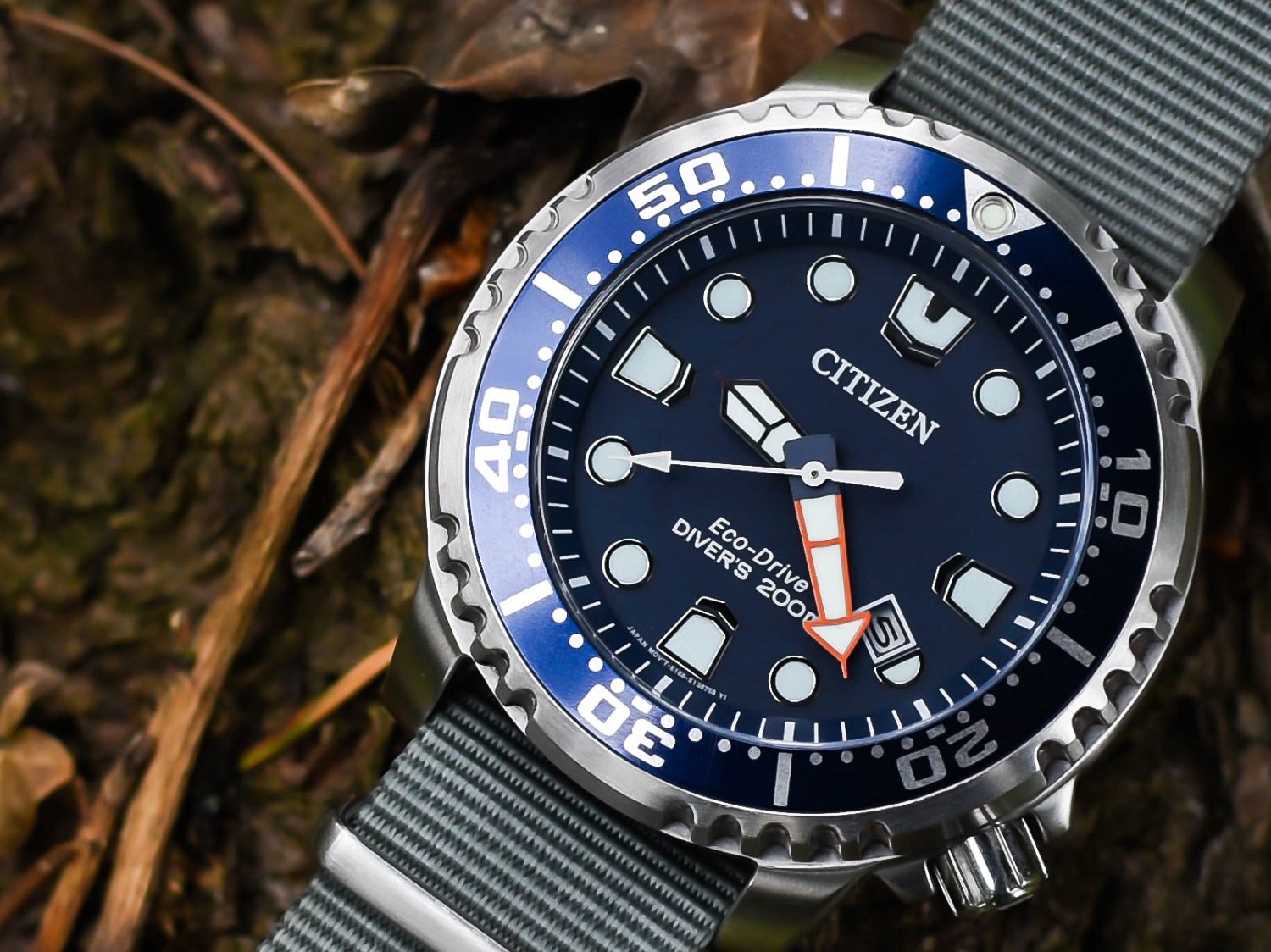
The Citizen Promaster has 200m of water resistance, and we had no trouble putting that claim to work by swimming with it in the Hood Canal off Seabeck, Washington. The screw-down crown at 4 o’clock sits close to the case and is easy to operate, which adds to the watch’s straightforward feel around water. Then there’s the lume, where Citizen clearly understood the assignment. The aqua-toned BGW9 on the hands and markers gives the dial excellent low-light visibility, and even the second hand gets a little lume. It isn’t trying to make nighttime viewing into a light show; it simply makes the watch easy to read when the sun has decided to clock out.
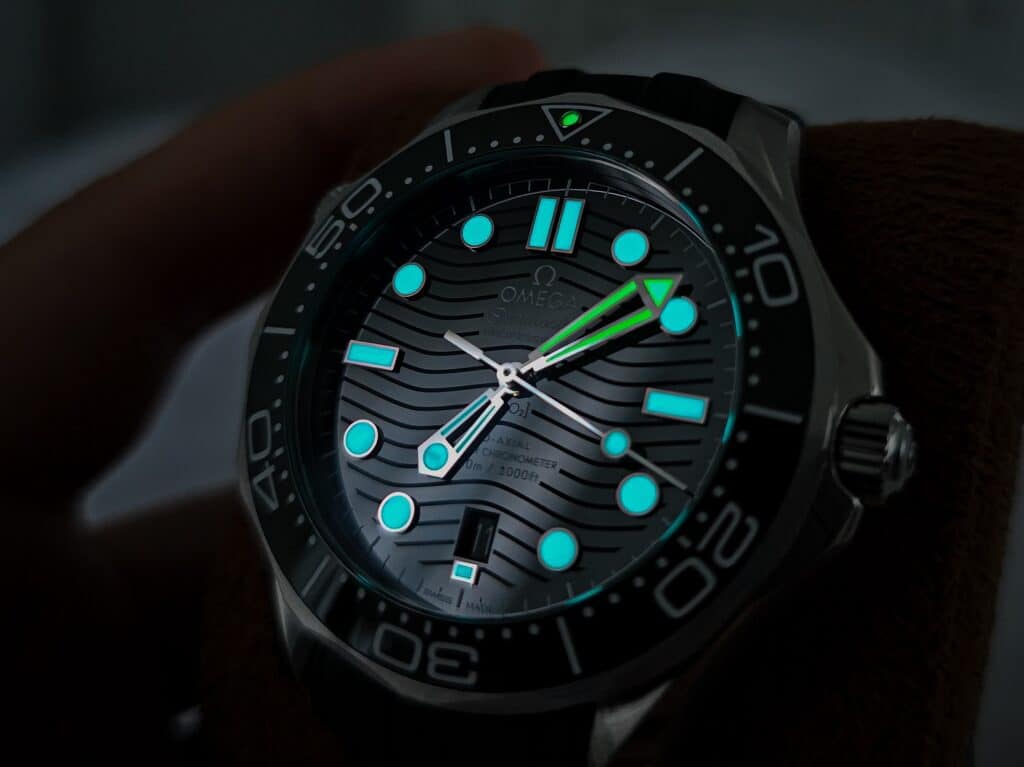
The Omega bumps the water resistance to 300m and adds the helium escape-valve crown at 10 o’clock, one of those Seamaster quirks that looks slightly strange until you realize it’s part of the model’s identity. We like the extra tool-watch character it adds to an otherwise fairly dressy diver, even if we understand why some people would rather not have that extra hardware staring back at them. The lume is more theatrical. The indices, hour and second hands glow blue, while the minute hand and bezel lume pip glow green. That makes it easy to orient the minute hand against the bezel in the dark. It looks fantastic, but it isn’t as bright or as long-lasting as something like a Seiko SKX. Like the rest of the Seamaster, the lume seems more interested in showing off Omega’s execution than in preparing you for a midnight expedition.
- The Citizen Promaster keeps the engineering easy to live with: a light Eco-Drive movement, compact-wearing case, simple 60-click bezel, and enough water resistance to justify taking it into actual water.
- The Omega Seamaster spends the extra money on mechanical depth and finishing, from the METAS-certified Caliber 8800 to the polished casework and nearly invisible sapphire, even if some of those luxury touches are more satisfying to admire than to use.
Cost Considerations
The Citizen Promaster carries a $450 list price, although street prices around $300 are common, which is the price we’re using for this comparison. At that number, the watch starts to feel very sensible. We’ve already established that its Eco-Drive setup, compact-feeling proportions, and everyday usability make it easy to live with, so paying roughly three hundred bucks for the package leaves very little room for buyer’s remorse. This is the sort of purchase where staring at the checkout page for 20 minutes feels less like careful consideration and more like procrastination.
The Omega Seamaster Diver 300M requires considerably more financial therapy at $6,300 on rubber or $6,700 on steel. We generally prefer buying a watch on the bracelet and adding the rubber strap later, especially with resale in mind. Still, either route puts the Seamaster firmly into luxury-watch territory. And to be fair, it looks and feels the part. The finishing and overall execution give it a presence Citizen simply doesn’t try to match. But our testing also found that the Seamaster felt more naturally at home under a sleeve or heading out for drinks than strapped over a wetsuit. That’s the important distinction: that roughly $6,000 premium isn’t buying you $6,000 worth of additional dive-watch functionality. It’s buying you the more refined, more emotionally charged object. Whether that sounds like a bargain or a terrible idea depends on how much of your dive watch budget you’re willing to spend on everything that happens after the diving part.
Final Thoughts: Which Dive Watch Makes More Sense, the Citizen Promaster or Omega Seamaster?
After spending time with both, we think the more useful question isn’t which watch is “better,” but how much of that $6K Omega premium matters when you’re actually wearing a dive watch. The Seamaster is the more accomplished luxury object. No argument there. But dive-watch duty is a different test.
For that, we’d take the Citizen Promaster. It lets us take it swimming, leave it sitting for a while, pick it back up, and get on with the day without worrying about winding, resetting, or babying a $6,000 watch. The Omega gives you finer finishing, a more elaborate movement, and more emotional pull, but not twenty times the practical capability.

So the takeaway is simple: buy the Citizen if you want the more sensible dive watch; buy the Omega if part of the fun is owning the nicer object. For real-world use, the Promaster wins because it asks less of you and still does what a good dive watch should. Sometimes spending less is the more enjoyable form of watch snobbery.

Co-Founder and Senior Editor
Kaz has been collecting watches since 2015, but he’s been fascinated by product design, the Collector’s psychology, and brand marketing his whole life. While sharing the same strong fondness for all things horologically-affordable as Mike (his TBWS partner in crime), Kaz’s collection niche is also focused on vintage Soviet watches as well as watches that feature a unique, but well-designed quirk or visual hook.
you buy an omega over a citizen because you can…
what about a Dura at $60 vs a citizen at $300?
that’s a worthy story
That might be right up our alley 🙂 Thanks Clive.