The Rolex Datejust is the watch a lot of us mentally file under “safe grown-up choice,” which is both its strength and what makes it a little exhausting. So this list exists to answer one thing clearly: what are the best alternatives to the Rolex Datejust if we want that same clean, everyday, office-to-dinner usefulness without automatically defaulting to the Crown. In our own reviews, the Datejust-shaped answer hasn’t always looked like a Datejust clone. Sometimes it’s something smaller, cheaper, or stranger that still earns wrist time and captures the ethos of what makes the Datejust truly an icon.
Our experience here comes from the watches we’ve already handled, borrowed, sized, worn to actual things, and occasionally argued with. Some of that experience comes from compact Rolex references like the Explorer 14270 and Air-King 14000, which helped clarify how much of the appeal is really about proportion, restraint, and daily comfort. But it also comes from much less expensive watches that prove the same basic idea can show up in very different forms. That mix matters because a proper Datejust alternative should not just look vaguely dressy with a bracelet. It should give us the right kind of wrist time: easy to wear, easy to read, easy to live with, and interesting enough that we’d still pick it when nobody is keeping score.
Timex Easy Reader 35mm
| Price: | $50 |
| Water Resistance: | 30m |
| Case Dimensions: | 35mm (diameter) x 8mm (thickness) |
| Lug Width: | 18mm |
| Movement: | Quartz Analog |
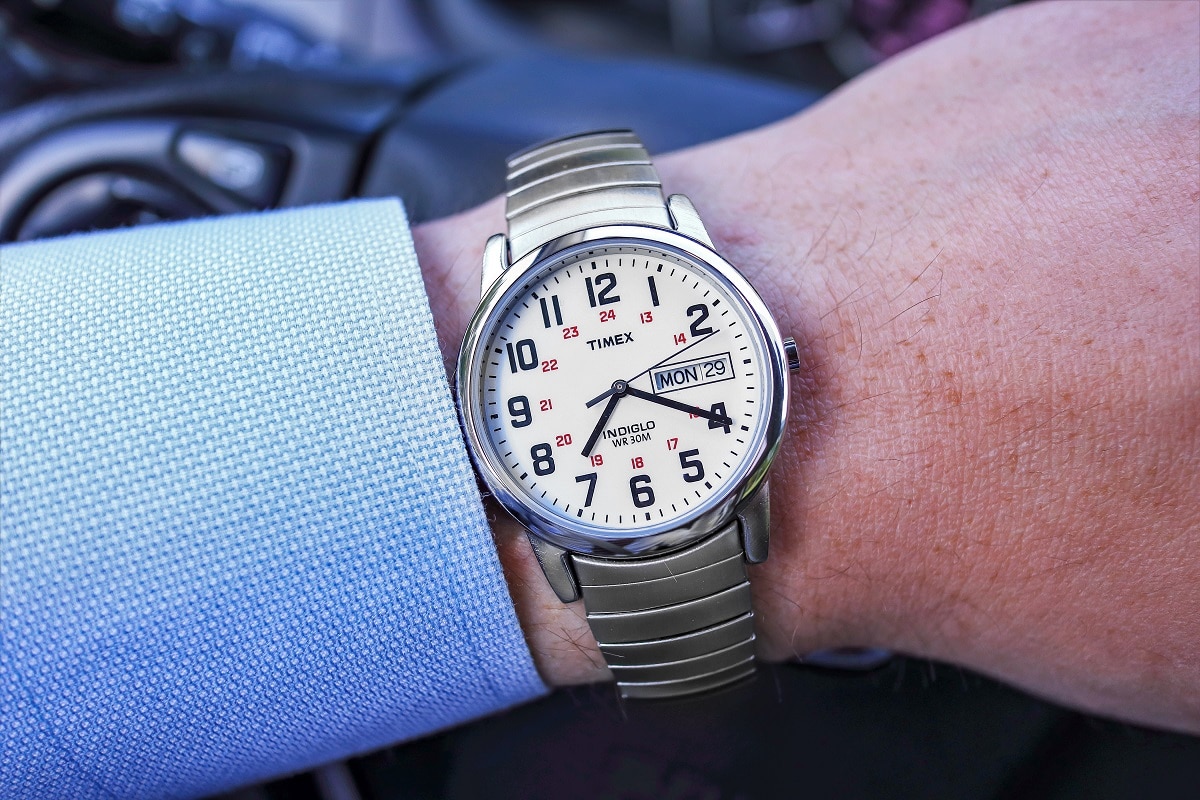
The Timex Easy Reader is not trying to be a Rolex Datejust alternative in the traditional sense, and that’s why it earns a spot here. This is the budget wildcard for someone who wants the Datejust’s basic daily-use promise (clean dial, easy readability, shirt-cuff friendliness, and zero outfit drama) without caring about automatic movements, Swiss finishing, or the little prestige games that sometimes make watch collecting weird. Its biggest strength is how little effort it asks from the wearer. At 35mm wide and only 8mm thick, it sits flat on the wrist and slides under sleeves without announcing itself. The brass case keeps the weight down, but during wear, it doesn’t come across as flimsy or toy-like. It feels more like a simple tool for getting through the workday, which isn’t a bad thing when the whole point is to have something readable, comfortable, and office-safe.
The dial carries most of the appeal. The white background, bold black numerals, and open layout make the time easy to catch at a glance, whether you’re at a desk, driving, or moving between errands. The red 24-hour track adds a bit of practical detail without making the dial feel crowded, and the day-date windows sit neatly enough within the design. Setting them is less charming. There’s no dedicated quickset for the day, so adjustments take longer than they should, and the small crown can be annoying if you have larger fingers. Thankfully, once the watch is set, the quartz movement stays steady enough that we didn’t notice drift during our review.
The expansion bracelet is where opinions split. The no-clasp, pull-on setup makes daily wear easy, and it stayed comfortable through office days and casual use. The brushed links also line up cleanly with the lugs, which helps the whole thing look more intentional than the price suggests. Hairier wrists may have a different relationship with it, and not a warmer one. The mineral crystal handled bright light without creating legibility problems, and Indiglo remains the Easy Reader’s party trick, lighting the full dial evenly when the room gets dark.
As a Datejust alternative, the Timex Easy Reader works for a very specific person: someone who wants simple, readable, low-pressure wristwear that can slip under a shirt cuff without making the day about the watch. It will not scratch the mechanical itch, but it does understand daily wear better than many watches that try much harder.
Pros
- The white dial and bold numerals make the watch easy to read quickly.
- The 35mm slim, lightweight brass case wears comfortably and disappears under sleeves.
- The expansion bracelet makes on-and-off wear simple.
- Indiglo lights the entire dial evenly in low-light settings.
Cons
- The small crown can be awkward for larger fingers.
- The expansion bracelet may pull wrist hair for some wearers.
- Day adjustment takes longer without a dedicated quickset.
Addiesdive AD2030
| Price: | $50 – $60 |
| Water Resistance: | 100m |
| Case Dimensions: | 36mm (diameter) x 46mm (lug-to-lug) x 12mm (thickness) |
| Lug Width: | 19mm |
| Movement: | Seiko VH31 quartz |
The Addiesdive AD2030 belongs in this Rolex Datejust alternatives conversation because it understands one of the Datejust’s most useful tricks: a clean dial, compact case, polished details, and enough everyday practicality to work almost anywhere. It obviously is not playing in the same universe as a Datejust in terms of finishing, heritage, or long-term ownership feel. Nobody should pretend otherwise. But as a drastically cheaper way to get that tidy, office-friendly, quietly dressy wrist presence, it makes a stronger case than expected.
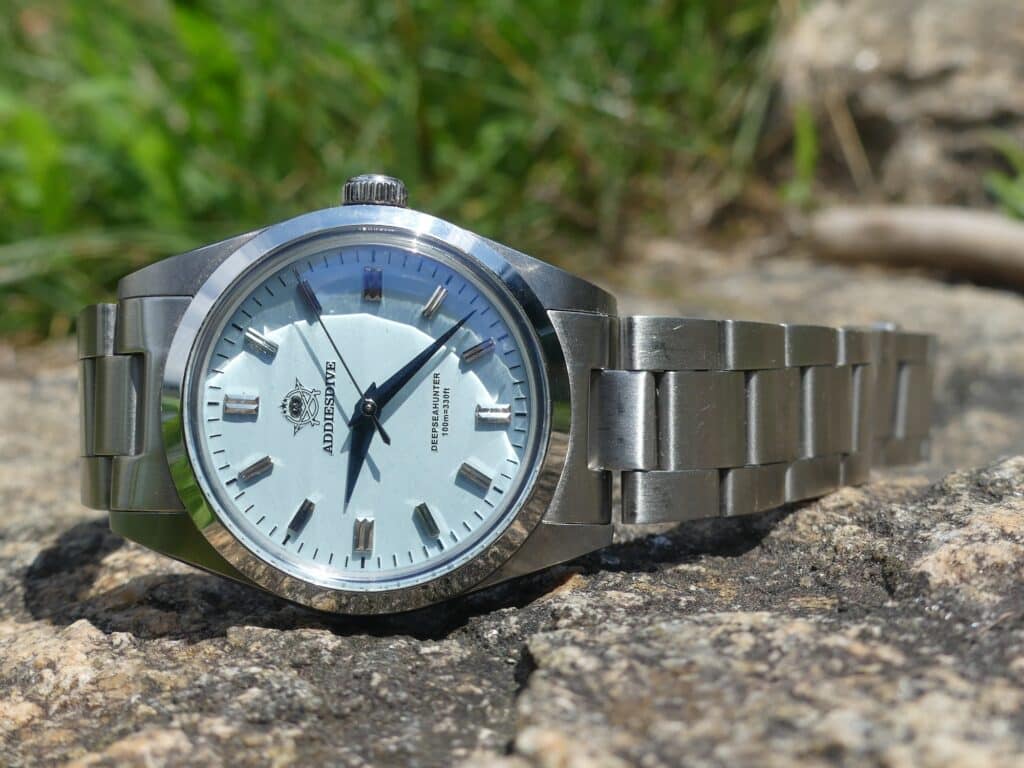
We picked up the blue-dial version from AliExpress, expecting something disposable, and the first surprise was how cohesive it felt. The 36mm case wears like a proper modern dress watch, especially if your idea of daily wear leans smaller and cleaner rather than oversized and shouty. The brushed lugs and polished case sides create a visual split that makes it look more refined than the price suggests, while the screw-down crown and 100m of water resistance make it easier to treat as an everyday watch rather than something you baby every time a sink appears.
The dial is where the AD2030 does most of its damage. The ripple texture catches light gently and gives the blue surface more depth than we expected at this price. The polished indices and mirror-finished hands looked crisp and clean under close inspection, which is often where ultra-budget watches start apologizing for themselves. The mineral crystal is the predictable compromise. It stayed clear and distortion-free in use, but it will not resist scratches as well as sapphire.
The Seiko VH31 high-beat quartz movement also helps the AD2030 feel less like a throwaway, cheap watch. The second hand sweeps smoothly enough to give the impression of an automatic, while still keeping the low-maintenance reliability that makes quartz so painless to own. Over several weeks hands-on reviewing, accuracy stayed spot-on, and the faster-tick rhythm was convincing enough to fool even seasoned collectors at a glance. The bracelet is where the price is more clearly shown, though not in a deal-breaking way. The brushing is even, the taper feels comfortable, and the milled clasp gives it more solidity than expected. However, the bracelet finishing trails the case, and the use of pins instead of screws makes sizing or changes less pleasant than they could be. Even so, the AD2030 feels consistent rather than cobbled together, which is the real win here.
Pros
- The Seiko VH31 high-beat quartz movement delivers a smooth sweep and high accuracy.
- The milled clasp and bracelet taper help it feel more complete than expected.
- Ripple-textured blue dial adds surprising depth and light play.
- Case, hands, and indices show impressive finishing for the price.
- The screw-down crown and 100m water resistance combination make it more practical for daily wear.
Cons
- Bracelet finishing is not as refined as the case.
- Pin-based bracelet sizing is less convenient than screws.
Orient Bambino
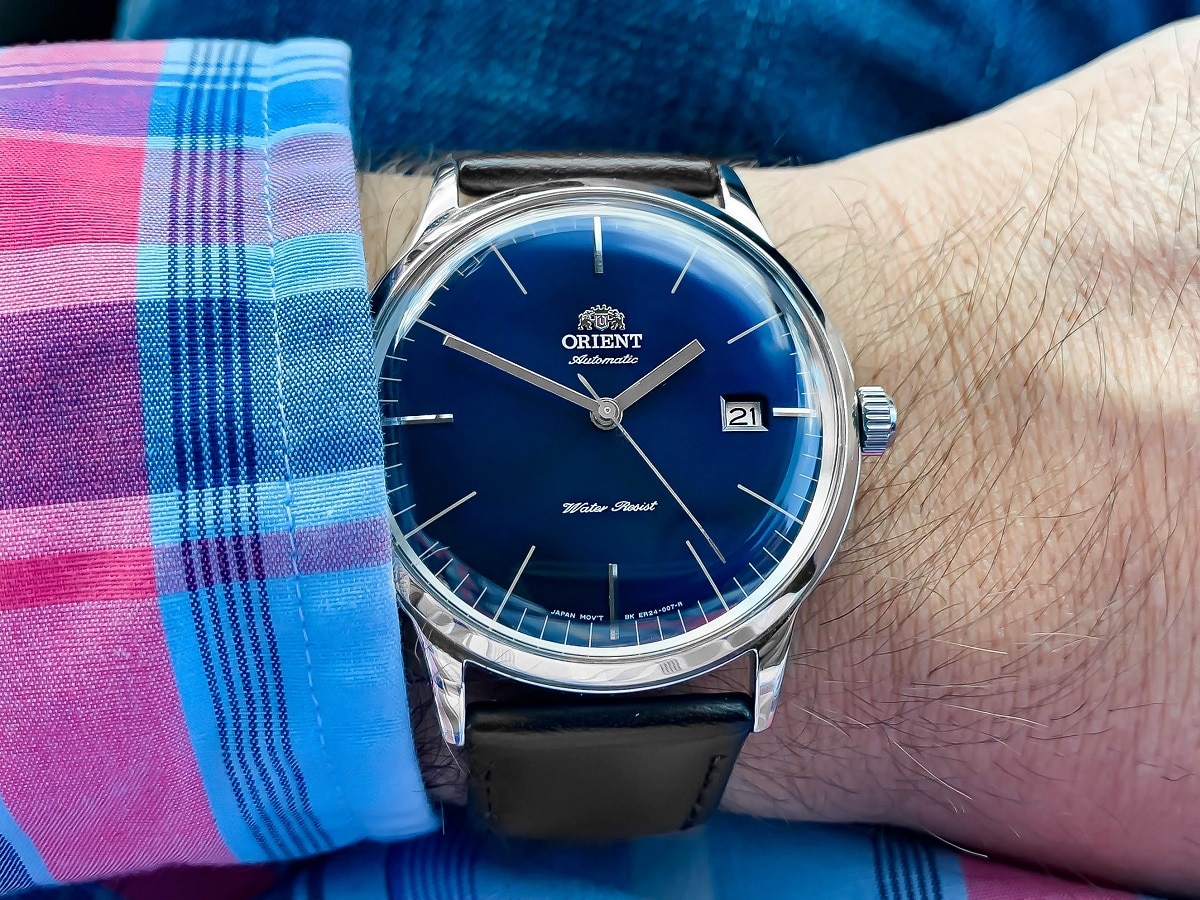
| Price: | $180 – $250 |
| Water Resistance: | 30m |
| Case Dimensions: | 40.5mm (diameter) x 44.3mm (lug-to-lug) x 12mm (thickness) |
| Lug Width: | 21mm |
| Movement: | Caliber F6724 Automatic |
The Orient Bambino is not a direct Rolex Datejust substitute, and pretending it is would make both watches sound less interesting. The Datejust is an everyday dress-sport watch. The Bambino leans more towards a traditional dress watch. Still, it belongs here because plenty of people chasing that polished Datejust-adjacent look are not chasing Rolex ownership at all. They want something classic, affordable, polished, and grown-up enough for offices, weddings, interviews, or the first stage of figuring out whether a dress watch even fits their life.
On the wrist, the Bambino works better than its 40.5mm case size suggests. That number can sound large for a dress watch, but the short lug-to-lug and sloped lugs help it settle down once worn. When we passed ours around to friends and coworkers, the reaction was consistent: it wore off easier than expected. It also slides under a shirt cuff with little resistance, which matters more here than theoretical measurements would.
The dial is the main reason people keep coming back to the Bambino. Across the range, the colors have more depth than this price usually gives you, and in good light, the watch can look quite refined. The shape language helps, too. It feels a little more angular and cleaner than many soft, rounded entry-level dress watches, which gives it a more contemporary edge. The trade-off is legibility. The domed mineral crystal looks great from an angle, especially around that 45-degree view, but it throws glare more often than we’d like. The polished hands and markers can also wash out against the dial, and with no lume, low-light readability is not part of the package.
The in-house Orient F6724 movement offers hacking and hand-winding, making the Bambino a useful entry point into mechanical watch ownership. It teaches the small rituals without asking for much upfront. Still, the rotor is louder than ideal, the power reserve comes in under 30 hours, and the small crown makes winding feel fiddlier than it should. The stock leather strap is also clearly where money was saved. It does not impress up close, though it remains comfortable enough in daily use. As one of the best alternatives to the Rolex Datejust, the Bambino makes sense for someone who does not need sport-watch toughness or Rolex-like versatility. It is more of a dress anchor on a budget than an all-purpose daily, but for the right wearer, that is the point.
Pros
- Wears smaller than the 40.5mm diameter, thanks to the short lug-to-lug and sloped lugs.
- Rich dial colors give the watch more visual depth than the price suggests.
- In-house automatic movement includes hacking and hand-winding.
Cons
- The domed mineral crystal creates noticeable glare.
- Power reserve falls short of 30 hours.
- Rotor noise is easy to notice during wear.
- Polished hands and markers can fade into the dial, and there is no lume.
Casio Oceanus T200
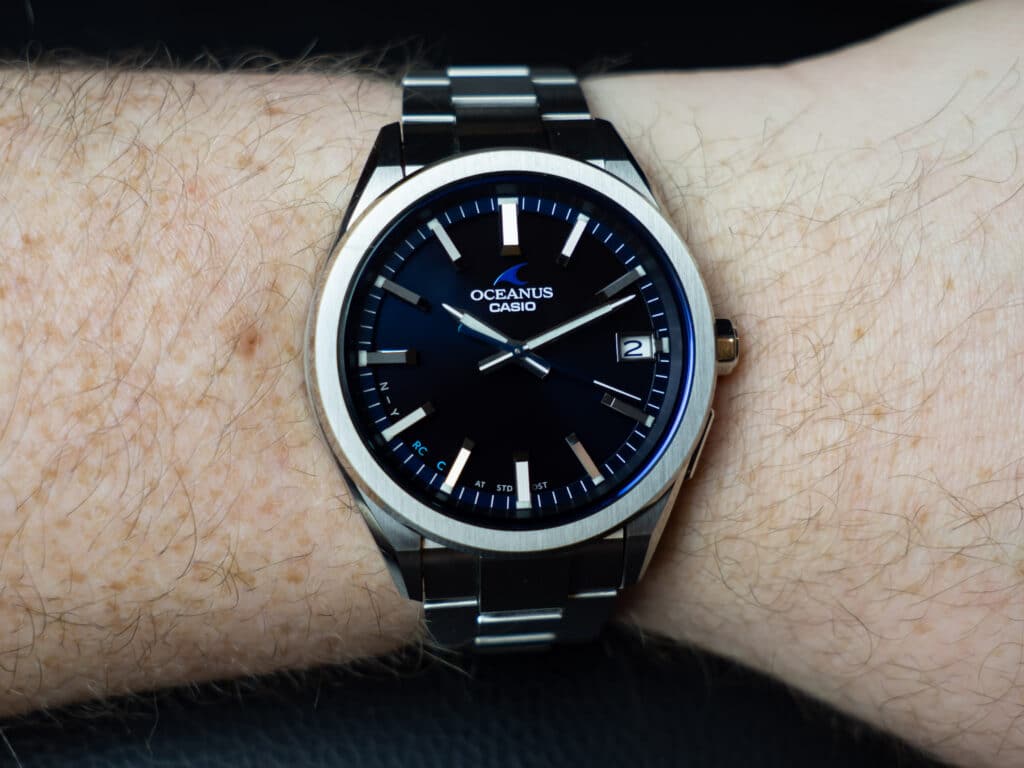
| Price: | $300 – $500 |
| Water Resistance: | 10 Bar (100m) |
| Case Dimensions: | 41.4mm (diameter) x 49mm (lug-to-lug) x 10.7mm (thickness) |
| Lug Width: | 20mm |
| Movement: | Tough Solar movement (Module 5596) |
The first thing the Oceanus T200 gets right is that it doesn’t behave like a “tech watch,” even though the convenience is the whole reason it works. On the wrist, it reads as a clean blue-dial bracelet watch with enough polish for office wear, not as a gadget trying to sneak into a dress shirt. That matters for anyone drawn to the Rolex Datejust as a daily watch, because the appeal is not only about status or mechanics. It is about having something refined, legible, and easy to live with.
On the wrist, the T200 feels more refined than most solar quartz watches we’ve handled in this price range. The case’s finish alternates between brushed and polished surfaces, and those transitions give it a dressier look without pushing it into shiny-for-the-sake-of-shiny territory. The deep blue dial has more layering than a flat glossy surface, and the floating hour markers, created through cutouts in the chapter ring, add depth without making the layout busy. In natural light, the blue-tinted sapphire crystal creates a subtle glow across the dial, as if the watch has its own soft internal light source. It is a neat trick, and thankfully not the kind that gets annoying after the first week.
The real reason the piece earns its place is how little it asks from you. The Tough Solar 5596 module draws power from light, and during our hands-on review, it remained fully charged without any special effort to expose it to sunlight. Bluetooth pairing through the Casio Oceanus app also worked cleanly in testing, with every connection syncing without issue. Once it’s set up, the watch keeps accurate time in the background, which is what some of us want from a weekday watch: no winding, no date correction every time it sits for a few days, no tiny ownership rituals unless you enjoy those rituals.
There are still some Casio-ish compromises hiding under the polished surface. The bracelet can sound rattly when the watch is off the wrist, and sizing it uses a pin-and-collar system that requires more patience than it should. Some people may also find the connectivity text on the dial distracting, especially if they want their everyday watch free of tech reminders. The lume works, but it is modest, so this would not be our pick for strong nighttime readability. In short, the Oceanus T200 makes the most sense for someone who likes the Datejust’s clean, bracelet-forward daily-wear role but has no interest in mechanical upkeep or luxury theater. It gives you refinement, accuracy, and convenience in a package that still looks like a proper watch. That sounds less romantic than a Swiss automatic, sure, but on a busy Tuesday morning, romance is usually not the thing getting you out the door on time.
Pros
- Tough Solar 5596 module runs on light and stays fully charged without deliberate charging.
- Strong balance of analog design and modern convenience for the price.
- Blue-tinted sapphire crystal creates a subtle glow in natural light.
- Deep blue dial and floating markers add depth without clutter.
- Bluetooth syncing through the Casio Oceanus app keeps timekeeping precise.
Cons
- Pin-and-collar bracelet sizing takes patience.
- The bracelet can feel rattly when the watch is off the wrist.
- Lume is usable but not very strong at night.
- Dial text related to connectivity may bother purists of a cleaner dial.
Seiko SRPE51
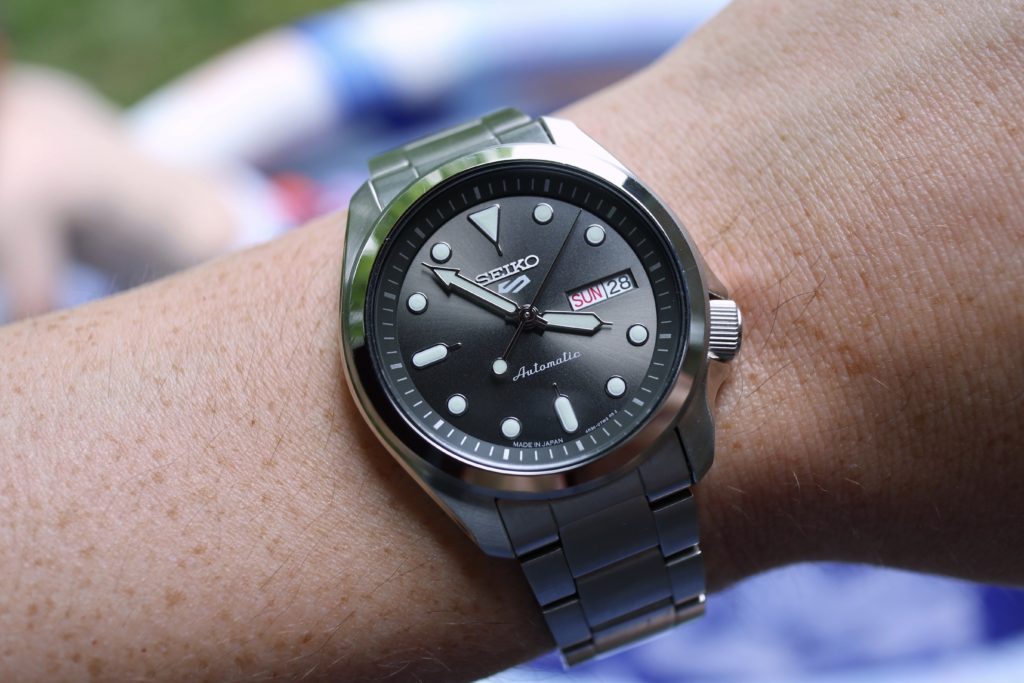
| Price: | $315 |
| Water Resistance: | 100m |
| Case Dimensions: | 40mm (diameter) x 44mm (lug-to-lug) x 12mm (thickness) |
| Lug Width: | 20mm |
| Movement: | Seiko 4R36 |
Some watches get better when you remove a part. The SRPE51 is a good example. Seiko kept enough of the SKX-adjacent case language to make it feel familiar, then took away the rotating bezel and most of the dive-watch cosplay. What’s left is a cleaner, more budget-friendly Seiko 5 that feels casual enough for daily wear. That makes it a useful Rolex Datejust alternative for someone who wants the same general “one watch for most normal days” energy, but with more sportiness, less polish, and far less financial sweating.
The 40mm case lands in a practical middle zone. It doesn’t feel tiny or delicate, but it also avoids the oversized case problem that can make a watch annoying during a full workday. During our wear period, it sat evenly and stayed low enough that we could forget about it until someone across the table noticed the grey dial. The polished fixed bezel helps change the watch’s overall personality. Compared with its diver relatives, the SRPE51 looks cleaner and more intentional in business-casual attire, even though it still carries that approachable Seiko looseness that keeps it from feeling too dressed up.
The grey dial does a lot of the heavy lifting. It subtly shifts as the lighting changes, giving the watch some visual life without turning every meeting into a dial appreciation hour. Applied indices and the newer Seiko 5 branding keep it feeling current, while the updated handset improves legibility compared to older SKX-style layouts. The flat Hardlex crystal also keeps distortion to a minimum, so quick time checks are easy. Seiko’s LumiBrite is a real strength here, staying useful well after the lights go down. The only low-light nitpick is the second hand. A lollipop tip would have made it easier to track at a glance.
Inside, the 4R36 automatic is familiar Seiko territory, and that is not a bad thing. Hacking and hand-winding make the watch easier to live with if it becomes your everyday piece, and the display caseback adds a little mechanical charm for anyone still enjoying the “hey, tiny machine” phase of ownership. The bracelet is less convincing. Hollow end links make it feel light and jangly when compared with the otherwise solid-feeling case. That said, it sizes easily and stays secure once adjusted. The drilled 20mm lugs help soften that complaint because strap changes are quick. Leather leans it toward office wear, while a casual strap brings back the Seiko weekend energy.
For someone considering the Datejust mainly as a tidy daily wearer, the SRPE51 offers a cheaper, more relaxed route into the same general role. It won’t give you Rolex refinement, and the bracelet makes that clear, but the dial, case shape, lume, and strap flexibility make it easy to keep in rotation without overthinking it.
Pros
- Grey dial shifts nicely under changing light without feeling distracting.
- LumiBrite remains strong and useful in low-light settings.
- Drilled 20mm lugs make it easy to change the personality with straps.
- 4R36 movement adds hacking, hand-winding, and a visible caseback.
- Polished fixed bezel gives it a cleaner, less tool-heavy look.
Cons
- A slight chapter-ring alignment issue is visible on close inspection.
- The bracelet feels jangly due to the hollow end links.
- The Hardlex crystal is more prone to scratching than sapphire.
Baltic MR01
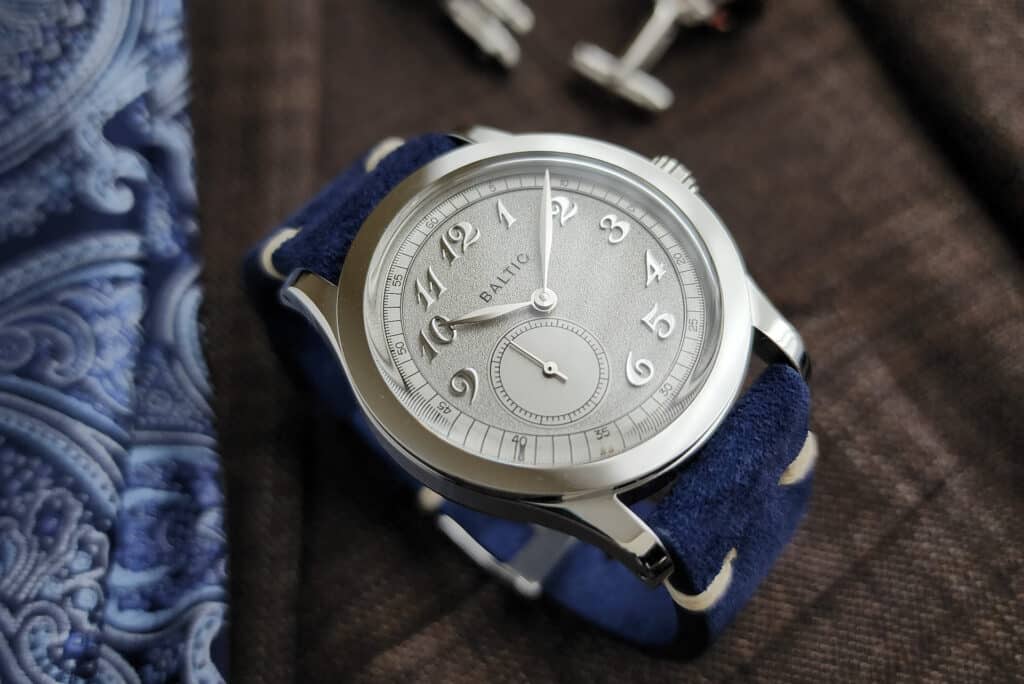
| Price: | $635 |
| Water Resistance: | 30m |
| Case Dimensions: | 36mm (diameter) x 44mm (lug-to-lug) x 9.9mm (thickness) |
| Lug Width: | 20mm |
| Movement: | Hangzhou 5000a automatic |
The MR01 is what happens when the Datejust idea is filtered through vintage proportions rather than modern all-purpose polish. It does not try to be sporty, and that already sets it apart from many everyday watches chasing the same buyer. This is the option for someone who likes the Datejust’s ability to move between casual and dressed-up settings, but would rather wear something smaller, quieter, and more enthusiast-coded.
The size is the first thing that makes the MR01 work in that role. At 36mm and under 10mm thick, it stays slim and manageable through long stretches at a desk, and it never feels like it is fighting a cuff. The fully polished surfaces could have pushed it too dressy, but the brushed mid-case breaks things up enough that the watch catches light without shouting across the table. It feels refined in a softer way than a Datejust, more old-soul dinner watch than boardroom daily driver.
Most of the character comes from the dial. The fine sand-textured silver surface gives it depth without making the layout busy, while the offset guilloché small-second subdial adds enough structure to keep your eye moving. The polished Breguet numerals are the detail that pulled us back most often; in softer light, they read with a gentle glow rather than a hard shine. The domed Hesalite crystal introduces slight distortion at the edges, softening the overall presentation. It is less crisp than sapphire, but that warmth is part of the appeal here. From the back of the display case, the Hangzhou 5000a automatic adds another layer of interest. The Chinese-made movement may still give some collectors pause, but the polished bridges, perlage, and gold-tone engraving feel generous at this price. In daily use, the 42-hour power reserve was easy to manage, and the watch ran consistently enough that we stopped thinking about it. That is usually a good sign.
The practical limits are clear. Hesalite scratches more easily than sapphire, and the 3 ATM water resistance means this is not a watch to wear around water with much confidence. Still, on leather or the optional beads-of-rice bracelet, the MR01 settles into daily wear with a lot of charm. Pick this over a Datejust-style piece if you want classic polish without the obviousness, and if texture, proportion, and a bit of microbrand oddness matter more to you than rugged everyday security.
Pros
- Sand-textured silver dial and guilloché small seconds add depth without clutter.
- Polished Breguet numerals give the watch a distinct vintage-inspired character.
- The slim 36mm case and sub-10mm thickness make it comfortable for desk wear and cuff use.
- Domed Hesalite crystal adds warmth and soft edge distortion.
Cons
- The Chinese-made Hangzhou movement may not appeal to every collector.
- 3 ATM water resistance limits everyday toughness around water.
Mido Commander M8429.3.22.13
| Price: | $960 |
| Water Resistance: | 50m |
| Case Dimensions: | 37mm (lentgh) x 37mm (width) x 10.5mm (thickness) |
| Strap Width: | 19mm, tapers down to 16mm |
| Movement: | Mido Caliber 80 |
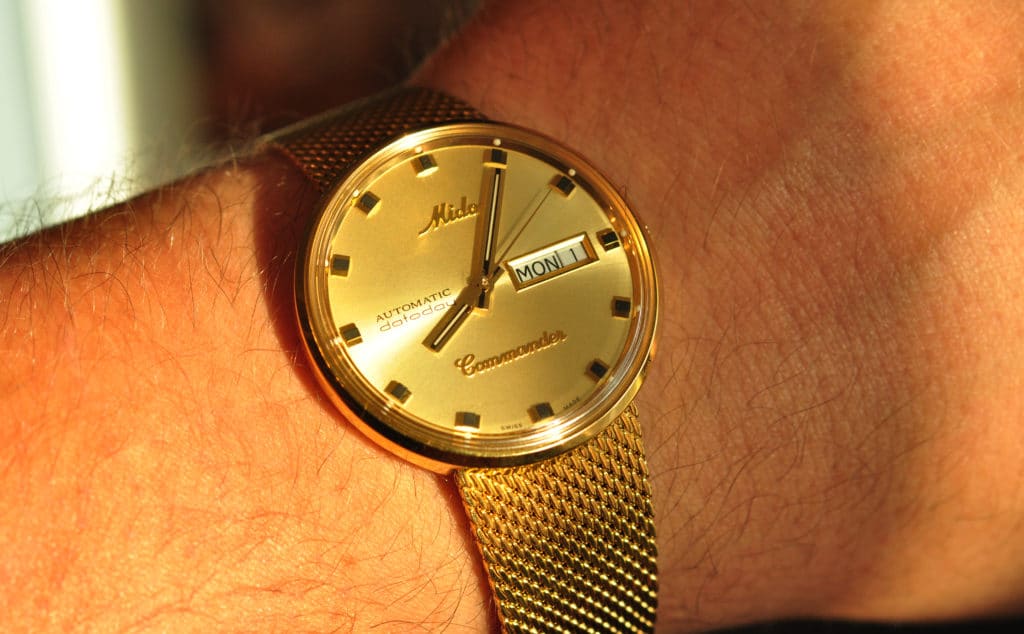
The Commander M8429.3.22.13 brings a very different kind of Datejust energy. It is not trying to look modern, and that is the whole charm. This design has stayed close to the Commander formula Mido has been running since 1959, with the old Ocean Star connection still hinted at through the sea star on the caseback. In gold, it makes the most sense to us. The color can get dismissed as flashy, but on a vintage-leaning watch like this, it feels natural rather than loud. It has that polished, older-school bracelet-watch feel someone might want from a Datejust, only softer, rounder, and more jewelry-like.
The case is almost aggressively simple: 37mm, round, lugless, and only 10.8mm thick, including the crystal. The mesh bracelet tucks into the back of the case, giving it an integrated look without the bulk of a modern integrated bracelet. That makes the watch work with a summer suit, a loose shirt, or a casual outfit where a standard dress watch might feel too stiff. The monocoque case keeps the back smooth, while small recesses help the sides avoid looking thick. The tiny signed crown is charming until you have to use it. It is faithful to older Commanders, but winding is quite awkward. We found the only practical move was to drag a fingertip through the recess and hope for enough grip; even then, the resistance to movement slowed progress. Most owners will probably shake it awake and move on.
The gold sunburst dial carries the vintage mood better than almost anything else on the watch. The cursive Mido logo and Commander text feel period-correct in the best way, and almost everything is applied except “Automatic” and “Datoday.” The framed day-date window is easy to read, the five-minute markers use black tops for contrast, and the wide baton hands repeat that gold-and-black treatment with lume paint. Directly on the wrist, the darker reflections help the hands and logo stand out against all that gold. The lume dots and hand lume are present, though they feel more like tradition than a real nighttime feature. The more annoying issue is the precision setting. There are no minute markers outside the five-minute intervals, so setting the watch to an exact off-marker time takes more squinting than it should.
The slightly domed Hesalite crystal is part of what makes the whole thing feel warm and old-school. It softens glare into a haze rather than a hard reflection, and the tiny etched cursive Mido logo in the center is a neat detail at this price. The downside is obvious: Hesalite scratches, and because the crystal sits proud of the case, it will collect marks if worn regularly. Polywatch helps, but this is not sapphire ownership. The crystal also matters for servicing because the monocoque case requires access from the front. The Milanese bracelet suits the watch beautifully, tapering from about 19mm to 16mm, but the lugless construction means strap changes are basically off the table. The adjustable buckle has helpful notches and a flip clasp for extra security, though the lever is stiff enough to test your patience.
Inside, the Caliber 80 offers the Commander greater practicality than its exterior suggests. Based on the old ETA 2836-2 architecture, it runs at 21,600 bph and stretches the power reserve to 80 hours. That matters here because winding the watch is not fun. The free-sprung setup also helps accuracy, and while this version is not COSC-certified, our testing experience and plenty of owner reports suggest these often run around plus or minus 10 seconds a day or better. As a Rolex Datejust alternative, this is for someone who wants day-date functionality, bracelet dressiness, and vintage charm over modern convenience. It is form over function in some ways, but the function underneath is stronger than the fussy exterior lets on.
Pros
- Vintage-leaning gold case and dial give it a distinct old-school Datejust-adjacent feel.
- 37mm lugless case and 10.8mm thickness wear slim and dressy.
- The Milanese bracelet integrates cleanly and tapers nicely from about 19mm to 16mm.
- The framed day-date display is practical and easy to read.
- Caliber 80 brings an 80-hour power reserve, which helps offset the awkward winding.
Cons
- The tiny crown makes winding and setting frustrating.
- The lack of minute markers between five-minute intervals makes precise setting harder.
- The lugless case and a pinned bracelet make strap changes nearly impossible.
- The adjustable Milanese buckle lever is very stiff.
Mido Commander Datoday
| Price: | $1,260 |
| Water Resistance: | 50m |
| Case Dimensions: | 40mm (diameter) x 10.7mm (thickness) |
| Lug Width: | 21mm |
| Movement: | Mido Caliber 80 automatic |
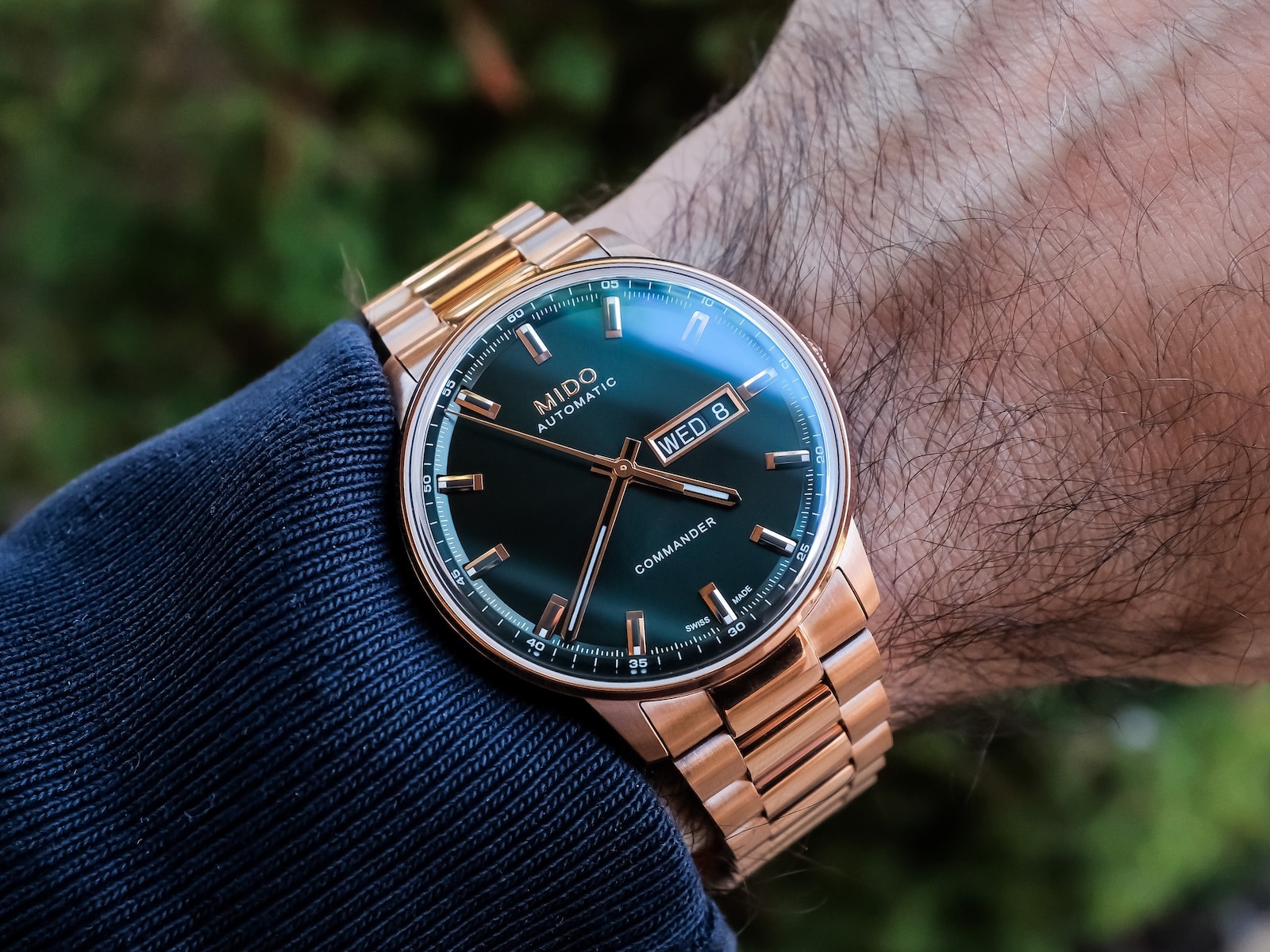
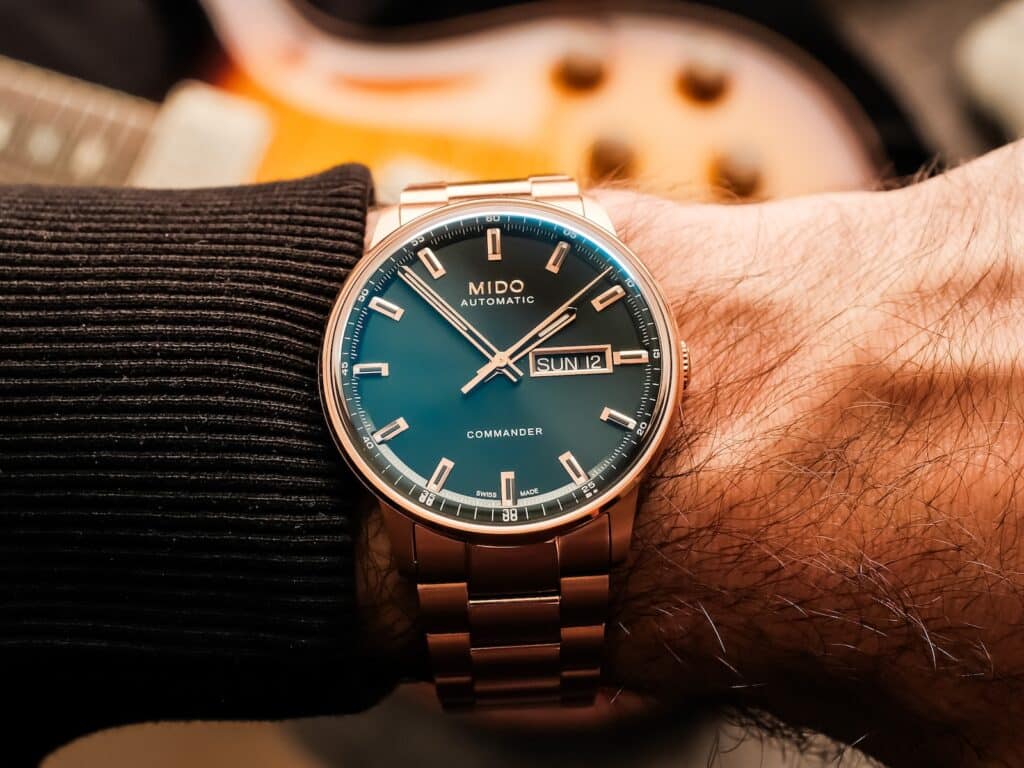
The Commander Datoday brings the kind of dressy bracelet presence that makes sense alongside the Datejust, but it does so with a warmer, more vintage-leaning attitude. The rose-gold-tone PVD case and bracelet suggest they could go wrong fast, but the green dial keeps the watch grounded rather than letting it wander into costume-jewelry territory. That dial shifts from a cooler bluish tone to a deeper forest shade depending on the light, while the stepped outer section and white markings give it enough structure to stay crisp. Rose-gold-tone applied markers and baton hands tie everything together, and legibility stays crisp under the sapphire crystal. The framed day-date display is prominent, easy to read, and watching both windows snap over after midnight adds a small mechanical pleasure that suits the watch’s old-school mood.
At 40mm wide and 10.7mm thick, the case has presence without feeling bulky, and the slim profile helps it move between casual daily wear and smarter settings. The case flows into the three-link bracelet, making the watch feel like a complete design rather than a dress watch mounted on a bracelet. The 50 meters of water resistance and push-pull crown are honest signals: this is made for normal daily wear, not extreme sports-watch abuse. We’d prefer a larger crown, as winding and setting would be easier with a better grip.
As mentioned in our dedicated review, the Caliber 80 is the practical win here. Its 80-hour power reserve means you can take the watch off for a couple of days and avoid immediately resetting the day and date, which matters more in real life than another line of movement bragging rights. The Powermatic-style architecture feels familiar and reassuring, and the Nivachron balance spring adds useful resistance to magnetism and shocks. The display case back is there, but the real appeal is convenience and dependability.
The bracelet looks right with its brushed and polished rose-gold-tone PVD surfaces, and the butterfly clasp keeps the underside clean on the wrist. Quick-release spring bars are a smart touch, especially since a dark brown leather strap would probably make the green-and-rose-gold combination even warmer. The misses are familiar: no screw links, a 21mm lug width that limits strap options, and a taper that could be stronger near the clasp. Still, as a Rolex Datejust alternative, the Commander Datoday works for someone who wants the polished everyday-watch formula with more color, more warmth, and a lot less predictability.
Pros
- Rose-gold-tone PVD case and bracelet feel distinctive without overwhelming the watch.
- Clear-framed day-date display adds practical charm.
- Quick-release spring bars make strap changes simple.
- Nivachron balance spring adds resistance to magnetism and shocks.
- The slim 10.7mm case profile helps it work in both casual and dressier settings.
- Caliber 80 offers an 80-hour power reserve for easier ownership.
Cons
- The crown could be larger to make winding and setting easier.
- Push-pull crown and 50m water resistance keep it from feeling sport-watch tough.
- 21mm lug width limits strap options.
Christopher Ward The Twelve 36mm Titanium

| Price: | $1,895 |
| Water Resistance: | 100m |
| Case Dimensions: | 36mm (diameter) x 40.8mm (lug to lug) x 8.95mm (thickness) |
| Lug Width: | Integrated bracelet, starts 22mm at lugs, tapering down to about 16-17mm at the clasp |
| Movement: | Sellita SW300-1 COSC |
The Twelve 36mm Titanium is the pick for someone who likes the Datejust’s compact everyday-luxury role but wants the whole thing pushed in a sharper, more contemporary direction. It is sportier, yes, but the appeal comes from a similar place: a small case, a bracelet that feels central to the design, and enough refinement to move through a normal week without looking like weekend gear that wandered into the office.
That compact case is the reason the watch works as well as it does. At 36mm wide and under 9mm thick, The Twelve has presence without bulk, and the titanium construction keeps the whole thing light on the wrist. The case sits low, the integrated bracelet wraps around the wrist rather than perching atop it, and the 12-sided bezel lends the profile some architectural definition. It feels elevated without getting precious, which is a tricky balance for any compact integrated-bracelet watch.
The Lagoon Blue dial gives the watch its personality. It shifts from a brighter sky blue to a deeper navy depending on the light, which keeps the surface lively without relying on loud color alone. The applied indices and polished hands are cleanly done, though the same level of reflectivity that makes the dial look dynamic can work against it. In bright outdoor light, the hands can blend into the dial at certain angles, so quick legibility is not always as effortless as the design suggests.
The COSC-certified Sellita SW300 backed up the premium pitch while we wore it, running within +6/-4 seconds per day over the course of the week. Add the screw-down crown and 100 meters of water resistance, and The Twelve feels like a real everyday watch rather than a delicate integrated-bracelet design exercise. The price sits above some comparable alternatives, and the quick-release bracelet system can be annoying to reattach, but the overall package feels intentional. For someone who finds the Datejust too traditional, this offers compact polish, light wear, and a modern, bracelet-driven design without sacrificing daily practicality.
Pros
- The titanium case and bracelet keep the watch quite light.
- Integrated bracelet drapes naturally around the wrist.
- 36mm width and sub-9mm thickness make it compact without feeling fragile.
- Screw-down crown and 100m water resistance support real everyday use.
- COSC-certified Sellita SW300 ran within +6/-4 seconds per day during testing.
Cons
- The quick-release bracelet system can be fiddly when reattaching.
- Polished hands can disappear against the dial in bright outdoor light.
- The sportier design may not suit someone seeking a more traditional Datejust-style watch.
Maurice Lacroix Aikon Automatic

| Price: | Starts $1,990 |
| Water Resistance: | 200m |
| Case Dimensions: | 42mm (diameter) x 48mm (lug-to-lug) x 11mm (thickness) |
| Lug Width: | Integrated bracelet, starts 25mm at lugs, tapering down to 20mm at the clasp |
| Movement: | ML115 Caliber (Maurice Lacroix branded base Sellita SW200) |
The Aikon Automatic is for the reader who wants their Datejust alternative to feel polished, Swiss, and substantial on the wrist, but not really quiet. This is not a subtle “slips under the cuff and disappears” kind of watch. At 42mm, it has presence, and the integrated-bracelet layout makes that presence part of the point. The case and bracelet flow together cleanly, with crisp brushed-and-polished transitions that give the watch a more finished feel than the easy “inspired by” criticism suggests.
The bracelet does a lot of the heavy lifting. Brushed surfaces and polished bevels catch light with small wrist movements, while the taper from 25mm to 20mm keeps it from feeling like a steel cuff. The hidden butterfly clasp preserves the uninterrupted, integrated look, and once the bracelet is sized properly, comfort is strong enough for a full workday and whatever comes after. Getting it sized is the least pleasant part, though. The pin-and-collar system is fiddly, and although the quick-release setup helps with strap changes, the proprietary lug shape keeps you mostly within Maurice Lacroix’s own strap world.
For daily use, the Aikon is more capable than its polished exterior might suggest. The screw-down crown with 200 meters of water resistance makes it easier to treat as a true everyday watch, and the sapphire crystals on the front and back add the expected clarity. The grid-pattern dial suits the angular case and adds texture without becoming messy, but legibility can suffer in bright light when the polished hands lose contrast. During our hands-on testing, that meant occasionally tilting the watch for a cleaner read, which is not ideal for something meant to be grabbed at a glance.
The ML115 movement brings things back down to earth. It is essentially a dressed-up SW200: familiar, reliable, and easy to understand, but not as refined in terms of feel as the case and bracelet finishing. The winding has that bit of gritty sensation we’ve come to expect from the platform. Overall, it is not the cleanest or most original choice here, but it does deliver comfort, durability, and a finished look that holds up better in daily wear than skeptics might admit.
Pros
- The integrated case and bracelet give the watch a cohesive, substantial presence on the wrist.
- The bracelet’s finish feels strong, especially after proper sizing.
- Sapphire crystals front and back give the watch useful clarity.
- The hidden butterfly clasp keeps the profile clean across the wrist.
- Grid-pattern dial adds texture without making the layout chaotic.
Cons
- Pin-and-collar bracelet sizing can be frustrating.
- ML115 movement feels more basic than the exterior finishing suggests.
- Polished hands can lose contrast in bright light.
- Proprietary lugs limit strap flexibility.
Rolex Air-King 14000
| Price: | $5,400 – $6,900 |
| Water Resistance: | 100m |
| Case Dimensions: | 34mm (diameter) x 42.8mm (lug to lug) x 11.2mm (thickness) |
| Lug Width: | 19mm |
| Movement: | In-house caliber 3000 automatic |
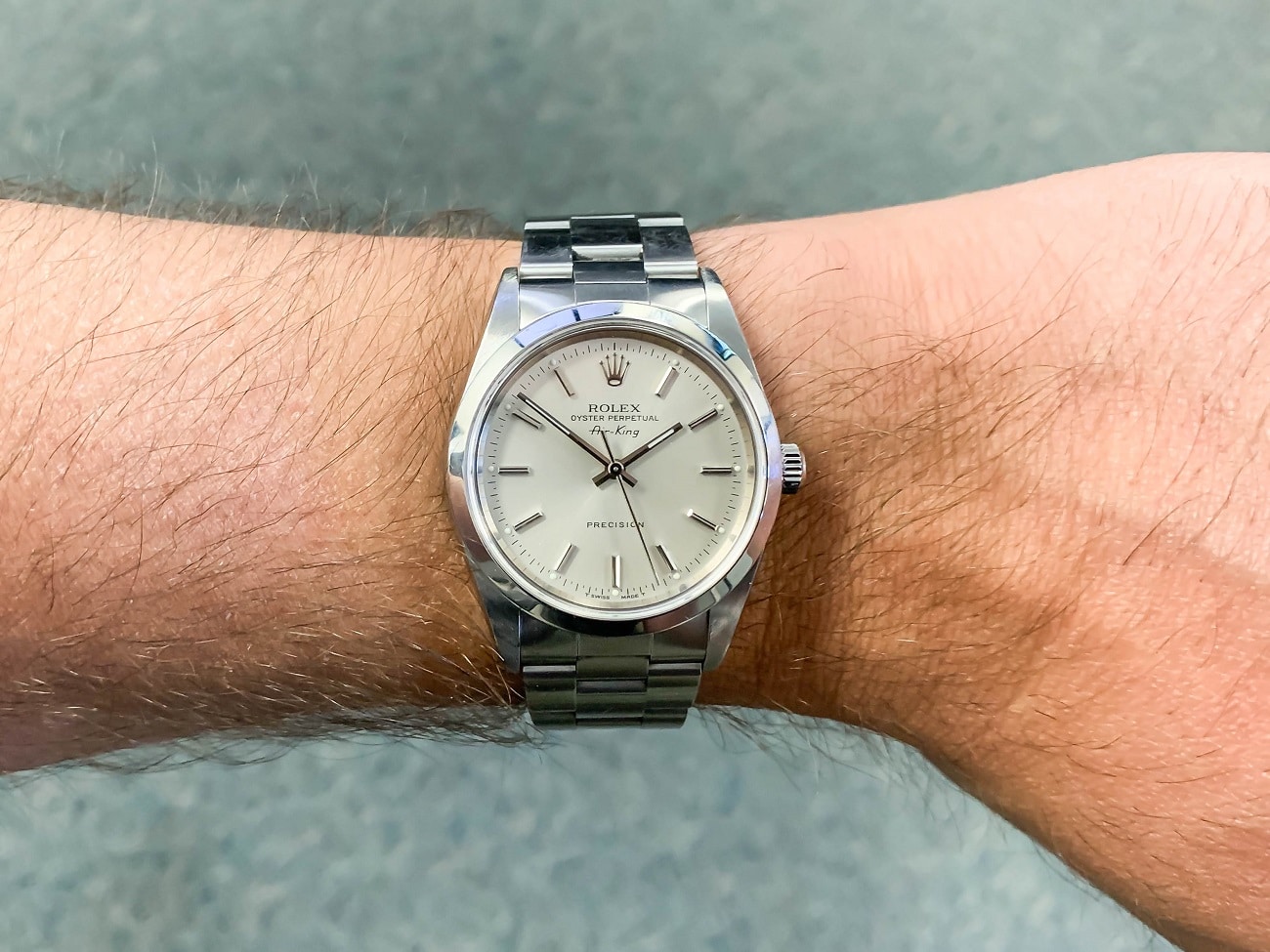
The Air-King 14000 is probably the most obvious sideways move for someone who wants the compact Oyster-case feel of a Datejust but not the fluted bezel, cyclops date lens, “yes, I know what this is” energy that comes with it. After reviewing it, the appeal felt less about entering Rolex ownership and more about how quietly the watch gets on with the day. It strips the formula down to a clean dial, slim case, balanced bracelet, and enough Rolex build quality to feel reassuring without asking to be noticed every five minutes.
The proportions are the whole story here. Around 11.2mm thick with a roughly 42.8mm lug-to-lug, the 14000 sits low and centered, helped by thin, tapered lugs that keep it from feeling top-heavy. The 19mm Oyster bracelet tapers to about 14mm at the clasp, which gives the watch a discreet, balanced feel on the wrist. There are no elaborate clasp tricks or modern bracelet theatrics, but the construction still feels solid and well-made. Over a full day, it becomes easy to forget in the best way, which is where it starts to make sense as a Datejust alternative.
The silver sunburst dial keeps things simple without going completely blank. It reacts softly to light, the baton markers stay clean, and the missing date window gives the whole watch a symmetry that the Datejust obviously lacks. Details like the “T Swiss Made T” text and tritium lume plots bring some age and character into the mix, though the lume itself is faint now and more charming than useful. That is part of the ownership reality with a watch like this: some details are there to remind you it has lived, not to outperform modern lume.
The Caliber 3000 fits the same restrained personality. In our testing, it ran around -7 seconds per day without a recent service, which says plenty about the movement’s durability. Winding felt smooth, and the twin-lock crown gives enough everyday water resistance that you do not have to treat it like a museum object. The trade-offs are worth taking seriously. The smaller proportions may feel too subtle if you are used to newer Rolex sizing, the 19mm lug width limits strap options, and servicing can feel expensive for a movement this simple. Still, for someone who wants the Datejust’s compact Rolex wearability in a cleaner, less dressed-up package, the Air-King 14000 fits the bill very well.
Pros
- The compact Oyster case wears low, centered, and easily through a full day.
- Oyster bracelet taper keeps the watch balanced and discreet on the wrist.
- The clean no-date dial gives it a simpler, more symmetrical look than a Datejust.
- Smooth winding and twinlock crown add confidence for everyday use.
- Caliber 3000 runs reliably (around -7 seconds per day in our testing) despite no recent service.
Cons
- 19mm lug width makes strap swaps less convenient.
- Lacks the extra visual presence some buyers may want from a Datejust-style Rolex.
- Faint tritium lume is more character than function now.
- Servicing costs can feel high relative to the movement’s simplicity.
Rolex Explorer 14270
| Price: | $5,900 – $6,900 |
| Water Resistance: | 100m |
| Case Dimensions: | 36mm (diameter) x 44mm (lug to lug) x 11mm (thickness) |
| Lug Width: | 20mm |
| Movement: | Cal. 3000 (in-house) movement |
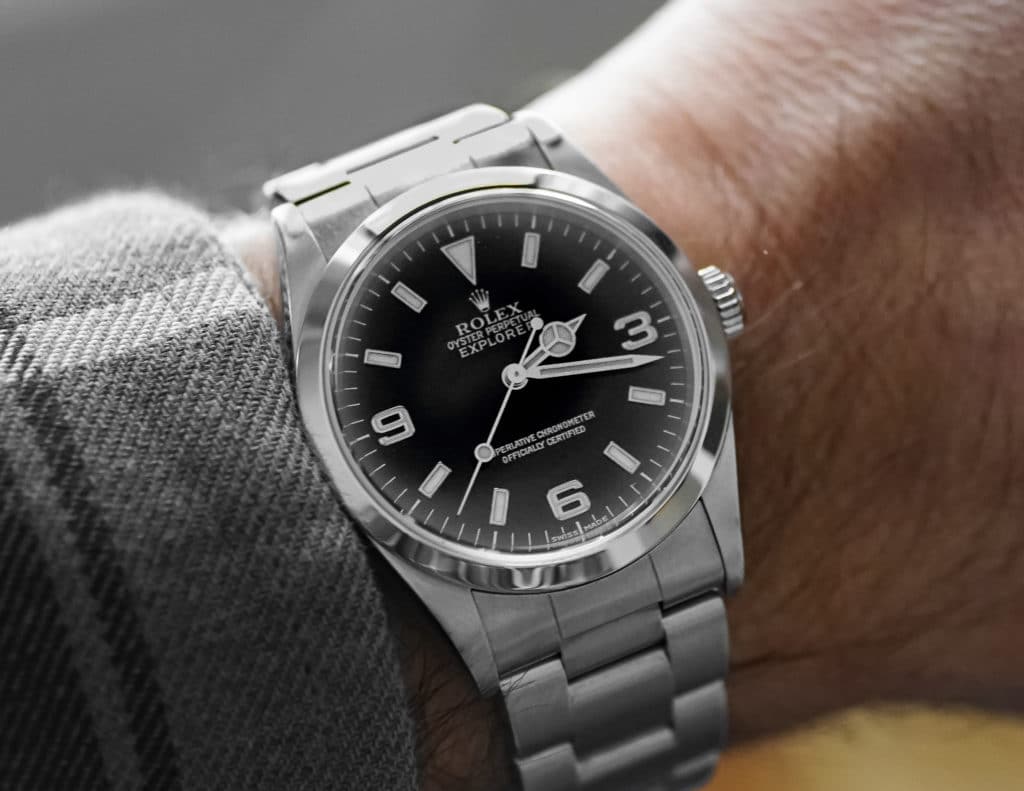
The Explorer 14270 works best as a Datejust alternative when the Datejust feels a little too polished, a little too recognizable, or a little too tied to the whole “nice watch” performance. It keeps the compact everyday Rolex luxury appeal, but strips the formula down into something cleaner and sportier. No date window, no fluted bezel, no dress-watch lean pretending to be casual. Just a black dial, a smooth bezel, an Oyster case, and a layout that gets out of the way.
That dial is what makes the 14270 so easy to trust in daily wear. The black surface, crisp white printing, and 3-6-9 numerals make the time quick to read without any extra visual noise. Many examples now have aged tritium lume that has softened into a light cream tone, and under bright light, it can still give off a faint glow. It is not modern lume performance, but it adds character without hurting legibility, which is a fair trade on a watch from this era.
The case keeps everything compact and balanced. At 36mm wide, around 11.1mm thick, and with a 44mm lug-to-lug, it sits flat across the wrist and feels stable without trying to look oversized. The lack of crown guards softens the profile, while the smooth bezel gives it enough dressiness to move beyond strictly casual wear. On smaller wrists, it feels natural. On larger wrists, it makes the usual point that collectors keep pretending not to know: proportion matters more than diameter.
Inside, the Caliber 3000 keeps the ownership experience straightforward. During our wrist time, it stayed around -4 seconds per day, which still holds up respectably. It starts quickly with light wrist movement, winds smoothly through the crown, and the roughly 42-hour power reserve gives it enough breathing room for a day off the wrist. The 20mm Oyster bracelet matches the watch’s low-key personality, wearing light but solid and tapering gradually toward the clasp. The dated bits are also real: hollow end links, a stamped clasp, service costs tied to age, and secondary-market prices that have climbed as clean examples become harder to find.
Pros
- The clean 3-6-9 dial layout makes time reading quick and intuitive.
- Smooth bezel helps it move between casual and dressier settings.
- The 20mm Oyster bracelet is light, solid, and simple.
- Reliable in-house Caliber 3000 movement with smooth winding and steady accuracy
Cons
- Hollow end-links and a stamped clasp feel dated compared to newer Rolex bracelets.
- The 36mm size may feel small for people used to modern sports watches.
- Limited availability keeps secondary-market prices high.
- Older examples can bring expensive servicing and movement-sourcing concerns.
Grand Seiko SBGH295 Sōkō Frost
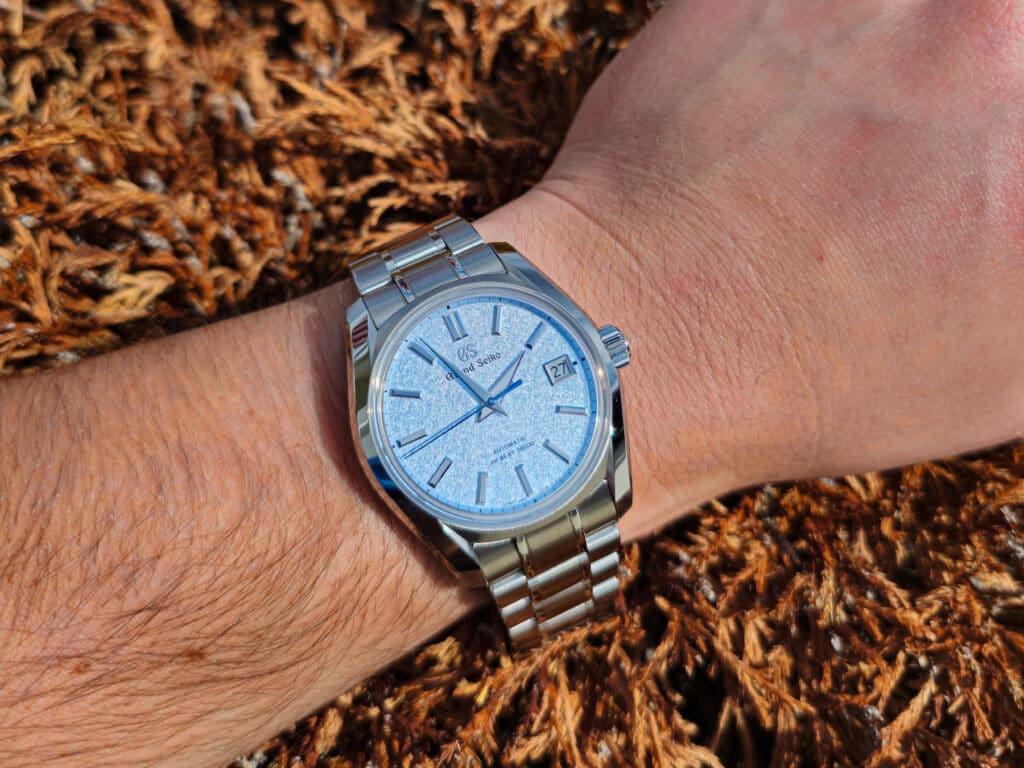
| Price: | $6,900 |
| Water Resistance: | 100m |
| Case Dimensions: | 40mm (diameter) x 47mm (lug-to-lug) x 12.7mm (thickness) |
| Lug Width: | 21mm |
| Movement: | 9S85 Hi-Beat Automatic |
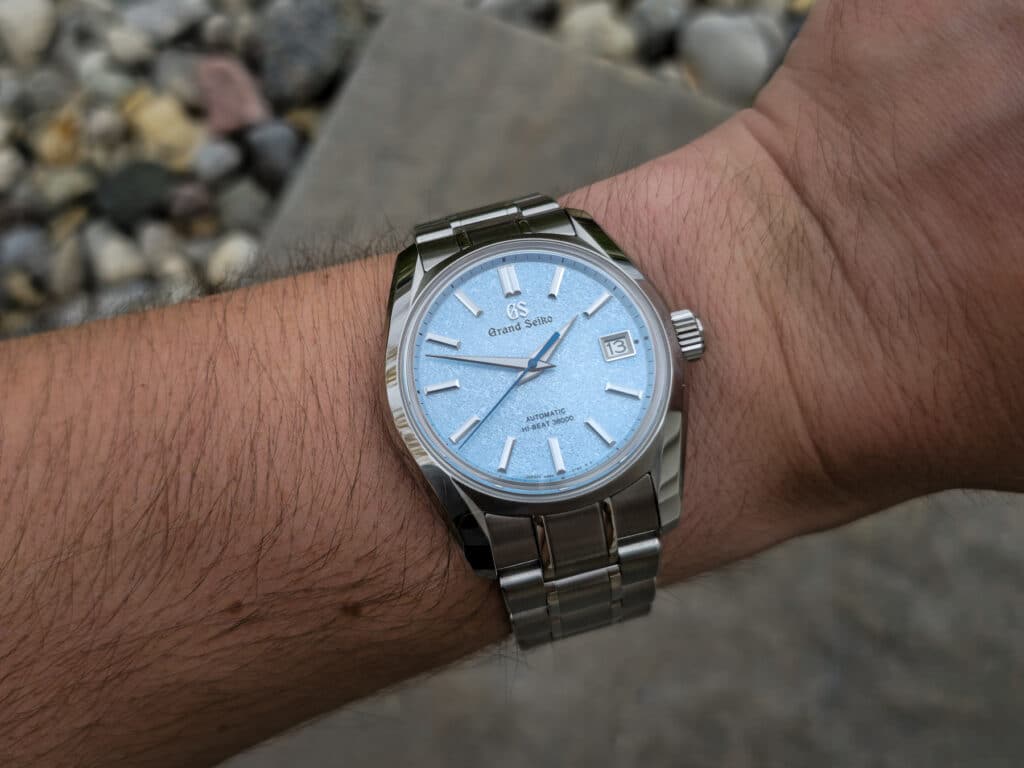
A Datejust alternative at this price needs more than “also expensive” as its argument, and the SBGH295 Sōkō Frost understands that. It competes through finishing, dial texture, and everyday refinement rather than brand recognition alone. The frosted dial takes a few minutes to fully register, with a delicate cross-hatched texture that shifts from cool and airy to warmer and softer depending on the light. Nothing feels thrown on for effect. The stepped, faceted hands and indices keep catching light as the wrist moves, and even the date window feels properly integrated rather than treated like a practical afterthought. Through the flat sapphire crystal, helped by an anti-reflective coating that stays clear without tinting the view, the whole dial feels precise and considered.
The case gives the watch its daily-wear credibility. At 40mm in stainless steel, it wears true to size, while the downward-curving lugs keep it planted through long days. The 12.7mm thickness sounds a little much on paper, but the shape helps disguise it. Brushed mid-case surfaces are framed by Zaratsu-polished bevels that twist upward into an almost bezel-less transition to the crystal, giving the watch a thinner visual profile than the measurement suggests. Include a screw-down crown and 100 meters of water resistance, and it becomes easier to treat this as an everyday watch rather than a polished object that lives between cuffs and watch boxes.
The Hi-Beat 9S85 movement is the technical part that supports the experience without hijacking it. Running at 36,000 vibrations per hour, the seconds hand moves with a smoother sweep than most mechanical watches, and the MEMS-fabricated components and Spron 530 mainspring matter because they contribute to the consistency and reliability you feel over time. To learn how they improve the experience, check out our hands-on review. The bracelet is the one area where Grand Seiko still leaves room for grumbling. It is comfortable, well-finished, and free of rattles, and the smaller push-button clasp helps it articulate cleanly, but the lack of micro-adjustment means the fit depends on link removal alone. Drilled lugs and the included strap soften that issue, though the 21mm lug width makes aftermarket options a little less convenient.
As a Datejust alternative, the SBGH295 is for people who want finishing, dial texture, and quiet precision to do the talking. The case and dial feel special every time the light hits them; the movement brings real mechanical substance; and the overall restraint gives it an understated elegance that rewards attention rather than demanding it.
Pros
- Frosted dial texture gains depth and character with extended wear.
- Zaratsu-polished bevels and case finishing feel exceptional at this level.
- The Hi-Beat 9S85 movement delivers a smoother sweep and serious technical credibility.
- The 40mm case wears comfortably for daily use despite the refined presentation.
- Drilled lugs and an included strap make bracelet alternatives easier to explore.
Cons
- 21mm lug width narrows strap choices.
- Bracelet lacks micro-adjustment, so fit depends on link sizing.
Think we missed a Datejust alternative that deserves a spot here? We only include watches we’ve reviewed hands-on, so if there’s a budget office beater, weird old bracelet watch, or a microbrand sleeper you think belongs in the mix, share it in the comments. We’ll try to get one in for review and consider it for a future update.

Co-Founder and Senior Editor
Kaz has been collecting watches since 2015, but he’s been fascinated by product design, the Collector’s psychology, and brand marketing his whole life. While sharing the same strong fondness for all things horologically-affordable as Mike (his TBWS partner in crime), Kaz’s collection niche is also focused on vintage Soviet watches as well as watches that feature a unique, but well-designed quirk or visual hook.
Tissot Ballade, Bulova Super Seville on the more “affordable” end, and Tudor Royal on the pricier side seem to be missed.
Andrew – all three are solid additions, especially the Super Seville if we’re talking vintage alternatives. The Tudor Royal is an interesting one that doesn’t come up enough in this conversation. Appreciate the suggestions.
I think you missed the most obvious alternative: Tudor’s highly-available and highly-respected Black Bay.
Some of the bezel-less versions would certainly make for a good alternative.
Seiko 5 snkl41
Great pick Peter!