Dive watches have a weird way of making price feel both important and kind of ridiculous. We’ve worn affordable ones that made us wonder why anyone needs to spend more, and we’ve also handled pricier divers where the extra money showed up in the case shape, strap comfort, bezel feel, or the way the whole thing stayed enjoyable after the novelty wore off. This list exists to answer one practical question: which overlooked dive watches actually make sense as you move through different price points? Not in a “spec sheet” way, but in the way these things live on the wrist, get knocked around, go swimming, sit on a NATO for a week, or make you browse for straps at midnight.

That said, we’ve been reviewing watches for nearly a decade, and the useful part of that is that we’ve changed our minds about plenty of them after wearing them. So this isn’t a luxury flex list, and it isn’t a beginner watch guide that treats every price jump as sacred. It’s a grounded look at four overlooked dive watches across very different price tiers, based on what each one offers, what it asks you to tolerate, and where it fits in a real collection.
Casio Duro
| Price: | $85 |
| Water Resistance: | 200m |
| Case Dimensions: | 44.2mm (diameter) x 48.5mm (lug-to-lug) x 12.1mm (thickness) |
| Lug Width: | 22mm |
| Movement: | Casio 2784 Quartz |
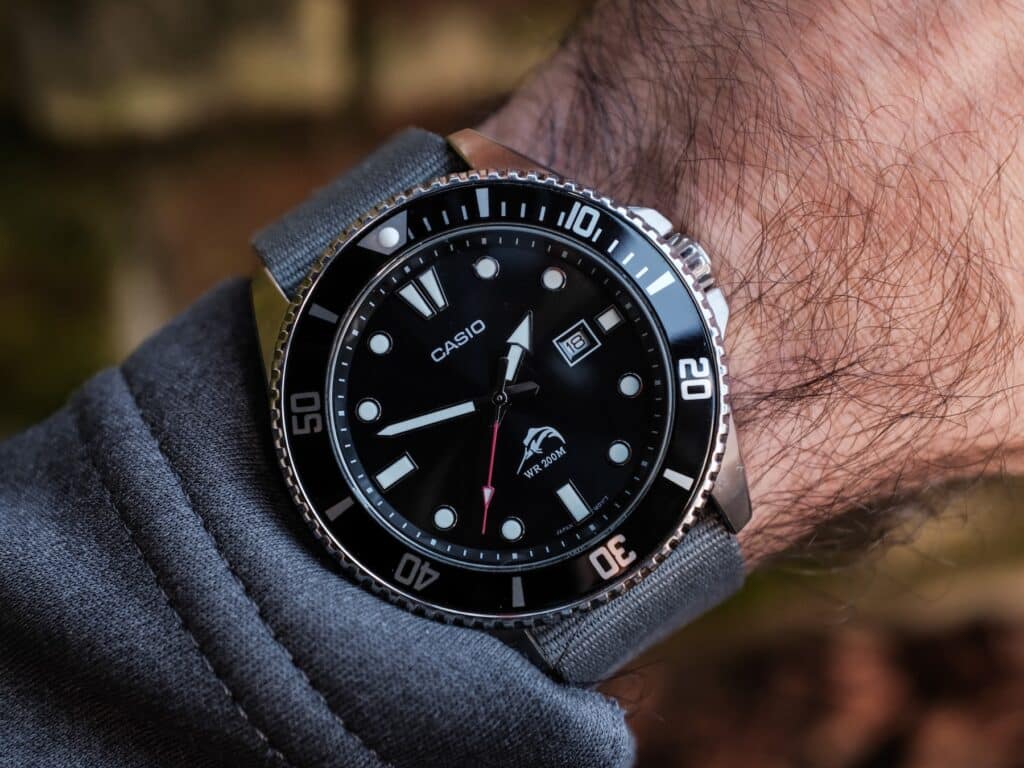
The Casio Duro earns its spot as the true budget-tier pick because it shows how much dive-watch usefulness is still possible before the hobby starts asking for painful money. It gets dismissed because it is cheap, quartz, and extremely common, but that is also why it works so well. It has the kind of straightforward personality that works well at this price: no faux rarity, no forced enthusiast bait, and no fragile feeling that makes you hesitate around water. The 200m water resistance, screw-down crown, and solid caseback give it enough practical credibility for swimming, travel, yard work, and the usual “I forgot I was wearing this” situations. The bezel helps its case, too. It rotates with a controlled, deliberate feel, avoiding the loose, rattly action that can make cheap dive watches feel like they were assembled during someone’s lunch break.
The quartz movement is a major reason the Duro makes sense at this price point. It hacks, has a quick-set date, and in our hands-on review, ran around ±20 seconds per month. That accuracy changes the ownership experience in a way that mechanical-watch people sometimes undersell. You can leave it sitting for a few days, pick it back up, and get on with your life without winding, setting, and pretending the ritual is always charming. There is no sweeping-seconds-hand romance here, and nobody is buying this for its movement. But for a first affordable diver, a travel beater, or a watch you can keep near the door without overthinking, the Duro’s low-maintenance side is a real advantage.
The case is where the Duro becomes more opinionated than its price suggests. At 44mm, it is not a small watch, and people with smaller wrists should take that seriously. The shorter lug-to-lug span and downward-curving lugs help it wear more securely than the diameter implies. If you are comfortable with something in the general Seiko Turtle footprint, the Duro probably will not feel alien. Still, it wears like a large dive watch. The finishing stays simple in a good way, with brushed top surfaces, polished case sides, and a small bevel that adds shape without pretending this is a luxury object. The 22mm lug width also gives it plenty of strap flexibility across rubber, nylon, and bracelets, making it easy to tune for summer, travel, or general abuse.
The dial keeps the same practical rhythm. The layout is clean, the text is minimal, the reflective arrow-style hands are easy to pick up, and the applied markers give it enough depth without cluttering the view. A framed date at three keeps things useful for daily wear, while the flat mineral crystal keeps the price down and reminds you where the compromises lie. It will not resist scratches like sapphire, and the lume, while useful at first, fades earlier than we’d like if you are expecting strong low-light visibility deep into the night.
That is the honest value verdict here: the Duro is one of the best overlooked dive watches at this price point, because, at the bottom of the ladder, it gives you real water-ready features, strong legibility, simple ownership, and enough wrist presence to feel like a proper diver.
Pros
- Strong everyday legibility from the clean dial, reflective hands, applied markers, and framed date.
- 200m water resistance, equipped with a screw-down crown, and a solid caseback make it genuinely useful in and around water.
- Bezel action feels controlled and deliberate, not loose or rattly like many cheap divers.
- Quartz movement is accurate, low-maintenance, hacks, and includes a quick-set date.
- 22mm lugs make strap changes easy across rubber, nylon, and bracelets.
Cons
- The 44mm case is large, especially for smaller wrists.
- Mineral crystal is more scratch-prone than sapphire.
- Lume is useful at first, but fades sooner than we’d like for extended low-light use.
- The practical quartz movement lacks the mechanical charm some collectors want.
Citizen Promaster Diver BN0151
| Price: | $250 – $300 |
| Water Resistance: | 200m |
| Case Dimensions: | 43mm (diameter) x 48mm (lug-to-lug) x 11.5mm (thickness) |
| Lug Width: | 20mm |
| Movement: | Citizen Eco-Drive E168 (solar quartz) |
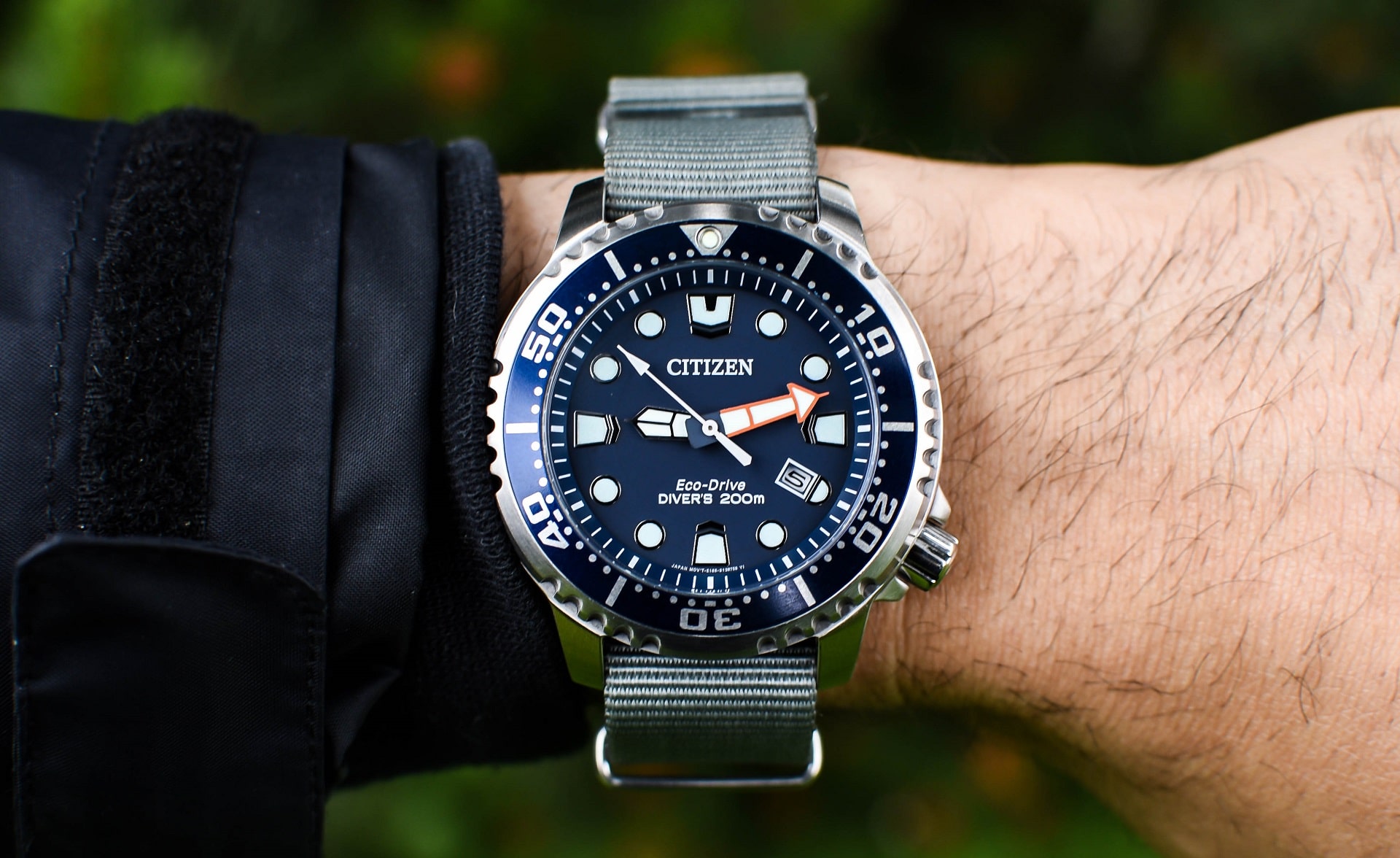
The Citizen Promaster Diver BN0151 sits in the practical, affordable tier as the kind of overlooked diver people tend to respect more after actually wearing it. It feels like the point where a dive watch stops being a fun budget experiment and starts becoming the watch you grab without thinking. Compared to the Duro, the jump here is not about suddenly entering some rarefied collector space. It’s about removing small annoyances from ownership. The Promaster has 200m of water resistance, a case that feels ready for swimming and rougher use, and a general lack of fuss that makes it easy to trust. That matters at this price point. A watch can have all the dive-watch styling in the world, but if you hesitate to get it wet or wear it hard, the charm fades pretty quickly.
The case also does more work than the dimensions suggest. At 43mm, it sounds like it should wear large, but the short lug-to-lug distance and downward case curve help it sit securely on the wrist. It also feels lighter than expected, almost titanium-like in how little it reminds you it’s there during the day. The 4 o’clock crown helps with comfort, staying out of the way rather than pressing into the wrist during longer wear. The stock polyurethane strap is less charming. It works, and it suits the tool-watch personality, but it starts stiff and takes time to loosen up. We preferred it on a NATO, where the watch felt more balanced, more casual, and easier to wear for a full day.
The dial is where the Promaster builds a lot of its trust. The hands and markers are bold enough to read quickly in daylight, and the blue dial has a slight shift toward purple from certain angles, which gives it some personality without getting in the way of legibility. In low light, the aqua-toned lume stays visible for hours, and the lume pip on the second hand adds a small but useful bit of reassurance that the watch is still running. The mineral crystal is still a compromise compared to sapphire, but in our extended wear, it held up better than expected and avoided obvious scratching. The 60-click bezel also stayed aligned and felt deliberate in use, though the grip can get slick when your hands are wet, which is exactly when you would prefer more bite.
The Eco-Drive movement is the reason this watch makes so much sense as the next step up from the true budget tier. Once charged, we saw around six months of runtime, with accuracy staying around ±15 seconds per month in testing. That changes the relationship completely. No winding, no regular battery changes, no setting ritual every time it comes off the wrist for a few days. We only hit the low-power indicator once, and a short session in the light brought it back without drama. That is the value verdict here: the Promaster is not the flashiest diver at its price, but it is one of the easiest to live with. It gives you real dive-watch credibility, strong legibility, comfortable wear, and low-maintenance ownership without pushing into expensive territory.
Pros
- Eco-Drive movement offers long runtime, steady accuracy, and very little upkeep.
- Strong daylight legibility, with lume that remains visible for hours.
- 200m water resistance makes it easy to trust around water.
- The 4 o’clock crown improves comfort during extended wear.
- The blue dial adds subtle visual interest without hurting readability.
Cons
- Mineral crystal still lacks the scratch resistance of sapphire.
- The bezel grip can feel slippery when wet.
- The stock polyurethane strap feels stiff at first and takes time to break in.
- The restrained personality may feel too plain for someone chasing a more expressive diver.
Mido Ocean Star Tribute
| Price: | $1,350 |
| Water Resistance: | 200m |
| Case Dimensions: | 40.5mm (diameter) x 47mm (lug-to-lug) x 13.5mm (thickness) |
| Lug Width: | 21mm |
| Movement: | Mido Caliber 80 |
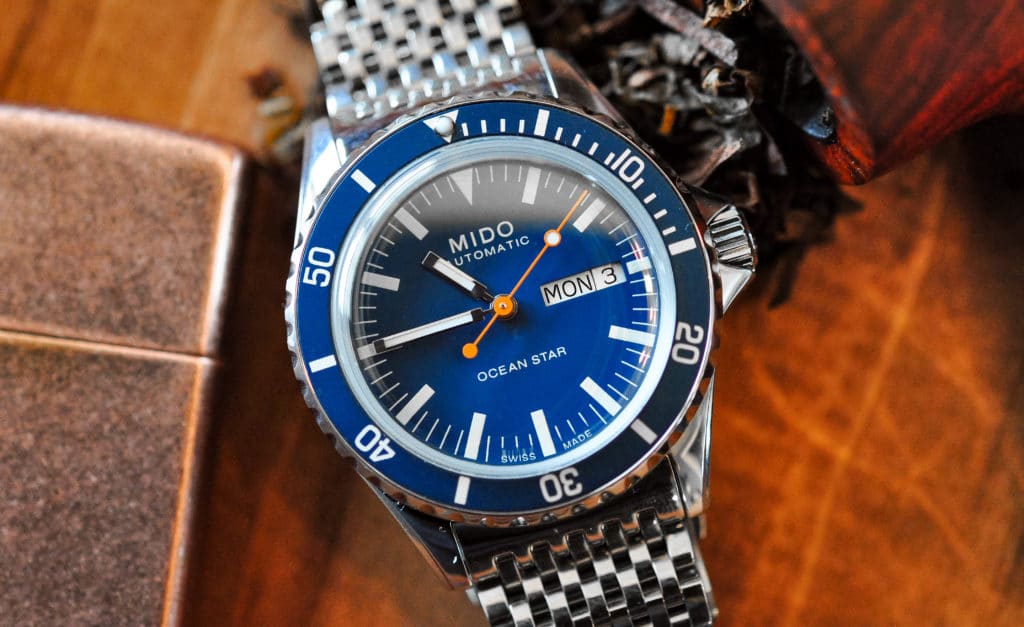
The Mido Ocean Star Tribute is the sleeper pick where this list starts to move from “practical diver that gets the job done” into “watch-enthusiast rationalization with some emotional seasoning.” It belongs in the mid-tier Swiss slot because it brings more refinement, more heritage flavor, and more automatic-watch appeal than the Japanese value picks below it, without becoming so expensive that you start treating it like a museum object. The sizing helps the argument right away: at 40.5mm wide with a 47mm lug-to-lug, it lands in a wearable middle ground. The fully polished case gives it a bright, dressed-up presence, though that shine comes with the obvious downside. Hairline scratches will show up, and if that sort of thing ruins your day, this watch may become a tiny anxiety machine.
The Mediterranean Blue version makes the strongest emotional case. It has vintage-diver charm without feeling like a costume. The printed dial layout stays clean, with thick painted baton markers at the five-minute positions, smaller minute markers, and a Datoday window at 3 o’clock that somehow avoids overcrowding the dial. The chromed paddle hands are easy to catch at a glance, while the orange lollipop second hand adds a little contrast to the blue dial. Mido’s choice of a darker aluminum bezel works well here, too. Ceramic would have pushed the watch too far into modern territory, while fake bakelite could have made the whole thing feel too theatrical. The box sapphire crystal adds that rounded, old-school profile and brings the case height to 13.5mm, but it remains clearer than many plexi-style crystals. There is some edge distortion, though not enough to make reading the time irritating. Mido also skipped AR coating, and we didn’t miss it much. On a watch with this much vintage character, avoiding strange color-shifting reflections feels more natural than chasing lab-clean clarity.
The bracelet surprised us more than expected. An all-polished multi-link bracelet sounds like a bad idea if you dislike fingerprints, scratches, or anything that looks like it might have once been worn near a speedboat. But it works. It articulates fully, drapes comfortably, and gives the watch a loose, 1970s kind of charm without feeling flimsy. The clasp uses a standard push-button release, plus a smaller button for the extension, which is useful not only over a wetsuit but also during hot weather when your wrist decides to inflate out of spite. The included blue canvas strap looks right with the watch, though it needs real break-in time before it feels natural. The crown has sharper edges, enough size, and a secure feel when winding, setting, or screwing it down. The bezel is the weaker control point. Its 60-click action is tight and has little play, but the polished coin edge does not provide enough grip. With dry hands, it is harder to turn than it should be. With wet hands, it gets a little ridiculous.
Inside, the Caliber 80 gives the Tribute more than surface-level charm. The 80-hour power reserve is useful if you rotate watches, which is probably the case if you are reading this far into a dive-watch price-point guide. During in-depth testing, our example ran around +2 seconds per day on the timegrapher, which is strong performance. The trade-off is that the 21,600 bph beat rate may bother some enthusiasts, and the movement is not as straightforward to regulate as a standard ETA 2824. Lume is the bigger real-world disappointment. For a 200-meter diver, the green Super-LumiNova should have more punch. The hands and bezel pip outlasted the dial, but none of it felt that strong, and cheaper Seiko divers can embarrass it in the dark.
Even with that flaw, the Mido earns its place because it gives this price tier something the more practical options don’t: a polished Swiss diver with real character, useful proportions, automatic appeal, and enough charm to make the trade-offs feel like part of the ownership story rather than dealbreakers.
Pros
- The 40.5mm case and 47mm lug-to-lug make it wearable without shrinking the dive-watch personality.
- The box sapphire crystal gives it an old-school profile without plexiglass anxiety.
- Mediterranean Blue dial, orange lollipop seconds hand, and darker aluminum bezel create a strong vintage-diver character.
- Clasp extension is useful around water and during hot weather.
- Caliber 80 offers an 80-hour power reserve, and our example ran around +2 seconds per day.
Cons
- The fully polished case and bracelet quickly pick up visible marks.
- Polished coin-edge bezel has little play but not enough grip, especially with wet hands.
- Lume is weak for a 200-meter diver and trails cheaper Seiko options.
- The included blue canvas strap needs real break-in time.
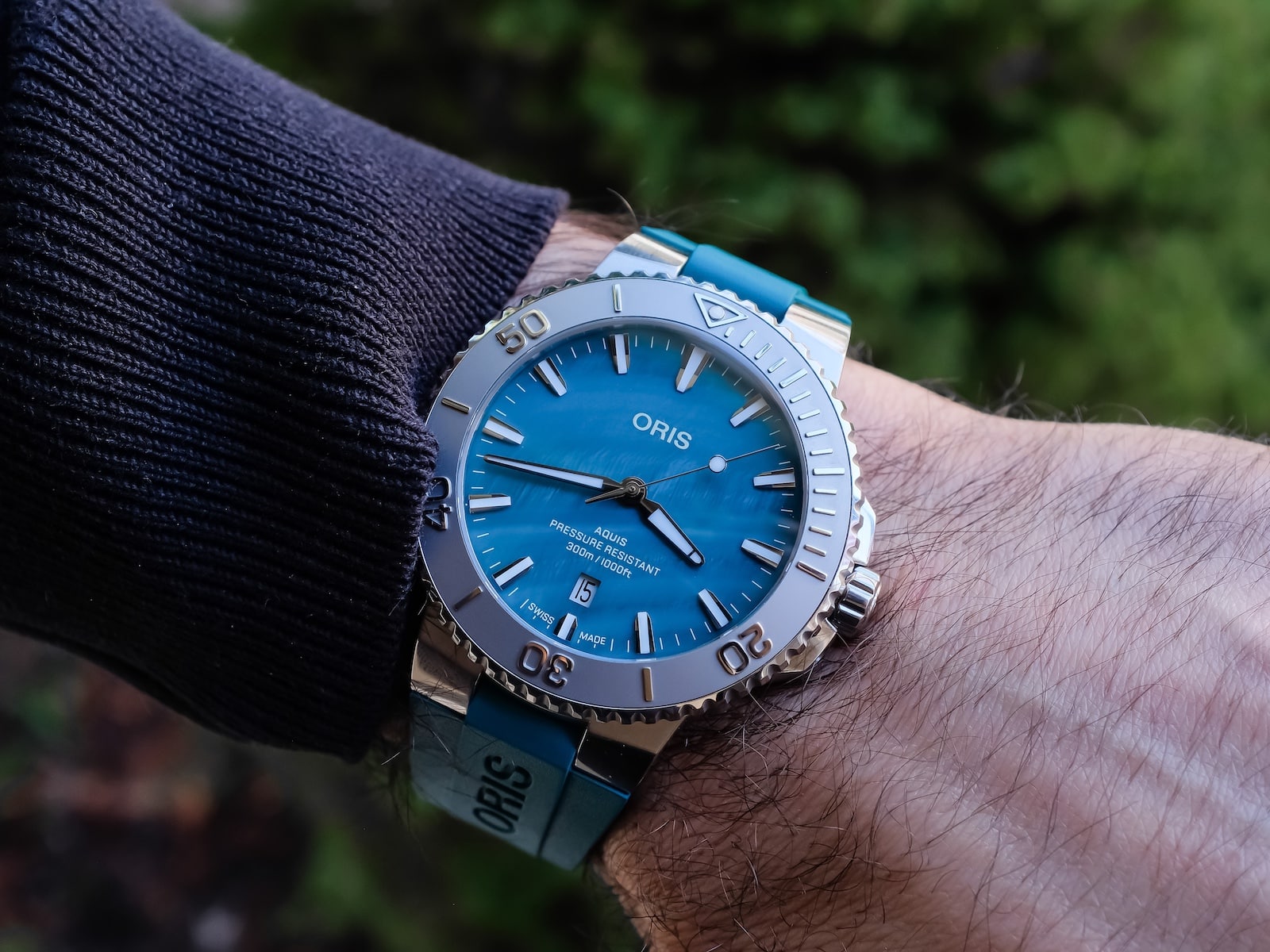
Oris Aquis New York Harbor II
| Price: | $3,000 |
| Water Resistance: | 300m |
| Case Dimensions: | 43.5mm (diameter) x 51mm (lug-to-lug) x 13mm (thickness) |
| Lug Width: | 23mm |
| Movement: | Caliber 733 (based on the Sellita SW200-1) |
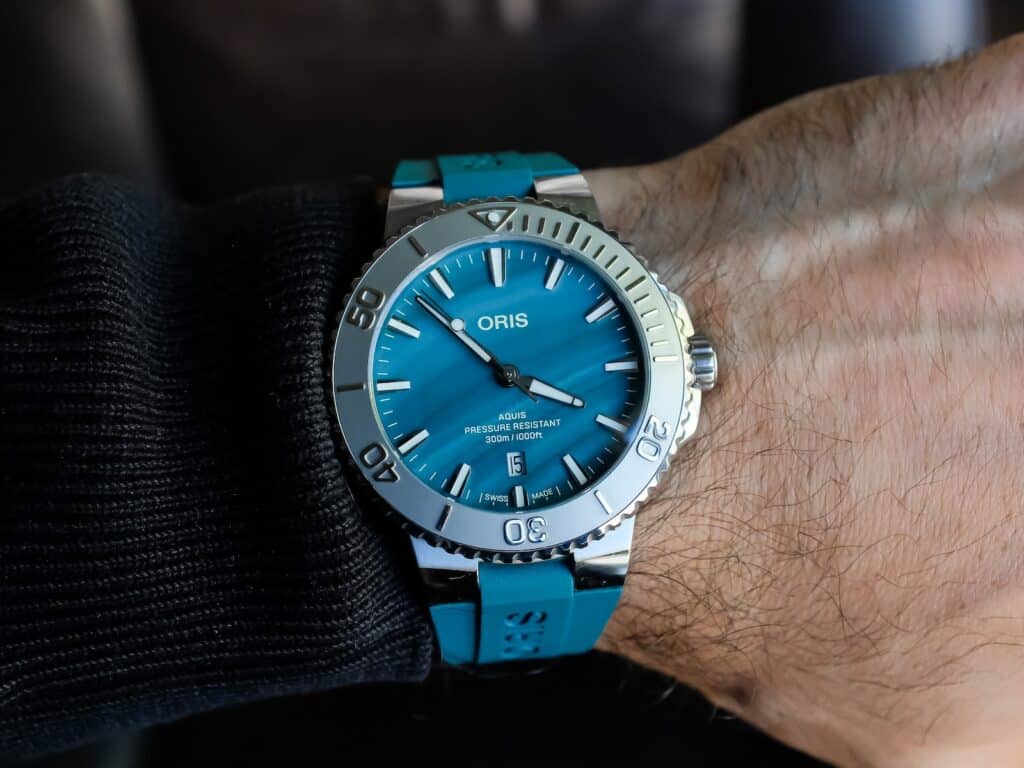
The Oris Aquis New York Harbor II is the point in this price-point ladder where the conversation changes. This is not about squeezing maximum usefulness from minimum money anymore. At around $3,000, the watch has to justify itself in a crowded Swiss diver space where basic competence is expected. It is easy to write off as just another colorful limited-edition Aquis, but this one feels more considered than that. What makes this Aquis work is that it feels like a proper step into luxury-adjacent dive-watch territory without sanding off all the personality. The collaboration with the Billion Oyster Project gives it more substance than the usual limited-edition story, since part of the proceeds support oyster restoration in New York Harbor. The 2,000-piece production cap also fits Oris’s habit of using the Aquis as a platform for more expressive ideas.
The case sounds intimidating before it hits the wrist. At 43.5mm wide, a touch over 13mm thick, and around 51mm lug-to-lug, it is still a larger watch. On a 6.75-inch wrist, though, it wore smaller than the numbers suggest. The curved lugs and integrated strap setup help pull the case down rather than let it sprawl flat across the wrist. Most of the case is brushed, which keeps it from feeling too shiny or precious, while the polished edges catch light in a way that reminds you this is no longer a budget diver. The stainless steel bezel insert was a pleasant surprise during our review period. It gives the watch a slightly rawer, more industrial feel than ceramic would have, and the bezel action itself is firm, precise, and clicky. The domed sapphire crystal uses internal AR coating, which keeps reflections under control without adding the worry of scratching an exterior coating. Crown action is smooth, and the engraved oyster-themed caseback makes the collaboration feel considered rather than slapped onto the dial for limited-edition points.
The dial is where the watch earns most of its collector appeal. Aqua-green mother-of-pearl with an oyster-shell effect sounds like something that could go wrong fast, but in person, it has more range than gimmick. In bright light, different shades of green move across the surface. In dimmer light, it settles into something quieter and almost stone-like. That shift gives the watch personality without turning it into a novelty, and importantly, legibility does not fall apart in the process.
The aqua green rubber strap also suits the whole package better than we expected. Once sized properly, this one wore securely and comfortably through a full day. We would probably keep it on rubber rather than push it onto a bracelet, mostly because the case already brings enough visual weight on its own. The 300m water resistance adds the expected dive-watch backbone. Inside, the Caliber 733 keeps things familiar and drama-free. Based on the Sellita SW200-1, it brings automatic winding, hacking seconds, a date, and about 41 hours of power reserve. That reserve is fine if the watch is worn regularly, but if you rotate through several pieces, leaving it alone for a couple of days means you’ll need to reset it. Accuracy landed where we expected, with no strange behavior to report, which is what this movement should deliver.
The honest verdict is that this Aquis is not the most neutral or universally wearable diver in the group. The dial makes it more situational than a plain black diver, and the case still leans larger than what some of us naturally reach for. But as the overlooked higher-end tier pick, it makes sense because it combines brand presence, sharper finishing, a comfortable proven platform, real dive specs, and enough visual character to feel like a meaningful upgrade.
Pros
- Aqua-green mother-of-pearl dial shifts beautifully across different lighting conditions without compromising legibility.
- Brushed case surfaces and polished edges balance tool-watch restraint with higher-end presence.
- Billion Oyster Project collaboration gives the limited edition more substance than usual.
- The stainless steel bezel insert gives it a more industrial feel than a ceramic alternative.
- Internal AR coating controls reflections without the scratch concerns of exterior AR.
- 300m water resistance reinforces the idea that there is still a real diver beneath the expressive design.
Cons
- The 43.5mm case is still larger than some collectors will prefer.
- Integrated strap setup limits strap-swapping freedom compared to more conventional divers.
- The 41-hour power reserve is only adequate for collectors who rotate through several watches.
- The expressive dial makes it more situational than a plain black diver.
Think we missed an overlooked dive watch that belongs at one of these price points? We only include watches we’ve reviewed hands-on, so if there’s a budget beater, mid-tier sleeper, or higher-end diver you think deserves a spot here, drop it in the comments. We’ll try to get one in for review and consider it for a future update to this piece.

Co-Founder and Senior Editor
Kaz has been collecting watches since 2015, but he’s been fascinated by product design, the Collector’s psychology, and brand marketing his whole life. While sharing the same strong fondness for all things horologically-affordable as Mike (his TBWS partner in crime), Kaz’s collection niche is also focused on vintage Soviet watches as well as watches that feature a unique, but well-designed quirk or visual hook.