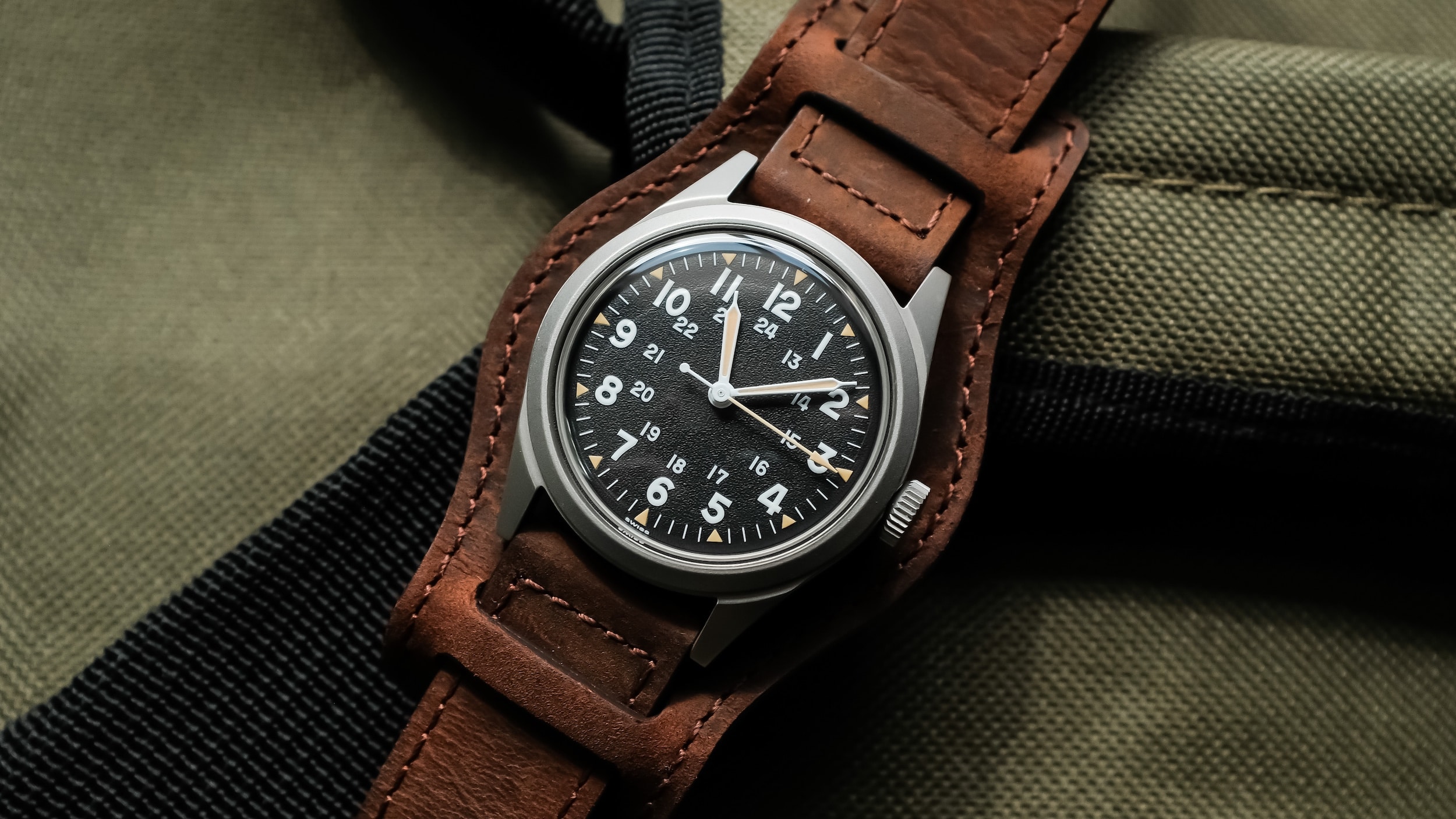
I’ve been diving even deeper into mil-spec field watches this year (obviously), and at some point I knew I wanted to spend time with the Benrus DTU-2A/P. In my mind, it represents one of the better attempts at producing an accurate modern version of this particular kind of military watch without straying too far from what made the original format interesting in the first place.
My timing is a little strange, though. The arrival of my Hamilton Khaki Field Mechanical 250 has mostly scratched this particular itch for me, so I’m no longer actively looking to add another mil-spec field watch to my collection. Still, that made spending time with the Benrus more interesting. My hope was to approach it without trying to decide whether I wanted to buy one, and instead focus on how well Benrus has executed the DTU-2A/P as a modern reissue. From where I’m sitting, Benrus has put together one of the more compelling options in this increasingly crowded corner of the watch world.
Staying Close to the Original
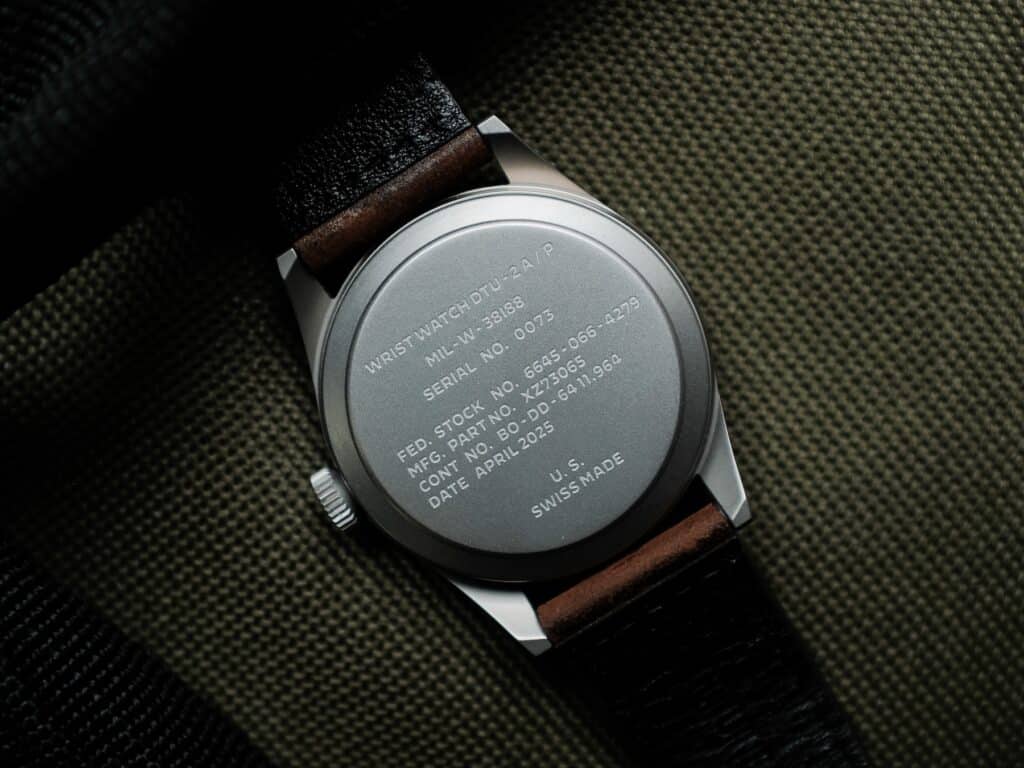
Part of my fascination with the DTU-2A/P comes from Benrus having an actual connection to the watches this modern version references. The original was produced for the U.S. military around the requirements established by the MIL-W-3818B specification in the early 1960s, and Benrus has a much deeper history with military timekeeping than this single watch. As someone who can disappear down the military and tool-watch rabbit hole for unreasonable amounts of time, that’s pretty dang cool to me.
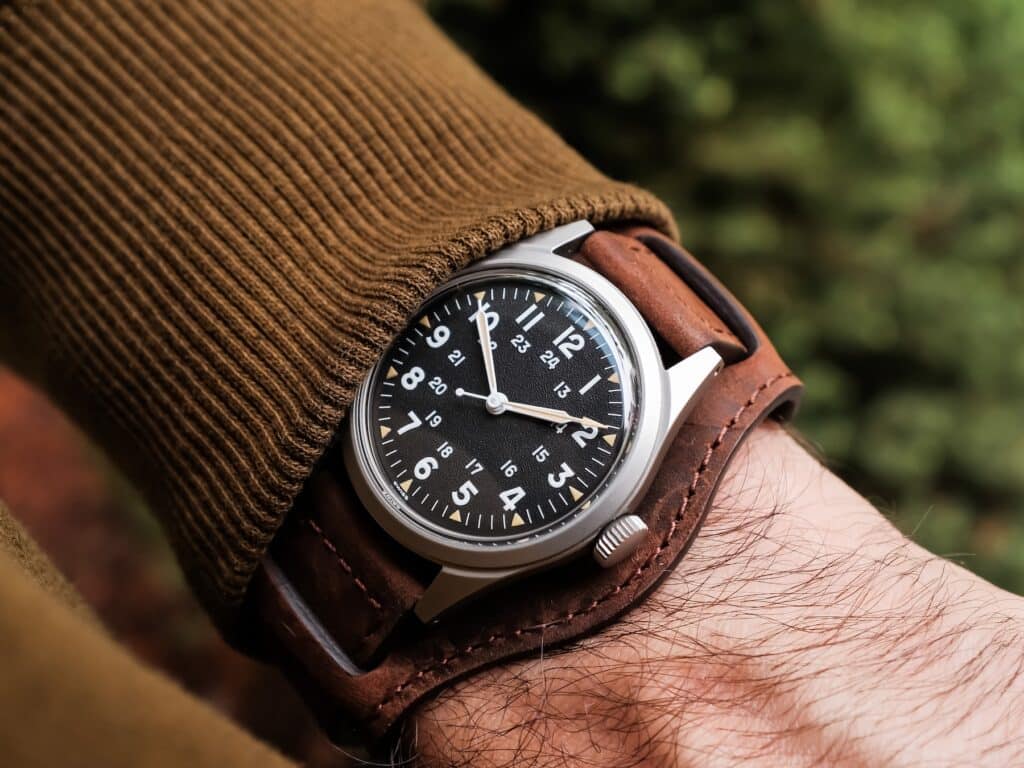
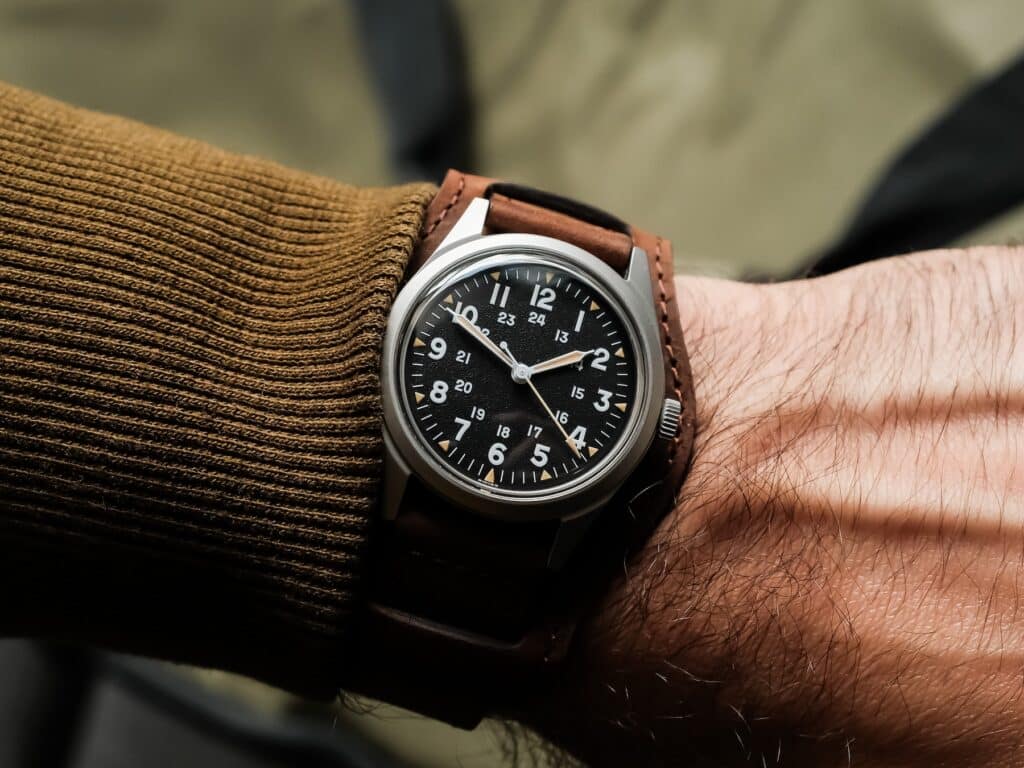
Benrus kept it at 34mm. I didn’t have to adjust to that size when I first put the watch on. It immediately felt appropriate to me, and spending more time with it only reinforced how much I’ve come to enjoy smaller field watches. The case measures 40.2mm lug-to-lug and 10.9mm thick, with an 18mm lug spacing, so there really isn’t much excess anywhere. The proportions keep the watch compact without making it feel awkward or compromised on my wrist.
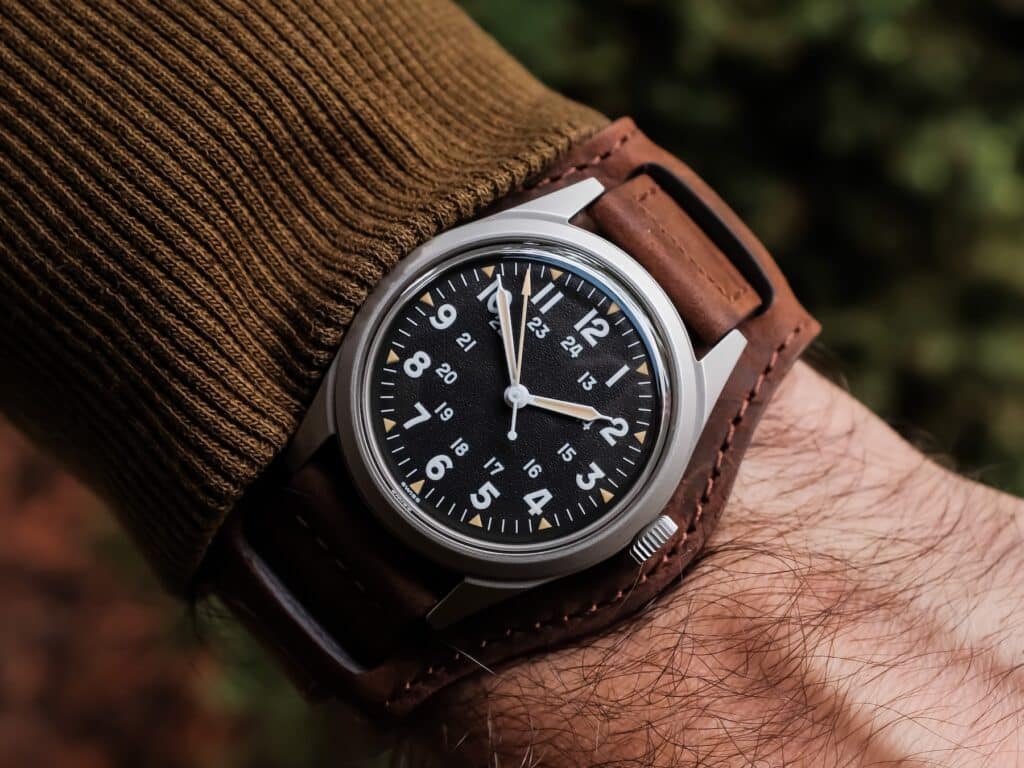
More importantly, Benrus didn’t enlarge the basic format as an excuse to accommodate modern construction. The sandblasted 316L stainless steel case retains those compact dimensions while adding a screw-down crown and caseback for 100 meters of water resistance. I find that combination especially appealing.
I’ve said this before, but I also wish screw-down crowns were more common on field watches in general. Here, it adds some everyday reassurance without turning the case into something thicker or more cumbersome. Combined with the double-domed sapphire crystal and anti-reflective treatment, the Benrus starts to make a great case for preserving historical proportions while being less precious in daily use.
But, part of what attracts me to these watches is the simplicity of the original format, and every contemporary upgrade creates a little more distance from that experience. I’m aware of that when I look at the sapphire crystal, screw-down crown, increased water resistance, and even the luminous seconds hand. However, I’d rather acknowledge that tension than pretend those changes haven’t made the DTU-2A/P easier to live with. Benrus has preserved the scale and visual character that matter most to me while updating areas that genuinely improve its usefulness.
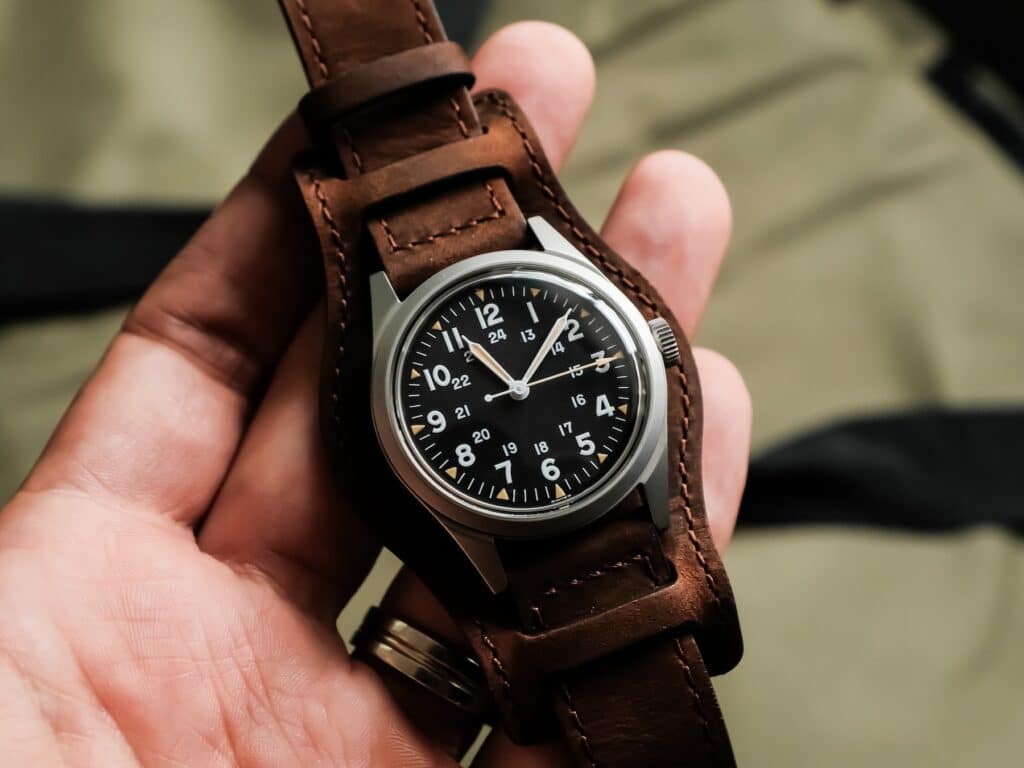
Dial and Legibility
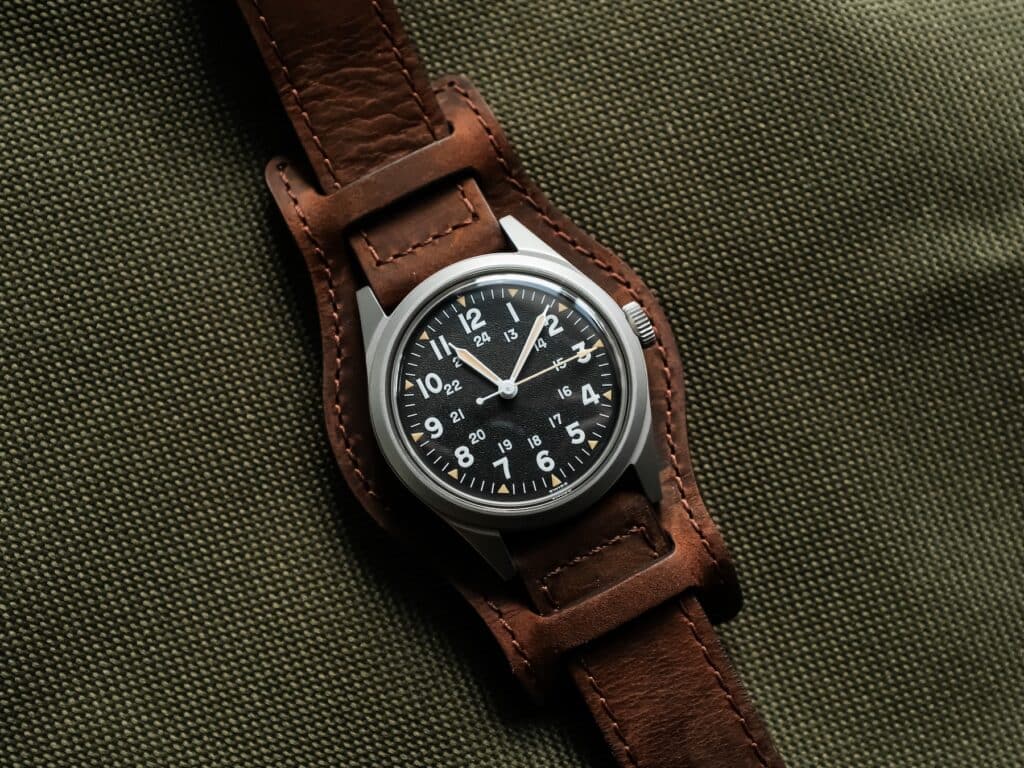
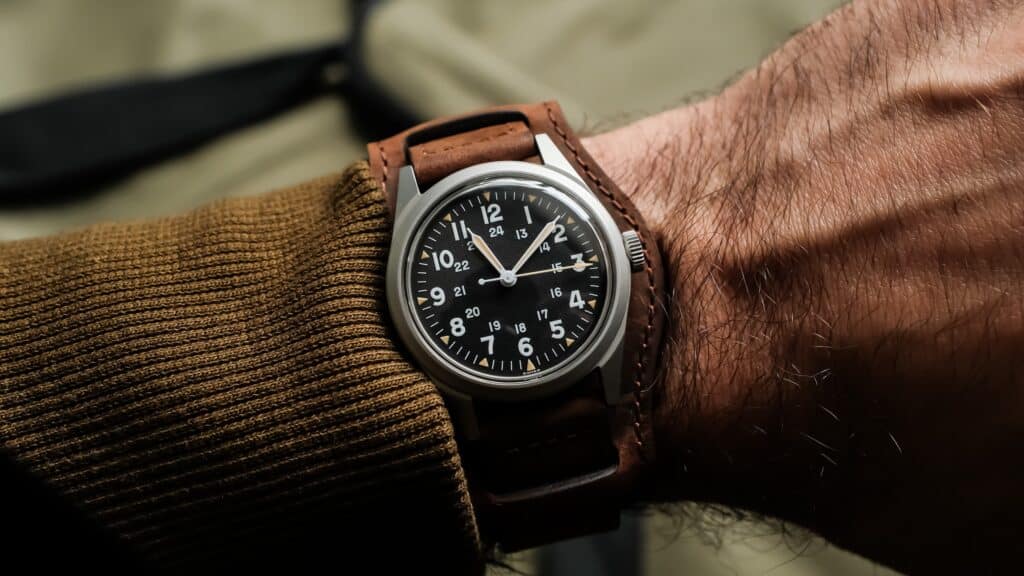
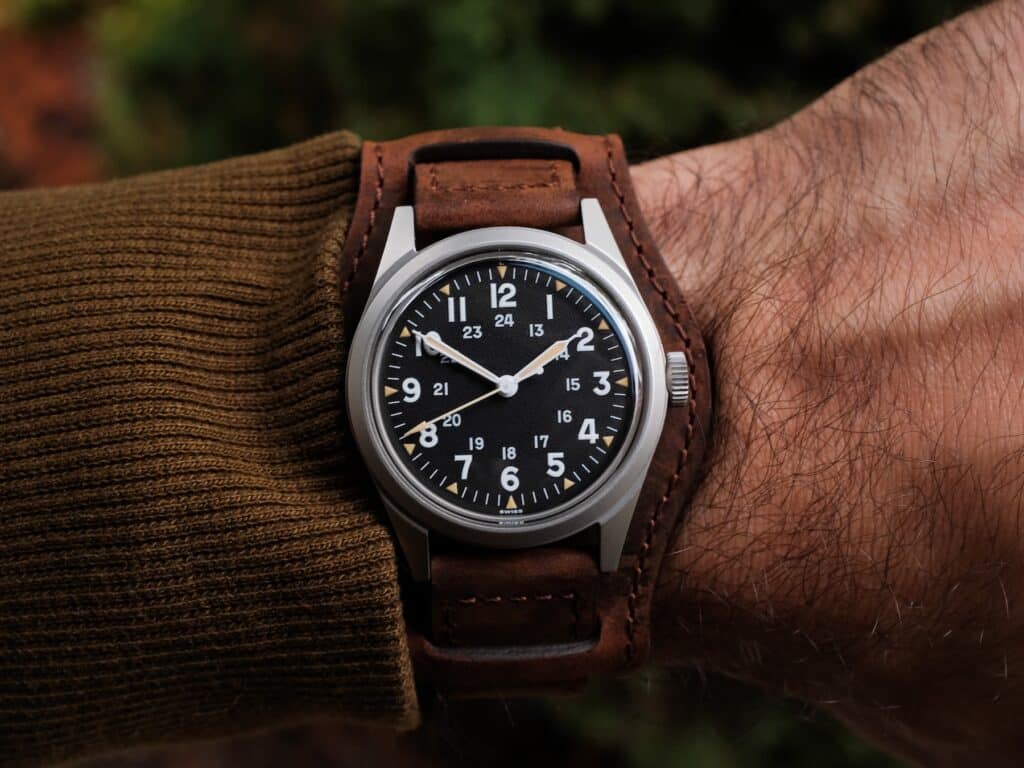
There isn’t much decoration because there doesn’t need to be. The matte black surface carries large white Arabic numerals, an inner 24-hour military scale, a clearly defined minute track, and triangular luminous plots around its perimeter. The hour and minute hands have a narrow, almost syringe-like profile, and everything feels properly scaled for the 34mm case.
Smaller watches can become visually cramped when too much information gets squeezed into the available space. I never got that feeling here. The hands, numerals, minute markings, and inner scale have enough separation that I can take everything in immediately.
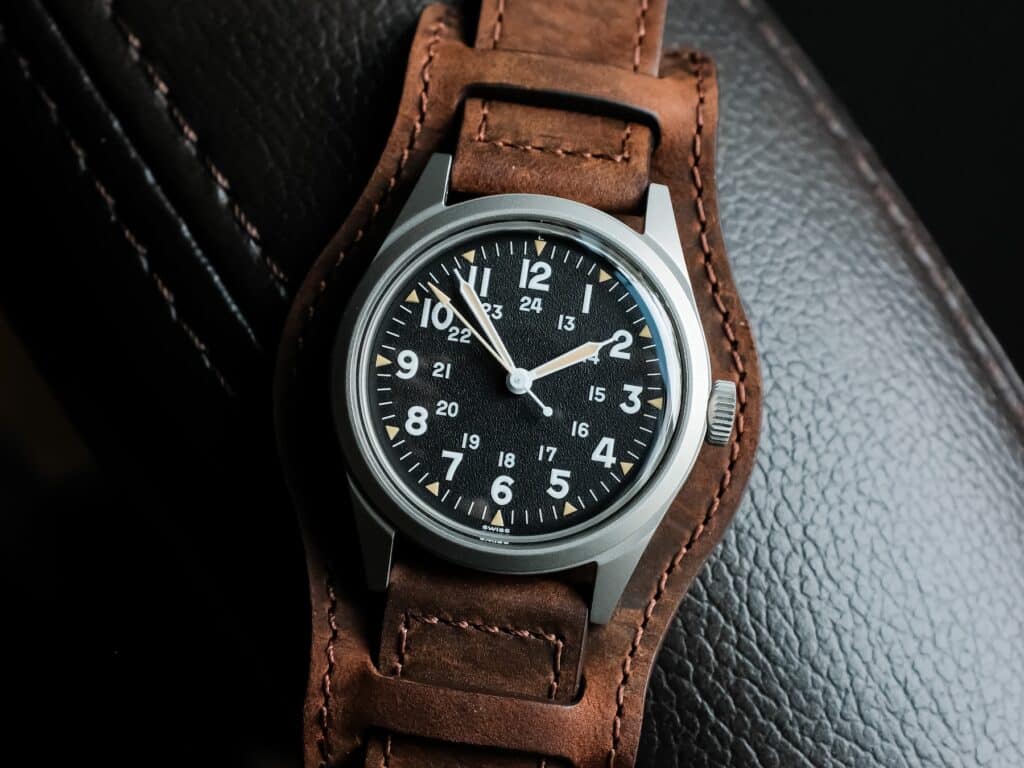
Legibility is probably the strongest element of the dial for me. There is a directness to the layout that makes sense given where this design came from. The printing stands clearly against the matte black background, while the hands remain easy to distinguish at a glance.
Benrus also uses BG W9 Super-LumiNova across the hands and triangular hour plots, with lume extending to the seconds hand. The application is generous enough to make the modern feel obvious, and I found that to be one of the practical upgrades I appreciated most during my time with the watch.
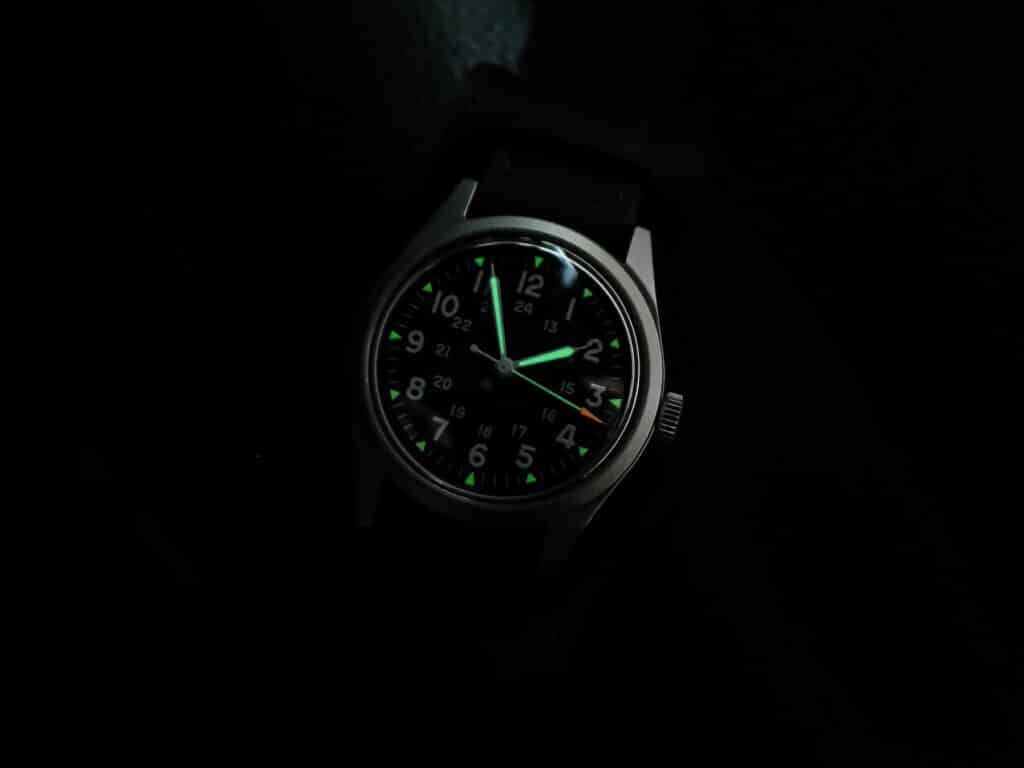
I also like the warmer tone Benrus chose for the luminous material. The dial essentially works with three colors: black, white, and the creamy lume. That warmth keeps the presentation from becoming sterile while preserving the basic clarity of the original layout. I get enough visual variation to enjoy looking closely at the dial without losing the utilitarian character that drew me to the watch in the first place.
Modern Mechanics, With One Reservation
Benrus uses the ETA 2671, an automatic Swiss movement running at 4Hz with a stated 38-hour power reserve. Packaging an automatic movement into a 34mm watch while keeping the entire case at 10.9mm thick is a practical achievement in itself, and the resulting dimensions never gave me the sense that the case had been designed around an oversized movement.
The 38-hour reserve is modest by current standards, though it didn’t become the defining part of my experience. With watches rotating on and off my wrist, that amount of reserve simply means I know there’s a reasonable chance I’ll need to reset it after spending a couple of days with something else.
My larger reservation is more subjective. Given the choice, I think I’d rather have a hand-wound movement in a watch like this. That preference has less to do with the ETA 2671 itself and more to do with what attracts me to these small military watches. Manually winding one feels appropriate to the format, and I enjoy that small interaction with watches built around this kind of stripped-down design.
An automatic movement certainly makes the Benrus easier to wear without thinking about it, but I’d personally give up some of that convenience for a hand-wound caliber that brought the mechanical experience a little closer to the visual one. It’s a trade-off rather than a flaw. I understand why a modern automatic movement makes sense here. My own preferences simply lean in the other direction.
Wearing the DTU-2A/P
So… the brown leather Bund strap. I think it adds another layer to that push and pull between historical character and how I’d actually wear the watch.
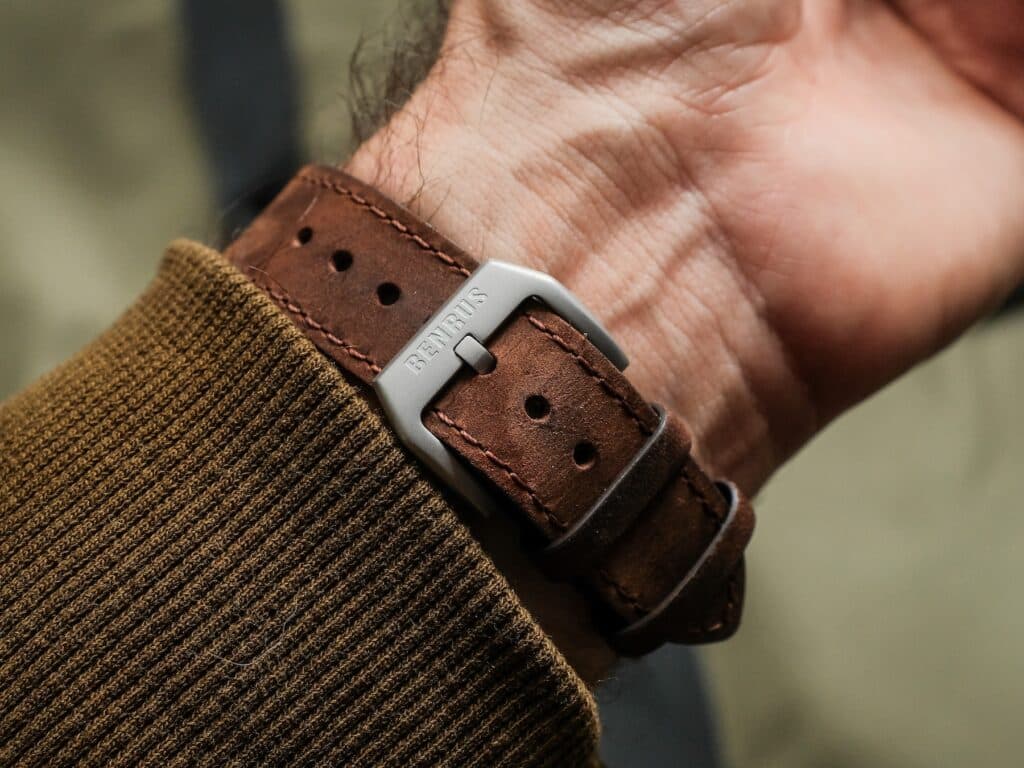
Visually, I think it works. The extra leather gives the 34mm case more presence and pushes the military character farther forward. It also changes the way I perceive the size without requiring Benrus to make the watch itself any larger, which I appreciate. For regular wear, though, I’d probably remove it.
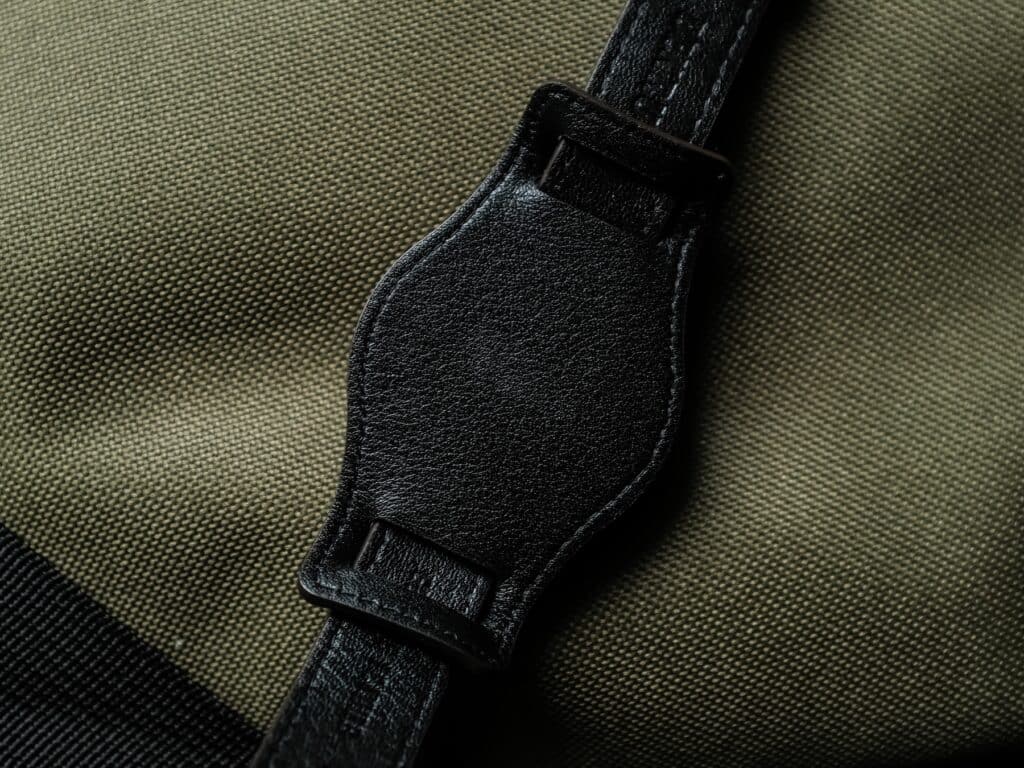
I like the DTU-2A/P enough at 34mm that I don’t feel any need to visually bulk it up. Putting it on a conventional 18mm strap would allow the compact case and short lugs to become more of the experience, and that is where my tastes have been heading anyway. The Bund makes sense as part of the presentation, while a simpler strap would make more sense for how I’d personally use the watch.
Spending time with the Benrus didn’t make me reconsider whether small field watches work for me. If anything, it reinforced that preference. 34mm felt right immediately, the proportions never became something I had to rationalize, and the combination of compact dimensions with 100 meters of water resistance made the DTU-2A/P super easy for me to get along with.
At the same time, I never forgot that my Hamilton Khaki Field Mechanical 250 already occupies this part of my collection. That watch arrived at the right moment and satisfied much of the same interest that originally made me want to spend time with the Benrus.
Wrapping Things Up
So, I’m left in a position I actually appreciate as a collector. I can come away impressed with the DTU-2A/P without needing to turn that appreciation into another purchase. The $990 it commands isn’t something I’d throw around lightly.
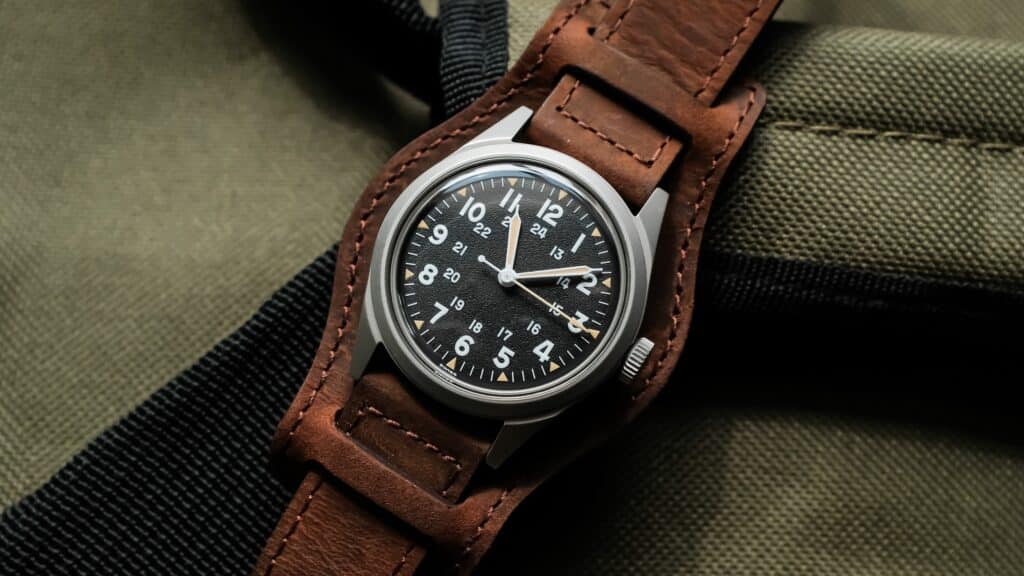
What stuck with me most was how carefully Benrus handled the basic proportions. The company could have enlarged the case, modernized the dial, or pushed the design toward something more broadly contemporary. Instead, the 34mm case remains central to the experience, while sapphire, modern lume, an automatic ETA movement, and 100 meters of water resistance make it easier to wear today.
Some of those updates move the experience farther from the original than I might personally prefer, and I’d still take a hand-wound movement if given the choice. The Bund strap would probably end up back in the box as well. Those preferences never got in the way of what I enjoyed about the watch.
My time with the DTU-2A/P mostly confirmed something I had already been figuring out this year. I really dig field watches at these smaller, historically accurate dimensions. The Benrus gave me another version of that experience, executed with enough modern practicality that I rarely had to treat it like a vintage-sized curiosity.
The Hamilton means I don’t feel a need to make room for the Benrus in my own collection. After spending time with it, though, I understand its appeal much better than I did from the dimensions and photographs alone. For a watch I approached without any real intention of buying, that ended up being the most useful conclusion I could hope for. Well done, Benrus

Co-Founder & Senior Editor
Michael Peñate is an American writer, photographer, and podcaster based in Seattle, Washington. His work typically focuses on the passage of time and the tools we use to connect with that very journey. From aviation to music and travel, his interests span a multitude of disciplines that often intersect with the world of watches – and the obsessive culture behind collecting them.