Seiko has built a reputation for making some of the most approachable dive watches in the hobby, but choosing one isn’t as straightforward as it used to be. Between long-running favorites, newer releases, and discontinued models that refuse to fade away, it’s easy to buy into reputation instead of what the watch is like after months on the wrist. We’ve found that some Seiko divers become more rewarding over time, while others never quite justify the praise surrounding them. That’s what this list is here to sort out. If you’re deciding which Seiko dive watch deserves your money today, we’re focusing on the models that have continued to earn wrist time long after the honeymoon phase ended.
Every watch here comes from our own hands-on reviews after more than a decade of wearing, testing, and comparing Seiko dive watches. We’ve worn cases that feel far smaller than their measurements indicate, turned bezels that still feel satisfying years later, swapped out bracelets that never clicked with us, and kept reaching for certain watches despite newer releases competing for attention. Those experiences shaped every recommendation here, including the strengths that kept us wearing them and the compromises you should know before buying.
Seiko 5 Sports SRPD51 / 5KX
| Price: | $200 – $350 |
| Water Resistance: | 100m |
| Case Dimensions: | 42.5mm (diameter) x 46mm (lug-to-lug) x 13.5mm (thickness) |
| Lug Width: | 22mm |
| Movement: | Seiko 4R36 |
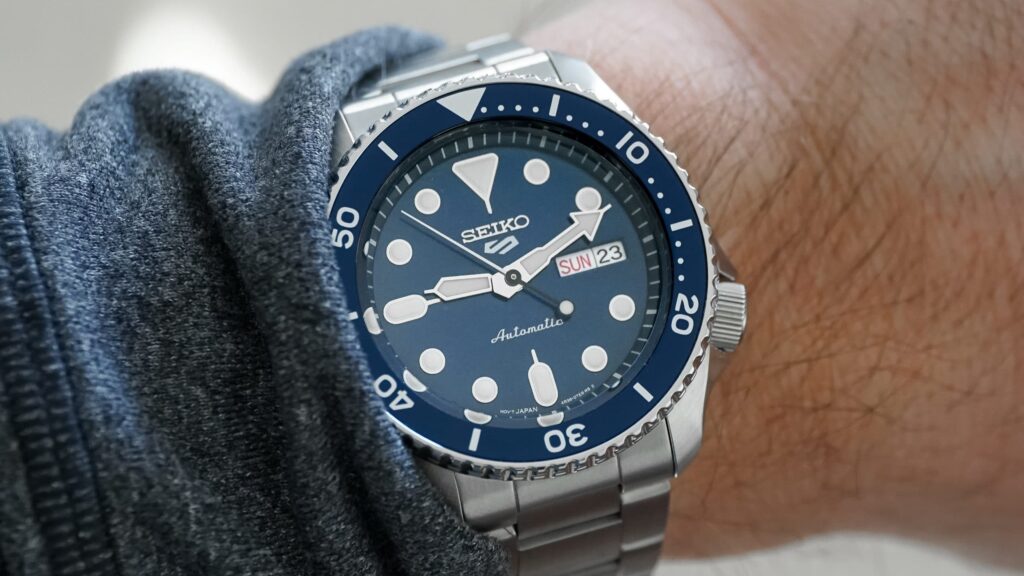
Calling the SRPD51 a dive watch always comes with a small disclaimer, and that’s part of what makes it worth discussing. It borrows nearly everything we like about Seiko’s classic diver formula, but it stops short of being a true ISO-certified tool watch. If you’re expecting a direct replacement for the old SKX, you’ll notice what’s missing before anything else. We ended up appreciating it more once we stopped judging it by those standards.
The dial does most of the heavy lifting here. The blue sunburst finish shifts from a subdued navy indoors to a much brighter blue in direct light, while the matte aluminum bezel keeps the watch from looking too flashy. Applied indices and the applied Seiko logo add welcome depth without losing the brand’s familiar, utilitarian character. The Lumibrite also deserves recognition. During our hands-on review, it stayed bright for hours. It comfortably outperformed many watches in the same price range, delivering the kind of nighttime legibility we usually associate with more expensive Prospex divers.
On the wrist, the SRPD51 wears more compactly than its 46mm lug-to-lug measurement implies. The familiar 4 o’clock crown remains comfortable against the wrist, and its deeper milled grip makes setting the watch easier than on some earlier Seiko divers. At 13.5mm thick, though, it has a noticeable side profile, so smaller wrists may find it taller than expected. Drilled lugs encourage experimentation, and after spending time with it, we found the watch felt far more at home on a NATO or rubber strap than on its factory bracelet. The bracelet isn’t terrible, but the thin clasp and fiddly adjustment links never match the quality of the case or dial.
The in-house 4R36 movement finally brought hacking and hand-winding to this familiar platform, making day-to-day ownership noticeably more convenient than older entry-level Seikos. The display caseback also fits the Seiko 5 identity, especially for newer collectors who enjoy watching the movement at work. Overall, we came away seeing the SRPD51 as one of the easiest Seikos to recommend for collectors who love the brand’s dive-watch design language without needing professional dive credentials.
Pros
- More refined finishing than many earlier entry-level Seiko diver-inspired models.
- Excellent Lumibrite with brightness and longevity that exceeded many similarly priced watches.
- Blue sunburst dial, matte bezel, and applied markers create impressive depth.
- 4R36 movement adds hacking and hand-winding for easier everyday use.
- Drilled lugs make strap changes quick and suit the watch’s versatile personality.
Cons
- Not ISO-certified, so it isn’t a true dive watch.
- The factory bracelet feels underwhelming next to the rest of the watch.
- The 13.5mm case can appear tall, particularly on smaller wrists.
- Thin clasp and awkward adjustment links make sizing less enjoyable.
Seiko SKX013
| Price: | $350 – $600 (based on condition, since it’s discontinued) |
| Water Resistance: | 200m |
| Case Dimensions: | 38mm (diameter) x 43mm (lug-to-lug) x 13mm (thickness) |
| Lug Width: | 20mm |
| Movement: | 7S26 |
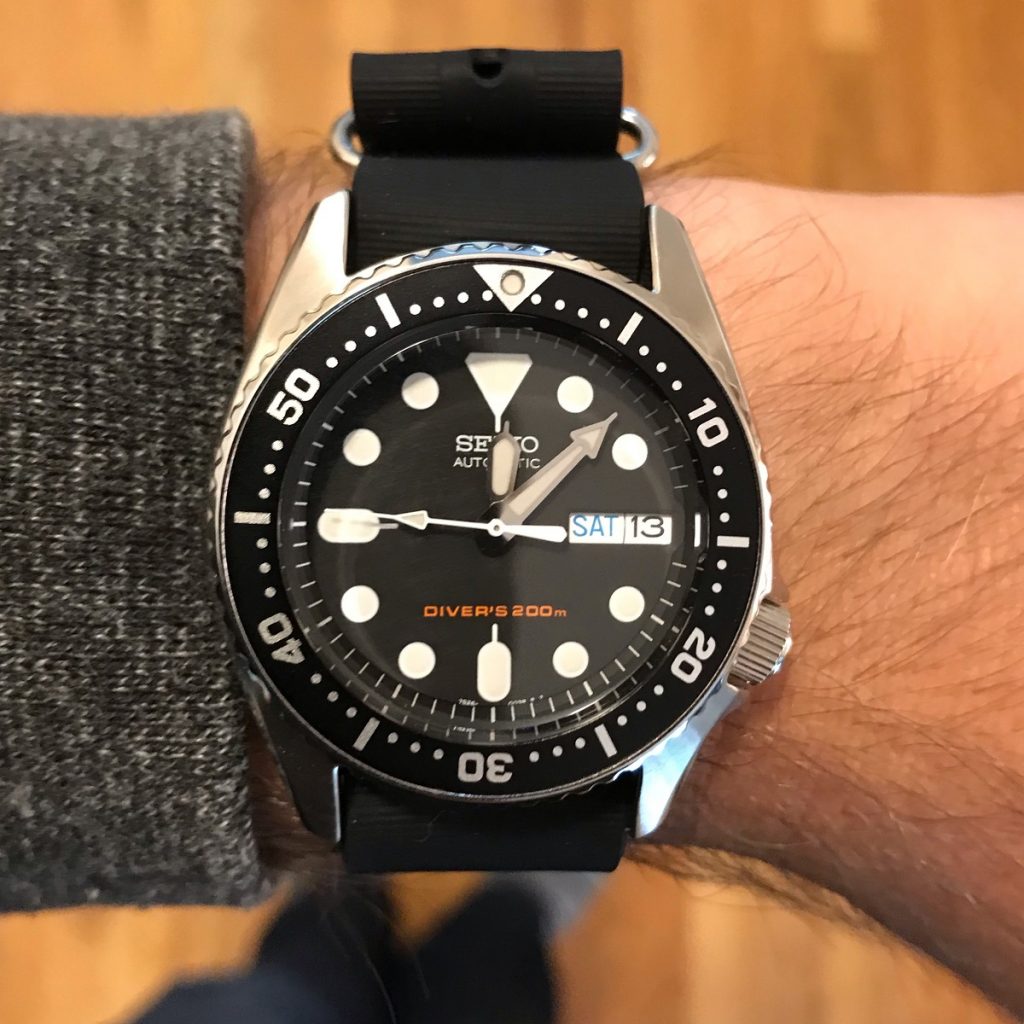
The SKX013 often gets introduced as the smaller sibling to another well-known Seiko diver (SKX007), but after spending extended wrist time with it, we think that comparison only tells part of the story. It delivers a noticeably different wearing experience, and whether you connect with it depends as much on your preferences as your wrist size. Across our team, opinions weren’t unanimous, which is one of the reasons it earned a place on this list. Some of us appreciated how easily the understated black dial and bezel blended into everyday wear. In contrast, others found themselves reaching for it simply because it never felt out of place. The recessed 4 o’clock crown was one detail almost everyone agreed on—it stays comfortably out of the way during long days on the wrist.
One of the SKX013’s biggest strengths is how naturally it adapts to different straps. We rotated it between the Jubilee bracelet, nylon NATOs, suede, and ballistic straps, and each combination gave the watch a different personality without feeling forced. The Jubilee bracelet deserves more credit than it usually gets, too. Its taper toward the clasp makes it feel lighter than expected, adding a bit of movement on the wrist without becoming distracting. Throughout our time with it, the clean dial layout remained easy to read at a glance, and accuracy stayed consistent over week-long wear. The lume, however, split opinions. Around town it performed well enough, but not everyone found it equally dependable in darker conditions.
That mixed reaction carried over to the watch as a whole. The case height feels more noticeable than its diameter suggests, giving the watch a taller profile than some of us expected. The familiar 7S26 movement also reminds you of its age by skipping both hacking and hand-winding. Still, those compromises never overshadowed what made the SKX013 appealing.
For the right collector, it’s a Seiko diver that quietly earns wrist time through comfort, versatility, and an easygoing personality rather than trying to impress on paper. Not every one of us bonded with it, but the ones who did found themselves wearing it far more often than expected—and that’s why it deserves a place among our favorite Seiko dive watches. If you’re curious how those opinions differed across the team, our hands-on review is well worth a read.
Pros
- Comfortable on the wrist thanks to the recessed 4 o’clock crown and balanced proportions.
- Adjusts well to different straps, making it quite versatile.
- The clean, uncluttered dial stays highly legible during everyday wear.
- The Jubilee bracelet tapers nicely, making it lighter and more comfortable than expected.
Cons
- The 7S26 movement lacks hacking and hand-winding.
- The taller profile is more noticeable than the case diameter suggests.
- Lume performance can feel inconsistent depending on the conditions.
Seiko SKX007

| Price: | $350 – $650+ (based on condition, since it’s discontinued) |
| Water Resistance: | 200m |
| Case Dimensions: | 42.5mm (diameter) x 46mm (lug-to-lug) x 13.25mm (thickness) |
| Lug Width: | 22mm |
| Movement: | 7S26 |
The SKX007 has become one of those rare watches we stopped trying to evaluate objectively years ago. More than one of us has sold one, convinced ourselves we’d moved on, and then started looking for another. That probably says more about the watch than any specification ever could. After spending time with newer Seiko divers offering upgraded movements, sharper finishing, and longer feature lists, the SKX007 still feels strangely complete. It never tries to impress you. It simply gets out of the way and lets you wear it.
A lot of that comes down to the fundamentals. The case proportions land in a sweet spot that works across a surprising range of wrists, and the watch feels equally at home on its stock bracelet or a worn-in NATO. The dial follows the same philosophy. Large hands, oversized markers, and minimal text mean your eyes find the time instantly, whether you’re outside in bright sun, driving home after dark, or checking the time half asleep. Seiko’s Lumibrite deserves plenty of credit, too. It charges quickly and stays readable long after many watches in this price range have faded into the background.
The 7S26 movement is another reminder that simplicity isn’t always a compromise. It lacks hacking and hand-winding, and by modern standards those omissions are hard to ignore. Even so, we rarely found ourselves caring once the watch was back on the wrist. The movement has earned its reputation by being dependable, inexpensive to service, and easy to keep running for years.
The bracelet now feels dated next to newer Seiko offerings, but that’s also the first thing many owners change. What remains is the reason the SKX007 still belongs on this list: few Seiko dive watches disappear into daily life as naturally, and even fewer have convinced us to buy the same watch twice. If you’d like the full story behind that relationship, our hands-on SKX007 review is a good place to start.
Pros
- Legible dial with bold hands and oversized markers.
- Lumibrite remains bright and useful long after charging.
- Dependable 7S26 movement that’s affordable to service.
- Comfortable proportions that work across a wide range of wrists.
Cons
- The bracelet feels old-fashioned compared to modern Seiko alternatives.
- No hacking or hand-winding.
Seiko Turtle
| Price: | $370 – $525 |
| Water Resistance: | 200m |
| Case Dimensions: | 44.3mm (diameter) x 48mm (lug-to-lug) x 14mm (thickness) |
| Lug Width: | 22mm |
| Movement: | Seiko 4R36 |
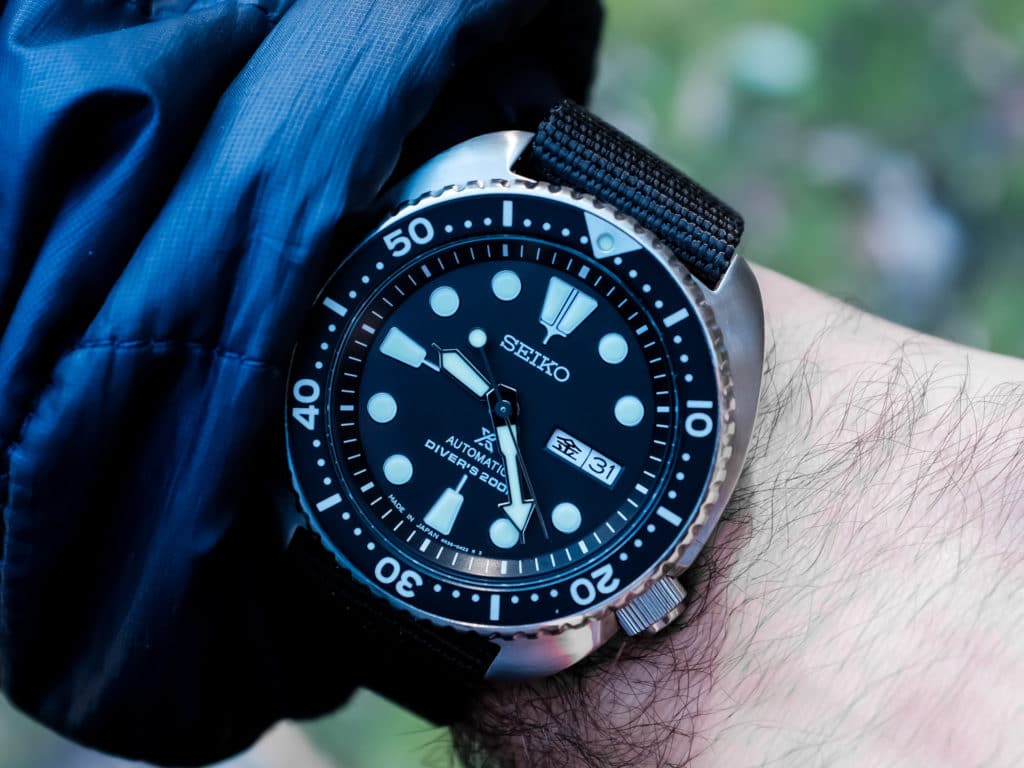
Every few years, another dive watch arrives claiming to be the watch that finally replaces the Seiko Turtle. Then we spend time with it, come back to the Turtle, and remember why that conversation never really goes anywhere. It isn’t because the Turtle is perfect. It’s because few Seiko divers balance comfort, practicality, and personality as effortlessly over the long haul. After years of wearing it, we’ve found it’s the kind of watch that quietly earns its place through use rather than trying to win you over with a feature list.
The oversized cushion case tells only half the story. On paper, more than 44mm sounds intimidating, but the rounded shape spreads its weight so well that it wears noticeably smaller than the dimensions. The offset crown is another detail we’ve come to appreciate because it never digs into the back of the wrist, even after a full day of wear. The supplied silicone strap is also a welcome improvement over Seiko’s older rubber offerings. However, we still think the Turtle finds its sweet spot on a NATO, where it feels ready for everything from weekends away to days spent around the water.
Visibility has always been one of the Turtle’s biggest strengths. The matte black dial keeps glare under control, while the oversized hands and generously applied Lumibrite make reading the time almost effortless, whether you’re outside in bright sunlight or checking the time at midnight. The lume still lives up to Seiko’s reputation by staying bright for hours after charging. And despite all the debate surrounding it, the Prospex “X” logo fades into the background much faster than internet forums would have you believe. The optional Kanji day wheel adds a bit of charm, although we found it takes a fraction longer to read than the standard English display once the novelty wears off.
The 4R36 movement modernizes the Turtle with hacking and hand-winding, making everyday ownership much easier than older entry-level Seikos. Accuracy, however, still varies from watch to watch. Our review sample ran roughly +35 to +45 seconds per day, and bezel alignment remains something we’d recommend checking before buying because consistency isn’t guaranteed. Hardlex is another familiar compromise. We’d still choose sapphire if Seiko offered it, but it never became the reason we left the Turtle at home. That’s probably the best way to sum this watch up. It asks you to accept a few imperfections, then quietly reminds you why people keep coming back to it anyway.
Pros
- Comfortable silicone strap, with even better versatility on a NATO.
- Offset crown stays comfortable during extended wear.
- The cushion-shaped case wears significantly smaller than its dimensions indicate.
- 4R36 movement adds hacking and hand-winding.
- Large hands, generous Lumibrite markers, and the matte dial deliver outstanding legibility.
Cons
- Accuracy and bezel alignment can vary between individual examples.
- Large case still won’t suit collectors who prefer compact divers.
- Hardlex crystal isn’t as scratch-resistant as sapphire.
Seiko Samurai
| Price: | $400 – $500 |
| Water Resistance: | 200m |
| Case Dimensions: | 43.8mm (diameter) x 47mm (lug-to-lug) x 13mm (thickness) |
| Lug Width: | 22mm |
| Movement: | Seiko 4R35 (Mechanical) |
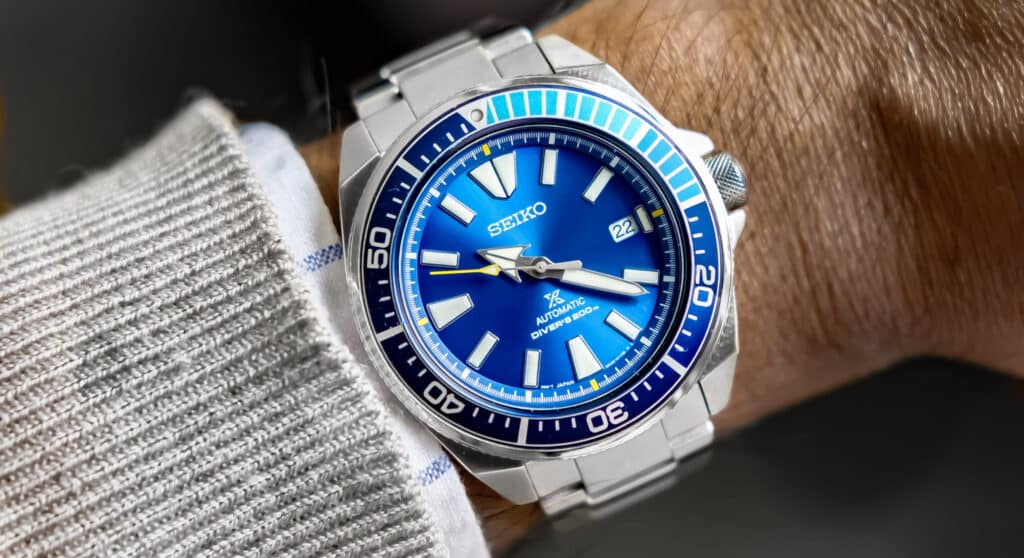
The Samurai has always felt like Seiko’s answer for people who wanted the dependability of the Turtle but couldn’t warm up to its rounded shape. You’re getting a dive watch with a lot more attitude. After spending time with both, that’s what kept bringing us back to the Samurai. It feels unmistakably like a Seiko diver, yet the sharp case, bold handset, and faceted surfaces give it a personality that’s hard to confuse with anything else in the lineup.
Most of that personality comes from the case. The flat brushed surfaces, crisp edges, and pronounced transitions look almost architectural compared to the softer Turtle or SKX. We expected those sharp lines to make it wear larger than it does, but the Samurai settled onto the wrist better than anticipated during extended wear. Those same edges will also show scratches sooner than Seiko’s rounded cushion cases, which is part of owning a watch like this. The dial follows the same philosophy. Oversized Monster-style hands, generously applied Lumibrite, and bold applied markers make it very easy to read. At the same time, the blue dial shifts through different shades without ever becoming difficult to glance at. The hands might look oversized in photos, but on the wrist, they feel completely at home because they reinforce the Samurai’s angular character instead of competing with it.
The bracelet’s 22mm width balances the case well, the end links transition cleanly into the lugs, and unlike plenty of affordable Seiko bracelets, we never felt an immediate need to replace it. If you enjoy changing straps, the drilled lugs make that easy. Around the bezel and crown, Seiko got the fundamentals right too. The deep knurling offers excellent grip, and the sloped crown guards protect the screw-down crown without making it awkward to operate. Our review sample’s bezel was stiffer than we’d have preferred, but it clicked with reassuring authority once moving. The familiar 4R35 movement keeps things simple with hacking, hand-winding, and roughly 40 hours of power reserve. Accuracy still falls within the range we’ve come to expect from Seiko’s entry-level automatics.
That’s ultimately what makes the Samurai stand out among the Seiko dive watches we’ve reviewed. It doesn’t try to appeal to everyone, and that’s why it appeals so strongly to those who connect with it.
Pros
- Well-integrated 22mm bracelet that doesn’t immediately demand replacement.
- Drilled lugs make strap swaps quick and easy.
- Angular brushed case gives the Samurai a distinctive identity.
- Oversized Monster-style hands, applied markers, and generous Lumibrite make the dial very legible.
- Sloped crown guards keep the screw-down crown comfortable and easy to use.
Cons
- Sharp case geometry shows scratches more quickly than Seiko’s rounded cases.
- Bezel action on our review sample was quite stiff.
Seiko SKX173
| Price: | $400 – $600 (based on condition, since it’s discontinued) |
| Water Resistance: | 200m |
| Case Dimensions: | 42mm (diameter) x 45.5mm (lug-to-lug) x 13.25mm (thickness) |
| Lug Width: | 22mm |
| Movement: | 7S26 |
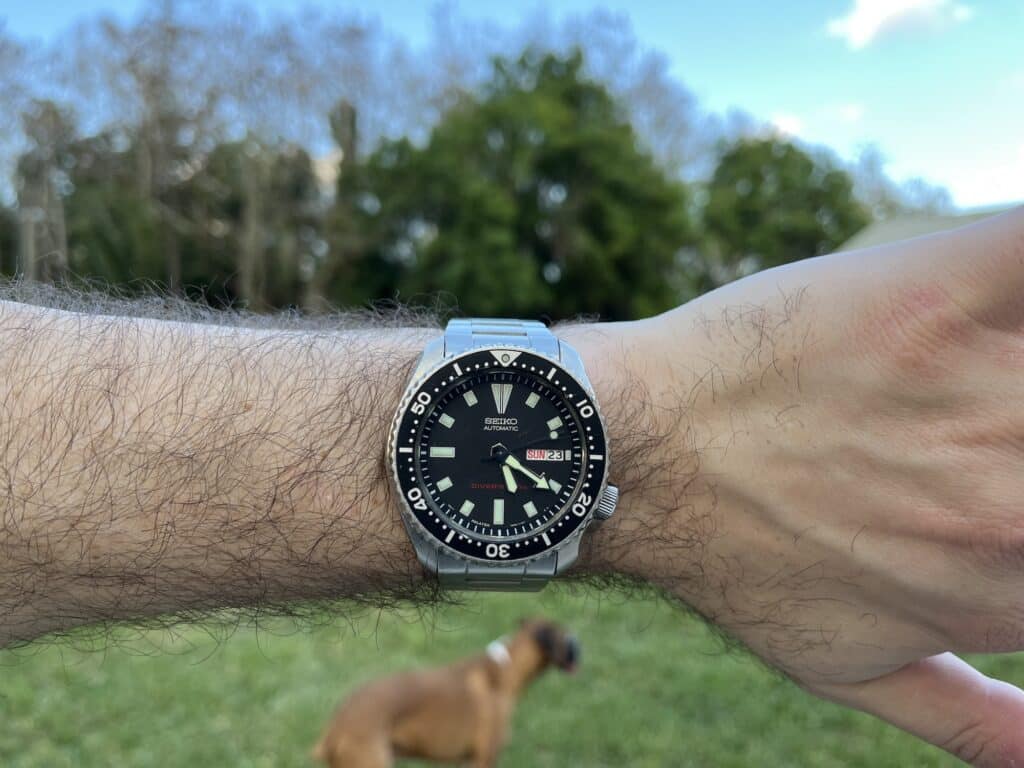
The SKX173 has spent most of its life being introduced as “the one that’s not the SKX007.” After living with one, that feels like the wrong conversation to have. Yes, they’re mechanically almost identical, but the SKX173 has enough personality to stand on its own. The rectangular hour markers and tall trapezoidal index at 12 o’clock give it a more purposeful, almost military-inspired look that quietly nods to Seiko’s earlier dive watches. If the SKX007 is the familiar crowd favorite, the SKX173 is the one collectors tend to appreciate after spending a little more time with it. That’s why it earned a spot among the best Seiko dive watches we’ve reviewed.
The 7S26 automatic reinforces that same philosophy. There’s no hand-winding or hacking, and on paper, that makes it feel dated next to modern Seiko calibers. In practice, we’ve never found those omissions to matter nearly as much as internet spec sheets suggest. What the 7S26 does exceptionally well is keep going. It’s a movement built for longevity rather than precision, happily ticking along for years with very little attention beyond the occasional service. Accuracy sits within the expected -20 to +40 seconds per day, but for a watch designed to be worn hard instead of admired through a display case, it remains a dependable partner.
The dial is where the SKX173 really separates itself. Those angular markers don’t just change the look; they make the watch feel more utilitarian at a glance while remaining unmistakably Seiko. LumiBrite is every bit as impressive as we’ve come to expect, staying bright long after many similarly priced divers have faded. The day-date display is another feature we found more useful than fashionable, especially during busy weeks when one glance replaces checking a phone. The rotating bezel also earns its keep well beyond timing dives. Ours ended up tracking everything from parking meters to coffee breaks, and despite feeling a touch looser than some competitors, it remained smooth, positive, and easy to operate, even with gloves.
The familiar SKX cushion case ties everything together. At 42mm with a compact 45.5mm lug-to-lug, it strikes a balance between wrist presence and everyday comfort that still holds up well. The recessed 4 o’clock screw-down crown never gets in the way, while the ISO-6425-certified 200 meters of water resistance means it’s the real thing rather than a dive-inspired imitation. Hardlex eventually collects scratches if you actually use the watch, but ours never became difficult to read, and replacing the crystal is relatively straightforward if it ever bothers you. We were less enthusiastic about the 22mm stock rubber strap, which feels stiff and bulky compared to the rest of the watch, but that’s hardly a deal-breaker because the SKX173 looks at home on almost anything. NATOs, oyster and jubilee bracelets, beads of rice, leather, and aftermarket rubber all suit it well. The days of buying one because it was noticeably cheaper than an SKX007 are largely gone, but if this dial speaks to you more, there’s no reason to treat it as the runner-up. Consider reading our full review for the smaller on-wrist details.
Pros
- Distinctive dial with angular markers offers a unique take on the classic SKX formula.
- ISO-6425 certification gives it genuine dive-watch capability.
- Durable 7S26 movement has an outstanding long-term reliability record.
- Comfortable cushion case and recessed 4 o’clock crown fit nicely on a wide range of wrists.
- Pairs exceptionally well with bracelets, NATOs, leather, and aftermarket rubber straps.
Cons
- No hacking or hand-winding.
- Hardlex crystal is more prone to scratches than sapphire.
- The factory rubber strap feels stiff and bulky.
- Secondary-market prices have climbed close to SKX007 territory.
Seiko Sumo
| Price: | $600 – $800 |
| Water Resistance: | 200m |
| Case Dimensions: | 45mm (diameter) x 52.6mm (lug-to-lug) x 13.5mm (thickness) |
| Lug Width: | 20mm |
| Movement: | 6R35 (Automatic Movement) |
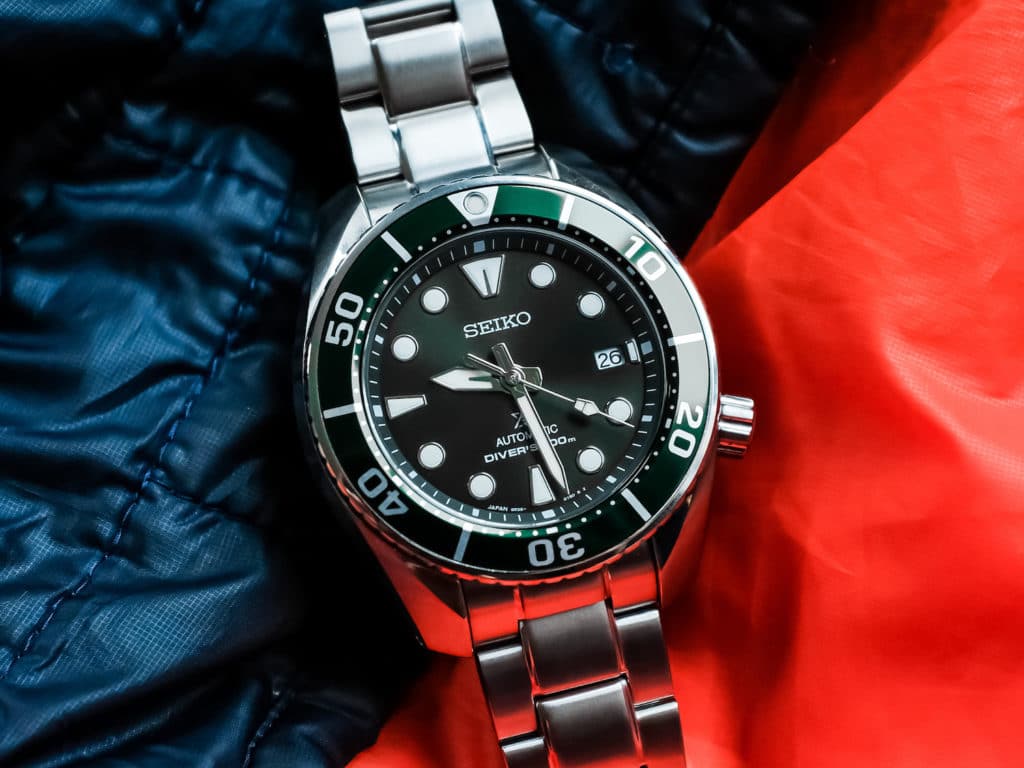
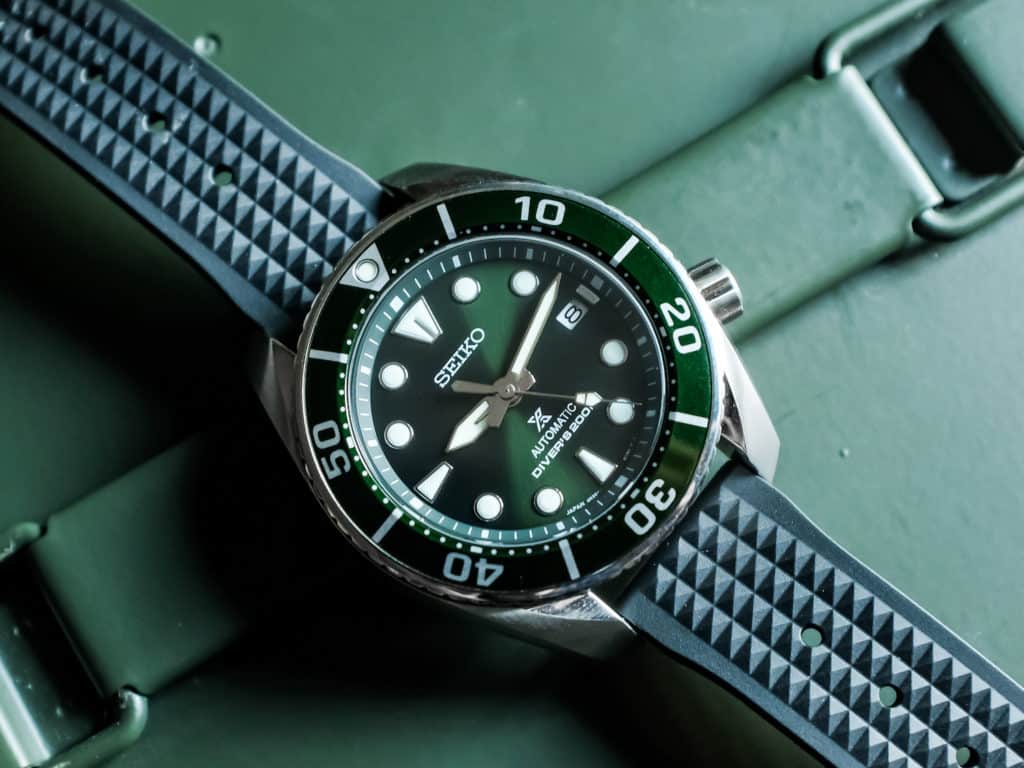
If we judged Seiko dive watches by their specifications alone, the Sumo probably wouldn’t have made this list. A 45mm case sounds excessive, especially if you’ve been frustrated by large divers that felt like they were permanently trying to slide off your wrist. The funny part is that the Sumo almost immediately disproves its own measurements. After spending significant time with it, we stopped thinking about the diameter and started appreciating how naturally the rounded mid-case and sweeping lugs settled onto the wrist.
That balance carries through the rest of the watch. The blue dial on the “Blumo” shifts noticeably with changing light, moving from a deep navy to a brighter blue without ever becoming distracting. Applied hour markers with polished surrounds add depth, while the beveled chapter ring subtly frames the dial instead of cluttering it. Legibility is excellent, thanks to the clean hand-to-dial contrast, but what stood out just as much was how the brushed and polished case finishing softened the Sumo’s tool-watch character. It still gives you everything you’d expect from a serious diver: 200m of water resistance, a screw-down crown, and a solid caseback, but the polished edges catch light enough to make it feel at home away from the water, too.
The bracelet fits that personality well, with brushed upper links and polished sides that tie neatly into the case finishing. It’s the setup we kept coming back to despite the narrower lug width and the space around the lugs making aftermarket straps look a little awkward. That said, NATOs work better than most alternatives.
Inside, the 6R35 automatic brings the practical upgrades we’d expect from a modern Seiko, including hacking, hand-winding, and roughly 70 hours of power reserve. Depending on where it’s priced, the Sumo can occupy an awkward spot within Seiko’s own lineup. That said, once the initial surprise of how well it wears faded, what stays is how complete the overall package feels. Very few Seiko divers combine this much wrist presence with this much composure.
Pros
- Brushed and polished finishing gives it more versatility than a typical tool diver.
- The 6R35 movement adds hacking, hand-winding, and around 70 hours of power reserve.
- The large case wears far smaller than expected thanks to its curved lugs and rounded profile.
- Proper dive-watch credentials with 200m water resistance, a screw-down crown, and a solid caseback.
- Well-finished bracelet complements the case and feels like the most natural pairing.
Cons
- The spacing between the lugs and case can limit strap options.
- The narrow lug width can make the proportions look unusual to some.
- Despite wearing well, the 45mm case is still likely to overwhelm smaller wrists.
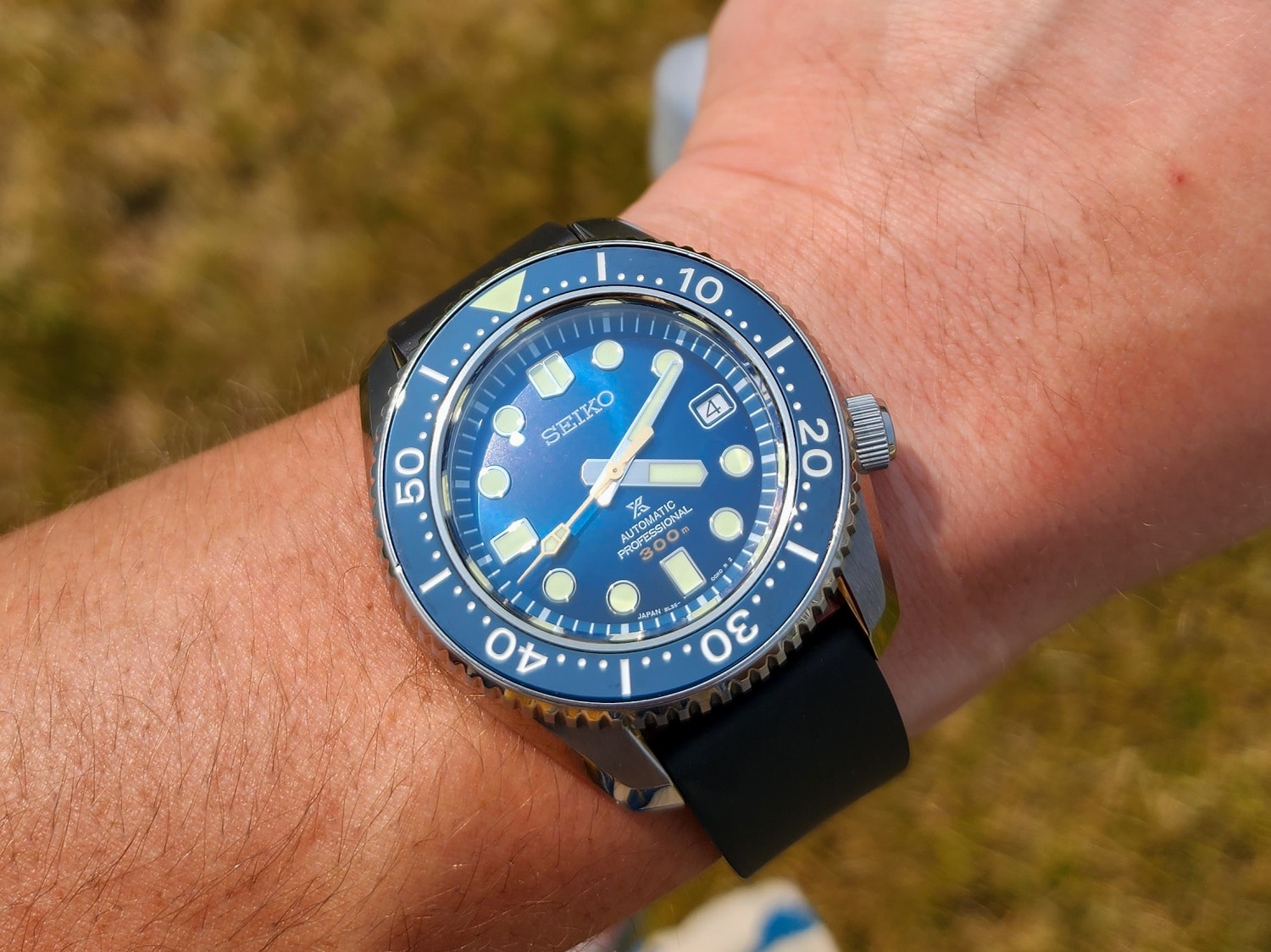
Seiko Marinemaster
| Price: | $3,100 |
| Water Resistance: | 300m |
| Case Dimensions: | 44mm (diameter) x 50.5mm (lug-to-lug) x 15.4mm (thickness) |
| Lug Width: | 20mm |
| Movement: | Seiko 8L35 (Automatic Movement) |
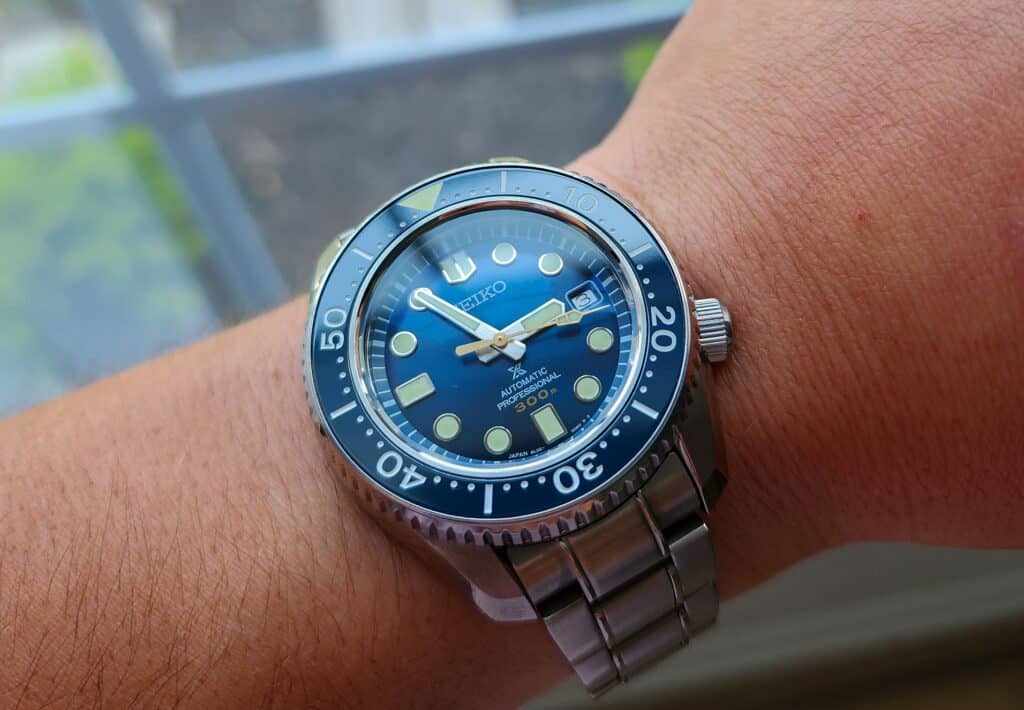
Some Seiko dive watches earn respect because they’re great value. The Marinemaster 300 earned ours for a different reason. After spending real time with it, we finally understood why so many long-time owners talk about it with the kind of loyalty usually reserved for discontinued favorites. On paper, it’s difficult to justify. It’s large, heavy (close to 200gm on the bracelet), expensive by Seiko standards, and carries a bracelet that’s far from perfect. On the wrist, though, those objections gradually stop dominating the conversation. You start noticing everything the watch quietly gets right instead.
The 8L35 is a big reason why. It never feels like just another Seiko movement, and our hands-on review experience backed that up by hovering around +4 seconds per day throughout extended wear. That sense of confidence carries into the bezel, whose smooth, almost hydraulic resistance stands apart from the sharper clicks we’d expect from many Swiss divers. It’s different rather than better, but after a few weeks we found ourselves missing it whenever we wore something else.
The blue dial also rewards repeat wear more than first impressions. The color shifts naturally throughout the day without becoming overly dramatic, while the framed date window and restrained gold accents stop short of making the watch feel flashy. Add Seiko’s characteristically excellent lume—which still looked ready for another few hours when we woke up—and the dial quickly becomes one of the reasons the watch keeps pulling you back.
Surprisingly, the watch head wasn’t what challenged us most; it was the bracelet. The long links, limited articulation, and male end links made the Marinemaster feel bulkier than it actually is, even though the sculpted monocoque case wears smaller. The polished case flanks and relatively compact dial help disguise the size, while the smooth caseback keeps everything planted comfortably on the wrist. The downside to that wonderfully solid one-piece construction is servicing, since the movement has to come out through the front. We eventually moved ours onto rubber or NATO, and that’s where the Marinemaster finally clicked. It still felt every bit as substantial, but far less interested in reminding us how much steel we were wearing.
Pros
- The 8L35 delivers excellent real-world accuracy and feels like a meaningful upgrade over Seiko’s mid-tier movements.
- Sculpted monocoque case wears smaller than its dimensions suggest while feeling solid.
- Lume charges quickly and stays legible throughout the night.
- The tall, deeply knurled bezel is easy to grip and offers smooth, controlled operation.
- One-piece case construction contributes to a robust feel.
Cons
- The stock bracelet is heavy and doesn’t feel as refined as the watch head.
- Male end links increase the effective wrist presence.
- Front-loading case construction makes servicing less straightforward.
- Long links and limited articulation reduce bracelet comfort.
Seiko has a habit of making “just one more diver,” so we’re under no illusion that this list is the final word. If there’s a model you think we’ve missed, tell us in the comments. We only recommend watches we’ve actually reviewed, but we’re always looking for a good excuse to spend more time with another Seiko dive piece.

Co-Founder and Senior Editor
Kaz has been collecting watches since 2015, but he’s been fascinated by product design, the Collector’s psychology, and brand marketing his whole life. While sharing the same strong fondness for all things horologically-affordable as Mike (his TBWS partner in crime), Kaz’s collection niche is also focused on vintage Soviet watches as well as watches that feature a unique, but well-designed quirk or visual hook.
I’ve just purchased my fifth Seiko. The latest is the Sumo diver’s watch that’s featured in the article. I purchased the Prospex Monster Antarctica which I loved even though it’s chunky and a wee bit difficult to read the dial, unless there is little or no light. I used to wear it all the time. I say used to because I had to return it to the boutique because it was losing on average three quarters to one hour per day, despite wearing it most of the day and placed in a winder next to my Alpinist. It’s now back with Seiko. So I’ve kind of fell out of love with it so I decided to buy a replacement, the Sumo. I haven’t decided when the Monster is returned either working as it was intended,a replacement,get a refund,sell it or keep it. I’m looking forward to collecting the Sumo on Tuesday and it comes with the silicone black strap.
Hi, Richard:
Congrats on the Sumo! Five Seikos is a proper collection. It’s a shame about the Monster, though. Losing 45 minutes to an hour per day is far beyond acceptable, especially for a watch you enjoyed so much.
Hopefully Seiko gets it sorted. The Sumo should feel like a nice change of pace, and the black silicone strap suits it perfectly. Let us know how you get on with it.
Best,
-Kaz
nothing beats the original 1st Gen Orange Monster.
Great to see that some of them are still out there at not-crazy prices, Clive. Unlike the Gen 2.