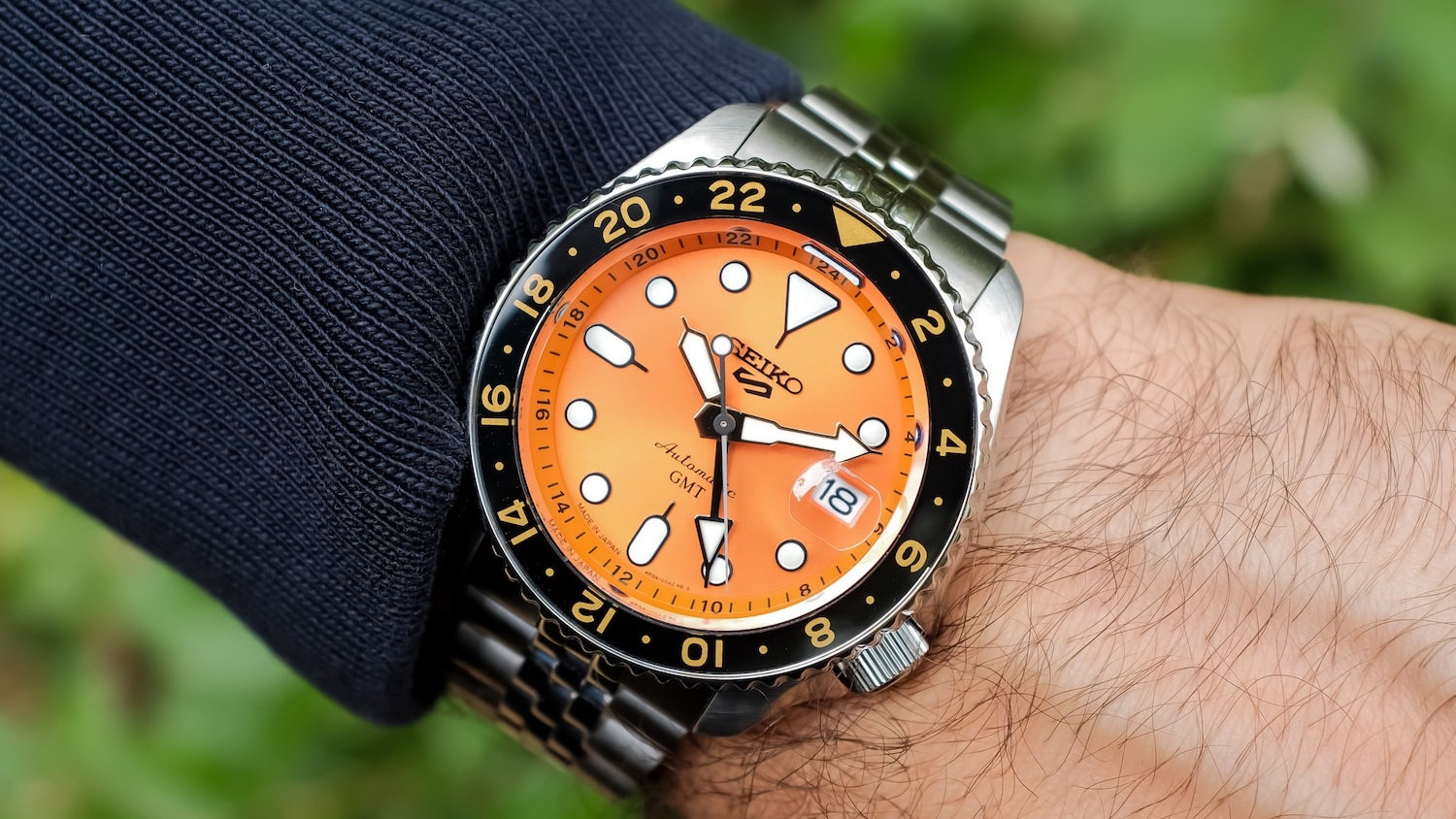
There’s something satisfying about an automatic GMT. The mechanical movement, the traditional watchmaking appeal, and the ability to track another time zone all contribute to a watch that feels like more than a simple timekeeping instrument. But quartz has a convincing argument of its own, particularly when convenience and accuracy matter more than mechanical complexity. The Seiko 5 GMT and Vaer G2 Meridian GMT approach this decision from opposite directions, offering two different interpretations of what an affordable GMT should deliver. Neither is particularly difficult to appreciate, but choosing between them requires a closer look at what we’re actually getting.

We’ve reviewed both watches individually, and their strengths extend well beyond the movements inside them. The Seiko combines familiar SKX-inspired styling with the automatic GMT functionality enthusiasts had wanted from the brand for years. Vaer takes a more restrained approach, placing a Swiss quartz movement inside a compact, practical case with several appealing specifications. Drawing on our hands-on experiences with both, we’re comparing their design, construction, movements, and everyday usability to see which offers the more convincing overall package.
Overview and Identity
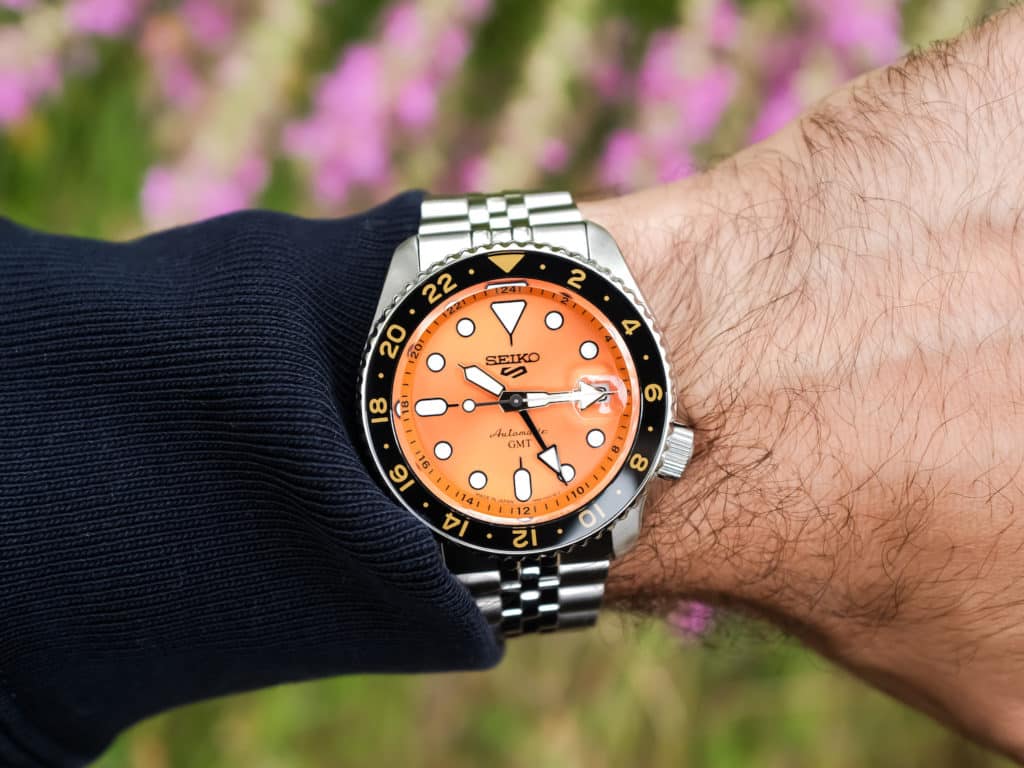
The Seiko 5 GMT feels like the automatic GMT Seiko enthusiasts had been waiting for. Before its release, collectors were experimenting with fitting GMT movements into SKX007 cases, often sharing their projects across enthusiast forums. Seiko eventually made those modifications unnecessary by introducing a factory-built alternative that preserved much of the familiar design language. As discussed in our dedicated review, the appeal was immediately apparent. Seiko combined recognizable styling, an accessible automatic GMT movement, and a price that didn’t require collectors to move into an entirely different segment of the market. It’s a watch that builds on an established enthusiast favorite while giving the familiar formula a genuinely useful additional complication.
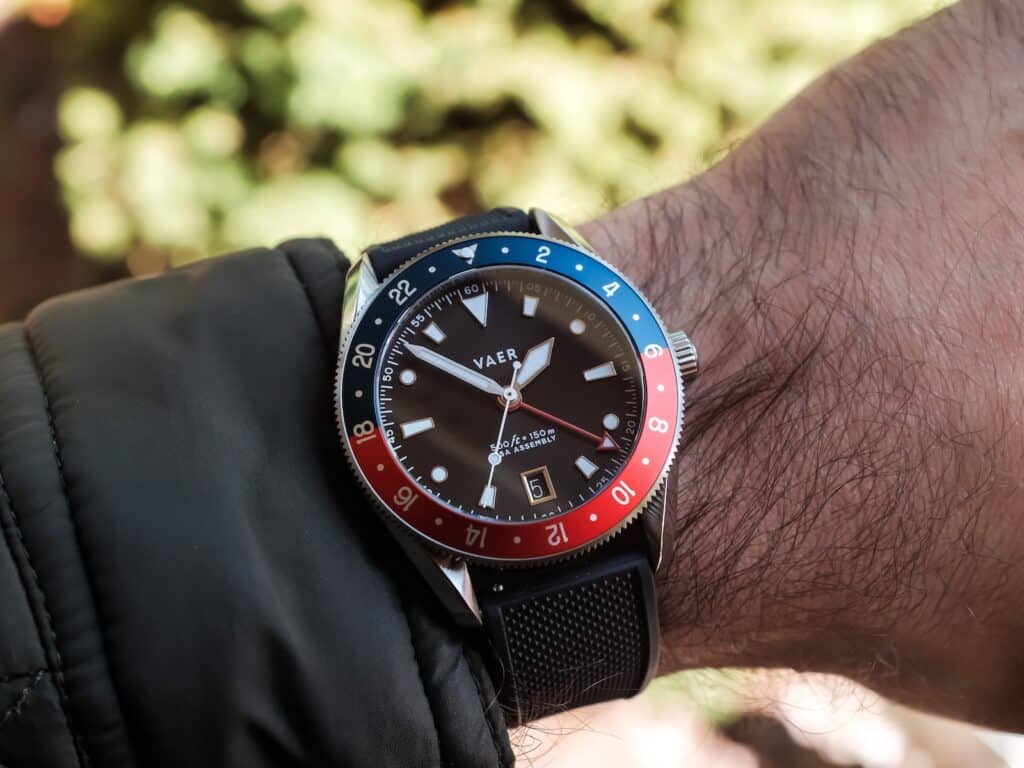
The Vaer G2 Meridian GMT approaches the same category from a different direction. Its Pepsi bezel places it within a familiar GMT design tradition, but we’ve reviewed enough Vaer watches to recognize the brand’s preference for usability over elaborate historical storytelling. Rather than competing directly with its higher-end mechanical GMT models, the G2 Meridian offers a more accessible interpretation built around quartz convenience and straightforward construction. In our hands-on review, that approach proved convincing. The watch combined recognizable GMT styling with dimensions and finishing choices that emphasized practical ownership, creating a distinct alternative to the Seiko’s more nostalgic personality.
Dial and Straps/Bracelets
The Seiko 5 GMT offers the more expressive dial of the two, particularly in the orange configuration we reviewed. Its sunray finish gives the color more depth than a flat matte treatment would provide, while the dark surrounds around the indices preserve contrast against the bright background. The gilt hour and minute hands recall earlier Seiko models, including the SKX011J, while the black GMT hand complements the inner 24-hour scale. Even the seconds hand incorporates a black counterweight, showing how carefully Seiko has coordinated the different elements. There’s plenty happening across the dial, but the arrangement never feels unnecessarily crowded. The text remains balanced, with branding above 12 o’clock and the Automatic and GMT markings above six. We’d still prefer the date without a cyclops, although the magnifier doesn’t fundamentally undermine the overall design.
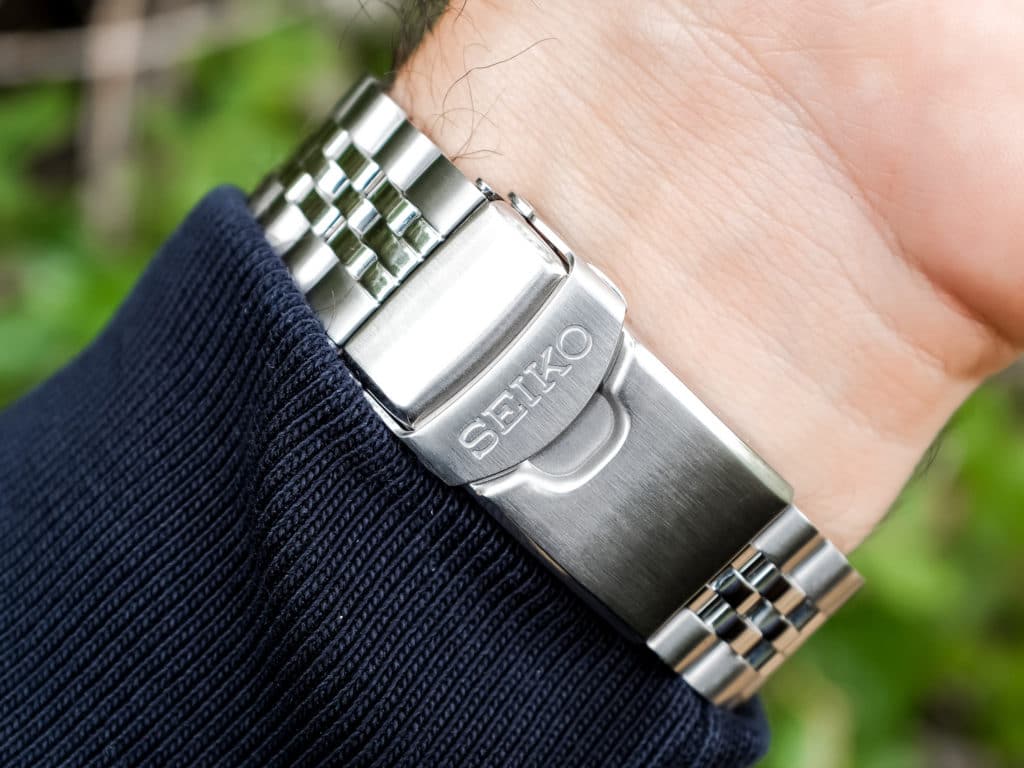
The bracelet reinforces the familiar character of the Seiko 5 GMT. Its construction differs from the older SKX Jubilee, but it retains the lightweight, slightly jangly quality that some enthusiasts genuinely appreciate. The dual push-button clasp offers a welcome improvement over the older arrangement, even if the stamped components aren’t especially sophisticated. We found that the bracelet suited the watch’s personality rather than feeling entirely out of place. It tapers from 22mm at the lugs to approximately 20mm near the clasp, helping manage the visual weight of the case. The polished sections and pin-and-collar sizing system won’t appeal to everyone, but the watch also works well on a NATO strap. That versatility is part of what makes the Seiko appealing as an affordable enthusiast watch rather than simply another GMT with a steel bracelet.
The Vaer G2 Meridian GMT takes a considerably more restrained approach to its dial. Its familiar red-and-blue bezel introduces a recognizable visual reference, while the dial itself relies on a relatively straightforward arrangement of applied markers, contrasting hands, and a date window positioned at six o’clock. The result is balanced without being excessively elaborate. We appreciated how naturally the date integrates into the overall composition, particularly compared with designs that place a magnifier over the three-o’clock position. Daytime legibility was strong, with the markers and handset remaining easy to distinguish at a glance. The vintage influences are apparent, but Vaer doesn’t reproduce every detail of an older GMT simply for the sake of familiarity. Instead, the design feels like a contemporary watch that borrows established elements and adapts them for everyday use.
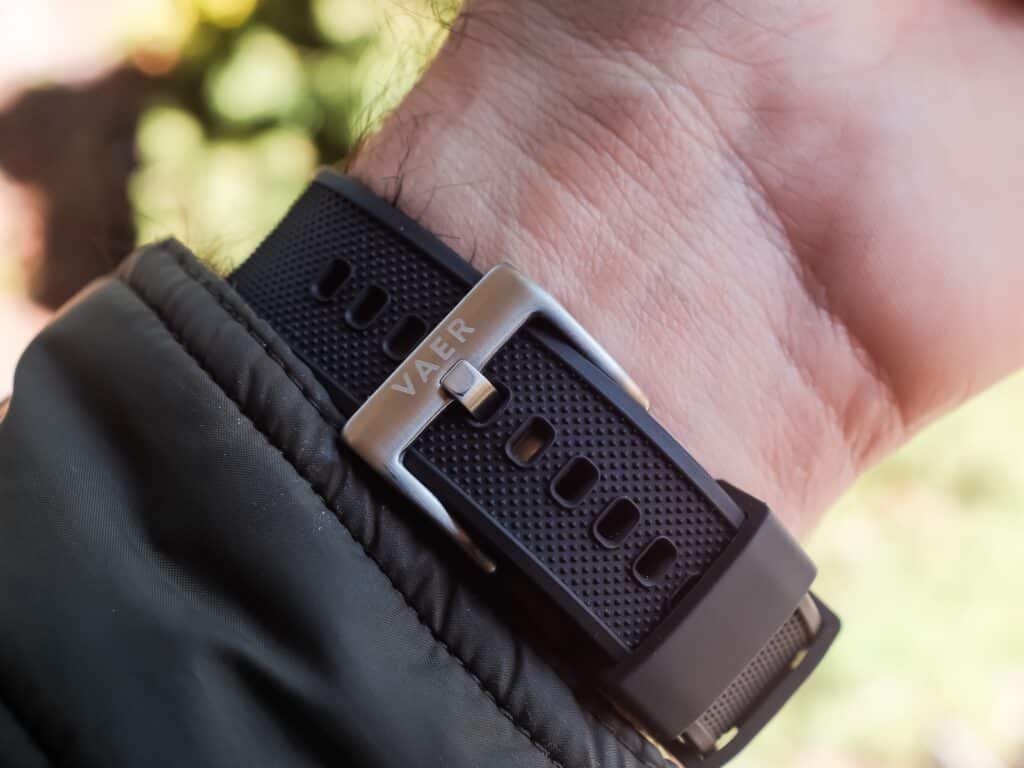
Our experience with the G2 Meridian’s straps also reinforced its practical character. We spent most of our time using the included rubber strap, which felt more substantial and better finished than some of the entry-level straps we’d previously encountered from Vaer. Its taper and flexibility complemented the relatively compact case, creating a comfortable combination without adding unnecessary bulk. Vaer also includes a NATO strap, providing an alternative for buyers who prefer a more traditional fabric option. We found that strap somewhat stiff, however, and consistently preferred the rubber configuration. Neither option offers the familiar appeal of the Seiko’s steel bracelet, but the included choices are thoughtfully matched to the Vaer’s intended role as a practical everyday GMT.
Build Quality & Technical Approach
The Seiko 5 GMT and Vaer G2 Meridian GMT share the same basic purpose, but their engineering priorities differ considerably. Seiko focuses on mechanical appeal, familiar case construction, and the enthusiast experience of owning an automatic GMT. Vaer emphasizes quartz convenience, slimmer proportions, and a combination of materials and specifications intended for regular use. Those differences become particularly important when examining how each watch operates, how it sits on the wrist, and what its construction offers beyond the design.
Movements
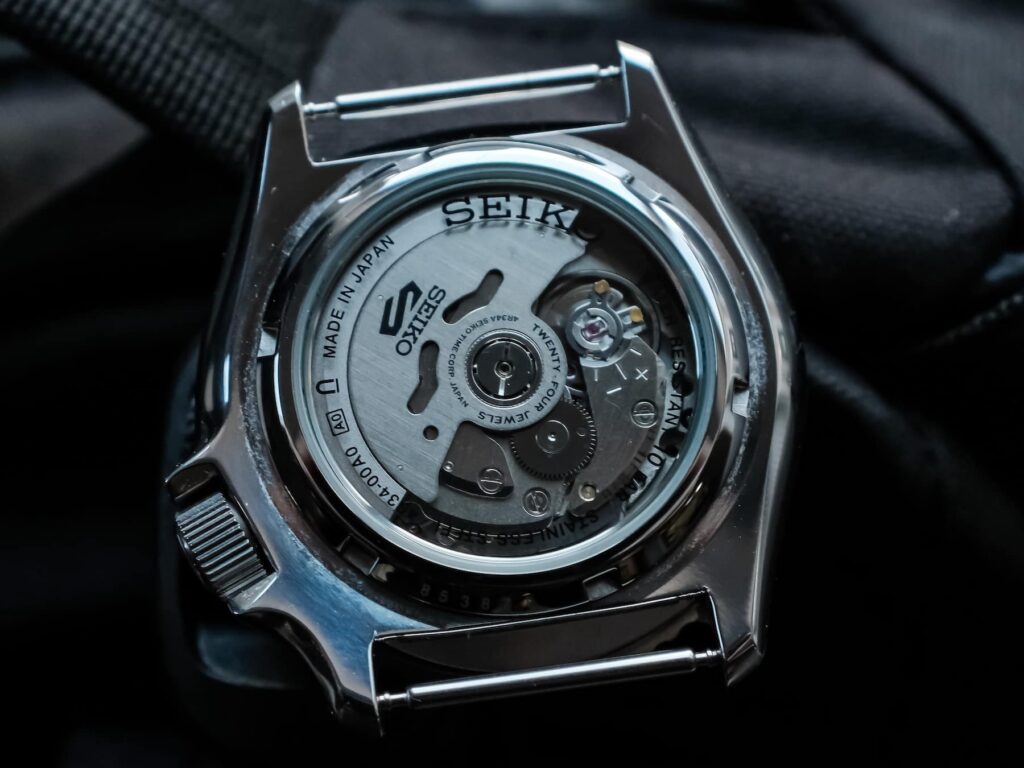
The Seiko 5 GMT uses the in-house 4R34 automatic movement, which offers approximately 41 hours of power reserve along with hand-winding and hacking functionality. It provides the mechanical appeal enthusiasts expect from an affordable Seiko, but its GMT complication deserves particular attention. The 4R34 is a caller-style movement, meaning the 24-hour GMT hand can be adjusted independently while the primary hour hand remains tied to the regular time-setting mechanism. That arrangement works well for tracking another location from home, but it isn’t as convenient for someone who frequently travels across time zones and wants to jump the local hour hand without disturbing the minute setting. During our review, the movement operated as expected, and the ability to monitor another time zone added a welcome layer of functionality to the familiar Seiko formula.
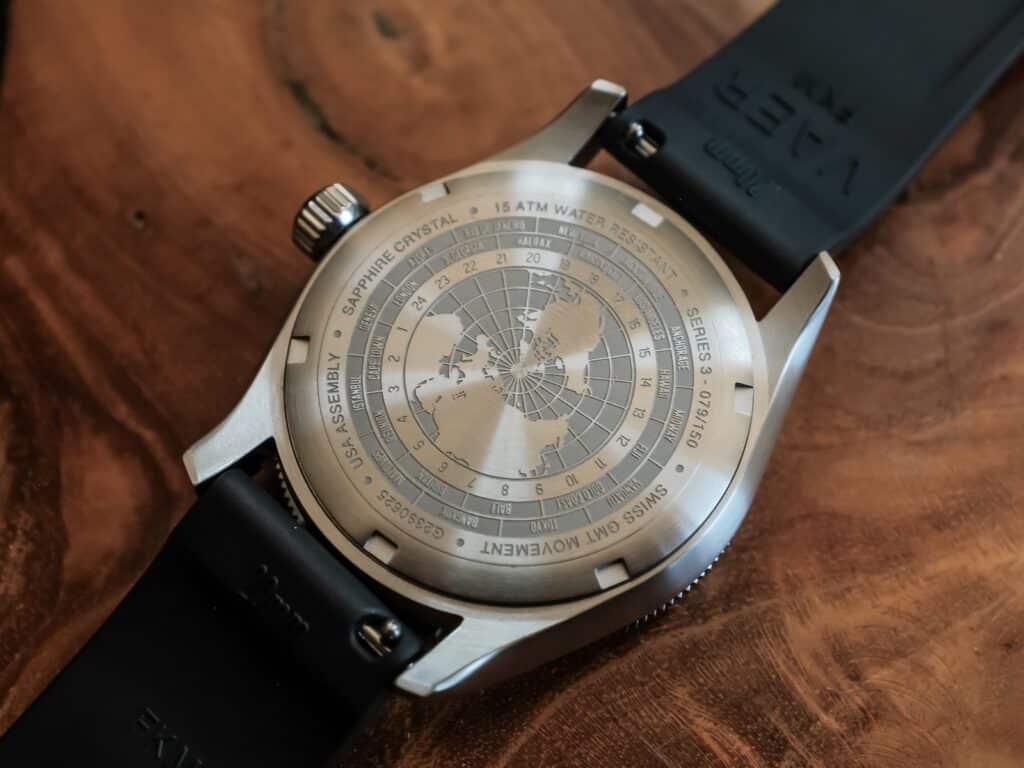
The Vaer G2 Meridian GMT uses the Swiss-made Ronda 515.24H quartz movement, which also operates as a caller-style GMT. Like the Seiko, it allows the 24-hour hand to be adjusted independently rather than providing the jumping local-hour functionality associated with a traveler’s GMT. The practical distinction is therefore less about what the GMT complication can do and more about how the watch fits into everyday ownership. The Vaer offers a quick-set date and battery life measured in years, eliminating the winding and resetting that accompany an automatic watch left unworn for several days. We found the movement straightforward to operate, and its simplicity complemented the overall design. It doesn’t provide the visual or tactile fascination of a mechanical movement, but that isn’t the experience Vaer is attempting to deliver.
Both movements also work alongside their respective rotating 24-hour bezels, allowing additional flexibility when tracking time zones. With the GMT hand set to a reference time, rotating the bezel can provide another offset, although the process requires the wearer to keep track of which scale represents which location. Neither watch offers the convenience of an independently jumping local hour hand, a distinction worth understanding before purchasing either specifically for frequent international travel. For enthusiasts who enjoy interacting with their watches, Seiko’s automatic movement provides an additional reason to engage with the complication. Vaer’s quartz approach removes much of that routine interaction, making it particularly attractive for someone who wants the GMT function available without continually attending to the movement.
Case Construction, Finishing & Wearability
The Seiko 5 GMT carries much of the familiar SKX design language, and anyone accustomed to those cases will recognize its proportions immediately. The 42.5mm stainless steel case measures approximately 13.6mm thick, with a relatively compact 46mm lug-to-lug distance that helps offset its substantial diameter. The rounded, flowing lugs make the watch feel less imposing than the dimensions initially suggest, while the combination of brushed and polished surfaces provides enough variation to keep the case visually interesting. We appreciated how Seiko retained the recognizable profile without simply reproducing the older diver unchanged. The watch still has a substantial presence, but its proportions remain comfortable for a wide range of everyday situations.
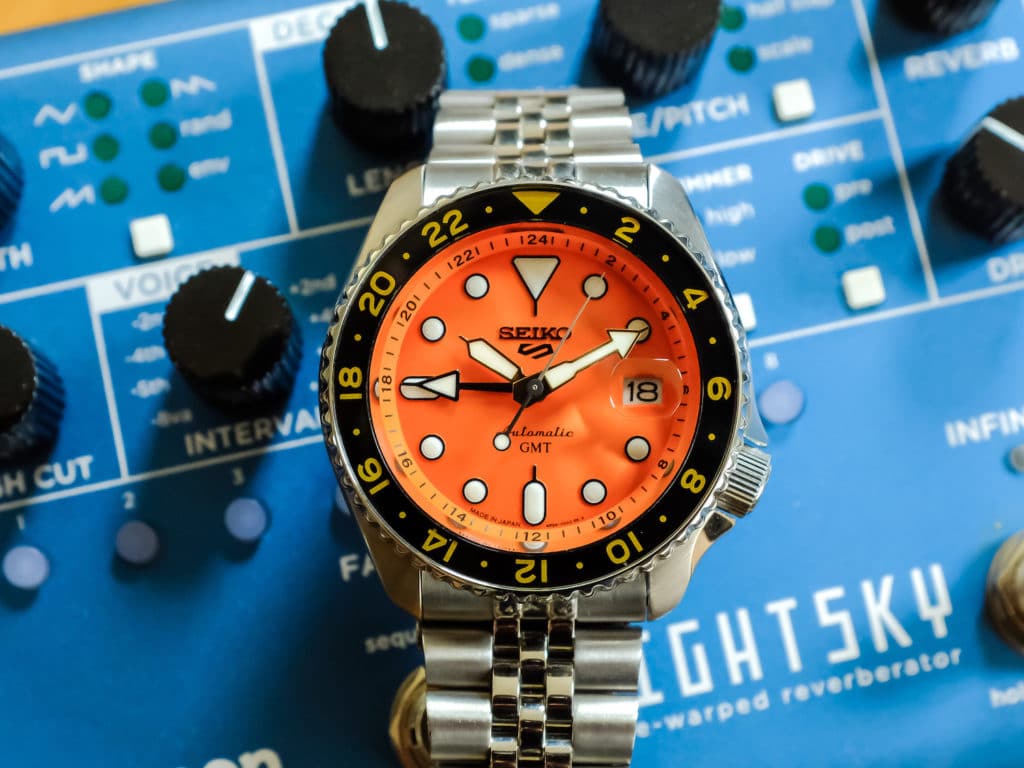
One of the more noticeable differences from the older SKX case is the thickness, influenced in part by the exhibition caseback that allows owners to view the automatic movement. That detail reinforces the Seiko’s enthusiast-oriented identity, although it also contributes to a case that won’t disappear beneath every shirt cuff. The asymmetrically positioned crown and familiar guards remain important visual elements, helping distinguish the design from more conventional GMT watches. Overall, the Seiko delivers the recognizable construction and wearing character that collectors have long associated with the brand. Its size is manageable rather than especially discreet, and that distinction matters when comparing it with a substantially thinner alternative.
The Vaer G2 Meridian GMT measures 39mm across with the same 46mm lug-to-lug distance as the Seiko, but its thickness of just over 10mm gives it a noticeably different wrist presence. The smaller diameter and slimmer profile were among the most appealing aspects of our original review, allowing the watch to sit comfortably without feeling insubstantial. Vaer combines brushed and polished surfaces to introduce visual contrast without making the case unnecessarily decorative. The engraved solid caseback provides a small detail of its own, while the screw-down crown remains easy to grip and operate. Together, those choices create a case that feels thoughtfully proportioned rather than designed around an unnecessarily ambitious specification sheet.
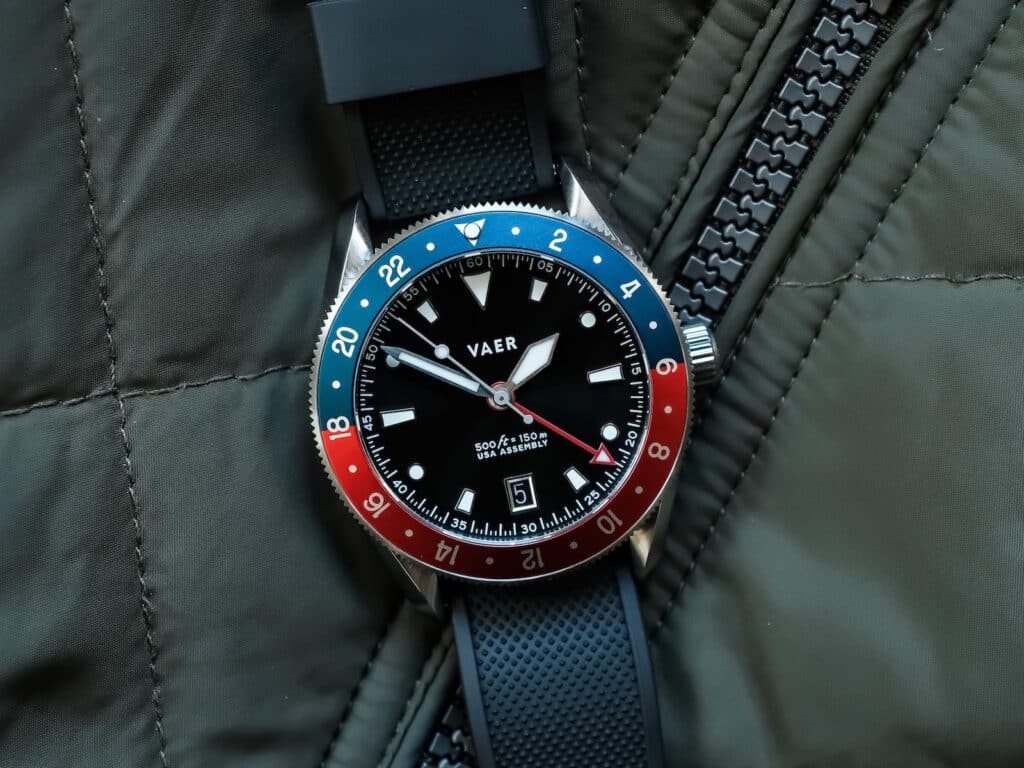
The differences become particularly noticeable when considering how these watches fit into a regular rotation. Seiko’s thicker case and steel bracelet provide a substantial, familiar sports-watch experience, while the Vaer feels more compact and less intrusive throughout the day. Neither case suffers from the sort of proportions that make a watch inherently uncomfortable, but their personalities are distinct. Buyers who enjoy the familiar presence of an SKX-inspired Seiko may find the automatic model particularly satisfying. Those who prioritize a lower-profile case, especially for travel or everyday wear, will likely appreciate the Vaer’s dimensions. That advantage isn’t simply a consequence of choosing quartz; it’s the result of Vaer’s broader approach to case construction and practical sizing.
Crystals and Bezels
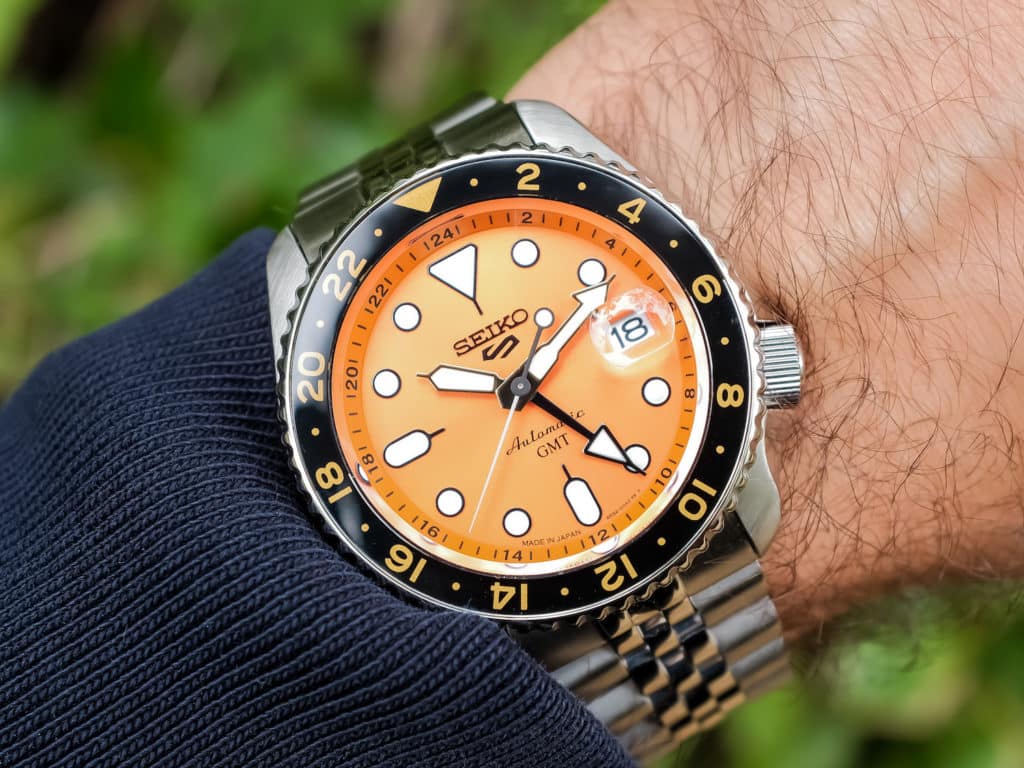
The Seiko 5 GMT uses a Hardlex crystal with a magnifier positioned over the date window. Although Hardlex remains a familiar choice across Seiko’s more accessible collections, it doesn’t provide the same level of scratch resistance generally associated with sapphire. The bezel offers a more distinctive feature. It rotates bidirectionally without the defined clicks commonly found on many GMT watches, giving it a smooth action that some enthusiasts will enjoy and others may find less reassuring during adjustment. Its glossy surface appears to incorporate a Hardlex-like treatment, although the exact material isn’t established by our original review. The 24-hour scale also uses contrasting finishes that create an unusual black-and-grey appearance as the viewing angle changes, adding character to a design that could otherwise have relied entirely on familiar Seiko styling.
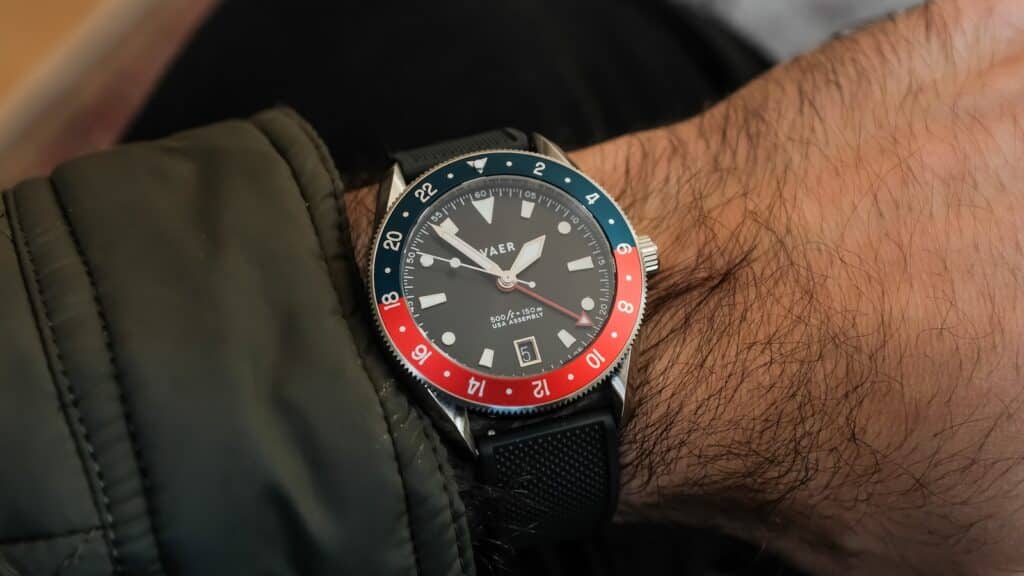
The Vaer G2 Meridian GMT counters with a sapphire crystal and an aluminum bezel insert, combining a more scratch-resistant crystal material with a comparatively traditional bezel construction. Its sapphire crystal is a meaningful specification advantage at this price, particularly for a watch intended to see regular wear. The bezel rotates bidirectionally with defined clicks, providing more deliberate tactile feedback than the Seiko’s smoother arrangement. Unfortunately, the mechanism also introduced one of our most significant criticisms of the Vaer. We noticed play in the action, and the bezel didn’t consistently align with the markers as precisely as we’d have liked. That isn’t simply a cosmetic concern for buyers who regularly use the bezel to track another time zone. The sapphire crystal is an advantage, but the inconsistent bezel alignment prevents the Vaer from claiming an uncomplicated victory in this section.
Water Resistance & Lume
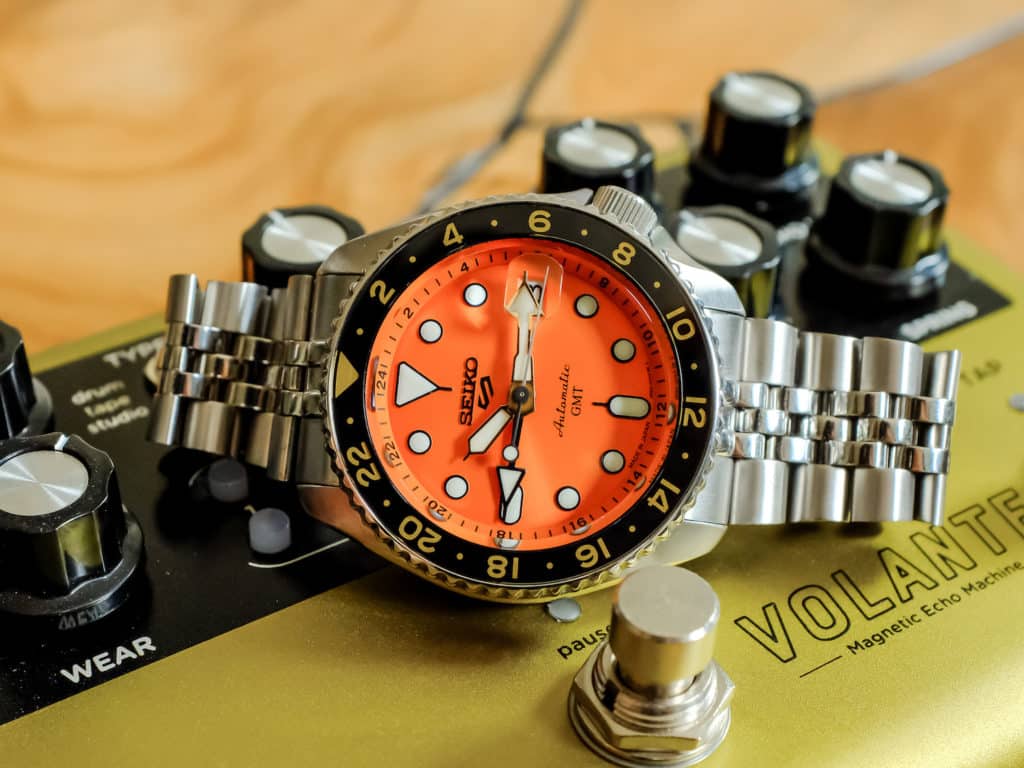
The Seiko 5 GMT carries a 100-meter water-resistance rating and uses a push-pull crown rather than the screw-down arrangement found on the older SKX divers. While 100 meters is sufficient for many ordinary water-related activities, the choice illustrates how Seiko positioned this model as an everyday sports watch rather than a direct replacement for the SKX’s diving credentials. Our original review also referenced a separate pressure test conducted by Spencer Klein, but that observation doesn’t change the manufacturer’s official rating. The luminous treatment is another familiar Seiko strength. LumiBrite fills the indices and hands, producing the bright, clearly defined glow we’ve come to appreciate from the brand. We were particularly impressed by the application around the markers, which looked clean and consistent against the dial.
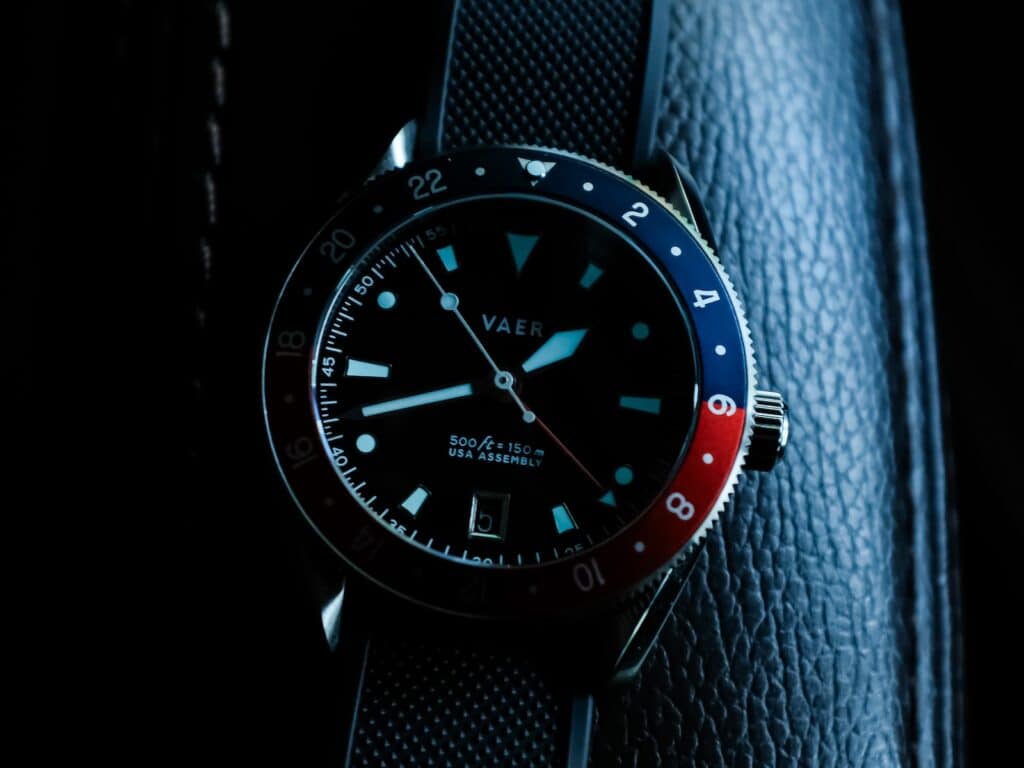
The Vaer G2 Meridian GMT offers 150 meters of water resistance along with a screw-down crown, giving it a higher official rating than the Seiko. That combination provides an appealing degree of protection for a GMT intended to handle everyday activities, travel, and time around water. The crown also felt straightforward to operate, reinforcing the practical construction we appreciated elsewhere in the review. Vaer’s luminous treatment performed well in lower-light conditions, with sufficient coverage across the hands and markers to keep the display readable. The Seiko remains especially appealing for its strong LumiBrite presentation, while Vaer counters with a higher water-resistance rating and the reassurance of a screw-down crown. Both watches offer credible everyday specifications, although their strengths are distributed differently.
Cost Considerations
The Seiko 5 GMT SSK005 currently carries a U.S. manufacturer’s suggested retail price of $495. That places it within an accessible segment of the mechanical GMT market, particularly considering the familiarity of Seiko’s 4R34 movement and the popularity of its SKX-inspired styling. The appeal isn’t simply the addition of another hand to a recognizable case. Seiko has created an automatic GMT that feels closely connected to the watches its enthusiasts already know, while introducing functionality that once required aftermarket modifications or substantially more expensive alternatives. For buyers specifically seeking a mechanical GMT, those qualities provide a compelling starting point.
The Seiko’s value also depends on how much importance we place on its construction and included bracelet. Its stainless steel case and automatic movement make a strong first impression, but the Hardlex crystal, push-pull crown, and stamped bracelet components leave some room for improvement. The watch is also relatively thick compared with the Vaer, something that may matter to buyers hoping for an unobtrusive travel companion. None of these characteristics necessarily undermines the Seiko’s appeal, particularly for enthusiasts already comfortable with the compromises associated with affordable mechanical watches. They do, however, become more difficult to overlook when a similarly priced quartz alternative offers different material and practical advantages.
The Vaer G2 Meridian GMT in the 39mm Navy/Red configuration is currently listed at $429 through Vaer, positioning it below the Seiko’s manufacturer’s suggested retail price. That narrower financial commitment buys a Swiss quartz GMT movement, sapphire crystal, 150-meter water-resistance rating, and a compact stainless steel case. The included rubber and NATO straps add flexibility without requiring an immediate additional purchase. Vaer’s approach is straightforward: prioritize useful materials, comfortable proportions, and everyday reliability rather than allocating more of the budget toward mechanical movement construction. For buyers who aren’t specifically looking for an automatic watch, the overall package has considerable appeal.
That doesn’t mean the Vaer is free of compromises. Its quartz movement won’t satisfy collectors who specifically enjoy mechanical watchmaking, while the rubber and NATO straps may feel less substantial to buyers who prefer a steel bracelet. More importantly, the bezel play and alignment issues observed in our review deserve consideration at this price. A rotating GMT bezel is a functional component, not simply a decorative element, and imprecise alignment detracts from an otherwise convincing practical design. We’d like to see that execution improved, particularly because the rest of the watch demonstrates how carefully Vaer has considered day-to-day usability. A lower purchase price doesn’t make those finishing concerns irrelevant.
At the manufacturers’ listed prices, the difference between the two watches is $66, making this less a question of affordability than of priorities. The Seiko asks buyers to value the experience of an automatic GMT, its recognizable styling, and the familiar character of its steel bracelet. Vaer offers the convenience of quartz, slimmer proportions, sapphire crystal, and stronger water-resistance specifications at a slightly lower price. Retail discounts can change the calculation, but neither model needs to be dramatically cheaper to justify its existence. The better purchase depends on which features matter most and which compromises we’re prepared to accept. That’s a more useful distinction than simply assuming the watch with the mechanical movement must be the more desirable choice.
Final Thoughts: Seiko 5 GMT vs Vaer G2 Meridian GMT
The Seiko 5 GMT succeeds by delivering a watch enthusiasts had wanted from the brand for years. Its SKX-inspired design remains instantly recognizable, the orange sunray dial brings plenty of personality, and the 4R34 movement offers an approachable introduction to automatic GMT ownership. There are compromises, particularly in the case thickness, Hardlex crystal, and comparatively basic bracelet construction, but none fundamentally undermines its appeal. For collectors who enjoy the mechanical side of watchmaking, the Seiko provides something that a quartz GMT cannot reproduce through specifications alone. It’s a satisfying watch because of the experience it offers, not merely because of its ability to display another time zone.

The Vaer G2 Meridian GMT makes its case through a different combination of qualities. Its 39mm case and slimmer profile create a more discreet wearing experience, while the sapphire crystal, screw-down crown, and 150-meter water-resistance rating reinforce its practical identity. The Ronda quartz movement also suits a watch intended to be worn regularly or picked up after spending several days in a collection. Our principal reservation concerns the bezel, whose play and inconsistent alignment are disappointing given the otherwise thoughtful construction. That issue deserves attention, especially for buyers who expect precise tactile operation from a functional GMT bezel. Even so, the broader package remains appealing because its strengths are aligned with the intended everyday use.
The decision becomes clearer when considering what each watch contributes beyond its movement. Both use caller-style GMT arrangements, so neither delivers the independently jumping local hour hand that frequent international travelers might prefer. Seiko offers the more traditional mechanical experience and a highly recognizable design, but Vaer counters with slimmer construction and useful material advantages. We can appreciate the distinctive qualities of the Seiko without assuming they’re necessary for every buyer. Likewise, the Vaer’s practical specifications don’t automatically excuse its bezel shortcomings. These watches are competing for similar buyers, but they represent different ways of deciding which features deserve priority.
Our overall pick is the Vaer G2 Meridian GMT for its combination of everyday comfort, straightforward operation, and practical specifications. Its slimmer case, sapphire crystal, and quartz movement make it especially well suited to someone who wants an uncomplicated GMT without sacrificing the features we’d expect from a capable everyday watch. The bezel alignment remains a legitimate criticism, and we’d want buyers to be aware of it. For anyone specifically interested in owning an affordable automatic GMT, the Seiko 5 GMT remains the more satisfying choice. But when evaluating these watches as complete everyday packages rather than judging them primarily by movement type, the Vaer offers the stronger fit for our priorities.

Co-Founder and Senior Editor
Kaz has been collecting watches since 2015, but he’s been fascinated by product design, the Collector’s psychology, and brand marketing his whole life. While sharing the same strong fondness for all things horologically-affordable as Mike (his TBWS partner in crime), Kaz’s collection niche is also focused on vintage Soviet watches as well as watches that feature a unique, but well-designed quirk or visual hook.