There’s a particular kind of disappointment that happens after you’ve already fallen for a watch. The case sits right, the dial has the kind of detail that keeps pulling your eye back, and you’ve started mentally clearing a spot for it in the rotation. Then you check the specifications and see 30m or 50m of water resistance, and suddenly that same watch feels like a questionable everyday choice. We start thinking about rain, sinks, showers, swimming, and every other hypothetical encounter with water, even though most of us spend very little of our lives doing anything remotely aquatic while wearing a watch. Somewhere along the way, water resistance stopped being one useful specification and became a form of collector reassurance. The bigger the number, the more comfortable the purchase feels, even if our routines don’t require it.
After years of handling and wearing everything from field watches and military-inspired pieces to chronographs, digital watches, and dressier models, we’ve seen how differently those numbers can matter from one watch to another. Are enthusiasts rejecting otherwise compelling watches because modest water-resistance ratings feel inadequate on paper? That’s the question we’re looking at here. Rather than treating water resistance as a simple scorecard, we’re grouping watches we’ve reviewed by rating and examining the watches around those numbers—their design, purpose, wrist feel, and the compromises that come with each. The ratings are only the starting point. The interesting part is what happens once you actually wear the watch.
30m Water Resistance: The Rating That Makes Collectors Panic First
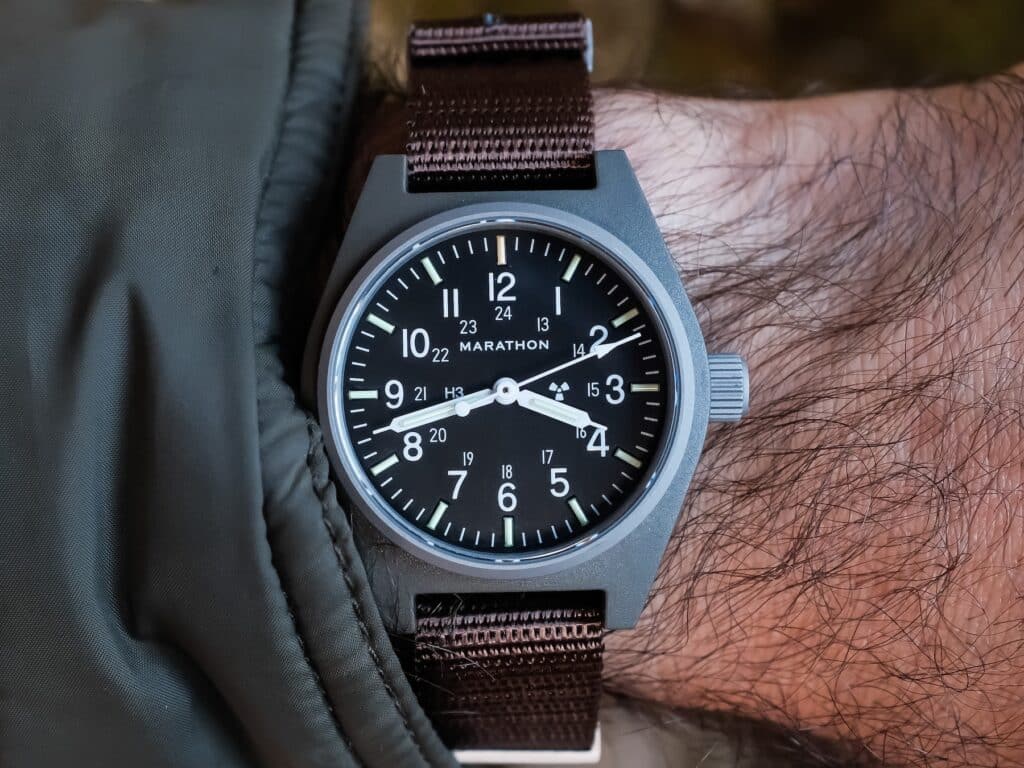
Thirty meters is enough to make some collectors close a browser tab faster than a bad horological hot take. The Marathon General Purpose Mechanical is a useful reminder to take a breath before doing that. At 34mm, with a 41mm lug-to-lug and a lightweight resin case, it wears small, purposeful, and easy to forget about once it’s on the wrist. The beefy NATO, military markings, and tritium-filled dial all reinforce the same idea: this is a compact field watch built around legibility and utility, not a watch trying to win a specification arms race. The 30m rating is a genuine limitation, especially with a non-screw-down crown, and we wouldn’t treat it as a watch for swimming or prolonged water exposure. But that doesn’t make it a poor everyday watch. For work, travel, ordinary daily wear, and time spent outside, its compact size, light weight, and constant low-light legibility are arguably more relevant to the experience than another 70 meters on the spec sheet. Our hands-on review gets into why the watch works so well despite that obvious caveat.
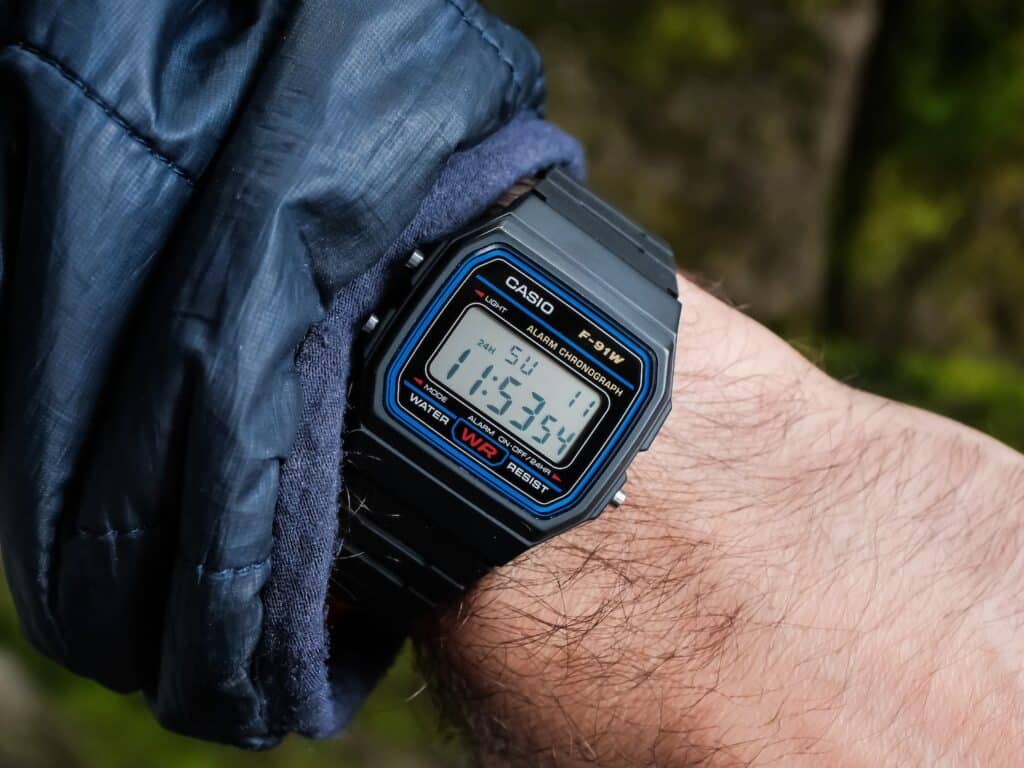
The Casio F-91W makes the argument from the opposite end of the watch-price spectrum. It’s tiny, only 8.5mm thick, weighs around 20.5 grams on our scale, and gives you an alarm, stopwatch, calendar, hourly chime, and an absurdly recognizable design that needs no introduction. Its 30m water-resistance rating certainly doesn’t promise aquatic heroics, but try searching “F-91W torture test” on YouTube, and you’ll quickly find videos of these little Casios surviving abuse that makes the specification look almost comically conservative, including tests involving swimming and seawater. We wouldn’t use internet torture tests as engineering documentation, but they do capture something familiar about the F-91W: people routinely use these watches harder than their modest spec sheet might suggest. As we found in our review, its lightness, simplicity, low cost, and useful functionality give it an everyday confidence that has very little to do with winning a water-resistance contest.
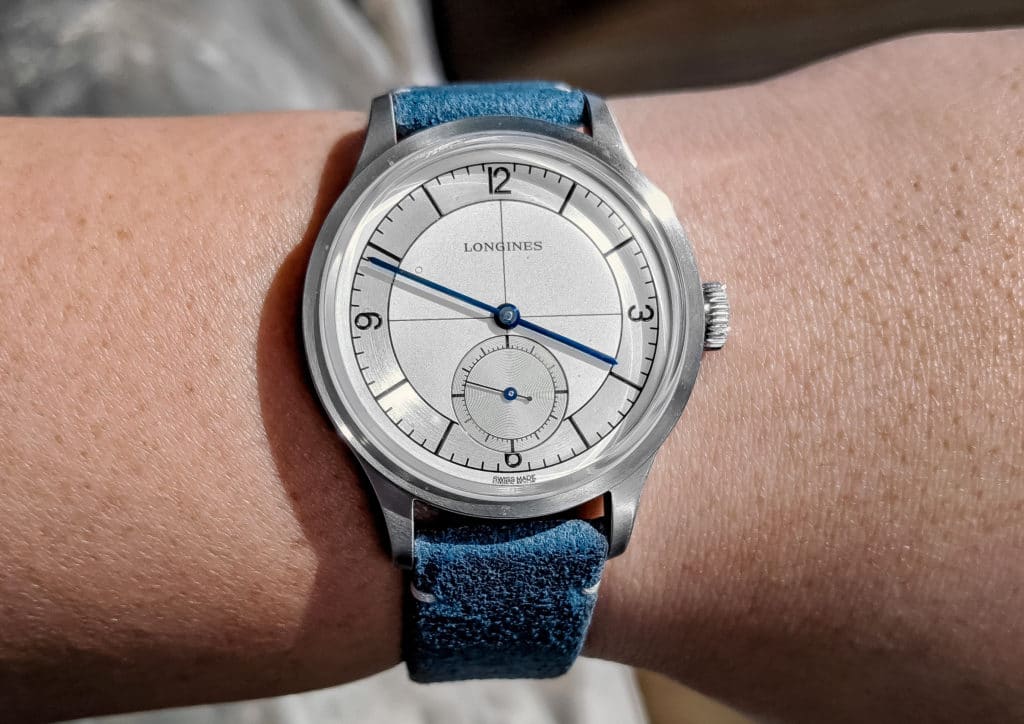
Then there’s the Longines Heritage Classic Sector, which makes the same 30m rating look rather different again. This is not a rugged field watch or a cheap digital beater. It’s a 38.5mm automatic with vintage-inspired proportions, a roughly 47mm lug-to-lug, a boxed sapphire crystal, and a sector dial that does most of the heavy lifting for personality. The matte center, concentric dial layout, small seconds, and old-school numerals give it a distinctly dressier feel. The blue suede-finish leather strap we wore it on reinforces that this watch is meant to be enjoyed for its design and everyday versatility, not its aquatic credentials. The 64-hour power reserve also adds practical appeal for a watch that can move between casual and dressier settings without demanding much attention. Our in-depth review shows why a watch can be compelling while still having a water-resistance rating that would make a spec-sheet obsessive reach for the next browser tab.
The Nomos Zürich World Time takes the argument in a completely different direction. It has only 30m of water resistance, but the watch exists for travel, not swimming. Its 40mm case and unusually long 50mm lug-to-lug make it a watch that needs some wrist consideration, particularly for smaller wrists. Still, the payoff is an unusual world-time complication that lets you advance local time in one-hour increments with a pusher while keeping your reference time fixed. The DUW 5201 movement is visible through the sapphire caseback, while the city ring and home-time display give the dial plenty to look at without making it hard to read. During our wrist time with the watch, that mix of travel functionality and distinctive design mattered far more than the relatively modest water resistance. We cover the good, the awkward, and the surprisingly useful parts in our Nomos Zürich World Time video review.
50m Water Resistance: More Restrictive on Paper Than It Feels in Real Life
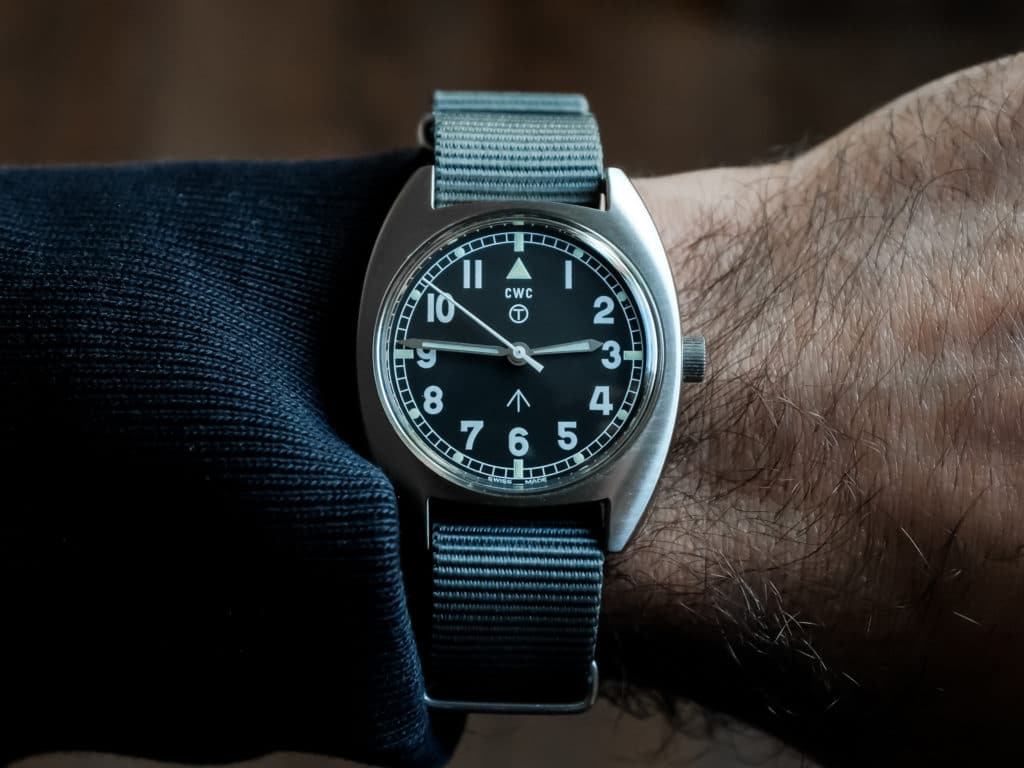
Fifty meters is where the collector panic becomes slightly more reasonable. It’s certainly less alarming than 30m, but put “50m” next to a watch with a push-pull crown and the specification can still do more psychological damage than the watch itself deserves. The CWC Mellor 72 is a good example. It’s a straightforward military-spec watch with a 35mm case, 42mm lug-to-lug, and 11mm thickness, and the proportions give it enough presence without making it feel bulky. The brushed stainless steel case, fixed spring bars, grey military strap, and stark black dial give it a thoroughly purposeful character. At the same time, the large high-contrast Arabic numerals and well-proportioned hands make it easy to read at a glance. Yes, it has 50m of water resistance and a push-pull crown, so we wouldn’t treat it like a watch for sustained water exposure. But nothing about it feels fragile. The fixed spring bars also suit the watch’s military-tool character, removing another potential failure point. Our hands-on review of the watch shows why its modest water-resistance rating doesn’t automatically make a watch feel compromised.
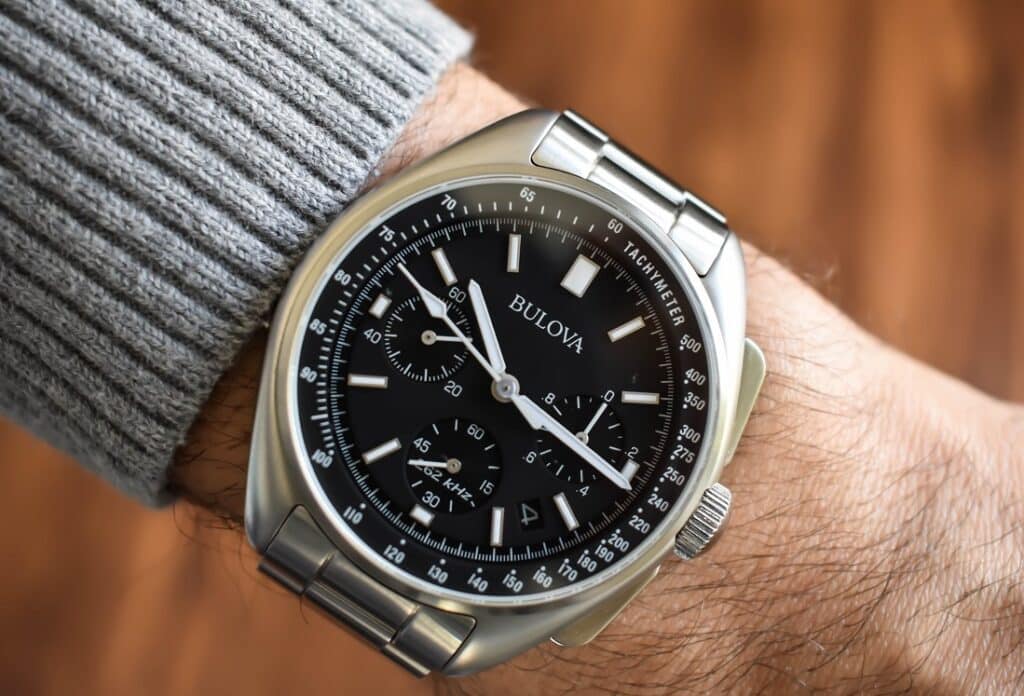
The Bulova Lunar Pilot makes the same point with considerably more wrist presence. At 45mm wide, 52mm lug-to-lug, and about 13.5mm thick, it isn’t a watch designed to disappear under a cuff. That size can be a deal-breaker, but the fluid case and bracelet architecture make it surprisingly balanced once it’s actually on the wrist. More importantly, the 262kHz High Performance Quartz movement is the star of the show, with accuracy of around 10 seconds per year and a second hand that gives the illusion of a mechanical sweep. The deep black dial also makes excellent use of the real estate, with clearly separated subdials and strong legibility. It has 50m of water resistance, but that isn’t why the Lunar Pilot sticks in our memory. Its appeal comes from the unusual combination of oversized tool-watch character, chronograph functionality, and absurdly precise quartz engineering. Our hands-on review goes deeper into that trade-off between imposing dimensions and good wrist presence.
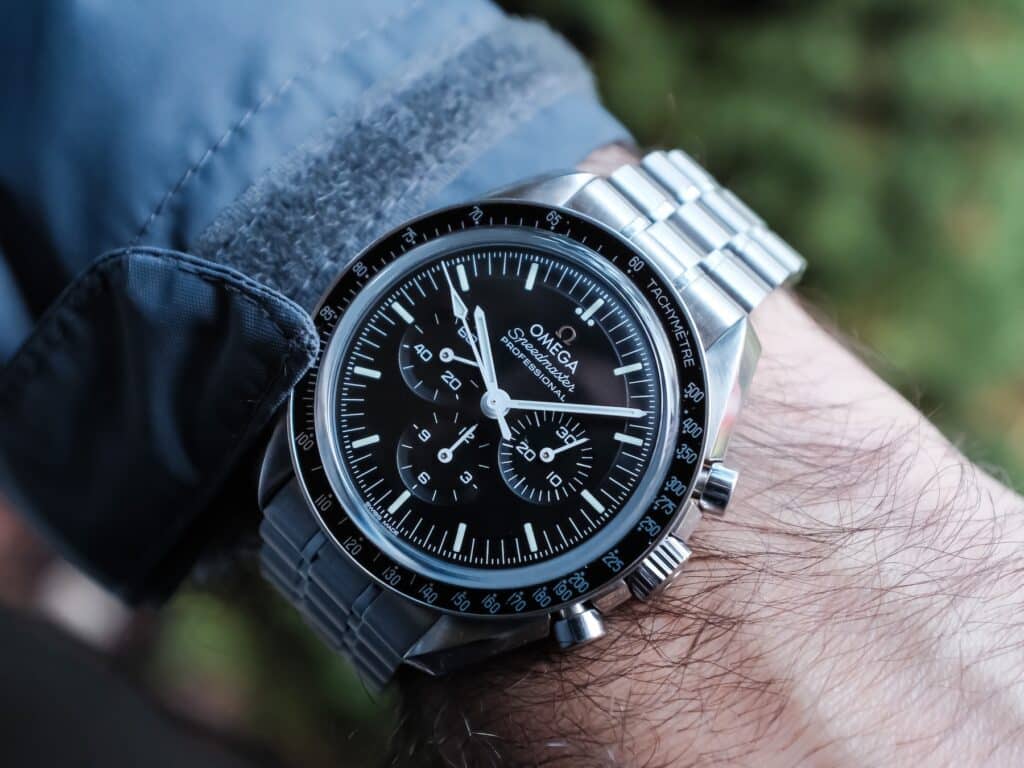
Some watches start making very little sense when water resistance becomes the first thing we judge them by. Take the Omega Speedmaster 3861. It has 50m of water resistance, but that number says little about why the watch is so enjoyable to wear. The 42mm case wears more planted than the diameter implies, the stepped dial adds just enough depth to keep the familiar layout interesting, and the redesigned bracelet finally feels like it belongs on the watch instead of being something owners learn to tolerate. Then there’s the 3861 itself. Winding is smooth, the chronograph pushers have a firm, deliberate action, and our example has been running around three seconds fast per week. Those details make the watch rewarding to interact with even when our most serious timing duties involve boiling pasta or keeping tabs on a dog walk. We spent plenty of time on those details in our dedicated review.
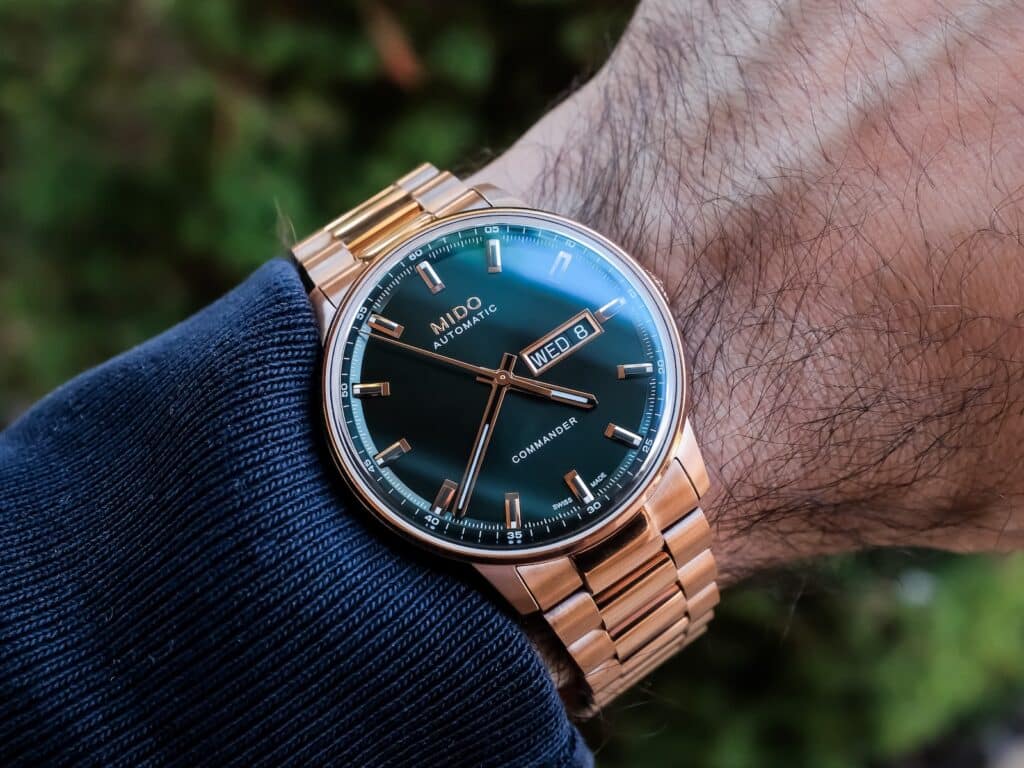
Fifty meters can look completely different once we move away from tool watches and chronographs. At 40mm wide and only 10.7mm thick, the Mido Commander Datoday is slim enough to slide easily under a cuff, while the green dial shifts between blue-green and deeper forest tones depending on the light. The rose-gold-tone PVD pushes things further toward the dressy side, but the three-link bracelet keeps the watch from feeling like something we should save exclusively for weddings and nice dinners. We also appreciated the framed day-date display, 80-hour power reserve, and quick-release spring bars during our time with it. Those are useful features on a watch designed to move between ordinary days and dressier situations. The limitation is exactly what we’d expect in this section: a push-pull crown paired with 50 meters of water resistance doesn’t encourage us to get adventurous around water. But that boundary makes more sense here than it would on something presenting itself as a rugged sports watch. Our full hands-on review reinforced that the watch’s appeal comes from versatility, comfort, and design rather than pretending it can handle every possible situation.
100m Water Resistance: The Point Where Convenience Starts to Matter More
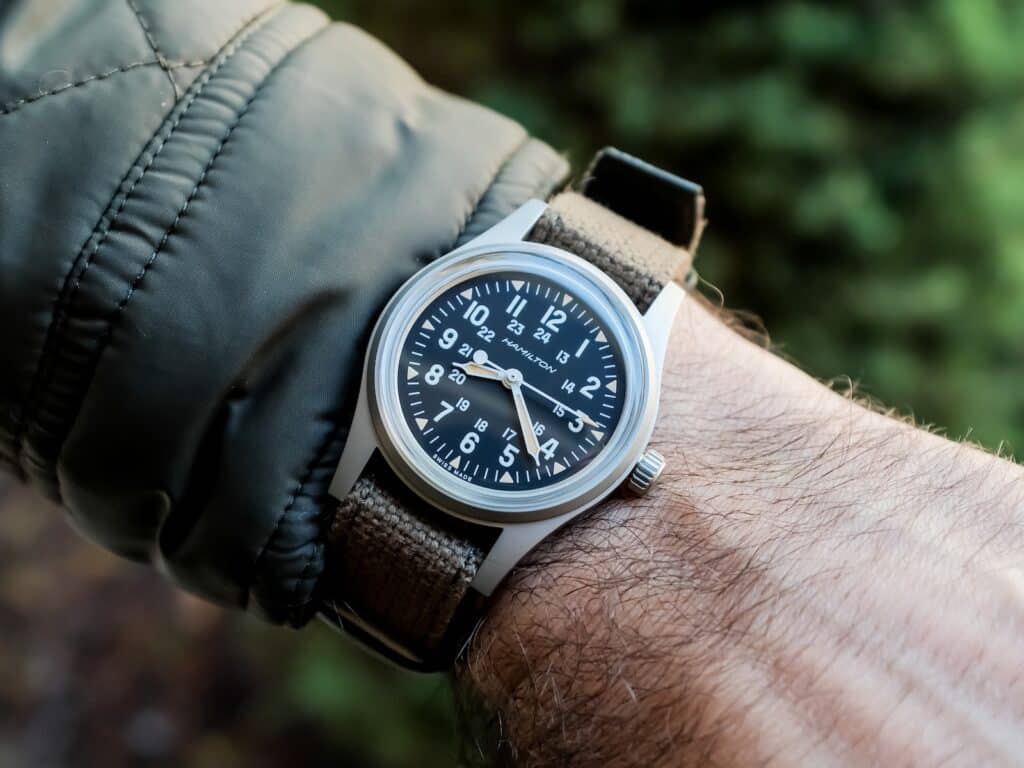
The Hamilton Khaki Field Mechanical 250 is where we start to appreciate what an extra 50 or 70 meters can actually do for daily wear. At 36mm, just over 10mm thick, and with a 46mm lug-to-lug, it has the compact, no-nonsense proportions we expect from a field watch without disappearing on the wrist. The matte black dial, large Arabic numerals, 24-hour scale, and clear minute track are there for one reason: you should be able to read it without conducting a small visual investigation first. Then there’s the hand-wound H-50 movement, with its 80-hour power reserve and hacking seconds. Winding it is part of the experience rather than a chore we endure because some watch enthusiasts told us mechanical watches are supposed to have rituals. Our review gets into why the watch works so well as an uncomplicated daily wearer.
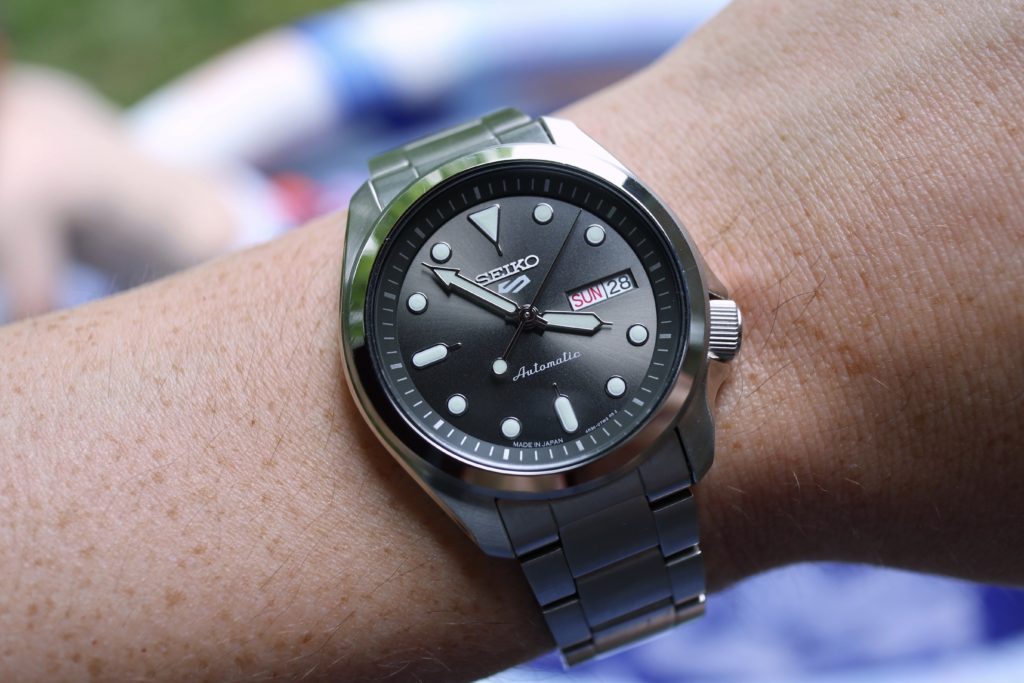
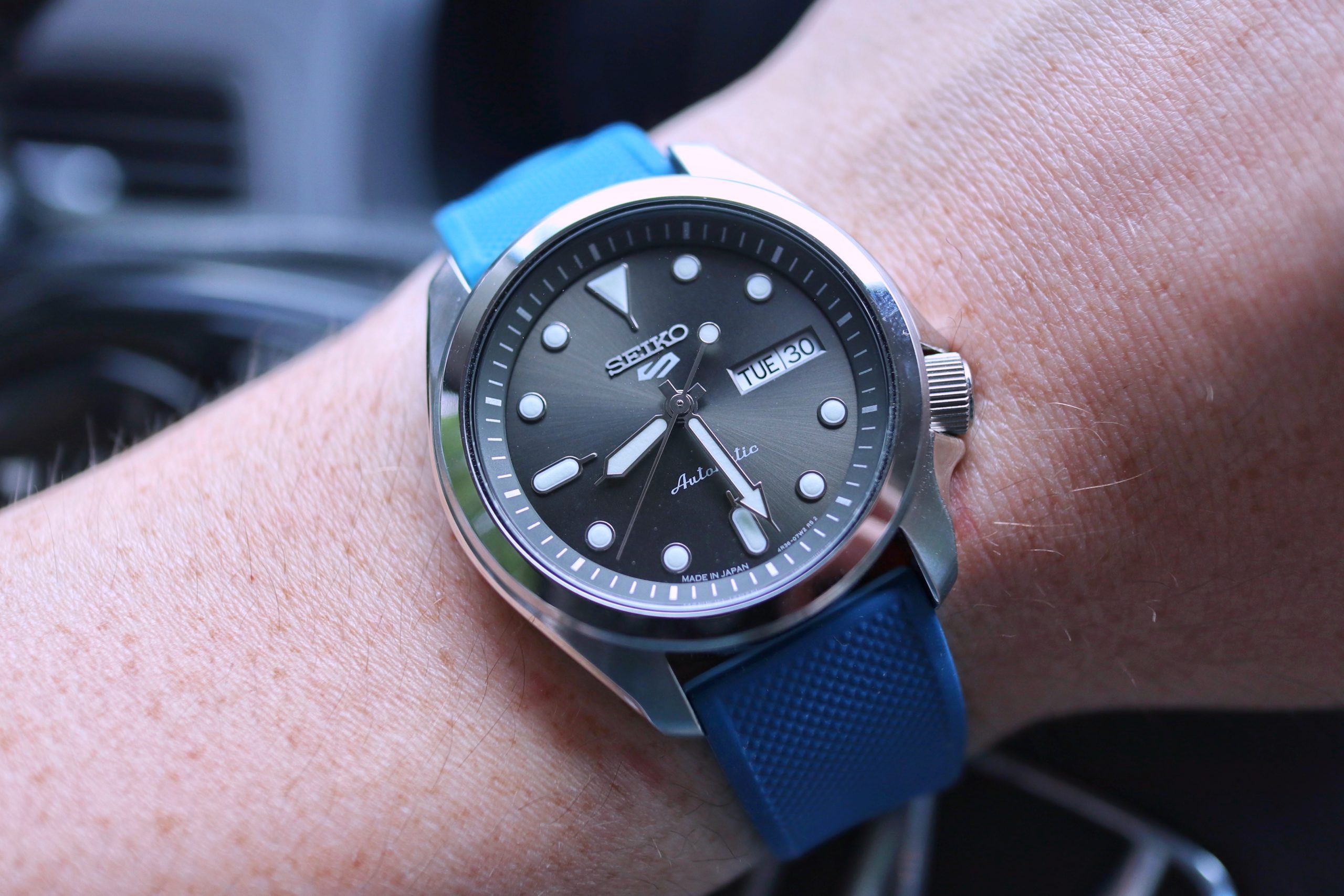
This is where 100 meters starts making a watch noticeably easier to live with without forcing the design into dive-watch territory. Seiko takes some of the familiar SKX character, removes the rotating bezel, and replaces it with a polished fixed one. The result is the SRPE51, a 40mm watch that still feels casual and durable but looks equally comfortable with a T-shirt or button-down. The grey dial also has more personality than it initially lets on, changing subtly as the light moves across it, while the applied markers, modern handset, and LumiBrite keep legibility where we’d expect from Seiko. There are compromises. The Hardlex crystal isn’t sapphire, the hollow end links leave the bracelet feeling lighter and rattlier than the case deserves, and our example showed some chapter-ring misalignment. But none of those things fundamentally change how easy the SRPE51 is to wear. The 100-meter rating means rain, sweat, splashes, and normal encounters with water require considerably less mental arithmetic than they do with the watches above. Our hands-on review is a good example of why extra water resistance can make an everyday watch more convenient without becoming the reason we like it.
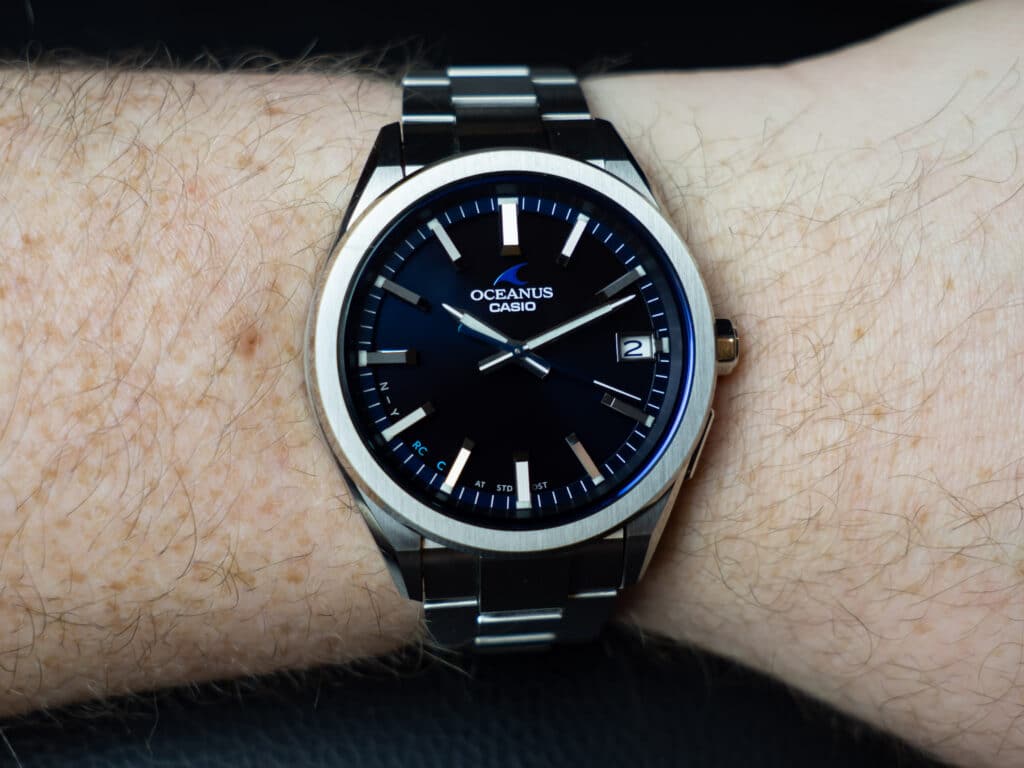
Some watches make their durability obvious, while others simply let you stop worrying about them. The Casio Oceanus T200 takes a much different approach, with a deep blue dial, floating hour markers, blue-tinted sapphire crystal, and a mix of brushed and polished case finishing that keeps it refined without becoming flashy. Tough Solar charging and Bluetooth syncing also make ownership almost completely hands-off, which suits a watch built around convenience. The bracelet is less impressive, with some rattle off the wrist and a pin-and-collar sizing system that can be more tedious than it should be, and the lume never becomes a standout feature. Still, the T200 makes a strong case for what 100 meters of water resistance can add to a watch that isn’t remotely trying to behave like a diver. It simply removes another reason to think twice before wearing it. Our Casio Oceanus T200 review gets into why that combination of low-maintenance accuracy, refinement, and everyday practicality works so well.

Integrated-bracelet watches can sometimes feel like objects we’re supposed to admire more carefully than we actually wear, but this one never gave us that impression. The titanium construction keeps both the 36mm case and bracelet extremely light, while the sub-9mm thickness makes the Christopher Ward Twelve 36 Titanium almost disappear after a few hours. At the same time, the twelve-sided bezel and sharply defined case architecture give it enough presence that it never feels undersized. The Lagoon Blue dial moves from a brighter blue into deeper navy depending on the light, although the polished hands can occasionally disappear against it in direct sunlight. What really matters here is that Christopher Ward pairs all of that visual refinement with a screw-down crown and 100 meters of water resistance. We could wear it like an everyday sports watch instead of worrying about whether the day’s plans were appropriate for it. During our hands-on time with the Twelve 36 Titanium, that combination of lightness, comfort, and genuine everyday capability mattered far more than simply being able to say it had a three-digit water-resistance rating.
What Water Resistance Should Actually Change About Your Buying Decision
After wearing watches across all three ratings, the pattern is pretty clear. Thirty meters creates real limitations, 50 meters is highly dependent on the type of watch, and 100 meters is where water resistance starts to disappear as an everyday concern. None of those numbers tells us whether the watch is good. They tell us how much thought we need to give water once we decide we already like everything else about it.
Water resistance should start with your routine, not the number on the spec sheet. If swimming, diving, boating, or regular water exposure is part of your life, it belongs near the top of your buying criteria. A watch with modest resistance can still be great; it simply isn’t the right tool when water is a regular part of its job.
For someone who spends most of their time on dry land, the calculation can be different. Think about how the case sits on your wrist, whether the crown feels good to use, how quickly the dial makes sense at a glance, and whether the strap or bracelet moves naturally as you do. Then there’s the movement, along with servicing, finishing, and design. These are the details you interact with every time the watch is on your wrist, not just the ones you notice while scrolling through specs before buying.
And then there’s the simplest test of all: do you actually want to wear it? Water resistance should help you decide whether a watch fits your routine. It shouldn’t get to make the entire decision.
Wrapping Up
We probably are rejecting some compelling watches because their water-resistance ratings look unimpressive on paper. That doesn’t make the rating meaningless. It means we’ve sometimes allowed one specification to speak for the whole watch.
However, the watches that stay in a collection usually give us more to think about than the number on the caseback. It’s how they sit on the wrist, the dial we keep looking at, the crown we enjoy winding, or the odd little detail that keeps us choosing one watch over another. Water resistance should help us understand a watch’s limits, not decide its entire value before we’ve considered everything else it does well.

Co-Founder and Senior Editor
Kaz has been collecting watches since 2015, but he’s been fascinated by product design, the Collector’s psychology, and brand marketing his whole life. While sharing the same strong fondness for all things horologically-affordable as Mike (his TBWS partner in crime), Kaz’s collection niche is also focused on vintage Soviet watches as well as watches that feature a unique, but well-designed quirk or visual hook.