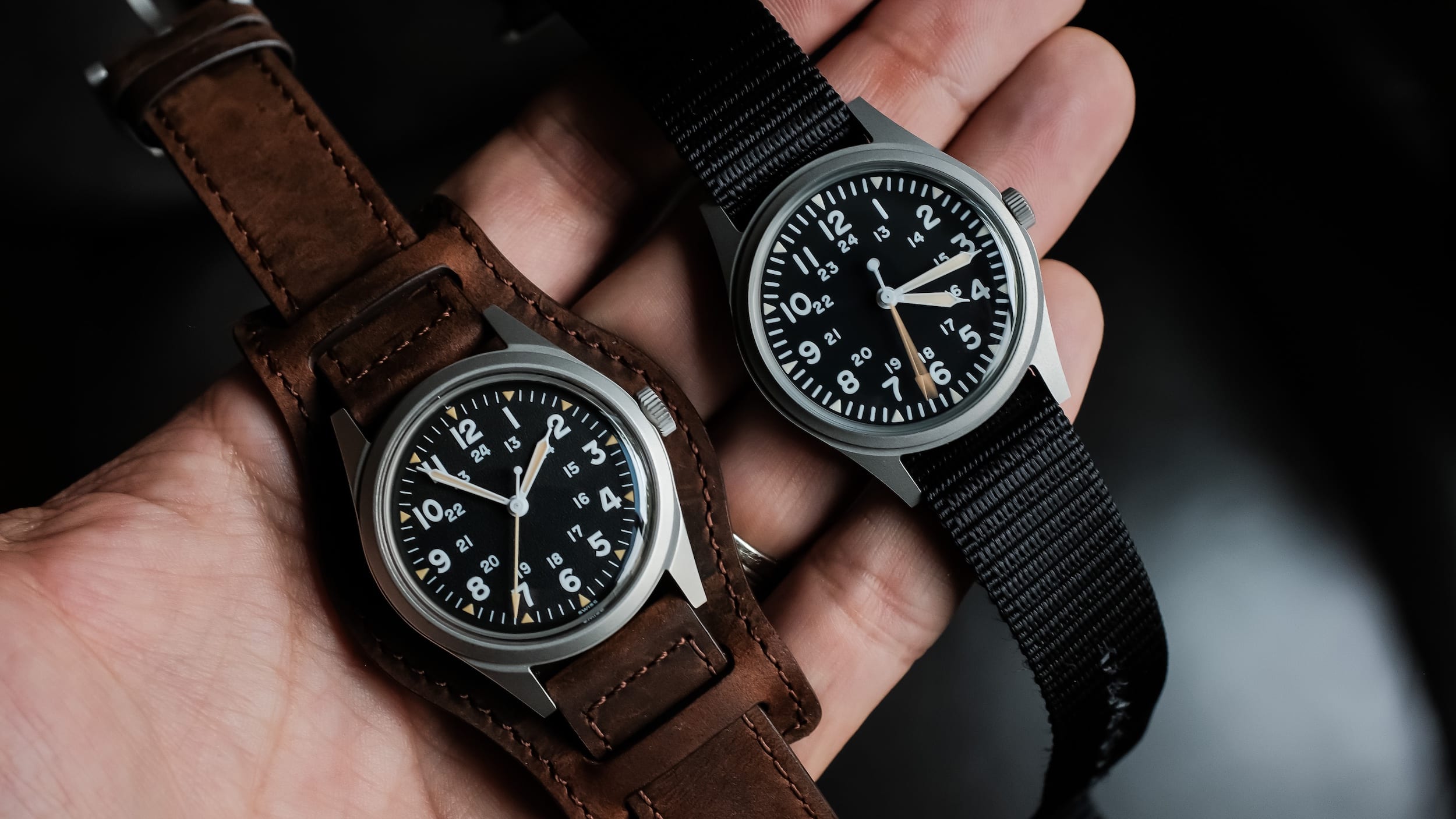
I’ve spent most of this year turning into a small-field-watch guy, and I mostly blame Hamilton. The Khaki Field Mechanical 250 landed on my wrist a few months ago, and those compact, historically accurate proportions basically rewired what I want out of this style of watch. Ever since, I’ve been poking around both ends of the price ladder to see how much of that Hamilton feeling actually comes down to money. It’s turned into a more interesting rabbit hole than I expected.
Which brings me to the two watches that that spent some time trading places in my rotation: the Rdunae RA03 and the Benrus DTU-2A/P. On paper they don’t have much business being compared. One’s a $45 quartz homage that somehow keeps ending up on my wrist, and the other’s a $990 automatic from a brand with an actual military past, complete with sapphire, a screw-down case, and Swiss mechanics. Underneath all that, though, they’re chasing the same thing: the look, feel, and proportions of a mid-century American field watch. So I kept circling the same question. How much of that experience can you really get for $45, and when does going all the way to the Benrus earn the difference?
Overview and Identity
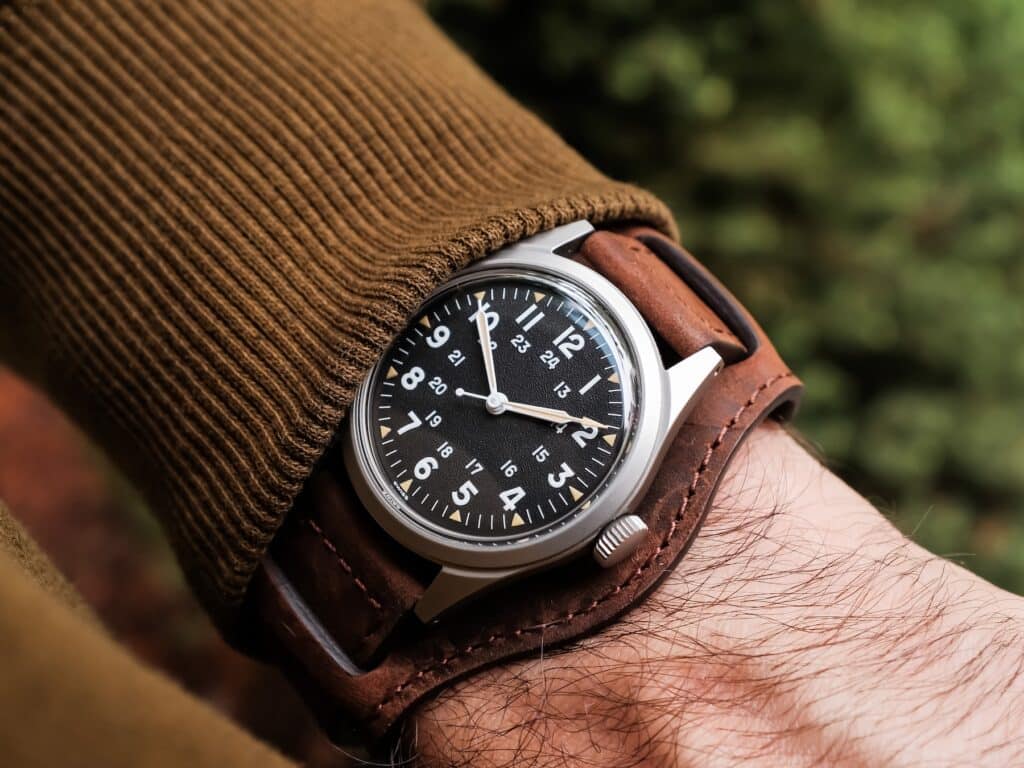
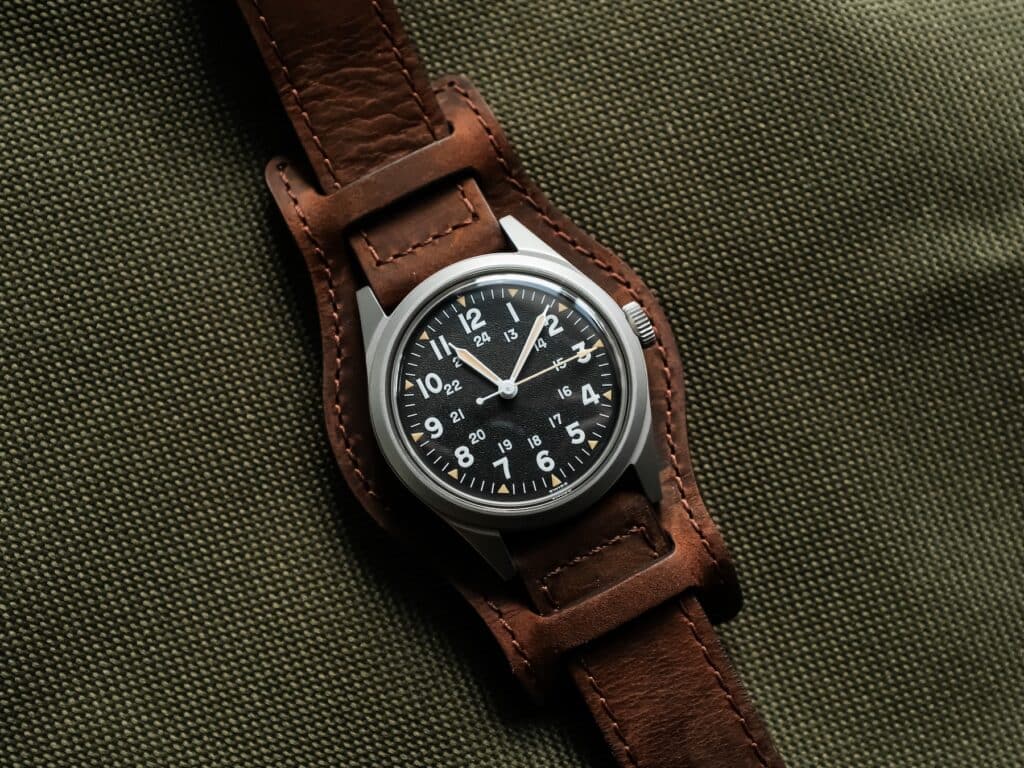
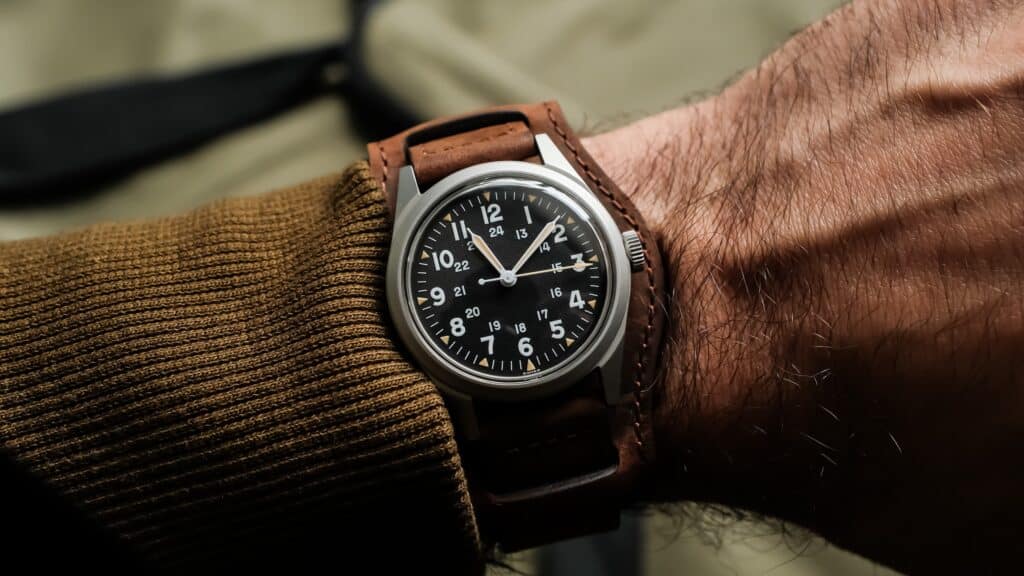
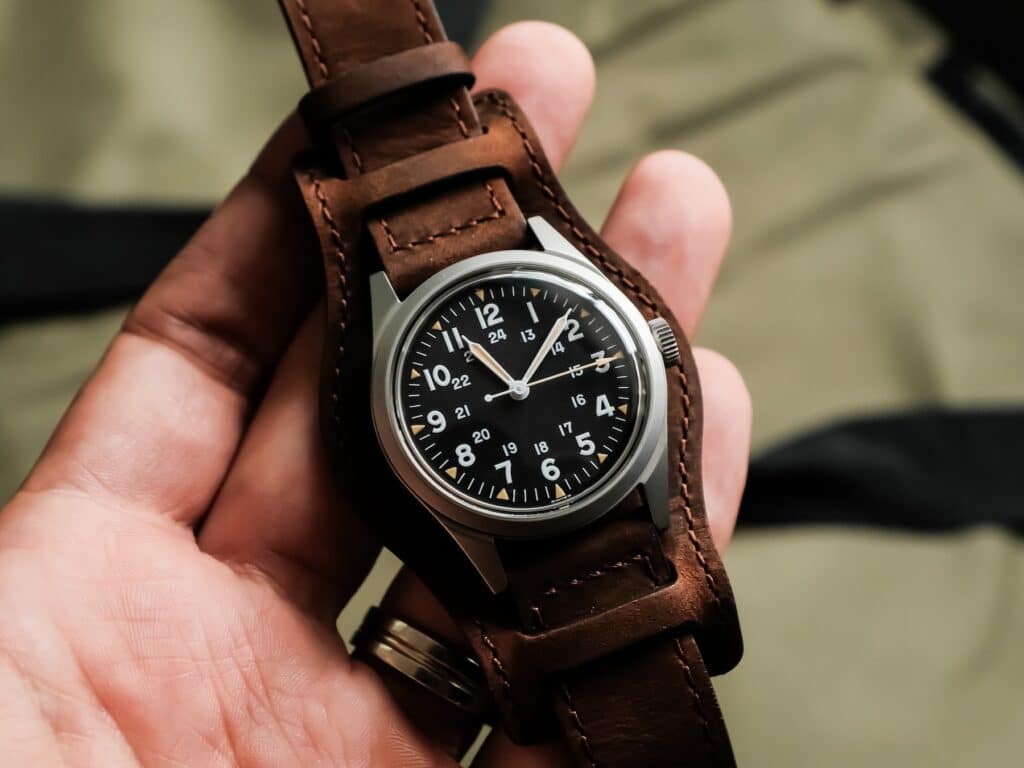
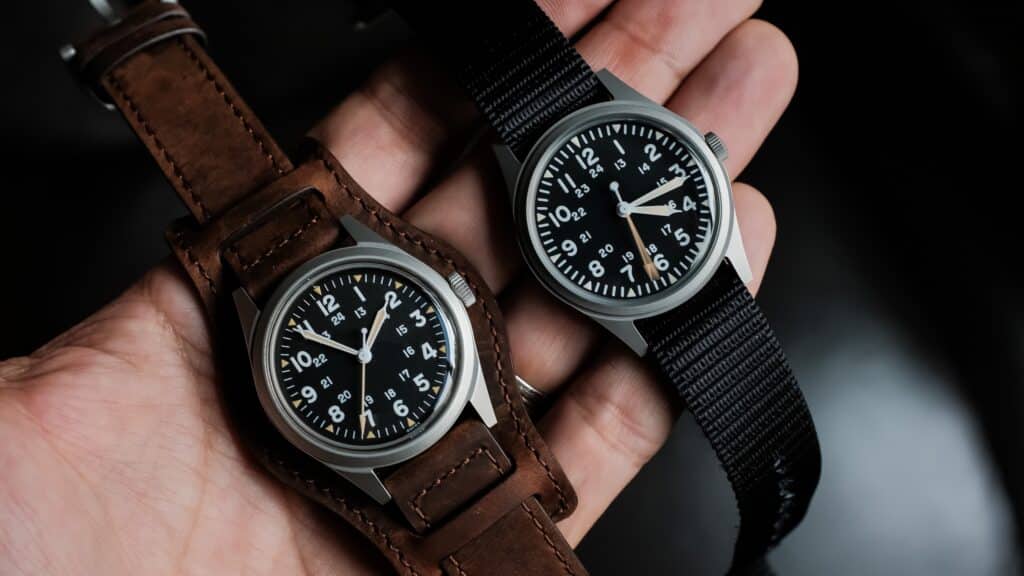
The Rdunae RA03 is the kind of watch that talks me out of overthinking a purchase. It costs about forty-five dollars, runs the dependable Miyota 2035 quartz movement, and traces its design back to the MIL-W-46374 spec that shaped Vietnam-era U.S. field watches. When I put it up against the Militado ML07B, the Rdunae kept ending up on my wrist. The proportions do most of the work. At 34.5mm across with a 41.7mm lug-to-lug, it wears compact without tipping into toy territory, and the dramatically domed mineral crystal gives it character that most sub-fifty-dollar watches don’t bother chasing.
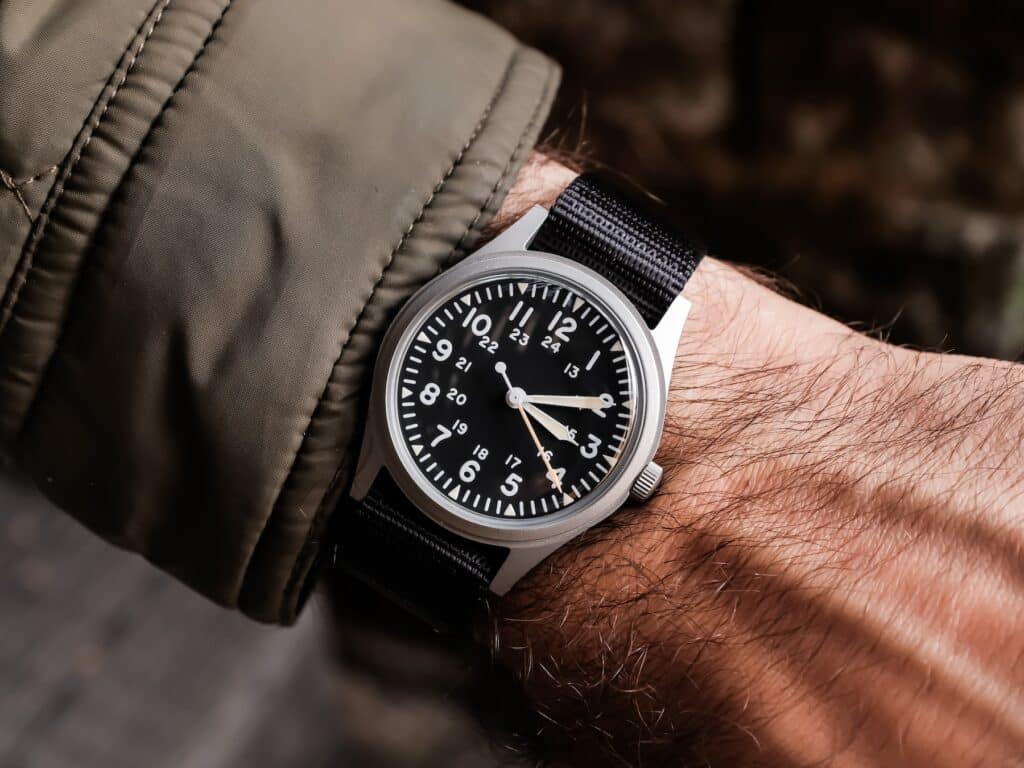
The Benrus DTU-2A/P comes at the same idea from the opposite end of the market. Benrus has an actual paper trail with military timekeeping, and when I spent time with the DTU-2A/P, that lineage was a real part of the draw. This modern version references the MIL-W-3818B watches the brand’s predecessor produced in the early 1960s, and it keeps the format at a period-appropriate 34mm. The difference is what sits under and around that faithful shape. You get a sandblasted 316L steel case, a double-domed sapphire crystal, a screw-down crown, and a Swiss ETA automatic. It reads as the grown-up, heritage-brand take on the same silhouette the Rdunae reaches for on a shoestring.
- The Rdunae RA03 is the low-stakes entry into the mid-century field watch look, and it earns its place by getting the proportions right for about the cost of a strap.
- The Benrus DTU-2A/P is the heritage-brand reissue, pairing period-accurate scale with modern build quality and a Swiss automatic, at a price that asks you to care about all three.
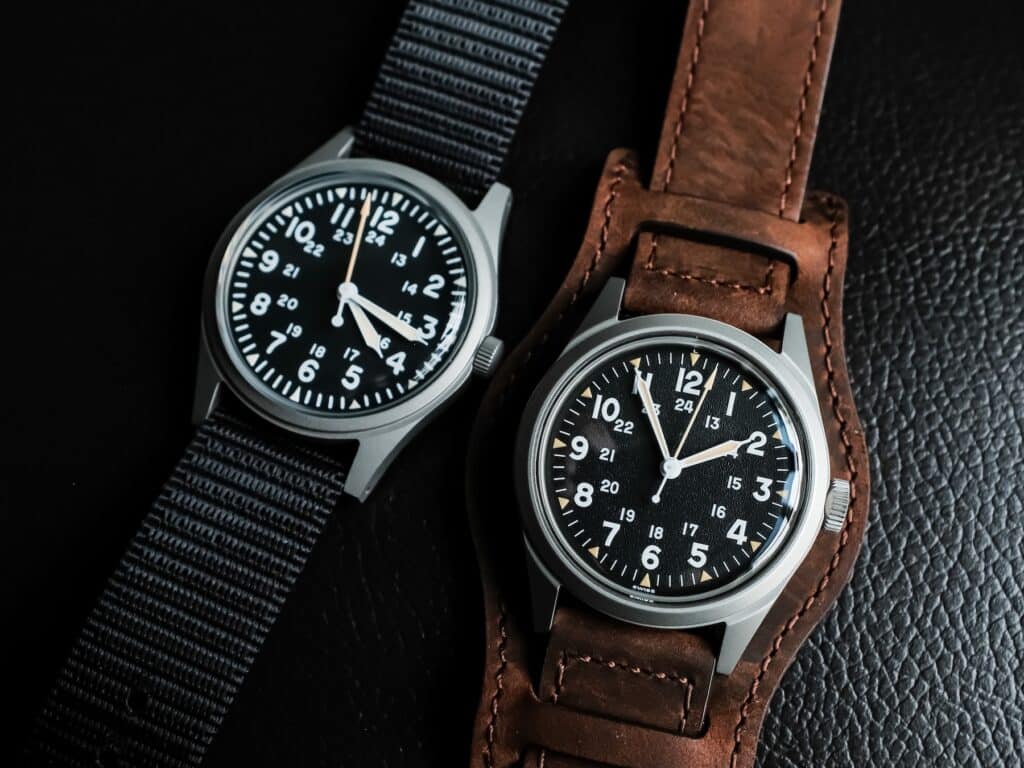
Dial, Proportions & Wearability: Compact Value vs Faithful Reissue
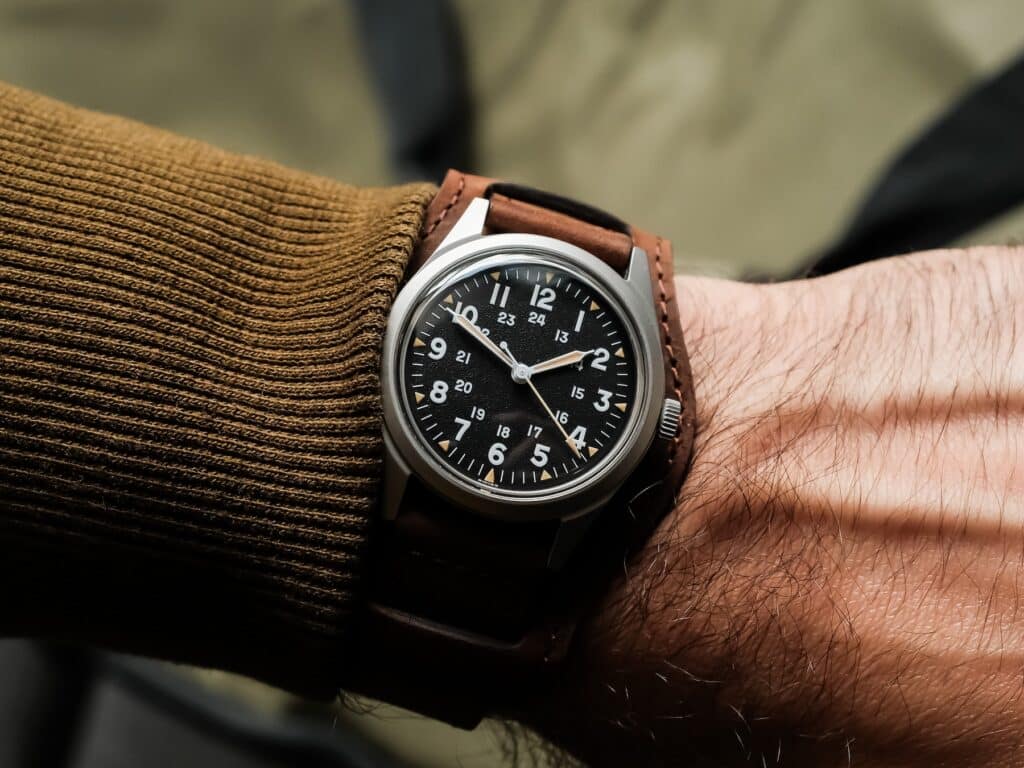
Both watches live and die on how they sit, so this is where the forty-five-dollar and nine-hundred-ninety-dollar versions of the same idea start to separate. The interesting part is how little the size gap does the separating. The RA03 measures 34.5mm wide, the Benrus 34mm. On the wrist, both land in the compact, historically accurate range I’ve come to prefer, and the RA03 wears close enough to my Hamilton that I stopped thinking about its price tag pretty quickly.
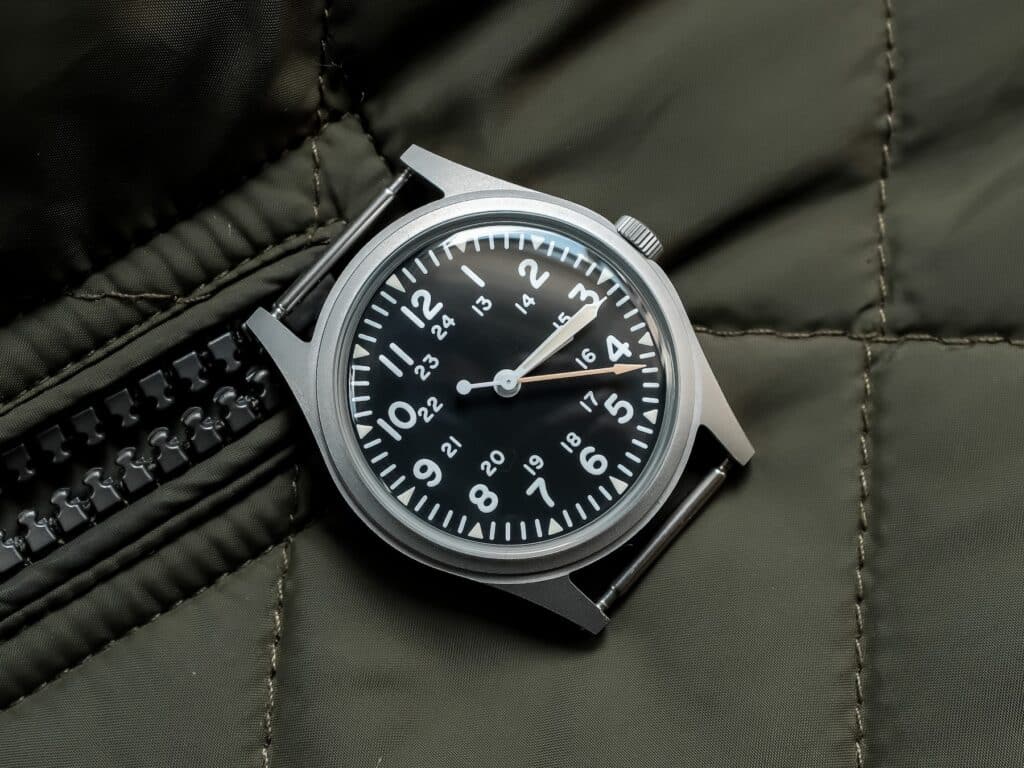
Where the Rdunae surprises is the dial. The printing is cleaner than it has any right to be at this price, the matte finish has real depth, and the monochromatic layout looks convincing in a way that cheaper homages usually fumble. That dramatically domed crystal introduces some cool distortion near the edges, and I found myself enjoying the effect more the longer I wore it. It reads as a compact field watch that punched well past its parts budget on the details that show up every time you glance down.
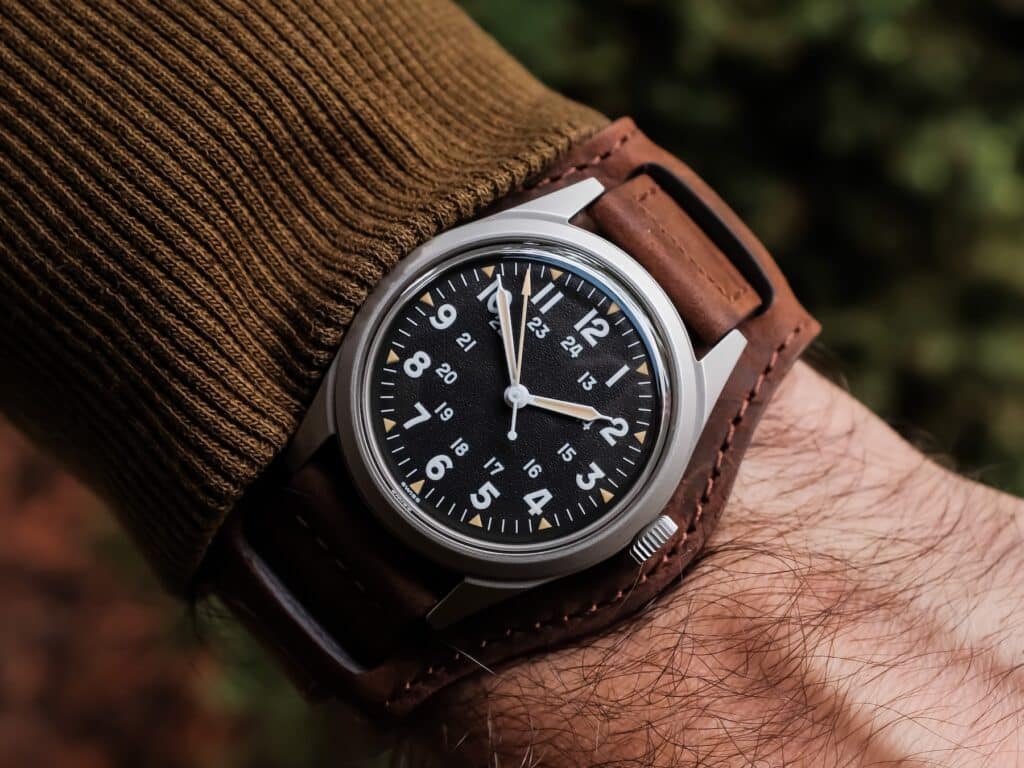
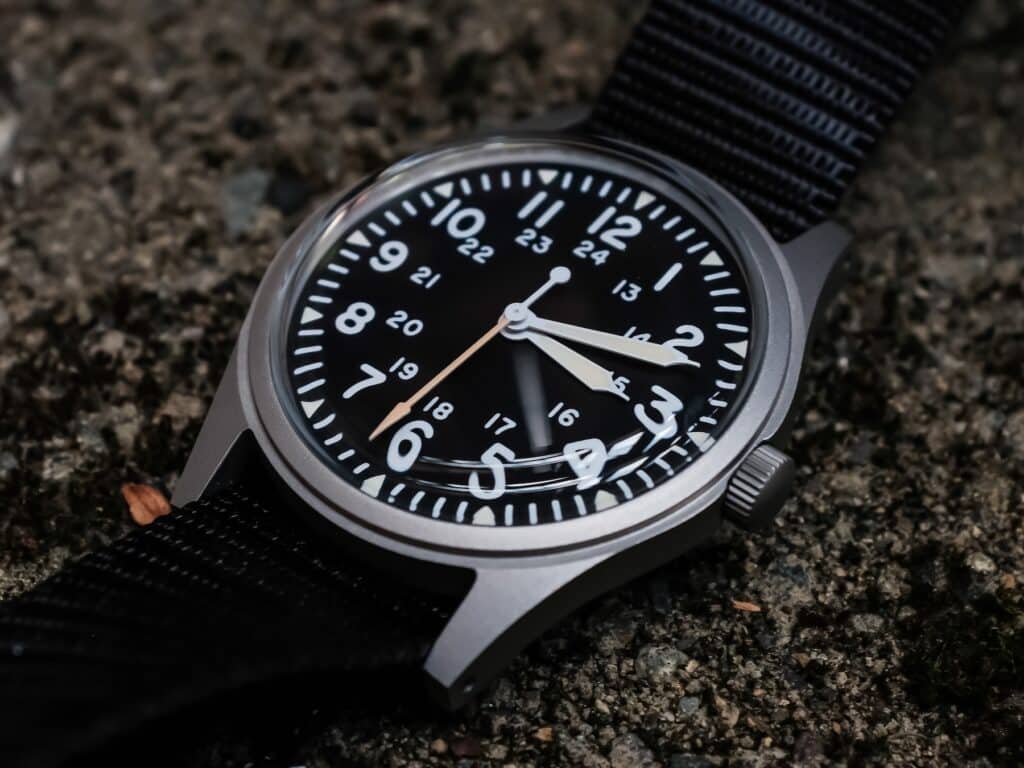
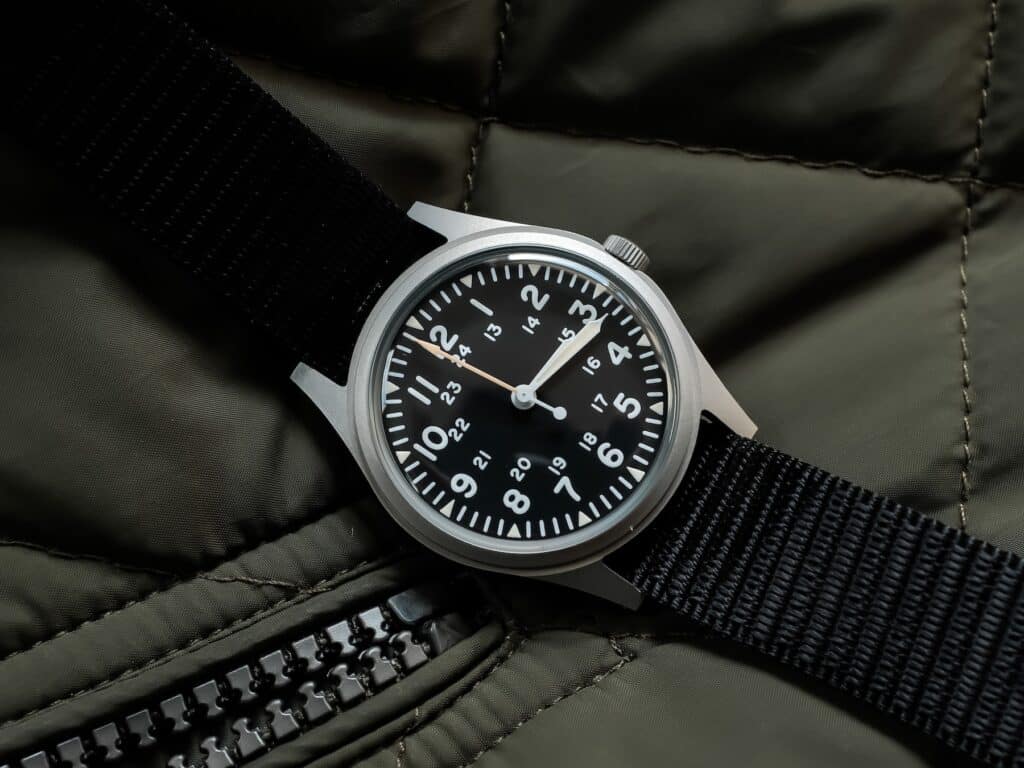
The Benrus takes the same brief and executes it with more room to work. The matte black dial carries large white Arabic numerals, an inner 24-hour military scale, a defined minute track, and triangular luminous plots around the perimeter. The hands run narrow and almost syringe-like. Legibility is the strongest thing about it for me, and that directness makes sense given where the design came from. Smaller watches can get visually cramped when brands try to fit too much on the dial. That never happened here. Everything has enough separation that I could take it all in at a glance, which is exactly what a watch built to this format should do.
- The Rdunae RA03 wears compact and reads clean, with a domed crystal and a matte dial that carry more character than forty-five dollars usually buys.
- The Benrus DTU-2A/P uses its period-accurate scale to deliver textbook field-watch legibility, with a three-color dial that stays uncluttered even at 34mm.
Build Quality & Technical Approach
The RA03 and the DTU-2A/P share a silhouette and a purpose, and that’s about where the overlap ends. Once you get past first impressions, you’re looking at two different answers to the same question: what do you spend the money on when the goal is a small, faithful field watch? This is where a $45 quartz homage and a $990 heritage automatic stop pretending to be neighbors. Movement, case construction, crystal, and water resistance all start pulling in different directions.
Movements:
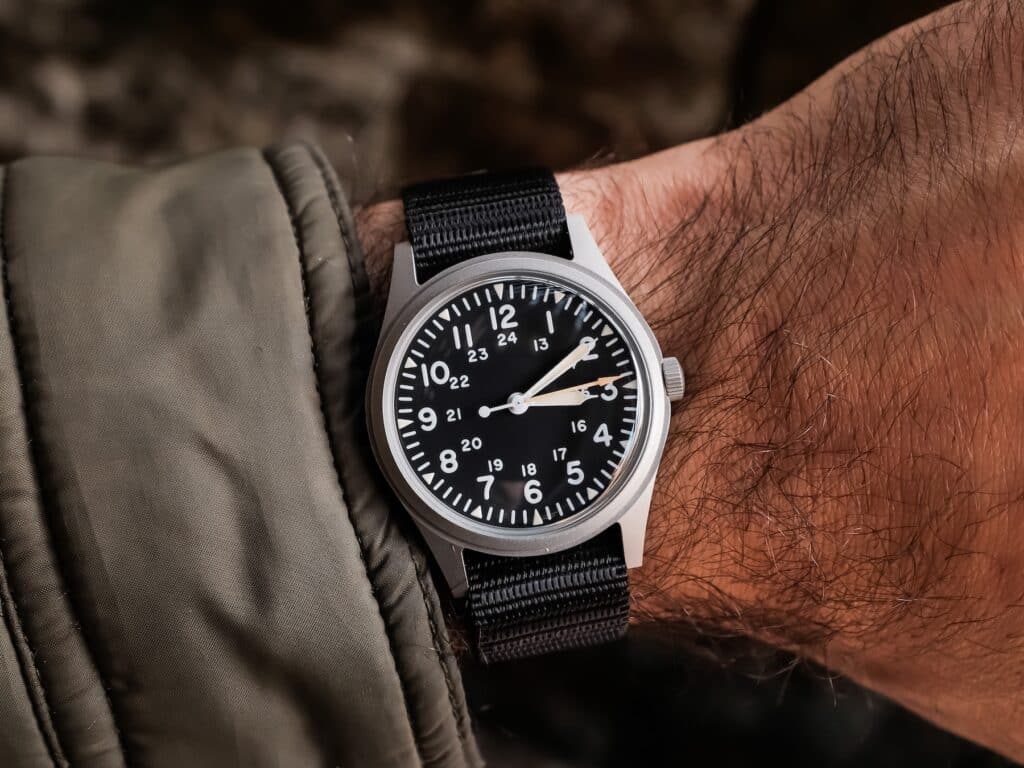
The Rdunae runs the Miyota 2035, a basic and dependable quartz caliber you’ll find in countless affordable watches. There’s no mechanical romance here, and I wasn’t looking for any. A fresh battery should get you somewhere around four years of service, and in the meantime it does the one thing a grab-and-go field watch needs to do. It keeps accurate time and asks nothing of you. For a watch that might sit in the box for weeks between wears, that’s the right kind of movement.
The Benrus uses the ETA 2671, a Swiss automatic running at 4Hz with a stated 38-hour power reserve. Fitting an automatic into a 34mm watch while holding the case to 10.9mm thick is a real achievement, and the proportions never felt like they’d been stretched to house an oversized movement. The 38-hour reserve is modest by current standards, though it didn’t define my experience. My one reservation is a matter of taste. Given the choice, I’d rather have a hand-wound caliber in a watch like this. Manually winding a small military-format field watch feels appropriate to the design, and I’d trade some of the automatic’s convenience to get closer to that. It’s a preference, not a flaw, and I understand why Benrus went the way it did.
Case Construction & Finishing:
The RA03 keeps things simple, and at this price simple is the correct call. The case does what it needs to do, the proportions feel right, and the finishing holds up better than the number on the tag would suggest. The one place the budget shows itself is the supplied strap, which came off almost immediately and went in the trash. That’s par for the course down here, and I’d tell anyone buying one to budget for a decent aftermarket strap on day one. I ran mine on an 18mm Maratac single-pass nylon and an ADPT NATO, and both made the watch considerably more enjoyable.
The Benrus is where the money starts announcing itself. The case is sandblasted 316L stainless steel, measuring 40.2mm lug-to-lug with an 18mm lug spacing, so there’s very little excess anywhere. Benrus added a screw-down crown and caseback without enlarging the basic format to accommodate them, which I appreciate more than almost anything else about the watch. Screw-down crowns are still oddly rare on field watches, and getting one here without bulking up the case is the kind of restraint that separates a considered reissue from a cash-in.
Crystal & Anti-Reflective Coating:
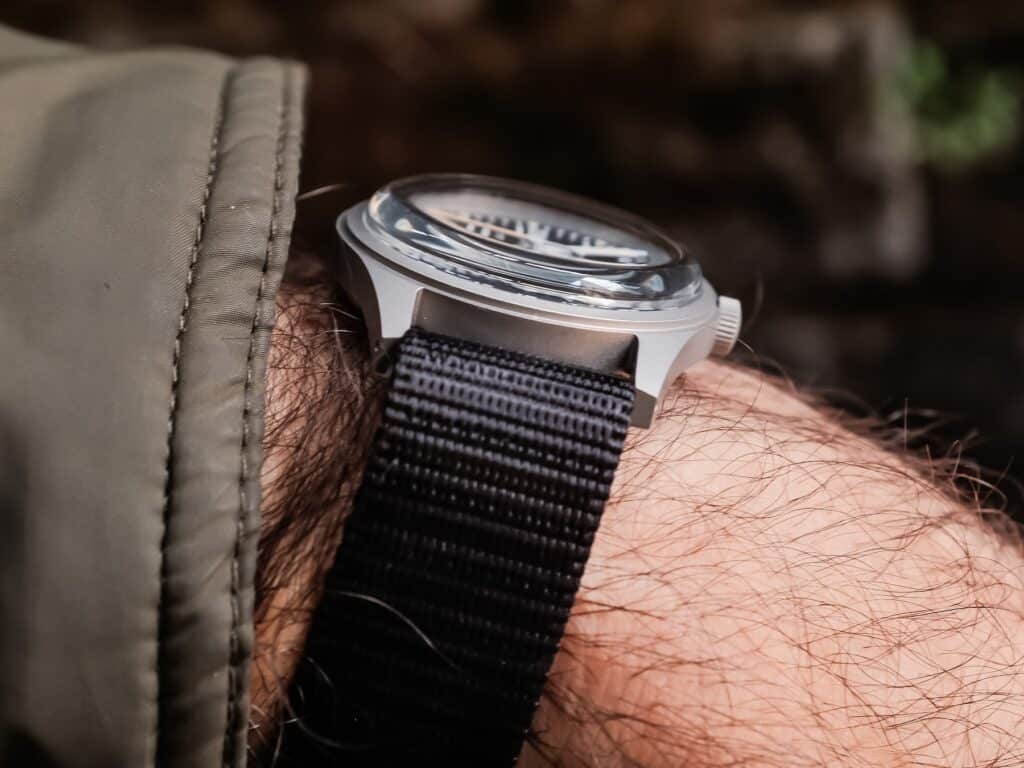
The Rdunae goes with a dramatically domed hardened mineral crystal, and that dome is a big part of its charm. The distortion at the edges adds visual interest without getting in the way of reading the time. The anti-reflective performance is the weak spot. It threw noticeable reflections, especially while I was photographing it, though in everyday wear the issue faded into the background. At this price, mineral glass is an entirely fair choice, and the dome does more for the watch’s personality than sapphire would have at twice the cost.
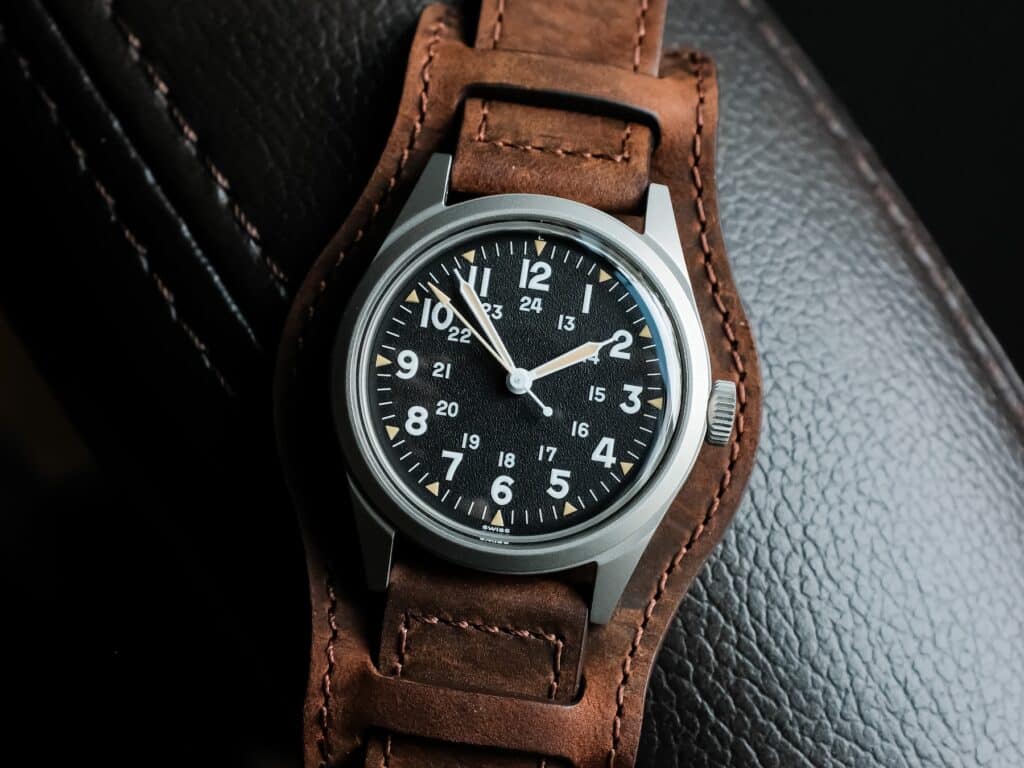
The Benrus counters with a double-domed sapphire crystal and a proper anti-reflective treatment, and the difference in clarity is exactly what you’d hope for at the price. This is also one of the upgrades that pulls the DTU-2A/P a step away from the original it references. I noticed that tension the whole time I wore it. The sapphire, the screw-down crown, the added water resistance, even the luminous seconds hand all make the watch easier to live with while nudging it further from the stripped-down format that made me want it in the first place. I’d rather name that push and pull than pretend the modern touches don’t change the experience.
Water Resistance & Lume:
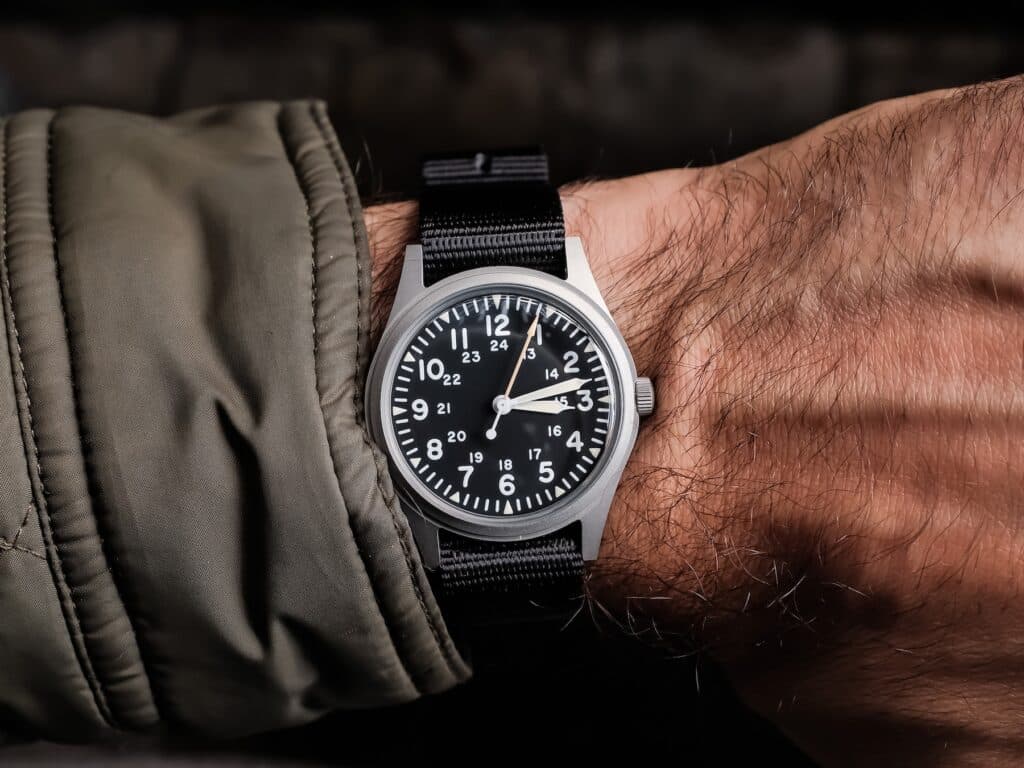
The RA03 carries a 50-meter water resistance rating. On paper that’s a compromise next to the Benrus, and in real use it never once felt like one. A field watch at this price is going to see rain and a sink, not a dive computer. The bigger surprise was the lume, which consistently produced a stronger, longer-lasting glow than I expected from a forty-five-dollar watch. It’s the sort of thing that doesn’t show up on a parts list and shows up every night on the wrist.
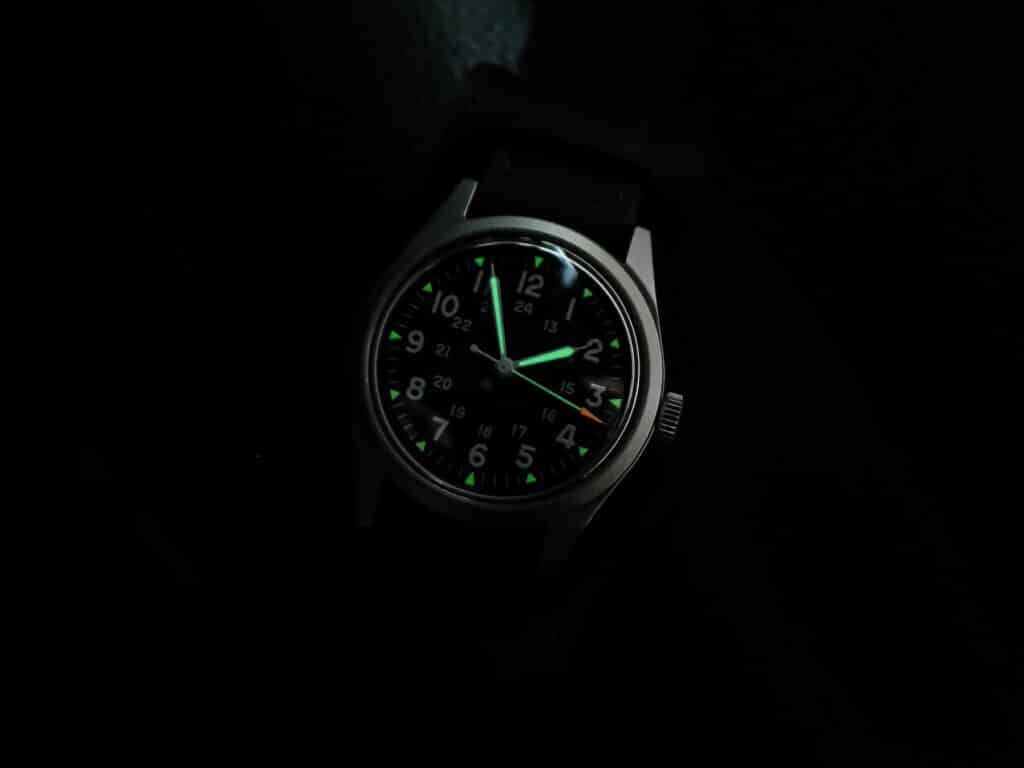
The Benrus doubles the rating to 100 meters, backed by that screw-down crown and caseback, and adds BG W9 Super-LumiNova across the hands, the triangular hour plots, and the seconds hand. The application is generous, and the warmer tone Benrus chose keeps the dial from looking sterile. The result is a three-color presentation of black, white, and creamy lume that stays faithful to the layout while making the modern build obvious in the dark. These aren’t headline features. They’re the kind of details you only appreciate after a few weeks of actually living with the watch.
- The Rdunae RA03 gets the fundamentals right where a budget field watch has to, with a characterful domed crystal and surprisingly strong lume offsetting its mineral glass and 50-meter rating.
- The Benrus DTU-2A/P earns its premium through construction, pairing a Swiss automatic, sandblasted steel, sapphire, a screw-down crown, and 100 meters of water resistance into a package that holds together in daily wear.
Cost Considerations
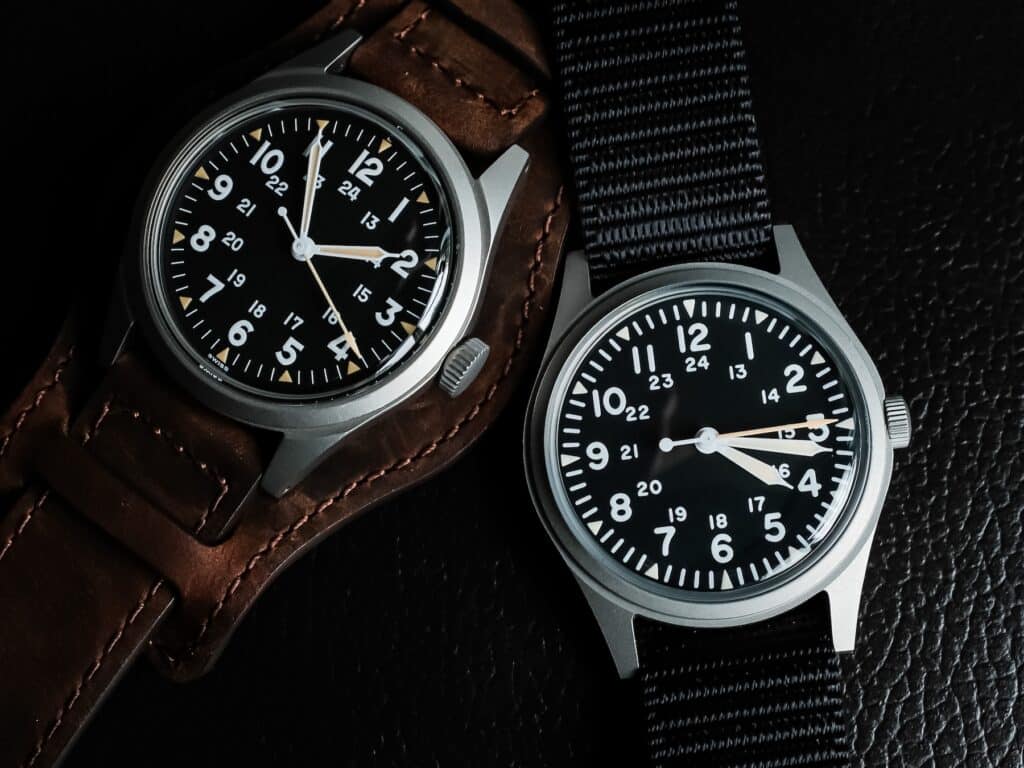
The RA03 sits around forty-five dollars, which puts it in impulse-buy territory for most enthusiasts. Factor in a twenty-to-forty-dollar strap to replace the throwaway one it ships with, and you’re still under a hundred bucks for a compact, period-inspired field watch that looks and wears well beyond its price. The value case here isn’t complicated. If you want the mid-century field-watch look and feel without thinking hard about it, this is one of the easier recommendations I can make.
The Benrus asks a very different question. At $990, it’s not money I’d throw around lightly, and the value conversation depends entirely on how much you care about what that figure buys. You’re paying for a heritage brand with a real military past, a Swiss automatic movement, sapphire, sandblasted steel, and a design that stays close to the proportions of an actual issued watch. Those things are worth a premium to the right buyer. For me, the Hamilton already occupies this slot in my collection, so I came away impressed without needing to make the purchase. That’s a personal outcome, not a knock on the watch. The DTU-2A/P justifies its price if the heritage and the build are things you’ll still value long after the novelty fades.
Final Thoughts: How Much Field Watch Do You Actually Need?
After spending time with both, I think the question I started with has a fairly clear answer. The extra $945 doesn’t buy a watch that tells time better. If anything, the RA03’s quartz movement will out-accurate the Benrus automatic on any given day. What the money buys is heritage, a Swiss mechanical movement, sapphire, a screw-down 100-meter case, sandblasted steel, and a spec lineage that sits a hair closer to a watch that was actually issued. Whether that’s worth close to a thousand dollars is a question only you can answer, and it depends far more on why you want a field watch than on any single number.
So here’s where I land:
- Choose the Rdunae RA03 if you want most of the mid-century field-watch experience for the price of lunch, you don’t care whether the movement ticks or sweeps, and you’re planning to put it on your own strap anyway. It captures far more of the look and feel than forty-five dollars should.
- Choose the Benrus DTU-2A/P if the heritage, the Swiss automatic, the sapphire, and the closer-to-original proportions are things you’ll still value after the novelty wears off, and the $990 buy-in doesn’t scare you away from an object built to be lived with.
The RA03 proved to me that capturing the feel of a great field watch has very little to do with price. The Benrus proved something different but just as useful, which is that a heritage brand can modernize a small watch without wrecking the thing that made it worth reissuing. For most people chasing the look, the forty-five-dollar quartz gets you further than it has any right to. The Benrus is the one to reach for when the story behind the watch, and the way it’s built, start mattering as much as the shape on your wrist. Where you land probably says less about these two watches than about what pulled you toward a field watch in the first place. For me, the RA03 stays in the box and the Benrus stays a watch I’m happy to admire without owning. Maybe that’s just where my tastes have settled this year.

Co-Founder & Senior Editor
Michael Peñate is an American writer, photographer, and podcaster based in Seattle, Washington. His work typically focuses on the passage of time and the tools we use to connect with that very journey. From aviation to music and travel, his interests span a multitude of disciplines that often intersect with the world of watches – and the obsessive culture behind collecting them.