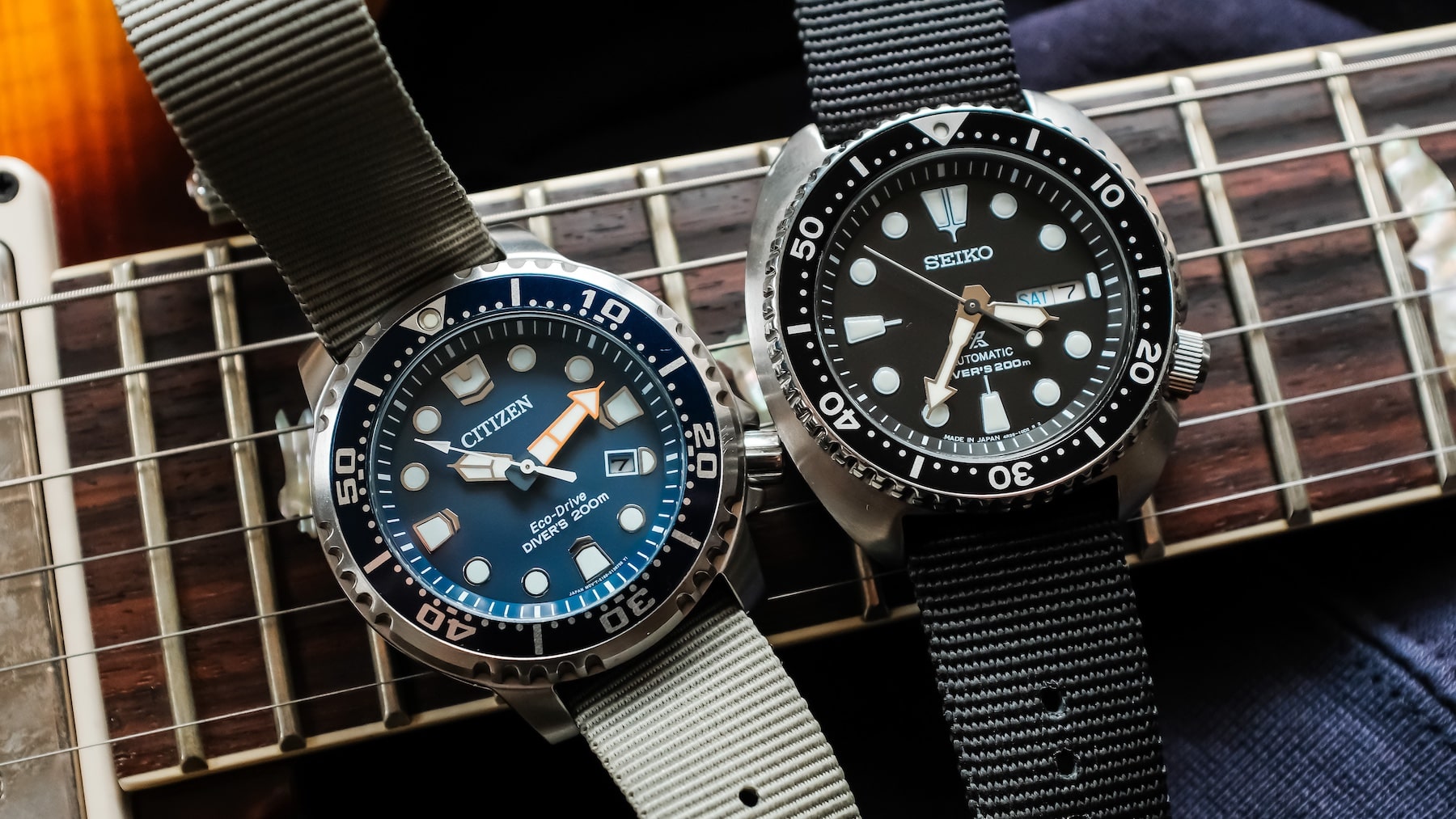
Most of us don’t set out to choose between Seiko and Citizen. We start looking for a dive watch we’ll still enjoy wearing after the excitement of buying something new has worn off. That’s when these two brands start showing up everywhere. Seiko has the enthusiast favorites collectors seem to recommend on instinct, while Citizen has a habit of quietly making watches that ask very little from their owners. On paper, the differences can feel surprisingly small. Spend a few months wearing both, and they become much harder to ignore.
After more than a decade of wearing, reviewing, and living with dive watches, we’ve learned that the watch we’re most excited about on day one isn’t always the one we keep reaching for months later. Time with Seiko’s Turtle, Samurai, 5KX, and Sumo, along with Citizen’s Promaster Diver, NY0040, Fugu, and Aqualand, has shown us that these brands succeed for very different reasons once they’re part of everyday life. That’s the comparison we’re making here. Rather than debating which logo deserves more respect, we’ll focus on the ownership trade-offs that matter most, so you can choose the brand you’ll be happier wearing a year from now—not just the one that seems like the obvious choice today.
Brand Identity & Ownership Feel: Heritage Pull vs. Low-Friction Practicality
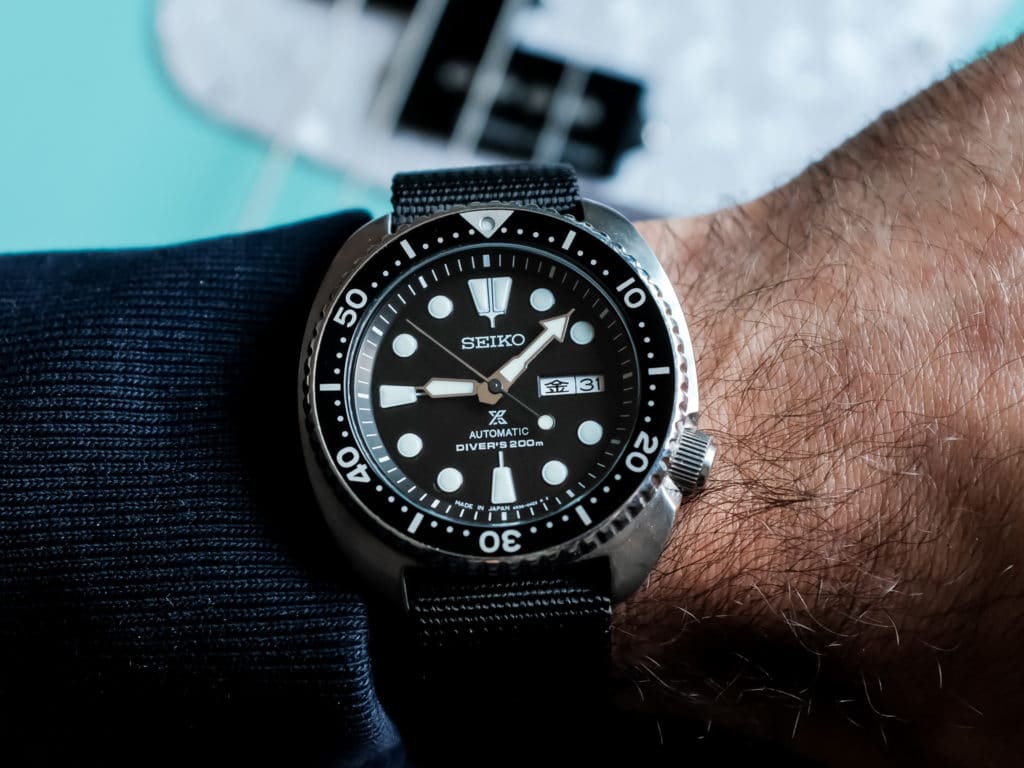
Seiko’s dive watches have a way of turning a single purchase into a longer-term attachment. That came through clearly in our time with the Turtle, Samurai, 5KX, and Sumo. The Turtle felt like the easiest watch to keep reaching for, partly because it never tried too hard to impress us. The Samurai went the other direction, with a sharper personality and a more deliberate wrist presence that made it feel like a Seiko you choose on purpose. The 5KX kept things looser and more casual, but still had that familiar Seiko pull that makes people spiral into “maybe I should look at one more diver” territory. Then there is the Sumo, which has always felt like the overlooked one in the lineup, even though it wears well and carries enough presence to make the price feel a little more reasonable than the usual enthusiast chatter suggests. That is the Seiko pattern we keep coming back to: less about frictionless ownership, more about watches that get under your skin in different ways.
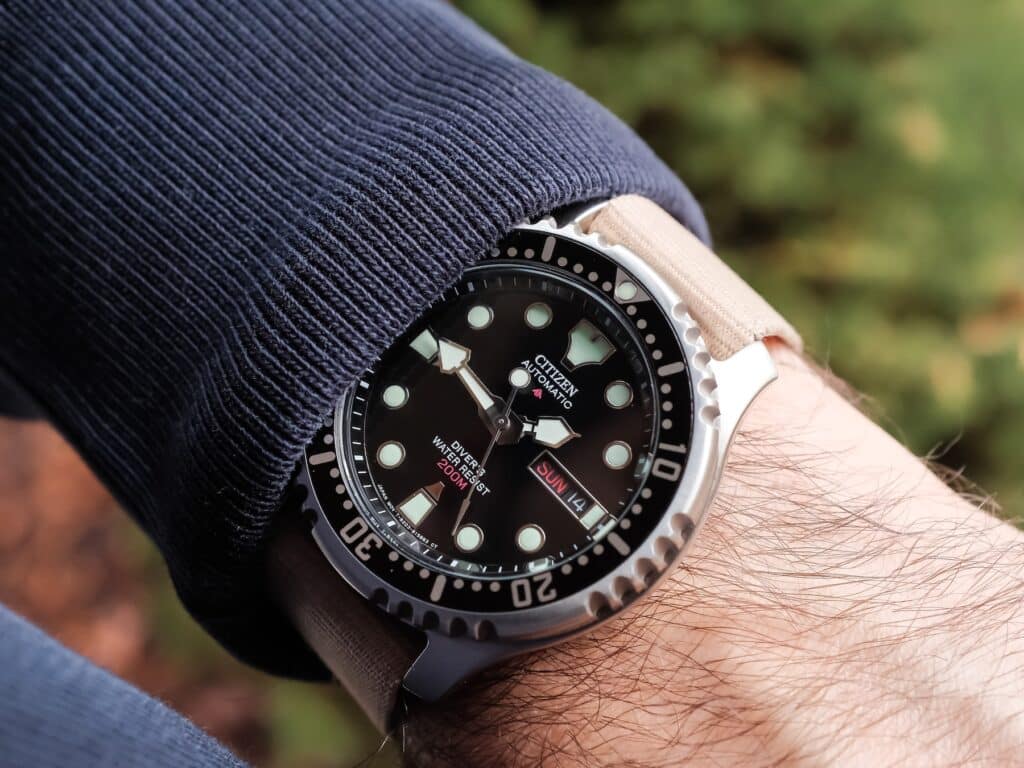
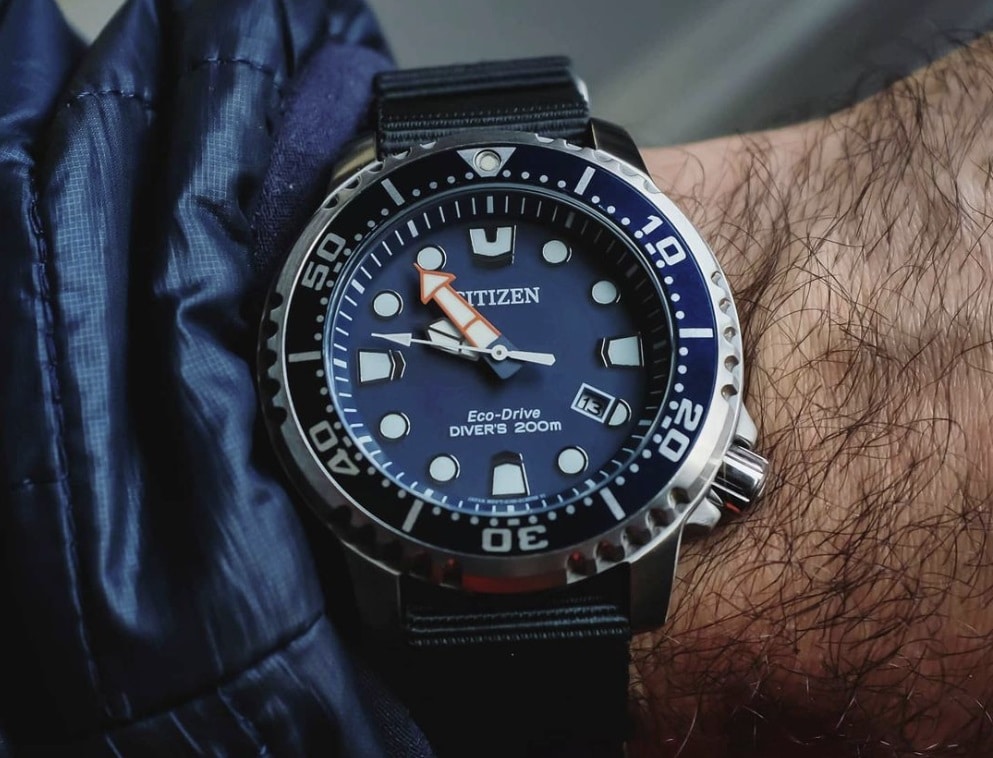
Citizen takes a cleaner, more practical route, and that comes through just as fast in the Promaster Diver, NY0040, Fugu, and Aqualand. The Eco-Drive Promaster is the one that keeps reminding us how little attention it asks for once it is on the wrist; it feels compact, balanced, and easy to live with, while also cutting down on the crown-and-setting routine that comes with mechanical ownership. The NY0040 lands from a different angle, with a more restrained, utility-first personality that feels comfortable, straightforward, and easier to treat as an everyday tool than a trophy piece. The Fugu adds a bit more character through its distinctive bezel, but it still keeps the same practical backbone. And then the Aqualand goes fully into instrument territory, which is its own kind of honesty. Across the range, Citizen keeps pushing the same message: this is a brand for buyers who want a dive watch that works without demanding much back.
- Seiko feels made for buyers who enjoy the pull of the hobby itself: the shapes, the legacy, the mod culture, and the emotional charge of wearing a recognizable diver.
- Citizen appeals to buyers who want the watch to disappear into daily life and keep performing without making a fuss.
Dial Design & Wearability: Expressive Styling vs Straightforward Function
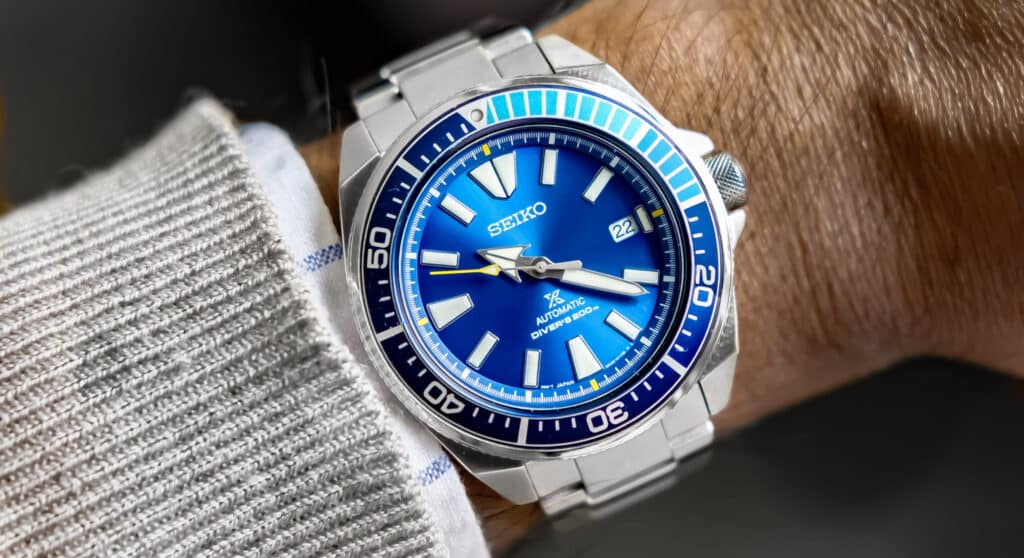
Seiko utilizes its dials to grant every diver a unique personality, ensuring each piece carries its own visual signature while remaining clearly part of the family. Our hands-on time with the Samurai highlighted this expressive approach: the combination of sharp, applied markers and broad hands, set against a sunburst blue backdrop, creates a deliberate wrist presence that shifts with the light. The Turtle takes a more utilitarian path, where the matte finish on the dial helps reduce glare and push those Lumibrite-heavy markers to the forefront for effortless readability. With the 5KX, the brand refreshes a classic layout using applied indices that offer a bit more life and depth than the tool-ish SKX of the past. The Sumo, meanwhile, leans towards a more refined, upscale aesthetic, with a clean dial that feels premium without losing its functional edge.
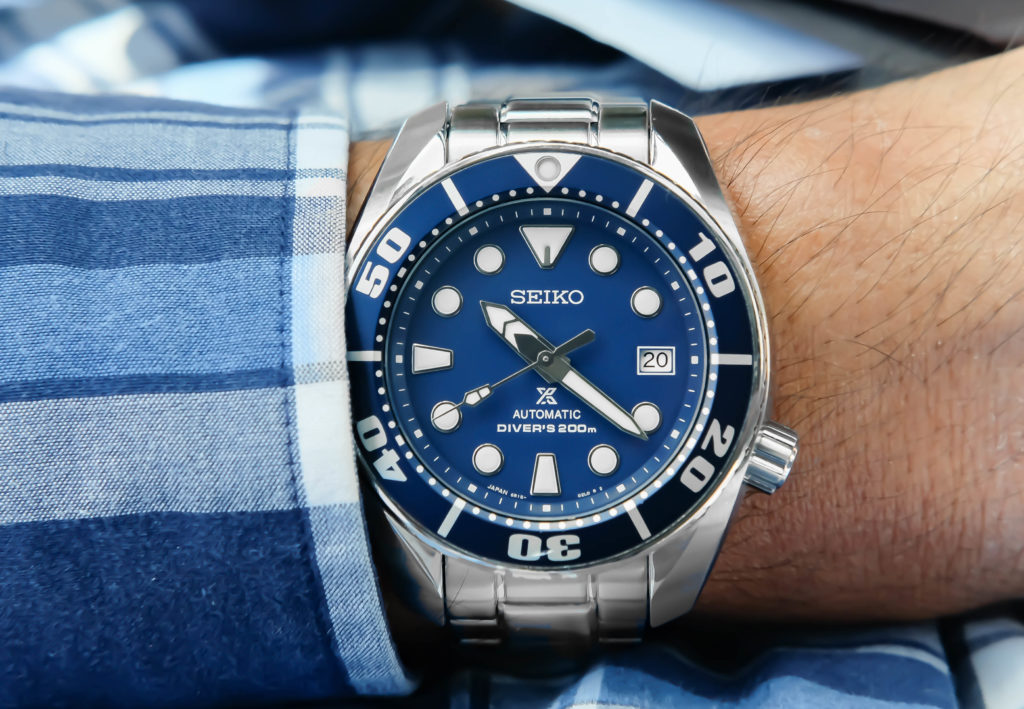
This variety extends to how these watches live on the wrist. The Turtle remains the definitive strap monster, adapting effortlessly to silicone, NATO, or canvas during our testing. While the Samurai’s sharp geometry kept us tethered to its factory bracelet longer than we anticipated, the 5KX’s drilled lugs practically beg for frequent changes. Even the Sumo, often critiqued by the enthusiast crowd, surprised us during extended wrist time, with a tapered bracelet that provides enough comfort to make it a viable companion for long-term wear.
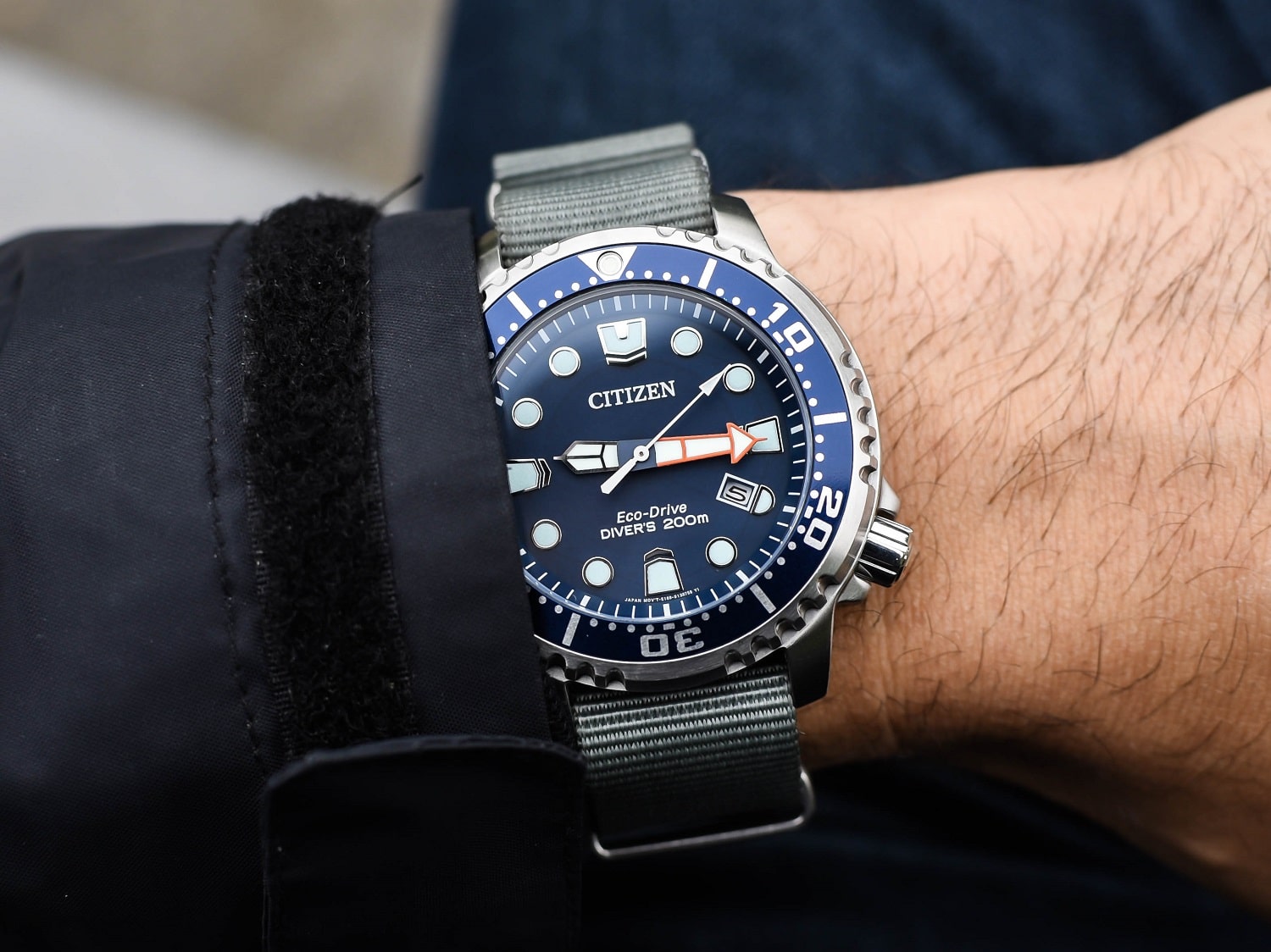
Citizen prioritizes a more disciplined aesthetic, favoring high-contrast legibility over the visual flair found in Seiko’s catalog. During our hands-on testing, the Promaster Diver BN0151 stood out for its uncompromising clarity, utilizing oversized markers and a bold handset that remain intuitive in challenging light. Its blue dial displays a hidden depth, shifting toward subtle purple tones under direct sunlight, yet it never loses its tool-watch focus. That same utilitarian DNA defines the NY0040, which avoids decorative excess in favor of a straightforward, functional layout. The Fugu injects a touch more charisma with its polished indices and the signature pufferfish engraving on the caseback, while still maintaining a practical core. Even the Aqualand we video-reviewed in-depth, despite the complexity of its analog-digital interface and depth sensors, remains surprisingly legible because every dial element is designed around a specific technical requirement.
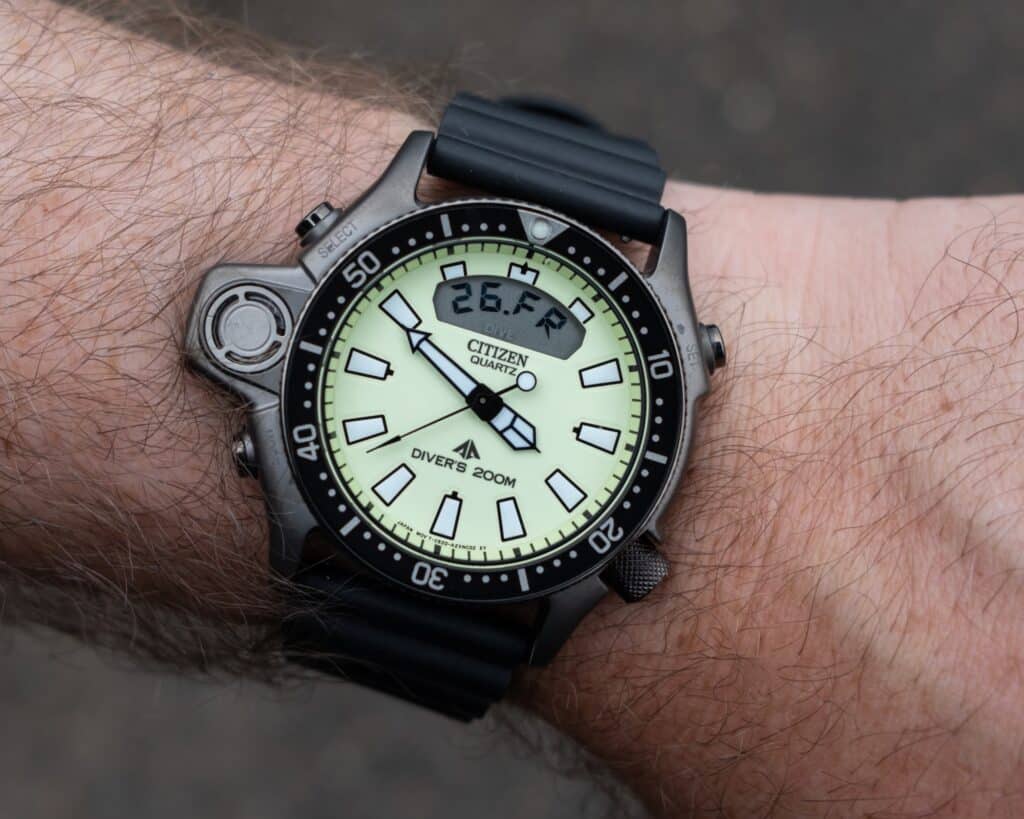
This focus on real-world use carries over to the wearing experience. While the BN0151’s factory polyurethane strap is a capable daily companion, we found it truly excelled once swapped for a NATO strap. The NY0040 follows a similar path; it feels competent enough on stock rubber, but its personality shines when paired with an aftermarket Jubilee or canvas strap. Across the line—from the Fugu’s special color-matched NATO strap or a black vented rubber strap to the Aqualand’s heavy-duty rubber—Citizen remains focused on a secure, low-friction fit that treats the watch as an instrument first and foremost.
- Seiko gives buyers more visual variety and bracelet/strap flexibility across its dive lineup.
- Citizen focuses on clean, highly legible dials paired with straps built for dependable everyday use.
Build Quality & Technical Approach
Movements:
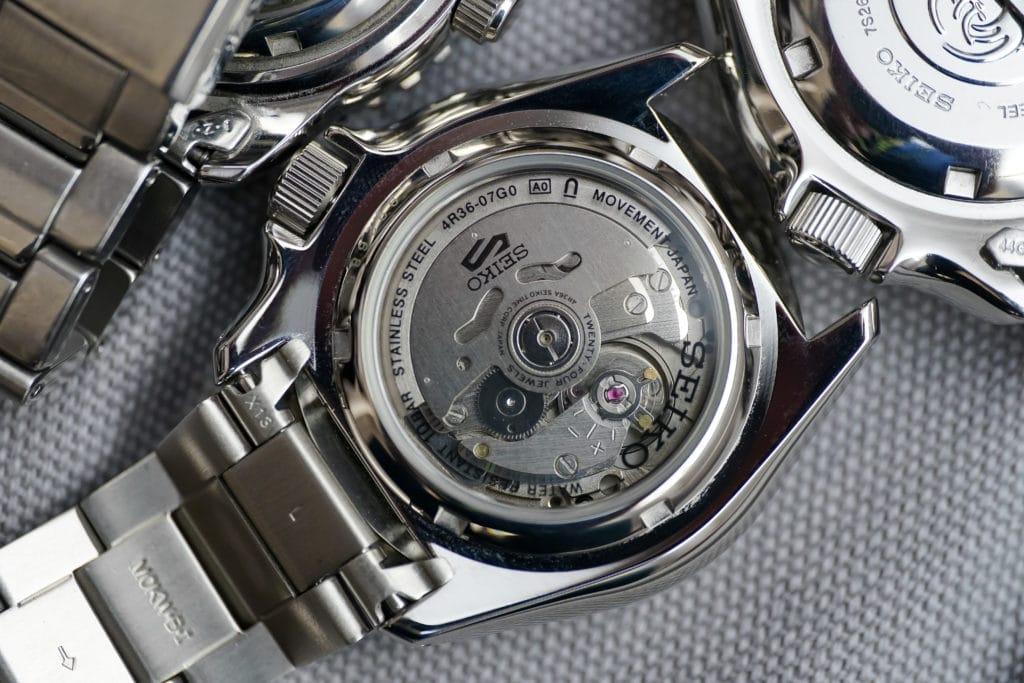
Seiko has spent years refining a handful of automatic movements instead of constantly replacing them, and after living with the Turtle, Samurai, 5KX, and Sumo, that consistency becomes part of the appeal. The Turtle’s 4R36 quickly faded into the background during our testing period because it simply did what we expected every day. Despite Seiko’s conservative accuracy claims, ours ran better than advertised, and after the first week, we stopped checking it altogether. The Samurai’s 4R35 delivered much the same experience, omitting only the day display while retaining hacking seconds, hand-winding, and the familiar feel we’ve come to expect from Seiko’s entry-level automatic calibers. The 5KX we tested hands-on hands-on returns to the 4R36 and adds a display caseback, making the mechanical side of ownership a little more tangible. It’s the sort of detail newer collectors tend to appreciate, especially when watching the rotor spin becomes part of the ritual of taking the watch off at the end of the day. The Sumo’s 6R15 sits a step above the others with its longer power reserve, but what stood out to us wasn’t the extra specifications. It was the same dependable, no-surprises character that ties Seiko’s dive lineup together. None of these movements chase chronometer numbers, but after enough wrist time, that’s rarely what we found ourselves thinking about.
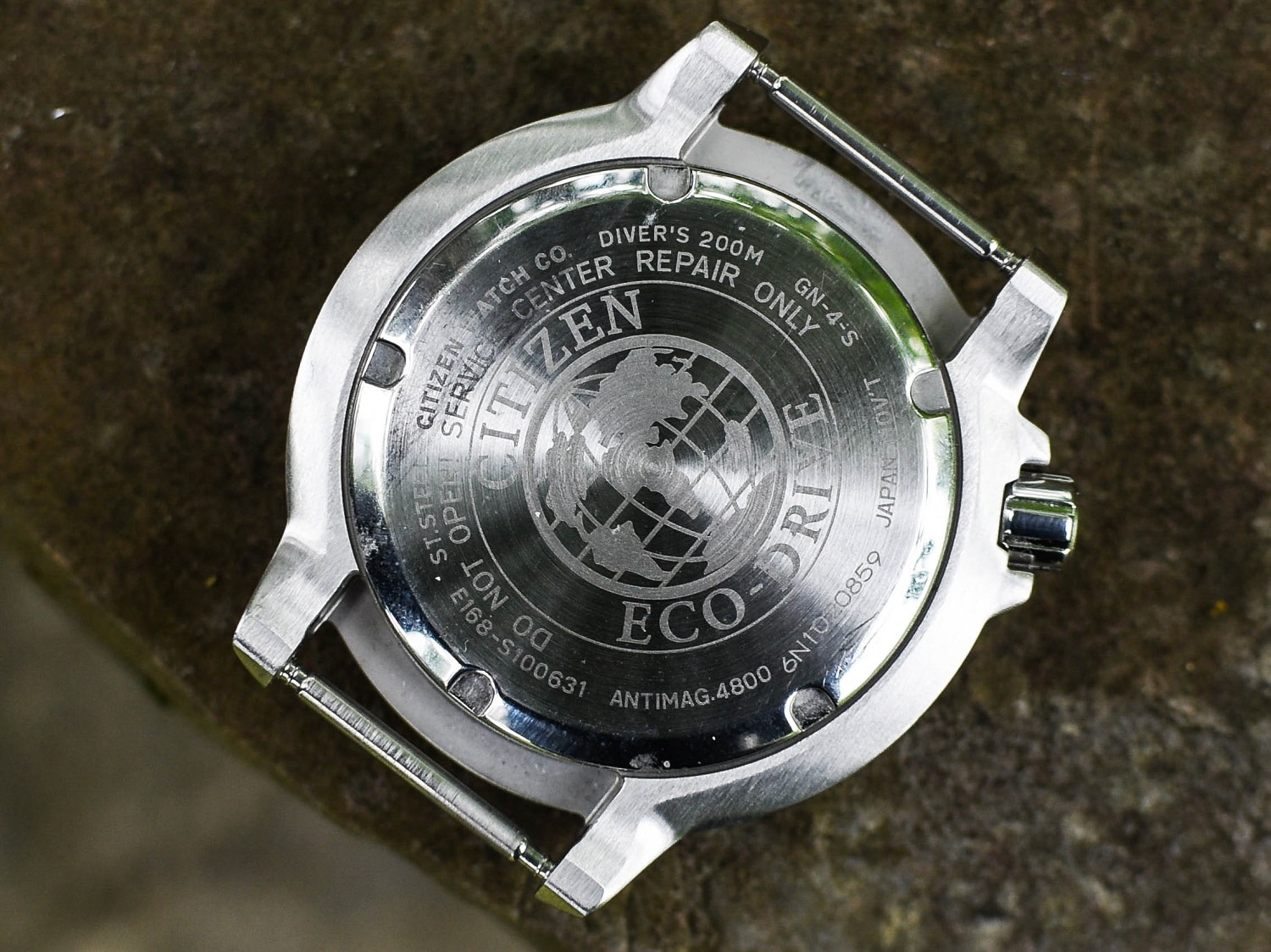
In contrast, Citizen asks a different question: how much do you actually want to interact with your movement? The Promaster Diver BN0151 almost eliminates that conversation. The Eco-Drive E168 became one of those features we appreciated more with time because the watch was simply ready whenever we reached for it. No winding. No resetting after a few days away. Just enough daylight to keep going. The NY0040 and Fugu move back toward traditional mechanical ownership, using Citizen’s proven Miyota-based automatic calibers to satisfy buyers who still enjoy winding a watch and watching a second hand come to life. Neither movement tries to impress through specifications alone, but both proved dependable during our time with them. Then there’s the Aqualand, where mechanical romance gives way to purpose. Its quartz movement isn’t there to start conversations with collectors; it’s there because dependable accuracy matters when the watch is measuring dive depth. That practical mindset runs through Citizen’s entire dive lineup.
Case Construction & Finishing:
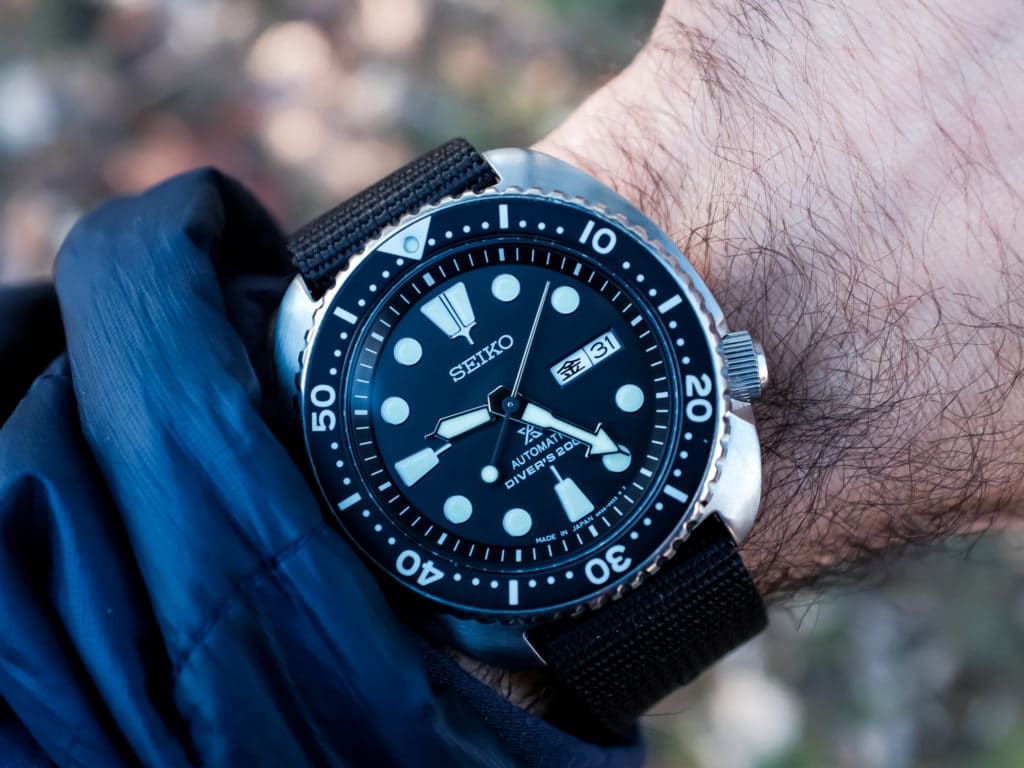
Seiko’s dive watches rarely share the same silhouette, and that’s part of what makes the lineup so engaging. The Turtle remains the best example. As we noted in our dedicated review, its updated cushion case stays faithful to the spirit of the vintage 6309 while subtly stretching the lugs for a more modern fit. Even at 44.3mm, it wears smaller than the dimensions indicate—a trick Seiko seems to pull off time and again with this case design. The Samurai heads in a completely different direction. Its sharply faceted case, crisp transitions, and predominantly brushed surfaces give it an architectural quality that catches the light far differently than the rounded Turtle. The 5KX dials things back with a more conventional case profile that feels instantly familiar, while polished sides add just enough contrast without making the watch feel flashy. The Sumo arguably delivers Seiko’s most refined finishing of the group. Polished case flanks contrast beautifully with the brushed upper surfaces, giving the watch a level of visual sophistication that stands out once you spend time with it. Rather than repeating a single successful formula, Seiko gives each diver its own case identity, making the choice feel as much about shape and finish as it is about specifications.
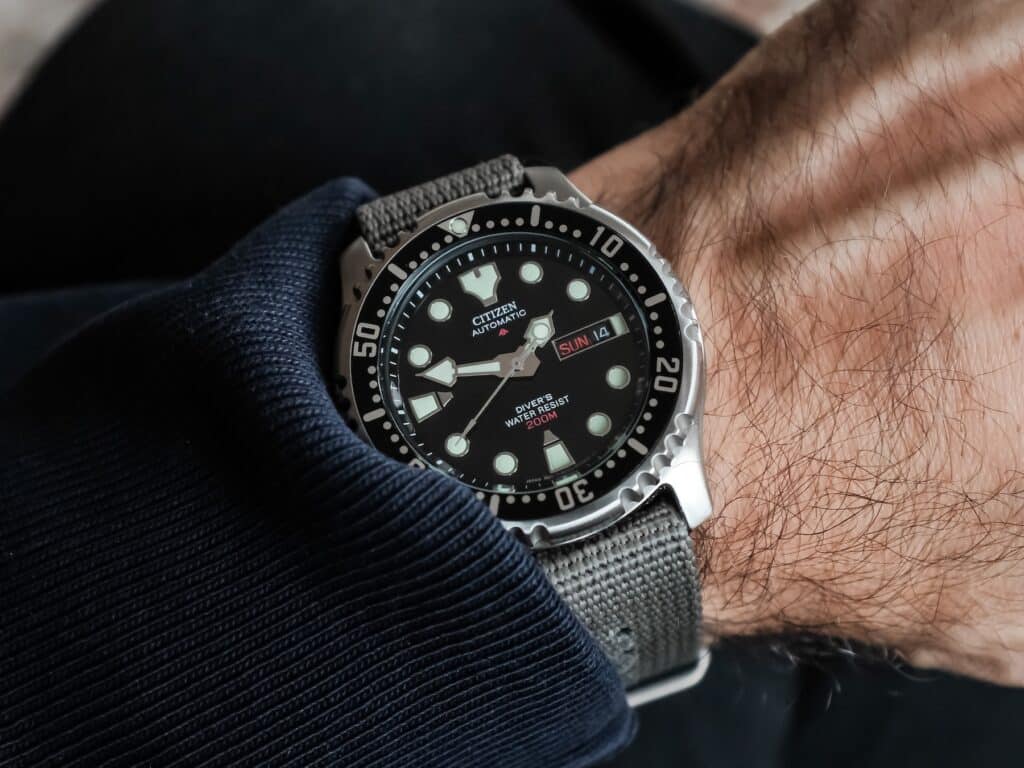
Citizen doesn’t chase dramatic case designs nearly as much. Instead, it refines a straightforward tool-watch formula across the lineup. The Promaster Diver BN0151 keeps things intentionally simple with a predominantly brushed finish that shrugs off everyday wear, while subtle polished chamfers stop it from feeling flat or unfinished. It’s not a case that demands attention, but after spending time with it, we appreciated how honestly it wears its tool-watch roots. The NY0040 follows the same route, though with more character than first impressions imply. As covered in our NY0040 review, the brushed upper surfaces and polished case flanks feel every bit as solid as comparable Seiko divers. The softly curved, tooth-like shoulders add a hint of vintage skin-diver charm to an otherwise utilitarian design. The Fugu builds on that familiar architecture rather than reinventing it, retaining the NY0040’s silhouette while upgrading details such as the knurled crown, clean bevels, and heavily rounded, polished case sides that help the watch sit naturally on the wrist despite its substantial bezel. The Aqualand naturally looks more technical than the rest because its integrated depth sensor dictates the shape, but even here, Citizen prioritizes function over flourish. Every contour exists because the watch was designed to be used underwater first and admired second.
Crystals & Bezels:
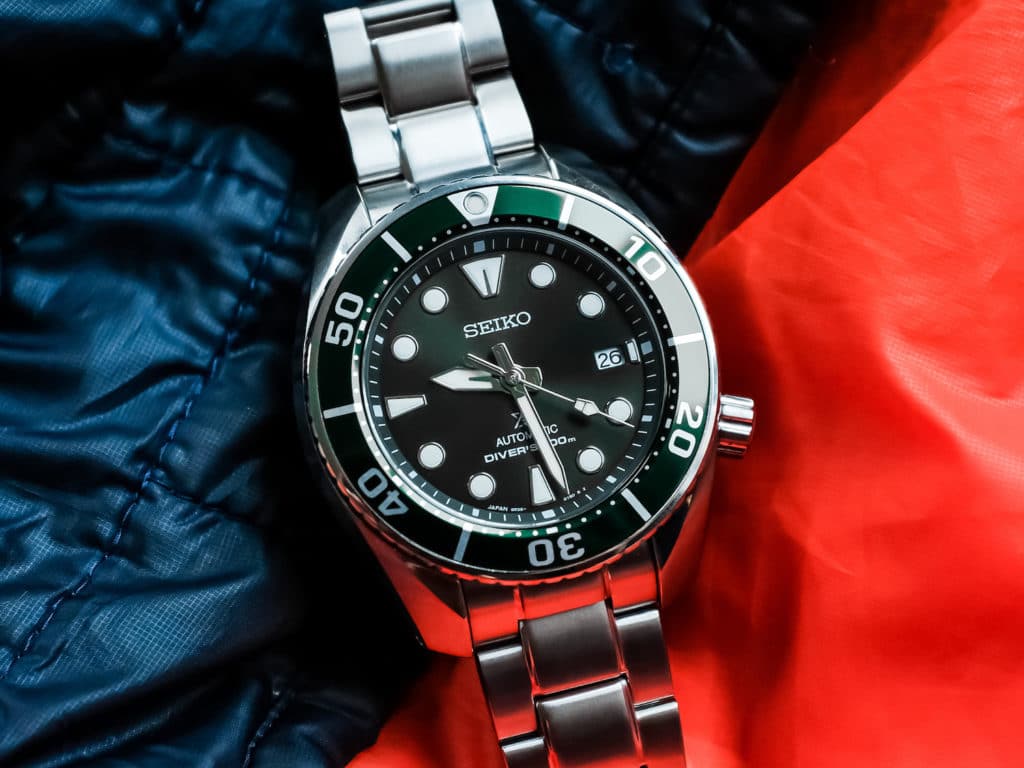
Seiko doesn’t take a one-size-fits-all approach to its crystals and bezels, and that’s obvious once you’ve spent time with more than one of its divers. The Turtle is a perfect example. We never found ourselves wishing it had sapphire because the Hardlex held up well during everyday wear. What did stand out, though, was the familiar Seiko frustration of a bezel insert that wasn’t perfectly aligned. It’s the kind of thing enthusiasts notice immediately because the bezel action itself feels so satisfying. The Samurai flips that experience around. Its aggressively knurled bezel fits the watch’s sharp aesthetic, but ours demanded more effort to rotate than we’d have liked. The 5KX tones everything down with a matte aluminum insert that blends seamlessly into the dial, giving the watch a cleaner, less overtly tool-like appearance than the old SKX. Then there’s the Sumo, which quietly fixes one of the biggest enthusiast complaints by moving to sapphire while pairing it with one of the nicest bezel actions we’ve experienced from Seiko at this price. Rather than chasing the same specification across the lineup, Seiko lets each diver develop its own personality, even if that occasionally means living with quirks.
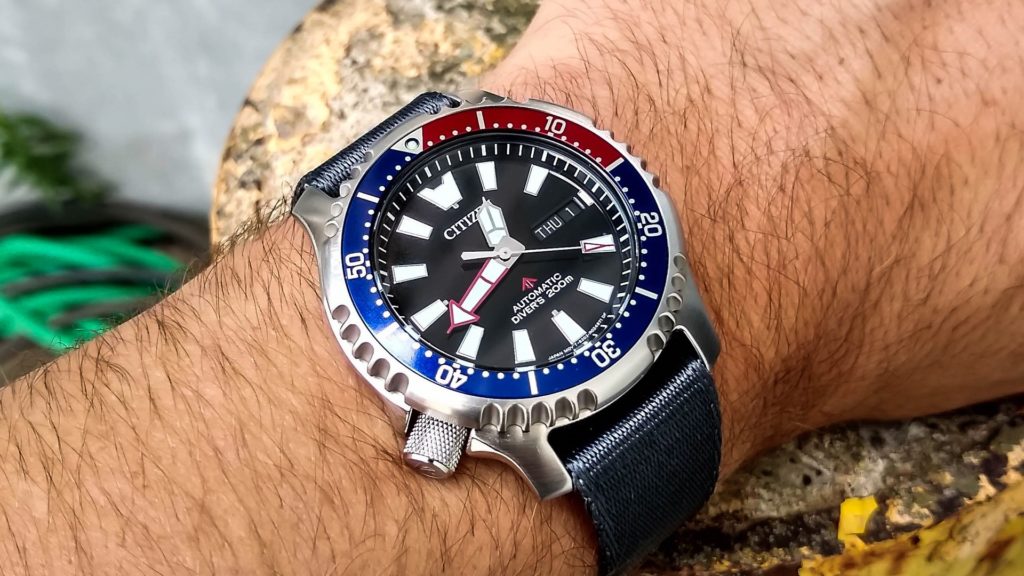
Citizen’s approach is noticeably more restrained. The Promaster Diver BN0151 isn’t trying to win a crystal-material debate. Its mineral crystal with anti-reflective coating simply disappears during normal wear. At the same time, the 60-click bezel feels positive enough that we rarely thought about it beyond wishing the grip offered a little more purchase with wet fingers. The NY0040 was the surprise. Its flat mineral crystal keeps the watch straightforward, but the bezel punches above expectations with crisp alignment, virtually no play, and a coin-edge grip that proved easier to use than several rivals we’ve handled. The Fugu model we spent extended wrist time with builds on that foundation. Its taller Pepsi bezel profile is easier to grab, the action remains positive despite a hint of play, and the overall experience feels purpose-built instead of overengineered. Even the Aqualand sticks with mineral glass, reinforcing Citizen’s willingness to prioritize proven functionality over spec-sheet bragging rights. None of these choices feel glamorous, but after enough wrist time, they rarely leave you wishing Citizen had done something different.
Water Resistance & Lume:
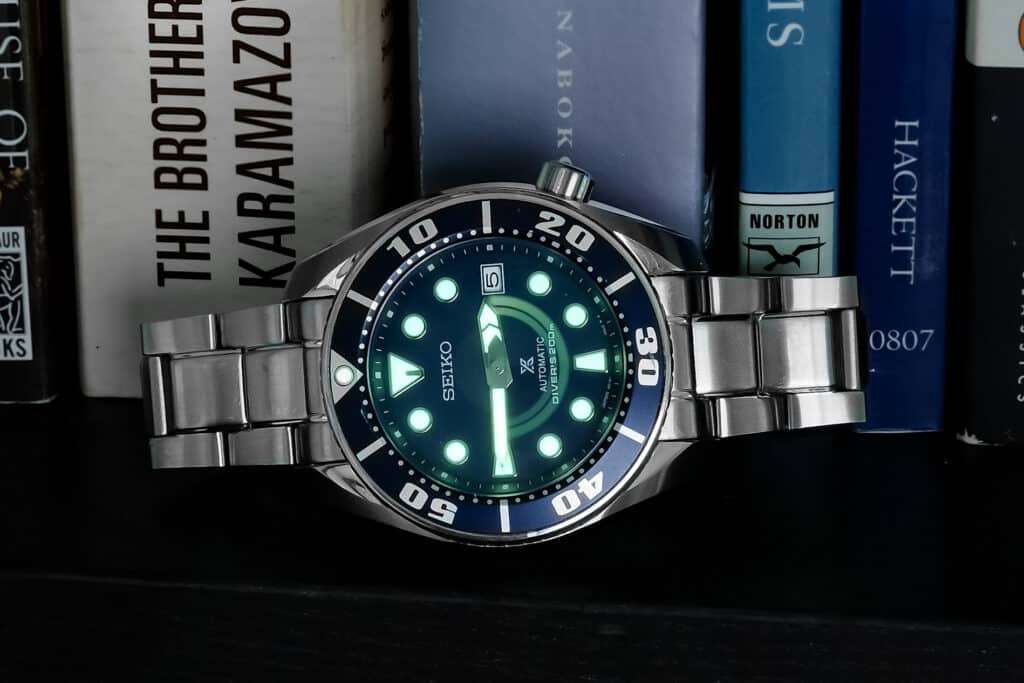
Seiko’s dive watches have never left us questioning whether they belonged near the water, but they don’t all inspire that confidence in quite the same way. The Turtle remains the benchmark. Between its screw-down crown, 200m water resistance, and unmistakable cushion-case design, it always felt ready for whatever we threw at it. After dark, the oversized Lumibrite-filled hands and chunky indices reminded us why Seiko’s lume has earned such a loyal following; the layout is so intuitive that it’s virtually impossible to mistake the time, even when you’re half asleep. The Samurai delivers that same reassurance with a more contemporary edge. Its sharply faceted hands and generously lumed markers produce a crisp, high-contrast glow that suits the watch’s angular styling. The 5KX naturally sits apart. We never approached it as a true ISO-rated dive watch because of its push-pull crown and 100m water resistance, but the Lumibrite still charged quickly and stayed bright enough for effortless nighttime checks. The Sumo rounds things off much like the Turtle, combining a screw-down crown, 200m water resistance, and Seiko’s familiar Lumibrite treatment into a package that never made us think twice about taking it from daylight into darkness.
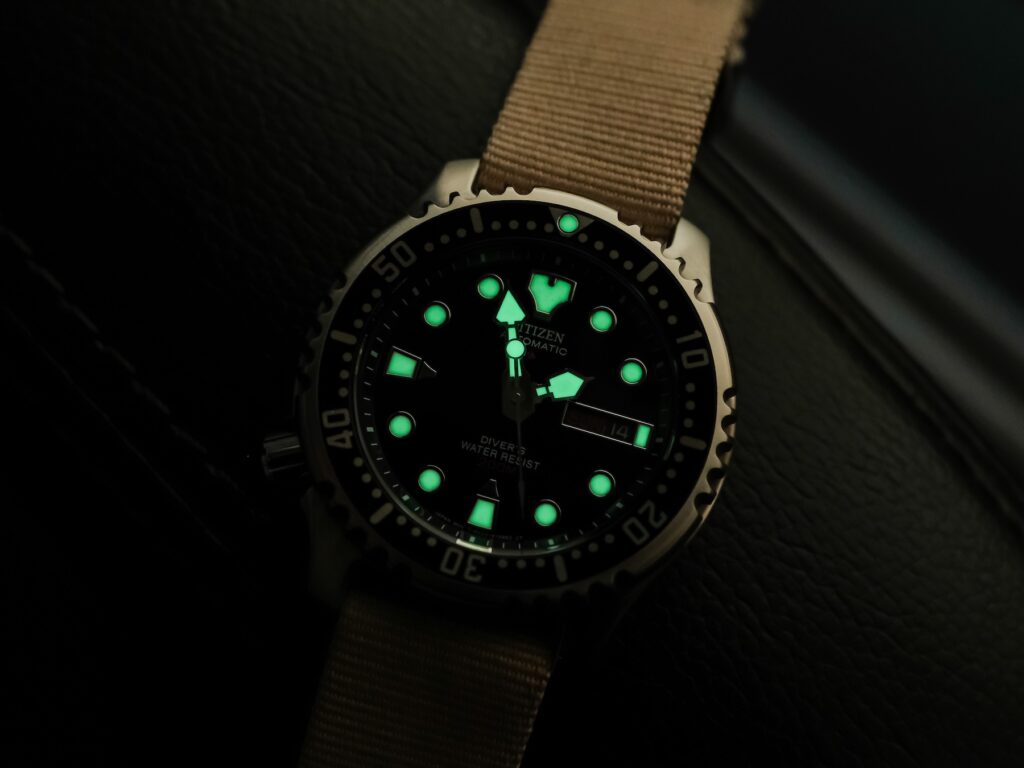
Citizen’s approach is less about giving one model standout status and more about making the whole lineup feel consistently dependable. The Promaster Diver BN0151 immediately backed up its 200m rating with a screw-down crown and lume that remained easy to read long after the lights went out. It never tried to outshine Seiko; it simply stayed legible when we needed it. The NY0040 follows the same philosophy, delivering practical, evenly applied lume that complements its straightforward tool-watch personality rather than becoming a talking point. The Fugu adds a little more character through its lumed arrow-tipped second hand and bold minute hand, making elapsed-time checks easy without cluttering the dial. The Aqualand naturally asks more from its lume because of its analog-digital display. Yet, after spending time with it, we found the illuminated hands and markers remained easy enough to distinguish despite everything else happening on the dial. None of Citizen’s divers left us wishing for more capability; they simply got on with the job without making a fuss.
- Seiko treats every diver as its own mechanical and design exercise, rewarding buyers who enjoy the nuances that make one model feel different from the next.
- Citizen refines a proven tool-watch formula across the lineup, favoring dependable performance and uncomplicated ownership over chasing enthusiast talking points.
Community, Resale & Long-Term Appeal
Spending time around Seiko owners, it’s hard not to notice that one dive watch rarely stays just one dive watch. The Turtle is probably the best example. Since we reviewed it, Seiko has released King Turtle variants, Save the Ocean editions, multiple PADI models, and a growing list of reissues, yet the standard Turtle has never left our collection. That says more than another special edition ever could. The Samurai inspires a different kind of enthusiasm, with owners drawn to its unmistakable case design and willingness to look unlike anything else in the Prospex lineup. The 5KX has become one of the hobby’s defining gateway watches, but its story rarely ends there. Between the thriving mod scene and endless strap combinations, it’s the sort of watch that evolves alongside its owner. Even the Sumo has built a loyal following among enthusiasts who appreciate its quieter place in Seiko’s catalog. Buying a Seiko often feels like joining an ongoing conversation, where today’s purchase naturally turns into tomorrow’s wishlist.
On the other hand, Citizen owners seem to approach things differently. We don’t see nearly as many conversations about chasing the next Promaster or hunting down every variation. Instead, discussions usually revolve around how well these watches have held up after years of regular use. The BN0151 has become a dependable recommendation because owners know exactly what they’re getting every time they suggest it. The NY0040 has built up similar goodwill over decades of quietly doing its job, while the Fugu offers longtime Promaster fans a slightly more expressive take without abandoning the formula that made the series popular in the first place. The Aqualand occupies its own corner of the hobby, attracting people who appreciate it as a legitimate dive instrument rather than simply another collectible. Citizen’s dive watches certainly have enthusiastic owners. Still, the attachment feels less about building a collection and more about keeping a watch that continues to earn its place in the rotation.
Final Thoughts: Which Brand Makes More Sense for Most Buyers?
Citizen makes the stronger case for most buyers. After spending time with the Promaster Diver, NY0040, Fugu, and Aqualand, the biggest takeaway wasn’t any single feature—it was how little we ever had to think about them. Whether powered by Eco-Drive or one of Citizen’s dependable automatics, they practically settled into daily life and stayed there.

Seiko still offers something Citizen doesn’t. The Turtle, Samurai, 5KX, and Sumo tend to draw niche collectors a little deeper into the hobby. One strap swap becomes three. One Seiko somehow turns into a folder full of bookmarked references you’re convinced you’ll buy “someday.” (We’ve all been there.) That’s a huge part of the brand’s emotional pull, and it’s easy to see why so many collections seem to grow around Seiko divers.

For everyone else, though, we’d recommend Citizen. Most buyers aren’t looking for another rabbit hole—they’re looking for the watch they’ll still be happy wearing after the excitement of buying something new has faded. That’s where Citizen separates itself. It never demands much attention after you’ve bought it, and for most people, that’s a feature rather than a flaw.

Co-Founder and Senior Editor
Kaz has been collecting watches since 2015, but he’s been fascinated by product design, the Collector’s psychology, and brand marketing his whole life. While sharing the same strong fondness for all things horologically-affordable as Mike (his TBWS partner in crime), Kaz’s collection niche is also focused on vintage Soviet watches as well as watches that feature a unique, but well-designed quirk or visual hook.
Have owned the seiko but switched many years ago to the Citizen Eco Drive dive watch and now own two of these. They take abuse well and keep better time than several high end watches I own. Big plus is the price point, quality and reliability is Exceptional!!!
I’ve been Citizen-obsessed lately. Hard to beat Eco-Drive.
Great article. Really enjoyed reading the thoughtful comparisons.
Thank you for reading. James!