Every few months, another brand takes a run at the Pepsi GMT, and the reasons rarely change. The red and blue bezel is one of the most recognizable looks in watchmaking, and most of us fall for it long before we can justify the mechanics underneath. The trouble is that the version most people actually want, a vintage Rolex GMT Master, sits so far out of reach that it stops being a real option. That leaves a wide field of alternatives, and two of them tell very different stories about how to scratch the same itch.
On one side is the Steinhart Ocean 39 GMT, an automatic that leans hard into the Rolex silhouette and asks you to buy in to the mechanical experience. On the other is the Vaer G2 Meridian GMT, an American quartz travel watch that borrows the Pepsi language and then goes its own way. One is the enthusiast pick you wind and fuss over. The other is the grab-and-go option you strap on without thinking. We spent time with both, and the gap between them says a lot about what you actually want from a second-time-zone watch.
Overview and Identity
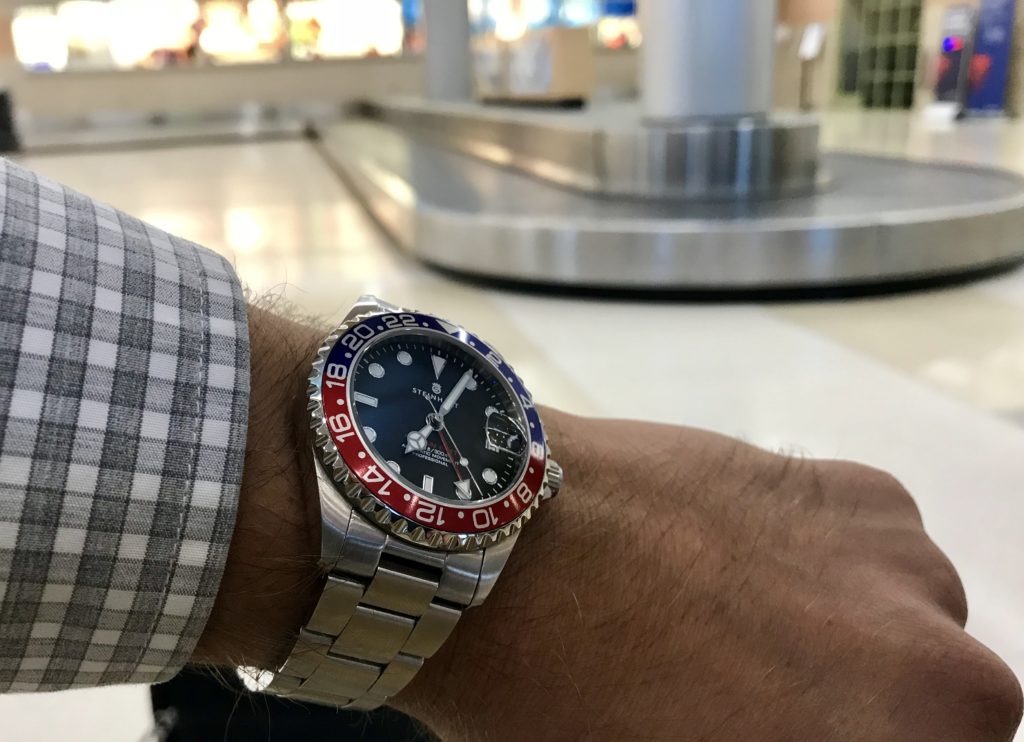
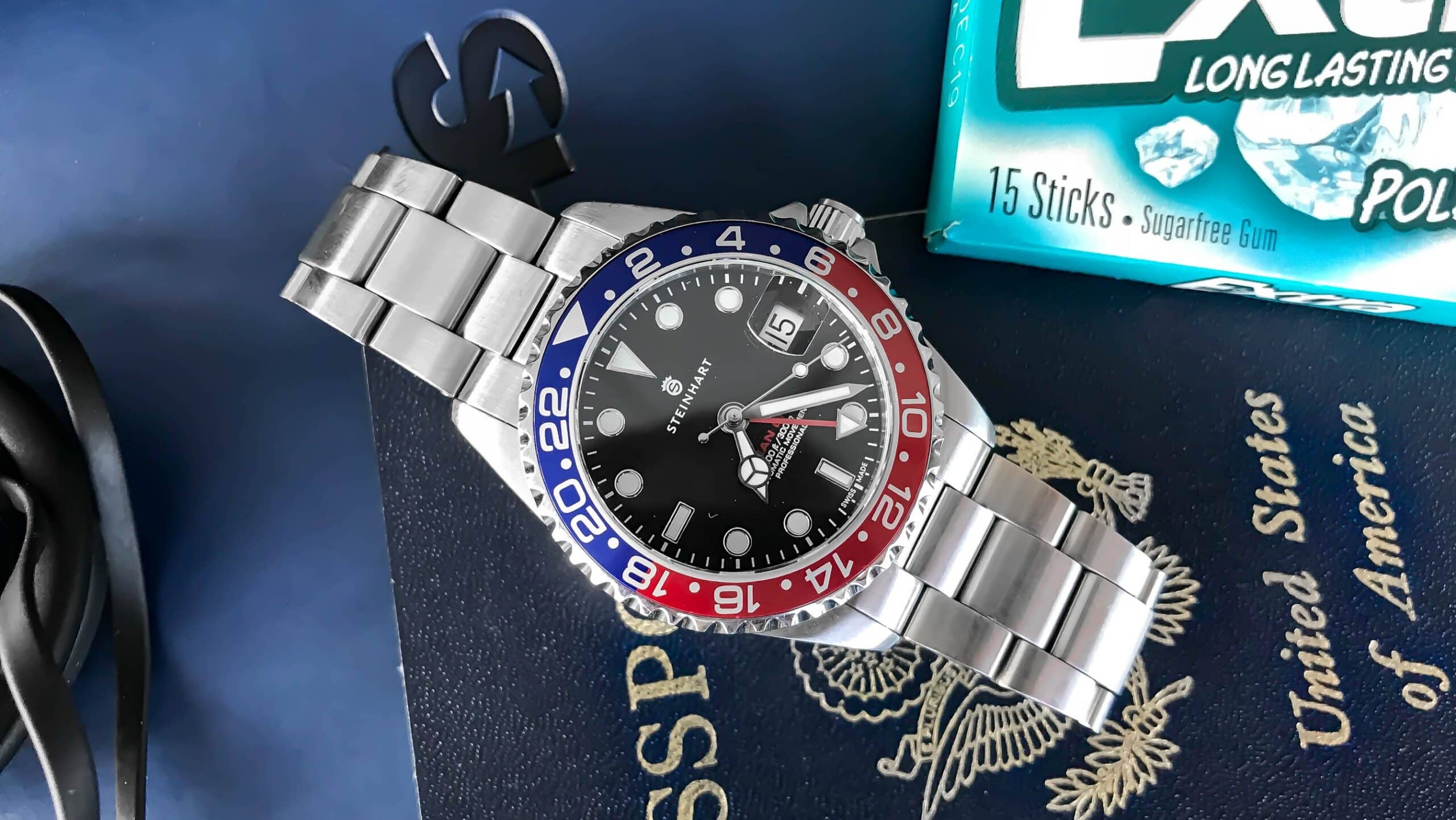
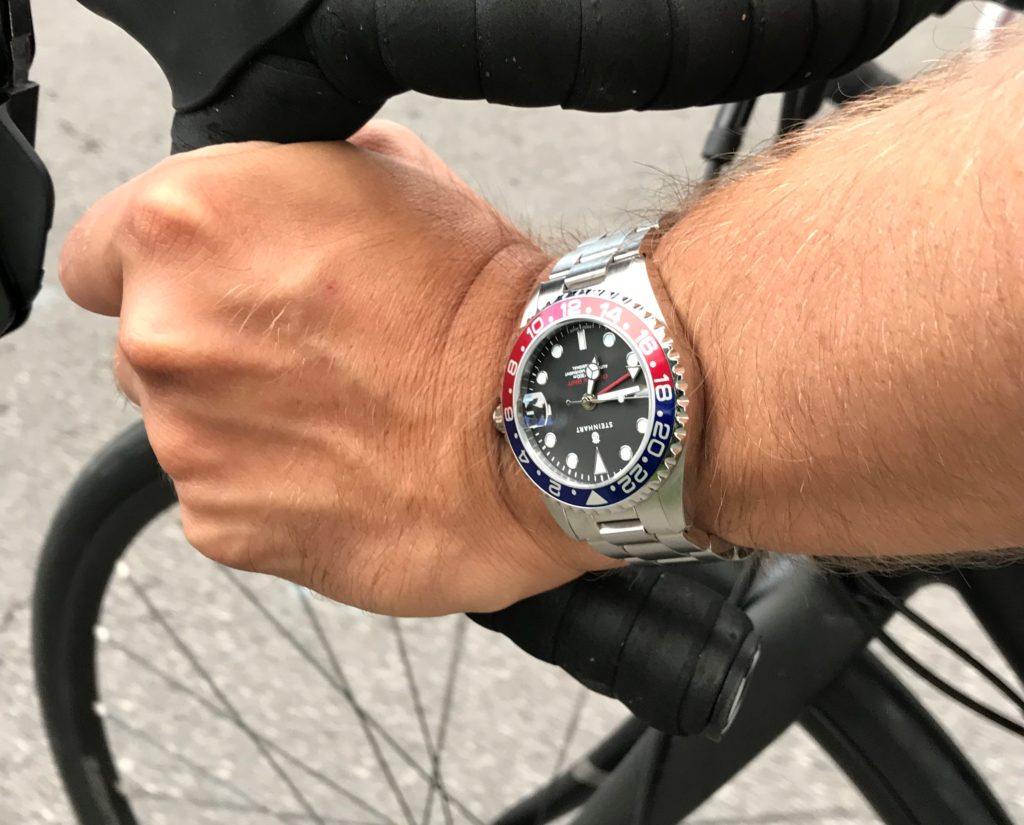
The Steinhart Ocean 39 GMT exists for a specific kind of buyer, the one who wants the GMT Master look without the GMT Master baggage. Steinhart has only been around since 2001, and the brand built its name on affordable takes on watches you would instantly recognize. The Ocean 39 GMT is about as direct a Rolex reference as they make, right down to the oyster-style case and the crowned logo that reads like something else from a few feet away. During our original review of the watch, the homage question came up quickly, and it kept coming up. Still, once it was on the wrist, most of that noise faded. It wears like a compact, honest tool watch that happens to look far more expensive than it is, and for a lot of people that is exactly the point.
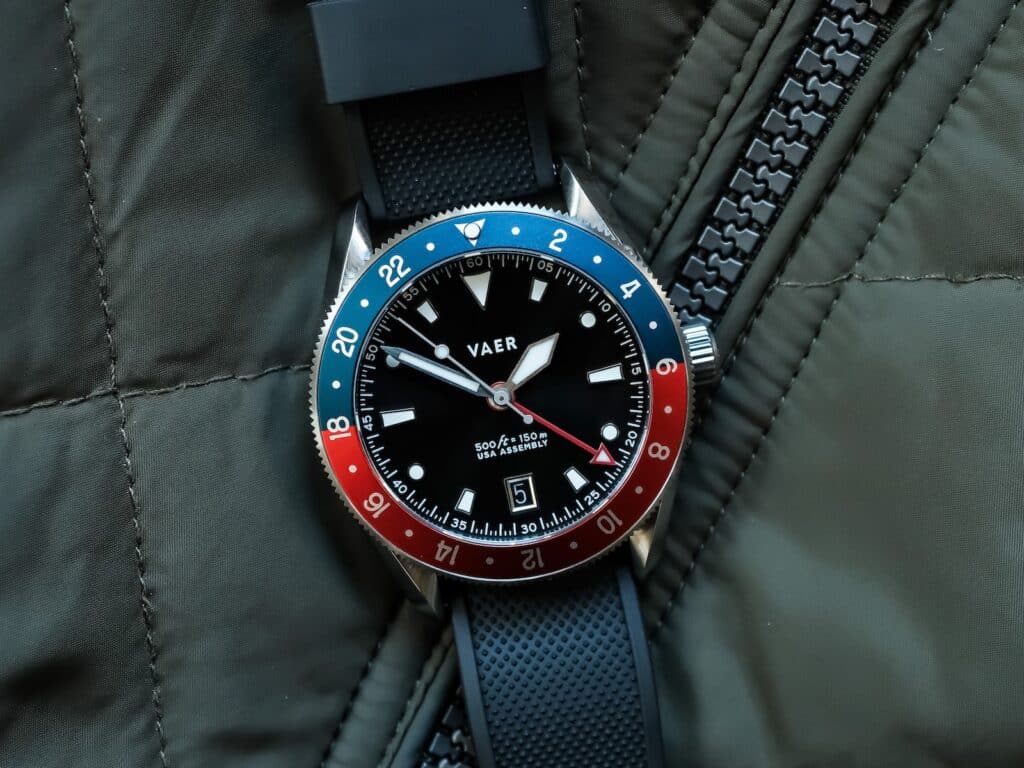
The Vaer G2 Meridian GMT comes at the same idea from a different direction. Vaer is an American brand that has built a reputation on usability rather than borrowed heritage, and our time with the G2 Meridian reinforced that. It uses the Pepsi bezel as a starting point, then trims away most of the vintage cosplay in favor of something lighter and more practical. There is no attempt to convince you it is a Rolex. Instead, it reads as a modern quartz GMT that took a few cues from the classics and left the rest behind. The aluminum bezel, the quartz movement, and the sub-$400 price all point in the same direction, toward a watch you can wear hard and stop worrying about.
- The Steinhart Ocean 39 GMT is the enthusiast entry point, a mechanical homage that delivers the Rolex GMT silhouette and rewards the buyer willing to wind it, size it, and live with a few quirks.
- The Vaer G2 Meridian GMT is the grab-and-go alternative, a lightweight quartz travel watch that borrows the Pepsi look without pretending to be anything other than a modern daily.
Dial, Strap & Wearability: Homage Familiarity vs Modern Restraint
The Steinhart borrows its dial layout straight from the Rolex playbook, so the question was never originality. It runs a white five-line text block and a red model designation over a matte black base that leans slightly toward fauxtina. On the wrist that warmth works, giving the dial a little vintage character without tipping into costume. The Mercedes handset is familiar, and the GMT hand is a neat triangle with a red stem that runs all the way out to the minute track, which is more than a lot of caller GMTs bother to do. BGW9 lume holds a charge better than most homages we have handled. Our one real gripe is that the hands and applied markers sit a touch too thin, which flattens the dial’s depth and costs it some legibility at a glance.
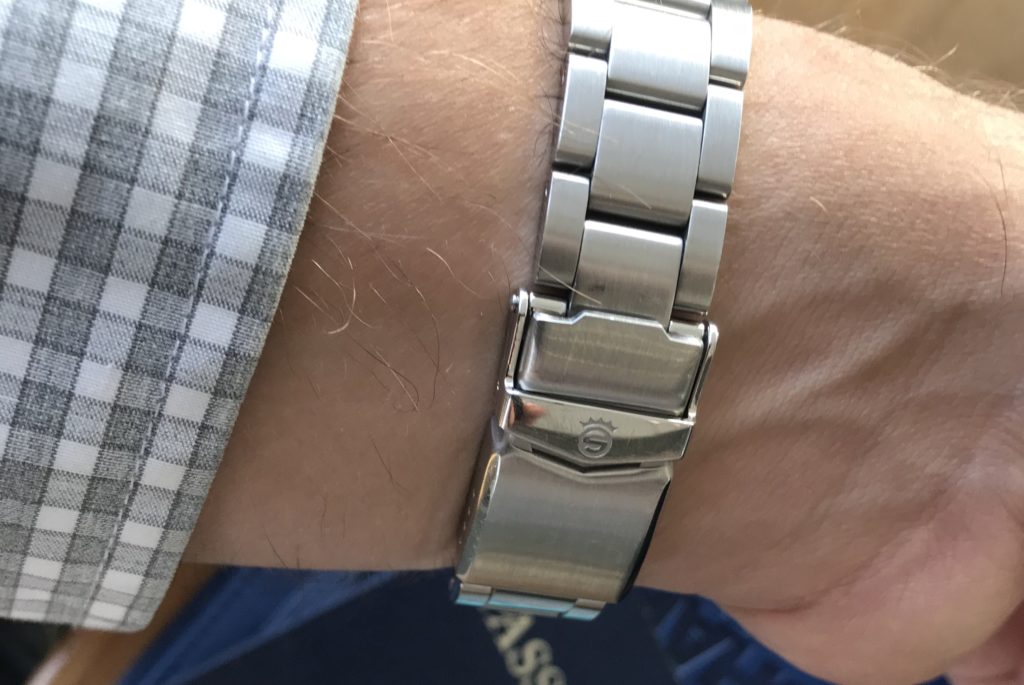
The bracelet tells a similar story of ambition on a budget. Steinhart fitted solid end links, screwed removable links, and concave center links that taper from 20mm down to 16mm, which is a better spec than the price suggests. On the wrist it feels solid and articulates cleanly. The weak point is the clasp. The flip-lock runs loose while the clasp itself sits tight, and the four micro-adjustment holes never quite split the difference between too snug and too roomy. It is the one place where the watch stops feeling like a bargain and starts reminding you what you paid.
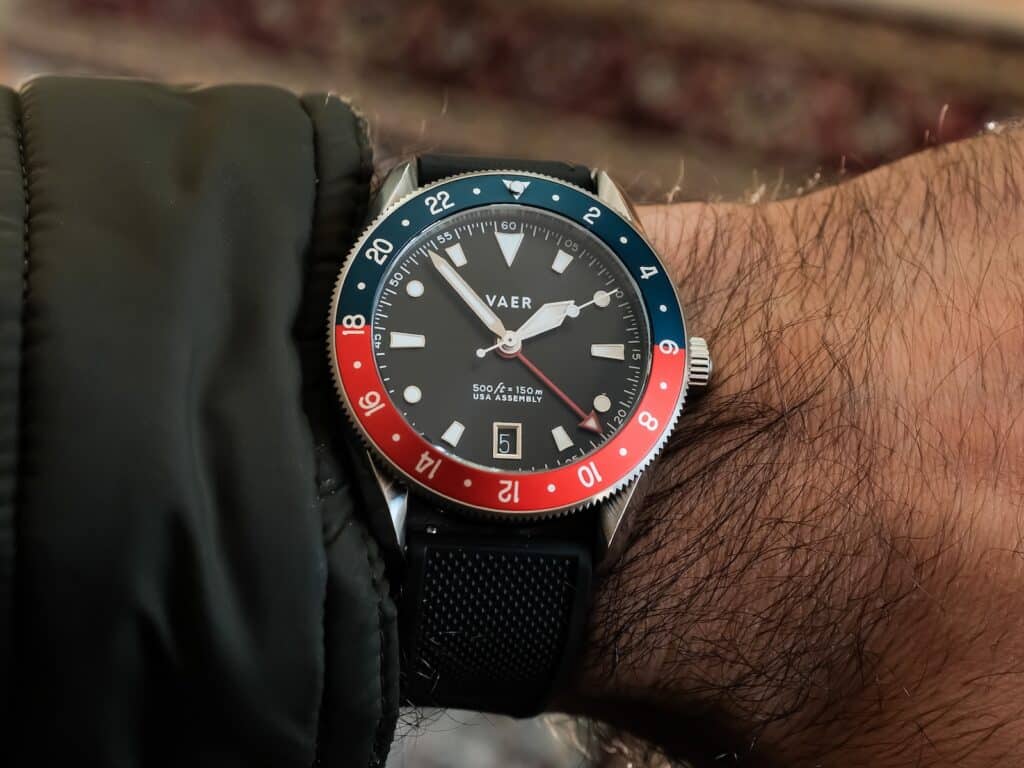
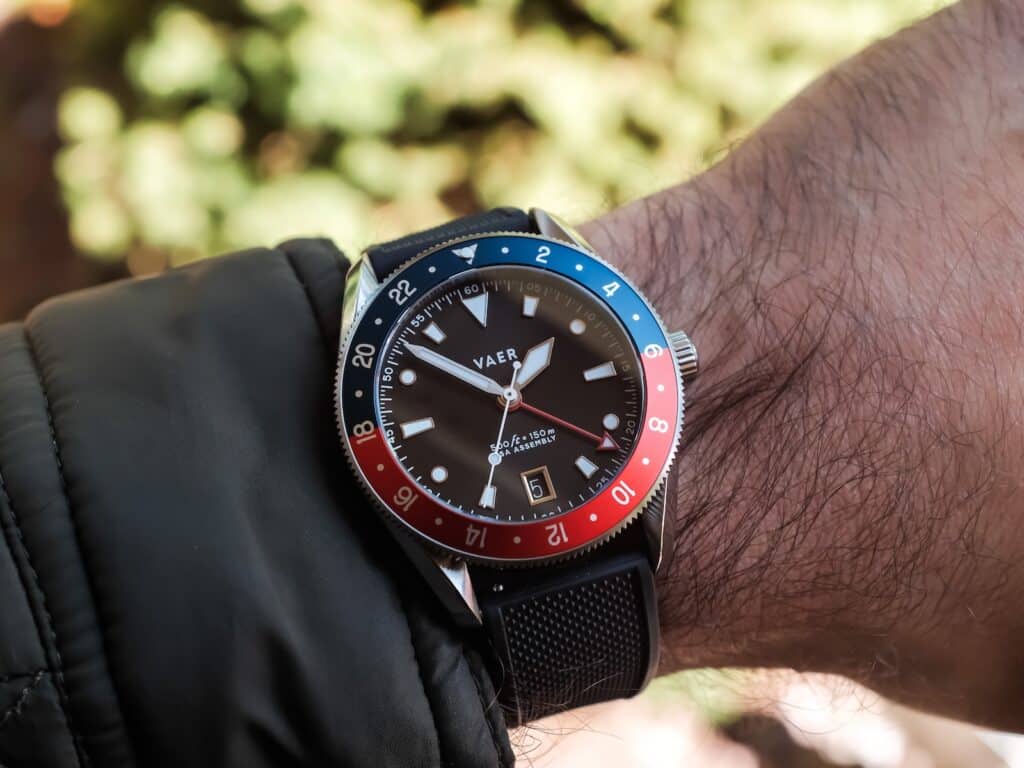
The Vaer walks a familiar line too, but it makes enough small decisions to avoid feeling like a copy. Applied markers give the dial a bit of depth, and the date at six keeps everything balanced without shouting for attention. Where it pulls ahead is legibility. In daylight the contrast is clean and the handset never gets lost, and in low light the lume actually holds up, with enough coverage on the hands and markers to stay usable well past the first few minutes. It reads as a modern dial that took the vintage cues it wanted and skipped the rest.
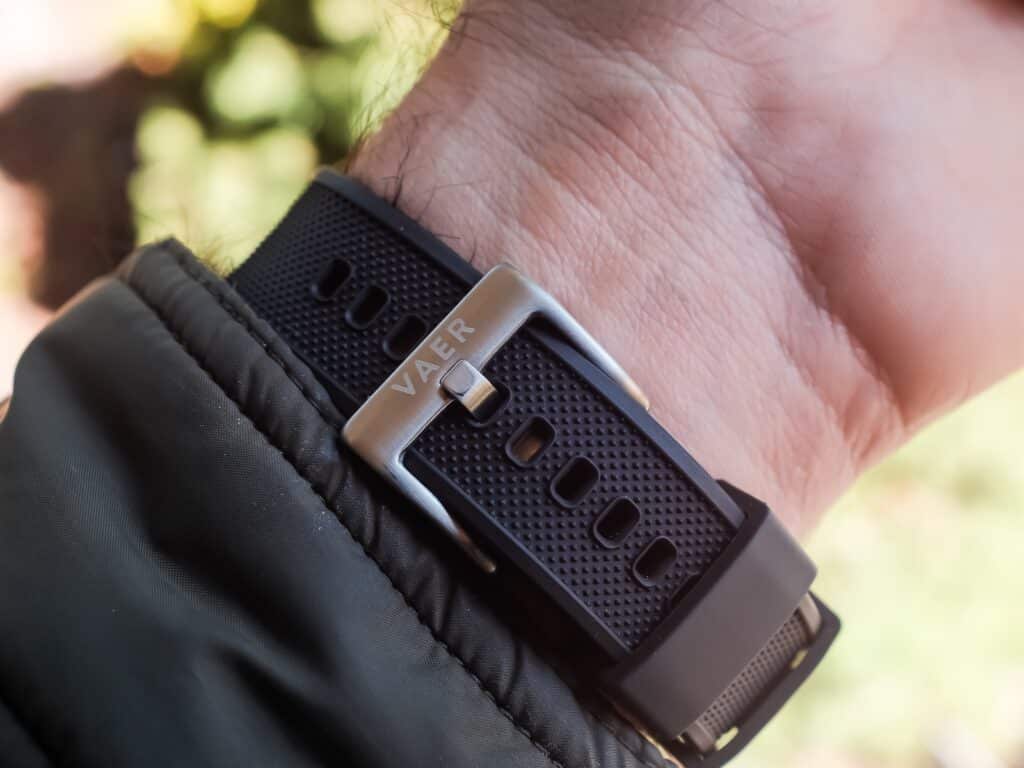
Strap choice is where the Vaer settles into its role. It ships on a tapered rubber strap that feels more substantial than Vaer’s older entry-level options, and that is the one we kept coming back to. There is an included NATO as well, though it runs stiff and never quite matched the easy character of the rubber. On a case this light, the rubber strap disappears, which is exactly what you want from a watch built to be worn and forgotten in the best way.
- The Steinhart delivers a convincing homage dial and a bracelet that outspecs its price, though thin markers and a fussy clasp keep it honest about where it sits.
- The Vaer trades the bracelet for a comfortable rubber strap and answers with stronger legibility and lume, landing as the more practical everyday wear.
Build Quality & Technical Approach
The two watches share a bezel color and a case size, and that is roughly where the overlap ends. Once you get past the Pepsi shorthand, you are looking at two different answers to the same question. One is mechanical and leans on a proven Swiss automatic. The other is quartz and leans on convenience. Neither approach is wrong, but they attract very different owners, and the details are where that split becomes obvious.
Movements:
Inside the Steinhart Ocean 39 GMT is the ETA 2893-2, a Swiss automatic caller GMT that turns up in plenty of watches costing several times more. Getting a Swiss GMT movement at this price is part of the appeal. The catch, and it is one worth understanding before you buy, is that this is a caller GMT rather than a true flyer. You set the 24-hour hand independently and read a second time zone off the bezel, but you cannot jump the local hour hand on its own. For someone tracking a home or office time zone, it works fine. For a frequent traveler who wants to reset local time on landing, it gives up some of the convenience that made the complication famous. Power reserve lands in the 40-hour range, which is ordinary but never gave us reason to complain.
The Vaer answers with the Swiss-made Ronda 515.24H, a quartz caller GMT that shows up across a lot of accessible travel watches. Mechanically it works the same way as the Steinhart, adjusting the 24-hour hand independently rather than jumping local time, so the practical trade-off is identical. What changes is everything around it. Battery life stretches to several years, the quick-set date makes adjustments painless, and there is nothing to wind or reset when you pull it out of a drawer. For a grab-and-go travel piece, that consistency ends up mattering more than any romance about gears. It is always ready, and after the novelty wears off, that is worth a lot.
Case Construction & Finishing:
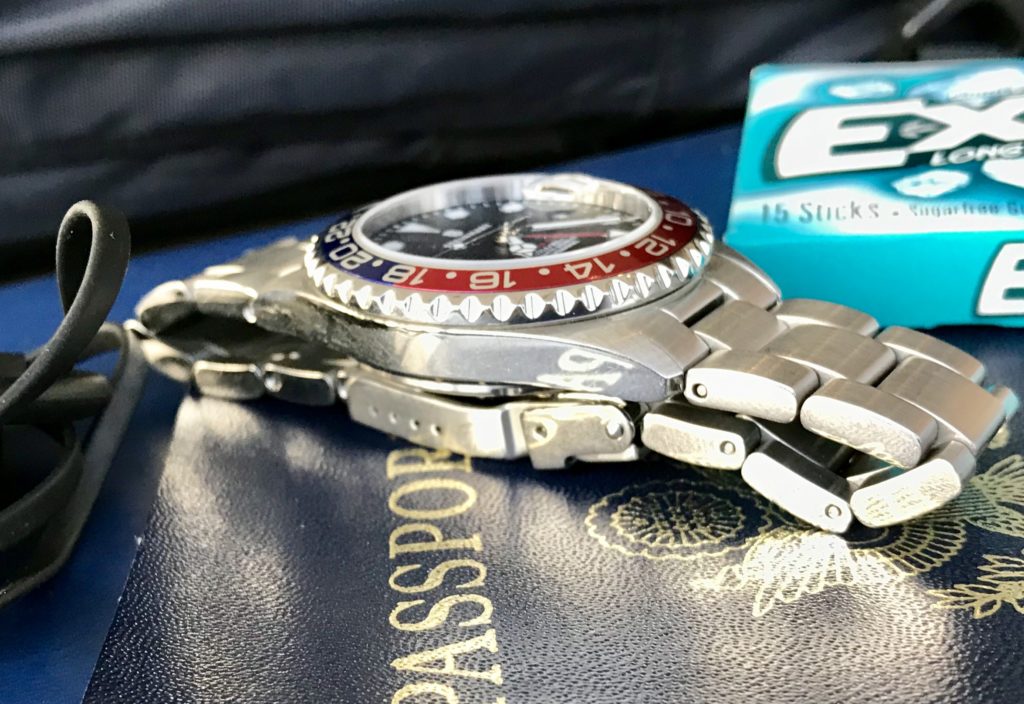
The Steinhart’s case is the clearest statement of intent. At 39mm across, 47mm lug to lug, and 13mm thick, it captures the vintage GMT Master proportions that a lot of modern watches miss, and the skinny lugs help it wear even smaller than the numbers suggest. The polished sidewalls play an old Oyster trick, making the case look thinner than it measures. It is built from 316L stainless rather than anything exotic, so expect it to pick up scratches with use, but that suits a watch meant to be worn rather than babied. Two details give away the homage roots. The crown pokes out past the crown guards even when it is screwed down, and the lugs are not drilled, which is a small miss for anyone who swaps straps often. Flip it over and you get an etched Neptune riding a seahorse chariot, a nice bit of personality on a watch that otherwise plays it very safe.
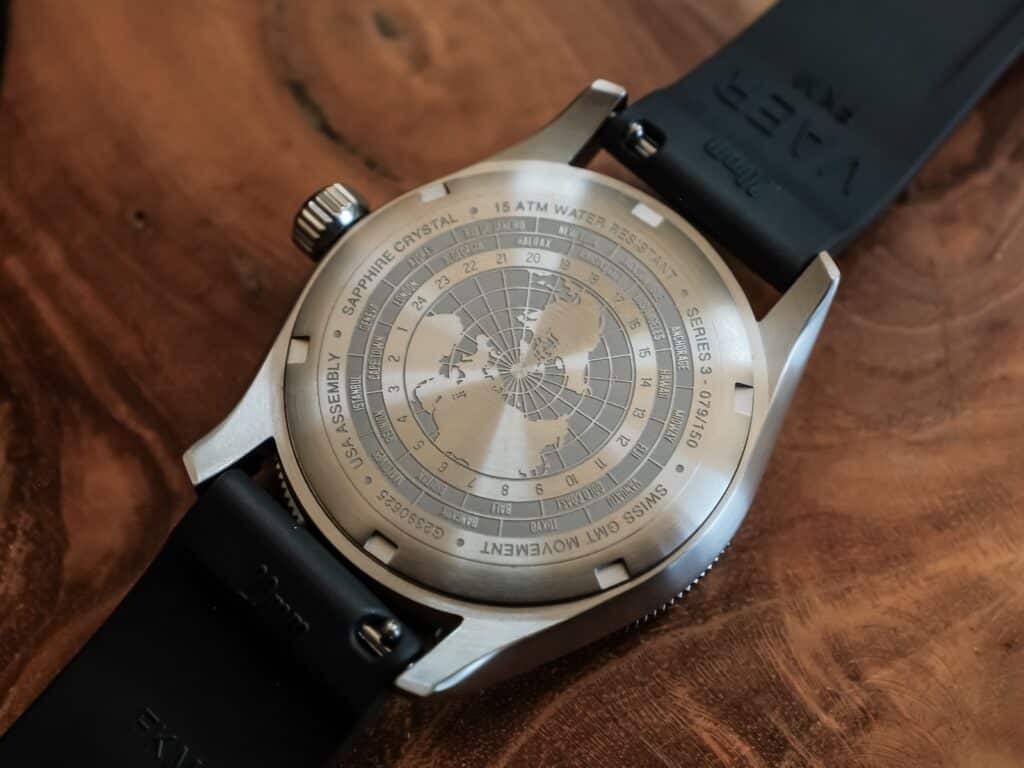
The Vaer takes the same 39mm starting point and makes it feel modern. The case runs 46mm lug to lug and just over 10mm thick, which is slim for a GMT, and combined with the low weight it wears almost effortlessly across a full day. There is a mix of brushed and polished surfaces that keeps it from looking purely utilitarian, without ever feeling precious. The screw-down crown is easy to grip and operate, and the engraved caseback adds a bit of character without turning into the main event. Nothing here is trying to trick you into seeing a more expensive watch. It just feels like a well-sorted modern case that knows its job.
Crystals & Bezels:
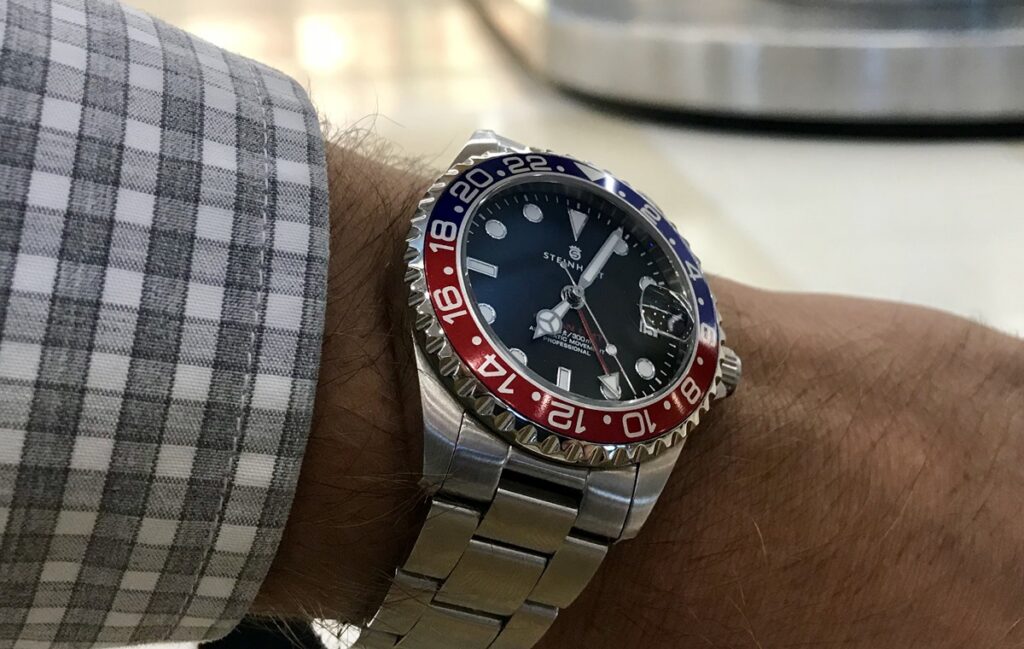
Up front the Steinhart runs a sapphire crystal with a cyclops over the date, and the magnification could stand to be a little stronger. The bezel is the main event, and it earns real credit for the colors. Steinhart nailed the Pepsi tone in aluminum in a way we honestly prefer to some ceramic executions, with a red and blue that reads like the soda can it is named after. Action is another matter. This is one of the stiffest bezels we have wrestled with, firmer than a Seiko diver, the kind you have to grab a full fistful of to move. It is unidirectional and clicks through 120 positions, which feels more diver than flyer given the caller GMT movement, and there is no lume pip. None of that is a dealbreaker, but the stiffness is the sort of thing you notice every single time.
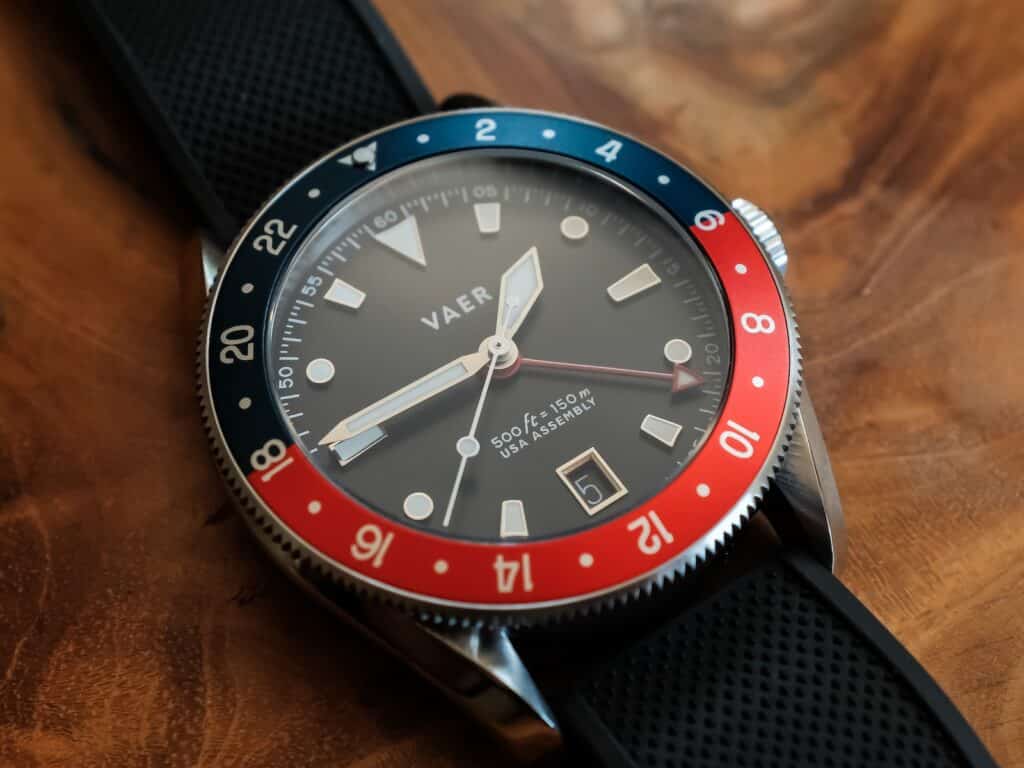
The Vaer keeps a flat, restrained crystal profile and pairs it with an aluminum bezel insert of its own. In isolation the bidirectional action feels good, with defined clicks that make setting a second time zone easy. The problem is precision. There is a little play, and more noticeably the bezel does not always land cleanly on the markers, which is the one detail that consistently pulled our attention during wear. It is a small flaw, and plenty of owners will never think about it. For the collectors who fixate on alignment, though, it is exactly the sort of thing that is impossible to unsee once you have spotted it.
Water Resistance & Lume:
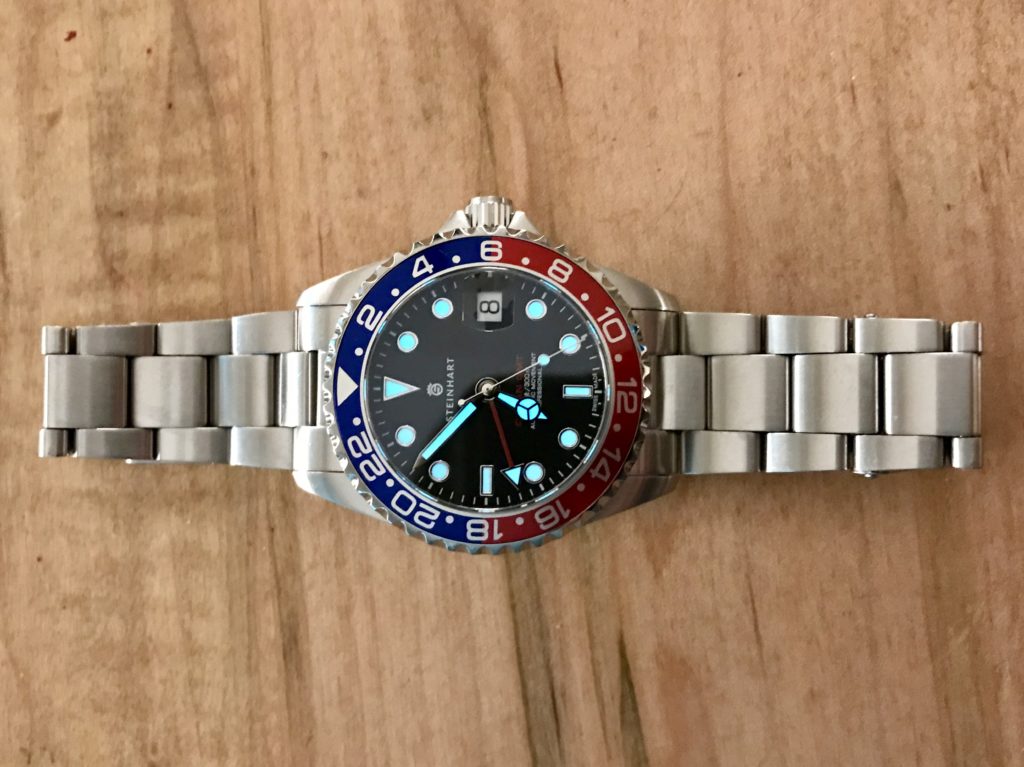
The Steinhart carries a 300-meter water resistance rating, which is more than anyone needs from a watch that will almost certainly never see a dive. It gives the case a reassuring solidity in everyday use, and that is the real value of the number here. The BGW9 lume glows with a cool blue tone and holds its charge well, one of the areas where the watch outperforms its price. The only knock is the one we mentioned earlier, that the thin hands and markers cut down on the surface area doing the glowing, so it reads well but never lights up the room.
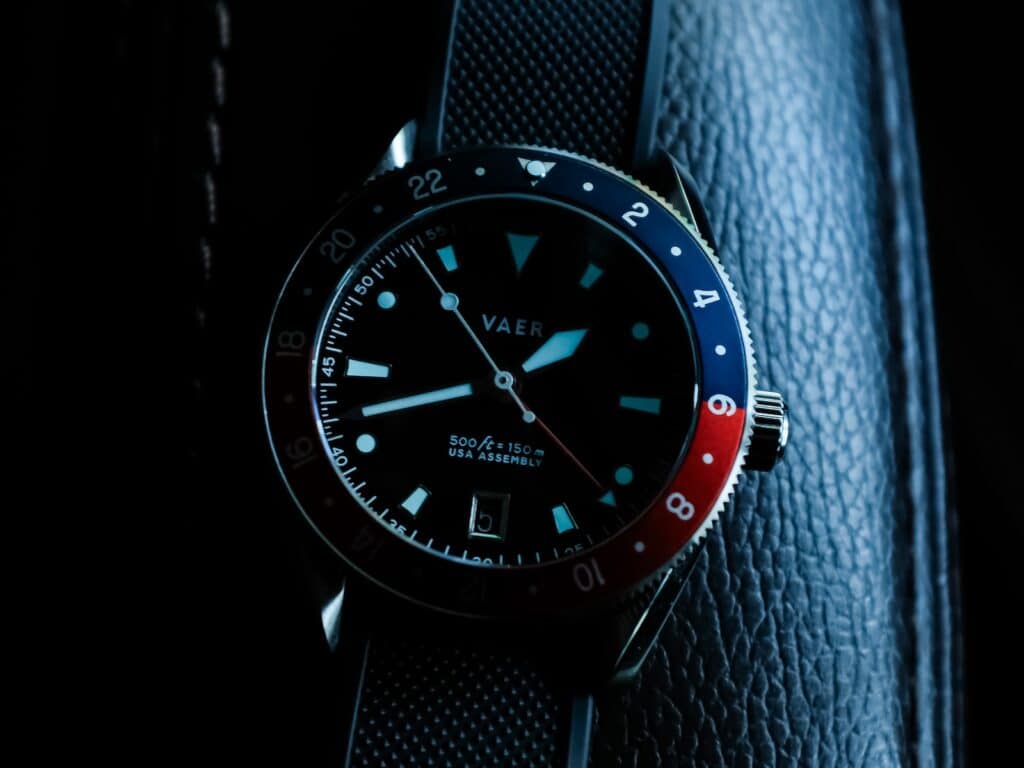
The Vaer sits at 150 meters, which is plenty for a travel watch and enough to remove any hesitation about wearing it around water. It is a lower number than the Steinhart, but it lines up with what this watch is actually for. Lume performance is a strength. There is solid coverage across the hands and markers, and it stays legible well after exposure rather than fading in the first few minutes. Paired with the strong daylight contrast, it makes the Vaer the easier of the two to read in the dark without much thought.
- The Steinhart backs its mechanical charm with a proven Swiss automatic, a faithful Pepsi bezel, and 300 meters of water resistance, offset by an extremely stiff bezel and a few homage-driven case quirks.
- The Vaer answers with quartz convenience, stronger everyday legibility, and a slimmer, lighter case, held back mainly by a bezel that does not always align.
Cost Considerations
The Steinhart Ocean 39 GMT has historically sat in the neighborhood of $500 to $600, which puts a Swiss automatic Pepsi GMT within reach of a lot of enthusiasts who would otherwise be priced out entirely. That is a strong proposition on paper. The friction is in the buying. Steinhart has no US distributor and sells online, so you are ordering sight unseen and waiting on international shipping rather than trying one on first. For a watch this dependent on how it wears, that is a real ask, even if the payoff is usually worth it. Pricing and availability also shift over time and by market, so the figure you find today may not match what we quoted from our original review.
The Vaer G2 Meridian GMT comes in at $399, and the value case is more straightforward. It is cheaper than the Steinhart, easier to buy as a US-based brand, and it arrives ready to wear with a rubber strap and a NATO in the box. You are trading the mechanical movement for quartz, and the bracelet for straps, but you are also skipping the sight-unseen gamble and the wait. For the buyer who sees a Pepsi GMT as a practical travel tool rather than a mechanical object to fuss over, that math adds up quickly.
Final Thoughts: Which Pepsi GMT Actually Fits Your Life?
The Steinhart Ocean 39 GMT is the more romantic watch. Its Swiss automatic movement, vintage proportions, and unapologetically Rolex-inspired design deliver the mechanical Pepsi GMT experience many enthusiasts actually want. If that specific combination is the goal, the Vaer will not replace it.
But judged as a watch to own, wear, and travel with, the Vaer G2 Meridian GMT is our winner.
It is slimmer, lighter, easier to read, less expensive, and ready to go whenever you pick it up. You do not have to reset it after a few days off the wrist, wrestle with an unusually stiff bezel, struggle with bracelet sizing, or order it sight unseen from overseas. The imperfect bezel alignment is frustrating, but it is the Vaer’s only meaningful weakness in a comparison where the Steinhart asks you to accept several compromises for the sake of mechanical charm and a familiar silhouette.
Choose the Steinhart if the automatic movement and vintage GMT Master look are the entire reason you are shopping. It is the more characterful enthusiast option, and it comes closer to scratching the Rolex itch.
For almost everyone else, choose the Vaer. The G2 Meridian GMT is the more practical, more wearable, and ultimately more convincing interpretation of the affordable Pepsi GMT. The Steinhart is the watch you admire for what it evokes. The Vaer is the one we would rather rely on every day.

Co-Founder and Senior Editor
Kaz has been collecting watches since 2015, but he’s been fascinated by product design, the Collector’s psychology, and brand marketing his whole life. While sharing the same strong fondness for all things horologically-affordable as Mike (his TBWS partner in crime), Kaz’s collection niche is also focused on vintage Soviet watches as well as watches that feature a unique, but well-designed quirk or visual hook.