
There’s an odd point somewhere around the $1,000 mark where buying a dive watch stops being about finding a good option and starts becoming about choosing between a dozen genuinely compelling ones. At this price, impressive specifications are easy to find. The harder part is knowing which watches will still feel satisfying after months of wear, rather than just looking good on launch day. That’s the question we wanted this list of the best dive watches under $1,000 to answer.
Over more than a decade of hands-on reviews at TBWS, we’ve worn, measured, and lived with every watch featured here long enough for first impressions to fade. We’ve learned that a bezel you’ll happily click for years, proportions that disappear on the wrist, or a bracelet you never feel the need to replace often matter more than another hundred meters of water resistance. These are the dive watches that kept finding their way back onto our wrists, and the ones we’d confidently recommend after living with them ourselves.
Casio Duro
| Price: | $85 |
| Water Resistance: | 200m |
| Case Dimensions: | 44.2mm (diameter) x 48.5mm (lug-to-lug) x 12.1mm (thickness) |
| Lug Width: | 22mm |
| Movement: | Casio 2784 Quartz |
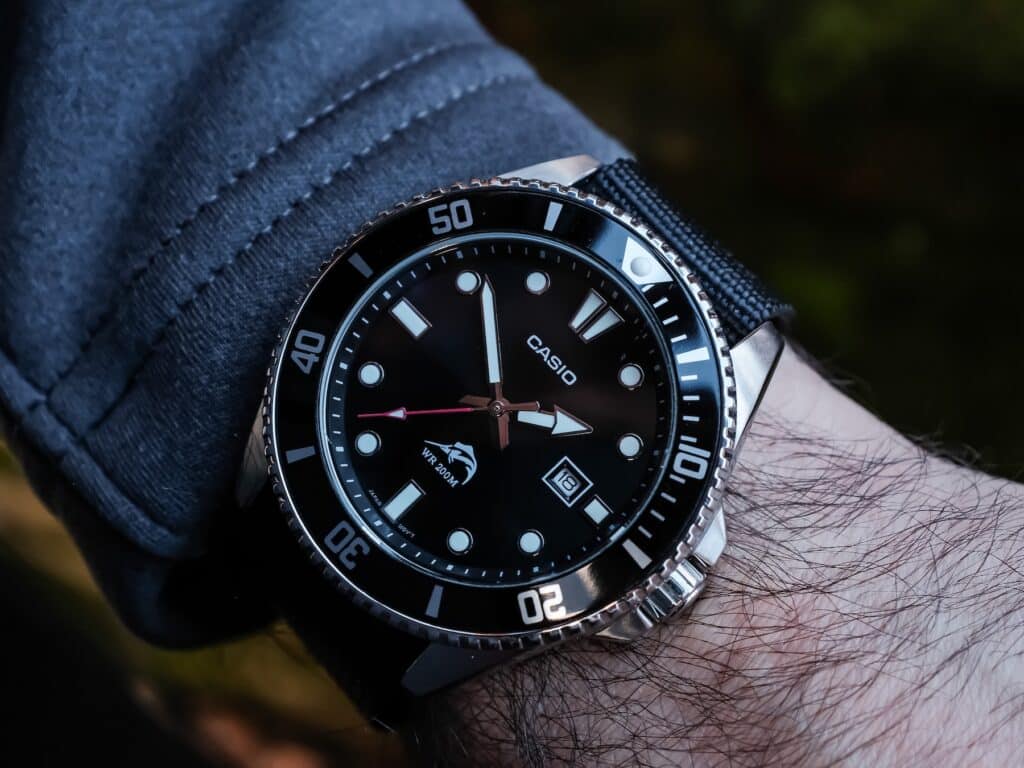
The Casio Duro is proof that you don’t have to spend anywhere near $1,000 to get a dive watch that gets the fundamentals right. We’ve worn plenty of affordable divers that try to distract from their shortcomings with oversized cases or busy dials. The Duro takes the opposite approach, focusing on legibility, straightforward functionality, and everyday dependability.
The dial is built around quick readability rather than decorative flourishes, with large applied markers, reflective arrow-shaped hands, restrained text, and a neatly framed date at three o’clock. It’s the kind of layout you appreciate when you’re checking the time in bright sun, around the water, or halfway through a busy day without wanting to hunt for the hands. We also came away pleasantly surprised by the bezel. It has a controlled, positive action that feels more deliberate than you’d expect at this price, avoiding the loose, rattly character that often gets associated with inexpensive dive watches.
Its biggest compromise is also impossible to ignore: the 44mm case. Anyone with smaller wrists should think carefully before buying, although the shorter 48.5mm lug-to-lug distance and downward-curving lugs help it wear more comfortably than the diameter suggests. If you’ve spent time with something like a Seiko Turtle, the Duro won’t feel out of place. The finishing follows the same honest approach as the rest of the watch, pairing brushed top surfaces with polished case sides and a subtle bevel that keeps the profile from looking slab-like. Practicality continues with 200 meters of water resistance, a screw-down crown, a solid caseback, and 22mm lugs that make it easy to swap between rubber, nylon, or a bracelet depending on how you plan to use it.
The quartz movement is another reason the Duro remains easy to recommend. During our hands-on review, it stayed within roughly ±20 seconds per month, hacks, and includes a quick-set date, making it a watch you can leave untouched for days and simply put back on without any fuss. The trade-offs are right where you’d expect them. The flat mineral crystal is more susceptible to scratches than sapphire, and while the lume gets off to a strong start, it doesn’t maintain that brightness through the night. Even then, those compromises feel fair considering everything else the Duro gets right. It simply delivers a dependable, highly legible dive watch that continues to punch well above its asking price.
Pros
- 200m water resistance, screw-down crown, and solid caseback inspire confidence around water.
- Bezel action feels quite precise for the price.
- Clutter-free, highly legible dial with bold markers, reflective hands, restrained text, and a framed date.
- Quartz movement is accurate, hacks, includes a quick-set date, and requires very little upkeep.
- Standard 22mm lug width makes strap changes easy.
Cons
- 44mm case won’t suit every wrist.
- Lume fades sooner than some rivals.
- The mineral crystal scratches more easily than sapphire.
Orient Mako II
| Price: | $160 – $220 |
| Water Resistance: | 200m |
| Case Dimensions: | 41.5mm (diameter) x 47mm (lug-to-lug) x 13mm (thickness) |
| Lug Width: | 22mm |
| Movement: | Orient Caliber F6922 (Mechanical Movement) |
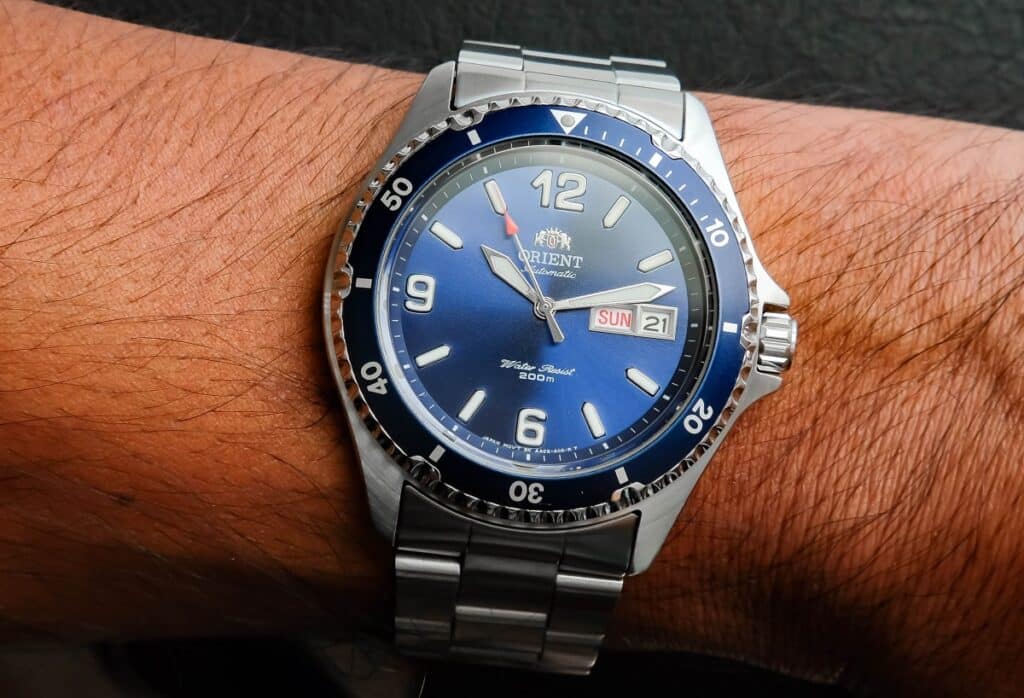
When the budget stretches to $1,000, it’s tempting to assume the answer has to cost close to it. The Orient Mako II happily disagrees. It doesn’t try to overwhelm you with premium materials or a specification sheet that reads like an engineering exercise. Instead, it gets the everyday experience right. The in-house F6922 automatic movement brings hacking and hand-winding, so you can skip the familiar “shake it until it wakes up” routine after it’s spent a few days in the watch box. The 120-click bezel also lands on the right side of reassuring, with a firm, positive action once engaged, even if the sloped edge isn’t as easy to grip as chunkier coin-edge bezels.
The same restraint carries through to the case and dial. At 41.5mm with a compact lug-to-lug measurement, the Mako II sits flatter and more securely than plenty of affordable divers that mistake extra millimeters for extra capability. The brushed lugs, polished case sides, and tidy case-to-bracelet transition give the case a maturity that many similarly priced divers never quite achieve. As covered in our dedicated review, the bracelet feels secure during daily wear, though the hollow end links (when off the wrist) are a reminder that Orient had to cut costs somewhere. Up top, the sunburst dial catches just enough light to avoid looking flat, while the applied markers, polished hands, framed day-date display, and red-tipped second hand add personality without making the dial feel busy or trying too hard to be “vintage.”
The compromises are honest because none of them gets in the way of enjoying the watch. The lume is adequate for checking the time after dark, but it doesn’t hang around as long as the brightest performers in this roundup. And while the bezel edge could use a little more bite, those are easy complaints to live with once the watch is on the wrist. That’s ultimately why the Mako II still belongs in a list like this. It quietly reminds us that spending more doesn’t always mean wearing something you’ll enjoy more, and that’s a lesson plenty of dive watches north of its price could stand to learn.
Pros
- The in-house F6922 automatic movement with hacking and hand-winding makes daily ownership straightforward.
- Balanced 41.5mm case wears comfortably without feeling bulky or top-heavy.
- Sunburst dial, applied markers, polished hands, framed day-date, and red-tipped second hand strike an excellent balance between character and legibility.
- 120-click bezel delivers firm, confidence-inspiring action.
- The bracelet-and-clasp combination feels secure during everyday wear.
Cons
- Hollow end links feel less substantial off the wrist.
- The sloped bezel edge isn’t the easiest to grip.
- Lume is good for quick checks but fades sooner than some rivals.
Orient Ray II
| Price: | $160 – $220 |
| Water Resistance: | 200m |
| Case Dimensions: | 41.5mm (diameter) x 47mm (lug-to-lug) x 13mm (thickness) |
| Lug Width: | 22mm |
| Movement: | Orient Caliber F6922 (Mechanical Movement) |
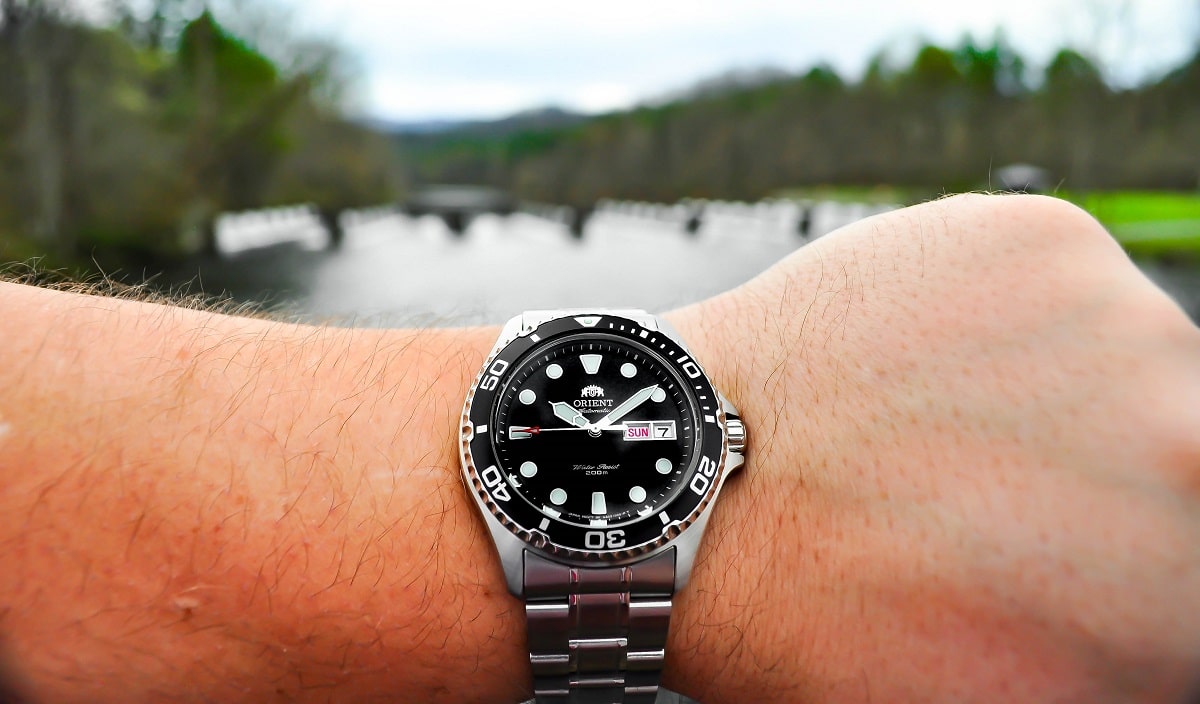
If the Mako II feels like the understated sibling, the Orient Ray II leans into being a dive watch a little more confidently without asking you to spend any more money. That’s why it still deserves consideration, even in a roundup that stretches all the way to $1,000.
The dial wastes very little space on decoration. Its matte black surface, chrome-framed round indices, trapezoidal quarter-hour markers, polished sword hands, and red-tipped second hand with a lumed tip all make the time easy to pick out at a glance. The framed day-date, applied Orient logo, printed branding, and tiny red dot inside the shield add enough visual interest without turning the dial into a crowded mess. During our wrist time with it, the bright green lume also proved stronger than we’d expect at this price, making the Ray II the easier choice over the Mako II if after-dark readability matters.
Orient also cleaned up one of the quirks from the previous generation by removing the old 2 o’clock day-correction pusher, leaving the case looking cleaner and making daily setup less fiddly. The 41.5mm case wears comfortably thanks to its downward-curving lugs, softened edges, and well-proportioned footprint. At the same time, the mix of brushed upper surfaces and polished case sides stops it from feeling too utilitarian. Even the dolphin caseback adds a little personality when the watch is off the wrist. The in-house F6922 automatic movement remains one of the Ray II’s biggest strengths, pairing hacking and hand-winding with a claimed accuracy of -15/+25 seconds per day and a power reserve of around 40 hours. It isn’t flashy, but it’s dependable in the way an affordable mechanical diver should be.
The tactile parts are where the Ray II reminds you of its price. The 120-click bezel features a polished ring, aluminum insert, and lume pip at 12, but the shallow coin edge and slightly recessed position can make rotating it more of a fingernail exercise than we’d like. Bezel action also varies from one example to another, ranging from smooth to a little stubborn. The signed crown looks smart, yet its small, polished shape and protective guards don’t leave much to grab onto. Then there’s the bracelet. It feels secure enough once fastened, but the hollow end links and relatively modest taper don’t quite match the watch’s otherwise refined personality. We’d happily move it onto a NATO, leather strap, or a quality aftermarket bracelet and never look back.
Pros
- Bright green lume performs impressively in low-light conditions.
- In-house F6922 movement offers hacking, hand-winding, and dependable everyday performance.
- The cleaner second-generation case, without the old 2 o’clock day pusher, improves day-to-day usability.
- Matte black dial, chrome-edged markers, polished sword hands, and red-tipped second hand make time easy to read.
- Comfortable case proportions with curved lugs, softened edges, and attractive finishing.
Cons
- The small signed crown is difficult to grip because of its size and crown guards.
- The bezel grip is awkward, and the action can vary from watch to watch.
- The mineral crystal is more susceptible to scratches than sapphire.
- Stock bracelet feels average, with hollow end links and a taper that could be more aggressive.
Citizen Promaster Diver BN0151
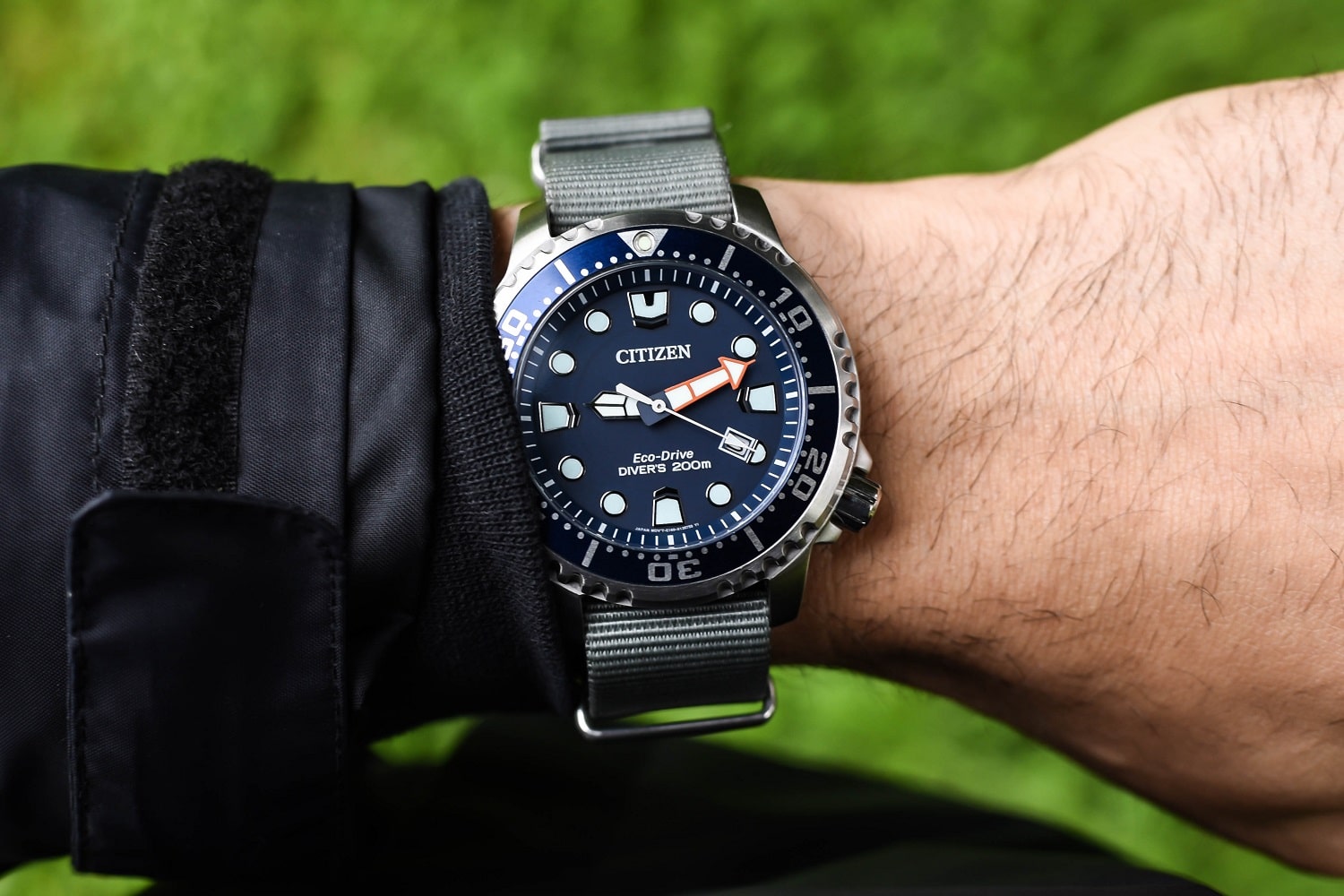
| Price: | $250 – $300 |
| Water Resistance: | 200m |
| Case Dimensions: | 43mm (diameter) x 48mm (lug-to-lug) x 11.5mm (thickness) |
| Lug Width: | 20mm |
| Movement: | Citizen Eco-Drive E168 (solar quartz) |
Spending close to $1,000 on a dive watch also buys you something unexpected: the freedom to spend far less if the watch genuinely delivers. The Citizen Promaster Diver BN0151 is exactly that kind of reminder. It doesn’t have the boutique appeal of a microbrand or the collector folklore of an old Seiko, but after enough wrist time, those feel like negligible omissions. What you get instead is one of the most fuss-free dive watches in this price range, and that’s harder to appreciate until you’ve lived with it.
Citizen’s Eco-Drive movement keeps the watch running for around six months on a full charge, maintains a marketed accuracy of ±15 seconds per month, and quietly eliminates the need for winding, battery changes, and the inevitable “what time did I leave this thing?” reset after it’s been sitting in the watch box. Throughout our testing period, we only saw the low-power indicator once, and a short session in the light was enough to get everything back to normal.
That same no-nonsense approach carries through to the rest of the watch. The dial doesn’t chase faux-vintage charm or overload itself with unnecessary text. Large hands, bold markers, a framed date window, and restrained printing make it easy to read, while the blue dial picks up a subtle purple hue in certain lighting, keeping it from feeling sterile. Once daylight disappears, the aqua-toned lume stays bright for hours, and the lumed pip on the second hand offers a reassuring reminder that the movement is still ticking away. The 43mm case sounds substantial on paper, but the short lug-to-lug, downward-curving profile, light weight, and 4 o’clock crown stop it from wearing like the wrist anchor those numbers might indicate. It’s a watch that feels just as comfortable on holiday, in the water, or during an entirely uneventful Tuesday at your desk.
That said, the BN0151 isn’t perfect, and thankfully Citizen didn’t pretend otherwise. The 60-click bezel stayed well aligned and offered a deliberate action during our review, but its grip became noticeably slick when wet. That’s an unfortunate trait for something designed to spend its life around water. The mineral crystal also won’t satisfy sapphire devotees, although ours handled everyday wear better than expected without collecting obvious scratches. The stock polyurethane strap is similarly honest: functional, secure, and initially about as supple as a garden hose until it’s properly broken in. We preferred it on a NATO, where the watch felt lighter and more relaxed. Still, none of those compromises change the bigger picture. The BN0151 makes a convincing case that even in a $1,000 roundup, reliability, comfort, and effortless ownership can matter far more than a few hundred dollars spent chasing marginal gains.
Pros
- Eco-Drive movement delivers around six months of runtime and virtually maintenance-free ownership.
- Large hands, bold markers, restrained dial text, and a framed date window make the dial very easy to read.
- Aqua-toned lume remains visible for hours, while the lumed second-hand pip confirms the watch is still running.
- 43mm case wears smaller than expected thanks to its short lug-to-lug, light feel, curved profile, and 4 o’clock crown.
- 200m water resistance and a robust case are ready for swimming, travel, and everyday abuse.
Cons
- The bezel becomes slippery to grip with wet hands.
- The polyurethane strap starts quite stiff before breaking in.
- The mineral crystal isn’t as scratch-resistant as sapphire.
Citizen NY0040
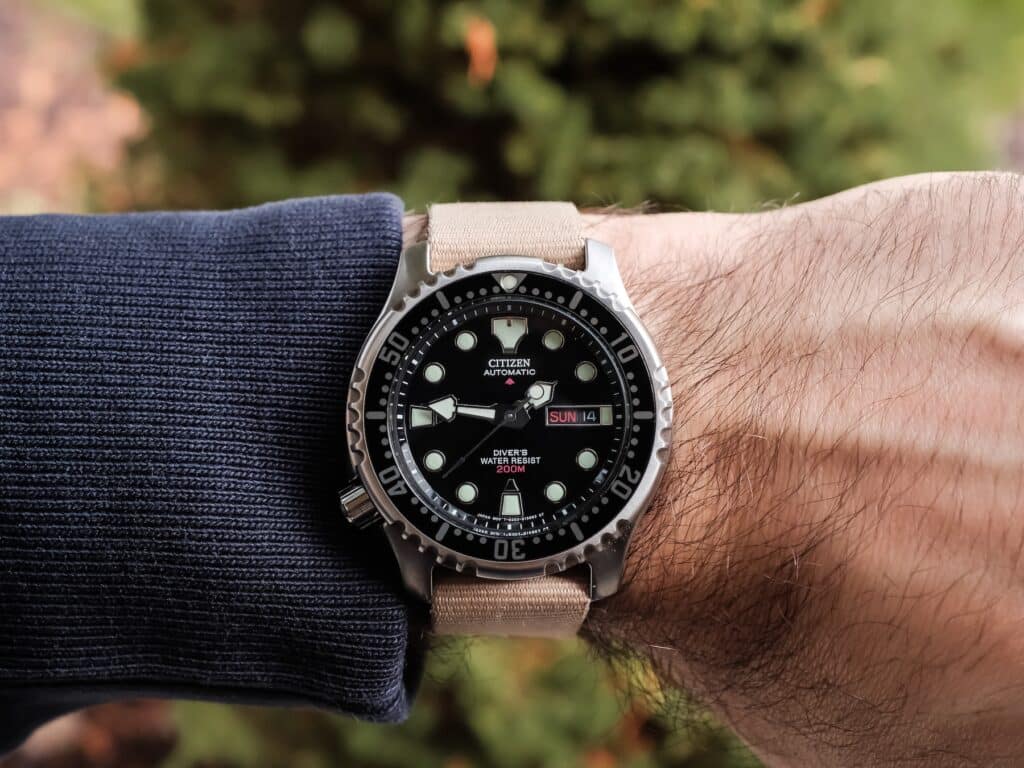
| Price: | $250 – $350 |
| Water Resistance: | 200m |
| Case Size: | 42mm (diameter) x 47.3mm (lug-to-lug) x 12.6mm (thickness) |
| Lug Width: | 20mm |
| Movement: | Miyota automatic Caliber 8204 |
Every roundup like this needs one watch that couldn’t care less about trends. The Citizen NY0040 isn’t trying to look vintage, luxury-inspired, or like the next microbrand darling. It was built to be used, and years later, that’s still what it does best. It’s an enthusiast-oriented, ISO-rated automatic that has built its reputation on reliability rather than internet mythology. After spending significant time with it, that approach makes a lot of sense. The Miyota 8204 movement keeps things practical with hacking and hand-winding, making everyday ownership far less fussy than older budget automatics. Accuracy is respectable for the price, although the rotor has all the subtlety of a tiny roommate who insists on announcing every trip across the room. You’ll hear it. Probably more than once.
The NY0040 backs up that tool-watch personality across the board. The 60-click bezel offers a deeply grippable coin edge that remains easy to turn with wet hands, while our review sample had crisp alignment, smooth action, and no noticeable play between clicks. Its 200m water resistance feels like something Citizen expects you to use rather than a specification added to the brochure. The nearly 42mm case also wears more compact than the numbers suggest. A just-over-47mm lug-to-lug, restrained thickness, compact dial opening, inward-sloping bezel, and short visual footprint stop it from feeling oversized, even on a 6.75-inch wrist. The brushed upper surfaces, polished case sides, and slightly skin-diver-inspired proportions give it enough warmth to avoid looking like another anonymous tool watch. Then there’s the left-side crown. It feels strange for about a day, then you realize your wrist has stopped arguing with it every time you type, drive, or bend your hand backward.
Citizen kept the dial just as straightforward. The matte black background, generously sized markers, highly visible hands, and restrained “Citizen Automatic” printing make reading the time almost effortless. The small red arrow adds a touch of personality, while the darker day-date wheel blends into the dial better than you’d expect. Lume is dependable rather than spectacular. It doesn’t hit with the initial intensity of some Seiko divers, but once your eyes adjust, the hands and markers remain easy to pick out.
Nevertheless, the compromises are predictable. The flat mineral crystal isn’t as confidence-inspiring as sapphire, and while the thick rubber strap gets the job done, it’s hardly the watch’s strongest feature. Thankfully, easy strap changes and excellent aftermarket bracelet support mean it takes very little effort to transform the wearing experience. On a NATO, in particular, the NY0040 feels lighter, more balanced, and as honest as its reputation implies.
Pros
- ISO-rated automatic diver with a dependable Miyota 8204 movement featuring hacking and hand-winding.
- Coin-edge bezel is easy to grip with wet hands and offers smooth 60-click action with excellent alignment.
- Case wears smaller than expected thanks to its compact dial opening, inward-sloping bezel, restrained thickness, and just-over-47mm lug-to-lug.
- The left-side crown greatly improves comfort during long days of typing, driving, or general wear.
- Clear dial layout, practical lume, and restrained text make the watch easy to read.
- Strong aftermarket bracelet support and easy strap swaps expand its versatility.
Cons
- Left-side crown takes some getting used to if you’re accustomed to traditional crown placement.
- The Miyota rotor is noisier than many competing automatics.
- Lume is reliable but lacks the immediate brightness of some Seiko rivals.
- The mineral crystal is a practical compromise at this price.
Orient Kamasu
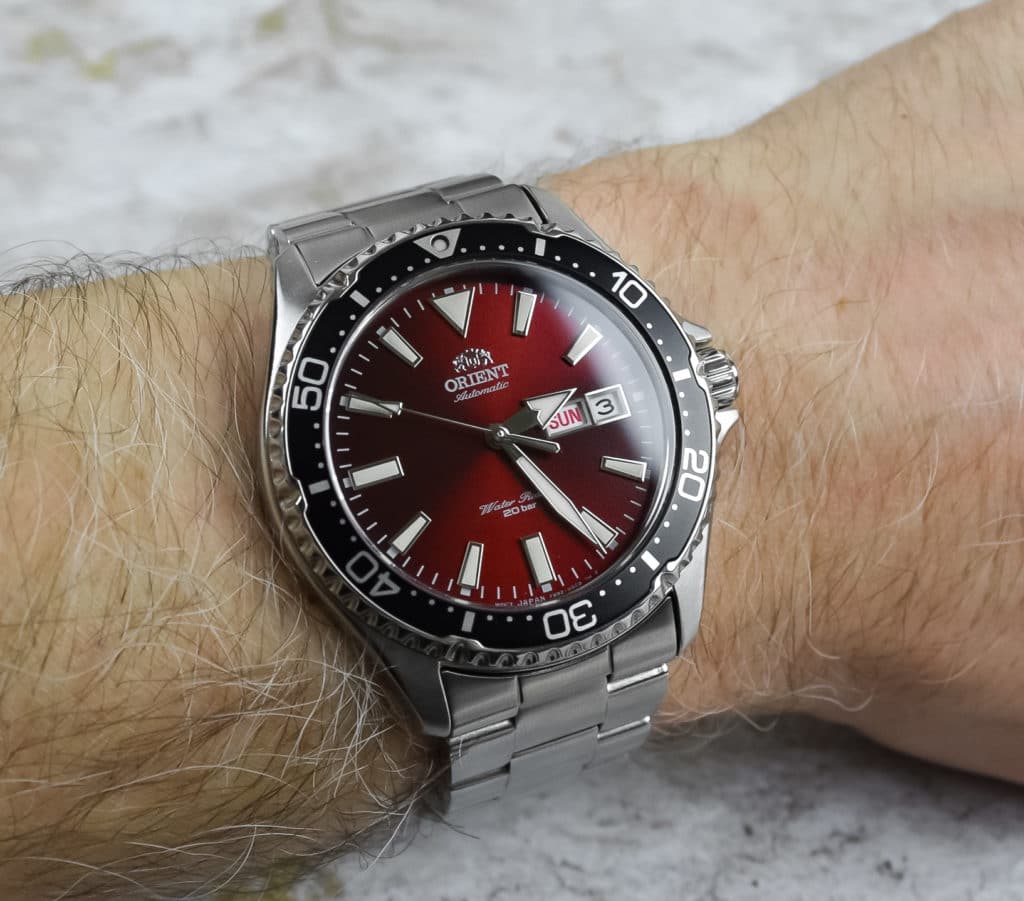
| Price: | $250 – $375 |
| Water Resistance: | 200m |
| Case Dimensions: | 41.5mm (diameter) x 47mm (lug-to-lug) x 13mm (thickness) |
| Lug Width: | 22mm |
| Movement: | Orient F6922 (automatic movement) |
If you’ve already decided your dive watch budget is close to $1,000, the Kamasu is the watch that forces you to slow down before opening your wallet. It covers an awful lot of ground before the expensive watches even enter the conversation. Sapphire crystal? Ticked. An in-house automatic with hacking and hand-winding? Also there. Two hundred meters of water resistance? Of course. That’s what makes the Kamasu awkward for the rest of this roundup. Every time a watch climbs by another couple hundred dollars, it has to explain why it’s actually improving your time on the wrist rather than just upgrading the spec sheet.
Fortunately, the Kamasu has more going for it than a tidy list of specifications. The wine-red sunburst dial gives it a personality that’s hard to mistake for anything else, but it never forgets it’s attached to a dive watch. Applied indices, generously proportioned hands, and hands that actually reach the minute track make checking the time almost effortless. (You’d be surprised how many watches still miss that last part.) The framed day-date sits neatly at three, the Orient logo doesn’t overwhelm the dial, and the layered construction catches enough light to stay interesting without demanding your attention every few minutes. Once the lights go down, the lume charges quickly and sticks around long enough to make plenty of similarly priced Seiko divers work a little harder.
According to our review team, the rest of the watch follows the same philosophy. The 41.5mm case wears with far less presence than the dimensions indicate, thanks to its curved lugs and sensible thickness, while the F6922 movement makes ownership uneventful. Pick it up after a few days, wind it, set it, and get on with your day. The crown threads smoothly, although its small size and protective guards don’t leave much to hold onto. The bracelet is secure, and the four-position micro-adjust clasp is useful once your wrist remembers it’s a hot afternoon, even if the clasp itself and the end links are clear reminders that Orient had a budget to hit.
The aluminum bezel insert will also collect scratches more readily than a ceramic one. Still, the bezel action feels tight and deliberate enough that we stopped thinking about the material. That’s ultimately the Kamasu’s trick. It spends money on the parts you’ll interact with every day and leaves the cost-cutting where it’s least likely to spoil the experience.
Pros
- The sapphire crystal, along with 200m water resistance, makes it well-equipped for the money.
- Wine-red sunburst dial adds character without sacrificing readability.
- Applied markers, well-sized hands, and proper hand reach make the display quick to parse.
- Lume charges quickly and remains visible for hours.
- The bracelet includes four micro-adjust positions for a better day-to-day fit.
Cons
- The small crown is fiddly to grip because of the crown guards.
- The aluminum bezel insert is more prone to scratching than the ceramic one.
- Clasp and end links feel less refined than the rest of the watch.
Scurfa Diver One
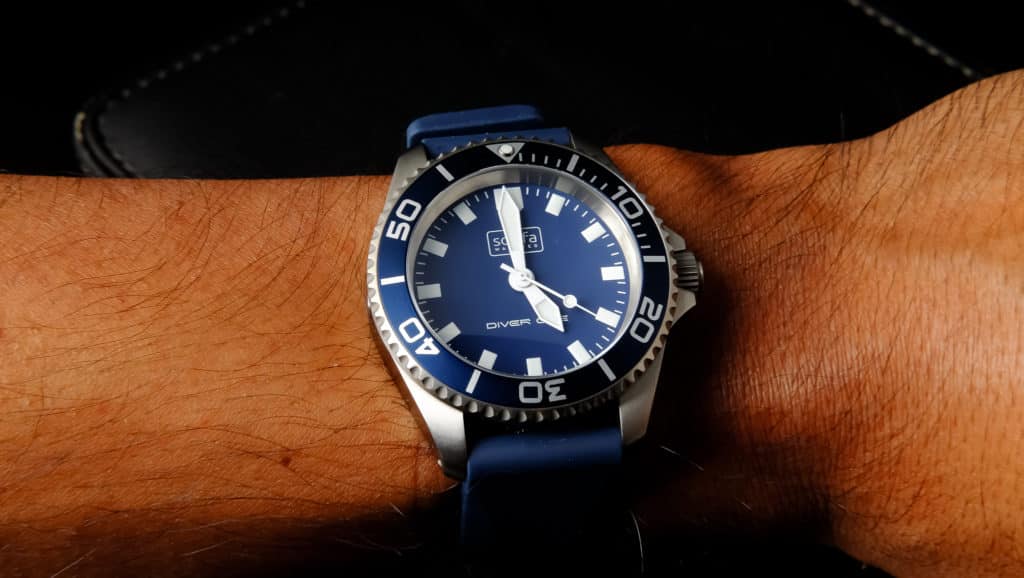
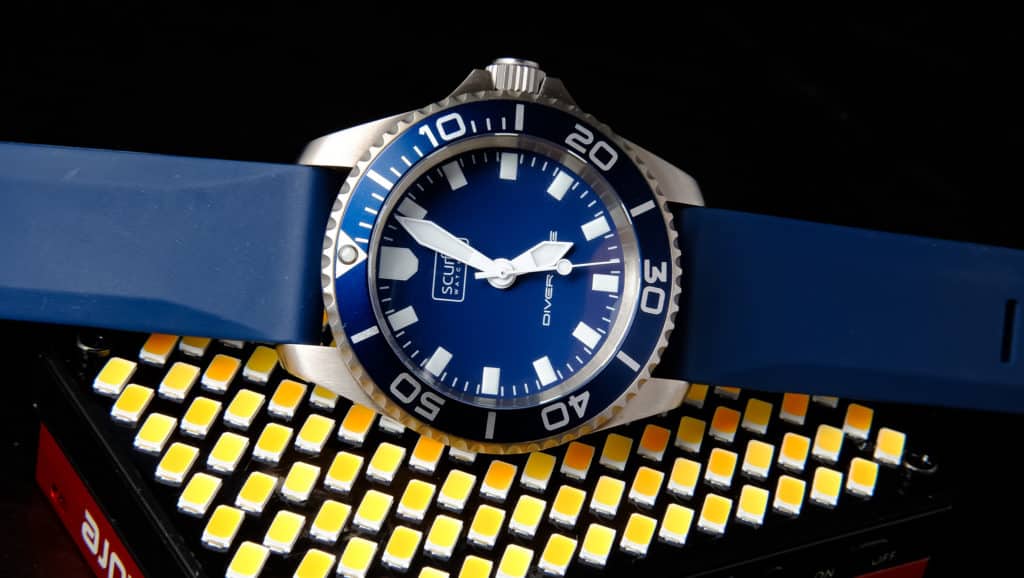
| Price: | $250 – $399 |
| Water Resistance: | 500m |
| Case Dimensions: | 40mm (diameter) x 47mm (lug-to-lug) x 14mm (thickness) |
| Lug Width: | 20mm |
| Movement: | ETA.F06 (Quartz Movement) |
The Scurfa Diver One doesn’t spend much time trying to impress you with luxury cues. Instead, it quietly asks a different question: how much of your $1,000 budget do you actually need to spend if the watch is built to be used rather than admired? That’s a question it answers remarkably well. The ETA F06 quartz movement keeps the ownership experience almost invisible, delivering dependable accuracy, straightforward servicing, and an estimated five-year battery life. If your idea of watch collecting includes occasionally grabbing an affordable diver that’s ready to go without a winding session or a date reset, the Diver One makes a compelling case.
Everything else follows the same “function first” mindset. The matte blue dial keeps distractions to a minimum, letting the broad sword hands and oversized hour markers do the heavy lifting. Reading the time takes about as much effort as glancing at your phone, except this won’t glare back at you. The domed sapphire crystal introduces just enough distortion around the edges to keep the watch from looking sterile, while the BGW9 Super-LumiNova charges quickly and stays bright long after sunset. The bezel deserves equal credit. Its action feels deliberate, each click lands cleanly, and there was no noticeable play while handling it during testing. Whether you’re timing a dive or just pretending the pasta needs military precision, it never feels vague or sloppy.
The titanium case ties the whole watch together. At 40mm wide and around 14mm thick, the numbers indicate something chunkier than what you actually get on the wrist. A cleverly contoured mid-case spreads the weight so evenly that the watch sits lower and feels less cumbersome than its dimensions imply, while the titanium construction keeps it light without crossing into “did I forget to put my watch on?” territory. The finishing is equally purposeful, looking clean without chasing unnecessary flourishes.
Scurfa backs that up with 500m WR, a helium escape valve, and a screw-down crown that feels like logical parts of the design rather than marketing bullet points. The rubber strap is another highlight, pairing soft, all-day comfort with titanium hardware, and the drilled lugs make strap swaps painless. The only real hesitation comes down to preference. Some collectors will always want a mechanical movement, and those with smaller wrists may notice the case height more than the rest of us. Neither changes the fact that the Diver One is one of the easiest watches in this price range to simply wear, trust, and forget about until you need it.
Pros
- The titanium case feels remarkably light without sacrificing solidity or finishing quality.
- Broad hands, oversized markers, domed sapphire crystal, and BGW9 lume make the dial very easy to read in any light.
- Bezel action is crisp, consistent, and free of noticeable play.
- 500m water resistance, screw-down crown, and helium escape valve give the watch genuine tool-watch credibility.
- Comfortable rubber strap with titanium hardware and drilled lugs makes everyday wear and strap changes easy.
Cons
- Case thickness may feel noticeable on smaller wrists.
- Quartz movement won’t appeal to collectors who only buy mechanical watches.
Momentum Sea Quartz 30
| Price: | $279 |
| Water Resistance: | 300m |
| Case Dimensions: | 42mm (diameter) x 47mm (lug-to-lug) x 11.3mm (thickness) |
| Lug Width: | 20mm |
| Movement: | Ronda R507 high-torque quartz |
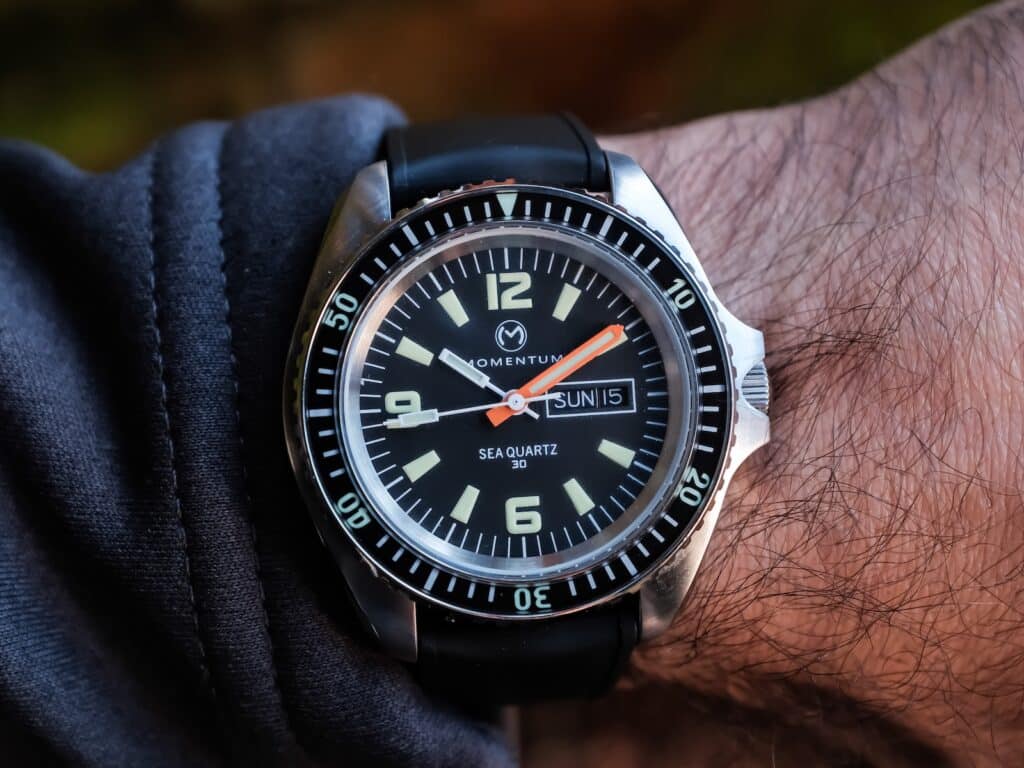
Not every watch in a $1,000 roundup needs to justify itself by piling on specifications. Sometimes it’s enough to be the one you keep reaching for because it never turns wearing a dive watch into a project. That’s where the Momentum Sea Quartz 30 quietly earns its keep. The Ronda R507 high-torque quartz movement means it’ll still be running after you’ve ignored it for a week, and 300 meters of water resistance gives it far more capability than most owners are ever likely to test. Momentum also resisted the temptation to build a museum piece. The sapphire bezel insert trades a little vintage authenticity for something that’s far better suited to everyday knocks.
The dial follows the same footprint. A matte black background, printed markers, paddle-style hands, and an orange minute hand leave very little for your eyes to figure out, especially when you’re timing something with the bezel. There’s a definite late-’70s influence here, but it never feels like the watch expects you to own period-correct dive gear to appreciate it. You glance down, read the time, and get on with whatever you’re doing. The 42mm case has a little more wrist presence than we expected, although the 47mm lug-to-lug, flat caseback, and balanced proportions stop it from becoming cumbersome over a full day. Brushed upper surfaces and polished case sides give it enough contrast to avoid looking flat, even if the polished underside and lugs seem unusually enthusiastic about collecting scratches every time a spring bar tool comes out.
The Sea Quartz 30 isn’t flawless, but its shortcomings are easy to understand. The bezel is the biggest one. It feels stiffer than it should be; the grip isn’t generous, and rotating it always takes a little more effort than we’d prefer. Lume starts brightly enough but calls it a night sooner than some of the stronger performers in this category.
Fortunately, the hands-on wearing experience makes up ground elsewhere. The supplied tropic-style rubber strap is comfortable straight away, and the watch works just as well on a NATO or Momentum’s jubilee-style bracelet if you decide to change things up. It may not be the flashiest dive watch under $1,000, but it’s the kind of quartz diver that quietly gets on with the job without asking for much in return.
Pros
- Sapphire bezel insert is a welcome upgrade for everyday durability.
- Ronda quartz movement keeps ownership simple, accurate, and almost maintenance-free.
- 300m water resistance gives it more real-world capability.
- 42mm case, 47mm lug-to-lug, and flat caseback make it comfortable over long stretches.
- Matte black dial, printed markers, paddle hands, and orange minute hand make elapsed time easy to read at a glance.
- The Tropic-style rubber strap is comfortable, and the watch pairs well with NATO straps and bracelets.
Cons
- The bezel is stiff and doesn’t offer as much grip as it should.
- Lume starts well but fades sooner than several rivals in this price segment.
- The polished underside and lugs pick up scratches easily during strap changes.
Seiko Turtle
| Price: | $370 – $525 |
| Water Resistance: | 200m |
| Case Dimensions: | 44.3mm (diameter) x 48mm (lug-to-lug) x 14mm (thickness) |
| Lug Width: | 22mm |
| Movement: | Seiko 4R36 |
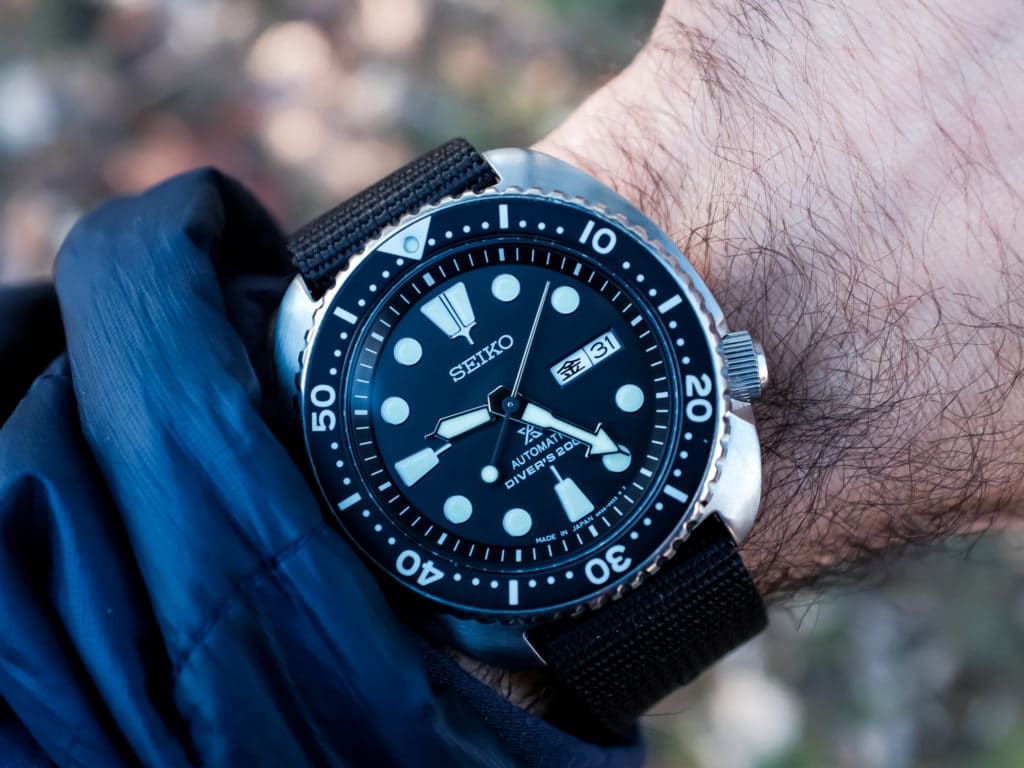
There’s a reason the Seiko Turtle survives every new wave of affordable dive watches. Every time a brand promises the “next Turtle killer,” the original quietly reminds everyone why replacing it isn’t as easy as adding sapphire or shaving a millimeter off the case. The 4R36 movement brings hacking and hand-winding, so daily use is far less fiddly than older entry-level Seikos, even if accuracy remains a little unpredictable. Our review sample hovered around +35 to +45 seconds per day, and bezel alignment is one of those things that’s still worth checking before handing over your money. That’s simply part of the Turtle ownership experience, not a shocking revelation at this point.
The case is another reason the Turtle has lasted as long as it has. Yes, it’s over 44mm on paper, but the cushion-shaped case refuses to wear like a typical 44mm diver. Instead of feeling tall or awkwardly top-heavy, it spreads its weight across the wrist, giving the watch a planted feel that’s quite comfortable if you already enjoy larger dive watches. The offset crown deserves just as much credit. By sitting clear of the back of your hand, it avoids the constant wrist-poking routine that plenty of supposedly smaller divers still haven’t figured out. The stock silicone strap is also much friendlier than older Seiko rubber straps. However, we still think the Turtle comes alive on a NATO strap, where the rounded case feels even more at home during holidays, beach trips, and the sort of weekends when you stop worrying about babying your watch.
The dial is classic Seiko in all the right ways. Large Lumibrite markers, generously proportioned hands, and a matte black dial leave almost nothing between you and the time, whether you’re outside in harsh sunlight or checking it in the middle of the night. The lume still delivers the bright, long-lasting glow Seiko has built its reputation on, and the Prospex “X” logo fades into the background much faster than internet comment sections would have you believe. If anything interrupts the straightforward display, it’s the optional Kanji day wheel. It’s undeniably charming, but once the novelty wears off, it can slow down a glance more than an English day wheel.
The Hardlex crystal is the other familiar compromise. Sapphire would be welcome, but Hardlex has a long track record of surviving everyday wear well enough that we stopped thinking about it long before we stopped wearing the watch. That’s ultimately why the Turtle remains here.
Pros
- The cushion case makes the 44mm-plus dimensions wear far smaller than expected.
- Large Lumibrite markers, bold hands, and a matte black dial make the time easy to read in any light.
- Offset crown stays clear of the wrist during long days of wear.
- 4R36 movement includes hacking and hand-winding for easier day-to-day use.
- The stock silicone strap is comfortable, and the watch works very well on a NATO strap.
Cons
- The broad case still won’t suit collectors who prefer compact divers.
- 4R36 accuracy and bezel alignment can vary from one example to another.
- Kanji day wheel is charming but can slow down a glance.
- Hardlex crystal isn’t as scratch-resistant as sapphire.
Seiko Samurai
| Price: | $400 – $500 |
| Water Resistance: | 200m |
| Case Dimensions: | 43.8mm (diameter) x 47mm (lug-to-lug) x 13mm (thickness) |
| Lug Width: | 22mm |
| Movement: | Seiko 4R35 (Mechanical) |
If the Turtle is Seiko’s easygoing answer to an affordable dive watch, the Samurai is what happens when someone asks for the same dependability with a little more edge. That’s why it belongs here. You aren’t paying more for a completely different ownership experience; you’re choosing a diver with a stronger personality. The familiar 4R35 automatic movement keeps things straightforward with hacking, hand-winding, and around 40 hours of power reserve. Accuracy is best approached with realistic expectations, but that’s hardly a surprise to anyone who’s spent time with Seiko’s entry-level mechanical divers.
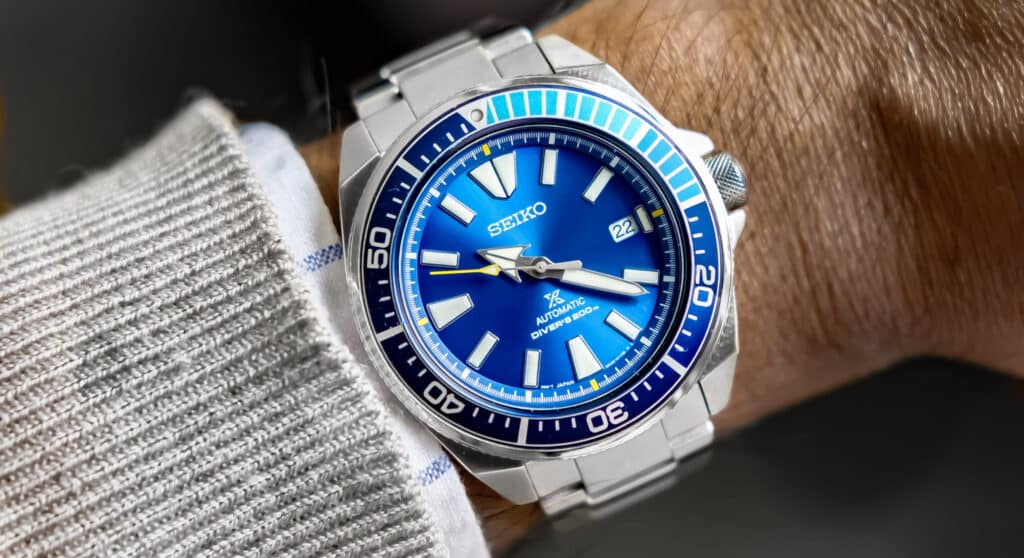
The case is what separates the Samurai from nearly everything else in this price range. Flat brushed surfaces, crisp edges, and sharply defined transitions give it a more architectural look than the rounded Turtle or SKX, without turning it into an uncomfortable wrist brick. During in-depth testing, we expected all those angles to wear larger than they actually do, but the case settled onto the wrist better than anticipated during our time with it. It’s still a watch with noticeable presence, and those sharp edges won’t disguise scratches as gracefully as Seiko’s softer cushion cases, but that’s part of the appeal. The bracelet deserves more appreciation than it usually gets, too. The 22mm width suits the case well, the end links flow cleanly into the lugs, and we never felt the urge to replace it instantly. If you enjoy changing straps, though, the drilled lugs make the process painless.
The dial leans into the Samurai’s sharper character just as confidently. Applied markers, generous Seiko lume, and oversized Monster-style hands create a display that’s almost impossible to misread, while the blue dial shifts between lighter and darker shades depending on the light without compromising clarity. Those hands tend to divide opinion in photos, but on the wrist, they make perfect sense. They reinforce the watch’s angular personality rather than softening it.
The bezel and crown follow the same approach. Coarse knurling gives both plenty of grip, the sloped crown guards protect the screw-down crown without making it awkward to use, and the bezel clicks with reassuring authority, even if our review sample was stiffer than we’d have liked. If you’re shopping under $1,000 and want something that feels unmistakably like a Seiko diver without looking like every other Seiko diver, the Samurai is one of the easiest choices to justify.
Pros
- Angular brushed case gives the Samurai a distinctive modern look.
- Applied markers, bold Monster-style hands, and Seiko lume make the dial easy to read.
- Well-integrated 22mm bracelet feels secure and doesn’t immediately beg for replacement.
- Sloped crown guards protect the screw-down crown without making it difficult to operate.
- Drilled lugs make strap changes quick and hassle-free.
Cons
- Bezel action on our review sample was quite stiff.
- Sharp case geometry tends to reveal scratches more readily than Seiko’s rounder dive watch designs.
Nodus Sector Deep
| Price: | $599 |
| Water Resistance: | 500m |
| Case Dimensions: | 38mm (diameter) x 47mm (lug-to-lug) x 13.6mm (thickness) |
| Lug Width: | 20mm |
| Movement: | Seiko NH35 (Mechanical Movement) |
Microbrands have a habit of treating every new dive watch like a chance to reinvent the category. The Nodus Sector Deep takes a far more useful approach: it refines the details that actually affect life on the wrist. That’s why it deserves a place in this list. Rather than chasing unusual case materials or overcomplicated styling, Nodus focused on comfort, usability, and execution. For instance, the Seiko NH35 isn’t exotic, but it’s the sort of movement we’d want in an everyday diver, especially when Nodus regulates it in-house. Our review samples stayed within ±10 seconds per day, and the roughly 41-hour power reserve makes it easy to rotate with other watches without resetting.
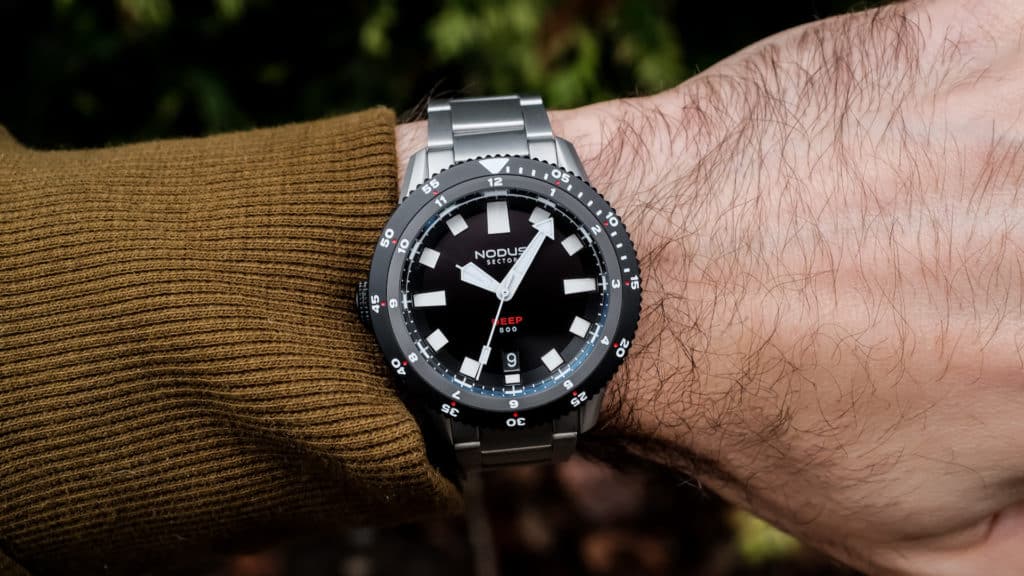
The 38mm case is another reminder that smaller doesn’t have to mean compromised. It sits low and evenly across the wrist instead of feeling like a scaled-down professional diver, while the left-side crown quietly solves one of the oldest dive watch annoyances by staying out of the way whenever your wrist bends. The asymmetrical case won’t win over everyone on aesthetics alone, but after a full day of wear, it’s easy to appreciate why Nodus made that decision. The bracelet follows the same thinking. Screw links make sizing painless, the 20mm-to-18mm taper keeps the bracelet from feeling bulky, and the NodeX micro-adjustment clasp is one of those features you stop noticing until your wrist swells on a hot afternoon and you can fix the fit in seconds.
The dial keeps the watch modern without becoming busy for the sake of looking different. White PVD marker surrounds catch changing light, while the lume-filled centers narrow toward the cardinal points, creating a subtle sense of domed depth without sacrificing readability. Everything stays well spaced, making quick time checks effortless, and the BGW9 Super-LumiNova remained clearly visible throughout the night during our time testing it.
Around the edge, the matte DLC bezel avoids unnecessary reflections, offers plenty of grip, and uses its dual-scale layout without making the watch feel like an instrument panel. The only real blemish is the clasp. Extend it fully, and some hardware becomes visible, disrupting an otherwise clean design. It’s a minor complaint about a diver that gets so many of the fundamentals right, especially for collectors looking for something under $1,000 that feels thoughtfully engineered rather than merely different.
Pros
- Regulated NH35 movement delivers solid everyday accuracy.
- Clean dial layout, white PVD surrounds, and tapered lume plots make the display easy to read.
- BGW9 Super-LumiNova stays bright and legible well into the night.
- Matte DLC bezel offers excellent grip, reduced glare, and practical dual-scale timing.
- Compact 38mm case wears comfortably, while the left-side crown eliminates wrist bite.
- Screw-link bracelet, tapered profile, and NodeX micro-adjustment system make achieving the right fit easy.
Cons
- The asymmetrical case design won’t appeal to collectors who prefer traditional dive watch proportions.
- Exposed clasp hardware becomes visible when the clasp is fully extended.
Baltic Aquascaphe
| Price: | $650 – $750 |
| Water Resistance: | 200m |
| Case Dimensions: | 39mm (diameter) x 47mm (lug-to-lug) x 12mm (thickness) |
| Lug Width: | 20mm |
| Movement: | Miyota 9039 (Mechanical Movement) |
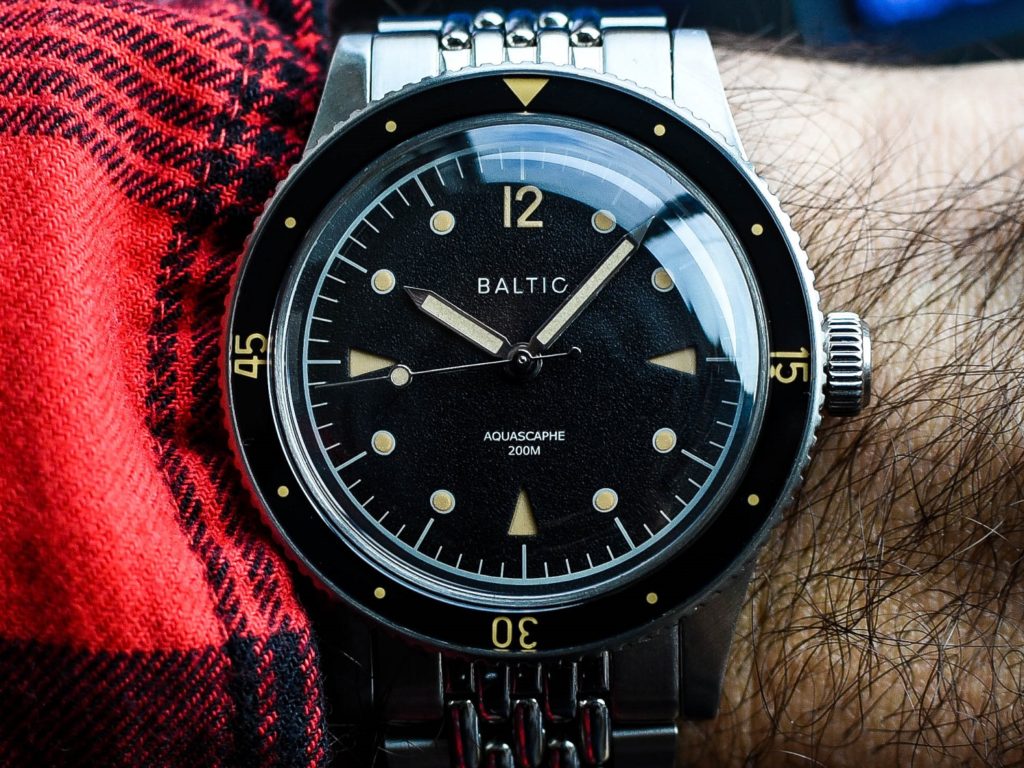
It’s easy to spend another few hundred dollars on a dive watch without knowing where the money went. The Baltic Aquascaphe avoids that trap. Instead of chasing louder styling, it puts the extra budget into the details that shape the ownership experience. The Miyota 9039 fits that philosophy well. It ran smoothly and consistently throughout our review period, beats at 28,800 vph, and offers a practical 42-hour power reserve. Baltic also omits the date, so the two-position crown keeps the watch simple, even if some collectors will miss having a calendar.
You start noticing where the money went once the watch is on your wrist. The case measures a touch over 12mm thick with a 47mm lug-to-lug, making it slim enough to disappear under a cuff while still carrying the reassuring weight of a proper steel dive watch. The mostly brushed finish also hides the small marks that inevitably appear with regular wear, although collectors who enjoy bright polished accents may find it a little restrained. The beads-of-rice bracelet reinforces that feeling of refinement. It wraps naturally around the wrist, tapers cleanly toward the clasp, and stays comfortable long after you’ve forgotten you’re wearing it. Baltic also includes quick-release spring bars, so swapping to the supplied Tropic-style rubber strap takes seconds and gives the watch a relaxed, vintage-leaning personality without making the bracelet feel like an afterthought.
The dial quietly finishes the job. Rather than relying on oversized markers or flashy colors, Baltic uses a hybrid sandwich construction with cutout indices that expose a fully lumed layer beneath. The result is real depth in daylight and an even glow after dark that held up impressively during our testing. The matte dial shifts subtly as the light changes, gilt accents add warmth without drifting into vintage cosplay, and the sapphire bezel insert complements the restrained aesthetic. Pencil hands are proportioned just right, the lollipop second hand reaches neatly to the chapter ring, and the sparse dial text leaves plenty of breathing room.
None of those details change what a dive watch does, but together they explain why the Aquascaphe feels like a genuine step up rather than simply another affordable diver with a higher price tag.
Pros
- Hybrid sandwich dial adds depth while keeping the display uncluttered.
- Gilt accents and sapphire bezel insert add vintage character without feeling forced.
- Beads-of-rice bracelet is comfortable, well-tapered, and wears very well.
- Quick-release spring bars make swapping to the Tropic-style rubber strap effortless.
- Fully lumed indices provide a bright, even glow in low light.
Cons
- The mostly brushed case finish may feel too understated for those who like stronger polished contrasts.
- No-date layout won’t appeal to collectors who prefer a calendar.
Raven Trekker
| Price: | $690 |
| Water Resistance: | 200m |
| Case Dimensions: | 39mm (diameter) x 48mm (lug-to-lug) x 12.5mm (thickness) |
| Lug Width: | 20mm |
| Movement: | Miyota 9015 |
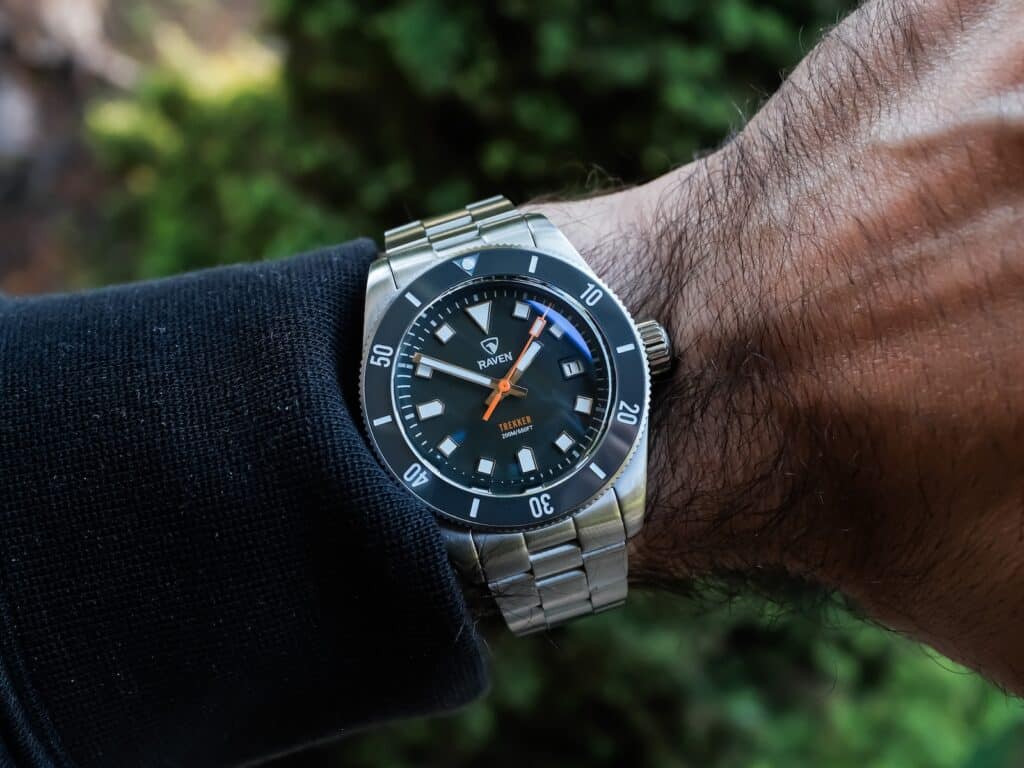
The Raven Trekker is the sort of watch that reminds you not every worthwhile diver upgrade under $1,000 has to come from a Swiss logo or another hundred meters of water resistance. After spending extended wrist time with it, we kept coming back to one thought: Raven didn’t reinvent the Trekker; it refined it. The biggest improvement is in the case. At 39mm across, 48mm lug-to-lug, and just 12.5mm thick including the boxed sapphire crystal, this is the slimmest Trekker yet, and it changes the watch more than the spec sheet suggests. Combined with the flat caseback, it sits lower and feels more settled on the wrist, making it the version we reached for most often. Raven also trimmed the water resistance to 200 meters, but we never found ourselves missing the old 300-meter rating. The oversized screw-down crown still feels substantial, and the watch never came across as anything less than a proper tool watch.
The gloss grey dial is what gives this Trekker its own identity. Grey dive watches often lean too hard into faux-military styling, but Raven resisted that temptation. The glossy ceramic bezel and dial shift with changing light, sometimes appearing charcoal and, indoors, almost blue-black, thanks to the assertive blue anti-reflective coating on the crystal. It makes the watch feel more dynamic than the product photos indicate while keeping the layout uncluttered. Polished hands and applied markers stay easy to pick out at a glance, and the small orange accents on the second hand and dial text add just enough contrast without turning the watch into a color exercise. The AR coating occasionally throws a noticeable blue reflection across the crystal, but it never became distracting enough for us to stop enjoying the dial. Around the edge, the coin-edge bezel offers excellent grip, and the 120-click action feels crisp, firm, and thoroughly sorted.
The same attention to detail carries through the rest of the watch. The mostly brushed case hides daily wear well, while the polished chamfer tucked underneath the case, rather than across the top, gives the Trekker a more restrained look than many similarly priced divers. Drilled lugs make frequent strap swaps painless, although we found ourselves leaving it on the oyster-style bracelet more often than expected. The bracelet tapers cleanly from 20mm to 16mm, feels well matched to the case, and uses single-sided screws for straightforward sizing. Raven’s NodeX clasp adds useful on-the-fly adjustment for those hot afternoons when your wrist decides it needs a little more room. Even so, the extension mechanism looks slightly awkward when deployed, and our review sample showed a touch of lateral play.
Inside, the Miyota 9015 quietly gets on with the job. It wound smoothly, kept excellent time throughout our review, and stayed free of the noisy rotors or quirks that sometimes accompany this class of movement. At around $690, the Trekker feels more like the point where spending a little more starts delivering improvements you notice every day. Check out our full review for the smaller on-wrist details.
Pros
- Slim 39mm case with a 48mm lug-to-lug wears flatter and more comfortably than earlier Trekkers.
- Gloss grey dial and ceramic bezel create a distinctive look that changes beautifully with different lighting.
- The coin-edge bezel offers excellent grip and a precise 120-click action.
- Oyster-style bracelet, drilled lugs, and NodeX on-the-fly adjustment make everyday wear adaptable.
- Miyota 9015 runs smoothly, keeps excellent time, and stays mechanically unobtrusive.
Cons
- Blue anti-reflective coating can produce noticeable reflections in certain lighting.
- NodeX clasp extension looks a little awkward when opened, and our review sample exhibited slight side-to-side play.
Traska Freediver
| Price: | $735 |
| Water Resistance: | 100m |
| Case Dimensions: | 40mm (diameter) x 48mm (lug-to-lug) x 12.5mm (thickness) |
| Lug Width: | 20mm |
| Movement: | Seiko NH38 (dateless version of NH35A) |
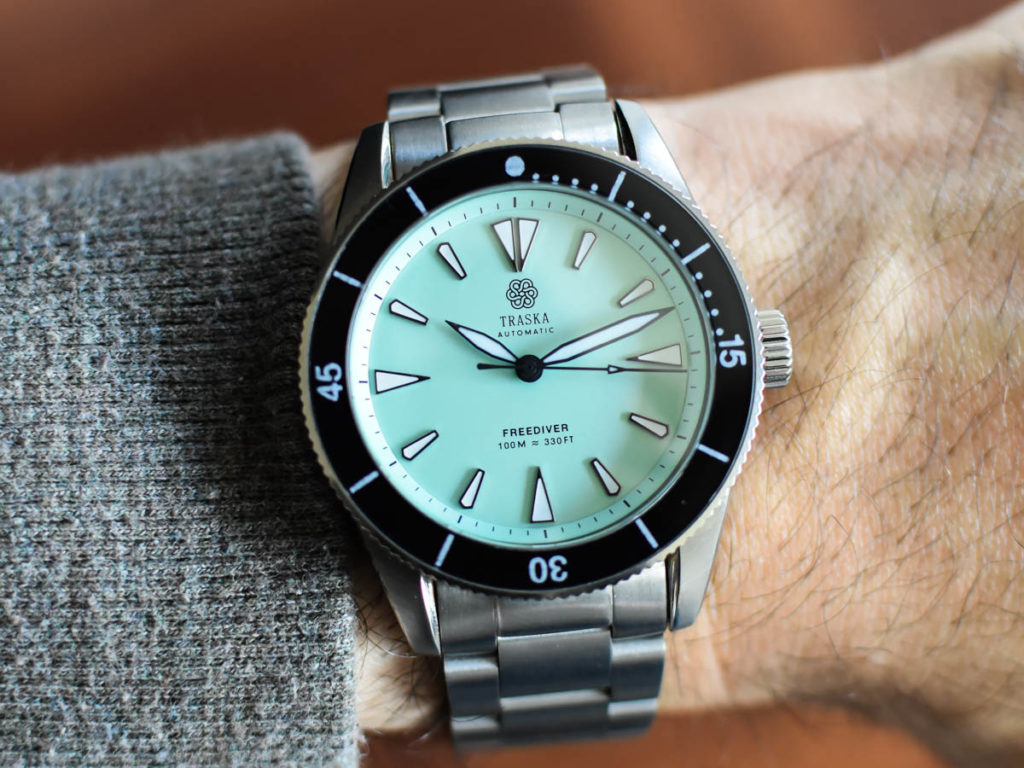
The Traska Freediver is yet another good reminder that not every dive watch under $1,000 needs to impress with heritage or professional diving credentials. Sometimes it’s enough to make you want to throw it on every time the weather turns warm. That’s exactly what happened during our review. The combination of a compact 40mm case, 48mm lug-to-lug, and skin-diver proportions gives it the sort of easygoing fit that’s becoming harder to find as dive watches continue chasing larger dimensions. It never felt oversized, even when moving between different wrists, and the entirely original case design gives the Freediver an identity beyond that of another familiar Submariner silhouette.
Traska’s proprietary 1,500 HV hard coating also deserves more attention than it usually gets because it lets you wear the watch the way a vacation watch should be worn, without worrying about every hotel railing or beach chair. The specification sheet now says 100 meters rather than 200 or 300, but after weeks of extended wear, we found ourselves caring far more about how the watch felt than what another extra hundred meters looked like on paper.
The mint dial is what sets the Freediver apart from the increasingly crowded microbrand field. It isn’t loud, but it refuses to disappear into the sea of black-and-blue divers. Depending on the light, the color drifts from pale seafoam to a deeper green with hints of grey, giving the watch a different personality indoors than it has outside. The rest of the dial wisely stays out of the way. Raised applied markers, polished diamond-cut hands, and BGW9 lume make reading the time almost effortless, while the slender spear-style second hand adds movement without cluttering the display. We also found ourselves appreciating the dateless layout more than expected. Pick it up after a few days, wind it, set the time, and you’re done—no calendar to fix before heading out the door. The sapphire bezel follows the same philosophy, with crisp 120-click unidirectional action and a grip that always felt positive without requiring unnecessary force.
The bracelet might actually be the surprise here. We expected to spend most of our time experimenting with straps because the drilled lugs practically encourage it, yet the oyster bracelet rarely gave us a reason to bother. Fully solid links, screw construction, a properly milled clasp, and even small touches like the perlage finishing all make it feel like a bracelet designed alongside the watch rather than added at the last minute. The same hard coating protects it from the scratches that usually arrive within the first week of ownership. Our only real criticism was the flip portion, which occasionally needed a firmer push before it clicked shut.
Inside, the NH38 is the movement this watch needs. It hacks, hand-winds, avoids the annoying phantom-date click, and our sample stayed within roughly +3 seconds per day. More importantly, it never gave us a reason to think about it, leaving the Freediver to do what it does best: make a simple dive watch feel far more interesting than its conservative design first implies.
Pros
- Compact skin-diver proportions make it comfortable on a wide variety of wrists.
- Mint dial shifts beautifully with changing light while remaining quite legible.
- 1,500 HV hard coating helps the case and bracelet shrug off everyday wear.
- Excellent oyster bracelet with solid links, screw sizing, and a milled clasp.
- NH38 eliminates the phantom-date position and performs accurately.
Cons
- The clasp occasionally requires extra pressure before fully locking.
- 100m water resistance may disappoint diver buyers focused solely on specifications, even though it’s more than adequate for everyday use.
If one of these dive watches has earned a permanent place in your collection, we’d love to hear which one and why it keeps beating out everything else in the watch box. And if there’s another sub-$1,000 diver that convinced you spending more wasn’t actually necessary, let us know in the comments. We’re always happy to test another watch and update our recommendations.

Co-Founder and Senior Editor
Kaz has been collecting watches since 2015, but he’s been fascinated by product design, the Collector’s psychology, and brand marketing his whole life. While sharing the same strong fondness for all things horologically-affordable as Mike (his TBWS partner in crime), Kaz’s collection niche is also focused on vintage Soviet watches as well as watches that feature a unique, but well-designed quirk or visual hook.
It would be nice if articles like this were up to date, or is it just expected that people will buy used? TRASKA and Raven don’t make those watches anymore. And getting a new SCURFA is all but impossible.