If you’ve ever picked up a titanium dive watch expecting it to disappear on the wrist, then switched back to a steel diver and thought, “Huh, this suddenly feels like a brick,” you’re not alone. Steel vs titanium dive watches usually get reduced to a simple weight debate. That’s often where most comparisons stop. Living with both tells a different story. The way a watch settles on your wrist after eight hours, how it picks up scratches, whether it feels substantial or disappears until you need it—those are the details that end up shaping your opinion long after the novelty of a new purchase fades.
After more than a decade of reviewing and wearing dive watches across every price point, we’ve learned that choosing between steel and titanium isn’t about crowning one material the winner. It’s about understanding the trade-offs that only become obvious through everyday use. In this article, we’re looking beyond spec sheets to answer the question that matters most: which material makes more sense after you’ve worn it for weeks and months, rather than for five minutes at a watch counter? The answer isn’t the same for everyone, but by the end, you’ll know which one better fits your wrist, your habits, and the way you wear a dive watch.
Category Identity & Philosophy: Familiar Confidence vs Functional Minimalism
Steel never feels like it’s trying to prove anything. After spending years with dive watches across different price points, that’s probably its biggest strength. Whether it’s an affordable everyday diver or something considerably more expensive, steel simply feels like the material most dive watches were built around. It gives designers plenty of freedom with brushed and polished surfaces, carries a reassuring amount of heft, and rarely distracts from the watch itself. Even after reviewing dozens of steel divers, we rarely came away thinking, “That was a great steel case.” We remembered the watch as a whole, which says a lot about how naturally the material fits the category.
Titanium leaves a different first impression. The watch still looks every bit like a capable diver, but the moment you pick it up, you realize it isn’t trying to recreate the traditional steel experience. That became clear across the titanium divers we’ve reviewed, from purpose-built tool watches to more everyday designs. Some brands use titanium to make larger cases feel easier to live with, while others pair muted finishes with the material to reinforce a no-nonsense, functional character. In those cases, titanium becomes part of the watch’s personality rather than fading into the background.
- Steel leans into familiarity and presence, making the case material almost invisible behind the overall design.
- Titanium tends to make the material itself part of the experience, changing how the watch feels and behaves from the moment you pick it up.
Weight, Balance, and Wearability: Where the Difference Becomes Obvious
Comfort isn’t determined by weight alone. Case shape, bracelet design, and how a watch distributes its weight across the wrist often matter far more than the specification sheet suggests. That’s where the differences between steel and titanium become much easier to appreciate.
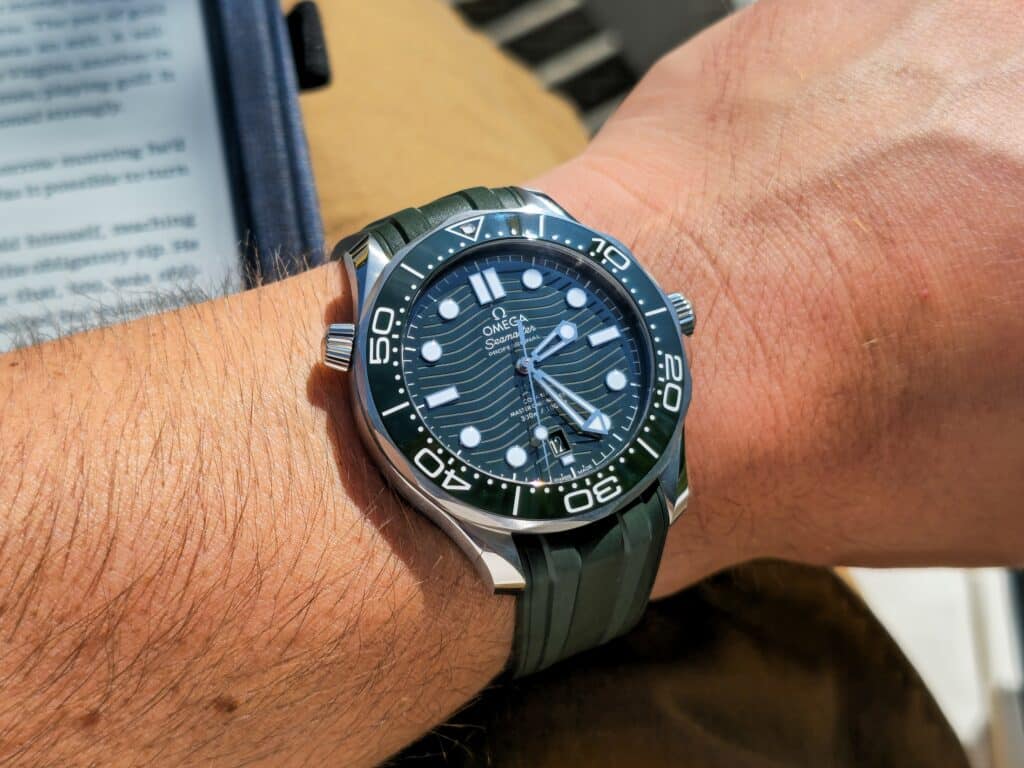
Steel has a way of making a dive watch feel planted, and that’s a big part of why it remains the benchmark. Our hands-on time testing the Omega Seamaster Diver 300M also challenged a few assumptions about steel dive watches. On paper, a 42mm case measuring almost 14mm thick sounds like it should wear noticeably larger than it does. In practice, the curved case profile and twisted lyre lugs make it feel closer to a 12mm diver, creating a watch that remains surprisingly comfortable despite its substantial steel construction. We found the experience changed even more on the rubber strap, which made the Seamaster feel far more balanced than the heavier, non-tapering bracelet. It was a useful reminder that wearability isn’t dictated by material alone. Good case architecture can make a steel diver feel far more manageable than the specs suggest.

We noticed the trade-off even more clearly when switching to the Mido Ocean Star Tribute, which is part of the same family as the titanium model we’ll talk about later. As noted in our dedicated review, the Tribute’s 40.5mm case sits in what we found to be the sweet spot for a modern dive watch, but the steel construction gives it a noticeably different personality. Instead of trying to disappear on the wrist, the fully polished case and beautifully articulating multi-link bracelet make the watch feel more expressive and a touch dressier. The bracelet drapes naturally around the wrist and, paired with Mido’s excellent clasp, stays comfortable throughout the day despite the added heft.
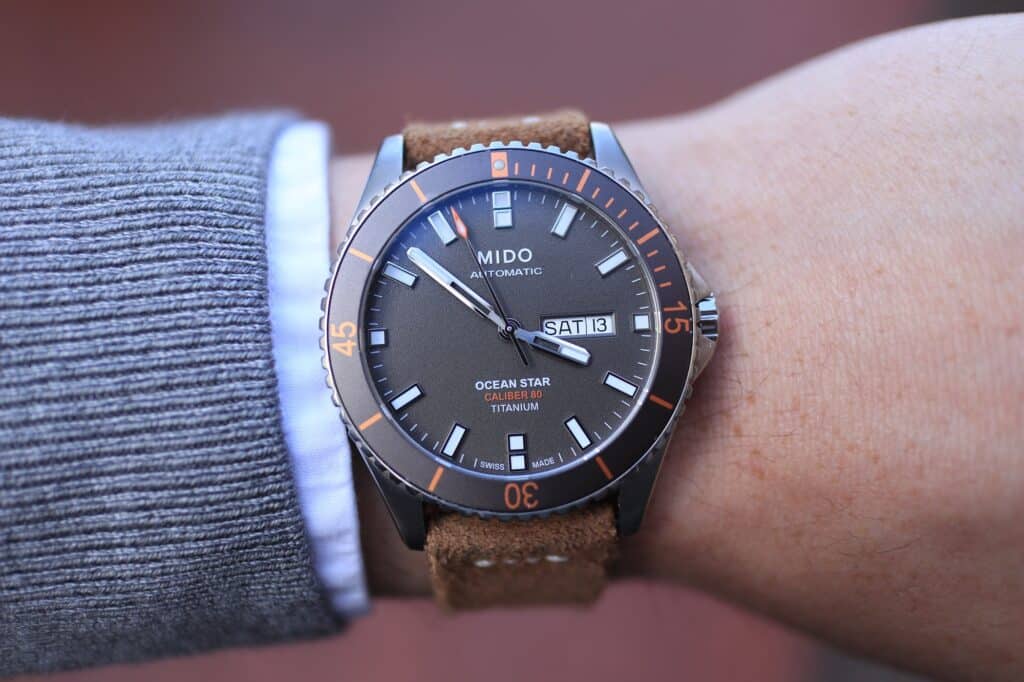
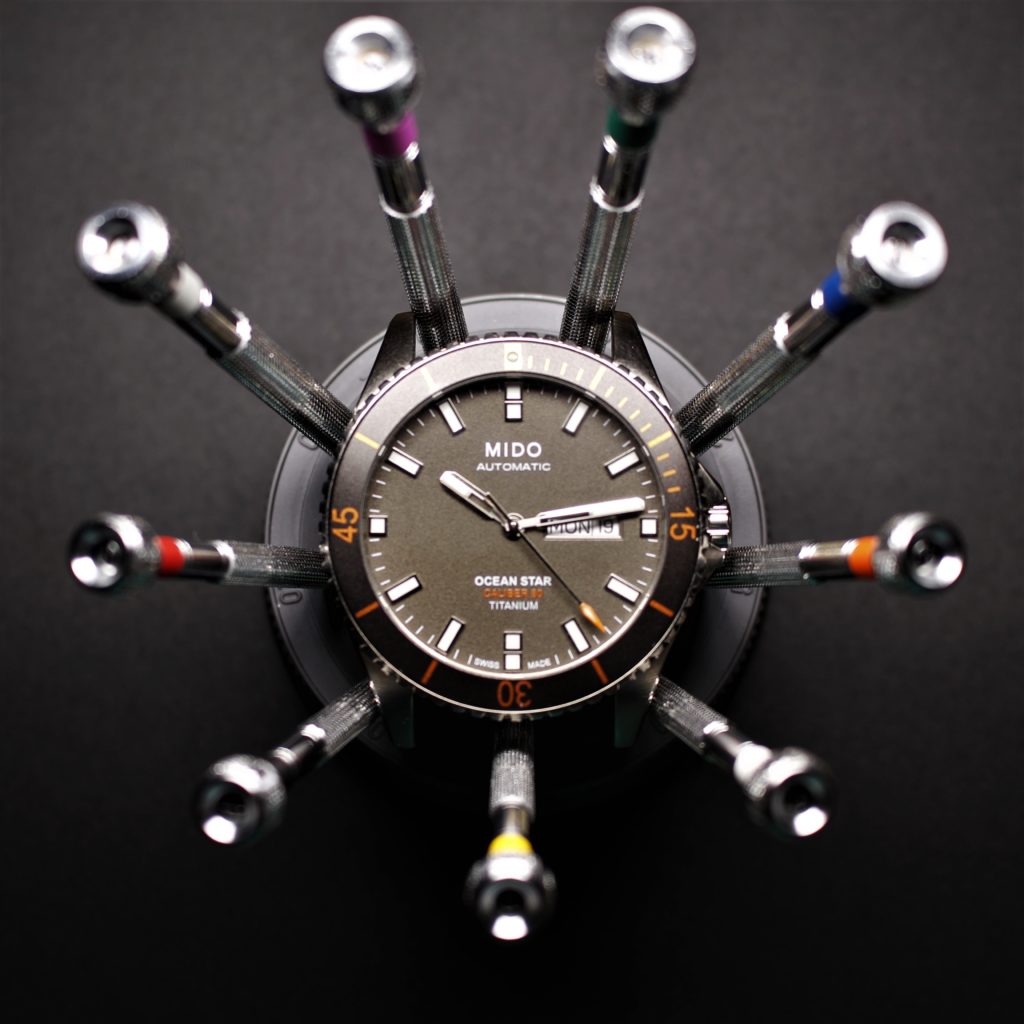
Titanium changes the equation altogether. The Mido Ocean Star Titanium is probably the clearest example of why titanium has become more than a niche material for dive watches. It’s a mainstream Swiss diver where the lighter case fundamentally changes the wearing experience rather than simply reducing the weight. At 42.5mm, it isn’t a small watch, yet the titanium construction, 11.75mm profile, sloped bezel, and well-contoured bracelet make it wear noticeably smaller than the dimensions suggest. Even after extended time on the wrist, it never developed the top-heavy feeling that larger steel divers sometimes can. We also appreciated that Mido didn’t sacrifice refinement in pursuit of comfort. The predominantly brushed case is broken up by polished chamfers, proving that titanium can feel as thoughtfully finished while delivering an ownership experience that’s less demanding over the course of a full day of wear.
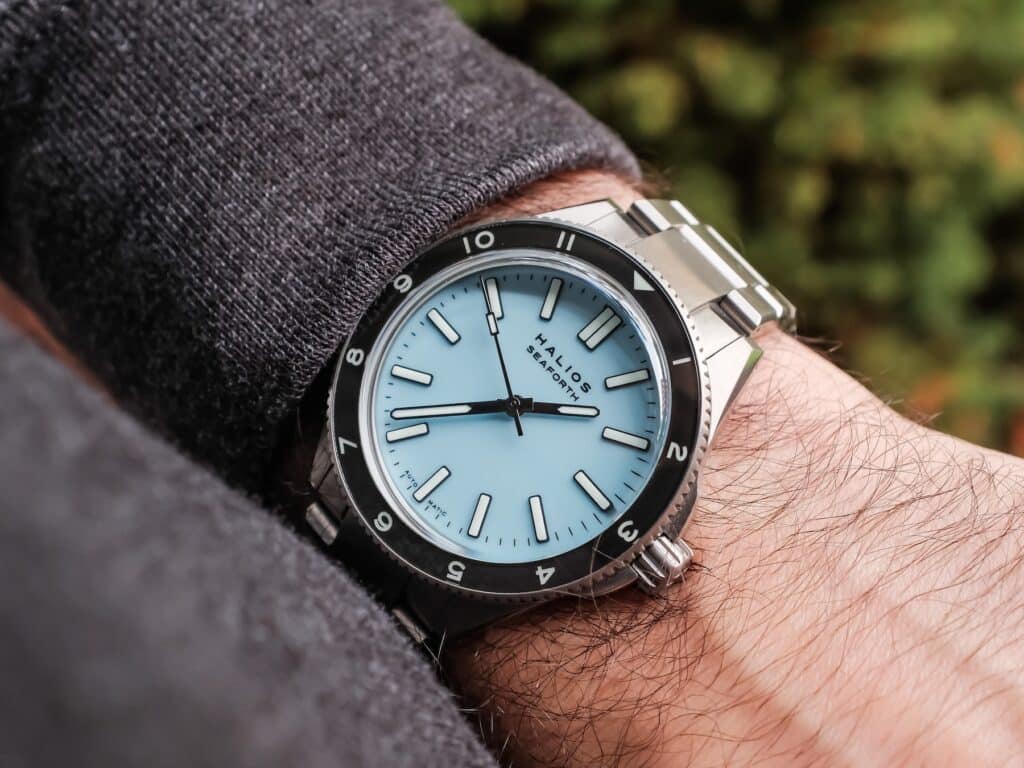
The Halios Seaforth IV Titanium reaches a similar destination from a different direction. Instead of using titanium to tame a larger case, Halios builds the entire watch around proportion and balance. Its 41mm case, compact 46.5mm lug-to-lug, tapered case sides, and double-domed sapphire make it wear slimmer than the dimensions imply. At the same time, the titanium bracelet flows naturally around the wrist without ever feeling flimsy. What stood out most during our review period wasn’t simply how light it felt, but how consistently it earned wrist time. Even with plenty of other watches waiting their turn, the Seaforth kept finding its way back because it stayed comfortable through long days without demanding attention. The stainless steel clasp also adds enough reassuring weight to keep the watch feeling substantial, proving that a lightweight enthusiast-oriented titanium diver doesn’t have to feel insubstantial to be satisfying.
- Steel rewards buyers who enjoy feeling a dive watch on the wrist, where reassuring heft becomes part of the overall experience rather than a drawback.
- Titanium rewards buyers who prioritize effortless wear, allowing larger dive watches to remain comfortable without feeling compromised.
Long-Term Ownership: Scratches, Wear, and What Changes Over Time
A dive watch doesn’t stay factory-fresh for long, and that’s part of owning one. The first scratch arrives sooner than expected, bracelets settle in, and the watch gradually becomes part of your daily routine. That’s when steel and titanium begin to separate themselves in ways a specification sheet never can.
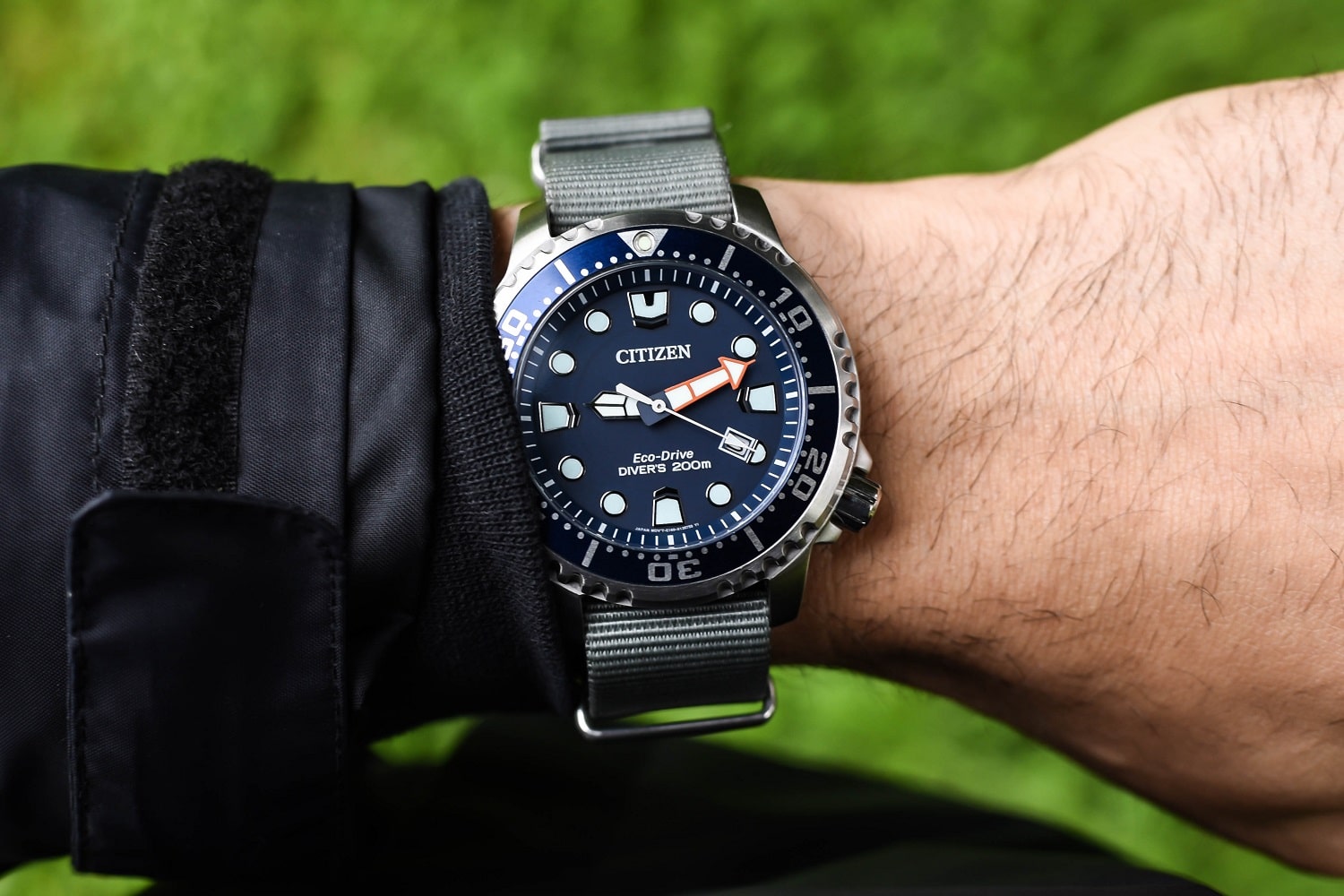
Steel has long been the default because it encourages you to stop worrying about it. Our wrist-time experience with the Citizen Promaster Diver BN0151 reinforced that mindset during our hands-on testing. It became the watch we instinctively reached for on hikes, weekends away, or days when we didn’t want to think twice about what was on our wrist. The steel case picked up the occasional mark, but none of it felt out of place. Instead of making the watch look worn out, those signs of use simply reinforced its role as a dependable, durable, everyday diver.
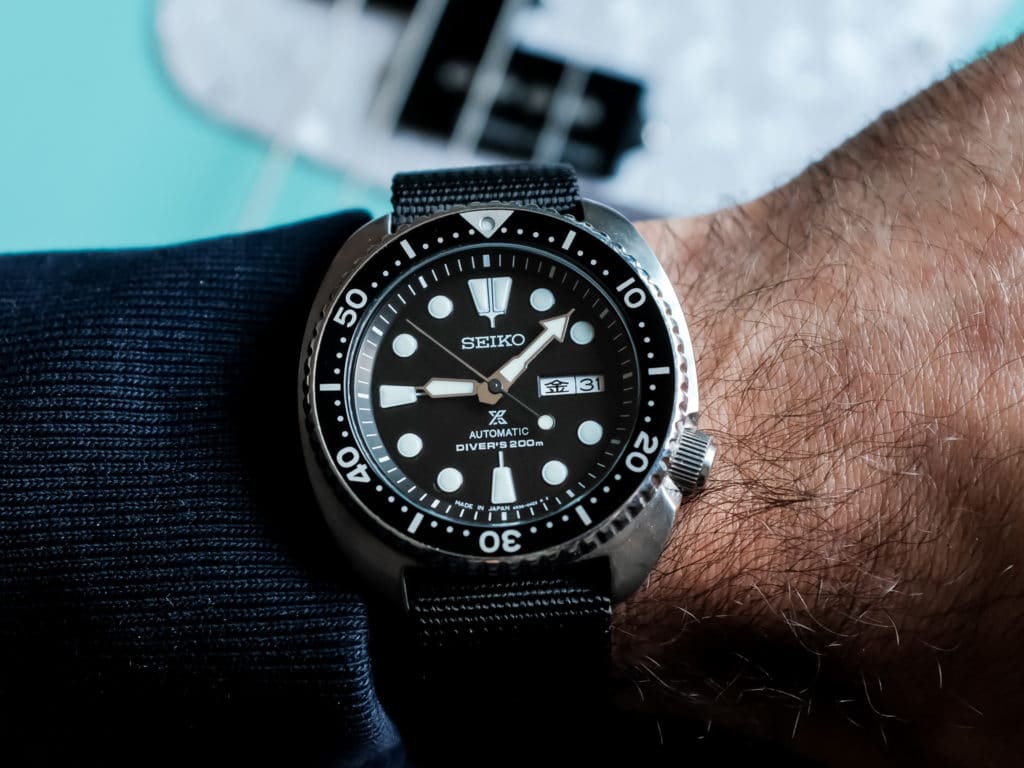
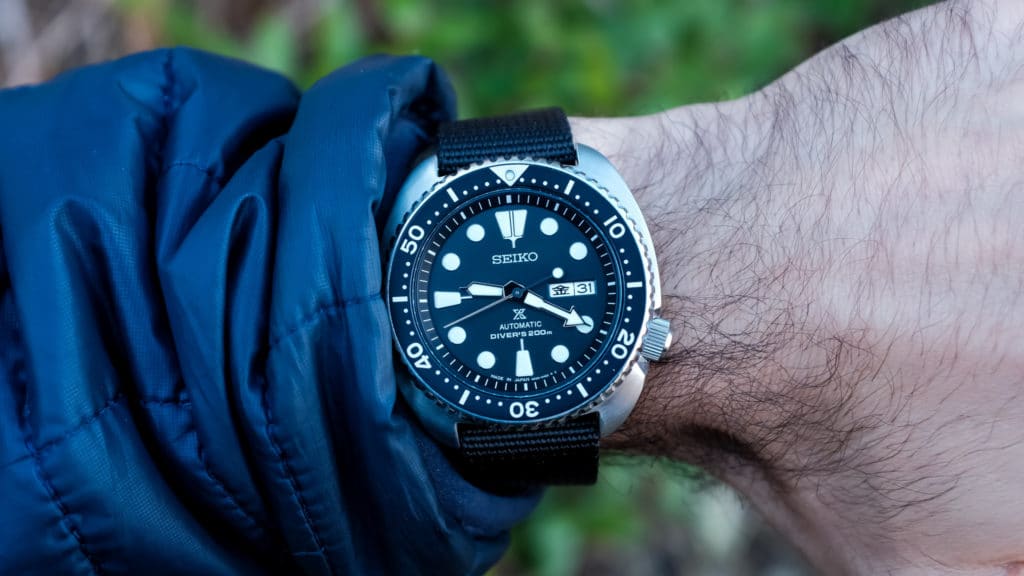
The Seiko Turtle tells a different long-term ownership story. Plenty of dive watches arrive with sharper finishing or more modern specifications, yet the Turtle keeps finding its way back into the watch box. That was one of the biggest takeaways from our hands-on review. Its short-lug cushion case wears more comfortably than its 44.3mm diameter would suggest, while the straightforward brushed-steel construction never encourages you to baby it. Small scratches and everyday wear feel consistent with the watch’s purpose rather than distracting from it.
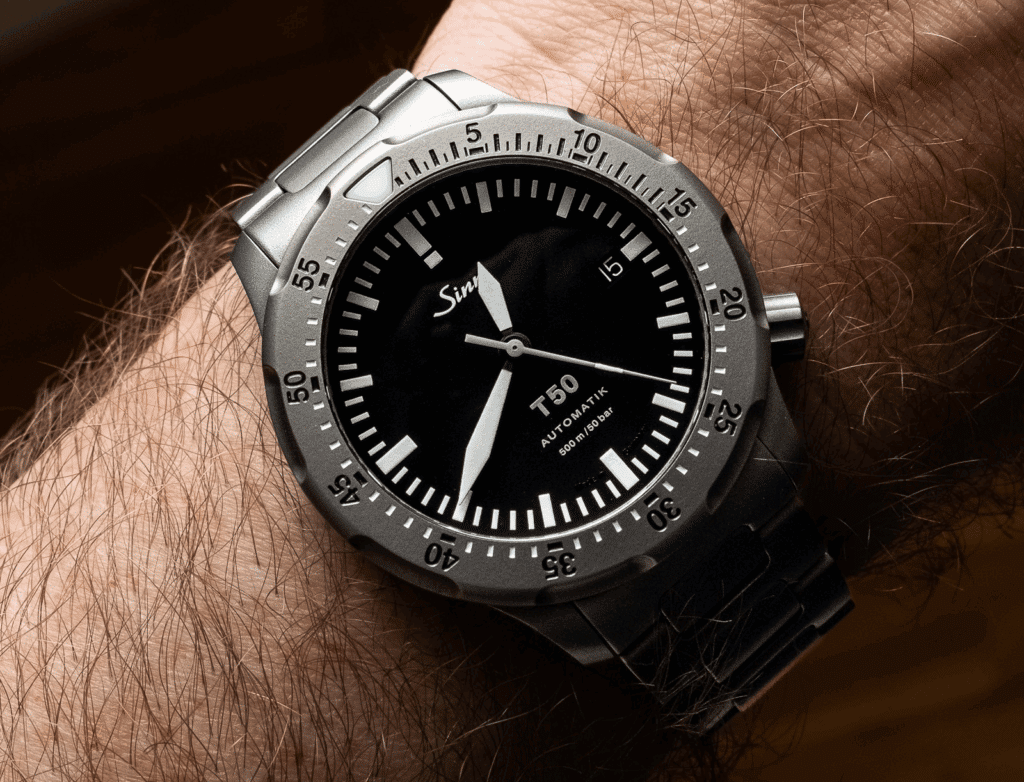
Titanium takes a different approach, and the Sinn T50 is one of the clearest examples we’ve reviewed. Rather than using titanium as a headline feature, Sinn builds the entire watch around purposeful engineering. The fully matte titanium case is designed to absorb and conceal everyday wear rather than draw attention to it. At the same time, the tegimented bezel adds meaningful resistance to scratches and surface marks that inevitably come with regular use. During our two weeks of testing it, the T50 felt like a luxury tool-diver example. Its comfortable 41mm case, sub-100-gram bracelet, and understated finish all worked together to create a watch that encouraged constant wear rather than careful ownership. That makes the T50 so convincing: the titanium never feels gimmicky because every other part of the watch supports the same functional philosophy.
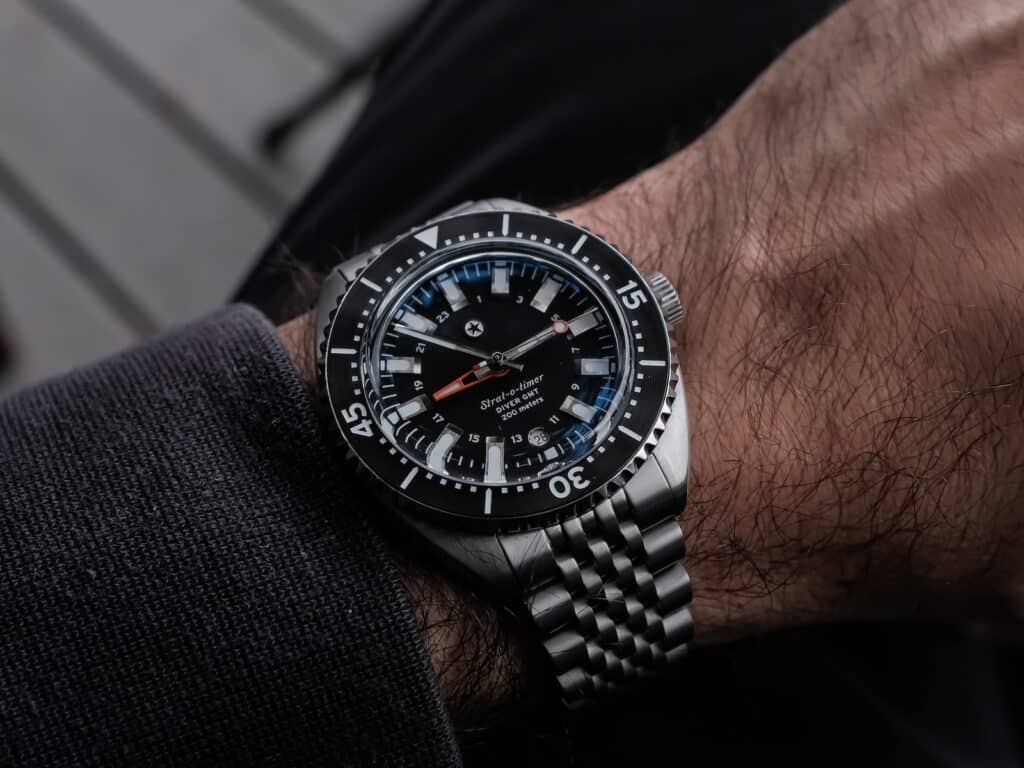
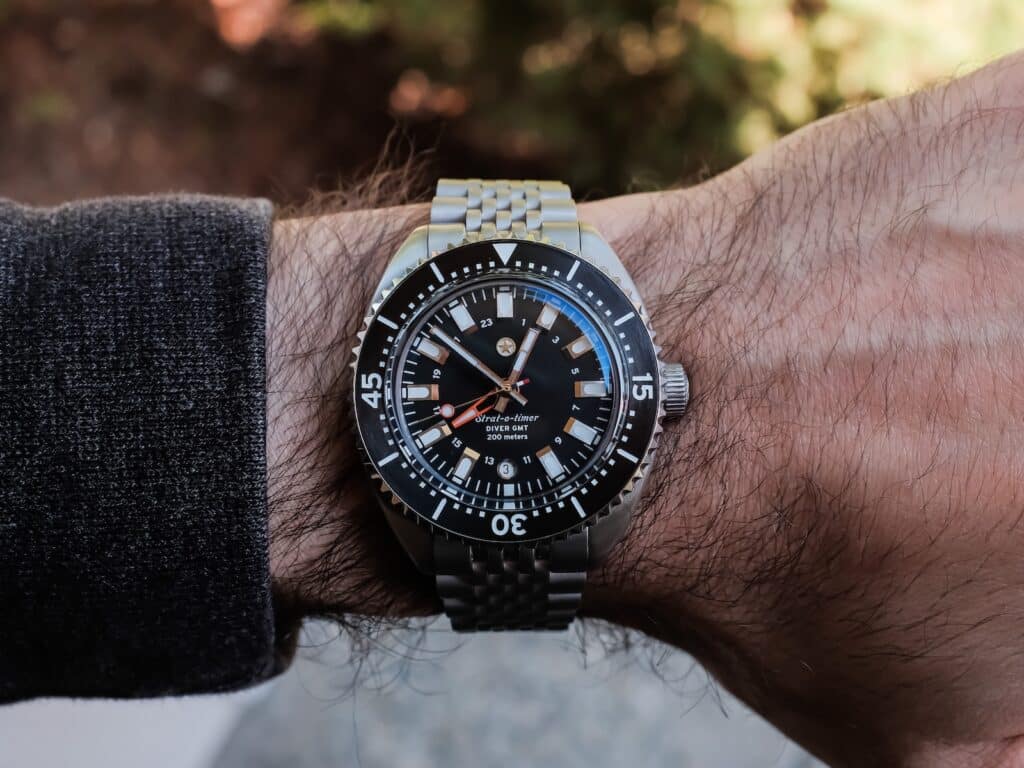
The Jack Mason Strat-o-Timer GMT Titanium Diver shows how titanium’s advantages become more apparent over time. The roughly 40-gram weight reduction is obvious on day one, but it was something we continued to appreciate the longer the watch stayed on the wrist. The fully brushed Grade 2 titanium case and bracelet also age well from an ownership perspective because they’re more focused on function than flash, so everyday signs of wear feel appropriate rather than distracting. Even the toolless micro-adjust clasp followed that pattern. It took a little time to understand at first, but once we had lived with it, it became one of those small features we found ourselves using regularly. That’s the kind of improvement that makes a meaningful difference after months of ownership.
- Steel encourages a “wear first, worry later” mindset, making cosmetic imperfections feel like evidence of regular use rather than damage.
- Titanium shifts the ownership experience toward usability, where comfort, functional finishing, and smart engineering continue to pay off long after the first impression fades.
Cost Considerations: What Does the Extra Money Buy?
Price is one area where steel continues to hold a clear advantage. If you’re shopping for an affordable dive watch, you’ll find no shortage of excellent steel options below $500, with strong choices continuing well into the four-figure range. Titanium follows a different pricing curve. The material is generally more expensive to manufacture, and brands often reserve it for higher-end or more specialized models rather than treating it as a direct substitute for steel.
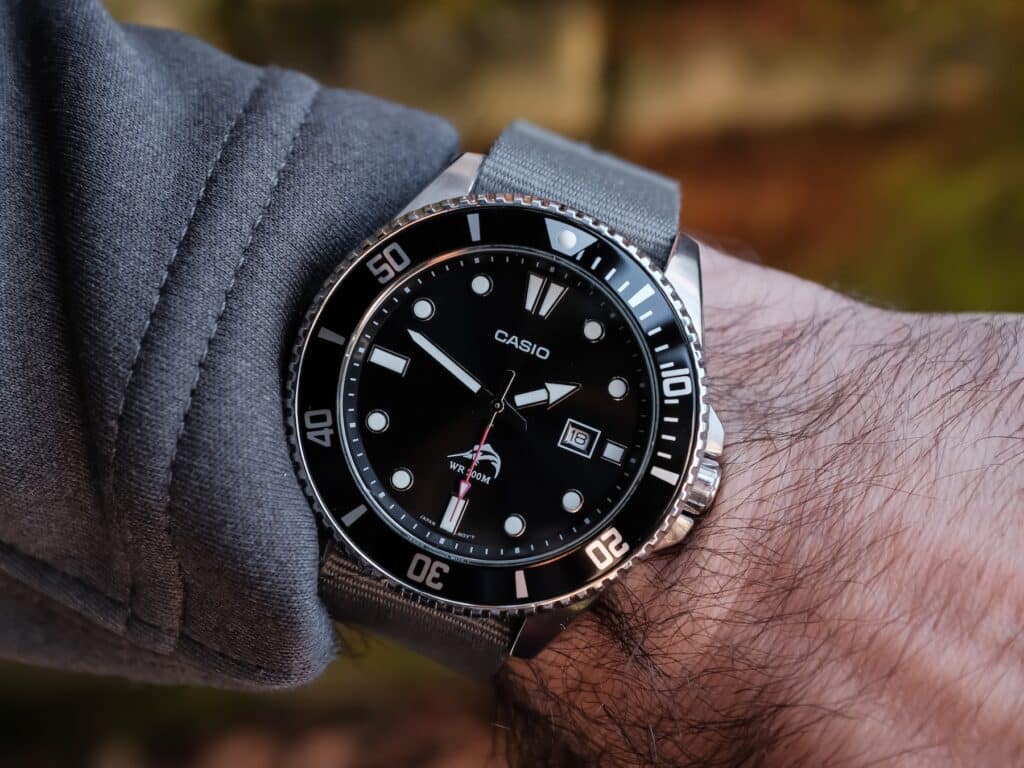
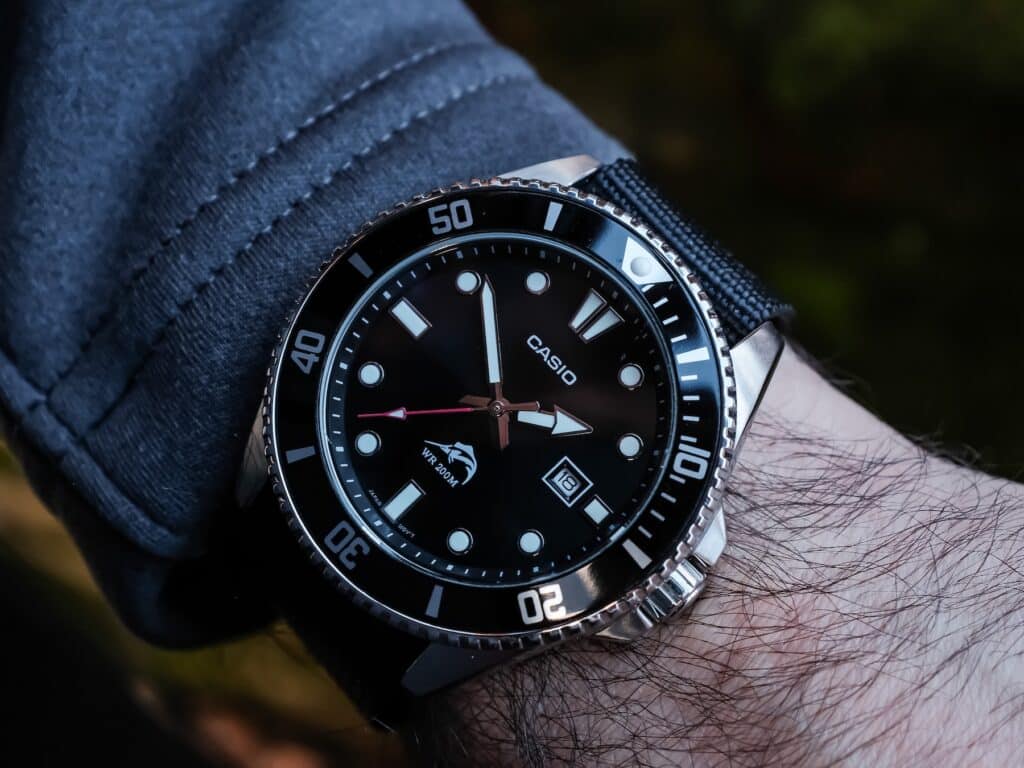
That difference becomes obvious once you start comparing the market. The Casio Duro remains one of the clearest reminders that steel still wins on value and simplicity at the lower end. As discussed in our hands-on review, it proved that you don’t need to spend hundreds of dollars to get an honest, capable dive watch. It focuses on the fundamentals, making it an excellent budget baseline while leaving plenty of room to pay more only if you’re looking for additional refinement rather than basic functionality. From there, steel offers plenty of choice, whether it’s the Citizen Promaster Diver BN0151 around the $250-$300 mark, the Seiko Turtle between roughly $370 and $475, the Mido Ocean Star Tribute around $1,000, or luxury options like the Omega Seamaster Diver 300M above $5,500. That broad price range is something titanium simply doesn’t enjoy.
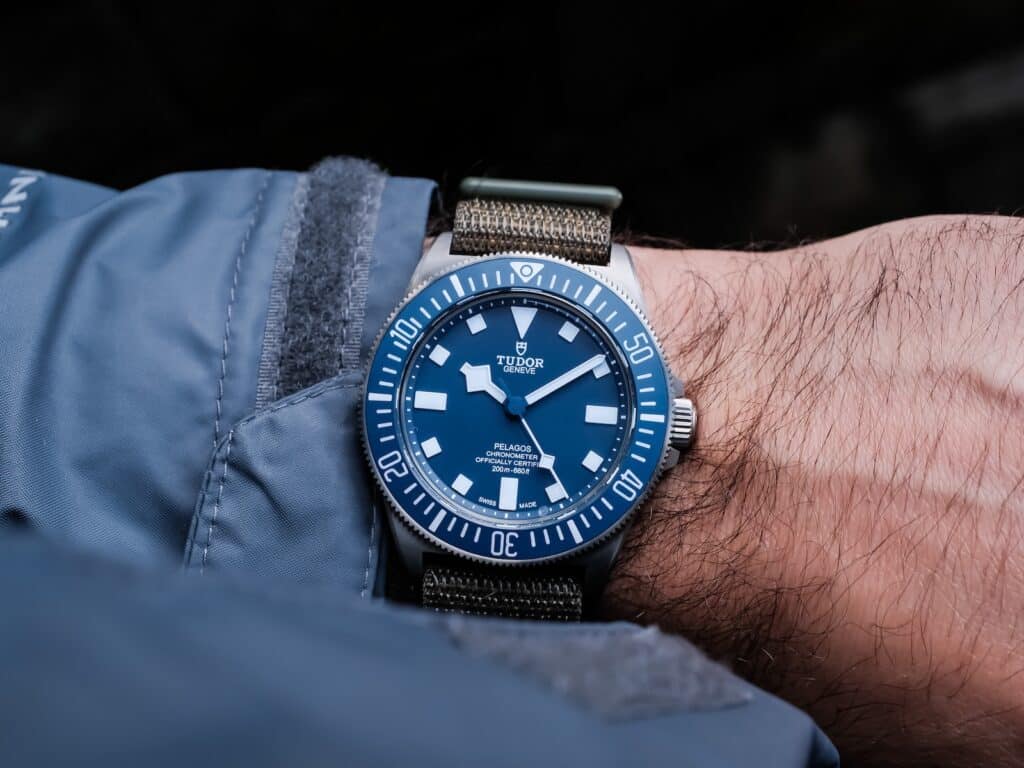
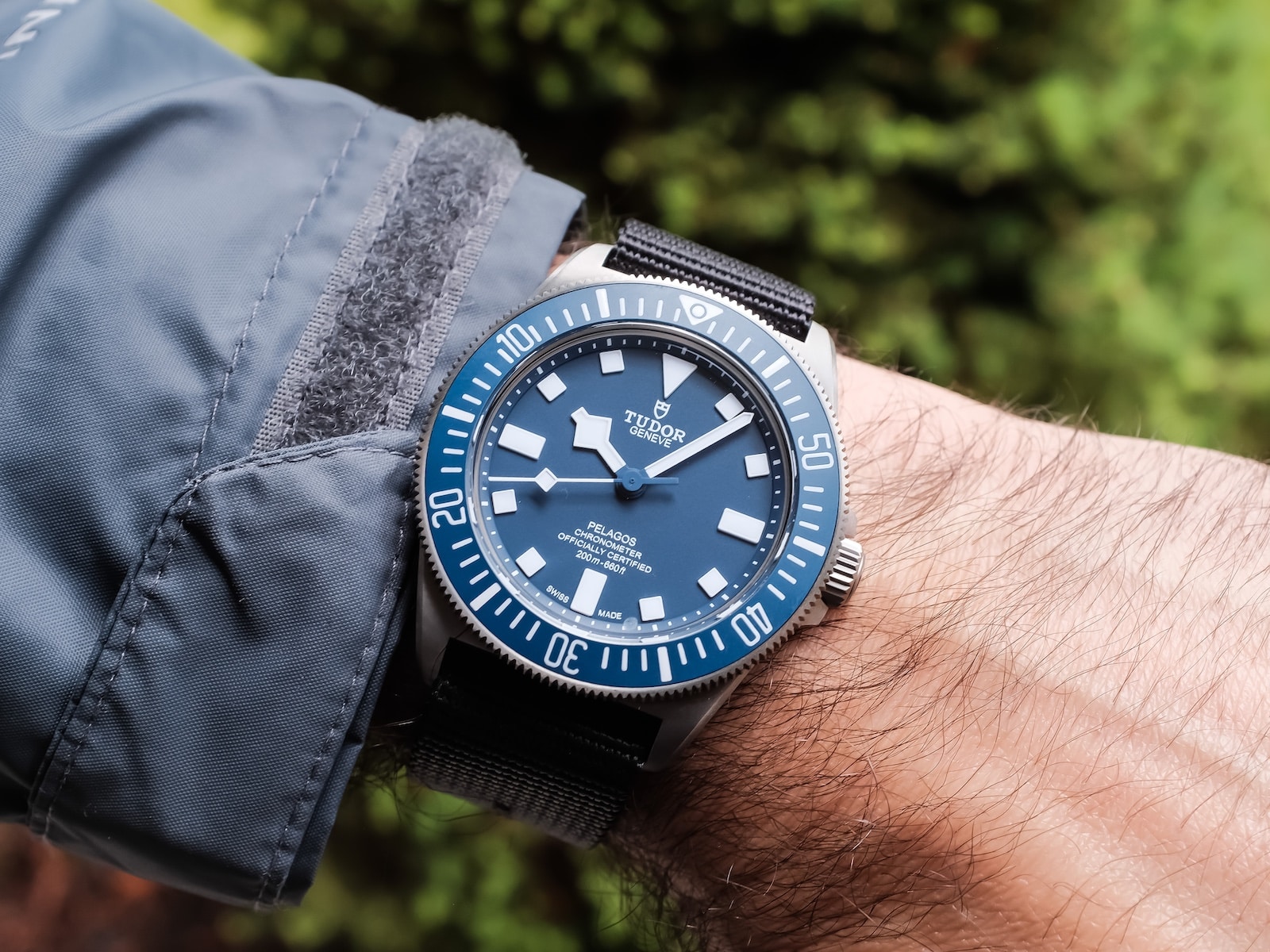
Titanium enters the conversation at a noticeably higher starting point. Enthusiast favorites like the Halios Seaforth IV Titanium already sit close to $1,000, while the Mido Ocean Star Titanium and Jack Mason Strat-o-Timer GMT Titanium Diver push beyond that ($1,200 – $1,400). The Sinn T50 climbs into the $4,000+ range, and our on-the-wrist review of the Tudor Pelagos FXD illustrates why many titanium dive watches occupy this part of the market. Although priced at around the $5,000 mark, the titanium case isn’t treated as an isolated premium feature. Instead, Tudor builds the entire watch around a purpose-driven tool-watch philosophy, with fixed strap bars, a fully matte finish, and a lightweight construction that work together toward the same goal.
- Steel offers one of the widest value ranges in the dive watch category, with compelling options available from under $100 to luxury price points.
- Titanium generally commands a higher entry price because it’s often paired with more specialized engineering and purpose-built designs rather than serving as a like-for-like alternative to steel.
Final Thoughts: Which Material Makes More Sense Long Term?
If you only spend a few minutes trying on a steel or titanium dive watch, it’s easy to think the lighter one is the obvious winner. Our hands-on testing revealed a more complete story. After weeks and months of regular wear, the differences that mattered most had less to do with first impressions and far more to do with how naturally each material fit into everyday life.
Titanium delivered on many of its promises. The weight reduction is real, and the best examples we tested genuinely changed how larger dive watches feel on the wrist without compromising on their capabilities. But those strengths didn’t automatically make titanium the more convincing long-term choice. Over time, we found ourselves appreciating the watch’s overall execution far more than the material it was made of.
That’s where steel continued to pull ahead. Not because titanium fell short, but because steel consistently delivered fewer compromises across a much broader range of watches and budgets. It simply kept doing what a dive watch is supposed to do without asking us to think too much about the material itself.
If the question is which material makes more sense in the long term, our answer is still steel. It remains the benchmark not because it’s more traditional, but because it continues to ask for the fewest compromises once the excitement of a new watch gives way to everyday ownership. Titanium has firmly established itself as a worthwhile alternative, but steel is still the material we’d recommend to most buyers after months of real-world testing.
If you’ve spent meaningful time with both, let us know where you landed in the comments. We’d love to hear whether your opinion changed after living with them beyond the honeymoon period.

Co-Founder and Senior Editor
Kaz has been collecting watches since 2015, but he’s been fascinated by product design, the Collector’s psychology, and brand marketing his whole life. While sharing the same strong fondness for all things horologically-affordable as Mike (his TBWS partner in crime), Kaz’s collection niche is also focused on vintage Soviet watches as well as watches that feature a unique, but well-designed quirk or visual hook.
How cum ya`ll still broke ?
I would go with Citizen NB6021-17E Promaster Fujitsubo Mechanical Diver
Its Super Titanium and stronger then steel. At € 650,- it is the best/ter watch sitting right in the middle of your selection. And with a story. Looks AAA.
Cant believe it did not come out on top here. It is the only cheap watch i would buy, if my vintage Scubapro quartz dies ( 10mm high with sapphire and PVD ). 9105 easy to regulate yourself.
Had the IWC Porsche Deign 2000 mtr titanium, georgious but 5K back then, crazy for a diver but just 11mm high. SUper cool.
All the best
Ron:
When these Fujitsubo divers came out from Citizen I was so impressed. I had the opportunity to handle one briefly in person and it left a strong impression. You’re totally spot on in calling out that they need to be on the list. However the only reason they aren’t is because we’ve never conducted a full hands-on review of one. We only try and feature watches here that we’ve spent time testing, which we have yet to do. It’s certainly an option for us though so we’ll consider it in our review planning process.
As to why we’re still broke… what can we say lol – that’s just how it goes.
Best,
-Kaz
Nice article. I love the selection choice.
My Citizen Postmaster Tough titanium has been constantly on my wrist daily since I bought it in the year 2000.
Has been bashed and scraped and barely shows a mark.
Looks like it might outlive me.
Hi, Ralph!
Thank you – glad you enjoyed the piece and the models we highlighted. Oh the Promaster Tough line is fantastic. We’ve had some hands-on experiences with them in the past and it’s certainly something we want to do a hands-on review with in the future.
Best,
-Kaz