The Seiko Turtle has become one of those affordable divers we end up using as a reference point, even when we’re trying not to. It wears with that familiar Seiko softness, it has a personality people recognize, and it sits in the hobby as a safe recommendation for good reason. But this list exists to answer a narrower question: which watches make the best alternatives to the Seiko Turtle when we want something affordable, capable, and a little less predictable? After nearly ten years of reviewing watches at TBWS, we’ve learned that the good stuff is not always the watch everyone tells you to buy first.
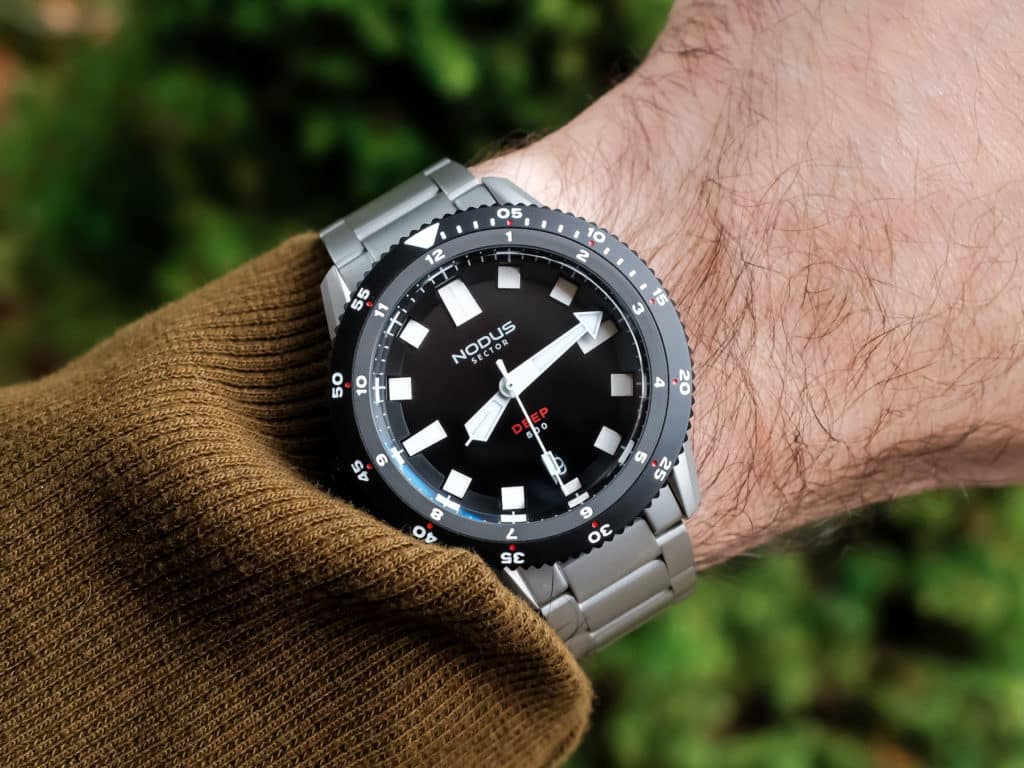
That is the lane we’re staying in here. These are not substitutes because the Turtle is bad, and they are not here to beat it on a checklist. They are present because each one offers a different version of what an affordable diver can be: lower-maintenance, weirder, dressier, more tool-like, more modern, or more charming in a way that only makes sense after wrist time. Some will make more sense for a first serious dive watch, some for a beater you stop babying after week two, and some for microbrand-favoring collectors who already know they like Seiko but are tired of buying around the same idea again.
Invicta Pro Diver
| Price: | $60 – $80 |
| Water Resistance: | 200m |
| Case Dimensions: | 40mm (diameter) x 48mm (lug-to-lug) x 14mm (thickness) |
| Lug Width: | 20mm |
| Movement: | NH35A (Mechanical) |
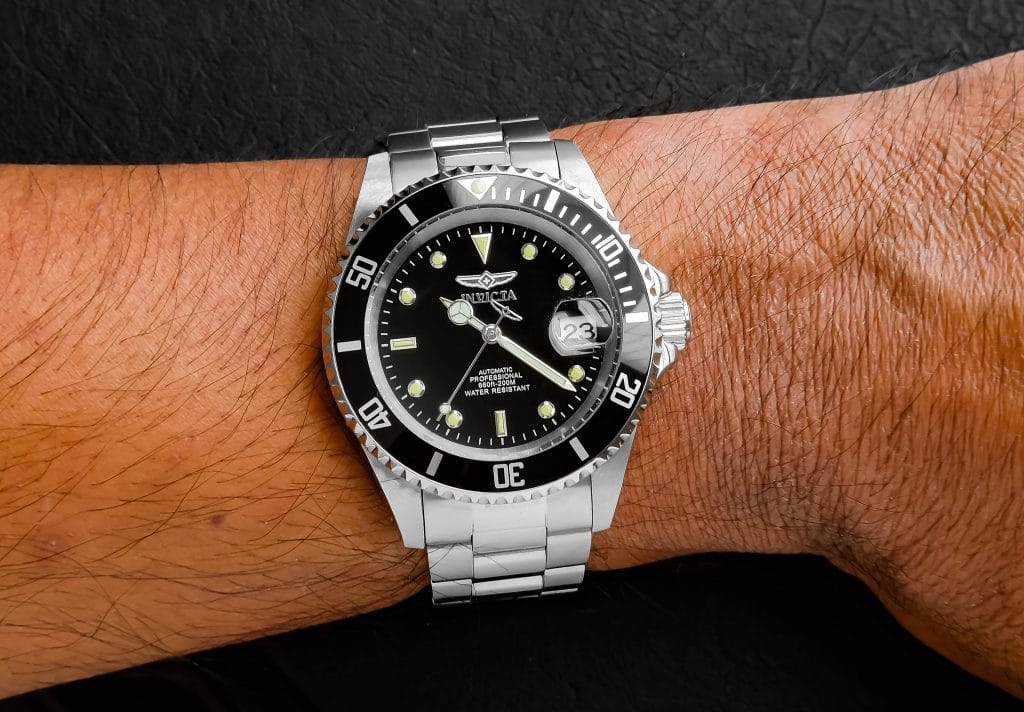
The Invicta Pro Diver 8926OB only makes sense on this list if we’re being honest about what it is: a very low-price value/homage pick, not some soulful Seiko Turtle replacement with its own strange collector mythology. The Invicta name carries baggage, and the Sub-style design is about as subtle as a borrowed homework assignment, but the actual watch is more wearable than the price suggests.
The bracelet is one of the first details that makes the watch feel less throwaway than expected. It starts at 20mm and tapers to about 18mm at the clasp, which helps the watch feel balanced instead of top-heavy. The hollow end links are noticeable if you’re looking for them, and the flip-lock clasp is stiff and likely to show wear sooner than we’d want. Still, the bracelet articulates smoothly, avoids sharp edges, and provides enough micro-adjustment for daily wear. For a watch this cheap, that matters more than a spec sheet flex.
Our hands-on review revealed that the bezel is also better than expected. The aluminum insert keeps the look familiar, and the action is firm enough for everyday timing with only a little play between positions. Coffee, laundry, parking meters, timing how long you’ve been pretending not to browse watches online — it handles all of that fine. The dial adds applied markers and hands that catch the light nicely during the day, but the lume is where the budget shows. It’s uneven, fades quickly, and the hands outlast the markers. Fine for a glance, but not the watch we’d pick when low-light legibility matters for more than a few minutes. The NH35A movement gives the Pro Diver real mechanical credibility at this price. It winds smoothly, runs consistently enough for normal use, and keeps ownership simple. The crown is large enough to grip without any fingertip gymnastics, and with the crown properly secured, rain, swimming, and accidental soakings don’t feel like immediate drama. The 40mm case helps, too. It sits flat, the lug-to-lug avoids overhang, and there’s no long adjustment period on the wrist.
As a Turtle alternative, the Invicta is not for someone who wants originality, bright lume, or the warm fuzzy feeling of buying into Seiko’s diver universe. It is for the buyer who wants to spend as little as possible while still getting a comfortable automatic diver that performs better than expected. The mineral crystal will scratch more easily than sapphire, and the giant Invicta branding on the case side will lose some people before the clasp even closes. Still, as the bargain-basement option in this group, the 8926OB earns its spot by being mechanically dependable, easy to wear, and honest about the compromises once the low price stops doing all the talking.
Pros:
- The bracelet wears better than expected, with smooth articulation, clean enough edges, and a useful taper.
- The bezel action is firmer and more usable than the price suggests.
- The 40mm case sits flat and feels natural from the first wear.
- The NH35A movement keeps ownership simple, dependable, and easy to service.
Cons:
- The mineral crystal is more prone to scratches than sapphire.
- The large Invicta case-side branding is hard to ignore and will not suit every wrist.
- The lume is inconsistent and fades fast, especially on the markers.
- The clasp flip lock feels stiff and may show wear sooner than ideal.
Casio Duro
| Price: | $85 |
| Water Resistance: | 200m |
| Case Dimensions: | 44.2mm (diameter) x 48.5mm (lug-to-lug) x 12.1mm (thickness) |
| Lug Width: | 22mm |
| Movement: | Casio 2784 Quartz |
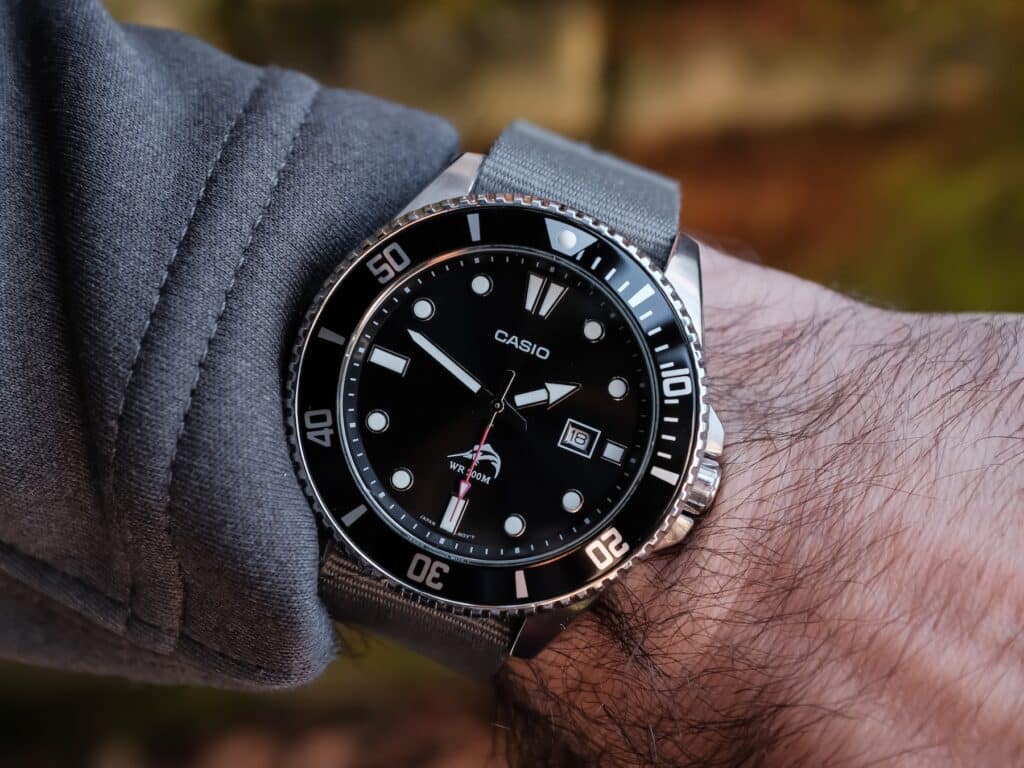
The Casio Duro is what happens when a watch is cheap enough to dismiss, then competent enough to make that dismissal feel a little stupid. It is not trying to out-charm a Seiko Turtle, and it is not hiding any secret enthusiast-finishing trick under the bezel. It is simple, water-ready, easy to read, and cheap enough that you stop worrying about it almost immediately. That is the appeal. The 200m water resistance, screw-down crown, and solid caseback give it more practical confidence than most watches in this price range have any right to offer.
The dial is where the Duro earns a lot of its day-to-day trust. There is minimal text, a clean layout, reflective arrow-shaped hands, applied markers, and a framed date at three, so checking the time does not require a second pass. It has the straightforward usefulness we want from a diver-style watch, especially when it becomes the one grabbed for errands, travel, pool days, or anything involving sunscreen and poor judgment. The lume covers enough surface area to be helpful at first, but it fades sooner than we’d like. If nighttime visibility matters beyond a glance, that limitation shows up.
At 44mm, the Duro has real wrist presence, and smaller wrists may find it too broad, even though the shorter lug-to-lug span and downward-curving lugs help keep it more secure than its diameter would suggest. Anyone comfortable with the general footprint of a Turtle will probably adapt quickly, but this is still a large watch, not a sneaky midsize diver. The finishing keeps things honest: brushed top surfaces, polished case sides, and a small bevel that adds a bit of shape without pretending the watch is fancier than it is. The 22mm lug width also helps. Rubber, nylon, bracelets — the Duro is easy to dress up, dress down, or make slightly worse with the wrong strap. We have all been there.
The quartz movement is a major reason this watch works as the budget anchor here. It hacks, has a quick-set date, and in our hands-on experience, has stayed within ±20 seconds per month. That changes the relationship. You can leave it alone for days, pick it back up, and get on with your life instead of winding, setting, and wondering whether your mechanical watch has decided to develop a personality. The aluminum bezel also feels more controlled and deliberate than expected at this price, avoiding the loose, rattly action that can make cheap divers feel like props. The flat mineral crystal is the obvious compromise, since it will not shrug off scratches as easily as sapphire. Still, for someone who wants simple diver styling, real everyday usability, and almost absurd value, the Duro remains hard to argue with.
Pros:
- The 200m water resistance, screw-down crown, and solid caseback give it genuine water-ready practicality.
- The bezel action feels more controlled than expected and avoids the loose feel common in cheaper divers.
- The quartz movement is accurate, low-maintenance, and easy to pick up after a few days off the wrist.
- The clean dial, reflective hands, applied markers, and framed date make it easy to read in everyday use.
- The 22mm lug width makes strap swaps easy across rubber, nylon, and bracelets.
Cons:
- The lume is useful at first, but fades sooner than we’d want for longer low-light use.
- The 44mm case may feel too large on smaller wrists.
- The flat mineral crystal is more likely to pick up scratches than sapphire.
Orient Mako II
| Price: | $160 – $220 |
| Water Resistance: | 200m |
| Case Dimensions: | 41.5mm (diameter) x 47mm (lug-to-lug) x 13mm (thickness) |
| Lug Width: | 22mm |
| Movement: | Orient Caliber F6922 (Mechanical Movement) |
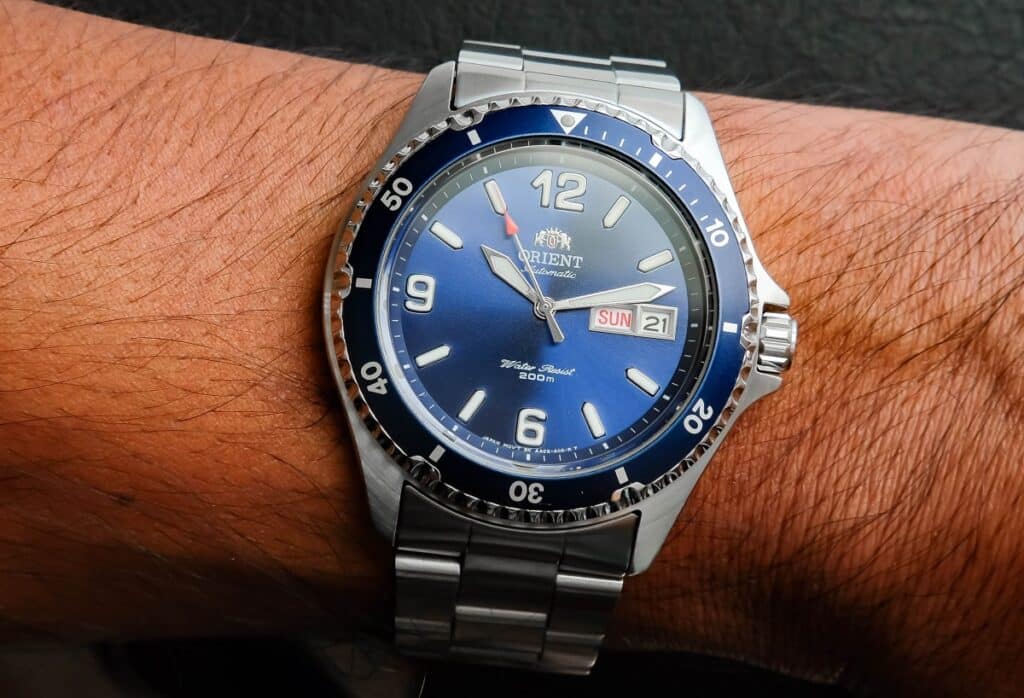
The Orient Mako II gives the classic mechanical-diver experience without steering you straight back into the usual Seiko orbit. It feels familiar in the best way: easy to wear, easy to understand, and restrained enough that it does not spend the whole day reminding you it is on your wrist. For someone who likes the idea of a traditional affordable diver but wants something cleaner and less Turtle-shaped, the Mako II has always had that quiet stepping-stone appeal.
The case does a lot of the heavy lifting. At 41.5mm, it avoids the oversized feel that can make some divers wear like small appliances, and the compact lug-to-lug keeps it planted across a wider range of wrists. It sits flat, does not feel top-heavy, and works well for full-day wear. The finishing is not trying to dazzle anyone, which is probably for the best. Brushed lugs, polished case sides, and a case-to-bracelet transition that follows the lines of the case all help it feel more complete than many affordable divers, in which the bracelet looks like it was added to the watch five minutes before shipping.
The dial brings enough personality without making legibility harder than it needs to be. In our testing and wear experience, the sunburst finish gave the watch some movement in changing light, while the applied markers stayed easy to read at a glance. The framed day-date window ties in nicely with the polished hands, and the red-tipped second hand adds a small hit of contrast without making the watch feel loud. The lume is serviceable for quick checks, but it does not hang around as long as stronger dive-watch options. If low-light performance is high on your list, the Mako II will not be the watch that wins that argument.
The F6922 in-house movement is one of the reasons this watch still feels practical rather than merely nostalgic. Hacking and hand-winding make it simple to restart after a few days off the wrist, so there is no awkward shake-it-until-it-wakes-up routine. The bezel is more mixed. Its 120-click action feels firm and controlled once engaged, but the sloped edge can make it harder to grip than chunkier, more aggressively cut bezels. The bracelet is secure and comfortable during normal wear, though the hollow end links are noticeable once the watch is off the wrist. Add the mineral crystal, which is functional but easier to scratch than sapphire, and the Mako II becomes a clear choice for buyers who want a classic mechanical diver look at an approachable price, with enough compromises to remind you where the money was saved.
Pros:
- The compact lug-to-lug and 41.5mm case help it sit flat and wear comfortably on a wide range of wrists.
- The F6922 movement adds hacking and hand-winding, making daily use easier after time off the wrist.
- The sunburst dial, applied markers, framed day-date window, and red-tipped second hand give it character without hurting readability.
- The 120-click bezel feels firm and controlled once you get a proper grip.
- The case-and-bracelet integration feels more cohesive than expected at this price.
Cons:
- The lume works for quick checks, but it does not last as long as stronger diver lume.
- The sloped bezel edge can be awkward to grip.
- The hollow end links are noticeable when handling the watch off the wrist.
Orient Ray II
| Price:: | $160 – $220 |
| Water Resistance: | 200m |
| Case Dimensions: | 41.5mm (diameter) x 47mm (lug-to-lug) x 13mm (thickness) |
| Lug Width: | 22mm |
| Movement: | Orient Caliber F6922 (Mechanical Movement) |
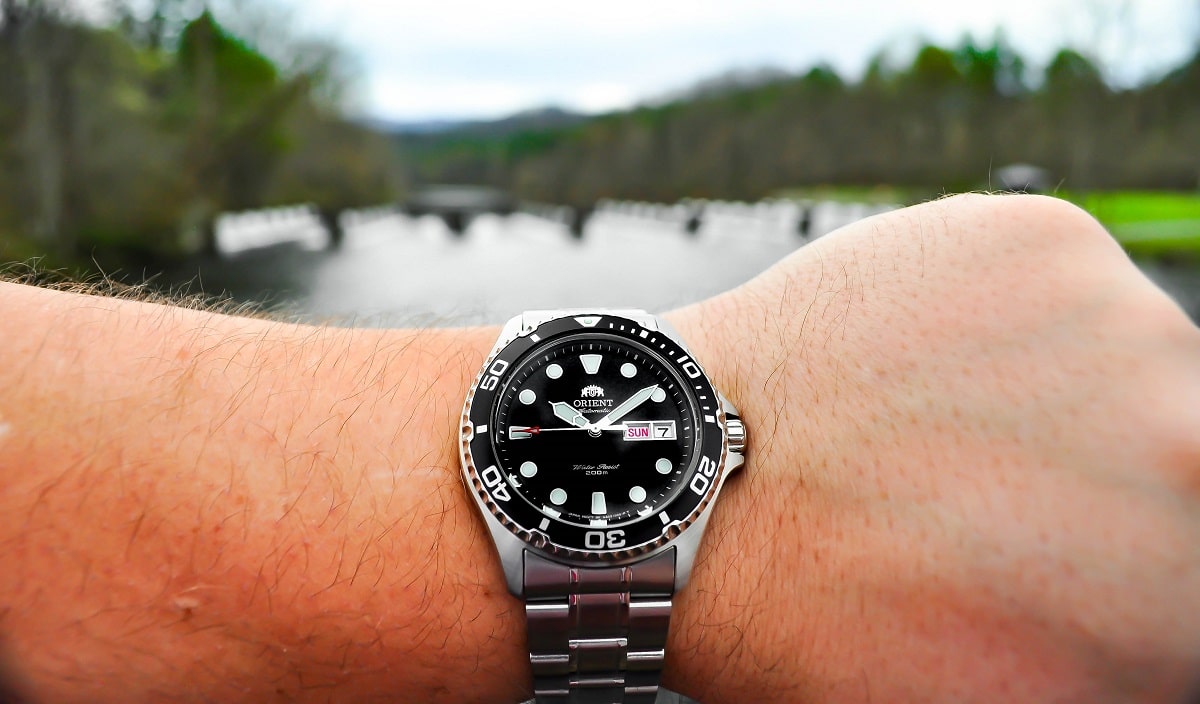
The Orient Ray II takes the familiar, affordable Orient diver formula and pushes it toward a darker, more traditional dive-watch look. Where the Mako II feels like the easier all-rounder, the Ray II gives buyers the black-dial, round-marker personality that many people associate with classic divers without sending them straight back into Seiko Turtle territory. The dial is the main draw here: chrome-edged round indices, trapezoidal quarter-hour markers, a matte black surface, a surrounding chapter ring, and a cleanly framed split day-date window. The applied logo, tiny red dot in the shield, chromed sword hands, and red-tipped second hand with a lumed end give it enough detail to feel considered rather than generic. The lume is also better than expected, glowing bright green and holding up well for an affordable Orient.
The case helps the Ray II feel more refined than its price suggests. It lands in that useful zone where it reads as a proper diver without becoming wrist furniture, and the proportions leave little wasted space. Brushed top surfaces, polished case sides, softened edges, and gently downward-curving lugs help it sit naturally on the wrist, while the dolphin caseback gives it a bit of old-school Orient personality. The mineral crystal keeps the view clear, but it is still a compromise if you are used to sapphire or tend to scrape watches into door frames, desks, and other enemies of affordable watch ownership.
The F6922 in-house movement is a meaningful upgrade for daily use. The original Ray had a screw-down day-correction pusher at 2 o’clock, which was quirky, but the Ray II removes it because the newer movement no longer needs it. That makes the case cleaner and the day-to-day setup simpler. Hacking and hand-winding mean you can restart the watch after a few days off the wrist without the old shake-it-awake routine, and the 22-jewel movement’s claimed -15 to +25 seconds per day with roughly 40 hours of power reserve is respectable at this price. The trade-off is that some Orient fans may miss the oddball charm of that old pusher.
From our time testing the watch, the weak points mostly show up in the parts you touch. The 120-click bezel is an upgrade over the original Ray, with a polished bezel, aluminum insert, and a small lume pip at 12. Still, the coin edge is not tall enough, and because the bezel sits slightly inside the case diameter, turning it can feel like a fingernail exercise. Bezel quality can vary between examples, too, with some rotating smoothly and others feeling nearly seized. The engraved crown looks nice, but it is small, polished, guarded, and short on grip, which gets annoying if you rotate watches and reset them often. The stock bracelet is usable and has a secure clasp, but the hollow 22mm end links and mild taper to 20mm still feel too wide for how handsome the watch can look. A NATO strap, a leather strap, or a stronger aftermarket bracelet can make the Ray II feel much more dialed in.
Pros:
- The bright green lume performs better than expected for an affordable Orient diver.
- The case wears comfortably, with softened edges, downward-curving lugs, brushed top surfaces, and polished sides.
- Removing the old 2 o’clock day pusher gives the case a cleaner look and simplifies daily setup.
- It works well on NATO, leather, or a sturdier aftermarket bracelet if the stock bracelet feels underwhelming.
Cons:
- The small polished crown is hard to grip, especially with the crown guards crowding it.
- The stock bracelet is only decent, with hollow 22mm end links and a taper that still feels too wide.
- The bezel can be awkward to turn, and the bezel feel may vary noticeably between examples.
Citizen Promaster Diver BN0151
| Price: | $250 – $300 |
| Water Resistance: | 200m |
| Case Dimensions: | 43mm (diameter) x 48mm (lug-to-lug) x 11.5mm (thickness) |
| Lug Width: | 20mm |
| Movement: | Citizen Eco-Drive E168 (solar quartz) |
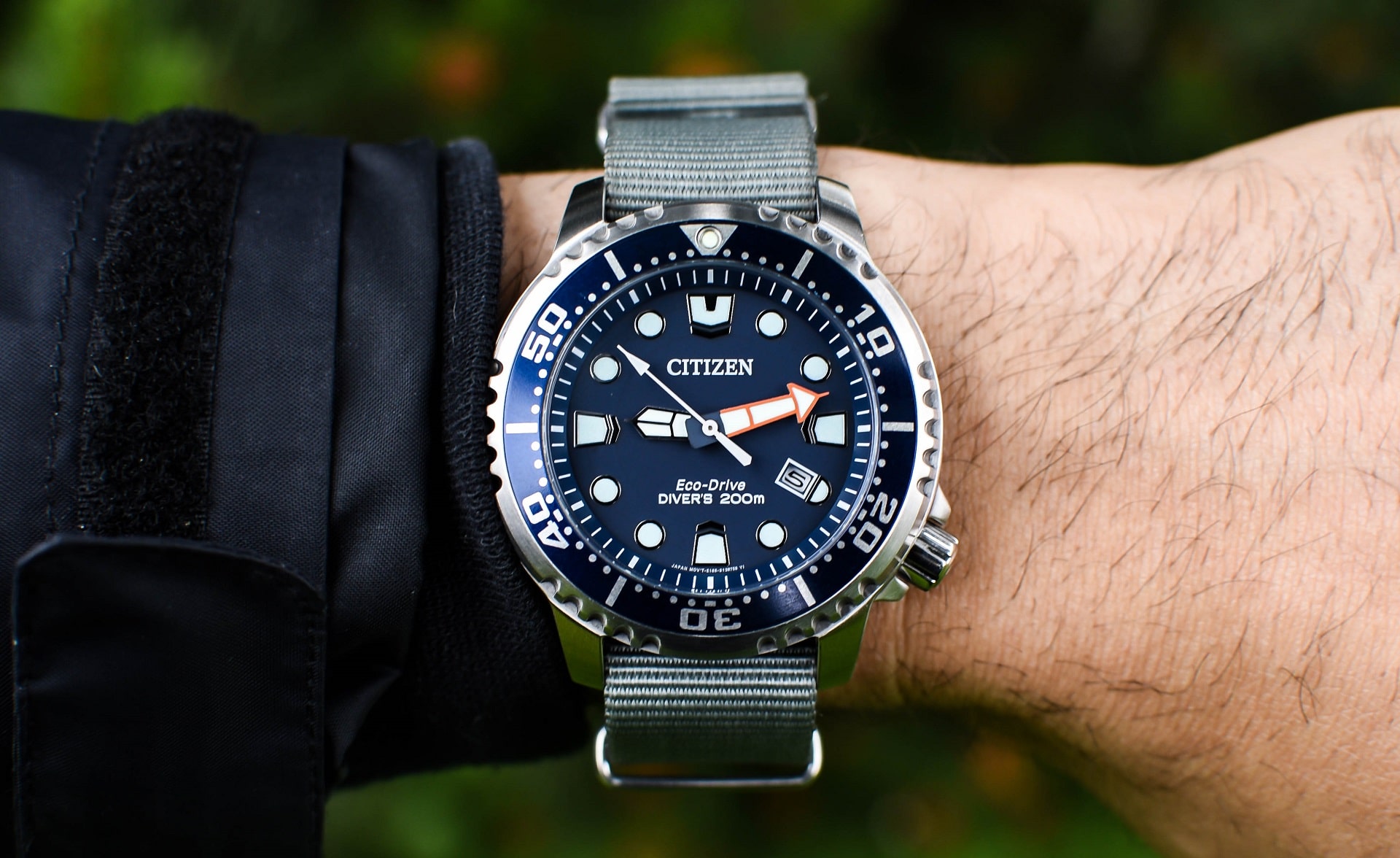
The Citizen Promaster Diver BN0151 is the watch that makes mechanical-diver fuss feel optional. It is not trying to give you the warm ritual of winding a watch before leaving the house, and it is not chasing the Seiko Turtle’s cushion-case charm. Its whole appeal is more practical than romantic: put it on, get it wet, forget about it, and let Eco-Drive handle the boring parts of ownership. While we had it in for review, the movement stayed around ±15 seconds per month, and once fully charged, it offered about six months of runtime. We only saw the low-power indicator once, and after a brief stretch in the light, it returned to normal. That kind of convenience matters when a dive watch is meant to feel ready, not to beg for attention.
The case also does more than the 43mm diameter suggests. On paper, it sounds like it should wear large, but the short lug-to-lug span and downward curve help it stay planted instead of sprawling across the wrist. It also wears lighter than expected throughout the day, with that odd “wait, am I still wearing this?” quality we often associate with much lighter watches. The 4 o’clock crown adds to that comfort because it stays out of the way when your wrist bends, which becomes noticeable during longer wear. For a rugged, affordable diver, that ergonomic stuff matters more than another shiny surface. The 200m water resistance gives it enough real-world confidence for pools, lake weekends, rainstorms, and the kind of “diving” most of us do. It still feels like an affordable watch, but not one you have to treat like it’s made of pastry.
The dial keeps the same useful energy. The hands and markers are bold enough for quick daylight checks, and the blue dial has a subtle purple shift at certain angles that lends the watch some personality without becoming a flashy distraction. In low light, the aqua-toned lume stayed visible for hours, and the lumed pip on the seconds hand gave us a quick running check when visibility dropped. That is the kind of small detail that sounds minor until you are half-awake, looking at your wrist, and trying to confirm the thing is still ticking.
The compromises are still there because this is an affordable Citizen, not a miracle with spring bars. The mineral crystal does not offer sapphire-level scratch resistance, though ours held up better than expected during extended wear and avoided obvious damage. The 60-click bezel stayed aligned and felt deliberate in use, but the grip could get slick with wet hands, which is exactly when you want more bite. The stock polyurethane strap matches the tool-watch personality, but it starts stiff and needs time to relax. We preferred it on a NATO, where the watch felt more balanced, more casual, and easier to wear all day. For someone who wants a rugged, low-maintenance diver that feels useful without following the usual Seiko route, the BN0151 is one of the easiest recommendations here.
Pros:
- The Eco-Drive movement keeps ownership simple, with tested accuracy around ±15 seconds per month and about six months of runtime on a full charge.
- The aqua-toned lume stays visible for hours, and the lumed second-hand pip helps with quick running checks.
- The 200m water resistance makes it easy to trust around pools, lakes, rain, and rough daily use.
- The 43mm case wears better than expected, thanks to the short lug-to-lug span and downward curve.
- The 4 o’clock crown improves comfort during longer wear.
Cons:
- The bezel can feel slippery when your hands are wet.
- The stock polyurethane strap starts stiff and takes time to break in.
Citizen NY0040
| Price: | $250 – $350 |
| Water Resistance: | 200m |
| Case Size: | 42mm (diameter) x 47.3mm (lug-to-lug) x 12.6mm (thickness) |
| Lug Width: | 20mm |
| Movement: | Miyota automatic Caliber 8204 |
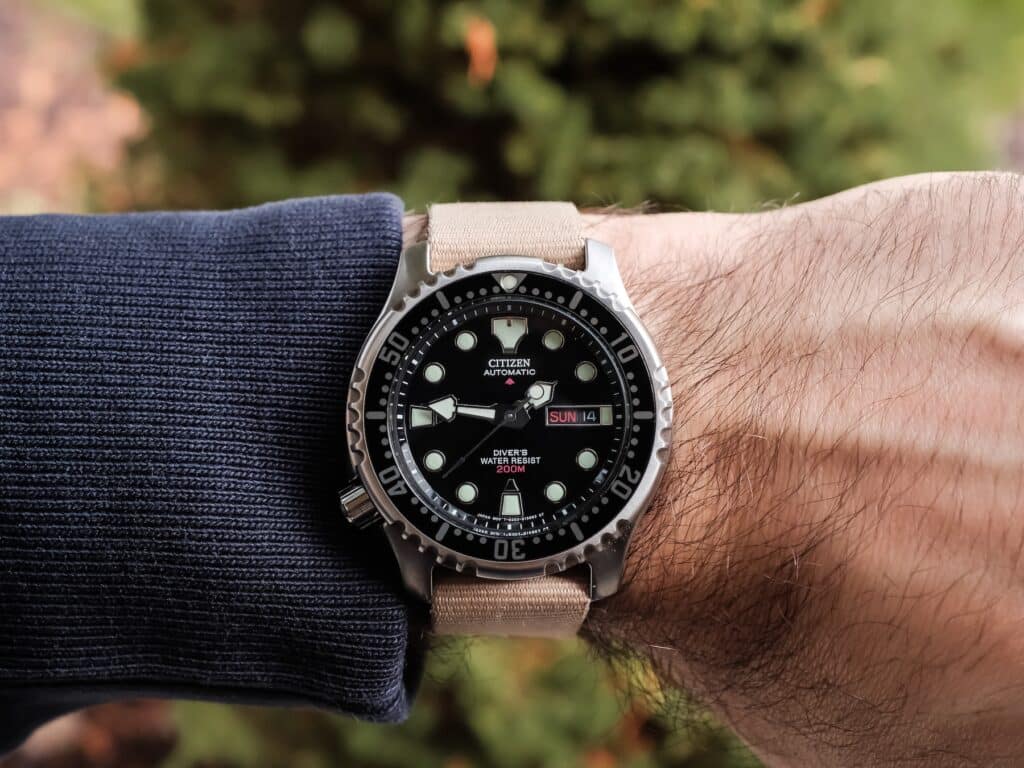
The Citizen NY0040 quietly breaks the habit of comparing every affordable Japanese automatic diver to an old Seiko. It has its own rhythm: ISO-rated tool-watch credibility, a left-side crown, a compact wearing profile, and enough professional-diver association to feel legitimate without sliding into collector mythology. The Italian Navy COMSUBIN connection adds weight, but the appeal is simpler. Citizen built a functional automatic diver and let the reputation follow, which is why it still feels fresh next to the usual SKX/Turtle conversation.
The crown at 8 o’clock looks odd at first, especially if your hands are used to conventional divers, but the comfort payoff is immediate. It stays away from the back of the hand during typing, driving, or long wear, and it also works naturally for left-handed wearers or anyone who wears a watch on the right wrist. The case is nearly 42mm, yet the just-over-47mm lug-to-lug, restrained thickness, compact dial opening, inward-sloping bezel, and shorter visual footprint help it wear smaller than the numbers suggest, even on a 6.75-inch wrist.
During daily wear and testing, the NY0040 feels dense without turning bulky. Brushed upper surfaces, polished flanks, broad tooth-like shoulders, and a softened shape keep it from looking like another straight-lug diver template. There is some old-school skin-diver warmth under the tool-watch attitude, which gives it more charm than photos suggest. The bezel is one of its best tactile points: the coin-edge grip works well with wet fingers, alignment on our example was dead-on, and there was no wobble or slack between clicks. The 60-click action, aluminum insert, and smooth rotation felt confident and a bit more satisfying than the bezel on the Eco-Drive Promaster Diver.
The black dial keeps everything clear. The hands and hour markers are easy to read in daylight, the day-date window at three blends in well thanks to the darker background and lighter text, and the small red arrow adds personality without clutter. The 200m water resistance makes it ready for swimming, snorkeling, saltwater accidents, and the usual “we brought the wrong watch” moments. The lume is dependable rather than dramatic; it does not hit as hard as some Seiko divers at first, but the hands and markers stay useful once your eyes adjust. Inside, the Miyota 8204 adds hacking and hand-winding, though the rotor is loud enough that longtime Miyota wearers will recognize it instantly. The thick stock rubber strap works, but the watch feels better on a NATO, and an aftermarket bracelet support gives it room to evolve. The mineral crystal is the scratch-resistance compromise, but for a classic Japanese automatic diver outside the usual Seiko path, the NY0040 has plenty of its own gravity.
Pros:
- The clear black dial, practical lume, and 200m water resistance give it real tool-diver usefulness.
- The left-side crown improves comfort and gives the watch a distinctive wearing experience.
- The coin-edge bezel has a strong grip, clean alignment, smooth 60-click action, and no noticeable play on our example.
- The Miyota 8204 adds hacking and hand-winding for easier setting after time off-wrist.
- Easy strap changes and support for aftermarket bracelets make personalization simple.
Cons:
- The mineral crystal means scratches will appear more quickly than with sapphire.
- The Miyota rotor is quite loud and may annoy some wearers.
- Right-handed users may need a short adjustment period with the left-side crown.
Orient Kamasu
| Price: | $250 – $375 |
| Water Resistance: | 200m |
| Case Dimensions: | 41.5mm (diameter) x 47mm (lug-to-lug) x 13mm (thickness) |
| Lug Width: | 22mm |
| Movement: | Orient F6992 (automatic movement) |
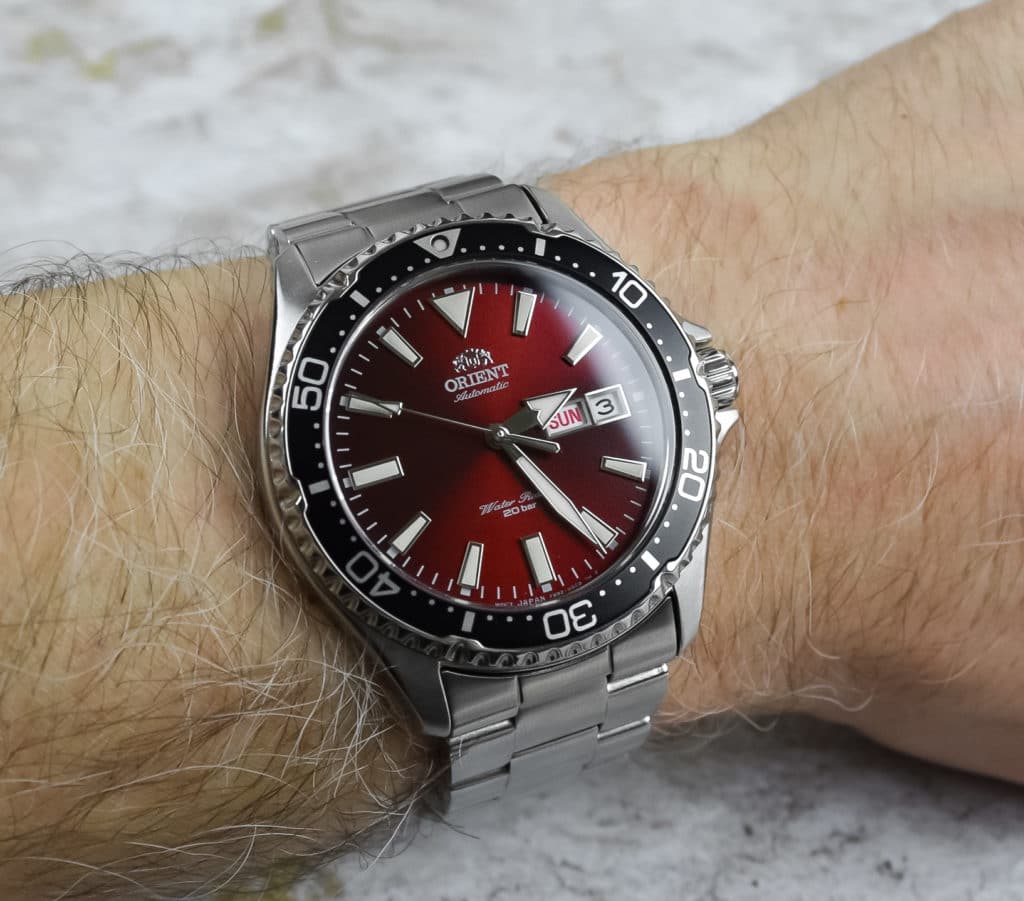
The Orient Kamasu is the mechanical diver that makes the non-Seiko argument easiest to understand. It has the familiar Japanese affordable-diver appeal, but the execution feels sharper than the price usually allows. In our hands-on review, the brushed case surfaces looked clean and consistent, the bezel action felt tight without becoming stiff, and the crown operation was smooth. None of it feels overdecorated, but the watch gives the impression that Orient made a few careful decisions instead of simply building to the lowest possible number.
The dial gives the Kamasu most of its character. The wine-red sunburst finish catches light with enough depth to feel interesting, but it does not turn the watch into a shiny distraction unless your taste runs very minimal. Applied indices sit slightly above the dial, creating a slight floating effect, and the handset is proportioned well enough that the minute and second hands reach cleanly toward the edge for quick reading. The framed day-date window keeps things tidy, and the Orient logo does not bully the rest of the layout. Lume is one of the stronger points here: bright, quick to charge, and in our experience, capable of holding its own against plenty of Seiko divers we’ve tested.
On the wrist, the 41.5mm case lands in a comfortable middle ground. It has enough presence to feel like a proper diver, but the curved lugs and roughly 13mm thickness keep it balanced rather than bulky. The sapphire crystal helps the whole watch feel more durable than many rivals at this level, especially when paired with 200m of water resistance. The aluminum bezel insert is the trade-off, since it will show scratches more readily over time, but the actual bezel action gives the watch a confident feel.
The in-house F6922 movement keeps ownership straightforward with hacking and hand-winding, and accuracy stayed within expected tolerances during our review period. This is not a watch for someone chasing chronometer-level precision; it is about consistency, usability, and avoiding a fussy mechanical-diver experience. The bracelet matches the watch well enough, with a fully brushed finish and a secure fit on the wrist, and the four micro-adjustment positions make longer wear easier to dial in. The clasp and end links do not feel as refined as the rest of the watch, and the crown can be hard to grip because of its small size and crown guards. Still, for someone who wants the obvious mechanical non-Seiko value pick with strong specs, sharp looks, and a reasonable price, the Kamasu is hard to talk around.
Pros:
- The sapphire crystal and 200m water resistance give it stronger real-world durability than many watches in this price range.
- The wine-red sunburst dial, applied indices, and well-proportioned handset add character without hurting readability.
- Lume is bright, charges quickly, and holds up well against many Seiko divers we’ve tested.
- The in-house F6922 movement adds hacking and hand-winding for easier everyday use.
- The 41.5mm case, curved lugs, and bracelet micro-adjustments make it comfortable over longer wear.
Cons:
- The small crown can be tricky to grip, especially with the crown guards crowding it.
- The clasp and end links feel less refined than the rest of the watch.
- The aluminum bezel insert will pick up scratches more easily over time.
Scurfa Diver One
| Price: | $250 – $399 |
| Water Resistance: | 500m |
| Case Dimensions: | 40mm (diameter) x 47mm (lug-to-lug) x 14mm (thickness) |
| Lug Width: | 20mm |
| Movement: | Ronda 713SM quartz (our reviewed model)ETA F06.402 Quartz (current models) |
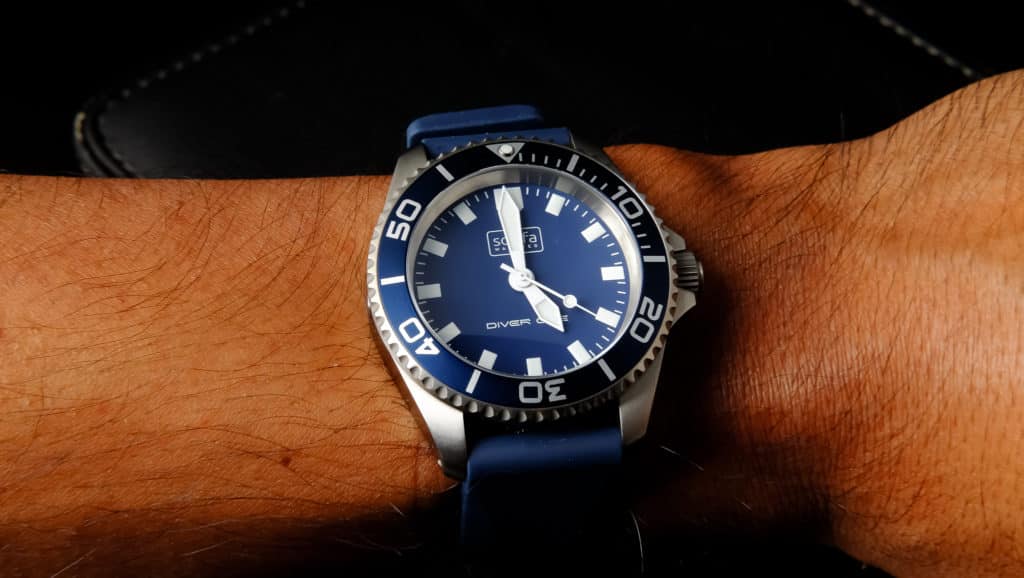
The Scurfa Diver One has the kind of tool-watch credibility that does not need much theater. Paul Scurfield is a saturation diver, and that background shows in the way the watch prioritizes function over enthusiast cosplay. It does not feel like a cheaper stand-in for a more famous diver. It feels like a watch designed by someone who knows what underwater equipment is supposed to do, then priced it within reach of people who probably spend more time timing coffee than decompression stops.
The case is where that purpose comes through first. Titanium keeps it very light but not flimsy or hollow-feeling, which is a tricky balance to strike. At 40mm across and 14mm thick, the Diver One could have worn like a puck, but the contoured mid-case helps reduce wrist contact and makes it feel flatter than the thickness suggests. It stays comfortable for longer wear on land or in water, and the drilled lugs make strap changes feel in line with the watch’s practical attitude. The 500m water resistance, screw-down crown, and helium escape valve are features most of us will hardly ever use, but they are not decorative nonsense here. They are part of the watch’s identity.
The dial and bezel keep the same no-frills focus. The sword hands and oversized hour markers make the watch easy to read quickly, and the matte blue dial shifts subtly in daylight without turning flashy. The domed sapphire crystal adds a bit of distortion at the edges, giving the watch some visual interest while still feeling purposeful. Lume is a real strength: the Super-LumiNova BGW9 is bright enough that we noticed it glowing after only a few minutes of exposure. That’s the kind of “day lume” behavior that always feels slightly ridiculous and satisfying. The bezel action is smooth and precise, with firm clicks and enough grip to feel useful when timing anything from a swim to a coffee break.
Our reviewed model used the Swiss Ronda 713SM quartz movement, which suited the Diver One’s no-nonsense personality. It runs accurately, keeps ownership simple, and offers a five-year battery life, so you are not building your day around winding or resetting it. Current models use the ETA F06.402 quartz movement, keeping that same practical direction. The included rubber strap also deserves credit. It feels secure, comfortable, and well-matched to the watch, thanks to titanium hardware that keeps the whole package purpose-built. The main trade-offs are clear: the 14mm thickness may still feel tall on smaller wrists, and mechanical-only collectors may not warm to the quartz movement. For everyone else, this is one of the strongest enthusiast-value divers here because it has its own tool-diver identity instead of asking to be judged as a budget substitute.
Pros:
- The sword hands, oversized markers, and bright BGW9 lume make legibility a major strength.
- The 500m water resistance, helium escape valve, and screw-down crown give it serious tool-watch capability.
- The titanium case is very light yet feels solid and durable.
- The bezel action is smooth, precise, and grippy enough for practical timing.
- The rubber strap feels secure, comfortable, and well-matched to the watch’s purpose.
Cons:
- The 14mm thickness may feel tall on smaller wrists.
- The quartz movement will not satisfy mechanical purists.
Timex Deepwater Meridian 200
| Price: | $259 |
| Water Resistance: | 200m |
| Case Dimensions: | 44mm (diameter) x 50.5mm (lug-to-lug) x 12.5mm (thickness) |
| Lug Width: | 20mm |
| Movement: | Seiko Epson VX42E |
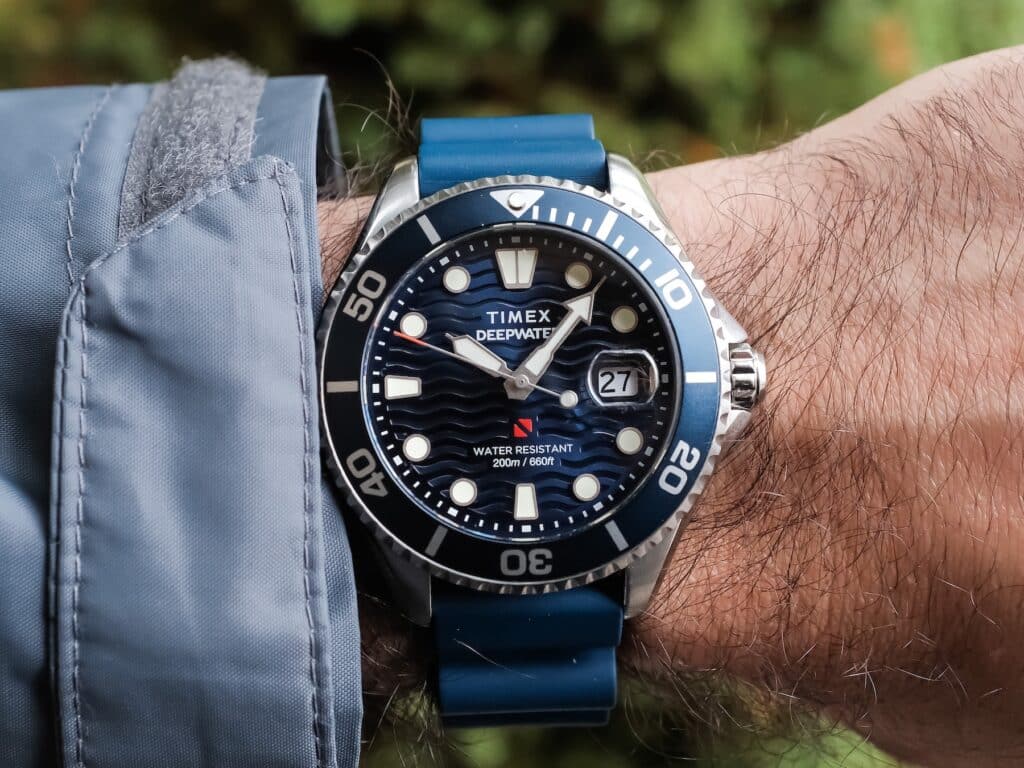
The Timex Deepwater Meridian 200 offers a very different flavor from the Seiko Turtle: straighter, more modern, and less tied to the cushion-case Seiko feel. It feels like Timex is trying to make a proper dive watch without leaning on the usual “remember this old thing?” routine. That alone makes it interesting. It is more substantial than the brand’s typical casual pieces, and at 44mm, it has enough wrist presence to feel like a real tool watch without turning into a dinner plate with lugs. The curved lugs and fairly flat 12.5mm thickness help keep it comfortable, so during daily wear, walks, and general around-the-house use, it never felt like it was trying to win an arm-wrestling match with our wrist.
Our review team found that the materials do a lot to separate it from cheaper-feeling Timex fare. The sapphire crystal equipped with an AR coating is a welcome choice, especially on a watch meant to get bumped around, and the screw-down crown and caseback reinforce the sense that this is built for more than desk-duty splash resistance. The 200m water resistance gives it proper everyday dive-watch confidence, whether that means swimming, travel, or rinsing sunscreen off your wrist after pretending you were outdoorsy all day. The crown action is smooth, too, so setting the time and adjusting the date does not feel like a chore.
The dial brings some personality without overplaying it. The matte blue surface has a subtle wave pattern, applied indices, and a red diver’s flag that adds contrast without cluttering the layout. Legibility is clean and direct, with Super-LumiNova on the hands and markers giving useful low-light visibility. It could be brighter for extended darkness, but it does enough for normal use. The magnifier over the date will split opinions, but the view is clear, and distortion stays minimal. In practice, it does not get in the way, and some readers will appreciate the extra readability.
Inside, the Seiko Epson VX42E quartz movement keeps the whole thing practical. You get reliability, a quick-set date, and up to three years of battery life, which fits the Meridian 200’s straightforward personality. It is not trying to seduce mechanical purists, and frankly, it doesn’t have to. This watch works best for someone who wants a serious-feeling, affordable Timex diver without the upkeep of an automatic or the softness of a purely casual watch. The size will still be too much for smaller wrists, and the lume could have more staying power, but the overall package feels sturdy, useful, and more grown-up than many people expect when they see Timex on the dial.
Pros:
- The matte blue dial, subtle wave pattern, applied indices, and red diver’s flag add personality without clutter.
- Super-LumiNova on the hands and markers provides useful low-light visibility.
- The sapphire crystal, screw-down crown, and screw-down caseback give it a stronger, more durable feel.
- The Seiko Epson VX42E quartz movement is simple and reliable, with a quick-set date and up to 3 years of battery life.
Cons:
- The 44mm case may feel large on smaller wrists.
- The date magnifier will not appeal to everyone.
Momentum Sea Quartz 30
| Price: | $279 |
| Water Resistance: | 300m |
| Case Dimensions: | 42mm (diameter) x 47mm (lug-to-lug) x 11.3mm (thickness) |
| Lug Width: | 20mm |
| Movement: | Ronda R507 high-torque quartz |
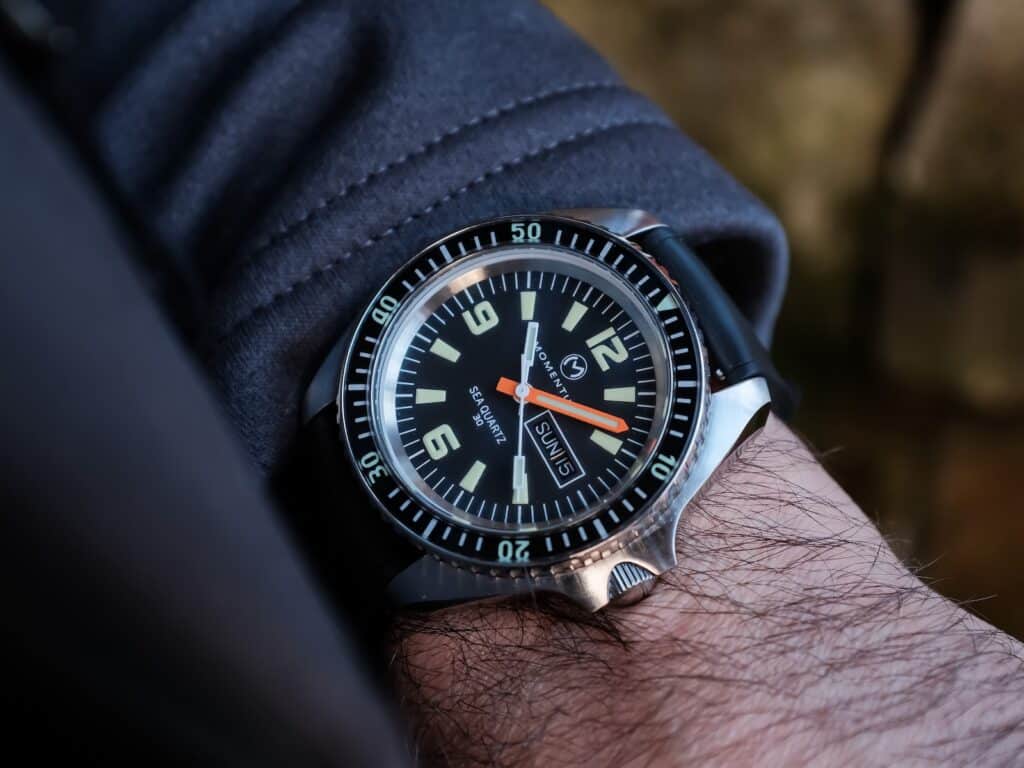
The Momentum Sea Quartz 30 takes the affordable diver concept in a slightly more relaxed direction than the Seiko Turtle. It still has real dive-watch capability, but the personality is more vintage-adjacent, quartz-driven, and casual, making it easy to wear without feeling like you are auditioning for a catalog shot on a boat. The late-’70s influence is obvious, but Momentum avoids turning it into a costume. This feels like a practical, modern watch with throwback flavor, not one trying to convince you it was found in a drawer next to expired film rolls.
The case is broader on the wrist than we expected, but it uses that stance well. At 42mm with a 47mm lug-to-lug, it has presence without becoming awkward, and the flat caseback helps it stay planted during extended wear while we reviewed it. It fills space nicely, feels balanced, and avoids the oversized clumsiness that can make larger divers feel like a brick. The brushed top surfaces give the case shape and definition, while the polished sides keep it from looking too plain. The polished underside and lugs are the catch. They pick up scratches faster than we would like, especially if you change straps often, which is rude but not exactly shocking.
The dial keeps things clean and useful. The matte black surface, printed markers, and paddle-style hands are easy to read without turning the watch into a wall of diver-watch punctuation. The orange minute hand is a smart, functional detail, especially when using the bezel for elapsed time. Inside, the Ronda high-torque quartz movement gives the Sea Quartz 30 the kind of grab-and-go convenience that separates it from a mechanical Turtle. You can leave it alone for a few days, come back to it, and not immediately start the whole setting ritual. Consider the 300m of water resistance, and it has more aquatic credibility than most of us will ever properly test.
The bezel is where the Sea Quartz 30 loses some smoothness in daily use. The sapphire insert is a sensible durability update, even if it trades away a little old-school charm, but the bezel itself is too stiff and harder to grip than it should be. It works, but it makes timing things feel more deliberate than effortless. Lume follows a similar pattern: useful at first, but it fades sooner than stronger performers we’ve worn. The included tropic-style rubber strap is better than expected, and the watch also works well on a NATO or other rubber strap. Momentum’s jubilee-style bracelet is worth considering if you want a more permanent setup. For someone who wants vintage dive-watch charm, quartz convenience, and enough capability to feel credible without going full Turtle, the Sea Quartz 30 has a lot going for it.
Pros:
- The 42mm case has real wrist presence while staying balanced and comfortable.
- The flat caseback and 47mm lug-to-lug help it wear well for longer stretches.
- The Ronda quartz movement keeps ownership simple, accurate, and low-maintenance.
- The sapphire bezel insert adds useful everyday durability.
Cons:
- The bezel is tighter and harder to grip than it should be.
- The polished underside and lugs pick up scratches quickly, especially during strap changes.
- The lume is usable, but it fades sooner than stronger alternatives.
Citizen Promaster Aqualand Depth Meter JP2007-17W
| Price: | $550 |
| Water Resistance: | 200m |
| Case Dimensions: | 50.7mm (diameter) x 51mm (lug-to-lug) x 14.8mm (thickness) |
| Lug Width: | 24mm |
| Movement: | Citizen C520 Quartz |
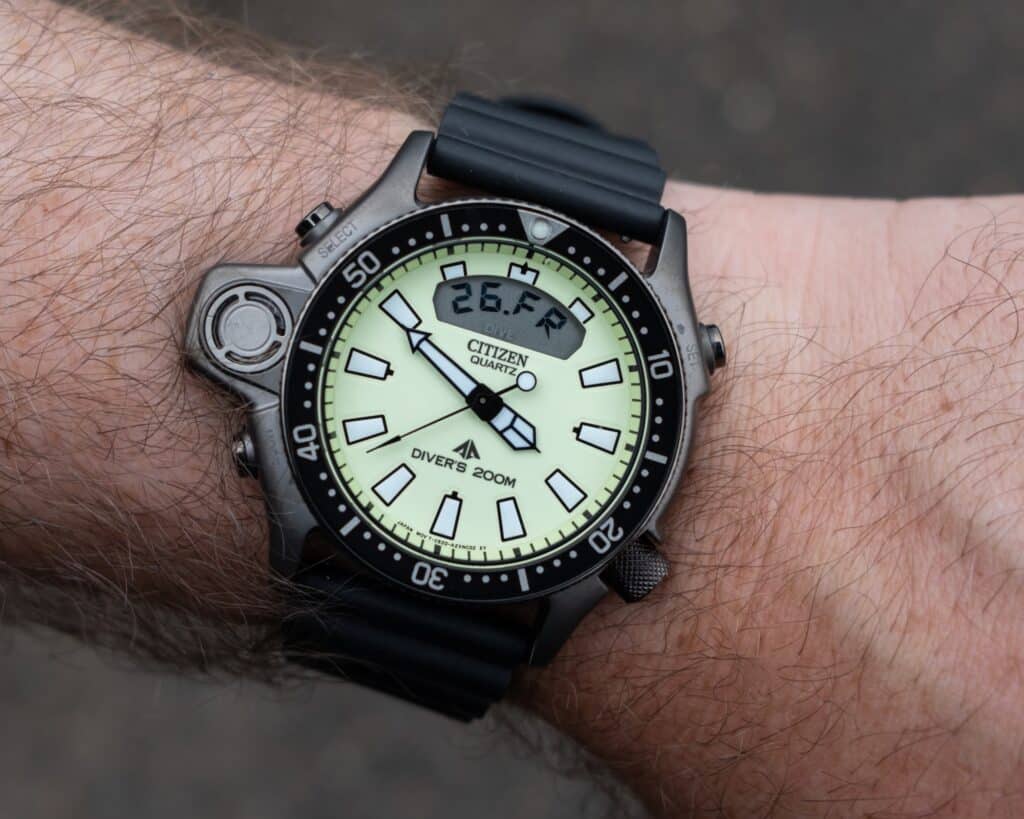
The Citizen Promaster Aqualand Depth Meter JP2007-17W does not offer a polite variation on the Seiko Turtle formula. It shows up wearing an external depth sensor, a 24mm strap, and the general energy of something that would rather be strapped over a wetsuit than tucked under a cuff. That is why it works as the wildcard here. It is weird, aquatic, functional, and very Citizen in a way that feels completely separate from Seiko’s softer, more familiar dive-watch language.
The size is impossible to ignore, but it does not feel random. The main case measures around 43mm, while the external depth sensor pushes the total spread closer to 50mm, giving the watch a broad, deliberate stance. On the wrist, the footprint reads as function-led rather than attention-grabbing. It is not trying to be a versatile everyday sports watch. The rubber strap helps manage the size because it is soft, ventilated, secure, and long enough to wear without constant adjustment.
The feature set is where the piece becomes more than a big quirky diver. This is a full dive-computer-style watch, with depth tracking, dive logging, alerts, and ascent-rate warnings. Most owners will not use every function regularly, but the capability changes how the watch feels. It has a tool-first confidence that a standard desk diver cannot fake. On land, the digital side still handles practical basics like alarms, chronographs, elapsed time, and calendar functions once the layout becomes familiar. The analog hands and digital display operate independently while staying synced after setup, so daily use doesn’t turn into a button-pushing hostage situation.
The tactile experience is better than the oddball shape might suggest. The bezel action is firm, positive, and properly aligned, while the oversized screw-down crown is easy to grip. The pushers become more intuitive with time, and quartz accuracy keeps the whole thing running with low-stress reliability in the background. Legibility is strong, helped by a fully lumed dial that glows brightly and stays visible for hours. The trade-off is contrast: when the whole dial lights up, it can lose a little separation compared to more selectively lumed layouts. Add in the huge footprint, the 24mm lug width that narrows strap options, and the fact that many diving functions will go unused on land, and the Aqualand becomes a very specific recommendation. Our hands-on review goes into that in more depth if you’d like to read more.
Pros:
- Full dive-computer-style functionality adds real capability beyond the usual diver formula.
- The rubber strap is soft, breathable, secure, and long enough for comfortable wear.
- Pre-owned pricing can make it even more tempting.
- Quartz operation keeps daily ownership reliable and low-stress.
Cons:
- The overall footprint can feel excessive on smaller wrists.
- The fully lumed dial can reduce contrast in certain low-light conditions.
- The 24mm lug width limits practical strap options.
Nodus Sector Deep
| Price: | $599 |
| Water Resistance: | 500m |
| Case Dimensions: | 38mm (diameter) x 47mm (lug-to-lug) x 13.6mm (thickness) |
| Lug Width: | 20mm |
| Movement: | Seiko NH35 (Mechanical Movement) |
The Nodus Sector Deep feels like the modern microbrand answer for enthusiasts who want a diver that does not orbit the same Seiko-and-Orient conversation forever. It is compact, tough-feeling, and designed with enough intention that it never comes across like a smaller watch pretending to be rugged. The 38mm case stays low, balanced, and planted through a normal day, which matters more than people admit. A diver can have all the durability language in the world, but if it wobbles around on the wrist like a loose shopping cart wheel, the confidence disappears pretty quickly.
The left-side crown is one of the smartest practical decisions here. At first, it looks like a design quirk. After longer wear, it feels like Nodus was paying attention. It keeps the crown from digging into the wrist, making the Sector Deep easier to live with during typing, driving, walking, or whatever version of “field testing” happens between emails and snacks. The asymmetrical layout will not please everyone, especially if you prefer a more traditional case shape, but the comfort benefit is hard to ignore. The matte DLC bezel adds to that use-first feel. It cuts glare, gives your fingers enough grip, and the dual-scale layout adds timing flexibility without turning the watch into a tiny dashboard.
The dial has more going on than it first lets on. The white PVD surrounds catch the light without getting shiny for its own sake, while the lume-filled centers taper toward the cardinal points, creating a subtle domed effect when viewed straight on. Better still, readability stays intact. In low light, the BGW9 Super-LumiNova held up well in our hands-on review period and remained legible through the night without falling off a cliff after the first hour. Inside, the Seiko NH35 fits the watch’s practical personality. Nodus regulates it in-house, and our samples hovered around ±10 seconds per day, which is the kind of real-world accuracy that makes a watch feel dependable without turning ownership into a headache.
The bracelet keeps the same durable, thoughtful rhythm. Screw links make sizing easier; the 20mm-to-18 mm taper keeps the clasp from feeling oversized; and the NodeX micro-adjustment system becomes very useful once wrist size starts to change with heat, movement, or a long day outside. The one visual trade-off is that when the clasp is fully extended, some hardware becomes visible, breaking up the otherwise clean look.
Pros:
- The NodeX clasp makes quick fit adjustments easy as wrist size changes.
- BGW9 Super-LumiNova stays readable through the night.
- The matte DLC bezel cuts glare, offers a useful grip, and feels ready for regular use.
- The low-profile 38mm case stays balanced, planted, and comfortable through long wear.
- The in-house-regulated NH35 delivered around ±10 seconds per day in our samples.
Cons:
- The asymmetrical case layout may not suit buyers who want a traditional diver shape.
- When the clasp is fully extended, exposed hardware interrupts the otherwise clean design.
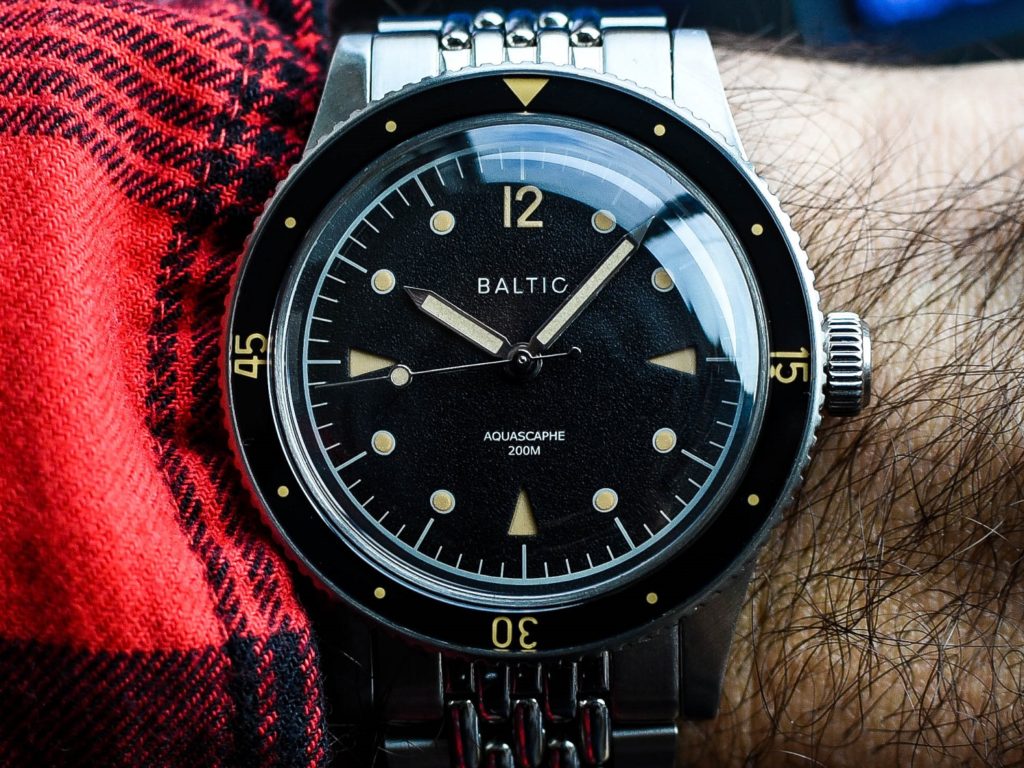
Baltic Aquascaphe
| Price: | $650 – $750 |
| Water Resistance: | 200m |
| Case Dimensions: | 39mm (diameter) x 47mm (lug-to-lug) x 12mm (thickness) |
| Lug Width: | 20mm |
| Movement: | Miyota 9039 (Mechanical Movement) |
The Baltic Aquascaphe gives the Turtle conversation a cleaner, more design-forward exit ramp. It still has dive-watch usefulness, but the feeling is different: slimmer, quieter, more skin-diver-adjacent, and much less “big cushion case with sleeves negotiating for space.” The case sits just over 12mm thick with a 47mm lug-to-lug, so it has enough structure to feel like a proper dive-style watch without spreading across the wrist. That makes it easier to wear all day, under cuffs, and through normal life without constantly being reminded that you chose a diver for a grocery run.
During our time reviewing the watch, we felt the dial was where the Aquascaphe earns most of its pull. Baltic uses a hybrid sandwich construction, with a fully lumed layer sitting beneath cut-out indices, giving the dial depth without making it look overworked. In low light, the lume comes across as even and readable rather than showing off for five minutes and then quitting. The gilt accents add warmth, but they avoid the fake-aged trap that can make some vintage-inspired watches feel like they came with a costume mustache. The matte dial shifts slightly as light changes, the pencil-style hands keep things tidy, and the lollipop second hand reaches cleanly toward the chapter ring. Minimal dial text helps the whole thing breathe.
On the wrist, the Aquascaphe feels more refined than its tool-watch outline suggests. The mostly brushed case is practical because it hides small marks better than a heavily polished one, though buyers who like more finishing contrast may find it a little muted. The crown has enough texture to make unscrewing and setting easier than expected, which matters more than it sounds on a compact diver. The double-domed sapphire crystal and sapphire bezel insert give the watch a modern, polished edge. At the same time, 200m of water resistance keeps it useful without turning the spec sheet into a personality.
The beads-of-rice bracelet is a big part of why the Aquascaphe works as an everyday vintage-inspired diver. It conforms naturally, tapers well, and stays comfortable during extended wear without creating the annoying clasp pressure that can turn a good watch into a desk-drawer resident. The polished center beads and brushed outer links add enough contrast to keep it from looking flat, and the quick-release spring bars make switching to the Tropic-style rubber strap easy when you want more old-school dive energy.
Inside, the Miyota 9039 keeps things clean with no date, a two-position crown, a 28,800 vph beat rate, and a practical 42-hour power reserve. The no-date layout preserves the dial balance, but anyone who checks the date constantly may miss the convenience. For buyers who want a more elegant non-Seiko diver with vintage warmth and modern wearability, the Aquascaphe lands in a very different place from the Turtle.
Pros:
- The double-domed sapphire crystal, sapphire bezel insert, and 200m water resistance keep it practical for daily use.
- The gilt accents, matte dial, pencil hands, lollipop second hand, and minimal text create vintage warmth without overdoing the faux-aging.
- The just-over-12mm thickness and 47mm lug-to-lug make it compact and easy to wear without feeling undersized.
- The beads-of-rice bracelet is flexible, well-tapered, and comfortable over longer wear.
- Quick-release spring bars make it easy to swap to the Tropic-style rubber strap.
Cons:
- Some buyers may miss the everyday usefulness of a date window.
- The mostly brushed case may feel too subdued if you prefer a stronger, polished contrast.
Halios Seaforth IV Titanium
| Price: | $965 |
| Water Resistance: | 200m |
| Case Dimensions: | 41mm (diameter) x 46.5mm (lug-to-lug) x 12.4mm (thickness) |
| Lug Width: | 20mm |
| Movement: | Sellita SW200-1 |
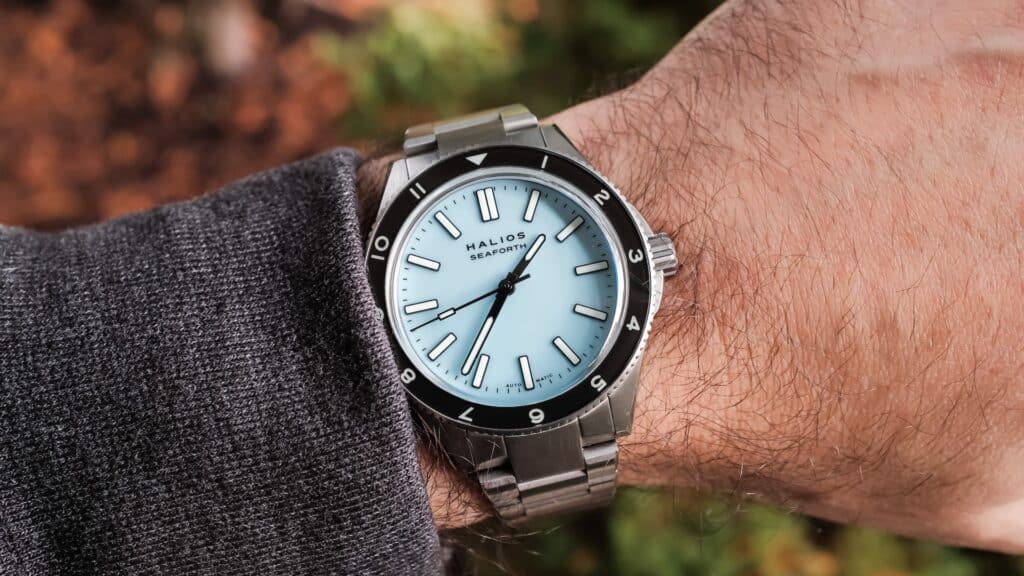
The Halios Seaforth IV Titanium is the lighter, more enthusiast-coded turn this list takes after the usual affordable diver suspects. It still gives you real water-ready utility, but the experience is very different from a Seiko Turtle: less cushion-case warmth, more compact travel-diver energy, and a lot more “I had to be weirdly online to buy this.” That last part is both a charm and a problem. Halios has a cult following for a reason, but casual availability is not its strongest feature.
The titanium case changes the feel immediately. The familiar Seaforth proportions are still there, but the lower weight makes the watch feel easier and more relaxed throughout the day. The double-domed sapphire crystal adds visual height, while the case itself tapers cleanly enough that it wears slimmer than the profile suggests. Brushed surfaces and polished chamfers give it a bit of refinement without making it feel precious. Add 20 ATM of water resistance, a screw-down caseback, and a screw-down crown, and the Seaforth feels like something you can wear hard without turning every doorway into a personal threat. The one reality check is titanium wear. After a few weeks, the case and bracelet picked up marks faster than steel likely would, which may bother buyers who want their watch to stay box-fresh.
The dial and bezel give the watch most of its personality. The pastel blue dial shifts gently in changing light and brings some familiar Seaforth charm without leaning into fake aging. Raised ceramic hour markers add crisp structure, and the Super-LumiNova C3 X1 across the dial, hands, and bezel fades evenly enough that low-light reading feels natural rather than patchy. The no-date layout keeps everything clean and makes the watch easy to live with if you rotate watches often. The 120-click unidirectional bezel is smooth, easy to grip, and controlled. At the same time, the 12-hour scale adds useful second-time-zone tracking without crowding the dial or turning the watch into a travel-complication lecture.
The titanium bracelet is a major reason the Seaforth works as more than a pretty microbrand object. The links articulate smoothly, the case integration looks clean, and screw links make sizing straightforward. The tool-free adjustment system is one of those features that sounds like a nice bonus until you use it on a hot day and suddenly resent half the bracelets you own. The stainless steel clasp adds enough weight to keep the watch feeling balanced while the rest of the package stays light. Inside, the Sellita SW200-1 runs consistently with a 40-hour power reserve, and the accuracy became something we stopped thinking about, which is where a daily-wear movement should land. For readers who want a lighter, more distinctive diver and do not mind chasing one down, the Seaforth IV Titanium gives the affordable-diver conversation a different texture. For detailed ownership quirks, check out our full review.
Pros:
- The titanium build gives it a light, relaxed feel that works well for all-day wear.
- The pastel blue dial shifts gently in changing light and carries Seaforth’s character without forced aging.
- The 12-hour bezel adds practical travel functionality without cluttering the clean dial.
- The tool-free bracelet adjustment system makes quick fit changes quite useful during the day.
Cons:
- Halios’ availability can be limited and unpredictable, so it is not always easy to buy.
- The no-date layout keeps the design clean, but removes a daily convenience some wearers rely on.
- Titanium picks up marks more readily than steel, which may bother buyers who are sensitive to scratches.
Got a Seiko Turtle alternative you think deserves a spot here? Share it in the comments. We’re always looking for affordable divers that bring their own flavor, whether that means better comfort, stranger design, less maintenance, or enough tool-watch charm to survive a weekend without needing a Seiko family tree and three forum threads to explain itself.

Co-Founder and Senior Editor
Kaz has been collecting watches since 2015, but he’s been fascinated by product design, the Collector’s psychology, and brand marketing his whole life. While sharing the same strong fondness for all things horologically-affordable as Mike (his TBWS partner in crime), Kaz’s collection niche is also focused on vintage Soviet watches as well as watches that feature a unique, but well-designed quirk or visual hook.